fbpx

December 30, 2024

Who Is The “Complete Unknown?” Robert Zimmerman

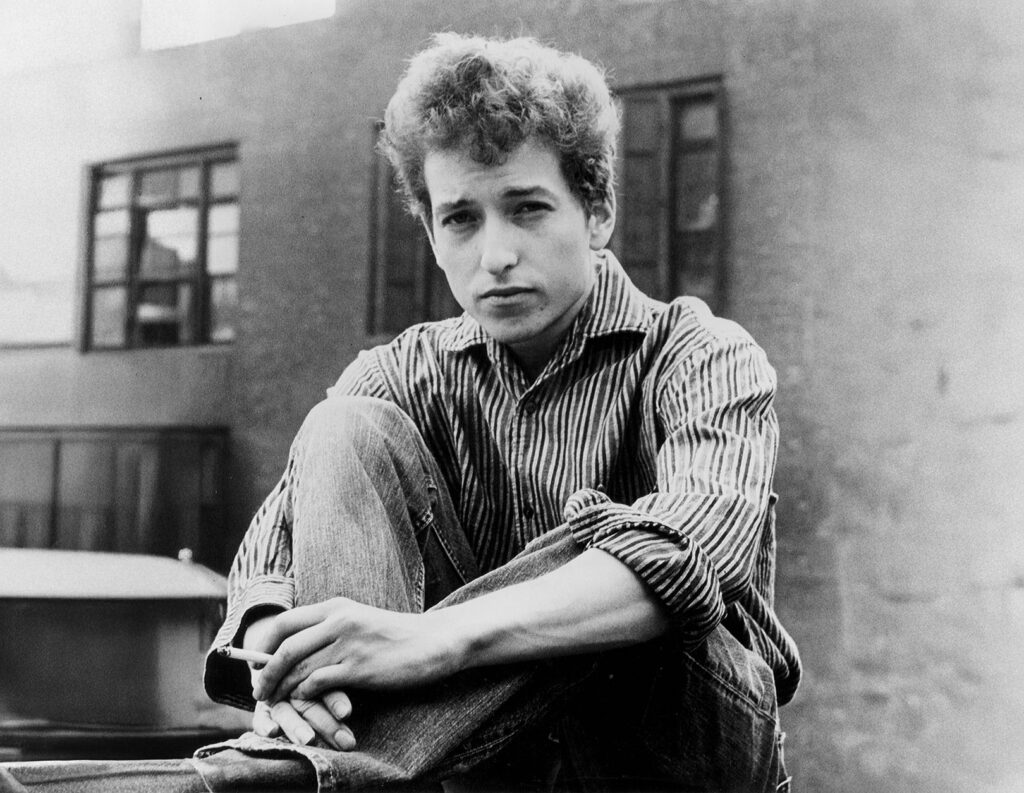
There were many moments in the Dylan biopic, “A Complete Unknown,” that took my breath away: the performances, the music, the memories of my youth that shook and stirred me.

But, there was one moment in “A Complete Unknown” that did something else with my breath.

It caused me to hold it — for just a few seconds.

It was the scene in which some of young Bobby’s friends find some of his letters and papers, and see that the name on those documents is “Zimmerman.”

That discovery causes them to raise a collective eyebrow. Dylan’s real identity is uncovered, but it is subsequently dropped like a hot latke.

It is not as if Dylan is the only Jewish character in this film. “A Complete Unknown” came pretty close to a minyan: Bob; his manager, Albert Grossman; the promoter, Harold Leventhal; and fellow musicians Al Kooper, Mike Bloomfield, Peter Yarrow, and Theodore Bikel. Timothée Chalamet, as Dylan, is Jewish.

In the early 1960s, the Greenwich Village folk scene, and certainly American folk music, was very “Jewish.” Those performers  would have included Oscar Brand, Ramblin’ Jack Elliott, Phil Ochs (whose song “There But For Fortune” makes an appearance in “A Complete Unknown”), Happy and Artie Traum, and Peter Yarrow (of Peter, Paul and Mary).

But, for most of them, their Jewish identity was peripheral, unstated, and even masked. That was how it was for American Jewish identity in the early 1960s. It was emerging from the 1950s, which was admittedly not the most stellar period of American Judaism. American Jewish identity was still cautious and under-stated, especially in American popular culture. In 1962, Shel Silverstein wrote “Folk Singer Blues.” He wants to “sing a song about the chain gang” and “go walkin’ up the highway.” “But wha-da-ya do if you’re young and white and Jewish.”

Precisely. What do you do?

You invent.

Decades ago, Dylan spoke of his life story: “My past is so complicated you wouldn’t believe it, man.”

Not really.

He was Robert Zimmerman. He was born in Duluth, Minnesota, and spent his youth in Hibbing, Minnesota. His childhood in that far-flung outpost of the Diaspora was as Jewish as it could be. The Zimmermans attended the local synagogue. His father, Abe, was the president of the local B’nai B’rith lodge. His mother, Beatty, was the president of the local Hadassah chapter. Young Bobby went to Camp Herzl. At the University of Minnesota, he was a member of Sigma Alpha Mu, a nominally Jewish fraternity.

Bobby Zimmerman might have had a Jewish education sufficient enough to have learned the history of Jewish disguises. That narrative would include: Jacob masquerading as his twin, Esau, in order to receive the blessing of his father, Isaac; Tamar disguising herself to entice her father-in-law, Judah; Joseph concealing his identity from his brothers; David feigning insanity to gain entry into the Philistine camp.

He might even have learned about the conversos, the Marranos — the Jews of the Iberian Peninsula who outwardly converted to Christianity, but who maintained their Jewish identities in secret.

Bobby Zimmerman became a master of disguise. He changed his name, his style, his voice, his music — everything was in a constant state of flux. Like the Jewish people itself, his life was a series of evolving personae. In “I’m Not There,” another cinematic interpretation of Dylan’s life, we find a series of stories about Dylan’s various personae over the years — midrashim, as it were, on Dylan — because, in fact, he really is not there. He is what we make of him — all the while, demanding the freedom to (re) create himself.

At certain points in his life, he all but denied being Jewish — saying that he had been an itinerant blues singer, or that he was from Gallup, New Mexico, or that he had been a carnival hand. He would say that he was of Native American stock.

And yet, he could not entirely erase his Jewishness.

In “Talkin’ Havah Nagilah Blues,” he claimed that it was a “foreign song I learned in Utah.”

His early song “With God on Our Side” contains a reference to the Nazis: “Though they murdered six million/In the ovens they fried/The Germans now too/Have God on their side” — one of the first (and to this day, one of the few) references to the Holocaust in American popular culture.

He recorded numerous songs with biblical motifs. In the movie, we hear the opening lines of “Highway 61 Revisited” — “Oh God said to Abraham, ‘Kill me a son’ / Abe said, ‘Man you must be puttin’ me on.’” It is a musical reference to the Akedah, the binding of Isaac, which most Jews hear during liturgical “prime time” on Rosh HaShanah. Where is Highway 61? It is no longer Mount Moriah, no longer the ancient Temple Mount in Jerusalem. It is in a place far more generic, far more American, far more open to interpretation – as Dylan himself insisted on being.

There is a famous candid photo of Dylan, adjusting his cardboard yarmulke as he walks away from the Western Wall in Jerusalem, where years later, his son Jesse would become bar mitzvah.

His “Neighborhood Bully” was perhaps the most vigorous defense of Israel ever recorded by an American singer.

As for his period of sojourn as an evangelical Christian? Another temporary disguise?

Dylan knows himself well. In his song “I Contain Multitudes,” he masquerades, once again, as Walt Whitman. He sings of all the identities that comprise him: Edgar Allan Poe, the Rolling Stones, Indiana Jones. Indiana Jones is not just a convenient rhyme; it is as if Dylan is his own archeologist, uncovering each layer and level of himself.

And then: “I’m just like Anne Frank…” Dylan sees himself as a Jewish teenage girl, hiding in an attic with her family from the Nazis. It is a profound moment of Jewish identification – in the same way as the Passover Haggadah inveighs Jews to see themselves as if they had personally come out of Egypt.

Because there has always been a piece of Dylan that is hiding in an attic of his own making.

When all is said and done (and all is probably not said and done), at the very root of his existence: Dylan was, and is, Bobby Zimmerman.

So, we return to the title of the movie — “A Complete Unknown.”

It was not simply a quote from the song “Like A Rolling Stone.”

Neither was it a reference to how young Bobby showed up with a guitar in the Village as “a complete unknown.”

Perhaps it is an assessment of Dylan himself — that he is, still, “a complete unknown.”


Rabbi Jeffrey K. Salkin is co-founder/co-director of Wisdom Without Walls: an online salon for Jewish ideas (wisdomwithoutwalls.org) and contributing editor to Religion News Service. His most recent book is “Tikkun HaAm/Repairing Our People: Israel and the Crisis of Liberal Judaism.”

Who Is The “Complete Unknown?” Robert Zimmerman Read More »

The Sloomoo Institute: Slime with a Backstory

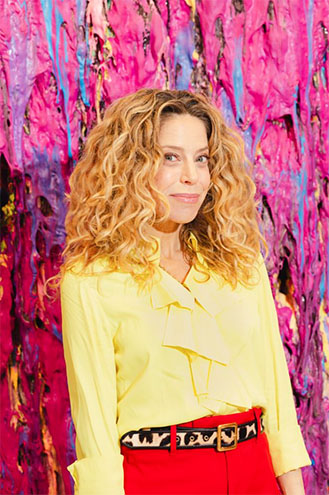
Karen Robinovitz and Sara Schiller were both going through a difficult time in their lives. Robinovitz lost her husband, and just months later, her cousin was killed in the Parkland shooting. Schiller’s husband had a stroke that left him disabled.

Robinovitz’s friends visited her with their then 10-year-old daughter Mattie, who brought along ingredients to make slime. She ended up playing with the slime with Mattie, and loved it so much, that she and Schiller would use it as a way to relieve stress. The two women would sit on the floor for hours on the weekend with Schiller’s daughters and slime it up.

“In the midst of all that grief, slime became a source of unexpected joy,” Robinovitz said. “We immediately realized how it could help others find light, too. We became obsessed with slime.”

The two had an idea: Why not create an interactive place where you could play with and make your own slime? That’s how the Sloomoo Institute, now in cities across the United States including Los Angeles came to be.

At Sloomoo, children and adults can enjoy playing with slime of different textures, shapes and colors. They can get “slimed” by standing under a faucet that shoots out the substance, build slime sandcastles and fling slime at a wall. They can also take home their own customized slime complete with a good-smelling scent, vibrant color and cute charms.

In L.A., Sloomoo is located in a bright pink building on Fairfax Avenue across from the Original Farmers Market and The Grove. Visitors typically stay for anywhere from 30 minutes to two hours. During their time there, they wear a nametag with their “Sloomoo” name on it; they simply replace the vowels in their names with a double “o.”

“Slime is incredibly fun and pure joy,” said Robinovitz. “It combines never ending textures, delicious scents, eye popping colors, mesmerizing visuals and soothing sounds. When you engage in your senses, you stay in the moment. You get off your screens. As an adult, it brings out your inner child. And it’s a beautiful way to connect with others and yourself. Everyone needs a squeeze.”

Karen Robinovitz

Before co-founding Sloomoo, which also has locations in New York, Chicago, Atlanta and Houston, Robinovitz worked as a journalist at The New York Times, Harper’s Bazaar and Marie Claire. She then pivoted to social media, consulting for brands from Estée Lauder to Tiffany & Co., and she started the first talent management agency for digital personalities and creators, Digital Brand Architects (DBA). Based in New York, she is a board member of the Brooklyn Museum as well.

Robinovitz said her Jewish background has “always shaped how I approach both life and business. It’s about creating a space that fosters joy, kindness and community, while giving back to others. At Sloomoo, we strive to build an environment where people feel welcome and supported, where we can make a positive impact. The idea of creating something meaningful that brings happiness and connection is at the heart of everything we do.”

 “Slime is incredibly fun and pure joy … As an adult, it brings out your inner child. And it’s a beautiful way to connect with others and yourself. Everyone needs a squeeze.”  Karen Robinovitz

People of all ages can go to Sloomoo and enjoy the colorful, creative experience – and that’s precisely why Robinovitz and Schiller came up with the idea. “Our ultimate goal is simple: Spreading joy,” Robinovitz said. “We often underestimate the power of play, but it’s crucial to our well-being at any age. Play activates our brains, strengthening neural pathways that shape how we feel, learn, create and connect with others. Playing with slime is so simple, but I’ve seen it have a profound impact – not only for children, but for adults as well. It’s a reminder that no matter our age, we all need moments of joy and creativity in our lives.”

You can purchase tickets for the Sloomoo Institute by visiting Sloomooinstitute.com.

The Sloomoo Institute: Slime with a Backstory Read More »

From Tel Aviv to L.A.: How Israel’s Startup Culture Inspired Tyler Hochman’s Tech Entrepreneurship

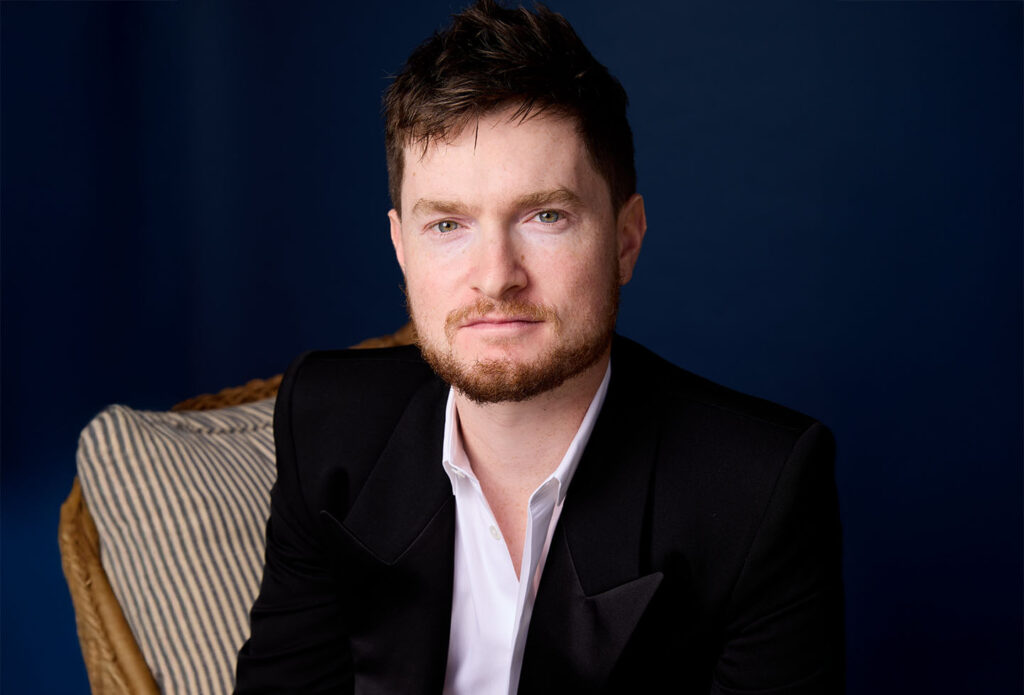
While studying abroad at Tel Aviv University during his junior year at Stanford, L.A. tech entrepreneur Tyler Hochman met and worked with former members of Israel’s elite 8200 Unit, an IDF intelligence division known as a prolific incubator of tech startups. Hochman was impressed to see the tight intersection between military service and entrepreneurship, which has earned Israel its moniker: “the startup nation.”

“They develop these technologies in the military and then get to take them outside of the military and commercialize them,” said Hochman, founder and CEO of FORE Enterprise, an AI data workforce analytics firm that helps companies improve employee happiness and retain top talent. “If you can invent an anti-drone technology that’s used in the military, when you leave the military, you can sell it to football stadiums to prevent people from flying drones over football games.”

The ingenuity, grit and hustle culture Hochman witnessed in Tel Aviv inspired him to waste no time starting his own companies when he returned to California. He co-founded Stanford’s chapter of TAMID, a program connecting students to Israel’s business community, and launched  his first two tech ventures while still a student.

Now, at just 27 years old, Hochman has already launched five startups, including his latest venture FORE Enterprise, as well as SafeStop, an app designed to reduce violence during traffic stops by having drivers and law enforcement video chat from the safety of their cars. Hochman also became a first-time father this fall and was named to the prestigious Forbes 30 Under 30 list for social impact on Dec. 3, the same day that his own father, Nathan Hochman, was inaugurated as L.A.’s new district attorney.

“It’s been an exciting year,” said Hochman, who credits much of his business success to his time in Israel. “I was so inspired by the Israeli work ethic, the drive, and the ability to turn any situation into an opportunity for growth. These guys are fighting a war and at the same time, starting a business. It puts my own challenges into perspective.”

Hochman first decided to apply AI data analytics to understanding workforce issues and employee needs during the Great Resignation, a period toward the end of the pandemic that saw a record number of workers quitting their jobs en masse. Launching FORE in 2022, Hochman raised more than $4 million in seed funding to help companies predict which employees would leave their jobs – often before they knew it themselves. FORE’s technology forecasts the cost of future attrition, identifies the precise reasons for employee churn, and an advisory board of experts from Stanford, Wharton and Kellogg recommends solutions.

After the company emerged from stealth mode in April, Hochman landed contracts worth $10 million in revenue, making FORE profitable in just its second year of operations – almost unheard of in the tech sector. Clients include large hospital networks, luxury goods companies and private equity firms. Much of Hochman’s time building that client base was spent educating companies about the high cost of employee disengagement and turnover – roughly $355 million a year in lost productivity for mid-size S&P 500 companies.

Once again Hochman leaned on skills he gained in Israel. “Both Tel Aviv and Silicon Valley have a heavy emphasis on intellect and technology, but in Tel Aviv, they’re also very good salespeople,” he said. “My background is in engineering. I’m good at tackling that, but Israel really helped me learn how to sell, and I think that’s an underlooked part of the startup process.”

Raised in a Jewish household in Los Angeles, Hochman brings his Jewish values of Tikkun Olam into his company, working to help L.A. tutoring company Step Up tutoring use AI analytics to find the perfect match between students and tutors and solve complex scheduling issues. “Partnering with FORE is proving to be transformative for our organization,” Step Up co-founder Daniel Halper said.

Hochman first developed an affinity for giving back after raising $42,000 for wheelchairs that he delivered to people with disabilities in the Jewish homeland for his bar mitzvah project. While Hochman attended Hebrew school at Wilshire Boulevard Temple and became a bar mitzvah at the Brandeis-Bardin Campus of the American Jewish University, he felt his greatest connection to Judaism while in Israel.

“I really enjoyed Shabbat in Tel Aviv,” he said. “You went to this beautiful coastal spot, and they would do a public Shabbat. They were incredibly meaningful, and at the same time, there was an informality to it that I really liked. We were not in the temple. We were just on the coast, and there’s a rabbi, we’re singing and having a good time. It didn’t feel like you had to be quiet.”


Hochman sees similarities between the relaxed coastal vibe of Tel Aviv and Los Angeles, but he believes the ever-present threats that Israelis live with creates an even greater sense of simcha. “As a result of potentially being bombed at any moment, they’re always appreciating life,” Hochman said. “They don’t want life to take place in a temple – they want life to take place by the ocean. They want life to take place at a party. They want life to take place singing and dancing.”

Hochman has tried to incorporate some of that zest for life into his fully remote workplace at FORE. Every week, he asks employees to share a funny story that’s unrelated to work. Hochman believes it takes a strong sense of humor and an unusual level of risk tolerance and persistence to be a successful entrepreneur – traits he saw in abundance in the Jewish homeland and adopted when he returned.

 “I think most people who start successful companies are kind of insane,” Hochman said. “There’s no logical reason to keep going. You’ll pitch someone, and they’re going to say, ‘Absolutely not, this a horrible idea,’ and then you’re going to keep doing it. And the 51st person will finally say, ‘This is a great idea.’ It takes an almost irrational belief in yourself. You don’t think about failure – you only think about success.”

From Tel Aviv to L.A.: How Israel’s Startup Culture Inspired Tyler Hochman’s Tech Entrepreneurship Read More »