Let Us Greet the Beginning of the End of the Iranian Regime
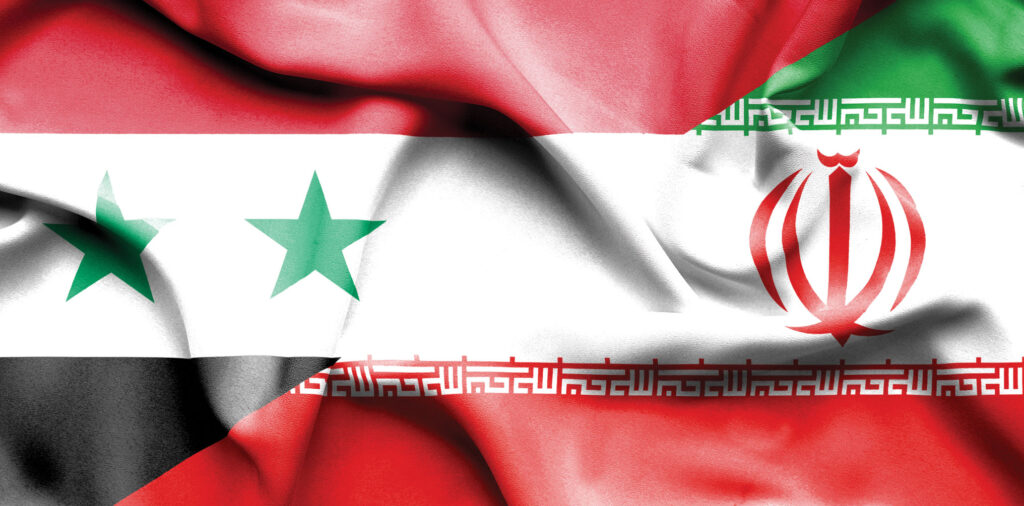
The Iranian regime, long reliant on internal repression and external warmongering, is facing unprecedented challenges to its survival. After suffering a significant blow with the near-collapse of Hezbollah in Lebanon, one of its primary proxy forces, Khamenei has now been dealt a second strategic defeat—this time in Syria. Khamenei once boldly declared Syria to be Iran’s 35th province. When Syria’s dictator, Bashar al-Assad, teetered on the brink of collapse at the hands of the country’s freedom fighters, Khamenei sent Qassem Soleimani and the Islamic Revolutionary Guard Corps (IRGC) to intervene.
The result was catastrophic: at least half a million Syrians killed, millions displaced, and an unfathomable cost borne by the Iranian people.
Nine years ago, under United Nations Security Council Resolution 2254, Assad’s removal was a viable outcome. However, Khamenei and the appeasement policies of international powers kept the Syrian dictator afloat. According to credible reports, Khamenei diverted at least $50 billion of Iranian public funds during the 2010s—money funneled through Soleimani to crush Syrian freedom fighters and preserve Assad’s regime. Meanwhile, during the 2017 uprising in Iran, protesters called out the regime’s misplaced priorities with chants like, “Leave Syria, think about us!”
Khamenei repeatedly justified his intervention in Syria with the claim, “If we don’t fight in Syria, we’ll have to fight in Tehran.” Now, ironically, his statement has come full circle. Today, Khamenei is battling resistance units not in Damascus but in the streets of Tehran, Isfahan and Shiraz.
The Iranian regime was built on two pillars: internal repression and external terror. With the collapse of one of these pillars, it’s only a matter of time before the entire structure crumbles. The fall of Assad will not only be a triumph for the Syrian people but also a moment of celebration for Iranians eager to break free from Khamenei’s oppressive rule.
The Strategic Loser of the War
Two years ago, Iran witnessed a massive nationwide uprising in over 280 cities. This event, known as the Mahsa Uprising, underscored a decisive shift: The Iranian people’s demand for the overthrow of the regime was unequivocal. The uprising demonstrated that the religious dictatorship had entered its terminal phase.
Khamenei, recognizing this existential threat, sought to forestall an even larger uprising by escalating conflicts in the Middle East. Yet, as predicted by the National Council of Resistance of Iran (NCRI), his regime has become the strategic loser in these wars. Today, it is clear that the IRGC and Khamenei’s security apparatus will meet the same fate as the Syrian dictatorship, unable to suppress the wave of organized resistance rising against them.
The Explosive Dissatisfaction of Society
The regime’s warmongering has drained Iran’s resources. The mullahs spend vast sums daily to fund proxy forces in the region, all while adopting a militaristic budgetary approach. For example, in the 2025-2026 budget proposal, more oil revenue is allocated to the armed forces than to all governmental ministries combined. Simultaneously, funding for education, healthcare, infrastructure, and other essential sectors has been reduced to a bare minimum.
Since 2011, food prices have skyrocketed—rising 40-fold. Just two weeks ago, the regime’s president admitted that the government’s crises have reached a critical level. To cover its budget deficit, largely driven by its warmongering, the regime has resorted to raising fuel prices and other essential goods, further inflaming public dissatisfaction.
In recent months, various sectors—including nurses, teachers, retirees, and workers in the oil, gas, and petrochemical industries—have organized repeated protests and strikes. Despite the explosive dissatisfaction among the population, the regime cannot abandon its militaristic and repressive policies, as these are central to its survival strategy. Any retreat from warmongering would hasten its collapse. For this reason, the regime is incapable of reform and cannot prevent economic ruin. Meaningful reform would require both an end to warmongering and the granting of greater freedoms—steps fundamentally incompatible with this medieval dictatorship.
Resistance Units: The Regime’s Primary Threat
While economic collapse and public outrage threaten the regime’s survival, the organized resistance of the Iranian people poses the most direct and immediate threat. Across the country, resistance units are carrying out an average of 20 anti-repression operations daily.
On the fifth anniversary of the November 2019 uprising, these resistance units launched 110 anti-repression campaigns in just two days, honoring the memory of the 1,500 protesters martyred by the IRGC during that uprising.
Despite widespread executions, arrests, and repression, the regime has failed to eliminate the organized resistance. Instead, the protest movement has steadily progressed toward dismantling the regime. This is underscored by the sheer volume of blood spilled over the years—most notably, the execution of over 100,000 political prisoners.
The regime cannot stop its cycle of executions, even for a single day. Its so-called morality patrols, while a display of its misogynistic nature, are aimed primarily at suppressing a society on the verge of rebellion. Repression runs rampant in Iran, where even a relatively independent press is nonexistent.
The Characteristics of a Credible Alternative
The regime’s collapse is inevitable, but the presence of a viable alternative ensures that its downfall will not lead to chaos. The explosive dissatisfaction of the people, combined with resistance units capable of confronting the IRGC on the streets, forms the foundation for transformative change in Iran.
The National Council of Resistance of Iran (NCRI) has emerged as the democratic alternative, leading the struggle with international recognition, credibility and a clear, actionable program. Financially independent and supported by the Iranian people, the NCRI was the first to expose the regime’s nuclear ambitions and its meddling in the region.
According to the NCRI’s plan, after the regime’s overthrow, a transitional government will take power for a maximum of six months, during which it will organize free elections for a Constituent Assembly. Power will then be transferred to the people’s representatives in this assembly, which will draft, approve and submit a new constitution for a national referendum.
With a credible alternative in place, there will be no room for chaos. Millions of Iranians in exile will return to rebuild their homeland, bringing with them their skills, expertise, and financial resources. The vast pool of Iranian experts abroad will form the backbone of the country’s reconstruction.
The NCRI’s ten-point plan prioritizes freedom, women’s rights, the autonomy of ethnic minorities, equality among all religions, and the separation of religion from the state. It advocates for the abolition of the death penalty, a non-nuclear Iran, and peace in the Middle East.
The fall of the Iranian regime is no longer a distant dream—it is a reality within reach.
The fall of the Iranian regime is no longer a distant dream—it is a reality within reach. With an organized resistance, an unwavering commitment to freedom, and a viable democratic alternative, the people of Iran stand poised to shape a future free from tyranny and oppression. Let us greet the beginning of the end of this regime with hope and determination.
Hamid Enayat is a political scientist, specializing on the topic of Iran, who collaborates with the Iranian democratic opposition.
Let Us Greet the Beginning of the End of the Iranian Regime Read More »