

fbpx

May 20, 2024

Finding Our Inner Jew

Something deep and tribal has touched more than a few Jews since Oct. 7. The massacre of that fateful day, followed by months of anti-Israel and antisemitic rage, has triggered among many Jews a sense of being under siege—a feeling that “it’s us against the world.”

This “us” is a reconnection with Jewish peoplehood, a realization that we are part of a distinct and ancient people with a uniquely dramatic story. The horrific drama of Oct. 7 has brought Jews closer to that ancient story and to one another.

We might call it a reconnection with our inner Jew.

In America, this sense of kinship has long been referred to light-heartedly as being an MOT– “member of the tribe.” Given our need to be accepted, MOT has always come with a friendly wink, as if to say, “Let’s be playful and not go overboard with this tribal thing, lest we turn off our benevolent American hosts.”

Oct. 7 has made MOT deeper, sober, more serious.

For many Jews living through this period of pervasive antisemitism, connecting with other “members of the tribe” has become a kind of necessity. Yes, in the post-Oct. 7 world, we can say that Jews are looking for other Jews.

It’s not that Jews have abandoned the Jewish ideal of universality; it’s more that we’re going through a particular moment where the Jewish value of particularity has taken precedence.

I’ve spoken to Jewish college students who’ve told me they feel safer hanging out with other Jewish students. With the animosity surrounding them, is that an unreasonable choice?

We shouldn’t assume, however, that this tribal connection is simply a search for safety. Whether we realize it or not, it is our souls that are being touched by the threatening winds of the moment.

Our souls can’t be touched by a superficial 24-hour news cycle or the frantic talking points of propaganda. Our souls can only be touched by something that goes very deep, something as deep as a sudden death in the family.

October 7 was a massive and sudden death in the Jewish family, a reminder of the eternal existential threat facing Jews. We can feel its lingering depth through the memorials, art exhibits, films, songs, posters, plays, demonstrations for hostages and volunteerism connected to Oct. 7 that are keeping that reminder alive.

No matter what goes on in the Knesset, at the White House or the United Nations, the savage massacre of 1200 Israelis on the Shabbat of Oct. 7 stands as a singular tragedy that is now anchored in our souls, an atrocity that will not stop haunting us.

My disagreements and disappointments with this Israeli government are many, but they are independent of my relationship with that Shabbat massacre, with the empathy I feel for Israelis who must still brave the aftershocks of that day. Being hardened by reality is the status quo for Israelis.

But it is not our status quo in America. Our homes don’t come with bomb shelters. We don’t hear sirens warning us of incoming rockets. Our fears and concerns have always been on a much lower scale.

The unprecedented horror of Oct. 7, coupled with the anti-Israel frenzy that now surrounds us, has brought us emotionally closer to our Israeli brethren. This is no longer a case of another suicide attack or a BDS protest. We can’t just brush off Oct. 7 and move on to the next story.

This story cannot and will not let us go. It transcends politics, policies, current events. It goes deep enough to touch our souls, to connect us with the inner Jew we so often take for granted.

In this inner Jew lies the courage to fight back. We fight back, each in our own way, on behalf of our tribe and in honor of our ancestors who kept the Jewish flame alive since we all gathered at Sinai.

But in this inner Jew also lies other Jewish ways of fighting.

We fight back by having joyful Shabbat tables, by spreading the light of kindness in our little worlds, by caring for our families and supporting our communities, by praying for the hostages and innocent lives on all sides, and, yes, by criticizing our leaders when we feel they messed up.

Maybe, then, this is what it means when our souls are touched and we find our inner Jew: We are warriors against those who wish us harm, we are transmitters of light and seekers of justice, and we don’t apologize for being members of an ancient tribe.

Finding Our Inner Jew Read More »
An American Tragedy: Porn Star, Cat Fights and Fredo Returns

What imaginative mind could have dreamed up a criminal trial involving an ex-American president, a porn star, a tawdry tabloid, a topless centerfold, and a “fixer,” now felon, with an ax too sharp to grind, serving as the prosecution’s star witness?

A plot twist: the defendant is the leading contender to retake the White House!

Ripped from the headlines, yes, but “Law & Order” will probably pass on this storyline. It’s too preposterous, especially for prime time.

And, yet, it is all embarrassingly true.

Just to prove that the United States has no quota on undignified spectacles, last week a cat fight broke out during a congressional hearing between representatives Marjorie Taylor-Greene and Alexandra Ocasio-Cortez. “Mean Girls” came to Congress, and the grand setting shamelessly suited them. Where else can two elected officials, representing the extreme fringes of their respective parties, come just shy of exchanging blows?

Six months earlier, in the same building, Oklahoma Sen. Markayne Mullin squared off against the president of the Teamsters Union in what nearly became a steel cage match in the Rotunda. Sen. John Fetterman might look and dress like a wrestler, but given his principled and politically courageous support of Israel, he might actually be the classiest elected official in America right now.

We should only be so lucky as to be in the fine company of banana republics. Many of them are keeping their distance. They have reputations to uphold. The gloves have come off on our best behavior. Americans were once known for boorishness. Now it’s salaciousness.

We should only be so lucky as to be in the fine company of banana republics. Many of them are keeping their distance. They have reputations to uphold.

Of the three criminal proceedings the former president faces (there were four others in civil court), the only one that went to trial and will likely come to some resolution this week concerns a criminal conspiracy and cover-up, financial in nature: the falsification of business records, and an illegal campaign contribution.

Sounds ominous, and presumptively criminal, but the case was terribly weak from the outset—by far the weakest of all the indictments against Trump. Don’t be surprised if, despite a judge who has not concealed his contempt for the former president, and a jury comprised of twelve Democratic voters on an openly hostile island, he is ultimately acquitted.

Trump might have found a more sympathetic jury in Iran. But New Yorkers are, if nothing else, savvy. They scam tourists; they, themselves, are not easily scammed. If evidence of a crime has not been proven, they won’t be played.

In the back of everyone’s mind must lie this lingering question: Had Trump retired to a lifetime of golf at Mar-a-Lago, and not declared his candidacy, would any of these cases have been filed?

The $130,000 his attorney, Michael Cohen, delivered to Stormy Daniels to buy her silence was carried on Trump’s books as a monthly legal fee. Did the “hush money” disguise an illegal donation to Trump’s presidential campaign? Keeping Daniels quiet inevitably influenced the outcome of the election.

The problem is that sleeping with a porn star is not illegal; neither is paying to suppress embarrassing information. There’s nothing untoward about never-ending legal fees—it’s a rite of passage for promiscuous billionaires. Influencing the electorate is the whole point of a political campaign. Finally, keeping an affair hidden, unlike paying for a TV commercial, buying pizza for volunteers, and gassing up the jet for the next campaign stop, is not a legitimate campaign expense. But even if it was, the prosecution must prove that Trump knowingly intended to benefit his campaign, and not save his marriage.

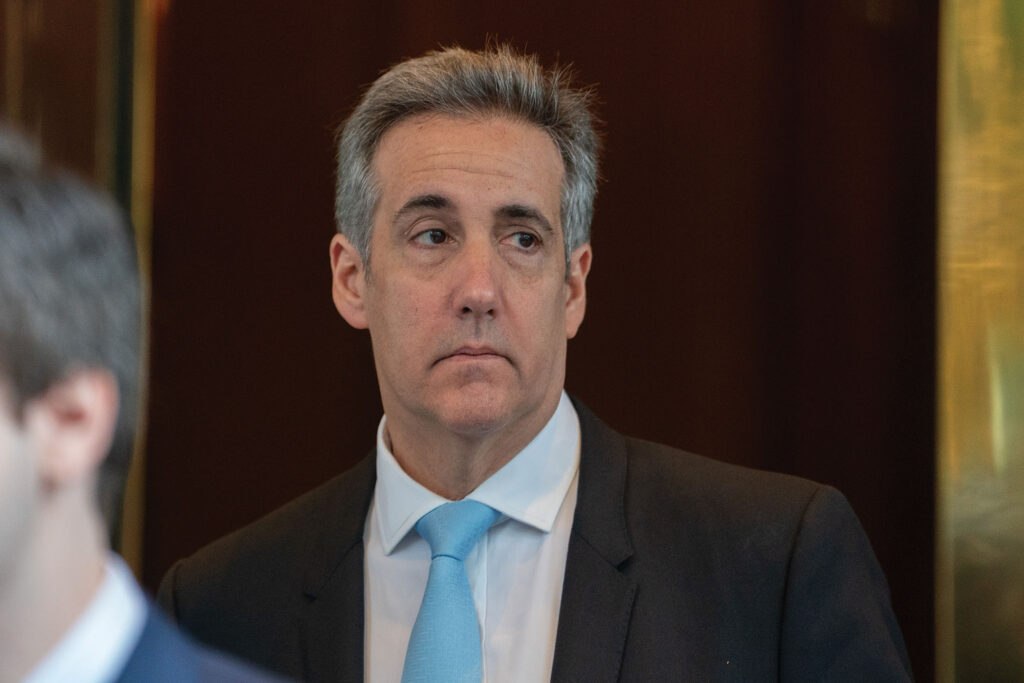
Having the entire case hinge on Cohen’s credibility was never a winning strategy. He spent time in jail and forfeited his law license. A federal judge castigated him as a serial perjurer. One of the prosecution’s other witnesses, an uncharged co-conspirator and former publisher of the National Enquirer, testified that Cohen is “prone to exaggeration.”

The self-described “fixer” wrote a book detailing the revenge he planned to take against his former client, reaffirming these payback fantasies on both cable news and TikTok. It seems that Cohen was bitter about having been left behind in New York when Trump assembled his West Wing staff and decamped for Washington, D.C. Apparently, Cohen had visions of becoming the next Attorney General or White House Counsel.

In homage to America’s best known crime family, Michael Cohen will forever be remembered as the Fredo Corleone of the Trump Organization: a marginal man built for betrayal. Like Fredo, Cohen was passed over, left to do the seedy, dirty work while the other henchmen dined among more respectable invitees at state dinners.

Another cannoli filled with wisdom from “The Godfather”: Never underestimate the wrath of someone whose self-worth has been devalued. Trump’s other employees have largely remained loyal—some even went to jail, uncomplainingly. Cohen was the exception, and a costly one.

Another cannoli filled with wisdom from “The Godfather”: Never underestimate the wrath of someone whose self-worth has been devalued.

Trump’s other criminal matters are at a procedural impasse. None will commence before the election, much to the disappointment of Biden supporters. For this reason, the hush money trial became an early referendum on the election. Trump’s die-hard constituents believe in witch hunts and are daring the Democrats to imprison their candidate. But what about moderates—from either party? Would they vote for a candidate with a newly minted criminal record? That question is in the hands of a Manhattan jury.

The conclusion of this trial does not mean that voyeuristic Americans have nothing else to look forward to. Last week President Biden challenged the former president to two debates. Special conditions were insisted upon, like a modern-day version of Marquess of Queensberry Rules. Will the candidates rise above the fisticuffs we have recently seen in Congress? One hopes they will focus on trading policies rather than plasma.

Last week President Biden challenged the former president to two debates. Special conditions were insisted upon, like a modern-day version of Marquess of Queensberry Rules.

Biden has always possessed gentlemanly charm, and now he can add a sympathetic grandfatherly demeanor. Trump’s cohorts love his anti-Beltway belligerence, but he would be well advised to resist the temptation to bully Biden on national television. Diplomacy-deprived though Trump may famously be, in this instance, showing respect for his elder, the office Biden presently holds, and his many years of public service, would pleasantly surprise a number of potential voters.

Meanwhile, President Biden’s son, Hunter, is facing two separate criminal trials of his own. One raises disturbing questions of influence peddling. And we know just whose influence Hunter was peddling. Trump’s classified documents case in sunny Florida is clouded by other classified documents sharing a garage with Biden’s 1967 Corvette.

Neither Democrats nor Republicans seem especially distracted by the guilt or innocence of their respective candidates. The nation has become inured to this American tragedy.


Thane Rosenbaum is a novelist, essayist, law professor and Distinguished University Professor at Touro University, where he directs the Forum on Life, Culture & Society. He is the legal analyst for CBS News Radio. His most recent book is titled “Saving Free Speech … From Itself,” and his forthcoming book is titled, “Beyond Proportionality: Is Israel Fighting a Just War in Gaza?”

An American Tragedy: Porn Star, Cat Fights and Fredo Returns Read More »