fbpx

March 26, 2024

National Hillel Basketball Tournament in Maryland Led by Two Shalhevet Alumni

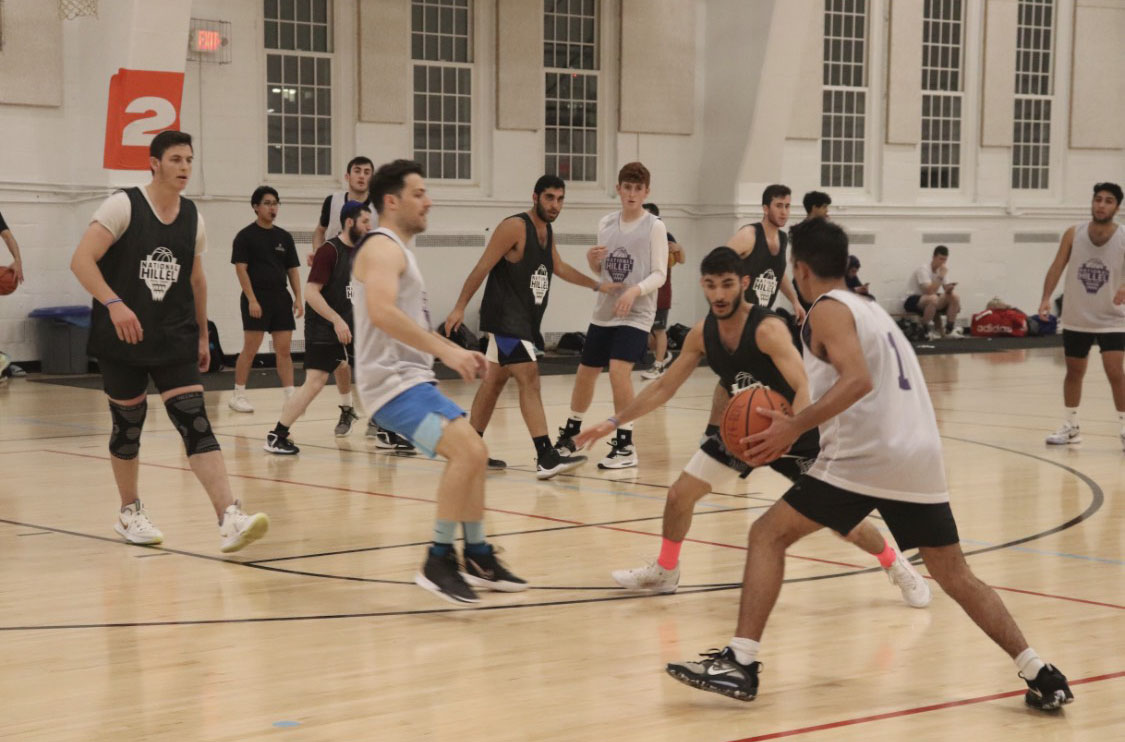
While NCAA Basketball March Madness rages on from the Sweet Sixteen to the Elite Eight to the Final Four, the Hillel at the University of Maryland, College Park is hosting its own annual tournament. The National Hillel Basketball Tournament (NHBT), now in its 14th year, is made up of students from schools from across the U.S. and  runs from March 28 to 31 at the College Park campus, just north of Washington, D.C.

Since it began in 2010, the NHBT has grown; there are 55 teams competing this year, in both the men’s and women’s division.

“The scale of this tournament is massive, and it’s inspiring to see how it brings together the Jewish student community from across the country,” Kanefsky told the Journal. “It’s a testament to what we can achieve when we come together, showcasing sportsmanship, community, and Jewish pride.”

The 20 students running the tournament work year-round. The tournament’s steering committee features two Angelenos and alumni of Shalhevet Jewish School, Abbi Sentchuk and Yakir Kanefsky.

Although the vast majority of the teams are made up of students from their respective schools, there are “free agents” who come to College Park and join another school’s team. The teams range in size from 5 to 8 players. Schools that routinely field a team include Maryland-College Park, Michigan-Ann Arbor, Miami University and SUNY Binghamton. Over the tournament’s 14 year history, 74 schools have participated, from universities with large Jewish student bodies to colleges that barely have enough Jews to field a basketball team, much less a minyan.

“It pretty much is like a shabbaton right in the middle of the whole tournament,” Kanefsky said. “Friday everyone plays their games, but then we have multiple minyanim; I think both a Conservative one and Orthodox one. So obviously college students have different religious observance levels coming in. Friday night we rent out a nice hall on campus for 500 people to all have Friday night dinner together. And then Saturday during the day, there is davening in the morning, and then a big Shabbat lunch with all the players in the Hillel building. A lot of people just end up kind of hanging around the Hillel and just talking to their friends, meeting new people.”

It’s commonplace for members on the steering board to get involved and stay involved with NHBT for their entire college career.

“It’s incredible to see how it has evolved, hosting 55 teams from different schools, Sentchuk said. “We’ve built a community here, bringing together girls and boys teams from across America for a weekend of intense basketball and camaraderie.”

Both Kanefsky and Sentchuk both emphasize that the NHBT is more than a sports event; it’s a cultural gathering that strengthens Jewish identity among college students. They say that the tournament facilitates a meaningful blending of Shabbat activities, athletic competition, with community, new friends and spiritual connection. Registered participants get three nights in a hotel, kosher meals throughout the weekend, jerseys and some surprise frills leading up to the tournament finals, known as The Kiddush Cup. Although they have used the NCAA Terrapins home court at the 17,950-seat XFINITY Center for the final game in years past, it was not available this year, so the final will be at the Terps’ former home, the 1,500 seat Ritchie Coliseum.

The Univerity of Maryland consistently has one of the largest Jewish student bodies in the country. Among their most well-known Jewish alumni are writer and comedian Larry David, Google co-founder Sergey Brin, and investigative journalist Carl Bernstein

“A lot of people don’t really care about sports, but it’s a really fun environment to be a part of,” Sentchuk said. “The tournament is so incredible, at least when I did it the first time. I wanted to be involved in something on campus and to see hundreds of Jews come together and just have the best weekend and know that I was a part of helping make it happen was the reason I loved it. I’m not a huge sports nut, but it’s fun to be on board. It’s fun to work on the tournament and it’s really fulfilling.”

The NHBT also raises funds for a Sha’ar Hanegev Sport Association, an Israeli organization that provides sports equipment to displaced families in Israel.

“It’s about more than basketball,” Sentchuk said. “It’s about uniting Jewish students from various backgrounds and creating lasting memories.”

In fact, the first steering meeting for the 2024 tournament was supposed to be the week after Oct. 7.

“This tournament is so much more important this year than any other year. Bringing Jews together, showing people we’re still here and we’re proud to be Jewish and just enjoy being Jewish on the college campus is so important for us right now.”

“It felt really weird to start asking people to give us money for a basketball tournament when if people are donating money, it should be going to Israel, it should not be going to this basketball tournament,” Sentchuk said. “So that was a really hard thing to start. But then I think once we got together and really started really seeing antisemitism on our campus and campuses across America, we really felt like this tournament is so much more important this year than any other year. Bringing Jews together, showing people we’re still here and we’re proud to be Jewish and just enjoy being Jewish on the college campus is so important for us right now. And I think once we really thought about it deeply and reframed, it definitely felt like the tournament had a much bigger purpose.”

For more information about the National Hillel Basketball Tournament, go to the tournament’s website.

National Hillel Basketball Tournament in Maryland Led by Two Shalhevet Alumni Read More »

Jewish Actor Jake Gyllenhaal Doesn’t Pull Punches In ‘Road House’

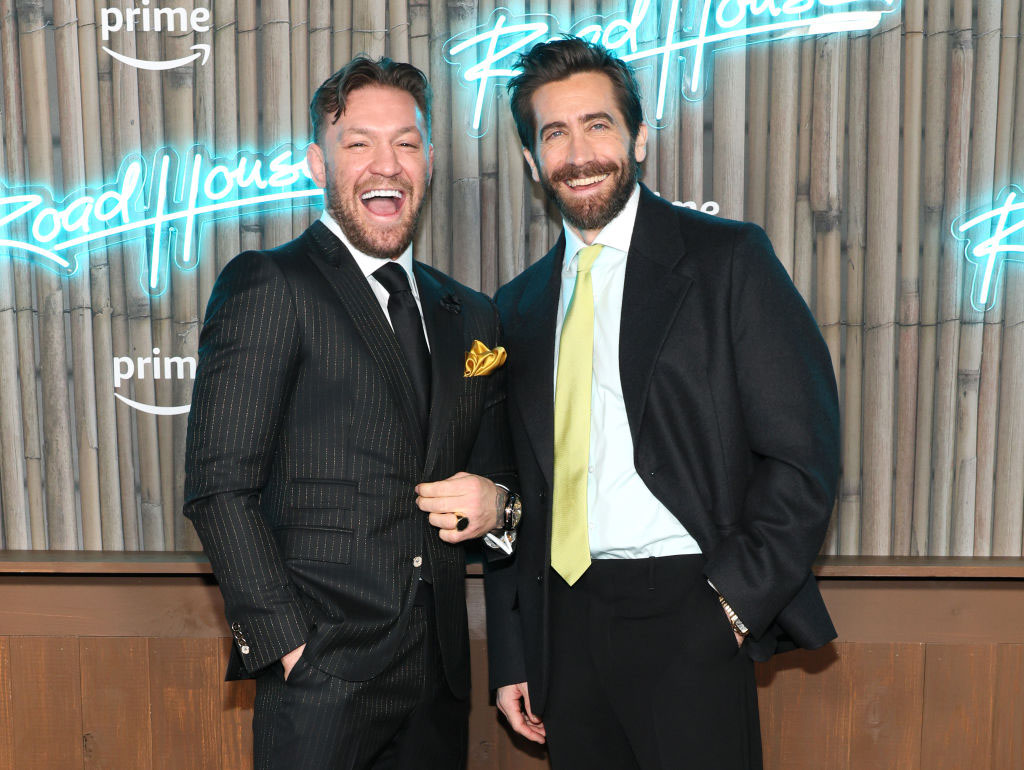
Jake Gyllenhaal is a tremendous actor who can play many different types of roles. In Amazon Prime’s “Road House” — a remake of the 1989 Patrick Swayze vehicle — he is supremely chiseled and believable as UFC fighter Elwood Dalton. The fight scenes are wonderfully choreographed and fun. Conor McGregor, in his acting debut, is an over-the-top antagonist.

Gyllenhaal is excellent but his role is pretty one-dimensional , so we don’t get to see more of his skills. The love story between him and Ellie (Daniela Melchior) feels wedged in and is little more than one short make out session. As Ben Brandt, a villain who is in over his head, Billy Magnussen, who played a Nazi in “Survivor” does a fine job.

For what he was asked to do, McGregor does a fine job and based on his physique and charisma, there is no doubt he has a fine future in Hollywood, though I’d like to see him have scenes that are more challenging.

The story, set in the Florida Keys, finds Dalton taking a $5,000 a week job as a bouncer at a bar where fights are a regular occurrence. There is a corrupt sheriff (Joaquim de Almeida, who basically mails in this performance), and Lukas Cage is serviceable in a small role as a bouncer. What’s missing in the remake is the camaraderie Patrick Swayzee and Sam Shepard had in the original film.

If you’re simply looking for a movie where people get a beat-down and you want tom see cool action scenes, this is a movie for you. Those looking to see a film with muscular guys will also like it.

The film is too predictable but the fight scenes are cool as hell. The decision not to get Dalton bogged down in any romance is an understandable choice, but as a result, some later scenes become cumbersome.

Like the original, this “Road House” is basically a way to show buff men get sweaty and fight.  There is naturally huge interest for McGregor, the most famous UFC fighter of all time.  But I wish this script would have allowed Dalton to have depth, because Gyllenhaal has a big bag of tricks in his arsenal but was only asked to open it a third of the way. Arturo Castro is funny as Moe, who provides needed comic relief.

As a UFC fan, I enjoyed seeing McGregor and think he did well in a one-note part and Gyllenhaal was believable. So, in that sense, the film was a success even though it does not compare to the original and this film is generous on the fight scenes, but skimpy on characterization.

Jewish Actor Jake Gyllenhaal Doesn’t Pull Punches In ‘Road House’ Read More »

Spielberg: “We May Be Condemned to Repeat History — To Once Again Have to Fight for the Very Right to Be Jewish.”

Speaking at an event for the University of Southern California’s Shoah Foundation on Monday March 25, director and Foundation founder Steven Spielberg warned about the perils of forgetting history.

“We can rage against the heinous acts committed by the terrorists of Oct. 7 and also decry the killing of innocent women and children in Gaza,” Spielberg said. “This makes us a unique force for good in the world and is why we are here today to celebrate the work of the Shoah Foundation, which is more crucial now than it even was in 1994. It is crucial in the wake of the horrific October 7 massacre. It is crucial to the stopping of political violence caused by misinformation, conspiracy theories and ignorance. It is crucial because stopping the rise of antisemitism and hate of any kind is critical to the health of our democratic republic and the future of democracy all over the civilized world.”

Stopping the rise of antisemitism and hate of any kind is critical to the health of our democratic republic and the future of democracy all over the civilized world.” – Steven Spielberg

On Dec. 1 last year, the Shoah Foundation announced an initiative to document the survivors and witnesses of the Oct. 7 terror attacks on Israel.

“Both initiatives — recording interviews with survivors of the Oct. 7 attacks and the ongoing collection of Holocaust testimony — seek to fulfill our promise to survivors: that their stories would be recorded and shared in the effort to preserve history and to work toward a world without antisemitism or hate of any kind,” Spielberg said in a press release.

Spielberg’s speech comes six weeks after the Directors Guild of America approved a provisional Jewish Diversity Committee. Though Spielberg is a member of the DGA and one of the most decorated Jewish film directors of all time, he has not yet commented on the committee’s formation.

The event  honored the more than 56,000 Holocaust survivors who have recorded their testimony with the Shoah Foundation since its founding, 30 years ago this month.

March 21st marked 30 years since “Schindler’s List” won Best Picture at the 66th Academy Awards. The film would win seven Oscars total that night, including a Best Director nod for Spielberg. He famously took no salary for the film, which earned over $322 million at the worldwide box office.. Three decades later, “Schindler’s List” is still (arguably) the most well-known Holocaust film of all time.

The screenplay was adapted from the 1982 book, “Schindler’s Ark” by Australian author Thomas Keneally, who happened upon the story through a chance encounter in Beverly Hills with Poldek Pfefferberg, one of the 1,200 Jews saved by Oskar Schindler.

Spielberg concluded his speech today by introducing the featured speaker of the day: Celina Karp Biniaz, a 93-year old, one of youngest Jews saved by Schindler during the Holocaust. She, along with the many thousands of survivors who shared their testimony, were bestowed with the University Medallion. Prior to today, the University Medallion had only been awarded three times — to Walter Annenberg (1994), Dana and David Dornsife (2011) and Wallis Annenberg (2017).

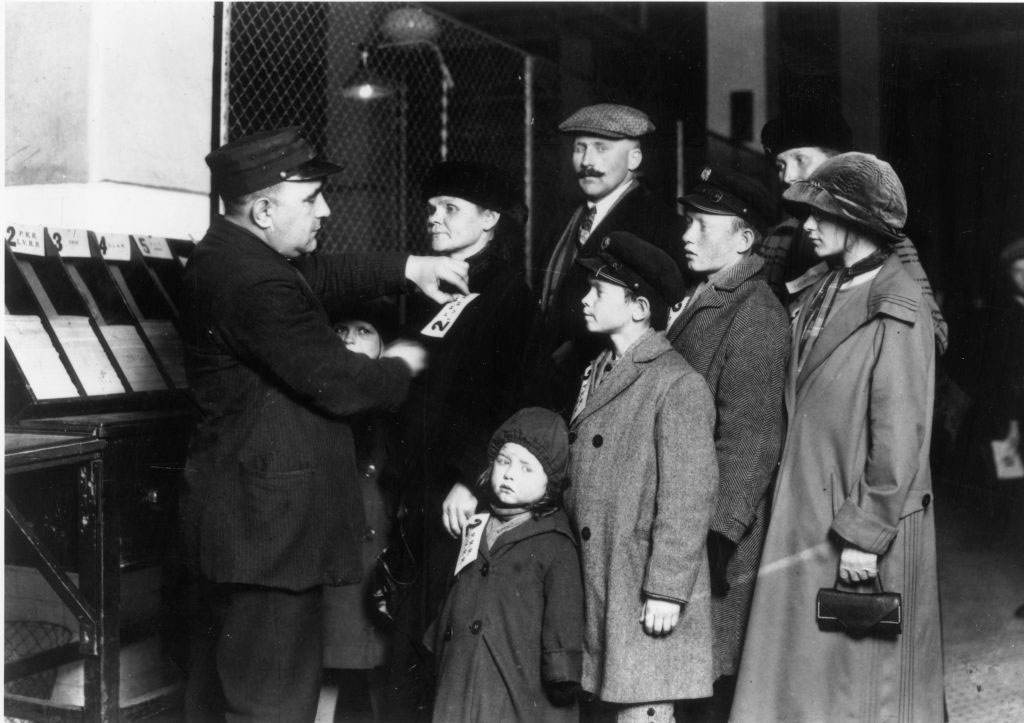
Biniaz was only eight years old when the Nazis invaded her hometown of Kraków. At the time, the city had an estimated Jewish population of 60,000 to 80,000. Her family was sent to the Kraków Ghetto in 1941. Two years later, they were sent to Płaszów Concentration Camp. The following year, Celina, along with her mother Phyllis and father Irvin, were added to a list of Jews that Schindler sought to employ in his enamelware factory. The Shoah Foundation says that she was the youngest female to be added to Schindler’s list. During the relocation, Celina and Phyllis were amongst the 300 women who were erroneously not sent to Brünnlitz, but to Auschwitz. The ordeal was dramatized in Spielberg’s film — including the dehumanizing intake process at Auschwitz. It would be another five weeks before Schindler himself would come to Auschwitz to bring the women 260 kilometers south west to Brünnlitz. She and her parents immigrated to the U.S. in 1947 and settled in Iowa. Until 1994, when the Shoah Foundation was founded, she did not tell anyone that she was a Holocaust survivor. She recorded her testimony in 1996 for the Foundation’s Visual History Archive, and can be watched online.

The full text of Spielberg’s speech today is below:

Good afternoon everyone.

‘It fills me up,’ as my late mom Leah used to say, to be here with you today — 30 years after the Shoah Foundation was founded and 20 years after the University of Southern California became our dedicated partner in this endeavor. To celebrate what we have accomplished and reflect on all that we hope to achieve.

I am grateful to President [Carol] Folt for bringing us together and for her unflagging leadership and support. Please join me in thanking her for her ongoing commitment to our mission.

For many years, I have been incredibly fortunate to spend much of my professional life telling stories. Stories are the foundation of history. Stories can be magical, inspirational, terrifying, and unforgettable. They offer a snapshot of humanity in all its beauty and tragedy. And they are one of our strongest weapons in the fight against antisemitism and racial and religious hatred.

The Holocaust, or as my parents called it, ‘The Great Murders,’ is one of the stories I heard growing up. In my grandparents’ home in Cincinnati, where I lived until I was three, my grandmother taught English to Hungarian Holocaust survivors. During these lessons, I would often sit at the table with her, and it was there that I learned to count— not in school but by being taught the numbers tattooed on survivors’ arms. One man rolled up his sleeve and showed me what the number five looked like, then a three then a seven. Then he said, ‘Wanna see a trick?  This is a nine, but when I go like this, now it’s a six. I was only three, but I never forgot. Years later, when I was in high school in California, I was one of a small number of Jews at my school, and I got to experience what it was like to be on the receiving end of antisemitism both verbally and physically and through silent exclusion. It was a stark reminder that even though decades had passed since the Holocaust, the distance between my grandmother’s table and the halls of my high school wasn’t very far, and that discrimination against the Jews was not something that started or ended with World War II.

In the years leading up to and during the production of ‘Schindler’s List,’ immersing myself in the darkness of the Holocaust was imperative. The one thing that always punctured the darkness was when Holocaust survivors would visit us in Kraków. I remember every survivor had a story to recount. But I also remember that it pained me that their stories were not being documented as proof of what had been done to them and to all the Jews of Europe. By coming forward to share their stories on camera, a permanent record would be preserved for their families, for history, for education, and for every future generation. This became my mission, this became our work. This became the Shoah Foundation.

And here we are, 30 years later, still determined to give those voices every opportunity to be heard. The 56,000 testimonies we have recorded are invaluable in teaching new generations what survivors have intoned for 80 years: ‘Never again.’

Yet in listening to them, the echoes of history are unmistakable in our current climate. The rise of extremist views has created a dangerous environment, and radical intolerance leads a society to no longer celebrate differences but instead conspire to demonize those who are different to the point of creating ‘the other.’

The idea of ‘the other’ is an idea that poisons discourse and creates a dangerous wedge throughout our communities.’Othering’ rationalizes prejudice and encourages the willful denial and distortion of reality to enforce preconceptions. ‘Othering’ is the kindling that fuels extremism and illiberalism. We see every day how the machinery of extremism is being used on college campuses, where now, fully 50% of students say they have experienced some discrimination because they are Jewish. This is happening alongside anti-Muslim, Arab, and Sikh discrimination. The creation of ‘the other’ and the dehumanization of any group based on their differences, is the foundation of fascism. It’s an old playbook dusted off and being widely distributed today.

Those who cannot remember the past are condemned to repeat it. I am increasingly alarmed that we may be condemned to repeat history — to once again have to fight for the very right to be Jewish. In the face of brutality and persecution, we have always been resilient and compassionate people who understand the power of empathy. We can rage against the heinous acts committed by the terrorists of Oct. 7 and also decry the killing of innocent women and children in Gaza.

This makes us a unique force for good in the world and is why we are here today to celebrate the work of the Shoah Foundation, which is more crucial now than it even was in 1994. It is crucial in the wake of the horrific Oct. 7 massacre. It is crucial to the stopping of political violence caused by misinformation, conspiracy theories and ignorance. It is crucial because stopping the rise of antisemitism and hate of any kind is critical to the health of our democratic republic and the future of democracy all over the civilized world.  

This brings me back to our celebration of 30 years of capturing the stories that the world must never forget. The 56,000 testimonies that we have recorded are a foundation upon which bridges can be built and we are building those bridges. A few months ago, at a gathering of a group of survivors, an 82-year-old woman named Hana Rychik shared what I know so many of us are wishing: that those who are currently being held hostage in Gaza should be safe and have hope that they will return home. And then she added something that I know means something to everyone here: ‘We need Peace. Peace and understanding. We should respect each other,’ she said.

I want future generations to hear that story when they sit at their grandparents’ kitchen table, as I did so many years ago. I want them to hear the stories of courage from the past that the Shoah Foundation will continue to record. I also want them to know that we have fought against history repeating itself by celebrating Jewish survival and vitality. I want them to know that we believe in a just world for everyone and will always embrace Hana’s eternal wish for peace, understanding and human dignity.  When her wish becomes reality, and we can live in a world where our essential freedoms are common across all countries, peoples, and religions, that will be the most joyful story ever told.

It is now my great honor and privilege to introduce a survivor who has become one of the Shoah Foundation’s greatest champions and a treasured friend. Please welcome Ms. Celina Biniaz.

Spielberg: “We May Be Condemned to Repeat History — To Once Again Have to Fight for the Very Right to Be Jewish.” Read More »