fbpx

February 21, 2024

Dear Candace Owens (Part 2)

Dear Candace,

The last time we chatted (ok, I wrote to you), you were defending Kanye West for his antisemitic tirades. It was unclear whether you were doing this as his friend or because you agreed with him (though your obnoxious tone suggested the latter).

The past four months have made it all much clearer. Most recently, in a podcast and three, well, rants, you accuse a segment of Jews of being dishonest, disgusting, manipulative, thugs, and Marxists. 

So, to use your favorite expression, let’s be honest here:

Sure, there are Marxist Jews. And they’ve caused us a lot of problems. But they don’t like Israel any more than you seem to. They are not the ones defending Israel against the incessant attacks from Democrats that you have proclaimed to hate. In fact, some have helped to create terrorism-friendly campuses and are taking part in the daily, violent pro-Hamas protests.

You go after “DC Jews” and call them a fringe element, a “rot” in the Jewish community, comparing them to Black Lives Matter activists. Again, you’re a little confused. 

You go after “DC Jews” and call them a fringe element, a “rot” in the Jewish community, comparing them to Black Lives Matter activists. Again, you’re a little confused. Pro-Israel Jews do not “use” antisemitism the way BLM activists use racism. Since Oct. 7, antisemitic incidents in the U.S. have risen 400%. The reason all your “best friends” growing up didn’t call out antisemitism is because it wasn’t as big of a problem then as it is today. 

Or maybe your friends are status leftists who prefer to be silent on these issues precisely because of people like you — who would use it against them?

Regarding the two ads the Israeli government took out for the Super Bowl: Those ads were meant to remind Americans that Hamas still holds 134 hostages — five of whom are Americans. Both President Biden and Secretary of State Blinken are as confused about Hamas as you are. Hamas is not the “government” of Arabs who identify as “Palestinian,” as you claim. They’re terrorists. Are you now pro-terrorism — or just when it comes to Jews? 

Yes, the U.S. gives Israel aid — but nearly all of it must be used to buy American weapons. They’re called Foreign Military Financing grants, meaning they simultaneously give Americans jobs. Maybe if your new bffs stopped trying to destroy Israel these grants would not be needed.

Despite all the nasty stuff you just said about us, let’s assume for a moment that you do like Jews — that many of your “best friends” have in fact been Jewish — and you don’t hate Israel. Let’s assume all of this is coming from the neo-isolationism that Tucker Carlson and the Freedom Caucus espouse. U.S. Rep. Marjorie Taylor Greene (R-Ga.), who believes Jews use space lasers to control the world, was a key member of the Caucus.

There are numerous problems with this neo-isolationism, but since being “America first” is key to who you claim to be today, let’s just look at one: Iran. You may not be aware of this, but Iran doesn’t like America. Iran calls us the “Great Satan.” Iran is also part of the new axis of evil — Russia, China, North Korea — that Carlson doesn’t want to acknowledge.

Which country has the best intel on Iran? That tiny homeland of the Jewish people. Why? Because Israel is “Little Satan” to Iran. Why does Israel have better intel on Iran than the U.S.? Because they’ve had to. Maybe you don’t know this but both Hamas and Hezbollah are Iranian proxies. 

You talk a lot about “emotional manipulation” — indoctrination, brainwashing. We couldn’t agree with you more: The Democratic Party, which is no longer liberal, have become experts at it.

But so have you. Because I don’t think you’re lacking in facts as much as you pretend to be. On the subject of Israel, you seem to want to believe leftist/Marxist lies. 

But your followers are not, um, smart enough to see through your emotional manipulation. And they don’t want to. Most are ultra-nationalist white Christians who don’t like blacks or Jews. They’re willing to overlook your skin color because you incessantly attack blacks and Jews. What do you think they would do if you stopped?

For instance, what if you started to focus on the hundreds of thousands of black slaves across North Africa and the Middle East — owned by Arabs, the very same Arabs you are now aligned with? This has been going on since the Arabs invaded Africa in the seventh century. Do you think that maybe you’ve been emotionally manipulated by the very same people who call all blacks abidin, meaning “slaves”?

As you repeatedly say, all your life Jews have been very good to you — both as friends and employers. But you’ve now attached yourself to the ultra-nationalist/neo-isolationist wing of the GOP, and they, like their parents and grandparents, don’t like Jews. Instead of trying to reconcile this, as an honest person would, you’ve taken the antisemitic way out: blaming Jews for antisemitism. 

Hitler, for whom you have expressed great admiration, would indeed be proud.


Karen Lehrman Bloch is editor in chief of White Rose Magazine.

Dear Candace Owens (Part 2) Read More »

AJU Finalizes Campus Sale to Milken Community School

On Feb. 20, American Jewish University’s (AJU) finalized the sale of its Familian Campus, marking an official transfer of ownership of the 22-acre campus to Milken Community School, a private Jewish high school and middle school located nearby.

The completion of the sale comes more than two years after AJU first listed the hilltop property, at 15600 Mulholland Drive, on the market.

“Today marks a significant milestone as American Jewish University and Milken Community School take a major step to strengthen our Jewish community for future generations,” Milken Head of School Sarah Shulkind and AJU President Jeffrey Herbst said in a joint statement.

Uncertainty over the future of the property dates back to June 2023, when a $65 million sale agreement between AJU and an international education corporation fell through, with the buyer citing opposition from the property’s would-be neighbors as its reason for backing out of the purchase.

Shortly thereafter, Milken—which was a finalist in the June 2023 sale—re-emerged as an interested buyer. In Dec. 2023, the school announced it had entered into an agreement with AJU to purchase the property.

As previously reported in the Journal, AJU chose Milken over Chabad of California. Asked during a Feb. 21 Zoom interview about AJU’s decision to go with Milken over Chabad, AJU President Jeffrey Herbst told the Journal that “Milken made the most compelling offer.”

AJU’s historic sale to Milken serves the needs of both parties: it allows AJU to dedicate more funds to its diverse educational offerings, including digital programs that gained popularity during the pandemic, while easing some of its financial burden, and it gives Milken, which has seen considerable enrollment growth in recent years, the ability to expand its capacity.

The purchase triples the size of Milken, which is currently operating on 6.5 acres on Mulholland Drive.

The sale’s terms allow Milken to lease back part of the campus to AJU operations. Over the next three to five years, AJU will continue housing its administrative offices on the Familian campus, and it will continue operating the site’s community mikvah, which is said to be the only pluralistic mikvah in the Pacific Southwest.

“We’re continuing to discuss [with Milken] how we can not only have a landlord-tenant relationship but an academic-intellectual partnership,” Herbst said in the interview.

“We’re happy to be sharing the facility,” Shulkind said in a separate interview. “We have so many overlapping professionals and lay leaders it feels like we’re sharing the property with a communal partner.”

Shulkind added: “This is about the Jewish community coming together, investing in the future of our children. To me the story is about the power of imagination shaping the future, the story of a thriving Jewish organization when the Jewish people and continuity is not at all a given.”

Meanwhile, AJU will continue operating its Brandeis-Bardin Campus in Simi Valley, which is home to many AJU programs. Over the next two months, Herbst said, AJU will be “reallocating a significant portion of the [120,000-volume] library to the Brandeis-Bardin Campus.”

AJU’s previously announced relocation of its Ziegler School of Rabbinic Studies to the Beverly Hills area—a neighborhood where much of its students and faculty are based—will proceed as planned.

As for Milken, the school’s students will begin having access to some of its newly acquired campus’ resources, including its performing arts spaces, athletic facilities and parking lot, this spring.

Currently, the school is in the early stages of a capital campaign to build the property into a “transformative campus,” Shulkind said, though further details about the school’s plans for the property were not immediately available.

In their statement, Herbst and Shulkind characterized the completion of the sale as an important moment for the Los Angeles Jewish community.

“The collaboration between AJU and Milken is a testament to the collective leadership and vision of both institutions’ boards—and a shared commitment to invest in the future of Jewish Los Angeles,” they said. “We hope that this collaboration will bring strength to both institutions and the next generation of Jews in Los Angeles and beyond.”

AJU Finalizes Campus Sale to Milken Community School Read More »

My Necklace of Solidarity

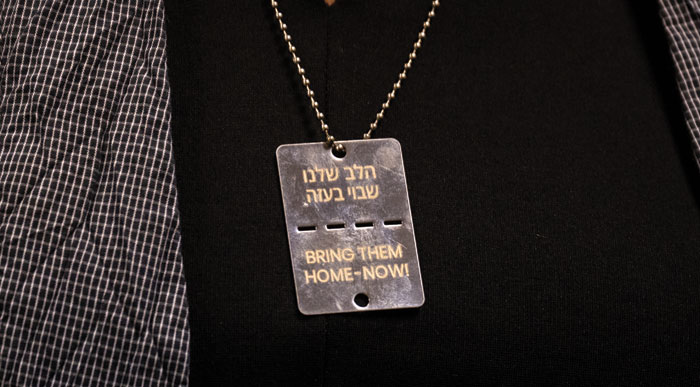
I wear the necklace to remind myself who I am. The silver, dog-tag style pendant hanging from the chain reads “Bring Them Home Now!” Above this message is Hebrew lettering that translates to “The Jewish People Live.”

Wearing the necklace in my Brooklyn neighborhood makes me think of the role Israel has played in forming my identity. While going about day-to-day tasks, the slight clanging sound it makes when I walk around reminds me that the Jewish people — my people — both here and in the Promised Land are in great trouble.  

The necklace was given to me by my cousin while I was visiting her in Florida. She had lived in Israel for several years, and her Florida community includes many Israeli expats, and observant Jews. 

My wife, child and I went to Shabbat services in my cousin’s Sephardic synagogue. Because I was used to the Ashkenazi traditions of my Conservative congregation, the service made me feel like a stranger.

Even though I felt out-of-place amid the Sephardim, wearing the necklace made me feel at one with my cousin and her neighbors. I imagined that everyone I passed on the street was as fixated as I was on the message conveyed by the pendant. While I seldom see the necklaces in my Brooklyn community, they are popular in Israel. Most of my wife’s family is Israeli and we visit them often. 

I marched with my relatives in Jerusalem during one of the pro-democracy protests. I have done volunteer work, promoting a two-state solution to the Israeli-Palestinian conflict. Liberal-Zionism is central to my sense of self. I responded to the Oct. 7 terrorist attack with anger, sadness and fear. Not only am I worried about my nephews serving in the military, but the centerpiece of my ethnic and religious identity is now in flux. 

At home, the Jew-hatred exhibited during pro-Palestinian protests have upended my belief that I was an equal partner in America’s multicultural makeup. I have never felt so vulnerable.

I have taken refuge in the outbreak of tribalism among Jewish-Americans. When my wife and I joined my child’s middle school at a pro-Israel rally in Washington D.C. I felt deeply connected to the 300,000 people in attendance.

I grew up with the belief that such unity is the natural state of the Jewish people. But today we are divided by culture, religion and politics. 

Except for some Ukrainians I know from Federation work my Ashkenazi-centric social circle is closed to Jewish outsiders. I rarely interact with Bukharans, Iranians whose families fled the revolution, or the Hasidim, despite being a short subway ride from their strongholds. 

Perhaps the biggest divide is between Israeli and American Jews. My Israeli cousins have never known what it is like to be a minority in your home country. I have never had to take cover in a bomb shelter. 

The intense divisions revealed by the anti-government protests in Israel made me think Jews were too divergent to ever constitute a singular people in more than name. I felt an emptiness, a kind of loneliness, as I tried to regain my footing in America’s diverse landscape.

The solidarity inspired by crisis has tethered me to the disparate pieces of the Jewish world, pulling them into a whole of which I am a part.

In spite of the ongoing tragedy and loss of life, the months since Oct. 7 have been strangely exhilarating. The solidarity inspired by crisis has tethered me to the disparate pieces of the Jewish world, pulling them into a whole of which I am a part.

Amid New York’s vast array of races, religions, and ethnicities — each with its own concerns and traumas — my necklace symbolizes that I am more than an individual. I am bonded to those I gathered with in Washington D.C. and Jerusalem, to my relatives in uniform, to the hostages, to the students experiencing antisemitism, to everyone calling themselves a Jew.

But I worry that the siege mentality that I and so many other Jews are experiencing will prove inadequate to sustain the surge of togetherness sweeping the Diaspora. In a podcast by the Shalom Hartman Institute, Donniel Hartman, author of “Who Are The Jews And — Who We Can Become,” talks about the impact of crisis on Jewish peoplehood: “But at the end … while catastrophes and antisemitism might exist … people are only going to choose Judaism [and peoplehood] if it inspires them.”    

He believes that American Jews need a peoplehood project. I agree.

The Israeli nonprofit Shaharit thinktank combines leadership training and cross-cultural outreach to help dissimilar Israeli communities find their commonalities. The Diaspora needs similar efforts on a large scale. 

Rallies, slogans, and necklaces are no substitute for the glue of making a commitment to each other.  Only then will the Jewish People truly Live.


Ben Krull’s work has appeared in The New York Times, Washington Post, New York Daily News and other publications.

My Necklace of Solidarity Read More »

The Color of Courage: Navalny

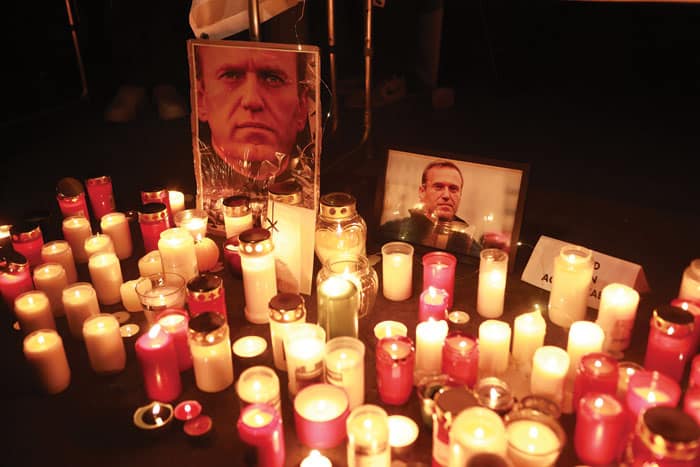
Alexei Navalny died on February 16. A great beacon of hope for Russia and the world is gone. In his memory, this is an essay I wrote last year. Bog Blagoslovit Vas Vsegda Alexei. (God Bless You Always Alexei).

How does one color the intangible?

They say love is red, jealousy is green, happiness a bright yellow perhaps. But how about courage?

Which color does one bestow on that rarest, most noble form of human attributes? The sort of courage which, in its most admirable and altruistic forms, by definition sets the very few over the many. The inherent, inbred kind which makes the bravest among us dare to look pure evil in the eye and yet face it head on.

I think if intangibles were to be color-coded, then courage should be a bright, magnificent, fiery orange. Like the color of a great burning fire or that of a thousand flames. Sometimes, it should be given an identity or bear a name. In this story the name is Navalny.

He became a rallying symbol of freedom for millions around the world, the very personification of true courage who proved to be an exception to the rule by the strength of his convictions, his undeterred commitment to a cause greater than himself.

Alexei Navalny, the man with nine lives. The charismatic, prominent Russian opposition leader who has cheated death more than once. A man whose brave, untamable spirit simply refuses to be afraid, to cow down to his persecutor and arch nemesis — Vladimir Putin. He became a rallying symbol of freedom for millions around the world, the very personification of true courage who proved to be an exception to the rule by the strength of his convictions, his undeterred commitment to a cause greater than himself. Someone who made his life mission to free his beloved Russia from the chokehold of totalitarian dictatorship. 

With eyes wide open and fully cognizant of the perilous road ahead, Navalny is now engaged in an existential, perhaps fatalistic “pas de deux” dance with Putin, a thuggish entity with a sinister penchant for poisoning or throwing off high rise windows those who dare oppose, criticize or challenge his leadership. One is tempted to ‘Shakespearianize’ the fateful dance between these two men, were it not for the monumental difference which is that Shakespeare’s tales were just that: tales. No tale to be told here but an all-too-real, desperate struggle for life or death played on the world stage for all to see as a man’s life is slowly, willfully being extinguished by another man drunk on power and hate.

Navalny was arrested, prosecuted and detained dozens of times. In 2017 he was sprayed with an antiseptic green dye, Triamethylethane, causing temporary loss of vision to his eye. In 2020, he was poisoned again with the nerve agent Novichok and almost died. After a recovery period in Germany he decided to return to Russia. Arrested at the airport, he was jailed and has remained incarcerated since in the remote penal facility IK-6 Melekhovo, an infamous prison known for abuse and torture. Kept in solitary confinement in a 7 x 8 feet cell, injected with unidentified medications he remains disconnected from family, friends and lawyers. 

The latest images allowed to filter to world media show a visibly weakened, gaunt Navalny standing behind his cell bars, hands outstretched in an enigmatic gesture, perhaps a silent question. The amoral nature of such cruel incarceration revolts us to the core. This ruthless cabal of persecution against an innocent man is nothing but a personal vendetta against someone Putin perceives as a clear and present threat to his despotic rule over Russia. 

And so this is the epic, still-unraveling story of two men, two individuals, who are the absolute antithesis of each other. Men whose values, morals standards and code of ethics are worlds apart. One is feared and loathed, standing free and all-powerful and yet all we see in the glaring light of day is a pathetic little man trapped in a moral black shroud, an inescapable world of darkness which he himself created and no light dare enter. The other is loved and admired. He is estranged from the rest of the world, confined to an alternate sort of quasi-reality in a microscopic, garishly lit prison cell where pain and suffering are now his daily bread. And yet, even from the inside of that dark dwelling, a great light seems to emanate from him, radiating all around him.

The light is the color of 1,000 flames — the color of courage, of men yearning to be free. It burns bright and strong, riding on the wings of those before him who fought the noble fight for liberty and freedom from the yoke of tyranny; it rides on the wings of love, the message of hope and the grandeur of spirit which no earthly space, large or small,  can ever hope to contain.


Annette H. Sabbah is a Los-Angeles based multi-media Artist, Designer & writer. 

The Color of Courage: Navalny Read More »

Or Ami’s Jews of Color Shabbat

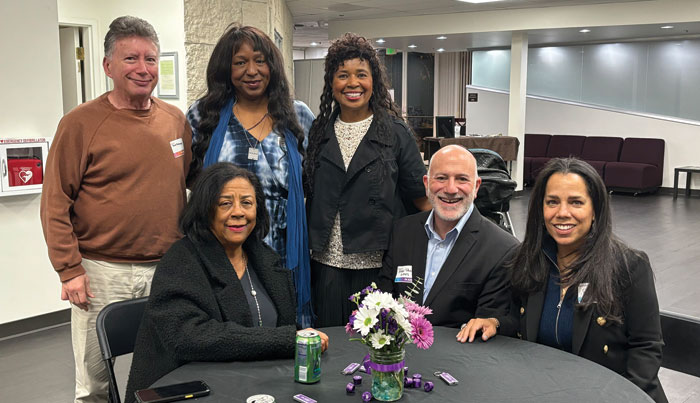
On Friday, February 16, in honor of Black History Month, Congregation Or Ami in Calabasas hosted an Embracing Jews/People of Color Shabbat. This is part of Or Ami’s Mosaic Initiative to create a model of belonging that other synagogues might emulate.

“For years, I had dreamed of expanding the embrace of our synagogue community, so that Jews of color and their families would feel exceedingly welcomed and embraced,” Rabbi Paul Kipnes told the Journal. “At the core of Congregation Or Ami’s vision is a commitment to being a mosaic of Moses’ people.” 

Or Ami has about 8% Jews of color/people of color, ranging from African, Latinx, Asian and multi-race, as well as LGBTQ+ families. It’s important to the congregation for all Jews, no matter what their background, to feel like they belong. 

The event, hosted by Shonda Walkovitz, Or Ami’s JOC/POC community coordinator, featured a dinner and conversation before shabbat services. 

Walkovitz spoke about the questions Jews of color often get asked at a synagogue: “Are you Jewish? Who are you here with? Did you convert?” 

“Not all Jews of color use the words Jews of color or people of color,” she said. “My job is to create events that center around everyone’s culture in our synagogue and invite everyone to join, learn and experience.”

Then, the group heard from April Powers, co-founder of Jewbian Princess and VP DEI at Project Shema.

“The ways we define ourselves matter, whether we are Ashkenazim, Beta Israeli, Mizrahim, Sephardim and more; the diversity of our community is a strength.” – Shonda Walkovitz

“She spoke about diversity in Jewish spaces, emphasizing how our culture is thousands of years older than current racial constructs,” Walkovitz said. “The ways we define ourselves matter, whether we are Ashkenazim, Beta Israeli, Mizrahim, Sephardim and more; the diversity of our community is a strength.” 

Powers also talked about valuing the intersections of how we identify from disabled to LGBTQ+. 

“Every facet of Jewish identity has survived millennia of persecution and deserves to be highlighted,” she said. 

Then the honorable retired councilwoman Jan Perry, who is also a Jewish person of color spoke. Sam Jinchi of HAMAKOM, who works for Valley Beth Shalom, brought slides of the Old Jewish temples in Mexico City and talked about his family in Mexico.

“I wanted to give everyone a different experience from what it means to be a Jew or person of color,” Walkowitz said 

Or Ami president Richard Rutin addressed the new congregants and spoke about the initiative. Rabbi Lana Zilberman Soloway and Cantor Kyle Cotler also attended, along with members and friends of their community. 

“For years, we have been designing an initiative to make Congregation Or Ami a safe welcoming space for Jews of color and their loved ones,” Kipnes said. “Our constellation of most cherished values reflect that commitment; yet we know – from the literature on experience in synagogues of Jews of color and conversations that were shared with me by people who tried out other synagogues – that a vast majority of Jews of color do not feel comfortable in most synagogues.” 

He adds, “Central to that Mosaic Initiative was hiring a Jewish person of color who could guide us, educate us on how to avoid the usual missteps and transform our Or Ami community.”

Kipnes first met Walkovitz about two years ago at the launch of the Challah And Soul non-profit, which Walkovitz runs with Judi Leib. In July, Or Ami received a grant from the Jewish Federation to support putting this into action. 

Walkovitz was brought on board last fall. A few days later October 7 happened. The initiative was delayed but not forgotten. A new year brings ample opportunities, and a slate of wonderful events. 

In January they had their first Or Ami Mosaic Jews of Color potluck.

“It was a wonderful event where we brought members together to bond over food and shared experiences,” said Walkovitz. “We discussed ways to strengthen our connection to Judaism and the community as a whole.” 

Suggestions were made on how to bring their ethnicity into their Jewish practice. 

“Ezina LeBlanc-Hoff, who co-hosted with me, shared how her Moroccan Jewish heritage plays into her love and celebration of Pesach and Mimouna,” Walkovitz said. “Another congregant Sherwin B, spoke of the drums that were played at his Jewish Temple in Africa and how that moved him and his community. Everyone brought special family dishes and recipes were shared.” 

The group agreed to meet monthly to deepen their connection, welcome others into the community and plan events for the entire congregation.

“On April 30, we will have our first Mimouna Festival,” Walkovitz said. “Celebrated by Moroccan Jews, [the Mimouna Festival] has spread into more mainstream Israeli culture.”

To join the community or attend events, reach out to Shonda Walkovitz at shonda@orami.org or go to OrAmi.org.

Or Ami’s Jews of Color Shabbat Read More »

Matisyahu to Venues Canceling Shows: “We’re Not Going to Stop”

Matisyahu and his crew were getting ready for his show at Meow Wolf, a venue in Santa Fe, New Mexico, after driving from the previous show in Austin, Texas. However, 20 minutes before he was set to do a VIP meet and greet with his fans, he found out some distressing news.

“One of my fans asked me if my show was canceled,” he told the Journal. “I said, ‘No way. Why would it be canceled?’”

The singer quickly called his manager, who told him that the staff at Meow Wolf, who claimed they were pro-Palestinian, decided not to come into work that day to protest the show. The show was subsequently called off.

“My crew and I sat in my tour bus while some protestors gathered outside and chanted, ‘From the river to the sea.’ That was fun,” he said, in a sarcastic tone.

As Matisyahu and his crew drove to the next venue, the Rialto Theatre in Tucson, Arizona, and started loading their equipment in, they got notice that this show, too, was canceled.

“I’ve played there many times over the years, and it’s always been a great venue and crowd,” Matisyahu said. “I heard the same thing: they’re planning to cancel the show. I went on a rampage to find a new venue. I thought, if they’re going to cancel our shows, we’re going to play somewhere.”

He called a friend and found a new venue that typically hosted reggae artists, The Rock.

“We had a free show with our own security,” Matisyahu said. “There were tons of fans and Jewish kids and Israelis. There also weren’t any security issues, which is the reason the Rialto gave for canceling the show.”

In a viral social media post after the cancellations, the singer wrote about the venues, “They do this because they are either anti-Semitic or have confused their empathy for the Palestinian people with hatred for someone like me who holds empathy for both Israelis and Palestinians. It is truly a sad day when dialogue with those you disagree with is abandoned for hate mongering and silencing artistic expression.”

Matisyahu said he believes that the staff who didn’t show up to work are, “young and ignorant and don’t know the truth of this conflict.”

So far, the upcoming shows – including two in California – are still being held as planned. Along with the protests and past cancellations, someone wrote “pretty obscene things about Jews and Israel” on Matisyahu’s trailer, he said. “It’s what we are dealing with out here now. Some places where we know there will be issues, like Portland, where they threw red paint all over the venue where my name was, we will be ready. There are probably going to be a lot of protestors.”

“If we get canceled, we’re not going to stop.”

Every night of the tour, Matisyahu puts an empty chair on the stage, drapes an Israeli and Golani Brigade flag on it and mentions it’s there for the hostages. He also puts up videos of his performances on social media, saying in a recent post, “I’m gonna be iron, like a lion, in Zion,” quoting Bob Marley.

“What’s happening now is something that affects all of us musicians and people traveling around the country and making a living,” he said. “These things happen if you speak out against Hamas.”

Despite the protestors who show up and the disparaging messages that Matisyahu receives online and off, he said there has been much more love than hate on this tour, which encourages the singer to keep going.

“If we get canceled, we’re not going to stop,” he said. “We’re going to every single city on this tour. If we get canceled, we’ll find another place to play, whether it’s a Hillel or a Chabad house, whatever it is.”

He continued, “We are really feeling the love right now. There are a lot of Jews and supporters of Jews who are stepping forward. I’m getting calls from all types of people who say, ‘Matis, don’t be afraid. Don’t stop.’”

Matisyahu to Venues Canceling Shows: “We’re Not Going to Stop” Read More »

Time Is On Israel’s Side

Mick Jagger had the Rolling Stones insisting in 1964 that “Time is on my side.” Yet in the song, Jagger never explains how or why this is true. In most cases, time is a contra. Athletes are constantly reminded that Father Time is undefeated. Time is the most precious commodity, yet the least merciful. When time is gone, it leaves forever. Even Cher can’t turn back time. 

So it is delightfully ironic that only four months after the Oct. 7 Hamas attacks, time is on Israel’s side. 

At first blush, this defies logic. The initial pro-Israel sentiment of the Biden White House evaporated under heavy pressure from Democrats representing the party’s anti-Israel wing. Leftist rage on college campuses exploded into demands for a permanent ceasefire. 

Yet cutting through the fog like the Israeli Defense Forces cuts through Gaza, there is a very different picture. Far from being forced to cease operations, the IDF is expanding its offensive. Time is on Israel’s side. 

Counterintuitively, the nonstop news cycle turned into a net positive. The longer the war lasts, the better the long-term picture is for Israel. 

Credit media fatigue. Russia’s war on Ukraine once dominated nightly news coverage. Within months, Ukraine barely mustered mentions.

Now Israel fatigue is setting in. This gives the IDF a free hand. Time is a precious resource, but so is money. Media outlets cannot spend millions of dollars discussing Israel when there are so many other stories to cover. Every moment the media focuses on nonsense is a moment they ignore Israel. 

Now Israel fatigue is setting in. This gives the IDF a free hand. Time is a precious resource, but so is money. Media outlets cannot spend millions of dollars discussing Israel when there are so many other stories to cover. Every moment the media focuses on nonsense is a moment they ignore Israel. 

The Super Bowl normally dominates all coverage, but this year’s football circus was even bigger. Taylor Swift is dating Kansas City Chiefs tight end Travis Kelce. When Swift says something, does something, or is rumored to have thought something, all other news stops. Look at newspaper front pages. Who receives more coverage, the IDF or Swift? You know the answer. 

Well over 100 million Americans watched the Super Bowl. While Swift brings in new fans, a thrilling football game decided on the final play was what kept fans glued to their seats and the media laser focused on football. There was virtually zero Sunday media coverage of a daring Israeli raid that killed several Hamas terrorists and rescued two Israeli hostages alive. With Israel’s enemies screaming bloody rage, the media obsessed over whether Kansas City Chiefs coach Andy Reid would retire and if Kelce would propose to Swift. The Israelis waged war in plain sight and America yawned. 

Even on days when we are spared hearing what Swift had for breakfast, 2024 remains an election year. Iowa and New Hampshire were less exciting than ever, yet they still sucked up weeks of media oxygen. Joe Biden and Donald Trump are the heavy favorites to face off for the White House. 

The moment the general election starts, every utterance of these two men will justifiably dominate the news. The two people vying to be the leader of the free world are by their very existence newsworthy. A Trump win gives the IDF significant latitude to wage war. Yet Biden would be committing political suicide if he caved to his left flank in an election year. Israeli Prime Minister Benjamin Netanyahu knows this. The Biden campaign is not going to let Trump outflank them on Israel. When the anti-Israel left labels Biden “Genocide Joe,” that helps him in November. 

Beyond politics, major sports events abound. With the Super Bowl over, next comes NASCAR’s Daytona 500 followed by college basketball’s March Madness. April starts the NBA and NHL playoffs. That takes us into June. Americans tend to tune out politics during summer. 

Even passionate anti-Israel protesters are facing Father Time’s brutal wife. Mother Nature unleashed a harsh winter including paralyzing ice storms across America. Protesters drop in numbers when the price of protesting is hypothermia. As March transitions from lion to lamb, precious time for anti-Israel activity will have evaporated. 

Even when the anti-political climate of summer barbecues ends after Labor Day, good luck trying to track down politicians or government officials. They will be in November campaign mode. After the elections come Thanksgiving, Christmas and Hanukkah. America shuts down as exhausted Americans want political junkies to silence themselves and pass the stuffing.

Anti-Israel zealots face defeat not from pro-Israel crowds, but by the indifferent silent majority.

Anti-Israel zealots face defeat not from pro-Israel crowds, but by the indifferent silent majority. Like it or not, many Americans care more about Kim Kardashian’s fashion choices than Middle East occurrences. The Emmys and Grammys having concluded, Hollywood is preparing for the Academy Awards. 

War fatigue has landed. Ratings from war coverage have ebbed. The war and the screams of Israel’s Gaza enemies have become boring. Once a story peters out, good luck trying to gin up a sequel. Even COVID seems like the distant past as networks desperately seek something to fill our airwaves. 

The IDF has a window to do whatever it wants, whenever. Does anyone think Americans would have cared if Israel eliminated every remaining senior Hamas commander the day after the Super Bowl? This was especially unlikely given Mardi Gras Tuesday and Valentine’s Day Wednesday. Throw in a booming stock market and corporate CEOs desperate to help teenage clients build Swift-friendly investment portfolios. 

Let nonsense distract the media. Down the rabbit hole of pop culture may they go. 

Time is on Israel’s side.


Eric Golub is a retired stockbrokerage and oil professional living in Los Angeles.

Time Is On Israel’s Side Read More »

Israel’s Long War

We’ve known since the afternoon of Oct. 7 that this Gaza war was going to be much longer, darker and uglier than its predecessors. But over the last few weeks, the end of the conflict has seemed especially far away.

By the time you read this, Israel’s assault on the southernmost Gaza city of Rafah may already have begun. It’s clear that the majority of Hamas leadership and ground fighters have relocated there for what they see as a cataclysmic battle against the Israeli military. It’s equally clear that Prime Minister Benjamin Netanyahu sees the opportunity to strike a decisive blow against the terrorists, renewing his vow for “total victory.”

Meanwhile, Hamas’ negotiators have been setting such outlandish conditions for the release of additional Israeli hostages that Netanyahu has removed his representatives from those discussions. And Netanyahu went to great lengths last week to throw cold water on calls for a two-state solution, as his Cabinet issued a formal declaration stating that any such agreement would “grant a major prize to terror.” Neither the end of the fighting or the hostages’ freedom seems likely anytime soon.

Israel’s efforts to defeat the terrorists now runs the risk of slipping into the “oh yeah” category for those without a direct stake in the crisis.

As the war drags on, the international community’s patience — and Americans’ interest — is waning. The urgency of the Ukrainian war effort, along with renewed evidence of Vladmir Putin’s menacing goals, has moved that conflict back to the top of the news after being eclipsed by the violence in the Middle East for several months. Israel’s efforts to defeat the terrorists now runs the risk of slipping into the “oh yeah” category for those without a direct stake in the crisis.

New revelations about the United Nations’ support for Hamas have been met not with outrage but with shrugs. Most appalling was the assertion in a British television interview from a senior U.N. official saying that Hamas was “not a terrorist organization” and indicating that it should instead be categorized as a “political movement.” Attempting to clarify his statement the next day, Martin Griffiths, head of the U.N. Office for the Coordination of Humanitarian Affairs, wrote on the social media site X that while Hamas had committed “acts of terror” on Oct. 7, it is somehow not on the Security Council’s list of groups designated as terrorist organizations.

(Israel’s official account posted this response: “Just to clarify, you’re a Hamas apologist and your statements are an insult to every single victim of Oct. 7. Pathetic.” The exchange received scant media coverage in the U.S.)

A day later, Defense Minister Yoav Gallant released a video of a U.N. relief worker removing the body of an Israeli man who had been shot on Oct. 7, providing the first visual evidence to support Israeli allegations that UNRWA (United Nations Relief and Works Agency) employees assisted in the Hamas attacks. Meanwhile, the Israeli army announced the existence of an underground Hamas tunnel complex directly beneath UNRWA’s Gaza headquarters.

But much of this information has been overshadowed by a series of alarming news reports from Russia, including the death of dissident Alexei Navalny, the emergence of Russian efforts to develop nuclear capability in outer space, and the increasingly precarious status of Ukrainian military efforts after the fall of the key strategic city of Avdiivka. Just as the Ukraine/Russia “stalemate” robbed that conflict of a compelling storyline to attract Western media and public attention for much of last year, the protracted fighting between Israel and Hamas appears to be having a similar effect.

Putin famously wagered at the outset of his war that the West’s level of interest in the fight with Ukraine would diminish as time passed and that international backing would diminish as well. It appears that his gamble may have proven to be correct: Even as Europe continues to increase its military and financial aid, domestic political divisions in the U.S. make our country’s continued role much less certain.

The same international impatience for quick victory could also impact Israel’s challenge. But simply because a war is long and slow doesn’t make it any less important. American resolve and patience are more important than ever – especially among American Jews. 


Dan Schnur is the U.S. Politics Editor for the Jewish Journal. He teaches courses in politics, communications, and leadership at UC Berkeley, USC and Pepperdine. He hosts the monthly webinar “The Dan Schnur Political Report” for the Los Angeles World Affairs Council & Town Hall. Follow Dan’s work at www.danschnurpolitics.com.

Israel’s Long War Read More »

Trump and the ACA

The drama can still be viewed on-line. The Senate stood deadlocked, one vote from repealing the landmark Affordable Care Act (ACA). Senator McCain, the tie breaker, strode to the center of the Senate floor, as all eyes focused on him. He extended his arm and flipped his thumb downward, defeating the repeal. With that gesture, McCain saved healthcare for millions. He prevented health insurance companies from once again denying coverage to cancer victims, diabetics and others with pre-existing conditions. He allowed those up to age 26 to maintain coverage under their parents’ insurance. 

Since the failure of the repeal, Republicans’ approach to the ACA largely mirrors the politics of Medicare. Though most Republican legislators opposed the 1964 measure for seniors, they supported it once their constituents gained the benefit of healthcare. Similarly, many Republicans now echo conservative Idaho Senator Mike Crapo, who considers the ACA “part of all of the existing health structure.” Yet candidate Trump remains hostile. He continues to call for repeal, promising “much better healthcare for the American people.” Like his 2017 repeal effort, a replacement proposal remains conspicuously absent. 

Without an alternative health insurance program or discussion of any specific pitfalls of the ACA, it can be fairly suspected that Trump’s motivation to end the ACA reflects personal animus toward President Obama, and a desire to trash his signature accomplishment. The fact that millions of innocent Americans could be caught in the middle does not seem to be part of the equation. As a physician caring for patients dependent on the ACA, I worry about a second Trump term. 

The political influence Trump would leverage to end the ACA starts with die-hard MAGA loyalists who account for only about a third of the GOP. Yet, in Republican primaries, that core of support proves decisive. As Liz Cheney’s fate shows, neither Republican nor conservative bona fides will protect any anti-Trump incumbent. Trump’s near absolute control of Republican legislators should underline concerns about democracy in a second term. Based on the number of vulnerable Democratic seats in the Senate, Republicans will likely regain control after the 2024 election. 

Like previous elections, the House appears to be a toss-up. If Trump were elected with control of both Houses, the subservience of the GOP legislators would confer absolute power even without extra-legal actions. Only the Senate filibuster rule would stand in his way. If Trump moved to end the filibuster, who among this cohort of Republican Senators would muster the courage to give a McCain like thumbs down? The last independent minded Republicans have already been “primaried,” retired or otherwise sidelined.

As the events of January 6th showed, the sine qua non of Trumpism is avoiding the loss of power.

As the events of January 6th showed, the sine qua non of Trumpism is avoiding the loss of power. The January 6th investigations uncovered Trump’s use of bogus slates of electors to try to flip the states he lost. Only Vice-President Pence’s refusal to cooperate frustrated the coup. Given that brazen power grab, what might we expect from a term-limited Trump trying to extend his power beyond a second term? The likely answer is as ancient as the Roman empire and as current as North Korea’s regime. He would likely choose a family member as a surrogate for a third Trump term. How many of the Republican sycophants could be counted on to oppose Donald Trump Jr.’s ascent to the Presidency? 

In addition to the risk for American healthcare security, a second Trump term would also threaten progress on global climate change, reproductive freedom and voting rights. But misguided policies can be revisited as long as the system’s key checks and balances remain intact. Trump’s threat to irreversibly destroy constitutional norms and our legacy of representative government poses a unique and profound risk far exceeding the danger to the ACA and other specific policies.   

The dangers once posed by President Nixon’s Watergate activities now seem almost quaint compared to the possible election of a President willing to stage a coup to remain in power. Yet, the lessons of Watergate still apply. The night that Nixon fired Archibald Cox, the special Watergate prosecutor, Cox warned that, “whether ours shall be a government of laws and not of men is now for Congress and the American people.”  A half century later, Cox’s warning appears even more ominous as we approach this year’s presidential election. 


Dr. Daniel Stone is Regional Medical Director of Cedars-Sinai Valley Network and a practicing internist and geriatrician with Cedars Sinai Medical Group. The views expressed in this column do not necessarily reflect those of Cedars-Sinai.

Trump and the ACA Read More »

The Yechiel Jacobs Effect: Transforming Adversity with Laughter

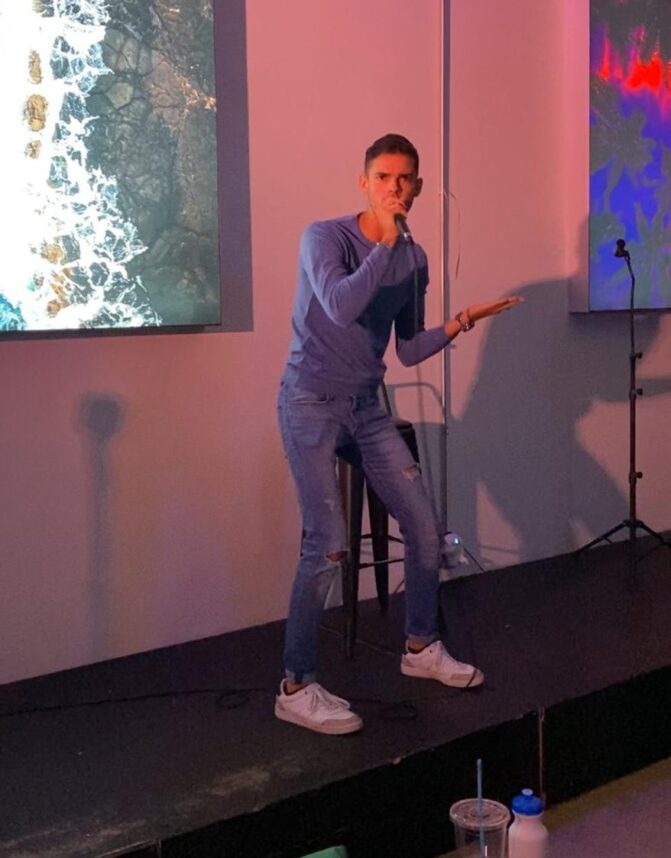
Amid the relentless flood of digital information, discerning the real from the fabricated becomes a formidable challenge—a challenge Yechiel Jacobs, an emerging content creator, meets with a unique blend of reason and humor within the Jewish community. At the age of 22, Jacobs’ journey from Israel to New York tells a unique story of growth, insight, and a dedication to confronting absurdities with comedic creativity.

Yechiel Jacobs, with permission.

Foundations of Faith and Identity

Raised in an Orthodox Jewish environment and spending a year studying in Israel, Yechiel’s background provides him with a unique lens to view and tackle misinformation. Through his content, he highlights the ridiculousness of anti-Israel content with wit and insight. Jacob’s approach does more than just entertain; it serves as a powerful tool to cut through the noise, offering insights on serious matters and fostering a sense of unity within the community.

Finding a Voice Through Content Creation

Jacobs often came across online videos so misleading that he was convinced they were intentionally distorted. His response? To dial up the absurdity and use humor to make his point. “The stark contrast between the real Israel and its online depiction drove me to action. Humor was my way in,” Jacobs says.

His humor-filled rebuttals didn’t just hit a nerve; they struck a chord, encouraging him to hone a unique comedic style which now serves as a basis for his content. 


View this post on Instagram


A post shared by Yechiel Jacobs (@jacobsyechiel)

Impact and Engagement Through Humor

In an era where social media feeds are dominated by “feel-good” content, Yechiel Jacobs faces a unique challenge: to draw attention to serious and often painful topics in a way that engages in the social media ecosystem. Jacobs skillfully navigates this challenge by infusing serious topics with sarcastic humor, transforming complex issues into accessible and shareable messages. 

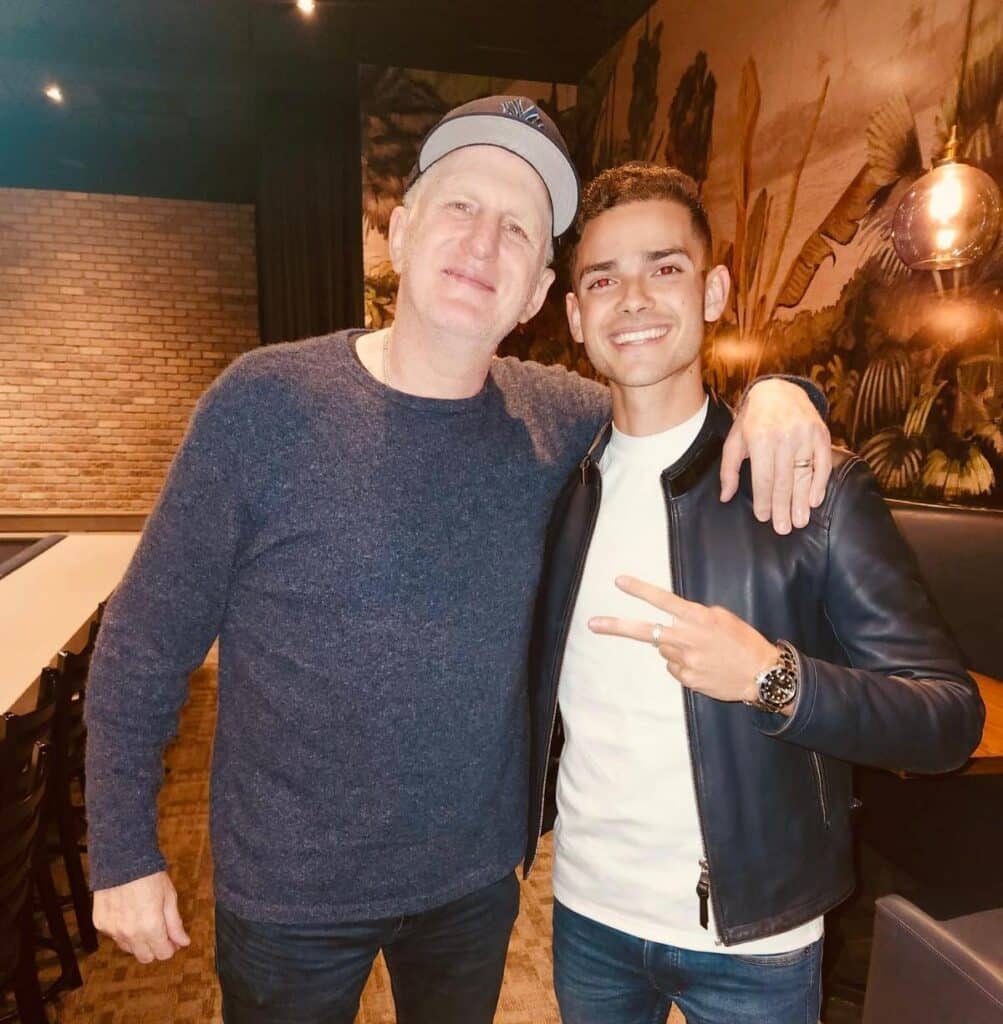
“The overwhelming response to my first video, which quickly garnered over 300,000 views, was a revelation. It showed me the untapped potential of humor as a medium for serious discourse,” Jacobs recounts. This approach has not only led to viral success but also earned him notable recognition within just four months of content creation. His achievements include amassing over 77,000 followers on Instagram, a video hitting over 2 million views, and a collaboration with Michael Rapaport—a renowned actor known for his versatility across television series like Boston Public, Prison Break, Friends, and The War at Home, as well as films such as Metro, Deep Blue Sea, and Higher Learning. 


View this post on Instagram


A post shared by Yechiel Jacobs (@jacobsyechiel)


Yet, for Jacobs, the most rewarding aspect is the personal testimonials from individuals who find solace and joy in his content amidst their struggles. “Hearing from people who tell me my videos have brought laughter back into their lives, especially after the hardships they’ve faced, is the greatest accomplishment,” he shares.

Humor as a Catalyst for Change

Yechiel Jacobs harbors a deep commitment to using his comedic talent not just for entertainment but as a tool for social impact. His content is driven by a dual purpose: to uplift the spirits of the Jewish community and those reeling from the tragedies of the October 7th massacre, and to disseminate the truth about Israel. “My primary goal is to bring joy to the Jewish people and to anyone else touched by recent sorrows. I aim to showcase the beauty and truth of Israel through my work,” Jacobs emphasizes. 

His innovative approach to content creation demonstrates the power of humor to bridge divides, stimulate discussion, and foster a sense of community among those affected by the current political climate. Through laughter, Jacobs opens a path to understanding and healing, proving that even in the face of adversity, a shared joke can become a shared hope for a more united future.

Navigating Challenges

Yechiel Jacobs’ journey through content creation has not been without its obstacles. Early on, Jacobs encountered an overwhelming backlash overnight, with his notifications flooded by a barrage of hate speech, death threats, and derogatory comments. This moment marked a significant challenge in his career, yet it also underscored the resilience he would need to continue. Despite the hostility, the outpouring of support from those standing with Israel played a crucial role in his perseverance. “The overwhelming positive feedback and support from Israel’s allies significantly outweighed the negativity from detractors,” Jacobs found. This encouragement not only helped him weather the initial storm but also strengthened his resolve to continue his work, highlighting the resilience required to address sensitive topics in the public domain.

Looking to the future, Jacobs is determined to expand his impact, with plans to “take his endeavors to the next level.” He is exploring opportunities for tours and collaborations with renowned celebrities to further disseminate his message and humor. His content’s success, characterized by its blend of humor and relatability, resonates deeply with audiences, capturing thoughts many have but seldom articulate.

In conclusion, Jacobs emphasizes the importance of maintaining optimism and resilience, particularly within the Jewish community. He advocates for a positive outlook as a means to counter adversity, stating, “The only way to fight darkness is through light.” This principle is central to Jacobs’ mission as he continues leveraging humor as a tool for fostering unity and understanding.


The Yechiel Jacobs Effect: Transforming Adversity with Laughter Read More »