fbpx

January 24, 2024

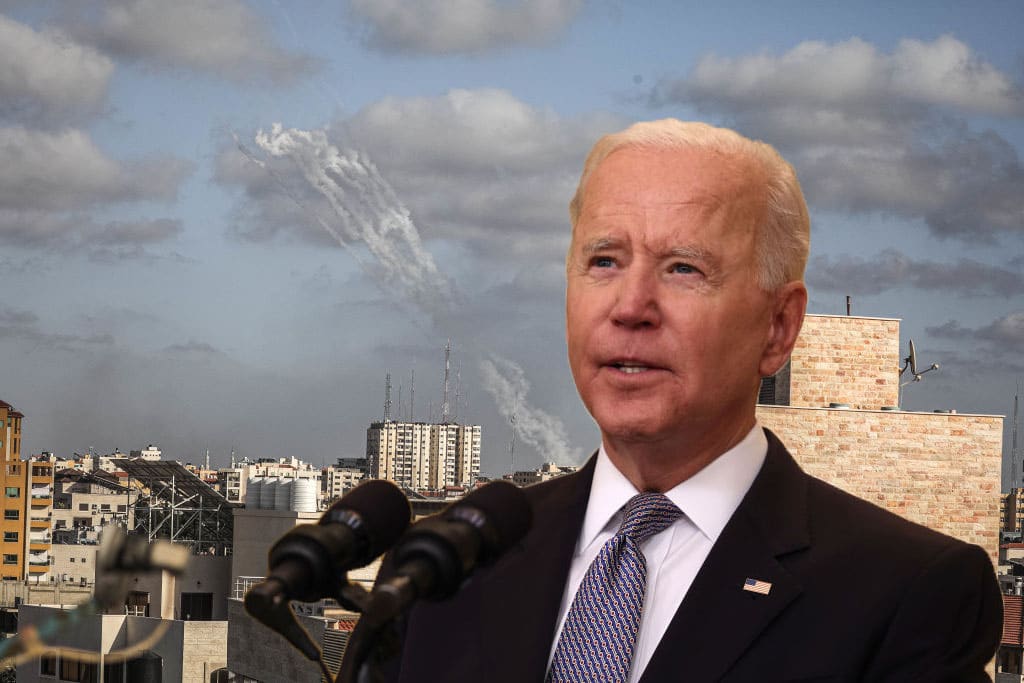
Biden’s Mideast Gamble

It is entirely possible that the Gaza War could play a disproportionate role in determining the next president of the United States. But what we don’t know yet is whether the war hurts Joe Biden’s chances or helps them.

Since the first days after the Oct. 7 massacre, it has become clear that the Democratic Party’s growing fissure over Israel and Biden’s ongoing challenge with his party’s progressive base were colliding in an unhelpful way for the president. Those young people, minority voters and other liberals who have never liked or trusted Biden had already become greatly dissatisfied with his presidency, and public opinion polls showed that many of them were willing to consider a third-party alternative or sit out the election altogether. Their unhappiness with Biden on what they considered to be his inadequate efforts on their priority issues such as climate change, criminal justice and voting reform was now greatly intensified by their objections to his largely pro-Israel approach to the Gaza conflict. 

For many years prior to Hamas’ terrorist attacks, pro-Palestinian advocates have been assiduously courting various left-leaning constituencies. The Gaza war capitalized on these efforts and have drawn large numbers of U.S. political progressives into the pro-Palestinian camp (and some, sadly, into the ranks of Hamas defenders and apologists).

These were never Biden’s voters to begin with: They had supported Elizabeth Warren or Bernie Sanders in 2020 and only grudgingly accepted Biden when the rest of the field coalesced around him as the party’s best chance of defeating Donald Trump. Even in the best of times, he had their heads but never their hearts. And post-Oct. 7 polling showed that Biden’s margins among Black and Latino voters were at historic lows, and that he was actually losing Generation Z after carrying that age group by more than 20 points four years ago.

As the war continued, Biden has been increasingly assertive in his pushbacks toward Israeli Prime Minister Netanyahu. But his party’s base remains unimpressed, and their restlessness is spreading from digital media and street protests to the halls of Congress.  Biden’s support for Israel may be the right thing to do, from a foreign policy, global security and moral standpoint, but it still has the potential to do him enormous political damage. Most of these disaffected progressives would not vote for Trump with a gun to their heads and a knife to their throats. But with MAGA true believers extremely motivated to turn out for their candidate, Biden cannot afford such large numbers of lukewarm Democrats staying home in November. 

In recent days, though, the White House has begun launching trial balloons about a different path forward in the Middle East. The Biden Administration is shifting their primary focus from the war itself to a post-war landscape in which Israel develops a more formal alliance with Saudi Arabia and strengthens its existing relationships with Egypt, Jordan, United Arab Emirates and others in a coalition that would rebuild Gaza, enhance regional security and more forcefully confront Iran. But the Saudis and others will not enter such a partnership unless it also provides for a two-state solution; and given that Netanyahu’s fierce opposition to a Palestinian state is now mirrored by roughly 80% of the Israeli people, this type of sweeping compromise seems extremely unlikely.

But the White House believes that such a development would not only fundamentally alter the security and diplomatic landscape of the Middle East, but would strongly boost the political fortunes of the president who orchestrated such an agreement. The creation of a Palestinian state would placate the left, and a more assertive stance against Iran would help with centrists and even some conservatives.

The calendar works against such a deal: it’s difficult to see the war ending before the U.S. elections, let alone having time to negotiate such a complicated set of agreements by November. 

The calendar works against such a deal: it’s difficult to see the war ending before the U.S. elections, let alone having time to negotiate such a complicated set of agreements by November. But it would certainly transform the Middle East into an immense political asset for Biden. So even as the fighting in Gaza rages, expect those quiet conversations in Jerusalem, Riyadh and Washington to continue.


Dan Schnur is the U.S. Politics Editor for the Jewish Journal. He teaches courses in politics, communications, and leadership at UC Berkeley, USC and Pepperdine. He hosts the monthly webinar “The Dan Schnur Political Report” for the Los Angeles World Affairs Council & Town Hall. Follow Dan’s work at www.danschnurpolitics.com.

Biden’s Mideast Gamble Read More »
Jewish Biopics Take a Front Seat at this Year’s Academy Awards

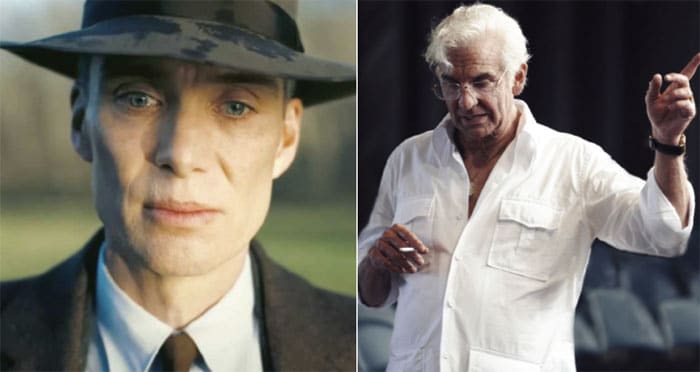
Among the Jewish influence at the 2024 Academy Awards on March 10, historic Jews that are the subject of films nominated include physicist J. Robert Oppenheimer (“Oppenheimer”), composer/conductor Leonard Bernstein (“Maestro”) and the fourth Prime Minister of Israel, Golda Meir (“Golda”). 

Conversely, there are five nominations (including Best Picture) for the film, “The Zone of Interest,” a historical drama about Rudolf Höss, commandant of Auschwitz. English film director and screenwriter Jonathan Glazer leads the field of Jewish nominees at the upcoming 96th Academy Awards, with three nominations. Glazer is nominated for Best Director, Best Adapted Screenplay and Best International Feature for “The Zone of Interest.”  

“Oppenheimer” received the most nominations with 13, including Best Picture. Robert Downey Jr. received his third Oscar nomination for his supporting role in “Oppenheimer” as Rear Admiral Lewis Strauss. He previously received a nomination for Best Supporting Actor for the 2009 film “Tropic Thunder,” as well as a Best Actor nomination as the titular character in the 1993 biopic, “Chaplin.”

Steven Spielberg received a nomination for producing “Maestro.” This is Spielberg’s 24th overall nomination, having won Best Picture and Best Director for the 1993 film “Schindler’s List” and Best Director for the 1998 film “Saving Private Ryan.” 

Dan Friedkin, a businessman who made his fortune in the automotive business, received his first nomination, as co-executive producer of “Killers of the Flower Moon.” The film is nominated for ten Oscars this year, including Best Picture. 

“Barbie” received eight nominations total, including for Best Adapted Screenplay (Noah Baumbach) and Best Original Song (Mark Ronson). Ronson won an Oscar for co-writing the song “Shallow” from the 2018 film “A Star Is Born.” This is Baumbach’s fourth nomination, previously for the 2009 film “The Squid and the Whale” and the 2019 film “Marriage Story.”

Josh Singer received a nomination for Best Original Screenplay for co-writing “Maestro.” He previously won the same award for co-writing the 2015 film “Spotlight.” Overall, “Maestro” received seven nominations, including Best Picture. Notably, “Maestro” also received a nomination for Best Makeup and Hairstyling. This comes after much controversy about the prosthetic nose adorned by the film’s star Bradley Cooper. Many people in the Jewish community found the enlarged nose on Cooper (who is not jewish) to be an offensive stereotype. Some have labeled it “Jew face.” Still, Cooper received a nomination for Best Actor as Leonard Bernstein, and two more for his executive producing and co-writing the script with Singer. 

Composer Laura Karpman received her first Oscar nomination for Best Original Score for the film “American Fiction.” It is Karpman’s first nomination. “American Fiction” received five total nominations, including Best Picture. 

Diane Warren received her fifteenth nomination for Best Original Song, for writing the music and lyrics to the song “The Fire Inside” from the film “Flamin’ Hot.” At the 2023 Academy Awards, Warren received her first Oscar statuette, an honorary award ”For her genius, generosity and passionate commitment to the power of song in film.”

Producer Amy Pascal received her third nomination (Best Animated Feature) for co-producing film, “Spider-Man: Across the Spider-Verse.”  She received Best Picture nominations for the 2017 film “The Post” and the 2019 film “Little Women.” 

Documentary producer Sheila Nevins received her first Oscar nomination for producing the short film “The ABCs of Book Burning.” Nevins’ decorated career, having been the top of the MTV Documentary Films and HBO Documentary Films. She has won 32 Prime Time Emmys, more than any other person. 

Cinematographer Edward Lachman received his first Oscar nomination for his work on the Netflix comedy-horror film “El Conde.” 

Production designer Arthur Max received his fourth nomination for the film “Napoleon.” He previously received three nominations for the 2000 film “Gladiator,” the 2007 film “American Gangster,” and the 2015 film “The Martian.”

Showbusiness legend Mel Brooks will receive an honorary award. The Academy’s official declaration reads, “Mel Brooks lights up our hearts with his humor, and his legacy has made a lasting impact on every facet of entertainment.”

Last but certainly not least, showbusiness legend Mel Brooks will receive an honorary award. Although the announcement was made in June 2023, the Academy’s official declaration reads “Mel Brooks lights up our hearts with his humor, and his legacy has made a lasting impact on every facet of entertainment.” Brooks won an Oscar for Best Original Screenplay for his first film, the 1967 musical comedy “The Producers.”  He was nominated for Best Adapted Screenplay for the 1974 film “Young Frankenstein” and for Best Song, for the titular theme to his 1974 film “Blazing Saddles.” He is also one of only 19 talents to reach EGOT status (winning an Emmy, Grammy, Oscar, and Tony) in competitive categories. He completed the feat in 2001 at age 74 with multiple Tony Awards for the stage adaptation of “The Producers.” 

The 96th Academy Awards will air on ABC on Sunday, March 10th from the Dolby Theatre in Hollywood, with comedian Jimmy Kimmel set to host for the fourth time. 

Below is a list of the Jewish nominees at this year’s Academy Awards: 

NOMINEE FOR BEST PICTURE
Dan Friedkin, co-producer, “Killers of the Flower Moon”
Steven Spielberg, co-producer, “Maestro”

NOMINEE FOR BEST SUPPORTING ACTOR
Robert Downey Jr. as Lewis Strauss in “Oppenheimer”

NOMINEE FOR BEST DIRECTOR
Jonathan Glazer, “The Zone of Interest”

NOMINEE FOR BEST ADAPTED SCREENPLAY
Noah Baumbach, co-writer, “Barbie”
Jonathan Glazer, co-writer, “The Zone of Interest”

NOMINEE FOR BEST ORIGINAL SCREENPLAY
Josh Singer, co-writer, “Maestro”

NOMINEE FOR BEST MUSIC, ORIGINAL SCORE
Laura Karpman, “American Fiction”

NOMINEE FOR BEST MUSIC, ORIGINAL SONG
Diane Warren, songwriter of “Flamin’ Hot” from the film “The Fire Inside”
Mark Ronson, co-writer of “I’m Just Ken” from the film “Barbie”

NOMINEE FOR BEST ANIMATED FEATURE
Amy Pascal, co-producer, “Spider-Man: Across the Spider-Verse”

NOMINEE FOR BEST DOCUMENTARY SHORT FILM
Sheila Nevins, co-producer, “The ABCs of Book Banning”

NOMINEE BEST INTERNATIONAL FEATURE FILM
Jonathan Glazer, writer and director, “The Zone of Interest”

NOMINEE FOR BEST CINEMATOGRAPHY
Edward Lachman, cinematographer “El Conde”

NOMINEE FOR BEST PRODUCTION DESIGN
Arthur Max, production designer, “Napoleon”

Jewish Biopics Take a Front Seat at this Year’s Academy Awards Read More »