fbpx

January 5, 2024

Before Traveling to Spain, Watch This Documentary about a Hidden Jewish History

The next time you visit Spain, set aside a day to take a $20 flight from the mainland to the island of Majorca, a Spanish Island south east of Spain’s Mediterranean coast.

But before you do, make sure to watch the Menemsha Films documentary “Xueta Island: The Lost Jews of Majorca” which explores the hidden Jewish history of Majorca dating back almost 1,000 years.

Majorca is about the size of Puerto Rico, but not nearly as populated.

The documentary’s director, Dani Rotstein, has lived in Spain for nine years and now runs a tourism business, Jewish Majorca, offering Jewish history tours on the island in six different languages.

Rotstein grew up in a Jewish home in New Jersey. After spending 15 years working as a television commercial producer, he landed a job in Majorca. Though he had lived in Madrid for an entire year and had visited Ibiza many times, he never once visited the island of Majorca.

The documentary chronicles how Rotstein first learned about the Jewish history of Majorca when he visited an Orthodox shul. It’s an exciting journey of history and how a chance encounter led to a new life mission for Rotstein.

Rotstein was inspired by the island’s secret Jewish community, known as the Xuetas, who were forced to convert to Catholicism during the Spanish Inquisition— but continued to practice Judaism in secret.

He was fascinated by the Xuetas’ determination to maintain their Jewish identity despite centuries of persecution.

A memorial to Jews murdered on the Spanish Island of Majorca (Menemsha films)

The documentary also highlights the recent resurgence of Jewish life on the island over the last half century and a growing interest in Jewish heritage among the island’s residents.

While sometimes it’s spelled “Mallorca,” Rotstein says that he spells it with a ‘J’ because his tour company is “putting the ‘J’ back in Majorca.”

One fascinating part of the documentary is how during the late Middle Ages and early Renaissance, covert cooking was a way for the Jews to stay undetected while observing the laws of kashrut. In the challah department, to emphasize their “conversion” to Christianity, some Jews intentionally incorporated lard and pork fat into the bread, signifying their break from secret Judaism and their commitment to Catholicism.

And then there’s the Sabbath empanadas. They acted as a natural oven for cooking kosher ingredients like fish with scales and vegetables inside a bread—similar to a dumpling. They were prepared before Shabbat and this dish continued to cook slowly over the Sabbath, allowing it to be consumed without reheating or further cooking throughout the day. While pork was added to the top bread, it wasn’t directly mixed with the cooked contents. Instead, it was placed on top as a symbol. After returning to their homes, the pork would be removed before consumption, allowing the meal to be enjoyed without breaking the laws of kashrut.

“That’s how I’m dedicating my life, sharing the story with tourists, but also residents,” Rotstein told the Journal. “We go into public schools, tell the story of the history, we also talk about the Holocaust, and we’re trying to make Judaism more visible on the island. Luckily, now we can do that, without the Catholic church domination and Francisco Franco’s dictatorship. It’s finally a time where we can be open about our Jewishness.”

While the documentary goes into much depth about the Jewish history of Majorca, the Journal asked Rotstein several clarifying questions about the history and his journey as chronicled in “Xueta Island.” The conversation has been edited for length and clarity.

JEWISH JOURNAL: What’s the 2 minute summary of what happened to the Jews of Majorca?

DANI ROTSTEIN: After 1391, when there was this terrible attack on the Jewish Quarter of Palma [on the island], not necessarily because they were Jewish just because the rural folk in the farmlands of Majorca were being heavily taxed and just had a famine. A lot of people were dying, also because of the black plague, things were not going well economically from Majorca. So what’s the first thing you do? You look for a scapegoat, you look for someone to blame. The rural people came to the city in Majorca and they went after the noble class and the authorities. They didn’t actually go after the Jews right away. They chased all of the wealthier upper class that lived in the city, the city dwellers, they chased them to the castle where they were safe. Since they couldn’t get to the noble class, the farmers said, ‘If we can’t get to the wealthy upper class, the Nobles, well, let’s go get to the next group of city dwellers— the Jews.’ The farmers destroyed Jewish Quarters all over Majorca.

JJ: You said there was a fact you learned recently that didn’t make it into the documentary.

DR: After this terrible destruction of the Jewish Quarter where 300 men, women and children were killed, the king actually went ahead and replaced the Jews that were killed. He paid for Jews from North Africa and Portugal to come live in Palma so they wouldn’t lose the Jewish community there. That says so much. That’s the only place in the world at this time where that happened. The people who had done the killing and the massacring were really like the general public. They were being told in the churches that the Jews killed Jesus and the Jews are bad and you have to try and convert them. The king, the upper class, knew how important the Jews were. They didn’t want to lose their Jewish community—the Jews were so financially important, they were all of the money lenders because they couldn’t do anything else. So that was one of the jobs that they had, yeah. Some Jews went to North Africa. In 1435, about forty years later, there was another massacre. But this time, instead of being killed, the Jews were allowed to convert. So I don’t know about you, but for me, if I had the option of dying or converting, I’m gonna choose conversion.

JJ: How did this Jewish community have a resurgence?

DR:  British Jews who started this synagogue 50 years ago. I was shocked to hear that in Catholic Spain, under Francisco Franco’s rule, there were these tiny Jewish communities basically in Madrid, Barcelona, and Majorca. In about 1971 British Jews bought a plot of land for British expats that were living there for a Jewish cemetery. They just did things like Passover and Rosh Hashana and some big holidays in a hotel that they had timeshares in. It wasn’t until 1987 that they actually opened up the synagogue that you see in the film.

JJ: Tell us about the first synagogue experience you had in Majorca.

DR: I moved there thinking that I was gonna be the only Jewish person on the island. Then I got there not knowing anyone and, speaking to friends at work at this production company I was working at. It turns out that there is a synagogue that someone told me about. I didn’t know what to expect. I didn’t know if it was going to be a Sephardic one or Ashkenazi transplants. It ended up being Ashkenazi transplants. So I went to this synagogue, and it wasn’t very welcoming at first. It was very hard to find it. There wasn’t a Facebook page, not even a website. It was just kind of like this undercover synagogue. I go inside and there’s no rabbi, it’s just like the volunteers leading the prayers. It’s an Orthodox shul. They said that they didn’t have a minyan so we had to skip the kaddish. They said there aren’t ten Jewish men, but I counted 14 men in the men’s section. I was pretty sure that the global number for minyan is 10. I asked the guy next to me, why are we skipping when there’s obviously a minyan? And he looked at me and said that not all of these men are Jewish. Some of them are Xuetas. I never heard that word before. He told me that the Xuetas are Catholic descendants—the Jewish Conversos of Majorca.

JJ: What was going through your mind when you first heard this?
DR
: “You’re telling me there’s Catholics who are going to synagogue and not counting as a minyan and they come every Friday?” I was really blown away by this tiny island in the Mediterranean that not many people heard about. I was really intrigued and it took me along this journey of wanting to discover more about this specific, Jewish history of this random island in the Mediterranean called Majorca.

JJ: What are common reasons for people to move to the island?

DR: It’s a beautiful place, obviously, great health and wellness opportunities. There’s lots of retreats. A lot of yoga people go there for spirituality, training, like if you’re a big cyclist, you’re gonna want to visit Majorca. Generally good weather. If you’re a beach bum, you’ll love that place. And Myorca tends to be one of the more international cities all over Spain. After all, it has Spain’s third largest airport after Madrid and Barcelona.

Xueta Island will be screened throughout Los Angeles in early 2024. For showtimes, go to

https://xuetaislandthemovie.com/.  To set up a tour with Rotstein and Jewish Majorca, go to their website: https://jewishmajorca.com/

Before Traveling to Spain, Watch This Documentary about a Hidden Jewish History Read More »

The Village Synagogue Raises the Bar for What a Community Concert Should Feel Like in 2024

In a year where the concert quality ante was raised exponentially by Taylor Swift and her record-shattering Eras Tour, The Village Synagogue of West Hollywood took a cue and went all in with their annual Hanukkah bash. No, this event was not held over the course of six nights at SoFi Stadium. But what this young and mighty synagogue pulled off at Pan Pacific Park on December 11th was truly spectacular.

The Village Synagogue held their 2023 Menorah Lighting Ceremony at Pan Pacific Park, making it truly an open-invitation gathering for the townspeople in a public place. And before the show even began, to approach the neighborhood that night, you could tell something special was about to happen.

From miles away, you could see that there were eight laser lights beaming thousands of feet into the cloudy Los Angeles sky over the area just east of The Grove. Kudos to the engineers at Voltlites for the setup.

While approaching Pan Pacific Park, artificial smoke and cobalt-blue light emanated, and a track of a Matisyahu song was playing. Along the sidewalks surrounding the park, the townspeople approached the security perimeter— gaggles of rambunctious youth, families with strollers and dogs, the elderly folks with walkers, and young professionals attending the first of several first of several Hanukkah events they’ll go to that night.

The location felt safe but not fortified. There was meaning to be found in every direction. To the north, a reminder of how dark the world can be—the Holocaust Museum L.A. To the south, Park La Brea—a planned residential community that was described to the Journal by a resident as “squalid masquerading as luxury.” To the west, the holiday bustle and hustle at The Grove shopping center. To the east, a community of homes and shops in one of the most Jewish neighborhoods in town.

Earlier this year, Pan Pacific Park was truly a site of light triumphing over darkness. Arson destroyed the playground in the summer of 2022. Less than a year later, the playground was fully rebuilt and with financing from a generous neighbor, Michael Hackman, the owner of Television City studios, two blocks from the park.

Even an hour before the show began, there was an energy in the area that already far exceeded The Village Synagogue’s event from 2022. Last year’s event was held at The Grove’s “town square” ( or whatever they call the always-overcrowded trolley track/water fountain chokepoint of shoppers and tourists). Then, singer Nissim Black performed, TikTok star Montana Tucker addressed the crowd, The Grove’s owner and recently-defeated mayoral candidate Rick Caruso gave a warm message, and 100-year-old Holocaust survivor Joe Alexander had the crowd’s jaws agape. The packed crowd danced, sang, and I have a vague recollection of someone crowd surfing. So a few weeks ago, when Rabbi Zalmy and Chana Fogelman contacted the Journal to attend and cover their synagogue’s menorah lighting event this year, I told him that last year’s event may have been the most fun I’ve had at a Hanukkah party in my adult life.

The concert opened with Kosha Dillz, fresh off a plane from Israel. Along with DJ Erez Safar, Dillz’ kicked off his opening song with a defiant jump kick from the drum platform. The first song of the night, “Hanukkah Song 3.0” is a faster-tempo remix of Adam Sandler’s hits, and had the crowd of at least 2,000 bouncing.

Rapper Kosha Dillz raises a defiant fist with a crowd of thousands at Pan Pacific Park (Photo credit: Xenia Leo & Shots by Moish).

Next up was Israeli pop star Idan Raichel with his calming yet breathy piano pop tunes. From the side of the stage, I could see there were multiple people in the front rows brought to tears by his voice as he sang “Me’cha’ke (Waiting).” While doing a piano interlude, Raichel took a verbal swipe at the Red Cross and the secretary General of the United Nations.

Hasidic folk soul band Zusha played the longest set of the night, which included the song  had the crowd fired up with their apropos song, “Hanukkah Is Here” with the hook, “It’s dark outside but it’s light in here.”

There were also remarks by one of the two Jewish members of the Los Angeles City Council, Katy Yaroslavsky, as well as Israel Bachar, Consulate General of Israel in Los Angeles.

Actor Ben Savage, a candidate for U.S. Congress for California’s 30th District, led an impassioned charge to the crowd.

“Hang your mezuzahs up, let’s raise our voices not in fear, but in pride and solidarity,” Savage told the crowd. “Our response to adversity is not to hide but to stand taller together. So tonight let’s remember our light will never be dimmed.”

Before Zusha closed out the night with a second set, there were impassioned speeches, and none more powerful than that of Danielle Sasi. The crowd of thousands was silent as Danielle Sasi, with her husband by her side, shared her horrific story of surviving the NOVA Music festival.

“We ask you to spread the light and be the light,” Sasi said in her speech. Rabbi Fogelman echoed a similar sentiment when he spoke, saying “light will always overcome darkness.”

To call the night merely “The Menorah Lighting hosted by Village Synagogue” would be an understatement. By the time the night five candles were lit on stage, it was already much, much more.

“Tonight went really well,” Zusha frontman Shlomo Gaisin told the Journal after the show. “Thank G-d it was so nice to play music with my brother, my friend [and Zusha guitarist] Zach Goldschmiedt and with all these talented musicians, and more importantly, to play music for such an amazing crowd, a collection of so many different people from all walks of life over here in California and from all sorts of Jewish backgrounds. And I’m grateful and it was beautiful to sing some of our own original music and some traditional holiday music and just togetherness music. In times like these music is such a strong way to come together and come together for the sake of light, come together for unity and for peace. So it’s really harmonious for me.”

For many in attendance at The Village Synagogue’s annual Hanukkah bash, it would be the last concert of 2023 that they’d attend. This young synagogue (founded in 2016) raised the bar for what it means to drown out darkness with light in a community yearning to believe better days lay ahead.

And it reinforced that for many young concertgoers, if you’re going to throw a concert in 2024, it better look and feel as cool as the music sounds. Looking back, with the turmoil in Israel, the Jewish community worldwide seemed to feel an obligation to make the light of Hanukkah 2023 last far beyond the requisite eight nights into 2024 and beyond.


The Village Synagogue Raises the Bar for What a Community Concert Should Feel Like in 2024 Read More »

What’s Happening in Gaza is No Genocide

I think I first learned about the Cambodian genocide when I was in elementary school, probably when I was in fourth grade, in 1979. Maybe it was as part of a current events curriculum, or maybe I saw coverage about it on the nightly news with my parents. By that time, I’d already learned about the Holocaust, so the idea of another genocide wasn’t too difficult to fathom. In time, I would learn about other attempts to exterminate whole peoples in places like Armenia and Rwanda.

Yesterday, I took my family to the killing fields just outside of Phnom Penh. In that one location, more than 21,000 souls were brutally murdered by the Khmer Rouge from 1975-1979. Throughout Cambodia, somewhere between two and three million people were slaughtered. We saw a memorial where more than 5,000 skulls of the murdered were stacked in silent judgment of a world that largely did nothing to stop the killing. Additionally, we visited a tree upon whose trunk Khmer Rouge soldiers crushed the skulls of babies.

I’ve been to Auschwitz and Theresienstadt, Babi Yar and Birkenau.

When I see these places and learn about the complex and well-planned operations designed to exterminate the lives of children and women, whole families and villages, ethnicities, nationalities and religions, I am both horrified and mystified. How could a person—whole groups of people in fact—perform such acts?

The recorded history of genocide goes back to biblical times. This week, we begin the book of Exodus. Our Torah tells us of the genocide that Pharaoh plans against the children of Israel. At the end of the first chapter, we read: “Then Pharaoh charged all his people, saying, ‘Every boy that is born you shall throw into the Nile, but let every girl live’” (Ex. 1:22).

It doesn’t make sense to me, how anyone ever could order such a thing or do such a thing.

I reflect on all of this as I read about how Israel is being accused of perpetrating a genocide in Gaza. Such an accusation insults the memories of those killed by the Khmer Rouge and the Nazis. Urban warfare in a place as densely populated as Gaza will inevitably result in civilian casualties, even in the thousands. That Hamas uses its people as human shields as a strategy makes matters much worse.

Such an accusation insults the memories of those killed by the Khmer Rouge and the Nazis.

The IDF’s bombing is not “indiscriminate,” and the current campaign does not constitute genocide any more than the Allies’ bombing of urban targets during World War II. In both the European and Asian theatres, hundreds of thousands of non-combatants were killed. This was not a campaign to erase Germany or Japan from the map of the world or to exterminate an entire ethnic group; rather there were clear military objectives at play. We sought to end the murderous German and Japanese occupations of sovereign nations, free hundreds of thousands of Allied soldiers and civilians dying in Nazi and Japanese prisons and concentration camps, and eliminate Hitler’s control of Germany’s government and armed forces as well as the military cabal leading Japan.

The IDF, too, has military objectives—and a widely known ethical code—guiding their campaign. The IDF aims to destroy Hamas’ ability to murder and kidnap Israeli citizens via rocket fire and cross-border invasion, return the remaining hostages to their homes, and free Gaza from Hamas’ jihadist leadership that turns billions of dollars in international aid into vast networks of tunnels hidden under hospitals and mosques, filled with weapons. (They also use those same aid dollars to fund private bank accounts for themselves in Qatar and elsewhere.)

As regrettable and heartbreaking as the loss of non-combatants in Gaza is, it is not the goal or strategy of the IDF. Certainly, it would be to Israel’s advantage not to kill any Gazan civilians. And unfortunately, it is to Hamas’s benefit for innocents to die in Gaza, preferably at the hands of the IDF.

To call what is happening in Gaza a genocide is to intentionally, and without regard to objective reality, equate the IDF, Israel and, by extension, even Jews who don’t live in Israel (like American college students being assaulted verbally and physically on university campuses) with the worst of the worst: the Nazis and the Khmer Rouge.

This is an act of demonization of the most despicable level, one that, ultimately, God forbid, might be used to justify an actual attempt at genocide on Israelis and the Jewish People.

It is just such an act of demonization on Pharaoh’s part that makes his attempted genocide of the children of Israel possible. He accuses us, a tiny fraction of the Egyptian populace, of being “too numerous,” a fifth column that might lead to Egypt’s downfall.

The real threat to the Egyptians, of course, was Pharaoh himself. Just as Hitler was to Germany, and Hamas is to Gaza.

I’ve been to the killing fields and to extermination camps. I’ve studied genocide and I’ve seen its terrible and tragic consequences. The war in Gaza is no genocide, and labeling it as such contributes to the most virulent type of Jew-hatred.


Rabbi Yoshi Zweiback is the Senior Rabbi of Stephen Wise Temple in Los Angeles, California.

What’s Happening in Gaza is No Genocide Read More »

Indiscriminate Bombing? What Is Israel Doing in Gaza?

The United States has backed Israel’s war on Hamas to eliminate the terrorist threat to Israel’s life, but it has asked Israel to obey international laws of warfare and minimize civilian casualties. Since the aerial bombing and the casualties in this conflict are higher than in any previous clash with Hamas, the charge that Israel is bombing indiscriminately has been widely spread around the world. Apparently even President Biden, who has embraced Israel and its just cause, gave some credence to this claim by quoting it at a donors’ reception. So is Israel living up to international laws of warfare? Has the IDF lowered its moral standards?

Analyzing the situation and the numbers shows that Israel is doing its best to minimize civilian casualties, which is the essence of international laws of warfare. The key metric of minimizing civilian casualties is the ratio of civilian casualties to military casualties. Colonel Richard Kemp, head of the British forces in Afghanistan, reported that in a bid to win popular support against the Taliban, the Allied forces made an all-out effort to reduce civilian casualties. They were able to get the ratio down to three to four civilians killed for every one Taliban fighter killed. This was a historically unprecedented achievement. The ratios of civilians killed by the Allied forces in World War II and in the Iraqwar in the 2000s were significantly higher.

In its previous Gaza conflicts, Israel brought the ratio down to approximately one civilian killed for every fighter killed. This is a sad but noteworthy accomplishment particularly because (as in Iraq) the enemy/terrorists embedded their soldiers and their military infrastructure inside civilian populations and structures. This makes civilians more vulnerable to be collateral damage from an attack on the military assets located in their midst.

What is the ratio of killed civilians and fighters in the Gaza War? We don’t have vetted statistics. The main source for Palestinian deaths is the Gaza Health Ministry, which is controlled by Hamas and which has shown willingness to lie and distort in order to harass Israel. Consider the Al Shifa hospital incident, which they blamed on an Israel air strike when it was caused by a Palestinian rocket fired at Israel that fell short in Gaza. They initially claimed 500 dead. Later reports suggested that the correct number was about 50.

Nevertheless, various analysts agree that the Health Ministry numbers are roughly correct. In fact, they may be undercounted because there are probably many bodies in the destroyed buildings of Gaza not yet uncovered. The Health Ministry numbers apparently include Hamas fighters killed in battle as well as civilians.

The Health Ministry reports 20,500 dead as of December 27. The IDF estimates that it has killed 8,500 Hamas soldiers in the Gaza fighting. An additional 1,000 were killed inside Israel during the counterattack which liberated the southern Israel communities whose residents were massacred and taken over by Hamas. The Health Ministry numbers do not identify how many Palestinians were killed by rockets fired at Israel that fell short and landed in Gaza. An estimated 20% of the more than 11,000 rockets fired from Gaza fall short. These launches are frequently from inside or near civilian buildings including schools, mosques and hospitals,which suggests that they cause not insignificant civilian casualties.

Let us make a necessarily rough assessment. Let’s stipulate that 8,500 of the 20,000 reported dead are Hamas fighters. (We are attributing no deaths to Hamas/Islamic jihad rockets, to offset the uncounted dead in the rubble of Gaza.) The conclusion is that about 1.5 civilians are killed for every 1 fighter killed. This is sharply lower than any ratio achieved by Western armies in recent decades. Non-Western armies have much higher rates of civilian casualties. Some — like Hamas — primarily target civilians.

The Israeli accomplishment is all the more astonishing since Hamas has embedded its fighters and intertwined its rocket launches and military tunnels in civilian homes, schools, mosques and hospitals to an unprecedented degree.

It is no secret how Israel manages to reduce civilian casualties. First, it instructs the civilian population to evacuate from areas where there will be fighting. Israel also evacuates its own civilians to reduce its civilian losses. Over 125,000 Israelis have been evacuated from Southern Israel (the Gaza envelope) and Northern Israel against the probability of a Hezbollah full-scale war. Israel has been condemned for pressing over a million Palestinians to evacuate North Gaza but, plain and simple, it saved hundreds of thousands of lives that way.

In Southern Gaza, it has set up safe zones and protected areas to allow those civilian residents to escape the fight over Hamas’ main centers and with its best brigades in Khan Younis and Rafah. The announced safe zones allow Hamas leaders and fighters to find safety from attacks, so Israeli soldiers lose the advantage of surprise in their incursions. But Israel does this to reduce civilian deaths.

Although the disinformation campaign claims otherwise, Israel attacks only military targets and spares civilian locations in its aerial and ground operations. The big difference in this war is that many civilian locations (including schools, mosques, hospitals, homes) have been coopted by Hamas for its fighting machines. Military use of civilian infrastructure is a war crime that turns the civilians there into human shields. Where the IDF has intelligence that a civilian location has military installations in it, the army does attack — although it makes its best efforts to send specially trained soldiers to capture such local sites while sparing the civilians. This was done at al Shifa hospital, where Hamas had placed an underground base under the hospital command center.

Although the disinformation campaign claims otherwise, Israel attacks only military targets and spares civilian locations in its aerial and ground operations.

The IDF continues to use its other tactics to reduce collateral damage, such as dropping flyers and making mass phone calls to alert civilians to leave because fighting is about to engulf their neighborhood. (Remember that this tactic enables Hamas fighters to escape also. Nevertheless, it is used.) Special munitions that reduce shrapnel scatter and thus minimize collateral civilian casualties are employed. Iron Sting — a new mortar munition with reduced scatter — was developed and used for the first time in this war. There are also “knock-on-roof” shells that alert any civilians inside that a particular home is about to be bombed. This tactic has become less effective in the Gaza War because there is generally less or no time to issue warnings in battlefield conditions.

So why are casualties so much higher in this war? In the past, many operations were scratched when a terrorist target was identified as being in close proximity to civilians. After Hamas’ October 7 massacre, it was clear letting such a terrorist escape meant he was free to kill Israeli civilians. In this war, the mission is not scratched despite the highly regrettable collateral casualties — because we are saving an unlimited number of future Jewish (and Palestinian) lives.

There are two main reasons for the higher level of casualties in this war. First is that the goal is higher: confrontation with Hamas’ military brigades to wipe them out and prevent future massacres. Second is that Hamas fighters are embedded in the civilian population (more likely now wearing civilian clothes) at unprecedented levels. It is simply impossible to fight Hamas without civilians on the spot or immediately nearby. Hamas has done this deliberately, assuming that more dead civilians will generate more criticism of Israel and more international pressure to stop the war.

For its part, Israel deeply regrets the civilian deaths but understands that unless it fights this war, Hamas will have perfected a deadly risk-free massacre program. Kill maximum numbers of Israeli civilians, then tell Israel it must cease fire at once — leaving Hamas untouched — because it is killing civilians. I need not add that this would allow a slow-motion, multi-stage genocide of Israelis with no ability to fight back.

If the international community human rights organizations really wanted to reduce civilian casualties and not provide their shield to Hamas’ genocidal actions, they would call on Hamas to surrender at once. This would stop the civilian deaths at once. Equally important, they should have condemned Hamas’ systematic placing of its military in the midst of civilians and the cynical use of hospitals, mosques and schools as sheltered locations for Hamas fighters and military members. Had they really opposed this tactic, they might have stopped Hamas from committing a gigantic war crime against the Palestinian people by turning them all into human shields.

If the international community human rights organizations really wanted to reduce civilian casualties and not provide their shield to Hamas’ genocidal actions, they would call on Hamas to surrender at once.

Nevertheless, how can Israel deal with the fact that it is killing thousands of civilians including many children? Jewish tradition teaches that every human being is created in the image of God and is of infinite value. It is heartbreaking to kill so many individuals and devastating to realize that the price of saving Israel is the death of so many people (including, not to forget, hundreds of Israeli soldiers). One thinks of Golda Meir’s comment that we can never forgive the Arabs for forcing us to kill their children. Still, it is important for the world to know that Israel continues doing what it can to reduce civilian casualties.

We are living in a terrible world. Genocidal antisemites have great power and lethal capacity. If Israel did not fight back in this necessary but troubling way, then the Jewish state and millions of its citizens would be wiped out. To paraphrase Edmund Burke: All it takes for evil to triumph is for itspotential victims not to fight back.


Rabbi Yitz Greenberg serves as the President of the J.J. Greenberg Institute for the Advancement of Jewish Life (JJGI) and as Senior Scholar in Residence at Hadar.

Indiscriminate Bombing? What Is Israel Doing in Gaza? Read More »

Who Is a Jew? A Baseball Perspective

For the past year I’ve been giving a talk (in-person and via Zoom) called “The Secret History of Jews and Baseball” to Jewish organizations around the country. I point out that since 1901, 187 Jews have played in the major leagues. They comprise about one percent of the almost 19,000 big league players during that period. Many people are surprised to learn that during the 2023 season, 19 Jews played on major league rosters—the highest number in history.

A few Jewish ballplayers—including Hank Greenberg, Al Rosen, Sandy Koufax, Shawn Green, Ryan Braun and current players Max Fried and Alex Bregman—have been among the best players of their eras. But the most interesting stories are about Jews who weren’t superstars, but who still lived fascinating lives.

At every talk, someone inevitably asks: How do you know which players are (or were) Jewish? In typical Jewish fashion, I answer that question with another question.

What do former major leaguers Geoff Blum, John Lowenstein, David Eckstein, Jon Lieber, Gabe Gross, Robbie Grossman, Kyle Lobstein, B.J. Rosenberg, Trevor Rosenthal and Walt Weiss have in common? The answer is that none of them are Jewish.

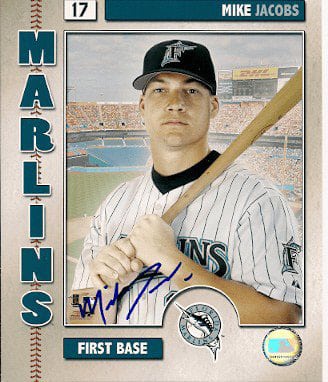
On May 28, 2006, as part of the team’s Jewish Heritage Day, the Florida Marlins honored their first baseman, Mike Jacobs. The team gave young fans tee sheets featuring Jacobs’ name and jersey number. Jacobs was prominently mentioned in the Marlins’ promotional material for the event. The only problem is that Jacobs wasn’t Jewish. The Marlins never bothered to ask him.
A website called Jewish Baseball News (JBN) considers a player to be Jewish if he has at least one Jewish parent (mother or father), or converted to Judaism, does not practice another faith, and is willing to be identified as a Jew. Even if a player has Jewish heritage in his background, and even if (as prescribed by traditional Jewish law) his mother is Jewish, JBN doesn’t consider him Jewish unless he views himself as a Jew.

When outfielder Harrison Bader initially made the major leagues with the St. Louis Cardinals in 2017, JBN didn’t know if he identified as Jewish, so they didn’t add him to the list of Jewish players. Bader grew up in New York with a Jewish father and Catholic mother. Bader and his parents “went to lots of Seders” at friends’ homes, his father Louis told me earlier this year, but the family never attended synagogue and Harrison didn’t have a bar mitzvah. But his father said that recently, “he’s spoken to rabbis in New York about being Jewish. It is on his mind.” He even hoped to play for Team Israel in the World Baseball Classic last March  but withdrew due to injuries. That was good enough for JBN. Bader, who now plays for the Cincinnati Reds, is on its list of Jewish ballplayers.

The JBN definition helps determine whether a player is or isn’t Jewish. But what if a player tries to hide his Jewish identity to avoid antisemitism? Prior to the 1930s, for example, at least five Jewish players named Cohen played in the big leagues, but only one of them (the New York Giants’ Andy Cohen) used his birth name. The others renamed themselves Cooney, Bohne, Corey and Ewing.

In my research on Jewish ballplayers, the most interesting cases of mistaken identity are non-Jews who are erroneously labeled as Jews. The three most prominent examples are Buddy Myer, Lou Boudreau and Alta Weiss.

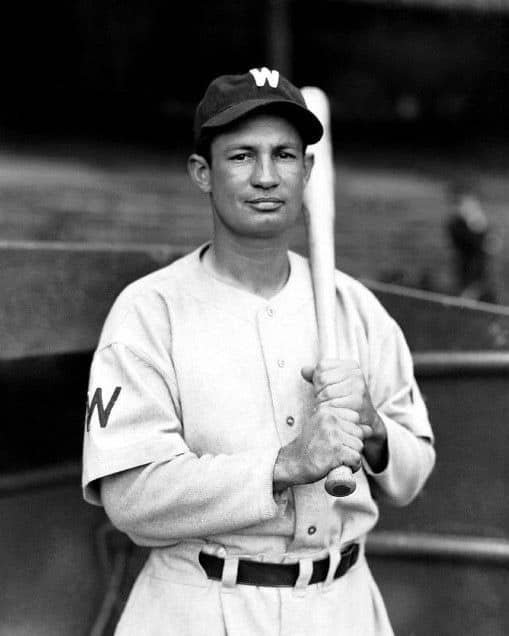
Myer played for 17 years (1925-41) for the Washington Senators. He won a batting title and was a two-time All Star. He had an impressive lifetime .303 batting average.

During his playing days, he was subject to much antisemitic abuse. Opposing players called him a “kike.” Pitchers threw at his head. In 1933, Yankees outfielder Ben Chapman, a notorious racist, intentionally spiked Myer when he slid into second base. The two players then got into a fist fight that led to an on-field brawl between the two teams, requiring police intervention. The next day, the Washington Post’s Jewish sportswriter, Shirley Povich, wrote that Chapman “cut a swastika with his spikes on Myer’s thigh.”

After American League President William Harridge fined and temporarily suspended both Myer and Chapman, Myer protested. “Chapman had it coming to him and I gave it to him,” he said. “He spiked me last year and I let him get away with it. It was late in the season. He started early this season. He tried to cut me Monday. He did yesterday. I had to retaliate to stop him before he ended my baseball career.”

Buddy Myer

After Myer led the American League in hitting in 1935 with a .349 average, the Sporting News, baseball’s paper of record, reported that the Yankees were trying to purchase Myer’s contract from the Senators. The headline on its story: “Yanks Hope to Dress in Myer a Tailor-Made Jewish Star.” The story said that the Yankees hoped that New York’s “big army of Jewish fans … would be lured into the park by a Jewish star.”

In 1992, Myer was inducted into the International Jewish Sports Hall of Fame. He’s included in Peter Horvitz and Joachim Horvitz’s “The Big Book of Jewish Baseball,” Burton and Benita Boxerman’s “Jews and Baseball,” and Erwin Lynn’s “The Jewish Baseball Hall of Fame.” The error is understandable. His birth name was Charles Solomon Myer, and his family owned a clothing store.

But Myer wasn’t Jewish. He grew up in a small town in Mississippi and was raised Baptist. When he died, the memorial service was held at the First Baptist Church. The family ancestry was originally German Jewish, but they converted to Christianity at least two generations before Buddy was born.

During and after his playing career, Myer never corrected players or sportswriters who believed he was Jewish. His son explained: “He didn’t think it was right when they inducted him into the Jewish Hall of Fame, but he didn’t correct them because he was afraid it would be taken the wrong way.”

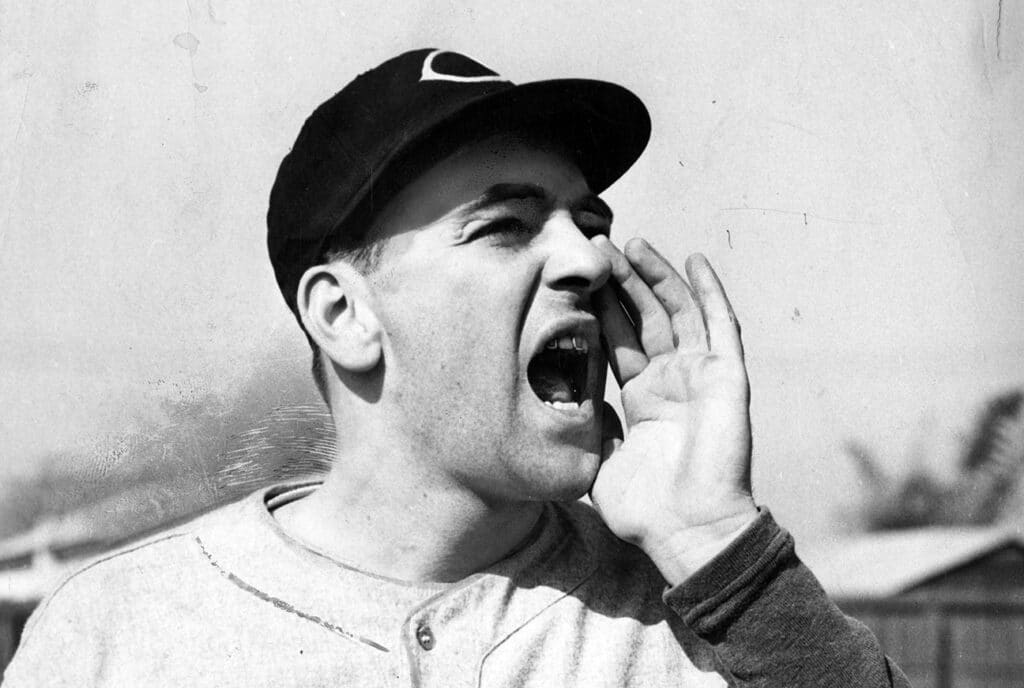
During Lou Boudreau’s playing and managing career (1938-1960), he was never identified as a Jew by sportswriters, teammates, or the local Jewish community when worked for the Cleveland Indians. But after he died in 2001, he was occasionally included in lists of Jewish players. Howard Megdal’s book, “The Baseball Talmud,” lists Boudreau not only as the greatest Jewish shortstop but also as perhaps the greatest Jewish player of all time. Boudreau is also included in Horvitz and Horvitz’s “Big Book of Jewish Baseball,” in the Jewish Virtual Library, in Tablet Magazine’s list of the greatest Jewish ballplayers of all time, and in a 2016 article in The Forward.

In terms of his athletic prowess, there’s good reason for Jews to claim Boudreau as one of their own. He was captain of both the baseball and basketball teams at the University of Illinois, made the American League All-Star team in eight of his 15 major league seasons, won the 1944 AL batting title, and in 1948 won the Most Valuable Player Award while managing the Cleveland Indians to the World Series. In 1970, he was voted into the Baseball Hall of Fame.

Although his mother Birdie was Jewish and his maternal grandparents were Orthodox Jews, Boudreau did not consider himself to be Jewish Boudreau’s parents divorced when he was young and he was raised Catholic by his French-Canadian father, a machinist and semi-pro ballplayer. When Boudreau died in 2001, his funeral mass was held at St. Anthony Catholic Church in Frankfort, Illinois.

Alta Weiss

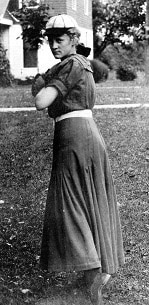
Alta Weiss was a baseball trailblazer. She didn’t have a league of her own but she did have her own team.

Weiss was born in rural Ohio in 1890. Her father, a physician, encouraged her to play baseball and even built a gymnasium attached to the barn that included body-building equipment so she could practice her pitching and stay in shape during the winter. By 14 she was pitching for boys’ teams, and at 17 she joined the Vermillion Independents, a men’s semipro team, and was soon its star pitcher and a media sensation. In her debut outing, attended by a large crowd of 1,200 spectators, she gave up only four hits and one run in five innings. For her next game, a local railroad company scheduled a special train from Cleveland to Vermillion, twenty miles away, to accommodate the fans eager to see the person newspapers called the “Girl Wonder.” When her team played in Cleveland, more than three thousand people paid to watch her pitch.

Her father bought a part interest in the team and changed the name to the Weiss All-Stars, which traveled around Ohio and Kentucky playing local teams in exhibition games. The money she earned from baseball paid for her medical school tuition. She was the only female in her 1914 medical school graduating class, and played for several years while starting her medical practice. Her baseball career lasted from 1907 to 1922. Then she quit to devote herself to medicine full time.

Weiss is listed on the Western Reserve Historical Society’s website devoted to “Women Making History.” It begins: “Alta Weiss was born into a Jewish family.” A website on Cleveland Jewish History includes a biography of Weiss. For what it’s worth, ChatGPT claims, “Yes, Alta Weiss was Jewish.” But neither Weiss nor anyone in her family was Jewish.

I learned this from Roy Hisrich. He is not only the president of the Ragersville (Ohio) Historical Society (the town where Weiss lived) but also Weiss’ great-nephew. In fact, he grew up in a house across the street from Weiss. He was 14 when Weiss died in 1964. Weiss’ parents were immigrants from Germany, spoke German at home, and attended the United Church of Christ,  which conducted its services in German. According to Hisrich, no Jews lived in Ragersville (which had a population of about 100 residents) or anywhere in the vicinity.

Weiss laid the foundation for subsequent female ballplayers, including those in the All American Girls Professional Baseball League, popularized by the 1992 film “A League of Their Own.” Of the 600 women who played in the league, which lasted from 1943 to 1954, three were Jews: Thelma “Tiby” Eisen, Blanche Schacter and Anita Foss.

But then there’s Margaret Wigiser, a Brooklyn-born slugging outfielder for three seasons in the AAGPBL. The daughter of an Orthodox Jewish father and a Catholic mother, she started playing baseball on her synagogue team, was an outstanding multi-sport athlete in high school and college, and worked for decades as a school teacher in New York City. The public schools annually presents the Margaret Wigiser Award to the city’s outstanding female student athlete. In 2006, a nonprofit group called Jewish Major Leaguers produced a set of baseball cards that included Wigiser, but she informed the group that she’s Catholic. The group quickly pulled her card from the remaining inventory.


Peter Dreier is the E.P. Clapp Distinguished Professor of Politics at Occidental College and co-author of two baseball books—”Baseball Rebels: The Players, People, and Social Movements That Shook Up the Game and Changed America” and “Major League Rebels: Baseball Battles Over Workers’ Rights and American Empire”—both published in 2022.

Who Is a Jew? A Baseball Perspective Read More »

The People of the Bookshelf: Forging Soviet Jewish Identity Through Reading

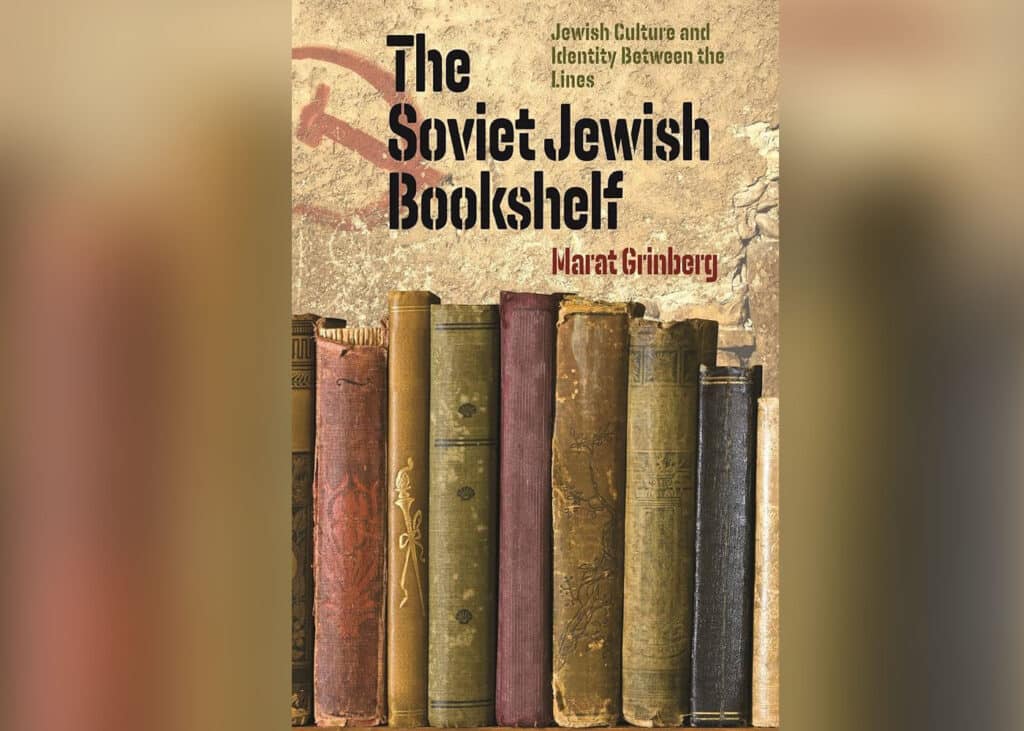
More than three decades after the collapse of the USSR, the Jews of the Soviet Union continue to be somewhat of a mystery to American Jews, characterized by stereotypes many of us heard growing up. Marat Grinberg’s recent book, “The Soviet Jewish Bookshelf” is a pioneering study that helps dispel some of these myths through his exploration of Soviet Jewish identity in the second half of the twentieth century. But first, we need to understand these myths.

Growing up in the 1970s and early 1980s, I remember my father and my Jewish day school teachers describing the community Elie Wiesel famously called “The Jews of Silence.” They were “living in terror and yearning for piety,” as Grinberg describes what we believed, and they lacked the means of forging and expressing a meaningful Jewish identity in an atheist, antisemitic communist state. A few brave souls, known as “Refuseniks,” fruitlessly demanded the right to emigrate, and then paid dearly, as they were often shipped off to the gulag, with Natan Sharansky becoming their figurehead. This was my understanding of Soviet Jewry: heavily Russified, but still bearing a historical stain of enforced Jewish difference.

We campaigned for their right to leave, and as if by some miracle, the number of exit visas granted by the Soviet government increased significantly in the 1980s. The subsequent collapse of the USSR opened the floodgates of emigration with most settling in the United States and Israel. Here in the West, this marked the first genuine encounter between the Jews descended from those who had been smart enough to have “run away from the tsar’s army” and those we viewed as having had the misfortune of staying behind and enduring Sovietization, the Holocaust, and state-sponsored antisemitism. Once we got to know the Jews of silence, another stereotype emerged. “They are not real Jews,” said many among the older generations. Terror and silence meant the loss of their Judaism, which had become little more than a stamp in their internal passport marking them as Jewish.

As a professional historian I understand that such stereotyping lacked a foundation in reality. Our encounter with Soviet Jewry was an encounter with the unfamiliar; they were people we expected to be like us, but were not. “Not real Jews” actually meant “a different kind of Jew; a different kind of Jewishness.” We enter the fourth decade of the post-Soviet era and it is now abundantly clear that Soviet Jews came to America saturated with Jewishness. They have preserved much from their Soviet past while integrating into the surrounding Jewish communities. They are among the staunchest supporters of Israel, they have filled the ranks of Russian Jewish studies in the academy, they have produced dozens if not hundreds of novels and memoirs recounting their experiences as Jews, over there and over here, thus burying the two stereotypes of the post-War era once and for all.

That said, we historians actually know very little about Soviet Jewish identity and culture after Stalin. Since the 1990s we have done so much work documenting the first few decades of communist rule, a violent time of terror for the USSR’s millions of citizens, but also an era that unshackled the Jews from tsarist oppression to enjoy mobility. Yiddish culture flourished and antisemitism was constrained, until Stalin finally turned on the Jews toward the end of his rule. There are dozens of great historical works on the making of early Soviet Jewry.

So what happened after Stalin besides state-sponsored antisemitism? We know that “silence” fails to capture the rich tapestry of Jewish life, but it is only now that scholars are turning their attention to these crucial years. Enter Grinberg’s “The Soviet Jewish Bookshelf,” which demonstrates that “Soviet Jewishness was much more than an empty sign or only the sign of victimhood and persecution.” “Soviet Jewish consciousness,” writes Grinberg, “consisted of far more than the remains of Yiddishkeit, linguistic, culinary, and religious, on the one hand, and total Russification and Sovietization on the other.” Through a novel approach (no pun intended) Grinberg analyzes Soviet Jewish  “reading practices,” with the “bookshelf” as the site for the construction of Soviet Jewishness.

Anyone who has been inside a Soviet apartment understands the significance of the “bookshelf.” For Russians (and the numerous ethnic minorities of the USSR), the bookcase was the centerpiece of the home. It occupied the same physical and cultural space occupied by the American television. While we tuned into “All in the Family” and “The Tonight Show,” the Russians ritualistically displayed and consumed the collected works of Pushkin, Tolstoy, Dostoevsky and select Soviet writers. Soviet Jews had their own bookcase, overlapping with the Russian bookcase, sharing in the Russian canon, but with a distinctive Jewish flavor, much as American Jewish culture is American yet recognizably Jewish. “The bookshelves in Soviet Jewish homes had their own unique installments and were predominantly the only visible signs of Jewishness,” writes Grinberg.

The bookshelf of course wasn’t merely for display. Soviet citizens were insatiable readers—anything they could get their hands on, “objects of desire to be hunted and possessed,” as Grinberg puts it. And because the Communist regime claimed the right to control the production and distribution of culture, the Soviet population needed to develop a unique approach to consuming books: They had to learn how to read between the lines. They needed to know what to glean from a text that might be saying one thing, but carried a different meaning for the reader, whether intended by the author who used what scholars have called “Aesopian language” to send an impermissible message to their audience, or inadvertent, with the reader extracting valuable information that was not intended to be valued. Although scholars have long known about these Soviet reading strategies, Grinberg’s work brings something new to the table: that Soviet Jews had a distinct way of reading between the lines, of organizing their bookshelves, of crafting a Jewish identity through what was otherwise a universal Soviet practice. They imbued Soviet Jewishness with positive content, not governed by terror, silence and vague memories of a past buried in the rubble of a decimated shtetl.

They imbued Soviet Jewishness with positive content, not governed by terror, silence and vague memories of a past buried in the rubble of a decimated shtetl.

Grinberg’s book is organized chronologically and thematically into five chapters. After briefly exploring the roots of the bookshelf in the 1930s, he moves on to the post-Stalin era and divides his chapters by the type of material on the bookshelf, illustrating how each type required a slightly different approach to reading between the lines. Some of the authors he discusses, such as the German Jewish novelist Lion Feuchtwanger, are virtually unknown in the west today, yet played pivotal role in shaping Jewish reading habits. Others, most notably Ilya Ehrenburg and Vasily Grossman, are known to us because they documented World War Two and the Holocaust, and were able to publish within the constraints of Soviet censorship. Some authors were nobodies, party propagandists who published material that was overtly hostile toward Judaism and Israel, but were nevertheless consumed by Jews because their work was about Jews, and thus a source of otherwise unavailable knowledge. And some literary works were rarely read, yet kept on the bookshelf because they were explicitly Jewish. For Grinberg, reading strategies and the physical configuration of the bookshelf were intertwined in complex ways, all of which contributed to the creation of a Soviet Jewish identity.

A few examples will suffice. Feuchtwanger’s historical novels, though set in antiquity, bore “witness to the tumultuous twentieth-century history via memory,” serving as the site “of veiled yet rich Holocaust remembrance and the notions of witnessing and survival it brought forth.” They also contain, argues Grinberg, Aesopian nods to “Jewish nationalism,” a subject maligned in official Soviet discourse. For texts that contained no explicit Jewish references, such as Il’ia Il’f and Evgenii Petrov’s satiric Ostap Bender novels, there were insider gestures to Jewishness that “remained simply unknown to the majority of readers.” At the other end of the spectrum were works translated into Russian from Yiddish and Hebrew. The former were displayed but rarely read, serving as symbolic artifacts, “markers of Jewishness both for their Jewish owners and at times others, whom they let into the private space of their Soviet apartments.” Conversely, Hebrew translations were hard to come by and were voraciously consumed because they were the only way Jews could obtain knowledge about Israel. Such works became increasingly valuable after 1967, when the government embraced militant anti-Zionism and expunged such books from the libraries.

The regime’s anti-Zionism and its incessant publication of literature vilifying Israel is perhaps the greatest irony in Jewish reading practices that Grinberg unearths. Such literature was everywhere, with hundreds of books, pamphlets, and brochures printed in the millions. Yet Soviet Jews collected and devoured these works because they were about Israel. Their antisemitic spin only increased the Jewish attachment to the Jewish state. One person whom Grinberg interviewed describes the experience of having read a book titled “The Army of Israel: A Tool of Imperialist Aggression,” through which he “learned about the structure of IDF, its victories, strengths, and advances, and even the Hebrew terms for ranks provided in the appendix. The book was instrumental in elevating his Jewish pride.” Reading between the lines encompassed a number of strategies, all of which helped Soviet Jews build a distinct identity that was at once Soviet and tied to a global Jewish community.

Marat Grinberg’s “The Soviet Jewish Bookshelf” is mandatory reading for students of Soviet and Jewish history. There is also much in it for the larger Jewish reading public for whom Soviet Jews remain a paradox, a story that is not merely of survival, but also of fashioning a durable path to Jewishness uniquely their own. In the Soviet context, the “People of the Book” became the “People of the Bookshelf.”


Jarrod Tanny is an associate professor and Charles and Hannah Block Distinguished Scholar in Jewish History at the University of North Carolina, Wilmington. He is the author of “City of Rogues and Schnorrers: Russia’s Jews and the Myth of Old Odessa” (Indiana University Press) and the founder of the Jewish Studies Zionist Network.

The People of the Bookshelf: Forging Soviet Jewish Identity Through Reading Read More »

Why The Best Jewish Film Characters of 2023 May Cause Oscar Controversy in 2024

Film fans were treated to three unforgettable and otherworldly performances where actors had to fill the big shoes of some of the most famous Jews of all time. Irish actor Cillian Murphy nailed the titular role in Christopher’ Nolan’s “Oppenheimer” as a Jewish man who wanted to make a nuclear bomb to stop Hitler, and years after it was dropped on Japan, had to deal with the truth that he was responsible for the brutal deaths of many. In “Maestro,” Bradley Cooper, playing Leonard Bernstein (he also directed the film), was astounding as the composer and conductor who dealt with his fame and bisexuality. Helen Mirren, a British actress who has won an Oscar before, delivered a powerhouse performance as a chain-smoking Golda Meir, grappling with being blamed for not being prepared for the invading Egyptian army in the Yom Kippur War.

Murphy’s Law

Not only does Murphy hide any remnant of his Irish accent, he does a fine job replicating Oppenheimer’s deep and deliberate speech. While his voice is hypnotic, this performance of a lifetime is also due to his eyes and facial expressions, from his surprise at German scientists splitting the atom, to his confusion regarding his romance with a girlfriend, Jean Tatlock (Florence Pugh) to his restrained fury when being accused of betraying his country when he believes he’s been nothing but a patriot. His eyes show rage when he tells Ernest Lawrence (Josh Hartnett) , a fellow scientist on the Manhattan Project, “I know what it means for the Nazis to have a bomb … it’s not your people they’re herding into camps. It’s mine.”

While of course, the bomb worked, other things went wrong, from the suicide of Tatlock shortly he leaves her, telling her they could never speak again, to having to tell his wife, Kitty (Emily Blunt) about the affair, to getting railroaded by those angered at his theory that the U.S. should not build a hydrogen bomb because it was not necessary. His security clearance would be revoked in 1954, partly due to his Communist connections, even though he was not a card-carrying party member.

Hard To Sell Scene

Oppenheimer is arrogant but is grilled by Gen. Groves (Matt Damon), who asks if there is a chance the test of the bomb will cause a chain reaction that will destroy the whole world.  The chances are “near zero” he says calmly. Murphy, who played a mafia man on the TV hit “Peaky Blinders” is nearly perfect in the role. He’s the favorite to win Best Actor but he would have been an even greater favorite is the film shown some of his depression earlier on and given him more screen time with Pugh.

Cooper Throws Audience for a Loop as Bernstein

The controversy of a prosthetic nose for Cooper is a non-issue as his performance is respectful and masterful. He is believable as the man at 25, who had only five hours notice and no rehearsal before conducting the New York Philharmonic at Carnegie Hall, to a sweatshirt-wearing Bernstein at various ages several decades later. His voice is close to Bernstein’s and closely mimics Bernstein’s emotive style on the podium — a frenzy of motion, but under control — in a scene where he conducts the orchestra andchoir.

Hard To Sell Scenes:

Sitting on the toilet with the door open is not natural, nor is asking: “Who abandoned Snoopy in the vestibule?” That’s a question he asks to his children. Commenting on his bisexuality in one of the film’s key moments, Bernstein  says he wants to live his life “exactly the way that I want as more and more of us are this day age.”

To Tell The Truth Or Not?

In a key scene with his daughter, Jamie, played with great charm and innocence by Maya Hawke, he lies to her and tells her rumors about his infidelity are due to jealousy. He pauses and appears to be about to change his mind and tell her the truth while wearing a sweatshirt that says “Harvard” in Hebrew, but he takes a drag from his cigarette instead.

Did Cooper Take a Dig at Murphy?

In a conversation with actress Emma Stone for Variety, Cooper said “This wasn’t like you got a call, and in six months you’re going to do it. This had to have taken years.” He was speaking of the prep and research he did on Bernstein, while Murphy has said in interviews it took him six months to play Robert J. Oppenheimer. Will Oscar voters take into account how long it took an actor to prepare? That’s unclear. Cooper had the more difficult role requiring physicality of different ages, (Murphy also plays Oppenheimer at different ages but it’s not as heavy a lift with only a hair change.) Murphy is a favorite because he is an incredible force of nature and one could believe such a man had the vision, the energy and the inspiration to have a breakthrough that was believed to be impossible.

Robert Downey Jr. vs. Robert DeNiro?

Downey Jr.’s jaw-dropping performance as Lewis Strauss, a member of the Atomic Energy Commission — and a one-time president of Congregation Emanu-El in Manhattan — who became one of Oppenheirmer’s most virulent critics, will surely earn him an Oscar nomination. It’s the best performance of his career The scenes of congressional hearings are powerful as Strauss is the villain of the film. After Strauss drops some bad news on Oppenheimer and is obviously playing him, he pretends to be kind and offers him the services of his driver to take him home. It’s priceless.

We see the orchestration of a “kangaroo court” to strip Oppenheimer of his security clearance. His best scene is one in which he says he helped Oppenheimer and, in the film’s final moments we learn that he was wrong about something involving Albert Einstein.  While DeNiro is excellent in “Killer of the Flower Moon”  as William Hale, a man who orchestrated murders of Native Americas in Osage land in Oklahoma, it’s a role in which there is little vulnerability, as opposed to Strauss, who is destroyed by his own hubris. Twice nominated for an Oscar, Downey Jr. has never won an Academy Award and voters should give him his first.

If Mirren Isn’t Nominated for an Oscar, It Will Be A Shanda

Mirren deserves an Oscar nomination for her starring role in “Golda.” It’s understood that it will be a crowded field. The favorite is Lily Gladstone, who plays Mollie Burckhardt, a Native American woman who marries Ernest Burkhart (Leonardo DiCaprio). Margot Robbie’s great performance as the lead in “Barbie” is unforgettable, and Emma Stone, who won the Oscar for Best Actress for her role in “La La Land” and could win again her starring role in “Poor Things.” Carey Mulligan is also potent as a woman showing the challenge of being married to Leonard Bernstein in “Maestro.”

There was some controversy about Mirren, who is not Jewish, playing an Israeli Prime Minister, but Anthony Hopkins once played Yitzhak Rabin and the work should always speak for itself. Her works speaks loud and clear here.

As the only woman against male generals who thought they knew everything, Meir was in a tough spot. Of course, Meir would be blasted in Israel for failing to mobilize a huge number of troops at an early date in anticipation for an attack by Egypt and Syria in what was the Yom Kippur War.

Mirren’s scenes with Liev Schreiber as Henry Kissinger are quite memorable, as she uses humor when he says that he is an American and Secretary of State and third a Jew and she notes that in Hebrew, one reads from right to left.

One of Mirren’s most powerful scenes is the look of horror as she hears an Israeli soldier cry out that he doesn’t want to die and we hear gunshots in the background. She is also credible when she in a stern voice tells Kissinger of her father’s face when she was a child and he wanted to protect his children hiding in the cellar. “I will slaughter them all,” she tells him, speaking of a large contingent of the Egyptian Army. “Whose side are you on?”

Hard To Sell Scene

Meir lights up a cigarette on a medical table while doctors are telling her she will have to have another round of chemotherapy due to cancer.

It’s perplexing that there is not more buzz for Mirren, who deserves an Oscar nomination and “Golda” (which deserves an nomination for Best Picture). Perhaps the Israel-Hamas war may make voters shy away from it or maybe not. It’s not easy to know what’s inside people’s minds. But with growing feminism in America why not honor a great actress who became the only female leader of one of the most powerful countries in the world. It is hard to find fault with Mirren’s performance. Her accent for Meir, who lived in Milwaukee until the age of 8 is well-done. The prosthetics make her look very much like Meir. Mirren won an Oscar in 2007 for “The Queen.” Mirren, 78, knocked it out of the park as Golda.

Why The Best Jewish Film Characters of 2023 May Cause Oscar Controversy in 2024 Read More »

VBSDS Names Head of School, Israel Food Rescue Seeks Volunteers

After 16 years at Milken Community School, Kimberly Schwartz, chief curriculum and program officer, has announced her acceptance of a position as the head of school at Valley Beth Shalom Day School (VBSDS), starting in July 2024. For this San Fernando Valley native and former Temple Judea student in Tarzana, it marks an exciting new chapter.

Reflecting on her departure from Milken, Schwartz said, “I met with the Head of Milken, who is a phenomenal leader, to seek her advice, and she was very supportive. It was a bittersweet moment because I’ve been here for so long, and the school means so much to me. My two children, who are in eighth and 11th grade, also study here, and they had mixed feelings about me leaving. It was nice driving together to school and very convenient, but there are also drawbacks to having your mom work at the school you learn at.”

“I am excited to help this incredible school tell its story to the larger community. As a longtime Jewish educator here in Los Angeles, I have always known VBSDS to be a special place where children develop a strong Jewish identity, deep connections to their community, a commitment to Tikkun Olam, and an exceptional academic skill set. VBSDS graduates are ready to tackle the challenges and opportunities of middle and high school and are natural community builders and leaders. I definitely want to tell this story to the larger community and ensure that VBSDS is known as the destination for excellence in Jewish and secular education.”

“I am also excited to work with this talented faculty and staff, who are committed to delivering an excellent future-thinking education and to developing young people who are mensches. Teaching students how to learn Jewishly, in addition to teaching them about Jewish practice, text, values and history, is at the core of my own educational philosophy, and I am excited to share that vision. I believe that Jewish approaches to learning, including chevrutah study (partnership), kushiyot (critical questioning) and machlochet (productive disagreement), can and should be used to prepare our students for academic success across disciplines and both in and beyond the classroom.”

When asked about the best advice she’s received in her career, Schwartz shared, “A close colleague, who is also a working mom, said that people would tell me I couldn’t have it all and that I should remember that I can have it all, just not all of the time. This advice has served me well throughout my career as I have navigated the many roles I have played, the opportunities I have taken and those I have passed up. It allowed me to focus on commitments and see them through without being distracted by the next exciting challenge or opportunity.”

Currently, there are 200 students at VBSDS, ranging from kindergarten to sixth grade. Many of these students go on to graduate and continue their education at Milken. Schwartz believes in the importance of a supportive environment.

“There is a real powerful sense of shared values and history and also a sense of relief when you come to our campuses,” she said. “Parents can exhale for the first time, be in an environment where you can bring your whole self, find space for difficult conversations and grieving, and experience a space for Jewish joy and pride.”

By Ayala Or-El, Contributing Writer


Israel Food Rescue volunteers at Moshav Beit Ezra.
Courtesy of Israel Food Rescue

A recently formed group dedicated to supporting Israel’s emergency agricultural needs has drawn participants from Beth Jacob Congregation, Young Israel of Century City, B’nai David-Judea and Stephen Wise Temple.

In the aftermath of Oct. 7, members of these synagogues have been traveling to Israel to volunteer saving the tomato and cucumber crop at Moshav Beit Ezra, a farming community in southern Israel, according to Rabbi Randy Brown, founder of Israel Food Rescue. 

“A lot of people are tired of pressing buttons just to donate,” Brown said in a phone interview from Washington D.C. “They want something tangible and substantial to do.”

The group, launched in response to the Hamas attack on Israel, is recruiting volunteers ages 30-80. Participants have included Sharon Spira-Cushnir of Stephen Wise Temple as well as L.A. community member David Gardner. The latter was among a large Southern California contingent that, over two weeks in Israel, worked hard picking tomatoes, pruning cucumbers and sorting through persimmons. 

“Everyone just wanted to pitch in,” Gardner told the Journal. 

Brown, for his part, said the community has shown unwavering interest in the new program. 

“My voicemail has been full, and I’ve gotten very little sleep since Oct. 7,” Brown said. “This is a mitzvah project I just felt compelled to do.”

The group is seeking additional volunteers. For additional information, visit israelfoodrescue.com.

VBSDS Names Head of School, Israel Food Rescue Seeks Volunteers Read More »