fbpx

December 23, 2023

Chaya and Yossi Segelman: Our Big Kitchen LA, Food Volunteerism and Gnocchi

Food volunteerism is “a beautiful conduit to bring people together,” Chaya Segelman, co-founder of Our Big Kitchen Los Angeles (OBKLA), told the Journal.

Founded by Chaya and her husband, Yossi, OBKLA provides quality meals, made with love, to Angelenos in need. Volunteers attend two-hour sessions, whether it’s an open session, a corporate group or to celebrate a mitzvah. They prep, cook and package food that then gets distributed to their 33 charity partners.

“When you see people connecting on something, which is very simplistic – [preparing] a meal going to someone in the next 24 hours to sustain them – it’s very powerful,” Yossi told the Journal. “It’s not just nourishing people’s stomachs, but it’s lifting up their spirit.”

OBKLA has a dozen recipe items to choose from, including meatballs and gnocchi, as well as dessert items, such as chocolate chip cookies, apple turnovers and scones.  Their gnocchi recipe with meat and vegetarian sauce options is below.

The Segelmans started OBKLA in August 2020, and moved to their current location – Margaret Feder’s Our Big Kitchen LA on Pico in June 2022.  Last year, they prepared and distributed more than 27,000. In 2023, that number will be close to 100,000.

“I love seeing the whole process,” Chaya says. “When people come in, there’s the raw ingredients on the table. By the time they leave, they’ve already connected for two hours, packaged the food and see the complete impact of what they’ve done.”

She adds, “It’s the smells, the colors, the texture – everything comes together so beautifully and with so much intention.”

There are plenty of food volunteer opportunities around the country and throughout the world. OBKLA was inspired by Australia Our Big Kitchen, started in 2005 by Rabbi Doctor Dovid Slavin and Laya Slavin.

“There’s a lot of local food banks, there’s a lot of local food projects, but I think the joy is in getting people together and cooking or packaging the food,“ Yossi said.

Some of these food-prep organizations include Our Giving Kitchen in Pittsburgh, Healing Hearts in Miami, Yesod Ha’olam in San Diego and Feeding the Lone Star in Texas.

However, anyone can do this sort of work in any city or community.

“It could be small, it could be big,” said Chaya. “Anyone has that power of saying, ‘let’s bring ten friends to my kitchen and let’s cook ten meals together, or let’s make a big serving and bring it to a local shelter.”

“They can do this more structured, they can do this loosely,” said Yossi. “They are always welcome to reach out to us and we can help guide them.”

Yossi also recommends checking with the organization first, to see what they need.

“Don’t just make something that you think is needed,” he said. “Make a quick phone call.”

If you are passionate about doing good, and considering volunteering, stop thinking about it and just do it.

“Cheesy as it is, we really can spread light and love one meal at a time,” Yossi said.

Check out Our Big Kitchen LA at OBKLA.org and follow @OBKLosAngeles on Instagram.

Learn more and also get OBKLA’s meatball and chocolate chip cookie recipes on JewishJournal.com.

For the full conversation, listen to the podcast:

Watch the interview:


OBKLA Gnocchi

 

Yield: 10 servings

3 lbs russet potatoes

2 cups all-purpose flour

2 egg yolks

2 tsp kosher salt

2 pinches ground nutmeg

Puncture potatoes and bake in a 400 F oven for 1 hour.

Cut potato in half, scoop out inside. Use potato ricer and rice onto sheet pans or a table. Let cool.

Put potato into a bowl and mix with flour, egg yolk, salt and nutmeg. Lightly fold until dough forms.

Shape into ropes and cut into 1-inch pieces. (Use some extra flour for the surface)

Bring a pot of salted water to a boil. Add dough and cook for about 2 minutes. Gnocchi is ready when they are floating.

Use a strainer spoon to remove from the water. Place gnocchi in a bowl with sauce (meat or vegetarian options are below) or some oil so they won’t stick together.

Chickpea Tomato Ragu

Yield: 10 servings

1 medium yellow onion, diced

2 tbsp oil

1 16 oz can garbanzo beans, drained and rinsed

1 8 oz can sweet peas, drained and rinsed

1 16 oz can diced tomatoes in juice

1 16 oz can marinara sauce

1 cup water

2 tsp kosher salt

2 tsp onion powder

2 tsp garlic powder

1 tsp ground black pepper

1 tsp dried oregano powder

1 tsp dried thyme

1 tsp paprika powder

1 tsp white granulated sugar

1/4 tsp cayenne pepper

In a frying pan, sauté diced onions in oil until clear.

Add drained chickpeas and sweet peas to the pan and cook for 2 minutes.

Add the rest of the ingredients, stir in.

Cook for 10 minutes. Serve with gnocchi.

Beef Ragu with Fresh Vegetables

Yield: 10 servings

1 1/3 lb ground beef

2 yellow onions, diced

Spice mix (recipe below)

1/2 cup tomato paste

3 cups water

2 1/2 tbsp beef flavored consume

43.5 oz diced tomatoes in juice

salt and pepper to taste

2 lb yellow squash

2 lb zucchini

2 lb carrots

Preheat the oven to 350 F.

In a large oven safe pot on your stove, over medium heat, brown the ground beef.

Add the diced onions to the browned meat; cook for a few minutes until the onions are translucent.

Add spice mix and tomato paste, and cook for another few minutes.

Add the water, beef consume and diced tomatoes. Cook until mixture starts to simmer.

Season with salt and pepper to taste, cover the pot and place in the oven and cook for 1 hour.

For the vegetables: Cut the yellow squash, zucchini and carrots into a large dice

Toss them in oil and season with salt and pepper to taste. Roast in a 400 F oven for 15 to 25 minutes until lightly browned.

Serve with the gnocchi and ragu.

Beef Ragu Spice Mix

3/4 tbsp dried thyme

3/4 tbsp dried oregano powder

3/4 tbsp dried basil

3/4 tsp ground black pepper

1/2 tsp smoked paprika

3/4 tbsp dried parsley

3/4 tbsp garlic powder

3/4 tbsp onion powder

3/4 tbsp dried rosemary

Mix together. Makes enough for two meals.


Debra Eckerling is a writer for the Jewish Journal and the host of “Taste Buds with Deb.Subscribe on YouTube or your favorite podcast platform. Email Debra: tastebuds@jewishjournal.com.

Chaya and Yossi Segelman: Our Big Kitchen LA, Food Volunteerism and Gnocchi Read More »

To My Israeli Family and Friends, and Their Defenders

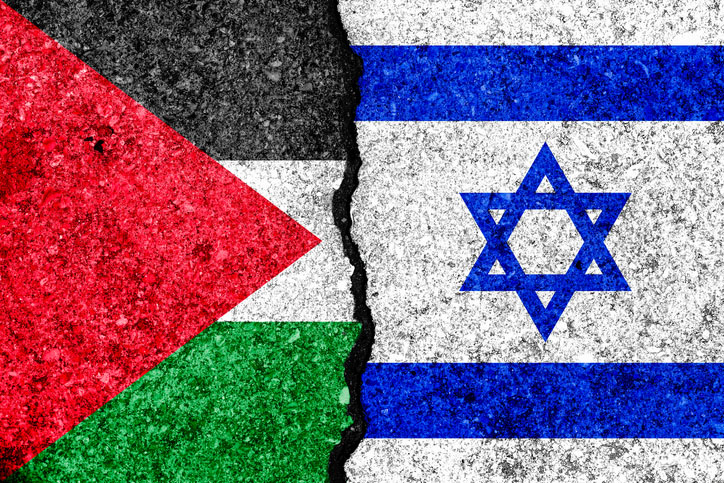
Some of you know that I have already published a letter to non-Jews explaining what it’s like to be Jewish in these times. I then published a letter to my Palestinian friends and to their defenders. And now perhaps most delicate of all, I feel a need to turn to my own people. I need to address Israelis and other Jews as well as our stalwart defenders to help mobilize us to hold on to hope, to do the work of self-defense, but also to preserve the possibility of a future that will allow us and our neighbors to thrive so that all people can participate in that better tomorrow.

This message is nuanced and difficult, which means unpopular in our time of stark and extreme cancelling. But we must relearn to listen to each other, to glean insight even from those with whom we don’t aways agree. I know that I am no expert in security and military affairs. I am a rabbi; my responsibility is to harvest Jewish morality and ethics out of our sacred literature, to distill wisdom from our practices and our history, and to apply those insights to the issues of our day. There is surely no more pressing question for us than this conflict and Israel right now.

I open with the words of this week’s Torah portion, as Judah addresses his brother, Joseph, and says to him, “Let your servant, I beg you, speak words in your ears.”

Let me speak words in your ears now.

As Israel pursues the just cause of its own defense, having been assaulted brutally and unconscionably by Hamas crossing over its border, assaulting its civilians, raping women (and men), murdering children, grandparents and others, ruthlessly and without exception; and as Hamas still holds about a hundred hostages, civilians who deserve their freedom, I want to affirm that military strength and strategy is essential to achieve certain crucial short-term goals: survival, defense, security.

Other such goals of this conflict entail bringing the hostages home, preventing any future border crossing attacks, dismantling the billion-dollar Hamas military infrastructure of tunnels and weaponry throughout the area, stopping the ongoing flow of arms and money to foster terrorist attacks and the terrorist ideology, and creating conditions that make plausible some self-governance in the West Bank and Gaza that does not involve Hamas or terror.

But at the same time as we impose these objectives (and here’s the tricky part my friends), we also have our own work to do. I believe, as a rabbi, that strategy and morality work hand in hand advancing the long-term goals: our thriving and the thriving of our neighbors.

You cannot have one without the other. We need to open to a conversation not only about how we survive in the short term, but also how we thrive in the long term. Fortunately for that conversation, there is a rich Jewish tradition of just war theory. How does one conduct a war ethically? What are the ethical goals one hopes to attain?

The first area demanding our focus is to expand the work of reducing civilian casualties. There have been so many Palestinian deaths and injuries. Indeed, there have been too many Israeli deaths, injuries and terror. All such casualties need to be reduced to the maximum extent of our capability. Whatever we can do (and this is not just the responsibility of Israel; this is the responsibility of Hamas and Hezbollah and the Palestinian Authority), whatever we can do from our side to ensure that civilian casualties are minimized remains a mandate for us, both as the demand of our tradition and as sound strategy to prepare for tomorrow.

Second, we need to ensure that there are adequate supplies of food, water, medicine and housing for the civilians in Gaza who must be terrified right now, living as they do both under such a brutal reign of Hamas (with their use of civilians as shields and hospitals as military barracks) and the devastating consequences of Israel’s response. Because we can, we have an obligation to respond. I’m aware that this obligation should be shared by the Arab countries in the region, by Hamas and Hezbollah, by the Palestinian Authority, but the fact that they are not stepping up to their duty doesn’t mean we should not be stepping up to ours. 

I’m aware that this obligation should be shared by the Arab countries in the region, by Hamas and Hezbollah, by the Palestinian Authority, but the fact that they are not stepping up to their duty doesn’t mean we should not be stepping up to ours.

In addition to those two short-term goals that need immediate implementation, we also must do the work of assuring a livable tomorrow. That means eventually, not now but eventually, the only ultimate solution will be two people living side by side, both with security and dignity. To be able to achieve that now, when there is no one to turn over the occupation to, is not possible. But we need to keep our sights on what might unfold as possibility tomorrow if we act wisely today. We need to occupy (since occupy we must) in a way that maximizes an optimal future. That involves, first, equal law applied equally. For example, anybody who burns down anybody’s harvest should be prosecuted, tried and sentenced, and then they should do time. Regardless of whether they are Jewish, Christian, Muslim, Israeli, Palestinian, and regardless of the identity of the victim. equal law applied equally to all

It turns out that this radical idea is one of the great innovations of Torah law, making it unique among ancient near eastern law codes. The crime itself is what matters, not the status of the criminal or the victim. Anybody destroying other people’s property, or crops, or homes, or cars should be arrested, prosecuted, sentenced and serve time. That applies also to those who attack farmers, villages, playgrounds. This doesn’t require new legislation; it just entails applying the current laws equally.

In a similar spirit, there needs to be greater access to equalize quality education, health care, jobs and shelter that allow for everyone in the region to raise their standards of living, invest, and better their children’s lives. People need to be able to live with hope, which requires being able to feed their families and to live with dignity. Toward that end, there must be facilitated processes to authorize new residential units (and to add to existing home units) so that Palestinian families can live in their own homes with their own extended families. There must be equitable and efficient procedures in place to process those requests with an eye to security but also dignity.

There needs to be greater attention to the administration of the border crossing, one that attends to Israeli security and to Palestinian dignity. The way people are handled as they travel to their jobs is crucial to their sense of who Israel is in the region and in their lives. For many Palestinians, it is their most frequent interaction with Israelis, and shapes their impression of who Israelis are.

Another interaction that needs to shift: Administrative detentions should be the exception. And any holding or incarceration should be accompanied by a swift and fair trial, complete with the provision of a defense attorney to represent the accused.

There have been calls for a Marshall Plan, not only to develop Gaza but the West Bank as well. Maybe the world’s nations can lead the way to assure that such funds are used for their intended purposes rather than being siphoned off by Hamas and Hezbollah, that they’re used for the benefit of the civilians within Gaza and the West Bank so that they are all able to thrive and that all the boats rise.

There are four key points to guide us forward: First, Israel and Israelis are not going anywhere. We have a right to security, peace, and dignity and we will have it. Second, Palestine and Palestinians aren’t going anywhere. They also have a right to dignity and peace and security and a future. They are not going anywhere. Third, there is no long-term military solution. There are essential things that only the military can provide, but, fourth,  long-term the only way to move forward is for us to speak to each other, honor each other, to listen to each other and then find ways for Israelis and Palestinians to live together, side by side in their own secure and democratic nations.

Don’t give up hope, dear ones. Don’t walk away. Don’t turn this struggle into a “one-people-has-to-lose-for-the-other-people-to-win.” Israel and Palestinians deserve hope and a tomorrow of peace. We all do.


Rabbi Dr Bradley Shavit Artson, a Contributing Writer to the Jewish Journal of Greater Los Angeles, holds the Abner and Roslyn Goldstine Dean’s Chair of the Ziegler School of Rabbinic Studies and is Vice President of American Jewish University in Los Angeles.


To My Israeli Family and Friends, and Their Defenders Read More »

Holocaust Group Criticizes Statement Accusing Israel of Potential “Genocide” Signed by 790 Academics

The 1939 Society, a Holocaust survivor organization, criticized a statement signed by 790 academics accusing Israel of potentially committing “genocide” in the Gaza Strip, and specifically noted that  Michael Rothberg, 1939 Society Samuel Goetz Chair in Holocaust Studies at UCLA, was one of the signatories to the statement.

In a December email to community members, William Elperin, president of The 1939 Society and the son of Holocaust survivors, linked to an October statement in Opinio Juris, a blog focusing on discussions related to international law. The statement, titled “Public Statement: Scholars Warn of Potential Genocide in Gaza,” argues that Israel’s military operation in Gaza “is unprecedented in scale and severity, and consequently in its ramifications for the population of Gaza.”

“Following the incursion by Palestinian armed groups on 7 October 2023, including criminal attacks against Israeli civilians, the Gaza Strip has been subjected to incessant and indiscriminate bombardment by Israeli forces,” the statement reads. “Between 7 October and 9:00 a.m. on 15 October, there have been 2,329 Palestinians killed and 9,042 Palestinians injured in Israeli attacks on Gaza, including over 724 children, huge swathes of neighborhoods and entire families across Gaza have been obliterated. Israel’s Defense Minister ordered a ‘complete siege’ of the Gaza Strip prohibiting the supply of fuel, electricity, water and other essential necessities. This terminology itself indicates an intensification of an already illegal, potentially genocidal siege to an outright destructive assault.”

The statement argues that after Israel ordered an evacuation of northern Gaza, the Jewish state struck “civilians and ambulances” on the “safe route” and cited the International Committee of the Red Cross (ICRC) as saying that the combination of a siege and an evacuation order violates international law. Additionally, the statement argues that Israeli officials have signaled potential “genocidal intent” when they said they are “fighting human animals” and “will eliminate everything.” The statement concludes by lobbying the United Nations “to immediately intervene.”

Rothberg appears to be listed as signatory number 466 on the statement.

“The Public Statement has the narrative exactly backwards. It is not Israel that is guilty of possible genocide, but Hamas,” Elperin wrote in his email. “The Public Statement is mostly in error in both content and tone. The 1948 Genocide Convention defines genocide as crimes committed ‘with intent to destroy, in whole or in part, a national, ethnical, racial or religious group, as such.’ Israel is far from perfect but, clearly, Israel has no intention of destroying the Palestinian people. If that was its intention, among other things, it would not warn Gaza residents where the next missile is going to land or allow any humanitarian aid. It would not create a safe zone or a humanitarian corridor. Every decent human being feels for the death and misery of innocent civilians, but Israel has the right to defend itself from genocide.”

Elperin contended that Hamas, not Israel, has genocidal intentions, as their founding charter calls for the killing of Jews, and Hamas leaders called for the “people of Jerusalem” to “cut off the heads of Jews with knives.”

“Where is the outrage against Hamas for murdering innocent Israelis including women, children and entire families? Burning men, women and children alive? Executing babies in their beds and car seats?” Elperin asked regarding the Public Statement. “Where is the condemnation against Hamas for the rape of Israeli women? Where is the is the censure against Hamas for kidnapping Israeli citizens including babies and children? Murdering the elderly? Where is the denouncement of Hamas for embedding themselves and hiding in hospitals? For using civilians as human shields? Where is the contempt for Hamas hijacking humanitarian aid? Where is the opposition to block civilian attempts to flee to south Gaza from north Gaza where the bulk of the fighting was?”

Judea Pearl, chancellor professor of computer science at UCLA, National Academy of Sciences member and Daniel Pearl Foundation president, posted on X that Rothberg signed “a Hamas-pleasing Public Statement,” adding that “This week, the Society has publicly distanced itself from the ideology of its name bearer, https://tinyurl.com/5dmynb6y, and declared unambiguously: ‘The Public Statement is mostly in error in both content and tone.’ This protects the name of the 1939 Society from the stains of Rothberg’s declarations, but the question remains: Are anti-Israel professors fit to teach Holocaust Studies?Don’t they desecrate the memory of Holocaust victims, for whom the idea of a Jewish homeland was the embodiment of ‘never again’? I think the community at large should discuss this dilemma.”

Elperin told the Journal in an email, “I think the topic is ripe for discussion in academia.”

Rothberg and the university did not respond to the Journal’s requests for comment.

Holocaust Group Criticizes Statement Accusing Israel of Potential “Genocide” Signed by 790 Academics Read More »