fbpx

November 29, 2023

The Truth About Human Shields

The other day, I saw that an old friend of mine had posted about the term “human shields,” a term which Israel uses to describe Hamas’s reckless endangerment of civilian lives in Gaza to deter Israeli attacks or score propaganda victories. 

This friend called the term “a racist, wanton, craven, and evil way to describe the people you are killing.” 

She’s right to sense that there’s evil afoot here, but beyond that she seems to be confused. It’s evil to use human shields, not to critique the use of them. 

That said, she’s not alone in her confusion. Just a week ago, the Washington Post was pressured to remove a political comic mocking the Hamas practice. 

The backlash against the term “human shields” rests on the idea that the accusation is not only false, but racist and dehumanizing. Let’s examine both of these charges. 

First off, it’s not false. In fact, it’s widespread and well-documented. To list just a few examples, Hamas has urged its citizens to ignore evacuation orders from combat zones, they have built tunnels under UN schools, they have stored rockets in al-Rantisi hospital, and senior Hamas official Khaled Mashal has openly stated that he knew how many Palestinian lives would be “martyred” for the sake of the October 7 attack, adding in the same interview that he fully intends on repeating the attack. 

If my friend has any further doubt as to whether Hamas is capable of such depravity, she might want to consult the Hamas “manual” which contained instructions for the terrorists who attacked Israel on October 7.

As reported by the Atlantic: “After the hostages are brought together, it says, they should be culled (‘kill those expected to resist and those that pose a threat’); the others should be bound and blindfolded, then ‘reassured,’ to keep them docile. ‘Use them as human shields,’ it says, and use ‘electric shocks’ to force compliance.

‘Kill the difficult ones,’ it adds.”

It’s not racist or dehumanizing for Israel to call out such practices. In fact, Hamas’s use of this tactic is proof that Israel does not see civilians in the same debased way that they do. Otherwise, the tactic would not be effective.

Ironically, this means that Hamas has a better opinion of Israel than many American anti-Zionists. Hamas at least knows that Israel works to avoid civilian deaths. This is why they use human shields in the first place.

Ironically, this means that Hamas has a better opinion of Israel than many American anti-Zionists. Hamas at least knows that Israel works to avoid civilian deaths. This is why they use human shields in the first place.

As Sam Harris stated in a recent episode of the “Making Sense” podcast, “Whenever an armed conflict breaks out, some groups will use human shields, and others will be deterred, to one degree or another, by their use.”

At the center of this debate is Israel’s operation at the al-Shifa Hospital, which Israel has long claimed is a “command center” for Hamas. The world waited anxiously to see what would turn up when the IDF searched the compound, as it would cast some light on the matter.

Well — what has the IDF found so far?

If you’ve seen the viral infographic called “Helpful Context for Frustrating Conversations About Gaza,” you would be led to believe that the IDF found “a laptop, a grab bag, a box of dates, and a calendar in Arabic, among various other items.”

This graphic was by an account called “So Informed” in collaboration with an account called “Let’s Talk Palestine.” The post has been liked by upwards of 150,000 people, all of whom are less informed than they were before they came across the post. 

A “grab bag” sounds like something you get at a kid’s birthday party, but it’s actually a duffel bag with a Kalashnikov and ammunition in it. Multiple such bags were discovered, not one.

As for “various other items,” this refers to live grenades, drones, rifles, Hamas uniforms, and other explosives. Why does “So Informed” mention the box of dates but not the grenades? 

Also recovered was video of Israeli hostages being taken to Shifa hospital after their capture, as well as evidence that some hostages were executed there or in the immediate vicinity of the compound. Beneath the hospital, a tunnel network was uncovered complete with (in the words of Haaretz’s Yaniv Kubovich, who visited the site), “well-lit, air-conditioned rooms that contain tables and beds” and which were hooked up to the hospital’s electrical system. Independent U.S. intelligence has it that these tunnels were used for Hamas operatives.

Pro-Israel sources see a smoking gun. Anti-Israel sources say there’s nothing to see here. As is so common in our media landscape, two sets of people look at the same set of facts but draw completely different conclusions.

Let’s try and navigate a middle path. We can admit some doubt as to whether this is Hamas’ main headquarter. There is no room for doubt, however, that Shifa was used by Hamas for military purposes. They also apparently ate some dates there.

The takeaways from this incident should be clear. One, Hamas, which has sworn up and down that no military activity has ever taken place at Shifa, should not be considered a reliable source of information on anything. Two, anyone who claims to value Palestinian life should be praying for the day that Hamas’s rule comes to an end.

But while the discoveries at Shifa are important, in some ways they are distractions. Hamas’s use of its own people as human shields is clear and unambiguous.

That Hamas started this war at all is proof enough that they are willing to sacrifice the lives of innocent Gazans on the altar of a futile, never-ending war against Israel, one whose aim is not Palestinian liberation but rather the destruction of Israel and the genocide of the Jews.

Hamas believes that the chance to revel briefly in Jewish blood and humiliation is worth the death and immiseration of their own people. I cannot think of anything more wanton, craven and evil than that.


Matthew Schultz is a Jewish Journal columnist and rabbinical student at Hebrew College. He is the author of the essay collection “What Came Before” (Tupelo, 2020) and lives in Boston and Jerusalem.  

The Truth About Human Shields Read More »

Bringing Together Pro-Israel Activists and Musicians for a Night of Healing

Fourteen-year-old Ella Shani received messages on WhatsApp that Hamas terrorists had surrounded her community in Kibbutz Be’eri on the morning of October 7. As she hid with her family in their home, she could hear terrorists trying to break down the doors several times. Staying still from 6:30 a.m. until 5:30 p.m., when the IDF arrived, she had no idea what was going on outside. All she saw was pleas for help from teenagers on her local WhatsApp group.

When the soldiers finally came, she shielded her younger brother’s eyes from the dead bodies and blood on the ground throughout the kibbutz. She learned that her grandmother had been shot twice and managed to survive for hours until she was rescued. One hundred people on her kibbutz had been killed, including her father, and her cousin, 16-year-old Amit Shani, was taken hostage.

Ella told her harrowing story to the audience at Be the Light, a November 20 gathering in Pico-Robertson featuring pro-Israel activists and musicians talking about what was going on Israel and playing music to heal the soul. As Ella revealed the horrific details – including finding out that a 10-month-old baby at the kibbutz had been murdered – the crowd gasped and broke into tears.

“The place we used to call home became a battlefield and hell,” Ella said. “I remember noticing the difference in the body of an IDF soldier and an Israeli civilian and a terrorist. A terrorist was just shot. They looked like sleeping people. But our people, you can tell just by looking at them they were tortured and killed in the worst way possible.” 

The young and traumatized Israeli is currently speaking to communities, raising awareness about Amit and what happened that awful day. At Be the Light, she talked for 20 minutes, never stopping once to cry, because right now, like all Israelis, she is in survival mode. 

The event, which was organized by filmmaker Becky Tahel Ben David, her husband Nathan and author Erez Safar, brought up mixed emotions for the audience. MCed by podcast host Shanni Suissa, it started with a guided meditation and a calming rendition of “Hatikvah” on the saxophone and harp. Some speakers expressed their frustration and anger, while others expressed hope for the future.

Matthew Nouriel, founder and director of JIMENA, gave a passionate speech about antisemitism and the failure of the progressive community to speak up for Jews. 

Musician Nathan Ben David playing music for the crowd

“While our fellow Jews grappled with the challenge of ensuring they’re safe not only in Israel but globally, many of our friends in the U.S. want to hold our feet to the fire, demanding that we meet their criteria to be deemed an acceptable kind of Jew worthy of their support. The expectation for us to express our stance against the loss of innocent Palestinian lives as a precondition for even a shred of sympathy has been deeply painful and deeply telling.”

“Antisemitism is the Swiss army knife of political manipulation, skillfully diverting attention from the real troublemakers.” – Eden Cohen

Eden Cohen, founder and president of A Wider Frame, discussed Jew hatred over the years. “We’re the ultimate scapegoat always,” she said. “We’re painted as the shrewdest schemers and society’s deepest loathings. Throughout history, we have weathered relentless false accusations. Why? Because antisemitism is the Swiss army knife of political manipulation, skillfully diverting attention from the real troublemakers.” 

Ami Kozak, a comedian who debated with Candace Owens about Israel, came to the event to talk seriously about what’s happening, as opposed to doing standup as usual.

“It should not be brave to condemn antisemitism,” he said. “It’s really important when you speak about this to be clear, to take a side. Taking a side doesn’t mean you’re wrong. Being one-sided doesn’t mean you’re wrong.” 

Other speakers and musicians included Duvy Burston, Zeke Finn, Dr. Sheila Nazarian, “Pizza Girl” Caroline D’Amore, House of LEV and Shani Atias. Be the Light is also happening in locations around the country, including Miami and New York.

For now, Ella Shani’s words will stay with the audience, and hopefully, soon, Amit will be returned.

“Is Amit supposed to be away from his family for 45 days?” she said. “Should 240 children, elderly, babies, everyone be away from their home for 45 days? Raise awareness and donate to organizations … Our children are there [in Gaza]. And there is no way to justify it.” 

She continued, “All I have is my voice. And I’m doing all I can to spread a message.”

Follow @bethelightseries on Instagram and SAVE THE DATE for the next event, January 29, 2024 in Los Angeles.


Bringing Together Pro-Israel Activists and Musicians for a Night of Healing Read More »

Why They Don’t Condemn Hamas

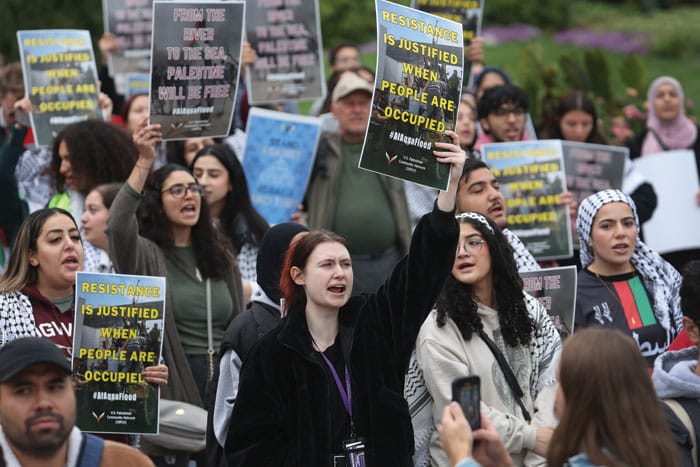
You can see the outraged dignity on their faces. Of course I oppose the slaughter of babies, they snap, implicitly demanding: What do you think I am, a monster? Insulted and aggrieved, convinced they’ve been tarred with a vicious slander, they retreat to their “pro-Palestinian” campus groups and social media feeds and glorious fall Saturday demonstrations, where all good people understand the righteousness of their cause.

Having once been such a “pro-Palestinian” activist myself, I’m sure that, in most cases, the sincerity is genuine. They do think the beheading of babies is wrong. They can examine their consciences and confidently say they oppose the atrocities Hamas committed on October 7.

And yet they don’t. Say it. The failure to condemn Hamas stretches from universities and unions to the United Nations, which has denounced Israel many times since October 7 but the Palestinian terrorist group, zero. The luminaries behind these organizations want us to know they oppose the massacre of Israeli civilians; and because they are human beings not monsters, they undoubtedly do. It just doesn’t seem to inspire any kind of passion.

My interest here is the mental sleight of hand that enables decent, avowedly progressive and other people to disregard the screaming signs that antisemitism is on the rampage. I’m not going to address the growing number who don’t present as “good people”: the mob in Sydney chanting, “Gas the Jews!”, the guy displaying a swastika at a demonstration in Times Square the day after the pogrom, the woman at a London train station screaming, “Kill all the Jews!” These people are, thankfully perhaps, beyond my understanding. I also have a hard time understanding the mindset of someone who takes down posters of Hamas hostages; I can’t see this as anything but evil. But I do have a bead on how people — I’ll even call them good-hearted people — can see the above things happening and still think the righteous place to be is on the side of Hamas.

“Not the side of Hamas — I’m on the side of the Palestinian people,” they’ll say, and they’ll believe it. I did. It requires an awesome surgical maneuver, a splicing between the righteous beliefs you proclaim and the more visceral, uglier ones you deny. 

“Not the side of Hamas — I’m on the side of the Palestinian people,” they’ll say, and again they’ll believe it. I did. It requires an awesome surgical maneuver, a splicing between the righteous beliefs you proclaim and the more visceral, uglier ones you deny. In my case it involved a lot of Marxist verbiage about critical support, supportable versus unsupportable military action, imperialism versus neocolonial people, all in the service of liberating humanity from its misery. 

I considered this way of thinking nuanced, dialectical. What it actually did is encourage a particularly undialectical binary of oppressed versus oppressor, in which the oppressors are always completely guilty and the oppressed entirely innocent. Whatever merit exists in the idea that there are oppressors and oppressed in the world — and I think there is — this rigid, take-no-prisoners interpretation opened the door to cheering any number of horrors. 

Of course the Palestinian people are not the same thing as Hamas. The Palestinians are a much-suffering people, including, particularly, at the hands of Hamas. And yet Hamas are Palestinians. They are the elected leadership of Gaza, acting in the name of the Palestinian cause, being hailed by many Palestinians and people who say they support the Palestinians. When a massive pogrom carried out by Palestinians is greeted with the worldwide cry, “Glory to the Palestinian resistance!” it’s impossible not to read this as enthusiasm and yearning for more Jewish carnage.

And yet this stench of bloodlust is denied by the schoolteachers and diversity specialists in their sustainable cotton t-shirts who march with children in tow against what they know is Israel’s genocide of the Palestinians. 

And yet this stench of bloodlust is denied by the schoolteachers and diversity specialists in their sustainable cotton t-shirts who march with children in tow against what they know is Israel’s genocide of the Palestinians. I believe they really don’t, for the most part, smell it. The suburban mom might be startled when she first spots a swastika twinned with the Star of David, but her discomfort fades after she sees another five, or 20. Apparently that’s just how it is here. The contingent of keffiyeh-clad protestors chanting, “Hamas, Hamas, Jews to the gas!” is definitely disturbing, but she quickly ushers her children away. It’s such a fine sunny day, and spirits are high. All these people have shown up, some driving great distances, to show their opposition to the ethnic cleansing of Gaza. She decides not to give too much weight to the few misfits (as she thinks) blighting the occasion with their Jew-hatred. This surging mass of humanity is so exhilarating. What hope exists in this show of solidarity with the suffering, what pleasure in joining so many others in pointing the accusatory righteous finger. It never occurs to her that the entire demonstration — from the liberal arts students with their drums and “Free Palestine” placards to the smiling grandparents in the “Jewish Voice for Peace” contingent to those troubling chanting keffiyah-wearers — has the same stink.

Marx once remarked that “the tradition of all the dead generations weighs like a nightmare on the brain of the living.” Few traditions have been more enduring than antisemitism, which Marx inherited, along with nobler, rational and emancipatory principles, from the Enlightenment philosophes who inspired him. Thus the peculiar tradition of leftwing antisemitism was born and continues among people who have probably never read Marx and cheerfully concede that communism is dead. 

These people certainly include antisemitism among the many isms they oppose. They don’t consider it very important these days, but they cry watching “Schindler’s List.” They can’t believe people once did such terrible things to helpless Jews, but they know that if they’d been in Germany at the time, they’d have fought the Nazis — after all, here they are today, marching against injustice. That it’s Jews they’re now marching against strikes them only as a bitter irony of history: Yesterday’s victims have become today’s oppressors. The Jews take their accustomed place as villains in a switch that just feels right somehow. The Manichean view that divides the world deftly between virtuous victims and villainous oppressors is so absolute that no mere fact can shake it — not even when that fact is a massacre livestreamed to the world, or your fellow demonstrators howling to put Jews in ovens.

A few days ago, Piers Morgan posed the demand to condemn Hamas to Jeremy Corbyn, former leader of the British Labour Party — a man, I’m sorry to say, I once admired to the point of joining Labour for the specific purpose of supporting him. I now follow Corbyn’s doings with the sickened fascination of an ex-lover. The exchange with Morgan is spellbinding.

Morgan: No, it’s the question.
Corbyn: Are you done yet?
Morgan: Should [Hamas] stay in power?
Corbyn: Are you done yet?
Morgan: This country says they’re a terror group. Do you agree, and should they stay in power?
Corbyn: Listen. I do not approve, support or welcome Hamas…
Morgan: Are they a terror group?
Corbyn: Everybody knows what they are.
Morgan: Are they a terror group?

Corbyn tries to return the discussion to more comfortable terrain—the need for a ceasefire and Israel’s culpability—but Morgan will have none of it. Again and again — no fewer than 15 times — he asks the question, “Are they a terror group?” Corbyn pleads: “Can we have a rational discussion?” Morgan repeats: “Are they a terror group?” Corbyn is enraged. “Can we have a rational discussion?!” he snaps. “Piers! Is it possible?! Come on! You answer it!” Eyes blazing behind their spectacles, lips clenched within his gray goatee, he leans back crossing his arms, radiating martyrdom. 

In the interview, Corbyn does condemn the atrocities of October 7. At least there’s that. Yet somehow — hate the sin, not the sinner — he can’t bring himself to be too hard on the men who burned people alive and raped corpses. A champion of the oppressed doesn’t betray them to the enemy, no matter what they do. 

I wish I didn’t understand this, but I do. I’m sure that when Corbyn crawled off Morgan’s show, he was surrounded by comrades, friends, family and admirers, all of whom fervently believe he acted in the name of peace and justice. They commiserate over wine, share some good news about “pro-Palestinian” marches that day, joke at Morgan’s expense. The sense of solidarity they share is even more sublime because of the attacks poor Jeremy endured. They love him, and as their love grows, so does their hatred of his enemies.

In the days since October 7, some years after I renounced my former views and became a Zionist, I sometimes join my fellow Jews in howling my astonishment. How can so many seemingly good people — people whose world I inhabited for so many years—not see the spiraling antisemitism all around them? Or are they truly antisemites themselves? How can so many people hate the Jews so much they want them exterminated, fewer than fourscore years after the Holocaust? Why? How can they continue to insist they’re on the right side when their side is acting exactly like the Nazis? How can this be happening? 

Then I remember how it felt, that transcendent sense of comradeship and purpose. It really is about feelings much more than beliefs. I had beliefs — I certainly believed I was fighting for a better world— but mostly the attraction in marching against Israel was emotional. Perverse as it sounds, the beating heart of it all was love, my love for my comrades — with hate being the inevitable corollary. And above all this meant hatred of “Zionists.” 

It’s incredibly hard to fight people’s feelings when those feelings are everything they live for. In a Godless world, the feelings people develop for their chosen family — from admired politicians to media to campus groups to every other fixture in our evermore alienated society — may well be all that gives them their sense of identity, meaning, belonging. This is why antisemitism among those who consider themselves good is so very hard to break. They have to see the hideous side of the tribe that gives them their place in the world and, inevitably, be banished from it.

And now I need a final paragraph, preferably one allowing me to end on a note of hope. When I was a Trotskyist writing for my group’s newspaper, the final paragraph was always the need for a party to lead the fight for socialist revolution. Sometimes I miss the simplicity of those days, those sure answers. Few things are clear to me now except that it’s necessary to fight this war on the Jewish people; and successes must be possible or I wouldn’t be here. So fight on we must. One heart and mind at a time.


Kathleen Hayes is the author of ”Antisemitism and the Left: A Memoir.”

Why They Don’t Condemn Hamas Read More »

Fighting Hate with Pride, not Fear

About a week after the October 7 pogrom, I was in a bagel shop in New York City. One would think that’s a fairly safe space to be, but not this particular bagel shop. The former owner, an Israeli, sold the shop to two Arabs, and the Arabs who now work there are not particularly interested in making Jewish customers feel safe. While I was there, one millennial worker came up to each of the visibly Jewish customers and started singing a not particularly friendly song in Arabic in each of our faces.

I was somewhat in shock: The Israeli owner had often employed Arab workers, who had always been quite pleasant. Not this current group. When I respectfully asked the manager about the confrontations, he shouted back: “If you don’t like it, leave!”

Which of course I did, along with the other Jewish customers. On my way home, I tucked my great-grandmother’s Star of David behind my shirt, something I’ve never done my entire life. And I was shaking. Having lived the well-protected “good life” my parents created in the U.S. — meaning free from persecution — I had always marveled at the Israeli ability to deal with incessant terrorist attacks. I never thought I could handle it — and never thought I would have to.

Synagogues and Jewish community centers here began increasing security after 9/11; metal detectors and bag checks have been so thoroughly normalized it’s created a false sense of comfort.

As the days passed, my fear quickly turned to anger: How dare they try to scare us here. And then I began to see Generation Z high school students wearing their kippahs, mezuzahs, and Stars on the streets with prideful smiles. Millennials have taken to bashing Gen Z, and if you look only on campuses today you might be inclined to believe them. But Gen Zers in NYC, at least could not be more different from the mindless conformity we’re seeing on campus. Their deceit detectors have been on high alert for years, having been lied to (by their millennial teachers) about practically everything since kindergarten.

Indeed, Hamas was able to do something few Jewish leaders have accomplished: Begin to unite the Jewish people through pride.

I looked at them and thought: Yes, this needs to be the Jewish Diaspora’s response. Soon, I began to see memes on social media to this effect: “I’ve never been so proud to be Jewish.” Indeed, Hamas was able to do something few Jewish leaders have accomplished: begin to unite the Jewish people through pride.

The Jihadnacht ante was upped on Thanksgiving: smoke bombs outside the Los Angeles home of the president of AIPAC, and more than 30 Jihadi protestors taken into custody in NYC for disrupting the annual Thanksgiving Day Parade and painting genocidal slogans on the New York Public Library.

Since Jihadnacht shows no signs of abating, how should we respond? From a place of strength and pride. Some caveats: 

• Pride — true pride — is not in your face, literally or figuratively. It doesn’t have to be. True pride is confident, dignified, resilient. It’s not about lowering oneself to the antics of those who hate us;

• True pride is recognizing that though we’ve been victims of persecution for thousands of years, we’re not going to wallow in victimhood. We know what has been done to us, what continues to be done to us, but the true miracle is Judean resilience. We need to continue to call out and challenge every lie, but we’re not looking for pity; we’re looking for justice. 

• Understand that truth, justice, and reason are on our side: We have nothing to apologize for. We just need to state, and restate, the truth; no propaganda needed.

• Understand — and internalize — that Judaism is not just a religion. It’s an ethnicity, a people, a nation that is tied genetically and historically to the land of Israel. You can’t “colonize” your own land. 

• Learn Judean heritage. Fully understand that Jews are not white, privileged, or colonizers — today’s blood libel. Jews come in all hues — an exquisite mosaic — and most of our ancestors came here with nothing. My grandfather was overjoyed to get an apple for his bar mitzvah; he had never tasted one before.

What does true pride in one’s identity look like? — Rabbi Jonathan Sacks and Martin Luther King, Jr. With Sacks and King in mind, here’s an initial list for both parents and kids, a list that should have come from our synagogues and community leaders:

* Demand that the media, politicians, and teachers stick to the facts. Pull funding from any institution unwilling to do so.

* Wear something visibly Judean every day. Last summer I began to wear an IDF T-shirt quite a bit because of the blatant normalization of antisemitism at the City University of New York (CUNY).

* Homes and businesses should consider having an Israeli flag outside. Those of us in apartment buildings, make sure an Israeli flag can be seen through your window.

* If confronted, don’t engage. Jihadis don’t excel at reason, and the entire point of this is to normalize Judean pride.

* Aggression — verbal, physical, or even menacing trucks — signifies weakness. Observe, take videos, report; let their aggression be matched by our dignity.

* In schools, no matter how small the incident, report it to the dean immediately. And publicly state that you will be pulling your student out unless jihad is addressed forcefully by the administration. 

* Campuses like Harvard, Columbia, and Penn, where it’s Jihadnacht on Steroids: Your initial instinct may be to keep your student home until the school finally addresses it. According to a new study from Hillel, one-third of Jewish students now feel a need to hide their identity. But either one would be teaching your kids the wrong message. They need to be able to stand with dignity and pride while the mini-jihadis continue to make fools of themselves.

* Learn conversational Hebrew. It’s our language; we should know how to speak it. 

* Teach your kids what the Judean people have been able to accomplish — the light we’ve created — while facing endless persecution. 

This is not to say that we shouldn’t take necessary precautions. Obviously, all synagogues and community centers now need the tightest security, as do all schools and many homes. Think of pride as emotional security — and hope.

Theodor Herzl succeeded in creating a country of Maccabees. But it’s now way past time for the Diaspora to follow. Ironically, we can borrow a term from the neo-Marxists on campus: Decolonization. Each of us needs to decolonize our minds and our souls: Remove all deeply embedded instincts to act like a “dhimmi,” second-class citizen, or to over-assimilate.

We’ve already seen the tremendous lift uniting with other Jews has given us. It’s now time to put all politics aside (unity does not mean conformity) and allow our unity as a people to help us not just get through this but also to make us stronger so that it truly will never happen again.

Or as only Rabbi Sacks could put it:

You are a member of an eternal people, a letter in their scroll.

Let their eternity live on in you.


Karen Lehrman Bloch is editor in chief of White Rose Magazine.

Fighting Hate with Pride, not Fear Read More »

The Hills Are Alive with a Unique “Sound of Music”

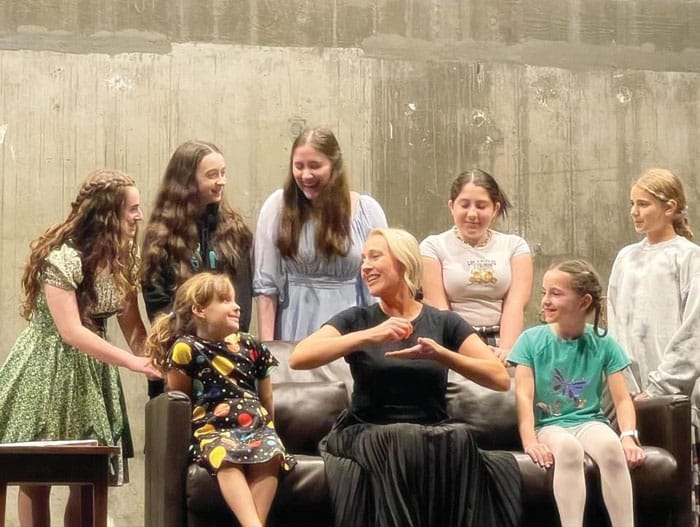
This production of “The Sound of Music” is likely to be a one-of-a-kind experience. Captain von Trapp, Rolf Gruber (the young Austrian telegram boy) and every other male role in this iconic musical are portrayed by females.

Behind this distinctive production is the Jewish Women Repertory Company (JWRC), founded in 2005 by Margy Horowitz and Linda Freedman. Their aim was to provide Jewish women with an opportunity to sing, dance, and perform exclusively for an all-female audience. Many of the women in the theatrical show are religious women adhering to Orthodox practices, prohibiting them from singing in front of men or engaging in physical contact, depending on their religious observance level. 

Typically featuring adult women, this particular production involves several kids, mainly playing the seven von Trapp children. Participants include girls from Jewish schools such as Yula, Hillel, Shalhevet, Pressman Academy, and Maimonides Academy, along with a few mothers.

Director Horowitz, also the performing arts director at Yula high school and a piano teacher, highlighted performers like Karen Holender, who plays Maria and has children in Yula high school and Maimonides, and Lisa Gruenbaum, who portrays Captain von Trapp and has children in Shalhevet and Hillel. The harmonies and beloved songs, including “My Favorite Things” and “The Sound of Music,” will make you want to sing along with the incredible talents on stage, led by music director Reyna Zack.

While the majority of participants are Jewish, some are not and join for feminist reasons. All participants, including the director, volunteer their time, coming together for rehearsals from various parts of the city and valley at the Nate Holden Performing Arts Center on Washington Blvd. Rehearsals began at the end of August, initially meeting twice a week, and later increasing to three times a week in November.

The theater, with 400 seats, hopes to fill every one for the four planned shows on November 30 and December 2-3. Despite the desire to do more shows, the cost of renting the venue at $30,000 per week limits the possibilities. Participants are expected to bring ads to the Playbill, and with community donations, the production company manages to break even. Putting together such a production on a tight budget, including beautiful costumes, stage sets and music, is a costly endeavor.

“This is my 17th show,” proudly declared Horowitz. “None of us is getting paid; we do it because we have so much fun. I love that it helps the community come together—women of all types, different religious backgrounds and personalities, married and single alike. We just love putting on a show and seeing how much people enjoy it.”

Tickets are still available at jwrcla.org/tickets.

Who can attend? Women and children (boys up to 10 years old).

Tickets are still available at jwrcla.org/tickets.

The Hills Are Alive with a Unique “Sound of Music” Read More »

For Jewish Voters, Painful Tradeoffs

As we learn the wrenching stories of the infants and toddlers, the mothers and grandmothers who have been released by Hamas in recent days, we are all on emotional overload. In the middle of this ongoing collective trauma, the legislative machinations of American politicians may seem fairly mundane by comparison. But even as we mourn those we have lost and pray for those who have not returned, the actions of our country’s political leaders are setting the stage for another round of difficult decisions we will face next November when we cast our ballots for the men and women who will represent us — and who will set our country’s Middle East policy — in Congress.

Last week, we discussed the inadequacies of both the Democratic and Republican responses to Black Shabbat. While both parties’ leaders loudly proclaimed their support for Israel, the war has given us an opportunity to see the cracks that have developed in their relationship with the Jewish state. Growing numbers of progressive Democrats have joined the call for a ceasefire agreement that would effectively serve as Israel’s suicide note. Meanwhile, the new Republican House Speaker has held up military aid for Israel for several weeks through his demands for unrelated domestic policy goals. Our friends are still stalwart: There just aren’t as many of them as there used to be.

The majority of American Jews are reliable Democratic voters, not because of Israel and the Middle East but because of the party’s more tolerant approach on issues like abortion, marriage equality and other social and cultural matters. But every day, Ilhan Omar (D-Minn.), Rashida Tlaib (D-Mich.) and a growing anti-Zionist and antisemitic presence on the Democratic far left will make that vote more difficult.

A strong and vocal minority of Jewish voters here consistently support Republican candidates for reasons primarily related to Middle East policy. But the marriage of convenience that has tied the GOP to Israel appears to be weakening, too. When the Republican-controlled House sabotaged critical legislation to support Israel’s war effort with a demand for reform of the Internal Revenue Service, it sent a bracing message to American Jews about the mismatch between their priorities and Israel’s needs.

Regardless of party registration or ideological preference, each of us has long resigned ourselves to the necessary compromise that accompanies our vote. 

Regardless of party registration or ideological preference, each of us has long resigned ourselves to the necessary compromise that accompanies our vote. Most Republicans do not support the antisemites who marched in Charlottesville, Va., but voting for a GOP candidate enlarges the platform on which alt-right haters stand. Most Democrats do not believe that Israel provoked war with Hamas, but electing a Democrat of any ideological stripe increases the influence of those who stand against the Jewish state and its children.

Such are the limitations of a two-party system that most of us scarcely consider the sacrifice such tradeoffs require. Vote for a pro-Israel politician in either party and we also empower the antisemitic fringe that shares that candidate’s registration. We’ve resigned ourselves to the fact that elevating those who hate us — from the far right or the far left — is a necessary evil to thwart the even more despicable haters among the opposition.

No more. During the Cold War, patriots of both parties stood up against extremists on the far right and the far left within their own parties to protect the world from Soviet aggression. The same type of bipartisan alliance will be necessary to save Israel from those who wish to destroy it. But this means being willing to hold politicians accountable, even if they’re a member of our own party and a reliable ally on other issues, and demanding that they hold their own colleagues to account.

Blind partisan loyalty – to Democrats or Republicans – is a luxury we can no longer afford. Rather than continuing to enable our enemies by voting indiscriminately for one party or the other, it’s time for us to start voting for women and men in both parties who stand with Israel. The two parties have taken us for granted for too long – let’s make them work for our votes. The future of the Jewish state depends on it.


Dan Schnur is the U.S. Politics Editor for the Jewish Journal. He teaches courses in politics, communications, and leadership at UC Berkeley, USC and Pepperdine. He hosts the monthly webinar “The Dan Schnur Political Report” for the Los Angeles World Affairs Council & Town Hall. Follow Dan’s work at www.danschnurpolitics.com.

For Jewish Voters, Painful Tradeoffs Read More »

I’m an Observant Jew, and I Need Christmas Music More Than Ever Before

I know I’m running the risk of being accused of being an assimilationist, but I’m one of those Jews who loves this time of year, not only because Hanukkah is right around the corner, but because now, in the face of so much darkness, hatred and violence, I’ve never needed the sights and sounds of Christmas in America more. 

As a Jew, I’m grateful for Christmas celebrations in America, because they mean that many of the foundations of this country are still in place, particularly today, when we’re seeing full-blown calls for intifada in the West. At a time when hate-filled protestors are covering statues of American founding fathers in keffiyehs and tearing down American flags, can you blame me for being grateful that good, old-fashioned holiday traditions are still on display in this country? 

I’m never offended when someone wishes me a “Merry Christmas”; it’s still a sure-tell sign that I’m no longer in Iran. And this year, amidst the flood of anti-Western fanaticism we’ve seen on American streets and campuses, I will gratefully take “Merry Christmas” over “Globalize the intifada.” This kind of thinking may be binary, but there’s currently a war against Jews, and I feel the need to set some boundaries. 

On a superficial level, the lights, songs and whimsical decorations offer me a respite from the heartless darkness of Hamas-inflicted suffering upon my people. But on a deeper level, such things remind me that in terms of anti-Western practices, America has not turned into Europe or the Middle East. 

By writing about the whimsical escape offered by holiday sights and sounds, I don’t mean to trivialize the horrific pain of those who have suffered unspeakable loss in Israel. On the contrary, I’m turning to vapid holiday music because I’m in survival mode, and the music is innocuous. I will never put up a Christmas tree in my home, but a song that asks for more snow offers a welcome respite from the fact that each second, I’m aware of how much is currently on the line for Jews and Israel.

Ironically, listening to Jewish music, especially in Hebrew, doesn’t help me right now; it’s too meaningful, too connected with my brothers and sisters in Israel. I love this music, but today, it only leaves me in tears, and I sometimes need an alternative.

I read Tehillim, perform mitzvot and pray hard. But here’s the rub: Those endeavors can’t be mindless. Listening to a song about chestnuts is mindless. That’s why I seek a little holiday music, because it tempers the pain of reality with just enough mindlessness to get me through another day. 

In Los Angeles, a local FM radio station, KOST 103.5., plays Christmas music during the entire month of December. In the last few years, the station’s non-stop holiday music has even begun in November. Angelenos are just starting to take down their Halloween lawn decorations when “Feliz Navidad” begins playing on KOST.

As a matter of principle (and because I’m slightly nervous over how many Orthodox rabbis I know personally will read this), I generally refuse to tune in to KOST 103.5 until mid-December each year. But this year, I began listening to KOST Christmas music in mid-November, because for every disturbing message of violent hate against Jews, Israel and America after October 7, I need at least one comforting holiday song to remind me that the world has not turned completely upside down.

I have only one rule about holiday music: If the song features any references to a shepherd, “holy night,” “Our Lord,” or to anyone being “adorned” or called a “king,” I respectfully switch the station. As a Jew, there are only two kings in my life: Hashem, and the dry cleaner who works magic by removing the yellow stains caused by my patented turmeric-infused, Persian Matzah Ball Soup.

Yes, it’s hard for me to listen to Christmas songs that contain direct religious references. But if the song involves Burt Ives, The Ronettes, sleigh bells, snow or Alvin, Simon and Theodore (The Chipmunks), I’m all in. And of course, if Mariah Carey’s “All I Want for Christmas” starts playing, I act like an excited 12-year-old girl, which is exactly how old I was when that song was released in the mid-1990s. 

I also love Christmas lights, which, in some parts of L.A., can be hard to find, given increases in secularism, decreases in the bandwidth needed to set up lights (especially since COVID) and the fact that there are many Jewish neighborhoods in this town. Ironically, some of the best Christmas lights may be found in Beverly Hills, home to a huge Jewish population and many Jewish elected officials.

I hope that cities all over this amazing country never stop putting up Christmas lights. I didn’t escape Iran to be deprived of the magic of string lights wrapped around local palm trees. 

While there are nods to Hanukkah throughout town, I love Beverly Hills not only because it was my city of refuge after I fled Iran, but also because its leaders, including the Jewish ones, wisely understand that the more secular aspects of Christmas — especially the magic of bright lights — evoke a near-universal sense of wonder that is part and parcel of America itself. I hope that cities all over this amazing country never stop putting up Christmas lights. I didn’t escape Iran to be deprived of the magic of string lights wrapped around local palm trees. 

Of course, Hanukkah is the Festival of Lights, and there’s nothing like the sight of a hannukiah by a window, emitting a glow that is more than cozy and elegant: It is eternal. 

Rabbinic laws require Jews to place their hanukkiot by street-facing windows in order to publicize the miracles surrounding Hanukkah. But this year, for possibly the first time ever, some American Jews may perceive lighting their hanukkiot by a window as more of a liability than a precious ritual (and for the record, a menorah represents Judaism, but it not actually used on Hanukkah; it doesn’t have enough branches or even a higher shamash, like a hanukkiah). 

If Jews have been contemplating removing their mezuzot as a result of terrifying increases in antisemitism in this country, would some of them feel comfortable lighting a hannukiah by a window that faces the street, showing every passerby that a Jewish person lives in that home?

In truth, I am especially grateful for the safe (and very public) displays of Christmas lights because currently, many Jews worldwide can’t enjoy the same privilege when it comes to Hanukkah. Ask any Jew in America if they would feel safe adorning their front lawn with giant inflatable dreidels, Stars of David and blue and white lights, and you may receive a common response: “Maybe next year.” And to those Jews who are not only keeping their massive Hanukkah symbols up this year, but adding even more, you’re amazing.

Perhaps today, we should be erecting more giant hanukkiahs outside synagogues, not fewer, and displaying them even more prominently in our homes. Next year, I pray we won’t be in survival mode. I recently heard Karen Carpenter’s haunting voice sing “Home for the Holidays” and broke down in tears thinking about Hamas’s hostages in Gaza. 

Today, all I want for Hanukkah is for every single one of those hostages to return home.


Tabby Refael is an award-winning writer, speaker and weekly columnist for The Jewish Journal of Greater Los Angeles. Follow her on X/Twitter and Instagram @TabbyRefael 

I’m an Observant Jew, and I Need Christmas Music More Than Ever Before Read More »

Rosner’s Domain | The Fastest Way to End the War

“Si vis pacem, para bellum.” 

“If you want peace, prepare for war.” That’s an old Roman adage. If you want peace, convince Israel’s enemies that it is ready to wage war for as long as it takes until its goal – uprooting Hamas – is fulfilled.

As I write this column, there is a ceasefire in Israel, and hostages are slowly returning from their forced abduction. It is a trickle of relief from human suffering. A child, an elderly woman, and another child, and a mother. Every day the names of people slated to be released is passed along – every day a much longer list of Israelis not slated to be released is implicitly conveyed. When 13 or 14 Israelis go back to their homes, more than 200 do not. When 50 go back to their homes, more than 150 remain.

The ceasefire is the result of two completely different objectives. Israel’s objective is to save as many hostages as possible before it goes back to war. Hamas’s objective is to use the slow release of hostages as a way to bring the war to an end.

As you read this column, maybe there’s still a ceasefire, and more hostages are released. Maybe there’s war. Maybe there’s war and renewed talks about another ceasefire. Whatever the case, it is important to note that the ceasefire is the result of two completely different objectives. Israel’s objective is to save as many hostages as possible before it goes back to war. Hamas’ objective is to use the slow release of hostages as a way to bring the war to an end. 

These two objectives cannot be reconciled unless someone – the U.S., Egypt, Qatar – becomes convinced that for Israel the uprooting of Hamas must happen. That for Israel, the end of Hamas rule in Gaza is not negotiable. That no prolonged ceasefire, and no release of hostages is going to gradually erode Israel’s position from the outset of this war: Hamas no more.

Is the world convinced that such an outcome, the one Israel wishes for, is the only possible outcome of the war? I’m not sure that it is. A ceasefire, both historically and psychologically, is often seen as a prelude for a prolonged ceasefire, which itself is a prelude to the end of hostilities. In the 2006 Lebanon War, a ceasefire announcement resulted in a last minute attack with many casualties, and then ended the war. In the 2014 operation in Gaza, a first ceasefire broke down shortly after it was slated to begin, a second one also failed to materialize, a third proved insufficient, but ultimately, a fourth ceasefire brought about the end of the war. 

So, for Hamas to hope that a few more days of ceasefire could lead to a negotiated compromise that would end the war is not inherently irrational – except that in this case it is. Because this time Israelis are adamant as they ponder their options for the future. Not all of them agree on all the details concerning the day after the war: Some Israelis want to see Jewish settlements in Gaza, some don’t; some Israelis want to see the Palestinian Authority taking over Gaza (President Joe Biden’s objective), and some don’t; some Israelis fantasize about a wave of Gazans leaving the area to live elsewhere, some think this plan is, well, a fantasy. But there’s no one who says let Hamas stay. The end of Hamas rule is a precondition to all future arrangement. 

In fact, it is almost impossible to imagine an Israeli government telling its citizens that because of this or that – American pressure, operational difficulties, political disagreements, bad weather, whatever – the objective of the war is no longer to eliminate Hamas rule. It is almost impossible to imagine an Israeli leader conveying such message without losing his or her ability to have a political career. Uprooting Hamas is a precondition for all alternative futures – and Israelis understand this goal to be of existential magnitude. They want it achieved – no matter the cost. 

So, if the Arab world, or other international players who truly abhor the bloodshed – as we all do – would like the war to end sooner rather than later, and with fewer casualties rather than more – there’s a simple undertaking they could burden themselves with: Convince Hamas that it’s over, and force its leaders to capitulate, to escape, to give up. A ceasefire is a good a time as any to convey such message. 

Qatar, a sponsor of Hamas, ought to realize that its investment had gone sour. That it better cut its loses, and thus save many Gazan lives. Egypt, an important and highly involved neighbor must deliver the same message to Hamas leaders. Iran must get this message from someone too: No matter how many resources and energy you, Iran, intend to throw into this battle, the case of Hamas is closed. So, you better move on to the next bloody horseplay.  

You want the war to end? Prepare to carry it for as long as it takes. As you read these lines – whether there is still a timer on a ceasefire or not – Israel seems prepared to do just that.

Something I wrote in Hebrew

Among Jews in Israel there is no great enthusiasm for the arrangement that can be called “PA-rule in Gaza”. Twelve percent support an arrangement of “rule by the Palestinian Authority and Israel’s security responsibility.” Another 12% agree to “some kind of Palestinian government (it doesn’t matter which one), provided that the Strip is demilitarized.” “Some kind” could mean the Palestinian Authority. In total, 24% would accept PA rule over Gaza. There are more Jews in Israel who would not accept the PA. They want full Israeli rule in the Gaza. Nine percent want full rule over the entire territory, and another 24% want rule over the entire territory, which also includes the return of the Israeli settlements. Who are the Israelis who want this? Mainly coalition voters. Sixty percent of them chose one of the two full-control options. Among the opposition voters, only 9% chose one of these two.

A week’s numbers

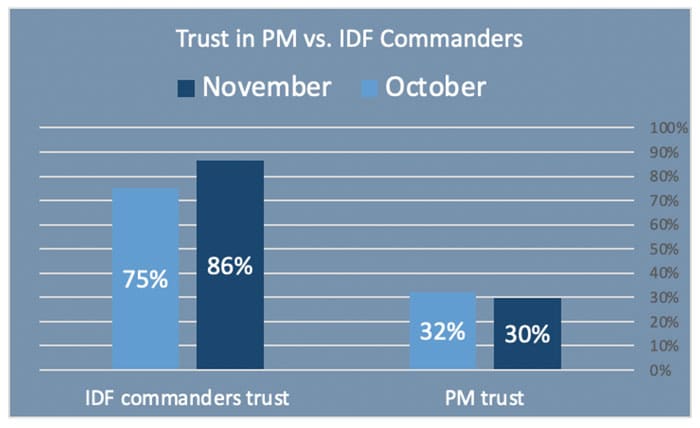
While trust in the PM was unchanged in the first month of the war, trust in the high command of the IDF had gone up significantly. 

A reader’s response:

Yuri Aronson asks: “How long after the war is a new election in Israel expected?” My answer: There is no set date for such a thing, but Israelis expect it to come three to six month after the war is over (what “over” means is also an open question). 


Shmuel Rosner is senior political editor. For more analysis of Israeli and international politics, visit Rosner’s Domain at jewishjournal.com/rosnersdomain.

Rosner’s Domain | The Fastest Way to End the War Read More »

Fighting Back Against the University of Michigan Referendum on BDS and Israel

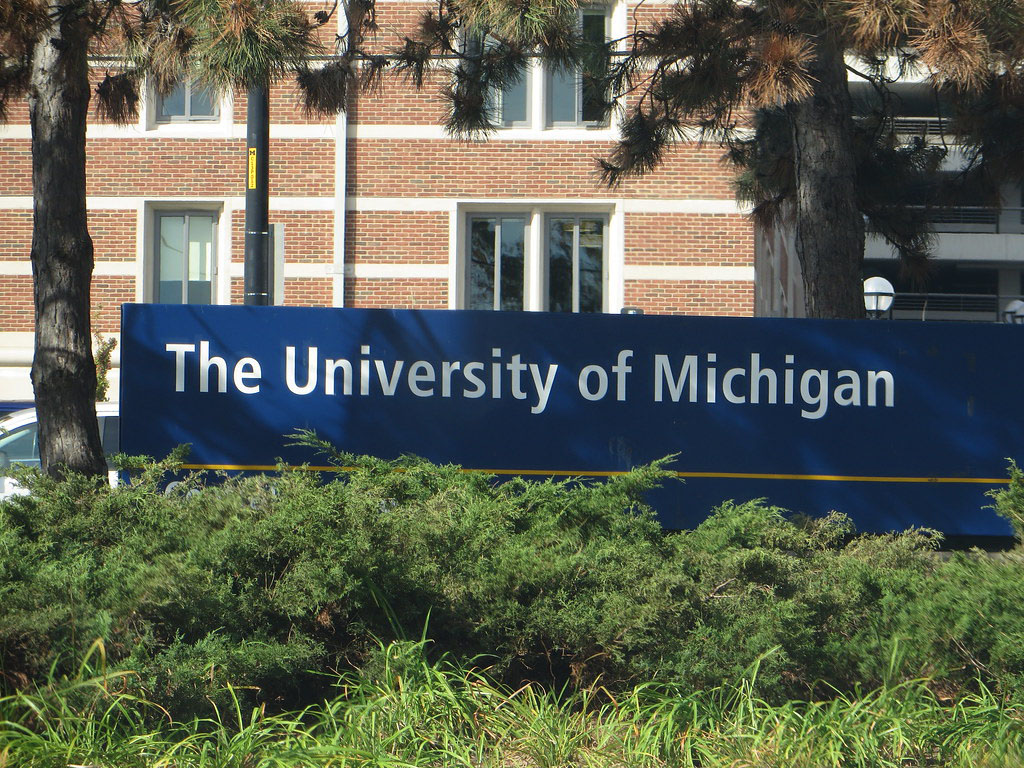
This week, the University of Michigan is holding a vote on a campus wide BDS referendum that accuses Israel of genocide. The voting, which started November 28 and ends at 10 p.m. Michigan time on November 30, forces students to be either pro-Israel or pro-Palestine. Now, students and pro-Israel activists are calling on University of Michigan president Santa Ono to remove the BDS referendum from the ballot.

“BDS activity on campus has led to a rise in antisemitism on campus,” actress and author Noa Tishby posted on X. “It only causes division on campus and isolates Jewish students. President Ono (@UMichPrezOno) and the university administration must immediately intervene and remove this antisemitic referendum from the ballot.”

“President Ono (@UMichPrezOno) and the university administration must immediately intervene and remove this antisemitic referendum from the ballot.” – Noa Tishby

Actor Brett Gelman from “Stranger Things” also chimed in on the vote, posting a sarcastic video on Instagram.

“I’m really thankful to the University of Michigan today, who are forcing its student body to vote on an anti-Israel referendum,” he said. “Yeah, that was created by BDS. So yeah. Very soon, the student body is going to have to vote whether they are pro- or anti-Israel. And I think we all know how that’s going to go. That’s going to go really, really well… not for the Jews.”

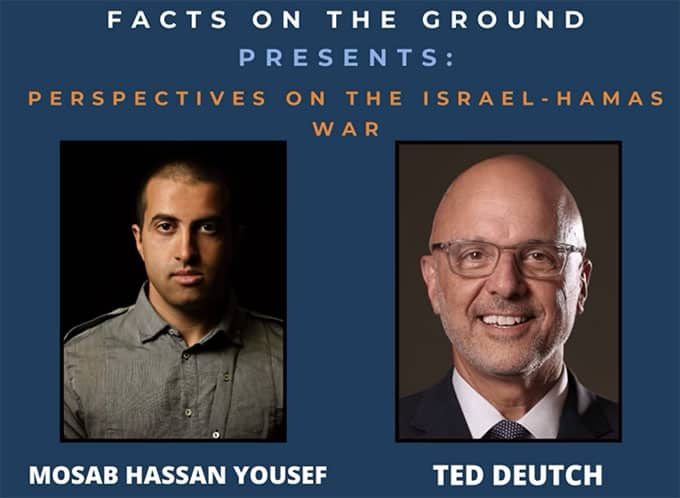
Pro-Israel students at the University of Michigan created a group and website called Facts on the Ground (FOG) at Michigan, which is urging students and supporters of Israel to vote no on the referendum.

According to their website, their goals are to “Mobilize students to vote ‘No’ on the ballot and inform students of the importance of their vote in shaping the future of our campus climate” as well as “Combat antisemitism and Islamophobia by preventing the spread of disinformation that aims to compromise students’ opinions and incite division on campus.”

On November 28, FOG held an event with Son of Hamas co-founder and peace activist Mosab Hassan Yousef, along with Former Congressman – Chair of House Ethics Committee and Chair of Subcommittee on Middle East and Counterterrorism for the House Foreign Relations Committee Ted Deutch. The two spoke about perspectives on the Israel-Hamas War.

The University of Michigan has a history of antisemitic and anti-Israel events on its campus, starting in 2014, when an anti-Israel activist and campus BDS leader posted a photo of himself wearing a traditional Arab headscarf and jamming a knife into a pineapple. The student was the divestment chair of Students Allied for Freedom and Equality (SAFE), a pro-Palestinian campus group.

In June of 2021, when Israel was fighting against rockets coming from Gaza, the University of Hillel chapter at the University of Michigan was targeted with antisemitic and anti-Israel graffiti that said “F*** Israel” and had red handprints around it.

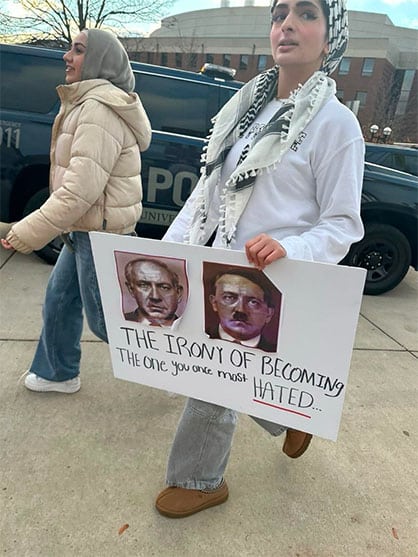
On October 11, 2023, just days after the massacre in Israel, nearly 1,000 faculty and staff members signed a letter to President Ono demonizing Israel, saying that it committed “structural apartheid.” A student tore down hostage posters on October 27, claiming that settlers were “not innocent,” and on November 18, a student at a pro-Palestine protestor on campus held up a poster comparing Prime Minister Benjamin Netanyahu to Adolf Hitler.

President Ono released statements following the attacks in Israel. On October 10, in the wake of the massacre, he wrote: “Many members of our university community are personally affected by these events, and we encourage students to be conscious, kind and compassionate to their peers during this difficult time. We encourage faculty and staff to demonstrate understanding and accommodation for those affected by this violence.”

However, Ono has not yet spoken up about the ballot referendum. For pro-Israel activists, this lack of action is concerning.

“This is unacceptable,” posted influencer Lizzy Savetsky. “President @SantaJOno should remove the BDS vote from the ballot immediately!”

Fighting Back Against the University of Michigan Referendum on BDS and Israel Read More »

A Timeline of First Four Days of Hostage Releases

DAY 1 – FRIDAY, NOVEMBER, 24

  • Hamas agrees to a 4 day ceasefire for a prisoner/hostage swap.
  • 13 Israeli, 10 Thai, and one Filipino are confirmed released. The Israelis range in age from 2 to 85 years old. All but one of the Israelis were from the Nir Oz Kibbutz.
  • They entered Egypt at the Rafah Crossing, the only border between Gaza and Egypt. The Rafah Crossing is about 4 miles northwest of the convergence of the Gaza-Israel-Egypt border. The hostages reentered Israel at the Kerem Shalom Crossing, where multiple medivac helicopters idled
  • Hostages arrive at Hatzor Airbase in Israel
  • No American hostages released; Netanyahu “not surprised.”
  • Israeli Prison Authority confirms 39 Palestinian prisoners were released by Israel.
  • President Joe Biden urges an “end to this cycle of violence in the Middle East.”

Israeli hostages released on Friday 11/24:

  • Yafa Adar, 85 – Holocaust survivor
  • Margalit Moses, 77
  • Hana Katzir, 76
  • Adina Moshe, 72
  • Daniel Aloni, 45, Emilia Aloni, 5
  • Doron Katz Asher, 34, Raz Asher, 4, Aviv Asher, 2
  • Channa Peri, 79
  • Ruth Munder, 78, Karen Munder, 54, Ohad Munder, 9

“I dreamt we came home, now the dream came true,”

—Raz Asher, 4, to her father Yoni after being freed (via Jerusalem Post).

“I am happy that I received my family back…But I am not celebrating until the last of the hostages return home.”

—Yoni Katz Asher, after his children and wife were freed on Friday.

DAY 2 – SATURDAY, NOVEMBER, 25

  • Hamas says they are delaying the release of a second group of hostages until more supply trucks can enter northern Gaza.
  • President Joe Biden has phone calls with the Emir of Qatar to urge an end to the hold up.
  • Israeli authorities tell families of hostages to go to medical centers to await loved ones.
  • Israel released 39 Palestinian women and teens imprisoned or in custody.
  • Egyptian and Qatari officials take action to remedy the delay.
  • An Israeli official reportedly makes an ultimatum to Hamas to release the hostages by midnight or Israel will “restart ground operations.”
  • Just after 11:00 p.m. Israel time, the IDF confirms that 13 Israelis and 4 Thai nationals are in custody of the Red Cross and on the way to Rafah crossing — seven hours after the initial agreed handover time.
  • 9-year-old Irish-Israeli Emily Hand released. Ireland Prime Minister Leo Varadkar sparks controversy for describing Hand as being merely “lost” and “found.”
  • Throughout the day, the first group of hostages from Friday are reported in good condition as videos of families reuniting are released.

Israeli hostages released on Saturday, November 25

  • Emily Hand, 9
  • Hila Rotem, 13
  • Maya Regev, 21
  • Noam Or, 17, Alma Or, 13
  • Shiri Weiss, 53, Noga Weiss, 18
  • Sharon Avigdori, 52, Noam Avigdori, 12
  • Shoshan Haran, 67
  • Adi Shoham, 38, Yahel Shoham, 3, Naveh Shoham, 8

“I won’t allow Hamas to confuse me and inject their psychological warfare into my mind. I don’t watch the news, and I don’t hear any information. Until it happens, we remain hopeful that Gali will return safe and sound.”

—Kamelia Hoter Ishay, grandmother of Gali Tarshansky, a hostage in Gaza, and Lior Tarshansky, who was murdered on October 7. (Via Jerusalem Post)

DAY 3 – SUNDAY NOVEMBER, 26

  • Hamas releases propaganda videos of hostages being walked to the vans that will take them across the border to Egypt. “Keep waving,” Hamas terrorist can be heard instructing a hostage.
  • Safra Children’s Hospital at Sheba Medical Center says no children are in need of urgent medical care
  • Biden speaks about hostages
  • 14 Israeli hostages released along with 3 Thai nationals.
  • First American hostage freed: Abigail Mor Edan, 4-year-old Israeli-American. Both of her parents were murdered on October 7th.
  • Freed Israeli hostage Elma Avraham, 84, is in critical condition at Soroka Hospital. She arrived in Israel with a heart rate of 40 bpm and a body temperature of 28°C (82.4° F)
  • Israeli-Russian dual citizen, Roni Krivoi, was released by Hamas, reportedly at the behest of Russian Prime Minister Vladimir Putin. Krivoi was working as an audio technician at the Sound of Nova music festival when he was abducted October 7th. He escaped Hamas captivity for four days before being captured in Gaza and returned to custody.
  • Reports from freed hostages that while in captivity, they were fed little food — mostly rice and pita bread — and slept on plastic seats.
  • Qatari delegation sent to Israel to discuss extending the ceasefire.
  • Netanyahu said he’d extend the truce if that meant 10 additional hostages are released each day.

Israeli hostages – Released on Sunday, 11/26

  • Avigail Idan, 4 (both parents were murdered, two older brothers hid in closet and survived)
  • Ron Krivoi, 25
  • Hagar Brodutch, 40, Ofry Brodutch, 10, Yuval Brodutch, 8, Oria Brodutch, 4
  • Chen Goldstein Almog, 49, Agam Goldstein Almog, 17, Gal Goldstein Almog, 11, Tal Goldstein Almog, 9
  • Elma Avraham, 84
  • Adrienne Siegel, 62
  • Ela Elyakim, 8, Dafna Elyakim, 14

“We can pressure Hamas to a negotiation. And to get other deals going. It was made very clear to us, the families, that there is no deal that will bring all the hostages back at once. And considering that, if this is step number one, that means step number two is closer than ever.”

—Udi Goren, cousin of Tal Haimi who is presumed to be currently held hostage by Hamas (via i24 News).

DAY 4 – MONDAY NOVEMBER, 27

  • Thai Muslim group says they spoke with Hamas to negotiate for their hostages to be released.
  • Egypt reports the ceasefire will be extended by two days with 20 additional Israelis and 60 additional Palestinian prisoners to be released.
  • No Thai nationals are expected to be released on Day Four. Thai Government says so far, 17 Thai nationals have been released from Hamas captivity.
  • Margalit Moses, 78 year-old cancer survivor and freed hostage, released from hospital.
  • NATO Secretary General Jens Stoltenberg called for an extension of the ceasefire.
  • Hamas says they will release 11 hostages: 9 children, 2 mothers.
  • Among the Day Four hostages released are three French, two German and six Argentinian dual nationals.
  • Freed hostages say Hamas leader Yahya Sinwar spoke in Hebrew to the hostages early in the ordeal.
  • Abigail Mor Edan was seen at the Hatzerim Airbase with her aunt Liron and grandmother Shlomit, “doing remarkably well.” Edan was spotted again at Schneider Children’s Medical Center.
  • Times of Israel reports that Red Cross has yet to see remaining hostages, despite U.S. and Israeli claims such visits were part of the ceasefire.
  • IDF reports that Hamas gave custody of youngest hostages to another terrorist group. Ten-month old Kfir Bibas and his brother Ariel, 4, were taken to Khan Yunis in southern Gaza and placed in the captivity of Palestinian terror group, the Popular Front for the Liberation of Palestine.
  • Israeli media reports that a list of hostages to be released on Tuesday (Day 5) has been received.

Israeli hostages released on Monday, November 27:

  • Sharon Aloni-Cunio, 34, Emma and Yuli Cunio, 3-year-old twins
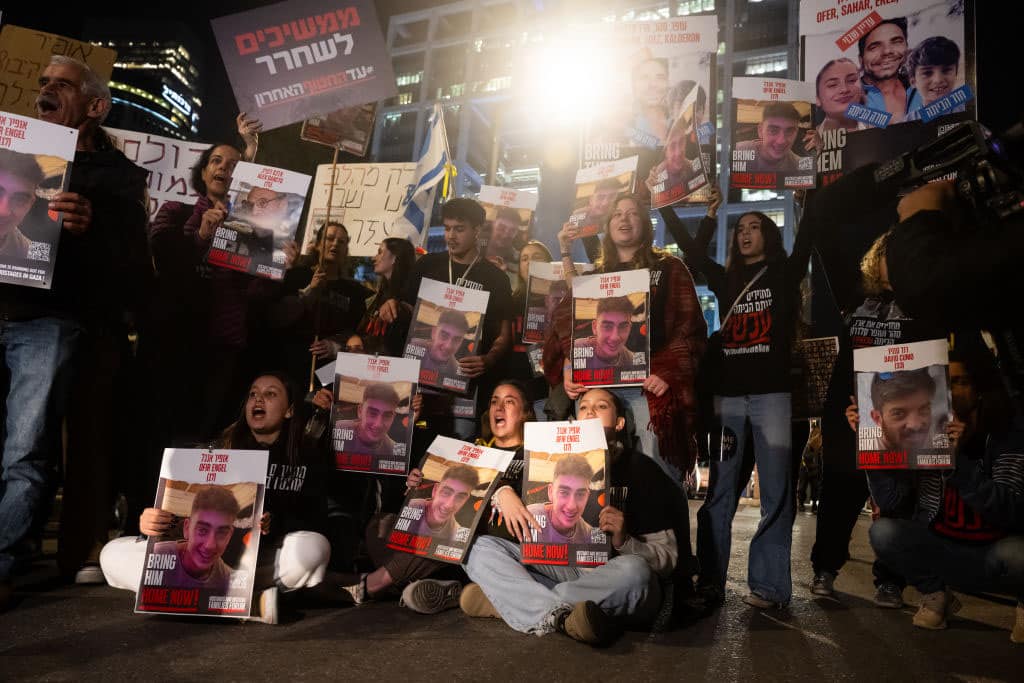
  • Yuval Engel, 11, Mika Engel, 18,
  • Karina Engel-Bart, 51
  • Or Yaakov, 16 Yagil Yaakov, 12
  • Erez Calderon, 12, Sahar Calderon, 16
  • Eitan Yahalomi, 12

“Wait, there’s a problem: there’s a woman older than me and in poorer health, she should go first.”

—Adina Moshe, a 72-year-old freed hostage, reportedly said to Hamas terrorists in an effort to persuade them to release another hostage in worse shape than her. (Via i24 News)

A Timeline of First Four Days of Hostage Releases Read More »