fbpx

November 1, 2023

Open Letter to the Community – ‘HaTikvah,’ ‘The Hope’

Knowing that so many of you share my anguish at the atrocities committed by Hamas on October 7, at the mortal perils now confronting the State of Israel, and at the resurgence of antisemitism in our own nation and around the world, I am writing at this time of grave crisis with an urgent conviction. 

What we have witnessed in the horrifying evidence still emerging is as savage as any pogrom ever visited upon the Jewish people. It has deprived us not only of a fearful toll of innocent lives but of all illusions:  we face an existential threat to Jewish people everywhere. There can be no doubt of this, even for those of us who would prefer to dismiss our worst fears.  

Israel’s national anthem is called “HaTikvah,” “The Hope.” Indeed, we are a people of hope. But hope must always be tempered by reality. “In every generation,” says the Passover Haggadah, “enemies have risen up to destroy us.” We have pledged “Never again.” Yet here we are again.  

For many of us, the specter of the Holocaust is remote. The comparison is not one of magnitude but of malevolence. In the ideology of Hamas, Jews everywhere are targeted for destruction. The State of Israel is the front line. It must wage a war of self-defense not only to protect its own civilians but to protect you and me. Not only that: Log on to any social media platform and you will witness the avalanche of distortion and antisemitic propaganda that has descended upon us. Israel must wage this battle as well, and it is just as daunting. 

Should Israel’s enemies prevail, what will be the fate of the Jewish people? For we have surely learned what can happen when we lose the capacity to defend ourselves. The Israel Defense Force is a mighty front   line—and it’s imperative that we support them. 

This is not a war against the Palestinians, so many of whom are innocent victims as well. It is a war against a fundamentalist Islamist group and its backers who seek to destroy Israel and kill all Jews. 

Hope must be tempered by reality, but there is hope. It begins with our own United States of America. Its leadership continues to demonstrate a deep commitment to Israel’s existence and security. Every Jew, in America and around the world, can be thankful for this.

But even the deepest commitment can be jeopardized if we Jews ourselves are not united in our own resolve to stand by Israel … Our fortitude, our solidarity, our support, our unwavering determination are what we can give to the Israelis who are fighting at this very hour to defend their lives and ours.

But even the deepest commitment can be jeopardized if we Jews ourselves are not united in our own resolve to stand by Israel — in word and deed, in daylight and darkness, through its most agonizing trials.  Our fortitude, our solidarity, our support, our unwavering determination are what we can give to the Israelis who are fighting at this very hour to defend their lives and ours.

The book of Ecclesiastes tells us: “A threefold cord is not easily broken.” A rope woven of many strands will always be stronger than the single thread. That is the verdict of our people’s history, and my most profound conviction. In the words of the Jewish sages, “Let us be strong, and let us be strengthened by one another.”  When we unite, we cannot be broken.


Uri D. Herscher is Founder, President and CEO Emeritus of Skirball Cultural Center.

Open Letter to the Community – ‘HaTikvah,’ ‘The Hope’ Read More »

Why I Still Want to Be a Jew

I was born into a world where my identity was divided. My mother, a Canadian Catholic, and my father, a UK Protestant, represented different traditions and ideologies that often felt like a divisive force within my family. We tried attending church a few times, and the United Church seemed like a compromise that could bring my parents together. But when I thought I was getting closer to understanding our family’s religious identity, we stopped attending services. This left me adrift, searching for spiritual meaning in a world growing ever more complex. 

Desperately seeking a sense of purpose, during my teenage years, I tagged along with friends to their churches, including Anglican and Pentecostal congregations. Each had its appeal, like the singing and laser puppet shows in the Pentecostal church, but none offered me a real sense of belonging. When I left home to explore the world on my own, I stopped attending church services altogether. Instead, I threw myself into love when I met my first boyfriend at the age of 19. We moved in together, created a warm and welcoming home, and shared a life filled with everyday joys, like a bathroom shrine of makeup and brand-new pots and pans that we quickly made our own.

Seven years later, when that relationship ended, I found myself alone in Toronto, Ontario, while he returned to Halifax, Nova Scotia. I was thrust again into a search for purpose and meaning. I didn’t have a family to turn to for support, as my mother was still dealing with her separation from my father, and my brother was living far away in the North. Navigating the world and, more importantly, my own thoughts became a solitary journey.

As a woman alone in the world, I began to worry about where I walked, how much I drank, and how late I stayed out at night. These were concerns I had set aside in the stability of my relationship. But then, I stumbled upon a martial arts club that offered me a sense of community and family. I started attending faithfully on Tuesdays, Thursdays, and Saturdays. Walking with my kung fu friends to the metro, we never drank, and they became my safe space.

As I advanced through my belt levels in martial arts, I developed a keen interest in the philosophy behind the physical form. For me, kung fu became closely connected to Buddhism. I decided to explore some temples and was drawn to the ideas of kindness and compassion. I began to appreciate the wisdom in the parables, such as, “It doesn’t matter what you do; it matters that you do it.”

Just as I began confronting the significant questions about life, I moved once again. This time, I relocated to Hamilton and searched for new martial arts clubs and philosophies. This was when I was introduced to, and given an opportunity to visit, the Middle East. While in Abu Dhabi, I delved into the Quran and the Torah, two religious texts as divided as my parents’ beliefs.

Upon returning home, a realization struck me: Many of the things I naturally loved – art, music, history – seemed to have ties to Judaism. I began to make connections, listing influential figures such as Mark Rothko, Marc Chagall, Norman Mailer, and Simon Schama. But my greatest inspiration was Ruth Bader Ginsburg. I even began tracing my family tree, uncovering hints of Jewish heritage in my grandmother’s surname, Albrecht.

This newfound connection with Judaism led me to Temple Emanu-El-Beth-Sholom in Montreal, Quebec, where I was warmly welcomed. There, I attended classes with no obligation, and I instantly felt part of a supportive community. The rabbi is an openly gay woman, and the rabbi educator from the United States was also a woman. These diverse leaders were something I had rarely seen before in my almost 40 years of searching.

I became addicted to the learning process, completing Conversion Classes 101 and presenting a portion from the Torah. I had the opportunity to challenge my beliefs and what I was reading. In our last—and most emotionally poignant — class, we read letters from the Montreal Holocaust Museum. One was a letter thrown from the train. They were the last traces of life families had received from the victims of the Holocaust. The words within those letters conveyed a harrowing reality that mere reading could never truly encapsulate. Yet, as I immersed myself in the firsthand accounts of the immense suffering endured during that dark period in history, I found myself moved to tears and heartache so great that its echo still resonates within me. I had been touched by something far greater than myself, and it ignited within me a deep-seated desire to wholeheartedly commit to this transformative journey.

Just as I was ready to take the next steps in my journey of conversion, a dear friend posed a thought-provoking question: Could embracing this conversion also expose me to antisemitism and hatred? This question weighed heavily on my mind, prompting deep conversations with friends and careful consideration of the implications. These discussions ultimately led me to temporarily set aside my pursuit, as the weight of indecision became paralyzing. Pushed aside again and again as COVID-19 swept the globe, my priorities shifted toward survival. Like so many others, I focused on self-preservation and isolation. 

However, as the world gradually reopened, I felt an overwhelming desire to reconnect with the community that had breathed life into my journey. In the early months of 2023, I started reestablishing those pre-pandemic relationships. Yet, as I attempted to rebuild these connections, a new challenge arose in the form of the Middle East conflict, particularly Hamas’ invasion of Israel. The news left me glued to the screen, yearning for a resolution and peace. The deep divisions in society became even more apparent on social media, as fake news and the echo-chamber effect exacerbated the situation.

It was during this very moment that I felt an overwhelming compulsion to once more reflect on my path, to discern where my heart truly yearned to belong. And so, I wrote, and kept writing until I had found my answer: I am Jewish, and I am proud of my faith. It is an integral part of who I am, as significant as my race, sexual orientation, or other aspects of my identity.

I am resolute in my commitment to complete my Hebrew studies, to immerse myself in the mikveh and to continue to learn about the rich tapestry of Jewish traditions, culture and history. 

In a world often marred by division and fear, it is of paramount importance to embrace our genuine selves and standing unwaveringly in our truth. The path to peace begins with understanding. We must not be held back by fear. In presenting our true selves, we can work collectively towards a more harmonious world where our diverse identities are not a source of division, but rather a reason for celebration. My voyage of self-discovery has brought me to this juncture, and my dedication remains steadfast. I am resolute in my commitment to complete my Hebrew studies, to immerse myself in the mikveh and to continue to learn about the rich tapestry of Jewish traditions, culture, and history, as well as the world around me.


Janine Parkinson is a writer with published works in children’s books and poetry.

Why I Still Want to Be a Jew Read More »

Creative Aging: The Zionist Reawakening of My Adult Children

16th in a series.

Israel had taken a back burner. Way back. 

All three of our kids went to Jewish day schools. To Jewish camps. To Israel many times. 

They grew up, became professionals with demanding jobs. They got married. They all had kids. They’ve took on hefty mortgages and rents, and all the pressures that this generation faces — more than we ever did. They’ve remained committed to Jewish life.  All of them do Shabbat dinners, light candles, say the kiddush and sing some songs. They’re all involved in synagogue life. 

But Israel? 

It was something they distantly cared about. None of them, no matter how much they traveled to Mexico, Columbia, Italy, England, Japan, Argentina, Nicaragua — prioritized Israel on their itineraries. Never did they say during all the recent times I’ve been in Israel, “Hey, we’d like to come and join you!” 

I’m scheduled to be teaching in Tel Aviv this spring semester, which hopefully will still happen. My wife and I offered to bring the kids and the grandchildren. But with their schedules and different child-rearing dynamics (don’t get me started), they haven’t been able to coordinate between them and commit to a big family trip. 

I’ve often wondered if the relevancy and love of Israel they experienced growing up in our home would be further diluted when they transferred it down to their children. 

Then, October 7 happened.

These atrocities, these kidnappings, this war, these lies, this antisemitism and my former (by several years) liberal colleagues proudly showing their “even-handedness” after 1400 Jews were massacred in cold blood.

Then, the realization that all that debate into drawing a line between anti-Zionism and antisemitisim was all just a ruse for rationalizing and gloating about the murder, torture and kidnapping of the Jewish people. 

Then, for my kids, everything changed.

I’ve lost count of all the rallies, events and prayer services they and our grandchildren have attended since that dreadful day. I cannot keep up with all the articles, videos and social media posts they send me every day. My daughter in New Jersey helped organize a massive greeting outside the UN, where the mother of hostage, Hersh Goldberg-Polin came to speak.  I cannot listen enough to their frustrations and worries about all the influential people, organizations and media attacking and lying about Israel. They even have a cousin who posted a bunch of naive, uneducated garbage on social media and one of my kids wrote him a loving email nearly ripping his head off. 

They’re communicating with their children about Israel. Isaac, 7, is asking questions like an adult. Noa is singing Hebrew songs. Max, 3, keeps yelling, “Am Yisrael Chai!” All six grandchildren, 3 to 8 years old, know that something serious is happening with the Jewish people. My kids and their spouses aren’t hiding the appropriate realities from them. My son-in-law Camilo spent a year on Kibbutz Nir Oz and had relationships with many of the people killed and kidnapped. On their behalf, he’s becoming an activist, something this Nicaraguan-born son of a revolution never imagined. 

This horrific situation has brought our family closer together, with Israel as the bonding substance. In the midst of this war, the seed we planted, which I feared had gone dormant, has begun to flourish. Not only among our kids, but among their friends. I look to their generation — the generation I worried was disconnecting from Israel — and I’m seeing a resurgence of their Jewish and  Zionist identity. These Jewish seeds are our hope.

Our kids’ generation has been rudely awakened to the reality that the security and vibrancy of Jewish life everywhere has a direct connection to Israel. 

Our kids’ generation has been rudely awakened to the reality that the security and vibrancy of Jewish life everywhere has a direct connection to Israel. They’re going to need to take the responsibility of examining what went wrong in their Jewish education, in Israel itself, and among their peers that allowed them to distance themselves from Zionist identity over the years. No one issue is solely responsible. 

Once Israel wins this war, the Jewish world has a lot of work ahead. And our kids are going to have to do it together with their Israeli peers. 

In many ways, October 7 changed everything


.

Gary Wexler woke up one morning and found he had morphed into an old Jewish guy.

Creative Aging: The Zionist Reawakening of My Adult Children Read More »

Yale Student Paper Apologizes for Corrections Calling Reports of Hamas Raping, Beheading Israelis “Unsubstantiated”

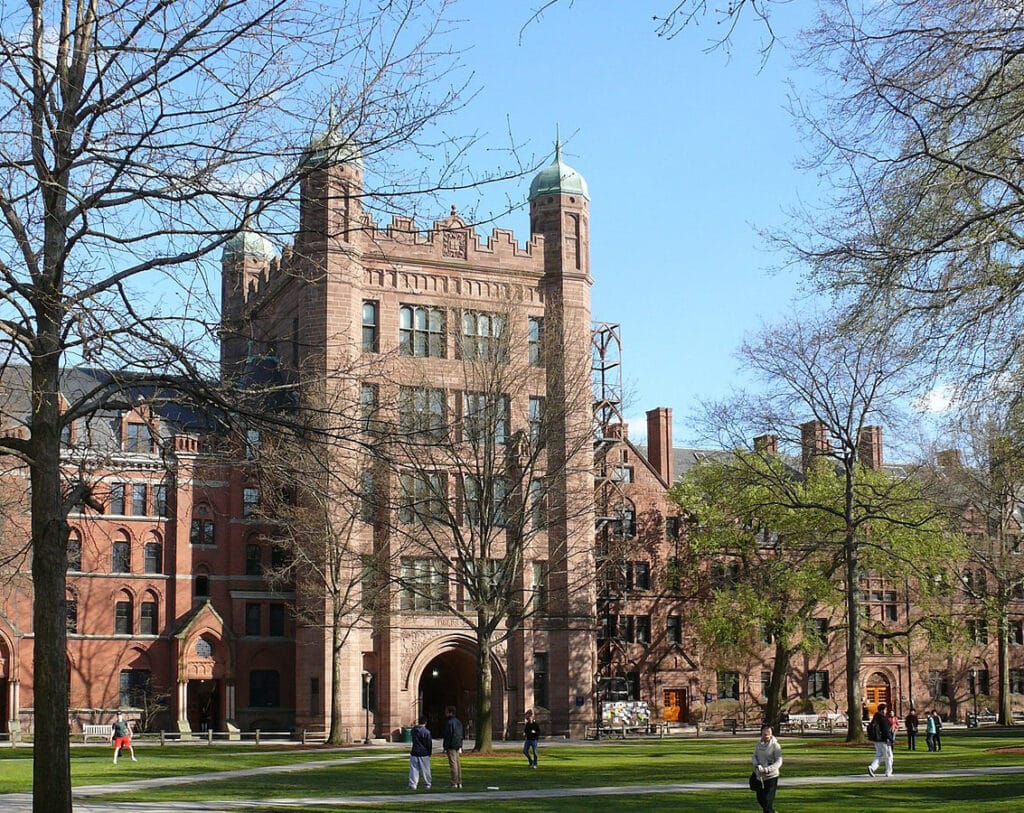
The Editor-In-Chief of Yale University’s student newspaper issued an apology on Tuesday over the paper issuing corrections stating that reports of Hamas raping and beheading Israelis were “unsubstantiated.”

Yale Daily News Editor-In-Chief and President Anika Seth wrote in a blog post that the corrections were issued last week to two columns: the October 12 op-ed “Is Yalies4Palestine a hate group?” and “Stop justifying terrorism.” “In the former, the author wrote, in reference to Hamas’ Oct. 7 terrorist attack against Israel, ‘yes, they raped women … yes, they beheaded men.’ In the latter, the author wrote that Hamas ‘committed … rape,’” Seth wrote. “The source that the columnists cited suspected cases of sexual assault. During our opinion editing process… the News failed to ensure that the columnists’ statements were properly cited and attributed. At the time of the columns’ initial publication, those specific forms of violence during Hamas’ Oct. 7 attack were not independently confirmed by the cited source.”

Seth explained that they issued the corrections based on what outlets like The Forward and Los Angeles Times had reported earlier in October, but acknowledged that the student paper had erred in issuing those corrections. “By the time of the first correction on Oct. 25, there had been widely reported coverage from outlets such as Reuters publicly verifying that Hamas raped and beheaded Israelis,” Seth wrote. “These corrections erroneously created the impression that, as of late October, there still was not enough publicly available evidence for those horrific acts. The News therefore retracts those editor’s notes in their entirety and without qualification. The notes have been removed from the columns, and the original text has been restored.”

She added that the paper had never meant to downplay the barbarity of the October 7 Hamas terror attack and apologized “for any unintended consequences to our readership and will ensure that such erroneous and damaging material does not make it into our content, either as opinion or as news.”

Brooklyn College and CUNY Graduate Center Professor KC Johnson posted on X, formerly known as Twitter: “Kudos to the YDN for retracting the retractions about Hamas atrocities. Left unexplained here is why the original retraction occurred given that evidence already existed from lots of credible reporting.”

Sahar Tartak, who authored the “Is Yallies4Palestine a hate group?” op-ed, posted on X: “Yale Daily News returned my article to original form. Does that make the initial change any less insidious? No. Does it prove that public opinion can hold our institutions accountable, not allowing them to defend or deny anti-Jewish murderers? Yes.”

Yale Student Paper Apologizes for Corrections Calling Reports of Hamas Raping, Beheading Israelis “Unsubstantiated” Read More »

FBI Director Says Antisemitism Hitting “Historic Levels”

FBI Director Christopher Wray testified on October 31 that the volume of antisemitism is heading toward “historic levels” in the United States, National Review reported.

Speaking to the Senate Homeland and Government Affairs Committee, Wray said that antisemitism “is a threat that is reaching in some ways sort of historic levels, in part because … the Jewish community is targeted by terrorists really across the spectrum.” “In fact, our statistics would indicate that for a group that represents only about 2.4 percent of the American public, they account for something like 60 percent of all religious-faith hate crimes,” he said. Last week, the Anti-Defamation League (ADL) released a report finding that antisemitic incidents increased by 388% from October 7-23 this year over the same timeframe in 2022.

Wray also warned that the U.S. is in a “dangerous period” and that the threat of a terror attack in the U.S. is currently at a “whole other level.” He also acknowledged that “the gaps in our intelligence are real.” Wray expressed concern that “violent extremists” could “draw inspiration from the events in the Middle East to carry out attacks against Americans going about their daily lives,” Jewish News Syndicate reported.

The FBI director preached “vigilance.” “You often hear the expression if you see something, say something – that’s never been more true than now,” Wray said.

FBI Director Says Antisemitism Hitting “Historic Levels” Read More »