fbpx

September 20, 2023

The Healing Power of Community

I’ve been pondering the significance of why we start each Jewish New Year with such an intense focus on community.

During the High Holy Days, synagogues reach full capacity as congregants come together for extended services. We collectively recite prayers in the plural form, emphasizing our shared responsibility and identity as the Jewish people and highlighting the interconnectedness of our Jewish community. We silently stand together as a community listening intently to the resonating blasts of the shofar, calling us to action.  Our physical presence in large numbers — whether regular attendees or occasional visitors — underscores a sense of unity and shared purpose.

We celebrate these holy days with festive meals shared among family and friends. These meals provide opportunities for bonding, reflection, forgiveness and reconciliation, as well as the expression of gratitude and blessings. The act of coming together around a table filled with festive foods and traditional Jewish dishes reinforces the importance of community, the value of relationships, and our shared Jewish identity and history.

Moreover, being part of community and feeling a sense of belonging has tremendous healing benefits, as well. 

In the midst of a global mental health crisis that touches all of us, the healing power of community cannot be overstated. This crisis, a growing concern worldwide even before the COVID-19 pandemic, only exacerbated mental, emotional, social, and spiritual health issues.  Isolation, anxiety, economic hardship, and loneliness became even more pronounced during the lockdowns and social distancing measures, especially among youth, teens, and young adults.  Remote work blurred the boundaries between professional and personal lives, adding further stress and burnout.  

Many of us feel weary, anxious, and lonely. The rise of antisemitism, increased polarization, relentless news cycles, the intensity and immediacy of social media contribute to how we perceive ourselves and those around us. Some use this as a reason to remain at home, separated and removed from others.

We can draw inspiration from the strength of collective, communal experiences deeply ingrained in Jewish life, tradition, and culture.

However, staying isolated at home only intensifies our loneliness and possibly worsens our mental health. Instead, I advocate for just the opposite: Heeding the sound of the shofar by showing up and seeking community. We can draw inspiration from the strength of collective, communal experiences deeply ingrained in Jewish life, tradition, and culture.  

In my work at Foundation for Jewish Camp (FJC), I have witnessed first-hand how the Jewish summer camp experience serves as a model for nurturing caring and supportive communities that can significantly improve individuals’ mental health and well-being. 

The camp experience is more necessary than ever before: A screen-free environment where children can be active physically and engaged socially. This past summer, campers and counselors alike thrived at over 300 Jewish day and overnight camps across North America. They fostered cultures of kindness and developed essential life skills — resilience, problem-solving, communication, and leadership — while at the same time cultivating a love of Jewish tradition and a deeper connection to Jewish life.

Research confirms that limiting or restricting screen time enables campers to be physically active and engaged, interacting with people around them which enhances their sense of presence and connection. Through activities that require teamwork and cooperation, campers experience shared accomplishments that build unity, trust, and empathy.  Moreover, they develop improved self-confidence and self-esteem.  

Jewish camps go even further by offering chanichim (campers) near-peer role models, madrichim (counselors) who exemplify joy-filled Judaism. They create a sense of belonging and acceptance, embodying a core strength of the Jewish communal experience. 

The High Holy Days serve as a poignant reminder of the importance of community, collective responsibility, and shared values within the Jewish tradition. The sound of the shofar calls on Jews to unite, reflect on our actions, and strengthen our connections with one another and with our faith. 

This profound sense of communal togetherness is a hallmark of Jewish camp and the High Holy Days, offering spiritual and emotional support for many within the Jewish community.  As we embark on the journey of 5784, may we all be blessed to truly feel the warmth of connection across all of our communities, benefiting from healing power of togetherness in these challenging times.


Jeremy J. Fingerman has served as CEO of Foundation for Jewish Camp (FJC) since 2010. Recently, he received the 2023 Bernard Reisman Award for Professional Excellence from Brandeis University. He may be reached at jeremy@jewishcamp.org.

The Healing Power of Community Read More »

New All-Women’s Gym Opens Up in Pico-Robertson

When women want to exercise  in a gym, typically, they must go to one where they are working out next to men as well. For some religious Jewish women, that won’t work. And for other women, they’d prefer an environment where they aren’t among the opposite sex and feel more comfortable. 

Brenda Andrade, a personal trainer, noticed that there was a gap in the LA marketplace for women to come together and work out in a nonjudgmental environment. 

“I wanted to uplift and empower women through fitness,” she said. 

Andrade had an idea: she was going to open a women’s fitness club in Pico-Robertson. Now, her gym, Body Blvd., located at 930 South Robertson Boulevard, features classes including boxing, cardio, Latin dance, Zumba and Pilates, along with activities such as meditation, sound healing gatherings and affirmation circles.

It’s a community club where we bring women together to celebrate through sisterhood, fitness, soul and elegance.

“Body Blvd. is so much more than a gym,” Andrade said. “It’s a community club where we bring women together to celebrate through sisterhood, fitness, soul and elegance.”

Photo courtesy Body Blvd.

Body Blvd. is located at the corner of Robertson and Olympic, in the heart of the Jewish community. It has an all-pink décor, with pink yoga mats, weights, kettlebells, resistance bands and lighting. The mural inside says, “I am woman,” and social media posts from the gym show women doing push-ups and squats and throwing punches to the tune of upbeat pop music. It’s all part of the positive feminist message of the space. 

“Women are such an important part of our society and community,” said Andrade. “They help run the world. It’s important that we come together to share in common fitness, personal, professional, and familial goals so that we feel like we have the support of one another to empower us to keep moving forward. At Body Blvd, we aim to give every woman the space to do just that.”

The gym’s founder worked as a personal trainer at other fitness studios and for private clients for years before deciding to open her own business. She took a leap of faith, starting it at a time when other fitness centers are struggling. During the pandemic, Curves, the women-only national chain of gyms, shut down a number of locations across the U.S., including in Los Angeles. Additionally, many people are exercising from home, finding free workouts on YouTube and using their own treadmills and Pelotons. 

However, Andrade is hopeful that women will invest in their health and wellness. Memberships start at $30 for one class and go up to $250 for 10 activities during a three-month period.

Photo courtesy Body Blvd.

Classes are only 45 minutes long, which is ideal for busy women, especially those with kids. Memberships include access to nutritional classes, beauty workshops and spa treatments as well. It’s all about creating community, which Andrade wants to do on a wider scale in the future.

“My goal is to grow Body Blvd. to other states, cities and all over the world,” she said. “Body Blvd. is such a special space, and I can’t wait to share it with the world.”

New All-Women’s Gym Opens Up in Pico-Robertson Read More »

Yom Kippur – A Womb of Compassion

The most intense of all the holidays is Yom Kippur, the Day of Atonement, filled with an aura of heaviness and awesomeness. Most Jews feel this intense sense of dread and even the most rational amongst us respond from deep in the gut, feeling ill at ease, desiring to receive expiation or some semblance of release from the weighty sense of guilt and remorse after confronting our misdeeds. We stand together, even if apart, expressing the many possibilities of destructive behavior, inappropriate, or sinful, beating our chests and awakening our hearts to how far we can fall or stray.

Kaporet, which means to cover and is also the name of the top of the golden Ark the Israelites carried through the desert that held both the broken and newly created tablets given to Moshe. It is as if we are covered with a kind of shmutz, particles of unseemly molecules that hover within and around us, aware of a deep sense of diminished purity. We are reminded that two books lay before us, The Book of Life and The Book of Death, and our name is found somewhere, amongst others, in one or the other. To put salt in the wound the liturgy goes on to describe the many possible ways we might come to our end, and though couched in language of the Middle Ages, quite simply it mentions all the of the possible natural elements — fire, water, earthquake, etc. — most of which we have seen in abundance over this last year. If we modernize the possibilities then the psycho-emotional-spiritual possibilities abound — overdose, suicide, mass shootings, antisemitic hatred, ill-health and disease. 

And yet for some the book is just empty pages waiting to be filled. Aware that despite accidents and being the wrong place at the wrong time, we have the capacity to write our own future. Choosing moral, ethical, and caring behaviors, towards others and ourselves, we can lift our lives in goodness. However, death is inevitable. Yom Kippur comes to remind us of that fact since much of the ritual is purposefully created by the rabbis to enact our death, tasting tiny morsels of reality and focus on the what’s truly important, cleansing our souls so they can move into the next world free and unencumbered. We wear white, a reminder of the shroud we will be buried in and deprive our bodies of the daily care and nourishment we need to stay alive, feeling grungy, hungry, and tired, a far cry from being full of vitality. We focus through prayer, song, and meditation on honesty, self-awareness, and crying out, attempting to elevate our Neshamas, our souls, towards Divine presence, HaMakom, the ‘place’ of Rachmanus, compassion, we so need to feel cleansed and rebirthed.

The irony is that at the very beginning of the Yom Kippur evening service we state the essence of what Yom Kippur is about. It represents the day Moshe returns from the top of Sinai, once again, having encountered G-d, pushing, prodding, and cajoling G-d into forgiving the people for their sin of creating the Golden Calf, abandoning their newly formed relationship because of their own fears and insecurity. G-d wanting to reject and destroy them all is reminded by Moshe that at the very core of the Holy One is a heart of compassion and a desire to forgive. And in a moment of sublime intimacy G-d says, “I shall make all My goodness pass before you…” The fullness of G-d’s love and compassion overflows, G-d gives Moshe a replacement set of tablets, a second chance is to be had, and calls out “Adonai, Adonai, Compassionate and Gracious, Slow to Anger and Abundant in Kindness and Truth, Preserver of Kindness for Thousands of generations, Forgiver of Iniquity, Willful Sin, and Error, Who Cleanses …” Even in the midst of taking responsibility for our actions, repeatedly we chant this phrase, a reminder that “G-d loves the broken hearted,” reminded forgiveness is present and we can return. From the very beginning we repeat the most crucial and benevolent statement, “And G-d said, I have forgiven as you asked.” We are embraced and loved even as we own what we’ve done by the Father and Mother of us all.

Love, grace, and compassion is truly the heart of Yom Kippur and learning to emulate these Divine qualities for ourselves, and for others, is one of the great opportunities we receive each Day of Atonement.

Rachamim, compassion, has the same root as the word Rechem, a womb. There is no more compassionate space than that which holds each one of us for nine months, nourishing and protecting us into life. Yom Kippur is a moment reentering the Divine Womb, where we can be rebirthed anew, coming through with expansion and elevation, cleansed, strengthened, and reinvigorated. Love, grace, and compassion is truly the heart of Yom Kippur and learning to emulate these Divine qualities for ourselves, and for others, is one of the great opportunities we receive each Day of Atonement.


Eva Robbins is a rabbi, cantor, artist and the author of “Spiritual Surgery: A Journey of Healing Mind, Body and Spirit.” 

Yom Kippur – A Womb of Compassion Read More »

It was the best of the Times. It was the worst of the Times.

This past Sunday, Los Angeles’ largest daily newspaper published an extremely compelling and equally timely article about a city’s Jewish population as it welcomed the new year. The story was framed in the context of a historic and debilitating crisis. The writer combined an overview of the broader policy ramifications of the catastrophe together with poignant personal stories of perseverance, optimism and generosity. It was an ideal way for a secular media outlet to both recognize the importance of our High Holy Days while explaining that in many ways our community’s obstacles and opportunities are extremely similar to those of our friends and neighbors.

The city on which this article was written was not Los Angeles, but rather Kharkiv, a Ukrainian municipality not far from that country’s border with Russia. Times reporter Laura King helped us understand how Jewish families there have navigated such unimaginable upheaval in their lives: she told inspiring stories how Kharkiv’s Jews have survived in the face of such terror and their support for other Ukrainians in overcoming their own challenges.

A few days earlier, The Times had posted another article about a city’s – this city’s – Jewish community as we prepared for Rosh Hashanah. The headline alluding to the “tough times” that LA Jews are facing: In service of that premise, the writer could have focused on the rising spread of antisemitism or perhaps how increasing rates of intermarriage, secularization, and non-affiliated Judaism were affecting the community. The Times might have taken a look at the challenges that Jewish and other pro-Israel students are facing on their college campuses, or possibly the efforts that Jews and other underrepresented communities are making to form and strengthen multi-faith and multi-ethnic coalitions. An ambitious reporter might have used the High Holy Days as an opportunity to explore the generational divisions among American Jews relating to our homeland and our faith, or how our commemoration of Jewish history might change as so many Holocaust survivors pass away.

Any one of these conversations could have been an impactful and evocative discussion of both commonalities that Jews and other ethnic and religious groups face, along with the uniqueness of the Jewish community and its approach to these challenges. Instead, what we got was yet another “Jews in Hollywood” story — albeit one that focused on Jews who are striking against the entertainment industry as opposed to running it. 

To The Times’ credit, the reporter did take the time to refute the “trope” of Jewish control of Hollywood. But then the rest of the article turned to an extensive assessment of the cost of belonging to a synagogue or purchasing tickets for High Holy Day services. Which, in effect, replaced the antisemitic slur of wealthy Jews running Hollywood with one of wealthy Jews preventing their less-advantaged counterparts from worshiping.  It’s difficult to argue that this represents a great deal of progress.

To be clear, I have great sympathy for the writers and actors who are facing such economic and professional uncertainty. We have friends and family whose livelihoods depend on a successful resolution of the current stalemate and I am hoping for a fast and just outcome. But it’s unclear why The Times, which has told the story of the striking workers effectively and consistently throughout the last several months, chose to cut-and-paste their standard strike coverage on top of an article regarding a religious community’s observance of our holiest days.
Reporting, explaining and making sense of the extraordinary mixture of cultures, ethnicities and religions that comprise America in the 21st century is a daunting task. When they set their mind to it, The Times can still rise to the occasion. Their new polling project examining the attitudes of the nation’s immigrants also premiered on Sunday. It clearly required a tremendous amount of resources and an admirable commitment to helping its readers understand a complicated and important topic in an incisive and nuanced way. Which makes their cavalier and backhanded treatment of the Jewish community here so much more disappointing.


Dan Schnur is the U.S. Politics Editor for the Jewish Journal. He teaches courses in politics, communications, and leadership at UC Berkeley, USC and Pepperdine. He hosts the monthly webinar “The Dan Schnur Political Report” for the Los Angeles World Affairs Council & Town Hall. Follow Dan’s work at www.danschnurpolitics.com

It was the best of the Times. It was the worst of the Times. Read More »

Oslo Failed Because It Never Started

September 2023 marks 30 years since the signing of the Oslo Peace Agreement between Israel and the PLO. Dozens of pundits are authoring scholarly articles on “Why the Oslo Peace Process failed to bring peace.” To these I would like to add my own opinion: It failed because it never started. The Palestinians never intended to follow the agreement and certainly not to pursue a process toward peace.

Evidence for “intention” is hard to come by, but a 2001 interview with a top Palestinian negotiator made it quite clear. Faisal Husseini, the Palestinian Authority minister for Jerusalem affairs explicitly stated in an interview to Al-Arabi [2001] that “The Oslo Accords were a Trojan Horse; the strategic goal is the liberation of Palestine from the river to the sea”.

However, on this anniversary of the Oslo Agreement, I would like to draw attention to another, almost forgotten but perhaps more significant interview which describes the actual steps Palestinians took to sabotage the idea of peace. I am referring to an interview with Haim Shur [Maariv, June 6 2001] a prominent leader of Israel’s peace camp. Excerpts of which are given below:

Shur: The Palestinians deceived me personally and the entire Israeli Left as well.  They lied to us, they scammed us, maneuvered and manipulated us.  Personally, I will never forgive them for this.

A genuine man of the Left is a man who should accept the reality for what it is, and not see it the way he wishes to.  They are not yet ripe for peace, and my duty as a man of the Left is to realize this truth.  The Left is not a synonym for deceit.

Interviewer: In what way did the Palestinians deceive you personally?

Shur: I had countless meetings with Palestinians.  If someone conducted a study on the top 10 Israelis who visited Palestinians most frequently, I am sure I would be among them.  [I met with Palestinians] more frequently than Shimon Peres, Chief Oslo negotiator Yossi Beilin and Oslo Agreement architect Ron Pundak did.  During all of my meetings with them, the Palestinians said that we will find a mutually accepted formula regarding the right of return, but the truth is that this never happened.

Interviewer: What do you mean by that?

Shur: They never tried to reach a mutually accepted formula.  Everything they said was just a part of the phased plan.  I was one of those who opened the American doors for the PLO.  When we organized an Israeli-Palestinian conference in Washington in 1987, the State Department refused to give them entry visas.  We took it upon ourselves [to take care of all the necessary details] so that they could get the visas.  And then they entered the U.S. and took it by storm with our assistance.  This is what they wanted, that was the target, to capture the good will of the American Jewish Left. I personally invited them to social gatherings at the homes of Jewish Americans.  Their success was owed to our help.  Without our assistance they would never succeed.

Interviewer: Was that a mistake?

Shur: Not only that this was a mistake, but merely two or three years following [our meetings with the Palestinians in the U.S.] Nabil Sha’ath appeared in front of an audience in Gaza and told them that [their meetings with us] were just a tactical move.  [Sha’ath  explained to his audience in Gaza that] the Palestinian plan is to make piecemeal gains for the ultimate goal of conquering the entire State of Israel.  It became clear to me that the speeches made by Nabil Sha’ath — the same person who was my best friend in America and who came to hug me and kiss me following my pro-peace speeches — were worthless.  He did not mean anything he said.

Interviewer: Does this lack of trust represent a shift for a man of the Left such as yourself?

Shur: There is one thing that no one will ever be able to take away from me, and that is my [commitment to the] truth.

Interviewer: When you said they deceived me, did you refer to all of them?

Shur: I referred to an entire group of people, who do not care about anyone or anything, who deceived me.  The fact that Nabil Sha’ath is an opportunist is clear to me. The fact that Ziad AbuZayyad is an opportunist is also clear to me.  [The answer to the question] whether Hanna Seniora is also one? It is not clear to me.  [The answer to the question] whether these professors I met in the U.S. are the same? That I don’t know.  I don’t know if they disagree with Yasser Arafat; I do know I have never heard them [say it].

Interviewer: The Israeli Right is blaming the Left for misleading the nation, for orchestrating some kind of a messianic peace movement. Do you accept the charges?

Shur: To a certain degree, yes.  We wished for peace so much that we ended up turning our wishes into factual reality.

Shur’s interview was quite traumatic to us Israelis, in 2001, a year after the outbreak of the Second Intifada. But it has since disappeared from public conversation. On this 30th anniversary of the “Oslo Agreement” I feel compelled to bring it back to the limelight.

Shur’s confession gave Israelis a rare glimpse at the core issue fueling the conflict with their neighbors — a profound and inherent Palestinian rejection of the very idea of Jewish sovereignty in any part of Palestine.

It was a very short glimpse because it immediately got overshadowed by debates over pressing, albeit peripheral, matters. The Israeli Right blamed the Left for ignoring Palestinian terrorism, internal corruption and overt antisemitism, while the Left blamed the Right for Rabin’s assassination, settlement expansion and harsh conditions under occupation. Westerners, with hardly any exception, have taken Palestinian rejectionism to be a negotiation tactic, a form of rhetoric, perhaps a rallying point, but not a foundational principle. Shur’s haunting words, “They never tried to reach a mutually accepted formula,” remind us today of the depth of Palestinian rejectionism and why Oslo never had a chance.

Oslo Failed Because It Never Started Read More »

The Toddler Who Uplifted Jews Worldwide

This is the story of a little boy who uplifted Jewish communities throughout the world, and in Los Angeles in particular. His name was Michael Levi, and he was my little cousin. 
Michael’s family are Jews who escaped Iran so that their children and future generations could live in freedom and prosperity, rather than suffer from tyranny. His mother, Carolin, is my first (paternal) cousin; his father, Josh, is a longtime friend.

Josh and Carolin are two of the kindest, most down-to-earth people I have ever known. They were overjoyed when their first child, Michael, was born in 2020. But last year, Michael began struggling to maintain his balance. His parents knew something was wrong. On his second birthday, Michael was diagnosed with an aggressive and inoperable brain tumor. 

I’ll never forget Carolin’s voice when she told me the news. At the time, she was pregnant with her second child. I was stunned and saddened, and I knew Michael would need a special Tehillim (Psalms) group on WhatsApp so that Jews of all backgrounds could recite chapters for him around the clock. Sadly, I had participated in several such groups for others battling cancer, including my beautiful friend and teacher, Sharon Shenker, z”l, who passed away in January. 

Hundreds of Jews worldwide, including secular ones, quickly joined the WhatsApp group and began reading Tehillim in the merit of Michael’s refuah shleyma (complete healing and recovery in Hebrew). At precisely the time when I fell asleep in Los Angeles, in Israel — 7,500 miles away — Jews who had never met Michael or his family were reciting Tehillim for him. 

In the months that passed, Michael began grueling chemotherapy and radiation treatment, and became a big brother, as the family welcomed a second baby boy. Jews stepped up their efforts to pray for Michael, as well as to raise funds for his family to help cover the enormous costs of medical and childcare. We will be eternally grateful to the countless Jewish organizations that also helped make miracles for Michael and his family, including Rofeh Cholim Cancer Society in New York, and Bikur Cholim, Chai Lifeline, B’Yachad and Maman Nonprofit in LA. Of course, Children’s Hospital Los Angeles was a true blessing. 

Several months ago, on the advice of a local rabbi, 40 Jewish women committed to fully covering their hair in the merit of Michael’s complete recovery. To my amazement, they took on this mitzvah with love and discipline. Many of them hadn’t met Michael and his family. 

Some friends privately expressed skepticism to me, questioning whether it was right to suggest that if a group of people performed a mitzvah, a miracle would occur on Michael’s behalf. After all, G-d is not a celestial vending machine, and 40 straight days of hair covering was not a guarantee of anything. 

Carolin, in all her pain, wisdom and spirituality, had a response to such skepticism: The fact that those women committed to such a mitzvah helped her feel cared for and connected with others. It gave her hope. And that was enough.

Michael had many ups and downs. On January 1, he suffered a seizure and doctors predicted he would live for only a few more weeks. But he miraculously recovered from the seizure. The name “Chaim” was added to the beginning of his name, in the hope that his body would be infused with life. There were days when watching the effects of his treatment on his body tore his parents’ hearts in two; and there were days when he had more energy and, best of all, showed signs of his former healthier self — just another two-year-old boy, with all the lovable, maddening and momentous traits of toddlerhood.

At the end of the 40-day period, a lecture and reception was held so that women in our local community could honor those who had participated in the mitzvah of covering their hair. The luminous speaker and author, Sarah Pachter, shared profound wisdom from the Torah. But before Pachter spoke, Carolin surprised attendees and shared a few words. 

She thanked everyone, and then, looking into a crowd of worried faces, said that Michael’s doctors were stunned that he was still alive, and some of them described his condition as a miracle. Carolin told the hundreds of women in attendance that in the last 40 days, Michael had been more happy and energetic than she had ever seen him after his diagnosis. 

What prompts a woman to fully cover her hair on behalf of a sick toddler? Or for a couple to donate extra funds to a family in another city, or, for that matter, another country, whom they’ve never met? 

It’s the same bond that prompts thousands of people, regardless of their level of Jewish observance, to recite short (or long) verses of Tehillim at all hours of the day, whether they’re on a break at work, getting their kids ready for bed, or going for an early morning walk. 

It’s the eternal, unbreakable bond of Jewish communities for millennia, and it’s the reason why Jews will always exist. At the end of those 40 days, those women didn’t simply pull their hair coverings off; some of them shared that they had grown to love the commitment and wanted to maintain it.

In late June, Carolin told me that she wanted to throw Michael a small birthday party at the park. We both knew it had to be very special, and we secured his favorite foods, gifts, and even a list of his favorite songs, which my friend, Sarita Oberman, an engaging children’s singer, volunteered to perform. Carolin told me that it all made Michael so happy. 

Last week, on September 13, Michael Levi passed away at the age of three, two days before Rosh Hashanah. The heartbreak is indescribable. It’s safe to say that this is one of the lowest moments for our family in the 30 years since we’ve been in the United States.

But we’ve been amazed by the outpouring of love, prayers and good deeds from others in LA and around the world; there is a MealTrain, donations, and volunteer babysitters have already signed up to help Carolin and Josh care for Michael’s one-year-old brother. As for the Tehillim group, it’s still active; heartbroken Jews now are praying for Michael’s neshama to have an aliyah. At the burial, Josh said that those who prayed and performed mitzvot for Michael extended his life.

Experience has taught me that when your heart is broken, you should do an act of kindness for someone else. It seems counterintuitive, given that you need time to nurse your own wounds. But for some reason, offering kindness to someone else, while your own heart is shattered, is one of the only ways to recollect the pieces of your heart.

Michael Levi was a special little boy; kind, loving and deeply lovable. Some believe that he was a truly pure soul that needed to come back down to earth for a few years to complete a mission. 

Michael Levi was a special little boy; kind, loving and deeply lovable. Some believe that he was a truly pure soul that needed to come back down to earth for a few years to complete a mission. I can’t bring myself to ask why he is no longer with us; I am only reminded of an allegory a rabbi shared when my first cousin, Dr. Shabnam Torbati Kerendian, succumbed to cancer in 2015. She was a beloved wife, mother and pediatrician. Back then, the rabbi shared that life in this world is like the back of a tapestry: unpredictable, chaotic and often senseless. 

But the harmony of the World to Come, a world which we will hopefully enter after 120 years, but whose inner workings we will never know in this world, is like the front of a tapestry: peaceful, beautiful, and maybe, just maybe, something that finally makes a little sense. 

Gmar Chatima Tova.


Tabby Refael is an award-winning writer, speaker and weekly columnist for The Jewish Journal of Greater Los Angeles. Follow her on X and Instagram @TabbyRefael

The Toddler Who Uplifted Jews Worldwide Read More »

Eating Disorders and the High Holidays

Eating disorders are so prevalent within Jewish community that The Renfrew Center designed specialized programming to treat Jewish women. The Renfrew Center is a national network of eating disorder treatment centers, with a facility in Los Angeles. As the Center’s liaison to the Jewish community, psychotherapist Sarah Bateman, LCSW, works to ensure that Jewish individuals with eating disorders receive culturally sensitive treatment.

When asked how she got involved with this specialty, Bateman said when she was in high school, many of her friends were suffering from eating disorders.

“It seemed to me that everyone knew, but no one was talking about it,” Bateman told the Journal. “Talking about these issues does not make them go away, but it can greatly help reduce the stigma and make it so much easier for those who are suffering privately.”

The Journal spoke with Bateman about eating disorders, Judaism and how to navigate challenges faced during the fasting holidays, like Yom Kippur.
JJ: Why are eating disorders prevalent among the Jewish community?

Unfortunately, there is very limited research that delves into eating disorders in the Jewish population. However, when we look at eating disorders among Jewish women and men, we try to focus our training and treatment on what we already know about eating disorders.

The underlying issues of the eating disorder are often the same for people that do not practice Judaism, but Jewish patients have unique religious and cultural needs that may influence the development and maintenance of eating disorders. Some examples include keeping kosher, observing Sabbath and holidays, fast days and religious rituals, and we always want to be culturally sensitive to each person and their own observances.

JJ: How do fasting holidays trigger eating disorders?

For some people, there can be a “high” or state of euphoria that is felt when fasting. This is most likely linked to a state of ketosis and may be part of the reason that fasting is often used in religions in attempts to reach a “spiritual high.” If a person has a history of anorexia and has ever felt any kind of euphoria from restriction, they may be triggered into wanting to continue to restrict or fast, and probably should not risk their health, progress or recovery by fasting for religious reasons. It’s important to remember that health and life always come first in Judaism, and that eating disorders are serious and deadly mental illnesses.

How do people determine whether or not they should fast?

Any individual who has an eating disorder should discuss fasting with their therapeutic team and rabbi before doing so. All members of that team should be knowledgeable about eating disorders and religious obligations.

There are some people who are able to fast on religious fast days and then go right back to following their meal plans and will not be triggered to continue restriction. However, someone who has a history of anorexia, one or more hospitalizations with history of restrictions, relates to the feelings of euphoria from restriction or is not able to follow their meal plan and treatment recommendations currently should probably be advised to not fast.

For someone who is sick or has an eating disorder, it is not a mitzvah (good deed or positive commandment) to fast.” – Sarah Bateman

For someone who is sick or has an eating disorder, it is not a mitzvah (good deed or positive commandment) to fast.

How can those with eating disorders honor fasting holidays, like Yom Kippur, while staying healthy?

Not fasting on a fast day can feel different for different people, and each individual should honor their own physical and mental needs as they go through this process. Some people may find it helpful to remind themselves that this is not their fast day, and that the rules of fasting don’t apply to them, while others may find it helpful to focus instead on what they can do, such as prayer, charity work, individual goals or helping others.

In what ways can people incorporate eating disorder treatment with Jewish rituals and observances?

The same rituals that can be difficult can also be helpful. I like to remind people who are struggling with any observance to think about why they do it, or what they would like to get out of it. Thinking about the meaning behind a ritual or holiday or observance can help connect us to our values and our intentions. We often get caught up focusing on things that don’t matter to us, and when we connect back to our values we can refocus in a more positive and authentic way. If you ever find yourself getting stuck in a ritual or an observance, see if you can look up the meaning behind it, and remember why you are doing it in the first place. If this doesn’t help, see if you can do it in a different way that is still consistent with your beliefs.

Eating Disorders and the High Holidays Read More »

Settlements and Security: An Illusion?

Since the end of the second intifada in 2005, the Israeli-Palestinian conflict has been largely smoldered. Hamas has launched small-scale wars from the Gaza Strip, and Palestinian armed groups and individuals have carried out terrorist attacks in the West Bank, and in Israel, prompting stringent Israeli military responses.

Recent months, however, have shown an increase in a distinct type of hostility accompanied by a deadly rise of violence among Palestinians and Israelis in the West Bank. This can be attributed in part due to the increased radicalization among Palestinian youth and the intensification of the religious aspect of the conflict among certain sectors of Israelis. In June, dozens of settlers (Israeli civilians living beyond the green line) entered and attacked the Palestinian town of Turmus Ayya. Some thirty houses and sixty cars were burned. Then there was the Palestinian terror attack in the Eli settlement, which claimed the lives of four Israelis.

Following the attack, roughly twenty settlers set cars on fire in the Palestinian village of Hawara —the site of an earlier attack where 400 settlers entered the town, and torched homes and vehicles in the spirit of the Kahanist anthem “Let Their Village Burn.” There have been 25 serious attacks by settlers in the West Bank in the first six months of this year, and 680 incidents of stone-throwing or assault of Palestinians recorded by the OCHA (Office for the Coordination of Humanitarian Affairs) to date. This has been accompanied by antagonism, and in some cases, acts of violence by settler groups directed at IDF soldiers and Israeli police.

One might be tempted to dismiss this phenomenon as another sequence of violent incidents perpetrated by the self-styled “hilltop youth,” a radical and lawless group of young settlers known for their aggressive stance toward both Palestinians and Israeli authorities. However, it is worth pausing to reflect on why this image is incomplete. The origins of these attacks do not lie solely within the spontaneous actions of some wayward teens. What we are observing is a meticulously planned strategy that was set into motion years ago by central figures of the settlement movement—the Regional Councils in the West Bank, which originally orchestrated its execution.

Official publications from the Samaria Residents’ Committee revealed the rationale behind this strategy. “It is time to change the way we fight!” declared a committee pamphlet. “We will start a battle on several fronts, and the government will not be able to control it.” The Samaria Residents’ Committee also initiated and encouraged rioting, and its leaders even praised damage to Palestinian property and promoted attacks against Palestinian civilians. Their goal, announced Committee Chair Itzik Shadmi, is to “bring the government down to its knees.”

More than a decade later, Israel finds itself with far-right parliamentarians who act as the national representatives of the settlement movement and their actions align with its councils. 

More than a decade later, Israel finds itself with far-right parliamentarians who act as the national representatives of the settlement movement and their actions align with its councils. One only needs to recall MK Bezalel Smotrich’s call to “wipe out” Hawara and MK Itamar Ben Gvir who said that the settlers involved in the deadly clash in the Palestinian town of Burqa “should be rewarded.” One of the individuals apprehended following the violent confrontation in Burqa was Elisha Yered, a former spokesperson who served under MK Limor Son Har-Melech from Otzma Yehudit, the party led by Ben Gvir. Furthermore, in 2023, there has been a record-setting surge in settlement construction within the territories, marked by the approval of 12,855 housing units across the Green Line.

All of this begins to reveal the government’s wider political program that is driving the judicial overhaul. There is a deep-inherent connection between the overhaul, the desire to shift the situation on the ground from occupation to annexation, and the harm inflicted upon the democratic framework of the State of Israel. To understand this connection, it’s crucial to recognize that after the disengagements—actions that the settlement movement saw as betrayals of their historical mission to bring about messianic redemption through settling the entire land—the objectives of the movement evolved. The classical Zionist state was no longer seen as a holy vehicle from which the settlers could “export” Israel into the territories, but a state that operates on principles that have proved to be an obstacle.

There is a deep-inherent connection between the judicial overhaul, the desire to shift the situation on the ground from occupation to annexation, and the harm inflicted upon the democratic framework of the State of Israel.

The settlement movement is no longer solely fixated on territorial expansion across the West Bank. Rather, it came to recognize that achieving such expansion necessitates the complete transformation of the State of Israel itself. This entails shaping the state’s institutions in a manner that mirrors the West Bank and forging a governing system that fundamentally departs from democratic principles. Overhauling the judiciary is just the first step in trying to create this as reality.

Despite this agenda becoming more apparent to many Israelis, the expansion of settlements is framed by the government as a security response to Palestinian terrorism, a notion that has been emphasized for years. However, the situation on the ground paints a different picture. Alongside the “construction equals enhanced security” policy, 2023 has proven to be one of the deadliest years since the second intifada for Israelis, even in the absence of a large-scale war or prolonged military operation. Military spokesman Rear Adm. Daniel Hagari spoke of settler violence saying that “the nationalist crime and nationalist terror … push civilians in the Palestinian Authority who are not involved in terror—to terror.” The head of Israel’s Shin Bet security agency, Ronen Bar, echoed this sentiment and warned Prime Minister Netanyahu that construction and settler violence was fueling Palestinian terrorism.

Granted that the government responded to the security establishment with an onslaught of verbal attacks and hubris, there is a need for a fundamental reevaluation of Israel’s role in the West Bank. The first step in this process entails debunking the common misconception that the settlements not only bolster security but also function as the first line of defense, ensuring the safety of those living within Israel proper. The origins of such an illusion can be traced back to the conflation of the two distinct aspects of Israel’s presence in the West Bank: the military presence and the civilian presence. Those advocating for the settlement movement have gone to great lengths to blur this crucial distinction, leaving many to believe that without the civilian presence, the military cannot carry out its duty to effectively safeguard the state. Even if we are to set aside the phenomenon of violence perpetrated by settler extremists, the opposite is true: The settlements do not serve Israel’s security; the Israeli security forces serve the settlements.

Contrary to popular belief, most of Israel’s security forces in the West Bank are not engaged in fighting terrorism but rather in guarding settlements. According to Former deputy chief of staff Moshe Kaplinsky cataloged in a Molad study: “An estimated 80% of IDF forces in the West Bank are engaged in safeguarding settlers and settlements, and only 20% in defending Israel proper.”
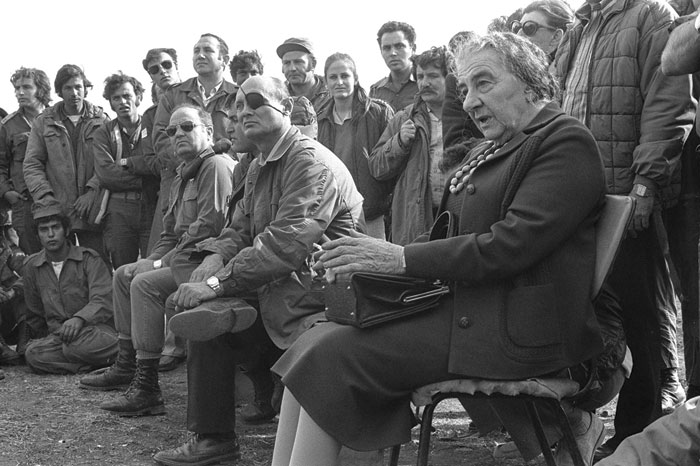
Properly protecting the settlements in the West Bank requires a massive deployment of forces, as their mission is unique: to secure civilians living in the heart of enemy territory. The IDF deploys more than 50%—sometimes even 75%—of its overall combat forces to the West Bank. This is more than the forces assigned to borders on all other fronts put together (Lebanon, Syria, Gaza, Sinai and the Arava strip along the border with Jordan).

Unlike on all these other fronts where Israel has drawn borders, the “line” that separates Israel’s sovereign territory from the West Bank, or the “line of defense,” comprises several components. These include the Separation Barrier, patrol routes surrounding the main settlement blocs, roads connecting the settlements, and a military presence aimed at protecting settlers who venture beyond the main settlement blocs to establish illegal outposts.

While the Green Line is 320 kilometers long, the route of the Separation Barrier, which in many places does not follow the Green Line, extends along some 700 kilometers—more than twice the length. This disparity, which amounts to almost 400 kilometers, is in large part the result of the government’s political decision to include dozens of settlements on the western side of the barrier. Therefore, the resources that the IDF has to allocate (in terms of personnel, budget, routine engagement, etc.) are several times larger than they would have been to secure the original border, i.e., without the settlements.

Yet, the Separation Barrier is the least of the IDF’s concerns. In fact, most of Israel’s military resources go to regularly securing some 70-odd settlements that exist beyond the extended security barrier. In addition, the IDF is obliged to defend more than 90 illegal outposts—many of them established in highly vulnerable locations. In total, according to research from INSS and IDF Brig. Gen. Shlomo Brom—even excluding unpaved roads in the territories and patrols along the outer boundaries of settlements—the line separating Israel from the West Bank is five times greater than it would have been without the settlements. Far from helping defend the country, the scattering of Israeli civilians throughout the West Bank now encumbers the work of security forces, drains the defense budget, and complicates IDF work by lengthening lines of defense.

The presence of Israelis living deep within the West Bank actually hinders the force’s abilities to provide the best defense possible against terrorism (in terms of overall government policy) and on the operative level (in terms of the deployment of forces).

Given the absence of an agreement with the Palestinians, the presence of annexationists within the current Israeli government, Israel’s imperative to ensure national security, and the vast majority of the Israeli public’s desire to maintain living in a democracy, a civilian withdrawal is in Israel’s best interest. As it stands, the optimal strategy to benefit Israel’s Jewish and democratic future involves disentangling Israel’s civilian presence from its military presence in the West Bank.

As it stands, the optimal strategy to benefit Israel’s Jewish and democratic future involves disentangling Israel’s civilian presence from its military presence in the West Bank.

Within this framework, out of the 500,000 settlers, constituting approximately 14% of the entire West Bank population (including Palestinians), a majority reside in what are referred to as the “settlement blocs.” These “blocs” are connected to Israel’s sovereign territory and would not necessitate evacuation. Notable among these areas are sections of Gush Etzion, the “Jerusalem envelope,” Ma’ale Adumim, Givat Zeev, and certain settlements near central Israel. Essentially, this approach ensures that 80% of the settlers can remain in their current homes while enabling Israel to establish its final border.

To accomplish this, the settlements to be relinquished from Israeli control are those deemed to pose a significant threat to national security due to their strategic location and unique legal status. In most cases, these settlements also tend to espouse more extreme ideological viewpoints and are often sources of extremist violence. Therefore, the civilian evacuation pertains to the remaining 20% of the settlers’ residences.

While it is true that the number of forces can be reduced without settlements, it is important for Israel to maintain an interim military presence in the West Bank as long as there is no stable Palestinian sovereign there. Counterterrorism missions are more efficient and easier to carry out when the IDF is regularly on the ground, instead of having to launch targeted operations or complicated raids into Palestinian territory. Keeping security in IDF hands and transferring it gradually to the Palestinians will prevent the formation of a vacuum in which the IDF is no longer fully operative but the Palestinian law enforcement agencies are not yet capable of suppressing terrorism or domestic threats.

At this point, it’s important to clarify that such a process has already proven successful in a minor, but meaningful way.

Dr Einat Wilf and Dr Shany Mor pointed to three models relating to Israeli security engagement. The first is the status quo in the West Bank, where both military and settlers remain and violence persists. Then in conjunction with the Gaza disengagement in 2005, they point to Israel’s disengagement from the Northern Samaria region. In this case, much like the detailed description above, the military remained in place to foil terrorism and settlements were evacuated. Far from the reality of the Gazan launchpad where the Israeli military was removed as part of the disengagement, the Northern Samaria model saw a rapid decrease in violence and benefits to Israel’s security for 15 years up until the point where settlers illegally moved back in, squatted and took over Palestinian property.

Here are the five principles that will guarantee Israelis’ security in the event of this evacuation model. Note that Israel conceded three of these five points in the withdrawal from the Gaza Strip.

—The Shin Bet (Israel Security Agency) will remain in place, and Israeli intelligence will continue to operate in all parts of the West Bank.

—The IDF will continue to conduct pursuits and arrests in all parts of the Palestinian autonomous area.

—Israel will retain an interim military force in the Jordan Valley.

—The airspace will remain under full Israeli control.

—The electromagnetic field will remain under full Israeli control.

This alternative course of action involves realigning the State of Israel with the tenets of the Zionist vision enshrined in the Declaration of Independence. It requires bringing a fair and efficient end to the West Bank settlement movement by establishing clear delineations for the eastern border. Such a step would ensure the continuation of a secure, democratic state, while maintaining a Jewish majority. Although negotiations with the Palestinians must remain an objective, the Israeli-Palestinian negotiation fetishism of the past won’t suffice as a sole objective as long as the Israeli far-right enacts policies to create an irreversible reality on the ground by shaping the state in their image.


Samuel Hyde is a writer and a political researcher based in Tel Aviv.

Settlements and Security: An Illusion? Read More »

Rosner’s Domain | A War at Fifty

Fifty years have passed, but in Israel it is still impossible to disentangle the tremble and awe of Yom Kippur from the trauma of the 1973 Yom Kippur War. And after 50 years three issues concerning the war are still under debate, even though most facts about the war are now known: Was it possible to prevent a war? Why was Israel’s intelligence blind to the imminence of war? Did Israel win or lose the war?
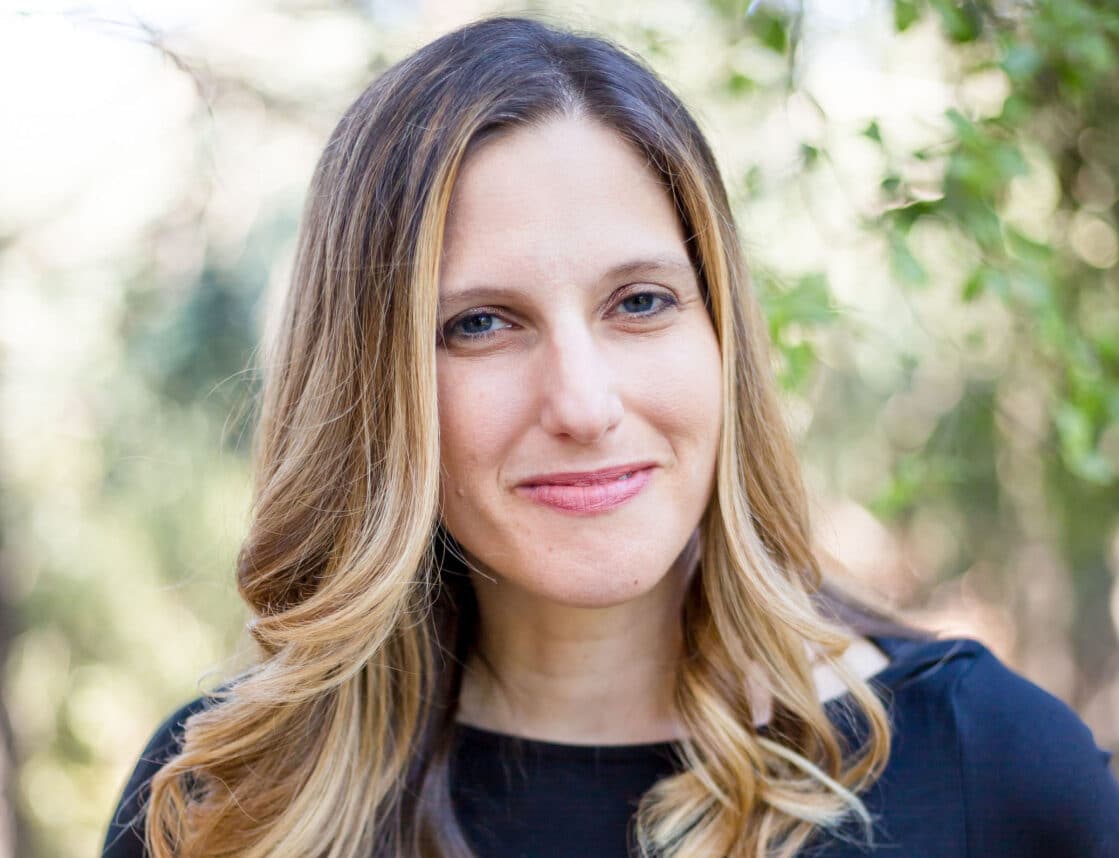
The first debate concerns the statesmen — mainly Prime Minister Golda Meir. At its core is an assumption, or an assertion, that a courageous acceptance of a peace offer would have prevented the war. This is a claim that is common among scholars and pundits with a distinct political position. That is to say: It is common on the left. The same people who always say that Israel doesn’t really seek peace, argue that in 1972 Israel had an opening to prevent the war, had it responded more positively to exploratory messages from Egypt via the US. 

The second debate concerns the insistence of Israel’s military intelligence that Egypt would not dare start a war. Many secondary questions, that war buffs tend to deliberate, branch off from this question: Was Egyptian insider Ashraf Marwan a spy or a double agent? Why weren’t certain “special” technological devices activated?

The third debate concerns the IDF and its response to the surprise attack. Did it excel, or falter? Here, too, many secondary questions obscure the main issue: Questions about the Bar Lev line of defense in Sinai, about the manning of the fortifications on the Suez Canal, about the politicking of generals, about the initial failure of the Air Force to make a difference.

In the last 20 years, and especially this year, a flood of books and documentaries rehash the drama of the war. There is nothing like it in the history of Israel. There have not been as many books written about the War of Independence — Israel’s most important war. There is nothing similar dealing with the Six Day War — the most brilliant victory. There is no such deliberation about the First Lebanon War — which began a 20-year saga. Why? Good question.

 It’s not the number of casualties — because more Israelis were killed during the War of Independence. It’s not the long-term consequences — because the Six Day War is no less consequential. This is not the folly of statesmen — if we suppose there was folly — because the public debate on Lebanon was no less difficult.

 In one of the new books, “Recovery,” Prof. Uri Bar-Yosef effectively deals with an important controversy concerning the war. Bar Yosef has written several books about the War. Is this one his last? I had a feeling that it is. So, I called, and he confirmed it. This is the last one. The 50th anniversary will probably be the last year of the flood of 1973 documentation. War veterans have reached the age of writing books, wrote what they wanted to write and probably exhausted their energy. The next generation of books will be written by younger people, who don’t remember the war.

 Bar-Yosef — 24 when the war erupted — wrote a book that’s unique in a surprising way: he does not subscribe to the common narrative that the war was some kind of predetermined affair. What is this narrative? Put simply, it is a story about a euphoric post-1967 Israel, that is punished for its sense of hubris. Israel’s sin was pride; its purgatory was war.

 There is a long tradition of tales about hubris and fall in every mythology of every people. There are deep psychological reasons for clinging to such narrative. Strangely, there is something comforting about it. The cruelty of reality is explained away by providential necessity. Humans have a need to assume that the world is not random and capricious. They have a need to assume cause and effect.

Bar Yosef’s book is provocative because it comes close to eliminating the cause. In his tale, the war is not a story of sin and punishment. It is a collection of almost unrelated small negligence. Triviality that leads to catastrophe. What is the lesson: Maybe “do your job.” Not much of a lesson for a nation seeking an answer grand enough to answer for a drama of a nightmarish proportion.

 And yet, there it is. That’s the argument. In Yom Kippur we tremble and immerse feeling purified. But the Yom Kippur War has no such spiritual quality. It was brutal and tragic. That’s all.

Something I wrote in Hebrew

I keep warning that passing a permanent draft exemption for Haredis could lead to dramatic outcome:

 Legitimacy of draft evasion – a likely result of total draft exemption – is the most dangerous thing that can happen to the IDF, because the state does not have the ability to recruit masses by force. Israel is not built for this, Israel’s society is not built for this, the military is not built for this. Legitimacy of draft evasion could lead to an increase in the rate of those who do not enlist, which will lead to more legitimacy for evasion, which will lead to another increase – and the model of the “people’s military” will soon collapse.

A week’s numbers

Before Yom Kippur, here’s what Jewish Israelis told us they were personally praying for (if /when they pray):

A reader’s response:

Jacob Rush asked: “Can you tell me why Bibi wanted to meet with Elon Musk?” My answer: He is truly interested in AI and its meaning.


Shmuel Rosner is senior political editor. For more analysis of Israeli and international politics, visit Rosner’s Domain at jewishjournal.com/rosnersdomain.

Rosner’s Domain | A War at Fifty Read More »

One-Woman Show Demonstrates the Power of Forgiveness and Random Acts of Connection

It makes sense that actress and educator Barbara Heller has put together a one-woman show where she plays several characters experiencing heart-opening moments. The performers she grew up admiring most were known for their impressions: Jim Henson, Carol Burnett, Tracy Ullman, Dana Carvey. Her favorite musicians — the Indigo Girls, James Taylor and Amy Grant — all are known for their kind and gentle personalities and musical affect.

Heller’s stage show, “Messianic Moments and Cosmic Conversations,” is about forgiveness and context. Heller plays eight distinct characters between the ages of 18 and 88, each having a five minute conversation that leads to a breakthrough.

Each scene deals with Judaism in some capacity. And it’s no accident that there the number eight shows up in the dialogue of each scene — in Judaism, the number eight signifies new beginnings. Each character Heller portrays is struggling to either accept themselves or someone else in their life who really hurt them. Even though each scene begins as just a slice of life, each character is struggling for a way to move forward.

It will leave audiences asking themselves if they could forgive one particular thing that happened in their life. The dialogue isn’t just platitudes. The conversations feel real, and the digital backdrop at the back of the stage makes the show a much more immersive experience.

“It’s not one soundbite, not one line [of dialogue] that you’d read on Twitter but an actual five minutes of ‘I’m going to open my heart and listen fully and I’m going to share fully,’” Heller told the Journal. “And when we do that, we might actually find that we’re all complicated.”

The themes of the show are quite relevant for the High Holy Days.

“You’re living your life in a nuanced context,” Heller said. “If you’re living your life as a Jewish person, then you realize that there’s always room for Teshuvah (repentance). There’s always room for, ‘I got to fix that’ instead of, ‘oh, I made such a mistake’ or ‘that’s it, I won’t be invited back’ or ‘Oh, I’ll never be able to talk to my mom (or my son) again.’  We can’t do that. No one will win if we live on that level.”

Heller hopes that audiences of “Messianic Moments” do not have those fears anymore.

Her presence and use of physical comedy is entertaining and convincing. With one person playing eight people, it’s easy for the audience to become confused. But not for Heller. Every character she plays, with their body language, accent, and mannerisms is distinct and memorable in each respective scene.

Context, conversation and forgiveness are also the primary themes on Heller’s podcast, “See One Beautiful Soul.” Several of the episodes directly influenced scenes on stage in “Messianic Moments.” Heller discussed one of these episodes and more with the Journal. (The conversation has been edited for space and clarity.)

JJ: What’s one the most profound examples of forgiveness you’ve had on your podcast?

BH:  So I had Azim Khamisa who forgave Tony Hicks, the 14 year-old murderer of his son Tariq, who was 20 at the time. [Hicks] wanted so badly to finally have a family or be connected in a gang that with one shot, he killed Tariq for delivering a pizza.. Azim decided to forgive the murderer of his son. And after 16 years [Azim]  fought the judge and said, “please let him out on parole.” Hebecame very close to Hicks and he offered him a job, and now they speak together about youth violence. Not only did he forgive him, he offered him a job and he works with him. And they have saved over 150,000 lives. They have 150,000-plus letters from teenagers from all over the world who they have seen them speak . They have Ted Talks and they each carry one of those letters that say “I was going to commit suicide today,” “I was going to commit murder today,” “I was going to join a gang today,” “I was going to blow up my school today,” “but I heard you speak, and I’ve completely made a 180 in my life.” All of these letters are insane.

JJ: Is there a specific audience you’re trying to connect with as you wrote and perform the show?

BH: Every human I know. I just had a meeting with this big Broadway producer, and he’s like, well, what’s your demographic? I’m like, “well, I guess it’s mostly Jews.” But honestly, it’s really anyone who is struggling right now to find their mental wellness, people who are sitting at home really freaked out and anxious. That’s who I want to talk to. And I think that’s pretty much everybody, but it could be anyone.

JJ: Do you think the following statement is true? “The fate of all true geniuses is being misunderstood.”

BH: That’s a great question. I don’t consider myself a genius, and I guess you’d have to ask one. I’m definitely an idealist. And I think Walt Disney, Fred Rogers, Jim Henson, Jim Carrey, Deepak Chopra — these are people that I like to follow and read their work and listen to them. I think that they probably are misunderstood and don’t get a lot of sleep. But I think what’s beautiful about them and why so many of those names make your heart go, “Oh, I like those people,” is because there’s a part of all of us that has that … Meanwhile, this week, I had a couple of people who went to see the show, say, “I had a few conversations in the grocery store this week. It’s working.” And I’m like, oh my God, this is amazing!

JJ: Why do you think some people feel so threatened by new ideas?

BH: We are so inundated with what “this person, I follow what Bill Maher says, what Joe Rogan says, what Oprah said, I have to filter everything through that person instead of myself.” Especially this new generation. It’s all the branding and the, “well, who do you follow?” Here’s the thing: a lot of people in the 1980s and 1990s have come down really hard on organized religion. And yet my plea on the podcast and also through “Messianic Moments” is find a religion and a community that works for you. Because here’s the problem: We are meaning-making machines. If we do not have a community, we will find one and it’ll find us because we need it. We cannot be alone. We want belonging so badly.

“We are meaning-making machines. If we do not have a community, we will find one and it’ll find us because we need it. We cannot be alone. We want belonging so badly.”

JJ: What’s something that we can do today to embody the lessons from “Messianic Moments?”

BH: I’m going to challenge you to see if you can make one new friend today in your apartment building.

“Messianic Moments and Cosmic Conversations” will be performed at The Studio Stage in Hollywood on Thursday, September 21st and at the United Solo Fest in New York on Sunday, October 15. For tickets, go to https://www.barbheller.com/soloshow


View this post on Instagram


A post shared by Barbara Heller (@barbieheller)


One-Woman Show Demonstrates the Power of Forgiveness and Random Acts of Connection Read More »