fbpx

September 19, 2023

Black-Jewish Entertainment Alliance Celebrates the 50th Anniversary of Hip-Hop with Gathering at Academy

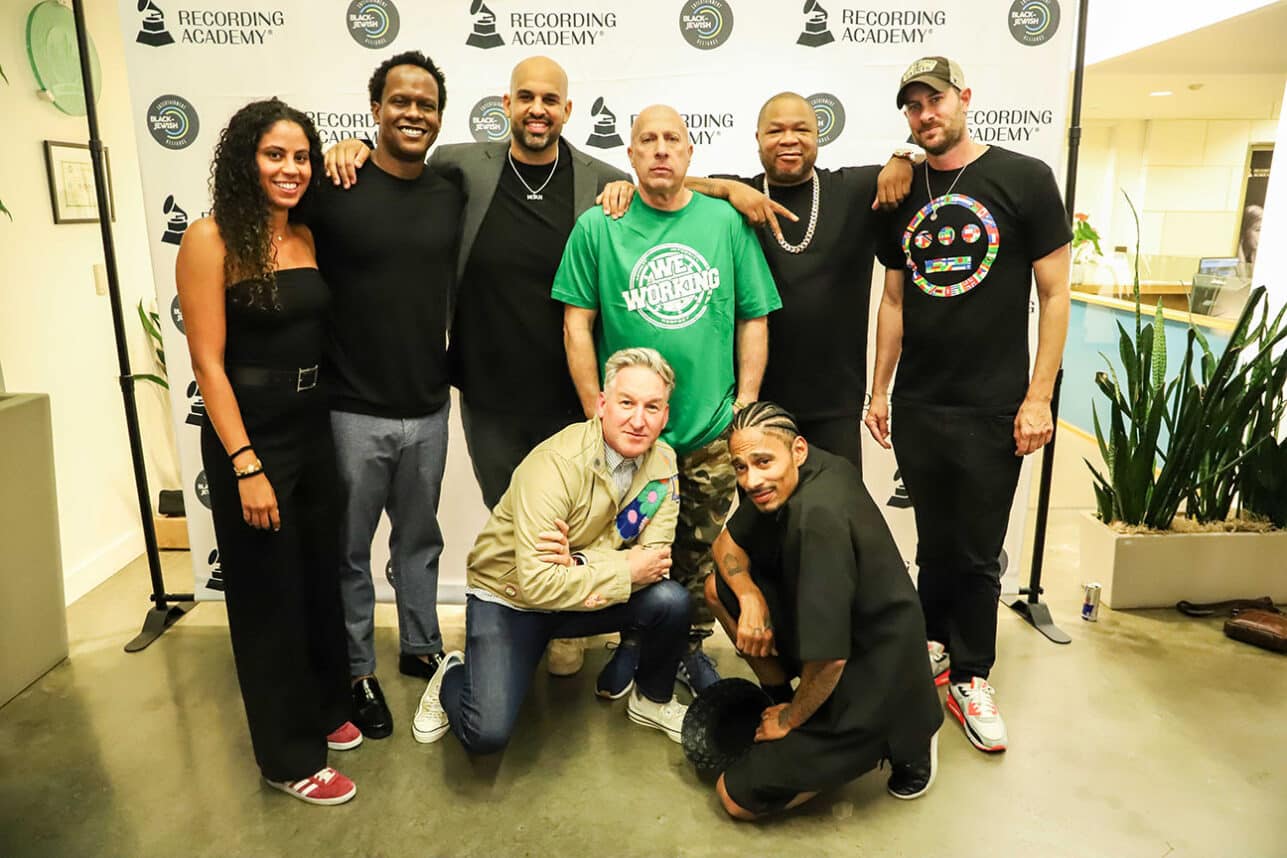
Some of the biggest names in music gathered on September 14th to celebrate the 50th anniversary of hip-hop and to recognize the role of Black and Jewish collaboration in the flourishing of the genre.

The event was hosted by the Black Jewish Entertainment Alliance (BJEA), an organization founded “to bring the Black and Jewish communities together in solidarity, to support each other in their struggles, and to better understand each other’s plight and narratives.”

The night was highlighted by a panel of Black and Jewish music industry bigwigs speaking to a crowd of nearly 100 people at the The Recording Academy headquarters in Santa Monica. On the panel were rap artist and actor Xzibit, rap artist Layzie Bone from Bone Thugs-N-Harmony and MC Mazik, the CEO of Beatclub and one half of the now-disbanded hip-hop duo Blood of Abraham.

From left to right: Layzie Bone, Steve Lobel, Steve Rifkind (via Zoom) and Xzibit. (Photo credit: Daniel J. Sliwa)

Joining them was longtime hip-hop manager and entrepreneur Steve Lobel, the CEO of A2Z Entertainment and weworking. Lobel is best known as the manager for Bone Thugs-N-Harmony, and for his work with Run-DMC, Eazy-E, Missy Elliot, Fat Joe and the late Nipsey Hussle. Loud Records founder Steve Rifkind joined the panel remotely. The panel was moderated by music and culture critic Justin Hunte.

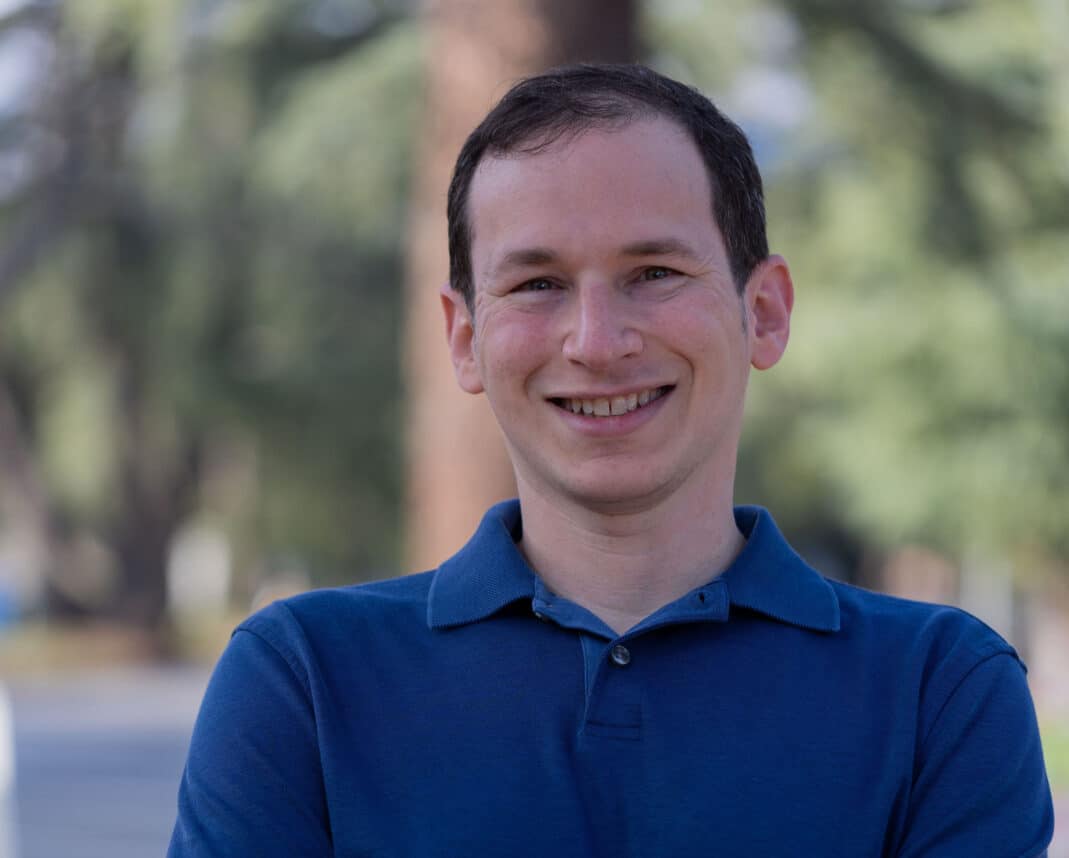
“Hip hop would not be where it is today if it wasn’t for Black and Jewish communities coming together, and we wanted to highlight that in tonight’s panel discussion,” said BJEA member and 2wenty2wenty Music Group founder and CEO Cory Litwin in the opening remarks of the night.

“Hip hop would not be where it is today if it wasn’t for Black and Jewish communities coming together, and we wanted to highlight that”- Cory Litwin

By the end of the 90 minute discussion, the attendees understood the lesson of the night: Collaboration is the key to success and unity makes you stronger. The superstars on the panel spent much of the time sharing stories of collaboration far beyond racial and religious divisions as they rose to the top of the industry.

“There’s so many artists out there that think they could do it themselves because there are other artists out there saying, ‘I’m independent, I do it myself,’” Well, guess what? None of ’em do it by themselves. Not one person here is successful just because of themselves. If you want to build a real legacy as an artist, you need a team, you need a manager, you need a payroll manager, a tour manager, you need a lawyer, a business manager, an agent. I started by carrying bags for Jam Master Jay.”

Throughout the evening, Layzie Bone (born Steven Howse) interrupted Lobel, commenting on his 30 years in the music business with Lobel.

“What kept me engaged in music was somebody that cared about my career even more than me,” Layzie Bone said. “Steve Lobel cared. That’s what makes him a manager. Not because he is just a good motherf—er with a couple dollars. It’s because he really, really cared about the artists he worked with.”

Lobel responded, “I want to say this, this is my brother for real. We call ourselves Steve and Steve, but it is very uncommon that a white Caucasian Jew is with an Afro-American group for 30 years.”

“Now you want to get us canceled?” Layzie Bone interrupted, which drew the biggest laugh of the night from the crowd, before Lobel reiterated that together, they’ve “been through hell and back.”

MC Mazik, born David Saevitz, spoke about how in 1993, Blood of Abraham was signed by the late Eazy-E’s label Ruthless Records. He told the story about how Blood of Abraham filmed a music video for their song “Stabbed At The Steeple” at The Kotel, Haifa and parts of Syria — in what might have been the first hip-hop video ever filmed in Israel. Mazik also told the story of how back in Los Angeles, Eazy-E took them to the Slauson Swap Meet to get their baseball hats embroidered with Hebrew.

The crowd skewed quite young — many in attendance were recording artists in their early-mid 20s who relocated to Los Angeles to pursue a career in music. And it’s precisely events like these that BJEA members hope will be impressionable to the future leaders and superstars throughout the entire entertainment industry.

“There’s a growing opportunity for the entertainment community to do more to bring both the Black and Jewish communities together in the collective fight against racism and antisemitism,” BJEA member Ari Ingel told the Journal. Ingel is also the director of Creative Community for Peace.

Earlier this summer, BJEA members gathered for a much more solemn experience: A tour of the Holocaust Museum LA.  Among the BJEA members who participated in that tour in June were Ingel,  Ritza Bloom (writer at AppleTV+), Craig Emanuel (a partner at Paul Hastings LLC), Benjy Grinberg (founder and president of Rostrum Records) actor Dulé Hill and David Zedeck (Global Co-Head of Music at United Talent Agency). Litwin, who opened the Hip-Hop 50 event, also went on the Holocaust Museum LA tour.

Following the tour, the BJEA members reflected together on the history and trauma of the Holocaust, shared individual stories and spoke of their own struggles in the fight against antisemitism and racism.

“Visiting Holocaust Museums is emotionally difficult, but necessary,” Litwin told the Journal. “I left the museum with a renewed and reinvigorated sense of commitment. Commitment to do what I can to continue the fight against antisemitism.”

Litwin told the Journal about why the BJEA’s mission means so much to him.

“The BJEA hits incredibly close to me as I’m Jewish, my wife is Black, and my son is Black and Jewish,” Litwin said. “To advocate for a brighter future for both Black and Jewish communities, we must bolster and fortify our relationships with one another. This can only be done through hard work, education, listening, and honesty. As members of the entertainment community, I hope that we can use our platforms to effectively combat antisemitism and racism. Because when we’re unified, as one collective force, driven by our commonalities, we’ve accomplished extraordinary things.”

Black-Jewish Entertainment Alliance Celebrates the 50th Anniversary of Hip-Hop with Gathering at Academy Read More »

“Jewish Space Lasers” and the History of Antisemitic Conspiracy Theories

Back in 2018, before Marjorie Taylor Greene was a household name and a member of Congress, she took to Facebook to share a convoluted conspiracy theory. She suggested that a solar energy laser generator was being used by Pacific Gas and Electric, in collaboration with figures like Jerry Brown and Dianne Feinstein’s husband, to clear land in rural California for a $77 billion high-speed railway. She highlighted a connection between a board member of PG&E and Rothschild, Inc. The insinuation was clear to many: The Rothschilds, a historically wealthy Jewish family, were behind this nefarious plot.

Greene’s post, which had initially vanished into the vast expanse of the internet, was later unearthed by a Media Matters researcher after she was elected to Congress in 2020. While Greene never used the term “Jewish Space Laser” in her post, the phrase caught on. This incident was not isolated. It was part of a broader trend of directed energy weapon conspiracy theories that were circulating in relation to the California wildfires during 2018 and 2019. The “Jewish Space Lasers” narrative, however, stood out for its blatant evocation of age-old antisemitic tropes.

Journalist Mike Rothschild, bearing a surname synonymous with wealth and power, has delved deep into these myths. Although he clarifies he has no direct lineage to the famed Rothschild banking dynasty, his exploration into the conspiracy theories surrounding the family is both profound and personal.

Growing up in the Chicago suburbs, Rothschild was always conscious of the historical weight his name carried. “I knew there was a wealthy Rothschild family, but we weren’t related,” he said. It wasn’t until college that Rothschild’s fascination with conspiracy theories began to take root. He became an avid listener of the Art Bell “Coast to Coast” AM radio show, which delved into topics such as UFOs, crop circles, and cattle mutilations. “I never believed any of it. But I was fascinated by it as storytelling, and kind of what mindset would drive someone to be attracted to something that repels most people,” he recalled.

After college, Rothschild moved to Los Angeles, initially pursuing a career in screenwriting. Around 2012, he began writing about conspiracy theories, at a time when such narratives, once considered fringe, began seeping into mainstream discourse. The rise of conspiracy theories during the Obama era, followed by the Trump presidency, the QAnon phenomenon, and the COVID-19 pandemic, further fueled his interest. “Now everybody seems to know somebody who believes one of these things,” Rothschild said.

A recurring theme in many conspiracy theories: A connection back to the Jews, with the Rothschilds often portrayed as the ultimate puppet masters.

Rothschild observed a recurring theme in many of these theories: A connection back to the Jews, with the Rothschilds often portrayed as the ultimate puppet masters. “The Rothschilds are seen as the ultimate Jews, the kings of the Jews,” he noted. This realization led him to explore the history and legacy of the Rothschild family in depth, culminating in his book, “Jewish Space Lasers: The Rothschilds and 200 Years of Conspiracy Theories,” published ‎by Melville House.

The Rothschild family’s meteoric rise during the Napoleonic Wars made them a prime target for conspiracy theorists. “When you have that amount of wealth accumulated that quickly, and you’re Jewish, the myths follow,” Rothschild explained. These myths, deeply rooted in antisemitism, have attributed a myriad of global events to the family, from the sinking of the Titanic to the emergence of the COVID-19 pandemic.

When asked about the prevalence of Rothschild conspiracy theories on the right versus the left, Rothschild noted, “Right now? It’s the right. This major uptick in antisemitism that we’re witnessing is very much driven by the far right, particularly online influencers.” However, he also highlighted that historically, spaces we’d now consider left-wing, such as the Socialist movement of the 1800s, were rife with antisemitism.

The digital age has amplified the reach and impact of conspiracy theories. While much of the discourse remains online, the real-world implications are undeniable. “We’re seeing an uptick in public antisemitism. Nazis marching in Florida, banners in Los Angeles proclaiming ‘Hitler was right,’ and public figures endorsing these sentiments,” Rothschild said.

The Rothschild conspiracy theories, while enduring, have seen evolutions. George Soros has emerged as a more contemporary target, often intertwined with Rothschild narratives. “You very often get references to both of them working together,” Rothschild explained. Despite the shift in focus, the underlying themes remain consistent, rooted in age-old stereotypes about Jews.

Rothschild also touched upon the internal debates within the Jewish community regarding figures like Soros. “Just because you’re Jewish doesn’t mean you have to agree with everything Soros or the Rothschilds do,” he said. However, he emphasized the distinction between legitimate criticism and antisemitic conspiracy theories.

While many, like Bigfoot or UFOs, are harmless and fun, others have deeper implications. “When you let it start to take over your life, it quickly becomes about something that’s being done to us. And when you start talking about somebody doing something to you, well, somebody has to be in charge of that, somebody has to be funding it, and it very quickly transitions into the same stereotypes about Jews.”

The question of ignorance often arises when confronting conspiracy theorists. Can someone genuinely claim they didn’t know the Rothschilds were Jewish or that their theory wasn’t about Jews but about a powerful family? Rothschild believes that such ignorance, especially from public figures, isn’t excusable. He emphasized that accountability is essential, citing Marjorie Taylor Greene’s inability to take responsibility for her statements as a prime example.

While the “Jewish Space Laser” theory has been a source of humor for many in the Jewish community, Rothschild warns against taking it lightly. The act of blaming a wealthy Jewish family for a natural disaster has historical precedents, often used to justify violence against Jewish communities. Dismissing such theories as mere jokes or attributing them to ignorance can be dangerous, as they normalize and perpetuate harmful stereotypes.

He emphasized the importance of recognizing and challenging these narratives in everyday life, especially when they’re presented as innocent or unintentional. Rothschild’s hope for his book is to educate readers about the origins and evolution of these conspiracy theories. He wants people to recognize the long history behind politicians or public figures blaming entities like Soros, the Rothschilds or the ADL. These aren’t new narratives but have been shaped and exploited over centuries. Recognizing these tropes and understanding their historical context is crucial in challenging and debunking them.

Rothschild acknowledged that some might still question his lineage. He clarified that his family’s origins are distinct from the banking Rothschilds and that there’s no historical basis for a connection. However, he also recognized that for many conspiracy theorists, such facts won’t make a difference. The challenge lies not just in presenting the truth but in changing deeply ingrained beliefs.

“Jewish Space Lasers” and the History of Antisemitic Conspiracy Theories Read More »

Why I Continue to Invest in Israel

Over the course of three decades in business, I have been on nearly every side of an investment. As the founder and CEO of several companies that went from startup to IPO, I’ve raised more than $1.7 billion through public and private debt and equity markets. As an active investor, I’ve negotiated hundreds of deals on behalf of myself and partners in fields from media to agriculture to health care. As a corporate securities lawyer, I’ve seen the good, the bad, and the ugly of what can transpire when it comes to investing.

The lessons – and scars – of this experience have driven me to make increasingly significant investments in Israel over the past decade.

For me, Israel is personal, as I grew up in a deeply Zionist household—and have been connected to the Jewish state since I can remember. But as I tell fellow investors, the cold-hearted business case for investing in Israel has never been clearer. Here are the top three reasons why I continue to double-down.

First, Israeli start-ups have the best track record of success. Israel now has 41 unicorns, the most per capita in the world. I’ve been involved with a number of these unicorns and witnessed their explosive growth, like Voxia, the world’s first AI-powered cold calling engine, and Moon Active ($1.25b), one of the world’s fastest-growing mobile game companies. You just can’t argue with the Israel’s success in penetrating new areas of technology, and the financial benefit it brings.

Second, you are a bigger fish in a smaller pond. Foreign investment in Israel has skyrocketed over the past decade, from $9 billion to $27.76 billion. Matam Park, in Haifa, is an international tech R&D hub, playing host to Amazon, Intel, Microsoft, Apple, and Google, just to name a few.  And speaking of Intel – they’re building another factory in the country that will cost $25 billion and open in 2027.

While many of the smartest global investors have caught on to the secret of investing in Israel, the space remains much less competitive than Silicon Valley, New York, or Austin.

On most deals in Israel, foreign investors are not competing against the largest VCs, which means we can secure more favorable terms and gain access to brilliant founders with a proven track record whose equivalent might not be available in the U.S.

I’ve become increasingly popular in Austin among the investor community by providing access to these deals. We even created a group called TLV-ATX that brings together 100 of the most brilliant Israeli founders living in Austin, with numerous 9- and 10-figure exits among them.

Third, Israeli companies are uniquely positioned to pioneer the technologies of the future.

In fields from  AI to blockchain to water and sustainable energy to cultured meat, Israelis bring together a density of expertise, bold attitude that allows for risk-taking and experimentation, and unique pipeline connecting world-renowned academic institutions with business. It is a potent mix, unlike anywhere else I’ve seen.

Take, for instance, Pluri, a biotech company that’s applying its 20 years of expertise in regenerative medicine to massive new opportunities for  cell-based manufacturing– whether by growing cultivated meat in a lab, or developing the first effective treatment that could be deployed at scale for Acute Radiation Syndrome (the disease you get from the fallout from a nuclear weapon or nuclear plant meltdown).

I recently joined the company’s board – and have seen up close the technology’s transformative potential to advance environmental sustainability, improve wellbeing, and provide solutions to so many other issues. Like so many other Israeli companies, Pluri encourages us all to break the boundaries between what ispossible now, and what could be possible tomorrow.

Israel’s founder, David Ben Gurion once said that in Israel, “in order to be a realist you must believe in miracles.” I am confident that the economic miracle that has been the Startup Nation over the past two decades is just getting started. Smart investors will seize the opportunity.


Lorne Abony is an investor and entrepreneur with decades of experience building and scaling multi-billion-dollar global businesses.

Why I Continue to Invest in Israel Read More »

Mourning for New York

Yom Kippur and 9/11, each year twinned like towers of grief and mourning, give the Days of Awe a special awesomeness, especially in New York — where the Twin Towers once stood, and where 1.8 million Jews live, the largest number in the United States, comprising nearly 25% of American Jewry.

These two days epitomize a time for introspection — a solemn Jewish holiday set aside for soul-searching; and a day that memorializes the worst act of mass murder on American soil.

Just 48 hours, but it makes for a morbid month. And it presents unique challenges for the Empire State — given that the empire is very much in decline. Memories are fading fast in Gotham, and even nostalgia has been forgotten. The mood is grim. Escalating frustration is everywhere. 

The pandemic re-wrote the rules for social engagement in the city that professed to never sleep. Business etiquette is coming to terms with the vastness of all this vacant office space. No one is quite sure how to negotiate around all those prohibited hashtags — MeToo, Antivax, WGAStrong, and Defund the Police. It has left everyone in an agitated state and a decidedly unreflective mood.

Not the perfect atmosphere for Yom Kippur. But who can blame the citizenry? Crime has been rising. Progressive prosecutors have forsaken the meaning of law enforcement. There is a new ethic of cashless bail and empty jails. Marauding bands of masked vandals have turned smash-and-grab into a spectator sport. Such fine establishments as Apple, Gucci, and Yves Saint Laurent are lavish crime scenes. Robbery has gone retail. And the hamstrung police are in the bleachers with the rest of us.

New York is sliding back to the inglorious 1970s when the city nearly went bankrupt, municipal services were perpetually on strike, garbage piled up, graffiti painted the town, and few dared to ride the subway or enter Central Park at night.

“Death Wish,” anyone?

Paradoxically, New York, like other large cities, is reeling from the consequences of proclaiming itself a sanctuary for undocumented aliens. Illegal crossings along the southern border have reached a critical mass. An estimated 11.4 million people are now living in the United States illegally. 

New York City has recently become the home to 100,000 immigrants who will require housing and social services. This has rendered the natives restless. New Yorkers don’t like the look of city blocks and school gyms resembling shanty towns. 

With an eroding tax base, and unaffordability driving artists away, what once made cities so enticing is starting to disappear. Regional theaters are shuttering. Cultural offerings are moving online. Book readings and gallery openings are becoming scarce. Bunkering at home with Apple Music, an OLED TV and contactless food delivery at least assures not becoming a crime statistic. No longer meccas of culture, a metropolis does, at least, provide better access to Fentanyl.

New York, San Francisco, Chicago and Los Angeles can either become fiscally strapped, crime infested destinations for asylum seekers, or cosmopolitan repositories of culture and commerce. They can’t be both.

New York City once demonstrated that it could survive the malice of Islamic terrorism. It refused to allow the horror of 9/11 to dethrone itself as a global city. The Freedom Tower would one day proudly take the place of the World Trade Center, rising from the charred and mangled remains as a symbol of American grit and determination. 

Is New York capable of another comeback? Can America endure the death march of its cities?

All this weighs heavily on American Jewry as Yom Kippur approaches. After all, Jews are quintessential cosmopolitans. They thrive in big cities and represent a significant portion of the creators and consumers of American culture. They also have a long history of embracing progressive causes.

 A lot of good that has done them. They now find themselves increasingly on the wrong side of the social justice divide. The progressive politics of the moment is preoccupied with racial categories. This new landscape of victimhood excludes the one constant in Jewish history: Antisemitism. Within the catalogue of forbidden bigotries, the hating of Jews no longer counts.

Yes, Jews are still a minority, but only by way of the census. In all other respects, they are betrayed by privileges owing to their skin color, which makes them official members of the oppressor class. No one seems interested in reconciling the reality that Jews remain embattled around the world, however. 

Wearing the insignia of the Jewish peoplehood — skullcaps, religious symbols, articles of clothing — is an invitation to a beating. Jewish students fear being blamed for some Zionist sin that wouldn’t even qualify as a misdemeanor if perpetrated by any other country. 

Expressions of Jew-hatred — and Jewish self-hatred—have become normalized, lifted from the gutter and openly paraded on public streets. Casual antisemitism is today the stuff of cocktail party gossip, faculty lounge intrigue, media propaganda. Invoke Israel as a strawman, and one can get away with all manner of defamation against Jews.

Speaking of defamation and the Jewish people, the Anti-Defamation League is good at tracking Jew-hatred, but fainthearted when it comes to combatting it. (Disclaimer: leading the ADL is a job I once pursued.) For instance, its most recent Audit of Antisemitic Incidents, reports that since 1979, antisemitism in the United States has never been as pervasive and widespread as it is now—whether in the form of physical assaults, acts of vandalism, college campus harassment, and bomb threats.

But the ADL, along with most Jewish “leaders,” are fixated on “white supremacy” when the main culprits of contemporary Jew-hatred are Muslims and African-Americans. 

To be woke requires a lockstep walk. Registering disgust with antisemitism is very much out of step with the times.

The Biden administration offers cold comfort given its romance with the Squad and flirtations with Iran. The progressive left is having its way with America, and it is ruining our cities, and endangering our country,

As a nation, Americans are not great with remembrance. It didn’t take long for some Americans to proclaim that we somehow deserved what we got on 9/11, that our promiscuous foreign policy and shameless American Exceptionalism brought those skyscrapers down.

On some college campuses, there are readings and course materials on Critical Terrorism Studies—academic discourse that trivializes terrorism, reducing it to ordinary political violence that can be justified and even appreciated.

The Day of Atonement is nearly upon us, and there are many reasons not to be in a forgiving mood.


Thane Rosenbaum is a novelist, essayist, law professor and Distinguished University Professor at Touro University, where he directs the Forum on Life, Culture & Society. He is the legal analyst for CBS News Radio. His most recent book is titled “Saving Free Speech … From Itself.” 

Mourning for New York Read More »

Tzipi Livni Talks About the Future of Israel

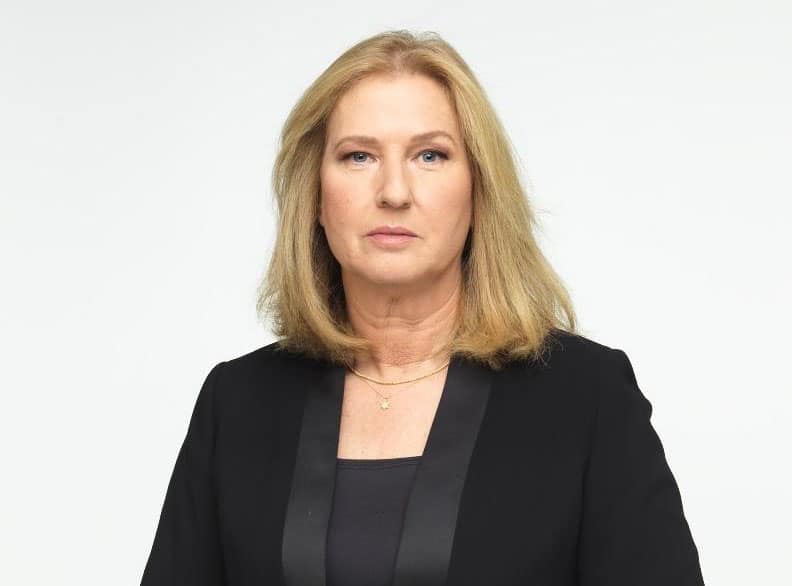
Three decades after Golda Meir became Israel’s first female prime minister, many thought Tzipi Livni would become the second. When Prime Minister Ehud Olmert stepped down in 2009, she was unable to form a coalition. In the elections that year, she led the Kadima party to a 28-27 seat win over Benjamin Netanyahu’s Likud.

“The Elected,” now streaming on ChaiFlicks, is a fascinating three-part docuseries that highlights Livni’s political career, as well as that of other female Knesset members, including Limor Livnat, Ayelet Shaked, Merav Michaeli, Pnina Tamano-Shata, Stav Shaffir, and others. Produced by Osnat Trabelsi, head of Trabelsi Productions, and directed by Efrat Shalom Danon, the series traces the progression of Israeli women in politics: In 1969, there were eight female members in the Knesset; in 2022, 43 of 123 Knesset members were women.

Livni told the Journal that she participated in the series because she knew there were women inspired by her career and the feedback she got when it aired in Israel was that there were women who felt empowered, and she wanted them to know “you could do it as well.”

Asked what she took away from being so close to the seat of highest office, she said she wanted to win to help her country and power was not what was attractive to her.

“Since I got the mandate to form a government and I didn’t succeed to do so, I had some sleepless nights as you can imagine, thinking what I could have done better,” Livni said.

Livni grew up around politics. Her father was a member of the Knesset from 1974-84, and she entered politics “because of the Israel-Palestinian conflict and the need to solve it.” She first ran for office in 1996 on the Likud list, but was not elected. Since then she has served in governments led by Benjamin Netanyahu and Ariel Sharon. A moderate member of Likud, in 2005 she left the party and formed Kadima with Sharon and Ehud  Olmert; when Olmert was named prime minister, she was appointed foreign minister, the first women to hold that position since Meir. In that position, she was one of the most prominent defenders of the two-state solution. When Olmert was forced to step down in 2008, Livni became the prime minister designate, but was unable to form a governing coalition.

“Later I understood that I could have made it,” Livni said. “So, I did my best, but I also kept my own set of values. I was not willing to give everything that they wanted because the idea is that for me, to be a prime minister was to promote things that I believe in. For me, it’s not about prestige, it’s about the positions where I can promote my beliefs. The most important ones were the foreign minister, chief negotiator and minister of justice. Therefore, since I understood they were asking more and more so even if I pay (in concessions) at the end of the day, I could not promote what I believe in. It was useless.”

Livni said that while she is “not optimistic these days,” there will always be problems and obstacles and that should not alter the overall vision of a two-state solution and hopefully there will be a partner for peace.

“I think that the most important thing is for us Israelis to decide what is our goal, what is our vision, and how to reach that,” Livni said. “So, my national GPS is to keep Israel as a Jewish Democratic state, a secure state, and therefore we need to have a Jewish majority inside Israel. Because otherwise we will see clash between being a Jewish state and a democracy and by the way, this is what we see now in Israel in a way.”

She added said that she “would not put obstacles in my way and therefore I would not expand settlements or do certain things that at the end of the day will make it harder to reach an agreement.”

In 2007, Israeli pilots destroyed Syria’s nuclear facility, in a decision made by then Prime Minister Ehud Olmert. At the time, Livni was the foreign minister, and Ehud Barak was the defense minister.

“This was quite a dramatic moment,” Livni said. “It was only the three of us, in the end, it was successful, but it could have led to another war.”

The Israeli Supreme Court is currently hearing arguments about the “Reasonableness” Law passed by the Knesset in July in a 64-0 vote after seven months of discussion and unprecedented protests by Israelis who took to the streets. The law is aimed at stopping the Supreme Court from being able to review and strike down decisions by government officials it deems “unreasonable.”

Some view this and other proposed reforms as either necessary or within the power of the elected parliament, with talk of it being a threat to democracy as hyperbole. But many, including hundreds of thousands who have gathered for eight months of unprecedented protests, believe democracy is under attack and what is happening is an abuse of power.

She said she believes the proposed reforms are unjust and her advise is to cease such efforts.

“Stop these reforms because these are not reforms,” Livni said, adding that the current fight is for the soul of Israel.

She also said she believes Israel to be a nation-state based on democracy and equality while some view it simply as a religious entity.

“I’m happy that things that were underneath the surface are now in the open because this is a fight that is worth it,” Livni said. “I prefer to know we have a problem, to have this debate instead of thinking that everything is okay, when this group is taking us to a non-democratic state. These are historical moments for Israel. Maybe its time to decide what does it mean to be a Jewish democratic state?”

What would happen if the Israeli Supreme Court rules that what the Knesset did was invalid and Prime Minister Benjamin Netanyahu declares that the Supreme Court’s decision was invalid?

Livni it would be “a huge drama.

What you see now with the demonstrations would be just the teaser.”

“The Elected” shows women breaking the “glass ceiling” of politics dominated by men. Livnat, a member of Likud, became minister of culture and sport and later minister of education. She said she was intimidated at first, practiced speaking in a lower voice and took off her rings other than her wedding ring to look like a “run of the mill” person.

Shaked, who led Likud, explained the difficulties.

“It’s harder for women to become party leaders because it demands a huge sacrifice,” Shaked said. “I work 18 hours a day and I sacrifice so much. I’m paying the price when it comes to my family. To head a party, you have to make that sacrifice. You need elbows, let alone a dagger between your teeth, you have to be cruel at times, even towards the people who were close to you and women aren’t usually like that.”

Michaeli, who leads the Labor party and served as Minister of Transport, said women don’t get the same teaching early on.

“We’re not trained for the position,” Michaeli said. “We’re not taught to play soccer. In soccer, boys are taught to score, to win, to lose, to acknowledge the captain, to divvy up positions. We don’t learn all that. We’re sent to dance lessons, alone …”

Tamano-Shata, who became the first Ethiopian born member of Knesset, spoke of a racist slur being used in reference to her that made her cry and related the difficulty of running in primaries for those who are not wealthy.

Shafir explained that she developed a filter for any kind of chauvinism and realized she was in denial. We see a scene where Prime Minister Naftali Bennett dismissively calls her “young” and refers to her as “shrieking” during a public session.

There’s also Shelly Yachimovich, who was a member of Labor, and lamented receiving unwanted hugs.

“It’s unpleasant when a sweaty man wearing tons of cologne gives you a friendly hug, even if he’s a socialist,” she says in the series.

Marcia Freedman, who moved from America to Israel in 1967, was a pioneer of women’s rights and LGBTQ rights was a member of the Ratz party, was interviewed in Berkeley. In the series, when she brought up the need for legislation against domestic violence, she was heckled by male Knesset members.

“I talked about issues that no one talked about,” she says in her interview. The second episode is dedicated to Freedman,who died in 2021 as the series was being made.

Journalist Anat Saragusti explains there is what she calls a “Golda factor,” in that some believe Meir failed by listening to the generals who incorrectly predicted Egypt and Syria would not attack for what became the Yom Kippur war. Sargusti noted that since Livni is a woman, her inability to form a coalition is unfairly highlighted; Netanyahu failed in the same fashion and has not received such criticism.

Livni says with the onset of the Second Lebanon War, she asked generals a question others feared to ask: What would be their definition of victory? She says she knew it would be used against her. It was. Anegative — and possibly sexist — advertisement claimed she didn’t think Israel could win the war with the slogan that being prime minister “is too much for her” or “she’s in over her head.”

While Livni’s her two sons disliked that she was in politics, they encouraged her to go for it because they reminded her she taught them to fight for what you believe in.

“If you don’t succeed, the shame is not on you, but on those who didn’t vote for you,” she recalled them saying.

She said she was inspired by Hillary Clinton nearly winning the presidency in 2016 as well as Tamano-Shata, an Ethiopian immigrant who was proud that a woman could reach political heights in Israel and may want to do the same.

Livni, who has been in several parties, most recently Hatnua, said she learned a valuable lesson.

“If you had asked me before I became foreign minister about the difference of decision making between men and men, I would have said we are human beings, it’s the same,” she said. “But it’s not the same. I believe that most of us — as women — are making decisions in accordance with a legal compass. It’s not about politics. When we enter the room for negotiations, political or others, it’s not about power and whose going to win politically, it’s more about reaching a solution. Therefore, I believe it is important to have women in office.”

Tzipi Livni Talks About the Future of Israel Read More »

Israeli PM Netanyahu Faces Protests During U.S. Visit Focused on Tech and Diplomacy

Israeli Prime Minister Benjamin Netanyahu found protesters on both ends of his 15-hour nonstop flight from Israel to California. The prime minister, who is slated to be in the US until Friday, is in California ahead of his speech at the UN General Assembly in New York. It is his first trip to the US since being reelected prime minister, and he has a full schedule that includes meetings with numerous heads of state and government.

“Netanyahu’s primary focus during this trip should be strengthening the relationship between the United States’ and Israel’s technology industries,” EJ Kimball, director of policy and strategic operations at the US-Israel Education Association, told The Media Line.

With tech in mind, Silicon Valley was Netanyahu’s first US stop, where he met with tech magnate and Tesla CEO Elon Musk Monday to discuss artificial intelligence (AI), among other topics.

“Israel needs to be a leader in artificial intelligence. Just as we turned it into a leader in cyber, so we will do in this field as well,” Netanyahu told reporters.

An Israeli activist group called UnXeptable greeted the prime minister at Tesla’s entrance. According to its website, UnXeptable “is a grassroots movement launched by Israel expats in support of a democratic Israel. We call on world Jewry to come together and preserve the democratic identity of Israel as the home of all Jewish people.”

The group’s California day of action against Netanyahu, the largest event it has hosted on the US West Coast, included local rabbis as well as senior leadership from the Jewish Community Relations Councils of the San Francisco Bay Area and Silicon Valley.

The protesters, who were waving Israeli flags and holding signs, did not go unnoticed. Musk used their presence to launch into the subject of judicial reforms during the X/Twitter livestream.

“To be frank, I probably got the most amount of negative pushback from people at Tesla about this interview than anything else I’ve ever done. … I think it is primarily the judicial reform question,” Musk said to Netanyahu during their interview.

Although Netanyahu was at the Tesla factory to discuss AI with Musk, the two also addressed antisemitism.

Musk has been accused of allowing, even promoting, antisemitic content on X/Twitter since his takeover of the social media platform earlier this year. Netanyahu addressed this issue with Musk but made clear he did not personally believe Musk was antisemitic.

“I also know your opposition to antisemitism; you have spoken about it, tweeted about it,” Netanyahu said to Musk. “And all I can say is that I hope you find within the confines of the First Amendment the ability to stop not only antisemitism, or roll it back as best you can, but any collective hatred of a people that antisemitism represents. And I know you are committed to that. I hope you succeed in it,” Netanyahu continued.

“Obviously I am against antisemitism, I am against anti, really anything that promotes hate and conflict,” Musk responded.

Netanyahu will be in New York for the remainder of the week to meet with world leaders before his return to Israel. He told reporters that in addition to his long-awaited meeting with US President Joe Biden, he also had formal meetings planned with the German chancellor, the presidents of Ukraine and Turkey, and many additional leaders from Asia, Europe and Africa.

The White House, which hosted Israeli President Isaac Herzog this past July, has yet to extend a formal White House invitation to Netanyahu. While this has been a point of contention, the two leaders will be focused on common-ground issues like regional security and the Iranian threat.

“Even though a formal meeting at the White House is not taking place, the two friends are mutually supporting each other’s nations in strategic ways,” Kimball said. “This will have no negative impact on US-Israel relations,” Kimball continued.

On Friday, the White House officially announced that the two leaders would meet for the first time since Netanyahu regained the Prime Minister’s Office. The meeting is scheduled for Wednesday in New York. While the much-anticipated sit-down is a win for Netanyahu, it certainly will not be smooth sailing for him while he is in New York, where he will have to contend with more protesters.

Rabbi Angela Buchdahl, the senior rabbi of the influential Central Synagogue in Midtown Manhattan, recently implored her congregation to support Israel’s judicial reform protesters.

“This year, Israel elected the most right-wing, ultra-religious government in its history, which quickly moved to weaken the independence of the judiciary, steamroll the rights of minorities, and mobilize a private militia,” Buchdahl told her congregation on the eve of Rosh Hashanah.

“In a matter of months, this new government has taken actions that threaten to turn Israel into an authoritarian, theocratic state that very few American Jews will be able to support. What a distance we have traveled in so little time,” she continued.

Buchdahl, who marched with protesters in Tel Aviv and Jerusalem this year, will aim to be a pain in Netanyahu’s side while he is in New York as she leads protests along with Rabbi Elliot Cosgrove of Manhattan’s Park Avenue Synagogue and Nobel Prize laureate Daniel Kahneman.

“If you care about democratic rights, help preserve the only functional democracy in the Middle East. If you care about the vulnerable, safeguard the sole sanctuary for Jewish refugees in need everywhere. If you value Jewish peoplehood, hear the cries of the other half of our Jewish family and remember the destiny of Am Yisrael [the Jewish people] is bound one to the other,” Buchdal told her congregation. “This young, messy, miraculous Jewish state is the most important sovereign, democratic project of the Jewish people of the last 2,000 years. We cannot walk away,” Buchdal added.

Between meeting world leaders and dodging protesters, Netanyahu is sure to have an interesting trip to the US. What the protesters accomplish, if anything, is yet to be seen.

To read more articles from The Media Line, click here.

Israeli PM Netanyahu Faces Protests During U.S. Visit Focused on Tech and Diplomacy Read More »

Teaching English in Israel: A “Sage” Perspective

As summer comes to an end, students and teachers alike are preparing to embark on a new school year. The excitement of new beginnings, the anticipation of learning and growing, and the joy of being part of a community all come together in the back-to-school season.

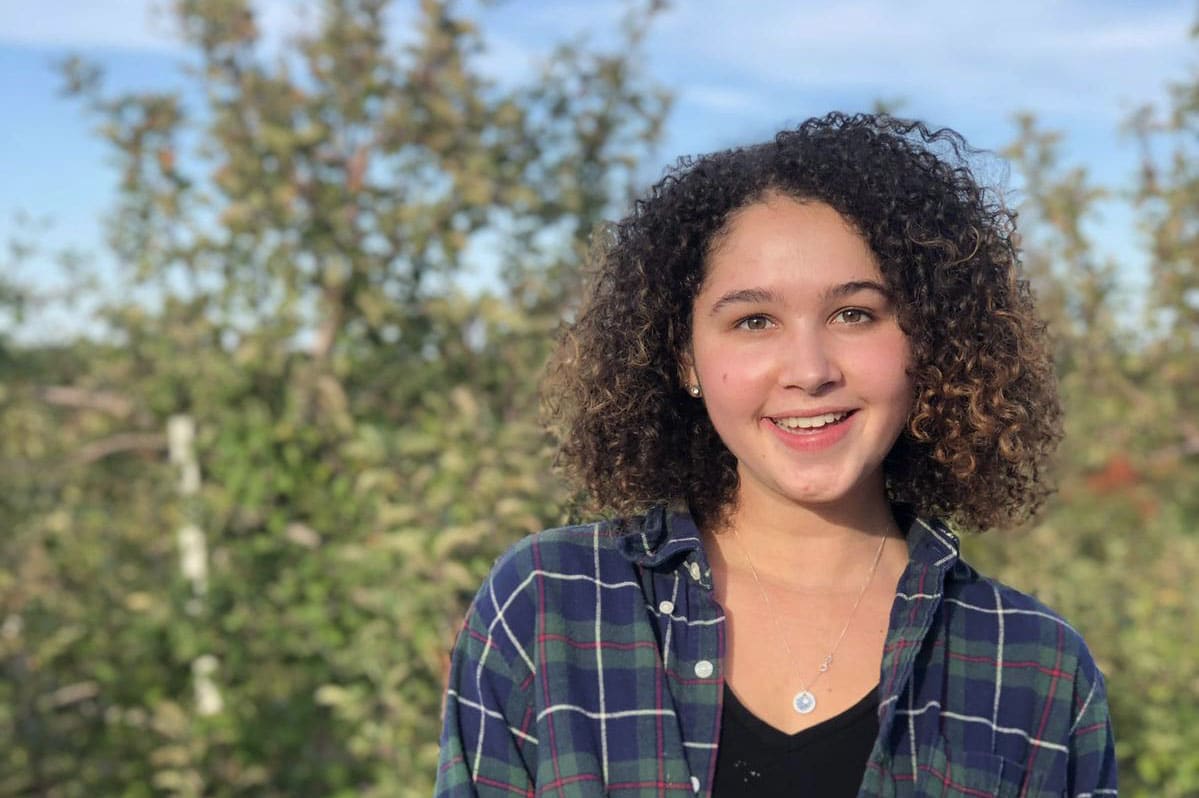
This school year will be particularly exciting for Sage, a young woman who is about to begin teaching in Israel.

This fall, Sage will be participating in Masa Israel Journey’s 10-month Masa Israel Teaching Fellows (MITF) program, teaching in Bat Yam. The MITF program offers an opportunity for individuals to immerse themselves in Israeli culture while teaching English classes to children.

MITF is not the only program available for individuals interested in teaching in Israel. Go Overseas offers participants the chance to teach English, music, sports, or other subjects in schools throughout the country. Another program, Israel Outdoors Next, focuses on providing teaching experiences in a variety of settings, including public and religious schools, community centers, and special education programs.

Sage chose MITF because she wanted to participate in a program that focuses on teaching English exclusively.

“I did my undergraduate coursework in Developmental Psychology and Education. During my master’s study, I had the opportunity to work with English Learners and wanted to see how English is taught in other countries,” said Sage.

Sage also wants to develop a global perspective in her style of teaching and way of life, including the idea of community and the spirit of collectivism.

She grew up in southeast Africa and has traveled to more than 20 countries.

“I loved the community in Africa. People are very friendly, always smiling, and always willing to help you,” said Sage. “In Africa, there is a big emphasis on community and helping each other.”

She also sees these ideals in Israel from her previous visits, noting that in Israel, “it’s easy to feel welcome.”

Sage sees the program as an avenue to combine her passion for teaching children with her love for cross-cultural exchange, while also growing professionally and personally. Diversity and inclusivity will be the top pillars of her educational ethos.

“I think it’s such an important part of a child’s development to learn about their culture and explore their identity,” said Sage. “Students should see themselves reflected in lessons because it leads to more meaningful, engaged learning.”

Why Israel? That’s easy, Sage says — she chose Israel to connect more deeply with her Jewish identity. “It’s nice to be able to connect to people on a cultural and religious level. It’s also interesting meeting people with different experiences and perspectives of Judaism.”

As Sage heads back to school, she is excited to be part of a program offering a unique and rewarding experience for individuals looking to make a difference in the lives of students while exploring Israel and expanding their horizons.

“I hope to be a good mentor to these students and have a real impact on them,” said Sage. “I know that I have much to learn from them as well.”

Teaching English in Israel: A “Sage” Perspective Read More »