fbpx

September 12, 2023

Extremism in Jewish Thought

Isaac Newton’s Third Law of Motion states that for every action, there is an equal and opposite reaction, meaning that pushing an object causes that object to push back against you, the exact amount, but in the opposite direction. What is true in science is true in life: One extreme yields another extreme.

Dictionaries, like Merriam-Webster, associate extremes with radicalism and violence. Oxford defines an extremist as a person “whose opinions, especially about religion or politics, are extreme, and who may do things that are violent, illegal.”

The philosopher Friedrich Nietzsche noted that extreme positions “are not succeeded by moderate ones, but by contrary extreme positions.” In other words, as in physics, the pendulum never stops in the middle.

The novelist Truman Capote expanded on the idea by emphasizing the incompatibility of extremes: “The problem of these far-right and far-left mentalities is that they can encompass only one side of an argument and are congenitally incapable of holding two opinions in their heads at the same time.” In his scathing indictment of extremism, Capote mocks the lack of subtlety and nuance of extremist views.

What does Jewish tradition teach about extremism?

Moses, the model of leadership and closeness to God, is portrayed as the most humble of men. When he is informed that two Israelites were prophesying in the camp, instead of being jealous, he declares that he wishes all Israelites were prophets. When Israelite behavior is egregious and God threatens to erase them from the Earth and start over with him, Moses effectively argues for mercy and compassion for his people, and they are spared.

The medieval Jewish philosopher Maimonides condemned extremes and encouraged moderate behavior: “Nothing has pained us and exacerbated the wounds of our nation as much as all the ways of extremism and division have” (“For the Perplexed of the Generation” 13:19). And Maimonides, the rationalist, invoked Jewish history to call attention to the need for unity and co-operation. Jewish males are instructed in the Torah to wear tzitzit on their garments and on the tallis in order to remind them to refrain from extremism in the application of all human characteristics (Akeidat Yitzchak 77:1-4).

Finally, the Torah mentions the nazir, a person who feels the need to be zealous in his observance beyond what is required; for example, he vows not to cut his hair and to abstain from wine. He is allowed a circumscribed time, and at the end, he must bring a sin offering. Why limit the time and why a sin offering?

In an effort to discourage extreme behavior, the Torah permits an outlet for such a person, but only for a set period, and the sin offering is a sign and a warning—a sign that, while there is room for non-conformity and even excess, it is not desired and not the norm, a warning that unchecked, excess can lead to grave results. If so in zeal for God, how much more so in the secular realm?

So, we see that general culture and Jewish tradition value the middle road, reason and moderate behavior. The consequences of the alternative are known by all.

Referring to Korach, the Israelite who challenges Moses’s leadership for his own personal gain, Rabbi Jonathan Sacks compares him to the alpha male chimpanzee: “Where there is hierarchy, there will be competition as to who will be the alpha male.” This primitive behavior, when applied to the human sphere, has had ruinous results: “Biblical Israel survived as a united Kingdom for only three generations and then split in two.” Once split, it became vulnerable and eventually all was lost: “The result is what Thomas Hobbes called a perpetual and restless desire of power after power, that ceaseth only in death.” Rabbi Sacks reminds us that the extreme preoccupation with self and personal glory have had the direst consequences not just for the individual but also for the whole nation.

Observing society in America and Israel today, especially in the political arena, we witness behavior more suited to alpha male chimpanzees than to a civilized society of enlightened men and women. If Jews, for example, cannot understand, after millennia of persecution in other peoples’ lands, that the single most important imperative for survival is the absolute necessity to work together, what hope is there for humanity? What does Or Le Goyim, a light unto the nations mean, if not that?

If our societies won’t distinguish ourselves from chimpanzees, and insist on ignoring history and tradition, then let us at least take note of the law of physics. Extreme attitudes and behavior invariably will cause an equal and opposite reaction and once again, the world will bear the consequences.


Dr. Paul Socken is Distinguished Professor Emeritus and founder of the Jewish Studies program at the University of Waterloo.


Extremism in Jewish Thought Read More »
From Screaming at a Lifeguard to the Five Steps of Teshuva

It was a sweltering summer morning in Toronto as I waited in line to go to the pool, thrilled to be back in the water after a year and half of not being able to swim. Because of restrictions limiting the number of swimmers in the pool, on this particularly scorching day I missed the entry cut off and was denied access.

Hot, sweaty and uncomfortable, I took out my frustration on the hapless lifeguard, who was simply doing his job admitting a limited number of swimmers. Shamefully, I put up enough of a fuss that his supervisor got involved. After enough griping, I was allowed in.

You’d think I would be relieved that I could start my lap swim. But I wasn’t.

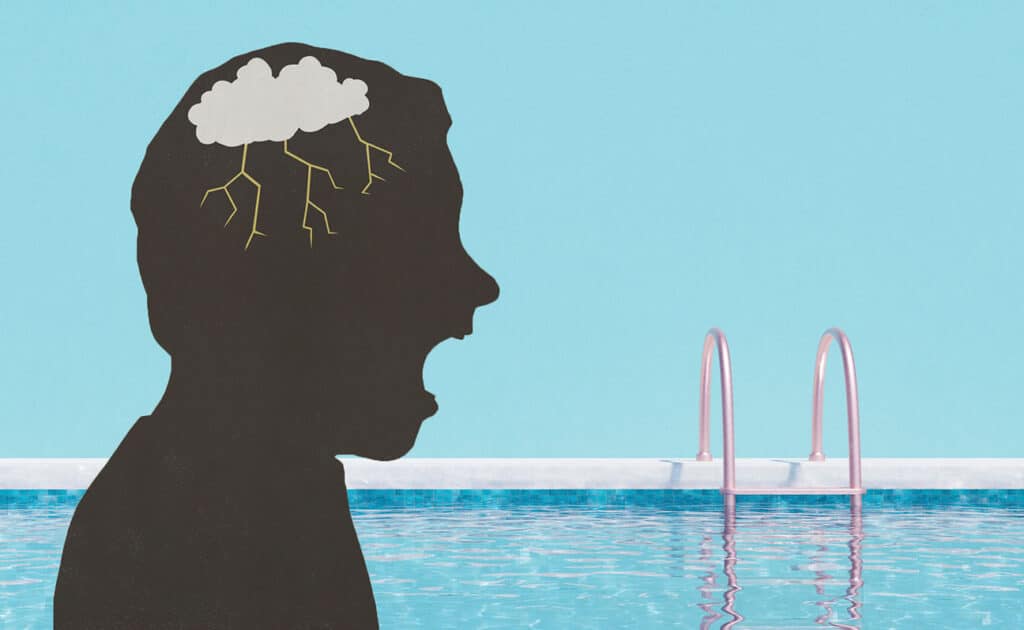
I recognized that I did something very wrong: I vented my anger onto someone who didn’t deserve it. With Rosh Hashanah only days away, I knew this was no way to enter the New Year, a time when we are obligated to seek forgiveness not just from G-d, but also from those we have hurt through our words or deeds.

I knew I needed to make amends with that lifeguard. But how?

I recognized I needed to process through the Five Steps of Teshuva to work through my inappropriate display of emotions. Originally outlined by Maimonides and amended over the years, they include: hakrat ha-chet(acknowledging our sin); charata (remorse and regret);  viddui (public confession of our sin); azivat ha-chet(abandoning the sin); and kabbalah l’atid (the welcoming of a future void of that sin).

Acknowledging that I did something wrong was the first step. Taking ownership of bad behavior is never easy when our pride is on the chopping block. I felt like an idiot for raking this poor lifeguard over the coals. I may have gotten my wish to be granted pool access, but at what cost to my moral compass? When I could no longer rationalize my conduct, I knew I had to admit my omission.

Honoring my conscience made processing the second step of teshuva, regret, easier. Accepting responsibility for hurting others implicitly provokes a sense of remorse. Remorse is humbling. It reminds us of our inherent human weaknesses and vulnerabilities. With my own vulnerability triggered by regret, I could imagine how that young man must have felt as he stood there bearing the brunt of my anger in a situation that was out of his control. It was that measure of empathy that guided me to the third step of teshuva, and the hardest step I believe: asking for forgiveness. Openly confessing my misdeed and publicly apologizing to the lifeguard was a humbling, ego-deflating act, which is why it was so difficult.

Openly confessing my misdeed and publicly apologizing to the lifeguard was a humbling, ego-deflating act, which is why it was so difficult.

We prefer to think of ourselves as decent, ethical people. Hurting someone by our speech or through our actions flies in the face of this self-image, and apologizing accentuates the unflattering side of ourselves.

We tend to relieve this psychic conflict by either minimizing the degree of our sin (and its impact) or rationalizing the offensive behavior away altogether—exactly what I did trying to argue my way into the pool.

“I was hot! And it was a frustrating situation,” I told myself initially, defaulting to my physical and emotional condition as a way to rationalize my behavior.

But here’s the thing: With the New Year only days away, my act of apologizing actually felt easier, because if there is ever an opportune time of year to apologize, where that sense of humiliation and blow to our ego feels less severe, it is leading up to and during the Days of Awe.

The High Holy Days extend to all participants a kind of grace: Knowing we are all enjoined at this time of year to forgive makes it a bit easier to accept the apology as well, knowing that we ourselves may have our own apologies to extend to someone else.

Notwithstanding the ease I felt in asking the young man for forgiveness, completing my teshuva did not end with the apology. As relieved as I felt having received the lifeguard’s forgiveness, the work of making amends, in some ways, was only just beginning. The fourth step—leaving behind the sin—requires a commitment to not repeat that same behavior that triggered the apology, and step five, accepting the future, asks us to step into the future with positive intentions to do better in the coming year.

Good intentions are just that: intentions. Chances are that we will make a mistake or likely hurt someone again in the new year. Was there a method I could employ to help me lessen the chance of perpetuating my sin and hurting someone else as I did that lifeguard? Perhaps there was. The idea came to me quite easily in fact. Taking two pieces of paper, I wrote down the one misdeed I know I need to work on: my temper. The first one I placed inside my Chanukkah menorah, and the second inside my bathing cap. Three months from now, when I take the menorah out of storage, a note will be there to remind me of my New Year’s resolution and to check in with my progress. How am I doing? On track? Or not? And eight months from now, when the outdoor pool opens again, inside my bathing cap will be a second trigger to stay on course, or get back on it.

With these strategies in mind, fulfilling the five stages of teshuva has become my personal, practicable, 12-month mitzvah project that keeps me accountable to my best intentions and reminds me of my commitment to return to the G-d given goodness and wholeness that reside in me and in each of us, not just during the High Holidays, but all year round.


Lorne David Opler, M.Ed., is a community college Professor of Fitness and Health Promotion and a Certified Strength and Conditioning Specialist with NSCA – the National Strength and Conditioning Association. 

From Screaming at a Lifeguard to the Five Steps of Teshuva Read More »

Jewish Students Need to Promote Inquiry, Not Censorship

Being a community that thrives on arguments and ideas is central to the Jewish experience. This critical value, however, is lost on many Jewish college students who are leading the charge on campuses nationwide to silence debate rather than promote a healthy exchange of ideas.

Rabbi Irwin Huberman deftly notes that for Jews, “arguing is the national pastime” and that, “If there is one characteristic which has kept the Jewish people alive for more than three thousand years, it is our love of debate, discussion, and disagreement.” A thoughtful exchange of ideas is so central to Jewish culture, Huberman argues, because Jewish tradition actually restricts young people from isolating themselves when studying, believing that “young people who study texts on their own are more prone to drift towards zealotry and fundamentalism.” Judaism holds that a person’s beliefs must be challenged and exposed to the truths of others and as such, “we welcome questions, debates and, yes, even arguments, believing that this is the best way for a child to develop into a well-rounded human being.”

New data from the Foundation of Individual Rights and Expression’s (FIRE) latest survey on expressionreveals that the ability to speak freely and maintain an environment of open inquiry remains deeply problematic on many campuses from small liberal arts colleges to large, state universities. Cancel culture remains rampant and, regrettably, Jewish students are becoming increasingly supportive of measures and actions that shut down expression and dialogue.

Specifically, the FIRE data, which surveyed over 55,000 students from 254 colleges and universities of all types, documented beyond simple headlines that cancel culture continues to thrive on campus. Almost two-thirds (63 percent) of students believe that there are acceptable reasons for shouting down a speaker to prevent them from speaking on campus. While non-violent, shout-downs can be profoundly destructive and chill speech. Even more disturbing is that almost half (45 percent) of the undergraduates surveyed believe that blocking other students from attending a speech is acceptable to some degree. Plus, over a quarter of students (27 percent) said that using violence and physical force to stop a campus speech is acceptable to some degree. The number of students who support using violence to stop a campus speech has increased by seven percentage points from 2022. That is a concerning jump.

Jewish students, however, are more likely than their peers to be open to trying to disrupt speech. Seventy one percent report that shouting down a speaker is acceptable in particular cases. Fifty percent of Jewish students are open to blocking a speaker that is offensive or objectionable and 31 percent are open to using violence to stop a speech. These levels are all higher than the national figures. While Jewish students have not changed significantly from prior years, their openness to violence has increased by 10 points in the last year alone.

Jewish students, however, are more likely than their peers to be open to trying to disrupt speech.

Making sense of these facts is a challenge but one could argue that because so many Jewish students today are liberal and have ideologically sorted—67 percent are on the left or left-leaning compared to 53 percent of the national sample—they have adopted the dominant view among those on the left compared to the right that cancel culture is an acceptable norm when ideas or speech makes some communities uncomfortable. Accepting this leftist approach is irrational, irresponsible and dangerous for Jewish students who cannot escape their own history of being outliers and targets for centuries, and shutting down dissent historically promotes extremism that has targeted Jews as we see again happening around the nation.

One could also argue that because students are facing record levels of antisemitism and have expressed feeling scared on our campuses today, Jewish students are again engaging in “Jewish defensive assimilation” where, like in pre-war Europe, many Jews felt intense disdain and pressure against them; rather than speak up and push back, many took an appeasement approach thinking that by looking like they are part of an illiberal and dangerous group or ideas, the antisemitism could be held in check. This is foolish since appeasement does not work in the long run and groups often turn inward and on their own members.

While there is no one explanation for Jewish students’ significant involvement in cancel culture, it is clear that Jewish students are actively undermining the central values of not only higher education but also Judaism itself with this behavior. With the High Holy Day season upon us and so many of the Jewish community gathering en masse, it would be valuable to remind ourselves that as a community we value debate and are aware of the extremism that comes from echo chambers and the silencing of dissent.  And then, we need to support our students in promoting more debate. This is a daunting task and a real challenge, but as Rabbi Jonathan Sacks remarked at AEI, Jews must promote free speech on campus “because we believe that the only safe space there is, is one in which we give a respectful hearing to views unlike our own. That is what a safe space actually is.” The future of the Jewish community depends on a real marketplace of ideas to keep extremism in check, and Jewish students and the Jewish community should be leading the charge toward open inquiry as opposed to activity working toward silencing others and their ideas.


Samuel J. Abrams is a professor of politics at Sarah Lawrence College and a senior fellow at the American Enterprise Institute.

Jewish Students Need to Promote Inquiry, Not Censorship Read More »

The Immaculate Reception

I awoke Tuesday morning to find the following email in my inbox: “Dear Rabbi, as we approach Rosh Hashana, I feel compelled to make a confession. As the die-hard skeptic I am, I was ready to honor the New Year with the usual resigned, even sarcastic attitude. Yeah, I’ll probably go to Synagogue, but mostly out of guilt (my parents, grandparents, the Holocaust), mixed with a little tradition and a lot of superstition (what’s there to lose, let me make my annual deal with God to be sealed in the book of life for a blessed year). I’ll do my routine praying, but for me (and so many others) it’s more like lip-service, by-rote, mechanical faith.

“But then, after watching the miraculous Jets win Monday night against the Buffalo Bills, I could not help but think: Are there indeed miracles in life? Was this God’s hand? I mean, Garrett Wilson’s absurd, logic-defying catch to basically tie the game in the last minutes (when all seemed lost); Xavier Gipson’s amazing punt return touchdown to win the game, in overtime no less; and all this on the heels (no pun intended) of Aaron Rodgers season (career?) ending devastating injury just four plays into his highly anticipated first game with the Jets! Is this a Divine sign? Is this some form of wakeup call (to all of us, but especially to the doubters) – just days before the High Holidays – that perhaps there is an invisible hand behind the scenes choreographing the narrative of our lives?

“Yes, I know that, as we speak, young children are dying of cancer, innocent people are suffering, and the world has plenty of problems, and we sure can use some miracles. But one thing does not negate the other. Sure, one winning game in football doesn’t mean much in the scheme of life challenges. But should we ignore an incredible event that makes our eyes rub in disbelief? If such an unlikely scenario can happen in front of millions, how many more unlikely miracles can take place in our lives? Can prayer help?”

My dear friend, I replied, allow me to share with you the timeless words of the great mystic and founder of the Chassidic movement, the Baal Shem Tov: The difference between a miracle and a natural event is only one thing: frequency. Were the sun to rise once in our lifetimes, we would all be rushing outside with our families and friends, with camera crews and media attention, gazing at the heaven and saying: “Awesome. Look at that flaming ball in the sky rising in the horizon” (just look at the attention a solar eclipse attracts). But since it happens every day without fail, we take it for granted and seek out other novelties (healthy or unhealthy) that will provide us with a new rush of excitement. That is human nature.

Every moment new, healthy children are born. Is that not a miracle? Think, a seed fertilizes an egg, and a new life is conceived. One cell. One single cell splits into two, then into four, then into eight, and over nine months a full and complete child with over 40 trillion cells emerges from its mother’s womb. That is you – with all your beauty and complexities, with all your nobility and neuroses. Is that not a miracle?

But since children are born all the time, we lose sight, and get distracted by the superficial, impermanent experiences of our lives.

How many things must work right for every breath we inhale? A healthy adult takes around 12 to 20 breaths per minute. Do you even notice? But then when you see someone on a respirator struggling to breathe, you suddenly realize the miracle of just one breath.

Life is a miracle. And miracles abound everywhere, if you only choose to look. From time to time, the invisible hand does reveal itself to remind us of the miracles that are already there, just waiting for us to embrace them, to channel them into our lives. When asked “where is God?” Reb Menachem Mendel of Kotzk said: “Wherever you let him in.” If I may, side by side, irreverently cite Michaelangelo: When he was asked how he sculpts those beautiful angels in the marble, he purportedly replied: “I see the angel trapped in the marble, so I carved and carved to set it free.”

The Jets miraculous win, in the days when we prepare to enter a New Year and celebrate the collective birthday of the human race on Rosh Hashana, reminds us of the miracles and angels trapped in our material, distracted lives, and the call of the Shofar awakens us to do our part in unleashing them. Our prayers and good deeds carve away the outer excess allowing our souls to emerge and shine. On Rosh Hashana, after Adam had sinned, God cried out to Adam: “Where are you?” and this is the question we are all asked on this day: “Where do you stand in your life? Have you betrayed yourself and your destiny? Are you present, serving as My partner to transform this world into a spiritual garden? Are you living up to your mission and calling?”

I recall a cynical guy asking me at one of my classes: “Hey, can a tzaddik – a pious God-fearing person – fly?” I replied simply: “I don’t know if he can fly. But I can tell you that for him (or her) walking on earth is as miraculous as flying…”

Every step we take, every breath we make, every fiber of existence is brimming with enormous energy and potential.

If anything, the Jets improbable win opens our eyes and ears to seeing the miracles in every moment; to see (in Blake’s words) a world in a grain of sand and a heaven in a wild flower, hold infinity in the palm of your hand and eternity in an hour. To experience the extraordinary in the ordinary.


Simon Jacobson is the author of Toward a Meaningful Life (Morrow, 1995, 2021) and the dean of The Meaningful Life Center, www.meaningfullife.com

The Immaculate Reception Read More »

AFHU Bel Air Affaire, Club Z Names Education Director, Providence Cedars-Sinai Tower Opening

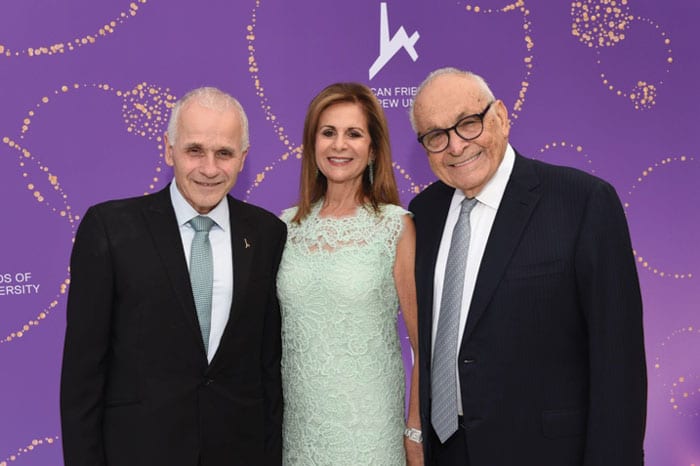
The 14th annual Bel Air Affaire, held Sept. 9 at the iconic Papillon Estate in Beverly Hills, raised more than $2 million for student scholarships at Israel’s Hebrew University of Jerusalem (HU). 

This year’s honorees, Roberta and Stanley Bogen, were presented with the Humanitarian Torch of Learning Award during the event hosted by the Western Region of American Friends of the Hebrew University (AFHU). 

“Roberta and Stanley Bogen have been actively involved with Hebrew University and AFHU for decades wherever they call home in the U.S.,” AFHU Western Region President Barbara Natterson-Horowitz said. “We are honored to welcome Roberta and Stanley to our Los Angeles AFHU community and pay tribute to their extraordinary generosity as vibrant AFHU members and Torch of Learning Honorees.”

Roberta and Stanley have generously supported the Hebrew University Lautenberg Center for General and Tumor Immunology, the Truman Center’s Roberta and Stanley Bogen Library, and the Rothberg International School. The Hebrew University Department of Economics bears the Bogen Family name, and, in honor of Stanley’s parents, the Bogens established two named chairs at the university: the Max Bogen Visiting Professorship in Economics and the Marcy Bogen Chair in Academic Excellence. The couple received the AFHU National Scopus Award in 2012.

 As part of the evening’s festivities, Hebrew University President Asher Cohen welcomed guests. Student ambassador Yona Shemesh, a scholarship recipient pursuing Middle Eastern studies, addressed the gala attendees.

Guests were treated to the humorous comedienne Wendy Liebman as well as a pre-recorded greeting from legendary comedian Billy Crystal and cuisine from Whoa Nelly Catering. 


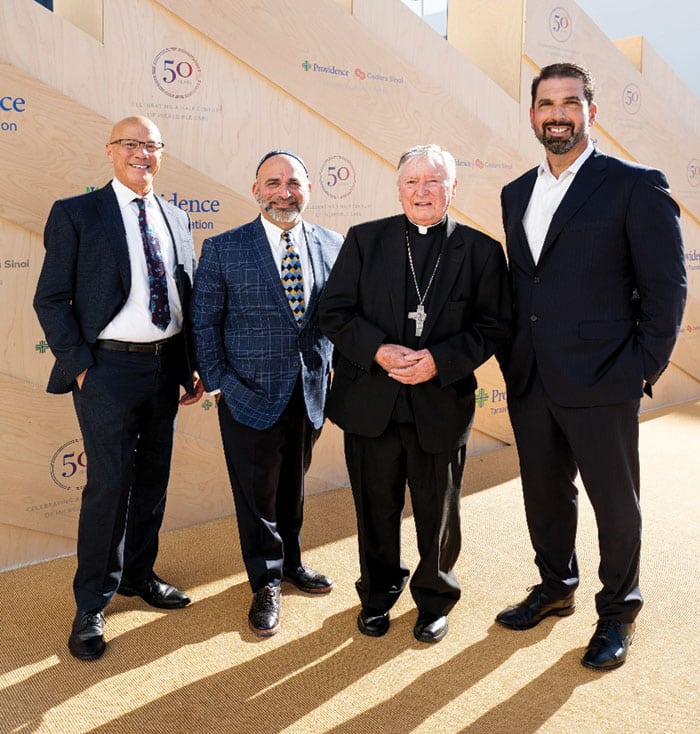
From left: Shawn Kiley, chief mission officer at Providence Cedars-Sinai Tarzana Medical Center; Temple Judea Rabbi Joshua Aaronson; Archdiocese of Los Angeles Bishop Gerald Wilkerson; and Nick Lymberopoulos, chief executive of Providence Cedars-Sinai Tarzana Medical Center gather for the pre-opening celebration of the new Providence Cedars-Sinai Tarzana Medical Center Friese Family Tower. Photo by Maya Myers Photography

On Aug. 26, friends, family and supporters of Providence Cedars-Sinai Tarzana Medical Center turned out for a pre-opening celebration of the Friese Family Tower. Scheduled to open on Oct.1, the new patient tower will include an expanded emergency department, spacious all-private patient rooms, and state-of-the-art imaging technology.


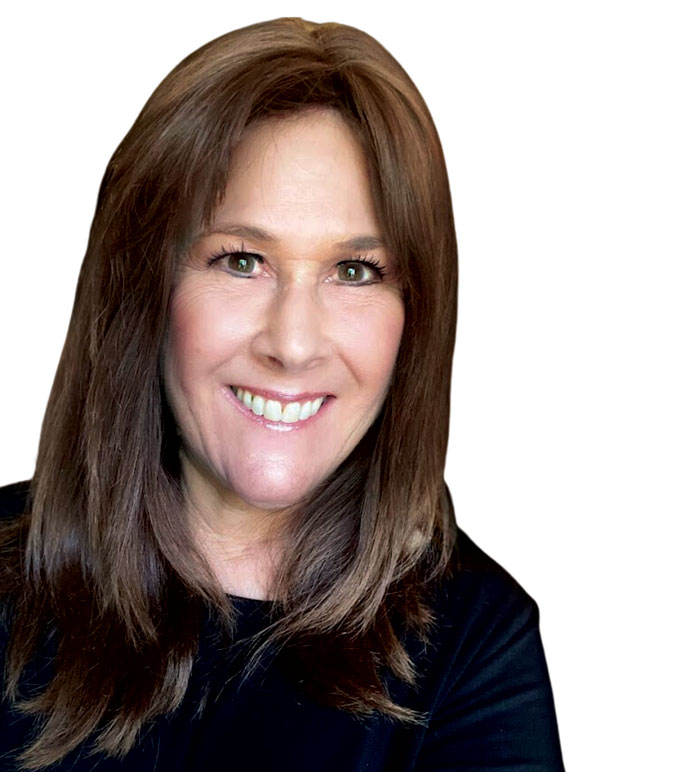
Batsheva Frankel. Courtesy of Club Z

Club Z, a national Zionist youth movement, announced on Aug. 31 that Batsheva Frankel has joined the organization as its director of education.

“I’m so excited to be working with all of the wonderful staff, students and parents at Club Z!” Frankel said. “I look forward to being able to marry my skills and experience with my love of Israel and the Jewish people.”

Frankel, a published author, educational consultant, podcast host, producer and sought-after speaker, brings more than 25 years of experience in innovative education to Club Z. 

“It is a true honor and privilege to have Batsheva Frankel lead Club Z’s education team as Director of Education,” Masha Merkulova, founder and executive director of Club Z, said. “Batsheva is a giant in Jewish education and has extensive experience working with teens. She deeply understands how critical our groundbreaking educational approach and philosophy are to Club Z’s mission. With Batsheva at the helm, Club Z teens are uniquely positioned to become knowledgeable, confident Zionist teen leaders who confront antisemitism in their high schools, online, and ultimately, on college campuses.”


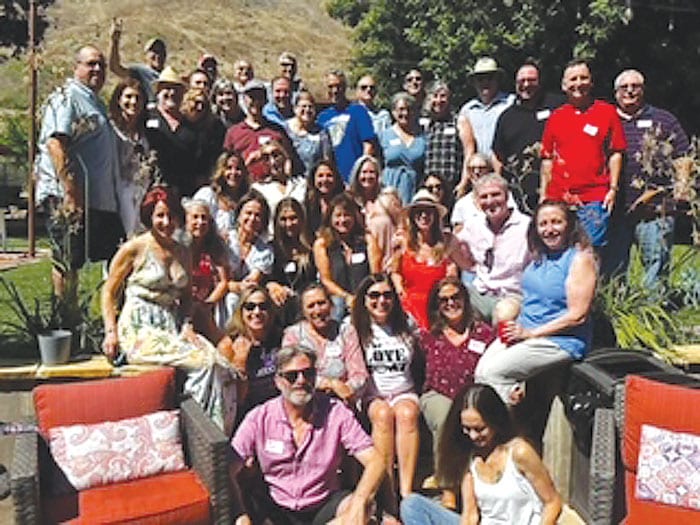
On Sept. 10, more than 50 people gathered at a private home in Woodland Hills to commemorate the 40-year anniversary of their Bureau of Jewish Education’s 1983 Summer Ulpan trip to Israel. Everyone swapped stories and happy memories of their unforgettable Israel experience, where many have remained friends for four decades. Courtesy of Sheryl Katzovitz

AFHU Bel Air Affaire, Club Z Names Education Director, Providence Cedars-Sinai Tower Opening Read More »

What You Need to Know as Israel’s Supreme Court Begins Debating Law Limiting Its Power

(JTA) — For almost nine months, Israelis have been fighting over the future of their Supreme Court. Today, that battle has moved into the Supreme Court itself.

In July, Israel’s hardline right-wing governing coalition passed a law to weaken the court. Opponents of the law then filed legal challenges against it. That put the court in the uncomfortable, and unprecedented, position of ruling on itself: It can decide to uphold the law, strike it down, or send it back to parliament to be amended.

When Israelis on both sides of the debate warned that the country was headed to a constitutional crisis, this is what they meant. Today’s hearing is raising questions no one knows the answer to: What happens if the court strikes down the law, and the government doesn’t respect the court’s ruling? Who takes precedence — the court or the coalition?

For weeks, Israelis have been fiercely debating that question — and even members of Prime Minister Benjamin Netanyahu’s government are split on the issue. And while a decision won’t be handed down today (it could take four months), matters are already coming to a head on Israel’s streets, and in its halls of power.

While the Supreme Court’s activities are often closely watched, today’s hearing appears to be riveting many of the Israelis who have been fighting over the legislation on trial. Renewed protests in Jerusalem, where the court meets, flooded streets on Monday, and in a sign of hearing’s reach, the Tel Aviv Museum of Art waived admission fees and is showing a livestream of the court proceedings today.

Here’s what you need to know.

How did we get here?

Soon after Netanyahu’s government came to power, it unveiled a sweeping plan to limit the power of Israel’s judiciary. The Israeli right sees the courts as an unelected bastion of left-wing Ashkenazi secular elites that stymies the right-wing government from passing laws that reflect the will of the electorate.

The plan, in its original form, would have given the governing coalition complete control over the appointment of judges. It also would have let Israel’s parliament, the Knesset, override Supreme Court decisions with a bare majority, among other provisions.

That plan sparked a historic protest movement that has brought hundreds of thousands of people to the streets to oppose the law. The protesters say the judicial overhaul will undermine Israeli democracy by removing the most significant check on the power of the government and by leaving minorities vulnerable to discriminatory laws. In addition to the protesters, world leaders including President Joe Biden have come out against the overhaul, as have large Jewish groups in the United States.

In July, after failed negotiations over the plan and months of civil unrest, the Knesset passed one component of the overhaul along party lines. The law barred the Supreme Court from striking down government decisions it deems unreasonable — a tool the court had used to check the government’s power.

What’s the Supreme Court’s role in the controversy?

One of the roles of Israel’s Supreme Court is to hear petitions against laws that, their opponents say, are unconstitutional. Israel doesn’t have a constitution, but it does have a set of “Basic Laws” that act as a kind of substitute.

Soon after the “Reasonableness” law was passed, a handful of good-government groups and professional guilds submitted petitions against it, arguing that it undermines Israel’s democratic system or that there were procedural problems with its passage. The Supreme Court agreed to hear the petitions all together during the hearing today.

But here’s the twist: The law that was just passed is itself a Basic Law. The Supreme Court has never struck one of those down. That’s one of the main reasons why Netanyahu and his allies are saying the law needs to be upheld.

But opponents of the law note that the process for passing a Basic Law is no different than the process of passing an ordinary law. Therefore, they say, the law shouldn’t be immune from judicial review.

The court is hearing the arguments today — and early signs indicate its sympathy to the government’s opponents. In court today, several justices are arguing strenuously that just because they haven’t struck down a Basic Law before, they have the right to review laws designated as such. They said their power to do so rests in the country’s Declaration of Independence, which has taken on increased symbolic weight during the political fight.

The court must render a decision by Jan. 16 — either dismissing the petitions, sending the law back to Knesset for revision or striking it down. And in parallel, Netanyahu and his opponents are again negotiating over a compromise on the remaining overhaul legislation that has not yet passed.

Why are the stakes of one court decision being seen as so high?

Israelis on the right and left are attaching so much significance to the court hearing — and the resultant decision — because they agree on one thing: This is about way more than the “reasonableness law.” This is about the future of Israeli democracy.

In recognition of the hearing’s gravity, all 15 justices on the Supreme Court will hear the petition — the first time that has ever happened. The justices have also received added security.

On the right, supporters of the law say that the Supreme Court would be breaking with precedent, and further overstepping its bounds, by striking down a Basic Law. On the left, opponents of the law feel the court is the final bulwark of liberal democracy in Israel. In another sign of the unusual times, Israeli Attorney General Gali Baharav-Miara (whose position, unlike in the United States, is independent of the governing coalition), has publicly sided with the petitions against the law. She is sitting out the hearing because of her public stance.

Dueling protests have taken to the streets, and politicians have issued dire statements. But they’re not only disagreeing over whether the law is legitimate — they’re divided over what should happen if the court strikes the law down.

What happens if the court strikes the law down?

If the court says the law is unconstitutional, the coalition that passed it would have to decide whether to obey the court or not. If it were to obey the court, it would be delivering a major blow to its base, who would see a law limiting the Supreme Court’s overreach stricken down by that very same court.

But if the coalition were to defy the court, it would mean a major break with precedent, and would trigger a constitutional crisis — where different branches of the government conflict with each other, and the state lacks laws to resolve the dispute.

That’s why some of Netanyahu’s most senior allies have gone public saying that the government has a fundamental duty to respect court decisions. Defense Minister Yoav Gallant, who has tried to act as a moderating force on the judicial overhaul, said, “The State of Israel is a democratic country with a rule of law. I will honor any Supreme Court ruling,”

Other Netanyahu allies have taken the opposite tack. Knesset Speaker Amir Ohana gave a speech last week in which he said the court has no right to strike down Basic Laws and, if it does so, would be acting “against the Knesset and against Israeli democracy.”

Netanyahu, in interviews, has remained noncommittal about whether he would respect a court ruling striking down the law. But he retweeted Ohana’s video.

What You Need to Know as Israel’s Supreme Court Begins Debating Law Limiting Its Power Read More »