fbpx

August 23, 2023

Should Children Come to Shul?

There is currently a debate going on in my Orthodox Jewish circles. The issue at hand is, should children come to shul?

As an exhausted working mother of a 3-year-old and 20-month-old, shul is my weekly refuge, which means I only go to shuls that welcome in children. For two hours every Shabbat morning, I get to take a lovely walk with my husband and children, which we never get to do during the week. Then, I drop my kids at the childcare program while I go into shul, daven, read that week’s Torah portion – and the Jewish Journal commentary on it – and listen to the rabbi’s speech. Even if my children come in to find me once or twice, I still get some time on my own to connect with Hashem. During kiddush, I get to chat with friends and eat delicious food, and my kids do too. I’m proud to report that cholent is one of their favorite foods.

My children have been going to shul since they were newborns. I rarely miss going on Shabbat morning. Aside from the fact that I enjoy it, shul was a lifeline for me after I suffered from postpartum depression following the birth of both of my children. Much of the time, I felt isolated, lonely and anxious. When I went to shul, I could talk to other moms and feel less alone in my struggles. Having time to talk with other adults and hear inspirational speeches from my rabbi was critical to preserving my mental health during this very fragile time in my life. 

There are some people who believe that children interrupt davening and that they should stay at home; thus, the moms would have to stay home, too, unless they have a nanny. That is cost-prohibitive and out of the question for most people.  

On the other hand, the rabbi of one of the Orthodox shuls I attend once forbade his members from shushing the children. He said it would discourage children from wanting to come to shul, which could negatively impact their observance. 

I love that perspective. Of course, if a child is being so disruptive that other people can’t concentrate on prayer, their parent needs to lovingly take them back to childcare and sit with them for a few minutes until they calm down. But cultivating an environment where everyone has to be completely silent, and people turn around and look at you if your baby coos or your child talks a little too loudly is not family-friendly or welcoming to children and parents. How are we supposed to pass down Judaism to the next generation if they don’t feel at home in shul?

I believe that every shul should do what they can to bring in children, which translates to having childcare during Shabbat morning services. If babysitters aren’t able to change diapers, then a separate room could be created for women with babies. Whatever it takes, shuls must take proactive steps to encourage children to come.

When I brought my first child home from the hospital, it was Sukkot, and my husband and I had a communal gathering in our sukkah with our 2-day-old baby in tow. I showed her right away how important Judaism is to our family. At this point, she has been coming to shul with me for more than three years. She eagerly asks us every week if we are going to shul and when we can see the rabbi. My two daughters have a blast there. Shabbat is a special day they look forward to, and going to shul is a huge part of it.

So, should children come to shul? Absolutely. They should be welcomed with open arms, made to feel like part of the community and be given the opportunity to learn about, and fall in love with, Judaism.

So, should children come to shul? Absolutely. They should be welcomed with open arms, made to feel like part of the community and be given the opportunity to learn about, and fall in love with, Judaism.

What do you think about children in shul? Email me! Kylieol@JewishJournal.com.


Kylie Ora Lobell is the Community Editor of the Jewish Journal.

Should Children Come to Shul? Read More »

LAJFF “Golda” Screening, JNF-USA Brunch, LA Student Joins AJC Board

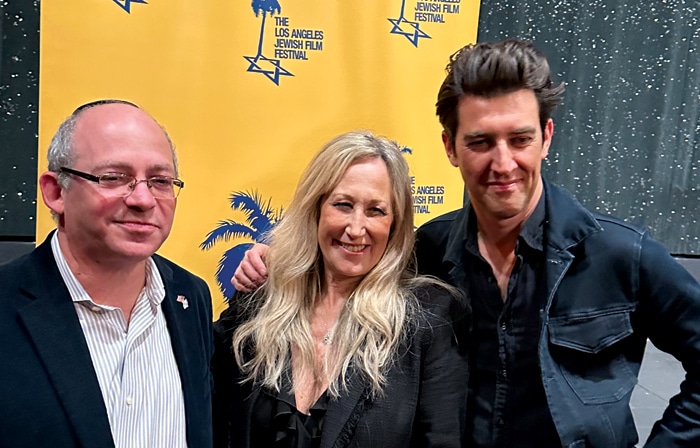
A sneak preview screening of “Golda,” organized by the L.A. Jewish Film Festival in partnership with the Consulate General of Israel in Los Angeles, was held Aug. 13 at the Fine Arts Theatre in Beverly Hills for approximately 150 community leaders, including City Councilmembers and representatives from the Jewish Federation of Greater Los Angeles, Israeli American Council, American Jewish University, American Jewish Committee, Museum of Tolerance, Jewish Journal, StandWithUs, WIZO and others. 

The event honored Consul General of Israel in Los Angeles Hillel Newman for his service in Los Angeles and the Pacific Southwest with an award as this was his last public appearance as Consul General before ending his four-year tenure. He returned to Israel on Aug. 14. 

The film was followed by a Q-and-A with Oscar-winning Israeli director, Guy Nattiv, moderated by L.A. Jewish Film Festival Director Hilary Helstein. The audience revered the film; Nattiv’s work directing it; and Helen Mirren’s performance.

“Golda,” scheduled to be released in theaters on Aug. 24, is a biopic of Israeli Prime Minister Golda Meir set during the days of the 1973 Yom Kippur War. When crafting the film, Nattiv sought to present an intimate portrait of Israel’s first, and to date, only female prime minister.

“I wanted to get under the skin of Golda,” Nattiv told Helstein. “For me, it was important to re-dive into who Golda was and how she felt during these ten days of the war.”


USC junior and AJC Campus Global Board Member Chanelle Mizrahi. Courtesy of American Jewish Committee

A Los Angeles student has been named to the Campus Global Board at American Jewish Committee (AJC), which is dedicated to broadening engagement with college students as they confront increased antisemitic and anti-Zionist sentiment at their schools.

USC junior Chanelle Mizrahi will join the 30-member board, which includes students from universities in the U.S. and seven other nations.

“This board is all about empowerment,” AJC Director of Campus Affairs Jeffrey Greenberg said. “We will ensure these outstanding students have the resources they need to combat anti-Israel bias and antisemitic attitudes. Jewish students deserve to feel safe and protected as much as anyone else.”

The board will offer students the opportunity to develop Jewish advocacy skills on and off campus and learn from thought leaders on key domestic and international issues on campus. One aim is to have board members serve as ambassadors and effect change on campus and throughout the global community.

AJC, a global advocacy organization for the Jewish people, is headquartered in New York with 25 offices across the United States. Its mission is to enhance the well-being of the Jewish people and Israel while advancing human rights and democratic values in the U.S. and around the world.


Young professionals gathered for Jewish National Fund-USA’s brunch in Beverly Hills. Courtesy of JNF-USA

Jewish National Fund-USA (JNF-USA) gathered its young professionals’ cohort, JNFuture, for the group’s L.A. Signature Event. 

“Brunch in the Hills: Cheers to 75 Years!” took place on Aug. 13. JNF-USA supporters in their 20s and 30s gathered at the Ella Beverly Hills rooftop bar at SIXTY Beverly Hills to talk about their support for Israel and JNF-USA’s current initiatives in the region.

Kayla Globerson, campaign executive for JNFuture in Los Angeles and San Diego said, “JNFuture, the young adult affinity group, here in L.A. and across the country are not only current change-makers in their respective career fields but are also contributing their vast knowledge and resources as the next generation of Zionist leaders for Israel and global Jewry.”

LAJFF “Golda” Screening, JNF-USA Brunch, LA Student Joins AJC Board Read More »

The Power of Memory and Personal Experience

An excerpt from Rabbi Dunner’s just-published book: “Hearts & Minds II: An Original Look at Jewish Festivals and Significant Jewish Dates”

Jewish life and Jewish identity are inextricably bound up with the Jewish festivals cycle that runs through each calendar year. Every month of the Jewish year is connected to a holiday or a significant commemorative date — such as a fast day. These holidays and commemorative dates are the lifeblood of every Jew — the oxygen that gives being Jewish meaning and significance.
First and foremost is the religious connotation that accompanies each one of them, and the impact these connotations have on how we conduct ourselves on those days. For example, the Yamim Nora’im (usually translated as “Days of Awe,” although my preferred translation is “awesome days”) are intended to put us on a higher spiritual plane, to the extent that the entire preceding month of Elul has evolved into a kind of Yamim Nora’im bootcamp, with customs and traditions that aim to put us in the right frame of mind for Rosh Hashanah and Yom Kippur even before we get there.

Pesach is a festival of miraculous liberation and national identity, while Shavuot is the festival when we commemorate receiving the Torah from God at Mount Sinai. Sukkot is all about unbridled joy. Hanukkah celebrates the unlikely victory of a small band of the faithful against the seemingly insurmountable power of a mighty army, as well as the incredible rededication of the Temple in Jerusalem that followed, while the theme of Purim is miracles that occur even as events seem to unfold via natural means.

We also have days set aside for sadness and reflection — such as the ninth of Av, a fast day when we recall the destruction of two Jerusalem Temples. The ninth of Av also comes with a preliminary bootcamp period — this one is three weeks long and begins with another day of fasting: the seventeenth of Tammuz. The customs and traditions over this three-week period reflect our collective sadness coupled with an overt acknowledgement of the relationship breakdown between God and His chosen nation that resulted in the Temples’ destruction, and consequently, our resolute desire to right the wrongs of Jewish history.

But truthfully, there is far more to these festivals and fast days than just that. While Jewish life, in general terms, is governed by a preset calendar steeped in history and tradition, our personal lives as Jews are infused with an individual flavor that is far more subjective and idiosyncratic — and yet, this individual aspect is no less important, by any means. The foods, the prayers, the memories, the customs — all these elements of the festivals and the periods of the year when they occur form a powerful backdrop to our own experiences, no less powerful than the festival and fast-day associated laws mandated by the Talmud and Shulchan Aruch.

Each year, as the Jewish festivals approach, or as we anticipate Shiva Asar b’Tammuz and Tisha b’Av, I find strength and meaning in recalling the foundations laid by the experiences of my youth and early adulthood. 

My own upbringing brimmed with these atmospheric foundations. And as a result, each year, as the Jewish festivals approach, or as we anticipate Shiva Asar b’Tammuz and Tisha b’Av, I find strength and meaning in recalling the foundations laid by the experiences of my youth and early adulthood. 

Every Pesach, for example, I recall the Pesach seders with my grandparents — my mother’s parents, survivors of the Holocaust who hid from the Nazis for two-and-a-half years in a tiny room behind a false wall at the home of gentile friends in Rotterdam, Holland. I vividly remember walking with my Dutch grandfather to shul on yomtov — my grandparents always came to London from Holland for Pesach and Sukkot, and occasionally also for Yamim Nora’im. 

I remember marveling at my grandfather’s determined expression and at his deliberate pace; he was a rock of faith despite the many challenges he had faced in his life. And even today, many decades later, and long after their passing, I feel my grandparents with me at every Pesach seder, and my grandfather still walks with me to and from shul. 

One particular memory stands out more vividly than the others. In 1976, my family moved from Stamford Hill, an area in North London, to Golders Green, in North West London. Each year thereafter, for many years, we returned to Stamford Hill for Yom Kippur, where my grandfather — my father’s father — was the rabbi of a synagogue, and where he led the services for Kol Nidre, Mussaf and Ne’ilah. In 1983, my mother’s father was with us for Yamim Nora’im, and he decided to join us in Stamford Hill for Yom Kippur rather than remain in Golders Green, and throughout Yom Kippur I stood beside him as he prayed. 

That year, we reached the Ne’ilah prayer early, and my father’s father — who was leading the services — decided to recite each Avinu Malkeinu out loud for it to then be repeated by the congregation, instead of just the limited selection of nine that are usually read out by the hazzan and then repeated. Avinu Malkeinu is a series of implorations, and their recitation is always highly charged even under normal conditions, but at the end of Yom Kippur, and with each one being recited aloud in unison, Avinu Malkeinu took on a whole new dimension. 

Close to the end of Avinu Malkeinu is a set of four that are all connected to each other. They begin with “Avinu malkeinu, aseh lema’an harugim al shem kad’shecha” – “Our father, our king, do it for the sake of those who were killed for Your holy name.” 

Suddenly, as he recited this first Avinu Malkeinu of the set out loud, my mother’s father began to sob uncontrollably. His whole body was shaking. Both his parents and most of his extended family had been murdered by the Nazis in the Holocaust, and in that moment, in those final minutes of Yom Kippur, their loss was so vivid to him, and so evocative, that he was overwhelmed with emotion, and this usually impassive man broke down and cried like a child. 

We continued: Avinu malkeinu, aseh lema’an t’vuchim al yichudecha – “Our father, our king, do it for the sake of those who were slaughtered for Your oneness.” And then we all said out loud, in unison, Avinu malkeinu, aseh lema’an ba’ei ba’eish u’bamayim al kiddush sh’mecha – “Our father, our king, do it for the sake of those who were burnt and drowned for the sanctification of your name.” And as the congregation chanted these lines, my grandfather’s emotional epiphany became even more pronounced, his voice broken by racking sobs. 

Finally, we reached the fourth Avinu Malkeinu in the set: Avinu malkeinu, nekom nikmat dam avadecha hashafuch — “Our father, our king, avenge the spilt blood of your servants.” For this, the last one in the series, my grandfather straightened up and responded with a full, strong voice — a piercing recitation. It almost seemed as if he was challenging God to give meaning to the death of his parents, whose only “crime” had been that they were Jews in the wrong place at the wrong time — resulting in their gruesome death at Sobibor death camp in May 1943. 

Although it was more than 40 years after his parents’ murder, the wound was still fresh and raw, and as painful as ever. And evidently, my grandfather wanted God to know how he felt — truly, it is a moment I will never forget for as long as I live. In fact, I think of it every year on Yom Kippur when I say the words nekom nikmat dam avadecha hashafuch, I think of my mother’s father, shaking with emotion, alongside me, responding and repeating those words with all his might, not holding back. I also think of his parents, walking into the gas chambers, to be murdered in cold blood. And to top it all off, I think of my father’s father, also a victim of Nazi persecution, who lost his parents in Auschwitz, and who led the prayers that fateful Yom Kippur. 

For me, each year, at that particular moment in the service, Yom Kippur is not just a generic day of worship or a holy day in the Jewish calendar. Rather, it is a deeply personal experience that ties into the experiences of my forebears, and my memories of them on Yom Kippur.

In fact, my Yom Kippur experience as a whole is an amalgamation of all the many Yom Kippur experiences I have had throughout my life. It includes the many people I have prayed with and the many places I have prayed at. It includes the tunes I have sung; it includes the highs, and it includes the lows; and it even includes all the different post-Yom Kippur fast-breaking meals I have shared with so many people and in so many settings. And each Yom Kippur I continue to create new experiences that act as the setting and foundation for the years that follow.

Every significant Jewish date is loaded with memories and past experiences, and all of them feed into the “mother ship,” augmenting its efficacy and enhancing its meaningfulness. 

It goes without saying that this phenomenon is not just limited to Yom Kippur. Every significant Jewish date is loaded with memories and past experiences, and all of them feed into the “mother ship,” augmenting its efficacy and enhancing its meaningfulness. 

I also remember that one year, on the first night of Sukkot, it just would not stop raining. My father, ever the optimist, refused to give up hope of making kiddush in the sukkah, and insisted that we wait until it stopped raining before we began eating. An hour or more went by, and we were all hungry, so, with my father’s reluctant consent, we began the meal indoors — but he was still utterly determined. He was so sure it would stop raining. Every few minutes he went outside to check if the rain had stopped — it was simply unthinkable to him that we wouldn’t make kiddush in the sukkah on the first night of the festival.

Eventually — long after we had finished eating — he came running in, his eyes gleaming. “It’s stopped raining,” he announced excitedly, and we all traipsed into the sukkah for kiddush and cake. My father just couldn’t stop smiling. He was like a child who’d received his favorite toy as a gift. And that’s exactly how he felt: that God had given him a gift — kiddush in the sukkah on the first night of Sukkot.

These memories and so many more turn each festival and each significant Jewish date into a combination of history, tradition, Jewish laws and customs, memories, nostalgia, and new experiences. And the result is so much greater than any one of those individual components.

These memories and so many more turn each festival and each significant Jewish date into a combination of history, tradition, Jewish laws and customs, memories, nostalgia, and new experiences. And the result is so much greater than any one of those individual components. Every wine stain on the pages of the Haggadah we use. Every forgotten High Holy Days schedule that we left tucked into the pages of the machzor. The special yomtov-connected drawings that our kids gave us when they were at pre-school that suddenly reappear at the relevant time of year. The smell of yomtov food cooking in the kitchen. Each one of these and so many more — too many to mention — are the kaleidoscope of our Jewish experience which add color, context, and meaningfulness to the festival experience, augmenting the practical aspects of the festivals and notable Jewish dates that punctuate our lives.

My intention in having combined all the festivals into one book is to offer the full array of our Jewish experience in one volume — allowing you, the reader, to ride the roller coaster of Jewish experience without having to wait for each significant date to come around. The flavors and evocations of every date in the Jewish calendar are here for you to savor and ready for you to enjoy.


Rabbi Dunner’s new book, “Hearts & Minds II: An Original Look at Jewish Festivals and Significant Jewish Dates,” is published by Otzrot Books, and is available on Amazon and at Jewish bookstores. 

The Power of Memory and Personal Experience Read More »

American Jewish University Initiative Seeks to Fight Antisemitism By Promoting Allyship

Is the Jewish community alone in its fight against rising anti-Semitism around the world?

A new research project announced this month at American Jewish University seeks to answer this question by bringing together scholars from across the country to examine novel ways to fight antisemitism. The Study of Allyship and Antisemitism will explore how and whether creating allyship between marginalized communities can be an effective means to combat antisemitism.

The Anti-Defamation League reported that between 2021 and 2022, antisemitic incidents increased by 36% in the United States. Earlier this year, President Joe Biden and Vice President Kamala Harris announced a national strategy to fight against antisemitism. One key pillar of the White House’s strategy is developing cross-community support and collective action. AJU’s research, university officials said, will expound upon this idea by finding specific, tangible steps to bring diverse communities together and foster productive dialogue to counter antisemitism.

AJU President Dr. Jeffrey Herbst – a political scientist by training – is leading the project with the university’s new research institution, the Jewish Community Workshop, which seeks to tackle key issues facing the Jewish community. The Study of Allyship and Antisemitism will be its inaugural initiative.

“As a university, we want to explore the possibilities of collective action to fight hatred without illusion, while being sensitive to the perspective of not only the Jewish community but also its putative allies,” said Herbst. “I look forward to working alongside these talented researchers to discover how a focus on allyship can combat rising antisemitism now and in the future.”

The eight scholars in the study will concentrate on a minority community that they either identify with or have worked with previously in a professional academic context. The researchers include: Professor Corinne Blackmer, studying the LGBTQIA+ community; Professor Anthea Butler, studying the African American community; Professor Bridget Kevane, studying the Latino community; Dean Helen Kim, studying the Asian American and Pacific Islander community; Professor David Koffman, studying the Native American community; author Sabeeha Rehman and journalist Walter Ruby, studying the Muslim American community; and Professor Robbie Totten, studying the Jewish community and immigrant groups.

The researchers will meet for the first time in November to discuss their different perspectives and approaches to this topic. Each scholar will write a 15-page paper centered on allyship with the Jewish community within their community of focus. The findings will then be published and distributed by AJU to broader audiences.

Many local synagogues and Jewish organizations have engaged in robust interfaith work – from a basketball clinic at Sinai Temple with NBA veteran Enes Kanter Freedom and college basketball star Ryan Turell to a multi-faith unity statement organized in part last year by the Simon Wiesenthal Center.

Rabbi Daniel Sher of the Kehillat Israel congregation in the Pacific Palisades underscored the importance of fostering allyship for the Jewish community and lauded AJU for pursuing the research project.

“Interfaith work has been core to our mission as a Congregation –from collaborating with our Islamic friends on resettling Afghan refugees to partnering with elected officials in response to our homeless crisis. What you learn from others through these efforts is truly inspiring,” said Rabbi Sher.

“AJU’s decision to focus research in this area is crucially important in the celebration of B’tzelem Elohim, being made in God’s image, and I am excited to see what comes of their work,” he added.

American Jewish University Initiative Seeks to Fight Antisemitism By Promoting Allyship Read More »

From LA to the Jerusalem Theatre

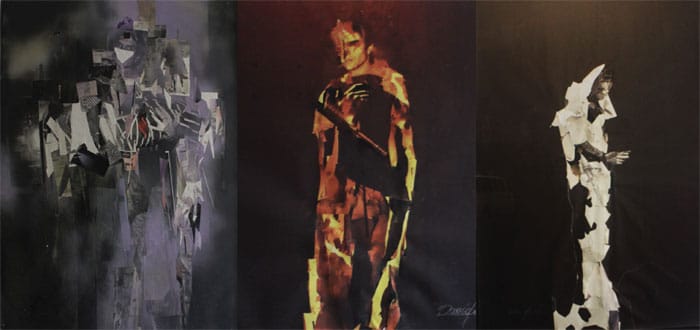
The Jerusalem Theatre has been hosting an exhibit of Los Angeles native David Schmidt, “Mesirus Nefesh” (literally “Self-Sacrifice”). It features large digital prints and mixed-media collages on life in the Israel Defense Forces. The curator, Dr. Batsheva Ida, writes, “The viewer is confronted with a difficult reality. The IDF soldiers, a source of heroic and national aspirations, are seen at moments of fragility and compassion.” Dr. Ida compares his methods to those of Kurt Schwitters and Joseph Beuys, and to the iconic 1920 tower of Vladimir Tatlin in their “monumentality.”
Schmidt received his degree in Fine Arts at UCLA Fine Arts in the mid-1960s. “When I finished, I got a studio in Venice, like a lot of the professors that I had at UCLA. People would come down on Thursday night from Bel Air and Brentwood looking for the next big success, but no one knew who that might be, so people bought anything they could get their hands on and we did very well.” 

In 1969 he met his wife, Shoshana, and they got married on the beach at sunset. Then they went to Spain. They returned to the US when his father became very sick, and when he died, Schmidt had to deal with his own autoimmune illness for a year-and-a-half. “When I woke up from being sick, my wife reminded me that I needed a job. So, I looked in the phone book. The only thing I’d ever done up until then, other than painting, was teaching some art classes in Watts.” 

He found a section for executive placement and another for physical work. “I said, well, I’d rather be an executive, so I applied at one of the biggest executive search firms in California. When I got that job I got a haircut, put on a suit …  In two years, they folded, and I opened my own firm. 

“By the time I stopped doing that, after about 20 years, I had one of the most important executive search firms in the United States. If they were in academia, they were aspiring Nobel laureates. If they were in the government, they were at the very least an undersecretary.” He is still a senior advisor in that firm, called Insight; his son Aaron is the president and CEO.

Schmidt describes his religious metamorphosis. “I’m walking down the street in Laguna Beach and this guy crosses the street in front of me, and he says to me, ’Would you like to learn something about Jewish mysticism?’ I say, ‘Sure.’ He says, ’Come on, the class starts in about 15 minutes.’ So I walked over, and I really liked it.

“I started a course on Tanya, and about halfway through the book, I encouraged Shoshana to light Shabbos candles. She says, ‘I’m not going to do something if I don’t know what it means.’ So she started working with the Rebbetzin. And no one moves faster than Shoshana.” 

Shoshana adds: “I kashered the kitchen in 1992. In October, 1993, Laguna Beach had one of its famous forest fires. 200 houses burned, including ours. Everything was gone, even some of David’s paintings. 

“The house we rented after the fire was closer to the Chabad shul, although a mile straight up a huge hill, in an area called ‘Top of the World.’ The Chabad rabbi said to my husband, ‘If you walk down the hill to shul, after kiddush I will walk up with you.’ This is when we became shomer Shabbos.” 

Rabbi Eli Goorevitch had escaped from Russia with his family, and was sent to be with the Rebbe in New York. “When he came out to California, he didn’t know anyone, didn’t speak the language,” says David. “We helped him at the time to get a building and organize a minyan.”

In 1996 the Schmidts moved to Israel, to the Old City of Jerusalem, and after 27 years, to Rehavia. David credits Shoshana with urging them to make Aliyah. He flew back and forth to his business in America. Four of their five children live in Israel. One daughter returned to Laguna Beach, where she is a personal trainer and an author. Two of their sons were in the army. One of those is a Mixed Martial Arts and Krav Maga instructor. Schmidt kvells, “Each year they would select one person from each of their units to compete against each other in Krav Maga and he came in first two years in a row.” He has a grandson who was in Egoz, one of the Special Forces.

He would take a piece of foam board and pin up pieces until he had the shape and the expression of the figure that he wanted. He gestures to one of the collages. “All these are individual pieces, and they give a real liveliness. So down to the core, these are soldiers.” 

After being a successful businessman for 20 years, Shoshana said to him, “Come home to the studio and start doing that again.” When their sons were in the IDF, Schmidt said, “they’d come home for Shabbos. After Shoshana laundered their uniforms, and they dried, I photographed the material. I had stacks of swatches, in different tones.” Then he would take a piece of foam board and pin up pieces until he had the shape and the expression of the figure that he wanted. He gestures to one of the collages. “All these are individual pieces, and they give a real liveliness. So down to the core, these are soldiers.” 

He shares some of the stories behind the collages. 

“This one is called ’Achi, My brother.’ One Friday afternoon I was sitting up there on the balcony of the theater, and I looked down here and there were people gathered around this picture, listening to their cell phones. I came down and I asked them, ’What are you looking at?’ They told him, ’This picture! They’re talking about it all over the news! There were two soldiers who were struck by a pipe bomb in Jenin. They couldn’t get out and they were hoping for the medics to arrive. And they were holding each other together. How did you make the picture so quickly?’ I said, ’This was done seven years ago. In 2016.’  Nothing changes in Israel.”

Edge of Night

He described “The Edge of Night”: The soldier is walking along on graphic lines. From his perspective, he’s asleep. This happened to one of my grandsons and one of my sons. They had night hikes. The colors are all very quiet and he’s falling asleep, so, he is in a different reality.” Stopping at “Davening at Dawn in the Judean Hills, he said “this was positioned by the curator, Dr. Batsheva Ida, in the center of the wall … It speaks for the exhibit.” 

Looking at “The Hidden Tsadik,” he explained his process: “It’s made up of scores of little pieces of paper. I kept adjusting it and adjusting it, so he ended up with the sweetest face in the world. Yet he has a big gun. He can’t be too sweet in Israel.” 

Another work, “The Agony of Staying Awake,” is about guard duty, “the most hated job in the army,” Schmidt said, “but it’s very high stakes because if you fall asleep, people can get killed. The whole base could be overrun.” 

One of the collages, called “Shattered Hand,” is about his son Ari, who was wounded in Ramallah a number of years ago. 

“His hand was shattered. He had four surgeries and they didn’t know what to do. And it was just getting worse.” David found the most prominent hand surgeon in Israel. “She put him in a gurney outside her office door and gave him an IV drip for infection. When the infection was over, she said, ’We’re going to send him home now. We’ve done what we can.”

Shoshana adds: “Ari was shot, survived, thrived, went back to school during corona and is now in hi-tech.”

There are collages called “First Responders,” “Rage,” “The Road to Jericho,” “Don’t Ask What I’m Feeling,” “No Soldier Left Behind,” “Hypothermia,” “Soldier at Kotel,” “The Most Compassionate Army on the Face of the Earth” and others. “I come here, in the museum,” he said, “and I go further up, to the highest level, and I look down at this space, and I think, How did I get here? That’s why I’m working on the next step, because I can’t drop the ball at this point.” 

Is his exhibit being shown somewhere sponsored by the Army? “No, but they should,” because among other reasons, he says, there are pictures of soldiers in wheelchairs. “This one is called ‘Getting Back in Action.’ This is a big push of theirs. They’ve decided talk therapy is not helping very much.” He has also reached out to the Minister of Culture, hoping to have the exhibit continue in new places, including at the Knesset.

As I walked from collage to collage, being a wife, mother and mother-in-law of soldiers, past and present, I felt the tears well up inside of me as I perused the exquisitely haunting, moving images, and I cried. And felt hopeful. And proud.

As I walked from collage to collage, being a wife, mother and mother-in-law of soldiers, past and present, I felt the tears well up inside of me as I perused the exquisitely haunting, moving images, and I cried. And felt hopeful. And proud.

The exhibit will be at the Jerusalem Theatre until August 30, 2023. David Schmidt’s gallery is at 31 Ben Yehuda St., Jerusalem. His website is https://davidschmidt.art. 


Toby Klein Greenwald is an award-winning journalist, theater director and the editor-in-chief of WholeFamily.com.

From LA to the Jerusalem Theatre Read More »

Violence Erupts At Anti-Israel Protest at Brazil University

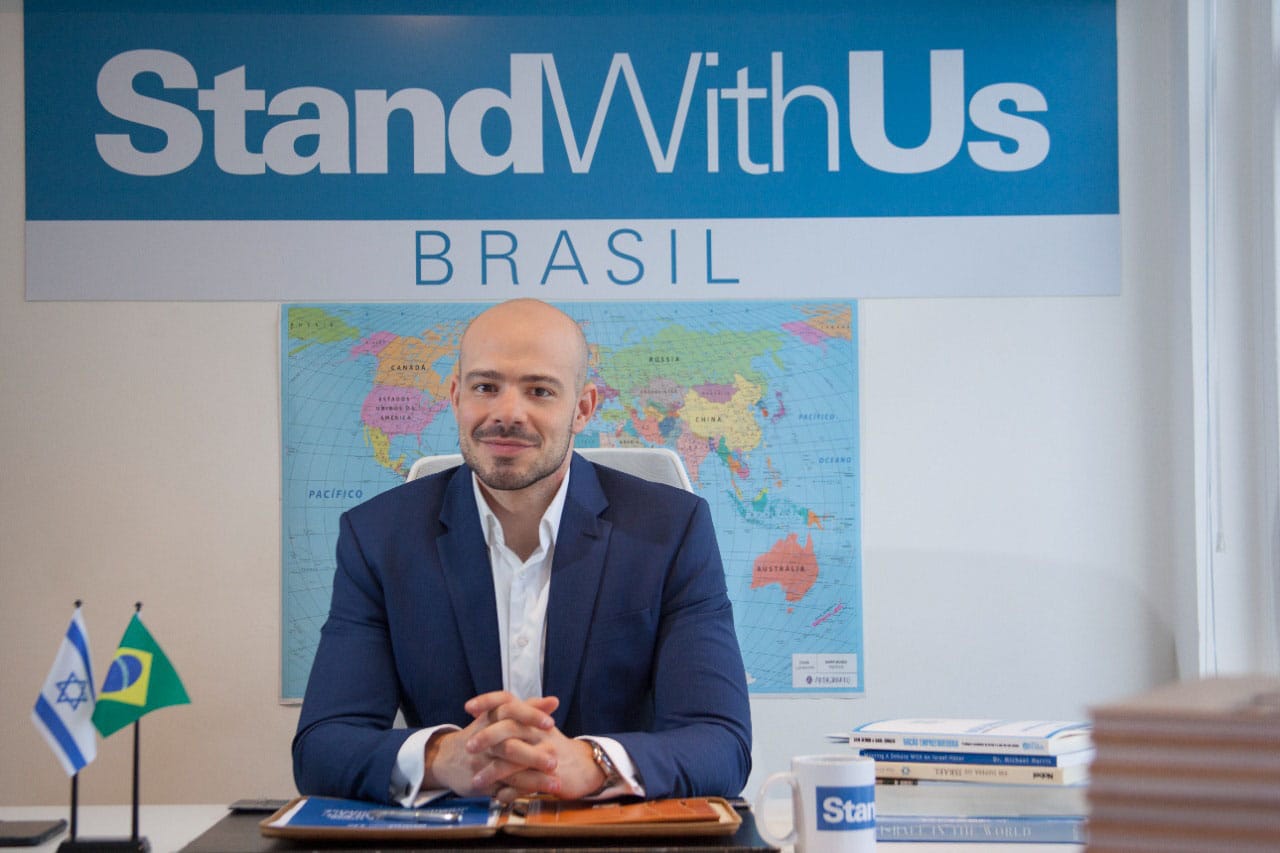
An act of violence reportedly occurred during a protest in response to the StandWithUs Brazil Director Andre Lajst speaking at the Federal University of Amazonas in Manaus on August 10.

Jewish Telegraphic Agency (JTA) reported that Lajst was discussing the benefits that Israeli technology could provide to the Amazon; StandWithUs Brazil further explained in a statement posted to social media that Lajst was one of four speakers during a symposium “on various topics related to entrepreneurship, development and sustainability in the Amazon.” The protests occurred outside of the auditorium at which Lajst was speaking, where an advisor to the university rector suffered a broken nose while trying to protect her daughter. Additionally, protesters inside the auditorium harassed attendees and Lajst had to be escorted out by security.

One protester was arrested for allegedly pushing a police officer but was later released, per JTA.

Before the event, the Palestinian Arab Federation of Brazil (FEPAL) posted to social media accusing Lajst of attempting “to misinform Brazilian society about the crimes of ‘Israel’” against the Palestinians. The public university cannot be the stage for sanitizing the apartheid of ‘Israel.’” Protesters similarly accused Lajst of being a “defender of Israel’s apartheid regime,” per JTA. Lajst served in the Israeli air force from 2011-13.

Additionally, StandWithUs Brazil accused the university’s Central Student Directory of supporting and instigating the protests, noting that the Central Student Directory posted a manifesto to social media before the event that “included words such as ‘genocide’ and ‘apartheid,’ utterly false and absurd accusations against Israel.”

StandWithUs Brazil further alleged that “some protesters came to the height of calling André, who is a Jew and the grandson of a survivor of the Sobibor extermination camp, a ‘Nazi.’”

“The academic environment should be an open and democratic space for respectful debates between different sides on political issues,” StandWithUs Brazil added. “Criticizing Israel (or any country in the world) can and should be made, however, calling for its destruction, attributing Israel to crimes against humanity that have never occurred, and … accusing a person of being a ‘defender of these crimes’ is hate speech and defamation. Even more when the lecture was not about Israeli politics or the Israeli-Palestinian conflict, but about sustainable development of the Amazon region through the example of Israeli innovation and development.”

The pro-Israel education group continued: “We regret that, due to the escalation of violence perpetrated by protesters, there has been a need by the university rector for the presence of federal police on site. It is absurd and frightening that a speaker needs police protection at an academic event, in a federal university, just because he is Jewish and Israeli citizen.”

StandWithUs CEO and Co-Founder Roz Rothstein tweeted, “These days you must be heroic to voice your opinion if [you’re] pro #Israel Shout out to the police who helped!”

The Brazilian Israelite Confederation said in a statement, per JTA: “We repudiate the violence and lament the lack of democratic spirit and civic behavior. Universities must be a place for freedom of expression and pluralism of ideas, and not violence and intolerance.”

The university said in a statement that they regret “the events that occurred on August 10th” and will be investigating the matter. They added that they are committed “to the safety and well-being of its entire academic community and emphasizes the importance of ensuring a safe and respectful environment for all.”

The university’s Central Student Directory did not respond to the Journal’s requests for comment.

Violence Erupts At Anti-Israel Protest at Brazil University Read More »

UFC Fighter Natan Levy Fights Antisemitism Both In and Out of the Octagon

The best fighters on the planet usually ignore Internet trolls, but when Israeli UFC lightweight fighter Natan Levy saw a man supporting white supremacist Nick Fuentes and saying he would come to Levy’s gym, the fighter decided to make a point: He would spar with the man, identified only by his first name, Ben. “I wanted to teach him a lesson that when you spread Holocaust denial or other hate about the Jewish people online, it’s not okay,” he said.

He won’t be making a habit of fighting those trolls.

“I spar with real fighters,” he said, but “if someone disrespects my religion, my heritage and my culture I will respond either physically or verbally. Obviously, I can’t fight everyone. I don’t have the time. I defend my honor. If anyone comes after me for being Jewish, it’s not right. The hate that is spread online can become violence in the real world and not everyone realizes that.”

Levy easily took down Ben and got him to tap out; he didn’t use full force, he said, because he didn’t want to injure his opponent.

Even so, when Ben showed up at Levy’s gym, he had to sign a waiver before sparring. Before they fought, Levy asked Ben how many Jews were killed in the Holocaust. Ben replied “I wouldn’t know that off the top of my head. They say six million.” They agreed that after the fight, Ben would apologize.

This isn’t the first time Levy has gone to the mat with antisemites. After Ye, the rapper formerly known as Kanye West, made antisemitic commentsand showed up with Fuentes on Alex Jones’ broadcast and told the conspiracy theorist he loved Hitler, Levy was one of the few Jewish athletes who spoke up and said he would fight Kanye if he so desired. Would he still?

“I’m busy, but for him I would make time, he said.

Levy (8-1-0) takes on Reyes (13-3-0) on September 16. Levy has won his last two fights, against Mike Breeden and Genaro Valdez, winning both in the third round. Levy, 31, said he is confident heading into his fight against Reyes.

“My prediction is I will finish him in the first or second round,” he said. “It’s going to be a great fight but a short fight.”


UFC Fighter Natan Levy Fights Antisemitism Both In and Out of the Octagon Read More »

Rachel Gordin Barnett & Lyssa Kligman Harvey: Kugels & Collards, A Southern Jewish Table & Food Memories

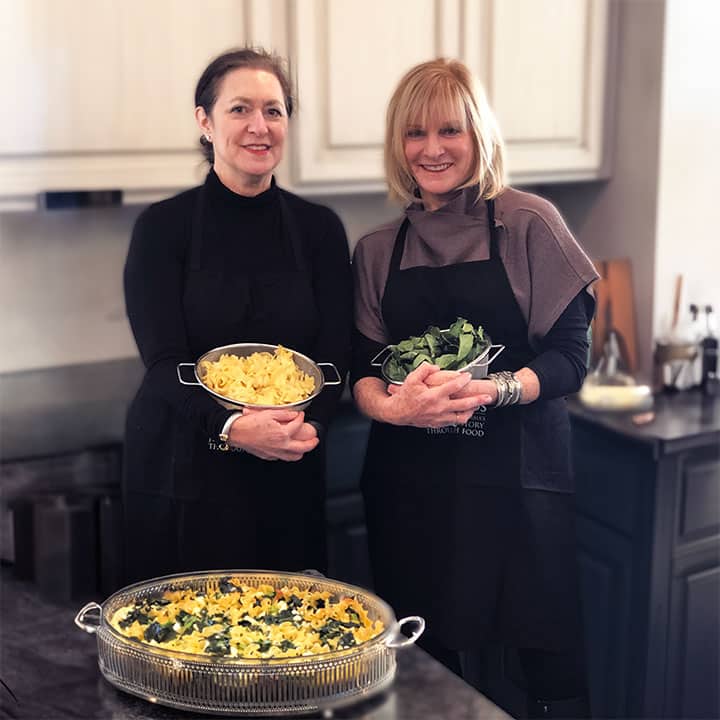
Kugels and Collards: Stories of Food, Family, and Tradition in Jewish South Carolina,” by Rachel Gordin Barnett and Lyssa Kligman Harvey, explores the very personal history, along with the ingredients, that make Southern Jewish food so special. “A lot of people seem to be surprised by the Southern Jewish table, so we want to introduce that to a wider audience,” Barnett told the Journal.

The authors hope their book sparks conversations about food and its place in family histories, and inspires people to write down their own recipes and share them with their children. “Rachel and I joked that this book could have been called ‘fried chicken and chopped liver,”” Harvey told the Journal. “We’ve had so many favorites; [people’s] memories are deep and emotional.”

Featuring more than 80 recipes and stories, “Kugels and Collards” celebrates the tastes, smells and emotions connected to Southern Jewish food. According to Barnett and Harvey, a Southern Jewish table includes a wide variety of meat, chicken, starches and fresh vegetables.

“On that table for me would be brisket. But not any brisket, it has to be the one that I make, because that’s the one that has been passed down,” Barnett said. “[We’d also have] very good fried chicken  that is not cooked in lard. … I’m not going to say it’s healthy, but it’s healthier. There is a homemade challah … and there is a beautiful array of vegetables, [including] butter beans, okra and tomatoes.”

To this table, Harvey would add okra gumbo, which is a stew of tomatoes, beans, fresh corn and okra, and her mother’s sweet and sour meatballs.

“I make it with patience and care,” she said. “They have a really good taste, and they’re great on top of rice. I make kasha varnishkes and of course chopped liver, so we’d have that to start off with, and gribenes.”

This labor of love is just that: A passion project. Harvey is a therapist, an artist and a teacher; Barnett is the executive director of the Jewish Historical Society. Both native South Carolinians, Barnett hails from small-town Summerton, and Harvey from Columbia. They live in Columbia and have been instrumental in preserving Jewish history across the state.

“Kugels and Collards” was the perfect opportunity to share their love of food, history, Judaism and the South.

“We have so many incredible recipes in the book, but I have to tell you there are so many that are also lost,” Barnett said. “We had to go into the kitchen, and it was trial and error trying to recreate some of these recipes, because they were told; they weren’t written down.”

“This has become an unintentional archive,” Harvey said. “When you ask people to remember who was around the table — Where were you at Passover? … Where were you for Hanukkah? Where were the latkes made? — It’s not only the smell, but it’s a place and time.”

The book wraps up with a chapter titled “Legacy,” where they invited young women, including their daughters, to contribute their food memories.

“Our food memories come from our mothers, our grandmothers, our immigrant grandmothers,” Barnett said. “These children … similarly talk about food as love … It was so joyous to read these stories. It really brought tears to my eyes.”

For instance, Barnett’s daughter recreated tuna noodle casserole, but made a healthy version; Harvey’s daughter wrote about their family’s Rosh Hashanah gatherings. The authors also discovered that a brownie recipe — Mimi’s brownies — thought to have been from Barnett’s daughter’s grandmother actually came from Harvey’s mother.

“She must have shared it with her friends,” Harvey said. “That recipe that was written on the back of an envelope or something.”

Harvey continued, “We love these stories, and we’re not finished. There’s so many more stories to gather and we hope this will promote more discussion.”

Get the recipes for kugel and collards below. Read more at KugelsandCollards.org.

For the full conversation, listen to the podcast:

Watch the interview:


Grandma Ida’s Lokshen Kugel

Lokshen is Yiddish for noodles.

8 ounces wide egg noodles

6 Tbsp butter

1 cup sour cream

3 oz cream cheese

½ cup sugar

3 eggs

raisins (optional)

1 cup milk

1 tsp salt

1 cup apricot jam

Topping:

2½ cups crushed corn flakes

¼ cup sugar

1 tsp cinnamon

Boil the noodles and drain. Add the butter and sour cream. Cream the sugar and cream cheese together. Beat the eggs and add to the mixture. Add raisins, if desired. Add the milk and apricot jam slowly. Add salt and mix all together. Put the mixture into a 9 × 13-inch buttered Pyrex pan.

To make the topping:

Mix the topping ingredients together and sprinkle over the kugel. (What could be more American than topping her kugel with cornflakes [as many Jewish home cooks began to do in the early twentieth century with the wide-spread availability of processed, convenience foods like boxed cereals]?) Bake 45 minutes to 1 hour at 350°F. Freezes well.

Makes 6 to 8 servings

* * *

Credit: Forrest Clonts

Ethel Glover’s Collards

Ethel Mae Glover, Summerton, SC. Credit: Gordin Family

Ethel’s collards had a very straightforward but delicious recipe. There was no pork in the recipe she cooked for us, as our family was semi-kosher. She took a large bunch of collards and washed them repeatedly until the sand was gone. Then, she chopped the collards and placed them in a large pot. To the clean collards, add a pinch of sugar, salt, and pepper to taste, and a pat of butter. Cook until soft. These collards truly melt in your mouth. I have adapted Ethel’s recipe to include onion and tomatoes. Although fresh collards still abound, you can also purchase bagged collards chopped and ready to go.

1 Tbsp olive oil

1 small onion, diced

8 oz water or chicken broth

large bunch or 27-oz bag of collards (if in a bunch, clean and chop the collards)

2 tomatoes, chopped

salt and pepper to taste

½ tsp dried oregano

½ tsp sugar

Add olive oil in a large pot and heat. Add the diced onions and cook until translucent and soft. Add the collards, tomatoes, and water or broth to cover (~8 ounces). Add the seasonings and cook until tender, about 20 minutes.

Taste and adjust the seasonings before serving.

Makes 6 servings

Excerpted from “KUGELS & COLLARDS: STORIES OF FOOD, FAMILY, AND TRADITION IN JEWISH SOUTH CAROLINA” by Rachel Gordin Barnett and Lyssa Kligman Harvey.  © 2023 Rachel Gordin Barnett and Lyssa Kligman Harvey.  Used by permission of the University of South Carolina Press.


Debra Eckerling is a writer for the Jewish Journal and the host of “Taste Buds with Deb.Subscribe on YouTube or your favorite podcast platform. Email Debra: tastebuds@jewishjournal.com.

Rachel Gordin Barnett & Lyssa Kligman Harvey: Kugels & Collards, A Southern Jewish Table & Food Memories Read More »

Has Princeton Returned To Its Antisemitic Roots?

Princeton University is known for its pastoral beauty. “A Beautiful Mind” was filmed at Princeton, and the scene in “Oppenheimer” where the actors playing the scientist and Einstein meet by the pond is filmed at the nearby Institute for Advanced Study, an independent research center.

Throughout much of its history since its founding in 1746, the University has also been known for a “genteel” form of antisemitism. More recently, antisemitism has taken a more virulent form.

Princeton is perpetually named one of the finest undergraduate institutions in the U.S , with an acceptance rate of just 4%. This year, once again, Princeton rides atop the U.S. News college rankings.

Unfortunately, Princeton is rising on another list, that of U.S. colleges and universities known for antisemitism.

Princeton University remains a dream school for Jewish parents and their children. Princeton has two Jewish centers, Chabad of Princeton University and the Center for Jewish Life (CJL)––which is Princeton’s Hillel––but the percentage of Princeton students identified as Jews dropped from a high of 18% in the early 1980s, to today’s 9.6%.

These numbers still represent an improvement over the unwritten quota system Princeton used to keep the number of Jewish students under 4% in the first half of the 20th century. Such discrimination was typical of the Ivy League. My late father-in-law, who went to Columbia, joked that the Latin on the college crests stood for “2% only.”

While World War II brought changes to Princeton, discrimination against Jews did not vanish even with Einstein on campus.

At Princeton, juniors and seniors join eating clubs, where they take meals, socialize and hold parties. The clubs are selective. Students are interviewed for possible membership in a process called “bicker.” In 1958, Princeton made national news with “Dirty Bicker.” Some 35 sophomores did not get bids to eating clubs. More than half were members of the school’s small Jewish population.

Today’s Jewish students, when they successfully run the gauntlet of grades, SATs, sports and activities to get a coveted spot, face antisemitism in its modern form.

This month, a book claiming that Israelis deliberately maim and debilitate Palestinians appeared on an upcoming Princeton syllabus. The Department of Near Eastern Studies is offering a class called “The Healing Humanities: Decolonizing Trauma Studies from the Global South.”

The syllabus includes the 2017 book, The Right to Maim: Debility, Capacity, and Disability, written by Jasbir Puar, a professor at Rutgers University. By claiming that Israel deliberately maims and debilitates Palestinians, the book has been repeatedly described as a “modern-day blood libel,” “a work of fiction,” and “garbage.”

Jewish leaders from Ronald Lauder to Amichai Chikli, the minister of diaspora affairs in the Israeli government, condemned the book’s inclusion. Chikli wrote a letter to Princeton President Eisgruber and Dean of the Faculty Gene Jarrett condemning the book as “antisemitic propaganda.”

Remarkably, the upcoming class is not the first time this year the blood libel has been ‘presented’ on campus. In February, Mohammed El-Kurd, 24, was invited to give the Edward Said lecture by the English Department despite his limited credentials. El-Kurd holds only a bachelor’s degree and his one book, “Rifqa,” is described by the ADL as “unvarnished, vicious antisemitism.”

Some quotations from Mr. El-Kurd.

  • In his writing, he claims Israelis eat the organs of Palestinians, restating the classic blood libel that Jews drink the blood or eat the muscles of non-Jews.
  • He joked about shooting hecklers at an earlier speech at Arizona State University.
  • At Princeton, El-Kurd described the Anti-Defamation League as the “Apartheid Defense League.”
  • On February 12, 2019, El-Kurd tweeted: “f**k israel & f**k aipac & f**k zionism & f**k anti-semitism & f**k manipulation & f**k smearing & f**k racism & f**k all of you.”
  • On March 15, 2021, El-Kurd tweeted: “‘ancestral homeland?’ Then explain why y’all can’t walk around Jerusalem without getting sunburnt?”

The English Department chair, Jeff Dolven, ignored repeated requests to confirm how much El-Kurd was paid, but his speaking rate is reportedly as high as $10,000.

Apparently, the only University-connected figure with the courage to confront El-Kurd was Rabbi Eitan Webb of Chabad. At the seminar, Webb got up and said, “I would like to thank you very much for giving a masterclass on how to be an antisemite.” He was then shouted down by students chanting, “Free Palestine!”

There have been a number of similar incidents in recent years. In 2019, Princeton brought notorious Holocaust denier Norman Finkelstein to campus. Finkelstein calls Israel a “satanic state.” At his lecture, he called student Jacob Katz, a grandson of Holocaust survivors who served in the IDF, “a concentration camp guard.”

Chris Eisgruber, President of Princeton, has defended bringing such speakers as free speech. Eisgruber says he discovered his own Judaism in his mid-40’s, helping his son on a 4th grade history project. Researching immigration records, he found the word “Hebrew” next to his deceased mother’s name. Today, he calls himself a non-theist Jew.

In 2021, Eisgruber posted a statement on his “President’s Blog” condemning the alarming growth of antisemitism. Eisgruber acknowledged that Jewish students at Princeton were “heckled” and accused of “hostility toward Palestinians.”

“Sharp, intense, and provocative disagreement about Israel and Palestine is fully consistent with the debate that must occur on college campuses,” Eisgruber continued. “Harassment, heckling, stereotyping, and intimidation are not.”

Despite the elevated level of antisemitism, Angelenos may be surprised to learn that neither Princeton’s CJL or Chabad is protected by armed guards, as are many temples in Los Angeles.

I attended Princeton, in the late 1970s. The university president, William Bowen, was not Jewish, but was a figure that used to be more common in America—a philosemite, a friend of the Jews.

At a 2016 conference celebrating 100 years of Jewish life on campus, President Bowen recalled the work he put in to raise the millions needed to build the Center for Jewish Life.

Under Bowen, an improbable pipeline to Princeton formed for students from the Orthodox Ramaz School in New York. Jews from other private, public and religious school backgrounds were welcomed as well. Little did I know that this would be the highpoint of Jewish life at Princeton.

A former IDF tank officer lived in my hallway freshman year. He was impossibly old—26—and watched our juvenile fire extinguisher fights with a jaundiced eye. “When the soldiers in my tank unit did that, I knew morale was bad,” he said.

Princeton was even popular among the Orthodox because of its parochial nature. About 95% of Princeton students live on campus, and there are few temptations off-campus in the wealthy suburban town.

This year, Princeton has offered professorships to Ken Roth and Robert Malley. NGO Monitor President Gerald Steinberg argued in a Journal op-ed that major contribution of Roth, long-time head of Human Rights Watch, has been to “antisemitism, not human rights.” In a recent tweet, Roth, who calls Israel an apartheid state, wrote “Israeli Prime Minister Netanyahu and his collaborating implementors should beware. Their time will come. #apartheid.”

Robert Malley helped negotiate the JCPOA, the 2015 nuclear agreement with Iran. He was appointed US Special Envoy to Iran by the Biden Administration to revive the nuclear agreement abandoned by Trump in 2018. But the State Department announced in June that Malley was being put on “leave.” His security clearance was suspended due to alleged ‘mishandling’ of classified information. Malley has a history of unauthorized contacts with both Iran and Hamas.

Meanwhile, graduate student Elizabeth Tsurkov won’t be on campus. Princeton allowed Jewish student Tsurkov to go to Iraq for her research, despite her Israeli passport. She was kidnapped in March 2023 and is still being held by Islamic terrorists. Princeton, a school with a $35 billion endowment, devoted just 36 words of concern to her in a July tweet.

“Elizabeth is a valued member of the Princeton University community. We are deeply concerned for her safety and wellbeing, and we are eager for her to be able to rejoin her family and resume her studies.”

Princeton has had a problematic relationship with Jewish students for over 150 years. Ironically when I wrote about the university’s celebration of 100 years of organized Jewish life in 2016, Eisgruber said, “We don’t want to just say things used to be bad and now they’re fine.”

When I applied to Princeton in 1973, friends and relatives said that Princeton was an antisemitic school. I didn’t want to believe it then, and I don’t want to believe it now.

Yet no other ethnic group would be expected to put up with this. Princeton would never invite David Duke as a speaker. So why has Princeton’s Jewish community been singled out for attack?

As a Princeton graduate and parent of two young alumni, I have stopped contributing to the university. I have requested that a previous donation be re-directed to the Center for Jewish Life, to help protect the dwindling number of Jewish students at Princeton.

But I will continue to fight to ensure that Princeton’s motto, In Service to the Nation & Humanity, is true for its Jewish students as well.

This article has been updated to clarify the contents of the book in question, and to clarify that the Institute for Advanced Study is an independent research center. 


Michael Goldstein is a Los Angeles journalist and playwright. He was awarded the Bruce Geller Memorial Prize from American Jewish University for his Holocaust play THE GIRLS, OR, A LETTER FROM THE GHETTO, in 2022

Has Princeton Returned To Its Antisemitic Roots? Read More »

California Must Stop Discriminating Against Religious Schools to Serve Special Needs Students

Over the past six years, the Supreme Court has repeatedly made clear that once government chooses to provide funding for private schools, it cannot discriminate against religious schools by excluding them from that program. Yet earlier this month, a federal district court upheld a California law doing just that — prohibiting religious schools from becoming state-certified special-needs schools with all the funding benefits that come with such a certification.

Three Los Angeles Jewish families, along with two Los Angeles Jewish schools, filed the suit, challenging the constitutionality of the law as unlawful religious discrimination. But notwithstanding the Supreme Court’s directives, the Federal District Court rejected these claims. The plaintiffs’ immediate decision to appeal means that the case will now go to the Ninth Circuit Court of Appeal; at stake, whether courts will deliver on the Supreme Court’s promise to end religious discrimination when it comes to government funding.

The lawsuit stems from the federal Individuals with Disabilities Education Act (IDEA), which provides states with federal funds to support students with disabilities. To remain eligible for those funds, states must ensure that every child with disabilities receives a “free appropriate public education.” In the majority of cases, this simply means that children with disabilities receive an education through the public school system that meets their particular needs.

There are instances, though, where the public school system simply lacks the expertise, capacity or resources to meet the special needs of particular children. To meet its obligation in those cases, the state contracts with state-certified private schools to provide the child with the requisite free, appropriate public education. When a child is referred to a state-certified private school, the school receives the cost of tuition from the government as well as funds to cover ancillary services. For a school to receive certification, it must abide by a variety of requirements related to the content and quality of the education. But in addition to those pedagogical requirements, schools also cannot be certified, regardless of the content and quality of the education they may provide, if they are “sectarian” — that is, “owned, operated, controlled by, or formally affiliated with a religious group or sect.”

This sort of religious exclusion comes, no doubt, from a time past, when the Supreme Court ruled that the separation of church and state meant religious institutions couldn’t receive any funding whatsoever from the government. But in more recent years, the Supreme Court has been clear that when it comes to government funding, separation of church and state means that government must treat religious institutions neutrally. If private institutions are receiving funds for secular reasons, then eligible religious institutions should receive the same — no more, but no less. In fact, in June 2022, the Supreme Court issued a decision striking down the state of Maine’s exclusion of “sectarian” schools from a tuition assistance program available to all other private schools. According to the Supreme Court, that sort of sectarian exclusion constituted religious discrimination prohibited by the First Amendment.

Given the Supreme Court’s recent rulings, California’s rule excluding religious schools from becoming state-certified special-needs schools seems patently unconstitutional. But earlier this month, a federal court held otherwise. According to the court, it is a mistake to think of California’s law as excluding religious schools — and, in turn, religious families — from a government funded program. Instead, the state is simply choosing to contract with particular schools to provide a “public education.” And religious schools provide an education that isn’t a public education.

But that sort of argument has already been rejected by the Supreme Court as simply a rewording of religious discrimination. The state outlines, in its laws, the various requirements regarding the educational quality and content a school must provide in order to become state-certified. There is no reason to assume, by definition, that religious schools cannot provide that education. If other private schools can do so, religious schools should be given the same opportunity. Failing to do so, regardless of how it is described, is just another way to practice religious discrimination. Moreover, the government cannot circumvent this constitutional violation by simply saying it has the right to select which schools to contract with. Indeed, the Supreme Court — in a case curiously omitted in the federal court’s opinion — explicitly rejected this argument in a 2021 decision. Requiring schools not be religious in order to qualify for government contracts and student referrals is, again, just another form of religious discrimination.

Maybe worst of all, is the continued insinuation of California’s law that religious schools, willing and able to assist these students with disabilities, are somehow not worthy of joining the effort to provide special needs children with an environment geared to help them reach their potential.

Most disturbing are the consequences of this discrimination. As the court recognized, some of the plaintiff parents have alleged that their inability to send their special-needs children to a religious, state-certified school — one that can provide all the pedagogical benefits afforded by any other private school — has meant that the students’ progress is impeded because of their absences for religious holidays. Even worse, the public schools continue to serve the unwitting children non-kosher food even as the parents have reiterated their religious objections to teachers. And maybe worst of all, is the continued insinuation of California’s law that religious schools, willing and able to assist these students with disabilities, are somehow not worthy of joining the effort to provide special needs children with an environment geared to help them reach their potential.

The plaintiffs, not surprisingly, have already filed their notice of appeal. At stake is both the future of children who do not want to have to forgo their religious commitments in order to receive the education they deserve — and the future of religious schools that seek the right to be treated on equal footing with their private school counterparts. To make that possible, California does not need to dilute the educational standard for becoming a state-certified special needs school. All California needs to do is to stop discriminating.


Maury Litwack is the Managing Director of the Orthodox Union and Founder of the Teach Coalition.

Michael A. Helfand is a professor at Pepperdine Caruso School of Law, Visiting Professor at Yale Law School, and Senior Legal Advisor to the Teach Coalition.

California Must Stop Discriminating Against Religious Schools to Serve Special Needs Students Read More »