fbpx

April 27, 2023

A Bisl Torah – The Power of Being Yourself

This week, our community is mourning the loss of Jonah Anschell. In his eighteen years of life, Jonah was known for unabashedly being himself. Brilliant, witty, a first responder, someone who both commanded and deserved respect. As we shared stories about this beautiful boy, each person was in awe of his ability to walk through this world with integrity and heart.

Too many of us spend our days worrying about what others think we should do. We compare ourselves to neighbors, classmates, or even celebrities we’ve never met.  We imagine that if we just look different or perhaps, portray a different persona, life would be better. One of Jonah’s classmates approached me and said with a sense of awe, “Jonah knew himself. Imagine this world if we spent more time offering our gifts instead of trying to change who we are.”

The mishna in Sanhedrin reminds us, “When God stamped all people with the seal of Adam, the first human, not one person was made similar to another.” God intended for humanity to embody an array of stunning, diverse talents and traits. To deny our unique souls is denying God’s intention in the creation of the world.

May Jonah’s essence inspire the ways in which we live out our days. May his memory be a blessing.

Shabbat Shalom


Rabbi Nicole Guzik is a rabbi at Sinai Temple. She can be reached at her Facebook page at Rabbi Nicole Guzik or on Instagram @rabbiguzik. For more writings, visit Rabbi Guzik’s blog section from Sinai Temple’s website.

A Bisl Torah – The Power of Being Yourself Read More »

Your Beard. Your Neighbors. Your Sheep. – A poem for Parsha Parsha Acharei Mot-Kedoshim

You shall not round off the corner of your head,
and you shall not destroy the edge of your beard.
-Leviticus 19:27

It didn’t take much research for me to learn
that rounding off the corner of your head
specifically was referring to your hair
and not the structure of your skull.

This reminds me, our fourteen-year-old
is overdue for a haircut. I’m prepared to yell
sinner! at him and his stylist if the results
are too round.

Regarding destroying the edges of my beard
I think they mean cutting, but I do appreciate
the drama in the language.

You shall not act on the basis of omens or lucky hours.
-Leviticus 19:26

Okay, I won’t but is there a chart of
what the lucky hours are I can refer to
so I don’t accidentally buy lottery tickets
during them? I don’t want to be misconstrued
as a lucky-hour purveyor.

You shall not crossbreed your livestock with different species.
-Leviticus 19:10

As the folk singer Fred Small used to say
when he sang his song about the moose and the cow
who found each other: It takes a lot of courage to
date outside your species.
I promise not to force the issue.

…you shall love your neighbor as yourself
-Leviticus 19:18

This is the big one which
so many people forget.
They say if you get rid of all the words
and just leave these, you’ll know
everything you need to know.
Let’s all stand on one foot
and say them together.


God Wrestler: a poem for every Torah Portion by Rick LupertLos Angeles poet Rick Lupert created the Poetry Super Highway (an online publication and resource for poets), and hosted the Cobalt Cafe weekly poetry reading for almost 21 years. He’s authored 26 collections of poetry, including “God Wrestler: A Poem for Every Torah Portion“, “I’m a Jew, Are You” (Jewish themed poems) and “Feeding Holy Cats” (Poetry written while a staff member on the first Birthright Israel trip), and most recently “I Am Not Writing a Book of Poems in Hawaii” (Poems written in Hawaii – Ain’t Got No Press, August 2022) and edited the anthologies “Ekphrastia Gone Wild”, “A Poet’s Haggadah”, and “The Night Goes on All Night.” He writes the daily web comic “Cat and Banana” with fellow Los Angeles poet Brendan Constantine. He’s widely published and reads his poetry wherever they let him.

Your Beard. Your Neighbors. Your Sheep. – A poem for Parsha Parsha Acharei Mot-Kedoshim Read More »

FL Gov Ron DeSantis Signs Bill Addressing Antisemitic Hate Crimes

Florida Governor Ron DeSantis (R) signed a bill into law on April 27 addressing antisemitic hate crimes while he’s visiting Israel.

The bill, HB 269, has made it a felony to “to litter a yard with a flier, harass people, disrupt schools or religious services, deface graves and certain buildings, or project images on someone elses property if these actions are based on racial or ethnic prejudice, according to Tampa’s National Public Radio (NPR) affiliate. The Louis D. Brandeis Center for Human Rights Under Law, which provided legal advice on the bill, noted in a statement that Florida has seen a spike in antisemitism in recent years, with examples including Jews being harassed in front of an Orlando Chabad house and people going to college campuses with the message “Ye Is Right,” referencing antisemitism promulgated by rapper Kanye West.

“We are doing what we can do in Florida to enhance the ability to hold people accountable when that really crosses the line into threatening conduct,” DeSantis said during The Jerusalem Post and Museum of Tolerance’s Celebrating Faces conference in Jerusalem. “We are fighting back.”

State Representative Randy Fine (R) tweeted that the bill is “the strongest antisemitism bill in the United States.” “To Florida’s Nazi thugs, I have news: attack Jews on their property and you’re going to prison,” he wrote. “Never again means never again.”

Brandeis Center Founder and Chairman Kenneth L. Marcus said in a statement, “We are delighted Florida’s Governor today took strong action to address the alarming spike in anti-Jewish hate crimes by signing Florida’s HB 269. Representatives Caruso and Fine should be congratulated for their leadership and the Jewish Federation of Palm Beach County applauded for its work. We are now seeing a resurgence of right-wing hate crimes in the streets, just as we are seeing left-wing anti-Semitism growing on the campuses. All forms of anti-Semitism must be fought, through all available legal means, and we are pleased that this legislation will provide us with important additional tools to do so in Florida, as we continue to fight this scourge throughout the country.”

Rabbi Moshe Matz, director of Agudath Israel’s Florida office, similarly said in a statement, “Governor DeSantis once again has shown that he is committed to fighting antisemitism, not just with words and condemnations, but with concrete action. The state of Florida was facing a very specific and targeted campaign from antisemites, and came together, in a bipartisan manner, to pass a bill introduced by Representative Mike Caruso and State Senator Alexis Calatayud that will hopefully put a stop to these displays of hate.”

During his speech, DeSantis argued that rejecting “Israel’s right to exist is antisemitism” and said that the Boycott, Divestment and Sanctions (BDS) movement isDOA” in his state, per The Jerusalem Post. He also called Iran’s pursuit of nuclear weapons” an “existential threat to the state of Israel and to the United States of America,” per NBC News.

FL Gov Ron DeSantis Signs Bill Addressing Antisemitic Hate Crimes Read More »

“Every Hour Counts:” Bernard-Henri Lévy Sounds the Alarm for “Total Victory” in Ukraine

It’s unusual to hear a philosopher utter sentiments that have no ambiguity. Philosophers live in the grey, not the black and white.

And yet, author, journalist, filmmaker and philosopher Bernard-Henri Lévy wants the world to know that there is no grey in the War in Ukraine. There is a clear Russian aggressor and a clear Ukrainian victim and resistant, and the stakes are enormous. He believes in this enough that he has just released his second film on the war, “Slava Ukraini,” which premieres in L.A. Sat. night, May 6 at the Landmark in Westwood.

“When I made films in other war zones,” he told me over a Zoom interview conducted in French, “I would often hear opposing views. Not with this war.”

This hard-nosed mix of clarity and urgency informs his views on this conflict. The overriding message of his film is that the civilized world cannot afford anything less than “total victory” for Ukraine, lest it puts us at risk of another world war. He’s not concerned about helping Russian leader Vladimir Putin “save face” to help facilitate a resolution. The first priority for the West is to demonstrate to other dictators that such naked aggression against a sovereign state cannot stand.
He thinks the West was caught napping with nostalgic “pacifism,” as if the horrific days of the World Wars of the 20th century were behind us and we had entered a new era that has no place for such barbarism. In this sense, he sees Russia’s invasion as a stunning wake-up call to the Western world.

While he’s grateful for the concerted response of the United States and Europe in support of Ukraine, he’s also concerned that the aid is far from sufficient to achieve victory, and that a certain war fatigue may have creeped in, both in the United States and Europe.

He’s hoping that his latest film will counter this complacency, and, if necessary, he says “I’ll make a third one.” With the war at a critical stage amid talks of a Ukrainian counteroffensive, the key message he wanted to impress on me was that “every hour counts.”

A crucial statement of his film is that virtually every time the Ukrainian troops have entered a battle with sufficient weapons, they have prevailed. He is convinced that this will be true as well in the decisive next phase of the war. For that reason alone, he says, Western nations must urgently double down on their military aid.

He acknowledged in our conversation that major countries like China, India, Brazil, Iran and many Third World nations have not followed the lead of the United States and Europe in supporting Ukraine and opposing Russia. Among the reasons, he cites a predisposition among many non-Western countries to go against the West, which has blinded them to the global repercussions of the war.

Regarding recent reports that China might use its influence with Russia to help broker a resolution, he sees neither hope nor merit. The only solution to a total war, he says, is “total capitulation” of the aggressor.

Because I was in conversation with a philosopher, I took the opportunity to reflect on the whole notion of how one human being (Putin) could have such power to wreak such human devastation and despair.

“It’s not just one man,” he told me. “It’s an ideology, and ideology blinds.”

“It’s not just one man,” he told me. “It’s an ideology, and ideology blinds.”

Included in this ideology, he explained, is a dogmatic and ancient belief that Ukraine is part of Russia and has no business being a sovereign state. He drew my attention to a confidant of Putin’s, Aleksandr Dugin, whom Levy debated in 2019. In the debate, Dugin makes clear the sense of ownership Russia feels over Ukraine, calling Ukrainians “pure Russians” and saying that Russia’s 2014 annexation of Crimea in Southern Ukraine was not enough.

This kind of blinding ideology, he told me, does not lend itself to compromise. His film is his attempt to bring that hard realism to the world.

It struck me after our call that conversing with Bernard-Henri Lévy is like speaking with several people at once. I didn’t ask him this, but his life journey suggests a man who has little tolerance for the limits of singular career choices. He’s a philosopher who also enters war zones. He’s a scholar who’s also a filmmaker. He’s a journalist who’s also an activist.

It seems that even in Bernard-Henri Lévy’s life, every hour counts.

There will be a special screening of “Slava Ukraini” and Q&A with Bernard-Henri Lévy on Sat. May 6 at 7PM at the Landmark in Westwood. To purchase tickets, visit http://bit.ly/slava-ukraini-LA

“Every Hour Counts:” Bernard-Henri Lévy Sounds the Alarm for “Total Victory” in Ukraine Read More »

EF Education First Announces Plans to Build New Athletic Field, Provide Parking Access for Stephen S. Wise at Bel Air Campus

This week, the school under contract to purchase American Jewish University’s Bel Air campus, announced plans for a future partnership with another major local Jewish institution: Stephen S. Wise Temple.

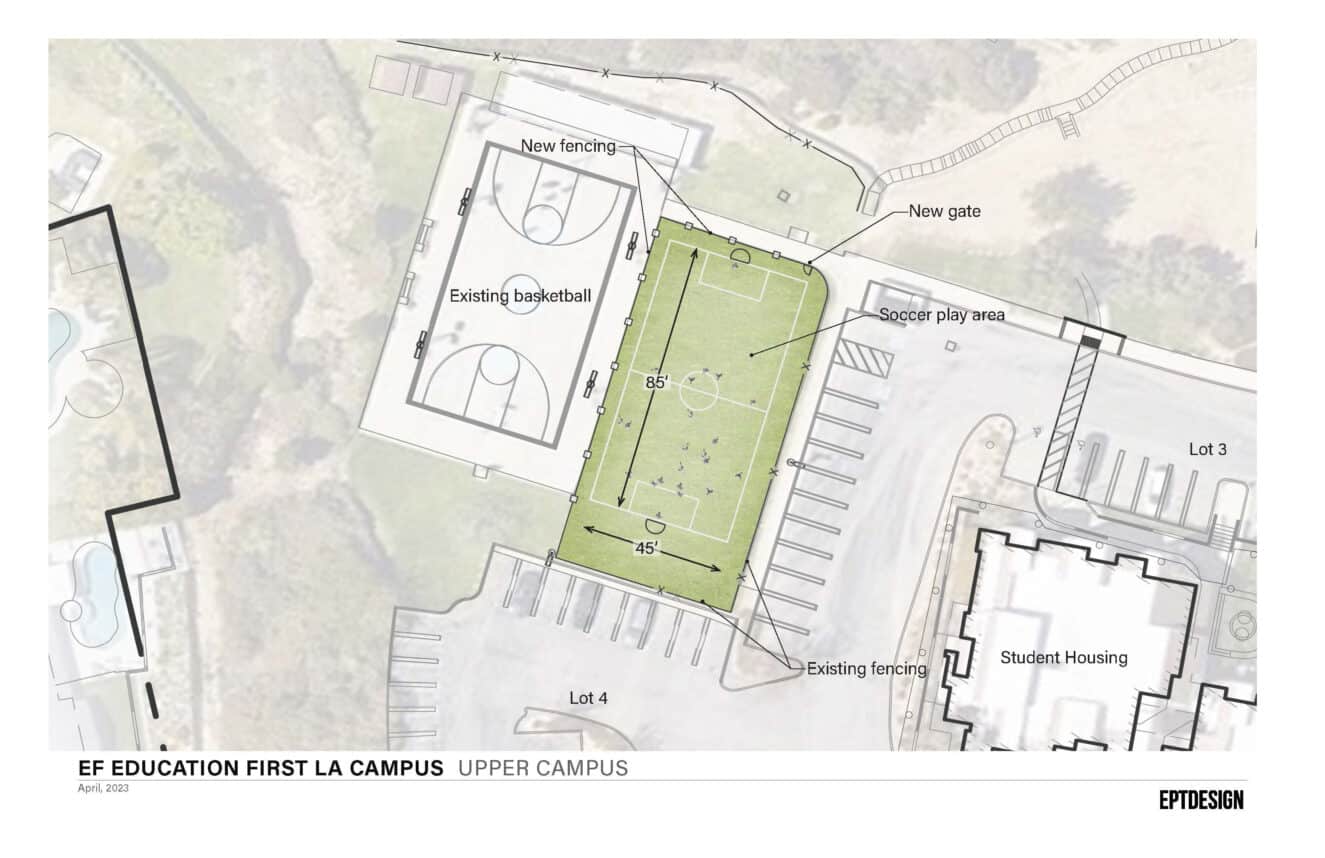
EF Education First, the international degree and language learning school that entered a contract to purchase the sprawling property from AJU last fall, announced this week that it plans to build a designated sports practice field on the campus grounds to benefit students and families at the Wise School, a Jewish elementary school housed at the Stephen Wise Temple. Both the Wise Temple and School are located adjacent to the EF Campus along Casiano Rd. in Bel Air.

The new athletic field, which EF plans to build next to the basketball court at the campus today, will be available for the Wise School to use for its flag football and soccer programs throughout the year. According to EF officials, the field will include new markings, fencing and nets and will provide easy parent access.

“EF is thrilled to provide the Wise School with a safe and convenient practice field that their students can use exclusively during their extracurricular programs for soccer and flag football,” said Shawna Marino, vice president at EF Education First. “We are incredibly impressed with Wise’s educational programs and the important role they play in this community.”

The updated facility will benefit more than just the Wise School’s athletic programs. According to an email released by Stephen S. Wise to its community this week, EF has committed to allowing the Wise Temple to use the facility at no cost for overflow parking during its historically well-attended holiday events, including its High Holiday commemorations, Purim carnival and Hannukah celebrations. The overflow parking could help alleviate parking challenges at the spatially constrained site in the hills above the 405 freeway.

According to the email, EF and Wise have been in conversations about the future of the Familian Campus since news broke of EF’s acquisition of the property last fall. The announcement that EF will build the new athletic field could mark a significant victory in a city in which construction remains difficult, often leaving the Jewish community without the updated resources it needs.

“This is a win-win. On the one hand, EF has the chance to do something neighborly that demonstrates its good intentions for the surrounding community. On the other hand, Stephen S. Wise gains access to sports facilities and parking that it needs in a way that will not impact the surrounding neighborhood,” said Ben Reznik, a partner at Jeffer Mangels Butler & Mitchell and veteran land use attorney.

EF offers language learning, educational travel, cultural exchange and academic degree programs, according to Marino. EF is seeking to use the Familian Campus—which will retain its name in a show of respect to the Sunny and Isadore Familian family—to house its fully accredited EF International Language Center. This program, Marino said, helps high school and college students from around the world gain English language proficiency through traditional classroom education and language immersion. EF currently operates 11 EF International Language Campuses in North America.

EF is optimistic that cooperation with Wise Temple, beginning with the construction of the athletic field, could lead to greater opportunities for exchange and collaboration that benefits and enriches student experiences at both campuses.

“At all of our EF schools, we create lasting neighborhood relations that we build and strengthen for decades to come,” said Marino. “We believe we share a lot of common educational goals and values with Wise and we are excited to explore ways we can work together.”

In an email sent to families this week, the Wise School seemed to concur.

“We feel fortunate to have a community-oriented potential new neighbor that will benefit our community,” said the Wise School in the email.

EF Education First Announces Plans to Build New Athletic Field, Provide Parking Access for Stephen S. Wise at Bel Air Campus Read More »

The 12 Unlikely Things I Love About Israel

At home in Jerusalem—I still get goosebumps writing those magical words—the post-Independence Day high lingers, as do the extra BBQ pounds. True, the 75th anniversary celebrations were touchier than expected. The Knesset is reconvening, gearing up for who knows what. Still, most Israelis just spent two holy days putting politics aside, mourning and celebrating, just feeling lucky to be living this great adventure in Jewish-democratic statehood.

In honor of this complexity, here are twelve unlikely things I love about Israel, chamsin or cold-snap, whether governed by last year’s centrists, or this year’s right-wingers.

The empty nest is for the birds—and rare in Israel: Israel is small, community-minded, and traditional. That’s why, although our youngest is 21, our house remains more train station than empty nest. Most Shabbatot our table is full, the conversation lively, and the family dynamic ever-evolving, not just frozen in our kids’ teenaged selves.

Israel looks like a real country, but often feels like a shtetl. In 75 busy, often-stressful years, Israel established an army, an airport, a diplomatic corps. The country looks modern and mature. But the sense of us-ness, the delightful nosiness of neighbors, the social solidarity, makes its Anatevka not just Metropolis. My son serves with a lone soldier who wanted to buy a car. One soldier buddy’s grandfather leases cars. Gramps offered a good price, and had his son, the mechanic, inspect the used car. “You need legs in this country,” the grandfather proclaimed after visiting with this young Canadian idealist, then reduced the price to zero. Not every lone soldier gets a free car. But most immigrants get instant family.

On national holidays, we make the national ideological sale, again, instead of hunting for sales. Once we visited Washington on Memorial Day. My then 14-year-old son asked, “How come they aren’t sad?” Even this Yom HaZikaron, despite the protests, we stopped when the sirens sounded, and remembered that we are one. Memorial Day morning, I visited a small forgotten cemetery improvised during Jerusalem’s 1948 siege. A group of troubled teenagers spent the morning cleaning the long-neglected graves, then stood silently through a memorial service. A people that can stand in awe together can withstand awful politics and politicians together.

Cherry Tomato Zionism proves that extra effort can yield extra joy. In America, cherry tomatoes come wrapped in plastic boxes, their stems magically-removed. In Israel, where they were invented, you pop most mini-tomatoes off the vines. That minor effort engages you and reflects the joys of living in Israel. The additional effort often adds meaning. The poet Natan Alterman was right: Nothing valuable comes free on a silver platter.

Hativkah, hope, is our greatest renewable resource, not just our national anthem. How could this jumble of sand and rocks, of heat and drought, forged after Holocaust trauma and in War of Independence blood thrive as it has? It’s thanks to Zionism, which transformed the most hopeless people to the most hope-addicted people. We became the energizer bunny nation, in perpetual motion, expanding, creating, transforming, fueled by hatikvah, our never-ending supply of hope.

You can write off bad debts but not the Jewish people. People claim it’s never been worse. Really? Imagine the despair after the Holocaust, the fear of ‘48, the dread of May 1967, the distrust after 1973, and the horrors of the 2000s as terrorists blew-up buses and cafes. Imagine how hard it was to absorb millions of immigrants, create a democratic society out of quarrelsome chaos and an economy out of nothing but brainpower. How many times have people written off this oft-written-off country and been proven wrong because, as the pioneers taught: “Ein Breira,” we have no choice.

Altneuland: old-new land, never gets old, and always feels young. Israelis are swivel-headed: looking backward for identity and forward for growth. We count the past in millennia, the future in nano-seconds, and the present in eternity. Our archaeologists keep pulling out amazing artifacts from sacred ground, illuminating our history. And our scientists keep pulling out new miracles from thin air, improving the world.

Most Westerners have God-size holes in their hearts; Israelis don’t. The most sophisticated polls show that the most ancient truths still live in the Land of Israel. Even while inventing tomorrow today, Israelis remain rooted in yesterday, still believing in God, their nation, themselves. Israelis’ faith, traditionalism and community-mindedness help us rank fourth on the World Happiness Index. Without those anchors, many young moderns feel totally free, totally unmoored, totally lost.

Even while inventing tomorrow today, Israelis remain rooted in yesterday, still believing in God, their nation, themselves.

Secular Israelis know there’s no Israel without Judaism and true Religious Zionists know there’s no Jewish state without secular power. Everyone loves exaggerating Israel’s secular-religious divide. But beyond the facts that most supposedly-secular Israelis believe in God, attend Passover seders, and mourn with a full seven-day shiva, they know that without the Jewish tie to this land, there is no Israel. Similarly, most Religious Zionists, while thanking God for miraculously creating the Jewish state, acknowledge that Zionism brilliantly spoke the secular world’s language, launching a Jewish sovereign state with an army, a government and international legitimacy.

The IDF is the Israel Defense Factory, not just the Israel Defense Forces. Two of my kids served in the army, and two still serve. Comparing my university experience with their years serving Israel, the Jewish people and the West, I knew they might be risking life and limb, which I didn’t. I knew they were mortgaging their freedom, and I hadn’t. What I didn’t realize was that when I was their age, I just worried about my grades and my pizza budget, while my kids were khaki cogs in a blue-and-white bureaucracy, a sophisticated corporation, IDF Inc. The cost was high: Their managers, often twenty-something-year-old officers, sometimes made dumb decisions. Still, they hit the identity-building jackpot. They emerged as “us” people and not just “I” people. They mastered skills. And they became more mature, more altruistic, more nationalistic, more proud, and more grounded than I was at their age.

Because we cry together, we can laugh together and at ourselves. Last year, my most left-wing, kibbutz-born, super-feminist student scoffed, “We can’t be politically correct! We’re Israelis! We have to laugh.” We laugh because we cry together, because we love life too much to take it so seriously as to drain it of fun. And despite our tensions, beyond hope, we have that other social thickener and bonding agent: trust.

Moving up to Israel is moving back to history—and the 1950s. Moving up to Israel felt like moving back to the best of 1950s and 1960s America. Much of Israel retains a small-town, Main Street vibe. Our neighbors know one another, look out for one another, and feel kinship with one another, even if we don’t always agree with one another. Yes, we keep dancing between the raindrops, aware of enemies plotting to destroy us. Nevertheless, we feel lucky as Jews to be living the Zionist dream, building the Jewish State. We understand, as humans, how meaningful our lives become by knowing who we are, where we have been, and what we want to become, together. No one, no matter how evil near us, no matter how disdainful far away from us, will ever rob us of our joy. Happy 75th!


Professor Gil Troy is an American historian, the author of “The Zionist Ideas” and the editor of the three-volume set, “Theodor Herzl: Zionist Writings,” the inaugural publication of The Library of the Jewish People, just released marking the 125th anniversary of the First Zionist Congress (www.theljp.org).


The 12 Unlikely Things I Love About Israel Read More »

“Violent and Threatening Message” Left at StandWithUs UK Office

There was a break-in at a StandWithUs United Kingdom (UK) affiliate’s office on the morning of April 26, with the pro-Israel education organization calling it a “calculated attack” and a “violent and threatening message.”

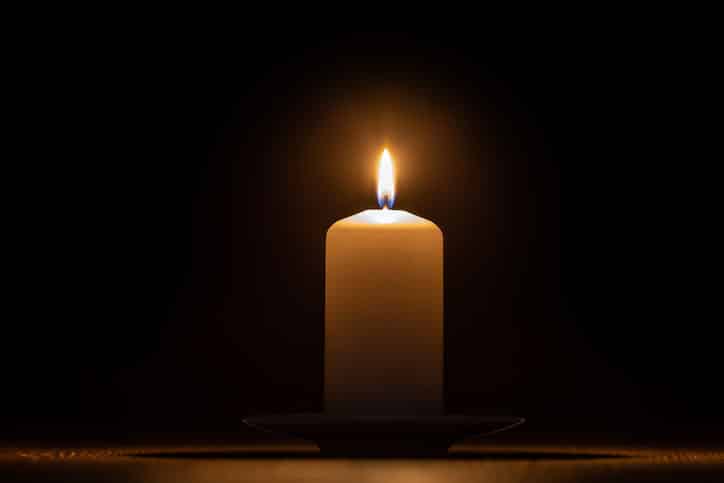
In their statement, StandWithUs UK said that the culprits broke through the office ceiling and placed a burning memorial candle next to one of StandWithUs UK’s shirts. “The implication of this is clear—they are sending a violent and threatening message aimed at our organisation and our staff,” StandWithUs UK’s statement read.

Isaac Zarfati, who heads the pro-Israel education affiliate, said in a statement, “Our staff were shaken but are determined. We remain committed to our mission, of working tirelessly towards countering antisemitism and misinformation about Israel, regardless of this hateful attempt to intimidate us. This intimidation is indicative of what Jewish and Zionist students face regularly from those who seek to discriminate against them. It will not stand.” StandWithUs UK has been in touch with local authorities and the Community Security Trust on the matter.

The break-in occurred on Yom Ha’atzmaut, Israeli Independence Day.

“Violent and Threatening Message” Left at StandWithUs UK Office Read More »

Print Issue: Where’s My Free Speech? | April 28, 2023

CLICK HERE FOR FULLSCREEN VERSION

Print Issue: Where’s My Free Speech? | April 28, 2023 Read More »

Stay Hopeful

The other morning, I sat down to write something funny. I usually start with a fleck of an idea.  But first, I went to Yahoo to waste some time and avoid my writing.  

 Here is what I saw: 

A shooter wielding two assault-style rifles and a pistol killed three students and three adults at a private Christian school in Nashville.

The slain children were Evelyn Dieckhaus, Hallie Scruggs, and William Kinney, all age nine. The adults were Cynthia Peak, Mike Hill, and Katherine Koonce.  All in their sixties.

If I wanted to, I could have continued writing funny.  It’s what I do. Like so many of us, I’ve learned to tuck away bad news.

But today was different. This one did not just nail my shoes to the floor. This nail went right through my foot. There have been many of these shootings. This is the one that seemed to split my heart in half. Perhaps because my life is peppered with young people, the thought of a young person’s life being cut so short was sickening. Perhaps because my wife and I are in the same age range as the adults murdered, I know how much more they had left to do. And how much more love they had to share. For these families, that’s all come to a screeching halt. 

I stared blankly. Staring back at me, my computer screen was waiting. I felt I was being asked to make a choice.  I could either look inside or I could snap my heart back together and move on as if nothing happened.  This, to me, was a personal moment. A fork in the road. Am I human or am I stone? 

The illusion that this can’t happen to my family, Jewish community, or me has long been shattered. And not next week or tomorrow, perhaps right at this minute, someone I know and love is being torn from us.  Maybe when I step out of my front door to get the mail, it will be my turn. 

Recently, two Jewish people four blocks from my home in the very Jewish Pico Robertson neighborhood were shot because they dared to be Jewish in public. Thank God, they did not die. They caught the nut job, but we know he’s one of many. We have all become part of one big live Whack-a-Mole game. 

And who are the perpetrators of these crimes? A day doesn’t roll by that I don’t see some deranged person on my block or at most, a few blocks away. They are the walking dead and seem to have nothing left to lose.  

I’ve yet to hear solutions from the four P’s. Pulpit, politicians, police, or psychologists.  So, what do I do? How do I protect my family, my friends and myself?  Will buying a gun put an end to all this? Will the gun help if a local gang decides to rip my front door off after an earthquake?  

Many years ago, I was in a mindset where I felt hopeless, unloved, unlovable, detached, and ready to screw life if this is as good as it gets. But because I had a family, community, friends and God, I eventually returned to my senses. I had an ongoing source of connection to keep me grounded.

Rabbi Norman Lamm said, “Mankind is not disposable or replaceable. We have a purpose in this life.”

Stay connected to other people. To family. To community. To friends.  We see what happens when people drift away from their relationships. We see what they turn into. 

One such purpose is to stay attached at all costs. What do I mean by that? I mean…stay connected to other people. To family. To community. To friends.  We see what happens when people drift away from their relationships. We see what they turn into. A person alone with nothing to live for is signing a contract with the devil.

But a young man or woman kissing the Torah or taking communion is hopefully signing a contract with God to try to be a better person. They’re declaring that they believe in a better future. That there is something to hope for. Church and synagogue — these are places of connection. It’s where people stay attached to God and their communities. Last week at synagogue, I saw so many wonderful things that gave me hope. Stay connected. It’s there for your asking.
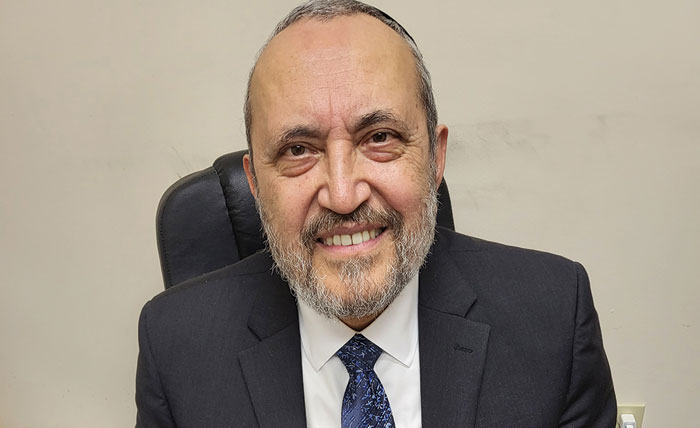

Mark Schiff is a comedian, actor and writer, and host of the ‘You Don’t Know Schiff’ podcast. His new book is “Why Not? Lessons on Comedy, Courage and Chutzpah.”

Stay Hopeful Read More »

Rabbis of LA | Rabbi Zargari’s School ‘Is My Eighth Child’

After nearly four decades of milestone accomplishments for Persian Jews in Los Angeles, Rabbi David Zargari is focused on his next two goals.

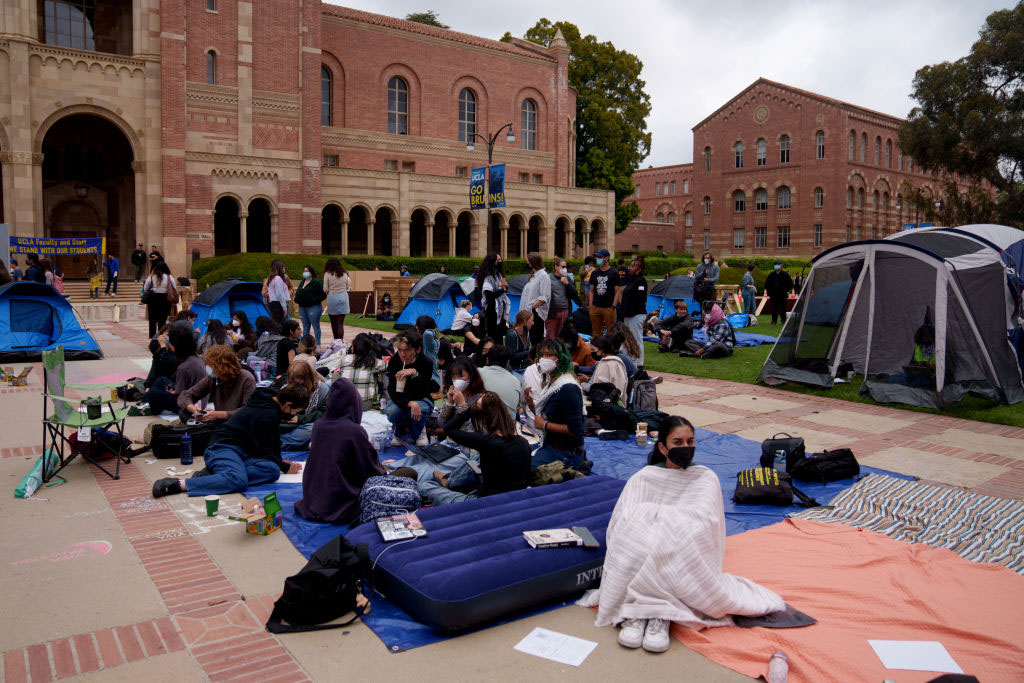
In the coming months, he anticipates the opening of the Beverly Hills Spa Mikvah on the Robertson Boulevard site of his Persian synagogue, Torat Hayim. Next, he plans to be opening the community’s first Sephardi high school by 2025.

“God has been very good to me,” were Rabbi Zargari’s first words, not for the only time, when he reflected in his upper floor office at Tashbar, the Sephardi school he founded. “My mentor, before he passed away, told me ‘Reb David, God gives us bundles of mitzvahs. We should grab them and run.’

“When he sent me to Los Angeles 37 years ago, I asked him, ‘What should I do?’ He said ‘Teach Torah. Everything will come from that.’”

Whatever direction the 50,000 Persian Jews of Los Angeles turn, they can see signs of Zargari’s influence on their community. Zargari has focused on teaching Torah to the young and the old virtually every day since arriving in L.A. in 1986. 

In the beginning, he focused on two things: He learned in the kollel of Rabbi Chaim Fasman and he started giving classes along Pico Boulevard.

Almost immediately, he saw the need for a school, a learning home for the children of families fleeing war-wracked Iran. With the help of his wife Bina, mother of their seven children, the Zargaris secured a location. He distributed flyers in Persian areas while retaining his daily seat in the kollel. 

“In 1987, we started a preschool called Torat Hayim on La Cienega,” Zargari said.  The campus was easy to find, across the street from an established synagogue, Temple Beth Am. 

The rabbi rented an office and printed flyers saying he was opening a preschool for Persian Jews. His earliest days were pessimistic. “At first, no one was coming,” Zargari said. But since 1988, Torat Hayim has grown, as Persians were pouring into the community.

“We bought one building, then another building,” the rabbi said. “Right now, we have eighth-grade boys, eighth-grade girls, two campuses and an Early Childhood Center — almost 300 kids.” 

When Zargari’s school opened, requirements were few. “I would take whoever would come,” he said. “I didn’t have any prerequisites. Students didn’t have to be observant at all.” The rabbi’s motivation was plain. “We did it for the immigrants coming,” he said. “But with the time passing, immigration from Iran was slowing to a trickle after 2005, and finally it stopped.”

That meant a sea-change. 

“When we started,” Zargari said, “all of our students were Iranian born, Persian born. Now, it is the opposite. We almost don’t have anyone here who was born in Iran. It’s a new generation.”Further, the entire student body is observant and no longer is exclusively Persian.

In recognition of this significant cultural change, Torat Hayim adopted a new name, Tashbar. 

Rabbi Zargari explains: “Tashbar means that the Talmud and the Zohar say the world stands on the pure Torah and tefillah of babies learning Torah.”

As far as he knows, “Tashbar is the only school in the world that preserves Persian Jewish customs.”

As far as he knows, “Tashbar is the only school in the world that preserves Persian Jewish customs.”

For the tall, ramrod-straight, constantly smiling, accessible rabbi, the scene of uniformed, happily chattering children on La Cienega Boulevard, just north of Pico, is worlds away from the 1950s and ‘60s when he was the age of his students in his native Iran.

The flourishing Persian community of 2023 Los Angeles is a world away from where the rabbi grew up.

He was bar mitzvah ahead of the Six-Day War in 1967, and a few months later, his life changed forever. When he was 14 years old, he left home, by himself, boarding a flight for Israel.

“My parents worried about me,” Zargari said, “but my father wanted very much for me to have a college education.”

Being a religious Jew in Iran was difficult in the rabbi’s time. “In Iran, Shabbat is a regular day, a school day,” Zargari said. “That is why my father wanted me to go to Israel.” Teenage David finished high school and graduated from Hebrew University.  Shorn of the comforts of a family setting, he lived in the dormitories.

That experience taught him a lesson.    

“I did not let my kids go through that experience,” Rabbi Zargari said. “I didn’t send them away before high school.”He describes his family as “seven children and many, many grandchildren.”

Before the Zargaris and their school-age children arrived here in the mid-‘80s, the rabbi was “very hesitant because there was not a proper high level of Jewish education. My mentor told me, ‘You are going to do for HaShem’s children. HaShem is going to do for your children.’”

In 2023, he calls it “a promise fulfilled.” 

As for the next generation, “most of my children are teaching Torah. They are in Torah. My grandchildren are, too. This is a big nachas (source of pride).”

Most of the Zargari children are here, and one of his sons, Rabbi Aryeh Zargari, is a rebbe at Tashbar. “I always say, I have seven children, but Tashbar is my eighth child. I am the luckiest person.”

Fast Takes with Rabbi Zargari

Jewish Journal: What is your favorite Jewish food?

Rabbi Zargari: Polochoresh, a Persian dish, Basmati rice, stew — and my favorite part is the tahdig that goes at the bottom of the pot.

JJ: What is your favorite place to travel?

Rabbi Zargari: Israel.

JJ: How do you spend your time off?

Rabbi Zargari: I love to play with my grandchildren.

Rabbis of LA | Rabbi Zargari’s School ‘Is My Eighth Child’ Read More »