fbpx

April 19, 2023

Hebrew School Enrollment Across US Down by Nearly Half Since 2006, Report Says

Living in Brooklyn, surrounded by synagogues and Jewish schools, Rachel Weinstein White and her husband hoped to find a place where their children could receive a Jewish education for a few hours each week.

But they knew they didn’t want to enroll at a traditional Hebrew school associated with a local synagogue. For one thing, White wasn’t interested at the time in participating in prayer services, the main offering of most congregations. Plus, her husband is Black and not Jewish, and they were not sure how well he or their children would be welcomed.

So about eight years ago, she started her own program together with a few families, setting up a cooperative and hiring a teacher in an early version of the “learning pods” that would become a pandemic fad.

“It was just this incredible, magical year,” White said. “So many people started hearing about our little class and asked to join that it became necessary to create a second class. … It just kind of grew organically from there.”

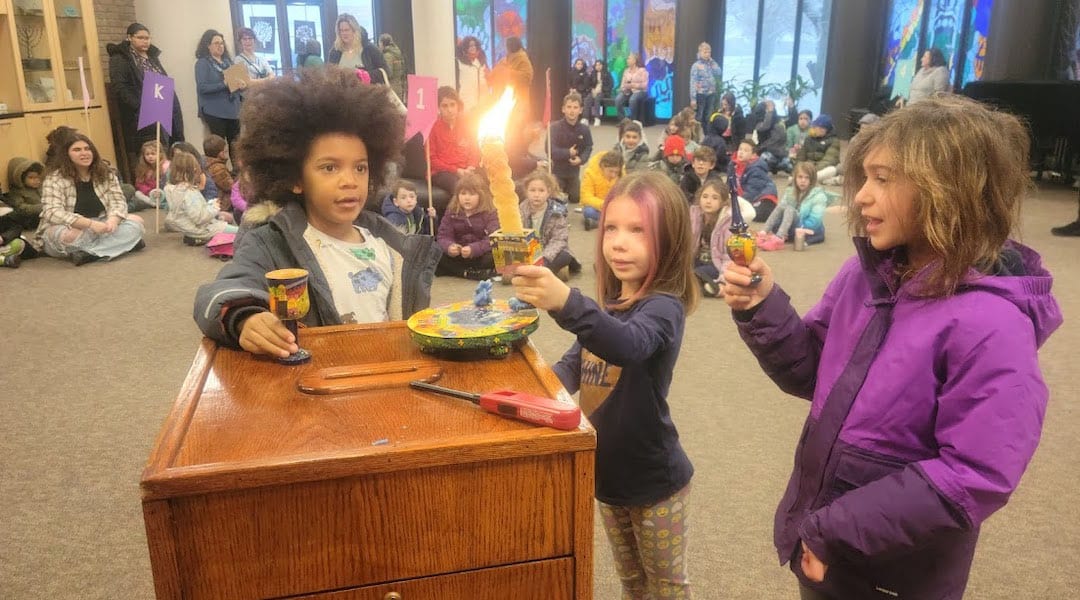
Today, the school, Fig Tree, enrolls about 350 children across three locations and plans are underway to expand further. In hour-long classes on Sundays and weekday afternoons, children learn about Jewish holidays and history, engage in art and creative play, explore their local Jewish communities and learn basic Hebrew, in a program that culminates in a b’nai mitzvah year. It overlaps significantly with traditional Hebrew schools, but outside the usual setting — a synagogue classroom — that has become a cultural shorthand among American Jews for rote, uninspiring Jewish education. 

That dynamic may be why Fig Tree is an outlier in a stark trend revealed in a new report: Enrollment in supplemental Jewish schools — those that students attend in addition to regular schooling in public or secular private schools — is down by nearly half over the last 15 years. 

Even as the estimated number of Jewish children in the United States rose by 17% between 2000 and 2020, enrollment in Hebrew schools fell by at least 45% between 2006 and 2020, according to the report by the Jewish Education Project, a nonprofit that promotes educational innovation and supports Jewish educators in a wide array of settings. 

The report identifies pockets of growth, mostly in the small number of programs like Fig Tree that operate outside of or adjacent to synagogues, and in schools operated by the Hasidic Chabad-Lubavitch movement. But overall, according to the report, just 141,000 children attend supplemental Jewish schools in the United States and Canada, down from more than 230,000 in 2006 and 280,000 in 1987.

Some of the decline in Hebrew school enrollment is countered by increasing enrollment in Jewish day schools, where students study Jewish topics for at least part of every day. The number of U.S. children attending Jewish day schools has risen by roughly the same amount, 90,000, that Hebrew school enrollment has fallen since 2006, according to the report, though a significant portion of the increase stems from population growth in Orthodox communities, where the vast majority of students attend day schools.

Miriam Heller Stern, a professor at Hebrew Union College-Jewish Institute of Religion who was tapped to help design the study, said the results suggest that, as with many aspects of religious life today, Hebrew school enrollment cannot be counted on as an act of obligation or tradition.

“There’s this idea that parents send their kids to Hebrew school because they went to Hebrew school and that’s a rite of passage in North America, but that may be a myth,” she said. “People don’t want to push their kids to have to do the same thing they did, necessarily, anymore.”

The report speculates about what has fueled the enrollment decline — from demographic changes to shifts in how American Jews think about countering antisemitism to increased access to Jewish learning online — and also about what has allowed some schools to thrive. It notes that all of the supplemental schools that responded to its census said their schools help children feel connected to the Jewish people.

“We believe that many factors have led to the decline in enrollment of students in supplemental schools in the last decade,” said David Bryfman, the Jewish Education Project’s CEO. “However, it’s also a myth that all supplemental schools don’t work.”

The group is planning a series of online sessions with some of the dozens of researchers and practitioners involved in the report, with one goal the sharing of success stories identified by the survey. Of the six identified in the report, a common theme is urging experiential, community-based learning. Some of the promising models explicitly position themselves as infusing Jewish content into child care, filling a pressing need for American families.

Still, it may be hard to counter the demographic realities of contemporary American Jews: Just a third of U.S. Jews in a 2020 survey said someone in their household was a member of a synagogue. That was the case even for the majority of non-Orthodox Jews who said they identified with a particular denomination, a marker of traditional engagement. 

The waning of synagogue affiliation is borne out in the Jewish Education Project’s report, which found that more than 700 supplemental schools shuttered between 2006 and 2020 — most outright, though as many as 200 have survived in a new form after merging.

Temple Solel, a small Reform congregation in Fort Mill, South Carolina, shut down its Hebrew school in recent years. The volunteer-run program had up to eight students at a time, according to Russ Cobe, a lay leader.

“We sort of hit a point where we weren’t able to sustain it,” Cobe said. “We only had a couple of people teaching and students from a wide range of ages and they wouldn’t show up every week. Also, our wheelhouse seems to be retirement age and above. We don’t have a lot of young families.”

Hebrew school mergers offer one possible approach to countering the enrollment decline. Two synagogues, one Reform and one Conservative, located half a mile apart in Oak Park, Michigan, established a joint school about seven years ago and called it Yachad, which means “together” in Hebrew.

“One day a week we meet at the Conservative congregation and one day a week we meet at the Reform congregation, so we are keeping our kids involved in both,” said Gail Greenberg, Yachad’s director. “My goal is to make it at the highest common denominator. For example, all of our food is kosher so anyone who wants to eat here can.”

The arrangement appears to be working. Last year, about 90 students were enrolled, and this year, enrollment is at 128, including 26 new kindergarteners, with even larger numbers expected in the future. 

Another set of programs has grown dramatically in recent years: those affiliated with the Chabad movement, which tend to operate even when small and cost less than synagogue programs. Since 2006, the study says Chabad’s market share in terms of enrollment has grown from 4% to 10%, and in terms of the number of schools from 13% to 21%.

Those figures might represent an undercount, according to Zalman Loewenthal, director of CKids, the Chabad network of children’s programs. While the study says there are some 300 Chabad programs in the United States, Loewenthal said he is aware of at least 500 and perhaps as many as 600 — a number driven up in the last decade amid a push by Chabad to launch more Hebrew schools. His count is based on the number of customers purchasing the curriculum offered by his organization, which is also new in the last decade and in his view has contributed to improved quality among Chabad Hebrew schools.

In general, non-traditional approaches to Jewish education may be attractive at a time when American families have packed schedules and competing needs, according to Stern.

“People want to be able to have bite-sized pieces just like you sign up for a six-weeks art class, they might want a six-weeks Jewish class,” she said. “In this atmosphere, some communities are finding ways to be more modular and more flexible, and meet people’s needs in different ways.” 

Stern also said, referring to six programs highlighted in the study as success stories, that the future calls for programs to offer an “immersive” experience, meaning that children become part of a community.

“They are getting something beyond just knowledge,” Stern said. “They’re also getting connection and belonging, which provides the foundation for something bigger in their lives.”

Stern said she thought the report pointed to gaps in the way American Jewish communities allocate their resources. 

“Supplementary education really was abandoned as a communal priority,” she said. “Individual communities had to find ways to fund it on their own. And I think that is part of why we’re seeing a decline.”

Bryfman said he’s optimistic, both about the power of supplemental schools and the potential for them to generate new support from Jewish donors.

The Jewish Education Project had sought outside funding to pay for its study and failed, he said. But now that the numbers are clear, he is beginning to see interest from philanthropies.

“I don’t want to count the dollars before they’re granted,” Bryfman said. “But the study is already beginning to have the desired effect of bringing more resources to the field.”

Fig Tree isn’t set up to benefit in a possible future of increased charitable investments in Jewish education. That’s because the school is set up as a business — an expression of confidence in its growth and to insulate itself from the vagaries of philanthropy.

“It’s a very unusual model for the Jewish education and I would argue a self-sustaining one,” White said. “We don’t have to rely on fundraising… and we’re not beholden to some of the other requirements that a nonprofit would necessitate, which allows us to be nimble.”

Hebrew School Enrollment Across US Down by Nearly Half Since 2006, Report Says Read More »

Jerusalem and Tel Aviv

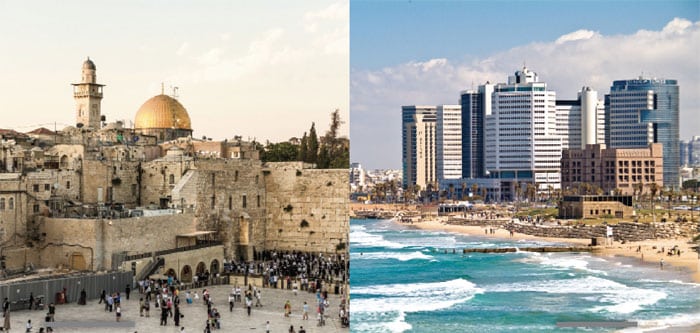
There are no opposites as perfect as Jerusalem and Tel Aviv. Together they form a bifurcated unity, like a yin and yang, or a black-and-white cookie. 

One city is holy and the other profane. One city is gold and the other is silver. One beautiful and one ugly. One high in the mountains and the other at sea level. One at the center of the universe; the other left-aligned, clinging to the coast. One with a past and one with a future. One filled with ghosts, the other unhaunted.

Like all opposites, Jerusalem and Tel Aviv belong to one another. One makes little sense without the other.

A midrash about Jerusalem and Tel Aviv: God lamented that He could not create the two cities at the same time, but alas, it had to be so. God created Jerusalem and then waited — not altogether patiently — until the day arose that he could lay the foundations for Tel Aviv upon the dunes. 

All so that one could be ancient and one could be new and the two cities would be opposite in this respect as well. 

But even in the days before it was built, Tel Aviv was there — contained in Jerusalem in the same way that light, according to the Zohar, was hidden in darkness before the creation of the world.

The secret of Jerusalem is that it is actually a profane city — a place where holy men are forced to dirty the hem of their cassocks in the filth of the streets, where saints squeeze tomatoes in the market, where gods and ghosts crowd onto rush hour buses. 

And the secret of Tel Aviv is that it is actually a holy city — a city where the sycamore trees on Allenby street reveal themselves in the dawn light as transports to some divine realm, where a sidewalk madman proves to be a prophet and holy men ponder scripture in tin hovels.

The twoness of Jerusalem and Tel Aviv is none other than the twoness of the Jewish people. It doesn’t matter where you look, you will see this twoness replicated at every level of our existence, from our divided souls to our divided nation to our divided faith to our divided history. 

The twoness of Jerusalem and Tel Aviv is none other than the twoness of the Jewish people. It doesn’t matter where you look, you will see this twoness replicated at every level of our existence, from our divided souls to our divided nation to our divided faith to our divided history. 

Isolate Tel Aviv from Jerusalem and you will see that it, too, divides into two cities: One Tel Aviv is white and the other is the color of a dirty sheep. One Tel Aviv is genteel and the other is chaotic. One Tel Aviv is rich and the other is poor. One Tel Aviv is subdued and the other is untamed. 

Jerusalem is also two. One Jerusalem is conquered, the other is a frontier. One Jerusalem has secrets, the other is a secret. One Jerusalem yearns to forget and the other yearns to be remembered. 

Or, split it vertically and you get earthly Jerusalem and heavenly Jerusalem. 

Or, split it in time and you get the old city and the new. 

Or, split the country itself into Israel and Palestine, Israel and the settlements, or however you would put it. 

No matter where you cut, you will find this polarity, for this is the destiny of the land. 

So it was in ancient times when King David — himself a bifurcated soul, torn always between his love of God and his love of flesh, his exaltation and his despair, his swordcraft and his song — managed to unite the two kingdoms of Israel and Judah only for a limited time. Like the primal waters which rebelled against God for splitting their essential unity into two, the land rebelled against David for uniting its essential twoness into one. 

As the land is two, so the people are two, born of striving brothers, of Cain and Abel, of Isaac and Ishmael, of Jacob and Esau, of Rachel and Leah, of Peretz and Zerach, of Ephraim and Menashe. 

And if the errant split-end is cut loose from the spool — as was the case with Abel, with Ishmael, with Esau — the remaining One will replicate the pattern in the next generation, inseminating his wife with warring twins, for this is the way of things. 

Hasid and Misnaged, Reform and Orthodox, Religious and Secular, Right and Left.

As it says in the holy Zohar, from the good came the bad, from the mercy came the judgment, from the dark came light, from the hidden came the revealed—and all opposites are bound up in one another, and all are dependent upon one another. 

And in Jerusalem and Tel Aviv, people protest in the streets, and our national prophets are calling for unity, and the earthquakes in Syria and Turkey shook us too in our sleep, and now we are wondering if our rage at our neighbors will indeed split the ground beneath our feet.

And when we say that our ancient homeland will never be divided, we are lying to ourselves. It already is. 

The secret of oneness is that it conceals twoness. And when we say on Shabbat afternoons “who is like your people Israel, a people of Oneness, One upon the land” we are lying to God, for while God is one, the people are two.

And when we say that our ancient homeland will never be divided, we are lying to ourselves. It already is.


Matthew Schultz is the author of the essay collection “What Came Before” (2020).

Jerusalem and Tel Aviv Read More »

Rosner’s Domain | The Fairy Tales of Haredi Exemption

The Israeli government wishes to lower the age of exemption from military service for ultra-Orthodox men. This is an important issue; an issue born out of despair. Despair of what? The answer is simple: Despair of the possibility of equality. 

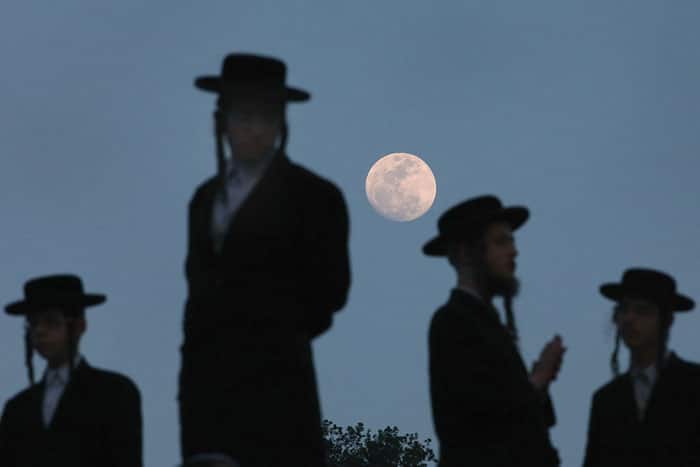
This requires some explaining, and I’ll try to make it short. As a rule, Haredis refuse to serve in the IDF. They got an exemption from conscription when they were a much smaller community. The exemption forces them to study in yeshiva until a late age (because otherwise they lose the exemption). So they stay, rather than join the workforce.

A majority in Israel believes that haredis should serve like everyone else. But this majority gave up hope that this will ever happen. 

A majority in Israel believes that Haredis should serve like everyone else. But this majority gave up hope that this will ever happen. Thus, many support the solution currently offered: release of the Haredi men at a younger age, so they can go to work. Is that just? of course not. And yet — the proponents of the idea will tell you — it is smart. Haredis (generally speaking) do not contribute enough to Israel’s security; Haredis do not contribute enough to Israel’s economy. Let’s forgo the first to get the second. 

As this proposal is promoted, three fairy tales are being sold to the public:

The first – Haredis would work. Why a fairy tale? Because it is not certain that they will go to work unless a significant cut in allowances for yeshiva students is made in parallel to the change of exemption age (Haredi politicians wouldn’t allow it). 

The second fairy tale concerns the exaggerated wished-for contribution of this move to the economy. Haredis who leave their studies will be unqualified for work that is of great benefit. They know no English, math, science, technology. These are guys who sat and studied Talmud. A fascinating subject, but not quite useful in the modern world. The dropout rate of Haredi students from academic studies is high, the professions they tend to choose are low income. If someone wanted to do it right, they would insist that the exemption apply only to those who studied a full course of core subjects as a youth (they won’t). 

The third fairy tale is ‘exemption will promote integration’. This one has been sold to us by entrepreneurs and organizations for more than a decade. If we only had a special track for Haredis in the Air Force, change will come. If we only establish a Haredi Battalion, they will mobilize. If only we let them study separately … the Haredis will have the epiphany that would bring about transformation. A fairy tale. Those familiar with the numbers know that most of these efforts had meager results. Will lowering the exemption age be the catalyst of integration? Maybe, maybe not. This is not a projection; this is hope. We sell the public a plan based on hope, not data. The only thing that’s certain is that the haredis will receive their exemption, in a move that will be very difficult to reverse.

And such a move will crush the People’s Army model. The Haredis are a rapidly growing population. When they are 15% of the population, or 20, or 23%, a transformation is to be expected. In fact, it is surprising that this has not yet happened. Non-Orthodox Israelis will get tired of the unequal arrangement. 

Imagine this moment: Two hundred high school students declare that they do not want to enlist. They gather opposite the Knesset. Within two weeks, 500 join them. In another two weeks, 4,000 signatures are collected of youngsters who pledge to join. It is July, and in August, all of them should be in uniform. What will the government do? You can’t put everyone in jail. You can’t tempt them with money. The government wants to boost the salary of soldiers, which is nice. But not everyone will take the offer. In fact, the soldiers that the IDF needs the most — the cleverest, the most talented — will understand that it is better for them to give up the little money that the IDF offers, and start a life where they can get the big bucks. 

If the People’s Army model has not crashed by then, it will crash at that moment. And we have to ask: what happens next? On this question, the Haredis try to sell another fairy tale: the professional military. Even among the non-Orthodox, the share of support for such idea is growing. They usually neglect to ask two things: How much will it cost? And will it provide security? Since we must make it short I’ll give you the answer of almost all experts who seriously examined the feasibility of such idea for Israel. A professional army will cost much more and provide much less security. That is the real price of younger age exemption.

Something I wrote in Hebrew

Why are Israelis worried? There seem to be three reasons for this. The first indicates that we are still sharp. A sober reality reading shows that we are really in danger. There is Iran, there are other enemies. There are also permanent problems that are not addressed and are only exacerbated: overcrowding in a small country with little room to move, an increase in the proportion of ultra-Orthodox, many of whom do not work, problems arising from the ongoing occupation of the territories, the fact that we do not have a constitution, that is, a tool for maintaining stability. This is only a partial list, but it is also enough to recognize that there are a too many things on which we say “we will deal with it later,” and then wait and wait and wait.

A week’s numbers

A reader’s response:

Adi Erlen asks: “What is the best argument in favor of legal reform?”

Answer: The fact that many Israelis are under the impression that the court highjacked some of the functions that should be reserved for legislators.  


Shmuel Rosner is senior political editor. For more analysis of Israeli and international politics, visit Rosner’s Domain at jewishjournal.com/rosnersdomain.

Rosner’s Domain | The Fairy Tales of Haredi Exemption Read More »

The Travelling Torah

The family Torah first showed up in the mid-1960s, when according to family lore, my grandfather Emanuel Sokoloff bought it for the new sanctuary at Temple Beth Emet in Anaheim.

I like to think of it as one of the crowning moments of his life. He was devout, davening from the same seat at our Conservative synagogue at Shabbat services every week. Poppy, as we called him, wore a three-piece suit and tie, an impressive tallit and a high-rimmed yarmulke as he sat next to my grandmother, Fanny, who was in her own Shabbat dress, hair covered with lace. They were a bit of the Old World, but in an American shul just down the street from Disneyland. 

The family legend is that our cantor purchased the Torah in New York at Poppy’s request. An appraisal from 2011 shows the Torah originated in Poland and was written in the 1930s or earlier. The appraisal describes its writing quality as “very beautiful” and its weight as “heavy.”  

My own Shabbat childhood memories include running into morning services after religious school, getting covered in kisses by my grandparents, all while breathing in the heavy mothball scent that came with their clothes. It’s a sweet memory.

I had two thoughts about Torahs as a kid. I was in awe of their grandeur. I was also afraid of dropping one. My peers told tales of how you had to fast for many days if you dropped it. 

I had two thoughts about Torahs as a kid. I was in awe of their grandeur. I was also afraid of dropping one. My peers told tales of how you had to fast for many days if you dropped it. No thanks! That fast on Yom Kippur was hard enough.  

I must have successfully carried that Torah on my own bar mitzvah without dropping it. It was also used for the Beth Emet b’nai mitzvah of my brothers and cousins. 

Fast forward a few decades, and I’ve just driven north on the I-Five with the family Torah, bringing it to share with my current congregation, Congregation Kol Emeth in Palo Alto. It’s the latest in several moves our Torah has made over the years. 

The Sokoloff grandkids moved to places like Irvine, Goleta, the San Fernando Valley, the San Francisco Bay Area and to Oregon and Texas. The Torah moved around, making appearances from time to time at a b’nai mitzvah. Most recently it was kept at Temple Aliyah in Woodland Hills. But Temple Aliyah is merging with another synagogue, and the Torah needed a new home. 

It took nearly two months of planning, but the Torah made it north. Have you ever thought of the insurance implications of transporting a precious Torah? My cousins and siblings have, and we have long trail of emails to prove it. 

In late March, I drove to get the Torah at my cousin’s home in Calabasas. I couldn’t find any halacha on transporting a Torah, but I knew it should be dignified. I vacuumed out the trunk and put down a blanket. The Torah was covered with a plastic bag. Its ornaments were bubble-wrapped and transported in two canvas bags. 

The breastplate as it was unpacked

As I began the journey north, I stopped for lunch at Brent’s Deli in Northridge, the last deli I’d see for several hundred miles. I had lunch with a cousin I’d found several years ago on 23andme. It was our first meeting in person, and I established my Jewish bona fides quickly. “I have a Torah in the trunk,” I told him. 

I knew enough not to bring any corned beef from the deli into my car. The Torah is certified as Kosher; I was going to keep it that way. 

The Torah made it safely home with me, and several days later I brought it to Kol Emeth. 

The synagogue’s executive director and I unwrapped the Torah on the bimah and placed the blue mantel and silver ornaments on it. I smiled as I attached the breastplate that read, “In honor of Mr. and Mrs. E. Sokoloff.” It looked impressive and magnificent as I carried it to the ark. 

L’dor v’dor. This Torah holds many memories. We’re looking forward to sharing it with Kol Emeth and grateful that it has a new home. 

A whole new generation of young Sokoloff descendants live in the Bay Area now, including five great-great grandchildren of Emanuel and Fanny Sokoloff. Someday we hope they read from the family Torah at their own b’nai mitzvah.


Larry Sokoloff is a professor emeritus at San Jose State University and a freelance writer. 

The Travelling Torah Read More »

Son of Last Iranian Shah Visits Israel

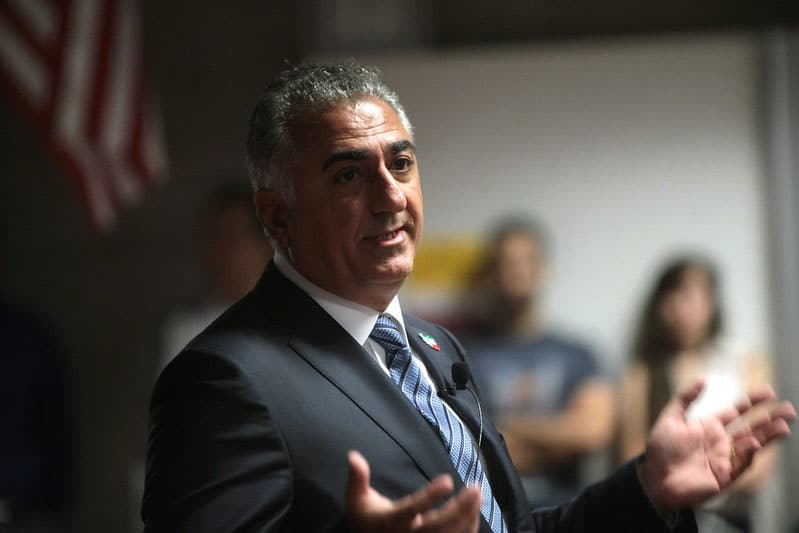
Reza Pahlavi, the son of the late Iranian Shah Mohammad Reza Pahlavi, who was exiled after the 1979 Iranian revolution, visited Israel on Yom HaShoah.

Pahlavi announced his trip on April 16, stating that he planned “to deliver a message of friendship from the Iranian people, engage Israeli water experts on ways to address the regime’s abuse of Iran’s natural resources and pay respects to the victims of the Holocaust on Yom HaShoah.” “I want the people of Israel to know that the Islamic Republic does not represent the Iranian people,” he added. “The ancient bond between our people can be rekindled for the benefit of both nations. I’m going to Israel to play my role in building toward that brighter future.”

After landing in Israel on April 17, Pahlavi tweeted that he and his wife Yasmine “are very happy to be here and are dedicated to working toward the peaceful & prosperous future that the people of our region deserve. From the children of Cyrus, to the children of Israel, we will build this future together, in friendship.” It is the first time that Pahlavi has ever visited Israel.

Pahlavi and his wife attended the national Holocaust Remembrance Day ceremony at Yad Vashem on April 17 and afterwards met with Israeli Prime Minister Benjamin Netanyahu and his wife. Pahlavi also visited the Dee family to give his condolences after the family lost sisters Rina and Maia and their mother Lucy to an April 7 terror attack. Additionally, Pahlavi and his wife prayed at the Western Wall and met with Israeli President Isaac Herzog.

Alireza Nader, engagement director at the National Union for Democracy in Iran, tweeted: “Israel is in essence the first state to recognize the #Iranian national revolution & its singular leader, Crown Prince Reza Pahlavi (@PahlaviReza). A move of great foresight.”

American-Israeli writer and speaker Emily Schrader tweeted, “As an Israeli I can’t tell you how powerful it is to see this kind of solidarity against terrorism from Iranian Crown prince @PahlaviReza and Yasmine! With such leadership Israel and Iran will be reunited in our centuries of friendship.”

Pahlavi’s visit to Israel comes as Iranian President Ebrahim Raisi threatened to annihilate Tel Aviv and Haifa in an April 18 speech; Iranian Foreign Ministry spokesperson said at a recent press conference that Pahlavi’s visit to Israel isn’t “worthy of discussion.”

Son of Last Iranian Shah Visits Israel Read More »

Praying for Israel in LA

In September 1970, a bloody conflict took place between the country of Jordan and the PLO terrorist group, which had become a threat to Jordan’s monarchy. The PLO had used Jordan as a base from where they could attack Israel in Yehuda V’Shomron (the “West Bank”). The result was that Yasser Arafat and his terrorist organization were sent packing through Syria to Lebanon. It was there several years later that they would participate in Lebanon’s civil war.

Now in Lebanon, the PLO could continue to threaten Israel, but by attacking the Northern Israel Galilee communities. On June 3, 1982 Palestinian affiliated terrorists in London shot Israel’s ambassador to the United Kingdom, Shlomo Argov, in an attempted assassination. Israeli Prime Minister Menachem Begin had seen enough and three days later Israel’s military entered Lebanon in an operation called Mivtza Shalom HaGalil (Operation Peace for the Galilee).

I was born in 1961, in the 13th, or Bar Mitzva year, of the State of Israel. It has been my dream for some time now that I visit Israel when I am 86 for Israel’s 100th Yom Ha’atzmaut, now 25 years away. As a youth, I attended Bnei Akiva Snif Saad, a Shabbat youth group, part of the largest Zionist Orthodox youth movement in the world, at Shaarei Tefila Congregation on Beverly and Poinsettia in Los Angeles. Growing up going to Bnei Akiva and attending their Camp Moshava in the winters and summers, I ended up on a Bnei Akiva program for my gap year in Israel, ironically on Kibbutz Saad, in the Negev. Upon my return in 1980, I began various volunteer positions with Bnei Akiva, and in 1981 became the Mazkir Galil (Head of Organization) of Bnei Akiva of Los Angeles.

In order to share our weekly commentaries on the Torah portion from a Religious Zionist perspective, and as I was very proud of the accomplishments of our movement and wanted to publicize past successes and future activities, I published a weekly handout for our partner synagogues. The Daf LeParshat HaShavuah had divrei Torah written by Dr. Jerry Lax, Rabbi Danny Korobkin, and David Kaplansky. The handout also had a section called Bnei Akiva News to list community events, and advertising with ads from sponsors when we could get them.  Ultimately United Mizrachi Bank would become our regular sponsor and partner, along with many sponsorships by Baichman and Daughters Insurance Agency. The three Bnei Akiva Snifim at the time (and still today), were named after Religious Kibbutzim in Israel. They were Snif Saad at Shaarei Tefila, Snif Shluchot at Beth Jacob in Beverly Hills, and Snif Tirat Tzvi at Shaarei Zedek in the Valley.

We also distributed handouts to Beth Jacob, and when we could get them done in time before Shabbat and find someone heading to the valley, we would send a stack to Shaarei Zedek. But for Shaarei Tefila, because they did not have the infrastructure, I had to walk the shul before Shabbat to place the handouts in each of the seats. I was also running a Bnei Akiva Minyan every Shabbat in the Shaarei Tefilla Beis Medrash. At that time, we would weekly recite on Shabbat the Mi Sheberach L’Chayalei Tzahal (Blessing for the Israeli Soldiers) and Tefilla Lishlom HaMedina (Prayer for the Welfare of the State of Israel) at Bnei Akiva minyans around the world. While the mainstream synagogues would recite a Prayer for the Welfare of the United States of America, they did not recite the prayers for Israel.  A rare handful might recite the Prayer for the State, but virtually none the Blessing for the Soldiers.

While the mainstream synagogues would recite a Prayer for the Welfare of the United States of America, they did not recite the prayers for Israel.

On November 20, 1982, Shabbat Parshat Toldot, a week had just past since we were horrified that a single blast in Lebanon had cost the lives of 75 Israeli soldiers. In the past we were accustomed to wars that took between six days and a month. Five and a half months had passed since the start of the operation in Lebanon and it was clear that this operation was now a full scale war that was not ending any time soon. Even then we would not have imagined that it would actually take 18 years to complete. In any event, in that week’s handout, we noted the severity of the situation and added that we would now be including the Mi Sheberach L’Chayalei Tzahal in each publication for congregations to add to their seder tefilla, or at the very least, for congregants to say individually, along with the Tefilla LiShlom HaMedina.

A week went by, and another. The following week, Yisrael “Shedale” Sarid couldn’t wait to share some great news with me. Something beautiful had happened on Shabbat at Beth Jacob.  He said Rabbi (Maurice) Lamb discussed the seriousness of the situation is Israel and implored us to show solidarity with the people of Israel and the soldiers, and asked that everyone pick up the Bnei Akiva Daf L’Parshat HaShavua from the slots in front of their seats so they could together read from it the Tefilla LiShlom HaMedina and the Mi Shberach L’Chayalei Tzahal.  How proud we were that Hashem allowed us to play a role in enabling a stronger connection between our Jewish community here and our Jewish brothers and sisters on the front lines in Israel. Within a few weeks, Shaarei Tefila and Shaarei Zedek caught on and as these were the bulk of the Los Angeles Modern Orthodox congregations at that time, by definition, our entire community was now reciting these blessings. Our sponsor United Mizrachi Bank would soon print out stickers with the tefillot to inset into the back cover of the community siddurim to make these tefillot even more accessible. As a community, we have now been saying these weekly for nearly 41 years.

I know that eventually our community would have started saying these, with or without Bnei Akiva, but I look back with pride that we were there to jump start this. I only now realize the enormity of the moment. I don’t believe we would have the mammoth community with yeshivot, synagogues and kosher restaurants that we have today if there was not a State of Israel giving us pride and legitimacy. With that, I ask our youth to do all that you can in appreciation of the State of Israel. You never know when a little gesture can turn into a game changing event. To this day, when I hear these tefillot being recited in my shul, Young Israel of Century City, I take them very seriously, and urge others to as well. Let’s face it, here in America, we do way too little for Israel. This is the least we can do. Am Yisrael Chai and Yom HaAtzmaout Sa’me’ach!


Jamie Frankel was born and lives in Los Angeles. He is a businessman, a proud active member of Bnei Akiva of Los Angeles and Camp Moshava for over 50 years, and has volunteered at YULA High School for the last 17 years teaching a course called “Introduction to Zionism.”

Praying for Israel in LA Read More »

L.A. Community to Gather on April 24 to Commemorate Fallen Israeli Soldiers and Victims of Hostile Acts

The office of the Consulate General of Israel in Los Angeles is calling upon Los Angeles’ Jewish community to gather for a special Yom HaZikaron event on April 24th.

The event, which will take place at Stephen S. Wise Temple, will honor Israeli soldiers who were killed or wounded in service of their country, as well as victims of terrorism. 

It has been over three years since the Israeli government’s Los Angeles arm has done a full-on Yom HaZikaron event, so the organizers are going all out to make the 1,000-person banquet not just a solemn moment of remembrance, but a soulful gathering of love and pride.

Revital Danker, the Consul for Consular Affairs in the office of Consulate General of Israel to the Pacific Southwest

Putting the event together has been anything but easy for event organizer Revital Danker. As the consul for consular affairs in the Consulate General of Israel to the Pacific Southwest, she also represents the Ministry of Defense and coordinates the complicated casework of thousands of Israelis from California to Idaho. But due to the frequent changes in the coalition government in Israel, the office of the Consulate General is organizing the memorial event without a budget. That hasn’t kept them from putting together a meaningful Yom HaZikaron event. 

“During the pandemic, we had no events whatsoever,” Danker told the Journal. “This year, we knew the event had to really bring something different, and really bring the community together.”

There will be musical performances by singers Oded Sabeg, Li-at Denker, the Consulate’s media specialist Sivan Fidelman and young members of the Hebrew Scouts and singer Ron Weinreich. 

While serving in the IDF in 2006, Weinreich suffered a spinal cord injury that would confine him to a wheelchair. Still, Weinreich went on to compete in the Eurovision Song Contest as well as one of Israel’s highest-rated television shows, “Kokhav Nolad” (“A Star Is Born”). Weinreich will be appearing at the Yom HaZikaron event representing Israel Disabled Veterans/Beit Halochem. 

The evening will also include remarks and participation by the diplomatic team, representatives of the Ministry of Defense and representatives of the bereaved families. Danker forewarned that there will be some raw emotions displayed in a speech to be given by the son of a fallen IDF soldier from Los Angeles.

According to the Knesset’s official Yom HaZikaron webpage, there have been 24,068 Israeli casualties of war (as of 2022), 43 military cemeteries in Israel, and eight wars since the Memorial Day’s inception.

The event marks the 75th anniversary of establishing a Jewish state in Eretz-Israel, 60 years since the establishment of Yom HaZikaron in 1963 and 50 years since the 1973 Yom Kippur War. According to the Knesset’s official Yom HaZikaron webpage, there have been 24,068 Israeli casualties of war (as of 2022), 43 military cemeteries in Israel, and eight wars since the Memorial Day’s inception. In 1997, Yom HaZkiron was also proclaimed as the Memorial Day for Victims of Hostile Acts. The Knesset recognizes 4,216 victims of hostile acts, often terror attacks against Israelis. 

The Ministry of Defense makes payments to the bereaved families of veterans and victims of terror. So the memorial event isn’t a fundraiser, but rather a gathering of American and Israeli community members for a “heart-to-heart evening” of gratitude, celebration of life and strengthening the bonds of the fifth-largest Jewish community in the world.  

For that reason, this will mark the first time that the memorial event will be translated into English. Danker encourages everyone in the Los Angeles community to come attend on April 24th to stand in solidarity in memory of the soldiers who made the ultimate sacrifice, and the victims of terror whose lives were tragically cut short by hatred.

“We don’t want it to be an event just for Israelis,” Danker said. “This year, it marks 75 years for the State of Israel, and I want to do something really touching and moving.”

The Memorial Ceremony and Songs for the Fallen will take place at 7:00 p.m. on Monday, April 24th at the Stephen Wise Temple, located at 15500 Stephen S. Wise Drive in Los Angeles. 
Casual attire is welcome.
Register to attend here:  https://forms.gle/eUToXYMzwwh8BMeH8 (tap NEXT to sign up in English)

L.A. Community to Gather on April 24 to Commemorate Fallen Israeli Soldiers and Victims of Hostile Acts Read More »

Feinstein’s Departure

At the time this was written, Dianne Feinstein (D-Calif.) was a Senator in name only. In the not-too-distant future, she might not be a Senator at all. I have written previously that Feinstein has earned the right to step aside on her own terms, but recent news reports have suggested her health may not allow her to complete her current term in office. In addition to the human tragedy, her departure would also create a huge political mess.

Feinstein’s prolonged absence has already caused immense problems for her fellow Democrats, as the Senate has not been able to confirm nearly as many of President Biden’s judicial appointees as they had hoped. 

Feinstein’s prolonged absence has already caused immense problems for her fellow Democrats, as the Senate has not been able to confirm nearly as many of President Biden’s judicial appointees as they had hoped. There is also increasing evidence that the inability of both Feinstein and Pennsylvania Senator John Fetterman to cast votes is delaying other legislative priorities. The pressure on Feinstein to resign her seat is growing from both California and Washington Democrats.

But the one person who might be rooting hardest for California’s senior senator to stay in office is California’s governor. A few years ago, Gavin Newsom told a cable television host that he would appoint a Black woman to replace Feinstein if she stepped down. Newsom’s office indicated last week that the governor still intended to fulfill that commitment, which may put him in an extraordinarily difficult conundrum. 

When Newsom made that promise, he had just selected then-Secretary of State Alex Padilla to fill the remainder of Kamala Harris’ term and received deserved credit for appointing the first Latino Senator in California history. But Harris was only one of two Black women to ever serve in the Senate, and many Californians were outraged that Newsom did not replace her with someone of similar demographic identity. At the time, the governor seemed to have made a low-cost commitment, as well-respected Representatives Karen Bass and Barbara Lee (D-Oakland) would both have been logical choices to replace Feinstein. But Bass is now the new mayor of Los Angeles and Lee is running in a competitive primary for that Senate seat against two other formidable Democratic candidates.

Which leaves Newsom in a very unpleasant and equally unforgiving predicament. If he keeps his promise and appoints a Black woman, he will give that new Senator an immense advantage should they decide to seek reelection. Not surprisingly, supporters of Representatives Adam Schiff (D-Burbank) and Katie Porter (D-Irvine) have already begun putting pressure on Newsom to select a replacement who would not run for another term, which would disqualify Lee. So the challenge for Newsom would be to find another Black woman to appoint and then allow the 2024 campaign to proceed on an even playing field.

The question then becomes what sort of political leader would intentionally derail their own career in exchange for an extremely brief Senate tenure. There is certainly no shortage of qualified Black female officeholders in the state. But most of them – San Francisco Mayor London Breed, Representative Sydney Kamlager (D-Los Angeles), and L.A. County Supervisor Holly Mitchell, to name a few – have the potential for lengthy careers in public office and may not want to trade those longer-term opportunities for such a short time in the Senate.

Newsom may have a few other options available to him. He had previously elevated Shirley Weber to the office of Secretary of State to replace Padilla, and at age 74, Weber could decide that a temporary gig as a U.S. Senator would be an appropriate career-capper. Maxine Waters (D-Hawthorne) has served in the House since 1991, and at age 84, might come to a similar conclusion. Newsom could also reach outside of the political world and tap a business or nonprofit leader. Or he could satisfy another key Democratic constituency and appoint State Senate President Toni Atkins (D-San Diego) as California’s first LGBTQ Senator.

Or, facing growing budget deficits and worsening homelessness and affordable housing crises, Newsom could simply appoint himself to Feinstein’s seat. Such a self-serving decision would undoubtedly anger many important party constituencies. But for an ambitious politician with presidential aspirations, a safe Senate seat might be the best port in this storm.


Dan Schnur is a Professor at the University of California – Berkeley, USC and Pepperdine. Join Dan for his weekly webinar “Politics in the Time of Coronavirus” (www.lawac.org) on Tuesdays at 5 PM.

Feinstein’s Departure Read More »

From Trotsky to Torah: The Left and Israel

Seventy-five years ago, the left was pro-Israel. There was a troubling history of antisemitism on the left, and responses to Israel’s founding ranged from enthusiastic to ambivalent; but when five Arab armies invaded Israel in 1948 with the expressed intention of wiping it out, the left mostly rallied to Israel’s side. Defending Israel’s existence in its early years was part of what it meant to be progressive. 

This was largely because the Soviet Union briefly yet forcefully supported Israel, but there’s a reason the Soviet Union’s stance resonated among communists and other leftists. The world had just witnessed the Holocaust, saw the traumatized Jews who made their way to Palestine. They observed the hundreds of thousands of Jews being driven out of the Middle East and North Africa. Whatever the real difficulties of founding a Jewish state alongside a prospective Palestinian one, Israel’s founding was widely seen by progressives as the way to ensure “Never Again.”

How did the word “Zionist” undergo such a dramatic transformation in meaning: from a term simply denoting someone who upholds the Jewish right to self-determination, to the preternaturally sinister embodiment of reaction, violence and racism? 

So why do self-described progressives today routinely describe Israel’s founders as settler-colonialist apartheid lovers? How did the word “Zionist” undergo such a dramatic transformation in meaning: from a term simply denoting someone who upholds the Jewish right to self-determination, to the preternaturally sinister embodiment of reaction, violence and racism? How did a tiny Jewish nation, after being attacked and invaded by its openly antisemitic Arab neighboring nations, become transformed in the leftist imagination from David to Goliath?

I know leftists genuinely view Israel and its defenders this way because as a Trotskyist for many years I did the same. Hissing about “Zionistsss” gave my comrades and me both a precious sense of solidarity and the pleasure of a sense of righteousness. As Marxists who recognized the principle of self-determination, we upheld—in theory—Israel’s right to exist. We challenged antisemitism when it was expressed in lurid claims about the Rothschilds. We proudly invoked our World War II heritage, the Jewish Trotskyists martyred by the Nazis. All this served mainly to assure us that there was not — could not possibly be — anything amiss in our claims about the reactionary “Zionistsss.” 

Leftists like my former comrades claim the progressive attitude toward Israel changed because of Israel’s actions in the Six-Day War. In this account, it was at that point that Zionism proved its reactionary nature, so the left’s increasingly vitriolic rhetoric was justified. This self-gratifying myth requires willfully ignoring and distorting key facts about that war. 

The agent for setting these mental gymnastics in motion was the Soviet Union, which by then supported the Arab nations against Israel and the West. In response to Israel’s crushing victory over its client states in 1967, the Soviet Union unleashed a tsunami of virulently antisemitic, anti-Zionist propaganda. Western leftists, in thrall to the Soviet Union’s “anti-imperialism,” snapped it up. A tenacious toxin was released. 

This isn’t to suggest that antisemitism wasn’t there before, or that the leftists who began howling about Zionism in 1967 lacked agency. The Soviet Union played a huge role in lighting the match, however, and the toxin has spewed ever since. The ubiquitous Jew-bashing symbols seen at today’s anti-Israel protests — like the Magen David twinned with the swastika to suggest moral equivalence — were originally Soviet imports. Decades after the Soviet Union’s collapse, its legacy remains in Western leftist Jew-hatred, which has penetrated ever-wider sections of “respectable” society.

Antisemitism on the left isn’t a set of beliefs so much as it’s a feeling: a strangely intense fear, mingled with loathing, of “Zionists” that gets passed down among people who see themselves as virtuous. 

Antisemitism on the left isn’t a set of beliefs so much as it’s a feeling: a strangely intense fear, mingled with loathing, of “Zionists” that gets passed down among people who see themselves as virtuous. Because it isn’t a belief system in the intellectual sense, it evades scrutiny. For such leftists and mainstream liberals, it just “feels” true, in some timeless way, that Israel routinely murders Palestinian children. Try telling them this isn’t actually happening, that the situation is more complicated than they think, and that their sense of resonance might be connected to centuries of medieval blood libels, and they will be outraged at being unjustly — as they see it — accused. When they splutter back that they oppose antisemitism, they’re almost certainly being sincere: I was. Antisemitism is the most shapeshifting of hatreds. Try raising it to the light for examination and it will throw up camouflage (“anti-Zionism”) and slither away, only to come back stronger next time. 

Those who would deny the right of the Jewish state to exist would, whatever their intentions, deny the right of the Jewish people to exist. Don’t give an inch to people who demonize or try to delegitimize Israel. Criticize it by all means, but don’t ever forget what it is: a Jewish refuge won through unimaginable suffering, which defies the haters to affirm the Jews’ right to not only life, but autonomy and dignity. Nothing could be more legitimate, necessary and just.


Kathleen Hayes is the author of ”Antisemitism and the Left: A Memoir.”

From Trotsky to Torah: The Left and Israel Read More »

SB_logo2

(Don’t) Curb Your Judaism ft. Eli Leonard

The Schmuckgirls are back this week with some fun updates and discuss how the Passover holiday went. They then bring on the hilarious comedian, Eli Leonard. They debate how far away should an ex move after you break up. Eli shares about his journey to become an actor and comedian and talks about his time working on Curb Your Enthusiasm. He even shares some fun stories about his best moments working with celebrities. He also talks about the importance of making the most of an opportunity when it’s handed to you. The trio also discuss performing to more religious audiences and Eli shares about his experience navigating that for the first time. They also talk about developing Jewish identities and Eli talks about antisemitism in the world of comedy and how he’s dealt with non-Jewish comedians making jokes that he didn’t think were their place to make. The group ends with a fun game of “Cute or Cringe.”


(Don’t) Curb Your Judaism ft. Eli Leonard Read More »