fbpx

February 7, 2023

Sheila Nazarian

Dr. Sheila Nazarian on Antisemitism, Iran, Plastic Surgery, and Anti-Aging Skincare

Dr. Sheila Nazarian is a renowned plastic surgeon, Emmy-nominated TV personality and outspoken Zionist. As a child she faced overwhelming antisemitism. However, a turning point in her life sparked her realization of her responsibility as a Jew to fight against it and stand up for others.

Dr. Nazarian frequently speaks out against antisemitism on her social media platforms. Despite facing hate, she has built a successful plastic surgery practice, skincare clinic, thriving online skincare store and founded the Nazarian Institute to help business owners and entrepreneurs succeed.

Join today to hear about Dr. Nazarian’s experiences with antisemitism, her views on Israel, self-care tips, and the advantages of plastic surgery and aesthetics.

Highlights:

  • Iran Deal and its Global Impact
  • The Importance of Education and Believing in God
  • Jewish Perspectives on Politics
  • The Impact of Knowledge in Dismantling Falsities
  • Self Care and Skincare Advice
  • Benefits of Plastic Surgery and Aesthetics

Chapters:

01:52- Supporting the Palestinian and Iranian People in the Face of Tyranny
09:30- The Iran Deal and its Global Impact
11:19- Combatting Misinformation
21:46- Biden’s Anti-Semitism Initiative
25:07- How the Left Traumatizes Sephardi and Mizrahi Jews
33:02- Social Media Activism
37:04- Her New Podcast, “The Closet”
41:15- The Nazarian Institute
45:17- Skincare and Antiaging Advice
48:16- Growth Factors, Retinol, Antioxidants, and Sunscreen
55:11- Benefits of Plastic Surgery and Aesthetics


Follow Dr. Nazarian on Instagram and Youtube.

Follow Shanni on all social media platforms @ShanniSuissa and @ShanniShow on Youtube.

JJ Live is our new Instagram live show featuring interviews with remarkable Jews making moves in their industries. Follow us on Instagram and stay tuned for more JJ Lives.

Dr. Sheila Nazarian on Antisemitism, Iran, Plastic Surgery, and Anti-Aging Skincare Read More »

Fourth Season of ‘Fauda’ Still Has Plenty of Fire

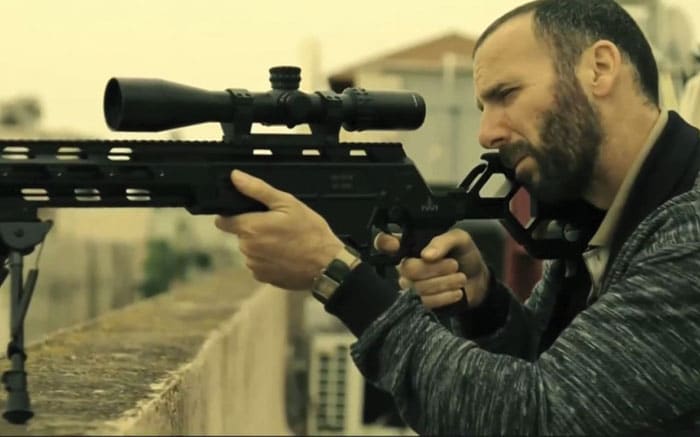
There’s blood on the walls, on the floor and on people’s hands in the fourth season of “Fauda” which dropped on Netflix on January 20.

Those waiting to see Doron (Lior Raz) give some guys a beatdown won’t have to hold their horses — it happens in the first episode. Raz earns every penny he is paid with a consistent powerhouse performance in every episode. 

Doron, who has led an elite Israeli unit that dresses up like Palestinians to take down terrorists and thwart plots, is feeling out of sorts, with some guilt over  friends that have been killed and is once again thinking that he should no longer be doing his stressful job.

In a season where the action takes place in numerous places, from Jenin to Belgium, to the Golan Heights and Lebanon, Doron is incensed when someone close to him is kidnapped and tortured by Hezbollah. It’s a race against the clock to save them and the list of his colleagues who have died is long enough as it is.

But there seem to be more complications and more things in his way.

 As always, Raz spits out his dialogue to let you know he is not in a good mood and you better stay out of his way. Unit member Nurit, played by Rona-Lee Shimon has taken her romance with Sagi (Idan Amedi) to the next level, but when she hides something important from him, he is angry and starts to have doubts. Shimon should have more screen time and could very well have a spin-off show of her own.

Created by Raz and Avi Issacharoff, “Fauda” remains a highly impressive show that features significant gun battles in Episodes 8 and 10. There are also a few impressive hand-to-hand combat scenes. Once again, the bureaucracy of the Israeli security services frustrates the desire of Doron and other members to save their friends or complete a mission.

In this case, Adel Tawalbe (Loai Nofi) and Omar Tawalbe (Amir Boutrous) both do fine jobs as threats to Israel who are making moves, with one of them double-crossing someone who is supposed to be smarter than him. Nofi and Boutros both are credible, but it’s Tawalbe whose character says he will burn his enemies one by one.

We see vulnerability and pain in everyone, from Doron who is sad as he watches and video of better times with unit members who have died, a member of the unit who asks when there will be a cease-fire, the relatives of a terrorist victim brazenly screaming at a terrorist gunman and a character says the one they loved who was lost was not a martyr. Steve (played by a convincing Doron Ben-David) openly expresses suicidal thoughts while another character says she doesn’t want to die as a young widow.

There are a number of twists and turns, including a scene that may remind you of “Munich.” In this season, there are bombs, missiles, hammers, small guns, automatic guns, grenades, and fists used to inflict damage. Inbar Lavi is impressive as Shanni Russo, who is working hard as a new member of the unit, but worries she made a mistake during one day in the field. Lucy Ayoub is also on point as Maya Binyamin, a strong woman whose loyalty is called into question.

While the show is driven by the ability of Raz to look like a tortured soul looking to find redemption through saving lives and taking out terrorists, the second-most magnetic actor is Itzik Cohen, as Gabi, the Captain. Always talking about food (here he mocks a vegetarian buffet) he can talk sweetly and humorously one moment, and then speak about something deadly serious, the next second, without missing a beat. His one romantic scene is fine, but the show would benefit from a few more.

The 12 episodes are action-packed, with plenty of tension and a heaping dose of introspection. While viewers had to wait a while for the new season, it was well worth the wait and there is no doubt people will be putting it at the top of their list of shows to binge.

Fourth Season of ‘Fauda’ Still Has Plenty of Fire Read More »

Let’s Make 2023 the Year of Robust Coalitions

By most measures, 2022 was a banner year in terms of legislative achievements for those of us who care deeply about justice and equality in California. When Governor Newsom signed bills to increase paid family leave for lower-income communities, expand criminal record relief for non-violent offenses, and make us a sanctuary state for transgender and gender-affirming health care, we rejoiced over the fact that our state is expanding rights, not contracting them.

Yet with 2022 in our rearview mirror and 2023 ahead of us, there remains a lingering and uncertain feeling: that we as faith leaders and justice advocates didn’t do enough. This sense of precariousness can be felt across the country, with Los Angeles being no exception.

In October, city officials were caught on a “hot mic” spewing hate against a fellow council member and his family. Only a few weeks later, demonstrators displayed antisemitic banners over one our city’s most highly trafficked freeways. And earlier this month, an unarmed black man was unjustly killed at the hands of Los Angeles police officers.

Despite these setbacks we took solace in our legislative wins and celebrated the fact that in the waning months of 2022 we witnessed a particularly special phenomenon. Of course, we are referring to robust coalitions and powerful allyship. The public demonstration of support among groups of all stripes was nothing short of extraordinary.

When the Jewish community faced a spate of antisemitic vitriol spewed by pop stars, athletes and politicians, together we stood up to demand action and accountability. When the Black community faced police brutality, together we called for changes in the handling of traffic stops and other mental health crises. Together, we fought hate and bigotry toward Blacks, Asians, Jews, women and LGBTQ people while advocating for policies that uplift marginalized communities.

The notion that like-minded organizations work together to achieve better outcomes for all might seem like a run-of-the-mill occurrence unworthy of special recognition. The unfortunate truth, however, is that strong coalitions are less common than you’d think. This is because organizations with overlapping missions too often work in silos. As a consequence, all parties involved fail to harness their collective power to make a tangible impact in their communities.

It was this very concern borne out of frustration that empowered us to launch Partnership for Growth Los Angeles, a joint venture between McCarty Memorial Christian Church and the Jewish Center for Justice. A unique Black-Jewish community development corporation, our mission is to work side-by-side to revitalize, restore, and rebuild historic southwest Los Angeles.

Since its inception in 2020, PFGLA has hosted summer reading cohorts, held resource connection events, donated school supplies, and facilitated COVID-19 vaccination sites for locals. Currently, our Project Jubilee cohort offers job training for young adults and support for attaining a high school diploma or GED. Our goal is to uplift violence-impacted students through integrated mentorship models.

Our goal is to uplift violence-impacted students through integrated mentorship models.

The point here is not simply to tout our own coalition work, but rather to urge all justice-minded organizations and individuals to commit to building stronger coalitions in 2023. While every one of us holds individual power and agency, our best work is done when working in cohesive coalitions with clear goals.

The need for sustained, unbendable partnerships has never been more apparent. It’s no longer enough to post a tweet or a statement when our friends and partners are in their hour of need. We must also be there during each others’ moments of strength because robust and resistant alliances are the most critical components in our efforts to achieve true justice outcomes for all.

Our only question now is, will you make this bold commitment and join us in this critical work? If the challenges and obstacles of 2022 have taught us anything, you’re needed now more than ever.


Rabbi Joel Simonds is the Executive Director of the Jewish Center for Justice and founding President of Partnership for Growth Los Angeles (PFGLA). Reverend Eddie Anderson serves the historic McCarty Memorial Christian Church in the West Adams neighborhood of Los Angeles and is founding CEO of PFGLA.

Let’s Make 2023 the Year of Robust Coalitions Read More »

My Jewish Valentine

I know Valentine’s Day is nowhere to be found on the Jewish liturgical calendar nor, for that matter, a day fondly remembered in Jewish history. But I do know that love and hope and perseverance are essential Jewish qualities. And that’s why I am sharing my story.

From when I was a young girl, I have always dreamed of my beshert.  This was decidedly not notional, but a deeply felt, essential, DNA-coded belief that I have clung to for the last 60 years – namely, that there was someone, a soulmate, a spiritual twin who I was predestined to be with.   Now all I had to do was find him.  How hard could that be?

In the six years since my marriage dissolved – a union that had its moments but was probably not divinely inspired — my search brought me on and off dating sites but to desultory effect.  In fact, I had developed something of an aversion to digital dating. But I decided to give online dating one last try, posting a tongue-and-cheeky profile under the handle, “Stale Arm Candy.” Within a week, I received more than 200 messages. Most of those messages were one syllable or cryptic or self-promotional or overly clever or clearly not from the relationship-minded. – except one …

He was handsome for sure … but there was something about his countenance.  In his main picture, he appeared to be giving some sort of talk. His expression was an intriguing mix of intelligence, conviction and high-jinx. His write up was tender and hilarious. I was smitten. His name was Max — soon to be dubbed “Catnip” — and I instantly knew him to be unique to any dating site or maybe even to any planet in our galaxy.

There were no red flags, except these: he was wearing a suit – one appropriate for boardrooms and not the surf — and he lived 3,000 miles away in New Jersey. He ignored my stricture about only dating men within ten miles of my home in West Los Angeles and so I decided to ignore it too.

My never-date-men-in-suits rule was a little less malleable. It stemmed from a promise I made to myself in my twenties. I’d gone out with some very “successful” men — lawyers, doctors, dentists, Wall Street types and businessmen — but I found them somehow lacking and I rarely accepted second dates. On the rare occasions when I did, I usually ended up wishing I was home curled up with a book. I vowed I would never date men whose line of work required them to wear a suit, making a bee line for aspiring writers, starving artists, and lost creative souls who needed a comb and a muse and who were trying to “find themselves.” I craved connection at an intense, soulful level. 

It took Max several messages and a “super like” to finally get my attention, When I pulled his profile up and stared at his picture, my gut took over. I knew I needed to respond.

I cannot remember verbatim our initial exchanges, but what I do remember, distinctly, is their sparkle and the heady feeling of utter connection, of having finally been found. Time flew by, deeply felt sharing about our families, the human condition, our relationship to Judaism, and our common, fundamental commitment to world repair, all punctuated with gales of laughter. Texting bubbles became our “oxygen,” and we blew back and forth furiously. two hopeful geriatric guppies falling fast for one another in a huge murky digital aquarium.

It is now six months and 15,000 bubbles later and the initial giddiness and anticipation and connection have been amplified by certainty and an unshakeable commitment to each other and our future together. I know now that there is a beshert for each of us, that hope matters, and that true love is always possible, today and every day.


Lorna Serene Stamm is a proud Mom, Nana, advocate, and writer. She has a PHD in Nurturing and Optimism.

My Jewish Valentine Read More »

Joe Rogan Defends Ilhan Omar: “The Idea That Jews Aren’t Into Money Is Ridiculous”

Podcaster and comedian Joe Rogan defended Representative Ilhan Omar (D-MN) from accusations of antisemitism on his show, saying that “the idea that Jews aren’t into money is ridiculous.”

During a February 5 episode of “The Joe Rogan Show,” Rogan said that Omar’s infamous “It’s all about the Benjamins” remarks from 2019 were “just about money.” “That’s not an antisemitic statement,” Rogan argued. “The idea that Jewish people aren’t into money is ridiculous. That’s like saying Italians aren’t into pizza. It’s f—ing stupid.” 

Rogan’s guest Krystal Ball, who co-hosts the YouTube show “Breaking Points,” argued that Omar shouldn’t have apologized for the Benjamins remarks. “She could have phrased it a different way so people could have less of a freakout, but can you not talk about the influence of money in DC?” Ball said. “There’s a very obvious reason why, for my entire life, there’s been a uniparty consensus around our policy vis a vis the Israeli government and a total inability or unwillingness to criticize the Israeli government. It has everything to do with organization and, yes, money, just like every other f—ing interest in DC.” She proceeded to call Omar “one of the more courageous voices on foreign policy” and lamented “the real loss” of Omar being kicked off the House Foreign Affairs Committee.

Rogan’s comments were criticized on Twitter.

“Disturbing that at a time of rising anti-Jewish violence, when growing numbers of Americans believe in antisemitic conspiracy theories, @joerogan would use his immense platform to spew antisemitic tropes about Jews and money,” Anti-Defamation League CEO Jonathan Greenblatt tweeted. “For centuries, people have used these longstanding tropes to spread vicious lies about the Jewish people. ‘Comedian’ or not, Rogan’s comments are no joke.”

“In defending Rep. Omar’s past antisemitic comments, you invoke the same tropes that have been used to persecute Jews for centuries,” American Jewish Committee CEO Ted Deutch tweeted. “With an audience of millions, it’s dangerous to be so flippant in trafficking in antisemitic stereotypes. Happy to explain on your pod.”

Representative Josh Gottheimer (D-NJ) tweeted, “It’s despicable language like this that leads to attacks and threats against Jewish people. @JoeRogan has a massive platform and it’s infuriating to watch him and @krystalball promote blatant, dangerous antisemitic tropes, including those masquerading as anti-Israel sentiments.”

Stop Antisemitism Executive Director Liora Rez said in a statement, “Joe Rogan is once again spewing antisemitic misinformation to his millions of followers, this time irresponsibly spreading an age-old trope about Jews and money, and then minimizing it by comparing it to Italians and pizza. Last time we checked, Italians weren’t the victims of genocide for their love of pizza. Guest Krystal Ball then adds insult to injury when she doubles down by defending the antisemitic comments of Rep. Ilhan Omar, stating that the Congresswoman should not have apologized, and goes on to propagate antisemitic vitriol by asserting that Israel is untouchable because of Jewish money influencing Washington D.C.” 

Rez added: “Joe Rogan can no longer be protected by free speech when his horrific rhetoric will ultimately lead to further violence against Jews. StopAntisemitism is calling on Joe Rogan and Krystal Ball to apologize for their remarks and for Spotify and The Joe Rogan Experience to invite guests on to have a conversation about antisemitism and how comments like his and his guests are not just controversial, but dangerous for the Jewish people.”

Associate Dean and Director of Social Global Action Agenda at the Simon Wiesenthal Center Rabbi Abraham Cooper said in a statement to the Journal, “How unfortunate that a person who has built his audience, reputation, and influence through the power of words chooses to be tone deaf when a member of Congress uses her position to deploy an anti-Semitic trope and Mr. Rogan gives her a wink and a nod.”

Former New York Democratic Assemblyman Dov Hikind, who heads the Americans Against Antisemitism watchdog, said in a video posted to Twitter that Rogan has “legitimized” the antisemitic trope of Jews and money spewed by the likes of Omar and Kanye West. “You have made it kosher, Joe,” Hikind said. “You’re supposed to be a good guy.” Hikind added that Rogan is “one of the most popular individuals” in the country. “Please figure out this Joe,” he said. “You’ve just made a huge, huge mistake, a dangerous mistake.”

The Journal’s request for comment through the contact section of Rogan’s website was not immediately returned.

Joe Rogan Defends Ilhan Omar: “The Idea That Jews Aren’t Into Money Is Ridiculous” Read More »

Of Documents, Balloons and Laptops

Okay, by a show of hands: Who doesn’t have classified documents in his or her garage or sock drawer? Come on. Be honest. Surely someone reading this is hoarding a keepsake from the Eisenhower administration, stashed away in the attic. Better check, because you might be in violation of the Espionage Act. It seems that anyone who is anyone, and even a few nobodies, possibly have state secrets with classified markings and fuzzy provenance.

National security stowed in secure facilities is so yesterday. Nowadays, top secret documents apparently have feet and simply slip away to improbable locations.

National security stowed in secure facilities is so yesterday. Nowadays, top secret documents apparently have feet and simply slip away to improbable locations.

That’s the only conclusion one can reach now that we know both Presidents Trump and Biden had unlawful possession of such confidential material. So, too, did Vice President Mike Pence. The documents in Biden’s think tank offices and homes date back to when he was vice-president and United States senator. 

Take a guess at what Barack Obama, George W. Bush, Bill Clinton and Jimmy Carter have been up to these past several weeks—on their knees desperately searching under mattresses, climbing ladders to scan the tops of bookcases and generally casing the joint. No former statesman wishes to be included in this evolving list of presidential purloiners of documents that belong to the National Archives.

Yes, it is true that Biden has been cooperating fully with federal authorities, while Trump, predictably, has been evasive and obstructionist. Yet that doesn’t explain why Biden’s personal attorney, without national security clearances, was permitted to rummage around for documents all by himself outside the presence of the FBI. Moreover, given these recent disclosures and the FBI’s Normandy Landing appearance at Mar-a-Lago, was it absolutely necessary to conduct a nighttime raid on Trump’s home as if he was the head of some South Florida drug cartel?

Ironically, pursuant to the Presidential Records Act, Trump, as a former president, at least had a colorable claim to having a possessory interest in documents created during his presidency. No such allowance exists for former vice presidents and senators, however.

And we haven’t been told why these classified documents are so top secret in the first place, or whether they should be designated as such. President Obama himself once quipped: “There’s classified; and there’s classified.” His point being: Some stuff is meant only for eyes that belong to people in the Situation Room. Other documents marked classified can actually be shared by people eating at the White House Cafeteria.

We have no way of knowing whether these documents include nuclear codes, or recipes for apple pie à la mode. The House Intelligence Committee will be conducting hearings this week and perhaps we’ll find out.

Meanwhile, the Department of Justice, in conducting its investigation of Trump, made it clear that removal, possession and the mishandling of these documents — whether classified or not — all by itself, triggers the Espionage Act. That was disappointing news. Apparently, Trump wasn’t involved in some classic Cold War caper with sinister spies flashing “Man from U.N.C.L.E.” tradecraft. We were kind of hoping that the Espionage Act indicated, well, espionage — á la Boris and Natasha. Instead, we were told that Trump didn’t have to sell state secrets or destroy classified documents in order to violate the law. 

So when President Biden proclaims, “there is no there there,” and that the garage that warehoused both his coveted Corvette and mildewing documents was “locked,” or that their misplacement was “inadvertent,” pursuant to the DOJ’s own prosecutorial parameters, none of Biden’s defenses are exonerating in any way.

But perhaps most troubling: Are we only now coming to learn that classified documents went missing and no one responsible for their whereabouts knew anything about their disappearance?

But perhaps most troubling: Are we only now coming to learn that classified documents went missing and no one responsible for their whereabouts knew anything about their disappearance? Take notice: Every man and woman is now on their own to safeguard their Social Security numbers. No one, apparently, is minding the store.

We’re like a country that can’t find its keys. 

A lot of weirdly mysterious stuff is happening these days. For instance, we’re fighting a competing superpower’s balloons? Seriously? First it was the Wuhan Virus; now it’s the Chinese Hindenburg? With all those flight simulator skills our kids have acquired from playing video games, and with “Top Gun: Maverick” breaking box office records, our dog fights have come down to this?

Before shooting it down with one of our air-to-air Sidewinder missiles, perhaps we should have first sent up our Elmo or Lilo & Stitch Thanksgiving Day balloons, as helium-filled emissaries. 

Perhaps we’re suffering from a post-COVID breakdown, a laxity and carelessness provoked by having spent the first two years of the coronavirus in lockdown. We don’t know how to do much anymore other than test for Omicron and binge on streaming channels. Our political, corporate and sexual imaginings and intrigues have been confined to “Game of Thrones,” “Succession” and “Outlander,” respectively. Without our screens, we’re lost.

Which brings me to the mother of all misbegotten screens — Hunter Biden’s laptop, which in some bizarre way, links all of these sordid stories. After all, the younger Biden had access to his father’s disseminated documents. He had keys to the think tank at the University of Pennsylvania. He also lived and paid rent in the very homes where all these sets of documents resided, too. He even had keys to the garage and Corvette.

Meanwhile, the think tank was partially funded by Chinese donors, and millions of dollars flowed to Hunter Biden and his uncle, the president’s brother, from Chinese energy firms and other businesses, raising the very serious specter of influence peddling, in which Attorney General Merrick Garland, remarkably, has shown very little interest. Of a further compromising nature, Hunter apparently had ties to Chinese intelligence officials.

Is that the reason why we’re not supposed to associate COVID with the Wuhan lab, and why the Chinese balloon floated across the American horizon for days before it was shot down off the coast of South Carolina?

What’s contained in that laptop may answer some of these questions. At the very least, we’ve been assured that the sexual content on that hard drive is far more salacious than anything viewable on “Outlander.”


Thane Rosenbaum is a novelist, essayist, law professor and Distinguished University Professor at Touro University, where he directs the Forum on Life, Culture & Society. He is the legal analyst for CBS News Radio. His most recent book is titled “Saving Free Speech … From Itself.”

Of Documents, Balloons and Laptops Read More »

East Bay “Anti-Zionism is Antisemitism” Billboards Defaced by Anti-Zionist Jews

Three billboards saying “anti-Zionism is antisemitism” in Berkeley and Oakland were defaced by people claiming to be anti-Zionist Jewish activists on February 3.

The Jewish News of Northern California (The J) reported that the billboards, which were put up by the group JewBelong, stated: “You don’t need to go to law school to know anti-Zionism is antisemitism,” referencing the several student groups at Berkeley Law who passed bylaws barring Zionist speakers from campus in 2022. The defaced billboards were changed to say “anti-Zionism is anti-racism” and “Jews4FreePalestine” over the JewBelong logo. 

The anonymous Jewish activists said in a statement: “We are Jews who vehemently oppose the notion that anti-Zionism is anything but anti-racism. We oppose the perverse use of the historical genocide and displacement perpetrated against the Jewish people to justify the current and ongoing genocide and displacement of the Palestinian people.” They added that the defacement was a response to JewBelong Founder Archie Gottesman saying that the recent vandalism of other JewBelong billboards with “Free Palestine” was a hate crime. “Opposing Israeli apartheid and occupation, which the majority of the world has for decades recognized are illegal, is not a hate crime,” the anti-Zionist activists said. “And rejecting Zionism anywhere in the world, whether in the streets of Palestine or on Billboards in the Bay Area, is not a hate crime.”

JewBelong Founder Archie Gottesman told The J that the people who defaced the billboards are “fringe” and are attempting to stoke “a Jew vs Jew fight at a time when we should all be united against the larger issue, which is growing antisemitism in the US.”

Brooke Goldstein, Co-Founder of End Jew Hatred, tweeted, “There is nothing progressive, anti-racist, or ‘pro-Palestinian’ about vandalism defacing and demonizing the civil rights movement of the Jewish people: Zionism.”

East Bay “Anti-Zionism is Antisemitism” Billboards Defaced by Anti-Zionist Jews Read More »

you-dont-know-schiff

Talking Schiff with Mark & Lowell #19: Florida

YOUR HOSTS:
MARK SCHIFF
markschiff.com
Twitter: @markschiff
Instagram: markschiff1
Mark’s new book “Why Not?: Lessons on Comedy, Courage, and Chutzpah” is available!
Click on these links to buy:
Amazon
Barnes & Noble
Books-A-Million
Bookshop.org
 LOWELL BENJAMIN
Twitter: @lowellcbenjamin
Instagram: @lowellcbenjamin
Please follow “You Don’t Know Schiff” so you don’t miss out on any exciting episodes. Click here to subscribe on Apple Podcasts (and please leave us 5 stars and a positive review – your support means the world to us and it helps us get discovered by new listeners)


Talking Schiff with Mark & Lowell #19: Florida Read More »

Talking Schiff with Mark & Lowell #19: Florida

YOUR HOSTS:
MARK SCHIFF
markschiff.com
Twitter: @markschiff
Instagram: markschiff1
Mark's new book “Why Not?: Lessons on Comedy, Courage, and Chutzpah” is available!
Click on these links to buy:
Amazon
Barnes & Noble
Books-A-Million
Bookshop.org
 LOWELL BENJAMIN
Twitter: @lowellcbenjamin
Instagram: @lowellcbenjamin
Please follow “You Don’t Know Schiff” so you don’t miss out on any exciting episodes. Click here to subscribe on Apple Podcasts (and please leave us 5 stars and a positive review – your support means the world to us and it helps us get discovered by new listeners)

Talking Schiff with Mark & Lowell #19: Florida Read More »