fbpx

November 29, 2022

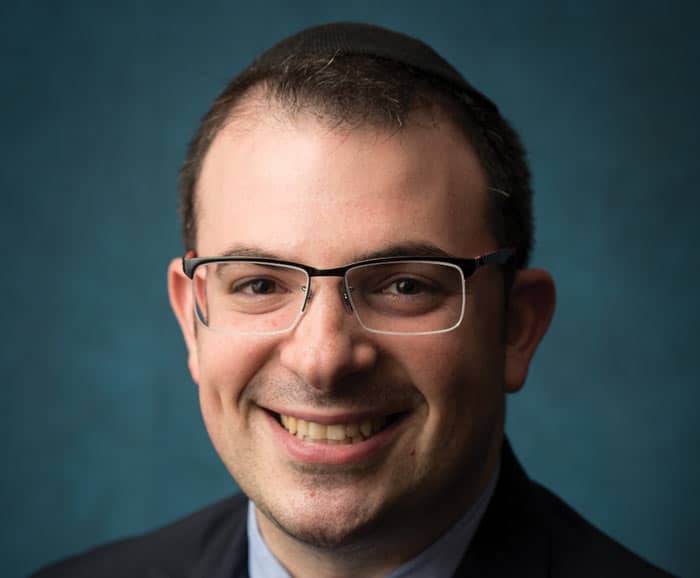
Rabbi Ari Lamm: The Optimist

I was in a low state when I opened my computer to speak with Rabbi Ari Lamm. I had recently secured my first apartment in Tel Aviv and had overcome a small but bitter crisis with my landlord. The Israeli and American elections were just days away, so on top of struggling to manage how to be an Israeli (which at the time meant how to schedule an appointment at the bank), I was also struggling melodramatically with what being a Jew means. Religious or secular, American or Israeli, right-wing or left-wing — these labels and various categories of Jewishness were keeping me up at night (I told you it was melodramatic). Which is why it was so utterly refreshing to hear Rabbi Lamm say about halfway through our conversation: “I’m an optimist by nature, so maybe it doesn’t mean as much, but I’ll say that I’ve never been more optimistic about the future of the Jewish people than I am now. This is, by far, the best time in Jewish history to be a Jew.”  

This simple statement was so refreshing—primarily because we hear the opposite so often today.

He hosts the wildly popular podcast “Good Faith Effort,” where each week he sits with “thinkers, writers, artists, and faith leaders to explore how the Bible continues to inform our lives today.”

I myself have contributed to the “doom and gloom” outlook on Jewish life that cites the explosion of antisemitism in the Diaspora and the constant crises of Israel as reasons to be worried. But Rabbi Lamm has a different perspective, which I believe contributes to our community’s attraction to him as a prominent Jewish intellectual. Rabbi Lamm writes for top Jewish and non-Jewish publications, he was number 38 in The Jerusalem Post’s 2022 list of the most influential Jews, and he hosts the wildly popular podcast “Good Faith Effort,” where each week he sits with “thinkers, writers, artists, and faith leaders to explore how the Bible continues to inform our lives today.” Not only is his personal podcast popular, but also so is SoulShop studios, the media brand he founded that produces faith-based content specifically targeted to young people. A personal favorite SoulShop product of mine is “Adventures with Dead Jews,” hosted by novelist Dara Horn, a podcast as insightful as it is provocative.  

The latest SoulShop project, which is perfectly in step with the brand’s mission statement, is centered around Montana Tucker, a TikTok influencer with nearly 9 million followers. SoulShop recently launched a series on her social pages called “How To: Never Forget,” which follows Tucker on a trip to Poland to visit infamous concentration camps, where she learns more about her family members who died there and her personal connection to the Jewish people.  

 “We are so incredibly thrilled about this series,” says Rabbi Lamm. “It got a million hits in under 24 hours, and it was on ‘Good Morning America.’ The thesis behind this project is that: the Jewish world tends to think small about our capacity for positive influence and our capabilities in reaching out to the culture. We’re showing that it’s possible to interact with millions of people, not just hundreds … which has always been the Jewish story.”  

Even in a world driven by technology, materialism and fast-paced news — a world that Rabbi Lamm acknowledges we are in—not only meaningful Jewish stories but also meaningful Jewish ideas can “make a dent,” as long as they are presented in high-quality content. One would think that contemporary trends, especially among young people, work against this formula for success. But all is not black-and-white.  

Across the board, the data show that young Americans are detaching from organized religion. However, Pew Research reports that over 25% of Americans now identify as indeed spiritual, rather than religious in any preconceived sense of the word. This did not come as a surprise. “Of course, younger generations are searching for something,” Rabbi Lamm says. “There is an incredible hunger. They have been told by their parents and their grandparents that they don’t need any community, they don’t need any togetherness, they only must be themselves. Well, they are increasingly finding out that just being yourself means being by yourself, and that’s a vulnerable place.” It’s true that attendance at brick-and-mortar houses of worship has plunged, but it turns out, if Rabbi Lamm’s professional successes are any indication, that the stories we learned in these places, and the senses of meaning, purpose, and shared values we gained in these communities and passed on to our children, are still in hot demand.  

Storytelling quickly became a theme in our conversation. Slowly but surely leaving the world of existential dread with regard to the fate of the Jewish people, I explained to Rabbi Lamm that though I am a more secular Jew, I have found that his work in storytelling has awakened part of my own Jewish story that I had previously forgotten, and maybe this rendered me a Jew who was not religious but still connected spiritually, nonetheless. While listening to “Good Faith Effort,” hearing the sparring on this week’s parsha (torah portion), I was reminded of a children’s picture book that I became enamored with in Hebrew school. Each week, we gathered at the front of the classroom and flipped through its pages, learning all about the Garden of Eden, Cain and Abel, and the binding of Isaac. And then there was “Joseph and the Amazing Technicolor Dreamcoat” starring Donny Osmond, the VHS of which played on loop in my house from the ages of two to six. Jewish tradition was an integral part of my childhood, and the emotions in thinking about it provoked something that I couldn’t quite put my finger on yet.  

Then it made itself obvious. I remembered that we are currently positioned in the Book of Genesis when reading the Torah, where we follow the beginning of the universe, the beginnings of man, and the beginnings of the nation of Israel. This is where my beloved picture book comes in, and Rabbi Lamm and I deduced that there is probably a form of this picture book in the lives of American Jews, regardless of how secular they are. Genesis remains a staple in both the American and Jewish imaginations, and profoundly in the American Jewish imagination. The explanation for this began to inform the theme of our discussion: optimism.

“The best way to communicate with fellow human beings,” explains Rabbi Lamm, “is through stories. Through common understandings of love, bravery, loyalty, despair. What it means to keep a family together, to navigate jealousy, hatred and loss, and to make and keep promises.“

“The best way to communicate with fellow human beings,” explains Rabbi Lamm, “is through stories. Through common understandings of love, bravery, loyalty, despair. What it means to keep a family together, to navigate jealousy, hatred and loss, and to make and keep promises. There is no other story that expresses these things more clearly than Genesis. We follow Abraham’s story not because he is incredibly virtuous or he is a great teacher, but because he is just a man, who goes on a journey and does not know where it will take him. We are all on journeys like that, or at least we hope to be.” He continued: “What Genesis means to the Jewish people also means something to the individual. The Jewish people have every reason to despair, and yet Genesis tells us to have hope. You can have every reason to despair, but Genesis helps you find hope.”  

Of course, not just individuals need hope. Reality could not hide from this interview forever, and my initial feelings of anxiety about the upcoming Israeli election and the American midterms began to creep in. What story would they tell about the relationship between American Jewry and Israeli Jewry? What do the dilemmas in both societies say about our cohesiveness and durability as a culture? It turns out there was no one better with whom to air these existential dilemmas than a rabbi. Genesis, and its supplemental optimistic nature, had an answer for this as well.

Genesis is embedded into how both America and Israel understand themselves. It is common knowledge especially in Jewish intellectual circles that our founders perceived themselves as the new Israelites, looking to a future redemption in the “almost promised land,” as Abraham Lincoln described it. But the tradition extends much deeper. “When Frederick Douglass returned to Maryland for the first time as a free man,” Rabbi Lamm explains, “he quotes the story of Noah. He says: ‘The waters of the flood were retiring.’ Genesis shows up at the pinnacle of American art: Steinbeck’s ‘East of Eden,’ Bruce Springsteen’s ‘Adam Raised a Cain’—and even in American technological prowess. In 1968, when America first broadcasted from the moon, what was read over the transmitter was the first couple of verses of the Bible, ‘In the beginning…’ In America’s case, of civic nationalism where nothing really unites different peoples, you would think our national text would be Justinian’s Code or Thomas Paine’s ‘Common Sense.’ But it’s not … Genesis remained most ingrained in the imagination.”  

It is Genesis, in keeping with the theme of optimism, that propels America forward, that gives it hope to continue its journey without a clear destination in sight. In a society with less and less in common, fantastically widespread stories are a remarkable unifier, and an incredible reminder that the only way is forward.  

The same thinking can be applied to Israel, a country that feels like it is tearing itself to smaller and smaller ribbons by the minute. I asked Rabbi Lamm to speak to what hundreds of commentators have pontificated about in the last several months: whether the divide between Jews in our only gasp of sovereignty signifies a general weakening of the state. We again returned to the same principles we had been discussing all along. “Israel’s politics can be a mess, but Israeli culture is at a high point,” he says. “We’re seeing some of the most remarkable cultural production in the entire history of the Jewish people take place in Israel — television, food, poetry, literature, art, all this is taking the world by storm.” 

The conflict between Israelis would appear to invigorate the output of Israeli society: a society constantly in conversation with itself, constantly wrestling over how to express itself. There is nothing more in line with Genesis than that: wandering into the future not entirely knowing where you’re going, but knowing you have a divine purpose to carry along. Rabbi Jonathan Sacks (z”l), Lamm’s teacher, once said: “Israel is the only place in the world where Jews can create a society, and that is a religious task even though Israel is a secular state.”  

When America and Israel live up to the spirit of their founding principles — redemption, optimism, a Promised Land — not only do they get along better with each other, but they are undeniably strengthened internally as well.  

The so-called godless world of the 21st century may not be as far from the initial stories that brought us here as we thought. There still exists a yearning, in not only the individual young person who has never been to synagogue in his life, but also in the nation that he calls home, to connect with foundational ethos that binds us closer together. And that truth carries with it a great deal of hope for the future, rendering its adherents like Rabbi Lamm and his devoted followers, optimists.


Blake Flayton is the New Media Director and Columnist for the Jewish Journal. 

Rabbi Ari Lamm: The Optimist Read More »

Dear Santa

Dear Santa:

Let me begin by acknowledging that I am a fully grown man and a Jew, so you are under no obligation to take my Christmas wish list seriously. After all, I am not your regular clientele.

I write to you between Black Friday and Cyber Monday, when Christmas shoppers take matters into their own hands regardless of whether they have been naughty or nice. Let me reassure you that I have eschewed all such acts of immediate gratification. I seek nothing material, or for myself alone.

Indeed, the Christmas present I wish for can’t be made by an elf in your toy factory. It is a more cosmic request, something that will require an assiduous application of your Saint Nick powers.

So here goes: Is it in any way possible for you to turn back the clock? Not to daylight savings time, but to an altogether earlier time of our recent past: pre-COVID, before Trump and Twitter, Bitcoin and Biden, the Alt-right and Antifa, crime waves and border crossings, cancellations and vaccinations, conspiracies and selfies.

You would be delivering humankind the most precious gift of all—sanity, the sanctity of life that has somehow been forgotten, and goodwill to our fellow men and women. We have unexpectantly lost those timeless values. Perhaps they never existed at all.

To be fair, our species has never excelled at harmony. But it has all managed to get improbably worse. Our tribal loyalties have never revealed such bitter divisions. Partisanship was never this warlike. The people below the North Pole—your base of operations—especially Americans, are completely polarized. We are desperately in need of some intervention, a spark of “Ho, ho, ho” magic from a jolly Kris Kringle streaking through the sky.

Most of all, we are in need of a reminder of who we once were.

In past years, asking you for a train set would ordinarily suffice. But these are darker times as the winter solstice approaches. Humanity has completely gone off the rails. We’re stuck in our intellectual silos not unlike your occasional problems with chimneys.

Surely you already know what I mean. It’s impossible not to have noticed that our friends, families, and neighbors have changed radically these past several years. We’ve grown intolerant of one another, forever unforgiving, and morally reproaching. We inflate our grievances, overplay the victim card, casually invoking evil to describe those with whom we disagree.

Charges of racism fly impulsively. What were once minor dents in friendships have been elevated to war crimes. Second chances are scarcely offered. No one is above suspicion. Even the old canards about Jews, thought to have been long buried, are suddenly remade as fashionably new. Shouting down has trampled the art of listening into a lost art. Trust is without currency in a world skeptical of cryptocurrency. Being a good neighbor is now a quaint but outdated virtue.

Overall, it’s not a good look for humanity. Arousing the Christmas spirit is going to be tough sledding this year—even for you.

How did we let this happen? Surely life under quarantine did not help. Nor did the misnomer of “social” media. Bunkered and blinkered does not lead to a common understanding, or leave much room for empathy. We have lost the memory of each other’s voices. Even with our N95 masks off, the same people no longer seem as familiar. We somehow filtered them away. Such are the consequences of no longer sharing the same rooms.

We have lost the memory of each other’s voices. Even with our N95 masks off, the same people no longer seem as familiar. We somehow filtered them away.

We had four years of an American presidency dedicated to score-settling and scapegoating. The White House has not set an example for national unity—but here blame lies with the present occupant of the Oval Office, too. Both parties fete fanatics and cast aspersions on their political enemies—whether they be “fake news” organizations; MAGA hat-wearers and anti-vax deniers, “deep-state, blue-state” operatives; Proud Boy insurrectionists and “smash and grab” looters touting BLM permission slips. No one seems to realize that white and Black supremacy are fringe movements with expiration dates that should have long since elapsed.

Instead, our nation has adopted the blood feuds that were once confined to the hills of Eastern Kentucky. The Hatfields and McCoys were replaced by the Coastal Elites and America Firsts—arrogant cosmopolitans versus unwashed deplorables. We are in the grips of a national self-hatred where monuments are defaced and statues beheaded, where race is primal and white skin prima facie evidence of guilt, where jails are deemed too punitive, borders too exclusionary, and debt definitively usurious. And those with private planes admonish the creeping carbon footprints of others. Of course, you know all about that given your impeccable view of melting polar ice caps.

Even Thanksgiving is now upside down. Would it have even been possible to get Indians and Pilgrims to sit down for a meal this last week?

Despite rising prices, stagnant home sales, inflationary gasoline, supply change shortages for everything except fentanyl, we still have much to be thankful for. But we are in no gracious mood to share those feelings. The natives are restless, even though we can’t seem to agree who the natives even are these days. Overall, we Pilgrims have made little progress.

We have become a people incapable of giving thanks. Consumed, instead, with indignant demands for entitlements. Ingratitude is all around us, our manners somewhere lost in the scuffle. You’ll notice what I am mean in the letters you receive this holiday season.

Yet, all those Americans who complain about the evils and imperfections of America would still choose no other country in which to live. All their bellyaching emanates from eating too much on the holiday, and not on account of any systemic shortcomings in the land of the free.

Perhaps this letter is all for naught. I am asking too much. A request that exceeds your powers, encroaching upon the divine. It would amount to a Christmas miracle. The birth of a new savior. A manger scene for the new millennium.

Even a red-nosed reindeer, speed-balling across the horizon, can’t reverse the course of time, or our destiny.

On the other hand, for a man who already knows whether we’ve been bad or good, at least we can count on you to withhold judgment.


Thane Rosenbaum is a novelist, essayist, law professor and Distinguished University Professor at Touro University, where he directs the Forum on Life, Culture & Society. He is the legal analyst for CBS News Radio. His most recent book is titled “Saving Free Speech … From Itself.”

Dear Santa Read More »

The Elections in Israel – and the Reaction to the Elections

Over the past few months, Israel has been suffering a rise in terrorist attacks against its civilians, leaving several civilian and military casualties. The attacks were perpetrated mainly by Palestinian terrorists, who abuse working permits in Israel to kill innocent people. 

Last week a sixteen-year-old Yeshiva Student was murdered while waiting for a bus in Jerusalem. The week before, three Israeli civilians were stabbed and rammed to death in the city of Ariel. The events highlight the need for a stable government in Israel, which will meet the security challenges head on and reinstate the power of deterrence.  

On October 30th, the president of Israel, Isaac Herzog, assigned the task of forming a government to MK Benjamin Netanyahu. While many columnists analyzed the elections in Israel, most of them remarkably overlooked the domestic issues at the core of the elections.

The will of the people is decisive. Very few states in the Middle East have such a political system by which the will of the people can topple a Prime Minister and then reinstate him according to the popular vote.

The election process is first and foremost a demonstration of the vibrant democracy in Israel. The will of the people determined in the previous elections to prevent a majority to Netanyahu, and in the most recent elections resolved to return that majority to Netanyahu. The will of the people is decisive. Very few states in the Middle East have such a political system by which the will of the people can topple a Prime Minister and then reinstate him according to the popular vote. 

The chanting at the political party conventions was “Meshilut” meaning “Governance.” It was a clear reference to the issues of security and domestic reforms in the judicial system. They will most probably be the highest priority items on the agenda of the next government. 

In addition to the terrorist attacks, in the Southern district of the Negev, farmers find themselves under constant attacks from Arab neighbors. Farmers spend the night in their tractors in order to protect their equipment and produce, their livelihood. The Zionist Religious party identified this issue as one of grave concern, and addressed it forcefully. This political stand was one of the foremost reasons for the rise of that party, under the leadership of Bezalel Smotrich and Itamar Ben Gvir.

Internal judicial reforms were also an important element. Many feel that the criminal justice system has been weaponized for political reasons. There is a growing lack of confidence in the impartiality of the prosecution in Israel, especially since the case of the murder of the young school girl Tair Rada, the indictments against Netanyahu and the sidelining of the judicial monitoring body. There is a call for additional accountability in the Israeli criminal justice system and increased clarity in indictment clauses. Regardless of where one sits politically, all are legitimate issues for public discourse and debate. Most of the reforms called for are already part of democratic systems, including in the United States of America. 

Even before the government has been set up, and before policy has been established, numerous articles have been authored, maliciously defaming and delegitimizing the elected government, some even calling it an appalling “coalition of racists.” It is felt in Israel that what is appalling is the rush to cast premature accusations against a legitimate democratically elected government. Most of the discrediting articles ignore Palestinian terrorism and overlook the achievements of previous Netanyahu governments, among them normalization of relations with additional Arab countries and establishing Israel as a global leader in innovation.  

Those critics even extract outdated accusations against Israel for the lack of peace with the Palestinians, ignoring the fact that Israel, also under Netanyahu, relinquished territories for peace while receiving no peace, that the Palestinians rejected every peace deal offered, that the Palestinian authority continues to cultivate an environment of hatred and incitement and that Hamas, a central element in Palestinian society, opposes peace in any borders.

In contrast to several columnists airing concern regarding a shift in Israeli politics to the far right, the truth is that a deeper understanding of the situation in Israel does not lead to that conclusion. Already in the previous government there was a sturdy block of conservative members of Knesset, more than 70 strong. Naftali Bennet, the former Prime Minister, ran on a conservative platform, stating that he is “more right than Bibi.”    

Much of the accusations are on the basis of one elected official, namely Itamar Ben Gvir. He has a problematic past. He did belong to the outlawed Kahane party, was indicted for radical rightwing activity and did issue in the past radical statements. Yet, since then, he publicly rescinded his past, expressed regrets for his past actions and stated publicly that he no longer adheres to his past platforms. For these reasons, he was approved for candidacy by the Supreme Court of Israel.

If one relied on the system when it acted against extremism and even arrested Itamar Ben Gvir in the past, one must rely on the system when it approves him.  

Those who criticize forget that under the previous Lapid and Bennet government, the Arab Ra’am party was part of the coalition. This party has been accused by many in Israel of having a history of affiliation with the extreme Muslim Brotherhood. The concerned voices of today did not raise their concern then. They relied on the fact that despite their problematic history the Supreme Court approved the party’s running for elections. The same should hold true for Itamar Ben Gvir. If one relied on the system when it acted against extremism and even arrested Itamar Ben Gvir in the past, one must rely on the system when it approves him. It is no offense to be right wing. It is an offense to defame Israel and the elected PM of Israel with reckless accusations. 

We need to bolster true democratic tolerance in the political discourse. Respecting the vote of the people, even if it empowers the party that one does not support, is part of that tolerance. We do hope that the relative stability will deliver the security the people of Israel deserve, enhance Israel’s role as a global leader in innovation and facilitate an enhancing of normalization of relations in the Middle East.


Hillel Newman is the Consul General of The Consulate General of Israel in Los Angeles.

The Elections in Israel – and the Reaction to the Elections Read More »

Jewish Groups Blast Trump for Dinner with Kanye West, White Nationalist Nick Fuentes

Myriad Jewish groups are issuing staunch condemnations of former President Donald Trump’s dinner with rapper Kanye West and white nationalist Nick Fuentes at Mar-a-Lago on November 22.

In a November 26 post on his social media platform Truth Social, Trump claimed that he didn’t know who Fuentes is, or that West was bringing him to the dinner. Trump said that he agreed to the dinner to give West “advice” and that West “has been very good to me,” but also called the rapper “a seriously troubled man.” West has lost various business deals, most notably with Adidas, after his various antisemitic comments.

Jewish groups denounced Trump’s dinner with West and Fuentes. Anti-Defamation League CEO Jonathan Greenblatt tweeted that it was “awful, appalling and yet entirely in character.”

The American Jewish Committee similarly tweeted, “It is outrageous that Mr. Trump met with Kanye West, one of social media’s biggest antisemites. That in and of itself is enough to send a shiver down the spine of every American. Equally alarming, far-right leader Nick Fuentes, a white supremacist, was also at the meeting.”

Simon Wiesenthal Center (SWC) Founder and Dean Rabbi Marvin Hier said in a statement that Trump’s dinner with West and Fuentes was akin to meeting with “members of the Ku Klux Klan.” Rabbi Abraham Cooper, the SWC’s Associate Dean and Director of Global Social Action Agenda, also said in the statement, “It is unacceptable that a former President of the United States who has announced his candidacy for a second term would meet with anti-Semites and an avowed white nationalist. The result of this meeting is the mainstreaming of bigotry at a time of surging anti-Semitism in the United States. The SWC urges President Trump to disavow Nick Fuentes and his anti-Semitic bigotry.”

Zionist Organization of America (ZOA) National President Morton A. Klein, who gave an award to Trump earlier in the month, said in a statement: “I, who was born in a displaced persons camp in Germany, lost almost my entire family who were murdered during Hitler’s holocaust. My parents, both Holocaust survivors, Sarah of Poland and Rabbi Herman Klein of Czechoslovakia—who lost his first family to Hitler’s evil—would have demanded this statement of me and ZOA as history demands that all people of good faith denounce Jew-hatred.” The ZOA statement also called on former Presidents Barack Obama and Bill Clinton to condemn Nation of Islam leader Louis Farrakhan, “the source of much of Kanye West’s and other Jew-haters’ bile.” “President Obama must finally come clean about the infamous 2005 photo of him and vicious antisemite Farrakhan standing together smiling from ear to ear and his helping organize Farrakhan’s major march on Washington,” the statement read. “President Clinton must denounce Farrakhan, after sharing a stage with him and smilingly shaking his hand at Aretha Franklin’s funeral in 2018.” Additionally, the ZOA urged President Joe Biden to denounce members of The Squad, including Representatives Ilhan Omar (D-MN) and Rashida Tlaib (D-MI).

The Republican Jewish Coalition (RJC) said in a statement to New York Times reporter Maggie Haberman: “We strongly condemn the virulent antisemitism of Kanye West and Nick Fuentes and call on all political leaders to reject their messages of hate and refuse to meet with them.” The RJC also retweeted a tweet from David Friedman, the U.S. Ambassador to Israel during the Trump administration, stating to Trump: “Even a social visit from an antisemite like Kanye West and human scum like Nick Fuentes is unacceptable. I urge you to throw those bums out, disavow them and relegate them to the dustbin of history where they belong.”

Stop Antisemitism asked in a tweet that if one assumes that Trump didn’t know who Fuentes is, then “where is the condemnation of Fuentes” now?

Jewish Groups Blast Trump for Dinner with Kanye West, White Nationalist Nick Fuentes Read More »

you-dont-know-schiff

Jamie Alcroft – Part 2

Comedy legend Jamie Alcroft is back this week for the second half of his fascinating and fun conversation with Mark and Lowell. Despite the serious subject, Jamie’s humor and positivity shine through as he tells the saga of waiting for and going through successful heart and liver replacement surgeries. And Jamie’s wife, Emmy award winning figure skating choreographer Sarah Kawahara, joins in on some of the conversation sharing her perspective on journeying through the ordeal together. Since recovering, Jamie passionately encourages people to become organ donors, and is an international ambassador for the organization OneLegacyFoundation.org. If you aren’t one already, consider becoming an organ donor today and check out the link to their website.
And of course, find out more about Jamie’s life and comedy, his writing and silversmith work.

Mark’s books are available for purchase!
Available November 8, 2022.”Why Not: Lessons on Comedy, Courage, and Chutzpah.”
Click on these links to buy:
Amazon
Barnes & Noble
Books-A-Million
Bookshop.org

Read road stories from some of the best comedians of our generation in Mark’s first book  “I Killed: True Stories of the Road from America’s Top Comics” available now!

Please follow “You Don’t Know Schiff” so you don’t miss out on any exciting episodes. Click here to subscribe on Apple Podcasts (and please leave us 5 stars and a positive review – your support means the world to us and it helps us get discovered by new listeners):

Your hosts:
markschiff.com
Twitter: @markschiff
Instagram: markschiff1
 

Lowell Benjamin
Twitter: @lowellcbenjamin
Instagram: @lowellcbenjamin


Jamie Alcroft – Part 2 Read More »