fbpx

September 30, 2022

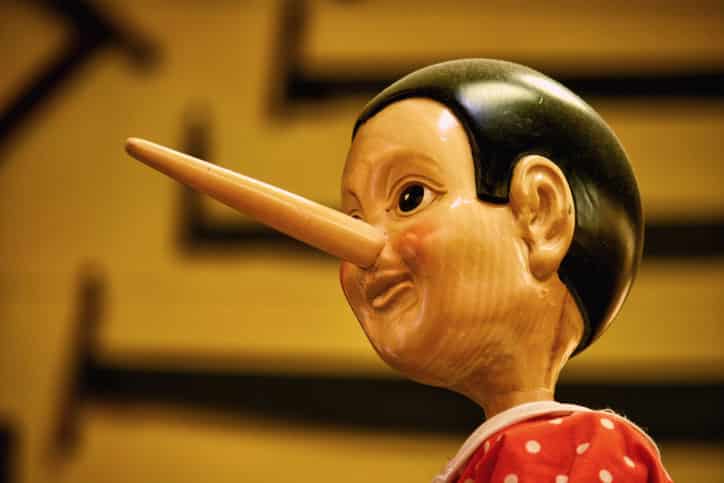
The Appeal of Lies

Aquinas, who equated truth with joy,
may not have realized the quite treacherously troubling fact
that lies appeal to nearly all the hoi polloi,

since passion for the truth is something we have always lacked.

We’re joyful when our leaders who have lied to us are hacked,

but sober when we are ourselves for our untruthfulness attacked.

A verse in Hallel tells us every man’s a liar.
And for this reason is on Yom Kippur and Rosh Hashanah not recited,
because, to God appealing in our strait that’s dire,

its words recall the lies for which we fast, and are indicted.

Ps. 116:10-11 states:

י הֶאֱמַנְתִּי, כִּי אֲדַבֵּר; אֲנִי, עָנִיתִי מְאֹד. 10 He’emanti, I trusted, even when I spoke: ‘I am greatly afflicted.’
יא אֲנִי, אָמַרְתִּי בְחָפְזִי: כָּל-הָאָדָם כֹּזֵב. 11 I said in my haste: ‘All men are liars.’

Rosh Hoshanah and Yom Kippur is a festival on which all Jews are supposed to speak the truth! Ps. 116:10-11: הֶאֱמַנְתִּי . I trusted, may have inspired, וכל מאמינים, and all trust, the poetic prayer that is recited on both these festivals, and עָנִיתִי, I was greatly afflicted may be regarded as an allusion to Yom Kippur, regarding which Lev. 16:31 commands וְעִנִּיתֶם אֶת-נַפְשֹׁתֵיכֶם, and you shall afflict your souls.

Carlos Lozada writes in “The Inside Joke That Became Trump’s Big Lie,” NYT, 9/22/22:

Donald Trump’s so-called big lie is not big because of its brazen dishonesty or its widespread influence or its unyielding grip over the Republican Party. It is not even big because of its ambition — to delegitimize a presidency, disenfranchise millions of voters, clap back against reality. No, the lie that Donald Trump won the 2020 election has grown so powerful because it is yoked to an older deception, without which it could not survive: the idea that American politics is, in essence, a joke, and that it can be treated as such without consequence.

Gershon Hepner is a poet who has written over 25,000 poems on subjects ranging from music to literature, politics to Torah. He grew up in England and moved to Los Angeles in 1976. Using his varied interests and experiences, he has authored dozens of papers in medical and academic journals, and authored “Legal Friction: Law, Narrative, and Identity Politics in Biblical Israel.” He can be reached at gershonhepner@gmail.com.

The Appeal of Lies Read More »

Letter to Dean Chemerinsky on Behalf of American Association of Jewish Lawyers and Jurists

To read a related op-ed by Kenneth Marcus and response by Erwin Chemerinsky, click here.

The American Association of Jewish Lawyers & Jurists (AAJLJ) is the voluntary bar association of American Jewish lawyers. We are a national nonprofit association that represents the American Jewish legal community on legal issues that affect, and are of importance to, the community, including; freedom of religion, civil rights, human rights, access to justice, social justice, and defense of the rule of law. The Association also advocates upon and defends against matters affecting the global Jewish community such as antisemitism and those which are covers for antisemitic claiming only a desire to undermine the State of Israel such as the BDS movement. We are also privileged to have amongst our members student lawyers.

We were appalled to hear that at a prominent law school, such as UC Berkeley, antisemitic acts are being repeatedly tolerated, condoned, and by such inaction, encouraged. That nine (9) student groups have been permitted to amend their bylaws to ensure that no speakers who support the state of Israel or Zionism are permitted to be invited to speak is abhorrent and appalling. For millennia, ever since the first diaspora, Jewish liturgy has called for a return to the land of Israel and a clear message has been given to Jews, you as a people, a race and a religion hold beliefs that are not welcome even to speak at Berkeley.

At its core, such a stance is intellectually bankrupt, as the students are openly foreclosing having a speaker being heard, including current faculty and staff, because of their internal beliefs, even when speaking on non-Israel related issues. These actions cast doubt on the caliber and quality of both lawyers and faculty at Berkeley.

The student lawyers are being taught that law is a tool by which a race or religion can be openly discriminated against, in exactly the same way that black people were refused the right to purchase properties in certain areas, in exactly the same way that voting boundaries have been gerrymandered. Using the bylaws to restrict is using a legal tool to oppress — lawfare.

The faculty clearly is bereft of ideas but also knowledge and research in that it is unable to apply the law to protect its Jewish students. The Supreme Court was clear in Christian Legal Soc. Chapter of the Univ. of California, Hastings Coll. of the L. v. Martinez, 561 U.S. 661, 130 S. Ct. 2971, 2973, 177 L. Ed. 2d 838 (2010) that a college of law’s non-discrimination policy barring discrimination on a number of bases, including religion and sexual orientation. UC Berkeley has such a policy  If a society violates such a policy, that can be found here for faculty and here for students.

UC Berkeley is openly contradicting the well-trodden principle that “[a] vibrant dialogue is not possible if students wall themselves off from opposing points of view”), Martinez 561 U.S. at 705, 130 S.Ct 2971. As such, a clear message needs to go out from the law school that in the form of prohibiting these organizations — namely Berkeley Law Muslim Student Association, Middle Eastern and North African Law Students Association, Womxn of Color Collective, Asian Pacific American Law Students Association, Queer Caucus, Community Defense Project, Womxn of Berkeley Law, and Law Students of African Descent — from using funds, facilities, and official channels of communication if their bylaws are predicated on discriminatory criteria.

Bizarrely, as we can see in light of the Abraham Accords, with record engagement, investment and dialogue between Muslim lands and the state of Israel, such obscurantism in a student society would not be seen in the United Arab Emirates, or Morocco. The fact that any female or queer group would be targeting Israel, where such individual groups enjoy more freedoms than in this country, is intellectually bankrupt.

In the spirit of free speech, I offer myself to speak at Berkeley Law school to debate anyone on the issue of whether a law school is permitted, constitutionally, to regulate student groups that promote discriminatory conduct. That is if Berkeley itself does not find a Zionist Jew of North African descent’s personal beliefs a bar to debating law.

It goes without saying that until this matter is resolved and we, as an organization, can be assured that UC Berkeley is educating its lawyers properly, that we would urge members of the AAJLJ to think twice before hiring a UC Berkeley law graduate. They are clearly ones who might crumble in the face of a contrary opinion, which we know is unheard of in the law.


Robert Garson is President of the American Association of Jewish Lawyers and Jurists, a national organization representing the interest of Jewish lawyers and community at large.

Letter to Dean Chemerinsky on Behalf of American Association of Jewish Lawyers and Jurists Read More »

Berkeley’s Version of “Ghetto Benches”

The decision to bar “Zionist” speakers from meetings of student groups at the University of California-Berkeley School of Law has been described by some critics as creating “Jewish-free zones,” as during the Holocaust.
A closer historical analogy, however, would be to the infamous “ghetto benches” established on some European college campuses in the 1930s.
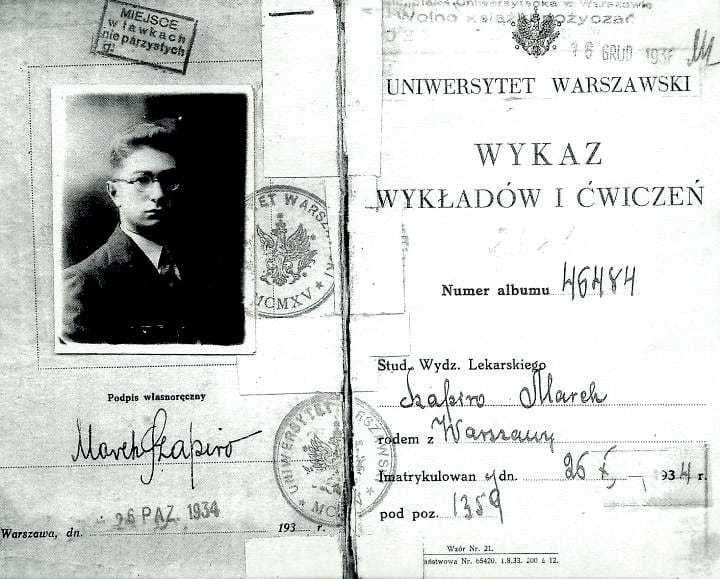
In many universities in pre-World War II Poland, antisemitic faculty and students humiliated Jewish students by forcing them to sit in the back of classrooms. Those areas came to be known as the “ghetto benches.” In some instances, the benches were marked with the first letter of the name of the Jewish student group on campus—a kind of precursor to the Nazi practice (first instituted in German-occupied Poland, in fact) of identifying Jews via a badge or i.d. card bearing a Star of David and the letter “J” or the word “Jude.”
If there were insufficient seats in the back of the Polish classrooms, the Jewish students were made to stand, even if there were empty seats elsewhere in the room. Jewish students who ignored the regulation were often assaulted, and those who boycotted classes in protest were severely penalized.
The Polish Ministry of Education at first opposed the practice, on the grounds that it violated the treaties that Poland had signed after World War I to protect ethnic minorities. But under pressure from antisemitic student organizations, the ministry ruled in 1937 that individual universities had the right to decide their own seating policies.
The intensification of such practices triggered some protests abroad. More than one thousand American professors and university presidents signed a petition denouncing the ghetto benches as “alien to the spirit of academic freedom.” Several thousand British academics joined a similar protest.
Rabbi Stephen S. Wise, America’s most prominent Jewish leader, raised the issue of anti-Jewish discrimination in Poland when he met with President Franklin D. Roosevelt in January 1938. Wise was shocked and disappointed by FDR’s response.
In a private memo for his files—not intended for publication—Wise described how President Roosevelt blamed the alleged Jewish domination of the Polish economy for provoking antisemitism. The problem, FDR asserted, was that “the Jewish grain dealer and the Jewish shoe dealer and the Jewish shopkeeper” were squeezing out their non-Jewish competition. And that, Roosevelt claimed, was the reason that many Polish Christians began saying “the Jew should go.”
Wise protested that blaming Poland’s Jews was “pure Fascist talk,” but the president was unmoved, according to the memo. “It was,” Wise wrote, “like a blow in the face” to hear Roosevelt’s remarks.
The president’s attempt to lay the blame for antisemitism in Poland at the feet of Jewish shopkeepers could not, of course, account for the spread of antisemitism in nearby countries, including Austria and Romania, where “ghetto benches” likewise were instituted. In Romania, the practice was extended even to Jewish reporters covering parliament.
When Rabbi Wise raised the issue of Romanian Jews in that meeting with President Roosevelt, FDR told him to “talk about that to [Secretary of State Cordell] Hull.” But when Wise met with Hull later that day, all the secretary of state would say on the subject was, “I will have to consider that with my associates.”
Senator Key Pittman (D-Nevada), chairman of the Senate Foreign Relations Committee, received a similar brush-off when he wrote to Hull that week about the mistreatment of Jews in Romania.  The reports of persecution actually were the result of “misunderstanding or confusion,” Hull insisted. Besides, the secretary of state claimed, “only those Jews who have in recent years immigrated into Rumania” were at risk. In any event, Hull concluded, “any action taken by the Rumanian Government concerning the peoples with its borders is a matter which lies within the jurisdiction of that Government.”
Hull’s position reflected the longstanding view of President Roosevelt that the persecution of Jews in Europe was none of America’s business.
The Roosevelt administration was unmoved even by evidence that anti-Jewish discrimination, such as the “ghetto benches,” often escalated into violence. In his book ‘The Swastika’s Darkening Shadow,’ Prof. Monty N. Penkower reports that 118 Polish Jews were murdered, and over one thousand wounded, in local pogroms during a single eighteen-month period from 1935 to 1937.
Nevertheless, the idea of opening America’s doors to more Jewish immigrants from Poland or Romania—even within the existing quota laws—was never considered by the Roosevelt administration. The Polish quota of 6,524 annually was not filled in any year from 1933 to 1945. Even the tiny Romanian quota of just 377 was unfilled in nine of those twelve years. Roosevelt’s policy of suppressing immigration below what the law permitted did not waver.
Berkeley, California in 2022 is not Poland or Romania in 1937. But the frightening spectacle of Jews (or, euphemistically, “Zionists”) being excluded from specific spaces on a university campus in the United States today is no less repugnant than it was in Europe in the 1930s.

Dr. Medoff is founding director of The David S. Wyman Institute for Holocaust Studies and author of more than 20 books about Jewish history and the Holocaust. His latest is America and the Holocaust: A Documentary History, published by the Jewish Publication Society & University of Nebraska Press.

Berkeley’s Version of “Ghetto Benches” Read More »

What Happened to Dov?

“The one thing I was certain of was that the world would never be the same.” Twenty-one-year-old Haim Sabato goes to the battlefront in the Yom Kippur War, brimming with confidence. Israel had defeated the Syrian army in just six days a few years earlier, he had gotten a blessing the previous night from an elderly Chassidic Rebbe, and he was traveling together with his childhood best friend and study partner, Dov Indig. Haim expects everything will follow according to plan: The good guys will win, the righteous will be protected, and he and Dov will continue to study Talmud and Bible together. In “Adjusting Sights,” published in 1999, Sabato relates what happens next.
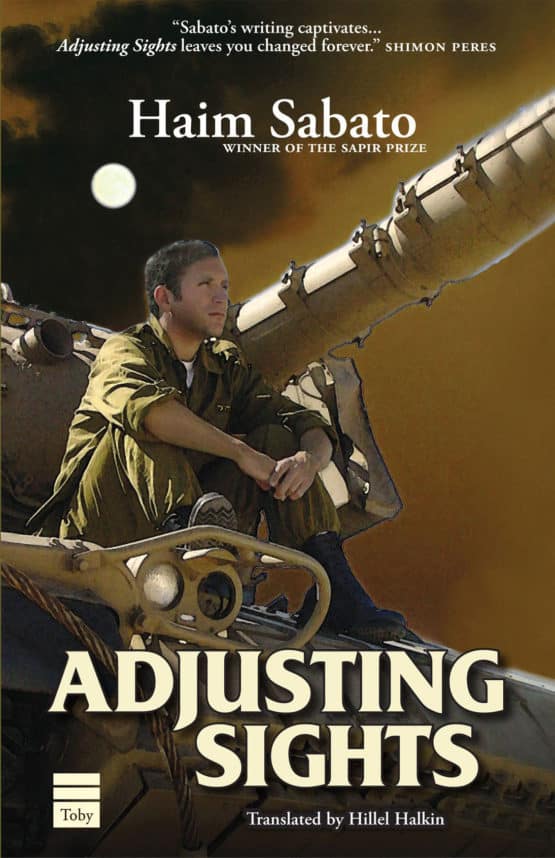
As Dov and Haim arrive in the Golan, panic and disorder meet them at the door of their bus. Even though they had always been in the same tank, desperate commanders were grabbing soldiers right off the buses, adding them to makeshift crews. Haim goes with one crew, Dov with another, and enters into one of the most violent tank battles in the history of warfare. Haim’s crew is saved from certain death at the last moment; but Dov never returns from battle.

The rest of the book is filled with Haim’s singular quest to find out what happened to Dov. Haim has lost his best friend, and in his grief, searches for a way to reconcile his own optimistic faith with an ugly, ungodly world that can instantly claim the life of a righteous man like Dov.

I read “Adjusting Sights” during a painful period in my own rabbinate. Over the course of 18 months, I officiated at six tragic funerals: a nine-year-old who died of an aneurysm, a 27-year-old newlywed who died after routine surgery, and four young people in the thirties with cancer. The pain that these families endured was indescribable. As a rabbi and friend, I felt like I had nothing at all to offer the mourners. Answers? There is no such thing. Optimism? It is deeply insensitive to offer positive thinking to the victims of tragedy. As a rabbi I felt like a fraud; as a human being, I felt insecure.

I was lost.

As I sought to regain my bearings, I was pulled in two directions: toward life and toward death. Yes, they are opposite directions, but in many ways they actually complement each other.

The Jewish instinct, honed through generations of persecution, is to immediately grab hold of life. Even the first shiva meal is a reminder to look for life. The tradition is that this meal is brought to the mourner by their neighbors. A 16th-century rabbi, Yehoshua Falk, writes that the reason we bring the mourners this first meal is because “the mourner is in grief and torment over their deceased, and doesn’t think about eating …therefore we command him to eat the meal brought to him by others.”

One of the most painful things with which a mourner must reconcile is that life in the future is now a life without. Swallowed up in grief, eating seems pointless, a waystation to futility. Then neighbors arrive with plates of food, a gentle reminder that even in grief you cannot escape friendship. The community does its best to support the heartbroken until they are ready to turn, and return, to life.

One of the most painful things with which a mourner must reconcile is that life in the future is now a life without. 

Rabbi Joseph B. Soloveitchik sees this idea as central to the theology of Judaism. In 1944, Rav Soloveitchik, who was then 41, published “Halakhic Man,” where he emphasizes the Jewish focus on life. He writes “Judaism abhors death … it bids one to choose life and sanctify it. Authentic Judaism … sees death a terrifying contradiction to the whole of religious life.” Rabbi Soloveitchik adds that his father, grandfather and great grandfather, all prominent rabbis, never visited cemeteries because it would have distracted them from their mission to pursue life.

During the dark years of exile, while struggling against the forces of hatred, Jewish communities always turned to life; when struggling for survival, a community doesn’t have the luxury of self-pity. Israel’s response to the intifada is a powerful example of this. Greg Myre and Jennifer Griffin, two journalists who wrote about their years in Israel between 2000-2007, explain:

We were consistently amazed at how quickly Israelis returned to places that had been bombed. The police, the rescue teams and the cleanup crews restored a bomb site to an outward semblance of normality within hours of an attack. Debris was swept out. Hoses washed away blood from the sidewalk. Shattered windows were replaced. The yellow police tape came down.…. For Israelis, combating terror is not just a security question. It’s a social, cultural and psychological issue and the whole country is required to play its role. It’s often measured in small deeds, like going back to a favorite cafe after an attack.

 This communal resilience has allowed Israel to survive through an unending barrage of attacks. Prof. Dov Waxman has said that: “Despite experiencing numerous traumatic events during the second Intifada, which should logically cause progressively more psychological damage, the rate of PTSD symptoms among the Israeli population remained at a fairly low level … The concept of social resilience, therefore, helps explains why Israeli society was not demoralized by repeated terrorist attacks, despite the serious effects these attacks had on Israelis.”

Jews throughout history have coped by turning to life. But there are times when this approach doesn’t work, and you have no choice but to stare directly into the face of the Angel of Death.

Fifteen years after writing “Halakhic Man,” Rav Soloveitchik faced colon cancer. (He was diagnosed just a few weeks before his daughter’s wedding). In a later essay, he describes his emotions:

The night preceding my operation I prayed to God and beseeched Him to spare me, I did not ask for too much. All I wanted was that He should make it possible for me to attend my daughter’s wedding, which was postponed on account of my illness—a very modest wish in comparison with my insane claims to life prior my sickness. The fantastic flights of human foolishness and egocentrism was distant from me that night. 

This frightening diagnosis changed everything for Rav Soloveitchik. Desperately bargaining for a chance to go to his daughter’s wedding, he learns that the most profound lessons about life are learned in death’s shadow. He writes:

When one’s perspective is shifted from the illusion of eternity to the reality of temporality, one finds peace of mind and relief from other worries, from his petty fears and from absurd stresses and nonsensical nightmares. … At the root of our restlessness lies a distorted conception of ourselves as immortal beings. … Man sees himself in the mirror of immortality. Hence his desires, dreams, ambitions and visions assume absolute significance, and any frustrating experience may break man. When one frees himself from this obsession, his perspective becomes coherent and his suffering bearable.

While battling cancer, Rav Soloveitchik is not given the option of “abhorring death”; instead he finds a way to live in the valley of the shadow of death, and finds renewed inspiration to live from death itself.

Yom Kippur is when Jews visit with the Angel of Death. As we look forward to the coming year, we are uncertain what our fate will be. To emphasize this, we read the words of the “unetaneh tokeph” prayer: “who will live and who will die … who by water and who by fire, who by sword and who by beast, who by famine and who by thirst.” And at that very moment, we turn to death. Franz Rosenzweig notes that the kittel, the white coat worn on Yom Kippur, is intended to be an imitation burial shroud, because the purpose of Yom Kippur is to have everyone roleplay their death, by fasting and abstaining from physical pleasures. There are times when you must turn to death before turning back to life.

There are times when you must turn to death before turning back to life.

When the book of death is open, one immediately understands what a privilege it is to be inscribed in the book of life. Even so, to pursue life after reading from the book of death takes courage. There were Holocaust survivors who refused to have children in a world that could be filled with bitterness (I knew one such person). Rashi says that the biblical matriarch Sarah died from heartbreak after her son Isaac was nearly sacrificed at the Akeidah.

Abraham, Isaac’s father, is determined to take a different approach. Death prods him to find greater fulfilment in life. Rashi explains that he says to himself: “If my son had actually been slain, he would have died without children! I must marry him off.” And this is the lesson of the death theme of Yom Kippur: Remember the inevitability of death, and grab hold of what you have left to do in life.

I must make it clear that this is very different than having a “bucket list,” where you write up a list of 101 things to do before you die, and try to experience them all. Most of these lists include activities like bungee jumping, visiting the Galapagos, and drinking a rare vintage wine; these are what you must do “before you die.” Like many pop culture ideas, a serious existential insight is transformed into an instagrammable vacation.

An authentic confrontation with death is different. When people learn that they are going to die, they think of the people they love, and try to find ways to protect them and embrace them. I remember a man of 60 who received a negative prognosis telling me: “I don’t worry about my death for myself; I worry how it will affect my children.” People with a grim prognosis don’t run away on vacation; they go home to embrace their loved ones. Turning to death changes one’s priorities.

The story of 21-year-old Haim Sabato is very much a Yom Kippur story. After the war, he continues to hold on to his faith, and becomes one of Israel’s leading rabbis and authors. “Adjusting Sights” has brought enormous comfort to many other soldiers who left beloved friends behind on the battlefield. And that is the point of Yom Kippur; it teaches all of us that we must muster up Abraham’s courage and push on when facing our mortality. It teaches the broken-hearted to have the courage to marry, to have babies and build communities, even after they have read too many chapters in the book of death. Yes, we must find a way to savor life, to turn to life, to love life, and then to love it even more because we know how short it is.

May we all be inscribed in the book of life, and may we all love it even more this year.


Rabbi Chaim Steinmetz is the Senior Rabbi of Congregation Kehilath Jeshurun in New York.

What Happened to Dov? Read More »

Shana Tova 5783: Niver’s News: Sept 2022

Sept News 2022 with Lisa Niver & We Said Go Travel:

Frank and Judi Niver on the bima for Rosh Hashannah at Stephen Wise Temple, Sept 26, 2022

Shana Tova 5783! This month starts the Jewish New Year.

My family celebrated in Denver with our cousins and at our synagogue, Stephen Wise Temple, in Los Angeles. My parents were honored with an aliyah to say the blessing before reading the Torah.

This reading in our Stephen Wise Temple Machzor for the Days of Awe prayer book on p. 65 –really spoke to me:

How might we, in our day to day lives, transform curses into blessings? How might we, instead of hating the other, find cause for admiration? We may not enter the house of worship fully ready to pray, but by lifting our voices together, by searching for the good in one another and in our tradition, we hope to find cause for praise and thanksgiving so that we might, with full hearts, cry out: ‘How good is this place! how wondrous is this moment.'” Cantor Emma Lutz and Rabbi Yoshi Zweiback

What will you do to make this new year wondrous and filled with moxie?

The Head of the Year
By Marge Piercy
 
The moon is dark tonight, a new
moon for a new year. It is
hollow and hungers to be full.
It is the black zero of beginning.
 
Now you must void yourself
of injuries, insults, incursions.
Go with empty hands to those
you have hurt and make amends.
 
It is not too late. It is early
and about to grow. Now
is the time to do what you
know you must and have feared
to begin. Your face is dark
too as you turn inward to face
yourself, the hidden twin of
all you must grow to be.
 
Forgive the dead year. Forgive
yourself. What will be wants
to push through your fingers.
The light you seek hides
in your belly. The light you
crave longs to stream from
your eyes. You are the moon
that will wax in new goodness.
 

I was able to interview Patricia Schultz about her new book, WHY WE TRAVEL

I saw her at Vroman’s Bookstore in Pasadena and you can listen to her talk here!

Thank you to PennClubLA for three incredible events this summer! Click here to read all about them and see the videos!

I will be speaking on a Penn Travel panel Nov 7, 2022. Click here for details!

Thank you to the Jewish Journal for having me in PRINT 23 times in 5782 (Sept 2021-Sept 2023! See the latest ones: Click here or watch the videos below:

Thank you to the Los Angeles Times the lovely reception for ONA22!

WHERE CAN YOU FIND MY TRAVEL VIDEOS?

Here is the link to my video channel on YouTube where I have over 1.6 million views on YouTube! (Exact count: 1,663,000 views)

Thank you for your support! Are you one of my 3,660 subscribers? I hope you will join me and subscribe! For more We Said Go Travel articles, TV segments, videos and social media: CLICK HERE

Find me on social media with over 150,000 followers. Please follow  on TikTok: @LisaNiver, Twitter at @LisaNiver, Instagram @LisaNiver and on FacebookPinterestYouTube, and at LisaNiver.com.

Fortune Cookie SAID:

“Reward yourself a much deserved gift”

“Your sense of humor is enjoyed by all.”

Lisa at Calgary Tower–Canada trip videos coming soon!!

Shana Tova 5783: Niver’s News: Sept 2022 Read More »