fbpx

June 21, 2022

The Definition of the Jew: The Dimension of Freedom

A.B. Yehoshua, one of Israel’s most revered authors, died on Tuesday last week at the age of 85. As a member of the 1948 generation, his struggles with the transformation and redefinition of Jewishness has gone through several intellectual stages, and is concisely described in the essay below, which he contributed to the book “I am Jewish, Personal Reflections Inspired by the Last Words of Daniel Pearl” ( Jewish Lights Publishing, 2003). His emphasis on a secular, choice-based national Judaism, in the spirit of Ruth’s “Your people is my people”, reflects the attitude of most Israelis, but has acquired new dimension in light of the appearance of psuedo-Jewish groups such as
“Jewish Voice for Peace” and other anti-national or anti-Zionist movements that American Jewry has spawned. “To be a Jew means to belong to a national group that can be left or joined.”
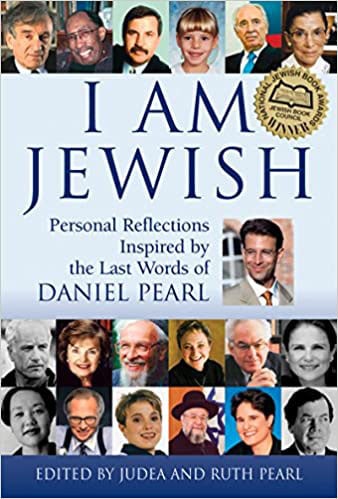

We discover an astonishing fact in the classic Halachic definition. According to the Halachah, nothing is said about the Jew’s conduct, his thoughts, or basic principles of behavior.  There is nothing indicating his homeland or language, or even the nature of his affiliation to a specific collective (such as maintaining solidarity with the Jewish people).  A Jew is nothing more than a child of a Jewish mother, not even of a Jewish father.  Is this biological fact really so compelling and binding?  Not at all!  Jews are not a race and never viewed themselves as such.  They viewed themselves only as a people. According to the Halachic definition, a Jew, the son of a Jewish mother, who converts to Christianity ceases to be a Jew.  That the Halachah enables someone not born of a Jewish mother to become a Jew also indicates that the Jews do not constitute a race.

To be a Jew means to belong to a national group that can be left or joined, just as any other national group is left or joined.  Countless Jews have abandoned the Jewish people, and the struggle now and in all generations against assimilation indicates that it is possible to leave the Jewish people, that the individual is not compelled to retain
his membership in it.

We are now approaching the root of the matter.  If we delve deep into the logic of the religious definition we see at its base another definition:


A Jew is someone who identifies as a Jew.

Someone born of a Jewish mother is no longer considered a Jew if, for example, he converts to Christianity or to Islam.  It is of no importance where the Jew goes.  What matters is his desire to leave. It must be understood that in the past, when everyone had a religious identification, Judaism ruled that passing to any other religion turns the Jew into a non-Jew.  But today, when the individual is not obliged to maintain a religious identity, a person can leave the
Jewish people without having to pass through a religious corridor, even if according to the Halachah it seems that he must.  The determining factor is not the technical step of formal religious conversion but his desire no longer to identify with the Jewish people.  A Jewish atheist can become a non-Jewish atheist; the passage through another religion is a dispensable formality.

The same holds for joining the Jewish people.  The determining factor is the act of identification, free will, and not the formal conversion, which may be altogether meaningless for the convert who, let us assume, is a confirmed atheist.  These religious corridors (for entry and exit) may be good as a salve for the conscience of religious establishments, but they are irrelevant and meaningless for someone who wants to enter or leave, and does so as a freely chosen act.

The definition I am proposing, that a Jew is someone who identifies as a Jew, is not one I would want to be maintained always, but his definition has been the realistic, correct, and genuine definition until now.  It is the base definition underlying the Halachic definition.  The Halachic definition, born in the recesses of Jewish history, was suited to a world and situation in which religion was the decisive element of a person’s identity.  The secular identity taking shape before our eyes in the world and in Israel (which always existed as a potential) exposes the deep and true definition at the foundation of the Halachic definition, that which declares that a Jew is someone who identifies as a Jew.

All the pseudo-Sartrean theories that would base Jewish self-identification on the existence of the Gentile (in the best circumstances) or the anti-Semite (in the worst circumstances), who forces the Jew to identify as such, are ridiculous.  I don’t need the Gentile’s perception or the anti-Semite’s hostility to establish my Jewish identity.  Even if there weren’t an anti-Semite in the world I would still want to identify as a Jew.  How demeaning to present Jewish identity and belonging as a kind of trap from which there is no escape.  Hundreds of thousands of Jews have left the Jewish people for good, as a matter of their own choosing, and have been lost forever among other peoples.  To be a Jew is a matter of choice. This element of freedom in the act of Jewish identification has of late been obscured, but it is an element of tremendous importance, for it brings with it responsibility.  If I identify as a matter of free choice I assume certain responsibilities.   When young people repeatedly ask, as they have been doing with increasing frequency since the Yom Kippur War: Is it possible to cut one’s ties with the Jewish people?  Is it possible to carry out a “disengagement of forces” with the Jewish people?  Or, in the words of a soldier, is it possible to be just a person?—to all of these questions my answer is clear:  It most definitely is possible.  But if a person decides to identify as a Jew he assumes responsibility for his identification, since his decision was freely made.  I do not ignore the social, cultural, and family influences a decision about identification, but these are not sufficient to determine the identification.  It requires willed choice.  The dimension of freedom, which always formed part of Jewish identification and which has recently been obscured by notions of Jewish “fate” and by the experience of the Holocaust, needs to be highlighted once again.  The sense of freedom immediately lightens the sense of responsibility.  A man is capable of mighty actions if he has a sense of freedom, while feeling coerced only depresses and incenses him.

The element of freedom in the act of identification is also what makes possible change and reinterpretation of Judaism.  I do not dismiss those who think only of continuity, who want to keep alive the “ember” they imagine has been passed on to them.  But no less legitimate is the desire of those who want to introduce change in Judaism, with which they identify as an act of free will.

Reprinted with permission from “I Am Jewish: Personal Reflections Inspired by the Last Words of Daniel Pearl.” Based on excerpts from AB Yehoshua’s book, Between Right and Right.

The Definition of the Jew: The Dimension of Freedom Read More »

Danny Danon on His New Book about His UN Tenure

Former Israeli Ambassador to the United Nations Danny Danon discussed his new book, “In the Lion’s Den: Israel and the World,” and current events in a phone interview with the Journal.

“In the Lion’s Den,” which was published on May 13, largely focuses on Danon’s tenure at the U.N. and his constant fight against those who hate Israel in the halls of the international body. “I knew I represented not only myself, but the entire Jewish people,” Danon told the Journal, adding that it “comes from my background.” “I’m not afraid to be by myself sometimes when I believe in the cause.” 

“I represented not only myself, but the entire Jewish people” – Danny Danon

In the book, Danon recalls drawing inspiration from the “warrior mentality” of his father, who immigrated to Israel from Egypt shortly after the Jewish state was established. Danon’s father suffered a military injury at the age of 29 and consequently “could not speak well or hear,” so Danon would serve as a “translator” for his dad. Danon credits this experience for instilling in him the “confidence to speak, ask questions and argue if needed.” Despite his injury, Danon’s father would “keep busy and work” as often as he could, which “had a profound effect on my own character,” Danon wrote. “It contributed to the strong feelings I have today about Israel’s place in the world. As a result, I am not afraid of what people think about my views.”

And Danon showed no fear in standing up for his country in the U.N., even when he found himself pitted against the United States. In the waning days of the Obama administration, Danon learned from a representative of a Muslim country that the administration was working to pass U.N. Resolution 2334, which declared the West Bank (Judea and Samaria) — including the holiest sites in Judaism — to be “occupied Palestinian territory” in violation of international law. Neither then-President Barack Obama nor then-U.N. Ambassador Samantha Power responded to phone calls from then-Israeli Prime Minister Benjamin Netanyahu and Danon. The U.S. ultimately abstained from the resolution, thus giving it clearance to pass. Danon wrote in the book that he attempted to get other countries to vote against it, to no avail; the representative from Ukraine told Danon that they supported the resolution due to pressure from the Obama administration.

But Resolution 2334 was not the only anti-Israel resolution put forth by the Obama administration; the administration also introduced a resolution titled “Parameters for Peace” that outlined a potential peace agreement between Israel and the Palestinians on issues such as “borders, refugees and the status of Jerusalem” that went “very far against Israel,” Danon wrote in the book. The resolution never went public because Russia would have vetoed it, a move that “would have been quite embarrassing for the U.S.” 

“I think [Obama] wanted to draft his narrative about the peace process,” Danon told the Journal, adding that he also thought that Obama had a personal vendetta against Netanyahu after the prime minister railed against the 2015 Iran nuclear deal in front of Congress. “I think it was payback coming from Obama a week before he left office.”

The book also describes Danon’s various successes during his time in the U.N. This includes teaming up with then-U.S. Ambassador Nikki Haley to retract a March 2017 U.N. report alleging that Israel is engaging in apartheid against the Palestinians; and lobbying to have a resolution condemning Islamophobia following the 2019 Christchurch shootings also denounce antisemitism. Danon was also able to get the U.N.’s cafeteria to start serving kosher food; on the first day it became available, the kosher food sold out in the cafeteria. Additionally, Danon explained how he was able to forge relationships with various countries by highlighting how Israel can help them with their various issues.

Danon told the Journal that while he was in the U.N., various Arab countries would publicly criticize Israel but privately express support for the Jewish state. 

Danon told the Journal that while he was in the U.N., various Arab countries would publicly criticize Israel but privately express support for the Jewish state. For example, prior to the Abraham Accords, Danon “was collaborating with them behind the scenes” despite some of them speaking out against Israel. “Now we’re doing it publicly, so it gave me a lot of strength and source for optimism,” Danon said. 

The former U.N. ambassador also expressed concern over the potential revival of the Iran deal. “I think it would be very dangerous for Israel, for the allies of the U.S. in the region, and also for the American people,” he told the Journal. Danon added that the threat of a nuclear Iran as well as its terror proxies was something that brought Israel closer together with various Arab countries that also view a nuclear Iran as a threat.

Danon expresses strong opposition to the Boycott, Divestment and Sanctions (BDS) movement, noting that even the Palestinians don’t support BDS because they benefit from Israel’s economy. “The only reason to support BDS is to promote hatred,” he wrote. Danon recalled how a November 2017 event at New York’s Queens Museum reenacting the 1947 U.N. Partition Plan was initially canceled thanks to the museum’s director at the time being a vocal BDS supporter; Danon was able to garner enough pressure to reverse the museum’s decision. “We need to be strong and be vocal … and fight hate,” he said.

When the Journal asked if Danon would consider going back into politics, he said that he learned a lot from his time in the U.N. and he eventually intends “to take advantage” of what he learned and “put it into action for the people of the country that I love so much.”

Danny Danon on His New Book about His UN Tenure Read More »

Liberated Ethnic Studies Group Aims to End-run Newsom Law

Los Angeles parents and teachers recently announced they are suing the Los Angeles Unified School District teachers’ union to keep antisemitism out of California high schools. How and why would antisemitism ever be taught and promoted in our state’s high schools, you might ask? Despite being outlawed by the California Legislature and Governor Newsom, a group favoring what it calls Liberated Ethnic Studies is trying to re-introduce antisemitic and other controversial content by selling an ethnic studies curriculum “under the radar,” as they themselves put it. Allow me to rewind.

In 2016, the California Legislature asked the State Board of Education to design a model ethnic studies course for use in public schools, with the aim of teaching students about and celebrating the contributions of California’s many ethnicities. But the job of drafting was undertaken by a group promoting a narrow and extreme form of ethnic studies, Liberated Ethnic Studies. Liberated seeks to castigate “privileged” white and minority students and set them at odds with other minority students. It became clear early on that is not what the Legislature envisioned. But Liberated remains determined to promote its agenda, even if it must now do so “under the radar.”

Public reaction to Liberated’s first draft, published in 2019, was overwhelmingly critical, in part because of its flagrantly biased and antisemitic content. California’s Board of Education agreed with the critics, stating that any “model curriculum should be accurate, free of bias, appropriate for all learners in our diverse state … The current draft model curriculum falls short and needs to be substantially redesigned.” Governor Newsom concurred. He rejected the second draft a year later for the same reasons.

The third draft, scrubbed of its most objectionable content, was accepted by the Governor, who signed AB 101 in October 2021. AB 101 requires public high schools in California to include ethnic studies as a graduation requirement. It provides school districts leeway to create their own curricula, but it prohibits use of the extreme discriminatory content excised from the first two drafts.

Unfortunately, Liberated has now packaged and is surreptitiously selling a “new” version of its curriculum to California school districts. In fact, Liberated has gone to great lengths to keep its curriculum secret from the public, although California law requires, at a minimum, that any proposal be publicly disseminated, with an opportunity for the public to respond before it is used by schools. So far, however, Liberated training events are by invitation only, and not open to the general public.

And here’s how we get to the lawsuit, filed by The Deborah Project, which reveals that Liberated is secretly working to restore the discriminatory content rejected by the California legislature and Governor Newsom, in a patent end run around AB 101.

The clandestine new curriculum generally denounces capitalism and the traditional family, but its particular obsession is with the State of Israel, not the State of California. Liberated promotes anti-Israel propaganda on the ground that California is home to Arab Americans, whom they classify among “Asian and Pacific Islanders.” If the Middle East is considered part of Asia, one would expect Jews from the Middle East to fall in this category too, but they do not, even if they have the same color skin as their Arab counterparts.

The clandestine new curriculum generally denounces capitalism and the traditional family, but its particular obsession is with the State of Israel, not the State of California.

According to a teaching guide taken from the Liberated website (and since removed), Liberated urges ethnic studies teachers to “fly under the radar” if that is what it takes to expose elementary and high school students to its virulent political agenda. “Teaching the truth about Palestine is a liberatory act, for teachers and for students. It’s a political decision. But … you want to be strategic. The goal is for your anti-racist teaching to be sustainable, and to be part of a larger movement.”

The Liberated teaching guide also counsels teachers to resist opposition from mainstream American Jewish groups like the ADL and the Jewish Community Relations Counsel, which it labels part of a “Zionist” conspiracy, although it denies that its anti-Israel venom is antisemitic.

The Liberated curriculum, if adopted, would flout not only AB 101 but a legion of state and federal laws, including Title VI of the Civil Rights Act of 1964, which prohibits institutions that receive federal funds from discriminating on the basis of race, color, or national origin. According to the Department of Education’s Office for Civil Rights (OCR), “national origin” discrimination includes discrimination against Jews, who are not only members of a religious group, but also have a shared ancestry or ethnicity.

It follows, as OCR guidance makes clear, that Jewish students may not be discriminated against on the basis of their actual or perceived identification with the State of Israel. School districts engaging with Liberated and considering adoption of its furtive curriculum, in California and elsewhere, should be aware that once it comes to light—as it must—they will face suits on many grounds, in state and federal courts, and under Title VI, which permits victims of bias to file suit with the Department of Education.

The Deborah Project lawsuit brings to light Liberated’s shady attempts to reimpose its politically motivated curriculum. Sunlight may prove the best disinfectant after all, as Justice Brandeis once said.


Rachel Lerman is vice-chair of the Louis D. Brandeis Center for Human Rights Under Law, a non-profit that conducts research, education and advocacy to combat the resurgence of antisemitism on college and university campuses.

Liberated Ethnic Studies Group Aims to End-run Newsom Law Read More »

80 Years Ago This Week: The Rubble That Could Have Been Jews

If you walk all the way to the eastern end of Manhattan’s 25th Street, you come upon a small plaque explaining why the site was given the name “Bristol Basin” in June 1942. What it does not explain is the fascinating connection between that story and the plight of Jewish refugees fleeing from the Nazis.

Throughout the Holocaust years, the Roosevelt administration insisted that it did not have any ships to bring Jewish refugees to the United States. There just is not any transportation” available for refugees, Assistant Secretary of State Breckinridge Long told a congressional committee in 1943.

In his autobiography, Congressman Emanuel Celler (D-New York) likewise recalled how he was told by an administration official that in order to rescue Jews, the U.S. would need to “divert shipping for the transportation of war materials and troops for the refugees.”

In reality, American troop-supply ships, known as Liberty ships, were returning to the United States empty after delivering their cargo to Europe. They had plenty of room to carry people on the return trip.

Moreover, the ships needed something heavy on board—known as ballast—to keep them from capsizing. Jewish refugees could have served that purpose. Instead, the ballast was found in the English city of Bristol—or, more precisely, in the city’s remnants.

The ships needed something heavy on board—known as ballast—to keep them from capsizing. Jewish refugees could have served that purpose.

Situated on the southwest coast of England, Bristol was heavily bombed by the Germans beginning in the summer of 1940. Some 85,000 homes and other buildings were destroyed. Liberty ships that off-loaded American men and weapons in the port of Bristol then loaded up on rubble from the bombed-out buildings in order to make the journey safely back across the Atlantic.

Not only did the rubble keep the Liberty ships afloat, but it served a second important purpose. When the ships reached New York City, they dumped the debris in the EastRiver, between 23rd Street and 34th Street. There it served as part of the foundation for a highway which was then under construction, known as the East River Drive.

In June 1942, New York City Mayor Fiorello La Guardia headlined an event saluting the people of Bristol. La Guardia, British Consul-General Godfrey Haggard, and other dignitaries—including twenty-six Bristol-born British Royal Marines—gathered in the small promenade at the end of East 25th Street to install a plaque proclaiming the site “Bristol Basin.”

“Brought here in ballast from overseas, these fragments that once were homes shall testify while men love freedom to the resolution and fortitude of the people of Britain,” the plaque declares. “They saw their homes struck down without warning. It was not their walls but their valor that kept them free.”

Mayor La Guardia called the naming of the site “a reminder of the fury and cruelty of the Nazi forces.” Nazi cruelty was also of particular concern to Jewish rescue advocates in the United States, who noticed the irony in the Roosevelt administration’s choice of ballast.

The “huge mounds of rubble” brought from Bristol to Manhattan demonstrated that bringing Jewish refugees to the United States would be “no problem at all,” the editors of The Answer (published by the rescue activists known as the Bergson Group) wrote. They argued: “It is as important to devote shipping space to help secure the foundations of humanity by saving lives as it is to bring rubble for filling in foundations for River driveways.”

The editors of the Baltimore Jewish Times likewise cited the Bristol precedent. They pointed out that the Roosevelt administration’s claim that shipping “is not available” was disproven by the fact that U.S. ships were “going out of their way to find ballast on return trips” from England. Not only that, but the Allies recently had used supposedly “unavailable” ships to bring many thousands of Polish (non-Jewish) refugees to Mexico, the editors noted.

Similar calls were made in the years to follow. When the Germans began the mass deportation of Hungary’s Jews to Auschwitz in 1944, Freda Kirchwey, editor of the political affairs journal The Nation, urged President Roosevelt to “immediately establish ports of asylum [for Jewish refugees]….Troopships which have delivered their loads at Mediterranean ports could be diverted for a single errand of mercy.”

Ultimately, the real obstacle to rescue was not a lack of ships. It was President Franklin D. Roosevelt’s opposition to bringing any significant number of European Jewish refugees to the United States. Late in the war, public and congressional pressure convinced the president to make one small election-year gesture on the issue: he authorized the temporary admission of one group of 982 refugees. There was no difficulty finding a ship for them.

The final irony of this story has to do with the construction of the East River Drive, which was completed with the help of the rubble from Bristol—the rubble that was chosen to serve as ballast instead of Jewish refugees. Today known as FDR Drive, it was renamed to honor a president who is deservedly revered for his many achievements, but whose legacy is tarnished by his tragic abandonment of the Jews.

80 Years Ago This Week: The Rubble That Could Have Been Jews Read More »

you-dont-know-schiff

George Wallace – Part 1

Well, it’s Legends Week once again as we welcome the ‘doctor’ and very reverend comedian George Wallace to the podcast.

Mark and Lowell hang out with George for over two hours and cover so much ground. Today in Part 1 (of 2) among many things, George talks about growing up in Atlanta, starting out as a comedian in NYC, how his advertising and business education added to his success in comedy, and great stories from his experiences on stage.

George Wallace has been a fixture in comedy since the 1970’s when he moved to NYC to launch his career.  Eventually moving to LA and became a regular at The Comedy Store.  He’s starred in his own HBO special and has been on countless late night shows including “Arsenio Hall,” “The Tonight Show,” “The Oprah Winfrey Show” and “Late Night with David Letterman.”  George has had a monumental stand-up career that is still going strong including a truly legendary residency in Las Vegas.

George and Mark are friends from way back, and we know you will enjoy this great episode where you can hear them reminisce about old times, and learn more about George’s incredible life and career.  And as always, in every moment with George, he exudes joy, gratitude, love, and is as funny as they get.

Follow, watch and buy all things George:
georgewallace.net
Twitter: @mrgeorgewallace
Instagram: @therealgeorgewallace

Your hosts:
Mark Schiff
markschiff.com
Twitter: @markschiff
Instagram: markschiff1
 

Lowell Benjamin
Twitter: @lowellcbenjamin
Instagram: @lowellcbenjamin

Check out Mark’s books
“I Killed: True Stories of the Road from America’s Top Comics”
“Why Not?: Lessons on Comedy, Courage, and Chutzpah”


George Wallace – Part 1 Read More »