fbpx

June 10, 2022

BDS Boston Criticized for Endorsing Map Targeting Jewish Institutions

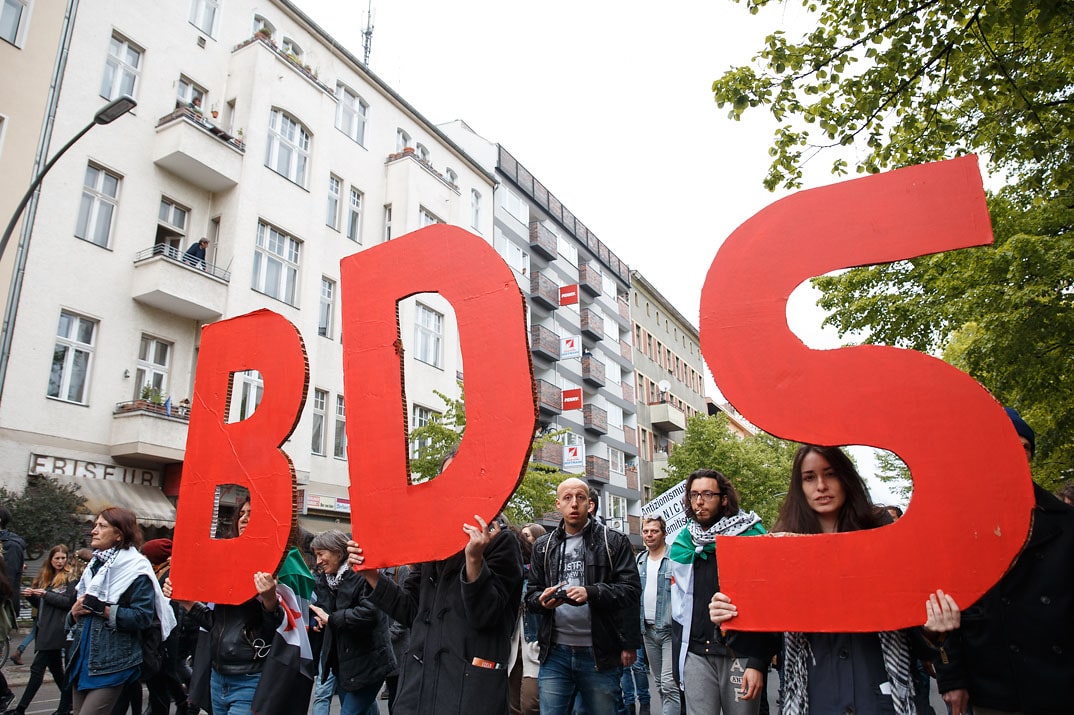
A local Boycott, Divestment and Sanctions (BDS) group in Boston is under fire over their endorsement of a map that targets various Jewish institutions as having purported ties to the media and police as part of the “colonization of Palestine.”

BDS Boston tweeted on June 3 that their “friends at the Mapping Project” had released an interactive map and articles that “illustrate how local support for the colonization of Palestine is structurally tied to policing, evictions, and privatization locally, and to US imperialist projects worldwide.”

According to Jewish Insider (JI), the map draws “lines between the Jewish groups and institutions the project claims they influence.” The Jewish groups “include the local Jewish Community Relations Council and Synagogue Council, the Anti-Defamation League and American Jewish Community, a Jewish high school, local philanthropies, an arts group and J Street,” per JI. The Jerusalem Post also noted that the map included as well as The Boston Globe and Boston’s Jewish Journal.

Various members of Congress denounced BDS Boston’s endorsement of the map.

“Not only is BDS counterproductive and destructive to Middle East peace, this is an extremely dangerous use of antisemitic tropes that could lead to violence,” Representative Jerry Nadler (D-NY) tweeted. “This group should apologize and take down this reprehensible, grossly antisemitic ‘project’ immediately.”

Representative Ritchie Torres (D-NY) similarly tweeted, “The BDS movement put together ‘a mapping project’ that accuses Jewish and ‘Zionist’ institutions of various evils in American society. Scapegoating is a common symptom of Antisemitism, which at its core is a conspiracy theory. If you think ‘Zionists’ are to blame for the ills of American society, you are as much of a conspiratorial crackpot as Marjorie Taylor Greene, with her sick fantasies about Jewish space lasers.”

Representative Jake Auschloss (D-MA) told JI that the map is “chilling” since it invokes “millennia-old antisemitic tropes about nefarious Jewish wealth, control, conspiracy, media connections and political string-pulling. To name names and keep lists, which has a very sinister history in Judaism, in terms of how we are targeted, is very irresponsible. [The group] needs to take this down and apologize.”

Israeli Ministry of Foreign Affairs spokesperson Lior Haiat tweeted, “This whole project is reminiscent of a dangerous antisemitic pattern of activity known from antiquity through the horrors of the 20th century: a pattern which has led to violence against Jews and their institutions.” He added in a subsequent tweet that BDS Boston revealed their “true, ugly face” by endorsing the project, calling them “a conspiratorial antisemitic organization.” “We call on all decent people to come out against this publication, and to condemn the organization and those behind this racist campaign,” Haiat wrote.

Jewish groups also denounced BDS Boston.

“.@BDSBoston call for the ‘dismantling’ of Boston’s Jewish community [institutions] because of the purported ‘devastation’ they cause is intimidation rooted in #antisemitism,” Anti-Defamation League New England Regional Director Robert Trestan tweeted. “This call to action against our community is dangerous. We will not be intimidated!”

Jeremy Burton, CEO of the Boston Jewish Community Relations Council (JCRC), similarly tweeted: “@BDSBoston is calling for the ‘dismantling’ of the Boston Jewish community’s institutions. It is unacceptable & dangerous. It is being amplified by orgs like [Massachusetts Peace Action] – which has ties to some political leaders… It needs to be denounced by all decent people.” JI noted that Massachusetts Peace Action is a local affiliate of Peace Action, which endorsed Representative Ayanna Pressley (D-MA). Pressley told JI reporter Marc Rod: “It is not acceptable to target or make vulnerable Jewish institutions or organizations, full stop.”

The American Jewish Committee tweeted, “The Mapping Project makes BDS’ hostility toward Jews and Jewish institutions crystal clear. This is a vile attack on American and Jewish-American institutions and interests, painting our nation and the Jewish people as propagators of evil.”

The Simon Wiesenthal Center tweeted, “Welcome to the 21st century update of the ‘Protocols of Zion,’” referencing the early 1900s book that promulgates antisemitic conspiracy theories of Jews scheming to rule the world. “Demonizing American Jews for the crime of supporting Israel,” the Wiesenthal Center added. “A roadmap for #Antisemitic hate crimes and worse.”

StandWithUs tweeted, “Jewish communities in the United States and in other parts of the world are extremely vulnerable at the moment as anti-Jewish bigotry becomes increasingly more commonplace. #BDS: Your #antisemitism is showing.”

Stop Antisemitism tweeted that BDS Boston’s endorsement of the map shows that BDS is “the new Nazis.”

Human rights lawyer Arsen Ostrovsky, CEO of the International Legal Forum, tweeted that BDS Boston “is mapping out Synagogues and Jewish owned business, properties and institutions as targets for incitement to racial hatred and violence. In other words, they are laying the groundwork for Kristallnacht 2.0.”

BDS Boston has retweeted numerous defenses of their support for the project. One such retweet was a statement from the Boston Young Communist League (YCL) that read in part: “Reactionary attacks on the Mapping Project have falsely claimed that mapping entities complicit in Zionism and other forms of racism and imperialism is somehow ‘antisemitic’ or creates a ‘hit list’ of Jewish institutions. Equating anti-Zionism with antisemitism is itself antisemitic, and institutions that support the genocide of Palestine deserve to be rebuked.” The Boston YCL statement went onto state that the “onslaught of Zionist attacks” reflects “how effective the BDS movement is.” “These attacks aim to isolate BSD and the Mapping Project, but we will not let them. We know that BDS works as a strategy and the Zionists will isolate themselves the longer they continue to defend the genocide of Palestine.”

BDS Boston Criticized for Endorsing Map Targeting Jewish Institutions Read More »

Russian Jews Have Long Sacrificed One Freedom for Another

In early 1917, shortly after the deposition of the last Russian Czar, the Provisional Government of the Russian Empire abolished all restrictions on the civil rights of its Jews. Until then, Jews were largely restricted to the Pale of Settlement along the Empire’s western border, faced quotas in schools, and experienced other forms of professional, economic and political discrimination. For about half a year, until the October Revolution that overthrew the Provisional Government and brought the Bolsheviks to power, Russian Jews experienced true political and religious freedom (at least by the standards of the time).

When the Bolsheviks took power, that short-lived political freedom vanished for all of the Empire’s citizens, including its Jews. Having established a “dictatorship of the proletariat,” the Communists banned all other political parties. In practice, Soviet citizens now had fewer voting rights than they did under the Czar after the 1905 Revolution, which had led to the creation of a representative legislative assembly based on a multiparty system.

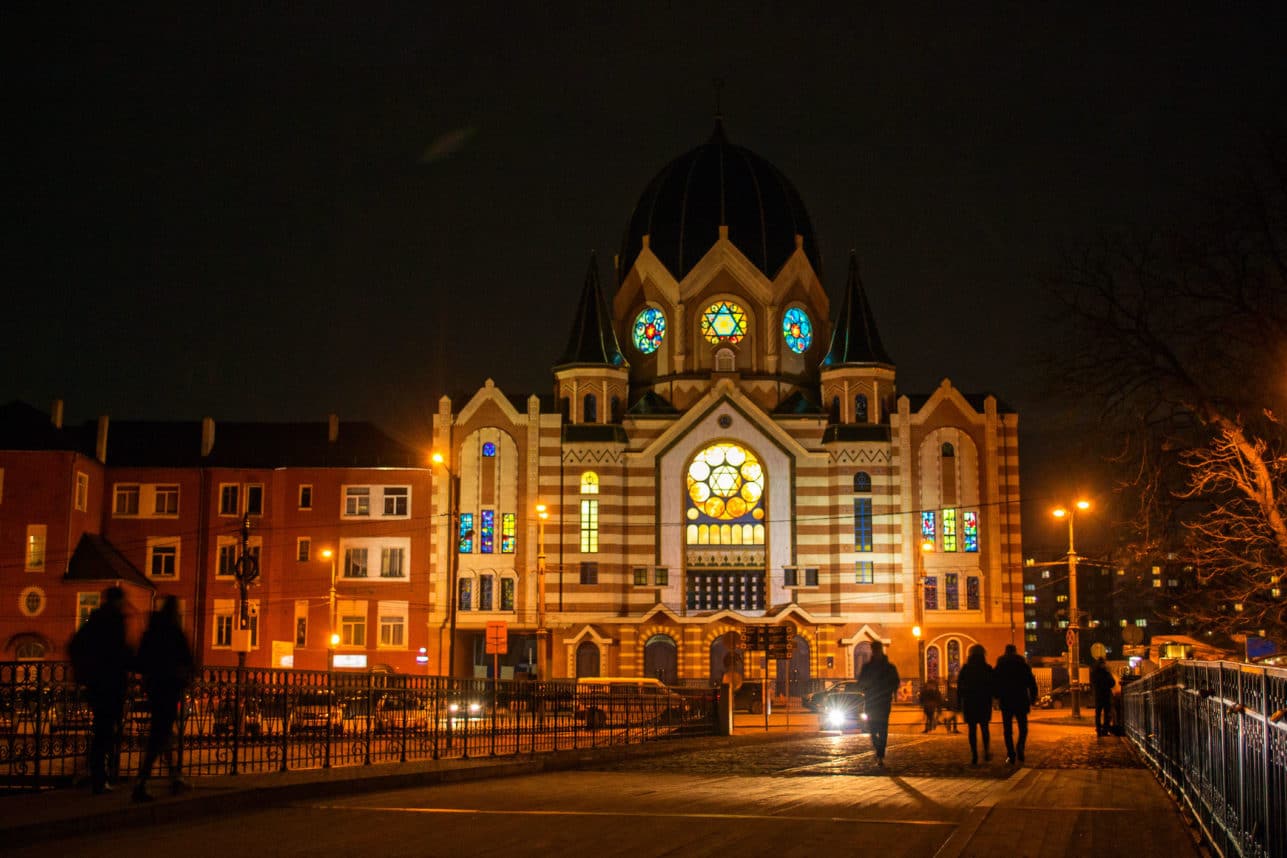
The officially atheist Communist Party also cracked down on religious practice and institutions. This included imprisoning and even murdering religious leaders, destroying places of worship (or repurposing them for secular purposes), and suppressing religious education. For Soviet Jews, this meant that most synagogues were abolished, rabbis were either forced to resign or violently repressed, and Hebrew language and religious instruction were practically outlawed, replaced by an officially sanctioned Yiddish culture that preached the new Bolshevik religion. This was nothing less than a state-sponsored effort to erase Jewish culture and traditions throughout the empire.

Nevertheless, many Russian Jews welcomed Bolshevik rule. They comprised disproportionate numbers in early Soviet governments and state institutions (as did other ethnic groups denied such opportunities in the Russian Empire). Despite newfound prohibitions on their religious, ideological and social practices, in the 1920s Soviet Jews excelled in Soviet political, cultural and professional life.

During the early years of the USSR, Soviet Jews continued to experience the (relative) legal equality first granted them by the Provisional Government. Antisemitism was even officially outlawed by the government. In exchange, they had to sacrifice the ability to practice their religion, one of the few rights afforded them by the Czars (albeit with various restrictions). However, this de facto legal equality would disappear after World War II, while remaining de jureuntil the USSR’s collapse.

Shortly after the Holocaust, Stalin initiated what historians have called “the black years of Soviet Jewry,” when the government forced the Empire’s Jews out of prestigious professions and universities, arrested and in many cases murdered Jewish leaders, and fomented an atmosphere of anti-Jewish hysteria throughout the USSR. Stalin’s death in 1953 brought an end to the worst of this official antisemitism, but Soviet Jews would continue to face unofficial discrimination and legal inequality. This took the form of university and professional quotas, the widespread dissemination of state-sponsored antisemitic propaganda masquerading under the fig leaf of anti-Zionism, and arbitrary refusals by the government to let them emigrate. This legal and unofficial discrimination began to wain only during the final years of perestroika and glasnost, before dying along with the Soviet Union.

What does this have to do with Jews in Russia today? Like their ancestors under the Russian Provisional Government of 1917, Jews in Russia and the other nations of the former USSR are free to practice their religion without government interference. Like Jews in the early years of the Soviet Union, they have excelled politically, economically and culturally in Russia since the collapse of communism. And in recent years, just like those early Soviet Jews, they have had to sacrifice one kind of freedom for another. Whereas the former had to relinquish their religious freedom for political equality, Jews in Russia today increasingly find themselves losing the political freedom they (and other Russian citizens) experienced after the collapse of the USSR, while successfully defending their freedom of worship.

While the relative political freedom of the Yeltsin era has steadily eroded during Putin’s (and Medvedev’s) rule, it has taken a nosedive since the escalation of Russia’s invasion of Ukraine in February. Since then, the government has shut down what little remained of Russia’s independent press. It has passed laws allowing Russians to be imprisoned solely for criticizing its attack on Ukraine, which the government calls a “special military operation,” or even referring to it as a “war” or “invasion.” The government has jailed opposition leaders like Alexei Navalny and Vladimir Kara-Murza on unsubstantiated charges of “extremism” and “terrorism”—after first poisoning them.

Russia’s 150,000 Jews are now watching developments between their government and community leaders with baited breath, wondering if (and how) it will affect the unimpaired religious freedom they have enjoyed since the fall of communism. Jewish religious and communal leaders have faced increasing pressure from the Russian government in recent months to publicly support its invasion of Ukraine. Like Moscow’s Chief Rabbi Pinchas Goldschmidt, most have refused to do so. Goldschmidt, who is also President of the Conference of European Rabbis, is now in exile in Israel. Rabbi Berel Lazar of Chabad, one of Russia’s two Chief Rabbis, has called for an end to the “madness” of the invasion and demanded an apology from Foreign Minister Sergey Lavrov after he claimed on Italian television that Hitler had Jewish roots.

Thousands of Russian Jews have emigrated since Russia’s invasion of Ukraine began in 2014. Since then, Israel has seen its biggest influx of Russian Jews since the fall of the USSR. Former Israeli Prime Minister Golda Meir, who was also the country’s first ambassador to the USSR, said that “pessimism is a luxury that a Jew can never allow himself.” If pessimism is a luxury, it is one that the Jews of the former Soviet Union have too often denied themselves to their detriment. As the history of Russia and its Jews has repeatedly shown, even when things have been looking up for a while, they can always get worse again. In the midst of a Russian economy facing its greatest decline in decades, pessimism is one luxury that Russian Jews should allow themselves as they plan for their future in (or out) of the country.


Oleg Ivanov is a freelance writer and editor. 

Russian Jews Have Long Sacrificed One Freedom for Another Read More »

A Yank’s Jubilee

Seventy years ago, King Farouk of Egypt commented that “someday there will be only five kings, the King of England and the four in the deck of cards.” His comment reflected on hundreds of years of history and the entrenched British values of hierarchy and tradition. Britain’s four-day weekend Platinum Jubilee commemorating Queen Elizabeth’s seventy-year reign cast little doubt on the prediction despite the on-going challenges to Britain’s world stature and the scandals that have affected the Royal family.

I arranged a trip to Britain completely unaware that it coincided with the Jubilee. Although interested in British history, I’m not royalty struck.  Without specific plans, I passively read the reports on the activities and observed crowds wearing and waving every conceivable item that can bear a Union Jack. As a foreigner, I felt some FOMO (fear of missing out) as the heralded events passed. The Queen may share that sentiment after also missing some of the events. Elizabeth is four months younger than my mother and I know the challenge of engaging a 96-year-old in festivities. Of course, my mother’s festivities don’t include a fly-by of jets streaming red, white and blue exhaust trails. The Queen did witness that.

So, darn the FOMO, on the final day of the Jubilee I traipsed to nearby Trafalgar Square to spend two hours among a crowd packed like Union Jacketed sardines witnessing the Queen’s Pageant. Elaborately uniformed military horseman led the parade followed by every possible form of drum corps and marching band. Cheers erupted as the kilted Royal Regiment of Scotland’s bagpipers played “Scotland the Brave.” Even a diehard Yank can’t hear that without a chill going down the spine. Following the military parade, a procession saluted the culture of Britain and the Commonwealth, highlighting ethnic diversity with a surprisingly lighthearted “cheekiness” worthy of a Disneyland Main Street parade. Afterward I had to admit that no nation competes with British national ceremonies.

Even a diehard Yank can’t hear that without a chill going down the spine.

The BBC’s round-up commentators pounded home the message that this was a day to feel proud to be British. One even claimed, “today, everyone envies the British.” Perhaps. But an American like myself can also feel a bit awkward because, like many, I believe the Royals to be mortals who also put on their pants (trousers here) one leg at a time, though perhaps with a bit more help available. That sensibility has historic roots. Thomas Jefferson waited only until the second sentence of our Declaration of Independence before proclaiming that all men are born equal. No sentiment could focus more skepticism on royalty than doubting the foundation of birth rights.

Although the nation celebrates, there is also the underlying sense that the years of the Queen’s reign have not been kind to Britain. They have witnessed the rollback of the colonial empire along with the waning of British cultural and political influence in the Commonwealth and elsewhere.  Although still a center of world culture and finance, Britain seems increasingly turned inward, as witnessed by Brexit.  The Queen and the monarchy seem less central to life in Britain, even as Britain becomes less central to the world at large.

Despite the erosion of British international stature and the predominance of egalitarian world views, the enormity of the crowd and its enthusiasm reflect the Queen’s personal popularity. On her 21st birthday, then Princess Elizabeth, in a radio address told the nation, “My whole life, whether it be long or short shall be devoted to your service.” The people believe the Queen has upheld her vow. Despite the challenges posed by the world and those created by her own family, she “carries on” in a very British manner that exemplifies the dignity and moral leadership required for a head of state and the titular head of the Church of England.
As the crowd cheered the troops and celebrated with the entertainers, I realized that a similar event in the U.S. would be difficult to imagine nowadays given the partisanship enveloping every aspect of public life. At the Jubilee celebration, Britons across a wide swath of the political spectrum, from every region and from diverse ethnicities, all gathered and peacefully celebrated what they share: a monarch who provides a venerable and valued national symbol that has endured for most people’s lifetimes. Traditions matter. Continuity matters. So, with those values in mind, I’ll raise a pint and drink to her Majesty. God save the Queen! And, God, while we’re discussing traditions, please don’t forget January 6th.


Daniel Stone is Regional Medical Director of Cedars-Sinai Valley Network and a practicing internist and geriatrician with Cedars Sinai Medical Group. The views expressed in this column do not necessarily reflect those of Cedars-Sinai.

A Yank’s Jubilee Read More »

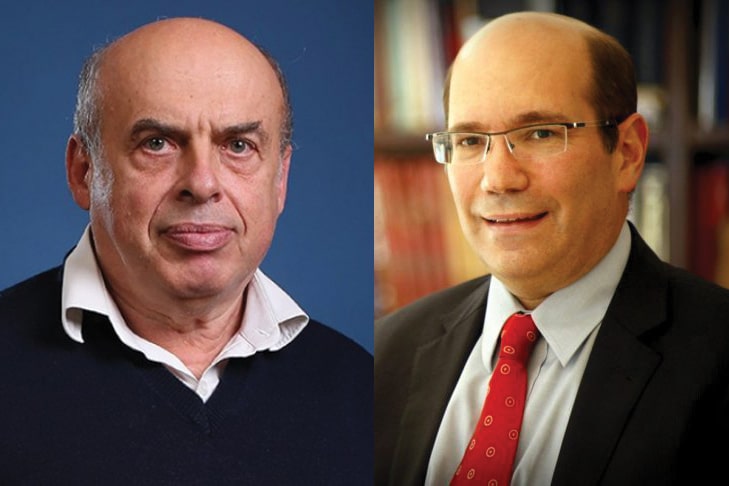
Masa hosts delegation to encourage gap years with community leaders Gil Troy & Natan Sharanksy

A group of high school college counselors from the United States and Canada traveled to Israel to collaborate on opportunities for real culture change in the gap year space.

Masa Israel Journey, the driving force behind the trip, hosted the counselors for one week in Israel. Although Masa usually tailors its programs to a young Jewish audience, the organization looked to established thought leaders to engage the Jewish population and better understand gap year programs.

The delegation of 11 members visited ten gap year programs to see their impact on the Jewish world. Masa offered the counselors a chance to meet and discuss with directors, current fellows, and alumni along the way—including some from their high schools.

Notable change-makers the cohort collaborated with include renowned scholar Dr. Gil Troy and politician and activist Natan Sharansky. Both Troy and Sharansky are vocal advocates of the benefits of taking a growth-focused gap year.

“A gap year is a unique chance to… experience Israel, connect to Judaism, and learn about Jewish history,” Sharansky said. He thinks the year is an opportunity to learn about both one’s culture and oneself.

“We want a gap year in Israel to be as natural a part of the non-Orthodox Jewish experience as the Yeshiva year has become for religious Jews,” Dr. Troy added. “Instead of asking our high school students in the Diaspora, ‘where are you going to college,’ it is time to ask, ‘which amazing Israel program are you going on, before college?’”

The practice of taking a gap year, a period of work or travel before the traditional four-year college trajectory, is quite common in some parts of the world. However, it is not often encouraged in the U.S.

Historically, young adults in Europe are more likely to choose gap years. Nearly five times the number of college-bound graduates defer in the United Kingdom than in the U.S. Part of the reason for this markedly different number is encouragement from family, teachers, and guidance counselors—or rather, the lack of it.

One study from Gap Year Association found that only 3% of colleges encouraged a gap year, and a mere 2% of high school staff were a motivator for experiencing a gap year. Masa sees the cultural value inherent in these programs, and it is looking to close the gap in gap years through outreach and education.

The year between high school and college is one of the most formative times in a young person’s life, says the senior leadership at Masa Israel Journey, and can greatly impact the Jewish community both at home and in Israel.

“There is no experience more powerful for determining impactful, positive Jewish and Israel engagement than through the immersive year after high school,” said Sarah Mali, Vice President of Leadership & Impact at Masa.

Every year, Masa provides opportunities for thousands of young Jewish adults to volunteer, intern, work, and learn in programs that allow them to gain an international perspective while living independently in Israel.

Mali and the rest of the Masa staff structured the week-long delegation to highlight the diverse opportunities for recent high school graduates in Israel.

The guidance counselors came from a broad array of institutions: Orthodox and independent high schools, as well as Jewish teen organizations working in public schools. Representing schools from New York, Florida, Texas, Toronto, and more, the counselors visited ten gap year programs in Israel.

As leading professionals in their field, these delegation members brought decades of expertise that they shared with Masa and the program organizers. From April 30 to May 5, the group participated in thought leadership discussions and educational programs.

All delegates appreciated the chance to engage with two prominent thought leaders in the Jewish world. “I felt both incredibly humbled and honored to listen, learn, and engage in active dialogue with both Natan Sharansky and Gil Troy earlier this morning,” said Laura Miller, Director of College Counseling at The Leffell School.

Miller and a few of her colleagues spoke to the bold ideas and perspectives that Sharansky and Dr. Troy brought to the table in discussions of college culture. The roundtable brainstormed ideas that serve to engage a generation of young Jews, starting with an immersive experience in Israel.

Masa hosts delegation to encourage gap years with community leaders Gil Troy & Natan Sharanksy Read More »

A Blessing for Alienation

In the early summer of 1970, Rabbi Menachem Mendel Gefner was sitting at the Kotel praying for peace and tranquility. The War of Attrition in the Sinai had intensified, and Israeli soldiers were being killed daily. Heartbroken by the losses, the words of the Mishnah echoed in his mind: “From the day that the Temple was destroyed, there is no day that does not contain curses.”

Suddenly, Gefner had a revelation. He remembered that there is a passage in the Midrash that responds to the Mishnah and says: “Rav Acha said: If so, by what merit do we remain standing? Through the merit of Birkat Kohanim [the priestly blessing].”  This inspired Gefner; he later found a tradition from the late-12th-century mystic, Rabbi Eleazar of Worms, that said: “If three hundred Kohanim would stand on the Mount of Olives and recite Birkat Kohanim, the Messiah would arrive.” Gefner decided to organize large Birkat Kohanim gatherings at the Kotel, and today, because of him, tens of thousands of people, along with hundreds of Kohanim, come from around the world to the Kotel on Pesach and Sukkot for Birkat Kohanim.

Gefner’s choice of Birkat Kohanim is unsurprising. This blessing has been a perennial favorite for millennia. Parents offer this blessing to their children on Shabbat, and the oldest biblical text ever found is that of Birkat Kohanim; it is inscribed on the Hinnom Scrolls, two silver amulets that date to the seventh century B.C.  Birkat Kohanim has a unique appeal that draws people to it.

Despite its popularity, the idea that the Kohanim are the ones who offer to bless the community is theologically troubling. Rabbi Isaac Arama articulates this problem in his commentary to the parsha: “What purpose is there in this commandment, in having these blessings coming to the people from the mouths of the Kohanim? It is God above who gives the blessing. What can be added if the Kohanim offer this blessing or not? Does God need their help?”

Some are unconcerned by this question and say that the blessing of Birkat Kohanim does belong to the Kohanim. Rabbeinu Bachya says that “God handed over the gift of these blessings to the Kohanim, that they should have in their hands the power to bless Israel.” Some go even further. The Kli Yakar explains that it is the chazan who brings the blessings down from heaven, by reading the words of the blessing. The kohanim repeat the words after the chazan and take that blessing from the chazan to offer it to the community.

The Rambam and many other commentaries find this to be unacceptable. It is God who determines divine blessings, not man. The Rambam writes: “Do not wonder and say, ‘Of what use is the blessing of an ordinary person?’ The acceptance of the blessings does not depend upon the Kohen but upon the Almighty, as it is said, ‘So shall they put My name upon the children of Israel, and I will bless them’ (Numbers 6:27). The Kohanim fulfill their duty with which they have been charged, and the Almighty, in His mercy, blesses Israel according to His will.” According to the Rambam, the Kohen’s recitation of the blessing is merely a formality, a ritual no different than the rest of the Temple service. In the end, it is God who provides the blessing. This answer solves the theological dilemma, but it devalues the role of the Kohanim and empties their blessings of meaning.

There is a third way of looking at the blessings, one that is suggested by the Rashbam. Birkat Kohanim is a prayer offered by the Kohanim on behalf of the community; God then listens to this blessing-prayer of the Kohanim and blesses the community. (The Sifrei notes that by listening to Birkat Kohanim, the community also brings God’s blessing to the Kohanim.) However, this too begs the question: Can’t the community pray for themselves? Can’t the Kohanim, who bless others, obtain their own blessings?

But perhaps that is precisely the point: A community that prays for each other, that sees the other person as worthy of God’s blessing, is a community transformed. That perspective is in itself a blessing.

A community that prays for each other, that sees the other person as worthy of God’s blessing, is a community transformed. That perspective is in itself a blessing.

True love requires both compassion and respect; but respect is the more important of the two. Compassion is the foundation of “love your neighbor as yourself.” When we appreciate that our neighbors are like us, we feel a desire to care for them. However, Ben Azzai, in a passage in the Talmud, says that recognizing that others are created in the image of God is even more important. This is the foundation of respect: One must treat a person who carries the divine image as sacred.

Birkat Kohanim is about respect. It teaches us to bless each other, because every human being is worthy of God’s blessing. This perspective is nothing short of transformative, and it is a true moment of divine inspiration when the Kohanim and congregation meet each other face to face and connect in appreciation and love.

The context of Birkat Kohanim in our Torah reading underlines its importance as a communal institution. Instead of being included in Sefer Vayikra with the other laws of the Kohanim, Birkat Kohanim is found at the beginning of Sefer Bamidbar. The theme of Bamidbar is nation building. The book begins with a census and the organization of the military and focuses on the development of a young nation in the desert. But the rise of the state brings with it a great deal of discontent. States are big and self-involved, and individuals will be overlooked and excluded. National ambitions pay little attention to the ordinary man, and consequently, states are by their very nature cold and impersonal. The state, in a word, is alienating.

The laws in our parsha all deal with people who are alienated or marginalized: those who are impure, the convert, the estranged husband and wife, and the uncomfortable religious striver, the Nazir. Taken as a group, these laws warn us about alienation, and the problems of nation building. Following these laws, the blessing of the Kohanim is introduced; it represents the opposite of alienation. The cold calculus of the state sees young men as a unit of military force, one more soldier available for battle. But Birkat Kohanim reminds us that they are all God’s children.

Alienation is now commonplace around the world. A toxic mix of technology, materialism and polarization has left people feeling more disconnected than ever. It is in times like this that we must relearn how to respect everyone, to recognize the divine dignity of each human being. And that is what Birkat Kohanim does; it reminds us that even the stranger is created in the image of God and deserves our blessing.
Aaron Katz, an American immigrant to Israel, described in Tablet Magazine his experiences reciting Birkat Kohanim in “a moving minyan” on the train to Tel Aviv:

….as I recite the prayer each morning—on a moving train in the State of Israel—the words have taken on an entirely new meaning for me … On a train filled with the spectrum of Israeli society, I have a unique opportunity to provide the passengers, including the soldiers and police officers who risk their lives to defend the State of Israel, with a blessing of protection and peace.

The Talmud explains … that Birkat Kohanim reaches out to the people “out in the fields” who are unable to be present during the recitation of the blessing. As we literally pass through the fields … of Ramla and Lod … during Birkat Kohanim, I … smile at how literal the Talmudic saying has become in my own life. And I wonder, could the rabbis of the Talmud ever have imagined that an immigrant Kohen to Israel would be passing through the fields with a minyan while reciting the Birkat Kohanim and praying for peace?

I don’t know what the Rabbis of the Talmud imagined. But what Katz describes is precisely the purpose of Birkat Kohanim: to see everyone as worthy of God’s blessing. When we do that, we become just a bit closer to each other, just a bit less alienated. And maybe if we do this often enough, at the Kotel, on trains, and at the Shabbat table, the blessings of peace in Birkat Kohanim will become a reality.


Rabbi Chaim Steinmetz is the Senior Rabbi of Congregation Kehilath Jeshurun in New York.

A Blessing for Alienation Read More »