fbpx

May 3, 2022

An Idiot Abroad on Yom HaZikaron

A number of years ago, I was sitting in my apartment in Tel Aviv when I heard a siren go off. First a low moan, like the acceleration of a motorcycle, and then a piercing cry.

There’s nothing particularly shocking about this. I had been living in Israel for a number of years and I had witnessed the beginnings, middles, and ends of a few rounds of violence—each one nearly identical in even its smallest details, to the extent that I can’t ever quite recall which war I’m talking about even as I talk about it.

I knew what to do. I stood up and went to the stairwell. I sat down on the steps and I waited to hear the “boom” of the rocket being intercepted by the Iron Dome.

A moment passed, and then another. The siren continued. No boom was heard and finally it dawned on me what was going on. This wasn’t a rocket siren. It was the siren for Yom HaZikaron—Israel’s Memorial Day.

I went back into my apartment and stepped out onto the balcony, just in time to hear the siren wind down mechanically as the people in the streets, who had been standing in silence, wound themselves back up into movement, busyness, life.

This has the potential to be a funny story. Its genre is that of the idiot abroad, and as I related the anecdote to my Israeli friends in the next couple of days, I found that it reliably got a good laugh.

On the other hand, there’s nothing particularly “idiotic” about my confusion. The rocket siren and the memorial siren emanate from the same unseen city infrastructure, and while they sound nearly identical, one calls us to stand and the other sends us running for cover.

The next day, on Yom Ha’Atzmaut, Independence Day, I was again at my desk when I heard a peculiar sound. This time, I knew what it was. It was the aerial Independence Day show conducted yearly by the Israeli Air Force. I threw open my window to look at the planes as they made loop-de-loops up and down the coast of Tel Aviv, holding themselves in tight geometric formations and, at times, dropping little glowing fireworks—embers that drifted downward through the sky and then disappeared.

I’ve always enjoyed gazing at aircraft from the ground below. When I was a kid, my mind was utterly blown when my aunt took me to see the Blue Angels. This time, however, I found myself unable to enjoy the spectacle in that simple childlike way. Something about the planes—or rather, everything about the planes—reminded me of that most recent war in Gaza. I pictured this same tight formation of planes coming down the coast—not whimsically looping, but rather flying with single-minded determination. Not dropping fireworks, but bombs.

Memorial Day and Independence Day, in both the United States and in Israel, are commemorations of war with different inflections. One day mourns the dreadful sacrifice of war, the other celebrates the results of victory.

To commemorate each, we repurpose the technologies of war—sirens, aircraft, fireworks—a perfect marriage of medium and message.

In Israel, however, where the memory of war is never far off and the threat of war never implausible, this is bound to lead to synaptic confusion, sending Americans running for their stairwells when they should be standing in solemn reflection, or worse—triggering a trauma response in veterans.

Indeed, a number of organizations have pushed to limit the use of fireworks in Israel on Independence Day for just this reason, citing the undue psychic cost for the very soldiers these national holidays are trying to honor.

A version of this discourse has taken place in the United States as well, but it is muted for a couple of reasons. First off, a far greater share of the Israeli population knows a veteran personally than in the United States, widening the anti-firework camp from a fringe interest group to a national concern. The second reason—which is not altogether separate from the first—is that war itself, to the American consciousness, is a remote and abstracted thing. To the extent that we are aware of it, we are aware of it from headlines. It is thus (for many of us) severed from the sensory associations that might be evoked by a fireworks display.

In the United States, the fireworks might recall the “rockets’ red glare” of our national anthem. The smoking grills of a thousand Fourth of July cookouts could—potentially—recall the smoking battlefields of our own inaugural war. For most people, however, fireworks and cookouts are just that—fireworks and cookouts. There is a perceptual gap between the symbol and the symbolized.

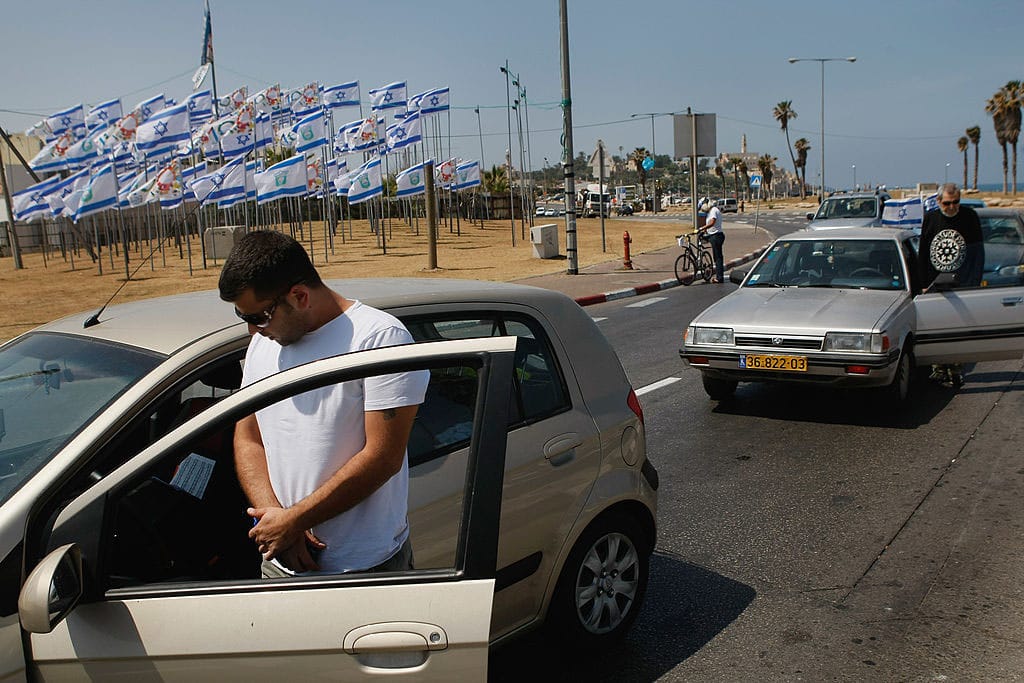
Is this a good thing or a bad thing? Visitors from America are often moved and impressed by the solemnity of Memorial Day in Israel. For a brief moment, the country stands still together. Cars stop on the highways so that their drivers can step out onto the pavement and stand for the duration of the siren.

Our own Memorial Day, on the other hand, is used as a flimsy pretense for half-off sales at national retail chains.

Perhaps, however, the feverish consumerism of American Memorial Day is preferable. It speaks to the quiet sense of security and stability that pervades American life, the ways in which we see history as a domesticated animal rather than an untamed force, consigned safely to the textbooks where it cannot hurt us.

The atmosphere of Memorial Day in Israel, on the other hand, speaks to the fact that, in Israel, history runs wild in the streets.

It also speaks to the fact that Israel’s existence is a source of ongoing controversy—debated fiercely between Israel’s supporters and Israel’s detractors.

Controversy, generally, has a short shelf life. Like a wardrobe malfunction at the Super Bowl or a slap at the Oscars, controversy bursts into public consciousness, dominates it, and then fades. Israel’s founding, however, defies this axiom. It is a controversy that somehow manages to endure—day after day, year after year, decade after decade.

This is because Israel’s founding moment never really passed into history. It remains a “current event,” evidenced by certain Palestinians who still think it’s possible that the Israelis will pack up and leave; as well as by certain settlers who fancy themselves pioneers—latterday members of Israel’s founding generation.

Living in Israel, I wasn’t immune to these distortions of time—this collapse of past, present, and future into one enduring moment. In the sound of the siren and the sight of the planes, I became lost—forgetting, for a moment, whenI was.

As municipalities across Israel deliberate over the question of fireworks, what they are really asking is this: how can one memorialize that which hasn’t passed into history? How can one celebrate the founding of a state which still hasn’t found its final form, whose boundaries and borders still shift and writhe? How can we reconcile and confront a past that hasn’t yet had its fill of the present?

About a decade ago, when I was working as a kindergarten teacher, I liked to lead a daily meditation with the children in my class. One day, I asked them to close their eyes and to pay attention to the moment we call “now.” I asked them to note, if they could, when one “now” ended and another “now” began, or if, perhaps, it was all just one continuous “now.”

The children observed that “nows” come and go at a breakneck pace. Moments end. Mysteriously but inevitably, one “now” wilts and fades away as another comes to take its place.

Alas, I’m no longer a kindergarten teacher. Today, I am a rabbinical student, and thus in the business of offering prayers. My prayer, then, for Israel on this Yom HaZikaron, is that this decades-long moment yields finally to a new “now,” allowing us to at last mourn what we have lost, celebrate that we have survived, and look forward together.


Matthew Schultz is the author of the essay collection “What Came Before” (2020). He is a rabbinical student at Hebrew College in Newton, Massachusetts.

An Idiot Abroad on Yom HaZikaron Read More »

Never Again Should Mean Never Again

Late last year, someone sent me the link to an editorial piece published in the South China Morning Post, Hong Kong’s primary English-language media outlet. “For the sake of peace, do not forget Nanking,” ran the headline, and the article went on to appeal for this pre-Second World War atrocity to be remembered, so that it wouldn’t happen again.

The article was striking – and made all the more so by its prescient appearance just a few weeks before Russia’s brutal invasion of Ukraine. After all, does remembering wholesale genocide and wartime atrocities truly prevent their reoccurrence? It is a question that haunts me, and particularly so this week, when I flew to Jerusalem to attend the Holocaust memorial event at Yad Vashem, staged every year to coincide with the eve of Yom Hashoah.

The genocide widely remembered as the “Rape of Nanking” took place in the early stages of the Sino-Japanese War in 1937. The Chinese government under Chiang Kai-shek had been operating out of Nanking, a city west of Shanghai, but Japanese forces forced them to evacuate, and in December 1937 overran the city.

Over the next few weeks, Japanese soldiers systematically perpetrated mass executions of civilians and tens of thousands of rapes. It is estimated that 300,000 people were killed in just 6 weeks, and the Japanese also looted and destroyed numerous buildings, obliterating urban structures and leaving a dystopian landscape in their wake.

But as shocking as this story is in retrospect – and it was also widely reported at the time, with newsreels and photos vividly showing the Japanese atrocities – far more shocking is the fact that aside from a few indignant editorials and some muted condemnations, by-and-large the world looked the other way.

Most egregious was the response of President Roosevelt, who, despite his reverence for China, presided over an isolationist policy that ruled out American intervention. Japan was watching, and so was Germany.

Less than 2 years later Germany marched into Poland and began the wholesale slaughter of Jews, while Japan saw the United States as low-hanging fruit, which resulted in the devastating attack at Pearl Harbor exactly 4 years after the Nanking atrocity.

Perhaps both of these violent autocracies could have been halted in their tracks had the world reacted differently in 1937, and particularly had the United States reacted more forcefully when news of the genocide emerged.

The reason the Nanking story is so relevant today – and why for China to officially memorialize it amounts to nothing more than hollow sentimentalism – is because remembering a genocide has no meaning if similar genocides continue to occur and the world’s reaction is largely the same as it was in 1937.

Russian atrocities in Bucha have been put on display for all to see, and just wait until we see what butchery the Russians have perpetrated in Mariupol – I dread to think. And yet, life goes on, and the world has done far too little, far too late, to prevent these atrocities from taking place in real-time, even as the evidence of deliberate Russian genocide in Ukraine has mounted overwhelmingly.

Vladimir Putin is cut from the same cloth as Second World War-era Japanese and Germans – a determined autocrat with absolutely no regard for human life, who perceives the world as unwilling to do what it takes to extinguish his nefarious ambitions.

This week, as I attended the program at Yad Vashem, I recalled speaking to my late father on his cellphone as he attended the sixtieth anniversary of the Auschwitz liberation in January 2005. Remarkably, he told me he had just been introduced to Vladimir Putin, who had spoken during the ceremony.

In his short conversation with Mr Putin, my father brought up the case of a Russian Jewish leader who had been barred from returning home on the basis of some trumped-up nonsensical pretext, and Putin agreed to look into the issue. I will never forget what my father told me: he said he had looked into Putin’s eyes, and they were the coldest eyes he had ever seen in any human being.

What was Mr Putin even doing in Auschwitz in 2005? What a mockery of the more than one million people murdered in Auschwitz that Putin was asked to speak. The Butcher of Chechnya paying tribute to “Never Again!” even as he proactively presided over the wholesale murder of Chechen civilians – by 2005, there were over 250,000 civilian casualties as a direct result of Russia’s invasion.

Chechnya was Russia’s Nanking; no one took too much notice, and now we are witnessing an “action replay” in Ukraine. And Ukraine is the next level Nanking; a muted reaction, or an inadequate reaction, will result in “action replay” Nankings elsewhere – and not just with Russia as the aggressor.

Which brings me back to the Yom Hashoah event at Yad Vashem. Six Holocaust survivors were meant to be there to light one of six flames, with each flame representing one million of the six million Jews who were murdered. But by the time the event came around this week, one of them had died, and his son was there instead.

Within a matter of a few short years there will be no more survivors. Nevertheless, the message of Yom Hashoah will remain strong and meaningful – because it is not about sentimentalism. Rather it is – as the full name of this commemorative day suggests – a “Yom HaZikaron laShoah ve-laGevurah,” a day of remembrance for the Holocaust, and for courage. Of course we remember those who died, but remembering them will only have meaning if we have the courage to battle Hitler’s heirs when they rear their ugly heads today.

The portion of the Torah that charts the ritual activities of Judaism’s holiest day, Yom Kippur, is called Acharei Mot. It begins with a brief but poignant mention of Aaron the High Priest’s two sons, who had recently died at the hand of God, having desecrated their ritual duties, thereby contaminating the Temple.

Rashi quotes a Talmudic source to explain the jarring reference to this unfortunate incident: “It may be compared to the case of a sick person who is visited by a doctor. One doctor says to him, “don’t eat cold things or sleep in a damp place!” But a second doctor says to him, “don’t eat cold things or sleep in a damp place so that you don’t die like the other guy did.”

The second doctor is far more effective than the first, says Rashi; by contextualizing the instruction as a warning of the consequences of ignoring the problem, the patient is far more likely to respond. Aaron was devastated by the death of his sons; by correlating Yom Kippur with the loss, Aaron’s memorial became meaningful and constructive, not just an empty, soul-gnawing source of melancholy.

It is said that we study history to learn from the mistakes of the past. Except that we never do. We should and we must. Because remembering the past is meaningless if it has no consequences for the present so that we can ensure a better future.

Never Again Should Mean Never Again Read More »

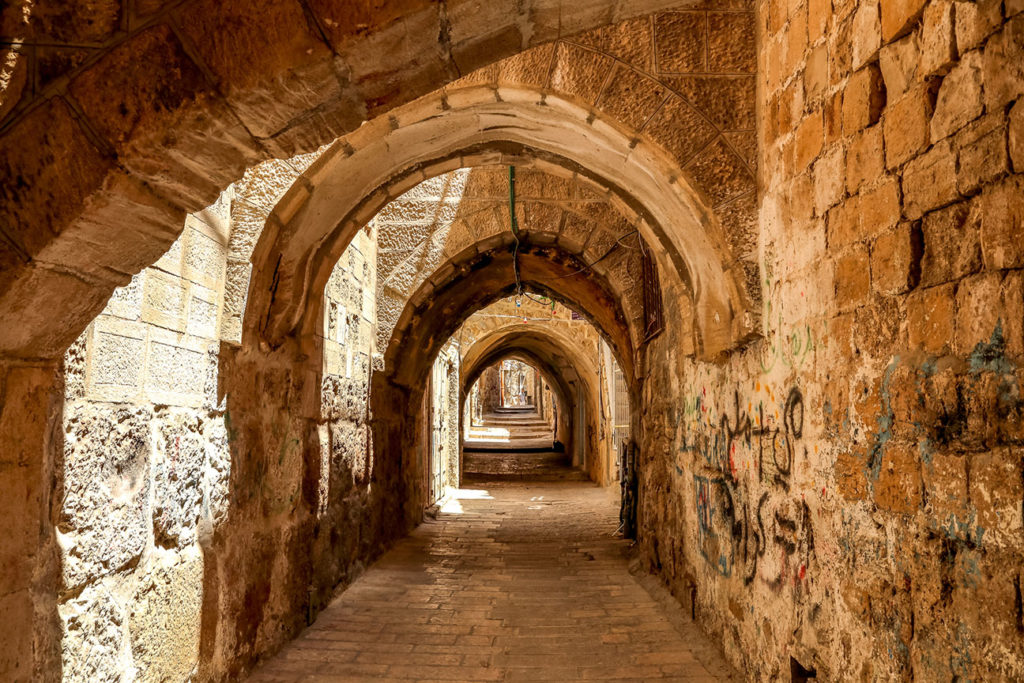
Five Hundred Years of Communal Post-Temple Jewish Life in Palestine

Political scientist Shlomo Avineri argues that the resilience of the democratic tradition in modern-day Israel stems from centuries of communal self-governance experienced by Jews in the Diaspora. He writes that as a result of the lack of statehood and sovereignty the communities were ruled by its own members. I think it important to add that this description also applies to centuries of post-Temple communal self-governance by Jews in the Holy Land.

While Passover is over for this year, it is still useful to point out that the Passover Haggadah is a time capsule that describes the onset of a lengthy period of Jewish self-governance in Palestine. The clues lie in the identities of the nine sages mentioned in the Haggadah.

Five of them, Rabbis Tarfon, Elazar ben Azariah, Eliezer ben Hyrcanus, Yehoshua ben Hananiah and Akiva, spend a night together at the home of Akiva discussing the departure from Egypt. Additional sages mentioned in the Haggadah are: Shimon ben Zoma (who died before being ordained), Rabbi Yehudah (Yehudah bar Ilai, who provides an acronym for the ten plagues), Rabbi Yose the Galilean and Rabban Gamliel. Gamliel is credited with saying that whoever does not explain the three symbols of the Seder—the Passover offering, matzah and bitter herbs—has not fulfilled his duty. This Gamliel, Gamliel II, is the second of six Gamliels who were prominent Jewish leaders in Judea/Palestine from the first to the fifth centuries of the Common Era. The honorific Rabban was given to those who served as head of the Sanhedrin.

The Sanhedrin (from the Greek synedrion, for assembly) was a Jewish legislative and judicial court that existed during the Second Temple period. While the existence of the Sanhedrin ended after the Temple’s destruction, a Sanhedrin (also called a Patriarchate), headed by rabbinic sages and having some political and judicial relevance, was reconstituted at Yavne and at locations in the Galilee. This court deliberated on matters of Jewish law, set the Jewish calendar and was the central body of authority of Jewish life. It was responsible for communicating with the Imperial authorities. At the end of the first century CE, for example, four of the sages mentioned—Gamliel II, Akiva, Elazar ben Azariah and Yehoshua ben Hananiah—voyaged to Rome to lobby on behalf of the Jews of Palestine.

Both Gamliel II and Elazar ben Azariah served terms as President (Nasi) of the Sanhedrin. Elazar ben Azariah assumed the position after Gamliel II was deposed by the Sanhedrin, for what was deemed imperious behavior. Gamliel was later reinstated. (This is not unlike contemporary politics!)

The nine sages were contemporaries. They were nine of the 120 Tannaim whose views are recorded extensively in the Mishnaic writings of the first and second centuries CE. The date of the meeting of the five sages portrayed in the Haggadah has to be between the first two (of four) Jewish revolts against Roman rule in Palestine. (A fifth major uprising, by Diaspora Jews against the Romans, the Kitos War, erupted in the years 115 to 117 CE in Egypt, Cyprus and Cyrenaica.)

The first Jewish revolt took place from 66 to 73 CE and ended with the fall of Masada. The details are well known from the writings of Josephus. It is common to describe the dispersion of the Jews and the subsequent 2000 years of wandering to the failure of this revolt. Yet, a significant number of Jews remained and prospered in the land for at least 600 years after the fall of Masada. Estimates suggest that after this first revolt the Jewish population in Palestine was two to two and one half million, about half the world total. Ironically, the same war that led to the destruction of the Temple and the end of Temple worship, also contributed to the ascendency of Rabbinic Judaism and the writing of the Talmud and Midrash.

Ironically, the same war that led to the destruction of the Temple and the end of Temple worship, also contributed to the ascendency of Rabbinic Judaism and the writing of the Talmud and Midrash.

The second rebellion against the Romans, the Bar Kochva Revolt, began in 132 CE and ended with the fall of the fortress of Betar in 136 CE. Until the 1960 discovery of correspondence between Bar Kochva and his subordinates, the main source of information about this conflict was provided by the Roman historian Cassius Dio. Significant numbers of Jews continued to live in Palestine (the name given by the Romans after the Bar Kochva rebellion) for a considerable time afterward. The reconstituted Sanhedrin was not discontinued until 358 CE (its last function contributed to establishing the Jewish calendar), and the Romans recognized a Jewish Patriarch in Palestine until 425 CE.

The intensity of post-Temple Jewish life in the Holy Land, especially in Galilee, is obvious from the number of archeological sites and synagogue ruins in evidence at sites such as Bar-am, Beit She’arim, Beit Alpha and Tzippori (the Roman Sepphoris). In “Twenty Centuries of Jewish Life in the Holy Land,” published in 1975 by the Israel Economist and edited by Dan Bahat, the remains of at least 80 synagogues, dating from the first to the sixth centuries CE, are mentioned. While many are concentrated in the Galilee, synagogue remains of this period have been found throughout the Holy Land, including east of the Jordan River.

There were two additional uprisings by Jews in Palestine against Roman rule. In both, the rebels tried to take advantage of Roman preoccupation with disturbances elsewhere. The Gallus Revolt, directed against Constantine Gallus, ruler of the Eastern Roman Empire (Byzantium), took place from 351 to 352 CE. The focal points were at Tzippori and Tiberius, but there is evidence that it extended as far south as Lod (Lydda). The senior Roman commander, Ursicinus put down the revolt, killing thousands of rebels.

The last Jewish effort to gain autonomy in Palestine before modern times, the revolt against Heraclius, Emperor of the Eastern Roman Empire, broke out in 614 CE in the midst of a broader conflict between Heraclius and the Sasanians (Persians). Twenty thousand to 26,000 Jewish men, recruited from a Jewish population estimated to range from 150,000 to 400,000, fought in this campaign. There were heavy losses on both sides. Initial Jewish successes, including a Jewish takeover of Jerusalem, came to naught in 617 CE when the Sasanians reneged on their support for the Jews.

Each of the four revolts failed and each loss resulted in a further reduction in the number of Jews living in the Holy Land. After the revolt against Heraclius, the Jews of Palestine no longer occupied a central position in the Jewish world.

The origins of the Passover Haggadah are uncertain, but it is believed that most of the version widely used today was compiled by the end of the Talmudic period (500-600 CE). The Haggadah reminds us that communal self-governance characterized the Jewish community in Palestine for more than half a millennium after the destruction of the Second Temple—an important point at a time when the historical connection between the Land of Israel and the Jewish people is being widely denied.


Jacob Sivak, a Fellow of the Royal Society of Canada, is a retired professor, School of Optometry and Vision Science, University of Waterloo.

Five Hundred Years of Communal Post-Temple Jewish Life in Palestine Read More »

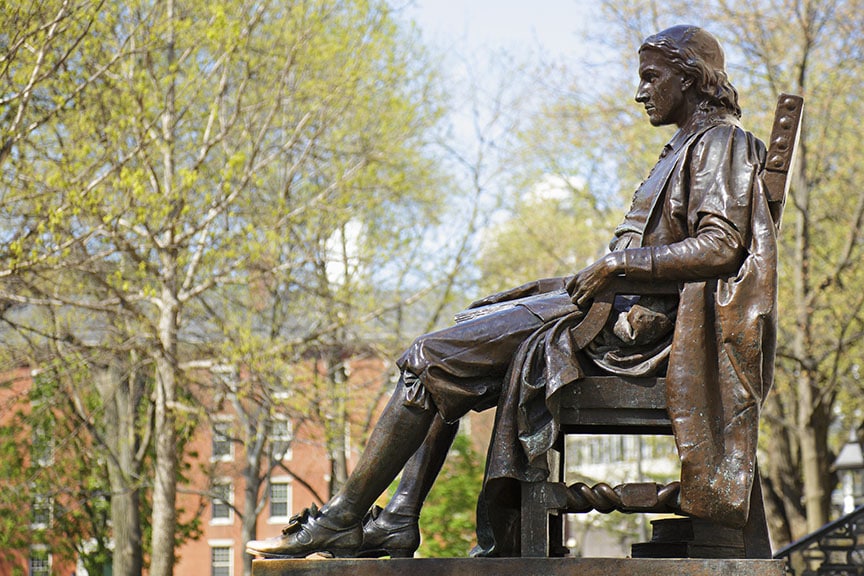
An Open Letter to the Editorial Board of The Harvard Crimson

On April 29, 2022, in a breathtaking display of tendentiousness and a misreading of history and fact, you published an editorial in The Harvard Crimson entitled, “In Support of Boycott, Divest, Sanction and a Free Palestine.” It was an outrageous column replete with slanders against the Jewish state that called for the Harvard community to commit itself to the corrosive BDS campaign against Israel.

You suggested that the editorial was inspired by the April demonstrations and programming of the Harvard College Palestine Solidarity Committee (HCPSC), which, as part of Israeli Apartheid Week, “installed a colorful, multi-panel ‘Wall of Resistance’ in favor of Palestinian freedom and sovereignty.” Additionally, you heaped praise on the childish mock wall and suggested that “art is a potent form of resistance” and that you were “humbled by our peers’ passion and skill” in creating such an activist masterpiece.

Even more importantly, you contended, fallaciously, “The admittedly controversial panels dare the viewer to contend with well-established, if rarely stated, facts [emphasis added].” What are examples of those “well-established facts” to which you alluded? One panel announced in capital letters, for example, that “Zionism is: Racism – Settler Colonialism – White Supremacy – Apartheid,” mendacious slurs that echo the UN’s notorious 1975 Resolution 3379 that proclaimed that Zionism is racism.

Framing the Israeli/Palestinian conflict as a matter of race, as this foolish display did, and accusing Israel of maintaining a system of apartheid is something that Israel-haters are fond of doing, even when the charge is patently false. The accusation of apartheid was given even more support last year with the publication of reports by Human Rights Watch and Amnesty International, both obsessive and perennial critics of Israel, that redefined apartheid in a way that it could be used to slander Israel—reports that you, in fact, alluded to in your editorial. The puerile accusation of white supremacy against Israel is as grotesque and unhinged as is the oft-repeated claim that Israelis are the new Nazis, committing genocide against the Palestinians, and both are not only counter-factual but are also forms of antisemitic expression described in the International Holocaust Remembrance Alliance (IHRA) working definition of antisemitism.

Of course, your claim that the “facts” on the HCPSC mock wall are “well-established” is only true inasmuch as these are so-called facts that live in the minds of progressives and antisemites who carelessly throw around words without attention to their actual meaning and import.

Your other preposterous contention that these attitudes toward Israel, these supposed facts, are “rarely-stated” is so naïve that only college students who have just begun to counter anti-activism could possibly believe them, since the campaign to slander, libel and destroy the Jewish state has been in high gear for some two decades, and this counter-factual language and the allegations within it have been and continue to be ubiquitous on campuses worldwide. And it requires no bravery at all to be an enemy of Israel on university campuses steeped in such activism, as much as you try to impute bravery on the part of those who promote anti-Israel rhetoric.

In justifying your position in this debate, you remarked that “It is our categorical imperative to side with and empower the vulnerable and oppressed.” Really? Does that include Jewish civilians who are being stabbed, rammed with cars, blown up and showered with rockets in their sleep by the genocidal terrorist organization of Hamas in Gaza and even Arab Israelis? Or it is only the Palestinians you care about, the ones who have rejected statehood when offered to them on multiple occasions, preferring instead to mount an endless resistance against a sovereign state they cannot and will not abide simply because its residents are Jews?

Your calling for a BDS campaign to be unleashed against Israel demands that, among the many calamitous examples of human strife and suffering occurring around the world, Harvard should focus on and commit to denouncing only one: the Israeli-Palestinian conflict. And more than that—just as the Third Reich and Arab League before them—you wish to target Jewish businesses, organizations and educational institutions, and expel them from the world community. You wish to single out only Zionism and Jewish self-determination as being singular evils in the world. If you apply a double standard to Israel, holding it up to a standard of behavior not expected or required of any other nation, denying only Jewish self-determination while advancing and being a cheerleader for Palestinian self-determination, that behavior conforms to the IHRA working definition of what, in the contemporary context, can be indicative of antisemitism.

You, like other antisemites, may vigorously deny that nothing you say or do in this cognitive war against Israel has anything to do with Jew hatred, but the IHRA definition suggests that when you promote anti-Zionism and Jewish self-determination while employing tactics such as BDS designed specifically to weaken and destroy Israel, you are engaging in antisemitic behavior, “advocating and taking actions that are antisemitic in their effect if not their intent,” as former Harvard President Lawrence Summers once put it.

You yearn for the “liberation of Palestine” but what do you assume such an event would actually result in? When you carelessly refer to a liberated Palestine are you talking about the West Bank and Gaza, areas that would comprise a new Palestinian state? Or are you really describing and eagerly imagining a liberated Palestine that BDS supporters and their fellow travelers in the Arab world and in the West actually seek, namely, a Palestine that includes, and subsumes, present-day Israel? Could Israel even survive a liberation of the Palestinians, even encompassing only Gaza and the West Bank, assuming the Palestinians actually agree to such a territorial settlement? Israel knows, because of its experience after cleansing Gaza of all of its Jews, that instead of working on the creation of the beginnings of a state for themselves in Gaza, the Palestinians allowed Hamas to transform Gaza into a terror enclave from which to continually assault Israel, something which Israelis understandably imagine could happen again were the West Bank, in addition to Gaza, to be totally controlled by the PA, Fatah, or even Hamas.

And if the perverse and immoral fantasy in which Israel disappears completely into some sort of bi-national state were ever to be realized, a complete “liberation” of Palestine, what do you think would be the fate of the Jewish democracy of Israel and the Jews who live there? Were this to occur, Israelis would find themselves at the hands of hostile Arabs who are taught from birth that Jews are the descendants of apes and pigs or under the control of Hamas terrorists whose charter includes the lethal exhortation to Muslims everywhere which claims that “’The Day of Judgment will not come about until Moslems fight Jews and kill them. Then, the Jews will hide behind rocks and trees, and the rocks and trees will cry out: ‘O Moslem, there is a Jew hiding behind me, come and kill him.’”

Conspicuously absent from your editorial, is any questioning or critique of Palestinian agency, responsibility, behavior, political decisions or even the nature of their culture and society. You feel very comfortable, sitting in the safety of your Harvard Square offices, hectoring Israel to tear down its security wall, welcoming millions of Jew-hating Arabs into its country as citizens, abandoning territory it rightfully owns or won in defensive wars, and otherwise making any concession you and other critics of the Jewish state demand of Israel, even to its own detriment and physical safety—consequences you apparently could care less about in your relentless quest for social justice for the long-aggrieved Palestinians.

Perhaps peace and statehood could finally be realized by the Palestinians if their worldwide supporters made demands on them, as you have no problem doing when the target is Israel. Perhaps the Palestinians could be encouraged to end the cult of death that pervades their society with kindergarteners dressed as terrorists and playacting the killing of Jews; where Palestinian summer camps and town squares are named after shahids, martyrs; where student groups in Palestinian universities compete for prominence based on the number of Jews their members have murdered; where it is a  capital offense in the West Bank for an Arab to sell land to a Jew, the same West Bank where the supposed “moderate” Palestinian President Mahmoud Abbas has repeatedly asserted that not one Jew will be allowed to live when it becomes part of a new Palestinian state; where geography books in Palestinian schools contain maps without Israel on them and children’s shows on Palestinian TV include perverse characters like Farfur, Mickey Mouse’s demonic twin, who playfully regurgitates hateful propaganda about Israel on the Hamas-affiliated al-Aqsa TV to encourage children to become martyrs and attack and kill Jews; and where, in 2019, for example, the Palestinians spent $343 million of the foreign aid showered upon them to pay terrorists who had murdered Jews and their the families gruesome bounties in a “pay to slay” program to effect that “liberation” for which you so vocally and unashamedly lend your support.

Can you not see how your support of this murderous and morally-debased campaign to extirpate Israel, thinly disguised as activism to promote Palestinian self-determination, might not be shared with many of your Harvard peers? And can you not see, finally, that your obsessive focus on the Israeli/Palestinian conflict—with Israel positioned as the perennial oppressor and the Arabs as its perennial victim—reveals your bigotry and even marginal antisemitism, despite your protestations to the contrary.

You make a careless reference to Israel’s killing of Palestinians, including children, without any context, failing to mention, of course, the inconvenient fact that since the 1920s Arabs have resisted, through violence and attacks, any Jewish presence in the Holy Land, including to the current day. Like other enemies of Israel, you are quick to count Arab bodies when they are killed by Jews but carelessly and immorally ignore any of the deaths of innocent Jews in Israel at the hands of murderers who randomly attack civilians without provocation, including the 11 innocent Israelis murdered in the streets last month in the uninterrupted campaign of terror that you and your fellow travelers help justify when you euphemistically excuse “resistance” on the part of Palestinians or chant, “Intifada, intifada, long live the intifada,” a grotesque rallying cry for the murder of Jews regularly heard at anti-Israel hate-fests.

Characteristic of antisemitic rhetoric, you hector only Israel for its part in the conflict, never suggesting the possibility that the sorry state in which the Palestinians find themselves might have something to do with their own culture, religion, society and political decisions, and not wholly the fault or responsibility of Israel. Like leftist elites in the West often do, you assign no agency at all to your favored victims, choosing instead to point to the brutality and injustice of their perceived oppressors.

The plea in your editorial to employ the corrosive BDS campaign as a part of the cognitive war against the Jewish state again reveals that you are either ignorant of or indifferent to the actual stated intention of that movement: namely, extirpating Israel completely, thereby “liberating” Palestine and removing any Jews from current-day Israel and replacing it with yet another Arab majority state in which Jews, assuming they survive the inevitable carnage of such a liberation, would now live in dhimmitude as second-class citizens.

“It is our categorical imperative to side with and empower the vulnerable and oppressed,” you wrote in one of your virtue-signaling paragraphs. But your implication that the Palestinians’ weakness somehow makes their cause and actions automatically virtuous and just—merely due to their lack of power and influence—is another trap into which progressives fall that sanitizes the morally indefensible actions of terrorists like Hamas who justify their homicidal behavior toward Jews.

You pompously claimed in the editorial that “the weight of this moment—of Israel’s human rights and international law violations and of Palestine’s cry for freedom” led you to proudly “lend our support to both Palestinian liberation and BDS” and necessitated a call for everyone at Harvard, like you, to commit to the BDS campaign. You purport to have noble motives, but all context is lacking in your debate, you have contorted facts and history to justify your antisemitic expression, and you have proceeded with willfully blind certainty and determination to demonize Israel and ignore any of the defects of the Palestinian cause. And by encouraging and excusing the use of violence against Israelis as a means of achieving Palestinian liberation, you, together with others in the thrall of Palestinian self-determination, will also be morally complicit in the inevitable deaths of Jews, a probability that you seem to have justified as an acceptable cost of achieving social justice for the oppressed.

In short, you have given credence to Bertrand Russell’s observation that, “The whole problem with the world is that fools and fanatics are always so certain of themselves, and wiser people so full of doubts.”


Richard L. Cravatts, Ph.D., a Freedom Center Journalism Fellow in Academic Free Speech and President Emeritus of Scholars for Peace in the Middle East, is the author of “Jew-Hatred Rising: The Perversities of the Campus War Against Israel and Jews.”

An Open Letter to the Editorial Board of The Harvard Crimson Read More »

ADL CEO: “Anti-Zionism is Antisemitism”

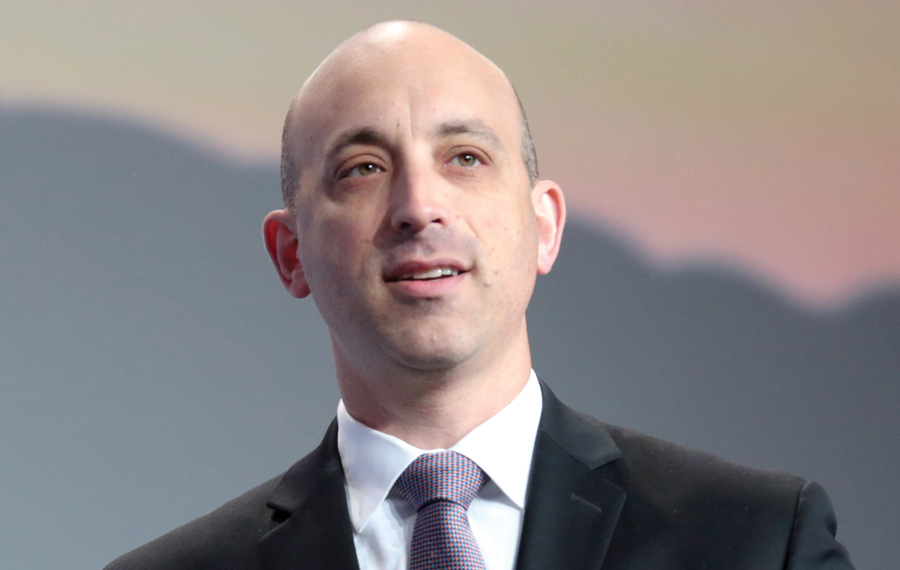
Anti-Defamation League (ADL) CEO Jonathan Greenblatt declared that “anti-Zionism is antisemitism” in a May 1 speech, calling anti-Zionism an ideology “rooted in rage.”

Greenblatt, speaking at the ADL’s 2022 Virtual National Leadership Summit, began by highlighting the ADL’s recent report finding the largest number of antisemitic incidents that the organization has ever recorded 2021. This included an increase of nearly 150% in assaults during the May 2021 Israel-Hamas conflict over the same timeframe in 2020.

“Here, I am talking about, not just grotesque displays of anti-Israel hate, but a greatest hits of antisemitic rhetoric — everything from signs claiming that Jews are responsible for killing Jesus, to hideous Holocaust analogies, to bizarre conspiracies straight out of the Protocols of the Elders of Zion,” Greenblatt said. “And this is the point. To those who still cling to the idea that antizionism is not antisemitism – let me clarify this for you as clearly as I can – antizionism is antisemitism.” He then said that “antizionism as an ideology is rooted in rage” because it aims for “the negation of another people, a concept as alien to the modern discourse as white supremacy. It requires a willful denial of even a superficial history of Judaism and the vast history of the Jewish people. And, when an idea is born out of such shocking intolerance, it leads to, well, shocking acts.”

As an example, Greenblatt pointed to the recent terror attacks in Israel over the past few weeks. Anti-Israel groups like Students for Justice in Palestine (SJP) and Jewish Voice for Peace (JVP) responded “with increasingly dangerous language,” Greenblatt said. “Just this month, Georgetown SJP invited Mohammed El-Kurd to its campus, a man who alleged that Jewish Israelis and Zionists eat the organs of Palestinians and claimed that Zionism is inherently linked to ‘blood thirsty[sic] and violent’ actions.”

Additionally, Within Our Lifetime, which Greenblatt said was a spin-off of SJP, recently held an anti-Israel protest calling to “globalize the Intifada.” “An even cursory examination of history reveals that the Intifada was far from a Ghandian campaign of civil disobedience,” Greenblatt said. “It was an armed conflict that ranged from rocks being thrown at soldiers to suicide bombers detonating themselves inside crowded restaurants full of women and children in Jerusalem.”

He proceeded to explain that the “sleight of hand” used by the anti-Israel crowd to replace “Jew” with “Zionist” originated from the Soviet Union in the 1950s. “Stalinists wanted to claim that their Communism inoculated them from antisemitism, that their seething hatred of the Jewish people and the systemic antisemitism so rampant in the Soviet Union was about opposition to imagined Western Imperialism, that it was rooted in politics not prejudice,” Greenblatt said. “It wasn’t. It was propaganda and prejudice then, it is propaganda and prejudice now, even if the lies today are repeated by DSA [Democratic Socialists of America] boosters rather than 1950s Kremlin supporters.”

Greenblatt pointed to the fact that the ADL spoke out against Donald Trump’s “slanders against Mexicans and Muslims in 2015” and Representative Marjorie Taylor Greene’s (R-GA) “horrendous comparisons between COVID-19 mitigation efforts and the Holocaust” and her embrace of “antisemitic conspiracy theories like QAnon” because everything “starts with words.” “When campus organizations like SJP interrupt speeches, disrupt events and call for an end to any action that normalizes any relationships, or programs associated, with Israel or Israelis – including participating with the local J Street chapter as happened at Tufts University, my own alma mater, last month, that is extremism,” he said. “When groups like Jewish Voice for Peace tweet out ‘Jews, hands off Al Aqsa,’ when they absolutely know that such language is inflammatory, that the community literally is nowhere near the Al Aqsa Mosque, let alone even permitted to pray there, that is extremism.”

The ADL CEO also took aim at the Council for American-Islamic Relations (CAIR), noting that Zahra Billoo, who heads CAIR’s San Francisco Bay Area affiliate, alleged “that ADL, Jewish Federations, and Hillel chapters are the ‘enemies’ of her community” and promulgated conspiracy theories of “of interconnected Jewish organizations that supposedly are planning and plotting to harm Muslims, including the groundless accusation that the Israeli military secretly trains U.S. police to harm people of color.” “When CAIR itself takes no action itself to correct the conspiracism, to acknowledge the hurt of such slander, and instead opts to blame the victim and defend the bigot, that is extremism,” Greenblatt said.

He later added: “As an organization dedicated to stopping the defamation of the Jewish people, it means we must act against the antizionist extremists just as we have against other extremists from the white supremacists and alt-right ilk who murder Jews in the places where we pray and continue to pose the greatest threat to the homeland in terms of violent domestic extremism, to religious zealots and Islamist fanatics who spread hate through their own channels and commit acts of violence, let alone inspire others like a deranged man from the [United Kingdom] who held four people hostage in a synagogue in Texas earlier this year. We will continue to combat these threats even as we apply more concentrated energy toward the threat of radical antizionism.”

Greenblatt called for Republican and Democratic Party leaders to speak out against antisemitism and anti-Zionism in their respective parties and for universities to protect Jewish students. He also urged tech companies to crack down on “hate speech” on their platforms and for corporations to include antisemitism in their Diversity, Equity and Inclusion (DEI) trainings.

Greenblatt’s speech was met with praise on social media. Actress Noa Tishby, the Special Envoy to Monitor and Combat Antisemitism in Israel, thanked Greenblatt for his speech in a tweet. Democratic Majority of Israel also tweeted that Greenblatt’s speech was “important.”

JIMENA [Jews Indigenous to the Middle East and North Africa] tweeted, “It was antisemitism dressed as antizionism that led to the ethnic cleansing and displacement of close to one million Jews refugees from [the Southwest Asian North African region]. We are glad ADL is taking a clear position on this issue.”

CAIR, on the other hand, criticized Greenblatt in a tweet, calling the ADL CEO’s criticism of the group “unhinged,” “hypocritical” and “another sign of its isolation and desperation.”

Quotes from Greenblatt’s speech via ADL transcript.

ADL CEO: “Anti-Zionism is Antisemitism” Read More »

you-dont-know-schiff

Maurice LaMarche – Part Two

In Part Two with the great voice actor and comedian Maurice LaMarche, the guys continue to ponder the great questions of life. In a talk that’s both entertaining and heartfelt, Maurice is open and honest, sharing stories about addiction, reconnecting with his wife, how he approaches and appreciates his work, and we get to hear great stories about meeting Peter Falk and Mel Brooks, with knock-out impressions to boot. Maurice also shares some great life and work advice, among many other great moments!

Follow Maurice:
https://twitter.com/mauricelamarche/
https://www.instagram.com/maurice_lamarche/

Your hosts:
Mark Schiff
https://markschiff.com
https://twitter.com/markschiff
https://instagram.com/markschiff1

Lowell Benjamin
https://twitter.com/lowellcbenjamin
https://instagram.com/lowellcbenjamin

Check out Mark’s book
“I Killed: True Stories of the Road from America’s Top Comics”
https://www.amazon.com/Killed-True-Stories-Americas-Comics-ebook/dp/B0024NP5DI


Maurice LaMarche – Part Two Read More »