
fbpx

April 10, 2022

Joshua Tree National Park: My First Visit!

During COVID19, I have stayed close to home. In Fall of 2021, I went on a road trip to Death Valley. Although I have traveled to over 100 countries and 6 continents, it was my first visit to this epic National Park. I went with a friend from my cruise ship days and her two teens. They were shocked that even though we both grew up in California, neither of us had ever been. After that awesome experience, we decided to travel to Joshua Tree in February 2022 again all of our first experience of this incredible area.

Lisa Niver at 49 Palms Oasis, Joshua Tree, Feb 18, 2022

Joshua Tree was established as a National Monument in 1936 when President Franklin Roosevelt signed a proclamation protecting this part of the desert. In 1994, under the California Desert Protection Act, the monument became a National Park. Joshua Tree National Park contains about 800,000 acres of unspoiled desert including the Mojave or high desert and the Colorado or low desert. Humans have lived in this area for about 10,000 years. In order to plan our trip, I read several guide books, talked to friends who had been and most importantly we stopped at the Visitor’s Center to learn from the Rangers.

DAY ONE in Joshua Tree:

Our first adventure was to 49 Palms Oasis.

Fortynine Palms Oasis is one of Joshua Tree National Park’s desert oases. Located in the northern portion of the park, this oasis provides a refuge among the desert mountains. By providing a reliable source of water, this little oasis allows life to thrive in this seemingly harsh environment. The oasis is reachable by the Fortynine Palms Oasis Trail, a three mile out and back hike with 300 feet elevation gain in each direction. The trail is on compact dirt with an average grade of 8% and max grade of 27%.” We loved this trail and did not find it too challenging. Bring plenty of water and look for the lizards! I took so many videos, our hike is in three parts!


Split Rock to Skull Rock

Driving in Joshua Tree

Watching the climbers at Quail Springs

Sunset at Joshua Tree Day 1

We traveled in a 2022 Genesis GV70 which we LOVED!

We ate at The Rib Co

DAY TWO: Joshua Tree Hiking

Arch Rock:

Arch Rock is a short 1.4 mile hike to 100 feet elevation gain to an arch!

Heart Rock

One of the Park Rangers told us NOT to miss Heart Rock. They have newly added signs to point you in the right direction from the Arch Rock Trail. We loved it! Teenager approved!

Cholla Cactus Garden

“Approximately 12 miles (20 km) south of the park’s north entrance is the 0.25 mile (0.4 km) Cholla Cactus Garden Nature Trail; this flat loop leads hikers through nearly 10 acres (4 hectares) of landscape dominated by the teddybear cholla. This unusual stand of cacti is located in the Pinto Basin, a large expanse of alluvial fans covered with creosote bush (Larrea tridentata) and burrobush (Ambrosia dumosa) for as far as the eye can see. There are very few teddybear cholla stands in the park.”

We were surprised by how many cactus were here. I would love to go back when they have more flowers.

Keys View

Many people go to Keys View for sunset but we were told to go to Quail Springs for sunset and Keys view earlier in the day to see the San Andreas Fault! You can also see the crest of the Little San Bernardino Mountains, panoramic views of the Coachella Valley and on a clear day Signal Mountain in Mexico.

Barker Dam Trail

“Barker Dam Trail is an easy 1.1 mile loop. Wander through Joshua Tree’s iconic monzogranite boulders, namesake Joshua trees, and past the historic Barker Dam. Visit a rock art site and experience human history from a respectful distance.

REMEMBER: It is HOT In the DESERT especially during summer months. Temperatures in the desert can reach over 100°F (38°C). This trail has minimal shade. Park staff recommend wearing sun protection and drinking at least one liter of water. Wear footwear for rock scrambling and climbing.


The Joshua Trees made me think of something out of a Dr. Seuss book. They are actually tree-sized Yuccas plants. I absolutely LOVED my first visit to this spectacular National Park and will definitely visit again.

Enjoy all THIRTY VIDEOS from our road trip in February 2022:

Thank you to Julia, Eva and Alessio for the AMAZING road trip adventure! Thank you so much to Genesis 2022 GV70! We loved our road trip! Want to see our trip to Death Valley? CLICK HERE For that trip we had a 2021 Genesis G80! Coming soon–Pioneertown, Outdoor Art Museum and Palm Springs Art and Escape Room!

Joshua Tree National Park: My First Visit! Read More »
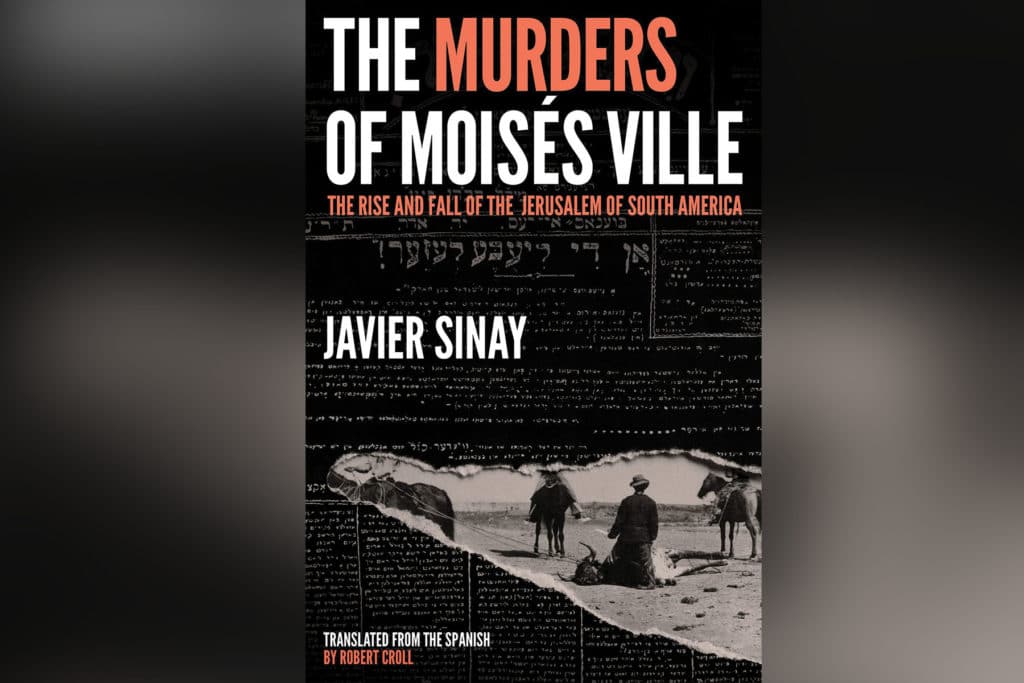
New Book Explores Cold Case Murders at a Jewish Farming Colony in Argentina

On June 9, 2009 Javier Sinay, a Jewish Argentine journalist, received a startling email from his father, who had just discovered that his grandfather—Sinay’s great-grandfather—had written an account of gruesome crimes against Jews.

In an article published in Yiddish in 1947, Mijl Hacohen Sinay, Sinay’s great-grandfather, wrote that between 1889 and 1906, twenty-two Jews were murdered in an Argentine area that had been heavily colonized by thousands of Jews who had immigrated from Czarist Russia in the late 1800s.

The murders, described in gory detail, were the stuff of nightmares. One involved the deaths of three members of one family; another, the dismemberment of a young woman who had apparently been raped. According to the 26-page exposé, the alleged perpetrators of these murders were gauchos, the Argentine version of rootless (and occasionally violent) cowboys, and no one, the article said, was ever arrested or held accountable for these crimes.

Naturally, this more than piqued Sinay’s reporter’s instinct, and he began investigating. The years that followed the initial email from his father changed Sinay’s ideas about his family, about the Jewish farming colonies, and about his connection to his Jewish heritage.

“The Murders of Moisés Ville: The Rise and Fall of the Jerusalem of South America” is an account of Sinay’s investigations into the murders. He tells us of his struggles to locate documents, to learn a bit of Yiddish, about his trips to Moisés Ville and about his conversations with locals at that village, as well as with historians and descendants of colonists. (Moisés is Spanish for Moses.)

The reader looks over Sinay’s shoulder during the twists and turns of his research, which goes back and forth in time and involves many threads.

On April 4, 2022 in a Zoom webinar hosted by the Center for Jewish History, Sinay discussed his investigations into the murders his ancestor wrote about. The event was timed to coincide with the release of his book’s English translation.

Sinay said his research was complicated by the fact that these were very cold cases. Another barrier was that many of the documents were in Yiddish, which Sinay “did not understand a word of” when he started his research.

Moreover, as Sinay mentioned in his talk, many of the materials had been housed at AMIA (Argentine-Israel Mutual Association), the Jewish organization in Buenos Aires whose headquarters was bombed in 1994, a terrorist act that took many lives and also destroyed books, publications and other records.

Sinay said that at the time he started his research, he had only a vague notion that his great-grandfather was a journalist who, as a young man in 1894, immigrated to Argentina and settled in Moisés Ville, a Jewish farming colony several hundred miles north of Buenos Aires.

As Sinay delved into his research, he learned that his great-grandfather started the first Argentine Yiddish publication, in 1897.

During his talk, Sinay was asked why the murders were never investigated, much less punished. “Argentina is a land of immigrants,” Sinay said, “but Jews were the most exotic.” If these Jewish immigrants did not pursue justice for the murders, perhaps it was because “they were trying to keep to the official story that Argentina had opened its arms to us [Jews] and let us work the land like in biblical times.”

“Murders” is the key word of in the title of Sinay’s book, but the contents are about many other topics: Sinay’s process of investigation; what brought Jews to Argentina in such large numbers starting in 1889; and how they got from Russia to South America. (One chapter imagines the trip across.)

Sinay writes extensively about Baron Maurice de Hirsch, the wealthy European Jew who founded (and funded) the Jewish Colonization Agency (JCA), which took thousands of Jews out of shtetls and shipped them halfway around the world where they struggled to become farmers.

“Moisés Ville was the first and largest colony,” Sinay said. “But there were twenty other Jewish farming colonies in different parts of Argentina.”

Someone asked what what Moisés Ville is like now. “A place that was once more than 90% Jewish, in the 1930s, is now less than 10% Jewish,” he said.

During his talk, Sinay fielded questions. Someone asked what what Moisés Ville is like now. “A place that was once more than 90% Jewish, in the 1930s, is now less than 10% Jewish,” he said.

He added that the children and descendants of those Jews that settled in Argentine farming colonies eventually moved to Buenos Aires, where they often became professionals. A repeated refrain among descendants and historians, Sinay said, is that Jewish colonists “planted wheat but grew doctors.”

In his book, Sinay writes that after investigating the 22 murders of Jews in the late-19th and early-20th century, he came to the conclusion that most, if not all, of those murders did take place, but not in the way his great-grandfather described them.

Sinay comes to the conclusion that his journalist great-grandfather, when he wrote about the murders in 1947, exaggerated and even invented horrific details. But why? Why would a veteran journalist and archivist do that?

Sinay thinks he knows the answer. In the 1940s the wounds of the Shoah were still fresh, so he contends that his great-grandfather’s distortions were deliberate, intending to draw attention to the then-recent deaths of Jews in Europe. For Sinay, that is a justifiable reason for misrepresenting some of the details of the murders.

Thus, the final chapter of Sinay’s book is not so much about the murders but rather a touching homage to his great-grandfather, an ancestor he never met but with whom he proudly shares his journalistic DNA.


Roberto Loiederman has written more than 100 articles for The Jewish Journal. He is co-author of “The Eagle Mutiny,” a nonfiction account of the only mutiny on an American ship in modern times.

New Book Explores Cold Case Murders at a Jewish Farming Colony in Argentina Read More »