

March 31, 2022

TMI Nurse Health Educator, “Becoming Bionic Boaz”
Let’s get right to the meat and potatoes of things. Surgery was a success; my great neurosurgeon Dr. Brian Gantwerker once again was awesome! Now comes the long, slow and yes, painful road to recovery.
Knowing how unpleasant hospitalizations can be, I’ve tried to take photos with everyone popping their head in; so although I’m in plenty of pain and got only an hour or two of sleep last night, this post might come across like an office party! Each pic will explain who’s who, if you take the time. (Dr. Ellie Goldstein paid me a great visit but we couldn’t get a photo in since I was interrupted by another doctor visit.)
Pre-op was coincidental for a few reasons:
- Same pre-op nurse as last time, Savannah Arroyo, who used to work on my unit.

Considering we are both wearing masks, we give good eye poses.
Savannah was my pre-op nurse for BOTH surgeries, which is amazing. - Same surgical nurse as last time, Amber, also used to work on my unit.
- Old friend from high school David Oved was there with his mom in pre-op, and told them “I have a friend who works in this hospital named Boaz Hepner”. Due to HIPAA that nurse awkwardly didn’t know how to answer; but since I had told my nurse she could publicize my being there, she was able to say, “he’s a few feet away in Room 12”! Wow.
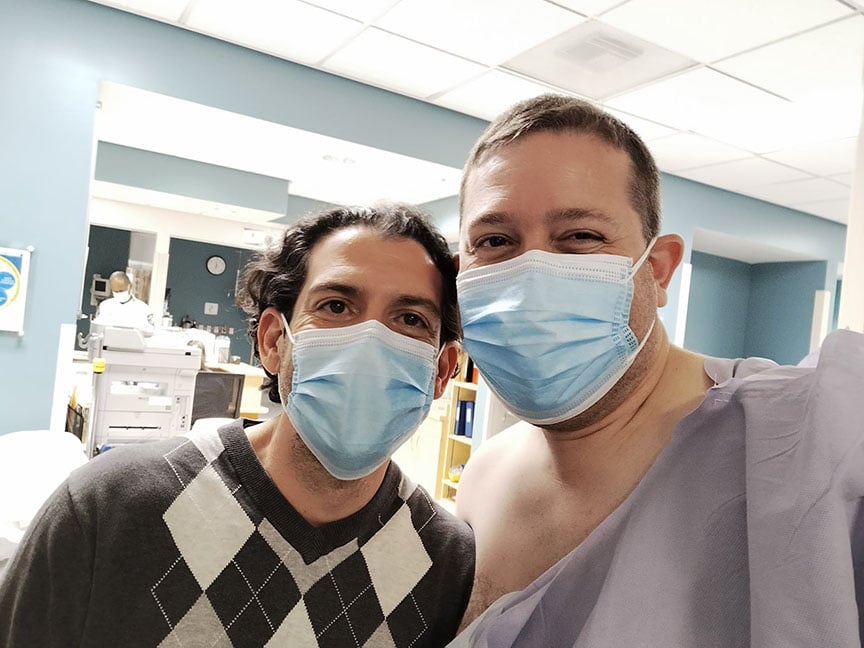
Amazing coincidence, David was with his mom and told the staff he has a friend who works at the hospital, Boaz Hepner. They hemmed and hawed and said, he’s in room 12 right now!
When I was seconds away from going under, I told a story to the surgical team, and it’s a bit crass and risqué, but I feel like telling it now, and you’ve been warned:
My first surgery was in 2003. Phenomenal ENT at Cedars named Dr. Martin Hopp (I highly recommend him). It was for a deviated septum, with no cosmetic alterations (aka it wasn’t a nose-job). As he was standing over me and they were starting my anesthesia, I distinctly remember being a wiseass, by saying, “Dr. Hopp! Don’t forget what we discussed! Cher’s nose, and Madonna’s tits!” In my final two seconds of consciousness I saw him guffaw, and due to the drugs I was on, panic set in as I thought, “WHAT IF HE THINKS THAT WAS REAL?!”
I then remember waking up super groggy, and the FIRST thing I did was grab at my chest, and feel extremely relieved he didn’t mess with my perfectly sized man-boobs.
Anyway, this time I woke up with no need to pat down my chest, but certainly there was immediate pain in my incision on the front of my neck, as expected. I was supposed to get a bed in Orthopedics but they didn’t have one available; so I was sent to my own Med/Surg unit, where I am typing this in a room where I have treated dozens of my own patients over the past nine years.
My care team has basically been copied and pasted from my past surgery, because they are each the best in their respective fields, and they know me as more than just my diagnosis, they actually KNOW me. And they are in no particular order:
Dr. Jennifer Linehan, urology
Lenna Martyak, Gastroenterology
Dr. Gerald Sacks, Pain Management
Leila Karimpoor, Hospitalist (not the same as last time as hospitalists are assigned based on who’s there at the time, but she is in the same group as Schehrezade Khan who was mine last time).
Now let’s bullet point an assortment of facts about my situation so far:
-I have a catheter again, but this time it’s planned. It was inserted while I was under, so I avoided that sadistic act; but now I’m dealing with the incessant torture of it remaining inside my urethra until Friday or Saturday. So I may come home with it again, depending on my discharge date.
-I’m on a cocktail to hopefully avoid me getting another ileus, but needless to say nobody will consider letting me leave without a BM. (Side note: I always crack up when I see Bar or Bat Mitzvah shortened to BM on texts or social media. “Had such a great time with Kevin’s BM this weekend” will never NOT make me laugh out loud.
-My stupid insurance company endlessly denied my doctors trying to prescribe me Relistor or Movantik, which counter the constipating effect of narcotics. So to work around this I’m getting Relistor from day 1 here in the hospital, and I already have samples lined up for when I discharge home. To beat the system you gotta think ahead sometimes.
-Pain. This incision is more painful than the one in my stomach (for my lumbar disc) last time, but again this was expected. It’s right in front of my neck where literally every sound I verbalize and every time I chew or swallow, IT HURTS. IT STINGS. INCESSANTLY. So note to self: Try not to let Jason Voorhees or Freddy Kreuger slash my throat, once is more than enough thank you very much. UCCH.
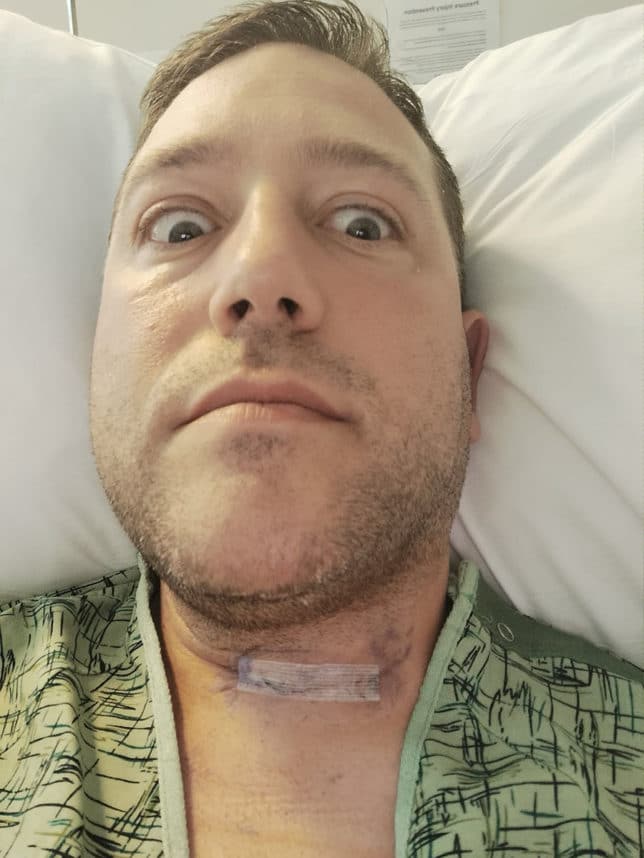
-Speech Therapy is VERY important in this case, because, duh, my neck/throat literally have an incision. So Jessica Kaplan, who took photos of me with others but was too camera-shy to get in any, is doing my speech therapy, and so far so good. While it does hurt to swallow, she immediately liked that I don’t sound hoarse or gurgly, a good sign apparently. And we were able to get me safely eating soft foods, though they do get caught in there. The thing she warned me to watch out for is that the swelling can get worse over the course of the next few days; so we will have to reassess my ability to swallow both tomorrow and ideally Thursday, if I’m still here.
-Physical/Occupational Therapy was thankfully anti-climactic and successful. To be clear, I’ll need a whole lot of PT for both my original lumbar surgery and now this cervical one, but everything is tricky….normally at this point in my lumbar recovery I’d be doing PT, but most of those exercises could negatively interfere with my cervical recovery. So in large part, it will be at the 12 week mark when all of my PT can finally happen. Until then it will be in dribs and drabs based on what my doctor deems safe and appropriate.

But the great news again was that I was able to do what they needed of me today, which was simply being able to get in and out of bed, walk, and even use stairs. This was much more difficult last time, so this is a huge relief. I’ll keep using the walker to help with my catheter, but once that’s removed I have a feeling I’ll be done with my walker and cane – hooray!
-Another huge relief is that the typical neck surgery would involve my not being allowed to turn my head or even sleep on my side for six long weeks. But Dr. Gantwerker made my day when he reassured me that with his particular procedure and equipment, it’s totally fine for me to do that. Considering I ONLY sleep on my side, this is MASSIVE!
-Adi now has a 102 degree fever after catching Natalia’s stomach bug literally an hour after kissing me goodbye in the car. To clarify, I spent the ENTIRE weekend washing my hands each and every time I touched anything Natalia touched. We seemed to be out of the woods on Sunday evening. Monday morning comes, Adi is dropping me off, kisses me goodbye in the car, and not even one hour later she’s calling me in pre-op, telling me that she’s puking and feverish. NO!!!

As crappy as this obviously is for Adi, and it obviously is, here’s the far more scary aspect: I’ve just had a neck incision, with a new C6/C7 disc replaced. Thankfully it’s a stable enough material that he’s confident IF I start vomiting, it shouldn’t damage it; BUT it would be unbelievably painful, just truly awful in a way I don’t even want to imagine. I mean right now if I even mildly cough it hurts 9 out of 10, I can’t even imagine what vomiting would feel like. I would want to be unconscious. When I updated my GI about this she said it may be best to insert an NG tube into me to remove the vomit if this occurs. I can’t even tell you how miserably nervous I am about every piece of this potential scenario. All I can do is wait and see because I likely wouldn’t know until sometime Thursday if it will hit me. And I might be home by then.
Oh, and I also can NOT be going home to a house with a feverish wife. So this “stomach bug that’s apparently going around” per our pediatrician, is proving to be a large looming factor right now.
Anyway, those are the bullet points, but I always make myself finish off on positive notes, so here we go…I am alive. I did not become paralyzed from my upper spine surgery. I am surrounded by brilliant doctors who are visiting me and texting me daily. My cervical disc is now made of ceramic and titanium, and my lumbar disc is now made of titanium and plastic. I am becoming the Bionic Man. I will not set off metal detectors, and I can still go in an MRI, (two tidbits that you may find irrelevant but I find cool). And it’s nice (and surreal) being a patient on my own unit, surrounded by dozens of colleagues and friends.
TMI Nurse Health Educator, “Becoming Bionic Boaz” Read More »

A Bisl Torah – A Stroll through the Park
This past Wednesday was National Take a Walk in the Park Day. I laughed when I saw the name of the holiday. Why do we possibly need a holiday that celebrates walking through a park? Seems a little mundane to me. However, perhaps it is holier than I initially thought. According to NationalToday.com, researchers explain that those that live in apartment buildings with views of trees tend to be less aggressive than those with no view of nature. Being in and around nature often calms and soothes our nerves. Pausing and seeing God’s creations may remind us that we are part of something bigger than ourselves. A day that encourages less selfishness. A day that encourages more mindfulness.
Rabbi Nachman of Bratslav offers in his Prayer for Nature: Grant me the ability to be alone; may it be my custom to go outdoors each day among the trees and grass – among all growing things and there may I be alone, and enter into prayer, to talk with the One to whom I belong. For Rabbi Nachman, sometimes, it was being alone in the outdoors that opened a connection with our Creator. It is why we have blessings known as birkat hanehenin, blessings that are offered to acknowledge the wonders of this world, that which gifts us joy. Our tradition is embedded with daily reminders to appreciate the beauty around us. The question is whether we allow the beauty of the world to embed within ourselves.
I am ashamed to say I did not take a walk in the park on Wednesday. But I did stop to smell the roses. And look at the hummingbird visit the lemon tree. And notice the brilliance of the sky. And feel the rush of the breeze and think for just a second, I am part of this creation. Like Rabbi Nachman, I prayed. May the wonders of this world stop us in our tracks, humble us, and remind us how very connected we are. And if you have a moment this Shabbat, go ahead and walk through the park. More nature and extra blessings can’t possibly hurt.
Shabbat Shalom
Rabbi Nicole Guzik is a rabbi at Sinai Temple. She can be reached at her Facebook page at Rabbi Nicole Guzik or on Instagram @rabbiguzik. For more writings, visit Rabbi Guzik’s blog section from Sinai Temple’s website.
A Bisl Torah – A Stroll through the Park Read More »
A Moment in Time: Creating Holiness
Dear all,
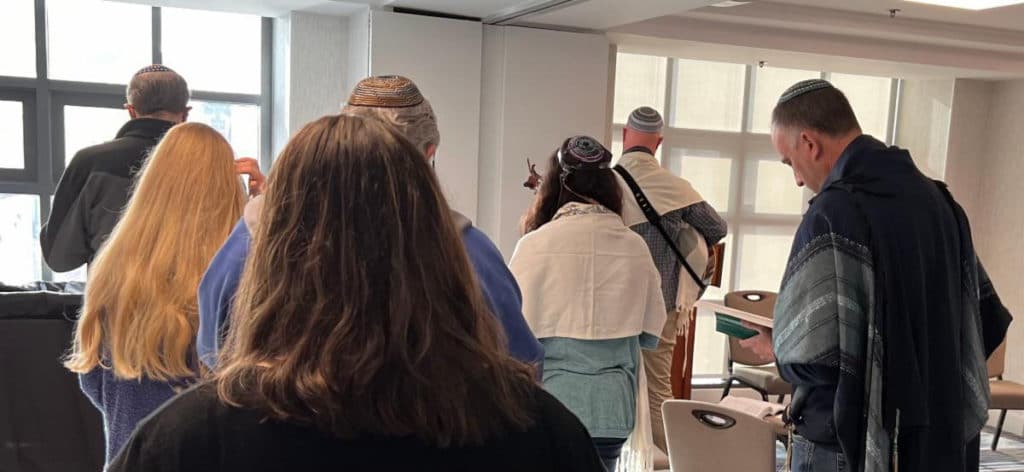
Each week, I try to include a photo that evokes depth, meaning, and often whimsy. But today I present a photo of a bunch of rabbinic colleagues in a hotel meeting room. We were gathered in San Diego for the Central Conference of American Rabbis (CCAR) annual convention. Due to the pandemic, it was our first in-person conference since 2019.
It was just awesome being together!
What were we doing in this room? For just 1/2 an hour, it became our prayer space.
No Holy Ark.
No Holy Eternal Light.
No Holy Torah Scrolls.
But in that moment in time, special people prayed together. And we transformed the hotel meeting room into Holy Space.
It doesn’t take much to harness holiness. Just open your heart, allow it to receive goodness, and enter the embrace of eternity.
With love and Shalom,
Rabbi Zach Shapiro
A Moment in Time: Creating Holiness Read More »
“Death-Defying Escape,” a Comedy and Magic Show About Coping With the Past
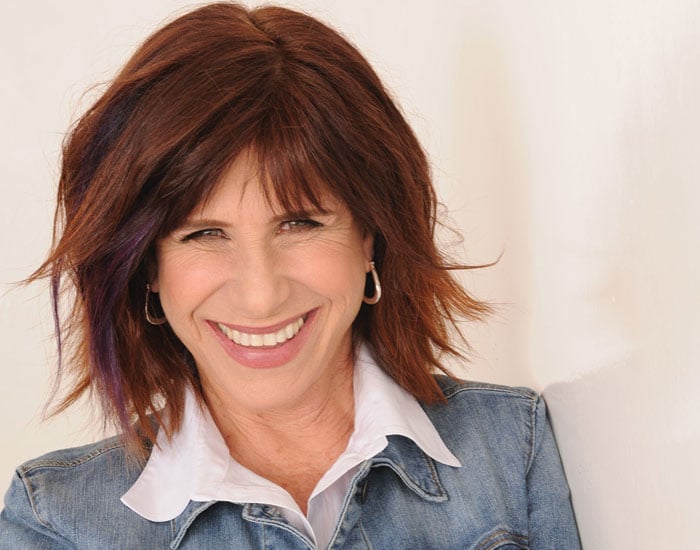
When comedian and magician Judy Carter was eight years old, she started doing magic to try to escape her life circumstances. She had a speech impediment, her father was an alcoholic and her sister was disabled. In short, there was a dysfunctional family dynamic.
“The joke I do is that there was so much yelling and screaming in our house, we had a Wailing Wall in our living room,” she said. “I wanted to do real magic and levitate my sister out of her wheelchair and make my father disappear.”
Now, Carter is talking about her past and incorporating on-stage magic in her new show “A Death-Defying Escape,” which is playing April 2 to May 15 at the Hudson Guild Theatre and streaming online.
Carter started out in show business as a magician. She became the first woman to perform at the Magic Castle’s close-up gallery, and one of the first female magicians on “The Merv Griffin Show,” “The Mike Douglas Show” and Showtime.
During one tour, the airlines lost her luggage containing all her magic props in it. She called her manager, since she wasn’t sure she could go on without the props. “My manager said, ‘I don’t care. You’ve gotta go on without them,’” she said. “That’s how I instantly became a comedian. I started talking about all the magic I was going to do, and people were laughing.”
That led to a number of opportunities, including headlining for 17 years and opening up for Prince in the early ‘90s. “Oddly enough, Prince was so wild on stage, but off stage, he was the shyest guy you could meet,” she said. “He was so sweet. At first I wasn’t sure how this little Jewish girl could open for his audiences, but it went so well, he took me with him on tour.”
Carter said that where she lived, the Fairfax District in Los Angeles, “had more Jews percentage-wise than Israel. I was surrounded by Jews. I met my first gentile when I went to college.”
Raised “deeply culturally Jewish,” Carter said that where she lived, the Fairfax District in Los Angeles, “had more Jews percentage-wise than Israel. I was surrounded by Jews. I met my first gentile when I went to college.”
One of her gigs included performing for the soldiers in Israel. “I couldn’t understand anything, so I’m sure they were heckling me and saying ‘You suck,’ but I was like, ‘Todah rabah!’”
Carter, who is also an inspirational keynote speaker and author of “The Comedy Bible” — a book that landed her on “The Oprah Winfrey Show” — thought about writing “Death-Defying Escape” several years ago, when it was living in her subconscious.
“This was one idea that kept coming to me in my dreams,” she said. “I do believe creativity is from God. That’s where my better ideas come from.”
In “Death-Defying Escape,” Carter uses magic as a metaphor for “escaping” the dysfunction of the past. She created the illusions with the help of the same person who works on David Copperfield’s illusions. Tapping into her motivational teachings, she gives the audience inspirational messages as well.
“I had a burning desire to write this play to show the audience that no matter what tragedy has happened in your life, it can be turned into comedy,” she said. “There is nothing so serious that we can’t laugh at it.”
When COVID came up, that only convinced Carter that she needed to make sure audiences could see her play, which took five years to write.
“That’s another message I wanted to give to the audience: No matter what has happened to you, laughter and love are always possible.” – Judy Carter
“I felt like everyone could use magic and a great story with a lot of laughs,” she said. “It’s also a love story about how I found love at 60. That’s another message I wanted to give to the audience: No matter what has happened to you, laughter and love are always possible. It’s a play about hope. That’s why I wrote it.”
You can purchase tickets for the show at deathdefyingescape.com.
“Death-Defying Escape,” a Comedy and Magic Show About Coping With the Past Read More »
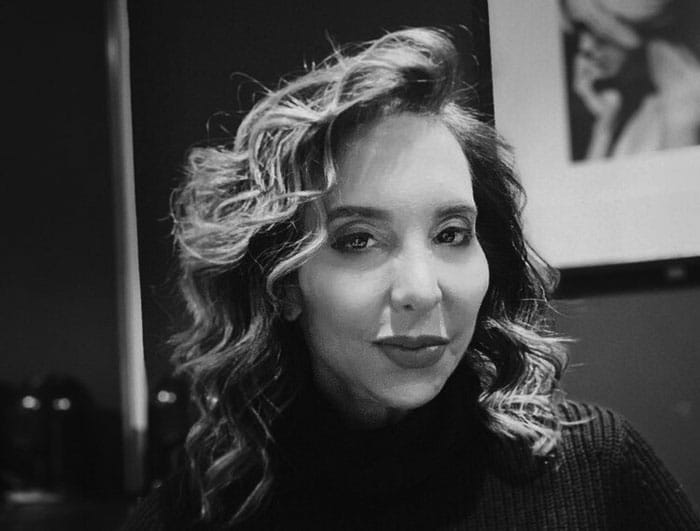
Karen Lehrman Bloch: The Classical Liberal Who’s Had Enough
In 1993, Karen Lehrman Bloch penned an essay in the September/October issue of Mother Jones titled, “Off Course,” in which she observed that women’s studies classes around the country were being “infected” with ideology. After touring courses at various campuses, Lehrman Bloch found that “in many classes discussions alternate between the personal and the political, with mere pit stops at the academic.”
The story ignited a series of heated exchanges that poured over into the mainstream press, including radio talk shows. It was also Mother Jones’s first venture on the then-nascent internet, and one of Lehrman Bloch’s most important essays. Lehrman further explored post-modern feminism in her book, “The Lipstick Proviso: Women, Sex & Power in the Real World” (Doubleday, 1997).
Over the years, she has worked as an editor, cultural critic and curator, serving as editorial director at Assouline Publishing and an editor and contributor at The New Republic, The New York Times, The Washington Post and The Wilson Quarterly. Lehrman Bloch has also been a weekly Jewish Journal columnist (2017-2020). Educated at the University of Pennsylvania and the Sorbonne, she studied International Relations with an emphasis on political philosophy. She has also served as a guest scholar at The Woodrow Wilson International Center for Scholars, The Brookings Institution and The Cato Institute.
“I was drawn to all of the essential principles of classical liberalism: individualism, reason, heterodoxy, liberty, freedom of expression, decency.” – Karen Lehrman Bloch
“I chose to become a lifelong Independent mostly from my deep sense of individualism,” Lehrman Bloch told the Journal. “But I was drawn to all of the essential principles of classical liberalism: individualism, reason, heterodoxy, liberty, freedom of expression, decency.”
Nearly 30 years after entreating readers about the importance of heterodoxy, Lehrman Bloch, who is based in New York City, founded White Rose Magazine, a digital magazine that is dedicated to “fighting extremism, reteaching classical liberalism and exhibiting transcendent art and design,” she said.
Named after a non-violent student resistance group in Nazi Germany, the magazine’s most recent issue is titled, “Reclaiming Feminism.” In full disclosure, I wrote an essay for the issue that focused on a terrorist’s daughter who funds sex slavery in the Middle East.
White Rose Magazine publishes acclaimed authors and writers, including Thane Rosenbaum, distinguished university professor at Touro University and a regular Journal contributor.
“We are living in increasingly illiberal times — speakers are shouted down, newsrooms peddle propaganda, differences in point of view result in moral banishment and cultural cancellation,” Rosenbaum told the Journal. “People live in fear that what they think or say will end in career ruin or friendlessness. White Rose [Magazine] is a safe haven for free thought, the openness to ideas that is the hallmark of liberalism.”
The Journal asked Lehrman Bloch to discuss her first, great love — political philosophy — and to share insights on how classical liberalism is being subverted.
Jewish Journal: Have feminist values shifted over the past few decades?
Karen Lehrman Bloch: Yes, very much so. The most basic feminist value is freedom—enabling women to become the unique individuals that we are. But in the ‘80s and ‘90s, that was turned on its head. Women were essentially told that feminism was an orthodoxy of thought and behavior. Women were told who to vote for, what to wear, that being a mother was beneath them, etc. Women were re-shackled to an anti-feminist orthodoxy that lacked any awareness of personal responsibility. With rights come responsibility—it’s an adage integral to both feminism and liberalism in general.
JJ: When did you begin noticing a shift between the Democratic Party and classical liberal values, and what were those shifts?
KLB: The major shift began in the late ‘80s/early ‘90s. The party began distancing itself from classical liberalism on one issue after another. There was no truth, post-modernists proclaimed, only our personal truths. There was no morality; all morality became subjective and contextual. With no truth or morality, leftists began creating their own version of reality, one that conformed to what they thought was “progressive,” but what ended up being racist, sexist, antisemitic, pro-violence, pro-censorship, etc.
JJ: Did you feel there was room for diversity of opinion or respectful dissent among your former political circles?
KLB: Sadly, not at all. The big wake-up call for me was the summer of 2014. I began to defend Israel against Hamas and media lies. I stated facts. But that was too much for some of my former friends. Israel had become a hot button issue for Democrats, and my friends, despite their personal views, couldn’t be friends with someone who didn’t care what “the party” thought of them. In private, many of them would show their sympathy. But their cowardice — especially regarding Israel — their need to maintain “status” went against every aspect of who I am. Our friendships never fully recovered.
JJ: Is classical liberalism dead?
KLB: No, but it’s somewhat in hiding. Most of those who still retain classical liberal values won’t discuss it publicly. That’s beginning to change, but only slightly.
JJ: Were you shocked by the heated pushback against your 1993 essay in Mother Jones?
KLB: What was interesting was that it was so heated despite the fact that it was the cover story of a very liberal magazine. So on the one hand, you would think that it would have motivated readers to think a bit about how things had changed. Instead, especially in the women’s studies/activism communities, they were aghast that a liberal publication dared to publish the truth. This was happening to all publications, which is why they stopped publishing facts and began to alter everything to adhere to the ever-growing leftist orthodoxy. Today these publications are unrecognizable.
JJ: What dangerous ideologies are most pervasive in the United States today?
Unlike classical liberalism, which is based on a set of principles that could lead to different opinions, leftism tells you what to think about every subject and censors those who dissent.
– Karen Lehrman Bloch
KLB: Leftism is a fascist ideology. Meaning, unlike classical liberalism, which is based on a set of principles that could lead to different opinions, leftism tells you what to think about every subject and censors those who dissent. What started in the universities has now reached kindergartens. Also, during the past month, we began to observe that extremism on the right is beginning to be normalized. Conspiracy theories about the “Deep State” and the “Rothschild cabal” have been turning up on my newsfeed, most disconcerting from many right-wing Jews. So we’re going to begin to focus on that as well.
JJ: How can more Americans actively champion heterodoxy of opinion and ensure that extreme, fringe voices are less magnified?
KLB: A lot depends on how we deal with social media. As a classical liberal, I would prefer that the government’s role in this is minimal. But we’ve already seen that even tech companies have no problem instituting and reinforcing censorship. That’s not a good sign that we’re going to be able to self-regulate. I again go back to the underlying ideology: Once classical liberals really do begin to speak up—once the center is restrengthened—the fringe voices will be re-marginalized and tech companies will be forced to adjust to a heterodox reality. We are a long way from that. But we have to start somewhere.
For more information, visit whiterosemagazine.com.
Karen Lehrman Bloch: The Classical Liberal Who’s Had Enough Read More »

Standing for Unity with Diversity: A Message for the Jewish Community
Delivered at Beth Jacob Congregation on March 26, 2022.
This weekend we come together as a united community and are reminded once again why we chose to be part of Beth Jacob. The sense of connection, the inspiration, the ambience. Each of you is a valued member who helps us achieve our vision of creating a caring community infused with Torah, tefillah, chesed and Zionism, in which families and individuals can grow, make an impact, connect and find a sense of belonging.
This is what we’ve all built together and we have so much to be proud of. Specifically, you have all demonstrated incredible resilience these past two years to push forward despite the challenges and it’s because you stepped up that we’ve reached this point of reuniting and being stronger than ever.
On this Harmony Shabbat, it’s a good opportunity to refresh our understanding of the core principles that animate our shul. What does Beth Jacob stand for? What character traits define our shul family? In the words of Paul Venze z”l, what do we love about Beth Jacob? In my mind, Beth Jacob stands for four principles that guide everything we do:
1. We stand for bringing people together. As a quintessential beit haknesset, we celebrate the social component of Jewish life. One of my greatest joys is when people meet through shul or the Shabbat table, because these new and lifelong friendships give us much needed support through thick and thin.
2. We stand for bringing Torah and faith to our modern lives. As a proudly modern Orthodox shul, we dare to be both Orthodox and modern, and believe there is no contradiction between the two. We take our Jewish tradition and apply it to our daily engagement with the world, enriching and guiding that interaction. Recognizing modern realities is also what drives our Zionism, as we commit our energies to the continued growth of the modern-day miracle we call Israel.
3. We stand for the notion of dor l’dor and Jewish continuity, and when we step into this sanctuary, we’re reminded that we’re part of a glorious chain of generations. As Vivian Berger z”l once put it, we’re connected to the past and committed to the future.
We are proudly Jewish but also respect every single human being, because every individual is endowed with Divine dignity regardless of their race, creed, lifestyle or color.
Beyond those three signature traits of number one, we bring people together, number two, we take the Torah and apply it to our modern reality, and number three, we celebrate Jewish continuity, the fourth guiding principle is that at Beth Jacob we stand for unity with diversity, encapsulated by the word we used to describe this shabbat: harmony. We share a unified commitment to Torah but also value every single Jew, regardless of their level of observance or lifestyle. We are proudly Jewish but also respect every single human being, because every individual is endowed with Divine dignity regardless of their race, creed, lifestyle or color.
At Beth Jacob we stand for creating a warm and inclusive environment, where everyone is welcome. A member asked me whether they need to wear a tie to shul today and my response was that a tie is always a nice way to honor Shabbat, but with or without a tie, you can come as you are and you have a place in our community.
It was the opening day of the Mishkan, our parsha relates, and Moshe was inquiring about the goat sin offering that was brought in honor of Rosh Chodesh. Moshe discovered that the sacrifice had been burned entirely on the altar when it should have been eaten by Aharon and his children. Vayiktzof Moshe—Moshe gets upset and asks Aharon and his children: Why didn’t you follow protocol and eat the required parts of the offering? Aharon responds: “Vatikrena oti k’eileh v’achalti chatat hayom hayitav b’einei Hashem.” With the tragedy that happened to me today, would G-d approve of me eating the sin offering?
Aharon and his two sons were mourning the sudden tragic loss of Aharon’s two other sons Nadav and Avihu. In mourning, kohanim typically don’t eat from offerings that require a spirit of festivity. However, Moshe had instructed Aharon that while I recognize that you’re grieving, since today is the opening day of the mishkan, it’s a major communal moment, which makes it an exception, and you should follow the regular protocol and eat the sacrifices.
After Moshe questions his brother as to why he deviated from the plan, Aharon responds poignantly: “Now that this tragedy had befallen me, were I to go ahead and eat the sin offering, were I to continue as if nothing happened, were I to continue my normal routine, would Hashem approve?” Moshe hears this response, and as all the community leaders and elders are watching this standoff, Moshe listens, and with great humility approves of Aharon’s explanation.
It’s an incredible conversation with Moshe’s admission teaching us an important lesson in our polarized society. Imagine a political candidate for president or Congress admitting he was wrong or responding along the lines of: “You know, that’s an interesting point that I hadn’t thought of.” It might well jeopardize his or her candidacy.In Judaism, while of course we strive to have clear and correct opinions, even our greatest Torah commentator, Rashi, on occasion admits he “doesn’t know” the meaning of a phrase. And admitting that another person is correct is not a sign of weakness but a display of tremendous strength.
But moreover, we learn from this story a powerful lesson that we need to take to heart, which is that the Torah recognizes the humanity of Aharon. He was a tzaddik and the kohen gadol, and Moshe made the law clear that the sacrifices should be eaten, but ultimately what takes precedence over everything is Aharon’s humanity.
At Beth Jacob, the fourth principle we stand for is recognizing the humanity of every human being—from the kohen gadol to marginalized individuals who need even more care. We cherish unity and value diversity. We have our values and not despite those values but driven by them, we have a welcoming community that under no circumstances tolerates hate or the dehumanizing of others.
I’ve spoken in the past about how we as Jews, as human beings, absolutely reject racism, bigotry and denigrating, hurtful speech about the LGBTQ community. These issues, however, are on my mind because of an incident that happened over Purim in our community that exhibited egregious behavior contrary to our Jewish values. Like many of you, I have been distraught over the chilul Hashem that occurred and realize that certain things that I took as a given apparently need to be restated and emphasized.
As I said two weeks ago when speaking about derech eretz kodmah latorah, we must always remember that frumkeit without menshlichkeit is not yiddishkeit.
I must state unequivocally that derision, hateful or hurtful speech have no place in our community. We have our convictions and opinions, but they always need to be shared respectfully and we should never mock, disparage or belittle. Our community stands proudly for the values of openness, warmth, and inclusion. Therefore, when we speak to one another and about one another, it needs to be with kindness, empathy and sensitivity. As I said two weeks ago when speaking about derech eretz kodmah latorah, we must always remember that frumkeit without menshlichkeit is not yiddishkeit.
If schools and shuls are putting down other institutions instead of just working to raise themselves up, then mission control, we have a problem.
What also needs to stop once and for all is the negative talk about neighborhood institutions. If schools and shuls are putting down other institutions instead of just working to raise themselves up, then mission control, we have a problem. We need to seize this moment and commit to supporting one another, giving credit to each other and supporting other shuls and schools. There are thankfully enough children in the neighborhood for all the yeshivot to thrive and enough families for all the shuls to succeed.
Yes, I know the halacha, Aharon says, but what about the fact that I’m a human being?
Our parsha reinforces what we stand for at Beth Jacob, which is that to be frum is not just about Shabbat, kashrut and tefillah, as important as they are, but it’s also about being kind, respectful and acting with kavod habriyot—giving dignity to others. I am proud that you, our dear members, and particularly all those who reached out to me this past week, stand up as exemplars of these values, and we are already working on charting out meaningful steps in the future to grow as a community.
The Gemara Shabbat (31a) relates that when a non-Jew approaches the rabbis to be converted by being taught the Torah “al regel achat”—in one brief session—Shammai kicks him out of his office. Hillel takes a different approach, and our general principle is that we follow Hillel, who with flexibility and openness, takes up the challenge. He responds that the core principle of Judaism, adapting the verse “love your neighbor as yourself,” is “what is hateful to you, do not do to your neighbor and the rest is commentary.” With that declaration, Hillel teaches us the primacy of ethics and morality in the way that Judaism is taught and lived. His lesson reflects the fundamental idea that every human being is endowed with Divine dignity and needs to be respected accordingly. The rest is commentary.
Like the Jewish people brought down the Divine presence on that opening day of the Mishkan, we have the capacity to do that too for our modern-day sanctuary. Let us keep davening, learning, and connecting, and take the shul built by those who preceded us and seize the opportunity to bring our community to new heights. If we recommit to our core guiding values—if we bring people together, take the Torah and apply it to our lives, celebrate Jewish continuity and finally, cherish unity and value diversity—then we will truly sanctify the name of G-d and bring the Divine presence to rest upon all of us, so that we can serve as a model and inspiration for communities around the world.
Rabbi Kalman Topp is the Senior Rabbi at Beth Jacob Congregation in Beverly Hills.
Standing for Unity with Diversity: A Message for the Jewish Community Read More »
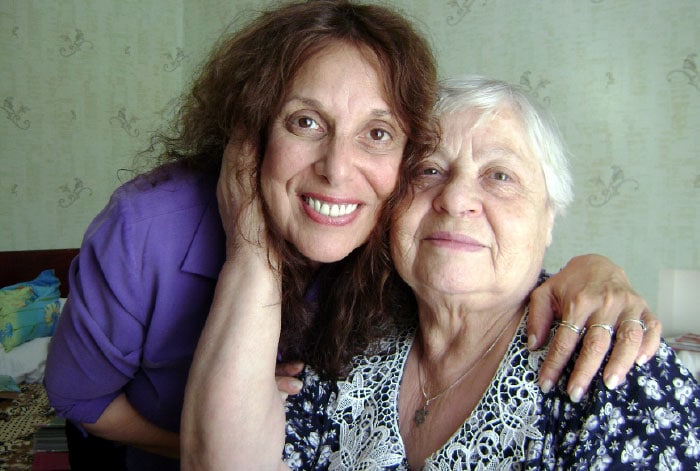
Survivor Mitzvah Project Taking Care of Holocaust Survivors in Ukraine
When the war in Ukraine broke out, Zane Buzby, founder of The Survivor Mitzvah Project, sprang into action. To help Holocaust survivors there, her nonprofit organization is checking in on 350 survivors, delivering extra aid like food and life-saving medication and, if the survivors are able to make the journey, getting them across the border. They live in more than 50 towns and cities, and 50 of them are between 90 and 102 years old. Most of them cannot afford doctors, medications or surgeons, and half of them are bedridden or have mobility issues.
“We have been in constant communication with each survivor we help, in the form of home visits, written correspondence and telephone calls in their native language,” Buzby said. “It is of utmost importance, especially now, that we continue our communication, letting survivors know they have not been forgotten. This is critical for these elderly individuals who, for decades, have been isolated, alone and forgotten by the world.”
It is of utmost importance, especially now, that we continue our communication, letting survivors know they have not been forgotten.” – Zane Buzby
Jews have been in Ukraine for over 1,000 years, and prior to the Holocaust, Ukraine was home to the largest Jewish population in Europe, according to the U.S. Holocaust Memorial Museum. Over the course of two days, the Nazis murdered about 34,000 people, and the ravine where it happened is known as Babi Yar, the largest mass grave of the Holocaust. Recently, Russian bombs hit the site and seriously damaged it.
Buzby, who has supplied direct aid to over 2,500 Holocaust survivors in nine countries, including Ukraine, Belarus, Estonia, Latvia, Lithuania, Moldova, Slovakia, Transnistria and parts of Russia, said that there aren’t accurate records available on the number of survivors left in Ukraine. Sources estimate there are around 10,000 survivors living there.
“Since the war began, we have spoken to survivors in hospitals that are being bombed, in bomb shelters and those who are trapped in their apartments because they are bedridden or blind,” she said.
The survivors have been relaying troublesome messages to her. “We hide when there are alarms, but we are on the road to Kiev, and our army is at Uman, so they are trying to protect us,” one of the survivors told Buzby. “How long that will last, who knows. We hide in a bomb shelter across the street. I was at my daughter’s, who lives on the same street, but it’s always better at home. Do we sleep at night? Hardly.”
All Ukrainians are being traumatized by the constant violence happening throughout the country. But for Holocaust survivors, the war brings up frightening memories of the past.
“The PTSD is affecting those who have already been through a war in Ukraine,” Buzby said. “The incessant explosions, dead bodies in the streets, the smell of gunpowder in the air, the constant sirens, the lack of food and fear of starvation, all contribute to this massive fear because they know too well that this might never end. It brings memories and nightmares of their families being starved, shot or blown to bits.”
Buzby pointed out that people may think that world aid organizations or large charities are taking care of survivors. However, the pallets of food and medical supplies being shown on TV “are not yet reaching most of those caught inside Ukraine,” she said. “Only those who have managed to cross into Poland, Hungary or Moldova are receiving food and water, heat, shelter and medical attention.”
The situation in Ukraine is only getting worse, and there is no end in sight. Now, Buzby said, is the time to support the survivors there.
“The only way to help survivors directly is to keep donating generously until the last survivor is safe from bombs, bullets and the inevitable starvation that comes with Russia’s war on civilians which harms the most vulnerable of our people, the last survivors of the Holocaust,” she said. “Elderly, isolated, ill and alone, they need our help now.”
You can donate to The Survivor Mitzvah Project on their website.
Survivor Mitzvah Project Taking Care of Holocaust Survivors in Ukraine Read More »
“Holy Sparks” Exhibition Celebrates 50 Years of Women in the Rabbinate
How do you illustrate the commitment and vision – along with the contributions and challenges – of 50 years of women in the rabbinate? You produce an art exhibition highlighting female rabbis who were “firsts “in their time.
“I feel passionate about the work rabbis do and the radical transformation women rabbis have made in Judaism,” Ronda Spinak, founder and artistic director of The Braid and co-director of The Braid’s Story Archive of Women Rabbis, said. “What better way to celebrate this moment in history than to see their stories shared in a work of art?”
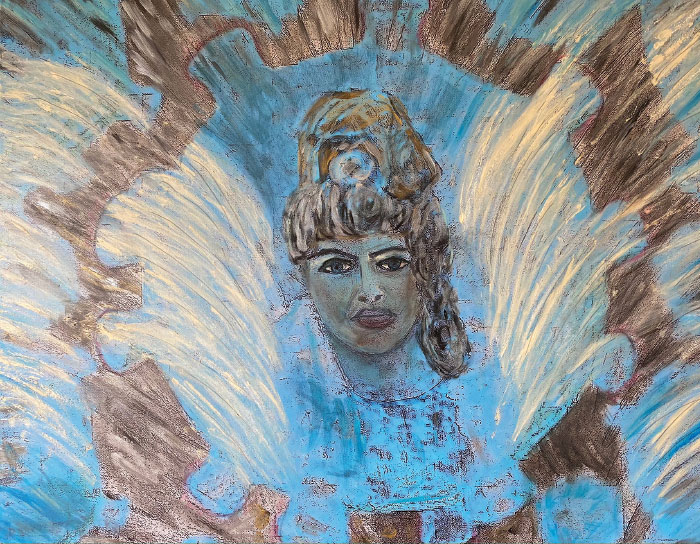
Twenty-four leading contemporary Jewish women artists immersed themselves in their respective rabbi’s worlds to create works informed by the rabbi’s life story, vision and mission. These “chosen” rabbis represent the achievements of the nearly 1,500 women rabbis of all movements who have transformed Jewish tradition, worship, spirituality, scholarship, education and pastoral care.
“Each of the artists’ works is exceptional in capturing the vision and vitality of their subject and offering a visual surprise to the viewer,” Jean Bloch Rosensaft, director of the Dr. Bernard Heller Museum Hebrew Union College-Jewish Institute of Religion (HUC-JIR), said.
The works in the exhibition range from representational to conceptual portraits of the rabbis created in a variety of mediums, including photography, textiles, painting, mixed media, collage, illustration and recycled materials.
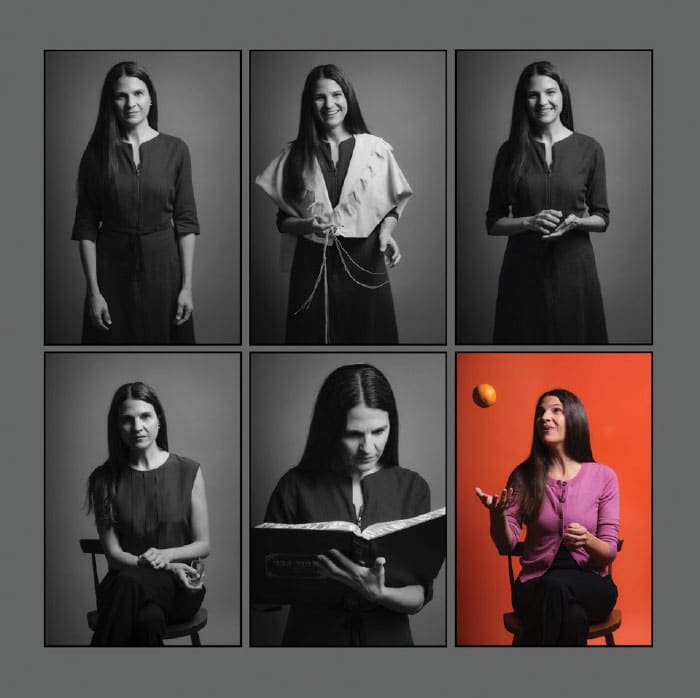
California-based photographer Penny Wolin did a compilation of photographs of Rabbi Sharon Brous of IKAR entitled “Orange.”
“I think all this work speaks of women in Judaism and women rabbis,” said Wolin. “It shows that we change, we grow, we learn, we embrace new ideas. That’s the beauty of how Jews operate. So I’m very proud about that. That’s why I think it’s so great. It says, ‘We’re here.’”
While The Braid is based in Santa Monica, the seed of this idea may have started in New York several years ago. Spinak said they were presenting a portion of their play “Stories from the Fringe” in a home in New York City as a fundraiser for the Jewish Women’s Archive.
“This play was the first to put the true personal stories of women rabbis on stage,” Spinak said. “An artist was there, Carol Hamoy. And she mentioned to me that she’d be interested in looking more closely at some of the stories she heard that evening and perhaps making an art piece.”
Spinak started developing the idea with Lynne Himelstein, co-chair of The Braid and co-director of The Braid’s Story Archive of Women Rabbis, who had been partnering with Spinak on interviewing women rabbis for more than 10 years.
“The first major obstacle was finding a venue that believed in the vision of this project,” Spinak said. “This took several years, but finally HUC-JIR, particularly Jeanie Rosensaft saw the potential.”
This was way before COVID.
“Our shared goal was to honor the transformational contributions of women in the rabbinate whose struggles and successes set in motion the first steps toward inclusion, diversity, equity and empowerment of new leaders for the Jewish people over the past 50 years.”- Jean Bloch Rosensaft
“Our shared goal was to honor the transformational contributions of women in the rabbinate whose struggles and successes set in motion the first steps toward inclusion, diversity, equity and empowerment of new leaders for the Jewish people over the past 50 years,” Rosensaft said.
The Braid has more than a decade of expertise, interviewing nearly 200 women rabbis across denominations around the world. The Heller Museum has 30 years of deep curatorial experience, collaborating with leading contemporary Jewish women artists in thematic exhibitions illuminating Jewish identity, values and history.

For the physical exhibit, each work is augmented by the accompanying wall labels with the rabbis’ biographies and QR-code links to their video interviews. The portraits are presented chronologically by year of ordination to reveal each decade’s pioneers as inspiration for the next.
Holy Sparks is also available online and accessible to anyone, anywhere at the-braid.org/hscatalogue. The online catalogue includes images, artists’ statements and rabbis’ biographies.
“It has been the ideal partnership in raising public awareness of 50 years of women in the rabbinate,” said Rosensaft.
For Himelstein, the project has had a profound effect on her life, and by extension, her family. She began Torah study with her own rabbi and, having grown up with only male rabbis, she finds a female rabbi to be much more relatable.
“The influence of women in the rabbinate has profoundly changed the way men are practicing as well,” Himelstein said. “ [How exciting it is to] have the honor and privilege to hear these remarkable stories.”
“Holy Sparks” Exhibition Celebrates 50 Years of Women in the Rabbinate Read More »
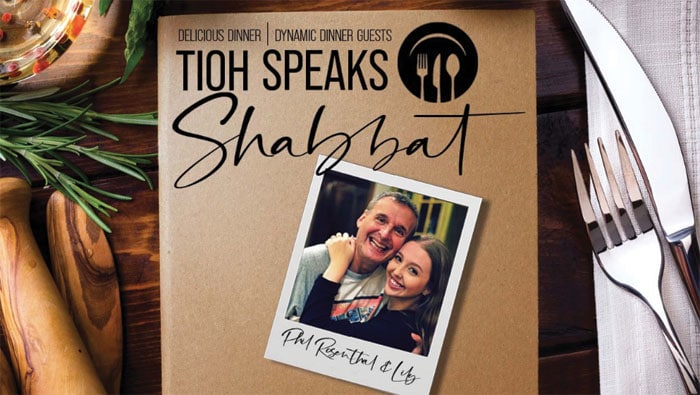
“Everybody Loves Raymond” Creator Phil Rosenthal to Share His Love of Food at TIOH
There exists a sitcom, and some may argue that it is the greatest sitcom of all time. I would have to agree with them. The show is “Everybody Loves Raymond.” There also exists a universal truth about the show’s creator, Phil Rosenthal. And that is: Everybody loves Phil.
Well, I do anyway. Having spent time with him in real life – and watched him for years on his Netflix show, “Somebody Feed Phil” – Phil is one of the friendliest, warmest and happiest people I have ever come across over two decades in my career in show business.
I’ve been lucky enough to interview Phil a couple of times over the years, and I got to catch up with him recently about his upcoming event with Temple Israel of Hollywood, “TIOH Speaks Shabbat: Phil Rosenthal & Lily.” It’s taking place on Friday, April 1 during Shabbat services and over dinner.
While Phil has a background in food through his show, in 2021 his daughter Lily, an actress, and fellow actress Olivia Sui brought together LA restaurants for a series of sold-out collaborations. During the Shabbat event, Phil and Lily will be talking about their Jewish roots and love of food.
“This is special to me because my daughter is 24 and a full-grown person,” Rosenthal said. “She will be the best part of this thing.”
“This is special to me because my daughter is 24 and a full-grown person,” Rosenthal said. “She will be the best part of this thing. She is so charming, lovely, sweet and funny, and I couldn’t be prouder of her. For old man Rosenthal to sit on the stage and let people enjoy Lily, that to me is everything.”
Rosenthal and his family are longtime members of the synagogue. Lily and her brother, Ben, went to day school there, and his wife, “Everybody Loves Raymond” star Monica Horan, attends services regularly.
“I support the temple because it is a place of good,” Rosenthal, who cites Hasiba and Shiloh’s Steakhouse as his favorite kosher restaurants in LA, said. “My wife attends services more than I do because she converted to Judaism, and converts are always much more into it. They chose it, but I had no choice. My attitude is I paid my dues and went to Hebrew school for 12 years. I did it. But I love everyone who goes there.”
In addition to Horan, food is one of the great loves of Rosenthal’s life. For four seasons, he’s traveled around the world, eating foods from all different cultures and filming his adventures for his Netflix show “Somebody Feed Phil.” It was renewed for a fifth season in early 2021, but a release date has yet to be announced.
The show featured video calls with Rosenthal’s parents, Max and Helen, who were just as endearing as their son; it was clear where he got his charm from. Sadly, Max passed away in 2021, and Helen died in 2019.
“The Zoom call, or the Facetime or Google call, is the modern-day equivalent of the postcard, which gave me an organic reason to put [my parents] into the show,” said Rosenthal.
One of Rosenthal’s fondest memories was eating his mother’s matzo ball soup.
“There wasn’t great food in our house because we didn’t have a lot of money,” he said. “Both of my parents worked and they didn’t have time to devote to create gourmet meals for the kids, who hated everything anyway. I don’t know if it was because the food wasn’t great or I was picky, I have no idea. What came first: The chicken or the rotten egg? But [my mom] did make a mean matzo ball soup. In fact, we featured it in the New York episode of the show.”
That soup stuck out so much in his mind that he includes it in his imaginary last meal. “I was asked what my last meal would be, and I decided it would be a collection of childhood favorites like pizza, hot dogs, fried chicken, ice cream and chocolate, and end with my mom’s matzo ball soup,” he said. “I believe it should come full circle back to whatever your mom made.”
Rosenthal’s parents were always supportive of him and his brother, Richard Rosenthal, the showrunner and executive producer of “Somebody Feed Phil.”
“The thing that gave my parents the most nachas was to see their two boys [working together],” he said.
In 1989, Rosenthal got his start in show business when he moved from New York to LA. Just seven years later, “Everybody Loves Raymond” premiered. It went on to run until 2005, earned over 70 Emmy nominations and won 15 awards.
What made “Everybody Loves Raymond” so great is that you feel like a fly on a wall in a very entertaining family’s household. It’s all grounded in reality. Everything that happens is plausible, and so the comedy comes out of real-life situations. According to Rosenthal, that was intentional.
“The more specific you make that family in the sitcom, the more relatable it’s going to be,” he said. “We all have a family, or hopefully have some kind of family. Even if it’s not people you’re related to who you formed a family with, you understand the specifics of personality and relationships and behavior.”
He continued, “We had one rule in the writers’ room: Could this happen? That’s it. Could this happen in real life?”
Rosenthal said that many shows ignore that rule for the sake of being funny. “I always felt that if you live by that sword, you die by that sword. You’re only as funny as your last joke because the audience doesn’t have real life to tie it to. It’s a collection of jokes and one-liners and [they’re] not tethered to reality. The audience has no other reason to hang on except for those jokes and laughs.”
With his work on “Everybody Loves Raymond” and “Somebody Feed Phil,” Rosenthal keeps a key piece of guidance he once received in mind.
“The best advice I ever got was from an old showrunner who said, ‘Do the show you want to do because in the end, they’re going to cancel you anyway,” he said. “It’s also a good philosophy for life.”
“The best advice I ever got was from an old showrunner who said, ‘Do the show you want to do because in the end, they’re going to cancel you anyway,” he said. “It’s also a good philosophy for life.”
You can purchase tickets for “TIOH Speaks Shabbat: Phil Rosenthal & Lily” on TIOH’s website.
“Everybody Loves Raymond” Creator Phil Rosenthal to Share His Love of Food at TIOH Read More »