fbpx

October 13, 2021

Judea Pearl: Reflections on Loss, Artificial Intelligence, and “Zionophobia”

He holds seven honorary doctorates and is the recipient of the A.M. Turing Award (called the “Nobel Prize of Computing”), but the first question I wanted to ask Dr. Judea Pearl focused on the flaws that his late wife, Ruth, z’l, found most unnerving about him.

“I never thought I had flaws,” he chuckled. But after thinking about the question for a moment, Pearl responded with his trademark wisdom, “I was born without flaws, true. But my marriage made me humble. Through Ruth, I learned that I do have a few.”

It’s easy to be in awe of Pearl. He’s been called “one of the giants in the field of artificial intelligence” by UCLA computer science professor Richard Korf. But anyone who knows him understands that Pearl is most comfortable when he can be himself, speak freely and, yes, make many jokes. His sense of humor may, in fact, constitute the least known aspect of his formidable being. That, and his unbelievable penchant for staying up late to get things done. 
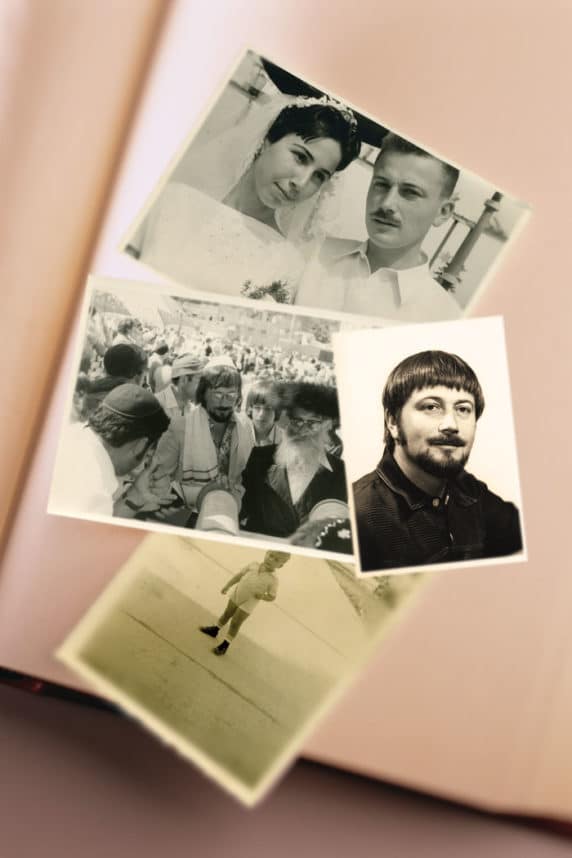
From top: Judea and Ruth Pearl on their wedding day, 1960; Daniel Pearl’s Bar Mitzvah, 1976; Judea Pearl, 1969; Judea Pearl as a toddler in Bnei Brak, late 1930s.

When our first of two interviews fell apart due to scheduling constraints, Pearl offered another time slot that ended at 5 a.m., if I “wasn’t too tired.” This only served to remind me that if, at 85, I am half as productive and at the service of the Jewish people and Israel as Pearl, I will surely host a party for myself and invite my friends and artificial intelligence (A.I.) overlords. 

“I’ve psyched myself into believing I’m useful”

Artificial intelligence is almost synonymous with Pearl’s name given that it is an area of study to which he’s proved indispensable. Pearl developed a revolutionary mathematical model called the Bayesian Networks, which allows computers to deal with uncertain information, as well as a mathematical framework for causality (causal inference), allowing computers to reason with cause and effect relations. What is most extraordinary about his career is how much his research has impacted other fields of study, including philosophy, psychology, statistics, medicine and social sciences.

What is most extraordinary about his career is how much his research has impacted other fields of study, including philosophy, psychology, statistics, medicine and social sciences.

“A.I. is ourselves; it’s our souls,” he said. “We are curious about our own thinking and emotions, and A.I., by emulating these activities, helps us understand ourselves better. It has destructive potential, of course, but it’s going to help us first, before it’s abused. We have to learn to control it.”

Naturally, I wanted to know how such a prolific mind spends his days. 
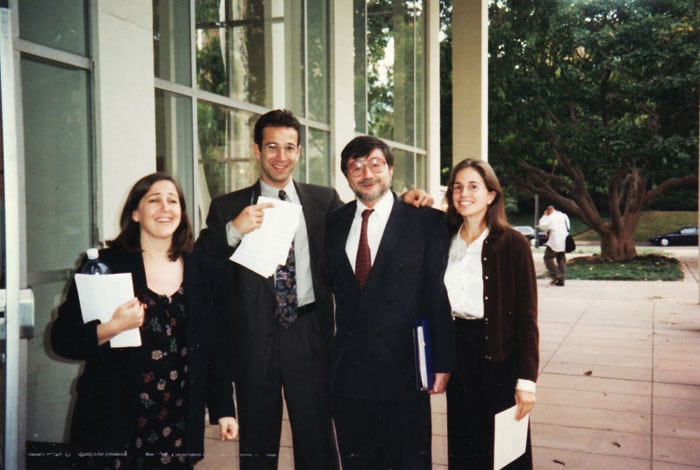
The Pearl family, 1996

“I stay home and mostly walk from one room to another,” he quipped. That sense of humor must have elevated home life for him, Ruth, and their three children, Tamara, Daniel, and Michelle. Tragically, Daniel, a talented musician and journalist who was on assignment for The Wall Street Journal, was kidnapped and murdered by terrorists in Pakistan in 2002, motivating the couple to create The Daniel Pearl Foundation. The non-profit uses journalism, music and dialogue to promote understanding and tolerance worldwide (a network of global concerts called “Daniel Pearl World Music Days” was established in 2002 and takes place each October).

“I get up every morning with a smile on my face because there are so many things to do and I’ve psyched myself into believing I’m useful.” — Judea Pearl

 True to form, beneath Pearl’s humor resides an element of emet (truth) and humble acceptance of reality: “It’s very strange for me to walk from room to room and not find Ruth there,” he admitted. “Finding the rooms empty is a new experience which I’m trying to absorb.” He then added, “But, I’m not depressed; I get up every morning with a smile on my face because there are so many things to do and I’ve psyched myself into believing I’m useful.”

Ruth, for those who knew her, was a formidable woman, mother, grandmother, electrical engineer and computer software analyst. And, most will argue, she was the only match for Judea Pearl. 
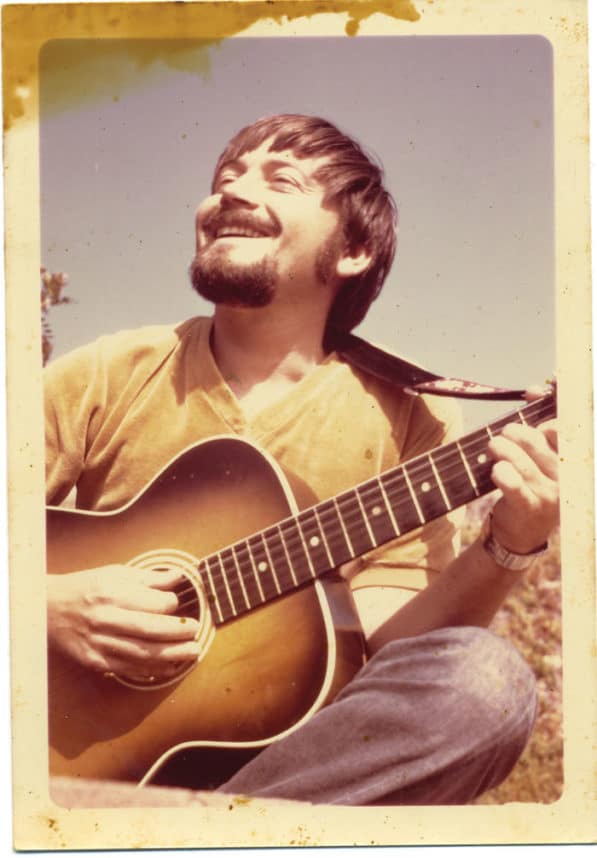
Judea Pearl, 1966

The two met as undergraduate students in 1956 at The Technion (Israel Institute of Technology) in Haifa. Ruth was one of just four women in a class consisting of 120 men. “I liked the way she walked; it was special,” Pearl recalled. “Everybody walked because it was safe; Ruth walked because she owned the ground on which she stepped; she was more secure than I was.”

Ruth’s confidence, Pearl believes, was a result of her childhood in Baghdad. Well-versed in  what he calls “Muslim dialects,” young Ruth was tasked with running various errands for her family that forced her to hold her ground while interacting with the local Muslim community, some of whom were hostile to Jews.

“She could stand up to anyone knowing what she wanted and had no hesitation to demand what she thought she deserved,” Pearl recounted. 

 Of course, I wanted to know what Ruth saw in Judea. 

“She kept saying, ‘The only reason I stay with you is because you’re not boring,”” Pearl described while laughing. 

The Foot Soldier

Presently, Pearl is taking extra precautions against COVID-19 by mostly staying at his home in Encino, Calif. He divides his time between three endeavors that, he admits, bring him tremendous meaning: scientific research, particularly focused on A.I.; helping his family adjust to life without Ruth (she passed in July at age 85); and finding ways for students and professors to reclaim the nobleness of Zionism, especially at UCLA, where he began his teaching career in 1969 (and founded the Cognitive Systems Laboratory in 1978).  

“These are three major battles,” Pearl noted, “but I’m working as a foot soldier in the trenches and making progress daily.” He feels a duty to offer emotional support to his family. When I asked Pearl who supports him, his instinctive answer was “I don’t need support.” But upon reflection, he said. “My support comes part from my daughters and grandchildren, part-resilient family legacy, and part-lifelong sabra [one who is native to Israel]: I’m as strong as our people.”

Pearl’s mentality and resilience is no surprise; born in Tel Aviv in 1936, he belongs to a generation of Jews who lived in what was formerly known as Mandatory Palestine before the modern State of Israel was established. What is surprising (and uplifting) is how Pearl responds to questions about antisemitism in his youth: 

“I grew up as a sabra, which means that I was shielded from all travesties of life,” he said. “I was supposed to be the ‘new Jew,’ who is not supposed to know anything about on-going antisemitism, and who gets to live freely, with his head up high, singing ‘Maccabee Gibbor’ (‘Maccabee, My Hero’).”

Pearl’s family left Warsaw, Poland, for Israel in the 1920s. He was the first in his family to attend college (his mother, Tova, and his father, Eliezer, completed only grade school in Poland). “But the value of education was very dear to my mother,” he said. When he was in fourth grade, a teacher told his mother, “Spend everything you’ve got and give him [Judea] an education.”

Pearl is a descendent of a famous leader and rabbi known as the Kotzker Rebbe (1787–1859); his grandfather, Chaim Pearl, was a Chasidic Zionist who helped rebuild the Biblical city of Bnei Brak, where Pearl spent his entire childhood (he was born in Tel Aviv because, at the time, Bnei Brak lacked a hospital). As a child, he didn’t experience antisemitism, not even from local Muslim Arabs; instead, he and other Jewish children played alongside Arab children near the Yarkon River, unable to understand one another’s language. 

“The Muslim Arab kids came with their donkeys and we shared rides in orchard groves in a village next to Bnei Brak,” he reminisced. “All of our playing and games were done without words.”

Not even ominous news about Nazism in Europe could convince a young Pearl that antisemitism continued to exist in the world. In 1941, he found his mother in tears at the kitchen table: “She informed me that her family was caught in a war in Europe. I told her that everything would be okay, wars come and go, but she responded, ‘This is a different kind of war.’” Pearl remembers his father and a large crowd, including rabbis and political leaders, rallying and speaking against Nazi atrocities in the town square, but for six-year-old Judea, “it was just an outing.”  

His mother lost both parents, a brother and a sister, in the Holocaust (only one sister survived); his father lost all of his extended relatives. “Most homes in Bnei Brak had lost someone,” he recalled. 

After the Holocaust, Pearl read books about the concentration camps, the camp survivors and their heroic efforts to break through the British blockade. “But these were stories,” he said. “I didn’t truly comprehend what happened there. Then, around 1946-47, refugee children started coming [to then-Mandatory Palestine].” Some of those children joined his class. “I couldn’t understand why they wouldn’t be like us [who were born in Israel],” he said. “We were different from them: They had white-skin, were mild-going, hesitant children—mostly orphans.”

The dichotomy of the sun-kissed, carefree Jewish children who were born in Israel, never having known antisemitism first hand, and those who had survived the Nazis, was not lost on him.

 The dichotomy of the sun-kissed, carefree Jewish children who were born in Israel, never having known antisemitism first hand (except from history books), and those who had survived the Nazis, was not lost on him. “They behaved so differently than us,” Pearl said, recalling one incident in which the school threw a party and one of those kids burst out crying and said she missed her mother. “That really surprised us, because we [sabras] were happy to get away from our mothers, from time to time, even most of the time.”

“The New Jew”

Judea’s marriage to Ruth, which lasted 61 years, gave him an understanding of the struggles of Jews from Arab and Muslim countries. When Ruth was just six years old, she survived the 1941 Farhud in Baghdad, Iraq, in which thousands of Iraqis, soldiers and civilians alike, tore through the capitol during an antisemitic pogrom inspired by Nazi propaganda, killing at least 179 Jews (historians estimate the numbers were much higher). Hundreds of Jews were raped, injured, and their homes and businesses looted. In testimony recorded for the USC Shoah Foundation Ruth admitted that, as an adult, she was haunted by a recurring nightmare in which a knife-wielding man was chasing her up the stairs in her school.
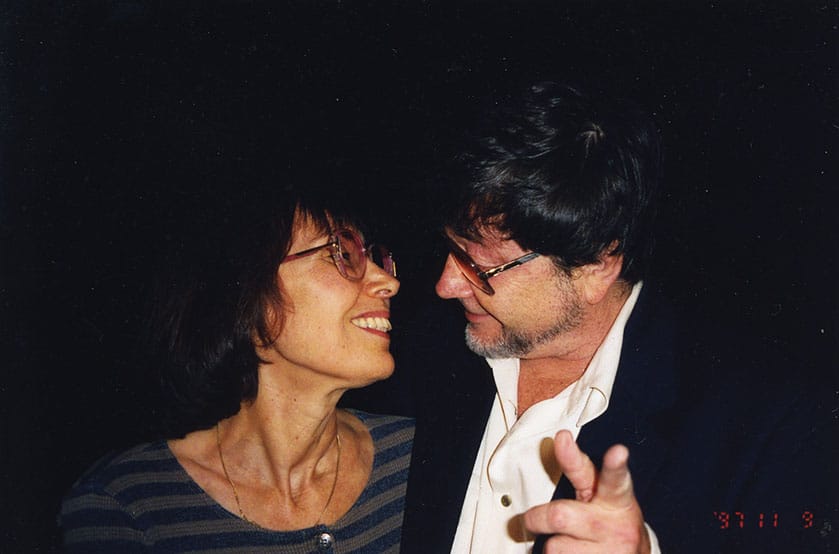
Ruth and Judea Pearl, 1997

Nearly 60 years after the Farhud massacre in Iraq, fanatic Muslim terrorists in Pakistan shattered the Pearls’ lives when they killed “Danny,” as friends and family called him. In a video that captured his famous last words, Daniel said, “My father’s Jewish, my mother’s Jewish, I’m Jewish” (his last words inspired Ruth and Judea to co-edit the 2004 book, “I Am Jewish: Personal Reflections Inspired by the Last Words of Daniel Pearl,” which won the National Jewish Book Award.) In the video, Daniel also stated: “Back in the town of Bnei Brak, there is a street named after my great-grandfather, Chaim Pearl, who was one of the founders of the town.”

I asked Pearl why he thought Daniel had felt compelled to mention his great-grandfather in his final words.

“I kept thinking about it for many nights after,” Pearl admitted. “The street name was something that we rarely mentioned; I don’t know how he even came to think about it. I am fairly confident it was not something he was forced to divulge.

“I believe [Danny] was searching for comfort in his roots, and that’s where his mind fell upon the street name story; I guess it penetrated his mind deeper than we thought.” — Judea Pearl

 “But,” Pearl continued, “thinking deeper into the reason why Danny said it under such stressful circumstances; I believe he was searching for comfort in his roots, and that’s where his mind fell upon the street name story; I guess it penetrated his mind deeper than we thought.” 

“The Emancipation of Our Identity”

In a June 2021 Jewish Journal op-ed, Pearl highlighted the fear and harassment among pro-Israel students and faculty on campus, arguing, “Our generation of Jewish students are paying dearly for the failure of our academic leadership to acknowledge, assess and form a unified front to combat this academic terror.” The op-ed was one of dozens Pearl has written for this and other papers imploring the Jewish community to understand the dangers of what he calls “Zionophobia” on campus (the obsessive denial of the Jewish people’s right to a homeland). In his writing and lectures, Pearl offers brilliantly concrete ways to respond to the hideous onslaught of anti-Israel propaganda thousands of Jewish students and faculty face each year.

Pearl’s analytical mind and his in-depth knowledge of the Arab-Israeli conflict offer a precious treasure trove of wisdom and concrete solutions for the challenges facing pro-Israel Jews today.

Pearl’s analytical mind and his in-depth knowledge of the Arab-Israeli conflict offer a precious treasure trove of wisdom and concrete solutions for the challenges facing pro-Israel Jews today. The only problem? Few of us seem to be listening. In fact, we spend infinite time and resources arguing about what the definition of antisemitism ought to be, instead of using the one fighting word we have, “Zionophobia,” to pinpoint and expose the precise racist character of our enemies.

“When you call someone a ‘Zionophobe,’” Pearl said in a 2020 speech for Alums for Campus Fairness, it means: “If you deny my people’s right to a homeland, something is wrong with you … In fact, something very basic is wrong with you because you are trampling on universal principles of human rights, the right of a people to freedom, equality and dignity.”

In the speech, Pearl outlined two “weapons for reclaiming” Israel’s rightful place on campus: “The emancipation of our identity” and “the moralization of our cause.” Pearl explained: “By ‘emancipation of identity,’ I mean to stop seeking protection for Jewish students from antisemitism, and demand instead protection for Zionist students from anti-Zionism. By ‘moralizing our cause,’ I mean moving our fight from the legal to the moral arena, where we can win hands down.

“Jewish students will regain respect only when ‘Zionophobia’ becomes the ugliest word on campus,” he continued. “It depends on us; if we use it often enough—it will become the ugliest.”

Pearl is still waiting for more students and faculty to adopt his terminology. “I’m really mad,” he said. “Jewish leadership and writers just don’t use it [the word, ‘Zionophobe’]. And ‘antisemitism’ sounds so clumsy; it kills me. Whenever we Jews say ‘antisemitism,’ people start yawning and racists like Linda Sarsour rush to prove, black or white, that (1) they love Jews and (2) even Jews do not agree on what antisemitism is.”

For Pearl, education is a clear solution for combatting youth apathy toward Israel, “but it has to be done in the right way; we’re missing a very important component: storytelling. The whole Jewish psyche is story-driven, but even the basic Bible stories and the miraculous emergence of Israel aren’t being told by professional story tellers.”

Lately, he has begun efforts to persuade Holocaust memorial museums in America to create a special pavilion dedicated to Israel, which, he believes should be called “From the Ashes.”  

“All those I talked to have said ‘Yes, it’s a great idea,’” he said, “but they haven’t done anything. Perhaps they are consulting their donors. What a loss of opportunity.”

Nevertheless, Pearl sees a personal duty to support fellow Zionists.

“I feel obligated to students who are harassed at UCLA and to faculty who are silenced. I feel an obligation to lift their spirits and show them how proud I feel about Israel, how easy it is to defend her when you know your history and when you are willing to address the core issues of the conflict.”

 “I feel obligated to students who are harassed at UCLA and to faculty who are silenced,” he said. “I feel an obligation to lift their spirits and show them how proud I feel about Israel, how easy it is to defend her when you know your history and when you are willing to address the core issues of the conflict; my favorites are ‘settler colonialism’ and ‘occupation’; perhaps I will transfer some of this knowledge, pride, inspiration, and resilience to them.”

Again, the innate essence of Pearl, the sabra, infuses his worldview with unabashed pride. 

On November 29 1947, with the approval of the United Nations Partition Plan that recommended a Jewish alongside an Arab state, eleven-year-old Pearl joined others in the streets, dancing, but didn’t quite understand why his father acted with such exuberance, shouting: “We have a state! The diaspora is over!” 

“The idea didn’t register,” he said. “We were virtually in a state already; unofficially, we had a state in our minds when I was born.”

He still remembers the “anxiety in the streets,” the genocidal threats sounding from the radio, and the Egyptian air raids during the 1948 War of Independence (Pearl served in the Nachal division of the Israel Defense Forces from 1952-1956). 

“I remember our neighbor, a nineteen-year-old boy, who smiled to us warmly, went to fight five armies, and came back in a coffin,” he said. “His mother remained glued to her window for the next ten years, waiting for him to come home.” 

Though there would be other soldiers from Bnei Brak who perished in 1948, whether the son of the fish-seller or the shoemaker, the death of that particular young man, and his funeral, gave Judea Pearl his first experience in witnessing the irreparable brokenness caused by the violent loss of life.   

The name of that IDF soldier, the neighbor with whom Pearl played as a child, and who lost his life in Israel’s War of Independence, was Daniel.

For more information about The Daniel Pearl Foundation, visit https://danielpearlfoundation.org/

***

On Religion with Dr. Judea Pearl

Jewish Journal: What compelled you to become an atheist at the age of 11?

Judea Pearl: I stood up on the roof of my grandfather’s house [in Bnei Brak] and looked down at the street. I saw all of the people busy shopping, wheeling and dealing, and thought that it’s impossible that there’s a God up there, and that these people won’t be worshiping Him, with fear and awe, 24 hours a day. The fact that they can do their business and survive while He sits there and watches is inconsistent. I concluded that there could not possibly be anyone who supervises what people are doing or thinking; it came to me like a thunderstorm, and it never bothered me again.

JJ: How did your Hasidic family respond?

JP: My family said it was a “temporary” teenage rebellion. My grandfather would say, “You don’t do that” every time I violated Shabbat. My father was more lenient. He said, “You can turn on the radio as long as the neighbors don’t hear.” That became our agreement.

JJ: Was there a moment during which Daniel went missing that you thought about praying? 

JP: Yes, I remember sitting in a plane, praying “T’filat Haderech” (The Traveler’s Prayer). When you pray to God, God plays a poetic metaphor for things that you relate to, like a father, a mother, a teacher, a community … other forces which do exist; it gives you a sense of strength, because it evokes forces you’re familiar with, incarnated in the name of God.

JJ: And although you’re an atheist, you truly seem to appreciate the Torah.

JP: I terrifically appreciate the Torah because it is a medium baked with people’s experience and wisdom; it has been filtered by the generations, written by those who, in their time, were already smart enough to accumulate the wisdom of their forefathers and encode it poetically, in stories and laws. My favorite biblical story is the Book of Esther, particularly the verse in which Mordechai challenges Esther to step up to the plate for her people. I wish some of my silent Jewish colleagues would learn to emulate Esther.

JJ: If, after 120 years, you pass away and find that there is a God, what will you say?

JP: I’m going to say, “Come on, God, you really exist?” And He’ll say, “I tried to give you signals again and again, and you didn’t listen.” To which I’ll respond, “If you really were God, you would know how to give me clearer signals.”

JJ: Do you believe in the concept of a soul?

JP: Yes, it’s a piece of software called “soul,” which gives us the sensation that we transcend our body. I would ask you: Do you believe that computer software transcends the computer? Same with people; when you’re alive, you have a soul—a piece of software responsible for your consciousness and your relationship with the cosmos.

JJ: What inspires you to say the prayer for wine (“kiddush”) each Friday night? 

JP: It’s my understanding that if I keep Shabbat traditions, my life will be more meaningful. I use Zoom to see my family and say kiddush every Friday night. Once, I was in a dialogue program with Muslim leaders in London. After, we went for dinner and sat down, and then it hit me: It’s Friday night. There were 12 imams around me and a couple of other Muslim leaders. I said, “I’m sorry, but it’s Friday night, and I have to do kiddush.” They were somewhat surprised, “But you said you’re an atheist,” to which I said, “You’re right, but today is really Friday night, and it’s really about heaven and earth.” So I asked the waiter to bring wine. Everyone stood up and I said the entire length of the kiddush prayer, beginning with Yom ha-shishi, Va-yechulu ha-shamayim ve-ha’aretz ve-chol tzeva’am.

JJ: Did Danny connect with Judaism?

JP: He never missed a Passover seder or fasting on Yom Kippur. A friend once asked him if he believed in life after death. He said, “I don’t know, I have more questions than answers, but I sure hope [the angel] Gabriel likes my music.”


Tabby Refael is a Los Angeles-based writer, speaker, and civic action activist. Follow her on Twitter @RefaelTabby

Judea Pearl: Reflections on Loss, Artificial Intelligence, and “Zionophobia” Read More »
Rabbis of LA | Rabbi Noah Farkas: Looking to the Past and the Future

I came away from my interview with Noah Farkas feeling much the same way I did after interviewing Natalie Portman: After a long conversation, the person beneath the facade remained a bit of a mystery. 

Perhaps this was intentional on Farkas’s part. After all, he is weeks away from exiting the Valley Beth Shalom pulpit he’s inhabited for the past 13 years to assume one of the most powerful and public Jewish roles in Los Angeles, president and CEO of the Jewish Federation. From now on, every word he says will be parsed, politicized and scrutinized; it makes sense he would be cautious, not wanting to give too much away or say the wrong thing.

He warned me early in our conversation that he would not be discussing his vision for the Federation, since our timing did not comport with the prescribed timeline of succession and because his predecessor, Jay Sanderson, will continue to lead the organization through the end of the year. 

But while Farkas, 42, isn’t necessarily revealing, he is transparent, especially when it comes to his politics and point of view. “If the white male flag is being taken down, which we [as a community] have spent the last 70 or 80 years trying to fit in with, and a multicultural, multircial flag — in some ways an anti-white flag — is being raised, which army are we going to ally ourselves with?” he asked, rhetorically. 

As Farkas embarks upon the blockbuster role of his career, I encountered someone calm but calculated, at ease selling himself and his accomplishments, but also aware he is inheriting a unifying organization at a time of deep political polarization and cultural upheaval. If he harbors any self-doubt, he didn’t show it. Instead, like those who came before him, he focused both on the responsibilities attendant to Jewish thriving and the new strategies necessary for Jewish survival.

“My calling has always been, since I was 15, to help Judaism and the Jewish people.”

“My calling has always been, since I was 15, to help Judaism and the Jewish people,” Farkas said. His “chozer b’tshuva” moment — the moment that returned him to Jewish religious observance, as he put it — occurred during a teenage trip to Israel when he said he felt “touched by the divine presence.”

“It was this overwhelming sense of intimacy in many ways,” Farkas said. “Modern psychologists would call it a moment of flow.”

It was transformative for the young Farkas who, until then, had felt out of step with the Plano, Texas community in which he grew up, where he belonged to one of the few Jewish families in his county. It wasn’t until he went to Israel that he found a spiritual and cultural alignment between his inner sense of self and his external surroundings. He described his Jewish upbringing as almost closeted, which inbued him with a diaspora mentality, a sense of his own scarceness. 

In 2019, Farkas, a self-described progressive, bucked party-line when he wrote an article for the Jewish Telegraphic Agency affirming his support for AIPAC. It was a bold move, given the propensity of the Jewish left to distance itself from AIPAC but it demonstrated Farkas’s understanding that Jewish power is conditional, not guaranteed.  

And yet, Farkas’s progressivism is evident across his resume and he insisted his chief concerns as a community leader are to address “pain points” in society. His first stint as rabbi was serving Congregation Beth Israel in Mississippi, where he helped the community rebuild itself after Hurricane Katrina wreaked havoc on the institution and its infrastructure. But in Los Angeles, no issue has captured Farkas’s energy and attention more than the problem of homelessness. 

Back in 2013, on his way to shul each Shabbes, he befriended an Iraq war veteran named Jack who was suffering from chronic homelessness. They would chat each Saturday and Farkas would often bring Jack leftovers from Shabbes kiddush. One day, Jack disappeared; he had been arrested for trespassing on the grounds of a Marriott hotel and Farkas never saw him again. The following Rosh Hashanah, Farkas launched a task force on homelessness at VBS, which ultimately grew into a public service role with the Los Angeles Homeless Services Authority (LAHSA) Commission. He currently serves as chair of the finance, contracts, grants committee and oversees a billion-dollar budget. 

Yet, even with all the resources the city has invested, homelessness remains an intractable problem. “There are five key drivers to homelessness,” Farkas explained, “mental health, housing affordability, poverty, drug addiction and systemic racism. You have to address all of those areas in order to solve it.”

But there’s a governance problem, too. Solving homelessness in LA, he said, “is a question of whether or not certain individuals and organizations will give up power in order to centralize [governance] to a single organization or entity.”

Though he will remain with LAHSA for another 12 months, the remainder of his term, Farkas is now shifting his attention to more abstract dilemmas concerning the Jewish future. “Right now, there is a shifting demographic and cultural power dynamic in the United States, and how we as a Jewish community respond to that shift is going to dictate whether or not we’ll be successful in the next 20 to 50 years,” he said. “Who will be our friends? Who are the people that are going to protect the Jews?”

Farkas, a husband and father of four, is worried that any Jewish communal resistance to the political priorities of the demographic realignment taking place in America — despite the sometimes anti-Israel or anti-Jewish politics that emanate from our neighbors — will backfire. He cited the example of the recent ethnic studies controversy in California in which a proposed new curriculum for public schools intended to draw attention to minority cultures included problematic material on BDS, the Boycott, Divestment, Sanctions movement against Israel. It also initially lacked any acknowledgment of anti-Semitism or the Jewish minority experience in America.

“My thinking was, if we try to kill ethnic studies outright we will be perceived as fighting for the wrong team,” Farkas said. “So rather than kill ethnic studies, the Jewish Caucus [the California Legislative Jewish Caucus] — with some of my help — tried to mollify and blunt the tip of ethnic studies so that we’re included in that conversation, but in a way that meets our interests.

“That’s what it means to live in a diaspora.”

Farkas worries that there could be a further uptick in anti-Semitism if the Jewish community resists inevitable changes in our culture and fails to build partnerships and coalitions with other soon-to-be majority minority communities.

At the same time, he’s also relentlessly optimistic about the Jewish future.

“Engagement might not be the same as how you and I or our parents engaged in Jewish communal life, but there’s still a thirst for it. The question of what it means to be a Jew, to be a human being, of how to find purpose and meaning in life. These questions are immortal.” 

Fast Takes with Rabbi Noah Farkas

Danielle Berrin: What’s currently on your night table?

Noah Farkas: Reading glasses, a copy of The Atlantic, “The Story of the Jews” by Simon Schama, a lamp and water.

DB: Last show you binge-watched?

NF: “Schitt’s Creek.”

DB: Your day off looks like…

NF: What’s a day off? I get hours off. I write Monday mornings. I get to have good coffee because I have the time to make it. I pick up my kids from school and do homework and make dinner — especially Texas BBQ. I’m good at smoking meat. 

DB: Favorite thing to do in Israel?

NF: I love hiking in the Galil during the Springtime.

DB: Something about you most people don’t know?

NF: I play the banjo. Not well, but I still play it.

DB: Most essential Torah verse?

NF: V’asu li mikdash v’shahanti b’tocham. Build for me a sanctuary so that I might dwell among you. Exodus 25:8

DB: Biggest challenge facing the Jewish world?

NF: Why be Jewish?

DB: Guilty pleasure?

NF: Popcorn

DB: Favorite Jewish food?

NF: Matzo ball soup with chicken.

DB: If you weren’t a rabbi you’d be…

NF: An artist. My bubbe was a gallery artist and she taught me to paint and draw. I also learned how to sculpt and I used to be a photographer. Now my art is writing. 

Rabbis of LA | Rabbi Noah Farkas: Looking to the Past and the Future Read More »

A Moment in Time: What is so Significant about 36?

Dear all,

Many are familiar with the symbolic number of 18 in Judaism. Why 18? In Hebrew, each letter of the alphabet has a numeric value. The 8th letter of the alphabet is “Chet” and the 10th letter is “Yud.” Together, the letters spell the word “Chai,” meaning “life.” As life is the cornerstone of Judaism, the number 18 has become synonymous with our culture.

All the more so with “Double Chai.” Indeed, 36 is twice as powerful. The Hebrew equivalent of 36 is “Lamed Vav.” In and of itself, Lamed Vav doesn’t spell a Hebrew word. But we use the term “Lamed Vavnik” to describe the 36 people in every generation who are completely righteous. These 36 are the ones who make the world livable.

In honor of those 36, I am riding 36 miles once again in the Jewish Federation of Greater Los Angeles’ Tour de Summer Camps, raising funds to send kids to Jewish Summer Camps. Temple Akiba’s own resident camp is a direct beneficiary! I want these kids to have the chance to become lamed vavniks, incredible souls who make the word better and kinder. My goal is to raise $3,600.

Please consider sponsoring me with a donation in a variation of “Chai” ($18, $180, etc.). Even better, a “Lamed Vav” donation ($36, $360, etc.) would be awesome! Whatever you can do will made a difference.

Following this link will take a moment in time. But the results of your action will make a difference for generations.

Thank you in advance!

With love and shalom,


Rabbi Zach Shapiro

A Moment in Time: What is so Significant about 36? Read More »

A Person Whom I Wish to be Far Less Discussed

Asked what subject that she wished more writers would discuss, Professor Mary Beard

said that she’d rather focus on the people whom she wishes would be less discussed.

Regarding someone being flooded by networking waves but not sentenced to be disappeared,

I in this way disparage Potus, deelected, impotent, with great disgust.


Concerning Churchill, though, about whom she’d prefer that less was written, I’m an addict.

He helped to save our most uncivil world and therefore is quite rightly tsaddiked,

in contrast to the man whom I fear might be cause of blood, toil, sweat and tears,

just like the bramblebush in Jotham’s parable, demanding from us four more years.


Tsaddik is a Hebrew term for a righteous person.

In the 10/10/21 NYT Book Review, Mary Beard was asked “Which subjects do you wish more authors would write about?” She answered:

“I’m more interested in what they might write less about! I don’t think the world needs more biographies of Winston Churchill at the moment.”


In the poem I allude to the bramblebush in a parable (Judges 14:8- 20) by Jothan, a young son of a righteous judge Gideon. He implies that the bramblebush’s dangerous bravado, which symbolized that of Abimelech, who slayed seventy of his brethren in order to rule Israel for three years, would forever entangle his subjects in its inescapable prickles.


Gershon Hepner is a poet who has written over 25,000 poems on subjects ranging from music to literature, politics to Torah. He grew up in England and moved to Los Angeles in 1976. Using his varied interests and experiences, he has authored dozens of papers in medical and academic journals, and authored “Legal Friction: Law, Narrative, and Identity Politics in Biblical Israel.” He can be reached at gershonhepner@gmail.com.

A Person Whom I Wish to be Far Less Discussed Read More »

A Bisl Torah: Recurring Dreams

I have a few recurring dreams. One of which is wandering aimlessly around a school setting, miserably late to take an important test. A dream interpreter might point out that I am worried about a deadline or wrestling with the idea of disappointing others. Another interpreter might say that I still feel traumatized by my high school science and math classes (not my best subjects.) And finally, another analyst might ask me what it means to feel tested.

When struggling with an aspect of our lives, we often used the phrase, “We are being tested.” It is the terminology used when discussing Abraham and his trials. That in leaving his home and family, casting Hagar into the wilderness, and being asked to sacrifice Isaac, Abraham’s faith was tested, conveying his ultimate loyalty to God. And while Abraham is personified as having passed God’s test, I find fault with the idea of God testing humanity.

As portrayed in my dream, I am uncomfortable with “passing the test” to win someone’s favor. Likewise, I do not believe God is testing any of us when we face illness, hardships, personal or professional difficulties. That isn’t the God I believe in. Those aren’t the relationships I believe in. A test conveys both perfection and failure. If you pass the test, you belong. If you fail, you are cast aside. While any relationship should have expectations, real connection is based on a trust and commitment to work through inevitable disappointments.

In its final interpretation, perhaps my recurring dream is a reminder to us all: we must refrain from “testing” each other. Rather, if we are looking for a genuine, authentic bond, with each other, and with God, then relationship building begins not with a test. Relationship building begins with Avraham’s voice, “Hineni.” I am here. No final exam. Just a willingness to show up. That is a dream worth repeating.

Shabbat Shalom


Rabbi Nicole Guzik is a rabbi at Sinai Temple. She can be reached at her Facebook page at Rabbi Nicole Guzik. For more writings, visit Rabbi Guzik’s blog section from Sinai Temple’s website.

A Bisl Torah: Recurring Dreams Read More »

How the Orange County Oil Spill Is Connected to the Pico-Robertson Drill Site

Activists and community leaders in Pico-Robertson have been in a decades-long battle with the city to regulate the West Pico Oil Drill Site, which has facilities along West Pico Boulevard near Doheny Drive. In light of the massive oil spill in Orange County, where 126,000 gallons of oil have polluted the Pacific Ocean, activists are highlighting how the spill is connected to the city’s drilling sites. 

Michael Salman, a Professor Emeritus of history at UCLA who lives in West Adams in Council District 10, has been working to try to strengthen city regulation of oil drill sites in his own neighborhood and across the city, including the West Pico Drill Site in Council District 5. The main problem, according to Salman, is a lack of oversight from the city.

“They’ve never done regular compliance inspections to see if oil companies are abiding by city code and Zoning Administrator assigned conditions of use,” he said. “The company running the offshore platforms [in Orange County] was hit with lots of safety violations by the federal regulatory agency, but the agency’s enforcement fell off during the Trump Administration.” 

Similarly, the West Pico Oil Drill Site has had serious safety violations and illegal operations, but the city has not paid attention. Salman referred to the fact that since 2000, the operators of the Pico site have undertaken 25 major projects (24 on oil wells) for which city law required applications for approval by the ZA. But there were no applications and no reviews, and the city continues to ignore this pattern of protracted illegal oil drilling. If the city conducted general compliance inspections on an annual basis, Salman said this never would have happened.

The city inspects billboards and automobile wrecking yards and bathrooms when homeowners remodel them, but refuses to establish a program to inspect all oil drill sites.

In September 2018, City Council President Herb Wesson (who represents  Council District 10) led the City Council in passing a motion calling for the City Attorney to create an annual oil drill site inspection program. According to Salman, the program was to be paid for completely by permit fees from the oil companies. The City Attorney refused to draft the ordinance and gave no public explanation; to this day the Council has not followed up. Salman said the city inspects billboards and automobile wrecking yards and bathrooms when homeowners remodel them, but refuses to establish a program to inspect all oil drill sites for compliance with city laws and regulations.

“In [the West Pico and the OC] cases, in the ocean and on land, there’s lax regulation,” he said. “If you don’t do inspections, then you might as well have no regulation at all. In both cases there is aging infrastructure, and it’s an industry that has gone through hard times of cyclical busts. When the price of oil falls, there’s a tendency to cut back on safety and maintenance. If there are no regular inspections, you start to get into dangerous territory.” 

Salman doesn’t hold back his criticism of city leaders, whom he said, “have a default setting of making very big promises and then doing nothing.” He specifically called out Councilmember Paul Koretz, who represents Council District 5, including Pico-Robertson, and is running for city controller.

 “Paul Koretz, more loudly than anybody else in City Council, likes to talk about how much he hates all of the oil companies and that fossil fuels should be abandoned and they are terrible, and yet since 2009, he’s been the councilmember for CD5 and it has more drill sites than any other council district in the city,” said Salman. “He has gone out of his way to prevent proper reviews of the drill sites in his district.”

Another issue, Salman said, is that he thinks city leaders are sometimes afraid that if they do anything at all, “it will be unsatisfactory to people who just want all the oil wells to instantly go away, which is physically, economically and legally impossible.” 

Salman was a leader in lobbying for the plugging of wells and closure of the 4th Ave Drill Site in Council District 10, which was next to a LAUSD elementary school. He said the winding down of the oil industry is a process that requires tight supervision and cannot be done without establishing a vigorous inspection program first.

If an oil spill were to happen in Pico-Robertson or anywhere in the city, Salman pointed out that it wouldn’t spread as widely and quickly as the spill in the ocean off of Orange County. However, he said he believes that it would still be detrimental because it would happen in a densely populated area, which is why the city has had laws since 1945 that are supposed to tightly control oil industry operations. 

In 2019, Rabbi Yonah Bookstein of Pico Shul and local volunteers highlighted how community members have smelled the toxic fumes from the West Pico Oil Drill Site and experienced migraines and dizziness because of it. 

Even though these oil sites are plagued with problems, Salman said something positive could come out of the OC oil spill. 

 “For the city, it should be a wake-up call, finally, after many years of trying to get it to do regular compliance inspections,” Salman said. “It should enforce its own laws, which can also help to encourage the state to enforce its own laws more fully and properly.”

How the Orange County Oil Spill Is Connected to the Pico-Robertson Drill Site Read More »

Homemade Hummus: The Real Deal

When we asked our fathers if hummus was served in their homes in Morocco and Iraq, they both had the same answer. A resounding no. 

Papi, Rachel’s dad, told her that in Morocco, only the poor people ate hummus.

My Aba reminisced about his youth in Baghdad and the very tasty boiled garbanzo beans that he would buy from the Arab street vendors on his way home from school. It cost a mere 5 fils for a paper cone cup filled with soft, creamy, salty beans. 

If you’ve ever been to Israel, you know that the hummus eating begins on the plane. El Al serves a package of hummus for breakfast, lunch and dinner. You get kind of sick of it. But then you arrive in Israel and get a taste of the real deal. Fresh homemade hummus doesn’t compare. Eating hummus, known as “l’nagev hummus,” is a very popular activity in Israel. It is ubiquitous in Israeli breakfasts, falafel and sabich. A plate of hummus garnished with tahini, olive oil, paprika and fresh parsley is an essential part of the “shipudiya” (grilled skewer) meal. As is popular in all the Levantine countries, Israel boasts many “hummusiyas,” restaurants devoted solely to hummus. You’ll get the most incredible fresh baked thick, doughy, chewy laffa and pita and sides like hard boiled “brown” eggs, pickles, fresh parsley, cucumbers, eggplant and mushrooms. The best is reputed to be in Abu Ghosh, an Arab village outside Jerusalem. 

In 2015, the Sephardic Educational Center premiered Oren Rosenfeld’s documentary “Hummus the Movie.” The film shows the commonality between the Jews, Moslems and Christians with three stories related to hummus. The Jew is a ba’al teshuva who has become a Breslover Chassid and sells hummus at a gas station in Yokneam. Suheila is a Moslem who runs a hummus restaurant in Acre and is renowned for her charity. The Christian is a young man torn between the thriving hummus business in Ramla his family has run for three generations and his girlfriend, who has moved to Berlin. It makes you hungry for hummus. Mickey Fine celebrated the premiere by sponsoring a Hummus competition at the Beverly Hills Farmers Market. Rachel’s preserved lemon hummus was runner up to our good friend and major foodie Rose Kemps, who won with her roasted pepper hummus. 

Nowadays, our families very much eat hummus. We serve it every Shabbat with our Mezze—finely chopped Israeli salad, matbucha, grilled eggplant, tahini and other dips to be eaten with challah. We’re not the only ones. Hummus has become big business in the United States, with packaged hummus available pretty much everywhere.

One of the things that makes the homemade version of the dip so healthy (and much tastier) is olive oil. 

But we are here to highly encourage you to try to make homemade hummus. It’s quick, it’s easy, it’s cheap, it’s eco-friendly and it’s super nutritious. One of the things that makes the homemade version of the dip so healthy (and much tastier) is olive oil. Unfortunately, those prepackaged varieties usually contain less healthy soybean oil or canola oil, even the organic ones. 

The traditional hummus recipe includes boiled garbanzo beans, tahini, lemon juice, garlic and olive oil. Its creamy and filled with all kinds of umami flavor. It’s a plant-based protein that’s full of fiber, iron, minerals and B vitamins. Best of all, this vegan treat is only 30 calories per tablespoon. 

We’ve gone the route of soaking the beans, but in all honesty we’d rather save some time, so we use organic canned garbanzos. Good quality tahini and extra virgin olive oil, fresh garlic and lemon juice up the flavor. And if you make enough, the hummus lasts about a week in the refrigerator, perfect as a quick snack with veggies or a spread in a sandwich. 

B’te’avon! Enjoy! 

Super-Duper Easy Hummus

4 cups water
1 teaspoon baking soda
1 29oz can of organic garbanzo beans,
washed and drained
1 garlic clove
1/3 cup tahini
1 lemon, juiced
1 teaspoon kosher salt
3 tablespoons extra virgin olive oil

Over a medium flame, heat water, baking soda and garbanzo beans in a small pot.
Boil for 30 minutes, until beans are very tender.
Drain water and place chickpeas in a food processor or blender.
Add the garlic, tahini, lemon juice, salt and
olive oil .
Blend everything until very smooth.
If needed, add lemon juice or salt to taste.
Garnish with a drizzle of olive oil, za’atar, sumac, paprika, herbs, and of course tahini!


Rachel Sheff and Sharon Gomperts have been friends since high school. They love cooking and sharing recipes. They have collaborated on Sephardic Educational Center projects and community cooking classes. Find recipe video clips and recipes on Instagram SEPHARDIC SPICE GIRLS and Facebook SEPHARDIC SPICE SEC FOOD.

Homemade Hummus: The Real Deal Read More »

Newsom Signs Bill Addressing Hate Crimes

California Governor Gavin Newsom, a Democrat, signed a bill into law on October 8 addressing the rise of hate crimes in the state.

The bill, Assembly Bill 57, states that the California State Auditor concluded that law enforcement has not adequately identified and responded to the rise in hate crimes in the state since 2014. The number of hate crimes in the state was 1,015 in 2019, a decrease from 2018 but still higher than it was in 2014 (758). The bill also notes that hate crimes against the Asian American and Pacific Islander (AAPI) community have soared since 2019 and 2020 as a result of the COVID-19 pandemic.

To address the rise in hate crimes, the bill urges law enforcement to develop better guidelines on the matter based on recommendations from various experts.

“The recent violence against the Asian American and Jewish communities is unacceptable and demands a firm response from every level of government,” Assemblymember Jesse Gabriel (D-Woodland Hills), who authored the bill and heads the California Legislative Jewish Caucus, said in a statement. “At this moment, when so many in our state are feeling vulnerable, we must do more to protect those who are targeted by hate. Our legislation will significantly strengthen law enforcement training and coordination to ensure that California is better prepared to address hate crimes and protect vulnerable communities.”

Allison Gold, who chairs the Jewish Public Affairs Committee (JPAC), said in a statement that JPAC supports the bill because it “will significantly impact the rise in hate crimes and strengthen our State’s response to effectively combat it.”

Nancy Appel, who heads the Anti-Defamation League’s California chapter, told The Jewish News of Northern California (the J) that the bill is “a major piece in the overall fight against hate crime.”

The bill passed through both Houses of the state legislature on September 8 and 9 and is a piece of a larger coalition of bills in the legislature addressing hate crimes.

Newsom Signs Bill Addressing Hate Crimes Read More »

Germany-Israel After Angela Merkel

I dislike Germans. There, I said it.

I know it’s wrong to dislike people just because of their nationality, or culture, or ethnicity, whatever it is. And yet, I can’t help it. In my defense, just seventy years ago a third of my people were eliminated by Germans, including numerous members of my own family. And yet I expect, maybe even hope, that at some point, in some not very distant future, a Rosner family member is going to feel no instinctive dislike for Germans as Germans.  

Germany’s Chancellor, Angela Merkel visited Israel earlier this week, for a seventh time as Germany’s leader, for the last time in her official capacity. She is probably the one German who makes it most difficult to defend an instinctive dislike for Germans. She stands head and shoulders above most political leaders of her generation. She ruled Germany with composure and patience. She ruled Germany without ever retorting to populism, an ill from which most other democracies in the world suffer. And she handled Germany’s complicated relations with Israel masterfully. 

These relations, and their highly complex nature, started soon after Israel was born. In one of the country’s most heated debates—a debate that included a threat of violence against the parliament—Israel’s first Prime Minister David Ben-Gurion overcame the objection of opposition leader Menachem Begin and accepted reparations from Germany. Of course, Germany did nothing to harm Israel. It paid Israel because of what it did to the Jewish people. It is keeping special relations because of what it did to the Jewish people. 

These special relations have many manifestations, cultural and political. Germany contributes to Israel’s defense. It is selling it submarines and other defense machinery. It also refrains from leading the chorus of critics, even when it’s clear that Israel’s policies are not to Germany’s liking. 

And there are the symbols. Merkel’s visit, shortly before she leaves office, was one such symbol. Her meeting with Prime Minister Naftali Bennett was routine. Her participation in a special Israeli cabinet meeting was an honor reserved for just a few foreign leaders. By coming to Israel as a last act she was making a point, passing a torch to her successor—reminding Germany’s next generation of leaders that the burden of handling these relations is now theirs to carry with a similar sense of responsibility and poise. 

I know that someday no Israelis are going to feel instinctively the way I feel about Germans. I also know that someday no Germans are going to feel instinctively the way Merkel feels about Israel. It might take twenty years, or thirty, or fifty, but this day is coming, with a new generation of younger leaders.

Germany is a powerful country, the most powerful in Europe. And it is not yet unburdened. Its past is still very much a factor in the way it handles its policies at the present. 

Merkel is 67 years old. She was born less than a decade after the Holocaust. She grew up in a Germany traumatized by the events of the Second World War. But as her term ends, she is leaving behind a normalized country. Sure, Germany has its set of problems, having to deal with the complications of immigration and with a fractured Europe and with a revisionist Russia. And yet, she might be the first German leader since the beginning of the twentieth century to serve a long term without having to deal with dramatic crises. There was no airlift, and no big war, and no building of a wall, and no political upheaval, and no tearing down of walls, and no split or unification, no communists threatening stability and no Nazis destroying stability. Germany is a powerful country, the most powerful in Europe. And it is not yet unburdened. Its past is still very much a factor in the way it handles its policies at the present. 

This isn’t going to last forever. But there’s a large range of options between the “forever” (unrealistic) and “now” (much too soon). Merkel is aware of that; she wanted to have her visit by way of postponing an inevitable future. To make it last longer. Bennett might be aware of it. Hosting Merkel at the cabinet meeting, he opened his remarks by quoting her past statement that when it comes to Israel “Germany is not neutral.” He then moved to speak about the danger of a nuclear Iran. His emphasis on what Israel views as existential threat is also a message to Merkel’s successors. They cannot strive to move to neutrality when an enemy threatens a community of, well, it is now more than six million Jews.

Something I wrote in Hebrew

The new government would like to pass legislation that limits any future Prime Minister to two terms in office. I explained (in Maariv) why such law will be useless: 

The law will not achieve its goal. That is, because a popular prime minister, with a clear majority in the Knesset, will be able to change it without difficulty. The law will not achieve its goal, as happened with previous limitations on the number of ministers has not achieved its goal. Remember those limits? The direct election law of the mid-1990s was supposed to limit the number of ministers to 18. Ehud Barak abolished it and formed a larger government. Why? Because he had to. Yair Lapid came in 2015, and again imposed legislation restricting the number of ministers. This also did not help: In less than five years, Benjamin Netanyahu lifted the restriction. Why? Because he had to.

A Week’s Numbers

The Knesset opened its winter session. The budget is the next big thing (mid November), and polls show that opposition Likud gains, but not enough to form a different coalition if election were held today (polls average: themadad.com).

A Reader’s Response

Stephany Cohen responded to last week’s column on Kamala Harris and Israel:

“If she disagrees with the student, why doesn’t she say exactly what she thinks about Israel? Let us hear her opinion about Iran and the Palestinians. I think that until now she never clarified her exact views in more than general terms.” 


Shmuel Rosner is senior political editor. For more analysis of Israeli and international politics, visit Rosner’s Domain at jewishjournal.com/rosnersdomain.

Germany-Israel After Angela Merkel Read More »

Table for Five: Lech Lecha

One verse, five voices. Edited by Salvador Litvak, the Accidental Talmudist

And the Lord said to Abram, “Go forth from your land and from your birthplace and from your father’s house, to the land that I will show you.”

-Gen. 12:11


Rabbi Tova Leibovic-Douglas
rabbitova.com

I love imagining and reading our biblical characters as archetypes and connecting to the wisdom of their flaws and triumphs. Abraham appears to be the faithful and dutiful servant to God. Yet, if we look critically at Abram, before he became Abraham, it is more likely that he, like us, had to choose faith, despite his doubt. 

After many months of navigating a tremendous amount of chaos, we too, have to uncover and recover the pieces of ourselves. We are at a “lech lecha” moment. As a collective, we are in a moment of trauma that moves between faith and doubt, and we may feel like we must leave to find ourselves. For some of us, this may be physically journeying to a new land as the text says to “go from your birthplace, your parent’s house to a new land.’’ But for most of us, this journey is an internal conversation, one within our soul and with the Divine. 

We are seeking, questing, and entering a time of capturing our own being in whatever way possible. The challenge is that we know that there is no specific destination but rather an uncovering or journey waiting for us. If we are lucky enough, we can create the space to listen to that call and lean into faith, despite our inevitable doubt. We can choose this for ourselves, blemishes and all, and that is the blessing.


Rabbi Nolan Lebovitz
Adat Shalom

On the surface, this verse can be read as the fundamental Divine charge for all Jews to be Zionists. That’s the simple reading. The more challenging reading changed my life. 

God commands Abram into a journey toward a different place, becoming something more, dreaming of a better way of life. In this way, the command has permitted me to change careers, to return to school, to continue to seek wisdom. The blessing of this verse is not only the journey to the Land of Israel, it is the concept of journey itself. We are a people of travelers, of dreamers. We know it from this verse and we know it from thousands of years of history. 

Whether it be the story of Abram and Sarai, Theodor Herzl, Golda Meir, or Sandy Koufax, the great heroes of our people include a spiritual, intellectual, and most often, a physical journey. Yet, as a father, I cry during “Fiddler on the Roof” when I hear Hodel sing, “How can I hope to make you understand, why I do, what I do? Why I must travel to a distant land, far from the home I love?” 

We should be grateful as a people that we do not remain stagnant in a shtetl. And we should still remain a family that cries as we hug and kiss our children and support them as they embark on journeys of their own. The journey of life is challenging and rewarding, and it’s what God wants from us.


Michal Morris Kamil
Student Rabbi AJRCA, Intern at Ahavat Torah

There is a fundamental difference between embarking on a self-initiated journey and being sent by another. The Torah is full of emissaries, shlichim, with diverse purposes and destinations, as well as differing degrees of faith and ownership of their mission. The first shaliach, Eliezer, is sent by Abraham to seek a wife for Isaac and succeeds. The spies sent by Moses failed. We can regard the emissary’s purpose in two ways: as representative of another entity’s vision and mission, or the bearer of the deepest personal conviction who wants to enlighten the world.

Not all shlichim are leaders, but all leaders must be shlichim. So, at age 75, which was Abram after leaving his birthplace and his father’s home? Rabbi Nathan Lopes Cardozo differentiates between captainship and leadership. A leader is in front and cannot give full attention to those following or left behind. In contrast, a captain navigates the entire ship and is responsible for the wellbeing of everyone on board, ensuring that all reach their destination. The difference? The captain does not choose his own destination and doesn’t have a deep personal connection to the mission, unlike the leader, who is more invested and committed to honoring the vision of the sender. Abraham’s unique quality is that he is both, always caring for his people and leading from the front. Rabbi Cardozo says, “To be a Jewish leader is to be a captain as well.” This is a quintessential teaching for Rabbis-in-training like me, regarding the transition from Abram to Abraham, from captaining a community to leading it.


David Sacks
Torah Podcaster “Spiritual Tools for An Outrageous World” 

Abraham was 75 years old at the time of this test. The question is, we know so many amazing things that Abraham achieved before this. Why does the Torah omit all of them and begin the story of his life here? 

The Maharal explains that it’s because G-d’s love for the Jewish people is not contingent on anything. In other words, had the Torah explained how extraordinary Abraham was first, we’d think that’s why G-d chose the Jews. Therefore, G-d deliberately omits Abraham’s earlier accomplishments to teach us that G-d’s love for us is unconditional. The reason G-d loves us, is because He just loves us! 

G-d tested Abraham with ten tests. But if we want a truer understanding of our relationship with G-d, we need to know that we test G-d, too. The classic example is when we ask, “Is Hashem among us or not?” (Exodus 17:7)

The Torah compares this to a father carrying his son on his shoulders. The child sees someone walking toward them and asks, “Have you seen my father?” Meanwhile, his father is the one carrying him. Is G-d with us? The premise to all of life is that G-d is with us.  

Just like G-d’s love for us is unconditional, let’s strive to make our love for G-d unconditional, too. We’ll always have questions, and we’ll always need strength, but if we know that G-d loves us, that He’s good, and that He’s with us always, I know that we’ll get there.


Rabbi Nicole Guzik
Sinai Temple

Is blind faith commendable? A plethora of drashot praise Abraham for trusting the Lord. He leaves everything that is familiar and walks toward uncertainty, no physical GPS leading the way. Instead, Abraham cultivates a spiritual navigation, and puts faith in God and himself to journey without any printed directions. 

Today, Abraham would be shunned. Imagine the conversation with any somewhat responsible adult. “You’re leaving your home? You’re going where? Who is convincing you to upend your life and change the world?” And while many of us may not be having this exact conversation, we do engage in mini Abraham-like dramas. We ask ourselves whether we should change careers, start a family, uproot from one location to another, and begin new journeys with no data that proves what life will look like. Nothing, except, a little faith. A hunch. Something that pushes us to take a risk. 

God endowed each of us with binah, a sense of wisdom and understanding. I translate binah as intuition. While Abraham did not know whether he would be successful in his quest, he divinely intuited that this road was meant to be. Perhaps, we too, need to rely on our spiritual GPS. 

Our path may still feel a bit murky, but do not dismay… we are hard-wired for destinations unknown. A leap of faith is your very first step. And imagine how far you’ll go if you are willing to try.

Table for Five: Lech Lecha Read More »