fbpx

October 12, 2021

BBC Removes Description of Alfred Dreyfus As “Notorious Jewish Spy”

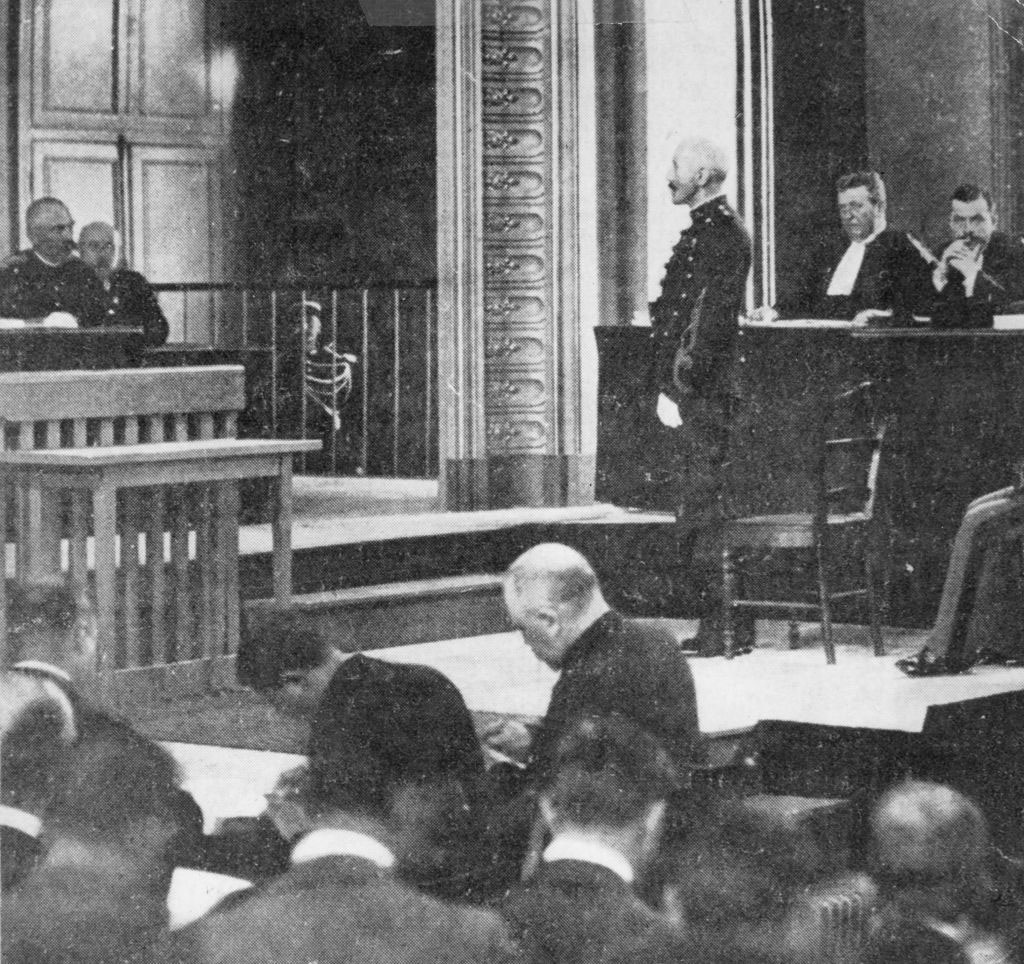
The BBC removed its description of the late Alfred Dreyfus as a “notorious Jewish spy” from their website following criticism of the matter.

On October 10, the pro-Israel media watchdog HonestReporting tweeted out a screenshot of the BBC’s description of the show “Police Paris 1900.” The description of the show read at the time, “The French Republic is in turmoil as rumors spread about the release from Devil’s Island of Dreyfus, the notorious Jewish spy.”

“Dreyfus was a Jewish officer in the French army who was baselessly accused of treason by a deeply antisemitic establishment,” HonestReporting tweeted. “After initially being convicted and humiliated, he was later exonerated of all charges.”

Joel M. Petlin, Superintendent of the Kiryas Joel School District, tweeted that “a simple Google search” would have informed the BBC about Dreyfus being wrongly convicted as a spy. “European Antisemitism is just as rabid today as it was in France in 1894.”

Writer David Hazony tweeted, “In case you have no idea why this is a big deal: The entire Zionist movement was inspired, at least in part, in response to the awful story of the slander of Dreyfus. I’ll leave the rest to your imagination.”

The BBC’s description of Dreyfus was later changed to say that he was “previously arrested for spying.” A spokesperson for the BBC told The Jerusalem Post, “The sentence was not intended as an [sic] historical statement, but to reflect the rumors towards the Dreyfus case that we see in the drama — which also depicts the rise of antisemitism.”

Anti-Defamation League CEO Jonathan Greenblatt tweeted that Dreyfus “was famously a victim of an antisemitic conspiracy theory in 1894. Glad that the @BBC corrected this false narrative.”

HonestReporting’s Emanuel Miller was less forgiving, telling the Post, “The BBC evidently feels it doesn’t owe Jews an apology, much less take serious steps to familiarize its staff with the basics of antisemitism in order to prevent such easily avoidable mishaps. Unfortunately, judging by past experience, the BBC is unlikely to apologize for the insulting mischaracterization.” Miller added in a piece for HonestReporting: “For whatever unacceptable reason, the BBC has again failed to uphold basic journalistic standards and instead nearly helped fuel the dissemination of a century-old smear. It’s time that the BBC takes antisemitism more seriously.”

Sussex Friends of Israel similarly tweeted, “They [the BBC] don’t half spell ‘sorry for our mistake’ in funny way.”

The Committee for Accuracy in Middle East Reporting and Analysis’ (CAMERA) UK affiliate noted that the Radio Times description of Dreyfus as a “notorious spy” is still on their website, although the Radio Times is not affiliated with the BBC.


BBC Removes Description of Alfred Dreyfus As “Notorious Jewish Spy” Read More »

Jewish Singles Meltdown and How to Fix It

Of all the challenges facing the Jewish community in our time, the greatest might be the declining Jewish birth rate occasioned by delayed marriage on the part of Jewish singles. By this I don’t only mean in the less observant Jewish community, where the situation is truly dire, but rather even in the Orthodox Jewish community, which normally boasts a very high birth rate.

On Simchat Torah I went to Crown Heights where I spoke at several shuls that boast large numbers of Chabad Jewish singles. Foremost among them was Chevra Ahavas Yisroel, run by Folly Tessler, and the Townhouse community run by Yankee Pearson. Both had hundreds of people.

It was an eye opener to see a Chabad singles scene. In the Chabad community, we were all raised to have strict segregation between men and women and matches were made by matchmakers. When I was in Yeshiva, the thought of going to events with Chabad girls was a non-starter.

But here’s the problem. In a community that is now absolutely colossal and global, with tens of thousands of young people who are the products, thank God, of that high birth rate, how can one expect matchmakers—most of whom are volunteers and work on commissions received for successful matches—to ever cope with the numbers?

In addition, matchmaking, in the words of a friend of mine, is a rigged system. It highlights qualities like pedigree, money, and beauty, which do not accord with Jewish values. It would be nice if we could consistently rely on holy attributes like character, refinement and goodness coming to the fore in arranged dating. Unfortunately, we can’t. The shidduchsystem, which I mostly believe in, has proven itself to be a hit or miss affair. It works for some. It doesn’t work for many.

On Simchat Torah night I spoke to more than 500 Chabad singles. It was amazing. I spoke of the three kinds of love. The first and lowest is exploitative love. It’s where you love someone in a transactional way where person gets something from the other. In dating this represents people who marry based on similar education background and future earning power. The second kind of love is selfless yet selfish at the same time. You want to give to the other but you enjoy seeing how your love them positively and how they appreciate you. But the highest form of love is utterly altruistic. It’s where you love someone and receive nothing in return. You simply celebrate the fact that the other person is, which is why, on Simchat Torah, we dance with a closed Torah. We are not celebrating the fact that the Torah enriches us intellectually or spiritually. We are simply celebrating the fact that the Torah is.

In dating, it represents our desire to devote ourselves to a soul-mate unconditionally and watch them flourish and prosper.

I admit that an Orthodox singles scene can also spill over into what sometimes looks like a secular singles scene, where outward attractiveness can get more attention than qualities that are more internal or subtle. Still, religious singles have to meet and the Orthodox Jewish community is not addressing the scale of the problem.

Still, religious singles have to meet and the Orthodox Jewish community is not addressing the scale of the problem.

The secular Jewish community has mostly addressed it through online dating, and many Orthodox singles have also gotten engaged through online apps. But while they are effective in allowing people from all over the world to meet, they present their own problems. The first is the massive scale and the variety of people you can find online. Strange as it may sound, too many choices can actually make it much harder to choose. Online dating can become its own addiction. Then there is the fact that physical attraction is going to be the most highlighted of all qualities since online dating is a visual medium.

This brings us back to the original problem.

How do we get Jewish singles to date, get serious and connect through marriage?

Judaism is not a proselytizing faith. Our numbers are dependent entirely on our birth rate.

I suggest the following.

In the same way that an organization was created to get young Jews to visit Israel (Birthright), and in the same way that there is an organization that promotes Israel in Congress (AIPAC), and in the same way there is an organization to combat antisemitism (the ADL), we likewise need a Jewish organization that is dedicated exclusively to Jewish marriage. It seems incredible that it doesn’t yet exist. Think about how every priority of the Jewish community is addressed with massive numbers of organizations, like those fighting antisemitism. Yet there isn’t one national organization designed to promote Jewish marriage, even though the absence of marriage represents an existential threat to the Jewish future.

Yes, I get it. Some, like Birthright, are hoping that Jewish singles will meet and marry when they go on trips to Israel. But it’s not the same thing. We need an organization dedicated to getting people to meet and marry.

I can envision a national organization that either arranges or provides funding for regular events around the country that will bring Jewish singles together, with special emphasis on those who wish to date not just casually but also to marry. No doubt levels of observance will factor into whom attends which events. But the general idea will be Jewish men and women who want to marry other Jewish individuals and build Jewish families.

I can envision a national organization that either arranges or provides funding for regular events around the country that will bring Jewish singles together, with special emphasis on those who wish to date not just casually but also to marry.

In last week’s Torah reading, Genesis, God Himself brings Adam and Eve together, serving as history’s first matchmaker. The Talmud says that God found it harder to make that match than He did to split the Red Sea.

Are you kidding me?

When I was studying to be a Rabbi in Yeshiva I found that statement incredulous. How hard is it to have men and women meet and marry? What’s the big deal?

But once I became the father of nine children and, more importantly, once I started writing books on sex and marriage and people came to me for dating advice and marital counseling, I began to understand just how challenging marital happiness really is.

A happy marriage is a miracle. It requires people meeting, being draw to each other, successfully dating, overcoming commitment-phobia, prioritizing each other, keeping the marriage fresh, sustaining attraction, allowing the relationship to remain primary even amid the advent of kids, and to weather all the financial and health challenges that every marriage faces. Yes, it’s a miracle that any marriage is happy.

And yet, so many, thank God, are.

But we’re also taught never to rely on miracles. The Bible is clear: “God will bless you in all the things that you do.”

It’s time for the American Jewish community, at every level of observance, to focus on getting Jewish singles married.


Rabbi Shmuley Boteach, “America’s Rabbi,” is the author of “Dating Secrets of the Ten Commandments” and “Why Can’t I Fall in Love?” Follow him on Instagram and Twitter @RabbiShmuley.

Jewish Singles Meltdown and How to Fix It Read More »

Author Says She’ll Allow New Book to be Translated to Hebrew if Publisher is “Compliant” with BDS

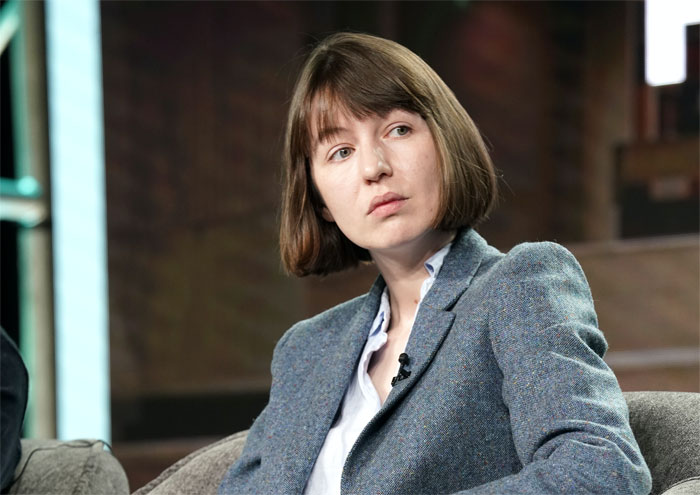
Author Sally Rooney announced in a statement on October 12 that she will allow her upcoming novel to be published in Hebrew only if a publisher is “compliant” with the Boycott, Divestment and Sanctions (BDS) movement.

Rooney came under fire after an October 11 op-ed from The Forward went viral, alleging that the author wouldn’t allow her book to be published in Hebrew, citing a report from Haaretz. Anti-Defamation League CEO Jonathan Greenblatt, the Simon Wiesenthal Center, and Stop Antisemitism all denounced Rooney on Twitter.

Jewish Telegraphic Agency reporter Ben Sales posted a statement from Rooney to Twitter saying her first two books were translated to Hebrew, but she did turn down an Israeli-based publisher’s offer to translate her upcoming book. Rooney said her reason for doing so is because Israel is an apartheid state, citing reports from Human Rights Watch and B’Tselem published earlier in the year. She then called BDS a “Palestinian-led, antiracist and nonviolent grassroots campaign” to boycott those “complicit” with Israeli apartheid.

Rooney acknowledged that “many states other than Israel are guilty of grievous human rights abuses. This was also true of South Africa during the campaign against apartheid there. In this particular case, I am responding to the call from Palestinian, including all major Palestinian trade unions and writers’ unions.”

She added that it didn’t feel “right” for her “to accept a new contract with an Israeli company that does not publicly distance itself from apartheid.” “The Hebrew-language translation rights to my new novel are still available, and if I can find a way to sell these rights that is compliant with the BDS movement’s institutional boycott guidelines, I would be very pleased to do so. In the meantime I would like to express once again my solidarity with the Palestinian people in their struggle for freedom, justice and equality.”

Some on Twitter criticized Rooney’s statement.

“Oh take a walk,” Washington Examiner Magazine Executive Editor Seth Mandel tweeted, arguing that Rooney’s statement amounted to saying “I will pull back my war on Jewish language and culture if a racist Palestinian group approves of a method to do so.”

The American Jewish Committee tweeted, “There’s nothing ‘anti-racist’ about the BDS movement. It’s a movement built on antisemitism, calling for the total elimination of Israel. Not only does Sally Rooney’s participation in the BDS movement push peace further away – it normalizes Jew-hatred.”

Richard Goldberg, senior adviser to the Foundation for Defense of Democracies think tank, also tweeted: “The cognitive dissonance that allows people to truly believe they like Jews while supporting policies that lead to Jewish demonization, death and destruction is a reminder of how it was allowed to happen in the past and how it can be allowed to happen again.”

Writer and activist Yoni Michanie tweeted that he viewed Rooney’s statement as saying, “Okay Jews, just give up your inherent right to self-determination and you’ll get to read my book.”

The anonymous Twitter account known as GnasherJew also tweeted, “Which other country does Sally Rooney boycott? I bet none. Is she going to stop writing in English because of the behaviour of the British [government]? No of course not, because she’s an antisemite.”

Jewish Voice for Peace (JVP), a pro-BDS organization, defended Rooney in a tweet. “This is not a fight about Hebrew as Rooney said herself she’d be willing to be published in Hebrew by a BDS compliant publishing house. This is about throwing sand in the wheels of Israel’s apartheid system which normalizes its abuse of Palestinians through cultural works.”

IfNotNow also tweeted, “There is no excuse for yesterday’s relentless smear campaign that deliberately twisted the facts in order to make it seem as if Sally Rooney’s legitimate political decision not to work with an Israeli publishing house was an antisemitic refusal to translate her novel into Hebrew.”

Author Says She’ll Allow New Book to be Translated to Hebrew if Publisher is “Compliant” with BDS Read More »

Now is the Moment for Action to Unite Jewish Families

The Jewish high holy holidays mark the beginning of a new year—a quintessential time to unite community and family in culture and faith. 

Sadly, holidays such as graduations, weddings, and bar and bat mitzvahs are often a painful reminder of the barriers that prevent our loved ones from being able to share special moments with family here in the United States. Current legislation before Congress aims to solve this problem. 

Bi-partisan legislation introduced this year in both the U.S. House and Senate seeks to establish a new, non-immigrant B-3 visa category to allow family of U.S. citizens and permanent residents to temporarily visit them. The Temporary Family Visitation Act (TFVA), supported by more than 20 ethnic and economic organizations, is estimated to impact between one to two million visa applicants per year—supporting efforts to strengthen both families and our nation’s economy. According to the U.S. Travel Association, in 2018 international travel spending directly supported about 1.2 million U.S. jobs and $33.7 billion in wages.

As a proud member of the nation’s vibrant Persian Jewish community, I have seen first-hand the issues created by our country’s flawed visa system. 

A new B-3 visa category will make it easier for husbands and wives, siblings, grandparents and uncles and aunts to visit family in the U.S. while at the same time dissuading visa overstays. This is extremely important to me because, as a proud member of the nation’s vibrant Persian Jewish community, I have seen first-hand the issues created by our country’s flawed visa system. 

Recently, a friend of mine made Aliya and was attempting to return to the U.S. with her Israeli partner to spend time with her family for the High Holy Days. Unsurprisingly, their trip was stalled after her partner experienced difficulty obtaining a visitor visa. 

The sad truth is that Israelis and Iranians, among others, are frequently denied visas because of the assumption that they will overstay their visa term. In fact, every year, millions of people are denied the ability to visit family in the United States because there is no visa category specifically designed to allow their travel. This forces family members of U.S. citizens and permanent residents to apply for B-2 visitor visas under the Immigration and Nationality Act (INA), which is not specific to family reunions and results in an unnecessarily high denial rate since it is presumed the applicant intends to immigrate, according to a Congressional Research Service (CRS) report.

This frustrating process has resulted in a “why bother” attitude among many. Why bother with the headache of uniting grandparents with their grandkids? Why bother with repeatedly trying to fly in aunts and uncles for weddings? Why bother with hopeless attempts to bring relatives together for the holidays? Why bother when it always ends in confusion, pain and, ultimately, disappointment? 

While the travel ban of the previous administration only complicated things further, obtaining a visa for loved ones to temporarily visit has always been a challenge. In fact, there are countless policies in existence today that unjustly target individuals traveling to the U.S. based on their ethnicity, religion and country of origin. These policies separate families and fan the flames of xenophobia and antisemitism across the country.    

TFVA is an opportunity to support a policy that welcomes inclusion and greater connectivity between Americans and their relatives abroad. It’s time we stop punishing Americans for wanting their families to come visit and break down the barriers that continue to disconnect us from those we love. 

Congress, much like our nation, is deeply divided, especially on issues involving immigration. It will take all of us to make the case for congressional leaders to come together to prioritize and advance TFVA. I am encouraged by the bill’s bipartisan sponsors—Senators Rand Paul and Richard Blumenthal and Representatives Scott Peters, Lou Correa, Stephanie Bice, Jim Himes and María Elvira Salazar—and hopeful their unity on this issue will inspire others to do the same. 

Please join me in supporting TFVA and tell your legislators today why they should too. It will take our collective voice to push this bill forward, but the opportunity to get this critical legislation across the finish line has never been greater. Now is the moment to bring our families together by passing TFVA.


Sunny Zia is the first Jewish-Iranian American woman elected official in California and a past executive board member of the Jewish Federation of Long Beach.  

Now is the Moment for Action to Unite Jewish Families Read More »

How to Make a Fall Harvest Centerpiece

I love flowers, but when fall rolls around, I actually prefer making arrangements with fresh herbs and vegetables. It’s a great way to celebrate the bounty of autumn, and the centerpiece can be deconstructed — and used for cooking — after you display it. This arrangement also makes a welcome hostess gift for all your fall gatherings.

What you’ll need:

Vase
Rubber bands
Asparagus
Raffia
Herbs
Vegetables
Wood skewers

1. Line vase with asparagus spears

Place one or two rubber bands around the middle of a vase. (I used the thick rubber band that’s used to package a bunch of asparagus.) Line the outside of the vase with asparagus spears, using the rubber band to hold them in place. Then hide the rubber band with a raffia ribbon. Instead of asparagus, you can use other long, thin vegetables like celery stalks. 

2. Fill the vase with vegetables

What you put in your arrangement really depends on what you find at the farmers market or grocer. I always use fresh herbs like rosemary and thyme because I love the texture and irresistible aroma. Kale, chard and other leafy vegetables add fullness. 

3. Use wood skewers as stems

For vegetables that don’t have a “stem,” wrap a rubber band around them and attach a wood skewer to the rubber band. The skewer then acts like the stem, which can be inserted into the vase. Radishes and green beans can be added in this way. You can also insert the skewers directly into bulkier vegetables like artichokes and bell peppers.


Jonathan Fong is the author of “Flowers That Wow” and “Parties That Wow,” and host of “Style With a Smile” on YouTube. You can see more of his do-it-yourself projects at jonathanfongstyle.com.

How to Make a Fall Harvest Centerpiece Read More »