fbpx

September 29, 2021

FDR’s Secret Plea to Hitler

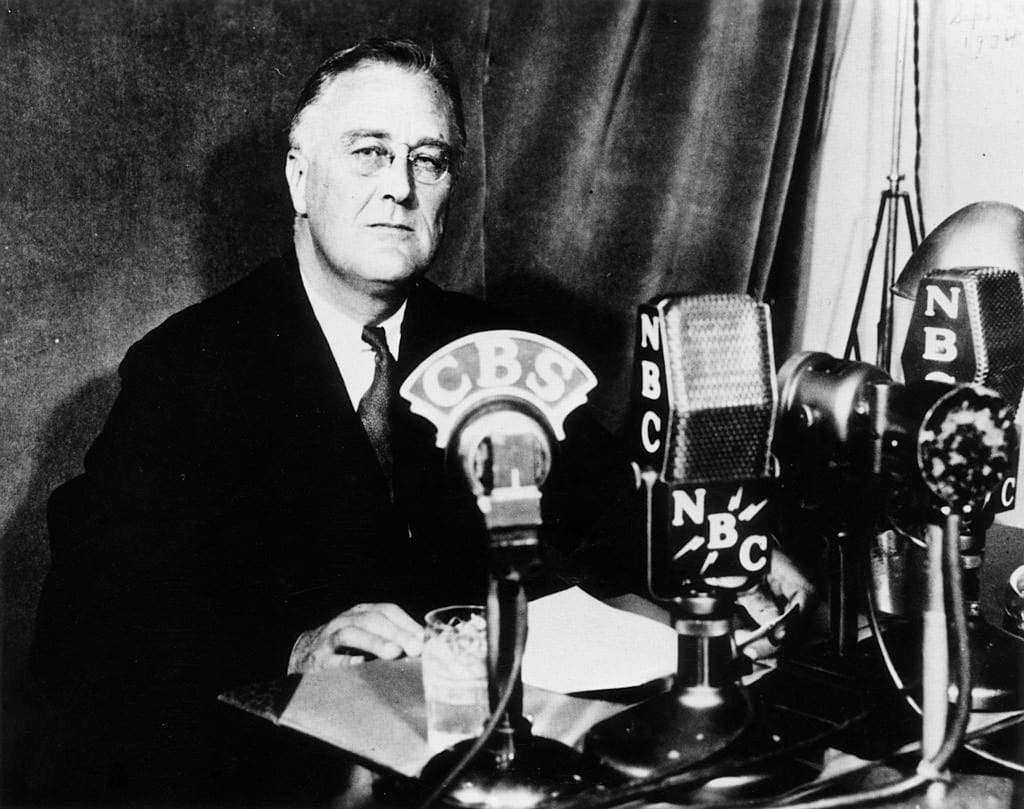
President Franklin D. Roosevelt sent a secret plea to Adolf Hitler in the summer of 1936, according to newly-uncovered documents. It wasn’t a plea to curtail Germany’s military buildup. It wasn’t a plea to Hitler to stop intervening on behalf of the fascists in the Spanish civil war. And it certainly wasn’t a protest against the brutal Nazi persecution of German Jews.

No, the issue that was so urgent to FDR that he sent a secret communication to Hitler was his request that the Führer meet with three American oil industry executives—two of them Roosevelt’s personal friends—who were on their way to Germany.

The documents about Roosevelt’s request came to light when they were recently put up for sale by a Maryland auction house. They begin with a “very urgent” message to Berlin from the German ambassador in Washington, Hans Luther, on August 21, 1936.

The ambassador reported that President Roosevelt had requested, through his senior aide Stephen Early, that Hitler grant an audience to Kenneth R. Kingsbury, president of Standard Oil of California; James A. Moffett, former head of FDR’s Federal Housing Administration and now vice president of Standard Oil of New Jersey; and Torkild Rieber, chairman of Texaco. “In view of Roosevelt’s personal interest,” Ambassador Luther wrote, “I very strongly recommend that his request should be granted.” In a second message a few days later, Luther reported that Early had again emphasized “the great importance Roosevelt attaches to Moffett being introduced to the Führer.”

Ultimately, FDR’s request ran aground because of a scheduling conflict—the oil executives were going to be in Germany during one of the busiest periods in Hitler’s schedule, the preparations for the annual Nazi Party rally in Nuremberg. But that didn’t stop the three oil executives from engaging in significant commerce with the Third Reich.

Assistant Attorney General Thurman Arnold testified to a Senate committee in 1942 that at Hitler’s request, Standard Oil had obstructed the development of synthetic rubber in the United States, and instead provided the rubber technology to the Nazis. The revelations were so damning that then-senator Harry Truman accused the oil company of “treason.”

Rieber’s Texaco, for its part, sold oil to Nazi Germany and Franco’s fascists in Spain, and had extensive dealings with Mussolini as well. At one point, the FBI questioned Rieber about his aid to Franco—which violated U.S. neutrality laws—but the Roosevelt administration let him off with a $22,000 fine. Embarrassing publicity over Rieber’s pro-Nazi leanings eventually led Texaco’s board of directors to force his resignation.

President Roosevelt’s plea to Hitler to meet with Kingsbury, Moffett and Rieber sheds light on a question with which historians have long grappled: Why did President Roosevelt refuse to say a single word in public, from 1933 until late 1938, about Hitler’s anti-Jewish policies?

The answer is that any criticism of Hitler would have undermined Roosevelts policy of maintaining good diplomatic and economic relations with Nazi Germany. FDR is remembered for leading America toward military preparedness and, later, in the war against Germany—but in the 1930s, he pursued a very different policy toward the Nazis.

FDR is remembered for leading America toward military preparedness and, later, in the war against Germany—but in the 1930s, he pursued a very different policy toward the Nazis.

Thus, President Roosevelt allowed U.S. diplomats to attend the mass Nazi Party rally in Nuremberg in 1937. His administration helped the Nazis evade American Jewrys boycott of German goods in the 1930s by permitting the Nazis to deceptively label their goods with the city or province of origin, instead of Made in Germany.” FDR also pressured Secretary of the Interior Harold Ickes to approve the sale of helium to power Germany’s Zeppelin airships (Ickes managed to obstruct the deal), and Roosevelt personally removed criticism of Nazi leaders from at least three of Ickes’ speeches in 1935 and 1938.

One of those speeches was a radio broadcast responding to the Kristallnacht pogrom in Germany in November 1938. Ickes wrote in his diary that White House aides who reviewed his draft informed him “that the President wanted us to cut out all references to Germany by name as well as references to Hitler, Goebbels, and others by name.” FDR’s own public statement criticizing the pogrom did not contain a single explicit mention of Hitler, Nazism, or even the Jews.

It was not that President Roosevelt felt any sympathy for the policies or ideology of the Nazi regime. But FDR considered the Nazi persecution of German Jews to be none of America’s concern.

It was not that President Roosevelt felt any sympathy for the policies or ideology of the Nazi regime. On the contrary, he made numerous derisive comments about Hitler and Nazism in private conversations in the 1930s. But FDR considered the Nazi persecution of German Jews to be none of America’s concern.

The president who presented himself to the public as a humanitarian and a champion of the downtrodden went out of his way to maintain good diplomatic and economic ties with the world’s most brutal violator of human rights—even to the extent of using his office to try to facilitate contacts between his oil industry friends and the Nazi leadership.


Dr. Medoff is founding director of The David S. Wyman Institute for Holocaust Studies and author of more than 20 books about Jewish history and the Holocaust.

FDR’s Secret Plea to Hitler Read More »

Iran Arrested a Popular Rapper. Anyone Care?

Let’s play a guessing game. In the past decade and a half, which of the following has Iran arrested: A team of 14 “spy squirrels” it found near a nuclear plant; two pigeons who were taken into custody and whose fate remains unknown; or a rapper whose songs criticize a 25-year agreement between Iran and China?

The answer is all three. In 2007, the squirrels were arrested “before they were able to take any action,” according to an Iranian official; one year later, Iran arrested two pigeons near the Natanz nuclear facility. And on September 13, twelve security forces arrested a popular Iranian rapper named Toomaj Salehi at his home. 

In his songs, Salehi has criticized the regime’s devastating corruption, including the Iran-China cooperation pact, which was signed between the two countries last March, and which, according to Reuters, will bring Iran into “China’s Belt and Road Initiative, a multi-trillion-dollar infrastructure scheme intended to stretch from East Asia to Europe.” In response, over 200 Iranian activists (mostly exiled) protested the pact, calling it “invalid and inhumane,” and arguing that it sells out the interests of Iranian citizens. The agreement will undoubtedly compromise Iranian workers in particular (and decimate the environment), which explains one of Salehi’s raps: “Haven’t you suffocated us enough? Haven’t you played us long enough? Haven’t you f—ed us over enough? Haven’t you robbed us enough? Now, you want to give half to China and the rest to Russia.”

As I listened to his heartbreakingly poetic lyrics in Persian, I realized that Salehi is a crucial voice for the voiceless, especially for political prisoners and the poor.

Salehi has criticized far more than the pact, particularly in newer songs such as Rat Hole and Normal Life. As I listened to his heartbreakingly poetic lyrics in Persian, I realized that Salehi is a crucial voice for the voiceless, especially for political prisoners and the poor. In “Normal Life,” he raps, “Here people are only alive. They don’t have a life. Our children sleep hungry at night. Excuse me, but how does your conscience sleep at night?”

In “Rat Hole,” he also goes after the regime: “If you saw people’s pain and closed your eyes, if you saw oppression of innocents and just walked by, if you did it out of fear or for your own gain, you’re an ally of the tyrant, a criminal just the same. Without your cover-ups, this system’s incomplete. Iran has enough prisons to hold all of you.”

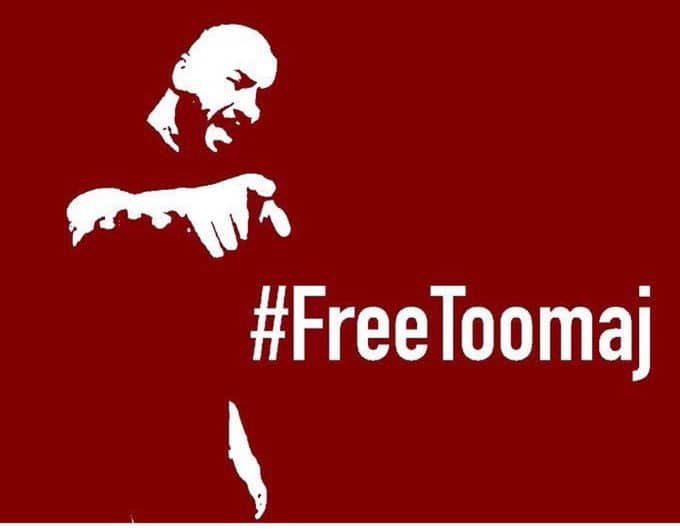
After his arrest, Iranians immediately took to social media with the hashtag, #FreeToomaj. Finally, on September 21, Salehi was released on bail (though he is currently charged with “spreading propaganda against the state”).

The arrest served as yet another harsh reminder of everything I and hundreds of millions of people take for granted in this country. Imagine an American rapper being arrested for criticizing the government. Actually, I can imagine it, at least the criticism part. At the 2017 BET Hip Hop Awards, rapper Eminem rapped a five-minute tirade against then-president Donald Trump, in which he alluded to the president as “a kamikaze that will probably cause a nuclear holocaust while the drama pops.” He then challenged Trump supporters: 

“You’re either for or against/ And if you can’t decide who you like more and you’re split on who you should stand beside/ I’ll do it for it for you with this/ F–k you. The rest of America stand up/ We love our military, and we love our country/ But we f–king hate Trump.”

Eminem joined a slew of other rappers who took aim at Trump during his administration. And what happened to all of these rapper dissidents? Nothing. Absolutely nothing, because this isn’t Iran. If you’re expecting American rappers to condemn Salehi’s arrest, don’t hold your breath. In fact, this past summer’s conflict between Israel and Hamas taught me that celebrities only morph into foreign affairs advocates and experts if there’s unresearched Israel-bashing involved. 

In the end, Iran may regret having arrested Salehi; such arrests only fuel the fire of further citizen rage. 

Yes, oppression and paranoia are never a good mix. In fact, going after a popular artist might prove nothing, if not pigeon-brained.


Tabby Refael is a Los Angeles-based writer, speaker, and civic action activist. Follow her on Twitter @RefaelTabby 

Iran Arrested a Popular Rapper. Anyone Care? Read More »

The Pious Foolishness of the Squad

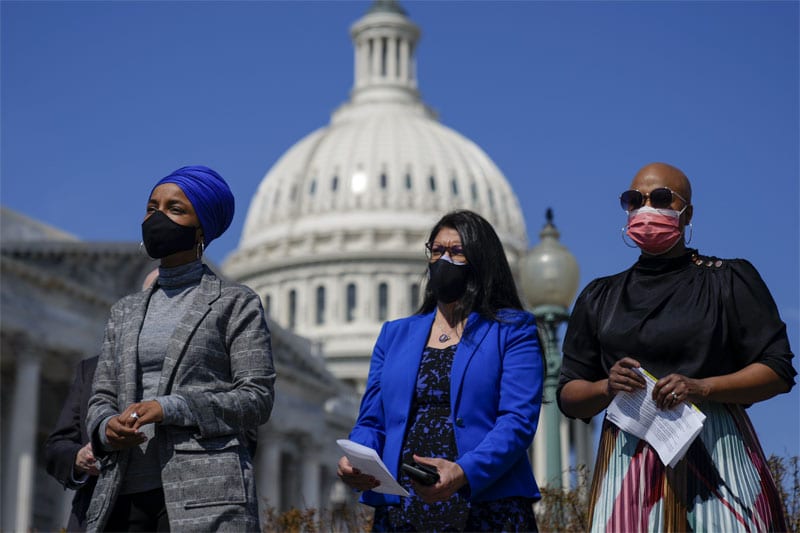
One can’t imagine why the Squad has just voted to condemn to death so many Palestinians—men, women and children. Had their action against support for the Iron Dome prevailed, the result would have done just that. One must presume that was not their intention, which was nothing short of noble: oppose Israel’s occupation and support the Palestinian cause. Bravo!

Yet their actions did just the opposite.

Let me explain.

The Iron Dome has been remarkably effective in shooting down missiles bound for Israel launched from Gaza by Hamas or even more radical forces. And because it has been effective, few missiles have landed, and fewer still have done human or material damage.

Anyone who knows anything about the Middle East understands that if missiles from Gaza were to land in Israel and hit the civilian population, political pressure within Israel would force the Israeli government—as it would any government, even the most peace seeking government—to respond by firing at targets within Gaza. Because Hamas missiles are kept in civilian neighborhoods and even at schools, hospitals and apartment houses, the result would be as it has been ever since Israel left Gaza— innocent Palestinians, as well as some who were far from innocent, killed as “collateral damage.”

Imagine how the United States would respond if missiles fired from Mexico were falling upon American citizens in Texas or California.

Anybody who has paid even minimal attention to the conflict understands that the Iron Dome prevents war; it not only preserves Israeli lives but also protects more Palestinian lives since even when Israel responds with restraint, Palestinian casualties are disproportionate to Israeli. We have seen this scenario unfold repeatedly. So much for Gaza.

In Lebanon, Hezbollah proudly proclaims that it has missiles aimed at Israeli targets. They don’t distinguish between civilians and military as they regard all Israelis as military enemies. Were missiles to be shot at Israel and hit civilians, Israel would be forced by legitimate domestic political pressure to respond. After all, the primary responsibility of a government is to protect the lives of its citizens. More Lebanese or Palestinians would be killed, and Lebanon, which is on the verge of disintegration at this time, might be pushed over the cliff.

So with the noblest of intentions—and how could anyone challenge their sense of compassion, their commitment to human rights and to the underdog Palestinians—their position, if adopted by their colleagues, would have surely brought greater loss of Palestinian lives, greater death, devastation, perhaps even another war.

We have seen that the radical right is capable or fomenting dissent and mischief but incapable of government or even articulating what goals it wants government to achieve as it dabbles in conspiracy theories and the myth of the stolen election, which is resistant to empirical evidence to the contrary even when produced by its own forces.

The Squad portrayed itself as ready for Prime Time: informed, intelligent, dedicated and, above all, serious about accomplishing its goal and implementing its agenda. Time and again, they have shown themselves capable of garnering attention but often working in a manner counterproductive to their aims. This most recent vote against continued U.S. support for the Iron Dome is yet another such instance.

If only the squad had taken the time to learn something about the Middle East. But they haven’t, and that makes them dangerous not just to the Israelis but also to the Palestinians whose cause they seemingly revere.

If only the squad had taken the time to learn something about the Middle East. But they haven’t, and that makes them dangerous not just to the Israelis but also to the Palestinians whose cause they seemingly revere.

Those of us who support—against our better judgement, I might add—the cause of peace and the end of Israeli occupation understand that Israel will never agree to compromise if it feels that its civilian population is at risk.

Save us from pious foolishness. A bit of knowledge would earn far more respect.


Michael Berenbaum is director of the Sigi Ziering Institute and a professor of Jewish Studies at American Jewish University.

The Pious Foolishness of the Squad Read More »