fbpx

September 3, 2021

London Man Arrested Over Antisemitic Assaults

A London man was arrested on September 2 over a recent spate of antisemitic assaults.

Metropolitan Police have identified the man as Abdullah Qureshi, 28. Qureshi is suspected of perpetrating five attacks against Jews over the past couple of weeks, including a 14-year-old boy and a 64-year-old man. The 64-year-old man suffered from a broken nose and foot.

He will appear in court on September 4 on four counts of racially or religiously aggravated common assault, one count of racially or religiously aggravated wounding or grievous bodily harm and one count of racially or religiously aggravated criminal damage.

The Anti-Defamation League tweeted, “After the serial attacks in London two weeks ago, police have arrested the alleged attacker. We’re glad and relieved to see the police act swiftly.”


London Mayor Sadiq Khan had condemned the attack on the 64-year-old.

“Let me be clear, racist abuse and hate crime, including anti-Semitism, have absolutely no place in our city,” he tweeted on August 23.


London Man Arrested Over Antisemitic Assaults Read More »

Thoughts Before Rosh HaShanah 2021 (coinciding with Nitzavim)

The Orchestra

Thoughts Before Rosh HaShanah 2021 (coinciding with Nitzavim)


I have two different competing thoughts as I think about the core theme of Rosh HaShana – the Sovereignty of the Divine. On one hand, I know of too much abysmal evil and suffering in the world to believe that the hand of God orchestrates history.  I believe the essence of God includes grace, love and compassion (chen, ve’chesed ve’rachamim). What we humans often do to each other is not God’s will.

Somehow, though, the hand of God shapes us.  The Divine Presence can shape our values, if we do not push that Presence away. I believe that we can experience that presence consciously. I believe we can be transformed by becoming present to the Divine. Does this Presence, however, have a role in what happens between people, to people? I am skeptical of that. I believe in free will.

I also find myself doubting my skepticism.

Certain things that happen to us, and certain people that come into our lives, make us feel that a subtle Divine spirit wafts this way and that. Gifts are given to us, gifts that we could not have imagined. Sometimes we experience the universe as being generous to us.

Sometimes we realize that we ourselves act as the generosity of the Divine.

If I put my official doubt about the hand of God in history aside for a moment and just think about my journey and the journey of those close to me, often I detect a mysterious presence pulling and pushing things in my life and in theirs. A great deal of life is dealing with the troubles we face. But now and then there are people and moments of such radiance that we feel that we have been noticed and attended to.

When Meirav and I think of how our generous supporters and members, our talented musicians, our hard-working lay leaders and staff came our way, we feel wonder. All of us at Ohr HaTorah benefit from each other’s gifts, and the gift of community we create with each other. Even in this odd time, we feel the bonds of community.

These thoughts take me far from the idea of the Sovereignty of God, a term that sounds so austere, so heavy. Yes, values must reign supreme in my life, but we are much more than values driven beings, doing our duty. We are surrounded by the souls of others. Take a moment – that person over there has a soul, a God-formed beautiful soul, encased in a life that perhaps honors the soul within and perhaps does not. Those around us are trying to find, sometimes so awkwardly, meaning and purpose, love and well-being.

Can you bear that person a gift, can the Divine presence work through you?

Knowing of the suffering of humanity has made me decide that God does not orchestrate history. There seems to be a force out there, forces in history that steamroll individuals’ search for love, justice, truth and beauty. This sickens me. I want to fight against that steamroller. My values drive me, values rooted in God. Perhaps God acts against history, through us.

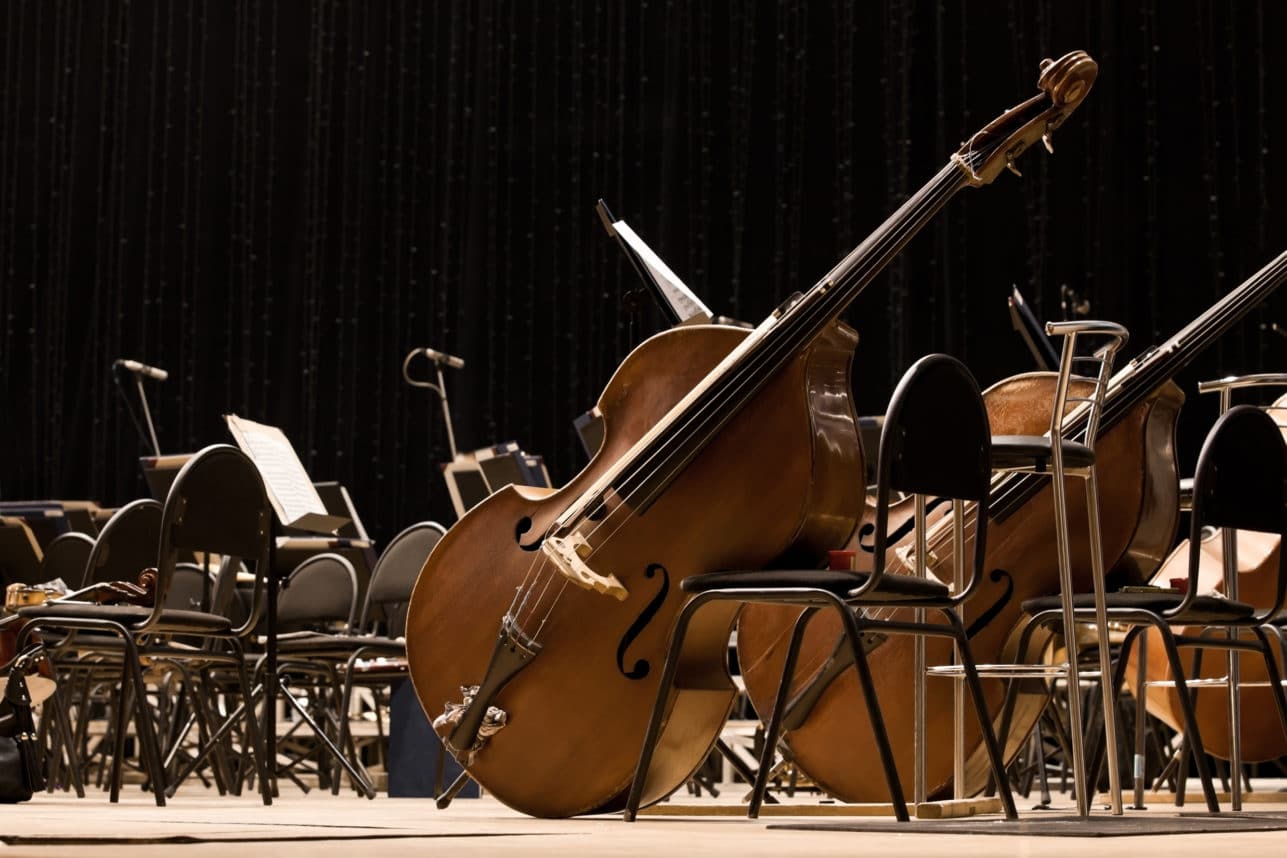
The values generated by God that drive us, however, often drive us through vistas filled with spaces, notes and chords that form a song, if we listen carefully. Now and then, we can be conscious of ourselves as being part of this divine melody, like angels singing to God. We each have our section, our harmony, our notes, our instrument to play. We search for others with whom we can make music. The brutal, destructive forces are there. But so is the music.

God does not seem to orchestrate history. But we each have a seat in an orchestra that plays divine songs of human longing. Perhaps God is attempting to direct this “midnight choir,” a choir filled with drunks and wayward souls, but a choir that now and again makes music that awes the angels into silence.

(Grateful, loving nod to Leonard Cohen.)


On this last Shabbat of the Jewish year, I look forward to a year in which we can see souls and hear melodies. The Chasidic tradition sees Rosh HaShanah as the ‘fount of transformation.’  As we are renewed by that fountain, may the song that silences the angels flow through us.

Thoughts Before Rosh HaShanah 2021 (coinciding with Nitzavim) Read More »

The Palestinian Question Remains Unaddressed in Biden-Bennett Talks

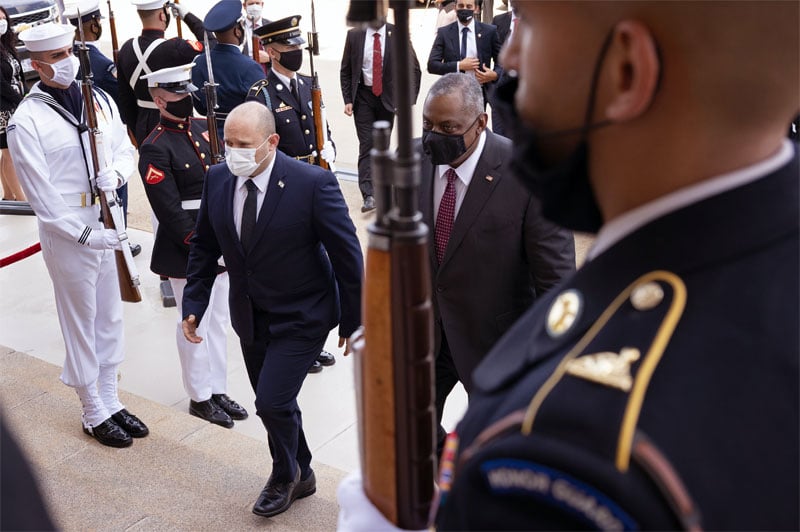
Israeli Prime Minister Naftali Bennett must be very happy with his visit to Washington and his meeting with President Biden. That Biden’s mind was elsewhere—in Kabul—doesn’t really matter. As the cliché goes, the importance of the meeting was in the fact that it happened in the first place. Gone are the days of the open rift between Benjamin Netanyahu and the Democrats; and Biden and Bennett are friends. Shouldn’t we all be happy?

Not so fast, I say. While saying all the right things about Iran and the American-Israeli bond, not a serious word was wasted on the elephant in the room (and I don’t mean the Republican ghost of Donald Trump): the Palestinian question.

That Iran poses a strategic threat to Israel goes without saying. However, their rhetoric aside, I never subscribed to the conventional wisdom that the Ayatollahs have only one thing on their minds, namely, destroying Israel. I think that they care more about hegemony in the region, and also, if they read the right military journals, they must be aware of Israel’s alleged second-strike nuclear capabilities. These people and their Revolutionary Guards, who drain the wealth of the Iranian people, are anything but suicidal.

Furthermore, there is a firm commitment of one U.S. Administration after another—including a clear re-affirmation by President Biden last week—that the United States will not tolerate a nuclear Iran. Add to this the solid Sunni coalition forged around Israel in the region, by states who fear Iran more than Israel does. And if worse comes to worst, Israel can always defend itself alone.

The threat is that if Israel keeps doing nothing, and insists on not separating from the Palestinians, the day will come when between the Jordan River and the Mediterranean Sea there will be the same number of Arabs and Jews.

The Palestinian question, on the contrary, is an immediate threat to Israel, and I don’t mean a military one. At most, the Palestinians can harass Israel like they have done many times in our joint history, but they can never defeat it by force. The threat is that if Israel keeps doing nothing, and insists on not separating from the Palestinians, the day will come when between the Jordan River and the Mediterranean Sea there will be the same number of Arabs and Jews. When this happens, Israel will have to choose whether to become a Jewish state without democracy, or a democracy without a Jewish character.

If I were President Biden, I would have asked Mr. Bennett what was his plan in countering this threat—or, challenge, if one doesn’t wish to upset one’s guest. I’m sure many Israelis would have liked to know the answer as well. Does he envision one bi-national state, where some people are not represented, and have different status from others? If not, what then?

To do justice to Bennett, he was consistent in his objection to a Palestinian state from day one, unlike Netanyahu, who lied through his teeth when he delivered his Bar-Ilan speech in 2009, when he announced his (fraudulent) support of an independent, de-militarized Palestinian state, and then went on to sabotage the idea right away.

Netanyahu is gone, for the time being at least, and this awkward government of hawks and doves is glued together by one thing only—resenting Bibi. Many Israelis, me included, pray every day for the health of this government, because we were ruled for too long by Netanyahu. The downside is that this government—because of its composition, where every small party can topple it—is focused only on internal affairs, COVID-19 first and foremost, and therefore no one wants to or can rock the boat by raising the Palestinian issue. 

In the meantime, settlements are growing, and frankly, I don’t blame the settlers: They have many kids, bless them, and they need to expand. I blame the Israeli leaderships of more than five decades and I blame us, the Israelis, who have let this happen. We shouldn’t blame it on the intransigence or incompetence of the Palestinians; we should have separated from them unilaterally. Perhaps the window of opportunity is closing as we speak. We are leaving our children and grandchildren a heavy burden.


Uri Dromi was the spokesman of the Rabin and Peres governments. Chuck Lichtman, the author of “The Last Inauguration” and “The Sword of David,” is a lawyer living in Florida. 

The Palestinian Question Remains Unaddressed in Biden-Bennett Talks Read More »

Biden Says He Visited Tree of Life Synagogue After Shooting, Synagogue Says He Didn’t

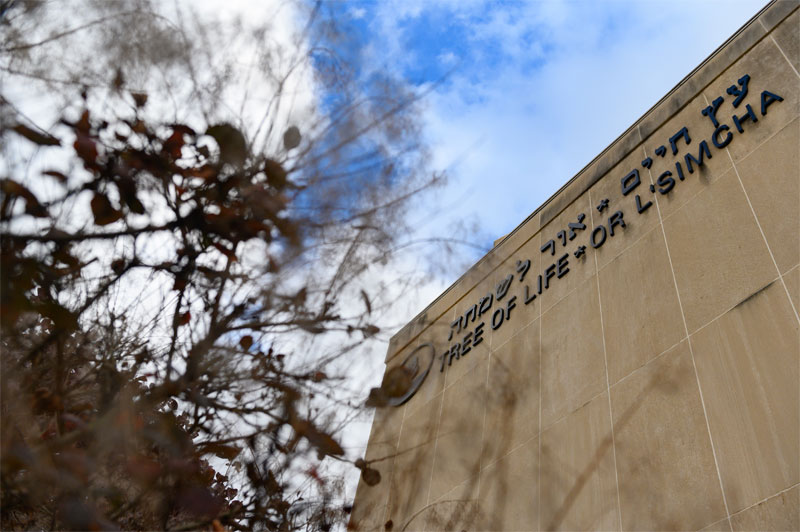
The executive director of the Tree of Life synagogue in the Pittsburgh suburb of Squirrel Hill is disputing President Joe Biden’s recent assertion that he visited the synagogue after the 2018 shooting.

The New York Post reported that Biden said during a September 2 virtual call with Jewish leaders, “I remember spending time at the, you know, going to the, you know, the Tree of Life synagogue, speaking with them.” But Barb Feige, the synagogue’s executive director, told the Post “no” when asked if Biden ever visited the synagogue since the shooting occurred.

The White House has since claimed that Biden was referring to a phone call he had with the synagogue’s rabbi, Hazzan Jeffrey Myers, in 2019. Myers told WPXI that this call did in fact take place.

“President Biden kindly called me on my cell phone as I was sitting in Dulles Airport awaiting a return flight to Pittsburgh after I testified before Congress in July 2019,” he said. “In a heartfelt way, he extended his condolences and asked how we were doing. We spoke about the challenges of antisemitism, and he made clear he would confront it with us as president. The conversation meant a great deal to me, and I will always be grateful for his kind words and continued support of our community.”

CNN fact-checking reporter Daniel Dale tweeted, “Still, Biden’s comments about ‘spending time at’ and ‘going to’ the synagogue were not true.”

Jacob Kornbluh, reporter for The Forward, tweeted: “Before Republicans jump on this Biden lie, Trump also lied — yesterday in a call with religious leaders — about ‘building’ a new US embassy in Jerusalem for $400K.”

Republican Jewish Coalition Executive Director Matt Brooks responded to Kornbluh by tweeting: “Here’s a breaking news flash for you, politicians lie! What’s not acceptable is lying by using the memories of those Jews who died at the hands of a terrorist to score political points on a Rosh Hashana call.”

Ellie Cohanim, former US Deputy Special Envoy to Monitor and Combat Antisemitism, similarly tweeted, “The U.S. President lying about something so sacred as visiting the site of the deadliest antisemitic attack in US history is NOT acceptable. Enough is enough with this man.”

Biden Says He Visited Tree of Life Synagogue After Shooting, Synagogue Says He Didn’t Read More »

Political Processes and Political Dimensions

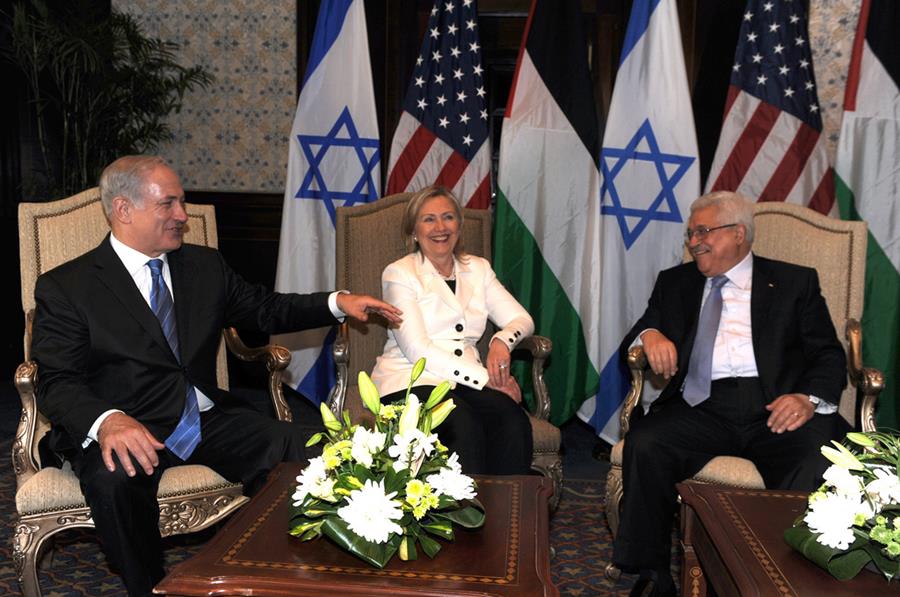
(Israel Policy Forum) — On Sunday night, Israeli Defense Minister Benny Gantz traveled to Ramallah, where he met with Palestinian President Mahmoud Abbas in the first meeting between Abbas and any Israeli minister since 2010. The next day, Prime Minister Bennett’s office issued a statement—attributed to a source close to the prime minister—that Bennett had authorized the meeting, but that it was strictly about security issues and that there is not now nor will there be a political process with the Palestinians. The meeting—both its existence and its substance —and the ways in which it was simultaneously embraced and rebuffed across the Israeli political spectrum open a window into the Israeli government’s thinking vis-à-vis the Palestinians, and also reveal the ways in which this government represents both continuity with and a break from the previous longstanding Netanyahu government.

No matter how much Bennett or Gantz insist that the meeting with Abbas and the related Israeli policy gestures draw the line at security considerations, they clearly go beyond a security scope. The inclusion of Palestinian Authority intelligence chief Majed Faraj in the meeting indicates that security coordination was on the agenda, but Gantz also brought with him offers to give the PA a half billion shekel advance on the tax revenues that Israel collects on its behalf, allow more building permits in Area C, issue another 16,000 work permits for Palestinians inside Israel, remove fees on Palestinian VAT payments, and legalize 5,000 foreign national spouses of Palestinians to give them official West Bank residency permits with a timeline to address the thousands more who remain in legal limbo. All of these measures impact security inasmuch as they improve ordinary Palestinians’ quality of life and give them fewer reasons to succumb to despair, notwithstanding that they are only the tip of the iceberg that needs to be tackled, but it strains the bounds of credulity to portray them as being solely about security.

This is an example of beginning to restore the often-derided but desperately needed political horizon that is the first step to getting the Israeli-Palestinian issue back on a more productive track. While Bennett is undoubtedly being truthful in his assertion that there will be no political process on his watch, there does need to be a political dimension in Israel’s dealings with the Palestinians, and this is an initial indication of what that can look like. Providing an advance to the PA on tax revenues so that it doesn’t collapse is first and foremost a security measure given what the security situation in the West Bank would look like absent the Palestinian Authority Security Forces. Family unification permits and streamlining VAT payments for businesses are an altogether different category, designed not only to provide the PA with some wins that allow it to assert some badly needed political credibility but to provide Palestinians with some evidence that Israel is sensitive to the constantly mounting challenges they face. These measures are all examples of shrinking the conflict but not shrinking the occupation, and if that remains the sum total of what Israel does in the years ahead, it will have done little beyond affixing a bandaid to a gaping and gushing wound. But as a first step, demonstrating a recognition of the need for a political dimension that goes beyond a strict security dimension is cautiously encouraging.

When Bennett decries a political process, he’s not wrong given the current landscape. Without the necessary work on the Palestinian side to build up the PA’s governing capacity and address its glaring democratic and accountability deficits, to rebuild and restructure Palestinian institutions that are responsive toward Palestinian needs and concerns, and to establish even a modicum of trust in Palestinian government, any political process will fail. Without the necessary work on the Israeli side to stabilize its political system after over two years of constant chaos and dysfunction, and ingrain in Israelis’ minds that the Palestinians are not going anywhere and that Israel cannot permanently occupy the West Bank unless Israelis are willing to cement into their lives for another half century the violence and instability that comes along with that, any political process will fail. That does not, however, dispose of the need to address Israeli-Palestinian issues through a prism of political steps, and the lack of a political process right now—as I’ve argued before—is creating space for moves that serve stability and the political dimensions simultaneously. Israeli domestic politics requires everyone on the Israeli side to brush aside any suggestions that the subject of the Gantz-Abbas conclave was about more than security, but that doesn’t make the denials convincing.

Israeli ministerial engagement with Abbas for the first time in more than a decade also shows where the Bennett government is in line with Binyamin Netanyahu’s policies and where it breaks from them. The repeated insistence that a political process will not even be considered, let alone started, is very much in line with what Netanyahu wrought over the course of twelve years at Balfour Street, where he did nothing to prepare Israelis for the inevitability of one day having to face the Palestinian issue head-on and not being able to keep deferring it to the end of time. On the other hand, with Bennett’s talk of shrinking the conflict and Gantz’s explicit statement following the meeting that the PA must be strengthened and that doing so is the only way to weaken Hamas, we see a genuine transition away from Netanyahu’s approach. Netanyahu wanted to portray the PA as no less problematic than Hamas in order to keep them both in place and in a weakened state, and his commitment to a weakened and barely functional PA was so complete that he in many ways gave Hamas a wider berth than he gave the PA and Abbas. Taking steps to strengthen the PA and publicly acknowledge its importance to Israel, and even treating it more like a partner than a pariah, is the opposite tack than the one taken by Netanyahu, and it hopefully signals the possibility of progress building upon progress.

It is impossible not to view this in light of Bennett’s visit to Washington and his meetings with President Biden, Tony Blinken, Lloyd Austin, and Jake Sullivan, with Gantz going to meet Abbas hours after Bennett’s plane touched back down in Tel Aviv. During the Trump years, U.S. engagement with Israel was designed to be zero sum with regard to the Palestinians, and the immediate evidence following the first Biden-Bennett meeting is that U.S. engagement under Biden is trying to avoid a false Manichean binary. If the new Israeli gestures to the Palestinians—which were undoubtedly encouraged by the U.S.—are a sign of something, it is that Biden is trying to shape a dynamic in which there is an American effort to help both sides and respond to the requests and concerns of each. The loud grumbling coming from Israeli voices who want Biden to do more on Iran and give Israel a wider berth on Palestinian issues, and the loud grumbling coming from Palestinian voices who want Biden to take a more forceful line with Israel and demand much more far-ranging steps, is not going to dissipate. But for those who were looking for the initial stages of a U.S. reset, the Gantz-Abbas meeting is a sign that it is happening.


Michael Koplow is Israel Policy Forum’s policy director, based in Washington, DC. To contact Michael, please email him at mkoplow@ipforum.org.

Political Processes and Political Dimensions Read More »

Distrito T-Mobile: Zip-line, Movies and Live Entertainment

Watch your favorite performers at Coca-Cola Music Hall at Distrito T-Mobile!

In San Juan, Puerto Rico, buy your tickets for your next concert at Coca-Cola Music Hall with all the greatest artists. We went on a behind the scenes tour to see the VIP suites and the greenroom where the artists get ready. I cannot wait to come back for a concert! The 129,000 square foot facility is OPEN and has a seating capacity of up to 5,000 guests. Jorge Pérez, General Manager of the Puerto Rico Convention Center and the Coca-Cola Music Hall, said “This world-class venue is designed to host concerts, family shows, and other events for the benefit of all visitors, that is steps away from a variety of restaurants, hotels, and other entertainment alternatives.” 


Are you ready for ADVENTURE?

Zipline from TOROVERDE Urban Park past the Sheraton, Aloft and land at the Convention Center!

“In TOROVERDE Urban Park you can choose from a variety of ziplines in which you will glide above those enjoying DISTRITO T-Mobile’s outdoor spaces, resulting in a multisensory experience that is complemented by its music, lights, and unique energy. The Sky Bull consists of three ziplines, ranging from 150 to 400 feet long, that launches at 90 feet high from the main tower and takes you all around DISTRITO T-Mobile. Then, there’s the Blazing Bull, with two ziplines at 900 and 650 feet long. In this one, you’ll glide at 120 feet high in a “Superman” position around DISTRITO T-Mobile and to the Convention Center District.

For another type of adventure, there’s rock climbing at Pico del Toro. This custom-built rock-climbing wall is the biggest in the Caribbean in a park of this nature. Even more good news: no experience is required to enjoy it, as there’s different levels of difficulty for every type of adventurer.

Another record-breaking attraction is the Bull Maze: the biggest string maze in America! Its installation consists of 40 obstacles with different difficulty levels, adapting to the physical skills of any type of adventurer. “


Where to watch the next Blockbuster MOVIE?

I love SCREEN X at Caribbean Cinemas in Distrito T-Mobile!


Caribbean Cinemas VIP at Distrito T-Mobile has laser projectors and a complete surround sound system so you will be fully immersed in your movie. I have seen 3D, 4D and 3D with 4D which I love, but I also really loved Screen X. Relax into your luxury recliner with fantastic footrests and cup holders and reserve your seat in advance.

WHAT IS ScreenX? “The world’s first multi-projection theater technology with a 270-degree panoramic view that will take you beyond the traditional frame and surround you with imagery –almost like they you are inside the film.”


See all of Our Adventures in Puerto Rico!

Distrito T-Mobile: Zip-line, Movies and Live Entertainment Read More »

Unscrolled Nitzavim: A Communal Praxis

What is the Law? What do we know of its true nature? In what ways does it act upon us, restricting or sanctioning our actions? With what authority does it direct us left or right, conducting our hearts and speaking through our lips?

In the popular conception, the Law is external. It exists somewhere as words on text – symbols abstracted from life, and yet they come to shape the very nature of life itself in all of its unabstracted physicality. The Law is ink and paper, but it regulates blood and flesh, bone and tears.

As to the question of how it does so, we look to the enforcers and the courts. It is these institutions that serve as the point of transformation. Here, we imagine, the Law goes from the realm of the theoretical to the realm of physicality. Here, the Law is set loose upon us mortals, winding its way around our limbs, restricting some movements and leaving others unfettered.

Perhaps, however, this is not what the Law really is.

And perhaps, this is not how the Law really works.

“This Commandment which I enjoin upon you this day is not too baffling for you, nor is it beyond reach,” says Moses in Parashat Nitzavim. “It is not in the heavens, that you should say, ‘Who among us can go up to the heavens and get it for us and impart it to us, that we may observe it?’ Neither is it beyond the sea…

“No, the thing is very close to you, in your mouth and in your heart, to do it.” (Deuteronomy 30:11-14).

With these words, Moses relocates the commonly assumed locus of the Law. It is not elsewhere. It is as close to you as your jugular. It is in your mouth and in your heart, and you shall know it by doing it.

With these words, Moses relocates the commonly assumed locus of the Law. It is not elsewhere. It is as close to you as your jugular. It is in your mouth and in your heart, and you shall know it by doing it.

According to Rabbi Leon Wiener Dow, the Law is a “communal religious praxis.” “The path of every individual who situates herself in the nexus of Jewish shared living,” writes Dow, “affects the whole truly, albeit diffusely.”

In other words, there is no Law outside of the Law as it is lived. It is not, as Moses reminds us, an external standard which we impose upon nature and society. It is not a grid superimposed on the world, cutting it into manageable squares. Rather, there is no separation between the Law as commanded and the Law as formulated in the diffuse, de-centered “intersubjective” web of communal doing.

If this is becoming too theoretical, allow be to bring it home. I had the very stressful privilege this week of getting to move to a new apartment in Somerville, MA, with two close friends. Beyond the normal tasks involved in a move, it was incumbent on me (as the most kosher-observant of the bunch) to kosher the kitchen.

I had never done this before. I consulted with my rabbi. I watched videos online. I bought some caustic oven cleaner along with some heat resistant gloves and goggles, and I got to work.

I scrubbed, scoured, poured boiling water. I let the oven lie fallow and ran it on 500 degrees for an hour according to the instruction that I had received. Then it was time to take care of the countertops, the sink, and the fridge. When I was finished, I stepped back and admired my work. The kitchen was kosher.

Or was it?

That night – doubt entered my mind. Had I missed something microscopic? Had I performed the order of operations incorrectly? Would some morsel of impurity end up un-koshering all of my new dishes without my knowing?

I even wondered if I should call a Chabad rabbi to come by (for a not so small “donation” fee) to re-kosher the place on my behalf. (Yes, this service exists).

My worries reveal an unspoken supposition about the nature of the Law – namely that it is an external standard that my kitchen either lived up to or failed to live up to. Most terrifying of all, I would never know for sure.

These worries continued to unsettle me until I read Parashat Nitzavim. Reading Moses’ words, I untensed my back and un-furrowed my brow. I remembered that the Law is not something beyond me, but that it is rather known in the doing.

I had koshered the kitchen in the ways instructed to me by my trusted teacher and my trusted YouTube videos. I had given my whole heart over to the spiritual task of cleaning and renewing this space for the new life me and my roommates are going to live in it.

Considering all that, it was time to put the worries away. The thing to do now was not to call in a pro-Kosherer with a blow torch, but rather to gather my roommates and announce: “It’s time to eat.”


Matthew Schultz is the author of the essay collection “What Came Before” (2020). He is a rabbinical student at Hebrew College in Newton, Massachusetts.


Unscrolled Nitzavim: A Communal Praxis Read More »