fbpx

August 30, 2021

Rashida Tlaib Calls for Israel to Release Bodies of Slain Palestinians, Doesn’t Mention Reported Terror Attempts

Representative Rashida Tlaib (D-MI) is under fire for calling for Israel to release the bodies of slain Palestinians but failing to mention that those Palestinians were killed because they attempted to commit terror.

Tlaib tweeted on August 28 a photo of the mother of a Palestinian named Mai Afana. “Mai was a mother, loving daughter & successful PhD student. She was killed by the Israeli government last June. Israel won’t release her body to her family. I am sharing Mai’s story because I began to only learn last year of this inhumane practice by the Israeli govt. Without proof, they make claims, and all to just continue to dehumanize Palestinians even after they have died. We must stand against this form of collective violence.”

She also issued a similar tweet about a Palestinian named Ahmed Erekat, linking to a Human Rights Watch article stating that Israeli authorities “killed him seemingly without justification at a checkpoint.”

Various Jewish and pro-Israel Twitter users criticized Tlaib’s tweets.

“Why aren’t you mentioning that Mai Afana tried to ram a group of Israelis with her car and then attempted to stab them before she was killed?” Israeli activist Hen Mazzig tweeted. “Why is Rashida Tlaib unable to discuss Israel without misinformation? If you can’t make your point without lying, it’s not valid.”

Joe Truzman, a research analyst for Long War Journal and Foundation for Defense of Democracies, similarly tweeted: “I’m not sure why the congresswoman fails to acknowledge Afana’s [terror] attack A U.S. government sanctioned Foreign Terrorist Organization in the #Gaza Strip published a statement acknowledging Mai Afana committed a ‘stabbing operation’ when she was killed by the IDF on June 16.” This statement was made via Telegram, Truzman wrote.

He also noted that “militants went as far as to honor [Afana] by launching incendiary-laden balloons towards southern Israel with her name written on it.”

Joel M. Petlin, Superintendent of the Kiryas Joel School District in New York, also tweeted: “I’m not sure if the 1200+ people who liked this Tweet by Congresswoman Tlaib were aware that Mai Afana wasn’t an innocent PhD student. She was killed while trying to run over & stab a female police officer. Or perhaps they do, & just like the Congresswoman, they just don’t care.”

Democratic Majority for Israel tweeted to Tlaib that they “share your concern.” “Are you equally concerned about the two Israeli bodies held hostage by Hamas for 7 years? Or live Israeli hostages—1 Ethiopian-born, 1 Israeli Arab—also held by Hamas? Instead of misleading one-sided attacks, why not work to arrange a trade?”

Sussex Friends of Israel tweeted, “The last 5 years has seen some pretty appalling MPs [Members of Parliament] obsessed with attacking Israel at any given opportunity. I dare say that none of them would sink to the level of Tlaib who totally overlooks that this woman was intent on murdering Jews. Actually, I think a couple would.”

Human rights lawyer and International Legal Forum CEO Arsen Ostrovsky took aim at Tlaib’s tweet about Erekat. “Erekat was a terrorist who tried to car ram murder Israelis. Stop whitewashing and inciting violence against Jews. Would you @RashidaTlaib do same with Taliban?”

The reported car-ramming attempt from June 2020 was caught on video; members of Erekat’s family claimed that he had simply lost control of the car and the video showed he was “unarmed and confused,” whereas pro-Israel Twitter voices argued that the video shows that Erekat purposely slowed down to give the car more space before speeding into the checkpoint.

George Mason University Law Professor David Bernstein tweeted that “Israel almost always” returns the bodies of slain Palestinian terrorists to their families “but shouldn’t. Family is upset that their precious murderer’s or attempted murderer’s body isn’t around to be given a hero’s funeral? Tough noogies.”

https://twitter.com/ProfDBernstein/status/1432109440854020100?s=20

A Twitter user known as “Claire” noted that in addition to supporting Erekat and Afana, Tlaib has also expressed support for Rasmea Odeh, who was convicted of two 1969 bombings in Jerusalem and was deported from Chicago to Jordan in 2017 after pleading guilty of failing to disclose her prior conviction when applying for United States citizenship in 2004, as well as Khalida Jarrar, who was sentenced to two years in prison in connection to a 2019 terror attack that killed Israeli girl Rina Shnerb, 17.

Avi Mayer, Managing Director of Public Affairs for the American Jewish Committee, tweeted in response to Claire, “Awfully strange behavior for a member of Congress.”

Tlaib’s office did not respond to the Journal’s request for comment.

Rashida Tlaib Calls for Israel to Release Bodies of Slain Palestinians, Doesn’t Mention Reported Terror Attempts Read More »

When a Christian Zionist Took on Jewish Anti-Zionists

With so much discussion in the Jewish community these days concerning anti-Zionism and antisemitism, it’s fascinating to recall a remarkable critique of Jewish anti-Zionists that was authored seventy years ago this summer by an American Christian Zionist.

It was written by Thomas J. Sugrue, a Catholic, who was a reporter for the New York Herald Tribune and The American Magazine and spent six months in Israel in 1948-49.

Sharing his observations of the new state in The Zionist Quarterly in the summer of 1951, Sugrue occasionally indulged in the kind of rhetoric typical of early journalistic affection for Israel— “weather-kissed kibbutzniks,” a taxi driver pointing out the hill “where Samson was born”— but mostly his essay was a heartfelt reflection on the meaning of the Jewish state and its place in the world.

Sugrue described how, upon his return to New York City after his Middle East journey, he was not surprised to encounter Christian acquaintances who hated Israel because its existence contradicted their theological belief “that the Jews are destined, because of their crime of deicide, to wander forever through the earth, homeless and wretched.”

But Sugrue was shocked to also discover, in his social and professional gatherings, Jews who were against Israel.

“The anti-Israel Jew baffled me from the moment I saw his face change and his eyes shift while I spoke enthusiastically of the social pattern of Israel and the magical serenity of the sabras,” Sugrue wrote. 

“The anti-Israel Jew baffled me from the moment I saw his face change and his eyes shift while I spoke enthusiastically of the social pattern of Israel and the magical serenity of the sabras,” Sugrue wrote. “I was acquainted with anti-Zionism of the pre-Israel type, but I could not, for the moment, adapt this attitude to the world of post-Israel Jewry. The state was a fact…[Yet] they wanted to hear bad news [about Israel], news of dangerous trends and wicked alliances…What sort of Jew was it who didn’t want to hear good news about it?”

The “pre-Israel” Jewish anti-Zionists in the United States to whom Sugrue referred fell into three categories. There were some officials of groups such as the American Jewish Committee, who opposed Zionism because they feared a Jewish state would endanger their American citizenship; and there were some Orthodox Jews who believed Jewish statehood belonged only in a future messianic era. However, in the aftermath of the Holocaust and Israel’s creation, most members of both groups shifted from anti-Zionism to acceptance of the Jewish state.

The third anti-Zionist faction, however, were the diehards. Many were connected to the American Council for Judaism, which had been created in 1942 by anti-Zionist Reform rabbis. They argued that Judaism is a religion, not a nationality, and that Jews should be scattered around the world in order to spread Judaic principles. They continued clinging to those notions in the years following Israel’s creation.

But Sugrue didn’t believe they were actually motivated by those theological principles. His conversations with anti-Zionist Jews convinced him that something else lay behind their position.

The truth, he argued, is that anti-Zionist Jews simply “long desperately for the privilege of fading into the American pattern.” Their chief concern is their fear of “irritating the latent anti-Semitism of the watching Gentiles.”

The “fallacy in the reasoning” of the “sleek and slick and well-turned-out” Jewish anti-Zionists is the assumption that rejecting Israel will enable them to escape antisemitism. What the anti-Zionist Jew needed to recognize—according to Sugrue—is that “the more he assimilates, the more he camouflages his identity, the more he imitates the 100% Americans, the more he heads straight for whatever concentration camp—heaven forfend—may in the future be set up in America.”

Sugrue was not predicting a Holocaust in the United States, but rather imagining the fate that likely would befall Jews—even Jewish anti-Zionists—in a hypothetical scenario in which extremists of either the right or the left ever were to rise to power.

“No matter what method brings the loss of our freedom, if it goes, the assimilationist Jew will suffer,” Sugrue predicted.

“No matter what method brings the loss of our freedom, if it goes, the assimilationist Jew will suffer,” Sugrue predicted. A fascist regime would persecute Jews “for living among the Gentiles and making money as they do,” while a Communist government would target even the anti-Zionist Jew “as a rich capitalist, and his Jewishness will be reason for shooting him early.”

Sugrue’s critique did not pull punches. Jewish anti-Zionists, he wrote, “are unhappy people, and they project their unhappiness into theories, prejudices and neurotic accusations.” They “need therapy, perhaps of the kind discovered by Sigmund Freud, but rather than accept this they would try to put a roadblock across the highway of history, seek to jettison a young nation, deprive the persecuted Jews of the world of an opportunity for salvation and a homeland…”

Sugrue concluded with an anecdote about a meeting he recently had with a group of Israelis who were studying at universities in the Boston area. One of the Israelis remarked, “I can always tell a Jew in this country. If I ask him what he is and he says, ‘I am an American,’ I know he is a Jew.”

“A young Israeli finds it irrational to imagine a Jew anywhere in the world who is not proud of his heritage,” Sugrue continued. “So do I, as I find it irrational to imagine a Christian not being continuously happy in the faith of which he is a part…That such a generation of Jews should have been brought into the world in the twentieth century is, by the most scrupulous standards, a miracle.”

Just two years after his essay in The Zionist Quarterly, Sugrue passed away during surgery. Although taken from this world at the young age of 45, Sugrue left behind a notable literary legacy—seven books and hundreds of articles—including the food for thought contained in his unique outsider’s view of the contemporary Jewish condition.


Dr. Rafael Medoff is founding director of The David S. Wyman Institute for Holocaust Studies and author of more than 20 books about Jewish history and the Holocaust.

When a Christian Zionist Took on Jewish Anti-Zionists Read More »

High Holiday Preparations in the Jungle

As a yeshiva student in the Old City of Jerusalem in my twenties, I learned that the month of Elul was a big deal, a twenty-nine-day period to buckle down on preparation for the imminent High Holidays. I remember the rabbis telling us that “the King is in the field,” meaning that during this season God isn’t behind palace walls, but is utterly available and present. Fast forward to 2021 when Rosh Chodesh Elul coincided with a journey to the Costa Rican jungle with my friend Nissan. 

Instead, the lessons learned in the wilderness enriched my personal holiday preparations on several fronts: engendering a deeper connection with the planet, deepening my sense of humility and creating an awareness of belonging to the greater circle of life.

One might think I escaped the civilized world to avoid introspection. Instead, the lessons learned in the wilderness enriched my personal holiday preparations on several fronts: engendering a deeper connection with the planet, deepening my sense of humility and creating an awareness of belonging to the greater circle of life. Indeed, if the “King is in the field” at this time year, emerging from the comfort zone of one’s home, office or classroom is the ticket to transcendence.

Nissan was my “little brother” in Jewish Big Brothers, a nurturing program for kids without male role models in the home. We were matched when he was eleven, after his mother enrolled him in the program. I had heard about JBB when I was doing volunteer work with the young professionals branch of the LA Jewish Federation, and signed up after seeing one of my friends pictured in a recruitment ad. I figured, if Phil could do it, then I could too! After a six-month matching process, I had a new little brother. Who would have guessed that this relationship would benefit both “big” and “little” to such a degree. We have remained in constant contact, and I’m ever grateful for my unshakeable thirty-year friendship with Nissan. I even served as the best man at his wedding and we are both unofficial members of each other’s families.

During his college days, Nissan parlayed his love for animals and the outdoors with a six-month internship at a biological research station in Corcovado National Park, Costa Rica. According to National Geographic, the rainforest setting is “the most biologically intense place on earth.” Over subsequent years, Nissan visited several times, including a trip where he proposed to his wife on a black sand beach at the jungle’s edge. When he orchestrated a trip for the two of us to spend a week at the research station, I jumped at the chance to see this dreamy locale for myself.

Other than the requisite calf high boots, I already owned much of the gear necessary for such an adventure. With several native species of venomous snakes producing litters of up to eighty snakelets at a time, Corcovado isn’t the best place to wander barefoot. Furthermore, I was told that our screened-in cabins were four hundred feet up the mountain from the mess hall, with outdoor toilets, cold showers and no electricity. Thankfully, I invested in the proper footwear; on one of our nighttime ascents we saw a juvenile Terciopelo Viper, the most dangerous of the bunch, coiled inches off our trail. Needless to say, I got pretty good at getting in and out of my new jungle boots.

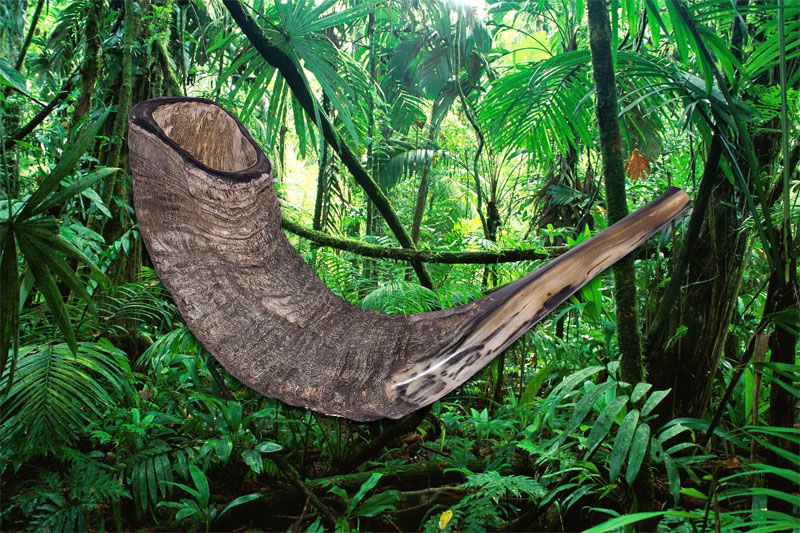
Arriving in this steamy paradise requires two days of travel. I packed my hiking gear, kosher food, siddur, tallit, tefillin and shofar and flew nonstop from LAX to San Juan, Costa Rica. I caught a four-hour shuttle ride down bumpy roads to the sleepy river town of Sierpe. Nissan had already arrived in the country; shortly after we connected, we boarded a real-life jungle cruise motorboat that raced for two hours through mangrove-lined wetland rivers and then open ocean. Since the near constant Pacific swells prevent the construction of docks along the Osa Peninsula, arrival at any of the jungle camps requires that the skilled captains wait in between sets of waves and then frantically back up their crafts to the beach. The engines are lifted out of the water as the deck hands launch into a comical dance to keep the boat perpendicular to the waves while offloading cargo and suitcases. Sometimes the timing doesn’t quite work out and sizeable waves roll in during this dramatic transfer of goods and humans; many wind up soaking wet and an unlucky few get knocked to the ground, or worse, by the bucking bronco of the twenty-passenger boat.

We were welcomed by Nancy Aitken, the septuagenarian proprietor of the research station, her two Costa Rican employees and three young research volunteers with freshly minted zoology degrees. While our bags were schlepped up the hill to our cabins, we joined the group for an orientation in the mess hall-kitchen-research center. My own frying pan was set aside to accommodate my kosher concerns; for the next week breakfast, lunch and dinner would consist of rice and black beans with variations of curried mixed vegetables grown on site. A wee bit of solar power generated just enough juice to light a few bulbs, power the refrigerator and recharge phones.

Once unpacked, I headed out with Nissan on the first of our jungle explorations. The morning sunshine had been eclipsed by low lying clouds and drizzle, forcing us to use headlamps even though it was only 3:00 p.m. This sunny morning into afternoon rain pattern would repeat daily that week. I clambered through the mud over roots and fallen trees, occasionally reaching for the “monkey ladder” vines for support. Nissan warned me not to grab for trees and vines before making a visual check; some species sport nasty two-inch palm-piercing thorns. We waded in rivers and waterfalls, marveled at acrobatic spider and capuchin monkeys in the treetops, spotted shockingly scarlet macaws, eccentric toucans and tiger herons, and tried to avoid annihilating frantic armies of leaf cutter ants sharing our trail. Nissan pointed out various animal footprints: tapir and agouti, peccary and puma frequented these same routes. By the time we completed the two-hour loop, the light drizzle had become a torrential downpour, but that didn’t stop us from enjoying the thunder and lightning show while bodysurfing head-high waves in the welcoming 85-degree ocean.

After a cold shower and a beer, we enjoyed a candlelit dinner late into the night. The resident naturalists regaled us with tales from the bush and Nancy described the travails of maintaining the property in the face of erosion, government edicts and encroaching neighbors. We were advised to keep our eyes peeled for sightings of certain rare endemic animals; we checked off a decent percentage of the key mammals, reptiles, amphibians, insects and exotic fowl, from two-inch hummingbirds to massive king vultures. I engaged the Tico (Costa Rican) hands in my best Spanish to learn of their wildlife encounters and the challenges of raising kids while being away from their families twenty-five days each month.

I prayed the Ma’ariv service and then laid wide-eyed in my bed, not sure how I would sleep among the din of kaleidoscopic cicadas, crashing waves and the occasional creature breaking branches in the dense flora.

Finally, Nissan and I climbed the few hundred muddy steps up to our primitive cabins. In a clearing we searched for Perseid meteors and the sliver of the new Elul moon in the few gaps in the cloud cover. I prayed the Ma’ariv service and then laid wide-eyed in my bed, not sure how I would sleep among the din of kaleidoscopic cicadas, crashing waves and the occasional creature breaking branches in the dense flora. The gift of a melatonin pill, an ear plug and a book on jungle ecology soothed my jitters and sent me into an exotic dreamland until the light of dawn flooded the cabin.

Each day brought a bevy of new species sightings and a greater understanding of the topography of this rare swath of undisturbed primary forest. I also gathered a collection of wounds from river-crossing mishaps, expansive insect bites and shin-meets-boat dings. Iodine and Neosporin saved the day. I loved getting on the trail shortly after sunrise; we would laugh at how much ground we could cover before noon. One day we snorkeled the northern bay of Caño Island, just fifteen miles off the coast of our camp. We saw vast schools of iridescent tropical reef fish and chased stingrays and giant sea turtles. On the return trip we enjoyed the gift of a half-hour visit with a mother-and-child pair of humpback whales.

The ultimate hike took us a dozen miles into the national park with a professional guide. Elia grew up in the rainforest, and upon hearing any animal’s cry could immediately identify the species, gender and age. Without complaint, this five-foot-tall powerhouse carried a large pack with extra water and first-aid gear as well as a tripod and telescope. Anytime she heard a distinctive sound she would scan the horizon, focus her scope and invite us to gander at the prize. Sometimes it was an eagle atop a tree a half mile away, a troop of reclusive howler monkeys or a tapir grazing in a nearby clearing. I made a mental note of the immense value of seeking expert guidance. Our journey terminated in a turquoise pool at the base of a thundering waterfall. We paused to allow the roar to overwhelm our senses and then leaped into the crystal clear water just below, watching for the crocodiles that favor this tributary.

I recognized my humble station in this grand circle of life: I am a member of a vulnerable species that is rendered defenseless in such a wilderness.

I’m still sorting through the takeaways from such an immersion into God’s great earth. The jungle’s stunning chromatic richness and sustainable ecological perfection illustrates for me the awesome imagination, foresight and humor of our Creator-in-chief. My soul was overwhelmed by a continuous succession of OMG moments. I recognized my humble station in the grand circle of life: I am a member of a vulnerable species that could easily become food for the jungle’s inhabitants. Only with the gift of our intuitive soul are we able to engineer the food, clothing and shelter to permit survival in an environment so formidable. Each morning of the trip I concluded my prayers with a blast on the shofar, my human expression harmonizing with the din of the creatures of the wild. I emerged from the wilderness feeling utter gratitude for my portion, hoping for the gift of another year to engage in breathless adventure as well as the opportunity to return to my nurturing wife and L.A. life.

Jews tend toward city living, often in a ghetto of our own construct. The High Holidays require getting out of the box, out of our routine and into a place of godly focus. Entering the jungle released me from my Los Angeles stupor, forcing me to face the demands of my soul and maximize the opportunities of each precious moment of life. It ignited a wellspring of feelings of stewardship for the preservation of the world’s sacred, untouched spaces so that my offspring can also marvel at God’s unfiltered creation. Most importantly, my rendezvous with the “King in the field” offered a simple, matter-of-fact awareness of God’s majestic presence. With this renewed attitude of gratitude, I enter the High Holidays hungry for blessings for a year of health and happiness, sustenance and splendor. Dear God, just as You provide for the needs of all the creatures in your forests, so, too, may You provide for all of humankind to live in peace, health and prosperity. And bring me back to the jungle soon! Shana tova unmetuka.


Sam Glaser is a performer, composer, producer and author in Los Angeles. He has released 25 albums of his music, he produces music for various media in his Glaser Musicworks recording studio and his book The Joy of Judaism is an Amazon best seller. Visit him online at www.samglaser.com.

High Holiday Preparations in the Jungle Read More »

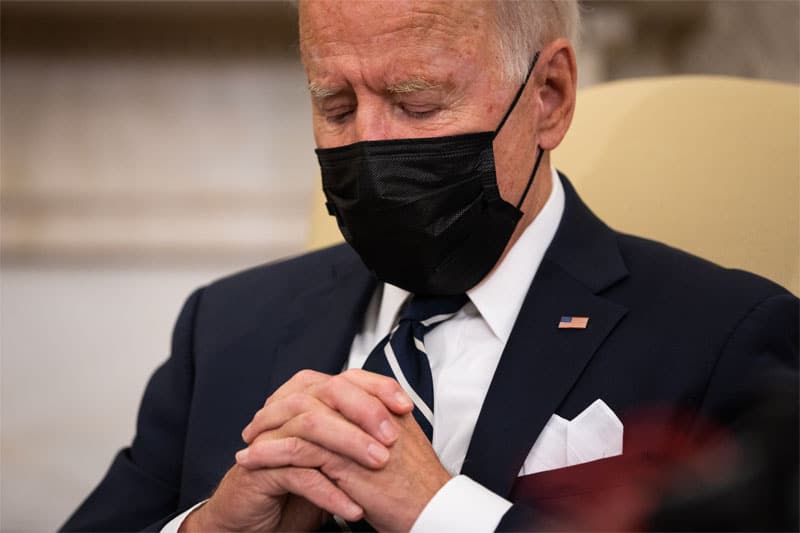
Joe Biden’s Jimmy Carter Moment

Joe Biden’s Jimmy Carter Moment

Never in my life have I witnessed American soldiers die the way 13 Marines and service members did last Thursday. Throughout the day we heard that an attack was coming. American intelligence was warning it. British intelligence was warning it. So what was President Biden doing leading our soldiers like lambs to the slaughter?

Oh, you say. But he agreed with the Taliban to secure the airport, a claim that would be laughable if it weren’t so tragic. Yes, President Biden left our Marines’ security in the hands of those who have been hell-bent on murdering them for 30 years.

There are so many things the most powerful man on earth could have done to keep our Marines and service members alive. Knowing that the threat was very credible, he could have simply halted all airlifts until the ISIS terrorists had been identified, and found and delayed the American pullout a few more days to compensate for lost time. He could have sent more troops to secure the airport. Above all else, he could have held on to Bagram Air Base, which was substantially more secure than the airport, and conducted the refugee airlift from there.

But Biden betrayed his role as Commander-in-Chief by making an arbitrary pull-out deadline more important than the lives of the troops under his command.

But Biden betrayed his role as Commander-in-Chief by making an arbitrary pull-out deadline more important than the lives of the troops under his command. And the irresponsibility of having closed Bagram is nearly unforgivable.

It bothers me so much to see that the needless deaths of these 11 men and two women, nearly all of whom were in their twenties, made it only to a single news cycle. By Friday we were already talking about Biden’s “retaliation,” a single drone strike that killed two ISIS-K terrorists who may or may not have been involved in planning the attack.

Prior to the Afghanistan debacle, I actually thought President Biden was doing a decent job as President. Yes, he was spending way more money than America could reasonably afford, and yes, his economic giveaways were making it hard for employers to find workers given that government subsidies were at times more than people would make in decent paying jobs. But for all that, Biden came across as a decent man, committed to his family and the American people, who was dedicated to bringing America back from the pandemic and making sure that Americans got vaccinated so we could fully re-open the economy.

But it’s hard to see how his Presidency recovers from the Afghanistan debacle. It’s also hard to see how the military will ever again trust his judgment.

Weakness is fatal in a leader, especially when confronting terrorists.

Weakness is fatal in a leader, especially when confronting terrorists. Even Ariel Sharon, widely acknowledged to be Israel’s greatest ever fighter, never recovered from his Gaza fiasco when he turned over the strip to the Hamas terrorists who have been firing rockets at Israeli cities ever since. Even before Sharon had his catastrophic and tragic stroke while he was in office, his reputation lay in tatters.

And it has never recovered.

The same is true, of course, of Jimmy Carter, whom America first embraced as the civil antidote to the insanity of the Nixon and Watergate years only to watch him crumble in the face of the Iranian Mullah onslaught. A bunch of terrorists took our embassy and its employees hostage and guessed correctly that the hapless Carter would be paralyzed as a result. Yes, he launched a military operation to free them, but it seemed doomed from the start and led to the deaths of another eight American military heroes.

Every summer I try to take my children to Revolutionary and Civil war battlefields. This year we went to Gettysburg, Richmond, and Yorktown. The great heroes of both wars were those who demonstrated unshakable resolve in the face of unsurmountable obstacles. George Washington led a freezing, shoeless army against the world’s greatest superpower, and he cornered British General Charles Cornwallis in Yorktown and accepted his surrender on October 19, 1781.

Abraham Lincoln, our greatest President, showed steely resolve to defeat the Confederacy and emancipate the slaves against the backdrop of years of Union defeats at the hands of Robert E. Lee, who even today should be rightly regarded as a traitor to the United States and his legacy treated accordingly. And General Ulysses S. Grant, who was dismissed as a drunkard and a failed businessman, hammered away at Lee and the Army of Northern Virginia until Lee’s surrender at Appomattox Court House in April, 1865.

As for the northern Generals like George McClellan who hemmed and hawed, halted and pondered and found endless reasons not to fight, their reputations have been consigned to the dustbin of military history. Lincoln himself said of McClellan, “he has the slows.”

It appears that Biden too has the slows. Yes, I know, I know. Trump negotiated the peace agreement with the Taliban terrorists. But ask yourself if the Taliban would ever have attempted to break the peace agreement and take over the entire country, including all of America’s military equipment, if Trump had still been President?

I suspect that even Trump’s worst detractors would concede that the Taliban would have regarded Trump as crazy enough to do something drastic.

But not Biden who seems incapable of bold and ferocious action.

America’s warriors under Biden have been reduced to what British ITV Senior International Correspondent John Irvine accurately described as “seething humiliation.” His words, written right after his departure from Kabul, bear repeating: “The dividing line between Taliban-held Kabul and the American-held part of the airport was a roll of concertina wire. At that divide stood a line of armed Taliban now wearing Western army combat fatigues. Just feet from them were soldiers from the 82nd Airborne Division, one of the US Army’s most storied units. The look on the Americans’ faces was one I hadn’t seen before. It was seething humiliation.”

It’s quite an accomplishment to take the strongest nation on earth and reduce us to begging women-beating terrorists to protect our vaunted soldiers while we try to rescue terrified civilians. It is an altogether different accomplishment to reduce the warriors themselves to a group of humiliated, and then murdered, targets.

I shudder from my country when I watch this abasement. I shudder for our troops when I consider how they have been treated as cannon fodder. And I shudder for the world when I consider the implications of how America has been brought so low.


Rabbi Shmuley Boteach, “America’s Rabbi,” is the best-selling author most recently of “Holocaust Holiday: One Family’s Descent Into Genocide Memory Hell.” Follow him on Instagram and Twitter @RabbiShmuley.

Joe Biden’s Jimmy Carter Moment Read More »

Viva Puerto Rico: Niver’s News: Aug 2021

Aug News 2021 with Lisa Niver & We Said Go Travel:

Thank you to Discover Puerto Rico, Distrito T-Mobile, T-Mobile and Ketchum for inviting me to the grand opening party in San Juan Puerto Rico on August 14, 2021. See all the videos from our adventures here.

Are you looking for a sun-kissed Caribbean paradise with hundreds of years of history, fantastic food, beautiful beaches, majestic mountains, marvelous music and non-stop fun, La Isla del Encanto is the place for you.

I have visited Puerto Rico many times and sailed out of old San Juan for an entire Caribbean season when I worked for Royal Caribbean International.

Puerto Rico has one of the highest vaccination rates in the Americas, uses the US dollar and is a direct domestic flight from many parts of the USA.

You can walk from the 500 year-old UNESCO forts of Castillo de San Cristóbal and Castillo de San Cristóbal in old San Juan to the newest entertainment hub which is Puerto Rico’s L.A. Live called Distrito T-Mobile. See you in Puerto Rico!

Did you know that Puerto Rico is a domestic flight away from Los Angeles, you can use your same phone plan, US dollars and, of course, there is no passport required! See you in San Juan!

READ MY ARTICLES ABOUT OUR ADVENTURES:

  • COMING SOON:
  • What to DO: Zip-line, Movies and Live Entertainment
  • Puerto Rico: Our Perfect Day Out at Frutos del Guacabo, the Beach and Bacardi Mixology Class!

I shared two articles on We Said Go Travel and The Jewish Journal to help the women and journalists of Afghanistan. If you know of more resources I can add and share, please let me know.

AFGHANISTAN JOURNALISTS: How You Can Help

HOW TO HELP: The Women of Afghanistan

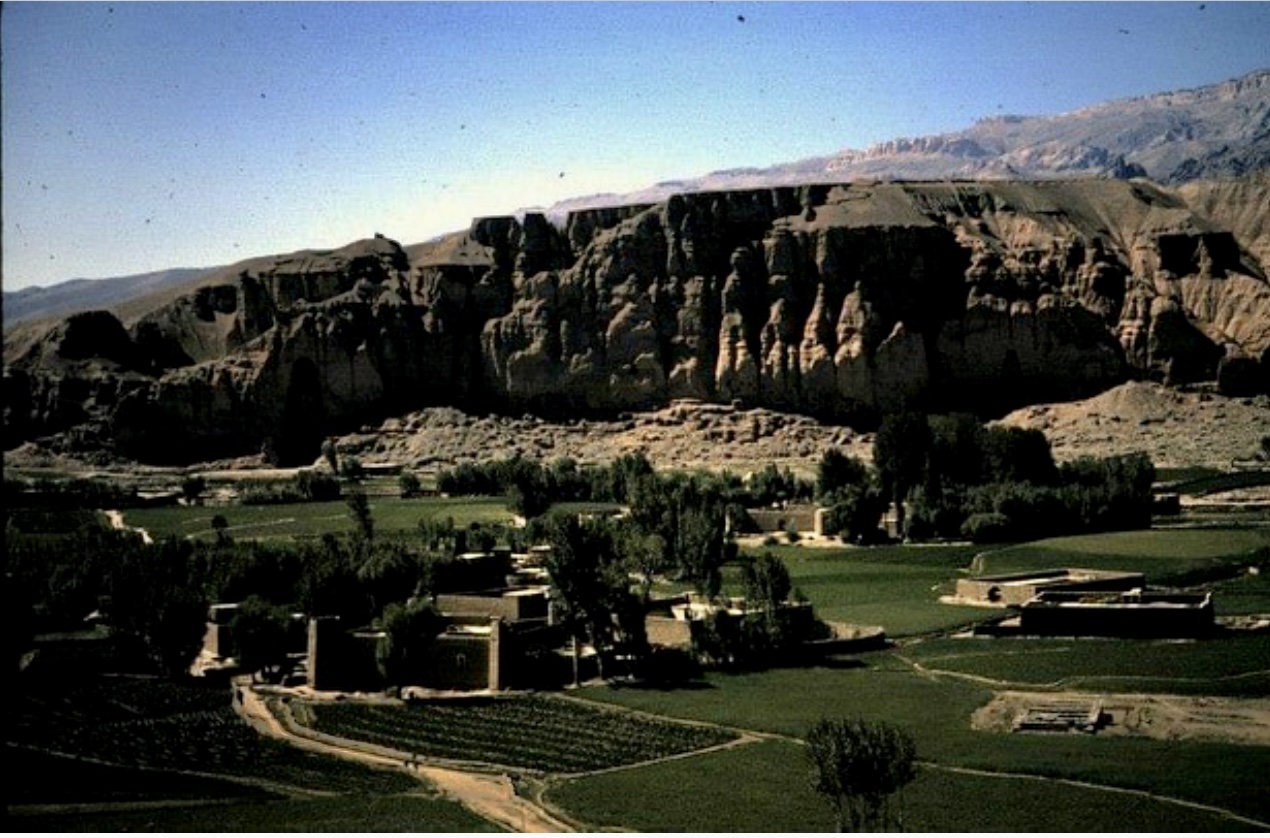
Photo from Susan B Kason Family archives Afghanistan

I love the Hollywood Bowl and went to The Princess Bride in concert. I was so happy that the Bowl was open. It is truly a treasure of Los Angeles to be able to enjoy world class music in this outdoor amphitheater with friends.

The Hollywood Museum reopened this month. The first ever Back to the Future Trilogy exhibit is waiting for YOU!

Thank you to KATED TRAVEL for highlighting my interview in Unorthodox Travel:

This link will take you to ALL SEVENTEEN of my new videos from PUERTO RICO: CLICK HERE to watch!

FROM FOHR: “Your hard work has officially paid off. Congrats! You’re a top influencer for Marriott International Hotels for the month of July! Here’s what that means: we track over 4,500 brands to see which influencers are giving each of them the most coverage on Instagram. Then, we organize the list of influencers by the number of impressions (number of followers x number of posts) they dedicate to those brands over a given month.


WHERE CAN YOU FIND MY TRAVEL VIDEOS?

Here is the link to my video channel on YouTube where I have over 1.36 million views on YouTube! (Exact count: 1,364,866 views) Thank you for your support! Are you one of my 3,173 subscribers? I hope you will join me and subscribe! For more We Said Go Travel articles, TV segments, videos and social media: CLICK HERE Find me on social media with over 150,000 followers. Please follow  on Twitter at @LisaNiver, Instagram @LisaNiver and on FacebookPinterestYouTube, and at LisaNiver.com.

My fortune cookies said:

There will always be delightful mysteries in your life.”

“Big things are in store for you in the coming year!”

Happy End of Summer, Labor Day and High Holy Days! Lisa

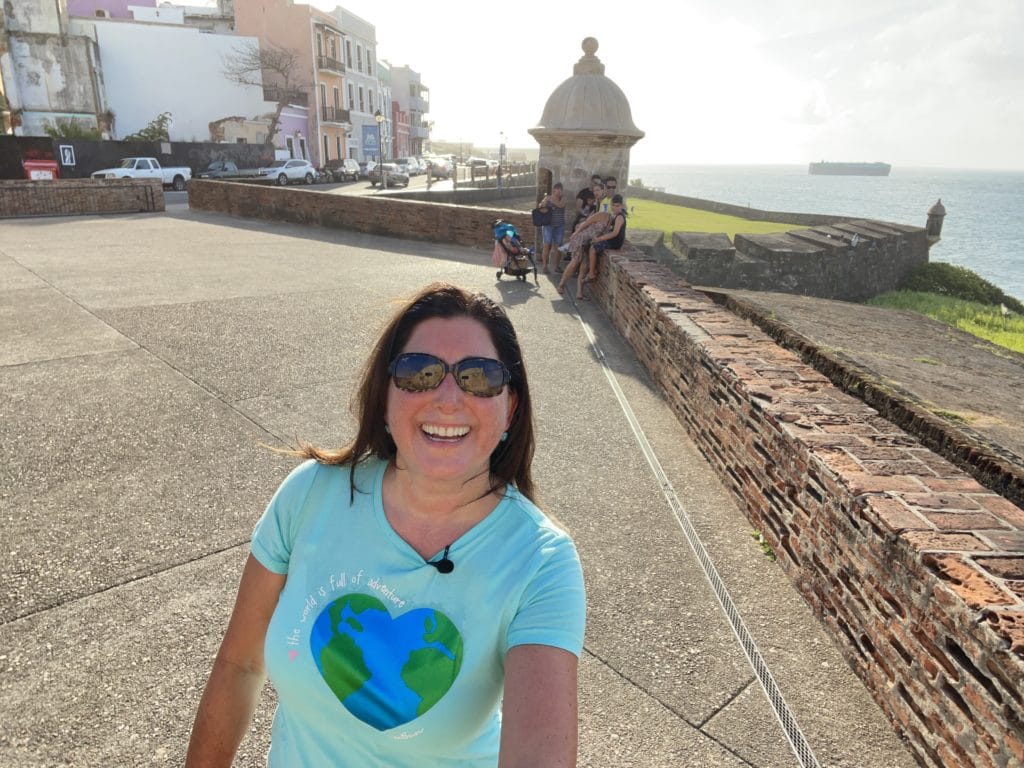
Lisa Niver at the beach in Puerto RIco, Aug 12, 2021

Viva Puerto Rico: Niver’s News: Aug 2021 Read More »