fbpx

August 27, 2021

Biden, Bennett Become ‘Fast Friends’ in Meetings Focused on Regional Security Threats

After a number of delays as a result of Thursday’s terrorist attacks in Kabul, Afghanistan, Israeli Prime Minister Naftali Bennett and U.S. President Joe Biden managed to sit for two meetings at the White House on Friday morning.

The first one started at 11:06 a.m., when the two leaders got to know each other for the first time, followed by a brief address to the media in the Oval Office just short of an hour later before starting another, expanded bilateral meeting where the pair was joined by members of their staff.

Biden said they spoke about a number of issues and connected over their familiarity of the Amtrak train system between New York and Biden’s home city of Wilmington, Del., which Bennett used to frequent during his time as a businessman in the United States.

The two men had spoken on the phone the previous day after their original meeting was canceled, with Bennett expressing his condolences for the 13 U.S. military personnel who died in the attack, in addition to the 18 who were wounded.

Sitting across from each other in front of the Oval Office fireplace, Biden first told the media about his morning meetings with his national security team on Afghanistan, which was the primary interest of the domestic media.

Biden then said that he and Bennett had already become fast friends after their meeting.

He said that they talked about the ongoing coronavirus pandemic, as well as vaccination booster shots, which Israel has begun providing for its citizens aged 60 years and older, or who have certain immune or other medical issues. Biden said the United States will likely start to offer the same as early as Sept. 20, pending approval by the Food and Drug Administration and the Centers for Disease Control and Prevention.

He also reiterated America’s firm commitment to Israel’s security, including his support for replenishing Israel’s supply of Iron Dome interceptor missiles.
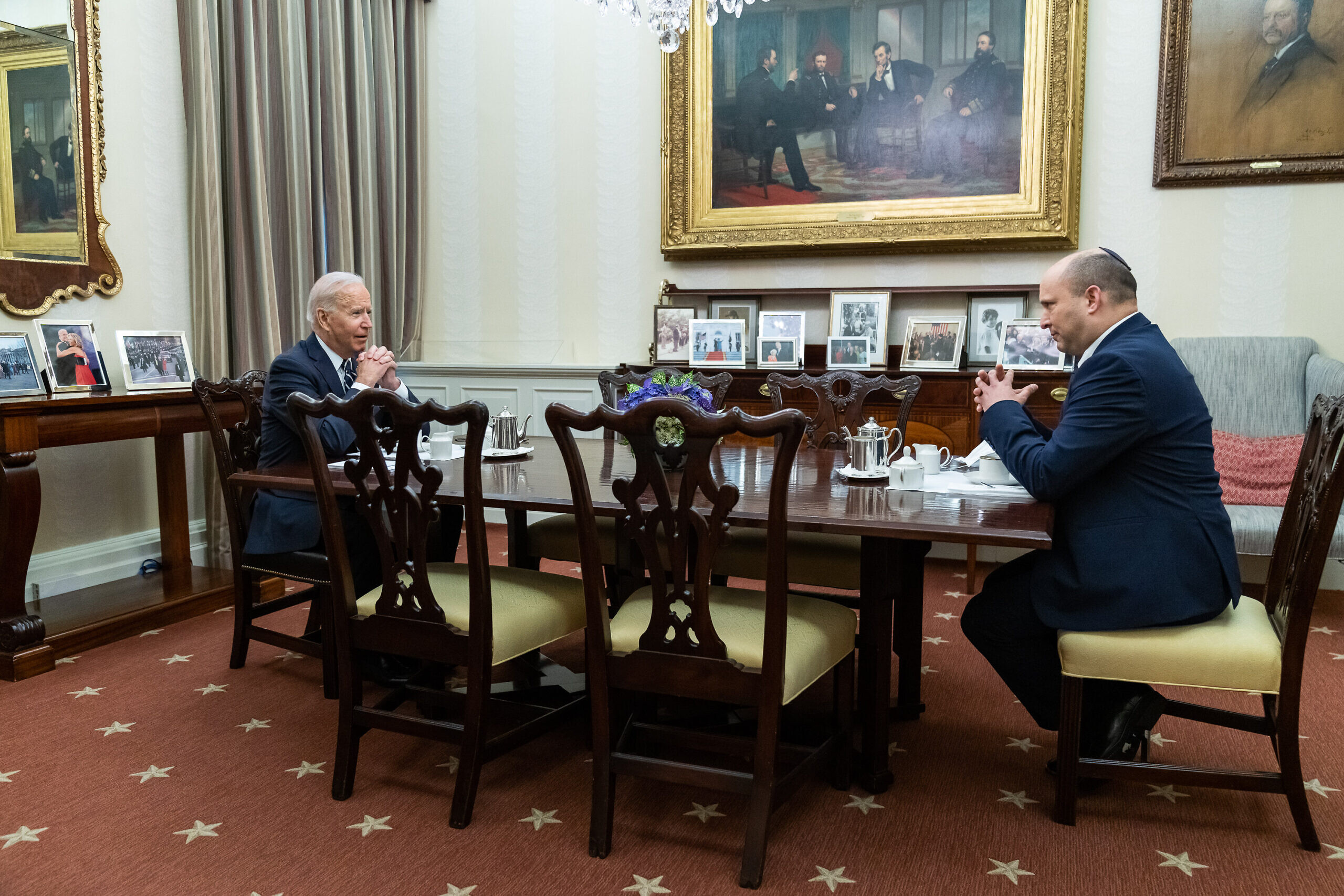
U.S. President Joe Biden with Israeli Prime Minister Naftali Bennett in the Roosevelt Room at the White House, Aug. 27, 2021. Source: Embassy of Israel/Twitter.

‘Work together to build a better future

The conversation invariably turned to Iran with Biden saying that Washington is committed to preventing Tehran from obtaining a nuclear weapon, despite ongoing efforts to bring Iran back into compliance under the 2015 nuclear deal, officially the Joint Comprehensive Plan of Action (JCPOA).

“We’re putting diplomacy first and seeing where that takes us,” said Biden. “But if diplomacy fails, we’re ready to turn to other options.”

Additional topics of discussion, said the president, included how to expand developing ties between Israel and its Arab neighbors, which got a major jump-start with last year’s Abraham Accords; how to advance peace between Israelis and Palestinians; and helping Israel fulfill the requirements to be added to the Visa Waiver Program.

“Mr. Prime Minister, I want to thank you again for coming. The U.S. will always be there for Israel,” Biden told Bennett. “It’s an unshakable partnership between our two nations, and I have known every Israeli prime minister since Golda Meir—gotten to know them fairly well—and I look forward to us establishing a strong personal relationship.”

Bennett then addressed the president in English, again repeating his condolences to the United States on behalf of the Israeli people.

“The American service members lost their lives while on a mission to save other people’s lives, and that’s the very definition of courage and sacrifice. May they rest in peace,” said Bennett. “Especially on this day, I want to be crystal-clear: Israel always stands together with the United States of America unequivocally. I also want to thank you for your warm words now in our private meeting, which attests to your support of the State of Israel, but that’s not new. It’s been decades, and you’ve always stood up for us, especially during tough times like a few months ago, when thousands of rockets were being shot on Israeli towns and cities. And that’s when friendship is really tested.”

Bennett said that he comes from Israel’s capital, Jerusalem, with a new spirit of goodwill, hope, decency, honesty, unity and bipartisanship, reflected in his governing coalition that is made up of multiple, often opposing parties.

“Yet we all share the deep passion to work together to build a better future for Israel,” he said.

Bennett outlined some of the challenges faced by the Jewish state, which he said is bordered by the terror groups ISIS, Hamas and Palestinian Islamic Jihad on its southern border, Hezbollah on its northern border and Iranian-backed militias all around it.

“And all of them want to kill us—kill Israelis. They all want to annihilate the Jewish state,” he said. “And that’s why Israel always has to be overwhelmingly stronger than any of our enemies, and indeed, of all our enemies combined.”

Along those lines, he thanked Biden for supporting Israel’s Qualitative Military Edge.

As far as Iran goes, Bennett said he was happy to hear Biden say it will never acquire a nuclear weapon, mentioning that there are other options to stop Iran if the diplomatic option the United States supports does not work.

“We’ve developed a comprehensive strategy that we’re going to be talking about with two goals. The first goal is to stop Iran on its regional aggression and start rolling it back into the box. And the second is to permanently keep Iran away from ever being able to break out a nuclear weapon,” he said, though he did not detail how this will be accomplished during the press availability.

Bennett then talked about Israel’s success in giving a COVID booster to its citizens, which began a month ago. So far, almost 3 million Israelis have received a third shot.

“The bottom line is its safe, and it works,” he said. “The good news, finally, is that the tide is turning in Israel.”

‘Ancient Jewish prophecy is Israel reality’

He ended the meeting by citing part of a Haftarah from the prophet Isaiah—first in Hebrew and then translated into English—, that will be read over Shabbat.

“What this means is, the sons and daughters of the Jewish people are going to come back to our land, are going to nurse our ancient land and rebuild it,” said Bennett. “And this ancient Jewish prophecy is today’s Israel reality. And it’s a miracle that you’ve been so central and so part of it for so many years.”

The two leaders did not answer any questions from the press, who were ushered out prior to the beginning of the expanded bilateral meeting.

Bennett was joined in the expanded bilateral meeting by National Security Advisor Eyal Hulata; Israeli Ambassador to the United Nations Gilad Erdan; senior advisor to the prime minister Shimrit Meir; military secretary to the prime minister Major Gen. Avil Gil; the prime minister’s chief of staff Tal Gan-Zvi; and his cabinet secretary Shalom Shlomo.

The president was joined by U.S. Secretary of State Antony Blinken; National Security Advisor Jake Sullivan; U.S. Ambassador to the United Nations Linda Thomas-Greenfield; Brett McGurk,  deputy assistant to the president and coordinator for the Middle East and North Africa on the National Security Council; Barbara Leaf, special assistant to the president and senior director for the Middle East and North Africa on the National Security Council; and Michael Ratney, chargé d’affaires of the U.S. embassy in Israel.

Biden, Bennett Become ‘Fast Friends’ in Meetings Focused on Regional Security Threats Read More »

We May Not All Agree, But Democracy Needs Every Voice

There are a lot of people in this country who vote in ways with which I strongly disagree. When their choices enrage me, I understand the temptation to want to silence those voices. But fortunately, my Jewish practice puts the brakes on that notion, reminding me that as messy as it is, democracy is absolutely fundamental. People must have a say in their government, for as Rav Yitzhak teaches in the Talmud, “one may only appoint a leader over a community if one consults with the community and they agree to the appointment” (Berakhot 55a).

And as much as I might grumble to admit it, every single voice in the community is necessary. As I turn through the pages of Mekhilta d’Rabbi Yishmael, I learn that we could not receive the Divine revelation of Torah “if even one person was missing” from Mount Sinai. A people can grow and thrive only when no one is left out.

But the temptation to exclude those with whom we disagree is very strong. Right now, politicians across the country are passing a slew of anti-voter bills, 30 new laws in 18 states this year. They’re taking away early voting options on nights and weekends to make it harder for working people to have a say. They’re restricting the types of IDs folks can use to vote, which is especially hard for older Americans who don’t drive. They’re forcing people who vote by mail to pay money to a notary or have someone else watch them, threatening the privacy of our political choices. This makes it particularly hard for college students who are trying desperately to vote for the first time. They’re removing options to vote on Sunday, a direct attack on the time-honored “Souls to the Polls” tradition of many Black churches.

I’m adamant about having safe and accessible elections, with a transparent process we can trust. But some places refuse to adopt paper ballots, so it’s hard to conduct an accurate recount. And some won’t give the public reasonable notice to changes in voting laws, enacting new restrictions in the dead of night. And quite often they remove some of us from the rolls or toss out our ballots based on trivial technicalities, without giving us any warning or time to correct the issue.

And those of us who have not yet been victims of this should not assume it will never happen to us in the future. The same abuses that may help our side win one election will deny us our voices in the next. The only system that truly gives us the freedom to vote is one that ensures we can cast our ballots freely, safely and equally, enshrining the moral value that every single American is heard.

The only system that truly gives us the freedom to vote is one that ensures we can cast our ballots freely, safely and equally, enshrining the moral value that every single American is heard.

That’s why Jewish communities across the country have been meeting with their Senate offices in an initiative organized by the Religious Action Center of Reform Judaism. Hundreds of fellow Jews and allies joined me in meetings with staff members of Senators Feinstein and Padilla. We were upset, we were angry, and we were fired up to protect the freedom to vote. We demanded our senators do everything they can to pass legislation like the For the People Act and the John Lewis Voting Rights Advancement Act, creating national standards for voting access.

Our country needs to guarantee Americans have a say in the laws that affect our lives, whether it’s pandemic relief, health care or spurring job growth. We can’t let some politicians take away our right to be heard. So in the coming weeks, let’s use that voice loudly. Call or write your senators and representatives. Let them know we need to stand up for our freedom to vote.

This needs to be an urgent, top priority—or soon it might be too late.


David Chiu works in communications for a Jewish nonprofit. He is a member of Temple Isaiah, a West LA synagogue, and a leader with RAC-CA.

We May Not All Agree, But Democracy Needs Every Voice Read More »

RFK Killer Recommended for Parole

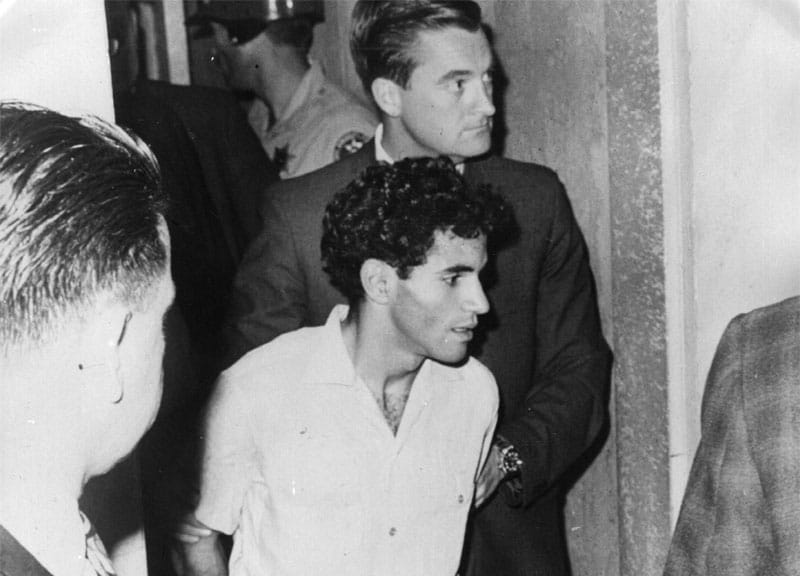
Sirhan Sirhan, who shot and killed Robert F. Kennedy in 1968, was granted parole on August 27.

Los Angeles County prosecutors declined to intervene, and argue that Sirhan, 77, should remain imprisoned under District Attorney George Gascon’s policy that prosecutors’ role “ends at sentencing.” Two of Kennedy’s sons argued in favor of his release.

“I’m overwhelmed just by being able to view Mr. Sirhan face to face,” Douglas Kennedy said during the parole hearing. “I think I’ve lived my life both in fear of him and his name in one way or another. And I am grateful today to see him as a human being worthy of compassion and love.”

Sirhan, a Palestinian Christian with Jordanian citizenship, had admitted to killing Kennedy at the Ambassador Hotel in Los Angeles on the one-year anniversary of the Six Day War because of Kennedy’s vocal support for Israel; five others were wounded. “I did it for my country,” he said at the time, according to Britannica. Sirhan has since claimed that he doesn’t remember the shooting.

During the parole hearing, Sirhan said that he now has a better grip on his anger and vowed a path of “peace and non-violence” going forward. When he was asked about his current views on the Israeli-Palestinian conflict, he reportedly broke down into tears and said that it’s “painful” for him to think about the suffering of the Palestinian refugees. Sirhan also said that he doesn’t follow the conflict closely anymore and will continue to remain uninvolved in the matter.

Sirhan’s lawyer, Angela Berry, told the Associated Press, “To justify denying [parole] based on the gravity of the crime and the fact that it disenfranchised millions of Americans is ignoring the rehabilitation that has occurred and that rehabilitation is a more relevant indicator of whether or not a person is still a risk to society.”

Some members of law enforcement and the Kennedy family reportedly voiced opposition to Sirhan’s release in letters to the parole board. Laurence Tribe, a Harvard University Law Professor Emeritus, was among those who voiced opposition to Sirhan being granted parole on Twitter.

“I fail to see why Bobby Kennedy’s assassin should ever be released from prison,” Tribe wrote. “Even at 77, he could be a threat. And the enduring harm he inflicted was incalculable. But for his vicious act, the rest of U.S. history would’ve been different.” Kennedy had just won the California Democratic presidential primary the night of the shooting.

Sirhan was denied parole 15 times prior to August 27 because the parole board didn’t think he showed sufficient remorse over Kennedy’s killing. Sirhan was initially sentenced to death when he was convicted, which was later reduced to a life sentence after California removed the death penalty in 1972.

The Parole Board will now have 90 days to review the decision before Governor Gavin Newsom, a Democrat who is currently in the midst of a recall election, makes the final call. 

Should Sirhan’s release be upheld, he would likely face deportation to Jordan.

This article has been updated.

RFK Killer Recommended for Parole Read More »

GOP Rep Deletes Tweet Comparing COVID Vaccine Passports to Holocaust

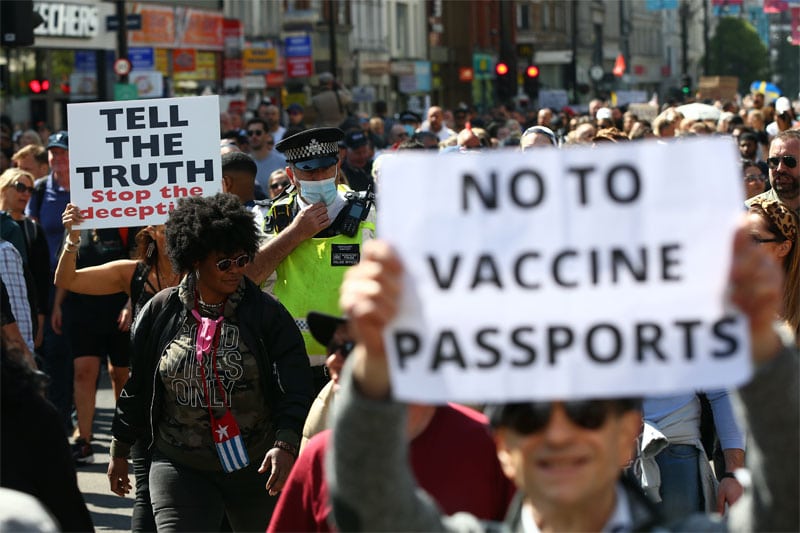
Representative Thomas Massie (R-KY) deleted an August 25 tweet comparing COVID-19 vaccine passports to the Holocaust.

The tweet contained an image of an arm with a number on it––referencing how the Nazis gave Jewish prisoners in death camps numbers as their identity––with a caption that read: “If you have to carry a card on you to gain access to a restaurant, venue or an event in your own country… that’s no longer a free country.”

The tweet sparked outrage on Twitter.

“Members of Congress who continue to exploit the systematic murder of six million Jews to appease a political base have lost sight of their morals,” the American Jewish Committee tweeted. “The comparisons between public health measures and the Holocaust must stop. @RepThomasMassie must apologize immediately.”

Anti-Defamation League Cleveland similarly tweeted, “We should not have to keep repeating this – health safety measures are in NO WAY comparable to the atrocities of the Holocaust. Making this comparison dishonors the memories of those murdered by the Nazis. @RepThomasMassie should apologize immediately; deleting this isn’t enough.”

Joel M. Petlin, Superintendent of the Kiryas Joel School District in New York, thanked Massie for deleting the tweet. “For the 4000 people who liked the Tweet, the 1000 more who retweeted it and for all those offended, he should clear the record with an explanation and an apology.”

An intern for Massie, Andrew Zirkle, announced on Twitter that he was going to resign from his position over Massie’s tweet.

“These sorts of statements and comparisons are highly inappropriate and are not something I want to associate with personally or professionally,” he wrote. “Belittling the Holocaust in this way is an affront to the Jewish community as well as any survivors or family of those who perished.”

Massie’s office did not respond to the Journal’s request for comment.

GOP Rep Deletes Tweet Comparing COVID Vaccine Passports to Holocaust Read More »

Lost Angeles: Mayor Garcetti’s Complicated Legacy

“It’s no use painting a lofty picture if you don’t have the brass tacks to pin it up on the wall.”

So said Eric Garcetti on the steps of City Hall in 2013, at the swearing-in for his first mayoral term. He built his brand as a man of the people, emphasizing better infrastructure, technological advancement, and an inclusive Los Angeles for all. For such an optimistic start, current public opinion couldn’t be further from that era. As Garcetti cuts his second term short in favor of an ambassadorial post to India, the city must weigh the progress and problems alike of the past eight years. And there’s ample fodder for both.

Garcetti’s defenders, and the man himself, can rightfully point to his economic track record, such as attracting new investment and raising minimum wage, as well as his landmark environmental protections, support for new technologies, and of course, LA’s successful bid for the 2028 Olympics.

Yet detractors will inevitably bring up the historic levels of inequality currently plaguing Angelenos, exemplified by the tents, blankets, and makeshift shelters scattered like flotsam across the city. Housing was a central tenet of Garcetti’s campaign and a prime focus throughout his term—his administration budgeted nearly $1 billion to address homelessness as recently as April 2021—and yet it also remains a point of constant criticism. The choice of ambassadorship has certainly raised eyebrows for its parallels with Los Angeles, as “one might argue that Garcetti should not be sent to a country with a massive unresolved homelessness crisis.”

Garcetti began his first term in 2013 facing a critical mass of 23,000 unhoused Angelenos, and he leaves his second term with over 40,000.

Our own crisis has undeniably grown, particularly during the past year, and at a rate that has outstripped attempts to house individuals. Garcetti began his first term in 2013 facing a critical mass of 23,000 unhoused Angelenos, and he leaves his second term with over 40,000. It is a damning figure, especially in the wake of his much-touted Measure HHH and the Bridge Home initiative, which were meant to allay homelessness and build affordable housing, yet vastly underperformed.

Garcetti’s stilted action on police reform is a more recent point of criticism, but no less damaging. It was hardly a good look when the ACLU had to file a suit in order to end the city-wide curfews that infringed on First Amendment rights during the height of BLM protests last summer. Who could forget the Zoom call heard ‘round the world during the fateful LAPD Commission meeting last June? Despite strong calls for the resignation of Chief Michael Moore, Garcetti defended him and sought to appease the public with the creation of a vaguely-worded Community Safety Partnership Bureau. Nor was Garcetti able to deliver on the proposed $150 million-dollar cut to the LAPD’s $1.8 billion annual budget, and in fact added $50 million back into the budget after less than a year. For a self-described progressive mayor, Garcetti’s policy choices in this area have proven to be anything but.

When considering Garcetti’s accomplishments and his shortcomings, public sentiment has decidedly fixated on the latter. The LA Times puts it bluntly: “accomplishments of the past are never greater than the problems of the present.” The LAnd Magazine, one of the last bastions of local journalism, puts it even more bluntly: “He’s the embodiment of neo-liberal vacancy: nominally progressive but always kowtowing to business, pro-immigrant in public but cozy with ICE.”

Admittedly, Garcetti gets an outsized portion of the blame simply due to his visibility. While the mayor remains the face of the city, the role itself “was constrained by the 1925 City Charter (slightly revised 70 years later) and is seen by many as largely symbolic,” with the 15-member City Council being where the true power rests. Furthermore, the mayors can also find themselves marred by staff behavior because the question naturally arises of what they knew and when. In Garcetti’s case, the scandal of former Chief of Staff Ana Guerrero making disparaging remarks against labor icon Dolores Huerta and the high-profile sexual harassment lawsuit against former aide Rick Jacobs have both arrived near the end of his term—meaning that they will be memorable.

Whether or not Garcetti deserves all the blame heaped on him by a city in the throes of multiple crises is debatable. He’s just one man, after all.

Whether or not Garcetti deserves all the blame heaped on him by a city in the throes of multiple crises is debatable. He’s just one man, after all. But he is a man who held the highest political office in the city for eight years. He is a man who campaigned and built his brand with words like “community” and “development” and “revitalization.” He is a man who Angelenos believed in at first, but were ultimately disappointed by.

Garcetti’s departure opens up the possibility of a new direction for Los Angeles. But as voters search for options amidst a small pool of heavyweight candidates—which include several current City Council members and possibly U.S. Representative Karen Bass—what we can expect in the short term is a fraught electoral season stretching all the way into a November runoff. Rather than meaningful change, what we have for now is a waiting game.


Seth Jacobson is the founder and principal of JCI Worldwide, a Los Angeles-based communications and research firm. He spent several years in the Carter and Clinton administrations in positions focused on economic development, foreign policy, and media relations. He is a frequent lecturer on policy and public affairs at Pepperdine University and UCLA.

Lost Angeles: Mayor Garcetti’s Complicated Legacy Read More »

Distrito T-Mobile: Where to Stay and Where to Eat

The grand opening of Distrito T-Mobile was magnificent! There is going to be so much music, entertainment and fun in this complex! Are you wondering where to stay and where to eat?

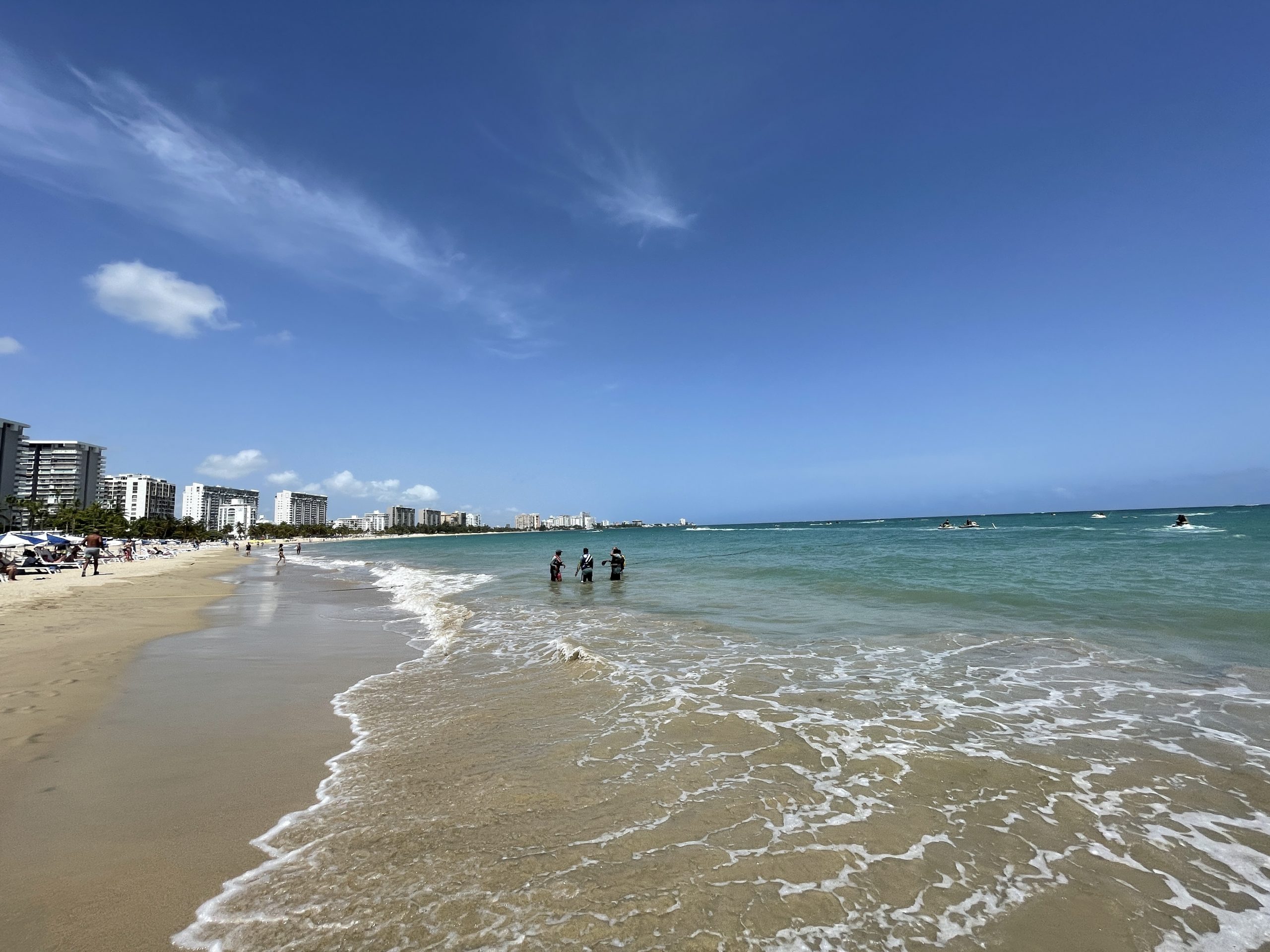
I stayed at the Embassy Suites San Juan which is steps from the beach in Isla Verde. I love the made to order breakfast, the giant suite with two televisions and plenty of room to hula-hoop. The pool was beautiful day or night and it is less than two blocks to the beach. If you have forgotten anything or just want to get your hat, sunscreen and beach chair on arrival, there is a CVS less than a block from the property.

Lisa Niver at the beach in Isla Verde

Where to stay in Distrito T-Mobile? Aloft San Juan

Do you want to be in the middle of all the action? Only have to walk a few steps back from Coca-Cola Music Hall, Caribbean Cinemas and all the restaurants of Distrito T-Mobile? Then you need Aloft San Juan. From the pool on the 3rd floor, you can watch the Toroverde Urban Park Zipline fly by and then go there for games, rock climbing and THE FLYING BULL!

Where to EAT in Distrito T-Mobile ?

All of the restaurants at Distrito T-Mobile are focused on Puerto Rican chefs, Puerto Rican art and Puerto Rican hospitality.

Come with us for: drinks at La Central dinner at Barullo and see the next movie with lunch at La Burguesia!

We also toured:

Lupe Reyes (check out the fresh tortillas), see the rum barrel bathrooms at La Central, Sazon with the mechanical metal fish in the air and Arena Medalla where you can pour your own beer, play games including magnetic scrabble and, of course, KARAOKE!


Our lunch at LaBurguesía

What do you do after zip-lining? We ate an AMAZING lunch at La Burguesía in Distrito T-Mobile! I had “This ain’t your daddy’s cheeseburger!” and at our table we had nearly ever other choice including ALL the dessert milkshakes which are topped with a giant slice of cheesecake, chocolate cake or s’mores. Join Evian for our tour through the kitchen including where Pablo and Jorge grind the meat, and the team bakes the bread, cooks your burger, creates your shake and dresses your fries. YUM!

See all of Our Adventures in Puerto Rico!

Distrito T-Mobile: Where to Stay and Where to Eat Read More »