fbpx

July 19, 2021

Human Rights Watch Director Tweet Blames Israeli Gov’t for Rise in UK Antisemitism

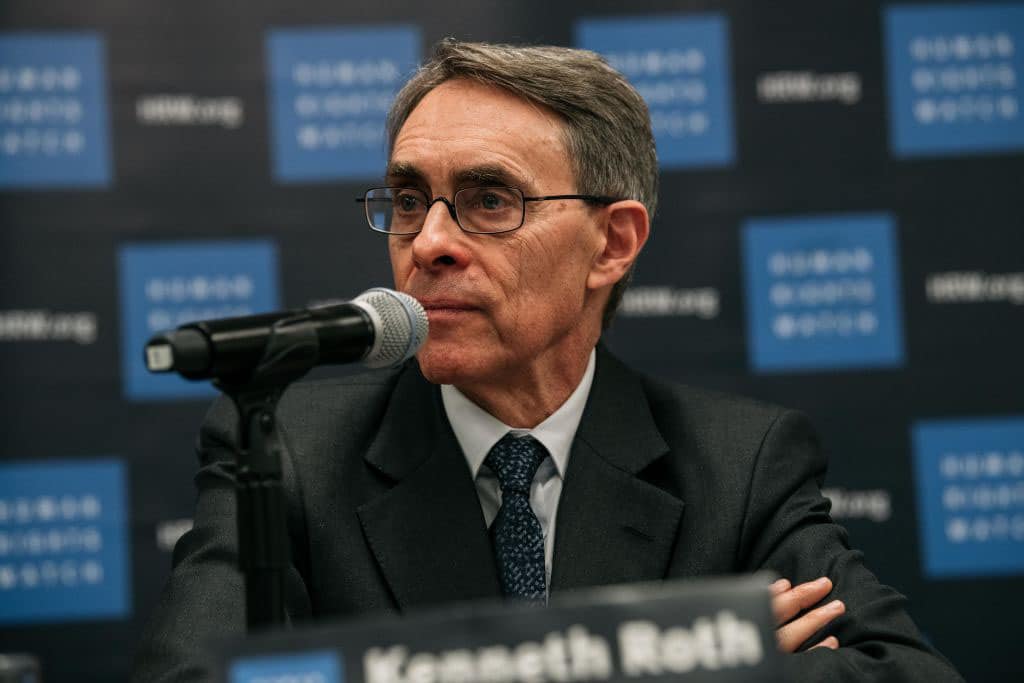
Human Rights Watch (HRW) Executive Director Kenneth Roth appeared to blame the Israeli government in part for the recent spike in antisemitism in Britain.

Roth tweeted on July 18, “Antisemitism is always wrong, and it long preceded the creation of Israel, but the surge in UK antisemitic incidents during the recent Gaza conflict gives the lie to those who pretend that the Israeli government’s conduct doesn’t affect antisemitism.” His tweet linked to a July 15 Haaretz article stating that antisemitic incidents have increased by 365% from May 8-June 7.

https://twitter.com/KenRoth/status/1416677432904585217

Various Jewish groups and pro-Israel Twitter users accused Roth of justifying antisemitism.

“There should be no justification for #antisemitism or those who perpetrate it,” Anti-Defamation League CEO Jonathan Greenblatt tweeted. “Blaming Israel for the recent rise in violent antisemitic incidents, instead of blaming the antisemitic actors themselves, is plainly false and offensive.”

American Jewish Committee CEO David Harris similarly tweeted, “[Roth] tries to have it both ways: ‘Antisemitism is always wrong…but.’ No, antisemitism is always wrong, period. Just as racism is always wrong, period. Coming from an alleged human rights defender, totally & utterly despicable.”

Tablet Senior Writer Yair Rosenberg also tweeted, “Here’s the director of Human Rights Watch blaming Jews for antisemitism. Antisemites, like all bigots, have used alleged acts of their targets to justify attacks on them (‘they killed Jesus! they swindle!’). Obscene for an ostensible human rights group to push their propaganda.” He added in a later tweet: “Antisemitism wasn’t caused by Jews ‘killing Jesus’ in the Middle East centuries ago. That was the bigot’s excuse. Antisemitism isn’t caused by Israeli actions in 2021. That’s the bigot’s excuse. Antisemitism is caused by the hate of the bigot, who will always find a new excuse.”

https://twitter.com/Yair_Rosenberg/status/1416788247490056195?s=20

https://twitter.com/Yair_Rosenberg/status/1416792989867954182?s=20

Human rights attorney and International Legal Forum CEO Arsen Ostrovsky asked in a tweet if Roth has ever said, “’Racism is wrong, but … ‘ ‘Homophobia is wrong, but … ’ ‘Islamophobia is wrong, but … ’ No. So, why the excuse for #antisemitism? What a shameful and inexcusable post!”

UN Watch Executive Director Hillel Neuer noted that Roth had issued his tweet during Tisha B’Av “when Jews mourn the destruction of their Temple & sovereignty in Jerusalem 2,000 years ago. Since then, the Jews faced burnings, expulsions and the Holocaust. Now there is Israel. We’re thrilled & proud. And we’ll never take lessons from an antisemite.”

Roth defended his tweet, writing on Twitter: “Interesting how many people pretend that this tweet justifies antisemitism (it doesn’t and I don’t under any circumstances) rather than address the correlation noted in the Haaretz article between recent Israeli government conduct in Gaza and the rise of UK antisemitic incidents.”

But Sam Sokol, the author of the Haaretz article, tweeted that Roth had used “an article I wrote to try and bolster his point. And it does nothing of the sort.”


British journalist David Collier tweeted in response to Roth’s defense, “Not what people are saying Ken – People are talking about your ‘but’. You would never write a tweet about another racism with the word ‘but’ included. Is your revelation that the existence of Israel – the Jewish state- makes antisemites angry? Or did you have another point?”


Benjamin Weinthal, The Jerusalem Post’s European Affairs Correspondent and Research Fellow for the Foundations for Defense of Democracies, tweeted that Roth was “scrambling to do damage control. @KenRoth praised the Iranian regime’s antisemitic foreign minister [Javad Zarif] Roth remains silent about Iranian regime Holocaust denial and genocidal antisemitism.”

https://twitter.com/BenWeinthal/status/1416817973105500168?s=20


Human Rights Watch did not respond to the Journal’s request for comment.

UPDATE: Roth announced on July 20 that he deleted his earlier tweet on antisemitism, stating it had been “misinterpreted.”

Human Rights Watch Director Tweet Blames Israeli Gov’t for Rise in UK Antisemitism Read More »

Are Tragedies Tragedies If They Conclude with a Consolation Prize?

Should we regard tragedies as tragedies if they conclude with consolations?
This is a classical conundrum that the rabbis have caused to arise
by demanding that, on the Ninth Day of Av, all readers of the Book of Lamentations
reread a verse that pleads penultimately for a consolation prize.

Jewish history raises this conundrum regarding the great tragedy known as the Shoah,
which was followed by the consolation prize, the state of Israel,
a refuge for survivors like the archaic Ark built by the archetypical survivor, Noah,
providing Jews a happy ending to a desperately tragic tale.


Reviewing Tragedy by Terry Eagleton in the 7/9/21 TLS, Simon Goldhill writes (“Vexes as it teaches: A provocative study of the tragic arts”):

The final chapter, “The Inconsolable”, argues cogently and sharply against the critical tradition that sees in tragedy (and sometimes art in general) an aesthetic of reconciliation, whereby the horrors and conflicts of human life are somehow redeemed by art’s sense of order or beauty. Such recuperative humanism, concludes Eagleton, not only cannot take account of the real bleakness of tragic drama, but also “fails to grant the inconsolable the respect they deserve”.

Here are the last two verses of Lamentations, beginning with the penultimate one that the rabbis say should be reread after reading the last verse.

כא הֲשִׁיבֵנוּ יְהוָה אֵלֶיךָ ונשוב (וְנָשׁוּבָה), חַדֵּשׁ יָמֵינוּ כְּקֶדֶם. 21 Turn Thou us unto Thee, O LORD, and we shall be turned; renew our days as of old.
כב כִּי אִם-מָאֹס מְאַסְתָּנוּ, קָצַפְתָּ עָלֵינוּ עַד-מְאֹד 22 Thou canst not have utterly rejected us, and be exceeding wroth against us!


Gershon Hepner is a poet who has written over 25,000 poems on subjects ranging from music to literature, politics to Torah. He grew up in England and moved to Los Angeles in 1976. Using his varied interests and experiences, he has authored dozens of papers in medical and academic journals, and authored “Legal Friction: Law, Narrative, and Identity Politics in Biblical Israel.” He can be reached at gershonhepner@gmail.com.

Are Tragedies Tragedies If They Conclude with a Consolation Prize? Read More »

A Golden Opportunity for the Bennett-Lapid Government

The new Israeli government lost no time in signaling that it sees a golden opportunity to reenergize the country’s alliance with Diaspora Jewry. Here is how it can turn this opportunity into a lasting achievement.

No Second-Class Jews

As one of its first decisions, Israel’s government should declare that every member of the Jewish people will always be treated equally and fairly, and that Israel will remain welcoming to all Jews. Full stop.

Israel’s new leaders understand, for example, why egalitarian prayer at the Kotel is so crucial. Newly installed Diaspora Affairs Minister Nachman Shai calls it a “crucial acknowledgement of our respect and appreciation for the full spectrum of the Jewish experience.” Also important is the recent Supreme Court decision—15 years in the making—that recognizes Reform and Conservative conversions conducted in Israel for the purpose of citizenship.

These and other issues, like civil marriage, have everyday consequences, and are also deeply symbolic. Alongside the complicated legal frameworks and complex logistics involved in supporting such inclusive policies lies a simple logic: there should be no second-class Jews.

In many respects, deepening divides between Israel and large segments of world Jewry reflect a crisis of confidence, which is why a declaration by the new government would be so important.

In addition to sending a powerful signal and providing a confidence boost across the Jewish world, a formal government decision would guide the work of other state institutions and enable them to give more weight to the Diaspora implications of relevant decision-making processes, as recommended to former President Rivlin by Israel’s Institute for National Security Studies.

Public Education

Second, the new government should integrate the notion of Jewish peoplehood more deeply into public education. Over the long-term, educating the next generation of Israelis about contemporary Jewish life and diversity will be essential for nurturing solidarity and strengthening values like mutual responsibility.

Over the long-term, educating the next generation of Israelis about contemporary Jewish life and diversity will be essential for nurturing solidarity and strengthening values like mutual responsibility.

For the first time, curricula about world Jewry are being introduced in Israeli public schools, principally in the mainline “mamlachti” non-Orthodox system, by far the country’s largest. But there is still a long way to go before the subject is thoroughly integrated and widely adopted.

Education, formal and informal, is vital for building awareness of and empathy toward the Diaspora. Although organizations like Birthright, MASA and other immersive opportunities within Israel contribute to Jewish identity outside Israel, there are far fewer opportunities for Israeli Jews to gain a deeper understanding of Jewish life outside of Israel.

For Israelis, the study of world Jewry can be integrated with practical subjects like English language skills, which strengthen the country’s competitiveness, as we have done by launching the “One2One” high school exchange created by Enter: the Jewish Peoplehood Alliance.

The government can also tap into a widening web of Israeli educators, community leaders and journalists who have joined “Reverse Birthright” exchanges, returning home with new perspectives on Jewish peoplehood for their local audiences.

The full spectrum of public education efforts would benefit immensely from a strong signal of support from the new government.

Cultural Touchstones

Third, Israel could expand support for cultural touchstones that reinforce a sense of solidarity and global Jewish peoplehood.

One such example is Israel’s official Yom Ha’atzmaut ceremony and the lighting of the twelve torches, a deeply revered Israeli tradition that spotlights exemplary members of society.

The new tradition of inviting a Diaspora representative—this year it was Gabriela Sztrigler Lew, a young Mexican Jewish woman engaged in humanitarian and development initiatives via the newly launched “Shalom Corps”—is an excellent first step. Such high-visibility opportunities should be amplified elsewhere in the Israeli public square.

Virtually cost-free, such “tribal fires” are high-impact and deepen a sense of common destiny. Introducing the Diaspora as a parallel Jewish society via familiar public platforms—state ceremonies, mass media, and community partnerships—can instill empathy and bolster metrics of mutual understanding.

For most Israeli Jews, the Diaspora has long been defined in instrumental terms—immigration, political advocacy and philanthropy—whereas today’s challenges of forging stronger Jewish solidarity and identity require new tools that can deepen awareness and literacy.

Alongside these efforts—policy, education and public awareness—lies a further opportunity with Isaac Herzog, now installed as Israel’s 11th president.

As Charles Bronfman and Jeff Solomon recently argued, President Rivlin set a new benchmark for promoting Jewish peoplehood. In Los Angeles, he declared world Jewry to be Israel’s “fifth tribe,” including the Diaspora in his signature “four tribes” initiative promoting social cohesion. Moreover, as a public institution outside of day-to-day politics, Beit Hanassi is well-positioned to build stronger ties with the Diaspora. President Herzog, with his life experiences at the intersection of Israel-Diaspora relations, and especially his recent tenure leading the Jewish Agency, is uniquely qualified to build on Rivlin’s legacy.

Both Israel and global Jewish communities are responsible for this alliance. There is much the Diaspora can do to promote stronger ties and strengthen this union, including working more closely with Israelis in ensuring greater mutuality and reciprocity.

Present challenges notwithstanding, world Jewry is in the strongest and freest position in which it has ever been, a stunning turn-around that also poses a long-term challenge. The vast majority of Jews are secure, healthy and protected. Jews live almost exclusively in free and open societies. Given our collective advances, now is the time to deepen this alliance. Akin to a successful sovereign wealth fund, world Jewry should invest in frameworks that make us stronger and better able to navigate future challenges.

The new government faces a daunting and crowded agenda but renewing relations with the Jewish state’s closest and most enduring ally, the Jewish people, is one area where it can score an early and big win.


Alon Friedman (Israel) is the Founding CEO of Enter: the Jewish Peoplehood Alliance, and the former head of the Israel office of Hillel International. Scott Lasensky is a visiting professor at the University of Maryland, teaching courses on Israel and Jewish politics. A former American diplomat in Israel, he is a Senior Advisor to Enter.

A Golden Opportunity for the Bennett-Lapid Government Read More »

49 Years After Munich Massacre, Israeli Athletes will March Proudly at Tokyo Olympics

The bookends to my bar mitzvah were the murder of 11 Israeli Olympic athletes in the 1972 summer games in Munich, and the Yom Kippur War in October 1973.

Born in New York, raised in South Florida, neither of these events involved me directly. And yet both represented an ominous rite of passage. I am not sure I would be writing these bi-monthly essays had the world not initiated me early on to the dangers of being a Jew.

With the Tokyo Olympics in Japan set to commence this week, it’s worth remembering all that has happened, and not happened, in the intervening 49 years since the Munich Olympic games. At the time, the Palestinian Liberation Organization (PLO) was itself only eight years old—three years before the Six-Day War in which Israel recaptured the West Bank and Gaza Strip. That means “Israeli settlements” could not have given birth to Palestinian terrorism. Not a single Jew lived in the West Bank and Gaza in 1964. The chant, “From the river to the Sea, Palestine will be free,” means just what it says: rid all of Israel of its Jews.

With the Tokyo Olympics in Japan set to commence this week, it’s worth remembering all that has happened, and not happened, in the intervening 49 years since the Munich Olympic games.

The PLO back then specialized in airplane hijacks (and a lone Palestinian assassination of Senator Robert F. Kennedy, who might have otherwise been elected president in 1968). The Munich Massacre, as it later was to be called, took place a mere 24 years into Israel’s nationhood. In 1972, Israel had no chance of medaling in any event. So soon after Auschwitz, Jewish athletes marching behind the Israeli flag was itself an extraordinary achievement.

Black September, the name the Munich terrorists gave themselves, entered the Olympic Village compound. Security was porous, but then again, the entire mission must have seemed so improbable with the whole world watching.

Nine Israeli Olympians were kidnapped; two had already been killed at the dormitory. The German military was prevented from assisting local police; so, too, were Israeli commandos. Eventually, all nine hostages were killed in a botched rescue attempt.

Shocking, or perhaps not so, the games went on—without a memorial service. Why dampen the global mood? An official ceremony would not take place until 2016.

The Palestinian terrorists captured on the tarmac were eventually set free in exchange for German hostages taken during yet another Palestinian airplane hijacking. Over several years, Israel would assassinate those responsible for the crime.

Ironically, it was at the Munich Olympics that Jewish-American swimmer, Mark Spitz, from Los Angeles, won seven Olympic Gold Medals, a record at the time. The world’s fastest human in water was sprinted away to America in case he, too, became a target.

Germany was jinxed for Jewish athletes even before 1972. Berlin was the site of the Olympic games shortly before the Holocaust. In 1936, Adolf Hitler hosted the games as a showcase of Aryan superiority. Someone forgot to tell American track and field superstar, Jesse Owens. He went on to win four Olympic Gold Medals. The Fuhrer was furious. But it could have been worse: Owens could have been a Jew.

Well, Owens sort of stepped into the running shoes of Jews destined for their own Olympic glory. A sidenote to his achievement was that two Jewish-American sprinters were tapped to run the 4×100-meter relay. At the last moment, both were replaced by Owens and another Black sprinter, sparing Hitler the nightmare scenario of seeing genetically inferior Jews on the victory podium.

Hitler had already ensured that no German Jew would medal at Berlin. Two Jewish women, a high-jumper and a fencer, were unceremoniously removed from the German team before the games began. Yet, making the Olympics judenrein was nevertheless thwarted. World class Jewish athleticism was not unknown in Europe. Despite all that antisemitic benching, 13 Jews from around the world (six from Hungary) medaled during the Nazi Olympics.

The pageantry of the German Olympics was majestic, but the Master Race lost a lot of races in Munich.

As for the Yom Kippur War, well, that says it all: Egypt and Syria attacked Israel on the holiest day of the Jewish calendar, while the nation was fasting. Israel’s preparedness was abysmal. After heavy early losses, Israel battled back. The Sinai Peninsula looked like a mortuary of tank carcasses as Israel’s army moved closer to Cairo. If not for a jointly-called American-Soviet ceasefire, Israel might have captured the pyramids built by its enslaved ancestors before the Exodus.

It was all yet another reminder that even on Yom Kippur, with the Book of Life still in draft form, God was not in the business of smiting the enemies of his Chosen People.

In the intervening decades, Israel signed an enduring peace treaty with Egypt, its once implacable foe. Both countries now work together to quell Palestinian terrorism. Germany and Israel are staunch allies. At the time of both the Munich Olympics and the Yom Kippur War, Israel maintained friendly relations with the Shah of Iran. Today, Iran’s Islamic theocracy, its nuclear ambitions, and its proxies in Lebanon, Syria and Gaza are cause for Israel’s concern.

Middle East conflict remains, albeit with different players and a remade regional map.

Some things may never change. At the 2016 Olympics in Brazil, judoka Or Sasson (also competing in Tokyo), won the bronze medal. Along the way he defeated an Egyptian judoka who refused to shake his hand. A female Saudi judoka forfeited a match to avoid having to compete against an Israeli woman.

The 2021 Olympics in Tokyo (yes, a year late due to the pandemic) will hold its opening ceremonies this week. Israel will march in the parade of nations. But this year it has seven athletes, and a baseball team, with a very good chance of winning medals, even the gold (especially in men’s judoka, women’s rhythmic gymnastics, women’s surfing, and an Ethiopian Jew in the marathon). Israel’s baseball team qualified as one of the six to compete for gold.

Still a speck of a country. All that European chutzpah and Sephardic resourcefulness. Israel moves fast, where and when it counts. Stay tuned: You might hear “Hatikvah” played in Tokyo.


Thane Rosenbaum is a novelist, essayist, law professor and Distinguished University Professor at Touro College, where he directs the Forum on Life, Culture & Society. For his writings in the Jewish Journal, he won the American Jewish Press Association’s Louis Rapaport Award for Excellence in Commentary.

49 Years After Munich Massacre, Israeli Athletes will March Proudly at Tokyo Olympics Read More »

Ben & Jerry’s Says They Will Stop Selling Ice Cream in “Occupied Palestinian Territory”

Ben & Jerry’s announced in a July 19 statement that they will no longer be selling ice cream in the “Occupied Palestinian Territory.”

The ice cream company’s statement read, “We believe it is inconsistent with our values for Ben & Jerry’s ice cream to be sold in the Occupied Palestinian Territory (OPT). We also hear and recognize the concerns shared with us by our fans and trusted partners.” They added that they “will stay in Israel through a different arrangement. We will share an update on this as soon as we’re ready.” Prior to their statement, Ben & Jerry’s had been under pressure by pro-Boycott, Divestment and Sanctions (BDS) organizations to divest their holdings from Israeli settlements in the West Bank.

Unilever, which owns Ben & Jerry’s, said in a statement, “We remain fully committed to our presence in Israel, where we have invested in our people, brands and business for several decades.” They also recognize “the right of the brand and its independent Board to take decisions about its social mission. We also welcome the fact that Ben & Jerry’s will stay in Israel.”

Israeli Foreign Minister Yair Lapid denounced Ben & Jerry’s decision as “a disgraceful capitulation to antisemitism, to BDS, to all that is evil in the anti-Israeli and anti-Jewish discourse. We won’t be silent.” He added that the Israeli government will be pushing for anti-BDS laws to be enforced in the United States against Ben & Jerry’s.

Various Jewish and pro-Israel Twitter users criticized Ben & Jerry’s over their July 19 announcement.

“Has @BenandJerrys ever refused to sell its products in any other disputed territory, anywhere in the world—or is this the only one?” American Jewish Committee Managing Director of Public Affairs Avi Mayer tweeted. “And another question: will @BenandJerrys refuse to sell their products to all the residents of the territory in question—or only to the Israeli Jews who live there?”

“Ben & Jerry’s has faced pressure to boycott Israel, from antisemitic groups that oppose Israel’s existence. Instead of ignoring this campaign of hate, they are trying to appease the extremists who are pushing it,” StandWithUs Israel Executive Director Michael Dickson tweeted. “It’s a bad decision that will help no-one but most of all will tarnish the reputation of Ben & Jerry’s.”

Stop Antisemitism tweeted, “Ben and Jerry’s fails to realize BDS refers to ALL of Israel as occupied Palestinian territory. Do they honestly think appeasing these bigots will help anything? Shameful.”

Jerusalem Post Senior Contributing Editor Lahav Harkov noted in a tweet that “some of the replies” to Ben & Jerry’s tweet linking to their announcement “are complaining that Ben and Jerry will continue its operations in Israel at all, which gives away the game: The boycotts aren’t about the ‘occupation,’ they’re about denying Jews self-determination.”

International human rights lawyer Arsen Ostrovsky pointed to the fact that Ben & Jerry’s “operates in #China, and to the best of my knowledge, has not said anything about Hong Kong or the ethnic cleansing of Uyghurs. But hey, priorities & corporate social responsibility and all that …”

In another tweet, he noted that Ben & Jerry’s “won’t serve ice cream to Jews in Judea & Samaria, but they will enthusiastically endorse avowed racist and antisemite Linda Sarsour? Ok gotcha. Is ok, plenty of great local made ice-creams in Israel!”

Tablet Senior Writer Yair Rosenberg, on the other hand, argued that “selling ice cream in Israel but not West Bank settlements is entirely understandable given @benandjerrys’ values and political orientation. They’ve long supported Israel—not the occupation. Distinguishing between the two is anathema to both the Israeli right and BDS, not to them.”

https://twitter.com/Yair_Rosenberg/status/1417152475245826055?s=20

Other Jewish groups celebrated Ben & Jerry’s announcement. Jewish Voice for Peace tweeted that it was a “BDS victory” and “a testament to the power of Palestinian-led organizing and growing public support for Palestinian freedom.”

IfNotNow similarly tweeted, “This is an important victory for the movement for Palestinian freedom. After years of pressure from Palestinian organizers, Ben & Jerry’s is modeling one way to hold the Israeli government accountable for the occupation.”

Ben & Jerry’s Says They Will Stop Selling Ice Cream in “Occupied Palestinian Territory” Read More »

How to Read the NSO-Spyware-to-Saudi-Arabia Story

Here’s a headline we could publish every day of every week:

Private American Weapon Systems Used Against Activists and Journalists.

American companies sell airplanes, rifles, machine-guns and rockets to many countries. Some of these countries are democracies with a strong record of safeguarding human rights. Some of these countries have a less than perfect record. Some have a miserable record. When American companies sell these countries what they need to defend themselves, they surely know that when a weapons system is out of their hands, it can be used in a variety of ways: sometimes to fight against dangerous terrorism, sometimes to tame public unrest, sometimes to hunt regime opponents. And yet, the systems are sold, and the newspapers do not constantly investigate how they were used against this or that group.

Here’s a headline that was published yesterday morning in dozens of newspapers around the world:

Private Israeli Spyware Used Against Activists and Journalists.

It is an interesting headline, beyond which there’s an interesting story. It is a story worth telling, just spare Israel the moral outrage. Spyware is no more problematic than guns. And America exports about a third of the world’s weapons systems. Private spyware is no better than private tanks, or airplanes, and yet, I do not often see headlines crying about Spanish arms exports to troubling regimes (Spain is among the ten largest exporters of weapons systems, and Saudi Arabia is a customer).

Spyware is no more problematic than guns. And America exports about a third of the world’s weapons systems.

To be honest, reading such headlines is inconvenient for an Israeli. One has to wonder: Does this make us look sinister and dangerous? Does this makes Israel more vulnerable to attacks by human rights groups and other self-appointed critics? Does it damage Israel’s image in the United States? Does it make American Jews, those who care about Israel, uncomfortable?

The answer to all of these question is probably yes. But then, there are also benefits that come with such headlines. Israel is a global power in the world of cyberspace and security, and such headlines advertise this fact and make Israel seem stronger. Israel has the best minds, best companies (if not always the most moral) and best ideas. It is good that countries, businesses, and enemies remain aware of that fact. Surely, it will damage Israel’s image with certain moralists. But it will also boost Israel’s image with defense policy makers.

And besides—this isn’t at all about Israel.  Or is it?

The story of NSO Group, the company under discussion, presents the reader with two interesting questions about the responsibilities of private companies and states. In essence, it is an old question: Is the blacksmith responsible for a misdeed committed with the axe he manufactured? Surely, if the axe was sold to an emotionally unstable person when the blacksmith knows this person intends to use it to kill a neighbor, that’s one thing. If, on the other hand, the axe was sold to a woodcutter who then decided to use it to also kill a neighbor, that’s another thing.

Translated into modern language, one must ask: Is selling spyware to the Saudis like selling to the former or like selling to the latter. Should the blacksmith worry only about a clear and present reality of misuse, or should it also worry when the product is sold for legitimate purposes but can also be used (and is likely to be used) for other things?

And the same question about responsibility is applicable to the state. Should Israel make sure that no company sells potentially problematic products to the Saudis, less they use them for improper purposes? You can’t sell them axes, because they cut the hands of thieves, you can’t sell them ropes, because they hang people for certain violations of the law, you can’t sell them electric cables, lest they use them to electrify political dissenters.

Or is it just about spyware? And, if so, why spyware specifically? True, the Biden administration halted certain arms deals with the Saudis, but it does allow arms sales to the Egyptians (important allies of the U.S. and Israel, but not an exemplary democracy). In places such as the Philippines, guns made in the U.S. were utilized to repress dissenting movements. And look at the list of top U.S. handgun importers in 2020. Are they all peaceful, liberal, peace-seeking regimes? Thailand (more than two hundred thousand handguns); Mexico (more than fifty thousand); Tunisia; Brazil; Saudi Arabia (more than ten thousand); Philippines; Oman; Afghanistan; Guatemala; Canada. While the Canadians likely use the guns only to deter deer, can anyone assume that no gun will be used against human rights activists in all other countries on the list?

My point: the spyware case is getting the attention of the world not because it’s the most dramatic case of a questionable sale to a questionable regime. It is getting the attention of the world because it’s “spyware” (more interesting, though less lethal, than guns); because it is tied to a high profile case of brutal murder (Khashoggi); and because it is an Israeli company. Does this mean that no investigation should be conducted to get to the bottom of what NSO is up to? Of course not. It is important to investigate and get the facts straight (the company denies wrongdoing). Does this mean a somewhat suspicious approach to the dramatic headlines is due? I’d say yes. Read with care, and remember that all such stories have context.


Shmuel Rosner is an Israeli columnist, editor, and researcher. He is the editor of the research and data-journalism website themadad.com, and is the political editor of the Jewish Journal.

How to Read the NSO-Spyware-to-Saudi-Arabia Story Read More »

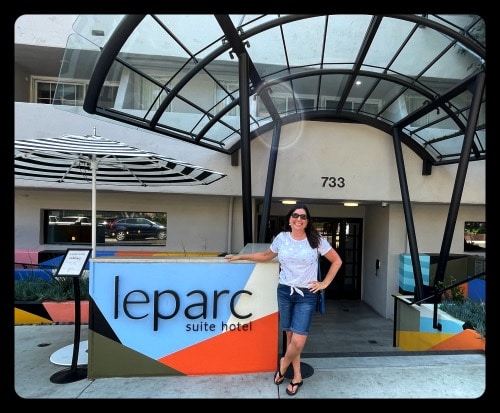
Join me at Le Parc Suite Hotel: WeHo is WAITING for YOU!

I absolutely LOVED my stay at the Le Parc Suite Hotel in West Hollywood! I had two TVs, a working fireplace, a record player, a balcony and a kitchen. There was plenty of room for me to hula-hoop, entertain and moderate the media panel for the Women in Travel Conference. Check out my room, the hotel and the pool in my video below.

VIDEO: Le Parc Suite Hotel: Your Home in WeHo!

Le Parc Suite Hotel: Nestled in West Hollywood’s Design District, where fashion and art meet music and film, Le Parc Suite Hotel recently unveiled an extraordinary redesign featuring vibrant details within a clean architectural palette. The hotel incorporates sophisticated furnishings and art, layering bold colors and patterns, while retaining its humble residential nature with modern conveniences, spacious dwellings, and thoughtful amenities. The 154 revamped suites express themselves with residential-styled spaces emulating an exclusive art collector’s metropolitan penthouse.

Built on the City of West Hollywood’s philosophy of love and inclusivity, Le Parc features brilliantly curated original artwork throughout the hotel that embraces diversity and encourages compassion, such as the lobby’s colorful 8-by-20-foot mural titled “LOVE.” The property also features a revitalized rooftop pool deck, rooftop tennis court, restaurant, modern conference suite and brand-new fully equipped fitness center. While staying at Le Parc Suite Hotel, guests experience the warmth of a welcoming private residence and leave with a newfound sense of creativity and inspiration. www.leparcsuites.com

See below for my stay at Chamberlain Hotel and moderating the Women in Travel Conference!


Charlie Edmiston for Le Parc ©Shafik Kadi 4


Join me at Le Parc Suite Hotel: WeHo is WAITING for YOU! Read More »

Weddings are Back! Five Things Every Couple Should Do Before They Tie the Knot

After a year and a half of cancellations and postponements, weddings are back. As you’re planning your big day, there’s more to the wedding checklist than the obvious, like picking a venue, finding a florist, deciding on the linens, or hiring a photographer. Some tasks are just as — or even more — important. So remember these important things to do before you say “I do.”

Sort out the legal documents

Make sure you do all the paperwork before the wedding.  In California, you have to go together to the County Clerk’s office to apply for a marriage license. The marriage license is valid for 90 days. If you don’t get married within that timeframe, you have to apply for another license.  After your wedding, the person who officiates has 10 days to return the completed license to the County Clerk or Recorder’s office.

If either of you are planning to change your name, don’t assume that your marriage license makes the new name official. Additional paperwork with the Social Security Administration, Department of Motor Vehicles and your financial institutions needs to be done. Fortunately, there are online name change kits that make the paperwork much easier.

Delegate, delegate, delegate

There are so many details and responsibilities on the wedding day, and you do not want to be the one doing them. Assign jobs to members of the wedding party, as well as any friends and relatives you can rely on. Think through all that has to be done — who’s driving whom to various venues, who’s in charge of taking the cash gift envelopes, who’s going to pack the gifts in the car after the reception, who’s checking people in, who’s going to keep the bride’s phone during the day so she isn’t disturbed, etc.

Time your haircuts, tanning and facials

If you want your hair to be a certain length in time for the wedding, plan for it months ahead. You don’t want drastic hairstyles immediately before the big day. The same goes for tanning sessions and skin treatments. You might think a spa day with the wedding party would be a fun way to pamper yourselves, but the risk of ending up with blotchy — or orange — skin is too great.

Plan your social media strategy

Now here’s a wedding checklist item that didn’t exist just a few years ago. There’s a good chance your wedding will be photographed, filmed and shared on social media by your friends and family. If you are an extremely private couple and do not want your wedding shared with the public, you will want to let guests know your request ahead of time, perhaps on the invitation or in the wedding program. However, if you want to go full steam ahead on the social media, consider assigning one or two guests the role of social media coordinator, giving them carte blanche to tweet, post photos on Instagram, and even film Facebook Live videos so anyone not at the wedding can catch the merriment as it’s unfolding. Most importantly, create a custom hashtag for your wedding and have all guests include that hashtag with all their posts. That way, you can see everyone’s photos and posts just by searching the hashtag.

Get carrier screening

For any couple planning on having children, there’s one additional checklist item that is a must — genetic screening, also known as carrier screening. Anyone can be a carrier for one or more genetic diseases, and it is important for both partners in a relationship to be aware of their carrier status. While most of the time being a carrier is not a problem and does not impact that person’s health, it can have an impact on their future children’s health if their partner is a carrier for the same condition. The risk of having an affected child arises only when both partners are carriers of the same disease. If both partners are carriers of the same genetic disease, there is a 1 in 4 or 25% chance with each pregnancy of having a child with the disease. That’s why it’s crucial for both partners to be tested. Because of the latest medical advances, couples in which both partners are carriers for the same disease have more reproductive options than ever and it is entirely possible to have healthy children. There’s peace of mind in knowing. Speak to your doctor, visit the website GeneTestNow.com, or call toll-free at 1-844-GENE-TEST and get the knowledge you need to put the odds on your side.

Exclusively for Jewish Journal readers: Save $36 on a genetic screening kit from JScreen. Click here and use code JJLA36.

GeneTestNow.com is a nonprofit initiative of the Doris Factor Endowment Fund of the Jewish Community Foundation of Los Angeles.

Weddings are Back! Five Things Every Couple Should Do Before They Tie the Knot Read More »