fbpx

July 2, 2021

Anti-Zionist Jews and Antisemitism

Jews everywhere have long warned that the campaign to boycott, delegitimize, and ultimately destroy Israel is motivated by, and in turn feeds, hostility toward Jews. Such was the case during the most recent conflict between Israel and Hamas, which saw a 115 percent surge in antisemitic incidents, according to the Anti-Defamation League.

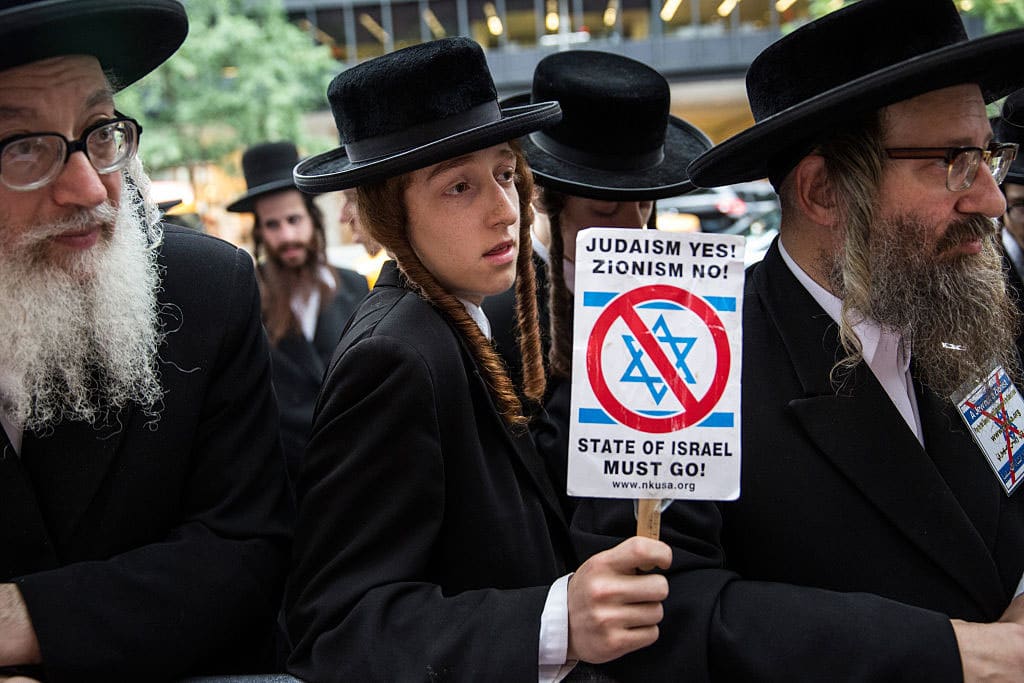
Those who actively oppose Israel’s right to exist play a clever rhetorical game to attempt to exonerate themselves from responsibility for this uptick: They point out that even Jews can be anti-Zionist, so how can opposition to Zionism be antisemitic? To equate anti-Zionism with antisemitism, they conclude, allows Zionists to unfairly shield Israel from criticism.

To be clear, Zionism is not equivalent to support for Israeli government policy. It is the movement dedicated to establishing, and now maintaining, a Jewish national homeland in the Land of Israel. Zionism flows out of Judaism’s most sacred and fundamental texts, beliefs, history, and practices, and is one of the primary ways in which contemporary Jews—both in Israel and in the Diaspora—express their Jewishness.

Meanwhile, anti-Zionism is not merely criticism of Israeli policy. At one level, it engages in a systematic falsification of thousands of years of Jewish history and the centrality of Israel to Judaism, thus robbing Jews of their identity and heritage. At another level, it promotes what would inevitably be a violent dissolution of the State of Israel, home to more than half of the world’s Jewish population.

And what of the claim that Jews cannot be antisemitic? Proponents of this argument likely have in mind groups like Jewish Voice for Peace and IfNotNow, two groups that are frequently tokenized to provide a Jewish veneerof respectability to anti-Israel rhetoric. Also consider New York Times columnist Michelle Goldberg, who is Jewish, and whose own hostility toward Israel obfuscates the antisemitic nature of anti-Zionism. Last month she opined that “attacks on Jews over Israel are a gift to the Right,” demonstrating greater concern over political ground lost on the Left than with Jewish assault victims.

That these groups and individuals have a Jewish background makes their attempt to drive a wedge between Jews and Zionism all the more convincing. This smokescreen creates a false sense that Jewish opposition to Zionism cannot be antisemitic, when in fact it certainly can.

This smokescreen creates a false sense that Jewish opposition to Zionism cannot be antisemitic, when in fact it certainly can.

Viewpoints must be judged on their own merits, not on the identity of those espousing them. And according to the International Holocaust Remembrance Alliance’s widely-adopted definition, antisemitism doesn’t require a special animus or personal hostility towards Jews as Jews. Those who promote policies that endanger Jewish security or malign and delegitimize major components of Jewish identity are complicit in antisemitism, full stop.

This phenomenon of Jewish antisemitism is nothing new.

Throughout the Middle Ages, Jewish apostates spread lurid “inside stories” of Jewish blasphemy and perfidy against Christians, prompted anti-Jewish religious disputations such as the burning of the Talmud, and reinforced anti-Jewish claims of deicide and blood libels.

During the 19th century, Otto Weininger, an Austrian thinker of Jewish descent, wrote an antisemitic screed entitled “Sex and Character” that was later incorporated into Nazi propaganda and praised by Hitler.

A century later, the Jewish wing of the Soviet Communist party known as the Yevsektsiya was tasked with the “destruction of traditional Jewish life, the Zionist movement, and Hebrew culture.” These Jewish antisemites agitated to close down synagogues and Jewish cultural centers throughout the Soviet Union. For them, Zionism was counter-revolutionary and reactionary, harming the assimilation of Jews into the workers’ paradise.

Today’s Jewish anti-Zionists are simply following the long tradition of Jewish antisemitism. Often from assimilated backgrounds at odds with the mainstream Jewish community, they gain “in-crowd” standing by reinforcing widespread anti-Jewish attitudes and repeating falsehoods such as the idea that Israel engages in apartheid, war crimes, and genocide.

The recent wave of anti-Jewish harassment and violence is the latest confirmation that the anti-Zionist movement is inextricably linked to hatred toward Jews. People of good faith must not allow themselves to be misled by those who use their Jewish identity to cover for their antisemitic ideologies.


Russell Shalev is editor-at-large of the J’accuse Coalition for Justice and an attorney with the International Legal Forum.

Anti-Zionist Jews and Antisemitism Read More »
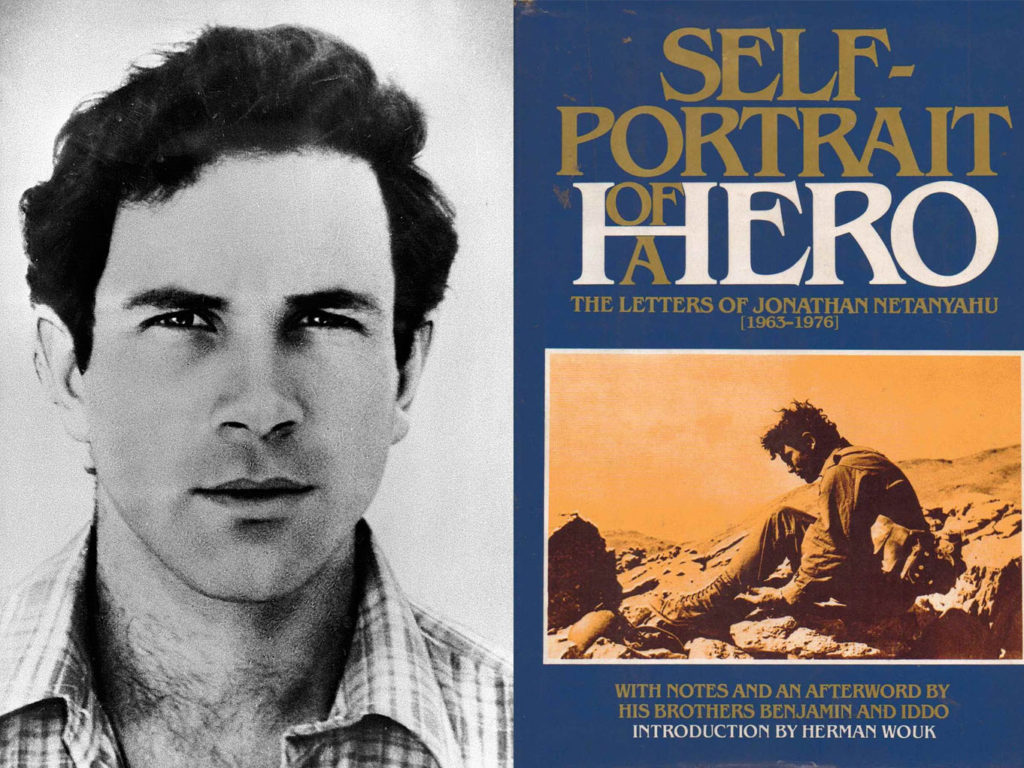
Yoni Netanyahu: A Hero’s Story 45 Years After Entebbe

Jonathan Netanyahu, the famed hero of the Entebbe operation and older brother of Benjamin Netanyahu, was killed in action 45 years ago on July 4. Jonathan (Yonatan) is usually remembered as Yoni. He died fighting anti-Israel terrorists on July 4, 1976 just as the world’s oldest democracy celebrated its bicentennial. Yoni died in a heroic effort that successfully freed over a hundred hijacked Jewish hostages in Entebbe, Uganda. America’s commemoration of liberty shared the world’s headlines with Israel’s celebration of the liberation of the hostages.

The daring of Israel’s commandos captured the world’s imagination like no other anti-terrorism action in history. But while books and movies recall the Entebbe rescue, there’s much more to the story.

It is not widely known that Yoni Netanyahu was a hero long before he commanded the Entebbe operation. Some of his early heroic efforts are hinted at in the remarkable posthumously published book “Self-Portrait of a Hero: From the Letters of Jonathan Netanyahu, 1963-1976.” Netanyahu played a key role in many other crucial Israeli security operations, exhibiting courage and valor in the most dangerous of circumstances. He was a living example to the world’s statesmen that terrorism can be beaten—if the nations of the world have the will to fight back.

It is not widely known that Yoni Netanyahu was a hero long before he commanded the Entebbe operation.

Yoni was born in New York into a family of dedicated Jabotinsky Zionists who greeted the news of the establishment of Israel by packing up and moving there in 1948. He returned to the U.S. in 1963 where his father, a distinguished Jewish Studies scholar, Benzion Netanyahu (1910-2012), accepted a professorship in Philadelphia.

After graduating high school in a Philadelphia suburb in 1964, Yoni returned to Israel to join the army, and it was not long before he had worked his way up to the leadership of an elite paratrooper unit.

The mid-1960s was a time of growing danger for Israel. The Palestine Liberation Organization, established in 1964 for the purpose of “liberating” all of “Palestine” from the Israelis had begun mounting terrorist attacks across Israel’s borders—and those were precarious borders indeed. In those days, before the 1967 war, Israel was just 9 miles wide at its strategic midsection, and all of Israeli’s major cities were within striking distance of Yasser Arafat’s terrorists.

Yoni did not fear the possibility of losing his life in the war to protect Israel from its enemies.

“Death does not frighten me,” he wrote to a friend. “I do not fear it because I attribute little to a life without purpose. And if it is necessary for me to lay down my life to attain an important goal, I will do so willingly.”

The path that led to Yoni’s renown within Israel’s commando ranks may have begun in 1971 in the context of battling the Black September Organization, founded by Arafat’s Fatah faction. One of Black September’s first attacks was the assassination of Jordan’s Prime Minister Wasfi Tal. One of the assassins earned a permanent place in the history of savagery by drinking their victim’s blood in full view of photographers.

In 1972, a Black September unit carried out the murder of 11 Israeli athletes at Munich’s Olympic Village.

Yoni was a member of a commando unit sent the night of April 19,1973 to Beirut to attack the planners of the Munich Massacre.

Israeli commandos landed on a Lebanese beach and slipped into Beirut. Yoni and his unit made their way to the apartment of Black September leader Muhammad Youssef Al-Najjar (Abu Youssef). Yoni had not been originally assigned to the mission—he had volunteered.

The last to leave the apartment, Yoni grabbed a satchel of papers just as Lebanese police jeeps arrived. The papers contained operational plans for the PLO’s terrorist network throughout Israel. Yoni’s discovery undoubtedly saved hundreds of lives.

Details of another example of Yoni’s heroism are to be found in Moshe Dayan’s autobiography “Story of My Life.” Dayan recalls how Yoni suffered a serious wound in the Six-Day War and still returned to his army unit and fought valiantly in the Yom Kippur War, despite his permanent injuries.

Yoni and his unit “stalked and killed more than 40 Syrian commandos who had landed behind our lines,” wrote Dayan.

After that Yoni was responsible for an extraordinary mission that rescued Lieutenant Colonel Yossi Ben Hanan from behind enemy lines. Again, Yoni volunteered. He had overheard a radio transmission about a severely injured tank officer and led his men on foot, braving a non-stop artillery barrage.

Recalling the Ben Hanan rescue, Dayan wrote: “I do not know how many young men there are like Yoni. But, I am convinced there are enough to insure that Israel can meet the grim tests which face her in the future.”

Dayan’s memoirs were published before the Entebbe operation. Yoni’s last name is not revealed by Dayan in the book. His portrayal of Yoni seems visionary in retrospect.

“Self Portrait of a Hero” is a must read; it contains Yoni’s letters to family and friends from 1963 when he first entered high school in the Philadelphia suburbs to just days before the rescue of hostages at Entebbe. His intellect, patriotism, compassion, dedication to duty and leadership are all on full display, amplifying the loss of someone who had just turned 30. The book has had a profound effect on its readers for decades. If you have not yet read it, do yourself a favor and get a copy. You too will be forever changed by it.


Moshe Phillips is national director of Herut North America’s U.S. division. Herut is an international movement for Zionist pride and education and its U.S. website is https://herutna.org/

Yoni Netanyahu: A Hero’s Story 45 Years After Entebbe Read More »

AJC Says Twitter Called Cynthia McKinney’s 9/11 Tweet “Strong Political Commentary”

Twitter has referred to former Democratic Congresswoman Cynthia McKinney’s tweet accusing Zionists of being behind 9/11 as “strong political commentary,” according to the American Jewish Committee (AJC).

McKinney, who previously ran for president in the Green Party, tweeted on June 28, “The final piece of the puzzle” with a picture of a puzzle piece of the word “Zionists” being placed into a puzzle depicting the 9/11 terror attacks. Below the word “Zionists” were the words “did it.” AJC CEO David Harris tweeted on June 29, “Think about it. A blood libel against ‘Zionists,’ a toxic conspiracy theory & a boldfaced lie are nothing more than, um, strong political commentary. Appalling.”


According to the AJC’s website, Twitter temporarily removed McKinney’s tweet on Tuesday, only to later restore it; as of this writing, the tweet remains on the site.

“Blaming Jews, Israelis, or Zionists for the 9/11 terrorist attacks is one of countless conspiracy theories that have spread antisemitic beliefs that blame Jews for the world’s worst tragedies from medieval times until the present day,” the AJC wrote.


The Simon Wiesenthal Center also tweeted, “From #AyatollahKhamenei to @cynthiamckinney – #antiSemites have a welcoming home on @Twitter.”


Former Miss Iraq Sarah Idan noted in a tweet that McKinney’s Twitter “followers are increasing… that says a lot.”


Joel M. Petlin, superintendent of the Kiryas Joel School District in New York and a contributor to various Jewish publications, tweeted, “I’m old enough to remember when a US President was removed from Twitter and they put blue Fact Warnings on every election post, but THIS meets standards.”

Twitter did not respond to the Journal’s request for comment.

AJC Says Twitter Called Cynthia McKinney’s 9/11 Tweet “Strong Political Commentary” Read More »

Boston Jewish Day School Director Responds to Stabbing Attack: “We Will Fight Back”

The executive director of the Boston-area Jewish day school where the stabbing of a Chabad rabbi occurred vowed to “fight back” during a July 2 vigil in response to the attack.

The July 1 attack occurred in front of the Shaloh House Jewish Day School in Brighton, Mass. The victim, Rabbi Shlomo Noginski, was stabbed in the arm eight times after attempting to flee from the assailant, who allegedly pulled a gun on him. Noginski is currently in stable condition.

Rabbi Dan Rodkin, who heads the school, said during the vigil at the Brighton Common park, “We, Boston, are not going to sit back. We will fight back. We will bring goodness to the world. We’ll make sure that we will become better people and we will send a strong message: that evil has no place in America.” He also said that “the Jewish community is not scared … we are strong.”

Rodkin urged attendees to do at least eight good deeds—one for each time Noginski got stabbed in the arm—in response to the attack, such as reaching “out to your local neighbor and [saying] a few words of encouragement.”


Suffolk County District Attorney Rachael Rollins said during the vigil that “people don’t believe there is a rise in antisemitism and it’s very, very real.” She vowed to hold the assailant “accountable, but we have a lot more work to do than just that. We have to start having conversations about antisemitism.”

Boston Mayor Kim Janey said at the vigil, “This is Fourth of July weekend. The weekend that we celebrate independence in America, the weekend that we celebrate freedom. We all deserve the opportunity to live freely, and certainly that is true of our Jewish brothers and sisters.”

The suspect, who was arrested shortly after the attack occurred, has been identified as Khaled Awad, 24. Police are still investigating the motive, but Noginski’s brother, Moshe Laskin, believes the attack was motivated by Jew-hatred.

“He didn’t try to get money, to get anything—he only wanted to harm and kill him,” Laskin told The Algemeiner. “He tried to stab him in the stomach, but my brother was able to fight back. I don’t understand what’s taking the authorities so long to determine [the motive].”

Boston Jewish Day School Director Responds to Stabbing Attack: “We Will Fight Back” Read More »

Satirical Semite: How to Pull off a Pulitzer

The start of the pandemic was thrilling. We dived into war mode, bunked down at home, locked the doors and put on tracksuits. We ran to supermarkets and bought all of the toilet rolls in case diarrhea swept the nation, purchased every water bottle lest there was a sudden drought and tried spending our cash before germ-spreading dollar bills were banned. “Finally!” we said, “I shall write my novel. But first, I shall watch one episode of Netflix.” And so, swathes of would-be novelists got lost in “Schitt’s Creek.” At least they had plenty of toilet paper.

Was it possible to be creative and productive during lockdown despite the madness? If creative productivity meant watching every rom-com on my Netflix list then I look forward to receiving a Pulitzer. I was determined to create as much art as possible during lockdown. Some content creators were so productive that there were at least five different parody music videos of “My Corona” and with the help of WhatsApp groups, they spread faster than the virus. I spent a week filming a music parody video called “Corona Matata” but then killed the project when friends’ parents started dying from COVID. It’s hard to imagine there were many comedy songs being written during the Spanish Flu pandemic of 1918 or the Black Plague of 1665. The latter allegedly inspired the “Ring a ring o’ roses” lyrics “A-tishoo! A-tishoo! We all fall down.” The safest corona-era move was to triple-lock the front door for safety and fall down on the sofa holding the remote control in lieu of a lifebuoy ring.

If creative productivity meant watching every rom-com on my Netflix list then I look forward to receiving a Pulitzer.

In order to be fully creative and have the mental stamina to sit and write our new-and-improved version of “War and Peace,” it was important to get fit or stay fit or think about getting fit. It’s the thought that counts since this is the 21st century and we are all masters of manifesting our desires. But getting fit causes calorie-depletion, and we felt sorry for the minimum-wage workers who were losing business, so used some of our charitable donations to support the drivers of food delivery services. During a brief summer lockdown hiatus, British Prime Minister Boris Johnson launched the “Eat Out to Help Out” scheme, which encouraged people to patronize restaurants and buy government-subsidized meals. Getting fit and staying healthy is important, but so is civil duty and helping our fellow citizens. I admire my friends and family who ate as many burgers and desserts as their stomachs could stomach.

Foregoing workouts and replacing them with eat-outs was the epitome of selflessness. I just hope future generations appreciate our sacrifices so that they can live in a better world. They probably won’t. People rarely learn from history, and one day they will suddenly find that they too have to go to restaurants and stuff their faces with high-calorie meals so that they can save the planet. Serves them right.

Fortunately the culinary legacy of Ray Kroc came to the rescue. While the kosher and healthy eaters among us may not be clients of McDonald’s, the food behemoth has become even more successful than ever before during the lockdown, and the company is planning to open hundreds of new restaurants while hiring tens of thousands of new workers. A piece in Fortune referred to McDonald’s’ “new holistic strategy,” which sounds a bit like holistic food or holistic healing, which it isn’t. “Accelerating the Arches” is their masterplan to improve the McDonald’s “three D’s” of drive-thru, delivery and digital. They have shaved 30 seconds off drive-thru times so that people can get their fast food even faster. This is a wonderful initiative since it frees up time that people can use to accelerate their home fitness programs and novel-writing sessions.

110,000 food and drink establishments closed across the U.S., so at least McDonald’s is providing employment. In 2003 the word “McJob” entered the Merriam-Webster Collegiate Dictionary, to describe “a low-paying, low-prestige dead-end job that requires few skills and offers very little chance of advancement.” This is snobbish, since it is honorable to earn a living. A McJob is a McJob and at least they can happily feed their family a Happy Meal, which is better than no meal at all.

I would like to regret not being more productive during lockdown but a French girl once said to me “Marcus, I always do what I feel and never regret anything.” The next morning I regretted being suppressed and missing the opportunity, but at least I learned a lesson. The lockdown is over. No regrets. Today is a great day to switch off Netflix, go for a run, start writing the novel and be thankful that McDonald’s isn’t kosher.


Marcus J Freed is an Actor, Filmmaker & Business Consultant www.marcusjfreed.com.

Satirical Semite: How to Pull off a Pulitzer Read More »

After Boston Chabad Rabbi Stabbed, Jewish Community ‘Angry’ and ‘United’

Hundreds of people attended a unity rally in Boston on Friday morning to show their solidarity with the Jewish community one day after a Chabad rabbi was stabbed outside a Jewish day school.

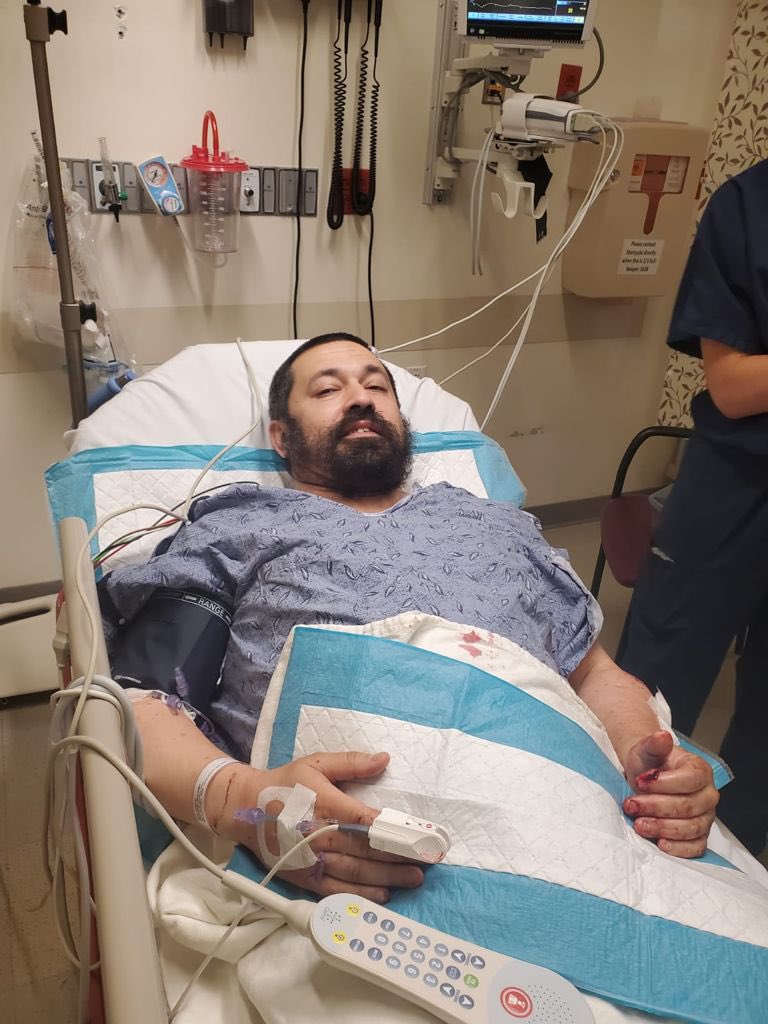
Rabbi Shlomo Noginski was sitting on the steps outside the Shaloh House, which was in use as a summer camp, when 24-year-old Khaled Awad allegedly came over with a gun in hand and asked the rabbi to lead him to his car. When they reached the car, Noginski ran, but not before being stabbed eight times. Noginski was treated at a local hospital.

Boston Police said that Awad “is expected to be arraigned in Brighton District Court on charges of assault and battery by means of a dangerous weapon and assault and battery on a police officer.”

While a motive is still unclear, ADL New England regional director Robert Trestan said facts were “emerging” that included “multiple indicators pointing towards anti-Semitism,” CBS Boston reported.

At Friday morning’s rally, which was co-sponsored by the Combined Jewish Philanthropies and Jewish Community Relations Council (JCRC) of Greater Boston, JCRC’s Executive Director Jeremy Burton said, “The Jewish community is angry and the Jewish community is united.”

“At a time of rising violence anti-Semitism across this country no Jew, no building, no part of our community, no neighborhood will stand alone,” he said. “And we expect, we demand, that we have the right to live, to walk in the streets, to be visible…to gather together, to celebrate and to live our lives as Jews fully with joy and without fear. We look to our public and appointed officials to ensure the Jews have that ability to live and be free in this country in all the ways we have been promised and come to expect in the last 200 years.”

Rabbi Shlomo Noginski recovering at a Boston hospital. Source: Twitter.

In his speech, Shaloh House Director Rabbi Don Rodkin, a Chabad emissary, said, “You can’t find a person who is kinder, more humble and more sincere” than Noginski. Rodkin recalled how his friend was born in Russia and was just 10 years old when he was “beaten very badly by hooligans,” who told him to tell his mother and all the Jews to leave Russia.

His mother, a famous pianist, immediately enrolled her son in martial arts classes, before managing to seek asylum with her children and moving to Israel. There, Noginski studied in a Chabad school, married and moved to the village of Kfar Chabad, where he had a business and was involved in local government, according to Rodkin.

Wanting to teach Russian Jews about the Torah and Judaism, Noginski sold his business and moved his family to Boston. “Today he’s a proud Jew, a rabbi and proud father of 12 incredible children,” Rodkin said.

Noting that Noginski was stabbed eight times, the rabbi asked people to do eight good deeds.

Also attending the rally was Boston Mayor Kim Janey, who tweeted on Friday morning, “Please join me in lifting up Rabbi Noginski in prayer this morning and wish him a speedy recovery. An attack on any member of our community is an attack on all of us in the City of Boston. We must work together to eliminate violence and fear in our communities.”

Massachusetts Gov. Charlie Baker also sent his best wishes to Noginski, saying that “there is no place for hate in Massachusetts and we will always stand with our neighbors in the Jewish community in condemning every act of anti-Semitic violence.”

Calls for prayers and justice on behalf of Noginski came from all over the world, including Israeli Foreign Minister Yair Lapid, who spoke with him and wished him strength and a speedy recovery.

The Conference of Presidents of Major American Jewish Organizations tweeted, “We are outraged by the brutal, unprovoked stabbing….Rabbi Noginski bravely fought back and is thankfully in stable condition. We hope and pray that he has a refuah shlema (full and speedy recovery).”

Rabbi Moshe Hauer, executive vice president of the Orthodox Union, said in a statement, “The horrific attack upon Rabbi Noginski, in the light of day and on a city street, appears to be yet another in an unprecedented surge of attacks in recent months on American Jews.”

“The growing frequency of these assaults indicates that perpetrators are not being deterred in targeting Jews for attack,” he added. “Even worse, some politicians, celebrities and other so-called influencers have been allowed to fan the flames of violence and hatred, justifying age-old anti-Semitic tropes, exaggerated claims, and inflammatory rhetoric.”

After Boston Chabad Rabbi Stabbed, Jewish Community ‘Angry’ and ‘United’ Read More »

Surprised by Anti-Semitism? Yes and No.

Although Jews have faced anti-Semitism from time immemorial, it always comes upon us as something new. It surprises us. We don’t understand it.

We strive to be good people, good citizens; we are kind hearted and generous. We devote ourselves to the education of our children, to the betterment of society, to justice and compassion. We have our share of faults along with all other human beings; but by and large, we are a good, responsible, hard-working community.

And yet, no matter what we do, people hate us! They don’t see us as individual human beings but as a vast stereotype. They don’t care if we are religious or not religious; if we are liberals or conservatives. If we are Jewish, they are against us and want to hurt us.

It was once thought that the establishment of the State of Israel would bring anti-Semitism to an end. After all, Jews would then have a feeling of security in the world, a safe haven where no one would bother us.

But the Jewish State has simply become a new target for the anti-Semites. They now couch Jew-hatred for hatred of “the Zionists.” Anti-Semites don’t have a problem with Hamas firing thousands of missiles at civilian centers in Israel; but when Israel responds by bombing the enemy, Israel is immediately condemned and vilified by the haters. For the anti-Semites, Israel is always wrong regardless of what it does or doesn’t do.

Happily, there are many millions of people who feel warmly toward Jews and the Jewish State. Happily, many millions of people admire the accomplishments of the State of Israel in the face of so many obstacles; they respect Israel’s right—and obligation—to defend its citizens.

But when we see outbreaks of blatant anti-Jewish violence, anti-Jewish rhetoric, anti-Israel demonization—it surprises and pains us!  In spite of thousands of years dealing with anti-Jewish hatred and persecution, we still are not used to it. We somehow think that humanity will improve, will judge us fairly. We grow optimistic at any sign of peace and understanding, mutual cooperation and solidarity.

We keep telling ourselves that most people are good and that reason will ultimately prevail. The haters will eventually overcome malice and violence; they will realize the value of peaceful and respectful cooperation. In a world of over seven billion human beings, surely there must be room for the infinitesimal presence of 15 million Jews. In a world with so many countries, surely there must be room for one tiny Jewish State that wants nothing more than to be able to live in peace and security.

But the anti-Semites and anti-Zionists don’t really care. They don’t want to be reasoned with; they don’t want to listen. They have their agenda of hate.

Saul Bellow, the American novelist who won the Nobel Prize for Literature in 1976, wrote in his book To Jerusalem and Back: A Personal Account: “…There is one fact of Jewish life unchanged by the creation of a Jewish state: you cannot take your right to live for granted. Others can; you cannot. This is not to say that everyone else is living pleasantly and well under a decent regime. No, it means only that the Jews, because they are Jews, have never been able to take the right to live as a natural right….This right is still clearly not granted them, not even in the liberal West.”

Bellow’s complaint is not new. Jews throughout the generations have had to face the same stark reality: Jews, because they are Jews, cannot take the right to live as a natural right.

That’s the sad part of the story.

But that’s not the end of the story. Even if there has long been hatred and violence directed against Jews…we are still here! We continue to live, to thrive, to hope.

The late Jewish thinker, Simon Rawidowicz, wrote an essay about “Israel: the Ever-Dying People.” He noted that Jews have often felt that theirs was the last Jewish generation. Jewish survival seemed hopeless. But although we were “ever-dying,” we were in fact ever-living! We often felt despair; but hope and persistence prevailed. Jews found ways to overcome all who would decimate us.

Although current manifestations of anti-Semitism and anti-Zionism are ugly and painful, we must take the long view of things. This isn’t the first period of Jewish history where Jews faced viciousness and violence. It likely won’t be the last period either. But long experience has taught us to stay strong, stay confident, stay positive. The challenge to our generation is to stand tall as Jews, to stand strong on behalf of Israel.

And we do look forward to a time when humanity will overcome the disease of anti-Semitism.  Meanwhile, we recall the words of Rav Nahman of Bratslav: All the world is a narrow bridge; the essential thing is not to be afraid, not to be afraid at all.

Surprised by Anti-Semitism? Yes and No. Read More »