fbpx

April 29, 2021

A Bisl Torah — Lack of Perception

When I turned 16 years old, I went to take my driver’s license test. I remember getting into the car, feeling more than confident listening to the instructor explain the directions. About ten minutes into the test, the instructor directed me back to the DMV. I couldn’t contain my smile. I knew that we were probably ending the test early because I passed with flying colors. Who needed an extra 20 minutes of an exam if the instructor already knew how well I did? We reached the parking lot, I turned off the car and he said, “Automatic fail. You cut off an entire lane of cars. Next time, take a wider look.”

As heartbroken as I was to fail my driver’s test, I was even more confused by my lack of perception. Not once did it occur to me that I made a mistake. Sure, oversaturated hubris filled my teenage brain. But I was still shaken that it was that difficult for me to see the difference between something acceptable and dangerous. At the time, I didn’t see how damaging my actions could have been. My awareness and sensitivity were completely skewed.

Often, we are held captive by the container of wanting to be right. Determined that we have passed a test with flying colors, holding firm to our opinion, direction, or side of the story. It is hard admitting that our perception might be slightly off. Being open to understanding someone else’s point of view does not mean giving up our own convictions. Rather, it is seeing the cars trapped in a blind spot.

Which side of an argument or story is trapped in our blind spot?

Deuteronomy reminds us, “Hidden things belong to God, but that which is revealed, that is for us to approach with Torah.” Meaning, we must seek and understand far beyond what is set before us. A willingness to expand our scope of understanding may be our greatest gift.

Check your blind spot. Be open to what you might see; be considerate of what you might learn.

Shabbat Shalom


Rabbi Nicole Guzik is a rabbi at Sinai Temple. She can be reached at her Facebook page at Rabbi Nicole Guzik. For more writings, visit Rabbi Guzik’s blog section from Sinai Temple’s website.

A Bisl Torah — Lack of Perception Read More »

A Moment in a Time Capsule

Dear all,
This week, we will close the door on our family home in Boston for the last time. 45 years ago, my parents bought this house and transformed it into a home through memories, values, and love.
Before we leave, we want to bury a time capsule. As you can see, it’s small. How do you fit 45 years of memory into this canister?
Here’s where I need your advice. What would you put in it to honor this moment in time?
Let me know! In the meantime, I offer this blessing to my family:
Baruch Atah Adonai/ Blessed are You, Adonai, who guides us on our journey.
With love and Shalom,
Rabbi Zach Shapiro

A Moment in a Time Capsule Read More »

Dozens killed, injured in apparent stampede during Lag B’Omer in Meron

(April 29, 2021 / JNS) Dozens of Israelis have been reported killed and injured in an apparent stampede during Lag B’Omer commemorations in Meron, in what is being called one of the largest peacetime disasters in the nation’s history.

According to Magen David Adom, at least 38 people have been killed and 65 injured, including six in critical condition, 18 injured severely, two moderately and 39 lightly injured.

“MDA is fighting for the lives of dozens wounded, and will not give up until the last victim is evacuated,” it said.

“We just finished treating one of Israel’s worst disasters. A terrible disaster of people who came to celebrate Lag B’Omer and were unfortunately crushed to death,” said United Hatzalah vice president of operations Dov Maisel.

“This was a very difficult site—sites that we have not seen here in Israel since the worst days of the terrorist wave back during the early 2000s,” he said.

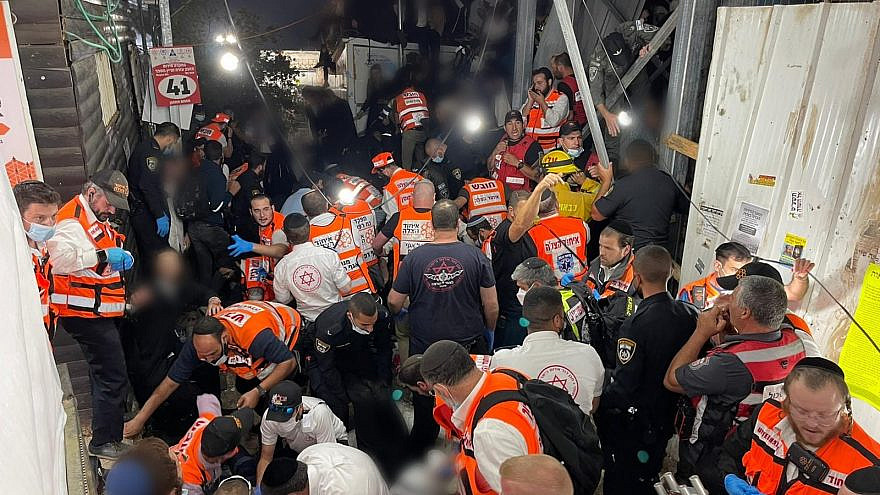
The incident occurred as thousands of religious Jews were pushing each other down a crowded corridor and staircase. Victims were crushed under streaming crowds as emergency workers struggled to reach the scene. Many of the injured were evacuated to hospitals across the country.

The cause of the stampede was not immediately clear.

More than 100,000 worshippers had gathered at the foot of Mount Meron in northern Israel as they do annually to mark the holiday, gathering to visit the gravesite of Rabbi Shimon Bar Yochai and study texts. Bonfires are part of the tradition there and throughout the country.

Israeli officials had expressed concern about possible overcrowding at the site after last year’s festivities were canceled due to the coronavirus pandemic.

“A serious disaster on Mount Meron,” said Israeli Prime Minister Benjamin Netanyahu. “We are all praying for the recovery of the injured. I ask to strengthen the rescue forces operating in the area.”

Similarly, Israeli President Reuven Rivlin said he is following reports from Meron with “great anxiety” and praying for the wounded.

This is a developing story.

Dozens killed, injured in apparent stampede during Lag B’Omer in Meron Read More »

My Plant Based Renaissance — A poem for Torah Portion Emor

An ox or sheep you shall not slaughter it
and its offspring in one day.
-Leviticus 22:28

When I was a boy I used to go fishing at
the Erie Canal in the heart of the Empire State.

I’ve already told you about how
I never ate the fish I caught but

did I mention the time another boy
who had disguised himself as a man

down by the canal, pointed his BB gun
at a tiny bird in a bush and pulled the trigger?

It fell to the ground, not quite dead and
in an act of what must have been mercy

he crushed it with his man boot until
it moved no more.

It felt unnecessary in all the possible ways.
I remember the last bird I intentionally ate

when I had barely popped out on the
other side of legality, but was still no taller

than a titmouse. It was thousands of miles
away from the memory of that canal bird

in the famous part of the golden state.
I remember thinking this is it.

I’m not a militant vegetarian (though I have
been known to orchestrate a coup if you

leave dishes out on the counter.) You can
eat meat in front of me without apologizing.

(To me anyway…its mother may never
forgive you.) I still crave the taste and I

consider the modern-day plant-based era
we find ourselves in to be a renaissance.

The Torah tells me I should not slaughter
an animal on the same day as its parent.

And I tell the Torah it’s not going to be an
issue for me, and then go to hug my cats

and the fish, and every bird I’ve ever known.


God Wrestler: a poem for every Torah Portion by Rick LupertLos Angeles poet Rick Lupert created the Poetry Super Highway (an online publication and resource for poets), and hosted the Cobalt Cafe weekly poetry reading for almost 21 years. He’s authored 25 collections of poetry, including “God Wrestler: A Poem for Every Torah Portion“, “I’m a Jew, Are You” (Jewish themed poems) and “Feeding Holy Cats” (Poetry written while a staff member on the first Birthright Israel trip), and most recently “The Tokyo-Van Nuys Express” (Poems written in Japan – Ain’t Got No Press, August 2020) and edited the anthologies “Ekphrastia Gone Wild”, “A Poet’s Haggadah”, and “The Night Goes on All Night.” He writes the daily web comic “Cat and Banana” with fellow Los Angeles poet Brendan Constantine. He’s widely published and reads his poetry wherever they let him.

My Plant Based Renaissance — A poem for Torah Portion Emor Read More »

IsraAID to Provide Oxygen Concentrators, Supplies to India

In response to the devastating coronavirus outbreak in India, now at the epicenter of the pandemic, IsraAID will provide urgently needed medical supplies to the beleaguered nation.

According to the World Health Organization’s weekly epidemiological update on COVID-19, India has reported some 2.7 million new cases as of April 27 and more than 15,000 deaths in the last week alone. (Since the pandemic began, there have been 17 million cases and nearly 200,000 deaths.)

Hospitals, which have become full, are in dire need of oxygen. On social media, images of mass cremations have gone viral.

“The scale of the crisis currently unfolding in India is simply overwhelming. As a humanitarian organization that has responded to COVID-19 in 17 countries up to now, we felt we could not just stand by,” said IsraAID CEO Yotam Polizer, whose organization will be sending medical equipment and supplies, including crucial oxygen concentrators, to health-care facilities and organizations in India.

According to a news release, IsraAID will also explore technological solutions to meet gaps in COVID-19 response and care, including data management, logistical support and vaccinations. It will also respond to the growing mental-health crisis left in the pandemic’s wake by offering self-care programs for frontline health workers to build community resilience and “help the helpers.”

To have the most impact, staff will be working with their partners on the ground in India, including health-care organizations and civil-rights groups, and with the Israel-India Forum at Tel Aviv University. Relationships between the two countries have grown notably closer in the past few years.

Noting that life in Israel returning to a pre-pandemic “normal,” said Politzer, “it is crucial to remember our shared responsibility to partner with communities facing the worst of it.”

“The pandemic,” he concluded, “will not be over for anybody until it is over for everybody.”

IsraAID to Provide Oxygen Concentrators, Supplies to India Read More »

French Judge Resigns in Protest of Sarah Halimi Verdict

A French judge resigned from his position on April 23 in protest of the verdict involving Sarah Halimi’s suspected killer.

Halimi was killed in April 2017 after being beaten and thrown out of her window. Her suspected killer, Kobili Traore, allegedly shouted, “Allahu Akbar!” while attacking her and “I have killed the sheitan! [demon]” after throwing her out the window. On April 14, the French Supreme Court upheld a lower court’s verdict that Traore was unfit to stand trial because he was high on marijuana at the time of Halimi’s killing.

Jack Broda, who presides over the Tribunal Commerce of Nancy in Eastern France, announced he was resigning in protest of the verdict, saying that “at first I couldn’t believe” the court’s verdict. “My resignation was accepted and regretted.”

Jewish groups praised Broda’s act of protest. Anti-Defamation League CEO Jonathan Greenblatt tweeted that Broda’s resignation was “an inspiring show of solidarity.” “We must continue this fight and demand #JusticeForSarahHalimi.”


The Simon Wiesenthal Center similarly tweeted, “G-d bless this French judge who has the courage to walk away from a corrupted justice system that disrespects and puts French Jews in mortal danger #JusticeForSarahHalimi.”

End Jew Hatred also tweeted, “Will any others follow? Will anyone else demand justice?”


The verdict on Halimi’s suspected killer sparked worldwide protests, including at the Los Angeles French Consulate on April 25. Among those who spoke at the protest included Associate Dean and Director of Global Social Action Agenda at the Simon Wiesenthal Center Rabbi Abraham Cooper, StandWithUs CEO and Co-Founder Roz Rothstein and Journal Editor-In-Chief David Suissa.

French Judge Resigns in Protest of Sarah Halimi Verdict Read More »

Not Mush-Room for Error

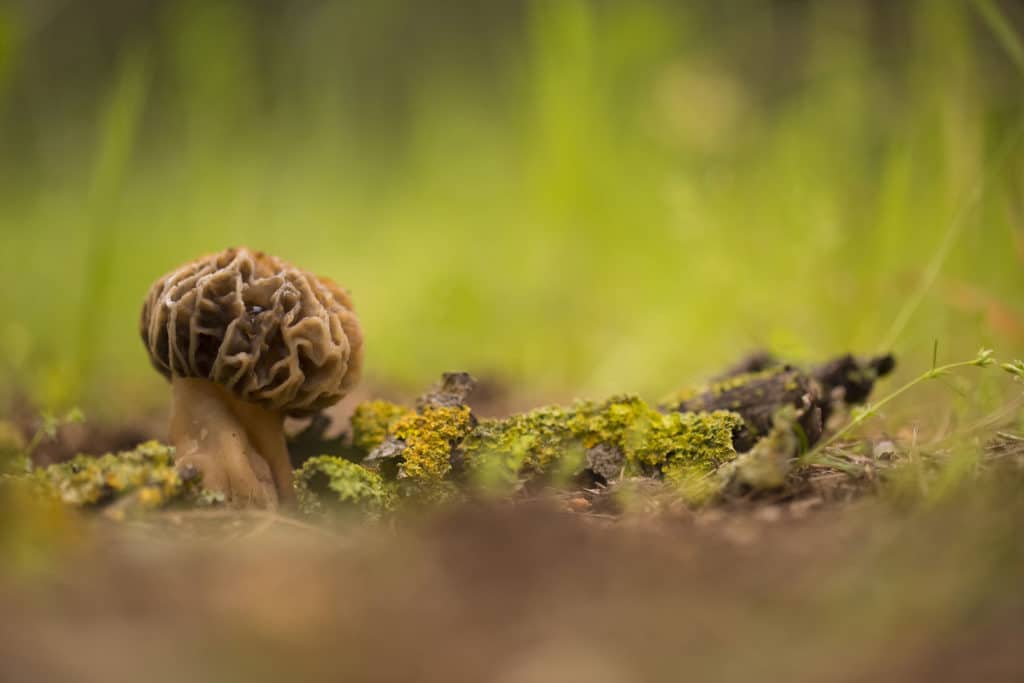
As spring continues to settle in, the outdoor temperatures are gradually getting warmer tempting us to venture outside, take in the natural landscape, and escape the indoor lifestyles we have grown so accustomed to throughout the Coronavirus pandemic. The time spent in nature will allow people to notice the little things like wild mushrooms, for example, growing adjacent to hiking trails and taking on a variety of shapes and features.

A new Israeli article published in the JNF’s Forest Magazine highlights the importance of preserving wild mushroom populations in Israel’s groves and forests and discusses the dangers associated with their disappearance due to overexploitation, intrusive land developments, and the global climate crisis.

Many believe that mushrooms are plants, but in fact, they are from a totally separate and unique kingdom in the natural world—fungi. According to scientific estimates from 2017, there are roughly 2.2-3.8 million species of fungi in the world, while only about 120,000 have been identified and accepted as such by the scientific community.

Mushrooms play many important roles in the ecosystem; the main one being the decomposition and recycling of organic matter, which they perform with the help of a unique enzyme called Lacasse. “If it weren’t for the mushrooms, we would probably be buried underneath piles of organic debris today,” says Dr. Dalia Levinson, a mycologist at the Shamir Research Institute and author of the article.

“In the process of decomposition, the fungus produces carbon and nitrogen compounds, which are important for plants to help them grow and survive.” Alongside food and applications for penicillin production, mushrooms can also be utilized as sustainable alternatives for dyes, agricultural pesticides, and even furniture and walls.

Thanks to its geographical location, Israel has been blessed with a wide variety of mushroom diversity, which brings together the climates of three continents: Europe, Asia, and Africa. “In Israel, there are about 750 identified species of fungi, some of which are intended for food, and there are probably many other species that have not yet been discovered,” says Dr. Levinson.

Threats to Wild Mushrooms

According to the article, there has been accumulating evidence in recent years indicating the far-reaching effects of the climate crisis could harm various populations of wild mushrooms as some species of fungi change their areas of distribution  according to the shifts taking place in the climate.

“Rising temperatures in the fall and spring seasons in Israel could lead to a decline in the wild mushroom population,” says Dr. Levinson. “The mushrooms are relatively pampered—each mushroom has the optimal combination of temperature, humidity, and amount of light that suits it. Change in the local climate leads some mushrooms to not appear on the date they’re expected, or it causes them to not come out at all and skip a season.”

However, the climate crisis is not the only factor that could damage wild Israeli mushrooms. Accelerated urbanization, reduction in the number of open areas, and over-utilization of land also plays a significant role in their decline as these types of developments easily disrupt and fragment mycelia, the mushroom’s vegetative root-like system embedded in soil and other substrates. What can become a vast, intelligent spore network, the mycelium functions to absorb nutrients from the environment as well as exchange signaling information between other plants, including trees.

“Human development processes can damage mycelium hidden underground,” says Dr. Levinson. “Furthermore, the compacting of the ground by humans through our footsteps, cars, and machines also causes mycelial damage. That is exactly why in Mexico, for example, special paths have been created in the forest for those who want to view and collect mushrooms, which open and close depending on the number of visitors.”

Much like the consequences of overfishing, another factor that impacts the abundance of wild mushrooms in Israel is over-collection. While mushroom collection is considered a nice recreational, outdoor activity for enthusiasts, it can be harmful when it’s done excessively.

“In Israel, collecting edible mushrooms has become a trend, but some collectors do not always listen to the collection rules we are trying to impart to the public,” says Dr. Levinson. “Mass collection has significant implications for the ecosystem in the forest and in general because picking the mushroom removes parts of its fungus, and it may prevent it from spreading spores and reproducing.”

She says an example of this is the Tuber oligospermum  mushroom, a fungus that used to grow in huge quantities in pine tree groves during the 1950s. “This fungus has probably undergone massive harvesting and collection and is now very rare.”

Invest in Mushroom Protection

Many countries give considerable weight to the issue of wild mushrooms and invest a great deal of research effort in favor of their preservation as natural resources. To this end, there is a limit to how many mushrooms a person is allowed to pick along with other regulations in many different countries. Researchers from around the world have created lists of endemic fungal species (those that only exist in a restricted distribution area) in different countries. In fact, the International Union for Conservation of Nature (IUCN) created the Global Fungal Red List, which contains yearly entries of fungal species threatened by habitat loss, overexploitation, pollution, and climate change.

In Israel, a collection of different species of wild mushrooms from as early as the 1990s by Prof. Salomon Wasser and his team from the Institute of Evolution at the University of Haifa, were transferred to the Shamir Institute for Research in 2018.

“Our intention is to increase this collection and enrich it as much as possible in order to bring it to a level where it will be a ‘bank’ for wild mushrooms and serve as a national collection open to researchers and the general public in the future” says Dr. Levinson.

According to Levinson, however, Israel is behind when it comes to dealing with wild mushrooms. “We need to invest in research on the subject, so that we can learn what the diversity and distribution of mushrooms are in Israel, how the climate crisis affects them, whether there is a depletion of species richness or extirpation of species from Israel, whether harvesting has an effect on the mushroom population, and more,” she says.

“Beyond that, there is a large faction of collectors here in Israel, and we want to build groups of collectors that we can use in our research as a civil science. But we cannot do that without a budget.”

“Mushrooms are significant to our existence here, and they cannot be underestimated. If we do not instill a proper collection culture for wild mushrooms, as the Society for the Protection of Nature did on the issue of wildflower conservation (more than 50 years ago), we may wake up to a reality where many species of fungi will become extinct, and the entire ecosystem will change. Therefore, efforts should be made to instill appropriate collection culture and forest management while taking into account mushroom conservation and to create extensive collaborations between ecocentric organizations on the subject,” she concludes.

ZAVIT – Science and the Environment News Agency

Not Mush-Room for Error Read More »

Elie Wiesel to Be the First Jew Honored With a Bust in National Cathedral

WASHINGTON (JTA) — Washington’s National Cathedral, known for its role during presidential inaugurations and other days of national import, is honoring Elie Wiesel, the Nobel Peace Laureate and Holocaust memoirist with a bust, making him the first Jew to be so honored.

Or maybe not the first, depending on where you sit.

“I would say he is the first 20th-century Jewish person,” the cathedral’s dean, Rev. Randy Hollerith, said when asked how Wiesel came to be the first Jew to earn a sculpted depiction at the cathedral.

Asked if he was referring to Jesus and some of the apostles, who also make appearances in statues and in busts in the Washington landmark, Hollerith said yes.

“I’m just being a little not quite tongue in cheek, it is accurate to say there are others,” he said in an interview on Monday.

There are also depictions of Jewish prophets, including Noah, Joab, Isaiah and Jeremiah, on the cathedral’s stained glass windows.

Wiesel’s bust joins other luminaries on the Human Rights Porch, visible as one enters the cathedral, which is also a popular tourist destination.

Among them are Mother Teresa, Rosa Parks and Oscar Romero, the El Salvador archbishop who was assassinated in 1980 while saying Mass.

The cathedral, Hollerith said, is not just a Christian shrine, but a tribute to those who loom large in the American consciousness.

“It’s important for us that whenever people come into the cathedral, that they see not only in the iconography reflected, you know, saints and other parts of the Christian faith, but they also see folks throughout the 20th century who stand as examples in our country,” he said.

There are corners of the cathedral devoted to Abraham Lincoln and George Washington. There is also a Darth Vader bust that looms gargoyle-like outside the cathedral, the result of a design competition for kids to stir up interest in the cathedral when it was expanding in the 1980s.

Hollerith said the Christian context was key to understanding Wiesel’s importance.

“Quite frankly to me to have him in this cathedral is also a reminder for everyone who walks through those doors of the reality of the Holocaust and what happened, and that it must never be forgotten,” he said. “And I think that’s doubly important to have within a Christian context.”

The cathedral belongs to the Episcopal Diocese of Washington, but it endeavors in its mission of being “a sacred space where the country gathers during moments of national significance” to be open to all faiths and Christian denominations. Rabbis and Imans routinely take part in services that take place the day after presidential inaugurations. Martin Luther King, Jr. preached at the cathedral the Sunday before his assassination.

The cathedral hosted Donald Trump’s 2017 post-inaugural service, but in 2019, after Trump called Baltimore a “disgusting, rat and rodent-infested mess” and told a group of critical left-wing congresswomen to “go back” to their countries, the cathedral had enough.

“As faith leaders who serve at Washington National Cathedral — the sacred space where America gathers at moments of national significance – we feel compelled to ask: After two years of President Trump’s words and actions, when will Americans have enough?” the cathedral’s clergy said in a statement.

This year the church maintained the post-inaugural tradition, although President Joe Biden kept himself at a virtual distance.

There are a number of other D.C.-area houses of worship that attach “national” to their name, including at least one synagogue, and a popular Jewish guessing game in Washington since Joe Lieberman was on the 2000 Democratic presidential ticket has been: If a Jewish president is elected, will the cathedral tradition continue?

The church started consulting with the Wiesel family in 2017, about a year after his death. They reviewed a number of photos and chose a likeness. Chas Fagan, a member of the U.S. Commission on Fine Arts who has crafted multiple works in the cathedral, created the clay model. Sean Callahan used medieval techniques to carve the bust from stone.

Elie Wiesel’s widow, Marion Wiesel, said the bust is a means of advancing Wiesel’s teachings.

“Not only does his presence in the National Cathedral memorialize his life and honor his commitment to human rights; it also ensures that new generations will learn from his teachings and carry the lessons of his life forward into the future,” she said in the cathedral’s release.

The formal dedication of the bust will take place in the Fall of 2021.

Elie Wiesel to Be the First Jew Honored With a Bust in National Cathedral Read More »

The J&J Moratorium Was a Mistake

As a primary care physician, I take care of many patients with idiosyncratic attitudes toward risk. Some smoke cigarettes, a known lethal habit, but eat only organic foods. Others avoid all vaccines despite centuries of evidence validating their substantial benefits. We can expect such idiosyncrasies from individuals, but it was a surprise and a disappointment to see such irrationality from the FDA/CDC. On April 13, those agencies decided to halt the administration of the life-saving Johnson and Johnson (J&J) COVID vaccine. They rescinded the decision ten days later.

The decision to halt J&J vaccination was based on six cases of blot clots (in the veins that drain the sinuses of the head) among nearly seven million individuals who have received the vaccine. Six out of seven million means the risk of this serious but generally nonfatal condition is less than one in a million. That risk pales in comparison to remaining unvaccinated.

Look at the risk in Michigan, which is now experiencing a horrendous resurgence of COVID-19. At the time of the FDA action, Michigan’s population of ten million was experiencing nearly 10,000 infections each day. The fatality rate for COVID-19 is roughly one in 200. So, about 50 unvaccinated individuals would die each day from the COVID-19 they acquired at the time of the FDA decision. For the unvaccinated in Michigan, that translates into a one in 200,000 chance of acquiring a fatal infection every day, versus a less than a one in a million one-time risk of a clot from the J&J vaccine.

Although COVID-19 is less prevalent elsewhere in the United States, the virus’s risks are still far greater than the chance of harm from the vaccine. And the FDA chose to preempt this negligible risk: The J&J vaccine had originally been approved under an “Emergency Use Authorization” (EUA). The FDA grants EUAs for vaccines addressing “serious or life-threatening diseases or conditions” when there are “no adequate, approved, and available alternatives.” Because the Pfizer and Moderna vaccines are also used under EUA and remain in short supply, the basis for J&J’s EUA was still valid when the FDA halted distribution.

The FDA/CDC joint statement cited “an abundance of caution” as their reason for halting the EUA of J&J. The agencies understandably want to demonstrate their vigilance in protecting the public. They likely assumed that pausing the EUA, then reapproving it alongside a set of warnings would allow J&J vaccinations to proceed as before.

The FDA and CDC’s pause on J&J may have bolstered vaccine hesitancy.

But their pause may have bolstered vaccine hesitancy. As I have seen in my experience as a practitioner, reluctance to vaccinate reflects “gut level” concerns rather than FDA-style risk-benefit analysis. Although the FDA rescinded the moratorium, the fear generated won’t simply dissipate. In addition, the concerns generated by the halt in THE J&J vaccine may affect willingness to take the Pfizer and Moderna vaccines as well. Vaccine skeptics anticipating that “the other shoe may drop” on the rest of the vaccines may elect just to wait and see.

We could already be seeing the fallout. I volunteer in a “Pop Up Vaccination Clinic” in the Watts/Willowbrook area of South-Central Los Angeles. The week prior to the moratorium, we administered the J&J vaccine to 121 patients. The week after the moratorium, we administered the first doses of Pfizer to only 64 patients. Although there may be other reasons for the fall-off, both the absence of the popular “one and done” vaccine and more general concerns generated by the moratorium may have accounted for the reduced demand.

Fortunately, the FDA and CDC’s reversal frees up over two million J&J vaccine doses. For the future, the FDA should overcome its “overabundance of caution” narrative and shift to the “minimize the harm” standard that practitioners employ. The correct message never changed: All the available vaccines for COVID 19 are safe and effective. I tell my patients that the best vaccine is the one they can get today.

Like people, vaccines and vaccination programs can be defamed. Once harmed, a reputation can be hard to rejuvenate. In the wake of the FDA’s J&J misstep, we should all do everything we can to encourage reluctant friends, colleagues and relatives to overcome their resistance and get vaccinated. As the national vaccination program evolves, we can only hope that the damage can be overcome.


Daniel Stone is Regional Medical Director of Cedars-Sinai Valley Network and a practicing internist and geriatrician with Cedars Sinai Medical Group. The views expressed in this column do not necessarily reflect those of Cedars-Sinai.

The J&J Moratorium Was a Mistake Read More »

Unscrolled, Emor: A Heavy Burden

To be Aaron, the High Priest, is a heavy burden indeed.

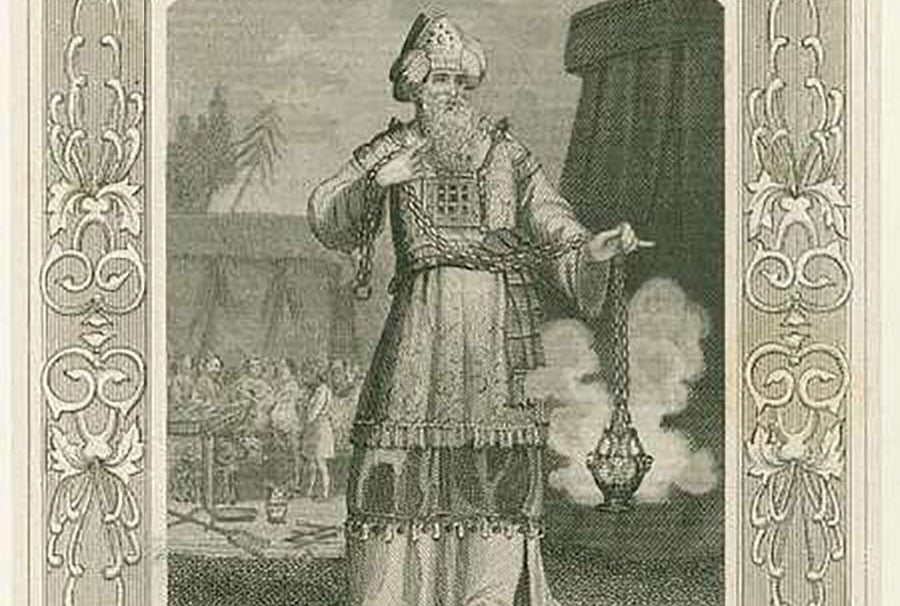
In this week’s parashah, as well as in those that have preceded it, we have come to understand the exact nature of this burden. To be the High Priest — the Kohen Gadol — is to be responsible for cleansing the sins of the entire people. It is to enter, vulnerable and alone, into the Holy of Holies, where the presence of God is hottest and most volatile. It is to gird oneself, day after day, in the heavy vestments of the job; to be always carrying the people as stones upon the breastplate and as weights upon the shoulders. It is to become bloodied morning and night with the blood of the offerings. It is to become roasted in the savory smell of burnt flesh and the pungent perfume of the sacred incense. It is to hear each day the plaintive bleating of the goats, the bellow of the bull.

It is to watch one’s brother ascend to God’s presence on the mountain while remaining behind, mired in the muck and entrails of God’s holy work down below. It is to see one’s sons, young and foolish and mortal, singed by the wrath of God for offering their strange fire before the sanctuary. It is to learn, as we do in Parashat Emor, that you are not even free to draw close to your own dead kinsmen, for you must remain ever pure, ever ready to serve.

In Aaron, light and darkness merge and sizzle. He is a figure of life and a figure of death. A shaman and a butcher. His sacred vocation, the sacrificial service, was itself instituted by God in response to the great sin of the Golden Calf, in which Aaron played a terrible role. His most important function, that of atoning for the people on Yom Kippur, was instituted in the wake of the sin of his sons, Nadav and Avihu. Thus, Aaron is both the midwife of sin and the vanquisher of sin. At one of his feet is the goat for the Lord. At the other, the goat for Azazel.

On Yom Kippur, we sing the song “Ma’reh Kohen,” which celebrates the joyous moment on the Day of Atonement when the High Priest would emerge, unscathed, from his dangerous entry into the Holy of Holies.

According to the song, his appearance at that moment was like “the glitter of light from the brilliance of the angels.” It was like “the canopy of the heavens stretched out on high.” It was like “a rose planted in a beautiful garden.” It was like “a bright star shining in the east.”

That was how he looked. But how did he feel? What did he experience as he walked out to the people, having come so close to the presence of God — having wrestled with the people’s sins and survived? Whatever it was, was it worth the high price that he paid?

With the fall of the Temple came the end of Aaron’s unique burden, role and knowledge of God.

This is a question we can’t answer. With the fall of the Temple came the fall of the priestly service and the end of Aaron’s unique burden, role and knowledge of God.

They’re still among us today, of course. They go by Cohen or Cohn or Katz or Kahn. In some communities, special restrictions and special honors are still reserved for them, but it’s nothing like it was. They live lives like the rest of us. They go to work and come home. They marry and raise families. They die and are buried.

If Moshiach comes and rebuilds the Temple, however, they will be recalled to their sacred work, asked to hang up their hats and take on the mantle of Aaron — lover of peace and pursuer of peace, figure of light and dark — who broke himself to make the people whole.


Matthew Schultz is the author of the essay collection “What Came Before” (2020). He is a rabbinical student at Hebrew College in Newton, Massachusetts.

Unscrolled, Emor: A Heavy Burden Read More »