Once during a 9th grade gym class conversation with my long-time friend Brian Weinstein – host of the Phish-centric “Attendance Bias” podcast – he referred to Aerosmith as being the biggest American rock band of all-time. As someone who generally likes to debate music-related rankings, I initially questioned that statement. Then I thought about it and realized how true it was. I mean, who comes close to Aerosmith when it comes to the number of hits they have had or the number of years they have been playing arenas and stadiums? And that success continues into the 2020s…
Opinions aside, Aerosmith has sold over 150 million albums worldwide, with 25 gold albums, 18 platinum albums, and 12 multi-platinum albums to the band’s credit. Reportedly, Aerosmith holds the record for the most total certifications by an American band and is tied for the most multi-platinum albums by an American band. The quintet has scored 21 Top 40 hits on the Billboard Hot 100 — including 9 #1 Mainstream Rock hits – and are the recipients of 4 GRAMMYs, 6 American Music Awards, 4 Billboard Awards and 10 MTV Video Music Awards.
On February 17, 2021, Aerosmith drummer Joey Kramer will be part of a Rock & Roll Fantasy Camp Masterclass. Within this virtual class — which starts at 8:00 PM EST — Kramer is promising to share “stories, tips and knowledge from his 50+ years of experience performing and recording with Aerosmith.” Attendees will be able to ask questions directly to Kramer. Other upcoming masterclasses booked by David Fishof’s Rock & Roll Fantasy Camp will include The Doors’ Robby Krieger, U2 producer Steve Lillywhite and former Megadeth guitarist (turned mega-star in Asia) Marty Friedman.
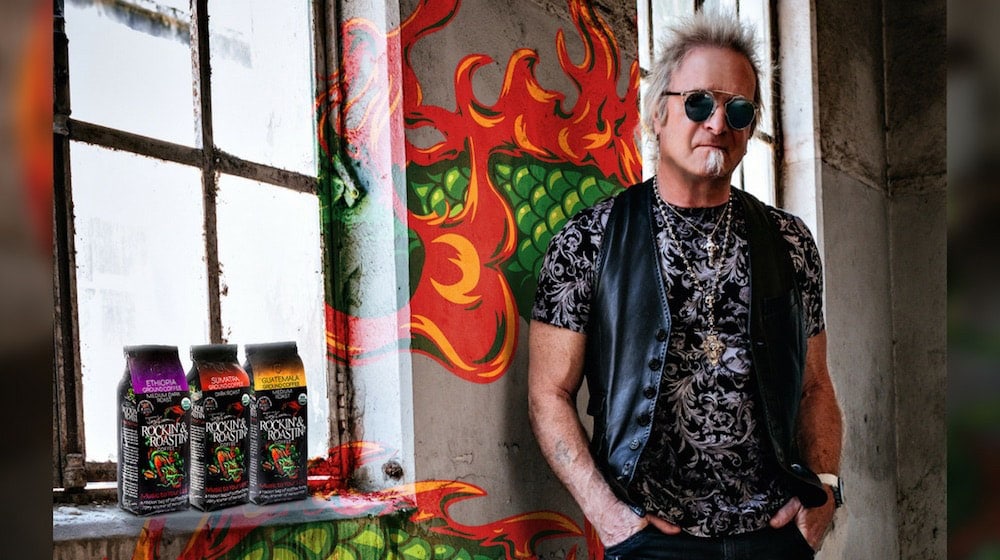
I had the pleasure of interviewing Joey Kramer on February 10, 2021 via Zoom, as embedded above. We briefly touched upon Kramer’s Jewish roots within our chat, as he confirmed to me that he was indeed bar mitzvahed as part of his childhood. Also intriguing about Kramer is that he has found success outside of music as an entrepreneur, founding Joey Kramer’s Rockin’ & Roastin’ Organic Coffee.
More on Joey Kramer can be found here, here and here.
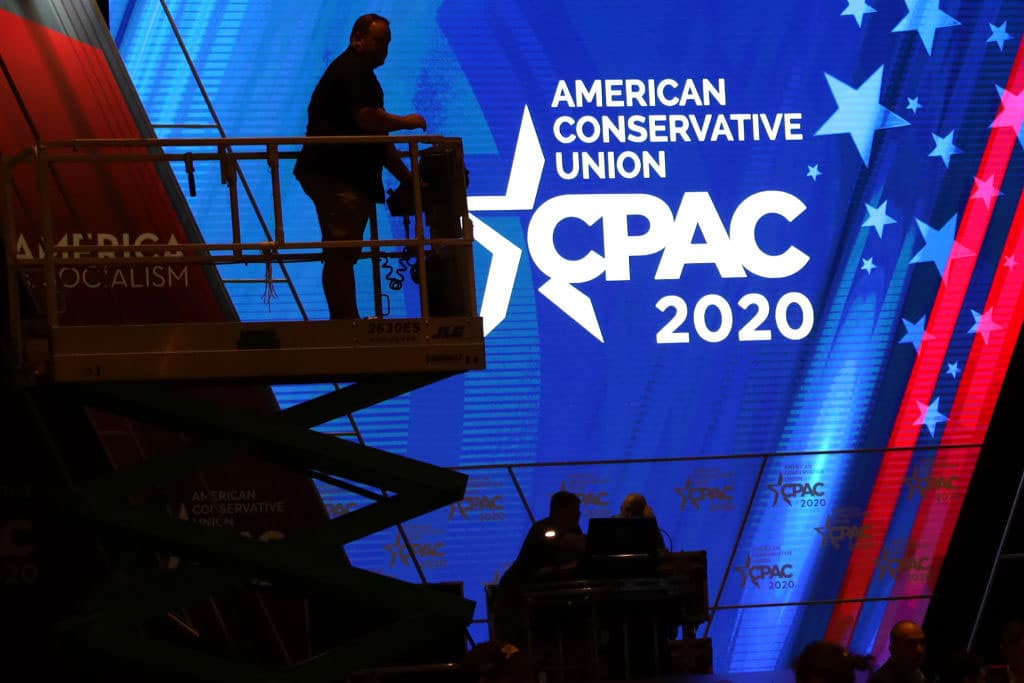
The Conservative Political Action Conference (CPAC) announced in a tweet that they have disinvited a person known as Young Pharoah over a series of past anti-Semitic tweets.
The tweets from Young Pharoah, which were unearthed by the progressive group Media Matters for America, included him claiming that there was no evidence that Jews or Judaism existed. He also referred to Jews as “thieving” and alleged that Israeli Jews are censoring social media while promulgating pedophilia. Young Pharoah had been scheduled to speak during a February 28 panel an hour before former President Donald Trump’s planned speech.
CPAC’s tweet stated, “We have just learned that someone we invited to CPAC has expressed reprehensible views that have no home with our conference or our organization. The individual will not be participating at our conference.”
We have just learned that someone we invited to CPAC has expressed reprehensible views that have no home with our conference or our organization. The individual will not be participating at our conference.
Prior to CPAC’s disinvitation of Young Pharaoh, the American Jewish Committee had tweeted that Young Pharoah has “spread horrific antisemitic lies. He has no place on the @CPAC stage. CPAC leadership must denounce his antisemitic conspiracy theories and act to ensure that Jew-hatred has no place at the conference.”
Young Pharaoh (@PHARAOH_ATEN_) uses his platform to spread horrific antisemitic lies.
CPAC leadership must denounce his antisemitic conspiracy theories and act to ensure that Jew-hatred has no place at the conference.https://t.co/0SbHaU9fTR
Young Pharaoh also doubles down on statements like “all the censorship & pedophilia on social media is being done by Israeli Jews" pic.twitter.com/8J5UVjueIA
If Tank were a character in a film, he would be the Dude from Big Lebowski.
You think I’m kidding but if he could walk around in a half-open bathrobe and slippers, ordering White Russians, he would.
If Tank could talk he’d do it while inhaling a joint and he’d say things like“ Mannnnnnnnn, I think you could have asked in a nicer way, is all I’m saying.”
“He likes goats more then humans.” the breeder in Tennesse told us.
LOL. This dog likes humans more then I do, some days.
The thing is, the coyotes are here.
We live in paradise but coyotes roam freely at night.
They have gruesome howling parties whenever they make a kill.
Have you ever heard coyotes making a kill? It’s this hideously loud orgy of shrieking bloodlust. And the poor bunny or deer scream too. This is the part I can’t bear.
“Just part of living in the country.” Max said. “You get used to it.”
To be fair—coyotes are not evil. They serve a purpose; they are a part of the animal kingdom and eco-system.
I’d just prefer they serve that purpose far, far away from our goats.
Even now when we hear them, even inside, I freeze. My ears have become hyper alert to them. We will listen in silence for a second. If we can hear Tank bark in response, even a couple of gruff woofs, Max will nod.
“He’s doing his job.”
Then I breath out. I am half-worried I’ve already ruined this dog by loving on him so much and that if a coyote, G-d forbid ever kills a goat it will be my fault because I’ve spoiled him into thinking he’s a cuddly house dog instead of the massive, intimidating guard he was hired to be.
The truth is though, Tank is much more than just a body-guard. He is a charmer, a deeply kind, soothing, friendly presence. He is a friend.
It is alson true that, not counting yesterday’s challah stealing fiasco, he has tried to sneak into the house many times. Yesterday he just got lucky.
Max felt it reasonable, after he inhaled all the bread and cheese, that he have a bit less dog food for dinner. I protested. He did a bad thing, yes, but he still deserved dinner. You see the kind of push-over parent I am. Sigh.
And then it happened.
We went to bed. And at 3:00 am Max bolted awake.
“What is that.” I whispered.
We both got out of bed, to listen at the window.
A loud, menacing growl. Not a coyote sound.
Tank was snarling back. We’d never heard that sound out of him. A massive growl, a massive grumble came back.
This went back and forth for a while.
Like some kind of terrible call-and-response.
“It’s definitely not a coyote.” Max said. “ There’s some other kind of animal out there. I’ve never heard him snarl like that at anything before. Whatever it is, it’s right outside the paddock.”
Then, quiet. No sounds from the goats—this is a good thing. (You hear if they are in trouble.)
Tank calmed down. The animal seemed to have slunk away.
In the morning, we went to YouTube. I typed in “mountain lion growl.”
I played it for Max. He nodded.
“That’s it. That’s exactly what we heard.”
“Tank defended us all from a mountain lion.”
“He is doing his job after all.”
Max looks thoughtful and then, after a pause, says, “Guess he deserved the challah.”
As noted by Billboard Magazine in 2019: “PerryFarrell’s role in paving the way for the ascendance of alternative music can’t be overstated.” As both the frontman of Jane’s Addiction and the founder of Lollapalooza, Farrell has thrived within both the underground and mainstream worlds. In other words, without Farrell, there would probably be no Coachella or Bonnaroo – and that is without factoring in his excellent work with Porno For Pyros or Satellite Party.
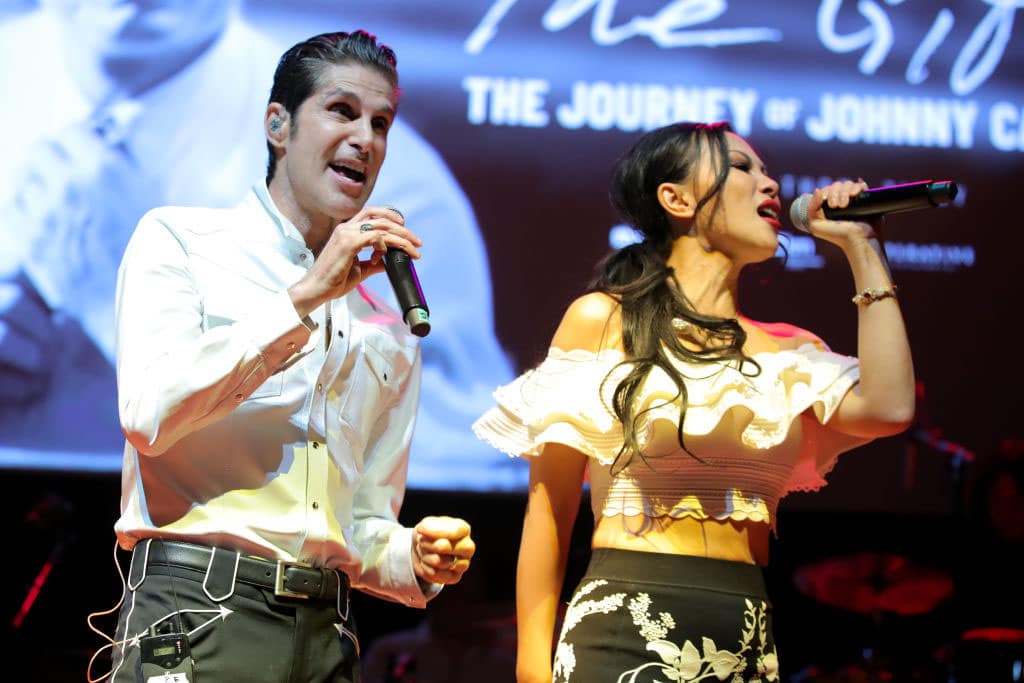
The latest album release for Perry Farrell – who not all Jewish Journal readers may not realize was born Peretz Bernstein – is “The Glitz; The Glamour.” Released in January, the 68-track retrospective features work over the course of a 35-year period from Farrell’s career. In addition to both remastered and previously-unreleased music, it also includes a hardback book of “photographic memoirs,” 2 limited-edition prints and a bandana. An absolute essential catalog piece for fans of Farrell.
On February 17, 2021, I had the pleasure — and I do mean “the pleasure” — of speaking with Perry Farrell via Zoom, as embedded below. Our conversation initially started off with discussion about “The Glitz; The Glamour,” then naturally guided along to a variety of topics, including the following:
Farrell’s initial upbringing in New York, which included time spent alongside with his father in Manhattan’s Diamond District
His feelings about the on-going COVID-19 pandemic and how President Biden is handling such
The importance of doing a “mitzvah” rather than “getting” one
How his wife Etty Lau Farrell and children factor into his professional life
Future plans for himself and his brands
Simply put, you think you primarily are going to speak with a rock legend about their latest release – a follow-up to 2019’s “Kind Heaven” – yet you wind up having a fun and interesting conversation about everything but “The Glitz, The Glamour.”
More on Perry Farrell can be found here, here and here.
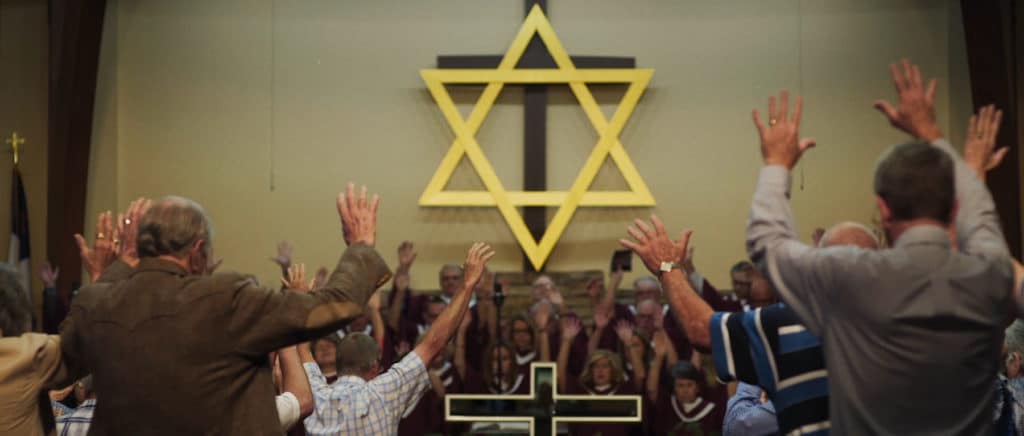
Evangelical Christians are the largest humanitarian supporters of Israel, donating $129 million annually via the nonprofit International Fellowship of Christians and Jews to aid programs for the poor, elderly, new immigrants and others in need. But as the new documentary “’Til Kingdom Come” reveals, there’s an ulterior motive to this philanthropy. Evangelicals believe they have an obligation to support Israel because their faith dictates it must endure until the End Times: Armageddon, the Second Coming of Christ, and the Rapture of the faithful. There’s no room for Jews in this scenario. All non-believers will be destroyed.
Emmy Award-winning Israeli documentary filmmaker Maya Zinshtein (“Forever Pure”) turns her lens on this unholy alliance, showing how this symbiotic mutual exploitation shapes the destiny of millions of people by interviewing Evangelicals and Israeli leaders, Jewish settlers and the IFCJ’s Yael Eckstein, who chooses to ignore the ulterior motives of her biggest contributors for the financial and political benefits.
“I came across the story of the Evangelical influence on Israel after being asked to advise on another project where the Evangelicals were a small part of it. It drove me to start looking in this direction,” Zinshtein said. “I was stunned by the fact that this story was still very much unknown in Israel and at the same time it was very clear that the Jewish–Christian bond has a great influence on my daily life. It was summer 2017, the United States had a brand-new President–Trump–who was heavily backed by this community. It was clear that promises had been made during the campaign. I understood that the upcoming years. would be very interesting to follow and see how it evolves on the political level.
“I found the Christian-Jewish bond and its influence on our lives fascinating. I think this story was unexplored on the level of documentary filmmaking. This bond has direct implications on Israel and on the policy of the U.S. in the Middle East and I thought it would be crucial to bring it to light to be part of public discourse,” Zinshtein added. “In a more general perspective, the questions of church and state, the involvement of religion in today’s politics alongside my interest to understand the role that faith plays in people’s lives are the themes that are explored in the film.”
Asked whether she believes Evangelicals are anti-Semitic (and possibly white supremacists) beneath their professed love of Israel and whether Jews like Eckstein are making a deal with the devil in aligning with right-wing Christians whose stances on Black, LGBTQI and abortion rights leave a lot to be desired, Zinshtein had two points to convey.
“Firstly, there is danger in stereotyping an entire community, roughly a quarter of the U.S. population, with blanket statements such as white supremacists, or stances on Black rights. Evangelicals are not a monolith and there are nuances to political, sociological and theological aspects that are unique to each Evangelical community,” she said.
“Secondly, there is a common thread amongst most of the political movement of Evangelicals in the U.S. which is pro-life and has pushed against LGBTQI legislation in years past. The impact of this on Israel may not always be direct. But it is crucial for Jews working with Evangelicals to be aware of this aspect of their partnership and the real human values and rights where there can be conflict between the two ideologies,” she said. “When you are working with the Evangelical political movement you are ultimately signing on to their whole agenda.”
“When you are working with the Evangelical political movement you are ultimately signing on to their whole agenda”—Maya Zinshtein
As for Eckstein, “I don’t want to speak on her behalf but she is definitely aware of the core differences between the two faiths and clearly decided to put these core differences aside,” Zinshtein said. “For me personally, I would find these differences difficult to reconcile.”
Filming on “’Til Kingdom Come” began in March 2018 at Trump’s Mar-a-Lago at the annual Gala of the Fellowship of Christians and Jews. “The filming process took much longer than expected as the events on the political level kept evolving,” Zinshstein said. “Our last filming day was at the White House, in January 2020–just shy of two years from when started-at the announcement of the Deal of the Century,” Trump’s Middle East peace plan. Having met influential pastors and Jewish leaders at the gala, “It was very clear for us that this event was the exclamation mark for our journey and for the story that we were trying to tell.”
One of her biggest challenges was getting access to events, meetings and key players. “It was important for me to show their work rather than talk about it, to let them tell first-hand their own views and perspectives,” Zinshtein said. “As an outcome of this creative approach we also had great challenges at the editing process: to be able to tell a comprehensive narrative without voice-over narration. I was very lucky to have the strongest editing team as writer Mark Monroe, the editor Elan Golod and the supervising editor Geoffrey Richman put their combined efforts to bring this vision to life.”
Zinshtein, whose family emigrated from Russia to Israel when she was 10, felt like an outsider as a Jew in her former country, “even though we were a secular family,” she recalled. “I grew up in kibbutz Beit Hashita and Israel became my home that I love and care deeply about. As a child, my dream was to become an investigative journalist. I served in the IDF as an officer in the IDF spokesperson unit and then became a journalist. I discovered documentary filmmaking first as a producer and later as a director and decided that this is the way I want to tell meaningful stories that hopefully can bring a change.”
Her previous documentary “Forever Pure,” which followed the Beitar Jerusalem soccer team in the aftermath of acquiring two Muslim players, “succeeded to drive a real change at the club. For me, this is the reason why I want to keep telling stories.” She’s currently in early development on her next project, on which she’ll again collaborate with “’Til Kingdom Come” colleagues Abie Troen, John Battsek and Sarah Thomson. “We still can’t go public on the subject but it’s going to be a very timely project that we think will evolve in the upcoming years,” she said.
Reflecting on the future of the Evangelical-Israeli relationship, “I think this bond is here to stay,” Zinshtein said. “I’m sure that in the upcoming years it would be probably less effective on the political level, but elections happen in the U.S. every four years. I think this is exactly the time when this bond should be discussed and maybe some lessons will be learned. I hope the different communities that are affected of this story would start to have a conversation about the outcomes of the Christian-Jewish bond,” she added. “I hope this film will initiate a conversation within the Jewish community in the U.S. as I believe it has a major impact on the relationship between the American Jews and the state of Israel.”
“’Til Kingdom Come” opens Feb.26 at Laemmle Virtual Cinema.
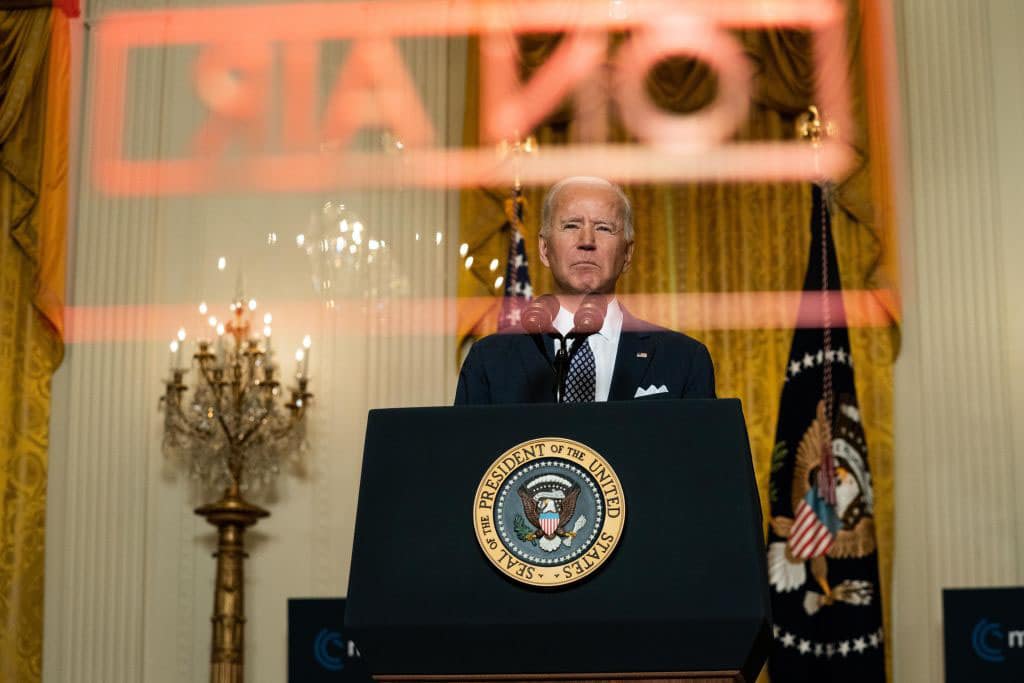
Last week was going to be Joe Biden’s grand entrance onto the global stage, meeting virtually with his fellow world leaders on February 19 at his first G-7 summit and then addressing the widely respected Munich Security Conference. He would use these events as an opportunity to signal America’s re-ascension to a position of international leadership, committing the United States to rejoining the Paris climate agreement and recommitting to the Iran nuclear pact. No one was watching more closely than Europe’s leaders, who had struggled through the last four years attempting to improvise a radically different set of relationships with Biden’s predecessor.
But then Iran’s leaders splashed a cold bucket of reality onto the choreographed proceedings. First, an Iranian-backed militia launched two dozen rockets at a U.S. military base in Iraq, wounding an American soldier and killing a non-U.S. contractor. Then, hours before the G-7 meeting began, Iran refused an invitation to participate in a new round of multilateral discussions about the nuclear deal — just after Biden had announced his willingness to join those talks. Both were well-timed maneuvers designed to embarrass Biden and to underscore the difficulties the American president would face in attempting to piece the agreement back together.
But neither Biden nor his advisors appeared bothered by Iran’s intransigence. Secretary of State Anthony Blinken took the opportunity to reiterate that the pact must also address Iran’s ballistic weapons and sponsorship of terrorist activity, but cautioned against assigning blame for the attack until more evidence of responsibility had been assembled. Blinken’s reluctance to hold Iran accountable suggests that the White House simply wanted to get through Biden’s debut in the international arena without seeing his message of multilateralism and peacemaking undermined by an argument with Iran. But his reference to the importance of non-nuclear components of the next deal seemed to signal that Biden is willing to let the agreement collapse unless the Iranians are willing to make significant concessions.
These seem like contradictory messages. Is the United States so eager to rejoin a nuclear agreement with Iran that they will ignore a terrorist attack on a U.S. military base? Or does Biden’s team want a stronger deal enough that they’d risk letting the Iranians walk away?
These mixed messages make more sense if you believe that Biden is more interested in appearing to negotiate with Iran than in actually moving forward in any tangible way. And the pretense of progress is a logical strategy only if you also believe that Biden’s primary audience is in Europe, not the Middle East, and that his most important foreign policy goals have nothing to do with Iran at all.
Biden is more interested in appearing to negotiate with Iran than in actually moving forward in any tangible way.
Beyond his “America is back” slogan, Biden’s most emphatic message at the G-7 and the Munich Conference was about the threats that China and Russia present to the world order. While the Europeans were relieved to welcome back a more traditional American partner, they were notably cooler in response to Biden’s call to unite against the menace he argued is posed by these two countries. The European Union has just signed a sweeping trade agreement with China. Germany is leading an effort to complete a transcontinental export gas pipeline with Russia. And French President Emmanuel Macron, poised to become Europe’s most influential leader when German Chancellor Angela Merkel steps down later this year, used his speaking slot at the Munich Conference to repeat his concept of a “European strategic autonomy” that reflects a less closely coordinated relationship with the United States on defense and other matters.
Biden needs Europe to successfully confront China and Russia. But Europe is much more wary about America’s reliability after four years of dealing with Trump. So Biden is pulling out all the tools at his disposal to rebuild a battered trans-Atlantic relationship. He can talk a good game on climate change and trade, but he is limited by domestic political challenges on both issues. Pledging to fix a broken Iran nuclear agreement may be his best way of reassuring nervous European leaders that he can be trusted.
But Biden’s words and actions since taking office suggest that the Middle East will be much less of a priority for him than his predecessors. So if talking a good game on Iran is what will be required to marshal support from Europe on his more important goals — standing up to China and pushing back on Russia — then such lip service regarding Iran seems like a reasonable price to pay.
Dan Schnur teaches political communications at UC Berkeley, USC and Pepperdine. He hosts the weekly webinar “Politics in the Time of Coronavirus” for the Los Angeles World Affairs Council & Town Hall.
For years, my mother has asked me this question a few times a week. Sometimes, pesky formalities such as “Hello” and “How are you?” are pushed to the side, so that when I pick up the phone, I hear my mother declare, “I’m at the market. Do you need anything?”
Last week, in anticipation of Purim, my five-year-old son overheard this question and squealed, “Can you ask Mamani to buy hamantaschen?”
“Let me speak with him,” my mother said. I handed my son the phone. “Hi, darling,” she said in a tone she never takes with me. “You want something from the market?”
“I want hamantaschen!” he cried.
“What?”
“Hamantaschen!”
“WHAT?”
Our son signed. “Mamani,” he said, exasperated, “Please buy hamantaschen!”
“He wants a hamam?” my mother asked confusedly, referring to the Persian word for a bath. “Tell him I’m at the market.”
“Nevermind!” our son shrieked and ran off to his room, his arms flailing about like an inflatable air dancer outside a used car dealership.
“Where did he go?” my mother asked, completely oblivious to the cultural and lingual misunderstanding. “I’ll give him a hamam, if he wants it that badly.”
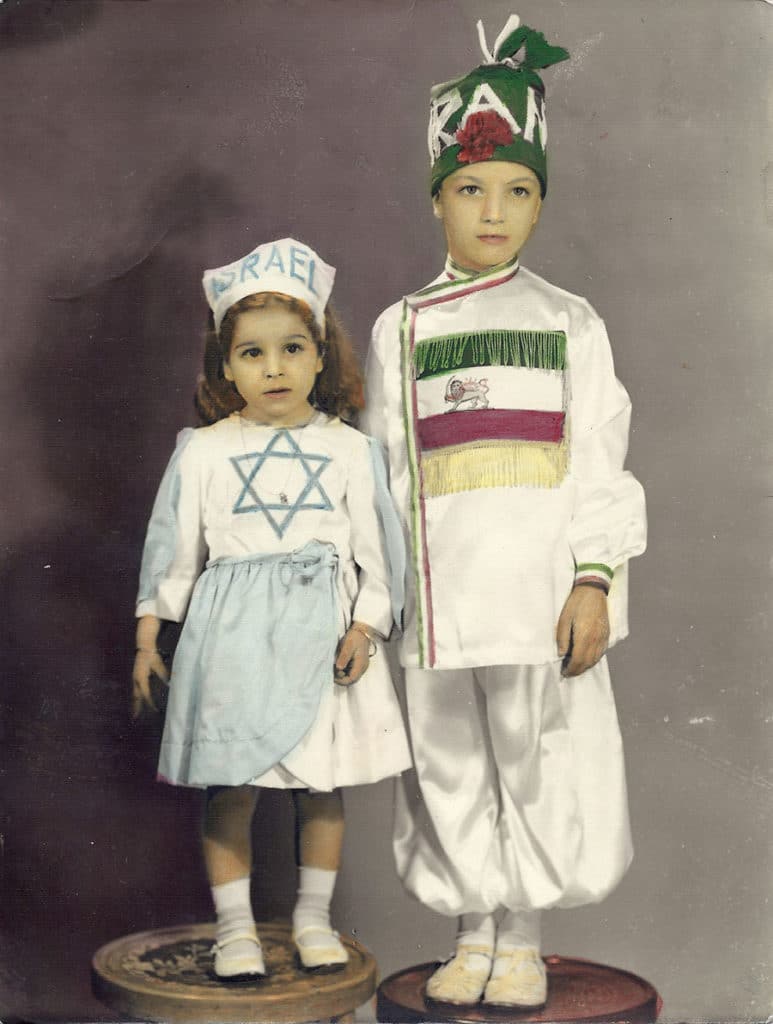
Tabby’s Refael’s mother (center) during a Purim celebration for the Association of Young Jews, Tehran, 1972 (Photo credit: Tabby Refael)
Back in December, I admitted that I’d never even heard of Hanukkah staples like dreidels, latkes or gelt until I came to the United States as a child. But now, I can beat that. I’d never even heard of hamantashen until I was in my late 20s and attended a Purim baking class offered by Aish HaTorah in West Los Angeles. That’s probably because I attended public school in America and no teacher spoke a word about Purim once it rolled around. But my kids are enrolled at an early childhood program at a Jewish school. They identify Purim with one motto: Jews good. Haman bad. Everyone, eat hamantaschen.
But like gelt and latkes (and cholent and bagels and nearly every other Ashkenazi food that over half the Jewish world — the Sephardic and Mizrahi half — had never heard of until we arrived in America), hamantaschen became the epitome of Jewish food during a specific holiday — a holiday which, coincidentally, is markedly Persian.
Why would my mother (or I) have ever heard of hamantaschen? Don’t get me wrong. I love the stuff. But as an invention of European Jewry, why does it completely dominate the culinary journey of Purim, a story that only focuses on Persian Jews?
Speaking of Persian Jews, ever wonder what we actually consume on Purim? I’ll give you a hint: by the time you’re done making it, your arms hurt and you’ve broken all of your wooden spoons. It’s called halva, and it’s the ubiquitous Purim treat for Jews all over Iran — from Tehran (my hometown) to Shiraz. Persian halva (as opposed to other Middle Eastern versions that primarily consist of tahina) is made by combining flour, sugar, oil, rosewater, and spices in a heavy-bottom pan until they’re gloriously brown and thick. You can’t stop churning it, even for a minute, lest it burns. Come Purim, my maternal grandmother made three different types of halva because she was an overachiever.
Persian halva (Photo from Wikimedia Commons)
There’s no particular symbolism about halva (unlike some Ashkenazi or Sephardic Purim cookies, some of which represent everything from Haman’s hat to his ears and eyes). Halva is generally associated with celebrations and renewal. Still, it’s not as if we’re symbolically slow-churning Haman’s insides. Given how Jews love to boo and curse Haman’s name during the megillah reading, I always found it ironic that in America, the consummate Purim food (Hamantaschen) is named after Haman, so that his name is repeated again and again, often with desirous glee (“Please, mom, just one more hamantaschen!”).
“Hamantaschen takes the spotlight in the West, but there’s so much more to Purim food traditions,” said Los Angeles food writer Tannaz Sassooni. “In Iran alone, there are plenty of other foods that are traditionally eaten at Purim: several varieties of halva, gooshfil (pastries that resemble Haman’s ears), filled cookies called koloocheh, and nan panjarehi (crisp, cookie-like fritters made with iron molds that are also found at Norooz celebrations).”
“Hamantaschen takes the spotlight in the West, but there’s so much more to Purim food traditions.”
And how’s this for an unbelievably authentic Purim experience: Back in Iran, thousands of Jews flock each Purim to the northwest city of Hamadan to sit on the floor of Esther and Mordechai’s tombs — yes, their tombs — and hear the megillah. You can’t get any better than that.
As for groggers, we didn’t have them. Even the name’s an Eastern European invention. In Iran, we filled bottles and cans with beans. My husband recalls how, in Shiraz, adults listened to the megillah in synagogue while kids played in the courtyard with… small fireworks. Now there’s a sound that’ll really get the ghost of Haman running. (And no, I’m not condoning fireworks in the hands of children.)
Since Queen Esther is believed to have eaten vegetarian food in King Ahaseurus’s unkosher palace, Iranian Jews typically eat pareve food on Purim, especially the deeply comforting noodle dish, Ash-e-Reshteh, which is made with lentils, kidney beans, half a dozen different herbs and thick noodles you can only find at Persian specialty shops (or on Amazon). If you’re not inclined to make Ash-e-Reshteh yourself, Kabob by Faraj, a local kosher Persian cafe on Pico Boulevard, makes it by giant potfuls — though, on Purim, you’ll have to get it early before it sells out to all the elderly Persian Jews who are less interested in hamantaschen and more invested in recreating Purim memories of their youth.
Ash-e-Reshteh (photo from Wikimedia Commons)
In Iran, barely anyone got drunk on Purim, especially after the 1979 Islamic Revolution, which banned alcohol (except for Jews on Shabbat, Passover and during other rituals; recreational Purim drinking didn’t count). And we didn’t exactly need to get drunk to not be able to tell the difference between the kindly Mordechai and the evil Haman. The hate around us was palpable, as we had our own perfectly lovely, anti-Semitic ayatollahs in every government seat in the country.
Adults and kids alike wore costumes, but this was the Middle East, so rather than dressing like a big teddy bear, grown men would dress up as the likes of Saddam Hussein, Muammar Qaddafi and yes, Yasser Arafat, because there was nothing funnier than a dark, hairy Iranian Jewish man named “Ebrahim” or “Moussa” (Arabic for “Moses”) dressed as a Middle Eastern despot. Little girls dressed as Esther (as they do all over the world, including America). Little boys, meanwhile, searched for firecrackers in the synagogue courtyard.
The Purim story is deeply personal for Iranian Jews. In fact, it’s downright empowering, especially for those who still remain in Iran. And the integrity demonstrated by Queen Esther in not turning her back against her Jewish identity is particularly moving for such a minority community in one of the most volatile regions of the world.
The tomb of Esther and Mordechai in Hamadan, Iran (Photo credit: Times of Israel)
Next year, I’ll ask my children’s school if Persian halva can be offered alongside hamantaschen (you can’t find it easily in markets, but local kosher Persian caterers can make it). But my mother didn’t raise a fool. I don’t know a single child — even a Persian one — who would choose slow-churned flour over a cookie with raspberry jam in the middle.
I understand that Ashkenazim have developed a dominant strain of Judaism in America. That’s great. But I continue to believe that Jewish cultural learning should be a two-way street: I love to learn about Ashkenazi customs, but I’m still waiting for more American Ashkenazim to ask about Mizrahi and Sephardic traditions.
Still, there’s one Purim custom that’s ubiquitous in America that we didn’t really practice in Iran: giving Mishloach Manot baskets filled with treats to friends, neighbors and especially those in need. From Friends of the IDF to the Jewish Relief Agency to various Jewish Federations and synagogues all over the country, the organized Jewish world has perfected the art of using your own two hands to provide nourishment to those in need. It’s kindness, wrapped in a basket. Now that’s a taste that transcends every plate and palate.
Tabby Refael (on Twitter @RefaelTabby) is a Los Angeles based writer, speaker and activist.
For Rabbi Shmuley Boteach’s commentary about this controversy, click here.
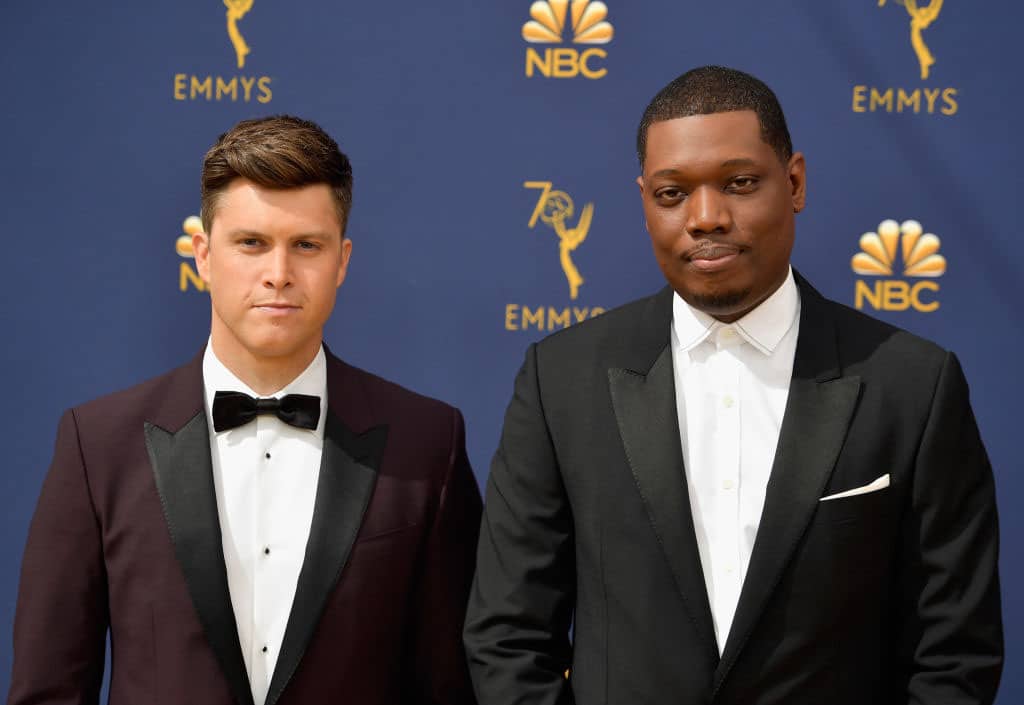
Jewish groups as well as Israeli government officials have called on Saturday Night Live to apologize for comedian Michael Che’s joke about Israel only vaccinating its Jewish population.
The clip, which was first highlighted by Israellycool blogger David Lange, features Che stating, “Israel is reporting that they’ve vaccinated half of their population. And I’m going to guess it’s the Jewish half.”
Many Jewish groups denounced Che’s remarks. The American Jewish Committee (AJC) said in a statement that Che’s joke “isn’t just untrue—it’s dangerous, a modern twist on a classic antisemitic trope that has inspired the mass murder of countless Jews throughout the centuries. In the Middle Ages, thousands of Jews were burnt at the stake after being blamed for the Black Death and accused of protecting only themselves. In the 20th century, the Nazis accused Jews of spreading disease and seized on that falsehood to justify imprisoning Jews in ghettos and carrying out the mass murder of European Jewry.
“Words have consequences, and Jews are at risk when a major American TV company joins with those who claim Israel is favoring only a portion of its citizens in its admirable efforts, praised by Dr. Anthony Fauci and others, to vaccinate all of its residents.”
The Simon Wiesenthal Center tweeted that only anti-Semites laughed at Che’s joke.
“Through pandemic heroic Israeli Arab medical workers show compassion for elderly Jewish victims of Covid some on death bed,” the Jewish group wrote. “All eligible Israelis getting vaccine. Good luck in NY #MichaelChe.”
>#SNL phony joke only made @antiSemites laugh. Through pandemic heroic Israeli Arab medical workers show compassion for elderly Jewish victims of Covid some on death bed. All eligible Israelis getting vaccine. Good luck in NY #MichaelChehttps://t.co/i2MrscLFlj via @showbiz411
StandWithUs also started a campaign urging people to write letters to NBC and “Saturday Night Live” to apologize for Che’s joke. “This lie has been perpetuated by antisemitic groups, eager to poison public discourse with misinformation about Israel’s rapid vaccination drive,” the StandWithUs statement read.
“The truth is that this inoculation campaign benefits all Israel’s citizens. Every Israeli, whether Jewish, Muslim, Christian or otherwise, is able to receive the Covid vaccination. Israel’s healthcare system is available and equal to all and an example of coexistence. Those who allege otherwise tend to be extremist groups, who have already relished this ‘joke’ on social media.”
Zionist Organization of America President Morton A. Klein and Chair Mark Levenson similarly said in a statement that the 1993 Oslo Accords explicitly state that the Palestinian Authority (PA) is solely responsible for health care matters involving the Palestinians and the PA has rejected Israel’s offers to help.
“Despite the PA’s refusal, Israel delivered vaccines and other supplies to combat COVID and medical training to the PA,” Klein and Levenson said. “The PA has been using the Israeli vaccines, without crediting Israel! In addition, Israel’s Magen David Adom has been vaccinating PA citizens who hold permits to work in Israel.”
They added that it’s “especially dangerous to falsely imply that Israel is endangering the health of its Arab, Muslim and Christian citizens. This type of blood libel that Jews are causing disease or a plague has been perpetrated over the centuries, and has led to the massacres of large numbers of innocent Jews. In an era of rising antisemitism and demonization of Israel, this type of hideous falsehood is extremely dangerous.” Klein and Levenson called on NBC and Che to apologize for the remarks.
The Stop Antisemitism.org watchdog also tweeted, “SNL Producers: There’s not enough antisemitic blood libels coming out of Israel. Let’s add some more by lying about who those ((( ))) are vaccinating. Michael Che: Yeah, cool man.”
SNL Producers: There’s not enough antisemitic blood libels coming out of Israel. Let’s add some more by lying about who those ((( ))) are vaccinating.
Rabbi Rick Jacobs, president of Union for Reform Judaism, tweeted that Che’s “joke was in poor taste. In fact, Israel is a world leader in Covid vaccinations, protecting Jewish and Arab citizens alike. As Israel shares its scientific data, the world’s fight against Covid is getting stronger. The truth isn’t funny but it is worth knowing.”
SNL’s Weekend Update joke was in poor taste. In fact, Israel is a world leader in Covid vaccinations, protecting Jewish and Arab citizens alike. As Israel shares its scientific data, the world’s fight against Covid is getting stronger.The truth isn’t funny but it is worth knowing
William Daroff, CEO of the Conference of Presidents of Major American Jewish Organizations, tweeted, “We find the use of age-old antisemitic tropes on last night’s episode of Saturday Night Live to be deeply troubling. It is particularly painful for this to occur at a time when antisemitic incidents, some resulting in death and injury, are at record highs.”
We find the use of age-old antisemitic tropes on last night’s episode of Saturday Night Live to be deeply troubling. It is particularly painful for this to occur at a time when antisemitic incidents, some resulting in death and injury, are at record highs. https://t.co/J4MxqYLNv2
Israeli Ambassador to the United States and United Nations Gilad Erdan also tweeted to “Saturday Night Live,” “I’m a big fan of humor but, perpetuating antisemitism is just not funny. Your “joke” is ignorant-the fact is that the success of our vaccination drive is exactly because every citizen of Israel — Jewish, Muslim, Christian — is entitled it. Apologize!”
.@nbcsnl I’m a big fan of humor but, perpetuating antisemitism is just not funny. Your “joke” is ignorant-the fact is that the success of our vaccination drive is exactly because every citizen of Israel – Jewish, Muslim, Christian-is entitled it. Apologize!pic.twitter.com/zQqtBmFqJ2
On the other hand, IKAR founder Rabbi Sharon Brous tweeted out a Times of Israel blog post stating that it’s “unfathomable” that Israel isn’t “doing everything in our power to offer the vaccine to every person in this land who wants one.”
Feels like a good time to share @LeahSolomon1975’s important piece about vaccinations among Israelis and Palestinians: “…it is unfathomable that we are not doing everything in our power to offer the vaccine to every person in this land who wants one.” https://t.co/JtrdZsczeg
The progressive group IfNotNow also tweeted that Israel is “vaccinating illegal Jewish settlers and not Palestinians living under occupation there. SNL’s [mediocre] jokes about Israel’s unjust distribution of the vaccine are not harming Jews. Excuse us. We’ve got real antisemitism to fight.”
This is literally true in the West Bank. They're vaccinating illegal Jewish settlers and not Palestinians living under occupation there.
SNL's medicore jokes about Israel's unjust distribution of the vaccine are not harming Jews. Excuse us. We've got real antisemitism to fight. https://t.co/ca9mfZNzQL
The National Council of Young Israel (NCYI) cleaned out their board of directors to move the organization away from political activism and instead focus on the synagogues involved with the organization.
eJewish Philanthropy reported that the NCYI, which consists of around 146 synagogues and 25,000 families in the United States, made the change after its members complained that the organization was more focused on political advocacy rather than improving the synagogues. Some were also critical of the organization’s open support for former President Donald Trump, Israeli Prime Minister Benjamin Netanyahu and other conservative leaders.
The election for the new board took place on February 18; the vote totals have not been publicly disclosed.
David Warshaw, the new president of the NCYI board, told eJewish Philanthropy, “We will continue to speak out on Israel, but the purpose of NCYI is not to be an advocacy organization.”
“We will continue to speak out on Israel, but the purpose of NCYI is not to be an advocacy organization.”
Rabbi Pini Dunner of Beverly Hills Synagogue said in a statement to the Journal, “I’m so delighted that the National Council of Young Israel will now devote all its energy and resources to community services and development. Ultimately, that is what our shuls need most, and let’s leave all the political activism to organizations that specialize in that sphere.”
The NCYI was established in 1912 to help Jewish immigrants assimilate into American synagogues and is headquartered in New York. According to Jewish Virtual Library, the NCYI aims “to instill into American Jewish youth an understanding and appreciation of the high ethical and spiritual values of Judaism and demonstrate the compatibility of the ancient faith of Israel with good Americanism.”
California State Senator Melissa Melendez, a Republican, proposed two bills addressing cancel culture on February 16.
According to a press release from her office, one bill would outlaw discrimination based on political beliefs when it comes to housing and employment, and another would protect students from similar discrimination on campuses throughout the state.
“It is unfathomable to me that corporations and members of the public would ruin a person’s career, business and family because of their political ideology,” Melendez said. “A free society shouldn’t allow thoughts and ideas to be censored. Free speech covers all speech, not just that with which you agree.”
She added: “Cancel culture and the efforts to silence differing opinions and voices should be a growing concern for all of us. A climate of intolerance has been established and has stifled healthy and normal debate. Anyone who values their own freedom of speech should be concerned. This cannot and should not be allowed to continue.”
On the other hand, Assemblymember Lorena Gonzalez, a Democrat, tweeted: “I don’t know who needs to hear this today, but: Your racist, pro-domestic terrorism, xenophobic, misogynistic views do not warrant protection ‘from discrimination.’ Your choice to hate & actively pursue hate does not make you part of a protected class.”
I don’t know who needs to hear this today, but: Your racist, pro-domestic terrorism, xenophobic, misogynistic views do not warrant protection “from discrimination.” Your choice to hate & actively pursue hate does not make you part of a protected class.
Jeremy Lambe of the Law&Crime news site argued that political discrimination is already outlawed under various state statutes, so he thinks the bill is nothing more than a political stunt. He added that Melendez’s office didn’t respond to his request for comment “on what currently legal form of political affiliation discrimination the bill aims to outlaw.” The Los Angeles Times also noted that “it is unclear if anyone in the state has been evicted or denied a mortgage because of political convictions.”