
fbpx

February 18, 2021

Obama National Security Adviser Suggests Netanyahu is “Corrupt and Cruel”

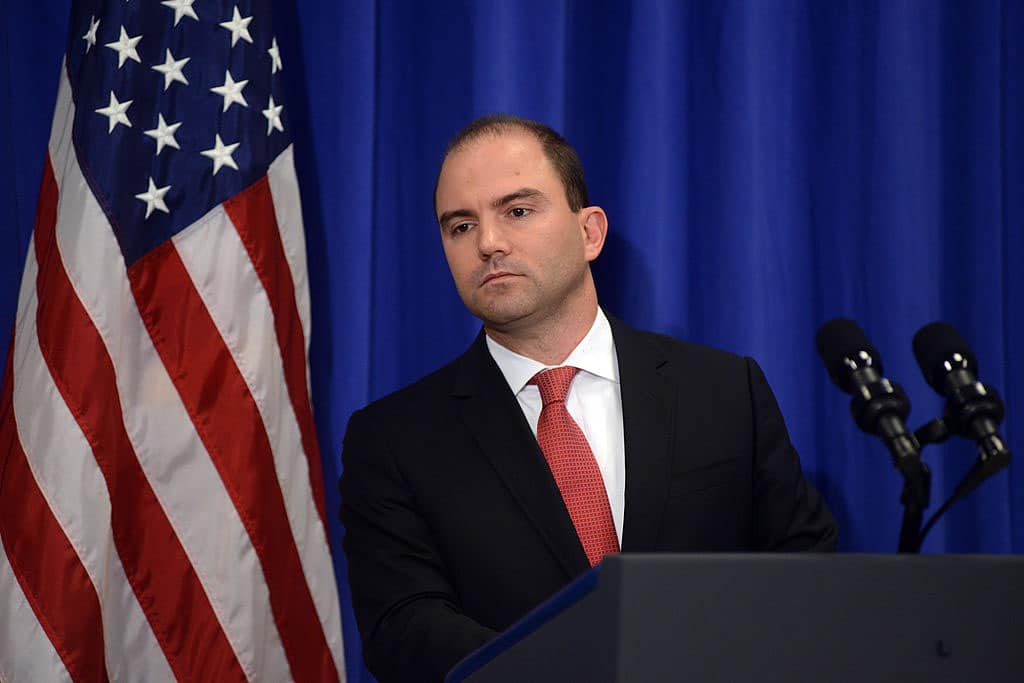
Ben Rhodes, former Deputy National Security Adviser under the Obama administration, called Israeli Prime Minister Benjamin Netanyahu “corrupt and cruel” and issued several other criticisms of the pro-Israel community in a February 17 podcast appearance.

Rhodes was a guest on the Foundation for Middle East Peace’s (FMEP) “Occupied Thoughts” podcast hosted by Jewish Currents Editor-at-large Peter Beinart; according to Jewish Insider, Rhodes blamed Netanyahu for constantly ginning up “the right-wing, pro-Likud media” and posited that Netanyahu believes that “Jews have been screwed throughout history, by a corrupt cruel world. And so you know what, we just have to be corrupt and cruel ourselves. That’s the only way to survive in this world.”

Additionally, Rhodes criticized pro-Israel Democrats for saying that the Palestinians are the reason why a two-state solution has never been achieved. “I got so sick of hearing, ‘Palestinians never missed an opportunity to miss an opportunity.’ But when did we give them one?”

According to the conservative website Washington Free Beacon, Rhodes also claimed that pro-Israel groups like the American Israel Public Affairs Committee (AIPAC) threaten to cancel fundraisers for Democratic politicians should they not vote their way. He added that pro-Israel Democrats have allowed the discussion of the Israeli-Palestinian conflict to center around the premises put forth by Netanyahu as well former Secretary of State Mike Pompeo and Senator Tom Cotton (R-Ark.).

Some Jewish groups criticized Rhodes’ comments.

“He talks about Israel like Israel is an enemy of the United States and the U.S. shouldn’t be so defensive when dealing with an Israeli government, when in fact Israel has proven again and again to be Israel’s most reliable ally in the region and beyond,” Rabbi Abraham Cooper, Associate Dean and Director of Global Social Action Agenda at the Simon Wiesenthal Center, told the Journal in a phone interview. He added that he doesn’t think Rhodes speaks for the current Biden administration.

Liora Rez, director of the Stop Antisemitism.org watchdog, similarly said in a statement to the Journal, “Ben is Ben, he never misses an opportunity to bash Israel or her supporters regardless of who’s sitting in the White House.”

On the other hand, Jewish Telegraphic Agency Washington Bureau Chief Correspondent Ron Kampeas tweeted that he didn’t think Rhodes said anything that was particularly controversial, arguing that Rhodes simply “said conservative media is pro-Likud and that mainstream media loves domestic Israel conflict, which made his job hard. The former is a silly way of saying conservative media share a hawkish outlook with Netanyahu, which is true. The latter also true.”

Noah Pollak, executive director of the newly formed foreign policy organization Democracy Alliance Institute, tweeted in response to Kampeas, “Poor Ben Rhodes. The obsessive, hacky, almost always hostile to Israel MSM made his job of being anti-Israel harder. All the lulz.”

Lara Friedman, President of Foundation for Middle East Peace that platforms Beinart’s podcast, tweeted that some of those criticizing Rhodes’ remarks are conflating “criticism of Israel with antisemitism.”

This article was updated on February 19.

Obama National Security Adviser Suggests Netanyahu is “Corrupt and Cruel” Read More »

Marc Rosenstein

Marc Rosenstein: Contested Utopia

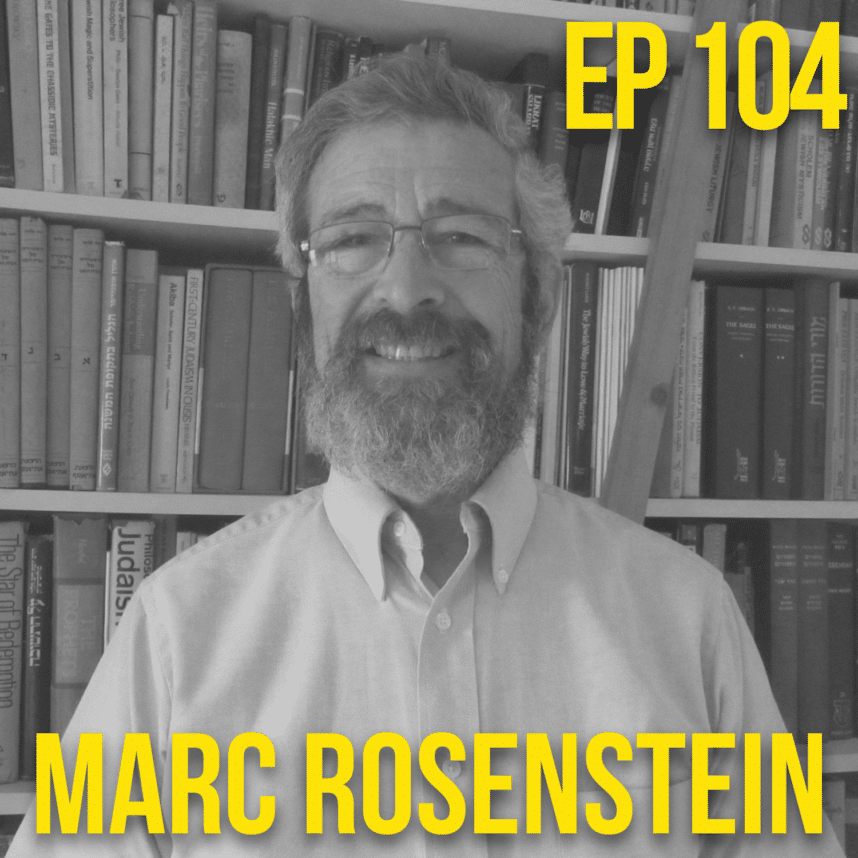
Shmuel Rosner and Marc Rosenstein discuss his latest book, “Contested Utopia: Jewish Dreams and Israeli Realities,” out soon.
Marc Rosenstein is the Director Emeritus of the Israel Rabbinical Program at HUC-JIR’s Taube Family Campus in Jerusalem. He grew up in Highland Park, Illinois, and received a BA in biochemistry from Harvard College. He was ordained by HUC-JIR in 1975 and received an MA in Jewish History from Hebrew University in Jerusalem in the same year; later, he earned a PhD from the Hebrew University as a Mandel Jerusalem Fellow.

Follow Shmuel Rosner on Twitter.

Marc Rosenstein: Contested Utopia Read More »

Financial Planners Develop a Portfolio to Support Israel and Grow Wealth

Two years ago, Selwyn Gerber, chairman and chief strategist of RVW Wealth, a financial planning company, along with President Jonathan Gerber, wanted to figure out a way investors could support Israel. They looked at the current options and realized they just weren’t enough.

“We wanted to give people access to Israeli capital markets,” said Jonathan, in a phone interview with the Journal. “There was a void we were trying to fill, because there were only two ways to invest in Israel: Israel Bonds, but there’s virtually no return, or venture capital, which is high-risk. We seek to perform well over time, although as with all equity investments, we anticipate a bumpy ride upwards.”

So, they came up with a new venture called The Jerusalem Portfolio. It offers individuals, foundations and institutions the chance to own fractional interests in a diversified group of industries like banking, finance, technology and the military, and successful public companies in Israel, including Wix.com, Check Point Software, NovoCure and Elbit Systems. Investors can fund their accounts with a minimum investment of just $180 and take out their money at any time. Since investments are made in the United States, through U.S. entities, investors receive the same protection they would get from any other brokerage house. In 2020, the rate of return on TJP was 26%, and in 2019, it was 17.13%.

“Last year there was a very good return despite a very adverse cultural and political environment,” said Selwyn. “Because TJP is run and managed by people who are CPAs as well, there is almost no current income tax. The nice thing is you help Israel and you have the opportunity do very well in the process. You’re not making some huge sacrifice to invest in Israel. It’s the ultimate form of tzedakah.”

“The nice thing is you help Israel and you have the opportunity do very well in the process. You’re not making some huge sacrifice to invest in Israel. It’s the ultimate form of tzedakah.”

Paul Glasser, vice president of Institutional Development at Touro College, made his investment in TJP. “I’m delighted,” he said. “My wife and I are pleased to own a stake in established Israeli companies, which has proven to be remarkably profitable and rewarding for us.”

Since Selwyn and Jonathan are passionate Zionists, they wanted to create an anti-Boycott, Divestment and Sanctions (BDS) movement. “They say don’t invest, and we say invest,” said Selwyn. “It’s a statement in the face of the BDS movement. We also want to create a real bond with Israel. If you’re giving a gift for a wedding or bat mitzvah, you create a real long term vibrant bond between the person who is receiving the gift and the country.”

Selwyn and Jonathan Gerber

RVW Wealth’s commitment to Israel doesn’t stop with the fund. TJP has its own Facebook page with over 104,000 followers, and on it, they circulate good news about Israel on a regular basis. They are also putting out a news blog and newsletters covering technology breakthroughs and  economic activity in Israel.

Plus, for gifts the recipient receives an artist rendering of the Old City of Jerusalem on a certificate in the mail, and they can take private virtual tours of the country as well. Recently, TJP hosted a tour of Ramparts Walk, which shows visitors places like the Western Wall, the Armenian Quarter and the Tower of David.

“We’re raising awareness about investment in Israel,” said Jonathan. “It should be so standard that every Jewish foundation and institution has a silo in their portfolios focused on Israel. It’s really the hybrid between Israel Bonds, which has been a staple of bar mitzvah gifting, as well as one’s own equity portfolio. Why not marry the two together?”

Selwyn said he believes that as Israel and other countries come together, the economy will only improve — and TJP investors will reap the benefits over time.

“Israel is a vibrant economy with a very vibrant stock market and a huge group of successful companies involved in the whole gamut of the economy,” he said. “This is literally serving yourself well by investing in Israel. The Abraham Accords are set to catapult Israel’s economy very strongly forward. That growth will appeal to investors in the Israeli economy. This is arguably the best way to participate in it.”


Kylie Ora Lobell is a writer for the Jewish Journal of Los Angeles, The Forward, Tablet Magazine, Aish, and Chabad.org and the author of the first children’s book for the children of Jewish converts, “Jewish Just Like You.”

Financial Planners Develop a Portfolio to Support Israel and Grow Wealth Read More »

My Expensive Tastes: An Origin Story — A poem for Torah Portion Terumah

And you shall make a menorah of pure gold.
    Exodus 25:31

When the first thing we were asked to make
required us to use solid gold, gold taken

from our former captors, it explained all
my expensive tastes.

My solid gold house
My fat wallet

My trees, bedazzled with
jewel-encrusted fruit.

The groceries we order from
the solid gold market out of principle.

If our artichokes don’t cost double
that of the un-Godly artichokes

they’re not worth putting in our mouths.
Our floor tiles – made out of hundies.

My office chair – live sheep.
We put in an ocean as a wading pool.

The salt-water feature was extra but
I don’t have to tell you it was worth it.

One button and it parts, just so we
don’t have to watch the movie.

I could go on, but I don’t think they’re
paying me enough.

Not a thought given to where the
gold came from while human people

still wait for their forty acres and a mule.
You know, as I read this back

it’s starting to feel like overkill.
I’d like to melt down the golden menorah

and use the proceeds to spruce up Skid Row.
I’m sure we could make do with

something more modest.
We’re about to take a forty-year walk

and no-one’s even discussed
what we’re going to eat.


God Wrestler: a poem for every Torah Portion by Rick LupertLos Angeles poet Rick Lupert created the Poetry Super Highway (an online publication and resource for poets), and hosted the Cobalt Cafe weekly poetry reading for almost 21 years. He’s authored 25 collections of poetry, including “God Wrestler: A Poem for Every Torah Portion“, “I’m a Jew, Are You” (Jewish themed poems) and “Feeding Holy Cats” (Poetry written while a staff member on the first Birthright Israel trip), and most recently “The Tokyo-Van Nuys Express” (Poems written in Japan – Ain’t Got No Press, August 2020) and edited the anthologies “Ekphrastia Gone Wild”, “A Poet’s Haggadah”, and “The Night Goes on All Night.” He writes the daily web comic “Cat and Banana” with fellow Los Angeles poet Brendan Constantine. He’s widely published and reads his poetry wherever they let him.

My Expensive Tastes: An Origin Story — A poem for Torah Portion Terumah Read More »

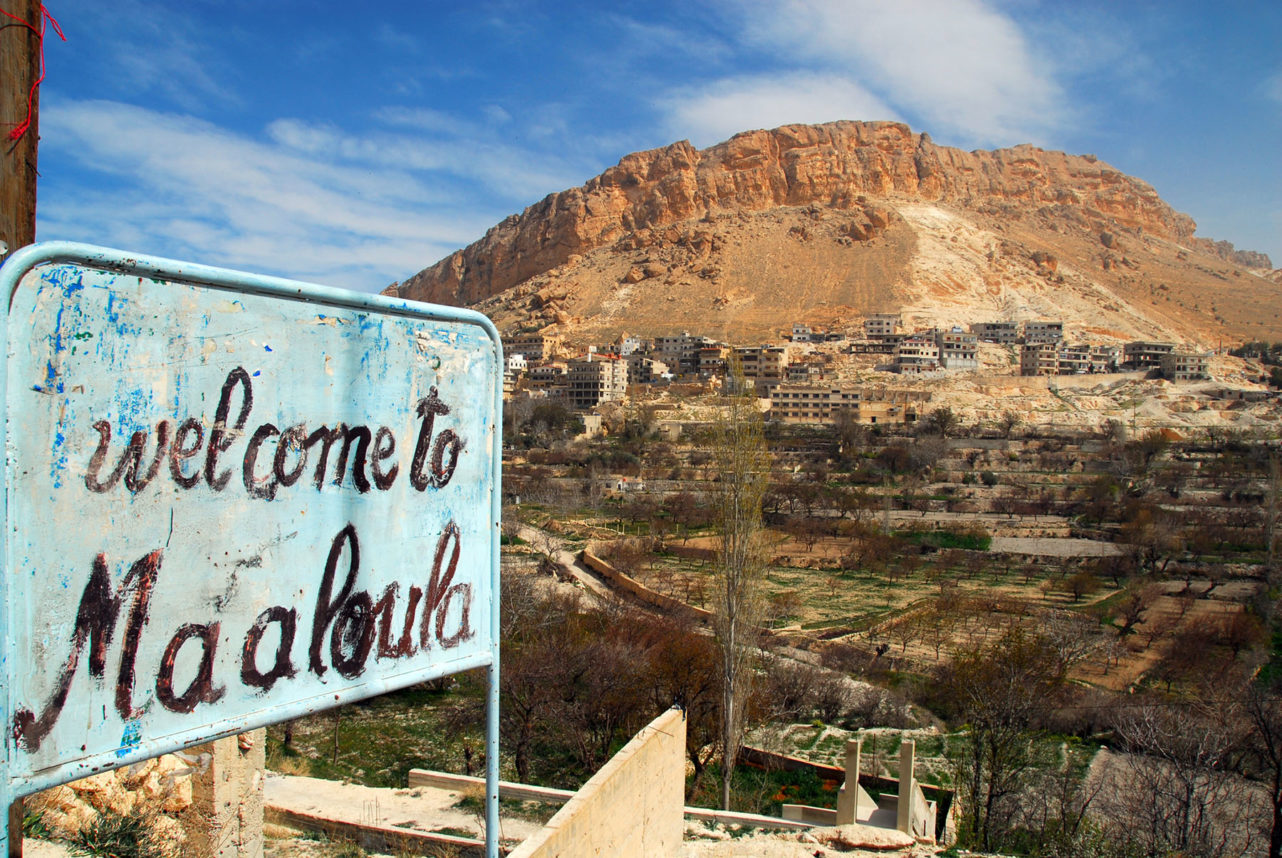
Aramaic

If you are staying in Damascus
and long for somewhere cooler
the question that you ought to ask is:
“How do I find Malula?”

In mountains of the Qalamun,
most ancient of cool havens,
men worship there the God triune
in words the language mavens
adore since they are most archaic;
remotely, in the breezes,
the sound of spoken Aramaic
reminds them then of Jesus.

Example: when they say: “Our Father
who art in heaven,” they
don’t use the Arabic, but rather
words Jesus used to pray.
Their tongue is virtually extinct,
linguistic dinosaurus;
its meanings vague and indistinct,
unless you’ve a thesaurus,
but though they can’t adjudicate
in Aramaic laws
with which Jews still Talmudicate
behind their temple doors,
it seems that thirty thousand manage
to keep their language viable,
alive as English, French and Spanish,
although extinction’s liable.

Since words have no equivalence
like x’s algebraic,
I do not feel ambivalence
when using Aramaic
in many of my prayers and studies —
its death would cause me anguish;
keep speaking it, Malula buddies,
the Rabbis’ holy language.

I’ll endnote this with an amazing
thought that raised my brow,
Malul in Hebrew denotes “phrasing”.
Sarah wondered how
what she from angel guests had learned
could happen, and she laughed,
and their divine prediction spurned,
regarding more than daft
the promise of a baby boy
as first they’d told his dad.

Her laughter was a sign of joy,
though she considered mad
what they’d predicted speaking Heb-
rew, in her hearing, and
to Honest Abe, who’s known as Ib-
rahim now in that land

to Muslims who now speak Ara-
bic, but not Aramaic,
in which both Abraham and Sarah
could conversations make,

a claim for which some proofs are found
in my book, Legal Friction.
Read them, I think they are as sound
as Genesis’ prediction.


Gershon Hepner
Legal Friction, Gershon Hepner, Peter Lang Publishing Inc, 2010


Gershon Hepner is a poet who has written over 25,000 poems on subjects ranging from music to literature, politics to Torah. He grew up in England and moved to Los Angeles in 1976.  Using his varied interests and experiences, he has authored dozens of papers in medical and academic journals, and authored “Legal Friction: Law, Narrative, and Identity Politics in Biblical Israel.” He can be reached at gershonhepner@gmail.com.

Aramaic Read More »

Palestinian Elections Are Attempt to Settle Political Landscape

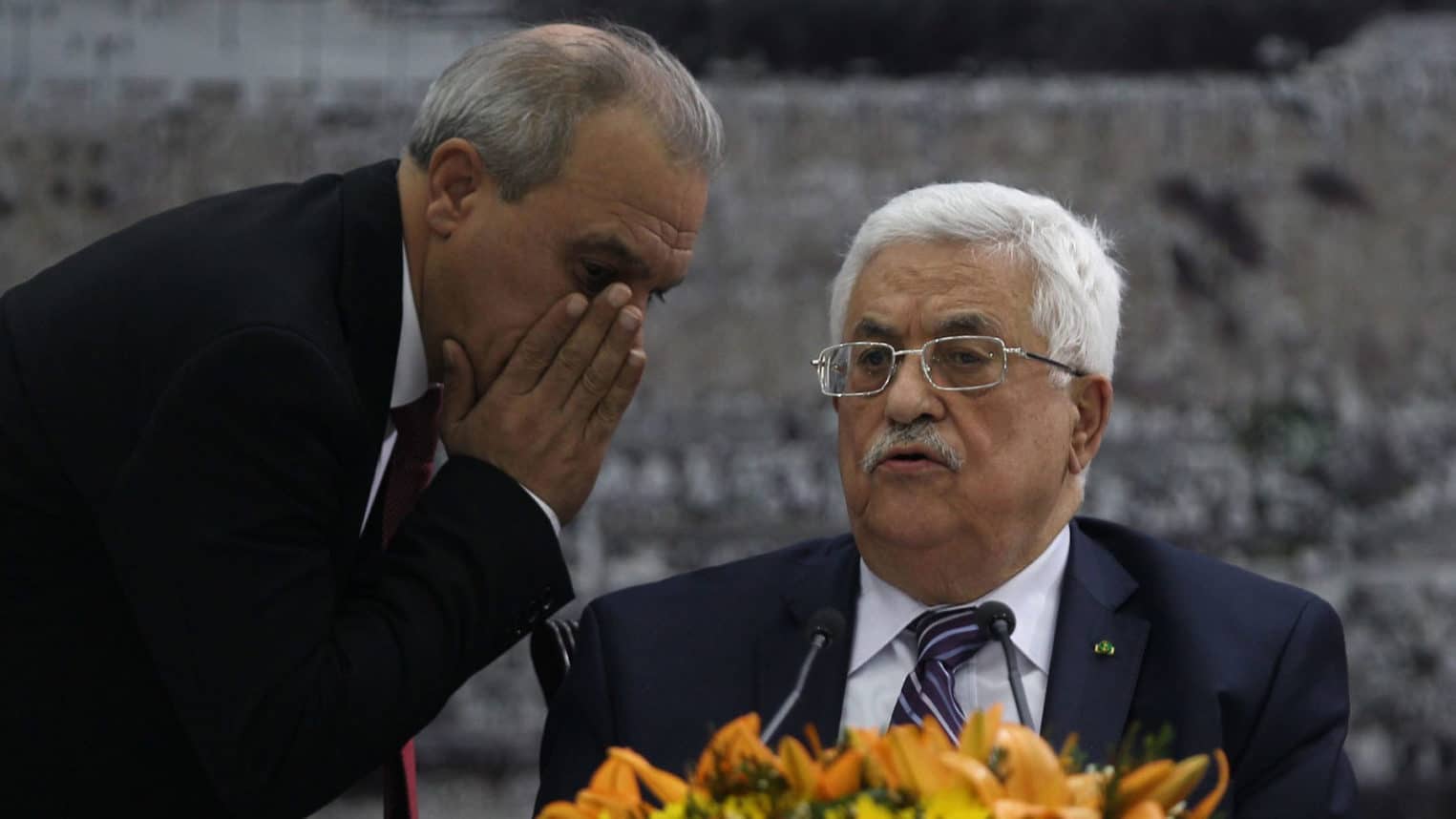
(The Media Line) Palestinian Authority President Mahmoud Abbas announced general elections last January after years of political paralysis. The call to elections comes as attempts to organize the chaotic Palestinian political landscape is underway.

Fourteen rival Palestinian factions agreed in Cairo last week on steps to advance the elections process. In the wake of the agreement, small steps appear to have been made in bridging the deep divide between the two largest Palestinian factions, Fatah and Hamas.

Osama al-Sharif, a veteran Jordanian journalist and political commentator, told The Media Line that the internal challenges inside the two largest factions “have forced them into reaching an understanding for now.”

However, some pundits doubt that the elections will actually take place.

“My doubts are not based on the current state of the mindset of the Palestinians, but because I see there are objective political dynamics that will not allow them to happen,” said Ghaith al-Omari, a senior fellow at The Washington Institute.

Omari told The Media Line that there’s more “energy” and there seems to be more “conviction” among Palestinians that elections will be held than at any other time in the past but, he adds, “I just don’t see Hamas and Fatah willing to do any kind of reconciliation.”

Omari said that reconciliation would require both parties to “really” give up part of their power in the areas under their control. Hamas runs the Gaza Strip, and its rival Fatah rules the West Bank.

He is skeptical that elections will take place since they must be preceded by political and institutional reform.

“Right now, we just simply don’t have an indication that there will be free and fair elections,” or even whether Fatah and Hamas are willing to assure such elections, said Omari.

Omari calls statements by Abbas threatening to block Fatah members who plan to run on independent candidates lists from participating in the election, including by using force, “troubling.”

In addition, he said, “I very much doubt that Hamas will allow free and fair campaigning in Gaza. They don’t have a good track record of allowing other people to express their political opinions.”

 Right now, we just simply don’t have an indication that there will be free and fair elections.

Institutional reform is an essential prerequisite in key sectors within the Palestinian Authority, Omari says.

“If you don’t have strong institutions, a strong and independent judicial system, depoliticized security, it makes it difficult to have a proper election and the results of the elections will not be respected,” he said.

He added that if these reforms don’t take place, the elections will be “irrelevant,” and people will “dismiss” them.

Mahmoud Dodeen, an assistant professor of private law at Qatar University, told The Media Line that calling elections was a necessity for the Palestinian factions in order to protect their political future.

“Hamas is no longer able to run the Gaza Strip due to the high costs and the decline of its funding sources. Likewise, Fatah’s management of the West Bank is no longer popular because of corruption and favoritism, and its leadership in the national project has declined, thus its popularity gradually erodes,” Dodeen said.

Aside from the deep divide between the two largest factions, Palestinians must contend with another schism. Fatah, long the most popular faction, is facing an intra-party split ahead of the scheduled elections. Abbas, who is expected to run again for president, wants to project at least a semblance of unity as his Fatah Party deals with its own internal turmoil.

“Fatah has deep divisions between the aging ruling class and the younger members who are fed up with the status quo, corruption and lack of vision to move forward,” said al-Sharif.

Al-Sharif says it is difficult to predict how things will look after the elections, but holding these elections – the first in 15 years – is still the only option.

“Palestinian democracy has suffered as well with Abbas holding all the reins of power without offering anything to the Palestinians and failing to end the rift. The elections will be a leap in the dark and it is difficult to ascertain the final outcome,” he said.

Fatah has deep divisions between the aging ruling class and the younger members who are fed up with the status quo, corruption and lack of vision to move forward.

Part of the reason behind the division can be attributed to Abbas’ governing style.

There are glaring differences between Abbas and his predecessor Yasser Arafat, who 16 years after his death is still highly popular and revered among many Palestinians. Arafat was able to move the street in any direction he wanted. This is something that Abbas hasn’t been able to do. Unlike Arafat, he is unpopular and lacks Arafat’s charisma.

“Arafat for all of his sins, at least knew the need and the importance of keeping the base energized and involved. Under Abu Mazen we are seeing Fatah becoming more and more of the authority party,” said Omari, referring to Abbas by his nom de guerre.

Many accuse Abbas of alienating his base, and some go as far to say that he has “destroyed” Fatah, while centralizing power in his hand and in a small circle of confidants that surround him, such as PA General Intelligence Service head Majed Faraj and PA Civil Affairs Minister Hussein al-Sheikh.

These two figures in the eyes of many have insulated Abbas from Palestinian public opinion and from what is really happening on the ground, and they are the two confidants that have full, unmitigated access to Abbas, while older veteran Fatah leaders are either shunned or marginalized.

Some of the tactics used, Omari says, include “forcing people into early retirement, using money and government positions to either gain loyalty and patronage or making people pay for their disagreements or opposition of him.”

One example of such tactics was the purging of Abbas nemesis Mohammed Dahlan and his supporters.

Dahlan, the former Gaza security chief, is one of several Fatah members who have set their sights on the presidency.

Dimitri Diliani, spokesperson of the Reformist Democratic faction within Fatah, says Dahlan is a “major threat” to Abbas,

“If Abbas and Dahlan compete head-to-head, the latter will win,’” Diliani says. He added that, a year ago, Dahlan told him he is “not thinking about running.”

The Abbas-Dahlan power struggle is tearing the faction apart. Meanwhile, Dahlan’s supporters say they will run for the Palestinian Legislative Council (PLC), the Palestinian Authority’s unicameral parliament.

“Let’s not jump the gun, but Mr. Dahlan has a great chance of winning the election. Whether Dahlan wants to or not I don’t know now. I asked him a year ago and he said it wasn’t time to talk about it. But I want to state here that it is my wish that he goes for it,” Diliani told The Media Line.

He says that his Reformist Democratic faction within Fatah is popular, with hundreds of thousands of members and supporters.

A Palestinian court convicted Dahlan in 2014 in absentia of corruption charges after a bitter dispute with Abbas. Abbas expelled Dahlan from Fatah in 2011 and has since dismissed hundreds of his supporters.

He lives in exile in the United Arab Emirates and works as an advisor to the powerful Crown Prince of Abu Dhabi.

Abbas has threatened to block any Fatah member from creating a candidate’s list for the parliamentary election independent of his own.

“It’s laughable. First of all, our ticket will not seek his approval. He can do whatever he wants. We are not subject to his approval; we seek the approval of the Palestinian people, not the approval of an 85-year-old man that hasn’t been elected for the past 15 years,” said Diliani. “We will enter the election; they cannot stop us.”

Diliani says Abbas has made a “mockery” of Palestinian politics and has weakened the Fatah movement.

“In Palestine we don’t have three branches of government, we have one. This branch of government is held by an 85-year-old guy and the people around him are yes people,” he said.

But the Abbas-Dahlan feud isn’t the only crisis swirling inside the 53-year-old movement. Abbas has not appointed a successor, creating fierce behind-the-scenes competition between Fatah leaders over who will fill his seat.

Palestinian Elections Are Attempt to Settle Political Landscape Read More »

Texas Nightmare Reminds Us That Electricity is the Oxygen of Civilization

The horrible images coming out of Texas this week, with millions of people losing electricity amidst freezing temperatures, is an excruciating example of the power of electricity to dictate our lives.

Electricity is perhaps the modern innovation we most take for granted. It’s not a sexy new app or a game-changing device. It’s more like the air we breathe — always there, until it’s not.

Just as the pandemic made us appreciate the fundamental act that keeps our bodies alive — breathing — the freezing storms have made us appreciate the fundamental technology that keeps our lives going — electrical power.

Hardly anything can function without it. The devices that keep us warm in the cold or cool in the heat; the digital technology that keeps us connected and entertained; the gathering places that bring us together; the hospitals that keep us alive; the laboratories where vaccines and other cures are discovered; the grocery stores that stock our sustenance, and on and on — all live or die on the availability of electricity.

What’s extraordinary about this “app of all apps” is that no one really invented it. As Nancy Atkinson writes in Universe Today, “electricity is a form of energy and it occurs in nature,” which means humanity actually “discovered” this life-changing elixir.

What’s extraordinary about this “app of all apps” is that no one really invented it.

The discovery is a story unto itself, which, Atkinson writes, “goes back more than two thousand years [when] the Ancient Greeks discovered that rubbing fur on amber (fossilized tree resin) caused an attraction between the two — and so what the Greeks discovered was actually static electricity.”

By the 17th century, “many electricity-related discoveries had been made, such as the invention of an early electrostatic generator, the differentiation between positive and negative currents, and the classification of materials as conductors or insulators.”

Enormous progress occurred over the ensuing centuries to make electricity ubiquitous and indispensable. “When it came time to develop it commercially and scientifically,” Atkinson writes, “there were several great minds working on the problem at the same time.”

No great minds were needed to develop the oxygen we breathe all day long. It was always there for the taking. We took it naturally.

Electricity required a lot more effort to discover and nurture. But when I see the devastation that can occur when electrical power goes down, I have to think that they’re both on the same level — that electricity has become the oxygen of modern civilization.

It’s possible that in some distant future, we will have discovered and implemented alternatives to electricity that work even better. But for now, just as we must protect the quality of the air we breathe, we must also protect the electrical power that keeps our lives going.

Texas Nightmare Reminds Us That Electricity is the Oxygen of Civilization Read More »

Netanyahu Politics Possibly Behind Increased Left Support for Arab Joint List

(The Media Line) A new poll shows that 62% of Israel’s left support including the Arab Joint List in the government. At the same time, 37% of the Israeli right expressed support for controversial far-right activist Itamar Ben-Gvir as a future government minister.

Experts explain that Prime Minister Binyamin Netanyahu’s politics are behind both results, which show a drift toward the extremes. However, parties on both sides are staying the course despite the shift in the electorate.

Israel will be going to its fourth round of elections in two years on March 23. With slightly more than a month to the elections, Israeli radio station 103FM on Monday released a poll conducted by the research institute Panel Politics to gauge the views of the electorate. While the poll revealed no surprise fall or rise in parliamentary power for any party, its questions about support for the inclusion of formerly off-limits elements in Israeli politics in the future government revealed surprising results that have generated headlines.

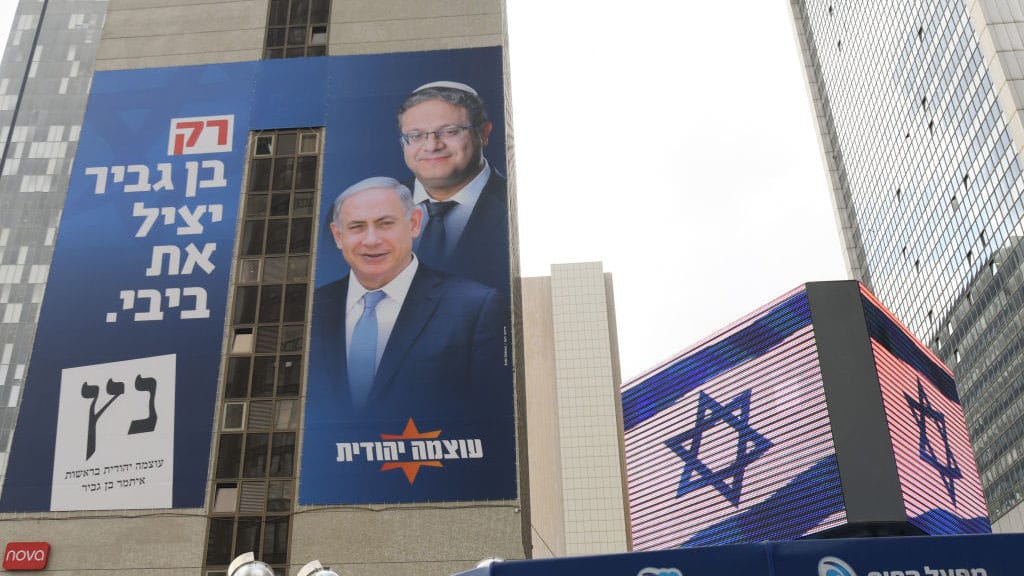
The first question asked respondents whether they supported or opposed appointing Ben-Gvir as a minister in the next government. Ben-Gvir, a leader of the Otzma Yehudit party who is associated with the Kahanist movement, is a well-known far-right activist whose political legitimacy has been questioned by fellow members of the Israeli right in the past. In response to the question, 37% of those self-identifying as right wing responded that they supported appointing Ben-Gvir to a minister position. Some 25% of all respondents – identifying as right, center and left – also supported his appointment, while 46% of the larger group said that they would oppose appointing Ben-Gvir.

In a second question, respondents were asked if they supported the inclusion of the Arab Joint List in a future government. The Arab Joint List, now comprising three separate Arab-majority parties running together, has been considered off-limits for a variety of positions considered radically left, including a call for Israel to remove its designation as a Jewish state. The poll showed that 62% of the Israeli left supports forming a future government that includes the Joint List. Some 80% of voters on the right opposed the proposition, as well as 64% of all voters.

The poll, which appears to show a shift toward the extremes on both sides of Israel’s political map, has raised eyebrows.

The primary goal of people that define themselves as left wing is to stop Netanyahu from getting reelected.

“It is possible that had we asked the same question three years ago, we would have received completely different results,” Menachem Lazar, the head of Panel Politics, told The Media Line, referring to the increased right-wing acceptance of Ben-Gvir.

Lazar said that this shift is “the result of a long process – an almost two-year process of legitimization – of preparing the public opinion to accept that Ben-Gvir is a legitimate lawmaker, a legitimate coalition member and a maybe even a legitimate minister.”

This process, he explains, has been pushed by Netanyahu, who has urged more mainstream right-wing parties to merge with Ben-Gvir’s small Otzma Yehudit. By doing this, Netanyahu is hoping to avoid losing right-wing votes to small parties that normally don’t cross the electoral threshold of 3.25% or some 4 seats in the Knesset, Israel’s parliament.  

The change in Israel’s left, Lazar says, is also brought about by Netanyahu, but for opposite reasons.

“The primary goal of people that define themselves as left wing is to stop Netanyahu from getting reelected. Some were willing to include the Joint List in the government from the get go, but others are saying just like what we identified on the right with regard to Ben-Gvir – if this is what is needed to avoid Netanyahu as our next prime minister, let the Joint List be a part of the government,” he said.

The pollster points to Netanyahu’s recent flirtation with Islamist lawmaker Mansour Abbas as a move that legitimized acceptance of the Joint List on the left. If Netanyahu is open to having such an Arab partner, Lazar says, “then why not?”

Efi, a young Jerusalemite supporter of the Likud Party headed by Netanyahu, took a less partisan stance when describing his support for an appointment of Ben-Gvir, were it on the table.

Netanyahu Politics Possibly Behind Increased Left Support for Arab Joint List Read More »

Jewish Voices in Black History

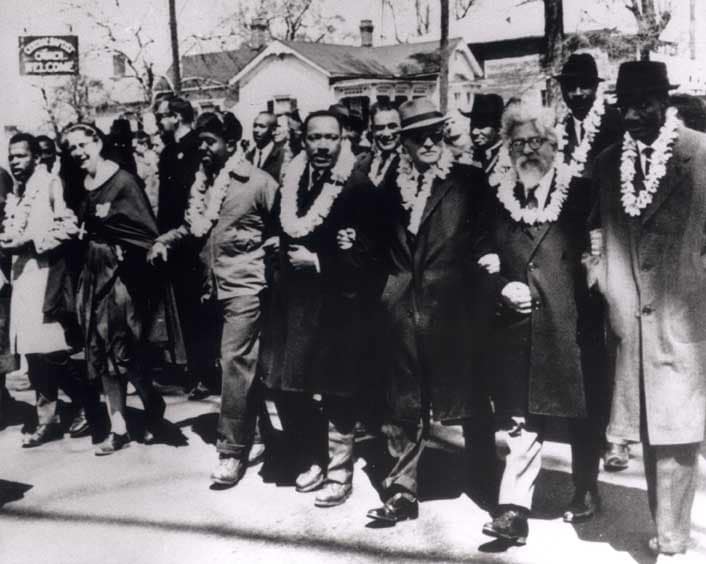
We’ve all seen photos of Martin Luther King, Jr., and John Lewis at Selma, marching beside reverends and rabbis alike for civil rights. But the portrait of Jewish activism during the civil rights movement is far more complex than this image suggests.

Jewish Americans did ally themselves with the Civil Rights Movement, risking arrest, abuse and even their lives. But there was a geographic distinction in Black-Jewish relations. Broadly speaking, Jewish Americans from northern cities were more liberal because they had public support, while Southern Jews in more rural areas — who had to contend with white supremacist backlash without any networks of support — were less willing to make themselves targets by publicly supporting the movement.

Southern Jews who did speak up were often shouted down for endangering the broader Jewish community. During the infamous trial of the Scottsboro Boys in the 1930s, Rabbi Joseph Gumbiner of Mishkan Israel in Selma spoke out against the case and was promptly shouted down by his congregation and reprimanded during an emergency board meeting. He eventually moved west to Nevada and then California. Similarly, Rabbi Benjamin Goldstein of Temple Beth Or in Montgomery attended a rally in Birmingham for the Scottsboro Boys and was told in no uncertain terms by his board of trustees to either back down or leave. He chose the latter, moving to New York after numerous threats.

The Scottsboro Boys with chief defense attorney Samuel Leibowitz

For some Jewish Americans, their marginal status in white society was conditional on their compliance with the status quo. Whatever their private feelings on Jim Crow laws were, they strove not to rock the boat for fear of retaliation. And that fear was not unfounded; historian Leonard Dinnerstein traces a surge of anti-Semitism in the American South in the 1950s and 60s to propaganda that “Communist Jews” were masterminding desegregation efforts. It is not surprising that many kept their heads down and tried their best to avoid scrutiny.

Conversely, for other Jewish Americans, it was precisely their marginalization that made them more aware of and sympathetic toward the Civil Rights Movement. One such case was Bella Abzug, who from 1948 to 1951 worked to overturn the death penalty for Willie McGee, a Black man from Mississippi accused of rape for having a white girlfriend. The night before her final appeal to the Mississippi Supreme Court, Abzug — heavily pregnant — was refused lodging and spent the night at a public bus station, all because she was Jewish. She would go on to become the first Jewish woman elected to the U.S. House of Representatives, constantly centering her experiences with anti-Semitism and her work in anti-racism throughout her career.

Bella Abzug (Photo from Wikimedia Commons)

It’s been half a century since the fight for civil rights. Yet Black Americans and Jewish Americans both continue to face structural prejudice — and this time, allyship is not so clear-cut. Headlines abound with instances of Black leaders accused of anti-Semitism and Jewish leaders accused of racism, but when it comes down to it, we can hold those individuals accountable without withdrawing support for human rights.

This is precisely why Black History Month is so important: if we do not know history, we are vulnerable to fractionalization and attempts to divide us. In addition to Black-Jewish history, we must pay attention to Black Jewish history. In other words, Black Americans and Jewish Americans are not two factions that alternately ally and clash, they are also identities that can overlap. Rabbi Shais Rishon has highlighted the lack of intersectionality in both Black and Jewish spaces, explaining that “James McBride is considered an African-American author, not a Jewish author. Daveed Diggs, when he talks about his experiences, [people say,] ‘Oh, this is an African-American experience.’”

If we do not know history, we are vulnerable to fractionalization and attempts to divide us.

It’s time to embrace our history, our intersectionality. In 1968, I joined the Poor People’s March in Washington, D.C., alongside my mom and brother. We were a suburban Jewish family from New England, but our congregation felt that support for civil rights was our prerogative — my mother doubly so, as her family were Holocaust survivors. Today, as with 50 years ago, I am heartened to see Jewish Americans among the coalition joining together to support the current movement towards greater equity and inclusion. What’s more, I am also seeing members of the Black community, from the vice president to local organizers in small cities, call out the increase in anti-Semitic rhetoric.

So this month, as we honor and celebrate Black History, we can also remind ourselves of the unique and powerful historic relationship between Jews and the Black community. Dive into the Jewish pirates of Jamaica, listen to Black Yiddish artists, read about the influence of Black power on Jewish nationalism. No matter what you know, I guarantee that there is more to learn.


Seth Jacobson is the founder and principal of JCI Worldwide, a Los Angeles-based communications and research firm. He spent several years in the Carter and Clinton administrations in positions focused on economic development, foreign policy, and media relations. He is a frequent lecturer on policy and public affairs at Pepperdine University and UCLA.

Jewish Voices in Black History Read More »

Biden to Bibi: Don’t Call Me, I’ll Call You

(Israel Policy Forum) — The phone call that finally happened on Wednesday between President Biden and Prime Minister Netanyahu had taken on colossal proportions for something whose existence was primarily defined by its absence. Netanyahu had been asked about it on multiple occasions, as had White House spokeswoman Jen Psaki and State Department spokesman Ned Price, and on both sides of the ocean there had been denials that the lack of a phone call was reflective of anything substantive. This qualified as a tempest in a teapot, but that has not stopped endless speculation about whether the U.S.-Israel relationship has been damaged by the delay.
It is fatuous to suggest that Biden’s silence was indicative of a downgrade in Israel’s status as an American ally. Even before yesterday, there had been phone calls from the cabinet level on down across multiple agencies, an in-person visit to Israel from the commander of CENTCOM, and repeated statements about American-Israeli partnership. Those who pointed to Psaki’s hesitation to refer to Israel as an important ally either purposely or ignorantly elided that it was in response to a question that specifically lumped Israel together with Saudi Arabia, the latter of which was clearly driving Psaki’s reluctance; not even one minute prior she had said about Netanyahu, “Obviously, we have a long and important relationship with Israel, and the president has known him and has been working on a range of issues that there’s a mutual commitment to for some time.” The day before she said, “The president looks forward to speaking with Prime Minister Netanyahu.  He’s obviously somebody that he has a longstanding relationship with. And obviously there’s a[n] important relationship that the United States has with Israel on the security front and as a key partner in the region.” And on Tuesday, she confirmed that when Biden begins calling leaders of countries in the Middle East, the first phone call would go to Netanyahu (as it actually did), and further added, “Israel is, of course, an ally.  Israel is a country where we have an important strategic security relationship.  And our team is fully engaged—not at the head-of-state […] level quite yet, but very soon.  But our team is fully engaged, having constant conversations at many levels with the Israelis.”

It is fatuous to suggest that Biden’s silence was indicative of a downgrade in Israel’s status as an American ally

But that does not suggest that there was absolutely nothing going on here at all, especially given how much it had blown up into an issue, even if what is going on is not what the alarmists have suggested. As with everything, there is context involved, some of which has nothing to do with Israel directly and some of which does. The pertinent questions are whether this says something about Biden administration policy writ large, and whether Israel will draw the appropriate conclusions from the unfolding drama.

As Dan Shapiro noted, Biden was crystal clear about his foreign policy priorities–competition with China, countering Russian aggression, reinforcing NATO and Asian alliances–and his phone calls have reflected those precisely. Anyone pointing to a call to Mexico’s Andres Manuel Lopez Obrador as falling outside that scope and thus proof that Biden is ignoring Israel must be woefully ignorant of the map of the North American continent. Biden said he was deprioritizing the Middle East and he has done precisely that. This is not a case of Biden calling Israeli antagonists, such as Recep Tayyip Erdogan or Mahmoud Abbas, and sending a clear message of snubbing Netanyahu, or even of repeating President Obama’s mistake of visiting the region but skipping Israel. While the lack of immediate and prioritized attention undoubtedly was an unpleasant dash of cold water for Netanyahu given President Trump’s approach, this was not being done in a foreign policy vacuum intended to single out Israel.

And while there was and still remains a strong argument for Biden to engage deeply with Israel on the question of how to approach Iran, Biden has confounded expectations so far not by leaving Israel out of the circle but by not creating a circle at all. Biden has not rushed back into entering the JCPOA, has not immediately lifted Trump’s sanctions on Iran, and Secretary of State Tony Blinken has ruled out returning to the JCPOA until Iran comes back into full compliance rather than the other way around. This is a more hawkish line than many expected Biden to take, but it also mitigates the immediate necessity to confer with Netanyahu in order to resolve any differences over the American approach.

This is both the generous and most reasonable way of interpreting Biden’s delayed phone call, as it places it in the context of the hyper-disciplined Biden team’s wider foreign policy approach. But there is a less generous interpretation that cannot be blithely dismissed, particularly as it may also turn into a self-fulfilling prophecy as time goes on. Since Biden’s election, there have been multiple public admonishments from Israeli officials about how Biden should act. The day after the Capitol insurrection, Netanyahu called for Biden to continue Trump’s maximum pressure campaign and not to reenter the JCPOA. On Inauguration Day, an unnamed “very senior Israeli official” was quoted as saying, “If Biden adopts Obama’s plan, we will have nothing to talk about with him.” One week later, IDF Chief of Staff Aviv Kochavi went significantly further, stating in a widely covered speech, “A return to the 2015 nuclear agreement, or even if it is a similar accord with several improvements, is bad and wrong from an operational and strategic point of view.” There is no question that Israeli leaders have every right to express their opinions on the Iran deal issue, but when the Israeli government extolls the virtues of a “no daylight” policy that keeps all disagreements behind closed doors yet acts in a manner suggesting that this commitment is only supposed to flow in one direction, it is somewhere between naïve and imperious to assume that it will not garner a negative response.

Since Biden’s election, there have been multiple public admonishments from Israeli officials about how Biden should act.

Then there is the issue of garden variety Israeli political developments. The tender bids for Givat Hamatos, one of two potential areas for Israeli construction along with E-1 that have been historical redlines for the U.S., were conveniently awarded a few hours before Biden was sworn in. The Jewish National Fund (Kerem Kayemet L’Yisrael), a quasi-governmental body in Israel unlike in the U.S., has approved a new policy paving the way for it to openly purchase land in the West Bank for settlement expansion. As he did before the first election in April 2019, Netanyahu not only brokered a merger between smaller right-wing parties in order to get the Kahanist neo-fascist Otzma Yehudit over the electoral threshold and into the Knesset, but this time he signed a vote surplus agreement with them, literally ensuring that surplus Otzma votes directly benefit Likud and vice versa. All of these are developments that likely would have drawn White House or State Department condemnation in the past, and yet they have been met with either silence or nebulous statements about the need for all sides to refrain from unhelpful unilateral actions.

It may be that Biden truly does not want to get drawn into endless arguments regarding Middle East developments and is content to largely ignore all of these things, or it may be that he was deliberately giving Netanyahu the cold shoulder in order to send a message. Whatever the story is, it is difficult to see how Israel benefits from using a delayed phone call to create an actual fight with Biden. Ultimately Israel needs American help on a variety of fronts right now, from whatever unfolds with Iran to keeping the ICC off Israel’s back. If Biden seems disinclined to prioritize Israel at the outset amidst a range of what he views as more pressing foreign policy issues, his mind is unlikely to be changed following Israeli muttering that he is out to get Netanyahu. Israeli officials should stop worrying about how long the phone call took to arrive, and make sure that now that it has taken place, they aren’t providing anyone in Washington with a catalogue of insults to the new president of their most critical ally for which to apologize.

On the U.S. side, whatever weight is assigned to these various explanations–from the innocuous to less innocuous–Biden does run the risk of stirring up heightened Israeli antagonism whether or not it is warranted. Israelis and their leaders are sensitive to the perception of slights or lack of acceptance, and as evidenced by the Abraham Accords and even Obama’s second term visit to Israel, a little love also goes a long way. Israel is not high on Biden’s list of priorities, and he is likely annoyed about some of what he has seen over the past month. But just as the Israeli government needs to swallow its pride and start things off on the right foot, Biden should do the same and not allow this molehill to turn into a mountain, even if he’d rather not get bogged down with Netanyahu quite yet.


Michael Koplow is Israel Policy Forum’s policy director, based in Washington, DC. To contact Michael, please email him at mkoplow@ipforum.org.

Biden to Bibi: Don’t Call Me, I’ll Call You Read More »