
fbpx

February 12, 2021

Milken Students to Study Abroad in Israel Despite COVID-19

The ongoing COVID-19 pandemic will likely keep most Los Angeles high school students home over the next several months, but nearly 70 sophomores from Milken Community School will enjoy a unique, transformative experience because of a longstanding partnership between their school and a study abroad program in Israel.

In the first week of March 2021, 66 tenth-grade students from Milken, a pluralistic high school, will travel to Israel and spend their spring semester at Jewish National Fund-USA’s Alexander Muss High School in Israel.

“We are super excited that this is going to happen,” Limor Dankner, associate head of school for academic affairs and strategic partnerships at Milken Community School, said in an interview. “Kids are going to have a sense of normalcy in a time when they have not had it all year. Parents are willing to overcome their own fears, and it takes a lot of courage to do that, but it speaks to how urgent it is for our parents that they prioritize their children’s mental health and engage in a program that is Milken’s signature program.”

Since 2007, Milken has been sending its sophomores to high school in Israel as part of its Tiferet Israel Fellowship (TIF) program. Known affectionately by those who have attended school there simply as “Muss,” Alexander Muss High School in Israel provides students with the chance to increase their understanding of Israel’s history and bolster their sense of Jewish identity through formal classroom learning and experience-based education.

Milken Community High School Tiferet Israel Fellowship students in 2015. (Photo from Milken Community School Facebook page)

The Milken students participating in TIF this year had originally been scheduled to depart for their trip on Jan. 27, but COVID-19 derailed plans. Although Israel has been extraordinarily successful in providing vaccinations to its population, coronavirus cases have continued to spike in the country, and in an attempt to reduce the virus’ spread, the government has closed the airport, resulting in the postponement of the group’s departure date until early March.

To make up for lost time, Milken and Muss have extended the back-end of the students’ spring semester, and Dankner, associate head of school at Milken, expects the students’ stay in Israel to last until at least the second week of June.

Milken and Muss are taking numerous precautions to reduce the possibility of any infection. Prior to departing, the students will receive COVID-19 tests at Milken’s Bel Air campus. After arriving in Israel, they will quarantine for two weeks along with their madrichim (counselors), living in small groups of approximately six before settling into an ordinary living situation in the school’s dorms, located in the north of Tel Aviv at Hod HaSharon.

Dr. Mark Shinar, head of school at Muss, said the school has been approved as a quarantine site by Israel’s Ministry of Health and Ministry of Education.

Alexander Muss High School in Israel (Photo courtesy amhsi.org)

Named the head of school in August, Shinar has been working in close collaboration with Milken leadership preparing for the students. “There is a tremendous amount of partnership and choreography that needs to happen between Alexander Muss High School in Israel and Milken based on the belief and trust that we are all working together to make sure the kids get to Israel,” he said in a phone interview.

The Milken students will be joining Jewish students from around North America. “That exposure to different people, different cultures or even to kids from different states” will be a highlight, Dankner said.

Because of the coronavirus, the program has undergone tweaks, and the students are likely to participate in a greater number of agricultural service learning opportunities than participants from previous years.

Jessica Schiff, 18, a Milken senior, participated in the program as a 16-year-old sophomore, opting for the trip after her older brother had gone when he was in tenth grade and loved the experience. She had been to Israel prior to TIF on family trips, but going to Israel with her classmates for an extended period of time provided her with a feeling of independence she had not experienced until that point.

It was out-of-the-classroom learning that resonated most with her, whether it was lessons about the Western Wall while actually at the Western Wall or studying about a historic episode on a mountain while on that mountain.

It was out-of-the-classroom learning that resonated most.

“I just loved being able to learn about Jewish history while sitting on the same mountain where a battle happened or looking out on a valley and hearing about how some sort of important event that happened in the valley,” she said in a phone interview. “It was so incredible.”

“At TIF, I got to experience living in Israel and explore parts of Israel I never had before with a more mature outlook I had in life,” she added. Of this year’s group, “I am jealous they get to go,” Schiff said.

The program is not inexpensive, however one-third of the students receive financial aid thanks to a newly established scholarship fund co-run by JNF-USA and Milken.

“We are very generous with our financial aid packages,” Dankner said. “JNF-USA has been very helpful in that.”

JNF-USA acquired Muss in 2013. Since launching in 1972, more than 28,000 alumni have experienced the study abroad program, including Facebook’s Sheryl Sandberg and reggae singer Matisyahu.

While the latest group to study at Muss will be doing so in the middle of a pandemic, it is specifically because of this challenge that Milken leaders expect this year’s group to be more plugged-in and present for their learning than students from previous years.

“This group, this cohort, is bringing to Muss what no cohort before them has brought — a longing and yearning for personal exchange and interaction,” Dankner said. “These kids, ironically enough, will be the first cohort not on their phones all the time. They are so thirsty and miss it so much, we expect them to be present in a way no cohort has been before.”

Milken Students to Study Abroad in Israel Despite COVID-19 Read More »

Being Grateful for Problems

It’s a well-known and powerful idea to express gratitude for life’s blessings. Everyone has blessings they can be grateful for. For some, it can be as basic as being grateful to walk, see, hear, smell or breathe. We can be thankful for food and shelter, friends, family, a community, liberty, safety, and a purpose in life. The list is endless; we only need to look.

But in a conversation with my mother in Montreal this week, another branch of gratitude came up.

She was telling me that her house alarm had gone off by mistake at 5am, which completely threw her off. She was exhausted all day, had trouble taking a nap, couldn’t even do her Thursday Shabbat cooking. I could feel her fatigue on the phone.

But just as I was starting to boost her morale, she beat me to the punch.

“These are the problems I want,” she told me.

I knew where she was going. She knows the kind of “problems” that have dominated our pandemic year—the fatalities, the isolation, the economic devastation, and so on. Compared to those problems, hers are blessings.

In two seconds, she gave me a lesson that can last a lifetime: We can also be thankful for our problems.

That’s it. In two seconds, she gave me a lesson that can last a lifetime: We can also be thankful for our problems.

For those of us lucky enough to have been spared the worst of the pandemic, our problems and challenges may be serious and real, but in 2021, they are also blessings.

Shabbat shalom.

Being Grateful for Problems Read More »

Children’s Book Tells The Story of Dr. Jonas Salk and the Polio Vaccine

When Linda Elovitz Marshall was growing up in the 1950s, she and her friends couldn’t go to the movies, swimming pools, ponds or lakes during the summer out of fear of catching polio. One year, the outbreak was so bad that her family left Boston, where the disease was spreading rapidly, and stayed in Hartford with her grandparents.

Thankfully, Marshall never got polio, and Dr. Jonas Salk’s polio vaccine was introduced in 1955. Finally, Marshall and her friends could gather once again and things could go back to normal. Salk became her hero, which is why she decided to write a new children’s book, “The Polio Pioneer: Dr. Jonas Salk and the Polio Vaccine,” about his life.

“This is a book that I’m really proud of,” said Marshall in an interview with the Journal. “It’s just so important.”

The book starts off with little Jonas Salk watching soldiers coming home from World War II. While everyone else is cheering and happy, he’s upset because he sees injured soldiers who are unable to walk. “Jonas Salk was a kid who saw things differently,” Marshall writes.
The book also details how Salk’s family fled Russia and Lithuania to escape religious persecution, how he loved chemistry and how he invented the world’s first flu vaccine in 1938 with Dr. Thomas Francis. Then, Salk began working on the polio vaccine. To test it out, he brought in almost two million children called “Polio Pioneers,” and on April 12, 1955, he announced that it had worked.

The book ends with an uplifting note for its readers: “Jonas Salk was a kid who saw things differently, a kid who wanted to help make the world a better place… Ever meet a kid like that? Could he or she be YOU?”

Marshall said she thought about writing the book before COVID-19 came out. “We were living this carefree life where we didn’t need to worry about these things anymore, but then bingo, it’s not so anymore. The impetus was to share that history I remembered quite well, but for anybody younger than me, it was ancient. With my generation dying out, nobody is going to know about polio firsthand anymore.”

Marshall had already written many children’s books, some of which are about Jewish topics like Passover, Purim, shalom bayit, Shabbat and Anne Frank. They include titles like “Talia and the Yum! Kippur” and “Shh… Shh… Shabbat.” Since Marshall had this background writing for children, she knew she wanted to keep the book light. “I didn’t want to scare any 4-year-olds,” she said. “The pictures are retro, which shows this was 50 years ago, and the story had a happy ending. What could be better during COVID times than reading about something that has a happy ending?”

To research for “The Polio Pioneer,” Marshall visited the Salk Institute for Biological Studies in La Jolla, read biographies on the doctor and connected with his son, Dr. Peter Salk, who is president of the Jonas Salk Legacy Foundation. “He reviewed my manuscript and was wonderfully helpful,” she said. “I had to be really careful about every word, especially the ones about the scientific processes and the virus and vaccines.”

Even though polio was devastating — just like COVID-19 — there was a light at the end of it all because of Dr. Salk. With her book, Marshall said she wants to portray a sense of hope to kids that the pandemic will go away just like polio did when she was their age.

“I hope this book brings good things to people,” she said. “I hope it helps parents sit together and cuddle with their children and talk about what’s going on now.”


Kylie Ora Lobell is a writer for the Jewish Journal of Los Angeles, The Forward, Tablet Magazine, Aish, and Chabad.org and the author of the first children’s book for the children of Jewish converts, “Jewish Just Like You.”

Children’s Book Tells The Story of Dr. Jonas Salk and the Polio Vaccine Read More »

WATCH: Persian Jews Speak Out Against Iranian Gov’t

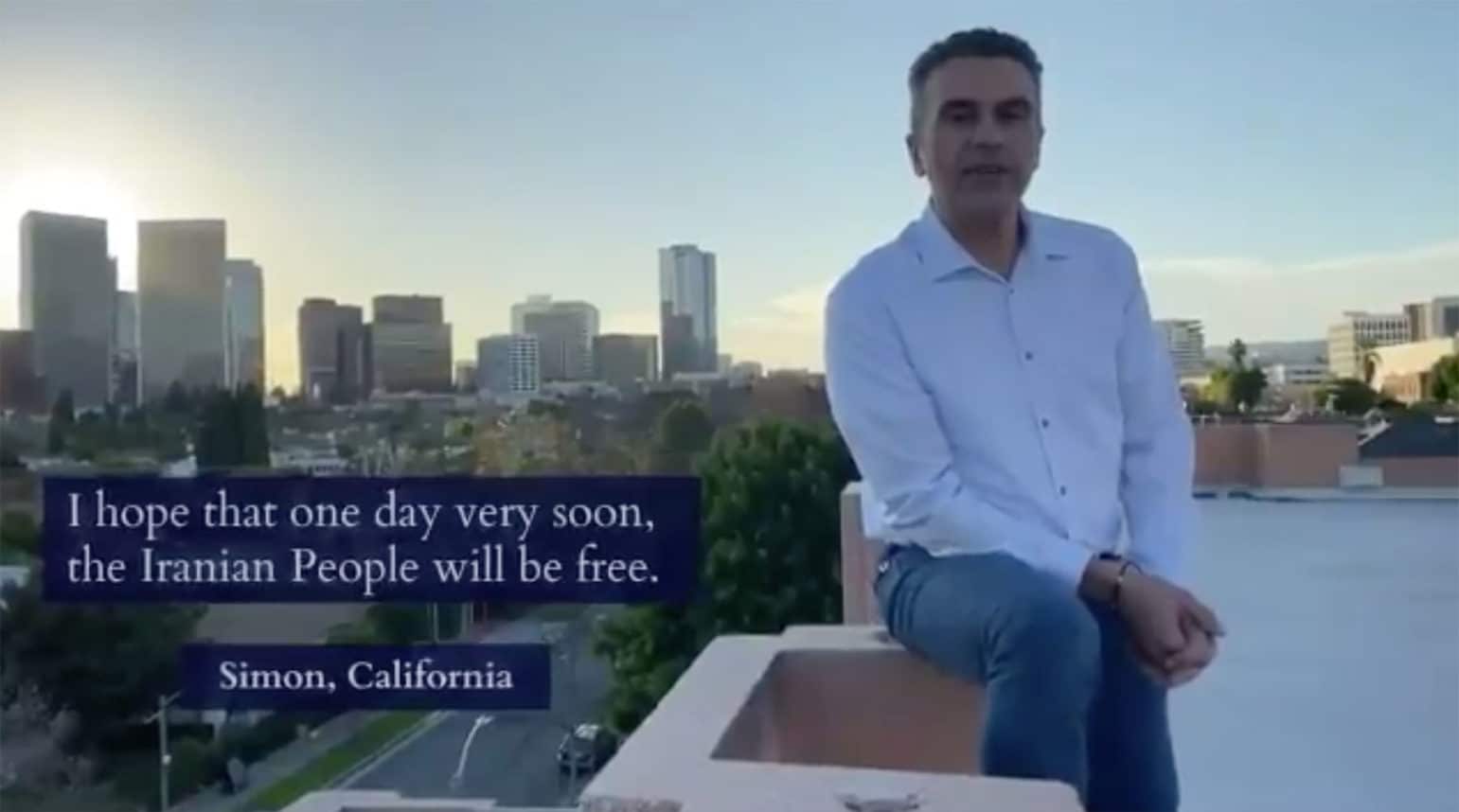
Several Persian Jews in the United States spoke out against the Iranian government in a February 10 video.

A newly formed group called Iranian Americans for Liberty produced the video; the group aims to bring human rights and freedom to Iran. The video begins with a man named Simon in Beverly Hills stating, “I am a proud Persian Jewish American who loves the United States of America, the State of Israel and the Iranian people. I hope that one day the Iranian people will be free.”

A California woman named Romi then says, “I’m a Persian Jewish American who wishes that the Iranian people were able to enjoy the same freedoms we do here in the United States of America.” Others in the video gave similar messages voicing support for Israel and calling for the Iranian people to be free from their current government.

The video also states that there were 80,000 Jews in Iran just before the 1979 Islamic Revolution occurred; today there are less than 8,000 Jews in the country.

Jewish activists praised the video. “Proud and supportive of my many Iranian-American friends fighting for Freedom and Liberty for their brothers, sisters and extended family in occupied (by the Mullahs in) Iran,” philanthropist Adam Milstein tweeted.

https://twitter.com/AdamMilstein/status/1359680368488628224?s=20


Journalist Karmel Melamad similarly tweeted, “Our voices as Iranian Jews have been silenced in the past… but NOT anymore! Thank you @LibertyIranian for this!”

Former Deputy Special Envoy to Monitor and Combat Anti-Semitism Ellie Cohanim also tweeted, “Watch as Iranian Jewish Americans support their brothers & sisters in Iran in their quest for freedom.”

WATCH: Persian Jews Speak Out Against Iranian Gov’t Read More »

My Rabbi Hat

This week, Parashat Mishpatim, I can’t resist putting on my Rabbi hat and sharing my commentary, because this Parasha contains the core of Jewish ethics and the secret of Jewish survival.

The verse I am targeting is: Ve Ger Lo Tilchats, VeAtem Yedaatem et nefesh hager, Ki Ger Hayita Beerets Mitrayim. “And thou shall not oppress the stranger, and you know how it feels to be a stranger, because you were a stranger in the land of Egypt.” The message is clear: Universal morality emanates from personal empathy — “you know how it feels to be a stranger.”

Universal morality emanates from personal empathy — “you know how it feels to be a stranger.”

And where does personal empathy emanate from? Here comes the second part to answer those who argue, “I am an American, and never been a stranger anywhere” and reminds them: “personal empathy emanates not from personal experience but from our collective, peoplehood memory.”

Individual experience is not rich enough to cope with the complexity of human life and the ups and downs of human history. Collective memory is what is needed. “You were once a stranger in the land of Egypt, we all were there, remember?”

Our record, performance, survival and resilience attest to the power and wisdom of this symbiosis of universal values and people-based memories.


Judea Pearl is a UCLA professor and president of the Daniel Pearl Foundation (www.danielpearl.org), named after his son. He and his wife, Ruth, are editors of “I Am Jewish: Personal Reflections Inspired by the Last Words of Daniel Pearl” (Jewish Light, 2004), winner of the National Jewish Book Award.

My Rabbi Hat Read More »

Jake Cohen’s Debut Cookbook is a Love Letter to His Husband, Family and Judaism

Nice Jewish professional chef, Jake Cohen, always had a love for cooking. Rushing home every day as a teenager to watch “Barefoot Contessa,” the Ashkenazi foodie eventually took his hobby and turned it into a profession. He studied at the Culinary Institute of America, worked in test kitchens and restaurants around New York and eventually started contributing to dozens of food publications, including TastingTable.com, Time Out New York and The Feedfeed, where he is the editorial and test kitchen director.

Then Cohen met his Persian-Iraqi husband, Alex Shapiro, whose traditions, family stories and recipes flipped everything Cohen knew about Jewish cooking on its head.

“[Alex] had never heard of babka or gefilte fish,” Cohen said. “All of a sudden, I realized Jewish food cannot be defined by one section of a Jewish community… It completely shook up everything I knew about food in a secular sense. It made me reevaluate what that meant as a Jew struggling with identity. We began to explore that through Shabbat.”

Every Friday night, Cohen and Shapiro celebrated Shabbat by merging Persian and Ashkenazi traditions — all while sharing their journey on Instagram. Cohen introduced Ashkenazi delicacies to Shapiro and whipped up dishes he grew up eating that were new to Cohen’s palate. Cohen also started inviting friends over to his home for Shabbat dinners. Their home became a space that was conducive for modern Jewish ritual.

“It naturally became this queer love story all surrounding Jewish food, and that’s what excites me and that’s what I fell in love with,” Cohen said. The two have now been married for two years.

The couple’s weekly Shabbats led to Cohen creating his first cookbook. “Jew-ish: Reinvented Recipes From a Modern Mensch,” out everywhere on March 9, is part cookbook, part family memoir and part celebration of Jewish heritage and the differences in cooking techniques that make “Jewish food” broad and exciting.

Courtesy of Jake Cohen

In Cohen’s cookbook, you’ll find recipes for Cacio e Pepe Rugelach, Sabich Bagel Sandwiches, Latke Tahdigs, Buffalo Chicken Tahchin and Matzo Tiramisu. Within every recipe is a documented and preserved family history of the recipe’s origins. Cohen said that although “there’s nothing wrong with a recipe that comes out of my head — and some of those are my best recipes” — it’s the family recipes that have survived the Holocaust, religious persecution and relocation that resonate deeply with him.

One of the first recipes he ever wrote about was from his great-great-grandmother. “Nanny’s Apple Cake” recipe, which is featured in Food & Wine, Saveur and a headnote in “Jew-Ish,” went on a long journey before reaching Cohen on a scribbled down index card.


View this post on Instagram


A post shared by Jake Cohen (@jakecohen)

As the story goes, his nanny fled from Belgium to Cuba during the Holocaust, where she started baking the apple cake to celebrate Rosh Hashanah. From Cuba she moved to New York, where Cohen’s aunt makes her recipe to this day.

“I transformed it and wrote about it. To see people every year on Rosh Hashanah tag me [on social media] saying, ‘I’m making Jake’s Nanny’s Apple Cake,’ that is like magical,” Cohen said. “That is preservation of family recipes that will live on for generations. That’s the most important thing I can do. Preserve aspects of Jewish culture, my family’s culture and my husband’s family’s culture.”

Cohen also documented his husband’s family recipes by including their Kibbuh recipe, without any revisions, in the book. Since it was never officially written down, neither Shapiro nor his cousins know how to make it, and Cohen wanted to make sure those family recipes were passed down and remembered.

“It’s just something I wanted to do as an act of service for my husband and his family,” Cohen said about Kibbuh, a traditional Iraqi dish made with meat dumplings in a sweet-and-sour beet stew. “To offer a recipe for not only him but any young Iraqi Jew who remembers eating it growing up to now hav[ing it] as a jumping-off point to make it on their own — that is the most valuable thing I can do.”

Cohen said he gets emotional when reading the passages and head notes filled with family history on the pages of “Jew-ish.” Speaking to high school students on his press tour, he encouraged them to reach out to their grandparents and family members and ask them about the food they grew up with.

Courtesy Jake Cohen

Noting he and other Millennials and Gen Z-ers have the privilege of being born in America after prior generations “fought so hard to create a more stable and more free life,” Cohen instructs that the easiest thing for younger Jews to do is ask “your grandmother what she ate on Shabbat. What did her mother cook? These are the things that add color into the family history.”

In documenting Jewish culture and history through recipes, Cohen hopes to continue honoring the Jewish idea of L’dor V’Dor (from generation to generation) through food.

“Jew-Ish” features dozens of recipes, holiday menu cards for Rosh Hashanah, Break Fast, Hanukkah and Passover, and a personalized Haggadah for those who pre-order by March 8.

Cohen adds, it’s a “full acceptance of Jewish identity, but in a way that works for you.” A core value of the book is Jewish hospitality, where anyone can create a space to break bread with friends, family, loved ones and strangers. Cohen, who is also a board member for Shabbat-hosting organization One Table, said every recipe included in the book was tested at a Shabbat dinner with at least 10 guests. Although the pandemic has halted large gatherings, the spirit of Jewish cooking can continue in any home all the time.

With Valentine’s Day coming up on Sunday, Feb. 14, Cohen noted that a great way to celebrate your special someone with a Jewish spin is by making his Rose Water and Cardamom French Toast featured in “Jew-Ish.” (Full recipe at the end of the article.) Challah french toast is the perfect Valentine’s Day brunch since many Jewish families will already have leftover challah from Shabbat. The classic challah Trench toast recipe gets a modern twist by infusing rose water and cardamom into the challah soaking batter.

“As I started cooking a lot of my husband’s family’s recipes, I really fell in love with adding rose water and cardamom to everything,” Cohen said. “It becomes this really decadent floral sweet breakfast. The idea of doing breakfast or brunch as an act of starting the day as a couple is so sweet.”

What started as a love story between food and culinary arts for Cohen turned into preserving Jewish history while making room for new traditions that fit modern Jewish lifestyles. As soon as Cohen found connection and meaning in Shabbat, he said it extended to every Jewish ritual thereafter. He hopes others can find the why behind the Jewish rituals and traditions in this cookbook, like he was able to when creating it.

“My modern Jewish family is a blend of a young queer couple, one Ashkenazi, one Mizrahi, and the way we cook is inspired by both,” Cohen said. “My hope is as you read it, even if you aren’t as familiar with the ingredients, you’ll be familiar with the stories and the passion.”

“Jew-ish: Reinvented Recipes From a Modern Mensch” is available for pre-order until March 8. The book is available everywhere books are sold. Follow Jake Cohen on Instagram and TikTok.

Photo by Matt Taylor-Gross

Rose Water and Cardamom French Toast

Yield: Serves 6 to 8

Prep Time: 15 minutes, plus 1 hour soaking time

Cook Time: 20 minutes

It’s Shabbat tradition to always have two challahs on the table. While the real reason is to represent abundance, I like to say its purpose is to have one left over for French toast the next morning. Funny story: Alex stood me up on our second date, for which I had prepared a brunch spread including a huge platter of challah French toast that I proceeded to eat alone on my couch in disappointment. Love wins!

Naturally, you already know that it all worked out for us, and French toast has become an integral part of our relationship. Over the years, I’ve tried to switch it up past the expected flavorings of vanilla and cinnamon. Instead, I go the Middle Eastern route, adding floral rose water and warm cardamom to the mix. (For those of you who love rose water as much as we do, try spiking your maple syrup with a splash for an extra kick of floral sweetness.)

Now, the secret to achieving the custardy French toast of your dreams is making sure the bread soaks long enough. You want each piece to be completely saturated in the egg mixture before slowly frying them in butter to fully cook the centers. All that’s left is to platter them up and pray your breakfast guest(s) arrive. If not, you’ve luckily discovered the beauty of meal planning and now will be enjoying this recipe every morning for the rest of the week!

3 cups whole milk
½ cup sugar
1½ tablespoons rose water
1 teaspoon kosher salt
¾ teaspoon ground cardamom
6 large eggs
1 (16-ounce) loaf challah bread (see page xvii), sliced 1 inch thick
6 tablespoons (¾ stick) unsalted butter
Dried food-grade rose petals, for garnish (optional)
Maple syrup, for serving

  1. In a large bowl, whisk together the milk, sugar, rose water, salt, cardamom, and eggs until smooth.
  2. Arrange the challah slices over the bottom of a large baking dish, shingling them to fit, then pour over the milk mixture. Cover with plastic wrap and refrigerate for 1 hour to soak.
  3. In a large nonstick skillet, melt 1 tablespoon of the butter over medium heat. Add about 3 slices of the soaked challah to the pan and cook until golden, 2 to 3 minutes. Flip the challah, add another tablespoon of the butter to the pan, and cook until golden and cooked through, 2 minutes more. Transfer the French toast to a platter. Repeat to cook the remain-ing soaked challah slices, working in two batches and using the remaining butter.
  4. Garnish the French toast with a pinch of dried rose petals, if desired, then serve immediately with maple syrup.

Excerpted from JEW-ISH: A COOKBOOK: Reinvented Recipes from a Modern Mensch © 2021 by Jake Cohen. Photography © 2021 by Matt Taylor-Gross. Reproduced by permission of Houghton Mifflin Harcourt. All rights reserved.  

Jake Cohen’s Debut Cookbook is a Love Letter to His Husband, Family and Judaism Read More »

David Suissa Podcast Curious Times

Curious Times Episode 4: What’s On My Curious Mind This Week?

A roundup of interesting items in an ever-changing world, including this week’s Torah portion.

Enjoy the conversation.

Listen on Apple Podcasts

Listen on Spotify

Listen on Stitcher

Follow David Suissa on FacebookTwitter and Instagram

Curious Times Episode 4: What’s On My Curious Mind This Week? Read More »

The Bagel Report

And the Nominees Are… Sometimes Jewy

Hold onto your invisible kippahs (especially while drinking water during the impeachment trial), because the Bagels are talking awards show nominations, challenging Hollywood to create more thoughtful Jewish portrayals, and wishing a mazal tov to Steven Spielberg on being named the Genesis Prize Laureate for 2021. Plus, Erin knows Broadway musicals so well that she can use the term “choreo,” while Esther brainstorms about casting Julia Garner and Shira Haas as sisters in something. And this week’s speed round might be the speediest yet! (Which is to say, not all that speedy, but speedier than usual, so we will take the win.) Finally, with Valentine’s Day approaching, and since Esther’s celebrating her nephew’s bar mitzvah and Erin her brother’s birthday virtually due to pandemic concerns, it’s time to think differently about love. Sending big Bagel love to all our listeners!

Follow ErinEsther and The Bagel Report on Twitter! 

And the Nominees Are… Sometimes Jewy Read More »

Yang Hints at Hands-Off Approach to Yeshiva Education

(New York Jewish Week via JTA) — New York mayoral candidate Andrew Yang waded into the debate over the push for secular education at yeshivas, affirming “parental choice” and saying there is a “complete lack of trust” between the haredi Orthodox community and city government.

Organizations that oppose government scrutiny of secular education at the Jewish private schools were quick to praise Yang for his comments.

“We commend any candidate who affirms the importance of parental choice and who recognizes the healthy results of yeshiva education,” said Rabbi Yeruchim Silber, director of New York government relations for Agudath Israel of America, the haredi umbrella group. “This is indeed an issue of fundamental importance to our community.”

But a nonprofit organization that advocates for reform at city yeshivas isn’t having it.

Talk of a “breach of trust” is a “totally made-up” issue, said Naftuli Moster, executive director of Yaffed, which advocates for secular education at New York City’s yeshiva schools.

“What broken trust?” asked Moster, who described the relationship between the current administration and the haredi Orthodox community to be “more friendly than any city administration in the history of New York City.”

Yang, a businessman and a former Democratic presidential candidate, discussed the issue earlier this week with the Forward, saying “we shouldn’t interfere with their [yeshivas’] religious and parental choice as long as the outcomes are good.”

In a statement to The Jewish Week, Yang doubled down on his previous statements.

“There has been a complete lack of trust recently between the ultra-Orthodox community and City and State government,” he said. “We need to revamp this relationship and acknowledge that educators at Yeshivas and City education officials are all working towards the same goal – to ensure NYC students receive high-quality education.”

Yang is perhaps the first in a crowded field of candidates to broach the yeshiva issue, which has embroiled the haredi Orthodox community since the administration of Mayor Bill De Blasio announced in 2015 that it would investigate a complaint alleging that dozens of Brooklyn yeshivas were violating state law by giving their students a subpar education in English, math and other secular subjects.

Both sides in the debate declared partial victory in late 2019, when a long-delayed city Department of Education report found few yeshivas offering secular educations “substantially equivalent” to state requirements, but also that the majority were making progress.

De Blasio’s terms in office have demonstrated the importance, and pitfalls, of nurturing relations with the haredi Orthodox, who form powerful voting blocs in neighborhoods like Brooklyn’s Crown Heights and Williamsburg.

Last year, dozens of Jewish organizations and leaders criticized de Blasio for singling out the “Jewish community” in a tweet criticizing a large Hasidic funeral held in defiance of coronavirus restrictions. De Blasio later apologized for the comment.

Despite that controversy, Moster cited several policies instituted by the de Blasio administration that were well-received by the community. They included repealing regulations surrounding a controversial circumcision ritual that has been linked to the transmission of the herpes virus, permitting the use of government vouchers at religious schools, and increasing security funding for yeshivas and synagogues.

“Any notion that there’s some sort of broken trust that we need Andrew Yang to repair is just utterly insane,” Moster said.

In his statement to The Jewish Week, Yang went on to promise that if elected mayor, he will “always respect religious freedom including the freedom of parents to do what’s best for their kids educationally. Thus, we shouldn’t interfere with their religious and parental choice as long as the outcomes are good.”

Moster criticized Yang for his “brazenness to opine on issues of religious freedom” without reaching out to discuss the issue with groups like Yaffed. He referred to subpar secular education at yeshivas as “a major civil rights issue, an education policy issue,” as opposed to an issue of religious freedom.

“If the way the city repairs ‘trust’ with the ultra-Orthodox community is by throwing kids under the bus, Yang is right on track,” he said.

Richard Bamberger, a spokesperson for a group that advocates for school choice and decreased supervision of New York City yeshivas, welcomed Yang’s comments.

“We are gratified that many of the mayoral candidates have acknowledged what we have always known: Parents choose yeshiva education for their children because they are confident that they will graduate with the skills and the knowledge to have a successful life,” said Bamberger, who represents Parents for Educational and Religious Liberty in Schools, or Pearls.

Yang Hints at Hands-Off Approach to Yeshiva Education Read More »

Kosher Restaurants Have Weathered the Storm

(JTA) — Many industries were harmed in 2020, perhaps none as deeply as the hospitality sector. Nearly one in six U.S. restaurants had closed as of December, according to data from the National Restaurant Association.

Kosher establishments were not immune to the economic consequences of the pandemic: We saw iconic kosher restaurants permanently close this year, including Abigael’s in Manhattan, Casablanca in New Orleans, Wolf & Lamb in Brooklyn, Mama’s Vegetarian in Philadelphia and Bamboo Garden in Seattle, plus a few dozen more in the United States and Canada.

According to the restaurateurs with whom I’ve spoken, those who haven’t shut down are largely struggling, both financially and under the thumb of harsh government restrictions in places like New York and Los Angeles. They deserve much credit for their innovations and perseverance throughout the year, delivering for the first time — even to neighborhoods one or two hours away — editing menus, constructing outdoor dining structures and navigating a public health crisis on a daily basis. Kosher caterers opened outdoor pop-up restaurants when hosting in-person parties became impossible.

I have been running a popular kosher food and travel site for 13 years (mazel tov!), and I’ve learned that for most kosher observant Jews, dining out at a restaurant is more than just a meal. It’s our form of entertainment and socialization. It’s why we love having kiddush after shul. The food and socializing go hand in hand.

This made the closure of our restaurants that much harder — as diners and for the restaurants themselves. So many businesses were forced to stay afloat on takeout or delivery services, when most of us diners were really clamoring for the dining-out experience.

While we have a vaccine slowly rolling out to the population, the virus is still raging. Thus restaurants will continue to see restrictions on how they can operate (although with some recent lifting of the limitations in New York City and Los Angeles), limiting their revenues. We’ll likely see more restaurants closing in 2021.

However, things aren’t all that bad.

Initiatives like the Barstool Sports’ Barstool Fund, which has raised over $35 million to support small businesses that are struggling financially, are helping restaurants ride out the pandemic. Ken’s Diner in Skokie, Illinois, is a kosher restaurant set to receive money from the fund along with many nonkosher restaurants, although it’s surely not the only deserving kosher eatery in need. Two Upper West Side Jews have also started an “On Mondays we Eat Local” campaign to support struggling kosher restaurants.

According to one list, only 50 kosher restaurants closed throughout 2020 out of approximately 4,000-5,000 (for whatever reason). The number of closures isn’t much higher than in a typical year. That’s in stark contrast to the 160-plus kosher restaurants that have opened in the past year.

Observers like me expected many more shutdowns. Fine dining restaurants in cities, in particular, were vulnerable. They typically have high rents and sizable staff and seldom do delivery or takeout. With business lunches and dinners all but canceled after the March lockdowns began, these upscale restaurants and steakhouses had almost no way to earn income. Yet nearly all of Manhattan’s upscale restaurants are still in business.

Many restaurants even thrived during the craziness, particularly in the suburbs, but also in the cities’ residential neighborhoods. With people stuck or working from home, delivery became commonplace. Restaurants outside of New York City and its draconian rules were quicker to welcome diners, even at a limited capacity. And while a number of Upper West Side restaurants closed, it also made the Manhattan neighborhood fertile ground for successful kosher restaurants to further expand their footprint in 2021. The Noi Due franchise added a new location in the neighborhood in January, and Brooklyn’s Izzy’s BBQ, arguably the world’s best kosher barbecue, is opening a smokehouse/deli in the Manhattan neighborhood this winter.

We continue to see new restaurant openings across the country (including a trio by chef Seth Warshaw in Boca Raton, Florida), seemingly without fear of the current economic situation.

What helped kosher establishments weather the storm so much better than the rest of the industry? We Jews love food and dining out. Kosher diners clamored to get back into restaurants as soon as they could amid the pandemic over nearly all other forms of entertainment. Whenever restaurants in New York and Los Angeles will be allowed to fully open, there will be a metaphorical stampede of diners.

But kosher dining is about more than just entertainment. Kosher establishments and their customers depend on one another to thrive. Going to a kosher restaurant is an act of supporting a Jewish business that serves our community and aligns with our dietary needs. Going to a kosher restaurant is not just about the food, but also about engaging in a particular communal Jewish act of observance.

Other factors that are helping new restaurants in 2021 are largely economic: low rents and lending rates, numerous vacant storefronts and a large pool of potential staff clamoring for work. Technologies that enable restaurants to operate efficient deliveries, “ghost kitchens” and inventory systems aren’t hurting either.

With the end of the COVID-19 pandemic (hopefully) in sight, restaurants need to keep themselves afloat a little longer to properly take advantage of the kosher dining bonanza on the horizon that is sure to take place once restaurants can open fully once again.


Dani Klein is the founder of YeahThatsKosher, an online resource devoted to news and advice on kosher restaurants, travel, experiences and more. Read more at YeahThatsKosher.com or follow him on Instagram at @YeahThatsKosher.

Kosher Restaurants Have Weathered the Storm Read More »