fbpx

November 4, 2020

Multiple Reasons for Islamist Violence on European Soil, Experts Say

THE MEDIA LINE — Counterterrorism analysts who spoke to The Media Line a day after a deadly attack by a convicted Islamic State supporter in Austria’s capital of Vienna attributed multiple factors to the Islamist extremist violence seen in Europe recently but not in the United States.

Austrian Interior Minister Karl Nehammer on Tuesday said that 14 people were detained in 18 raids in Lower Austria and Vienna but that police believe that the attack in the central area of the city near the main synagogue on the eve of a COVID-19 lockdown was carried out by a lone gunman.

Kujtim Fejzulai, 20, a dual Austrian and North Macedonian national, was shot dead by police Monday night, but not before killing four people and injuring 22 in the rampage, including a police officer who attempted to get in the way of the attacker, according to authorities.

The suspect was convicted in April of last year for attempting to travel to Syria to join Islamic State as a member and was released early from a 22-month prison sentence in December.

“Yesterday’s attack was clearly an Islamist terror attack,” Austrian Chancellor Sebastian Kurz said. Nehammer also referred to the suspect as an “Islamist terrorist.”

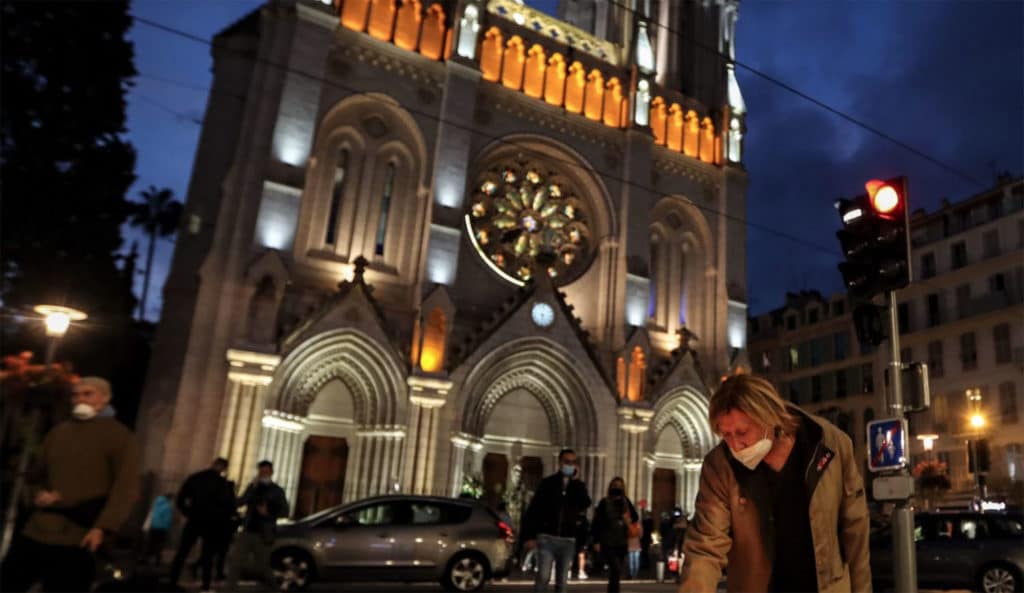
The Vienna shooting follows a series of Islamic terror attacks in France including the beheading of a schoolteacher in a Paris suburb and the fatal stabbing of three people at a basilica in the southern French city of Nice.

“There seems to be less integration amongst the Muslim communities in Europe than in the United States. Integration is not perfect in the United States, and this is not to say that anti-Muslim sentiment is not a problem in the US. But Muslim communities are not marginalized to the same degree as we see in many European countries.”

“There seems to be less integration amongst the Muslim communities in Europe than in the United States,” Julie Coleman, senior research fellow at the International Centre for Counter-Terrorism – The Hague, told The Media Line. “Integration is not perfect in the United States, and this is not to say that anti-Muslim sentiment is not a problem in the US. But Muslim communities are not marginalized to the same degree as we see in many European countries.”

Coleman added that Europe is seemingly caught up in a cycle where every time there is an attack perpetrated by an Islamist extremist, it increases anti-Muslim sentiment that makes integration harder and radicalization easier.

It is the second- and third-generation European Muslims who are vulnerable to radicalization because they can feel alienated from the larger society and are exposed to incitement by religious leaders, Dr. Michael Barak, senior researcher at the International Institute for Counter-Terrorism in Herzliya, Israel, told The Media Line.

Barak said that in Austria, for example, there are Muslims living there mainly from Turkey, Albania and Bosnia who are listening to imams sent by Turkish President Recep Tayyip Erdoğan to several states in Western Europe who promote the Muslim Brotherhood ideology.

“The problem is that in Western Europe there is more penetration of radicals and also preachers from the background of the Muslim Brotherhood, or they belong to Salafism (a Sunni reform movement advocating force to reestablish a caliphate),” Barak explained.

“And in the United States there is also a movement of the Muslim Brotherhood but you can find in the United States also other players, Islamic players, that are trying to diminish or to counter the ideology of the Muslim Brotherhood for example, and of course the Salafists,” Barak continued.

Sufism is a moderate form of Islam that has been promoted by succeeding administrations since the September 11, 2001 terror attacks.

“From the Bush Administration, we are witness to an increase of the Sufi school playing the role, particularly in the United States, of trying to counter the radical ideology of these radical movements,” Barak said.

Geography also plays a role in why violent Islamic extremism seems to be worse in Europe than in the United States, according to analysts, given that the US is separated from the Middle East and North Africa by the Atlantic Ocean.

“Given Europe’s geographic proximity to the Middle East and North Africa, there have been large numbers of European Muslims that have traveled to Iraq and Syria as foreign fighters. This in and of itself has a radicalizing component, especially if there is cachet that comes with joining a group like al-Qaida, ISIS, or any of their affiliates,” Colin P. Clarke, an adjunct senior political scientist at the RAND Corporation whose research focuses on terrorism, insurgency and criminal networks, told The Media Line.

The Muslims who immigrate to the United States are generally more diverse than their brethren who make their way to Europe, with higher education levels and resources to succeed, analysts point out.

Despite the rhetoric from the current administration, the United States is still seen by much of the world as a nation of immigrants with fewer socio-economic barriers compared to Europe.

“Unlike the American dream for all, in Europe for some Muslims the dream was provided by ISIS,” Anne Speckhard, director of the International Center for the Study of Violent Extremism, told The Media Line. “Of course, it was false, but many still bought into it and continue to do so.”

“The vast majority of Muslims obviously realize there is an issue and it needs to be tackled from the community. … A small but significantly vocal set of Islamist groups promote a view that Muslims are under threat or that Muslims are perpetual victims. But most of the Muslims … are sickened by what is done in the name of their religion.”

Fiyaz Mughal, founder and former director of London-based Faith Matters UK, a nongovernmental organization that works on countering extremism, supporting victims of hate crimes and supporting social cohesion projects in the UK and the Middle East, told The Media Line that there has been a shift over the past two decades in the Muslim community realizing that Islamist extremism is a problem.

“The vast majority of Muslims obviously realize there is an issue and it needs to be tackled from the community. However, you have a small but significantly vocal set of Islamist groups in the UK who constantly try to promote a view that Muslims are under threat or that Muslims are perpetual victims,” Mughal said.

Continued Mughal: “But most of the Muslims go about their daily lives. They are worried about their safety. They know that there is a problem. They are sickened by what is done in the name of their religion.”

Multiple Reasons for Islamist Violence on European Soil, Experts Say Read More »

With Trump and Biden Battling Still, American Jews Grapple with Profound Political Shifts

PITTSBURGH (JTA) — American Jews woke up on Wednesday to a presidential election that is extending their anxiety and to electoral maps that show a Republican Party changed by a president they repudiated with their votes.

Joe Biden and Donald Trump were still locked in a battle for the electoral vote majority early Wednesday, one that might last for days as votes are counted — and potentially litigated.

The first exit poll of Jewish voters showed their most resounding rejection of an American president in 20 years. Jewish voters favored Biden 77% to 21% in the poll of 800 Jewish voters commissioned by J Street, the liberal Jewish Middle East policy group, which endorsed Biden. That was a seven-point increase for the Democrat candidate over the same poll’s 2016 finding, twice the margin of error.

Trump’s 2016 victory, the largest-ever popular vote loss for an electoral vote winner — Hillary Clinton bested Trump by 3 million votes — might once have been dismissed as an anomaly, one that would be wiped out by a major loss by Trump in 2020.

It was not an anomaly. Trump has transformed the Republican Party and America. The divide between Trump’s America and American Jewish voters was stark, in numbers and in outlook.

The race could yet go to Biden, who is narrowly ahead in a handful of swing states that would, if the final count favors him, give him enough electoral votes to claim the presidency.

Statements early Wednesday morning from 20 liberal Jewish organizations each appealed to wait out the vote count. Each was suffused with desperation.

“The Jewish people have faced many challenges throughout history, but we have endured,” said Sheila Katz, the CEO of the National Council of Jewish Women. “Though we may need to wait a little longer this year for the final results of the election, we will be patient, we will persevere, we will endure.”

Whatever happens, it’s clear that half of American voters embrace an insular and Christian outlook that most Jews have seen as alien to their understanding of what it is to be an American.

Trump won Florida, a state with one of the country’s largest Jewish populations, by about 400,000 votes, and by a larger margin than when he defeated Hillary Clinton in the state in 2016: 3.5% this year, 1.2% then.

Jews have for years voted disproportionately for Democrats, but the Republican Party they faced in the past was one they recognized as welcoming: President George W. Bush defended Muslim Americans from the blame that some sought to attach to them for the Sept. 11, 2001, attacks; Trump has said they rejoiced and sought to ban Muslim entry into the county.

Bush instituted celebrations of diversity in his White House, welcoming African American artists and launching Jewish heritage month celebrations. Trump says a signature achievement is returning Christianity to preeminence as an American religion and boasts of restoring a phrase never abandoned, “Merry Christmas.”

Trump equivocated multiple times in condemning white supremacist violence (although at times, he condemned it forcefully.) Biden centered his campaign around Trump’s failure to unequivocally condemn the deadly neo-Nazi march in Charlottesville, Virginia, in 2017.

Riding into office on Trump’s heels was Marjorie Taylor Greene, a Georgian who will be the first member of Congress who has expressed belief in the QAnon conspiracy theory, which is rich in anti-Semitism.

Trump’s abrasive rhetoric has tracked with the rise of bigoted violence, and Jewish voters noticed. In Pittsburgh, where two years ago a gunman spurred by the same anti-migrant myths peddled by Trump killed 11 worshippers at a synagogue, the bigotry, Jewish voters said, was a feature, not a bug.

Bigotry is part of the political landscape now, said Matthew Falcone, the vice president of Temple Rodef Shalom, the stately century-old synagogue in Squirrel Hill, the Pittsburgh neighborhood where the shooting took place.

“It’s not just the heated rhetoric,” he said Tuesday after voting for Biden. “It’s the acts of violence.”

The contrasts between the Republican Party Bush led from 2001 to 2009 and the one Trump is leading is stark. Bush cultivated Latino voters, and addressed them in his attempt at Spanish, earning unprecedented support from that community. Trump swore to keep Mexicans out with a wall.

Bush sought to enhance American power in the world, a factor that led to the Iraq war but one appreciated by Jews who believe that American intervention ended the mass murder of European Jews. Trump is retreating from the world, and has abandoned vulnerable allies such as the Kurds.

Trump has fortified his support among the Orthodox and the minority of Republican Jews who appreciate his embrace of the right-wing agenda of Israeli Prime Minister Benjamin Netanyahu, moving the U.S. embassy to Jerusalem, cutting off the Palestinians, brokering normalization deals with some Arab states and leaving the Iran deal.

Trump’s deviations from American norms drove Jewish thinkers who have long sought to hide their political affinities to speak out. Abe Foxman, the former Anti-Defamation League national director who for decades made an art of finding something praiseworthy in every presidential candidate, openly endorsed Biden.

With Trump and Biden Battling Still, American Jews Grapple with Profound Political Shifts Read More »

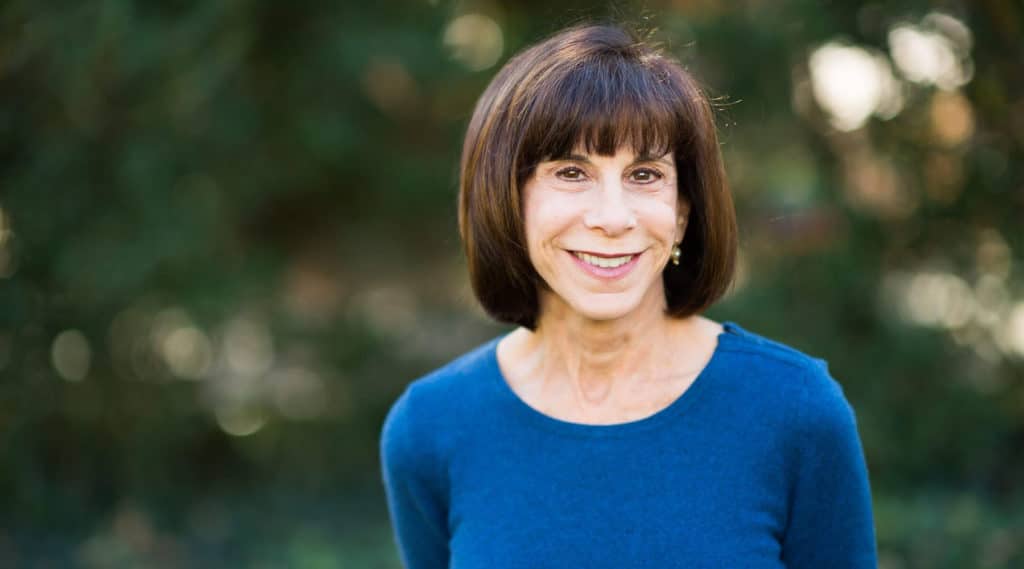
Kathy Manning, Former Jewish Federations Head, Wins North Carolina Congressional Race

(JTA) — Kathy Manning, a former immigration attorney who led two national Jewish organizations, won a congressional seat in North Carolina.

Manning defeated Lee Haywood, her Republican opponent in an open Greensboro-area district. The 6th District was redrawn by the courts and became a Democratic stronghold, leading incumbent Republican Mark Walker to retire.

Manning, 63, was the first woman to chair the Jewish Federations of North America from 2009-2012, and she was a founding chairwoman of Prizmah, the umbrella body for Jewish day schools of all denominations.

She ran an unsuccessful race in 2018 when she ran in what was then the 13th District.

Kathy Manning, Former Jewish Federations Head, Wins North Carolina Congressional Race Read More »

Despite Jump in Coronavirus Cases, Jordan Holding Election

THE MEDIA LINE — Jordanians will head to the polls to elect a new parliament on November 10, even though the Hashemite kingdom has been experiencing an unprecedented jump in COVID-19 infections, with as many as 3,000 persons per day coming down with the virus.

The government has announced a four-day lockdown to start next week, a day after the election results are announced. Around 4 million Jordanians are eligible to vote.

Mahmoud Kharabsheh, a lawyer and a former member of the Jordanian parliament, told The Media Line the election was a constitutional requirement and therefore there was no option but to hold it on the scheduled date.

“In view of the epidemiological developments in the kingdom, the government is trying to implement measures in line with those in force globally and in line with international health protocols, in order to contain the virus and control its spread,” he said.

The election will be held amid strict sanitary measures, as the government has prepared in advance, striking a balancing between holding the vote and safeguarding citizens’ health, Kharabsheh said.

Jordanian Health Minister Nathir Obeidat said at the beginning of the week the increase in COVID-19 infections was expected, and the kingdom must be prepared for even more.

“Jordan took very strict measures in the beginning, but with or without them, the pandemic was going to eventually grow, as it has in the US, Europe and elsewhere. That’s the natural course of a global pandemic.”

Anwar Batieha, a professor of epidemiology and public health at the Jordan University of Science and Technology, told The Media Line that the increase in coronavirus cases was normal, as epidemics begin with a few cases and then expand. “However, if people were more committed to social distancing, the rise in infection numbers would be flatter,” he added.

“And let’s not forget that Jordan took very strict measures in the beginning, but with or without them, the pandemic was going to eventually grow, as it has in the US, Europe and elsewhere. That’s the natural course of a global pandemic,” Batieha said.

He added that closing the borders had helped to contain the virus, but this was not a real solution, because the course of life must continue. “Social distancing helps to keep the increase in cases low, but we need to learn how to live with this virus, as we do with the hundreds of other viruses that exist.”

Thanks to tight measures, the number of infections was low early on, but now the virus was spreading after these measures were lifted, the professor said.

“I don’t think the situation threatens the [ability to function of the] medical sector in Jordan, as it’s prepared and properly equipped,” he said.

Batieha added, however, that medical services in the kingdom were suffering before the coronavirus crisis, and with the additional burden caused by the pandemic, “the health services provided in hospitals and medical centers have been reduced, and this has greatly affected a segment of the population.”

The epidemiological situation in the kingdom of some 10 million people is similar to that of counterparts in Europe, but the economy, which has been struggling for the past few years, has been hurt by the closures designed to stem the epidemic.

Mazen Irshaid, an Amman-based financial expert who writes for several Arab media outlets, told The Media Line that at this point the Jordanian government was unable to enforce a comprehensive curfew, but rather a four-day closure after the election, “which reflects the difficulty of making such critical decisions that significantly affect the economy.”

The closure that began on March 17 and lasted for more than two months damaged the economy enormously, as Jordan lacked the financial resources to help the damaged sectors, Irshaid explained.

“Despite that, Amman has borrowed $1.075 billion during the past three months, and recently the government expended about $1.25 billion to pay off an outstanding debt [a US-guaranteed Eurobond],” he said.

Irshaid said that Jordan was alternating between compensating damaged sectors, which was not entirely financially feasible, and paying the amounts due (more than $1 billion) on the state debt. “In addition, there’s a budget deficit that exceeded $1 billion during the first seven months of the year, which means that expenses exceeded revenues.”

The government was unable to enforce a curfew, as it needed all possible tax revenues from a functioning private sector, Irshaid said.

“The government is now depending on citizen’s awareness when it shouldn’t, as there are those who believe the virus is real, and other who are skeptical.”

Sarah Swelem, an activist based in Amman, told The Media Line that the measures which were taken at the beginning of the pandemic were strict, “but the government is now depending on citizen’s awareness when it shouldn’t, as there are those who believe the virus is real, and other who are skeptical.”

Swelem suggested that the government hold educational lectures and seminars to spread awareness among citizens, especially in remote areas, and “tighten supervision on influential people” so they commit to the decisions under the Defense Law prohibiting all kinds of gatherings.

“The closures increased the sluggishness of the economy, especially in remote areas and for day laborers,” she continued. “The initial measures, as I said earlier, have had a very negative impact on the economy, so the government resorted to measures designed to prevent the economy from deteriorating.”

Farah Abdullah, an engineer based in Amman, told The Media Line that the situation in the kingdom was very difficult, where some of the biggest companies were suffering and laying off employees.

“I lost my job as the company I used to work for has closed. Currently, I make handicraft items to fill my time and have an income,” Abdullah said. “Not to mention how difficult it is to find a job nowadays.”

Despite Jump in Coronavirus Cases, Jordan Holding Election Read More »

Poem: Vayera

I

A child is born.

They name him laughter.

Another child is sent away

as if blood doesn’t exist.

The original seeds

of a divided Jerusalem

are sown right here.

Hardly anyone laughs there now.

II

Every day Sodom and Gomorrah

happen in front of my house.

I’m taking a census of the righteous

in my neighborhood.

I’m having trouble getting to the number one.

I want the police to take them away

their trash too.

We could use a localized gentrification.

A pillar of salt.

III

Despite my son’s worst behavior

I don’t think I could take him to the rock

no matter Who asked.

Abraham should have argued.

He was already famous for that.

Nothing to prove.

Let us make a covenant with life.

Reserve salt, only for our tongues.

Open the tent to all our children.


Rick Lupert, a poet, songleader and graphic designer, is the author of 23 books including “God Wrestler: A Poem for Every Torah Portion.”

Poem: Vayera Read More »

Table for Five: Vayera

Edited by Salvador Litvak, the Accidental Talmudist

The LORD appeared to [Abraham] by the terebinths of Mamre; he was sitting at the entrance of the tent when the day grew hot. – Gen. 18:1 


Aliza Lipkin

Writer and educator, Maaleh Adumim, Israel

The reason God deemed Avraham worthy to be the founding Father of the Jewish nation is subtly planted in the first pasuk in Vayera.

God revealed Himself to Avraham in Elonei Mamrei. The commentators are perplexed as to the lack of subsequent dialogue. However, when looking carefully at the full story it becomes clear that this was not a typical revelation which is meant to convey a specific message. This was a revelation of God achieved when one acts in consonance with the will of God.

Avraham devoted himself, body and soul, to God as he had just performed a brit milah on himself in his old age. It was not that act alone that merited the vision of God. At the time, he resided with Mamrei, one of his allies who helped him battle the 4 kings against the 5 kings to save his nephew Lot who was taken captive. It was this ability to reside in the space between his service to Hashem and his service to others that is represented by the entrance to his tent. He was able to maintain this balance particularly in the most trying times as it says, “in the heat of the day.”

Avraham found God within and revealed God throughout his service to others. He represents that firm root that keeps us connected to the Source enabling us to blossom and produce sustenance, shade and comfort to others.


Dini Coopersmith

Teacher, Israel-trip Coordinator, reconnectiontrips.com

God finally appears to Avraham, just to “hang out” and visit. This occurs after Avraham’s brit mila, which God says is the way for him to “walk before me and become whole (complete)”. The Maharal states that there are 3 aspects of becoming complete: whole with oneself, with God and with others.

There are times when we are conflicted, uncomfortable and unhappy with ourselves, we feel disenchanted with God, disappointed in His conduct, and disapproving and judgmental of the people around us.

Conversely, when we are at harmony with ourselves, have a sense of purpose and direction, feel connected to Hashem, see our friends and family with positivity and grace, this is wholeness. The Torah is telling us that at this moment, even though Avraham was in a place filled with people who disagreed with his way of life, and “at the entrance of his tent” – an unsettling, confusing place to be, neither indoors nor outdoors, and “in the heat of the day”- the weather uncharacteristically, distractingly hot, still, Avraham had the serenity and ability to engage in conversation with God, ask him to “hold on a moment” while he greeted his guests with energy and alacrity, and later pray selflessly for the evil people of Sodom.

This is wholeness.

Perhaps we can follow in Avraham’s footsteps and despite Covid’s distractions and disruptions of our routines, we can try and rise above the troubles and confusion, give to others, pray for others and become closer to God and more “whole” in the process.


Miriam Kreisman Esq.

Tzaddik Foundation, mother of 4

“And G‑d revealed Himself to Avraham.” Rabbi Chama bar Chaninah said: ‘It was the third day after (Avraham’s) circumcision and the Holy One, blessed be He, came and inquired about his well-being.” What was this sickness that so required G-d to come and heal Avraham? Granted circumcision is painful but there has to be a deeper understanding (see Lubavitcher Rebbe Likutei Sichot, vol. 10).

Our Sages speak of the “50 gates of understanding” which grant man knowledge of G‑d. Within the scope of mortal knowledge, it is possible to “enter” only 49 of these gates. The 50th is by definition above our grasp. At this moment, Avraham was on the 49th level of holiness. A person who has attained the 49th level appreciates his inadequacy, and wants to rise above it. The fact that his very humanity prevents him from doing so makes him sick at heart. Only the direct manifestation of G‑d fulfills this yearning, allowing him to realize his innate G‑dly essence and function beyond his mortal limitations.

This G-dly “visit” healed Avraham, suffusing every aspect of his personality. Moreover, the Torah mentions that this revelation took place “in the plains of Mamre,” indicating that Avraham was to extend the revelation beyond his own person, transforming his environment. Avraham left this heritage to his descendants. By observing the Torah and its mitzvos, every Jew has the potential to transcend his individual nature and enter into a limitless bond with G‑d, transforming the world.


Dr. David Porush

Student, teacher, writer at davidporush.com
 

Why the heat?

Midrash says it’s about Abraham’s hospitality. Even at 99 years old, on the third, most painful day after circumcision, he’s so eager for visitors he waits outside in the heat.

But maybe the heat is also metaphysical. The only other time the word ‘chom’ appears in the Torah is after the Flood. God promises Noah that “as long as the Earth remains, there will be planting and harvest, cold and heat, summer and winter, day and night.” Why will the world endure this time despite all our continued sinfulness? Because Abraham will successfully spread monotheism to the world. With his ‘brit’, Abraham has finally sealed his deal with God. Now, right here, on this hot afternoon, under the big tree, God appears to him and – as Or HaChaim says about this precise moment – Abraham “in kabbalistic terms becomes a carrier of the Shechinah,” the particular aspect of God’s immanence, the divine settling or inhabiting of the world.

From then on, humanity’s plantings and harvestings and seasons will persist so Abraham can spread his seed and his vision of God can take root. In the snow squalls of war, persecution, exile, and martyrdom we will suffer spiritual frostbite and much worse. We will endure whole empires of freezing pagan winters. But inexorably the knowledge of one God that flows from Abraham and this hot afternoon outside his tent will win the world. Angels will visit. This is transcendent global warming. It leads to redemption.”


Salvador Litvak

Writer, Director, Accidental Talmudist

When the Rebbe Rashab (Rabbi Sholom Dovber Schneersohn, the Fifth Lubavitcher Rebbe) was only four or five years old, he approached his grandfather, the Tzemach Tezedek (Rabbi Menachem Mendel Schneersohn, the Third Lubavitcher Rebbe) on Shabbos Vayera and began to cry. At that age, I probably cried for sweet treats. The future rebbe asked, “Why did G-d reveal Himself to Avraham, but does not reveal Himself to us?” His grandfather answered, “When a Jew…decides at the age of 99 that he must circumcise himself, he is worthy of having G-d reveal Himself to him.”

Now I too long for the Divine Presence. Shall I invent some massive act of devotion to bribe G-d into revealing Himself to me? Well, Avraham didn’t pull circumcision out of thin air. G-d told him to do it. So, G-d had already appeared to him before this. But what about the first time? It seems Avraham figured out on his own that G-d made and runs the world, and he let that be known to others, and then G-d appeared to him.

How did Avraham let G-d’s presence be known? The same way he acts here: even when inconvenient, and even while in physical pain, he sits at his door scanning for people to help. He feeds them, warms them with good company, then credits G-d for all his blessings and the opportunity to pass them along to his new friends.

When I act that way, I may not experience a supernatural vision, but I certainly see G-d’s presence everywhere I look.

Table for Five: Vayera Read More »