fbpx

October 22, 2020

800 Channels: Israel’s Secret Diplomatic Weapon

THE MEDIA LINE — “I was born and raised in Tehran. We opened every school day reciting ‘Death to Israel, Death to the United States.’ For eight years we were trapped in Iran, trying to escape. Today, I interact with millions of Iranians on behalf of the Israeli government. I cannot put into words the thrill and satisfaction I feel.”

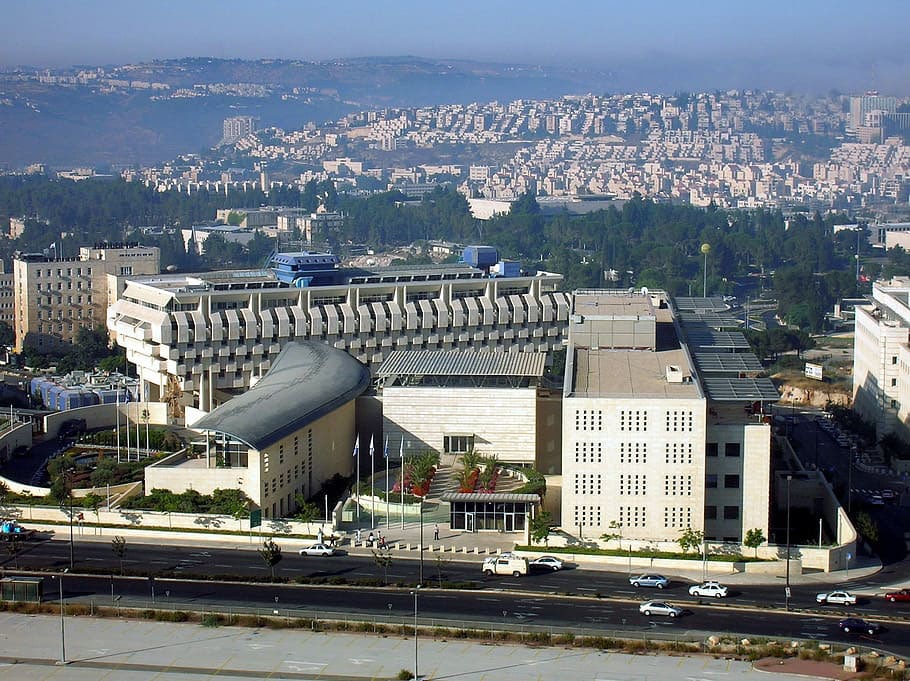
Sharona Avginsaz is one of Israel’s most important diplomats today. Though not an ambassador, consul or even attaché, she oversees the Jewish state’s most extensive and substantial link with the people of Iran as head of the Foreign Ministry’s Farsi Digital Department.

“We’re dealing with a hostile, enemy nation,” she tells The Media Line. “Our platform is the only way to be present there, to communicate with the Iranian public, to build a bridge to the people in Iran over the regime’s head.”

“Our platform is the only way to be present there, to communicate with the Iranian public, to build a bridge to the people in Iran over the regime’s head.”

Avginsaz is part of a surprisingly small team of young, energetic and driven social-media experts operating for the past several years out of the Foreign Ministry in Jerusalem. Armed only with a computer, an internet connection, a deep sense of patriotism and complete fluency in Farsi or Arabic, this band of keyboard warriors has changed the landscape of digital diplomacy in just a few years.

Their hard work, usually done in the shadows, has come to light in recent weeks with the signing of the historic Abraham Accords with the United Arab Emirates and Bahrain.

Israel’s agreements to normalize relations with two Gulf states has thrown a spotlight on its Arabic diplomatic arm and made the digital team’s job more hectic and demanding – and that much more important.

(Translation: The peace train has left the station, all aboard! How symbolic for the historic peace accords between Israel, the United Arab Emirates and Bahrain to arrive at the same time as International Peace Day. Peace has become a basic requirement for the advancement of nations and will allow us to build a brighter future for the region and for coming generations. Accepting each other, without racial, religious or cultural prejudice, is the basis for this. Peace is our principle.)

200 Million Follow Ministry across Plethora of Platforms

“We were pioneers,” Yiftach Curiel, who heads the ministry’s overall digital department, tells The Media Line. “We were one of the first countries to open digital channels and today are one of the largest operations worldwide.”

Starting with a single Facebook page in Arabic in January 2011, the digital diplomacy team has since scaled up, steadily expanding in both size and reach.

Curiel’s department is spread over five main platforms – Facebook, Twitter, Instagram, YouTube and Telegram – while also currently running pilots in niche networks like Pinterest, Reddit, TikTok, LinkedIn and others.

“We’re the first ministry on many outlets,” he said, noting that Israel’s digital activity involves more than 800 unique channels in 50 languages, with about 10 million followers.

These include over 250 official channels at embassies and consulates, some 250 accounts of Israeli diplomats, as well as websites, headquarters accounts and more.

“We’re by far the largest official Israeli digital network,” he says.

“We’re by far the largest official Israeli digital network.”

Each month, the department reaches some 200 million people. In Iran alone, its social media pages get 5.5 million views every week.

Avginsaz notes: “We have a very successful Instagram page [with] 3.5 million people reached per week.” She adds that this platform is one of the few not blocked by the ayatollahs’ regime.

“Telegram is also very popular in Iran,” she says.

Avginsaz describes her regular workday as a mix between publishing posts in line with ministry strategy, reacting to events in Iran and Israel, and responding to messages from the platforms’ followers.

“Iranians are very thirsty for trustworthy information about Israel. I don’t try to hide controversial issues when they come up; we show the truth,” she stresses.

(Translation – in response to a Foreign Ministry question about which Israeli city Iranians would most like to visit: Hoping for a day when we can fly directly from Iran to Israel in peace and quiet. No matter which city, we will come with a message of peace and friendship.)

“We also emphasize Israeli culture,” she adds. “Homegrown Israeli technology attracts a lot of interest online. Medicine, music, the Jewish-Iranian diaspora in Israel. This is what Iranians want to discover.”

Dr. Yonatan Gonen is the department’s Arabic desk chief. Like Avginsaz, he is a veteran of the Israeli military’s intelligence branch. He knew from a young age that he wanted to communicate and come in contact with his Muslim neighbors.

“My entire life revolved around the Arab world,” he relates to The Media Line. “I grew up with it around me. I’ve always had a lot of friends from the Israeli-Arab population. So my dream was always to speak directly with audiences around the world, just get to talk about our everyday life, which is very similar to that of other people in other countries.”

“My dream was always to speak directly with audiences around the world, just get to talk about our everyday life, which is very similar to that of other people in other countries.”

Gonen describes his team as “very diverse,” comprised of Jewish, Muslim and Druse members.

“We want to publish content that exemplifies this diversity, which demonstrates Israel’s coexistence, innovation and contributions to the world,” he states, echoing Avginsaz.

“We want to publish content that exemplifies this diversity, which demonstrates Israel’s coexistence, innovation and contributions to the world.”

The Arabic digital desk has webpages for countries with which Israel maintains diplomatic relations, such as Jordan and Egypt, as well as those with which it is officially in a state of war.

“Iraq, Morocco, Saudi Arabia, Lebanon,” Gonen rattles off. “The activity and reactions differ from country to country, but surprisingly, citizens of countries that don’t formally recognize Israel respond much more positively than others.”

He offers a possible explanation.

“In the past, there were large Jewish communities that contributed a lot to the social, economic and political life in these places. And people there remember this,” he says. “Also, these countries [haven’t had any recent] wars with Israel.”

Thousands of Asylum Requests Each Day

Both Gonen and Avginsaz note one type of reaction that repeatedly crops up in their feeds and inboxes, sometimes thousands of times a day.

“We receive an avalanche of asylum requests,” Avginsaz reveals.

‘We receive an avalanche of asylum requests.’

“Some of them even comment on posts in broad daylight, asking ‘How can I emigrate to Israel? Is my Iranian passport enough? I was imprisoned for political reasons and was just released, can you help me escape?’” she notes.

“We also had a very high-profile athlete in Iran who turned to us seeking asylum,” she says.

“In the beginning, I tried to answer each one [of these queries] personally. But now we just pass them on to the Interior Ministry. Unfortunately, I don’t believe there is much we can do for them,” she explains.

While the online reactions to Israel’s digital efforts have steadily turned more positive, there has been an abrupt change in the past few months following the announcement of the Abraham Accords.

(Translation: A picture is worth a thousand words. Peace upon you and upon us.)

“Every post about the [agreements] drew incredible numbers, which I honestly couldn’t believe at first,” Avginsaz gushes. “An average post can get 1,000 or 2,000 likes, but our posts about the peace accords totally surpass that, at one point reaching 40,000-50,000 likes on Instagram.”

Another recent change is the willingness of opinion leaders and well-known social-media personalities in these countries to echo and share ministry content.

“That’s one of the most important developments,” stresses Gonen.

“When it doesn’t come only from our accounts, it enables us to reach a lot more people. It comes also from their mouths,” he explains.

“We’ve seen this since long before the peace accords [with the UAE and Bahrain], in the Emirates, for example. We have seen people very close to the crown prince who share our content,” he states.

“We have seen people very close to the crown prince who share our content.”

“This is really exciting,” he adds, “because only a few years ago, it would have been impossible.”

Iranian Minister of Information and Communications Technology Mohammad Azari shares and responds harshly to a Foreign Ministry tweet regarding the killing of Iranian General Qasem Soleimani, only to be answered by the ministry in kind.

The impact of the digital team has not been lost on traditional Arab media outlets, which have been forced to cover some of the more viral content, including a ministry video showing Israelis discussing the Middle Eastern nations they would most like to visit. The clip has since garnered 20 million views.

A New Brand of Diplomacy that Works

Curiel believes the digital arena has proven so effective for the ministry because “it works well” with the Israeli ethos.

“As a generalization, Israelis are very creative,” he tells The Media Line.

“We don’t really like to follow rules that much. We like to do our own thing, so we give our diplomats the freedom to operate their own [social media] channels,” he says of envoys posted around the world.

This has not always been the case.

“We used to teach diplomats that you can never [afford to] get anything wrong because you’re representing your country. You have to check everything 20 times. You must be careful,” Curiel remembers.

This approach was rethought.

“Mistakes are inevitable; we should know how to minimize them and do damage control. But if we never make mistakes, it’s probably because we haven’t been pushing the envelope far enough,” he relates.

“Mistakes are inevitable; we should know how to minimize them and do damage control. But if we never make mistakes, it’s probably because we haven’t been pushing the envelope far enough.”

“This is an immediate medium. You need to be very quick, very reactive. You have to take chances,” he says. “We’re learning to do that even at [this] ministry, which traditionally is much more conservative.”

The ministry’s shift to a more relaxed approach has not been without its mistakes, the digital director admits.

“Sure, we have problems, probably on a weekly basis. It ranges from merely technical issues to more serious things,” Curiel says.

“A few weeks ago, somebody mistakenly logged on to a diplomat’s official account and posted something inappropriate. These things happen when you’re running your social media from your home,” he notes, referring to the limitations of the coronavirus period.

“We’ve also had incidents that have to do with people not realizing the boundaries between personal opinions and the role of the diplomat,” he says.

“When this happens in a private conversation, maybe nobody will ever know. When it happens online, it doesn’t matter if you delete it within a minute because somebody, somewhere has a screenshot,” he adds.

Another reason that digital diplomacy is a natural fit for Israel is the country’s high level of hi-tech expertise.

“We have in Israel many of the leading cyber and internet companies in the world today,” he says. “So we have that access. We put a lot of effort into meeting the right people here who can push us forward in our activities.”

Beyond the outreach of the Arabic and Farsi desks, Curiel believes digital diplomacy cannot be detached from traditional foreign relations, going as far as to call social media a “key activity” for diplomats.

“In the past it was kind of a hobby. [The diplomat] went about his usual ‘serious’ job of meeting people and writing cables and all that. And also, he had on the side a Twitter account,” he explains.

“Today, if you don’t have a digital strategy, you are not doing your job properly,” he states.

“Today, if you don’t have a digital strategy, you are not doing your job properly.”

If an ambassador or consul once contacted 1,000 leading figures in the country of posting, today the envoy can interact with tens of thousands.

“He can get to know new contacts through social media. And at the end of the day, all of those 50,000 here and 50,000 there around the world add up to our capacity from headquarters to influence people,” Curiel says.

“This influence,” he goes on, “can range from ‘soft’ issues like tourism to the most hardcore – Iran, national security, nuclear issues. All those things today have a digital dimension.”

While Israel has been a leader in the world of digital diplomacy, it has not taken long for other countries to follow. Curiel’s department chooses to see this as an opportunity rather than a threat.

“We are today conducting ‘digital dialogues’ and provide training for [other countries’] ministries of foreign affairs,” he reveals.

“We are cooperating with a range of ministries,” he continues. “We are in very, very close contact with the State Department, but also with governments in Europe and Asia.”

“We are in very, very close contact with the State Department, but also with governments in Europe and Asia.”

He prefers not to get too specific, knowing it is a sensitive issue.

“All foreign ministries are heavily involved in digital activities these days. Some are in more preliminary stages, others are more advanced, but everybody is doing it,” he notes.

Israel’s Foreign Ministry also cooperates with civic groups and academic organizations.

(Translation: Peace is possible.)

“Last month, we had our third Digital Diplomacy Conference,” Curiel says. “We hosted 27 foreign ministries, Twitter representatives, participants from academia. We discussed policy, fighting anti-Semitism and hate speech. There is a whole range of relevant issues.”

We Want to Talk About What Unites Us

Beyond multilateral initiatives, professional considerations and national-security interests, the men and women operating Israel’s unique diplomatic arm say they are motivated by a higher calling.

“Our goal is to create a direct dialogue with people around the Middle East,” Gonen states.

“Our goal is to create a direct dialogue with people around the Middle East.”

“I’ve always dreamed of that. We want to break the conventional stereotypes and talk about what unites us,” he explains. “Our most viral content is always about the similarities between Islam and Judaism. That’s really nice to see.”

Avginsaz, who came to Israel from Iran when she was 13, agrees.

“We truly reach out in peace to the public, and the relationships created are immensely satisfying,” she notes. “You see some heart-warming comments.”

She remembers the indoctrination of her childhood in Tehran and the portrayal of Israel and the US as satanic enemies. While she does not recall being persecuted for her Judaism, she vividly recalls the torturous eight years during which her family, like all Jewish citizens, were denied passports and could not leave the country.

“My brother had already moved to Israel before the [Islamic] revolution [of 1979], and my parents planned to follow him with the rest of us when the regime suddenly changed,” she says.

“Every few weeks, some officer from the [Islamic] Revolutionary Guard [Corps] would come barging into our house, demanding to know where my brother was and why he hadn’t enlisted. My mother had to make up different excuses. It was horrible,” she relates.

Finally, in 1988, after claiming they were traveling to Turkey on vacation, Avginsaz’s mother managed to sneak herself and her children out of Iran and get to Israel.

“We escaped like refugees,” she remembers. “We weren’t even allowed to take a necklace with us because that was considered government property.”

“We weren’t even allowed to take a necklace with us because that was considered government property.”

Avginsaz’s father, who was forced to stay behind as collateral to ensure the family’s return, was imprisoned, later being released. He lost the family’s house.

“He hid out and eventually escaped through Pakistan, on camel and on foot, until he made it to Israel,” she tells her listener.

“The thing is, our story is not that extraordinary or unique,” she adds. “A lot of Jews escaped that way.”

Prior to the 1979 revolution, in which Shah Mohammad Reza Pahlavi was overthrown and an Islamic theocracy installed, Iran enjoyed a warm relationship with Israel.

“I see thousands of young people who were born way after the revolution and don’t even know what it was like back then, saying they yearn for those times of peace and friendship,” Avginsaz says of her social media feed.

Several years ago, The Media Line conducted a special interview with members of Iran’s Jewish community. A recurring theme was the popularity of the now defunded Farsi radio broadcast from Israel Radio.

The show, a fixture for decades, was said to be the most important news source for Iranians of all backgrounds. There were reports that the even the supreme ruler was an avid listener.

“My parents would listen to it religiously even 30 years after immigrating to Israel,” Avginsaz says.

Earlier this week, the Knesset, Israel’s parliament, discussed the possibility of a new Farsi program on public radio. For now, though, the Foreign Ministry’s digital outreach remains the sole source of information from Israel for Iranians.

Avginsaz believes it is affecting real change.

“Sure, some responses will always be negative,” she concedes.

“Some of our followers support the ayatollahs’ regime. When it’s not just swearwords or racial slurs or trolling [in reaction], I do try to respond and create a dialogue,” she notes. “But the positive always outweighs the negative, by far. I would like to believe at least some of this is thanks to us.”

“Some of our followers support the ayatollahs’ regime. When it’s not just swearwords or racial slurs or trolling in reaction, I do try to respond and create a dialogue,” she notes. “But the positive always outweighs the negative, by far. I would like to believe at least some of this is thanks to us.”

Gonen offers a tangible example of the ministry’s effect on public opinion in the Muslim world.

“In Iraq, it would have been impossible to find a lot positive responses toward Israeli outreach five years ago,” he says, estimating that 99% of all comments on the ministry’s local Facebook page – which has nearly half a million followers – are now positive.

“That’s because of our activity on social media,” he says proudly.

(Translation: Thank you for being an inseparable part of this historic day. Peace among people.)

For the past decade, Israel’s Foreign Ministry has had to endure continuing budget cuts and downsizing. Past and present diplomats and senior officials have repeatedly voiced concern over the government’s alleged disregard for the ministry and its abilities.

Gonen insists that while navigating budgetary difficulties has been challenging, it hasn’t significantly hampered his department’s ability to operate.

“We survived this situation,” he says. “If we had had more money and manpower, we could’ve created more content, sure. But I think at the end of the day it depends on who is here,” he says of his colleagues.

“We really want to work hard and show the Arab world the true face of Israel. Sometimes we have to do it without the money. But we’re doing it for our country and from our belief that it’s extremely important. We just do our best.”

800 Channels: Israel’s Secret Diplomatic Weapon Read More »

Glaciers, Cats and Covid (Oh, My) – a poem for Torah Portion Noach

Everything that had the breath of the spirit of life in its nostrils,
of all that were on the dry land, died.

I like a Torah that isn’t afraid to use the word nostrils.
I only mention it because, soon, someone will
interact with mine, or at least, one of mine

when I go to get the test to determine if
I am one of the stricken. I’ve been quarantined
inside this ark in Van Nuys for months so

I’m not too worried, but knowledge is king.
For example, the word cubit means an
ancient unit of length.

Someday the word COVID will be ancient
in the same way we refer to the plague as something
from long ago, when there was less knowledge.

In the mean time all the glaciers are melting.
So far, only some of them have melted,
but the scientists have measured

the cubits against the temperature and
all signs point to it’s time to gather the
gopher wood. In the news, they held

a funeral for one of the glaciers.
Actually, it’s happened more than once.
Glacier funerals are a growth industry.

We have five cats in our house which
may seem like a left turn, but I just want
you to know if our house floats away

and we need to share the responsibility
of repopulating the beasts of the Earth
we’ve got cats covered.

That is to assume the water will recede this time
The cubits are telling us it may just be heat
in our future. Now that I think about it,

we had the cats fixed, which is a word
that means we broke them. So you
probably can’t count on us for the cats.

I’m going to bide my time by petting them all
while I wait for them to put a cubit in my nostril.
I wish we could fix all of this.


God Wrestler: a poem for every Torah Portion by Rick LupertLos Angeles poet Rick Lupert created the Poetry Super Highway (an online publication and resource for poets), and hosted the Cobalt Cafe weekly poetry reading for almost 21 years. He’s authored 23 collections of poetry, including “God Wrestler: A Poem for Every Torah Portion“, “I’m a Jew, Are You” (Jewish themed poems) and “Feeding Holy Cats” (Poetry written while a staff member on the first Birthright Israel trip), and most recently “The Tokyo-Van Nuys Express” (Poems written in Japan – Ain’t Got No Press, August 2020) and edited the anthologies “Ekphrastia Gone Wild”, “A Poet’s Haggadah”, and “The Night Goes on All Night.” He writes the daily web comic “Cat and Banana” with fellow Los Angeles poet Brendan Constantine. He’s widely published and reads his poetry wherever they let him.
Glaciers, Cats and Covid (Oh, My) – a poem for Torah Portion Noach Read More »

Albania Becomes Second Muslim-Majority Country to Adopt IHRA Definition of Anti-Semitism

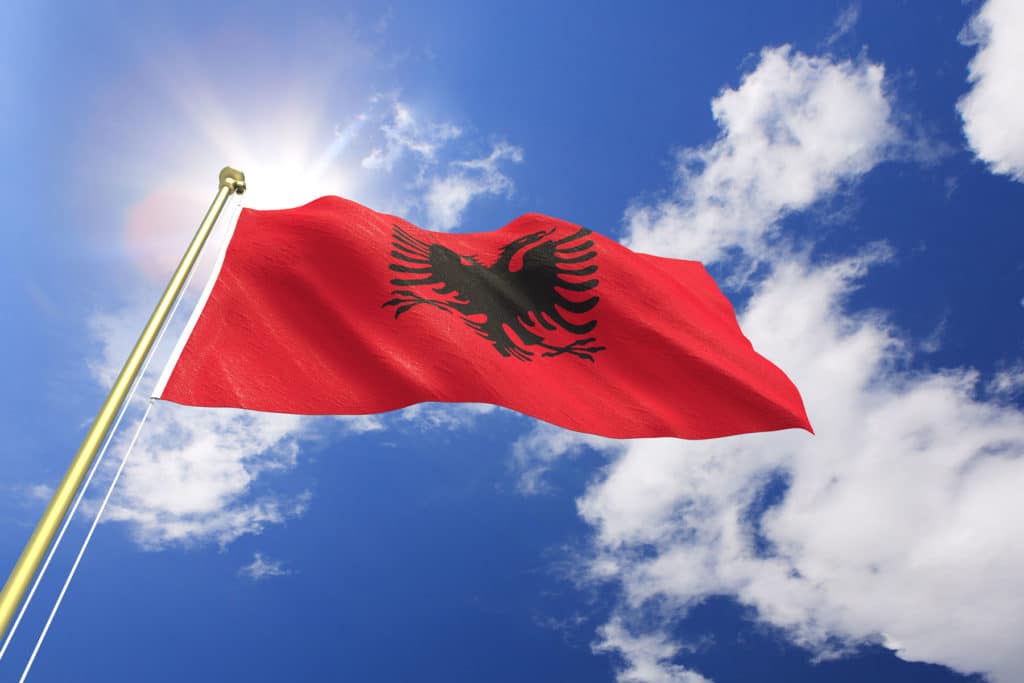
On October 22, Albania became the second Muslim-majority country to adopt the International Holocaust Remembrance Alliance (IHRA) definition of anti-Semitism.

The Washington Post reported that the Albanian parliament unanimously approved a resolution adopting the IHRA definition, which states that the delegitimization and demonization of Israel are forms of anti-Semitism.

According to The Jerusalem Post, The Albanian parliament’s speaker, Gramoz Ruci, said, “It is good news that we, the Albanians and the peoples of the Western Balkans, a region that has suffered more than any other part of the world, the consequences of ethno-centrist and religious-centrist views and attitudes, join this emancipatory action of contemporary civilization: the fight against anti-Semitism.”

He added that “Albanians have more reasons to be proud, because Albania is the only country in Europe where all Jews were taken under protection and rescued during World War II. Our homeland, Albania, in difficult times has served as a substitute soil for Jews.”

U.S. Ambassador to Albania Yuri Kim applauded the Albanian parliament in a tweet.

“By adopting IHRA’s definition of anti-Semitism, Albania renews its commitment to fight hatred and reminds us of its legacy of protecting the vulnerable,” she wrote.

The American Jewish Committee similarly tweeted, “Bravo to Albania and Prime Minister @EdiRamaal for adopting the IHRA Working Definition of Antisemitism! Albania has been a steadfast friend of the Jewish people. We will never forget the nation’s extraordinary efforts to save Jews during WWII.”

David Siegel, president of the Friends of the European Leadership Network, also said in a statement to the Journal, “We commend the Albanian parliament for standing against hatred, antisemitism, and antizionism – the denial of the Jewish people’s right to self-determination. The leaders of Albania are honoring the country’s legacy and its longstanding dedication toward defending the human rights of the Jewish people. ELNET looks forward to further strengthening Albanian-Israeli ties.”

In September, Kosovo became the first Muslim-majority country to adopt the IHRA definition of anti-Semitism, coming a couple weeks after Kosovo established ties with Israel.

Albania Becomes Second Muslim-Majority Country to Adopt IHRA Definition of Anti-Semitism Read More »

At What Point Should the Mainstream Media Report On The Biden Family Story?

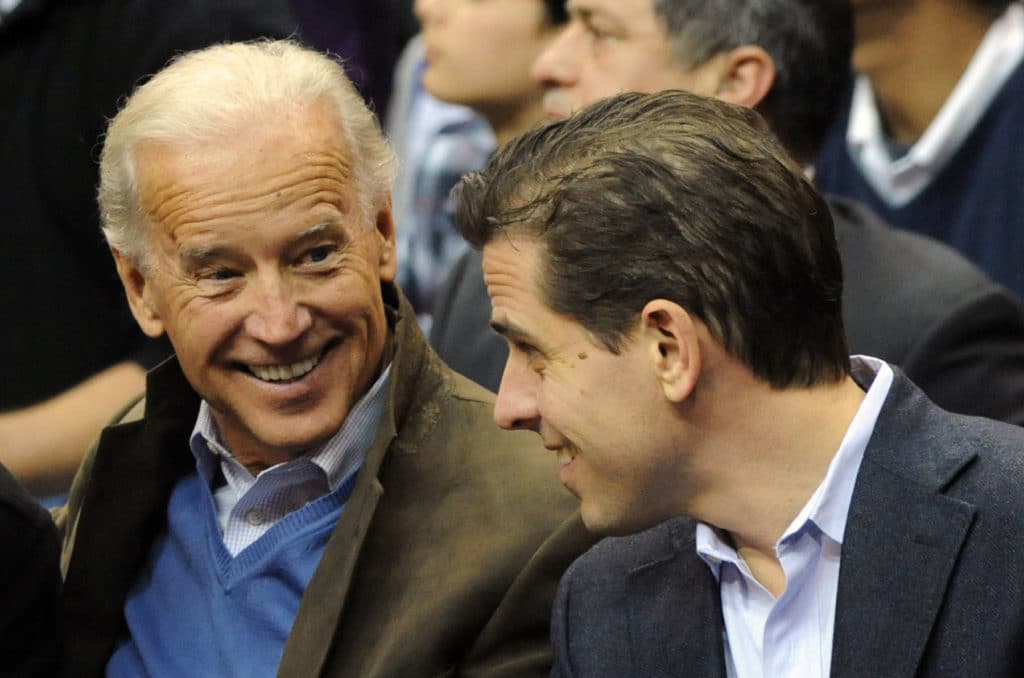
One of the first things I read this morning was a news item on National Review Online (NRO) about the contents of a laptop that allegedly belongs to Hunter Biden. According to the New York Post, which reported on the topic last week, the laptop was left at a computer repair store in Delaware and was subsequently forwarded to Rudy Giuliani and the FBI. The veracity of the laptop and its photos, files, and emails are currently being investigated.

According to Politico, “Neither Biden nor his attorney…have said whether Hunter Biden really did drop off waterlogged laptops and a hard drive at a Delaware repair shop, or whether the reported emails are authentic or not.”

On the laptop was an email purportedly discussing a business arrangement between a Chinese company and the Biden family. This morning, according to reporting from the Post, the recipient of that email confirmed “that the email is ‘genuine’ and said the family ‘aggressively leveraged the Biden family name to make millions’ from foreign entities.”

After reading this new development, I immediately went to The New York Times, Washington Post, CNN and MSNBC websites to see how they would cover it.

Nothing.

Then I went back to the Post and read that in a 2017 text exchange, “Hunter Biden’s ex-business partner Tony Bobulinski was warned ‘don’t mention Joe.’” That text exchange “emerged following Bobulinski’s bombshell statement to The Post that former vice president Joe Biden was involved in his family’s plot to make millions in Communist China.

“The messages, obtained by Fox News on Thursday [October 22], purportedly shows Bobulinski being instructed by James Gilliar, another key player in the alleged scheme, not to make any mention of the former veep’s involvement.”

The report continued:

“In a lengthy statement to The Post’s Michael Goodwin, Bobulinski addressed a May 13, 2017, email published last week that revealed how Hunter Biden pursued lucrative deals with a Chinese energy company and wanted to hold 10 percent of profits for ‘the big guy.’”

According to the report, Bobulinsky said that “Hunter Biden called his dad ‘the Big Guy’ or ‘my Chairman,’ and frequently referenced asking him for his sign-off or advice on various potential deals that we were discussing.”

Because Joe Biden has claimed in the past that he did not discuss business with Hunter, and because the reporting focuses on facts that can be investigated, and because these allegations appear to be serious, I assumed the new revelations would be worthy of coverage in the mainstream press.

As of now, they’re not.

As an editor, I know that deciding what stories to pursue can be a difficult, contentious decision…But where is the line for deciding to cover a story when the silence is seen as more damning?

I don’t want to rush into accusations of “media bias,” but I’m intrigued by the silence of several major publications. The story has gained enough traction in recent days that any media silence can be interpreted, rightly or wrongly, as bias. If an important outlet like The New York Times doesn’t trust the reporting, why not punch holes in it?

Politico, for example, has done just that in a story published today:

“Trump’s personal lawyer, Rudy Giuliani, has said he obtained the materials from the laptop of Hunter Biden, the Democratic nominee’s son. They have not been reviewed or verified by POLITICO — and there are questions about the New York Post’s reporting on the matter, as well as the tabloid and other Trump-friendly outlets’ interpretations of events. There are concerns, too, about the former New York mayor’s interactions with figures linked by Trump’s own administration to Russian intelligence.”

Slate, similarly, has noted that verifying the contents of the laptop’s hard drive is difficult, because “Giuliani does not seem to have allowed other news outlets besides the Post to examine the data.”

That is hardly corroboration, but it’s better than silence.

As an editor, I know that deciding what stories to pursue can be a difficult, contentious decision. Many publications decide to publish a story only when they have independent verification. But where is the line for deciding to cover a story when the silence is seen as more damning? And why is that line crossed for some instances—like the widely reported and discredited Steele dossier—and not others?

Here’s what I do know: If it comes up in the debate tonight, tomorrow the media won’t have a choice.

At What Point Should the Mainstream Media Report On The Biden Family Story? Read More »

Nas Daily Says Al Jazeera Spread ‘Fake News’ About Him Working With the Israeli Government

Popular Palestinian-Israeli video blogger Nuseir Yassin posted a video on October 20 stating that that Al Jazeera falsely accused him of working with the Israeli government.

Yassin, who posts his videos on a Facebook page called Nas Daily, shared a clip from Al Jazeera’s Arabic Network alleging that Yassin uses “all the tools that the Israeli government provides him and he is part of their official propaganda program.”

“So what’s the accusation? It’s that Nas Academy, our new company, is training people to love Israel,” Yassin said. “That is comical! In reality, Nas Academy is a great new startup that we started to create new creators, to teach people how to make videos, to teach people how to tell stories, so they go and create their own videos and become their own Nas Daily!”

Yassin said that Al Jazeera promulgated their allegations throughout the Arab world by sponsoring its affiliates to promote the accusations in order to generate “fear and hatred.” He added that Al Jazeera tends to broadcast differing messages to its English and Arabic audiences.

“To the English world, they say, ‘Let’s remember the Holocaust and never repeat it,’” Yassin said. “To the Arab World, they say, ‘Did the Holocaust really happen?’”

He also pointed to how Al Jazeera English promotes gay rights while Al Jazeera Arabic doesn’t cover news involving LGBTQ+ rights.

“It’s two stories for two different audiences,” Yassin said. “And you wonder why the Middle East is full of hatred and anger.”

Yassin argued that Al Jazeera can operate in this fashion because the Qatari government funnels money to the news outlet every year. He pointed to the Department of Justice’s decision in September to require Al Jazeera to register as a foreign agent. Al Jazeera condemned the move as an apparent precondition to the Israel-United Arab Emirates peace agreement.

The video blogger also noted that what differentiates Al Jazeera from other government-sponsored news outlets like BBC and Deutsche Welle (DW) is that the BBC and DW don’t hide their government affiliations like Al Jazeera does. Yassin also said that his company does work with governments and tourism boards, “but we promote tourism and love, not politics and hate. And we definitely do not work with the Israeli government.”

Yassin concluded the video by pointing out that Nas means “people” in Arabic, meaning that he and his company “put people above politics and governments no matter who comes in our way. We cannot let them stop this message.”

Al Jazeera did not respond to the Journal’s request for comment.

https://www.facebook.com/nasdaily/videos/be-careful-of-aljazeera/3535110433193633/

Nas Daily Says Al Jazeera Spread ‘Fake News’ About Him Working With the Israeli Government Read More »

Armenian protest in Los Angeles equates Israel to Nazi Germany

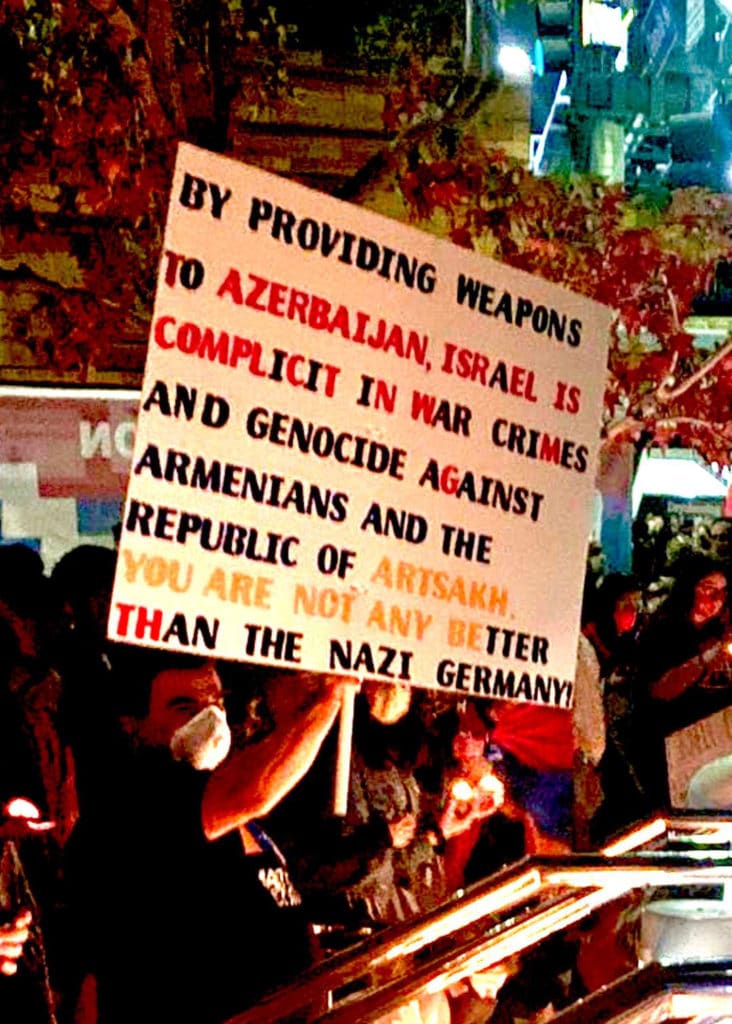
This week, Armenian Youth Federation – a youth wing of the Armenian Revolutionary Federation – staged a protest against Israel in front of the Israeli Consulate in West Los Angeles. The protest was intended to intimidate and bully Israel and the Jewish community for supporting Azerbaijan, as my nation is currently fighting off an Armenian military aggression and occupation, an illegal occupation that has been utterly condemned by the United States, the United Nations and almost the entire international community. This latest aggression that was unleashed by Armenia on September 27 has resulted in the death of 63 Azerbaijani civilians, including many infants and children, and wounding of over 290. 

One of the most offensive signs at the Los Angeles protest accused Israel and Jews of being the same as Nazis. The sign literally said: “You are not any better than the Nazi Germany”. I don’t need to explain why that is a most disturbing and disgusting reference, however the background and ideology in that sentiment is something much more concerning. 

Most are unaware of Armenia’s problem with antisemitism. In the Anti-Defamation League’s global index of antisemitism, Armenia is ranked as the second most antisemetic country in Europe and one of the top three most antisemitic in the world outside the Middle East and North Africa. In 2018, a Pew Research Center survey found that 32 percent of Armenians would not accept Jews as fellow citizens, making Armenia the most unfriendly country toward Jews in Eastern and Central Europe. It isn’t something the loud Armenian American lobby likes to highlight, as it wouldn’t help the cause of misleading the American public.

Moreover, a state-sponsored glorification of Armenian Nazi collaborators continues to this day. A huge statue of Garegin Nzhdeh, a Nazi general of Armenian origin, adorns the center of Armenia’s capital city of Yerevan. Nzhdeh is considered a national hero and in addition to the statue, a square and metro station in Yerevan are named after him, and his “legacy” is taught to children in Armenian public schools. Nzhdeh collaborated with the Nazis as one of the commanders of the infamous “Armenian Legion” of the Wehrmacht. This unit fought in Crimea, the Caucasus, and southern France, as the Nazis rounded up Jews and resistance fighters to be marched to the death camps. The same Nazi collaborator Nzdheh founded the Armenian Youth Federation that staged the aforementioned anti-Israel protest in Los Angeles!

Another glorified Armenian Nazi general is Drastamat Kanayan (better known as General Dro), commander of the “Armenian Legion”. The government of Armenia established the Drastamat Kanayan Institute of National Strategic Studies, and the Ministry of Defense established a medal in his name to decorate military personnel and civilians who excel in military teaching.

Last week, Armenia invited infamous members of the neo-Nazi German “Alternative für Deutschland” (Alternative for Germany) party to the occupied Nagorno-Karabakh region of Azerbaijan; the trip intended to rally support for the continued occupation. Another vocal supporter of Armenia’s war against Azerbaijan is Dutch politician and white supremacist Geert Wilders. 

The criminal warfare Armenia commits daily against Azerbaijan is inseparable from the philosophy that propels it; driven by deranged and archaic race theories, white supremacy and Islamophobia, and so it is unsurprising that the few supporters backing their invasion and aggression are known white supremacists and neo-Nazis. 

While Armenia protests against Israel and calls Jewish people Nazis, while Armenia hosts condemned neo-Nazis and sends a contingent to support Bashar Assad’s regime in Syria, Azerbaijan continues to defend her sovereign territory and civilians, with Jewish, Muslim and Christian Azerbaijani soldiers fighting to not only defend the innocent targets of Armenian shells, but to liberate the stolen territory Armenia has illegally occupied for almost 30 years, with hopes and prayers to return the nearly 800,000 forcibly displaced Azerbaijanis to the land and homes of their birth, where they have longed to return all these years.

Armenian protest in Los Angeles equates Israel to Nazi Germany Read More »

The Short-Sighted Palestinian Turn Toward Turkey

WASHINGTON DC (Israel Policy Forum) — The Abraham Accords have generated clearly visible changes in Israel, demonstrated on what seems a near-daily basis with Israeli and Emirati ministers visiting each other’s respective countries, signing economic and tourism deals, and proclaiming a new era in the Middle East. The accords have also wrought changes on the Palestinian side, though they are not as immediately evident. And unlike on the Israeli side, where the benefits of these changes are apparent, the changes on the Palestinian side risk creating an even deeper morass for Palestinian interests going forward.

One of the abiding narratives of the past few weeks is that the Abraham Accords have led the Palestinians to only dig their heels in further and refuse to acknowledge that the region has changed and will continue to evolve. President Abbas and the Palestinian leadership rejected any normalization efforts with Israel before a deal is signed with the Palestinians, slammed the UAE and Bahrain for abandoning them, resigned in protest from the rotating Arab League presidency – which the Palestinians happened to  hold at the time, and reiterated that they have not abandoned any of their core positions. The characterization of the Palestinian leadership sticking to its metaphorical guns is correct, yet there are some critical changes happening as a result of the Palestinians feeling as if they are backed into an even tighter corner than usual.

The first is that the evergreen quest for Palestinian unity is actually progressing at a more serious clip, and while I remain skeptical that it will be achieved, for the first time in awhile it does not seem beyond the realm of genuine possibility. Abbas’s initial reaction to the normalization agreements was to convene all of the Palestinian factions, including Hamas, for a series of meetings, and reports are that there was agreement for a conceptual plan to hold Palestinian Legislative Council elections and presidential elections. It is notable that this was not a one-off meeting, but the result of three meetings in less than a month, and that the Fatah Central Committee – which has not historically been high on reconciliation with Hamas, to put it mildly – approved the plan unanimously before Hamas made any moves to do the same. It is not surprising that the reaction to a feeling of abandonment by traditional Arab allies would lead Fatah to make a real effort at intra-Palestinian reconciliation, but the changed environment and the added pressure on Abbas means that a unity agreement becomes more likely in the event that the other possible diplomatic response to the Abraham Accords – a reconsideration of traditional PLO positions – has been categorically rejected. While nobody should expect any movement in the next two weeks, a victory for President Trump on November 3 may render a Fatah-Hamas unity agreement the immediate Palestinian reaction.

Turkish President Recep Tayyip Erdoan holds a map of Israel during his speech at the United Nations (U.N.) General Assembly on September 24, 2019 in New York City. (Photo by Stephanie Keith/Getty Images)

The second change is the Fatah embrace of Turkey, which has spent years backing Hamas against Fatah. Turkey was one of the only countries to publicly denigrate the Abraham Accords and criticize the UAE for selling out the Palestinian cause by normalizing with Israel – the height of chutzpah-driven irony given Turkey’s own normalized ties with Israel and the fact that it was the first Muslim-majority country to establish relations with Israel way back in 1949. In response, aside from thanking Turkey for its backing, Abbas convened the decisive meetings of Palestinian factions in Istanbul under Turkish auspices and requested that Turkey monitor Palestinian elections when they are held. All of this is meant to signal displeasure and a Fatah shift away from the pragmatic Sunni states that have had the largest outside role in Palestinian issues – the so-called Arab Quartet of Egypt, Jordan, Saudi Arabia, and the UAE – in order to elevate Turkey and Recep Tayyip Erdogan. Erdogan has long sought greater influence in Palestine and among Palestinians, and the opening that Abbas has provided him is one that he is poised to jump through.

Turkey was one of the only countries to publicly denigrate the Abraham Accords and criticize the UAE for selling out the Palestinian cause by normalizing with Israel – the height of chutzpah-driven irony given Turkey’s own normalized ties with Israel and the fact that it was the first Muslim-majority country to establish relations with Israel way back in 1949.

While this may feel to Abbas and the Fatah leadership like a necessary move, it is in fact a grave mistake. First, while Palestinian unity is necessary for a host of reasons, from presenting a unified stance in order to negotiate with Israel to paving the way for critical Palestinian governance reforms, any unity agreement that is effectively sponsored by Turkey is necessarily going to shift power away from Fatah and toward Hamas. Turkey has worked assiduously for years not only to boost Hamas in Gaza, but to boost it in Abbas’s own West Bank backyard. Turkey sponsored and hosted Hamas West Bank chief Salah al-Arouri, enabling him to plan and execute attacks in the West Bank not only against Israelis but against the Palestinian Authority that were designed to destabilize PA rule. Turkey has been putting its thumb on the scale in Hamas’s favor for over a decade, and for purely tactical reasons, Abbas should be wary of elevating Turkey’s role and influence.

Turkey has worked assiduously for years not only to boost Hamas in Gaza, but to boost it in Abbas’s own West Bank backyard.

In addition, a unity agreement now risks destroying a potential reset in U.S.-Palestinian relations. Should Joe Biden be elected, all signals are pointing to an effort to resume humanitarian aid to the West Bank and Gaza and to restart funding of Palestinian NGOs, along with moves such as reopening the U.S. Consulate General in Jerusalem as an independent entity for engaging with the Palestinians and potentially reopening the shuttered PLO mission in Washington as well. Every one of these efforts will be politically tricky as is, but in an environment in which Fatah announces that it has joined hands with Hamas, it will make support for such moves in Congress and potentially within a Biden administration itself stillborn from the outset, irrespective of what role Hamas is actually given. Unity should happen, but Abbas is better off waiting to see how things unfold in the U.S.

But beyond the question of Turkey’s role in bringing the two sides of the Palestinian infighting together or the specific timing, giving Ankara a leading role in Palestinian issues is a mistake on its own. Turkey has consciously aligned itself against the other Sunni states in the region, and is seen as a hostile actor by Egypt in particular. A turn toward Ankara is not an expansion of relationships, but a decided shift in course. Embracing Turkey will only serve to isolate the Palestinians further within the region and put out of reach reconciliation efforts that should now be taking place behind closed doors between Abbas and the UAE, Saudi Arabia, and others.

Turkey is not only on the outs with traditional Arab state supporters of the Palestinians, but with other important international actors as well. Erdogan has ratcheted up tensions in the Eastern Mediterranean in an effort to lay claim to offshore oil and gas deposits, resulting in Turkey coming perilously close to open conflict with the Greek and Cypriot navies. This has not won him any friends in the European Union, and to the extent that the Palestinians will be looking to European countries for support, aligning with Ankara is not going to help.

Turkey is not only on the outs with traditional Arab state supporters of the Palestinians, but with other important international actors as well.

In addition, the amount of bipartisan anger toward Turkey in the U.S. may be at its highest point since the Turkish refusal to allow the U.S. to use Incirlik airbase as a launching point for operations during the Iraq War. Aside from years of rhetoric from Erdogan accusing the U.S. of meddling in internal Turkish affairs and being behind the failed July 2016 coup, the U.S. and Turkey are currently in a standoff over Turkey’s purchase of a Russian S-400 anti-aircraft defense system, which violates NATO protocols and risks Turkey’s operational membership in the alliance. The U.S. has already suspended Turkey’s membership in the F-35 program as a result and Congress has enacted sanctions on Turkey that Trump has refused to impose, but Turkey tested the S-400 system for the first time earlier this month, making the imposition of sanctions nearly inevitable irrespective of who wins the U.S. presidential election. If the Palestinians want to make amends with the U.S., drawing close to Turkey is one of the most obvious ways of complicating that process.

Finally, Turkey’s reasons for wanting to become a player in Palestinian politics have little to do with the Palestinians themselves. Erdogan has always seen his road to becoming a more prominent global Muslim leader as running through Jerusalem, and he has for years positioned himself as the true defender of Jerusalem and al-Aqsa against alleged Israeli aggression. He uses the Palestinian issue to bolster himself domestically and to project international prestige, and Abbas is effectively giving him greater license to do so despite a history of support for Hamas and Muslim Brotherhood-affiliated groups that are at odds with Fatah, the PLO, and any notion of two states. The Turkish economy is in shambles, which also makes Ankara an unlikely candidate to bolster Palestinian finances or make up for the severe shortfalls that have resulted from less aid from Arab states and Abbas’s decision to continue rejecting tax revenues that Israel collects on the PA’s behalf. Aside from rhetorical support, it is hard to see any benefit that Abbas gets from adopting Erdogan as his new international patron.

The Palestinians are undoubtedly in a tough spot, but that does not mean that they cannot still dig themselves even deeper into their current hole. While shifting course on the Abraham Accords is a bitter pill and one that Abbas may not be able to swallow right now, effectively declaring diplomatic war on the most important players that are in a position to actually help the Palestinians is not a smart long-term play.


Michael Koplow is Israel Policy Forum’s policy director, based in Washington, DC. To contact Michael, please email him at mkoplow@ipforum.org.

The Short-Sighted Palestinian Turn Toward Turkey Read More »

Rosner’s Torah Talk: Parshat Noah with Emily Holtzman

Emily Holtzman is a Rabbinical Student at the Ziegler School of Rabbinic Studies, AJU. She is our guest for Parshat Noah.

In this parsha, Noah builds an ark, coated within and without with pitch. A great deluge wipes out all life from the face of the earth, except for those hiding in the ark that floats on the water. The ark is sheltering Noah and his family, and two members (male and female) of each animal species.

https://youtu.be/ObLmjDxGXMA


Previous Torah Talks on Noah

Rabbi Lucy Dinner

Rabbi Mishael Zion

Rabbi Sarah Hronsky

Rabbi Yona Berman

Rabbi Mosheh Lichtenstein

Rabbi Benjamin Sternman

Rabbi Alexandra Wright


Rosner’s Torah Talk: Parshat Noah with Emily Holtzman Read More »