fbpx

August 13, 2020

Rosner’s Torah Talk: Parshat Re’eh with Rabbi Brian Strauss

After serving for 18 years as an associate rabbi at Congregation Beth Yeshurun in Houston, Texas, Rabbi Brian Strauss became the new senior rabbi on Aug. 1, 2018. His goal as senior rabbi is to bring the wisdom and richness of the Jewish tradition into your life. In our busy world, he strives to help you make sense of your daily struggles — to show that Judaism has a lot to say about bringing more meaning to your life.

In this week’s Torah Portion – Parashat Re’eh (Deuteronomy 11:26-16:17) – Moses continues speaking to the people of Israel before he passes away and before they cross the Jordan River and enter the Promised Land. Moses asks them to recite certain blessings and curses on Mount Grizzim and Mount Ebal after they enter Israel. He demands that they destroy all remnants of idolatry from the Promised Land and asks them to choose a city to host the Holy Temple. The parasha also discusses false prophets, kashrut, the sabbatical year and charity. Our discussion focuses on punishments, rewards and false prophets.

Previous Torah Talks on Re’eh

Rabbi Michael Rothbaum

Rabbi Bradly Shavit Artson

Rabbi Efrem Goldberg

Rabbi Ben Elton

Rabbi Deborah Silver

Rabbi Baht Yameem


Rosner’s Torah Talk: Parshat Re’eh with Rabbi Brian Strauss Read More »

Why the Israel-UAE Normalization Matters

We learned today that Israel is going to establish “full normalization of relations” with the United Arab Emirates (UAE). Also, Israel will forgo its plans to annex parts of Judea and Samaria, in the West Bank.

These are two separate yet linked headlines. created by President Donald Trump. Israel and the UAE are bride and groom. Trump is the matchmaker. His achievement, and Israel’s, should not be dismissed.

Israel gained good relations with an Arab country. And by gaining it, it sends a message that cannot be lost on other countries: normalization is here, and those refusing to join in will be left behind. More specifically Israel, proves the point that time is on its side. It proves the point, made by Prime Minister Benjamin Netanyahu many years ago, that resolving the Palestinian issue is not the key to Middle East peace, or to normalizing relations with the Arab world.

Strategically speaking, it is a crucial message. Especially for those still stuck on the notion that the road to Baghdad goes through Ramallah, or some other version of this old, updated notion. Netanyahu proved his critics wrong. He does not move forward with resolving the Palestinian conflict and yet, he advances Israel’s relations with the Arab world.

For many months, annexation in Judea and Samaria was the big prize Israel was expecting. Annexation is controversial, and many have opposed it but it was the main diplomatic course the government was getting ready to follow.

The Trump administration got cold feet. Whether that is good or bad is up for debate, and Israelis will engage in that debate. But at some point Israel realized that annexation with Trump’s blessing was not happening. He and his staff should be praised for sensing that ditching annexation had a price tag; that the U.S. and Israel could use the threat of annexation to get something else in return.

Politically speaking, this is not going to help Netanyahu much. Israelis on the right who supported annexation will be disappointed. They will criticize the prime minister for caving, and will see less reasons to keep supporting him (his government is currently a failure on most other fronts). Israelis who did not care much for annexation will also not care much about the UAE. As important diplomatically as it is, the new accord will not change our lives. The UAE is not a real neighbor. It is not an intimidating arch enemy, so the psychological impact of normalization will be small, especially when people are busy with a pandemic and an economic crisis.

Then again, there’s a message here and if Israelis do not see it, that’s unfortunate but not crucial. Because the real addressees of this message are not Israelis. They’re Palestinians. The message to them is: compromise or lose. It is a message to Arab states: what are you waiting for? It is a message to Iran: the coalition against your ambitions is being shaped. It is a message to the world: You want peace? Here is one way to get it. It’s not the way you envisioned it and failed to implement it. It’s a way that may actually work.

Why the Israel-UAE Normalization Matters Read More »

Letters: Lessons From History, Liberalism and Free Speech

Lessons From History
Natan Sharansky and Gil Troy reveal quite well the Jewish approach to history (“Taking a Jewish Approach to History,” (July31).

One question, though, remains unanswered: Why has America not learned from its past? Why are the same mistakes being repeated to this day? What is the main obstacle that prevents a person or a nation from learning from its past? I think most religious books have the answer.
Svetlozar Garmidolov, Los Angeles

Liberalism and Free Speech
The danger of the “cancel culture” that Thane Rosenbaum and Karen Lehrman Bloch write about has taken root in academia, media, tech and corporate businesses. It is a real threat to America’s ethos of individual freedom of speech and thought. We have work to do if we are to honor the founding tenet of liberalism that informed our republic. Allowing it to be weakened would be catastrophic.
Alice Greenfield, Sherman Oaks

Thank you, Thane Rosenbaum, for your timely and spot-on stories “Why Is Anti-Semitism So Easy to Forgive?” (July 13) and “The Devaluation of Free Speech in the Land of the Free,” (Aug. 7). Both are must reads
Susan Mishler, via email

Trump and Groupthink
In his story “The Devaluation of Free Speech in the Land of the Free,” Thane Rosenbaum laments the mandatory conformity of the “cancel culture.” As examples, he points to firings and other totalitarian tactics to suppress conservative views and purge certain words, practices and even facts from the public domain. Later, he states, “The presidency of Donald Trump hasn’t helped matters …” But Trump’s presidency has not resulted in the censorship of anyone’s opinions, let alone the opinions of those who condemn him.
When Rosenbaum puts blame on a “polarization” that he attributes to Trump, he is no longer denouncing “groupthink.” He is practicing it by condemning the existence of groups with opposed  views. The problem is not the polarization of opinion, it is the attempt to homogenize it.
Robert F. Helfing, Pasadena

More Inclusive Planning For Disability
I recommend a disabled person or people be included on trustee boards and direct  funding where possible to synagogues needing support. With adequate support from the Jewish community, fewer synagogues will close. Where a wheelchair goes, so can a baby stroller. This then, keeps the community connected, and helps to prevent loneliness among those with disabilities.
Helen Dudden, via email

Remembering Rep. John Lewis
With the death of Rep. John Lewis, the Jewish community has lost a great friend.

Lewis (D-Ga.) was an original Freedom Rider. In 1963, he helped organize the March on Washington, D.C., where he spoke just before Rev. Martin Luther King Jr. delivered his “I Have a Dream” speech. (My parents were there.)

In 1965, Lewis led a march in Selma, Ala. The bloody beating he endured laid bare racial segregation’s barbarism and led to the 1965 Voting Rights Act.

Lewis not only crossed bridges, he built bridges, too. In a 2002 op-ed, Lewis lauded African Americans’ and Jewish Americans’ “special relationship.” He noted their shared history of being uprooted involuntarily from their homelands, enslaved, confined to ghettoes and “subjected to oppression and genocide on a level unprecedented in history.” 

He also noted King’s advocacy for Soviet Jewry and support for Israel. He recalled King saying in 1968: “I see Israel as … a marvelous example of … how desert land can be transformed into an oasis of brotherhood and democracy. Peace for Israel means security and that security must be a reality.” Lewis also recalled King equating anti-Zionism with anti-Semitism. 

Lewis will be greatly missed.
Stephen A. Silver, San Francisco

Listening With a Humble Heart
I was 8 when Daddy, an immigrant Jew, took me on his cigarette and candy route through the neighborhoods of L.A. We met laborers waiting on corners for a job. Men in offices dressed in fancy suits. Disheveled people, screaming, tearing at their hair. Elderly women who wept in hospitals. People of all nations. Daddy called everyone “boss.” When I asked him why he said: “Everyone has a different way of seeing the world. Listen with a humble heart  even if you don’t like what you hear.”
Mina Stern, Venice


Now it’s your turn! Letters should be no more than 200 words and must include a valid name and city. The Journal reserves the right to edit all letters.
letters@jewishjournal.com.

Letters: Lessons From History, Liberalism and Free Speech Read More »

Florida State Announces Measures to Combat Anti-Semitism, Including Adopting IHRA Definition

Florida State University (FSU) President John Thrasher announced in an Aug. 12 statement that the university has adopted the International Holocaust Remembrance Alliance (IHRA) working definition of anti-Semitism and is going to take other measures to combat anti-Semitism on campus.

Thrasher acknowledged that anti-Semitism is one of the “oldest forms of bigotry” and that FSU is joining the state of Florida and the State Department in recognizing the IHRA definition of anti-Semitism.

“In July, the FSU Student Body Executive Cabinet adopted the IHRA definition of Antisemitism, and the Student Senate passed Resolution 59, which adopts the IHRA definition of Antisemitism,” Thrasher said, adding that the students deserved credit for these actions and that the university needs to take further action on the matter.

“Therefore, FSU administrators, led by Vice President for Student Affairs Amy Hecht, have been working closely throughout the summer with Jewish student leaders, Hillel at FSU leadership, Jewish alumni and local Jewish organizations,” Thrasher said. “Together, we have created a task force to review Jewish student life on campus and develop recommendations for Vice President Hecht to consider by Sept. 7, 2020. We will conduct a student campus survey on Jewish student life at FSU and Antisemitism. The task force will use a questionnaire developed by Hillel at FSU as a basis for initial discussions.”

Additionally, the university will be adding a new Student Equity and Inclusion Director, implement staff training on anti-Semitism, establish a Jewish Alumni Network and reestablishing the university’s Jewish Student Union.

“I want to reaffirm that this is a top priority,” Thrasher said. “My university leadership team and I will continue to work determinedly to combat Antisemitism and unlawful behavior. While freedom of speech is of paramount importance on a college campus, so is creating a climate of acceptance and appreciation for the value and richness of the many cultures and ideas that make Florida State University such an excellent academic experience.”

Jewish groups praised Thrasher’s statement.

“Thank you @FSUPresThrasher for taking critical steps to create a healthier campus community for Jewish students at @FloridaState,” the American Jewish Committee tweeted. “We join you in encouraging everyone to educate themselves on @TheIHRA definition and examples of antisemitism.’”

StandWithUs Center for Combating Antisemitism Carly Gammill said in a statement, “We agree with President Thrasher’s position that just as the ‘freedom of speech is of paramount importance on a college campus, so is creating a climate of acceptance and appreciation for the value and richness of the many cultures and ideas’ that make for ‘an excellent academic experience.’”

Lioz Grunberger, a StandWithUs Emerson Fellow at FSU, similarly said in a statement, “It’s wonderful to be able to look at the statements the administration has released in the past, compare it to the one released today, and to see the progress made. The administration has helped the Jewish community substantially, and I am more than excited to start working side by side with the administration, alumni, faculty and my fellow students to protect and amplify the Jewish students and voices on campus. While I wish this problem was addressed sooner so my community and I didn’t have to endure so much pain, I am glad we are headed in the right direction.”

The Israeli-American Council also praised Thrasher in a statement “for setting a leading example for universities across the U.S in how to combat the ongoing rise in antisemitic incidents, harassment, discrimination and the overall normalization of antisemitism on campus. We hope that administrations across the country will choose to address the issues that Jewish students face on campus today, by taking similar steps in providing a safer campus experience for our students.”

Thrasher’s announcement came after FSU Student Senate President Ahmad Daraldik was under fire for past social media posts stating “f— Israel” and “stupid jew” as well as a website apparently belonging to him that compared the Israeli government to the Nazis. Daraldik, a Palestinian American, later said his “f— Israel” stemmed from a bad experience he had at an Israeli checkpoint.

A vote of no confidence against Daraldik failed in June. In July, the Florida city Aventura adopted a resolution calling on the FSU administration to remove Daraldik from his position.

Florida State Announces Measures to Combat Anti-Semitism, Including Adopting IHRA Definition Read More »

5 Winners and 4 Losers From the Historic Treaty Between Israel and the UAE

(JTA) — The treaty between Israel and the United Arab Emirates is a big deal.

The agreement, announced Thursday in a joint statement from the White House and called the Abraham Accord, means that Israel will now have diplomatic and economic relations with a country that had not recognized it. In return for recognition and relations, Israel has pledged to suspend its ambitions to annex parts of the West Bank.

The UAE is a Muslim kingdom in the Persian Gulf made up of seven smaller entities, called emirates, with huge oil and natural gas reserves. Its metropolis, Dubai, is a wealthy city known as a commercial center for the region. The country borders Saudi Arabia and is only dozens of miles across the water from Iran. It has a tiny Jewish community.

It becomes only the third Arab nation to establish official ties with the Jewish state. In addition to trade, tourism and other exchanges, the treaty means the two countries can collaborate on treatment for the coronavirus and countering the influence of Iran, a shared nemesis.

That makes Iran a likely loser in this deal. The dealmakers are, of course, likely winners.

Here’s our analysis of who stands to benefit from this historic accord — and who has been dealt a surprise setback.

Winner: The long view of Israeli history

Throughout its 72-year history, Israel has been at war with, or largely ignored by, most or all of its neighbors. The nation has fought four major wars with coalitions of Arab states that pledged and failed to destroy it. Until this week, Israel had diplomatic relations with only two Arab countries, Egypt and Jordan. The rest of the region, at least officially, continued not to recognize the Jewish state.

That changes now. Israel and Israelis can now openly trade with, meet with and travel to a third Arab country. Another Arab embassy will open in Israel, and an Israeli flag will fly in that country. This also may open the door for other countries to follow suit.

Yes, the accord merely formalizes unofficial contacts between the two countries for years. It doesn’t meaningfully change the contours of the Israeli-Palestinian conflict. And like every diplomatic deal, this one has many critics who say it carries risks and drawbacks for Israel and its future.

But the hope for peace in the Middle East is written into Israel’s founding documents. Israel and an Arab nation have taken another step in that direction.

Winner: Benjamin Netanyahu

Israel’s prime minister has long argued that Israel can and should pursue diplomatic relations across the Middle East and the globe without making concessions to the Palestinians or withdrawing from territory.

For years, Israel’s allies and neighbors told him otherwise: that to make peace with the broader Middle East, first he needed to reach an agreement on the future of the West Bank. The promise of relations with the wider Arab world was seen as a bargaining chip in Israeli-Palestinian talks.

This accord proves them wrong. The one big promise Netanyahu made was to temporarily suspend plans to annex parts of the West Bank. In past diplomatic accords, Israel has withdrawn from territory in exchange for peace.

The vow isn’t exactly a drastic change of plans for the longtime leader, as he had already pushed off annexation due to squeamishness from the Trump administration regarding the move.

Netanyahu also gets a boost domestically. He has boasted that his experience and global relationships put him in “another league” diplomatically. Now he enters an exclusive pantheon of Israeli leaders who have signed a treaty with an Arab state, joining the ranks of the admired Menachem Begin and Yitzhak Rabin.

Finally, it’s another way that Netanyahu can distract from his ongoing criminal trial for corruption and from the nightly street protests against him and his government’s coronavirus policies.

Winner: The United Arab Emirates

As far back as the 1990s, the UAE has sought relations with Israel, and Israel and the UAE have shared military intelligence for decades. According to an extensive 2018 account in the New Yorker, the country appreciated Israeli defense technology and has seen a shared threat in Iran, which the UAE and other Gulf states oppose in part due to the Muslim Sunni-Shia divide. In January, the Emirati foreign minister published an op-ed in an Israeli paper, a major symbolic step, and in June an Emirati plane carrying aid for Palestinians landed in Israel.

The deal promises both symbolic and tangible benefits for the UAE, positioning the country as a diplomatic leader in the region. If others follow suit in establishing formal relations with Israel, the UAE can say it was the catalyst. More immediately, it could mean an influx of Israeli tourists and money, as well as collaboration on medical and other research with a regional economic power as both countries fight the pandemic.

Winner: Donald Trump

Since his first presidential campaign, Trump has promised to deliver a peace deal for Israel, and has expended effort into reaching an Israeli-Palestinian accord, to no avail. Although this isn’t the deal he initially wanted, now he can legitimately claim credit for helping achieve a historic Israeli treaty.

In Trumpspeak, this is a clear win. And it’s a boon for Jared Kushner, a top adviser and his son-in-law, who has succeeded here after failing to secure an Israeli-Palestinian peace deal and drawing criticism for his management of the coronavirus response.

It’s also helpful for Trump in an election year. In a campaign where Israel has come up repeatedly, Trump can position himself not just as a staunch ally of the Netanyahu government, but as a regional peacemaker. It’s not likely to shift votes, though. Trump voters already see him as pro-Israel and probably haven’t changed their minds, while those who oppose the incumbent generally dislike him on issues that range far from the Middle East.

Winner: Liberal Zionists

Liberal Zionism is built on the idea that solving the Israeli-Palestinian conflict is Israel’s most pressing diplomatic concern. This accord does not do that.

Yet liberal Zionist groups are celebrating the agreement. After all, their long-term goal is an Israel at peace with its neighbors. This isn’t how they thought they would get there, but a treaty is still a treaty. J Street, the largest liberal Zionist organization, said in a statement that the pact is “just the latest evidence that dialogue and diplomacy, rather than unilateral action and belligerence, are the route to long-term security.”

The suspension of annexation is also at least a temporary win for liberal Zionists, who have been bemoaning that such a move would mean the end of efforts toward a Palestinian state alongside Israel. For them, this is a temporary reprieve from that threat.

Loser: Liberal Zionists

Still, the accord is a major blow to the idea that solving the Israeli-Palestinian conflict is Israel’s most pressing diplomatic concern. Liberal Zionists have warned that without sacrifices on the Palestinian issue, peace with other Arab countries is impossible.

Liberal Zionists have said, too, that continued West Bank occupation harms U.S.-Israel relations. The UAE deal is a major blow to that idea. Occupation wasn’t an obstacle for the Trump administration, and apparently it’s not for the UAE, either.

Liberal Zionists have protested for more than a decade against Netanyahu and his policies. This is a major win for a man they desperately want to see lose.

The suspension of West Bank annexation isn’t a sure thing, either. Hours after the treaty was announced, Netanyahu said he still hasn’t given up on annexing parts of the West Bank. So the one concession Netanyahu appeared to have made on their issue might not even last.

Loser: The Palestinians

However tough of a pill this is to swallow for the Zionist left, it’s even more bitter for the Palestinians. Not only do they see their enemy sign another diplomatic accord without promising them anything, they also feel “sold out” by a country that was supposed to have their back, in the words of veteran Palestinian diplomat Hanan Ashrawi.

For decades, Arab countries united around the idea that Palestine must be liberated and Israel was not to be tolerated. Decades ago, as Israel continually proved its staying power and made strides toward peace with the Palestinians, Arab states began seeking an accommodation with the Jewish state — as long as the Palestinian issue was solved.

The 2002 Arab Peace Initiative said that normalization with the Arab world would come only after Israel ended its occupation. Besides Egypt and Jordan, no Arab country bit at the offer of peace with Israel.

Now that has shifted. An Arab country has normalized ties with Israel without any concession on the Palestinian issue. More may follow.

Palestinians face the prospect of watching their allies make peace with their enemy without gaining anything along the way and with the eyes of the world focused elsewhere.

Loser: The Israeli opposition

For a few moments over the course of 2019 and 2020, as Israelis voted in election after election, it appeared that Netanyahu, after a decade as prime minister, could be replaced by a center-left coalition.

That didn’t happen. But rising public anger over Netanyahu’s handling of the coronavirus crisis, as well as the criminal indictments he’s facing, have led to tens of thousands of Israelis taking to the streets to protest him. Were he to call another election due to domestic concerns, polls showed his chances of staying in power were tenuous.

Now he could take the podium in triumph, announcing an achievement more often dreamed of on the left: a treaty with an Arab nation. If another election is afoot, he now has something positive to campaign on.

Loser: The settlers (or at least some of them) and their American supporters

Israel’s annexation plan was never overwhelmingly popular among Israeli West Bank settlers because many of them feared that it would bring along the establishment of a Palestinian state in the rest of the territory, albeit a fragmented one.

Still, for the past few months, Netanyahu was focused on the goal of making some of the territory officially part of Israel, a longstanding goal of many settlers. Supporters of the settlements in the United States, from evangelical Christian Zionists to the Jewish community’s right wing, also cheered on the prime minister’s pledges to annex.

He said he was going to do so in July, but July came and went. Now the prospect seems even more distant. Yes, Netanyahu said he would still deliver annexation. But officially the process has been suspended, when fewer than two months ago it appeared to be imminent.

“They pulled a fast one on the settlers,” one settler mayor said.

5 Winners and 4 Losers From the Historic Treaty Between Israel and the UAE Read More »

No Animals Were Harmed in the Writing of This Poem – a poem for Torah portion Re’eh

you may eat meat, according to every desire of your soul.

Hello! Vegetarian poet speaking.
I’m here to tell you my soul is conflicted
about its many desires to eat meat.

I was eighteen when I gave it up –
a spontaneous decision after receiving
a pamphlet about vivisection from a penpal.

(Penpals used to be a thing. As did pens.)

I was at an Island’s Restaurant in Pasadena
and my young friend and I couldn’t get
furry and feathered faces out of our hearts.

That was the last chicken sandwich I had.
More decades than I’d like to admit
have passed by since then

and, I have to admit, I haven’t forgotten
about the general deliciousness of meat.
Back then the only vague simulation

was a mushroom burger from Trader Joe’s.
We hadn’t invented the concept of
plant-based yet and putting anything

in the shape of a burger on a bun
made us feel like every desire of our soul
was being satisfied.

They make it easy for us now with
words like beyond and impossible.
No animals are harmed in the production

of my dinners and I consecrate my pans
like I’m still in the desert,
waiting to cross the river

trying to determine how the last words
coming from the crazy man on the mountain
apply to me.


God Wrestler: a poem for every Torah Portion by Rick LupertLos Angeles poet Rick Lupert created the Poetry Super Highway (an online publication and resource for poets), and hosted the Cobalt Cafe weekly poetry reading for almost 21 years. He’s authored 23 collections of poetry, including “God Wrestler: A Poem for Every Torah Portion“, “I’m a Jew, Are You” (Jewish themed poems) and “Feeding Holy Cats” (Poetry written while a staff member on the first Birthright Israel trip), and most recently “Hunka Hunka Howdee!” (Poems written in Memphis, Nashville, and Louisville – Ain’t Got No Press, May 2019) and edited the anthologies “Ekphrastia Gone Wild”, “A Poet’s Haggadah”, and “The Night Goes on All Night.” He writes the daily web comic “Cat and Banana” with fellow Los Angeles poet Brendan Constantine. He’s widely published and reads his poetry wherever they let him.

No Animals Were Harmed in the Writing of This Poem – a poem for Torah portion Re’eh Read More »

Tel Aviv Lights Up City Hall in Israeli, UAE Flag Colors to Celebrate Agreement

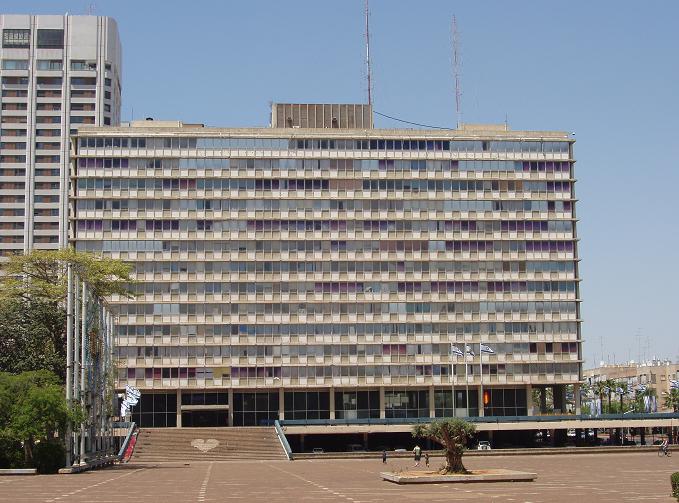
Tel Aviv City Hall was lit up in the colors of the Israeli and United Arab Emirates (UAE) flags on the evening of Aug. 13 to celebrate the agreement to normalize relations reached between the two countries earlier in the day.

Video footage shows lights projected on the building alternating between images of the two flags on its exterior walls:

https://twitter.com/SVNewsAlerts/status/1293974922872729600?s=20


The American Jewish Committee tweeted that it was “touching.”


StandWithUs CEO and co-founder Roz Rothstein similarly tweeted, “It’s official when the @TelAviv municipality lights things up! #Israel and #UAE have a peace deal — Hopefully one giant step for mankind. Time will tell …”

Israel-Jewish Congress Executive Director Arsen Ostrovsky also tweeted, “2020, maybe there’s still hope for you yet!”


The agreement, which the United States helped broker between Israel and the UAE, establishes diplomatic ties between the two countries and, over the coming weeks, Israel and UAE will sign agreements establishing economic relations. The two countries also will work together to develop a COVID-19 vaccine.

Israel also will suspend its plans to annex parts of the West Bank as part of the agreement, although Israeli Prime Minister Benjamin Netanyahu suggested that the suspension of annexation is only temporary. A senior White House official, on the other hand, told Axios that “annexation is off the table until further notice.”

Myriad Jewish groups have praised the agreement as historic. The progressive group J Street, which has been staunch critics of President Donald Trump and Netanyahu, is among the groups praising the agreement.

“This decision by Prime Minister Netanyahu signals a major retreat from repeated threats to carry out de jure annexation, and indicates that efforts to oppose annexation — in Israel, the US and around the world — have achieved significant success,” J Street said in a statement. “Annexation would be disastrous for Israeli security and democracy and for Palestinian rights. Clarification will be needed that this is not simply a short-term suspension of a disastrous idea, and the United States and the international community should be demanding that Israel commit permanently not to proceed with any unilateral annexation.

“The agreement between Israel and the UAE to move toward fully normalized ties is also welcome news for all who wish to see a stable and prosperous Israel living in peace and security alongside all of its regional neighbors,” J Street added. “It is just the latest evidence that dialogue and diplomacy, rather than unilateral action and belligerence, are the route to long-term security.”

The Palestinian Authority (PA) condemned the agreement in a statement, accusing the UAE of “betraying Al-Aqsa, Jerusalem and the Palestinian cause.” The PA also recalled its ambassador from the UAE in protest; the PA also plans to convene an emergency Arab League meeting to discuss the agreement.


Tel Aviv Lights Up City Hall in Israeli, UAE Flag Colors to Celebrate Agreement Read More »

With UAE Deal, Israel Gives Up a Huge Headache for a Huge Victory

For years now, I’ve been hearing friends and colleagues tell me, “I just got back from Abu Dhabi” or “I have a conference next week in Dubai” as if they were talking about going to New York or Los Angeles.

In the back of my mind, I would think: I know that business is business, but isn’t the United Arab Emirates (UAE) still Israel’s enemy?

All that changed today. In return for Israel halting its plans to annex parts of the West Bank, the UAE will launch full diplomatic ties with the Jewish state. This is a sea change.

From Israel’s perspective, the genius of the deal is that they gave up a big headache for a big prize. Let’s face it: The idea of annexation— legal or not, approved by the U.S. or not— was problematic from the start. For one thing, it would further alienate Israel from the rest of the world, including most American Jews and the Democratic party, which may well win the White House in November.

And with Israel mired in a health and economic crisis, annexation was hardly a priority for Israelis. Even within the right-wing camp, there was opposition to annexation if it meant agreeing to a Palestinian state.

Meanwhile, with America reeling from the devastation of the pandemic, and with presidential elections looming, the Trump administration has more than enough on its hands.

In other words, holding off on annexation only had the appearance of a valuable concession, but it was just enough of a cover for the UAE to justify a historic deal.

Holding off on annexation only had the appearance of a valuable concession, but it was just enough of a cover for the UAE to justify a historic deal.

How historic? For starters, the joint statement from the U.S., the UAE and Israel said delegations would meet in the coming weeks to sign deals on direct flights, security, telecommunications, energy, tourism and health care. The two countries also will partner on fighting the coronavirus pandemic.

This suggests that Israel’s new relationship is likely to turn out friendlier and more productive than the ones with Egypt and Jordan, the only other Arab countries with which it has diplomatic relations.

In the Gulf, compared to the rest of the Arab world, economic dynamism is a greater priority. This makes Israel, with its innovative spirit, an ideal partner. That is why in recent years, we’ve seen more and more Gulf business conducted with Israel. A shared desire to confront the Iranian threat has only reinforced this mutual interest.

But this business was always unofficial. As often happens in the Middle East, if you’re cooperating with Israel, better not be too loud. Even with Egypt and Jordan, any business with Israel is usually discreet.

The highly public deal with the UAE has broken that ice.

Will it also break the ice with the Palestinians? Will it encourage their leaders to return in good faith to the negotiating table? I doubt it. Palestinian leaders have always had an interest in maintaining a status quo that undermined Israel while keeping their Swiss bank accounts nice and fat. As long as there is no peace agreement, Israel remained isolated and on the defensive.

It’s only in the last few years that Palestinian leaders have paid a price for their chronic rejectionism, but they still haven’t budged. It’s possible that this historic deal with the UAE will compel them to seek an agreement, but we shouldn’t get our hopes up too high.

For decades, the world community indulged the Palestinian myth that the “key to Mideast peace is the Palestinian conflict,” as if there are no other countries or conflicts in the area. The Arab Spring of 2011, which exposed deep grievances throughout the region that had nothing to do with Israel, was a big crack in that myth. So was the rise of ISIS and the civil war in Syria.

The deal with the UAE is yet another.

From this day forward, the new message to the arab world is: Israel is not your enemy. Israel is part of the solution. Israel can be your partner.

From this day forward, the new message to the Arab world is: Israel is not your enemy. Israel is part of the solution. Israel can be your partner. Don’t give the corrupt Palestinian leadership a veto on your growth and progress. Encourage them to make peace with Israel.

And if you live in Dubai or Abu Dhabi, you won’t have to hide that you’re going to a water conference next week in Tel Aviv.

With UAE Deal, Israel Gives Up a Huge Headache for a Huge Victory Read More »

They Thought a Jewish School in Oakland Would Be Able to Accommodate Their Gender-Fluid Child. It Wasn’t That Simple.

(JTA) — A Jewish day school in Oakland, California, is committing to making changes this week after a local family said the school had declined to accept their gender-fluid child.

Meg Keene, an Oakland mother who runs a prominent wedding planning website, encouraged her thousands of Instagram followers to contact Oakland Hebrew Day School after she said the school told her family it would not admit her son due to his gender expression.

She said that after discussing the situation with the school several times, her family was informed that it would not be able to accommodate her 7-year-old son. The boy, whose name they asked to be withheld for privacy reasons, mostly wears traditional boys’ clothes but at times dresses up in sequined ball gowns and other feminine clothing.

Keene said she was inspired to call out Oakland Hebrew Day by name after hearing about another family who said their transgender child was also not welcomed by the Orthodox Jewish school. Ofra Daniel, an Israeli-born playwright, said she was told her daughter could attend only if she did not discuss being transgender.

“Never in a million years did I think the SCHOOL wouldn’t be up for doing their best,” Keene wrote in an Instagram post Sunday, two days after first informing her followers that her family had received the disappointing news.

“I know that by speaking out I might become a Difficult Jew that no Jewish day school will want,” she wrote. “But it’s worth the risk. Because this isn’t just about my kid. This about other kids being harmed. This is about changing culture. This is about doing better.”

Dozens of Keene’s followers reached out to Oakland Hebrew Day’s board, thrusting the school and the local Jewish community into debate at an already challenging moment, when the head of school is out on bereavement leave and the prospect of in-person learning is uncertain because of the pandemic.

https://www.instagram.com/p/CDpTo0VhTQX/

Oakland Hebrew Day administrators say the school “had not completed the admissions process when the family went to Instagram” and indicated that they had not ruled out accommodating children who identify as gender-fluid. In a letter to families sent Wednesday, they also committed to evaluating the school’s policies around gender and offering staff training on gender and LGBTQ inclusion issues.

“While we do not understand the situation to have transpired as it was described in the social media post, we are taking the time to better understand the facts,” the head of school, Tania Schweig, and board president, Jo-Ellen Zeitlin, said in the letter. “We recognize that it is important that we take this moment to reaffirm our commitment to an inclusive educational environment.”

The story in Oakland underscores the complexity of gender issues in the Orthodox world, and sheds light on the complications that can arise when Jewish families and Jewish schools have overlapping but not identical values.

Some Jewish schools, including a now-defunct school in the Bay Area where a student came out as transgender during a bar mitzvah ceremony created for him by the school’s rabbi five years ago, have grappled already with gender and sexuality differences among their students.

But Oakland Hebrew Day is associated with Orthodox Judaism, which does not allow same-sex marriage and in which transgender and gender non-conforming people often face challenges in being accepted.

Still, if any Orthodox school might be open to gender-fluid or transgender students, it would be Oakland Hebrew Day. It’s located in one of the most progressive regions in the country. Some children keep kosher and observe other elements of Jewish law at home, but others do not. The student body includes children of same-sex and interfaith couples.

All of that attracted Keene and her husband, David Mishook, when they began looking for a new school for their children this summer.

Their son and daughter had been attending public school in Oakland but felt isolated, as there were few other Jewish kids in school. The school’s rocky transition to online learning had exacerbated the challenges, and rising anti-Semitism nationally had put the family on edge.

Oakland Hebrew Day, located just five minutes from their home, bills itself as “serving families from the diverse Bay Area Jewish community.” Keene and Mishook thought that would include their family — they most often attend Sha’ar Zahav, the historically gay synagogue in San Francisco — so the family reached out to find out whether there might still be space for their children.

At first, Keene and Mishook said, things felt promising: The school indicated that there might be spots open for this fall, and they had a warm conversation with staff members. But the mood changed, the couple said, at the end of their first Zoom call when they revealed that their 7-year-old son is gender-fluid.

The couple knew that their son’s gender fluidity might present a challenge for an Orthodox school, but they were optimistic. And at first, they said, the administrators seemed open to having their son on campus.

But after several weeks and another conversation, school officials reached out Friday with disappointing news: Mishook said he was told that the school could not accommodate their son due to his gender expression. Shortly afterward, Keene began sharing the family’s story.

Oakland Hebrew Day said the couple’s account is not accurate but did not dispute specific details.

“Our relative silence on the details of this matter should not be taken as defensiveness,” the school said in a statement Thursday. “OHDS has a long and proud record of working with families and students from every background and doing so with dignity, empathy, and respect. This family is at liberty to tell their story in a way that our institution is not. We respect confidentiality and regulations put into place to protect students and families. We will not disclose the content of our interactions with this family or any family.”

Previously, the board president, Zeitlin, said a final decision had not been made about whether to admit Keene and Mishook’s son.

“Gender fluidity was one of several issues the family raised during the admissions process,” Zeitlin said in a statement. “We were unable to fully explore this issue but are confident that we would have exhausted the possibilities for the child to enroll if the family and school agreed it would be a success.”

That Oakland Hebrew Day might have struggled with whether to admit a child who identifies as gender-fluid is not surprising, said Rabbi Shmuly Yanklowitz, the founder of Torat Chayim, a rabbinic group for progressive Orthodox rabbis.

“Essentially the educational framework in Orthodox institutions is very gender binary, and the tools and language have not yet been developed adequately to handle a non-binary approach to gender,” Yanklowitz said. “And so I think families and schools in the community don’t yet feel equipped to juggle that complexity while maintaining an authentic commitment to Torah, mitzvot and Orthodox norms.”

But Yanklowitz, who is also the founder and president of the Orthodox social justice group Uri L’Tzedek, said he is seeing an increased willingness in the liberal Orthodox world to challenge those long-held norms.

“There are few issues where I have witnessed such a rapid evolution and thinking as in issues of gender fluidity and thus I remain very hopeful that we will witness progress in our gender-inclusion policies that still maintains our commitment to authentic traditional Judaism,” he said.

Religious private schools such as Oakland Hebrew Day are given wide berth to discriminate in admissions and enrollment as long as the choices are consistent with their religious tenets.

Mishook, who works as a lawyer, said the two Oakland Hebrew Day administrators who relayed the admissions decision to him by Zoom suggested that the school was not opposed to accommodating gender-fluid children in the future. (Keene wasn’t on the third Zoom call.)

“Ultimately they said that they felt like while they could support him this year, they weren’t sure about going forward,” Mishook said. “They said straight out, ‘We feel like we haven’t done the work to support him. That they wanted to do the work and they were going to do the work and effectively. Maybe you can come join us in the future once we feel able to support a gender-fluid child.’ That was sort of their message.”

But according to Daniel, the Israeli-born playwright, the school has had at least one chance already to become more inclusive around issues of gender.

Daniel, who lives in adjacent Berkeley, said she was told last year that her daughter could enroll in sixth grade only if she did not speak about being transgender at school. (Her older son already attended Oakland Hebrew Day.)

“’If she came to us as a girl, we’d take her,” Daniel recalled the school saying. “But we don’t want to expose other kids to transgender.”

Oakland Hebrew Day disputed Daniel’s story, too.

“Our engagement with the family was far more nuanced than presented,” Zeitlin said about the admissions conversation about Daniel’s daughter.

Zeitlin emphasized that the school was welcoming to a wide range of families — including same-sex couples.

“We currently have — and have in the past had — gay and interfaith families in our community,” Zeitlin said. “We welcome families who are looking to provide their children with meaningful Jewish experiences and education.”

As of this week, Schweig and Zeitlin wrote in their letter to families, the school has embarked on a process to create policies on gender issues and educate staff about LGBTQ issues.

“This is a moment for introspection and action,” they wrote. “Our exchanges with [Keene’s] family showed us that we at OHDS still have work to do. … We welcome families, religious leaders, and community-based organizations to partner with us as we begin this important process.”

Keene annotated the school’s letter to families on Instagram.

“This is a pretty good letter. It would be a very good letter if they had backed it up by reaching out to us with empathy to try to change or fix things,” she wrote. “The fact that they haven’t means that right now it’s words without action.”

For her family and for Daniel’s, any changes at Oakland Hebrew Day will come too late. Daniel’s daughter attends a local public school, and Keene and Mishook’s son just started his first week of second grade at his public school, which is operating online only for the foreseeable future. He and his sister are on a waitlist for a different Jewish day school.

“I’m well aware that by going public we may now be a family no day school wants,” Keene wrote Wednesday after posting her annotations of Oakland Hebrew Day’s letter on Instagram. “I know that was the risk I was taking. I decided to do it anyway.”

Her son isn’t aware of what happened with Oakland Hebrew Day.

“I don’t want him to know that he was rejected from a school,” she said. “Life is hard enough for him. He’s also been bullied and hit and stuff like that for gender expression and his current school has not been a safe environment for him consistently. He and his sister are both interested in going to Jewish school, and I don’t want him to know that a Jewish school says he can’t go because of that.”

Maya Mirsky contributed reporting for J. — The Jewish News of Northern California.

They Thought a Jewish School in Oakland Would Be Able to Accommodate Their Gender-Fluid Child. It Wasn’t That Simple. Read More »

The Female Hamas Terrorist Living Large in Jordan

In a 2006 interview with the Israeli newspaper Haaretz, Esther Shushan described the Aug. 9, 2001, Hamas suicide bombing at Jerusalem’s Sbarro pizza restaurant that killed her 10-year-old daughter, Yocheved, and left her 15-year-old, Miriam, with more than 60 nails in her body:

“I was upstairs [in the restaurant] with one of my daughters. Two of my daughters had gone to park the car. Two others, Miriam and Yocheved, went down to the lower level to get our food. Then there was an enormous blast. The place went dark. People started screaming: ‘Pigua! Pigua!’ (terror attack). But at first, I didn’t believe it. There was a terrible stench. I saw body parts everywhere — here a limb, there a head. The bodies were bloated. I searched for my children.

“My two daughters who had gone to the car park arrived seconds later. The older one came inside and found Miriam and Yocheved. They were on fire. She managed to put out the flames but was then rushed away by rescue workers. I couldn’t leave. I was torn. The rescue workers kept dragging me to the door. I’d start to go, then run back screaming, ‘My girls, my girls!’ ”

The perpetrator of that attack was 22-year-old Izzadin al-Masri, the son of a successful restaurateur. He blew himself up in that crowded restaurant, which was filled with kids on summer vacation. He killed 15 people, including eight children, and injured 130. This was one of many suicide bombings and hundreds of other attacks that occurred from 2000 to 2004, during the Second Intifada, which killed more than 1,000 people.

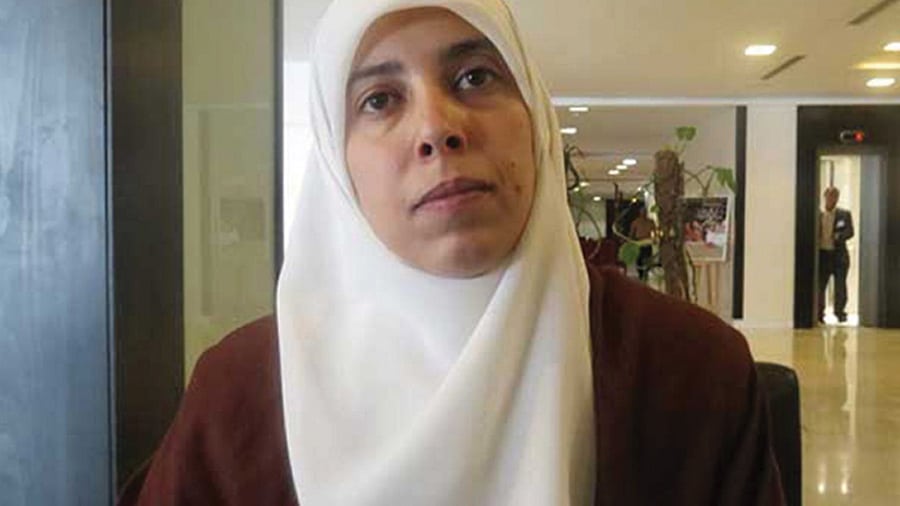
Ahlam Tamimi is on the FBI’s “Most Wanted” terrorist list and there’s a $5 million reward for her arrest.

Al-Masri was accompanied to Jerusalem by 20-year-old college student and journalist Ahlam Tamimi. They parted ways at the busy intersection of King George Street and Jaffa Road. Tamimi wore Western-style clothing and al-Masri was believed to be carrying a guitar case over his shoulder, packed with five kilograms (about 11 pounds) of explosives, laced with nails and screws.

Among the dead were 31-year-old pregnant tourist Shoshana Greenbaum, who lived in Hancock Park. She was the only child of Alan and Shifra Hayman. Al-Masri stood in line behind Greenbaum before blowing himself up.

The attack also killed Mordechai and Tzira Schijveschuurder and three of their children, ages 14, 4 and 2. Mordechai and Tzira were children of Dutch Holocaust survivors.

Also killed were children born to American citizens: 15-year-old Malka Roth (known as Malki), along with her best friend Michal Raziel, 16.  Two decades later, Chana Nachenberg, a third American victim, continues to lie in a permanent vegetative state. She was 31 at the time of the attack. Her 3-year-old daughter survived the attack unscathed.

Shortly after the bombing, Tamimi boarded a Palestinian bus to Ramallah. In a July 2012 interview on Al Aqsa TV, Tamimi said, “As the number of dead kept increasing, the passengers [on the bus] were applauding. They didn’t even know that I was among them,” she said. “On the way back [to Ramallah], we passed a Palestinian police checkpoint, and the policemen were laughing. One of them stuck his head in and said, ‘Congratulations to us all.’ Everybody was happy.”

After hearing initial reports that three Israelis were killed, Tamimi said, “I admit that I was a bit disappointed, because I had hoped for a larger toll. Two minutes later, they said on the radio that the number had increased to five. I wanted to hide my smile, but I just couldn’t. Allah be praised, it was great.”

Tamimi was arrested by Israeli authorities in September 2001 and sentenced to 16-consecutive life sentences but in 2011, she was released, along with 1,026 prisoners as part of a deal between Israel and Hamas in exchange for Israel Defense Forces soldier Gilad Shalit, who had been kidnapped by Hamas in 2006.

Tamimi returned to her birth country, Jordan, and then, something unbelievable happened:

Ahlam Tamimi became a celebrity. She was given her own television show. For the next 4 1/2 years she became a household name among Arabic speakers around the world, including in the United States, thanks to satellite TV and streaming websites. Tamimi basically made a career out of her murderous crime.

But in March 2017, after meeting with Malki Roth’s parents, the FBI issued a warrant for Tamimi’s arrest, and demanded her extradition from Jordan. The U.S. and Jordan signed an extradition treaty in 1995 and several Jordanian terrorists currently are serving long sentences in American jails, but for some reason, Tamimi is different. Jordan has said that no such treaty exists because it hasn’t been ratified by the Jordanian parliament.

When Jordan’s King Abdullah II visited the U.S. in 2019, several members of Congress asked about Tamimi’s extradition. He dismissed the requests, saying, “It’s not going to happen.” On Aug. 7, Anti-Defamation League CEO Jonathan Greenblatt sent a letter to Abdullah, requesting that Jordan end Tamimi’s legal impunity.

Tamimi is on the FBI’s “Most Wanted” terrorist list and there’s a $5 million reward for her arrest, but she’s been seen at public events in Jordan (although she’s been more careful lately), and remains a media darling, appearing in many YouTube videos.

Jordan receives $1.6 billion in foreign aid from the U.S., none of which has been withheld over the country’s refusal to extradite Tamimi. Her freedom renews daily trauma for victims’ families. (Last year, the U.S. announced plans to increase its presence at Jordan’s Muwaffaq Salti Air Base.)

Hamas, which took control of Gaza in 2006, has shifted gears from suicide bombings to rocket attacks against Israelis, but it remains a deadly, unpredictable enemy of the Jewish state.

These days, news from the Middle East is rife with powder keg issues ranging from a potential confrontation between Israel and Iran, to political chaos in Lebanon. But for those whose loved ones were brutally taken from them 19 years ago in a pizza restaurant in the heart of Jerusalem, the fight will continue as long as Tamimi freely strolls the streets of Jordan.

In 2001, Arnold and Frimet Roth established the Malki Foundation to honor the memory of their daughter. For more information, click here.


Tabby Refael is a Los Angeles-based writer and speaker. 

The Female Hamas Terrorist Living Large in Jordan Read More »