fbpx

July 24, 2020

Black Lives and Jewish Life: We Need to Fight All Forms of Hate

We are living in a moment when our collective focus should be on addressing historic racial inequities. Some suggest the phrase “Black lives matter” should be revised to “all lives matter.” But in making this statement, they miss the point regarding the present climate. “Black lives matter” does not mean, despite some pundits’ bloviations to the contrary, that Black lives matter more than other lives matter — just that the focus today is on Black lives, which, for some time, have seemed to matter less.

While it is our moral duty to focus on the racism that has plagued the Black community, it’s not the only form of hatred out there. Hatred and fear seem to be the twin flavors of the era. Hatred of others, violence against others, perpetrating lies about others, and the condoning of violence against others know no color, ethnicity or political creed. With the normalization of abusive language, the rise in conspiracy theories and the desensitization toward horrible, anonymous (and non-anonymous) statements online and in social media, we are in a dangerous time.

Certain statements and actions justifiably are quickly and harshly condemned. Sometimes, this rush to judge is taken to extremes. Anyone who has said something or done something — even decades ago — that casts doubt on his or her purity of conscience on race relations or gender discrimination runs the risk of being shunned. What often follows the disclosure of a past indiscretion is the “cancellation” of that person — the ostracization that brings about loss of status, loss of career and generalized shaming. Sometimes, even an opinion offered in a discussion can be enough to jeopardize a career. Many people who claim to be of a liberal mindset and value freedom of speech are the very people quick to be unforgiving and unyielding in their attacks on those whose views may vary — sometimes only a bit — from the acceptable orthodoxy.

The news is replete with stories of people being fired for taking positions, writing articles and attending events decades ago. As a people who claim to “forgive the sinner,” we don’t seem to be in much of a forgiving mood. This exercise in calling out others and punishing them — without trial, without context, without considering the totality of the person’s legacy — is wrong. Yet, as much as we seem poised with our fingers on a hair trigger when there is a past action that can be perceived as racist or sexist, there is a perplexing indifference toward the seeming acceptability of anti-Jewish statements.

It seems the passive acceptance of this historic prejudice may be due in part to a perception that Jews no longer are among the most oppressed. Perhaps other oppressed groups perceive Jews as having collectively achieved so much over the past century that Jews now are part of the “establishment.” However, don’t go suggesting that to the many who expound anti-Semitic hatred. To them, Jews, Blacks, Latinos and others always will be a “lesser” class of humanity.

As much as we seem poised with our fingers on a hair trigger when there is a past action that can be perceived as racist or sexist, there is a perplexing indifference toward the seeming acceptability of anti-Jewish statements.

Just as concerning is that the failure of non-Jews to call out anti-Semitism also may be reluctance to condemn the speaker because of his or her ethnicity or celebrity. Nation of Islam leader Louis Farrakhan, most notably, has been a proponent of some pretty vile stuff. Among the pearls emanating from his lips are comparisons of Jews to “termites” and calling Jews “satanic.” Farrakhan seems to have a free pass from some. Many influential leaders and celebrities in the Black community cite him and give him platforms.

The past month has brought out some anti-Jewish statements from a number of visible athletes and celebrities, some of whom support Farrakhan by name. This sort of stuff is vile, regardless of the speaker, and must be condemned. Thankfully — and laudably — some have recanted their remarks.

A lot of bad stuff recently has been said, such as:

• DeSean Jackson of the Philadelphia Eagles (wrongly) quoting Hitler: “White Jews will blackmail America. [They] will extort America, their plan for world domination won’t work if the Negroes know who they were.”

• Former NBA player Stephen Jackson saying DeSean Jackson was “speaking the truth,” then jumping in with his remarks that Jews “control the banks.” He later followed up by saying, “I don’t support Hitler, I don’t know nothing about Hitler and I could give a [expletive] about Hitler!”

• Rapper Ice Cube’s repeating comments, supporting Farrakhan, and republishing of anti-Semitic memes.

Then there are the lyrics to songs by Jay-Z (“Jews own all the property in America”) and 21 Savage (“We been getting that Jewish money. Everything is Kosher.”). When mentioning my concern with anti-Semitic rhetoric to a young friend, he responded that anti-Semitism isn’t the issue today; it’s all about fighting anti-Black sentiment. I disagree; it primarily is a time that should be focused on racism, of course. But it is never a time not to speak up against all brands of hatred, regardless of their sources.

Author Mitch Albom offers a great analysis of the woefully inadequate response to these statements in the Detroit Free Press article “Anti-Semitic Posts — and Tepid Reactions — Should Enrage Us.” I also recommend reading a great article, “The Anti-Semitism We Didn’t See,” in The Atlantic by Jemele Hill, providing a Black journalist’s view of these recent statements, pervasive “casual” anti-Semitic views in the Black community and her own reckoning with anti-Semitism.

Perhaps most heartening is the position taken by Kareem Abdul-Jabbar in his recent Hollywood Reporter column titled “Where Is the Outrage Over Anti-Semitism in Sports and Hollywood?” His sentiments were supported by fellow NBA Hall of Famer Charles Barkley.

Let’s all remember that the haters, when they are engaged in hate, are not concerned with color or religion; their hate is equal opportunity. Let’s also not forget that most folks who hate Blacks also hate Jews. Each group should be especially sensitive to the demonization of the other.

Just because people support racial justice should not insulate them from being held to the same standards of human decency and anti-bigotry as is demanded of each of us. Those who have been oppressed in history have a perspective that can be helpful to others experiencing discrimination and hate. Jews should support the movement to achieve greater justice for Black Americans because “we were once slaves of Pharaoh in Egypt.” We tell this story each year at Passover. If it is to ever have meaning, it must be remembered and lived in each era. The Black community is Elijah standing at our door, whom we must invite to our table. Their story is our story. And just as true is that our story is their story. It is a shandah for either of us to give fuel to those who seek to cause us harm.

We should look to history for examples of the oppressed helping the oppressed. In the midst of fighting for Black rights, Frederick Douglass was a notable supporter of women’s suffrage; Rabbi Abraham Joshua Heschel marched for civil rights even while anti-Semitism was rampant. I hope all leaders in the community — Black, Jewish, Latino, gay — in pursuing justice, utilize their important positions in the public square to help fight all hate and discrimination, even when emanating from their own community.


Glenn Sonnenberg is the former president of Stephen Wise Temple and is on the boards of The Jewish Federation of Greater Los Angeles, the Children’s Institute, Wayfinder Family Services, Bet Tzedek and Center Theatre Group.

Black Lives and Jewish Life: We Need to Fight All Forms of Hate Read More »
British Rapper Tweets ‘Jewish People You Make Me Sick’ After Being Accused of Anti-Semitism

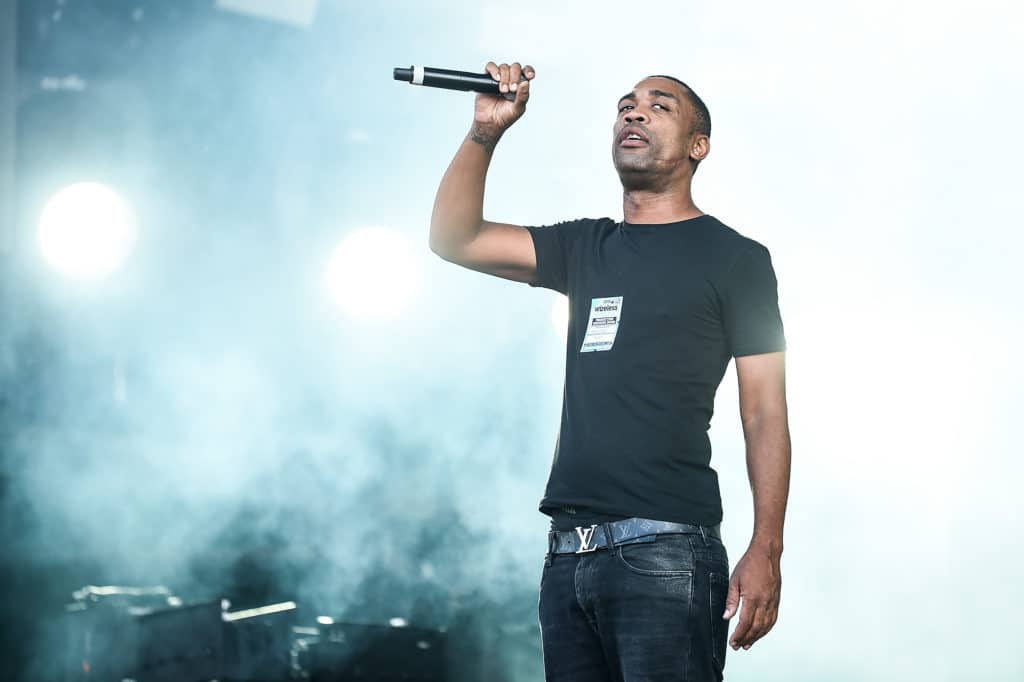
The British rapper known as Wiley tweeted on July 24 that Jews “make me sick” after he was accused of posting anti-Semitic tweets earlier in the day.

Among the tweets Wiley, born Richard Kylea Cowie Jr., has been under fire for including tweeting that there are “2 sets of people who nobody has really wanted to challenge #Jewish & #KKK [Ku Klux Klan] but being in business for 20 years you start to understand why.” He also asked if it’s anti-Semitic “to say Jewish people have power” and asserted that “Israel is not your [Jews’] country.”


Wiley doubled down on his tweets after several people on Twitter accused him of anti-Semitism. “I’m not anti-semetic [sic] I’m anti slippery people,” he tweeted. “There’s a difference.”

https://twitter.com/WileyCEO/status/1286652796150964225?s=20

The rapper also tweeted, “Jewish people you make me sick and I will not budge hold this corn.”

https://twitter.com/WileyCEO/status/1286762618263347201?s=20

Some, such as the Campaign Against Anti-Semitism (CAA) and Jewish Chronicle editor Stephen Pollard, interpreted “hold this corn” as “is a slang expression meaning that they should be shot,” but others have said that “hold this corn” is British slang for telling someone to “take the L (loss).”

Twitter user Michael Elgort asked Wiley if he would “pretend that is a mere accident you used this phrase before the words ‘Jewish community.’” Wiley replied: “No I won’t I will call you lot cowards forever tho.”

https://twitter.com/WileyCEO/status/1286732675282358273?s=20


Wiley also retweeted a tweet by a person named Kekman that read, “Im [sic] so sick of f—ing Jews at this point. You are the most vile people in the history of humanity.”

The CAA condemned Wiley’s tweets in a statement.

“Likening Jews to the KKK is a hideous anti-Semitic slur, which Wiley can add to the anti-Semitic tropes he has tweeted about Jewish power and Jews in business,” the statement read. “He joins a number of celebrities who have promoted anti-Semitic themes or individuals in recent weeks, some of whom have apologized and sought rehabilitation. Wiley must immediately do the same, otherwise no respectable label or manager should work with him ever again.”

Pollard tweeted to Wiley, “You know who else shared your views of Jewish power? Clue: First name began with an A, second an H. You are a racist. Unambiguously. Don’t try to pretend you are speaking some sort of truth. You are spouting Jew hate, like neo-Nazis and the rest of them.”


British researcher David Collier tweeted, “For 9 hours @wileyceo an MBE [Member of the Order of the British Empire] and an account with almost 500k followers has been producing vicious and non stop anti-Semitic commentary – inciting hate – violence and even containing threats. Where the hell is @Twitter
@TwitterSupport [?] This crosses all your standards.”

The CAA issued a statement later in the day saying that the organization has reported Wiley’s tweets to the police.

“We have additionally asked Twitter and Facebook, which owns Instagram, to close down his accounts which have hundreds of thousands of followers, to prevent further outpouring of anti-Jewish venom,” the statement read. “Our Regulatory Enforcement Unit is contacting the Honours Forfeiture Committee at the Cabinet Office to ask that Wiley’s MBE be revoked, and we will be looking to ensure that no reputable label or manager works with him again.”

John Woolf, who is Wiley’s manager and is Jewish, tweeted, “I do not support or condone what Wiley has said today online in anyway shape or form. We are going to help educate him here on this. And in 12 years he has never acted in this manner.”

https://twitter.com/Jrwoolfw/status/1286733938749329408?s=20

UPDATE: Wiley announced on his Instagram page that his Twitter account has been suspended for 12 hours.

https://www.instagram.com/p/CDCytEZDBrS/?igshid=1xt6vgf5smma5


British Rapper Tweets ‘Jewish People You Make Me Sick’ After Being Accused of Anti-Semitism Read More »

German City Enlists Rapper Who Joked About Holocaust for Social Distancing PSA

(JTA) — The city government of Germany’s second-largest metropolis is facing criticism for enlisting a Muslim rapper whose lyrics mocked Holocaust victims to promote social distancing.

The municipality of Düsseldorf posted a public service announcement featuring Farid Bang on its Facebook page Wednesday. In 2018, Bang and a collaborator released a song in which they rapped about having “bodies more sculpted than Auschwitz inmates,” and contained lyrics about “another Holocaust; let’s grab the Molotov” cocktails.

When the two artists won a top music award that year, several other winners returned their awards in protest. German prosecutors investigated the artists but decided the song was merely tasteless, not a violation of laws prohibiting Holocaust denial and anti-Semitism,

The commissioner for the fight against anti-Semitism in the state of North Rhine-Westphalia criticized the decision to involve Farid Bang in the social distancing promo.

“The choice of rapper, Farid Bang, for a public project, which is supposed to shed light on the topic of the coronavirus, is hard to bear,” the commissioner, Sabine Leutheusser-Schnarrenberger, told the Rheinische Post newspaper.

Düsseldorf Mayor Thomas Geisel defended the decision to hire Bang as intended to reach a young target audience that has displayed indifference to social distancing rules, Deutsche Welle reported Wednesday.

German City Enlists Rapper Who Joked About Holocaust for Social Distancing PSA Read More »

Dutch Airline KLM Discriminated When It Asked Woman to Move for Orthodox Man, Watchdog Finds

AMSTERDAM (JTA) — A Dutch human rights board found the national airline KLM guilty of discriminating against a woman who was moved from her seat because an Orthodox Jewish man wouldn’t sit near her.

The Human Rights College, a watchdog organization whose members are appointed by the king, made the ruling Thursday in a review of an incident from May 2019 aboard an airplane traveling from New York to Amsterdam, the AD news site reported.

KLM “made a gender discrimination against the couple by failing to provide a discrimination-free environment during a flight.”

Ronald van Raak, a lawmaker for the Socialist Party, submitted a complaint to the College after his wife was bumped from her seat because of the protestations of an Orthodox passenger who said he did not want to sit next to a woman. (This scenario arises from time to time on flights, where people usually do not have discretion over where they sit.)

KLM cabin crew asked the van Raaks to “cooperate in solving this problem” in order to “make the boarding process as smooth as possible,” the rights board said. “However, the Orthodox Jewish man was not held accountable for his behavior, nor was it made clear to him that there were discriminatory aspects,” it ruled, adding: “Also, the Orthodox Jewish man or company he was part of was not asked to cooperate in solving the seating problem.”

Dutch Airline KLM Discriminated When It Asked Woman to Move for Orthodox Man, Watchdog Finds Read More »

The Bagel Report

This Week We’re Bringing You Everything (Bagels)

No, they’re not actually bringing bagels to you, but the Bagels are giving it their all this week. Rolling out some regular segments, Esther and Erin still manage to make their regular mentions of shows they love while taking a delightful diversion into the weird world of “Eurovision Song Contest: The Story of Fire Saga.” Plus, the Bagels take time to appreciate Josh Gad, tackle Twitter’s #JewishPrivilege conversation, celebrate Erin finally having challah for Shabbat and debate whether “Dirty Dancing” is the most Jewish movie of all time. Esther also connects Jewish fast day Tisha b’Av to popular culture and her summer camp experience.
Follow ErinEsther and The Bagel Report on Twitter! 
What we talked about on this week’s episode:

This Week We’re Bringing You Everything (Bagels) Read More »

Tisha B’Av: Jews and Aspen

My first memory of Tisha b’Av is from Camp Ramah, just outside Santa Barbara, during the summer after third grade. I was a precocious 7-year-old in “edah aleph” (group one, the youngest class of campers). Our edah worked together to fashion a beautiful outdoor beit knesset (synagogue) beneath a sprawling oak tree, with custom-painted benches and our artwork hanging from the Aron Kodesh (holy ark for the Torah).

One fateful morning, we awoke to find someone had upended our precious prayer space. The Aron was on its side, benches strewn about, our works of art scattered on the ground. I was shocked to the core. Who would do such a thing? Then our counselors explained the destruction in Jerusalem transpiring three millennia earlier on that date. This re-creation of the tragic events of the past created an indelible memory and enabled our bunk to bond during the rebuilding process.

The Jewish people are connected more profoundly than any of us realize. In many ways, we’re like the aspen, one of the largest organisms on earth, famous for decorating mountain ranges with brilliant autumnal radiance. Aspen groves are not collections of disparate entities. They typically are distinct expressions of a single subterranean root system, sometimes stretching more than 100 feet from the parent tree. Deciduous aspens occupy a precarious niche in a coniferous forest, swelling their collective sunshine-yellow glory wherever the colony can obtain enough light. Similarly, the Jewish people are an interconnected family weathering the storms of history, shining the light of peace, love and innovation into the world whenever given the chance. The fires of the destruction of Jerusalem, European pogroms or the Holocaust may rage, but they cannot extinguish the spark animating the collective Jewish soul. We all feel the pain of our fellow Jew because in essence, we are one entity.

The fires of the destruction of Jerusalem, European pogroms or the Holocaust may rage, but they cannot extinguish the spark animating the collective Jewish soul.

Tisha b’Av is hard on even the hardiest individuals. In the waning hours of the holiday, everyone is disheveled and drained. Jewish law stipulates we can’t don tallit and tefillin until the sun is about to set, having been denied the glory of these crowns earlier in the day. We lumber into a Mincha minyan, where we are comforted by the words of divine forgiveness in the Torah reading, which depicts the aftermath of the sin of the Golden Calf. Then in the haftarah, the prophet Isaiah proclaims: “For you shall go out with joy, and be led forth with peace; the mountains and the hills shall break forth before you into singing, and all the trees of the field shall clap their hands.” Even when all seems lost, God is with us, guiding us and giving us hope. Even on this most mournful day, we must serve God with joy. We then utter the Amidah and special insertions with an intensity only possible when ravenous and parched, poignantly aware of one’s mortality.

Tisha b’Av is the saddest day of the year for those steeped in the joy of Judaism. Our collective primal scream echoes throughout history like rolling thunder from the original lightning bolt of destruction, the obliteration of our faith by the spies in the desert. Even at the nadir of our joy continuum, there is a kernel of hope. By the end of the fast, we teeter on shaky legs, ashen-faced and cotton-mouthed. Finally, at the conclusion of Ma’ariv services, we drink delicious gulps of water and step outside the synagogue to celebrate the end of the three-week mourning period with Kiddush Levana (Blessing the New Moon), dancing together in the darkness.

After writing this article, I did an online search for “aspen tree poetry” and discovered a lovely poem by Monica Sharman. I was amazed to see that the biblical passage she quoted was the aforementioned verse from the fast day reading. 

Clapping Aspen

In the rising wind of a coming dust storm a mini-stand of aspen planted between
the heron pond and the stucco home made some noise; they say it’s
“quaking.” But that name makes one think of timid fear. Listen like
a musician, with the psalter’s ear, and hear, instead, the sound of applause:

For you shall go out in joy and be led forth in peace; the mountains and the hills before you
shall break forth into singing, and all the trees of the field shall clap their hands.
(Isaiah 55:12) 

May we continue to dance together like aspen trees shimmering in a gentle alpine breeze. May our unity be as self-evident as the aspen’s subterranean inter-connectedness. May our miraculous survival mimic that of the age-old grove of this hearty species, with roots so deeply intertwined, it can withstand the heat of any conflagration. May we bring life, love, peace and the awareness of the Creator to all nations.


Sam Glaser is a Los Angeles-based performer, composer, producer and author. He has released 25 CDs of his music, and his book “The Joy of Judaism” is available on Amazon. Join him for a weekly hour of study at 7:30 p.m. PST Wednesdays. Meeting ID: 71646005392. A version of this story appeared on sdjewishworld.com.

Tisha B’Av: Jews and Aspen Read More »

Devarim

HAVE YOU EVER STARTED A NEW BOOK, THE LAST IN A SERIES
you’ve been reading for a while? You’re invested and
this is the beginning of your final time in that world.

Well here we are at the beginning of the fifth of five.

It opens like a story arced TV show. Previously in the
Torah as Moses recounts everything that led to this
moment. There’s veiled scolding for transgressions.

We recount the time Moses said, thirty-nine years ago
when the people were first at the foot of the promised
land, I’ll turn this Exodus right around. And he made
good on that promise. The family vacation was
cancelled and we realize, these decades later, those
people whose feet touched Egyptian soil, are not the
same people who will cross the Jordan. How’s that
for follow-through parenting? Oh, Moses I love, as a
poet, that this book, this chapter, this parsha is called
Words, and that you’ll spend most of it saying them.

I am a person of the words just as we are a people
of the Books that contain them. This oral history
your final classroom, reads like a spoken word event.

Did the Israelites snap when you showed how God
multiplied them? You are today as many as there
are stars in the heavens. We’ve got a population
explosion on our hands and that’s a promise kept
if I’ve ever seen one. I know I would have snapped
at every pause out of habit. Or maybe I did. I keep
forgetting I was there. I could describe what I was
wearing, but mundane details aren’t what this is about.

Watch out Canaanites! As soon as Moses gets done
with this piece, we’re coming for you, or at least
the land you sit in. That’s our other promise.

I’m going to read this book slow. Not more than one
chapter a week. I have a feeling when it’s all over

I’m going to start the whole series again.

Devarim Read More »

david suissa podcast curious times

Pandemic Times Episode 72: What Kind of World are we Heading into?

New David Suissa Podcast Every Monday and Friday.

A conversation with a millennial about the chaos, the light and the unpredictable future.

How do we manage our lives during the coronavirus crisis? How do we keep our sanity? How do we use this quarantine to bring out the best in ourselves? Tune in every day and share your stories with podcast@jewishjournal.com.

Pandemic Times Episode 72: What Kind of World are we Heading into? Read More »

Grandson of Auschwitz Commander Rudolf Hoess, Who Criticized His Family History, Is a Criminal, Report Claims

(JTA) — About a decade ago, Rainer Hoess began making media appearances to discuss the actions of his grandfather Rudolf, the longest-serving commander of the Auschwitz death camp.

Eloquent and unwavering, Hoess became a sensation, and outlets such as CNN and the Wall Street Journal prominently featured his reckoning with his family’s legacy. Eva Mozes Kor, a prominent Holocaust survivor who passed away in 2019 and preached forgiveness for Nazi war criminals, was particularly close with him.

According to an exposé published Friday in the Israeli paper Israel Hayom, Hoess, 55, has engaged in multiple fraud schemes over the years.

Hoess has been convicted in criminal court 13 times since 1991 for various offenses ranging from fraud to threats and assault, the report says. The judge in a recent civil case for fraud called him a “liar.”

The latest ruling came last month, and convicted Hoess of defrauding Peter Rosch, a shoe store owner, out of roughly $20,000. Rosch had given Hoess the money as a loan, supposedly to produce a film about Hoess’ story titled “The Grandson” for a Serbian television station. The film exists, but Hoess took the money while having no part in its production.

Hoess’ older brother Kai, an evangelical pastor from Stuttgart, confirmed the details of the case to Israel Hayom.

Kai Hoess also said that his brother sold his late mother’s home in 2017 and stole the money after emptying her bank accounts.

Kai Hoess, 58, said he decided to give his first interview to media to warn others about his brother.

“I just want him to stop defrauding people using the names and ashes of millions of Holocaust victims,” Kai, 58, said of his brother. “I think it’s important he be put in a place that would make him stop doing these things.”

CNN star reporter Christiane Amanpour last interviewed Hoess in 2016 about the republication of Adolf Hitler’s book “Mein Kampf.” Hoess had “devoted his life to combating his own grandfather’s poisonous ideology,” she said in that interview.

Attempts by the Jewish Telegraphic Agency to contact Rainer Hoess on his last known cellular telephone number for a reaction have not been successful.

Grandson of Auschwitz Commander Rudolf Hoess, Who Criticized His Family History, Is a Criminal, Report Claims Read More »

Judge Releases Michael Cohen From Prison to Home Confinement, Says Prison Was Retaliation Over Trump Book

Michael Cohen, President Donald Trump’s former lawyer, was released from prison to home confinement on July 23 after a judge ruled that Cohen was sent back to prison in retaliation for his pending book on Trump.

Cohen alleged in a July 20 lawsuit against the Department of Justice (DOJ) that he was sent back to prison from home confinement on July 9 because he refused to sign a document that would have prevented him from publishing books and talking to the media until his prison sentence ends. Cohen reportedly has a tell-all book on Trump coming out in September.

Judge Alvin Henderson sided with Cohen, ruling on July 23 that the language of the document that Cohen refused to sign implied that a return to prison would be a retaliatory measure.

“The purpose of transferring Mr. Cohen from furlough and home confinement to jail is retaliatory, and it’s retaliatory because of his desire to exercise his First Amendment rights to publish a book and discuss anything about the book or anything else he wants on social media,” Hellerstein said. “I’ve never seen such a clause. In 21 years of being a judge and sentencing people and looking at terms and conditions of supervised release, I’ve never seen such a clause. How can I take any other inference but that it was retaliatory?”

He did acknowledge that some restrictions on Cohen talking to the press could be warranted, noting that Cohen would still be serving a prison sentence in home confinement.

The prosecutors and the Bureau of Prisons (BOP) denied that Cohen’s return to prison was a retaliatory measure. Assistant U.S. Attorney Allison Rovner argued during the July 23 hearing that a probation officer first had presented the conditions of Cohen’s release from prison in May and that the officer wasn’t aware that Cohen had a book coming out in September. Cohen has claimed that he was open with prison officials and other inmates about his book.

A spokesperson for the BOP told The New York Times that it’s typical for those serving prison sentences to be restricted from contacting the media and that Cohen’s refusal to sign the document had nothing to do with his return to prison.

“Any assertion that the decision to remand Michael Cohen to prison was a retaliatory action is patently false,” the spokesperson added.

However, Hellerstein argued that the language of the document seemed to have the purpose of silencing Cohen and that he should have been given the chance to negotiate the matter. He also argued that Cohen never was told that he would be sent back to prison if he didn’t sign the document.

Cohen initially was released from prison to home confinement in May because of the COVID-19 pandemic. He officially will be released from prison again on July 24. Cohen’s lawyers and the BOP will negotiate the lifting of restrictions from the gag order.

Cohen was sentenced to three years in prison in December 2018 after pleading guilty to tax evasion. He also pleaded guilty for lying to the Senate regarding efforts to build a Trump Tower in Moscow. The former Trump lawyer also alleged his guilty plea that Trump directed him to arrange hush money payments to porn star Stormy Daniels to keep her quiet about her alleged affair with Trump in 2006. Trump has denied these allegations and has previously accused Cohen of lying to prosecutors in order to obtain a lighter prison sentence.

According to Cohen’s lawsuit against the DOJ, Cohen’s book will provide details of Trump uttering “certain anti-Semitic remarks against prominent Jewish people and virulently racist remarks against such Black leaders as President Barack Obama and [the late South African President] Nelson Mandela.”

Judge Releases Michael Cohen From Prison to Home Confinement, Says Prison Was Retaliation Over Trump Book Read More »