fbpx

July 14, 2020

Andrew Yang, Donald Trump Jr., and NY Times Staff React to Bari Weiss’ Resignation

This morning, New York Times editor and “How to Fight Anti-Semitism” author Bari Weiss announced that she is resigning from the publication.
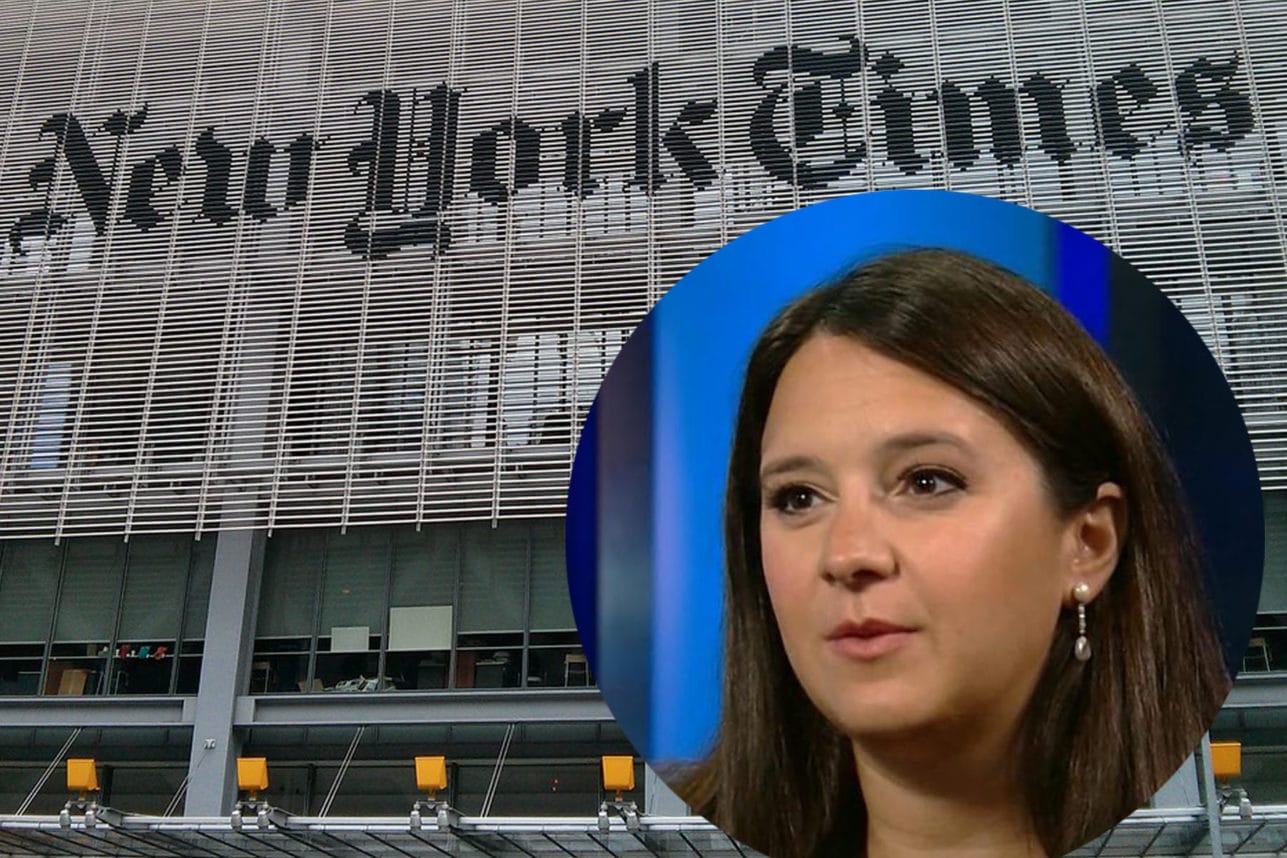
“My own forays into Wrongthink have made me the subject of constant bullying by colleagues who disagree with my views,” Weiss wrote in her resignation letter. “They have called me a Nazi and a racist; I have learned to brush off comments about how I’m ‘writing about the Jews again.'”

In her resignation letter Weiss claims that she was frequently bullied by coworkers on the company Slack channel and publicly harassed without any appropriate action. She calls the behavior “unlawful discrimination,” “hostile work environment” and “constructive discharge. Twitter is not on the masthead of The New York Times,” Weiss wrote. “But Twitter has become its ultimate editor.”

On Twitter, the response to Weiss’s resignation was swift.

“If someone like @bariweiss feels like she can’t do her best work at the @nytimes they should make some real changes over there,” former Democratic presidential candidate Andrew Yang, who Weiss wrote an op-ed about, tweeted.

His dismay was shared by Donald Trump Jr. who said that Weiss “resigns in STUNNING fashion & exposes the Times’ rampant attacks on anyone who breaks from the far-left narrative.”

Senator Ted Cruz of Texas shared Weiss’ resignation letter, calling it “eloquent, profound, incisive.”

Responding to Weiss’ accusations of bullying on Slack channels — some of which were leaked to The Huffington Post in 2018 — Times correspondent Rukmini Callimachi tweeted, “The fact that she has been openly bullied, not just on social media, but in internal slack channels is not okay.”

“What the Times did to @bariweiss is unconscionable,” wrote Atlantic contributor Caitlin Flanagan. “It’s not civil, it’s not in the reader’s interest, and the well-documented culture of extreme harassment will, I hope, now come to light. This is the biggest media story in years.”

Conservatives including former NBC host Megyn Kelly and The View panelist Meghan McCain also expressed support for Weiss.

Some on the left were more skeptical. “Seeing a lot of folks saying Bari Weiss’ resignation exposes the roots of the demise of American journalism,” wrote The Daily Beast Politics Editor Sam Stein. “I’d suggest that hedge funds buying and ripping apart outlets across the country and massive tech giants sucking up all the ad revenue are more important matters.”

“There is no issue of legitimate inquiry which is more likely to get you ‘cancelled’ than support for Palestinian rights,” commented left-wing pundit Krystal Ball. “That Bari Weiss, an intellectual architect of that regime of censorship, has the audacity to ‘self-expel’ and cry cancellation is outrageously hypocritical.”

Al Jazeera English host Mehdi Hasan, who has been frequently critical of Weiss, also wrote a thread on her resignation. The Qatar-state media pundit also claimed that Weiss was anti-Palestinian.

“Weiss on multiple occasions expressed bigoted, racist views about Palestinians and never faced any censure from the Times — and none of her supporters ever engage with those very legitimate criticisms of her,” he wrote.

The Jewish world was also quick to react.

American Jewish Committee CEO David Harris called Weiss’ resignation “a poignant, painfully sad letter of resignation. Her departure is a huge loss not only for the paper, but also, no less, for the spirit of open inquiry & civil debate that once characterized our media.”

“I’ll just say she’s precisely the kind of friend and colleague that anyone should want, and the NYT’s behavior was appalling,” wrote Washington Examiner Executive Editor Seth Mandel. “All this is obvious — as is the fact that the institution missed a chance to learn from her grace and grit and talent.”

Referencing the online critics that frequently taunt Weiss, Mandel added, “Feel free not to respond to this, btw — I’d rather not know if you’re a terrible person who trolls ppl to insult their friends on social media so save your breath.”

Tablet Senior Writer Yair Rosenberg also commented on the harassment and online bullying Weiss has endured.

It’s no secret that @bariweiss and I disagree on many things,” Rosenberg tweeted. “But she never deserved the extraordinary performative abuse she received, and she was the rare superb editor of those who disagreed with her. People on here who obsess over Bari the columnist will miss Bari the editor.”

Andrew Yang, Donald Trump Jr., and NY Times Staff React to Bari Weiss’ Resignation Read More »

Bari Weiss’ Resignation Letter Did a Service to Press Freedom

I grew up worshipping The New York Times. To this day, I live on the paper’s home page. Only lately, as much as I still enjoy much of its cultural reporting, my jaw drops when I see the homogeneity of opinion.

Virtually every op-ed and regular columnist goes in the same narrow, progressive direction. The net effect is mind-numbing. You could strongly agree with every opinion and still feel the dullness.

When it comes to diversity of thought, The Times has become all the boredom that’s fit to print.

That’s why it was fascinating to read Bari Weiss’ letter of resignation today from The Times. It made me realize I wasn’t delusional.

“The lessons that ought to have followed the election — lessons about the importance of understanding other Americans, the necessity of resisting tribalism, and the centrality of the free exchange of ideas to a democratic society — have not been learned,” she wrote. “Instead, a new consensus has emerged in the press, but perhaps especially at this paper: that truth isn’t a process of collective discovery, but an orthodoxy already known to an enlightened few whose job is to inform everyone else.”

Weiss was brought in three years ago to help fix that, to bring in voices, she says, “that would not otherwise appear in your pages: first-time writers, centrists, conservatives and others who would not naturally think of The Times as their home.”

To her credit, she brought in many of those voices. She listed some of them: “The Venezuelan dissident Wuilly Arteaga; the Iranian chess champion Dorsa Derakhshani; and the Hong Kong Christian democrat Derek Lam. Also: Ayaan Hirsi Ali, Masih Alinejad, Zaina Arafat, Elna Baker, Rachael Denhollander, Matti Friedman, Nick Gillespie, Heather Heying, Randall Kennedy, Julius Krein, Monica Lewinsky, Glenn Loury, Jesse Singal, Ali Soufan, Chloe Valdary, Thomas Chatterton Williams, Wesley Yang, and many others.”

Maybe in the age of Twitter mobs, groupthink and political ultra-correctness, it was too good to last.

“Twitter is not on the masthead of The New York Times. But Twitter has become its ultimate editor,” she wrote. “As the ethics and mores of that platform have become those of the paper, the paper itself has increasingly become a kind of performance space. Stories are chosen and told in a way to satisfy the narrowest of audiences, rather than to allow a curious public to read about the world and then draw their own conclusions.”

This is not the assessment of an outsider. This is the candid take of a person who’s been in the weeds of the story.

It’s clear from the resignation letter that the very phenomenon Weiss describes made it exceedingly difficult for her to stick around. She writes:

“My own forays into Wrongthink have made me the subject of constant bullying by colleagues who disagree with my views. They have called me a Nazi and a racist; I have learned to brush off comments about how I’m ‘writing about the Jews again.’ Several colleagues perceived to be friendly with me were badgered by coworkers. My work and my character are openly demeaned on company-wide Slack channels where masthead editors regularly weigh in. There, some coworkers insist I need to be rooted out if this company is to be a truly ‘inclusive’ one, while others post ax emojis next to my name. Still other New York Times employees publicly smear me as a liar and a bigot on Twitter with no fear that harassing me will be met with appropriate action. They never are.”

Instead of rushing to take sides and pouring more oil on this journalistic bonfire, it’s worth taking a step back and reflecting on the very value of press freedom.

I hope Weiss’ candor and cry from the heart will lead to an honest discussion of ideological diversity in journalism.

When it comes to ethnicity, race and gender, we have elevated values like “diversity” and “inclusion,” which I applaud. But what about diversity and inclusion for views and opinions we may not agree with?

Why does diversity seem to hit a full stop at ideology? It’s one thing to see groupthink at a political action committee, but at a major newspaper?

Here’s the ultimate irony: If The Times does an honest assessment of its viewpoint diversity in the wake of Weiss’ letter, they’ll probably conclude they need to hire someone just like her.

Bari Weiss’ Resignation Letter Did a Service to Press Freedom Read More »

Bari Weiss Resigns From The New York Times

Bari Weiss announced in a resignation letter posted to her website on July 14 that she is resigning from The New York Times.

Weiss, who had been the paper’s opinions editor and columnist since 2017, wrote in the letter to Times publisher A.G. Sulzberger that she had hoped to use her position as opinions editor to provide a platform to a wide variety of voices in an effort to provide more ideological balance to the Times. However, Weiss wrote, her colleagues at the Times have frequently bullied her for holding differing viewpoints.

“They have called me a Nazi and a racist; I have learned to brush off comments about how I’m ‘writing about the Jews again,’ ” she wrote. “Several colleagues perceived to be friendly with me were badgered by coworkers. My work and my character are openly demeaned on company-wide Slack channels where masthead editors regularly weigh in. There, some coworkers insist I need to be rooted out if this company is to be a truly ‘inclusive’ one, while others post ax emojis next to my name.”

Weiss added that “other New York Times employees publicly smear me as a liar and a bigot on Twitter with no fear that harassing me will be met with appropriate action. They never are.”

She also argued that the Times has engaged in “self censorship,” pointing to the paper denouncing Sen. Tom Cotton’s (R-Ark.) June op-ed in the Times arguing for the need to use the military to stamp out violence occurring in the George Floyd protests, but failing to take action when author Alice Walker praised an anti-Semitic book in a 2018 interview with the Times.

“The paper of record is, more and more, the record of those living in a distant galaxy, one whose concerns are profoundly removed from the lives of most people,” Weiss wrote. “This is a galaxy in which, to choose just a few recent examples, the Soviet space program is lauded for its ‘diversity’; the doxxing of teenagers in the name of justice is condoned; and the worst caste systems in human history includes the United States alongside Nazi Germany.”

Weiss concluded her letter noting that while there are some world-class journalists at the Times, she feels she can’t properly do her job in ensuring that all voices can be given a platform at the Times.

“I’ve always comforted myself with the notion that the best ideas win out. But ideas cannot win on their own,” she wrote. “They need a voice. They need a hearing. Above all, they must be backed by people willing to live by them.”

Times acting editorial page editor Kathleen Kingsbury said in a statement to Vice, “We appreciate the many contributions that Bari made to Times Opinion. I’m personally committed to ensuring that The Times continues to publish voices, experiences and viewpoints from across the political spectrum in the Opinion report. We see every day how impactful and important that approach is, especially through the outsized influence The Times’s opinion journalism has on the national conversation.”

The Simon Wiesenthal Center tweeted, “Brilliant writer @bariweiss hounded by Twitter and Slack bullies inside New York Times. Resigns for having chutzpah to speak out against Jew-hatred. No place for intellectual debate at hostile work environment at @nytimes.”

Weiss is the author of the 2019 book “How to Fight Anti-Semitism,” which won a National Jewish Book Award.

Bari Weiss Resigns From The New York Times Read More »

Federal Judge Rejects $19 Million Settlement With Harvey Weinstein Accusers

(JTA) — A federal judge has rejected a $19 million settlement for women who have accused Harvey Weinstein of sexual misconduct.

District Judge Alvin Hellerstein in New York objected to several aspects of the class-action settlement agreed upon about two weeks ago, Variety reported. Tuesday’s ruling noted specifically how the agreement handles the claims of women who did not come forward for the lawsuit and the millions of dollars that Weinstein and his company will pay out in attorneys’ fees.

Hellerstein believes the women had such varying experiences with Weinstein that the case is not appropriate as a class action, according to Variety.

“The idea that Harvey Weinstein can get a defense fund ahead of the claimants is obnoxious,” he said at the hearing, according to reports. “The idea you can regulate the claims of people not in the settlement — I can’t subscribe to that.”

The settlement would have used money paid out by the Weinstein Company’s insurance company to establish funds for class-action claimants, individual plaintiffs, the company’s creditors, and defense attorneys working for Weinstein and his firm’s officers and directors.

Three of the plaintiffs in the class-action suit had objected to the settlement.

Weinstein was convicted of rape and sexual assault in February in New York and sentenced to 23 years in prison. He still faces charges in a separate case in Los Angeles.

Federal Judge Rejects $19 Million Settlement With Harvey Weinstein Accusers Read More »

Life’s a Jewish Love Story for Disney Songwriting Duo

The names Doug Rockwell and Tova Litvin may not ring a bell, but if you’re the parent of Disney-obsessed offspring, you’ve likely heard their music in the “Zombies” and “High School Musical” franchises as well as Marvel’s “Marvel Rising” superhero cartoons. 

On the eve of the Emmy Awards nominations (July 28), the duo’s popular songs “Flesh and Bone” from “Zombies 2” and “Born to Be Brave” from “High School Musical: The Musical: The Series” are getting attention. It would be the second recognition for Rockwell, who was Emmy-nominated last year for the animated series “The Loud House.”

Writing songs for children’s shows makes sense for two musicians who’ve been at it since they were kids themselves. “We’ve been writing songs since we could walk and learned so much over the years playing in bands and writing for artists,” Rockwell told the Journal. “The difference is, instead of writing from our own experience we are given a world, a story and characters and we put ourselves in their shoes. That’s where the inspiration comes from. It’s like wearing the same clothes, just putting them on differently.”

Rockwell and Litvin were initially on separate paths as performing artists but had tired of the road grind. “You slowly realize that the shelf-life of an artist is not especially long. We ventured into writing for other artists,” Rockwell said. The duo met at a Halloween party five years ago, where the Gumby-costumed Rockwell and Litvin, dressed as an “obese Coke bottle,” bonded over music, similar Jewish backgrounds, love of Israel and his tattoos (the Star of David, a chai and a tree playing the bass among them). They became fast friends and continued to work separately until two years ago, when Rockwell received an assignment from Marvel and brought in Litvin. Disney projects followed and they made the collaboration official.

“We both had the same goal — getting into motion pictures and writing songs for TV and film, getting involved with the actual telling of the story,” Litvin said. Born in Los Angeles, she grew up in Israel on Migdal, a moshav near Tiberias. “I was surrounded by music and musicals and always sang. I started writing lyrics around 8, 9,10. There weren’t a lot of opportunities in Israel but I knew it was what I wanted. After high school, I moved back to L.A. I knew so little about the music industry but I knew I had to be in music.”

“Instead of writing from our own experience we are given a world, a story and characters and we put ourselves in their shoes.” — Doug Rockwell

So did New Jersey native Rockwell, who moved to L.A. in 2014. “I knew my entire life what I was going to do,” he said. “I grew up in a very musical family. My great-grandmother was an opera singer who sang at Carnegie Hall. I was 8  years old the first time I picked up a guitar and from then on, there was no question.” 

Of Austrian and Russian ancestry, Rockwell grew up Reform with his divorced mother, whose “strong pull towards Judaism” led her to a late-in-life bat mitzvah and becoming president of their synagogue. Rockwell’s experiences at that synagogue, plus his bar mitzvah, Jewish sleepaway camp and his Birthright trip to Israel, solidified his faith.

“[Judaism has] always been really important to me,” he said. “I can’t explain it but I think that’s why I love it so much. It’s a spiritual connection, something deep within me that I just know. I think it has a lot to do with the temple I grew up going to. It always felt like home. My rabbi’s sermons were always so beautiful. They always made me think and question things and look at things in my life differently. It’s very important to my mother too, and it’s a bond that we share. It brings our family closer.”

Litvin is the daughter of a Scotsman who died when she was young and a “very traditional” Jewish mother, a Jewish educator whose family included early settlers in Palestine on one side and a Holocaust survivor on the other. Her Polish grandfather escaped Auschwitz through a hole in a fence and was rescued in the forest by British soldiers. He was the only member of his family to survive. 

“Ironically, after the war, he made aliyah and fought the British in the War of Independence,” Litvin noted. “Like Doug, I feel the spiritual connection to a lot of our traditions and culture but beyond that I’m aware that I almost wasn’t here, just because I’m Jewish.”

For two people so perfectly in sync creatively and spiritually, it’s no surprise that their relationship became romantic. “We felt very early on that we knew each other for a thousand lifetimes before this one,” Rockwell said. “We had a very deep connection.” Added Litvin, “We were friends for a very long time and people thought we were together before we were, so it was a very natural progression.”

Marriage and children are in their future, they confirm, and can’t come soon enough for their parents. “My dad askes me every day if Tova is pregnant yet,” Rockwell said. Added Litvin, “For them, the clock has been ticking since we were born.” 

But in the present, uncertain pandemic times, they’re concentrating on creative concerns. “We’re writing a lot. There’s been a lot of brainstorming. We’re digging into ideas that we might not have had time to play with before,” Litvin said. “We’re taking the time to try to develop our own projects from the ground up, like musical series or a theatrical show,” Rockwell added. “We’re always looking for the next step.”

Life’s a Jewish Love Story for Disney Songwriting Duo Read More »

ArtCenter President Lorne Buchman on Overseeing College Like a Theater Director

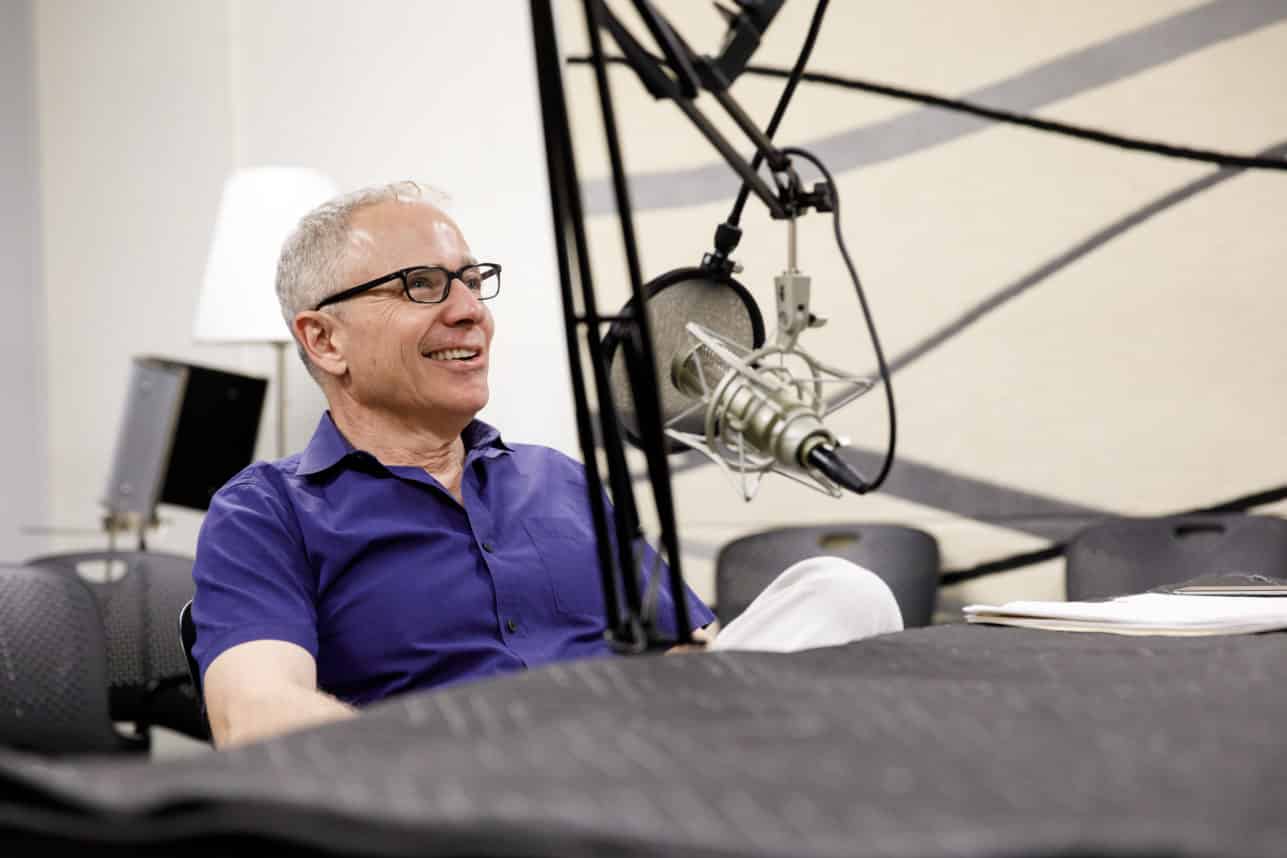
While many university presidents and administrators run colleges from a strictly business or educational mindset, Lorne Buchman runs college like a director would run a theater production. Since 2009, Buchman has been president of ArtCenter College of Design in Pasadena and uses his theater background to inspire and engage with the students, faculty and staff. He also hosts the podcast “Change Lab: Conversations on Transformation and Creativity,” where he speaks with leading artists and examines what fuels their work. Season 7 of the podcast will return Sept. 23 and is dedicated to amplifying voices of Black artists and designers.

Buchman told the Journal he not only looks at running a college through a creative lens but at all elements of his life that way. A member at IKAR, he says the environment sparks creativity in him because “the work they do to inspire the community is equivalent of great design.” Even the Toronto native’s love for hockey is theatrical —a Shakespearian tragedy if you will — as he holds out hope for the Maple Leafs to win the Stanley Cup (the team’s last Cup victory was in 1967).

The conversation below with Buchman took place before the pandemic and mandatory lockdown.

Jewish Journal: It looks like you’ve found a home at ArtCenter. What’s been the best part of overseeing this campus?

Lorne Buchman: For sure, the people. Of that community, it’s the students. They are amazing. They are gifted and talented and brilliant and they come with an openness and willingness to absorb creative education and it is amazing to see them grow. It’s a gift to be here.

JJ: How often are you in your office versus walking around campus?

LB: I make it a point to walk around and engage. With regularity, I do something called “Lunch With Lorne” and it’s just an invitation for everyone to get in this room and have a meal together and just talk about whatever we want to talk about. We do it three times a year and it’s my favorite time.

JJ: How has your theater experience helped you be a strong president?

LB: I will argue that being a theater director is the greatest training for being a college president. That’s because the processes are pretty much the same. When you’re a director, you have an idea, a notion, you are working with a text, and you engage with a community of actors, designers and the like and through that process, it begins to take shape and you build your ideas. It becomes a community conversation. 

The work of the director then is to slowly give the work over to the performer to enable the most important part, which is between a spectator and a performer. When spectators are watching a play, nobody’s really thinking about the director in that moment. So, at that point, the director has created a space to allow something to happen and move it forward. Being a college president is the same thing. I come in and I work with a community of people: staff, faculty, students. My work is really about handing it over to them to enable the most important moment and that’s between a teacher and a student.

JJ: Your podcast, “Change Lab,” is now in its sixth season. Why did you decide to host one?

LB: There are so many interesting people that I come across in my work here and so many interesting questions that we’re wrestling with, it only seemed fair to share it. It’s certainly my responsibility as college president to be able to communicate or reach out to the public with what happens here. What are the things that we care about here? What are the issues we care about? What are students saying? What are faculty saying? What are artists in the community saying about certain topics and experiences and how can it help artists?

JJ: What do the students think?

LB: Different students will attach to different things. If you talk to photographer Matthew Rolston, the photography students will go there. If you talk to Yves Béhar, industrial design students will listen to that. I have heard that there are a number of students who listen all the time. The truth is, a lot of students at ArtCenter barely have time to brush their teeth so I don’t know how many podcasts they’re listening to. But the student engagement has been really good.

JJ: What podcasts did you listen to in order to figure out how to form your own podcast?

LB: I learned a lot from (journalist and author) Krista Tippett in her “On Being” podcast. I try to trace childhood with who [the guests] are as artists today and she does that often by mentioning “spiritual upbringing.” If there is any model it would be her.

JJ: Who haven’t you interviewed yet that you would love to?

LB: [Los Angeles] Mayor [Eric] Garcetti. Our students were part of the Sanctum Project, which is his effort to address homelessness in a meaningful way. Our students did some projects there and it was showcased at our space in downtown Los Angeles. What I would like to do is have a conversation, kind of roundtable style, with students who did the work with a faculty member and the mayor to talk about the project. But there are so many.

JJ: How does art and Judaism tie into your life? 

LB: Judaism to me is fundamentally about generating questions, rich and important questions. Art and design are about generating important life questions, too. That’s the root of it. It’s not so much answering them as it is to address them and engage with them, often leading to other questions like in great talmudic fashion. Listening to dialogue, debating, all those things that are so integral to Jewish thought are also fundamental to art and design.

ArtCenter President Lorne Buchman on Overseeing College Like a Theater Director Read More »

2 Suspects to Stand Trial in Killing of Paris Holocaust Survivor With Anti-Semitic Motive

(JTA) — Two men who allegedly killed and robbed a Holocaust survivor in her Paris apartment more than two years ago were ordered to stand trial on charges that the crime had an anti-Semitic motive.

French judges issued the order on Monday, AFP reported.

The charred body of Mireille Knoll, 85, was discovered in her apartment on March 23, 2018.

Paris prosecutors in May said there was enough evidence to order a trial on charges that the murder was aggravated by anti-Semitic hatred.

Yacine Mihoub, 28, a son of Knoll’s neighbor who had known her all his life, and his friend Alex Carrimbacus, 22, were indicted in May. Carrimbacus has a history of psychiatric problems.

Carrimbacus had said during questioning that he and Mihoub targeted Knoll for robbery because she was Jewish, a claim denied by Mihoub. Both men have pleaded not guilty.

Knoll, who escaped deportation to a Nazi death camp when French police rounded up Jews in Paris in 1942, was stabbed 11 times before her apartment was set ablaze by the perpetrators.

“As I’ve always maintained, Madame Knoll was killed both because she was an old person unable to defend herself, and because she inspired a particular hate because of her Jewish origins,” Gilles-William Goldnadel, a lawyer for the Knoll family, told AFP.

Lawyers for Mihoub told AFP that the judges “were unable to resist the pressure of public opinion.” He also said that “except for the statements by Alexandre Carrimbacus, nothing justifies an anti-Semitic motive in this case.”

2 Suspects to Stand Trial in Killing of Paris Holocaust Survivor With Anti-Semitic Motive Read More »

Support for Annexation on a Scale of 1 to 6

July 1 came and went, and the plan for Israeli annexation is still not clear. It might happen soon or it might not happen at all. Well, at least not for the time being. The reemergence of the coronavirus has changed the government’s priorities and the public was never all that interested in annexation to begin with. They might have supported it on principle but they were less than enthusiastic about it.

Here is some more information on annexation and some new data.


Public Opinion 1

Two weeks ago, I explained why all Israeli public opinion polls on annexation are problematic:

The real problem is not with surveys but reality. No one can pose a good question and get a clear answer when the actual situation is so vague. You can ask a question like: “Are you in favor of the annexation of Ma’aleh Adumim” and receive a meaningful answer. But you can’t ask, “Are you in favor of annexation somewhere, under certain conditions, sometime,” and receive a meaningful answer.


Public Opinion 2

I recently received another batch of data gathered by the aChord Center at the Hebrew University of Jerusalem from an annexation study. It attempts to present the level of support for annexation on a scale of 1 to 6, with 1 being no support and 6 being strong support. It presents its own methodological problems, because it is not exactly clear if those marking, for example, 2, intend to state very weak support for annexation, or less than strong opposition to annexation. I am not sure I agree with the way the researchers interpreted the results (they considered 1-3 as opposition and 4-6 as support). Nevertheless, the outcome is interesting.

The rank from 1-6 for Jewish Israelis (almost all Arab Israelis oppose annexation):

The authors of the study believe that these numbers show a majority who oppose annexation (63% among Jews, 69% among Jews and Arabs combined). I think this is an overstatement but agree that it shows a lack of enthusiasm for annexation. If there is support, it is weak support, except for a small share of the public. Note how few people marked their support at 6).

The right wing, as calculated in this study, is 48% of the Jewish population. But even among right-wingers, annexation does not garner great enthusiasm. Less than 1 in 5 mark their support at 6.

And what about Likud voters? If I were the prime minister I’d be disappointed by this response. 5 and 6 combined is just slightly above a third of Likud voters.

Support by age group. What is shown here is that as Israelis age, their strong opposition to annexation (1+2) grows. Strong support for annexation (5+6) is not as age-related as strong opposition.

I assume — and am waiting on data to back this up —  that the more Israel must return to dealing with COVID-19, he less support for annexation should be expected.


For / Against Annexation

In three recent episodes of Rosner’s Domain Podcast on annexation:

Efrat Mayor Oded Revivi, explains his support for annexation as a settler and a leader. A few weeks ago I explained here that many settlers oppose annexation.

Historian Yoav Gelber described in detail the root cause of the Israeli-Palestinian conflict, as a background to the debate about annexation.

General Mike Herzog analyzed the situation from a policy maker’s perspective.

In this article, I explained why and under what terms I support annexation.

Having been convinced of the feasibility and desirability of annexation, two questions remain: where and when? Let’s begin with geography… Restraint is key to ensure annexation does not risk the character of the Jewish state. Israel must not annex the areas where millions of Palestinians live.

Timing also is important. The Israeli government argues that there is now an opportunity that should not be missed… I see no need for such haste. The West Bank is not going away and neither is Israel or its control of the territory. The settlements keep growing. Israel can annex territory now, or in six months, or in five years, or in three decades.

Here, I explained that if Israel annexes territory it is still not the end of the world (or the prospect for future peace):

The opponents of annexation argue that it is an irreversible move that makes negotiations impossible. They are half right. Annexation will anger the Palestinians and make them feel outmaneuvered and ignored. They will be in a weaker position and even more skeptical about Israel’s willingness to make compromises and to sanction sovereignty of any sort for Palestinians.

Then again, they are only half right. Such a result is not an inherent component of annexation. It is an emotional response to annexation — a Palestinian choice rather than a necessity.


Annexation in the Media 1

Hirsh Goodman’s July 3 article in The Atlantic gained a lot of attention. Goodman left apartheid South Africa to settle in Israel, and makes the case against annexation as a move toward apartheid. But the most important sentence in his article is this:

If Israel annexes part of the West Bank in early July and denies the Palestinians who come with it equal rights, I will confront one of the deepest dilemmas I have had to face since 1965, when I migrated to Israel from apartheid South Africa.

What if Israel annexes these parts and lets the Palestinians who live there become Israeli citizens? That’s a possibility and renders Hirsch’s argument irrelevant.


Annexation in the Media 2

Shibley Telhami is a master of writing survey questions in a way that ensures the response he wants (usually one critical of Israel). Here is the way he framed the question about the Trump plan in a survey that is supposed to tell us what Americans think of annexation:

The Trump plan envisions Palestinian control over about 70% of the West Bank and Gaza, which were occupied in the 1967 War, in addition to some territorial exchange. According to the plan, the Palestinian territories will be fragmented but connected through passages and Palestinians would have no control over territorial water, air, security, borders, and no right for alliances with other countries. In your opinion, what would you call an entity with those characteristics?

Instead of explaining why this wording is so problematic, here is the same question proposed differently:

The Trump plan envisions Palestinian control over about 70% of the West Bank and Gaza in addition to a large territory connected to Gaza in the Negev desert. According to the plan, the Palestinians will have a flag, their own currency, an anthem and a democratic government elected by Palestinians that controls the entire area. The territory will be demilitarized and arrangements will be made to prevent terrorism and ensure peace for both the Palestinians and Israel. In your opinion, what would you call an entity with those characteristics?

Got the idea?


Support for Annexation on a Scale of 1 to 6 Read More »