HBO Max premieres “Expecting Amy” on July 9, a three-part documentary about comedian Amy Schumer’s high-stakes special during a high-risk pregnancy. Schumer, who made a name for herself satirizing a promiscuous airhead, has not shied away from motherhood onstage, even though it might clash with her brand. Her most recent stand-up special, “Growing,” featured her extremely pregnant and as vulgar as ever, and left her certified fresh on Rotten Tomatoes. “It proves that even on the precipice of motherhood, she is still the daddy of carnal standup,” raved the British newspaper The Guardian of the performance.
The series peels back Schumer’s self-proclaimed bimbo image and no longer addresses pregnancy through feeling bitter about sharing the moment with Meghan Markle.
“Expecting Amy,” which Variety dubbed “a poignant sort of reclamation project,” is not just a highly anticipated release, but a milestone in a greater comedy trend: Jewish mothers taking space and laughs for themselves. Jewish mothers have always been comedic, but they usually are the butts of jokes. The trope is so ubiquitous that in 2001, it warranted its own documentary: “Mamadrama: The Jewish Mother in Cinema.”
“I have to admit, much to my sadness, that the Jewish mother figure has not had a fair deal and that the overriding portrayals are very negative,” film historian Patrician Erens says in the documentary. “Not too often is she the main character. Quite often, she’s the mother of the main character, who almost invariably turns out to be a male … she’s pretty much the fantasy of the male writers and directors who dominated film production for the past 25 years.”
Erens characterizes the Jewish mother stereotype as manipulating, suffocating and always telling her child what to do. We’ve seen these Jewish mothers in sitcoms and in the sets of male Jewish comedians. If you Google “comedian,” you’ll be bombarded with male Jewish faces: Mel Brooks, Adam Sandler, John Stewart, Billy Crystal, even 1950s legend Lenny Bruce. These men often have used their mothers as fodder for laughs. Woody Allen claimed his mother infected him with neuroses, while Larry David had a storyline on “Curb Your Enthusiasm” where his mother died, and a martyr until the end, refused to let his father bother him with the news.
Jewish mothers are not just revolutionizing comedy but the industry itself, making it more inclusive for all mothers. Schumer laying bare the physical and emotional anguish of working while pregnant will no doubt change the cultural conversation.
“You were in New York, you were having a good time. So we didn’t call,” David’s father explains, very matter of fact, before telling his son he missed the funeral. “The last words she said to me is, ‘If anything happens to me, you don’t bother Larry.’ ”
There’s no denying these jokes are funny. But the dynamic of a neurotic man coping with his Jewish mother’s antics have become like gefilte fish — always on the table, but no one really is rushing to devour it.
Amy Schumer Photograph by HBO Max
Fortunately, Jewish moms like Schumer, who were once the material, have become the premier comics of this age, bringing their maternal perspectives into the narrative. Jenny Slate made waves with her abortion comedy “Obvious Child,” while Amy Sherman Palladino (who is childless) made the Jewish mom the new face of comedy in “The Marvelous Mrs. Maisel.” “Crazy Ex-Girlfriend” is played by Jewish mama and Golden Globe winner Rachel Bloom, who composed numerous musical numbers addressing the stereotype. At 74 years old, comedy icon Bette Midler is still going strong, spanking President Donald Trump with her sassy tweets. She also showed off her comedy chops as an overbearing (and clearly Jewish) campaign manager, Hadassah, on the most recent season of “The Politician.”
While the original Jewish mom turned comedian — Joan Rivers — is no longer with us, Fran Drescher arguably reinvigorated her apologetic tastelessness and dragged back into the Hollywood lexicon the original unconventional mom in “The Nanny.” In 2020, she shot back onto the scene in “Indebted” as a down-on-her-luck Jewish mother who needs to be taken in by her children.
And these are just the onscreen Jewish mothers. In the writer’s room, “Grace and Frankie” showrunner Marta Kauffman has three kids and finally has given voice to the hippy, politically rebellious Jewish mom via Lily Tomlin. Nine-time Emmy-nominated executive producer Jenji Kohan — who also has three children— showed us the diversity of Jewish women in “Orange Is the New Black.” In the series, Black Cindy, a teen mom who converted to Judaism while incarcerated and renamed herself Tova, delivers one of the most moving monologues about Judaism on television.
Jewish mothers are not just revolutionizing comedy but the industry itself, making it more inclusive for all mothers. Schumer laying bare the physical and emotional anguish of working while pregnant will no doubt change the cultural conversation, like her previous work on womanhood has.
In addition, the showrunners of Netflix’s “GLOW” — Carly Mensch and Liz Flahive —are transforming television’s male-dominated work culture by making it more accessible to moms. Every day is “take your child to work day” in their writer’s room, where there is a designated playroom for their young children, which is open to all of their staff’s families. Kohan, who also is a producer on the show, has made the resource available for all her writers, as well.
Gone are the days when your Jewish mother was something for male comedians to laugh at. Now, they are out there, changing the landscape of comedy — and that is no joke.
(JTA) — Lt. Col. Alexander Vindman, the Jewish National Security Council staffer who was among the first to raise flags about President Donald Trump’s pressure on Ukraine to investigate a political rival, is retiring from the U.S. Army amid allegations by his attorney that “he was bullied by the President and his proxies.”
Vindman made the announcement in a tweet, which did not mention the allegations.
The news of Vindman’s retirement was first reported by CNN, which cited the claims by the attorney, David Pressman.
Pressman told CNN that Vindman would retire after more than 21 years of military service because he did not feel that he could advance due to political retaliation from the president and his supporters.
“The President of the United States attempted to force LTC Vindman to choose: Between adhering to the law or pleasing a President,” Pressman said in a statement to CNN. “Between honoring his oath or protecting his career. Between protecting his promotion or the promotion of his fellow soldiers.”
In February, Vindman was removed from his position as an expert on U.S. policy in Ukraine at the National Security Council. Vindman’s twin brother, Lt. Col. Yevgeny Vindman, was asked to leave his job as a White House lawyer on the same day.
Both Vindmans, who immigrated with their father from Ukraine in 1979, were reassigned to the Army. Their removal came just days after Trump was acquitted by the Republican majority U.S. Senate in an impeachment trial.
Vindman testified in November before the House Intelligence Committee hearing on Trump’s impeachment about a July 2019 phone call between the president and his Ukrainian counterpart, Volodymyr Zelensky, during which Trump repeatedly pressured Zelensky to launch politically motivated investigations that would help Trump’s 2020 campaign. Vindman was listening in on the call in his official capacity with the National Security Council.
During his testimony, Vindman said that his father, who in the 1970s fled from the former Soviet Union with his Jewish family, “feared that his speaking out would bring retaliation.”
Vindman said at the hearing: “Do not worry, I will be fine for telling the truth.”
In recent weeks, allegations have surfaced that Trump was attempting to prevent Vindman’s upcoming promotion to the rank of colonel, according to CNN.
An unnamed source told CNN that senior Army officials informed Vindman that he would not be allowed to work in his area of expertise, which includes Ukraine. The source also said that a senior officer joked that he could be sent to “man a radar station in Alaska.”
July 1 was a date some Israelis were looking forward to. For the past few months, most Israelis have been speaking about one thing, (well, except for the coronavirus) —annexation, aka, instilling Israeli law in much of the West Bank or Judea and Samaria. Since the Six Day War in 1967 when Israel conquered the area, Israeli citizens have been living there in settlements under military rule. Annexation would change that permanently, and settlers would cease to be settlers. They would be living, de facto, in the state of Israel.
Of course, in Israel, nothing’s ever that simple. This plan split the country in two: those who prayed for annexation, and those who dreaded it.
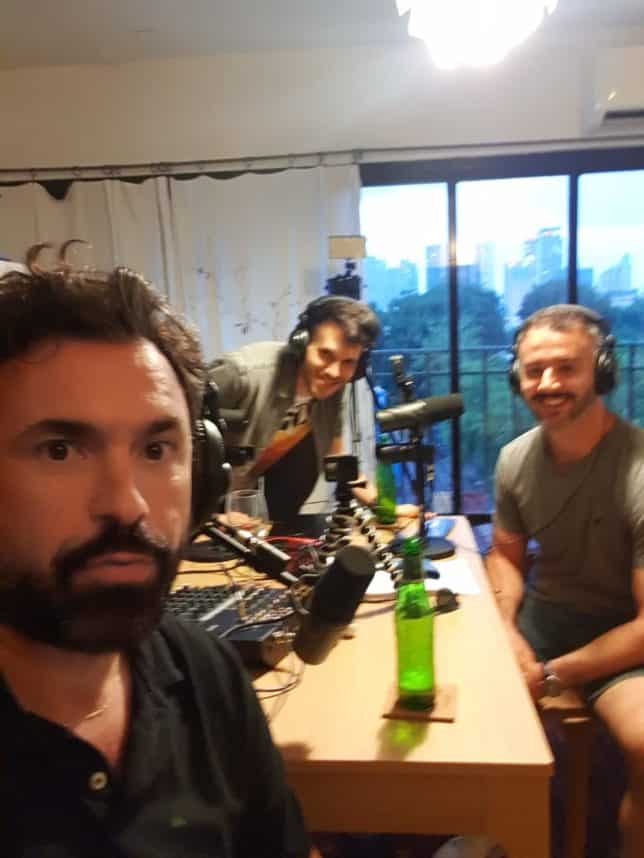
Uri Zaki is a political activist and a member of the Meretz party, one of Israel’s more left-wing parties. He is the founder of “The Front for the Protection of Democracy,” an organization that strives to be “the assaultive tool in the struggle for the Israeli democracy.” Zaki is also the partner of MK Tamar Zandberg, whom we had the please of hosting on our podcast (episode 34).
We’re happy to be joined by Zaki to discuss the Deal of the Century, democracy in Israel and much more.
Chances are you know someone who has lost their job or was furloughed since mid-March when the economy started to shut down in order to slow the spread of COVID-19. It could be a co-worker, a friend or a relative. It might even be you. More than 47 million people have put in new claims for unemployment benefits over the past four months. That’s more than 1 in 4 people in the workforce.
Twenty-one million people remain unemployed and are looking for work. Nine million people are out of work but have given up because they don’t think they can find jobs. There are 21 million Americans working part-time because they can’t find full-time work.
The damage to the workforce has been staggering. Although businesses are starting to call back some workers or hire new workers, there still is a long road ahead to get us back to where we were at the start of 2020. Our path to economic recovery will not be a straight one. Getting people back to work will take collaboration from many groups — business leaders, civic leaders, educators, nonprofits and jobseekers.
The 128-month economic expansion — the longest in our country’s history — ended in February and all the job gains made in the 10 years since the Great Recession have been wiped out. We’re now in a new recession.
Upskilling is key to rebuilding the workforce and, importantly, making certain unemployed workers are able to find good jobs and careers and a sense of purpose.
Workers Need to Adjust to the Changing Workplace The need to upskill the workforce is not a new concept. Globalization, automation and an aging talent pool have been changing the workplace for decades. More and more jobs, across many industries, are requiring new technical and digital skills, and employers have been sounding the alarm that jobseekers with these key skills are in very short supply.
Upskilling has been a growing concern for business leaders throughout the world, a point most recently made in the 2020 Global CEO Survey conducted by business consulting firm PwC. Still, many believed they had more time to train their current employees to meet the evolving demands of their industries, or that thereeventually would be a strong pipeline of skilled workers waiting in the wings.
What was expected to happen over the next 10 to 20 years has, instead, happened in just a few months. The pandemic has upended that timeframe.
Here is why it all sped up. At the height of the stay-at-home, work-at-home orders in April, two-thirds of U.S. workers were working from home at least part-time, according to a Gartner business survey. This gave employers a chance to examine how they might make their businesses more productive, and what tools and skills are needed in their workplaces, whether they remain remote or they return to brick-and-mortar environments.
Millions who have found themselves out of work have lost more than financial security; they’ve lost a sense of purpose and dignity.
Joe Fuller, professor at Harvard Business School and co-director of the school’s Managing the Future of Work initiative, is in regular touch with U.S. business leaders, talking to them about their workforce needs. “[Businesses] are actually learning a lot about the processes that underlie their business and how they might be improved. It’s everything from understanding how information flows in their organization and where it gets constrained in normal times. I think they’re finding that there are numerous processes that can be streamlined,” Fuller said.
One key to streamlining is upgrading technology. “I’m hearing that companies are going to — across the board — just accelerate their digitalization,” Fuller said. “By that, I mean digitalization of the customer experience, digitalization of their work processes. And that’s going to shift the types of skills that both entry-level workers and incumbent white-collar workers are going to have to have to remain productive and frankly, to keep their jobs.”
This means there are going to be some bigger, longer-term changes in the workforce in the coming months as the country tries to restart the economic engine. Even jobs we don’t historically think of as being technologically oriented will be impacted, such as jobs in retail and hospitality. These industries will be looking for workers with tech and digital skills that enable them to multitask in new ways.
“I was talking to a major retailer and one of the things they are working on is making sure that their front-line staff in stores are actually qualified to do several jobs that were historically separate and discreet,” Fuller said. “That worker can help in the loading-dock area getting product correctly sorted, and on electronically auditing the stocking of the shelves to see where there are gaps, as well as operate a cash register. Historically, there have been checkout people; there have been logisticians; there have been the people who work on the shop floor. That worker who can do all three of those is more valuable to that employer.”
Upskilling is key to rebuilding the workforce and, importantly, making certain unemployed workers are able to find good jobs and careers, and a sense of purpose.
Traditionally, these have been lower-skilled, lower-paying jobs and often held by people in vulnerable and disadvantaged communities. According to analysis from the Center of Budget and Policy Priorities, “More than half of all jobs losses [from the pandemic] have come from the low-paid group of industries” in the service sectors, including retail, recreation and personal services. The Center also stated, “Jobs in low-paid industries are disproportionately filled by workers who are younger, poorer, less-educated, and especially women, noncitizens and people of color.”
Accordingto Mark Zandi, chief economist for Moody’s Analytics, the most skilled, most highly educated and best trained are the last to lose their jobs, hours or income and also are the first to be rehired. “They’re going to be the most productive [right now] and it makes most business sense for employers to hire those folks back. And I’m sure that’s going to be the case here,” he said.
Photo from Flickr
There Are Many Paths to Upskilling for Today’s Jobs With advances in technology in the workplace, employees have had to become lifelong learners whether they know it or not. For many older workers, for example, there were no computers, no mobile phones, no Zoom calls when they started their careers. They adapted — learned on the job — as their jobs dictated.
Now, though, changes in the workplace are happening so fast, there is a need to actively teach jobseekers — new and old — the newest skills needed to be competitive as hiring picks up again. This is no longer an option. Employers and hiring managers will be looking for workers of all ages who can make the most of the tools they have.
WorkingNation is a nonprofit which focuses on unemployment. Its President, Jane Oates, is a former assistant labor secretary with Barack Obama’s administration and has spent her career at the intersection of workforce development and education. In a recent online webinar for the brokerage and banking firm Oppenheimer, Oates stressed the need for skills-based learning, emphasizing that employers want to know what you know over how you learned it.
“The skills-based learning movement started pre-pandemic but has gained momentum with the economic slowdown. Employers are starting to [write] their own job descriptions based on skills, and not [academic] degrees. Before, we would see bachelor’s degree required. Now, you’re going to see something more like data analytics skills required or data visualization skills required.”
So how do we ensure jobseekers are armed with these skills that make them hirable? There are several pathways, and many of them are proven effective.
Let’s start with higher education. It is always going to be a time-honored pathway to work, but it is having to rethink how it approaches its students and their career and job needs. “There’s no industry that’s going to be more disrupted by all this than higher ed. The economics [high costs] of higher ed were increasingly problematic,” said Fuller. “It’s going to still be a major component of the workforce [development], but it is not going to be so dominant.”
Many universities and colleges already offer work-based learning opportunities such as internships, but they could expand to more fields of study to be more effective. “An innovative leader is going to be able to pivot very quickly and say, ‘Let’s look at where we should get skills-driven,’ ” Oates said. She added that industry-recognized credentials should be embedded in the learning and attainable by taking a few courses. “We need a country that has artists and performers and philosophers, but we also need to get people jobs. Adding credentials across majors gives people a better opportunity to find work.”
Community colleges play a key role in preparing workers for jobs in local communities. By aligning themselves with employers, they are creating training programs that help new and mid-career workers adapt to changing workforce demands.
California has been particularly focused on classroom learning combined with on-the-job training. There is a high demand for technically skilled workers in traditional industries such as construction and manufacturing, as well as growing industries such as health care, information technology, transportation and logistics and energy. Last year, the state’s Community College’s Board of Governors awarded $10 million in grants to establish new apprenticeship programs aimed at meeting these labor needs.
The grants will be used to fund programs at the college system’s 115 schools, the biggest system in the country. California presently has 94,000 registered apprentices with the goal of increasing that to 500,000 by 2029.
Apprenticeships give employers a first look at talent and also gives them clear pictures of what individuals can do. There are thousands of nonprofits and for-profit organizations offering upskilling to in-demand 21st-century skills through a variety of programs of varying length at varying costs. Many of them lead to credentials that also may signal to a hiring manager whether an applicant has the skills needed for the required job.
Knowing which credentialing program is right for you can be daunting. In all, there are more than 738,000 unique work and education credentials, including diplomas, certificates, certifications, licenses and degrees of all types and levels in the U.S.
After the pandemic struck, organizations representing state leaders, including the National Governors Association, partnered with nonprofit Credential Engine to help jobseekers and students identify the most efficient and cost-effective pathways to secure the right skills and credentials that lead to good jobs. Credential Engine is free.
WorkingNation recently partnered with Atlanta Federal Reserve Bank’s Center for Workforce and Economic Opportunity and the Heldrich Center for Workforce Development at Rutgers University to examine pathways to an effective and equitable recovery for everyone who is unemployed.
Heldrich Center Director Carl Van Horn, an expert on workforce training, warned that the quality of the education training is extremely important. “One of the lessons from the Great Recession is there was a lot of what I would call over-consumption of not very good training, because people were desperate. Often, they grabbed, not a lifeboat, but maybe a life raft that sank. They got the wrong credential, and then what they’ve got is a worthless credential which they’ve spent a lot of time on, and then it doesn’t actually relate to a job.”
Oates added, “We’re going to have new jobs being developed, not only jobs that are growing, but new titles that didn’t exist before or we weren’t aware of before. So I hope that we really follow that lead and not just train people on how to do what they already did better, but look at real, in-demand opportunities and train them moving forward.”
The most skilled, most highly educated and best trained are the last to lose their jobs, hours or income.
These are very practical words of advice about how to help prepare unemployed workers to be competitive in the new workforce shaped by ever-changing technology and now, COVID-19. There is another reason to make certain the economy is working again: the psychological and spiritual toll of being unemployed.
Photo by Getty Images
A Job Is More Than a Paycheck Most people need a job in order to feed their families, pay their rents or mortgages and pay other bills. Millions who have found themselves out of work have lost more than financial security; they’ve lost a sense of purpose and dignity.
“When you meet someone new, what is the first thing you ask them? Most likely the answer to that question is, ‘What do you do for a living?’ ” Rabbi David Wolpe of Sinai Temple in Los Angeles said. “It can be difficult to interact with someone when you have to answer the question [with] ‘I don’t have a job.’
“Somebody who isn’t ‘doing’ in the sense that the questioner expects them to be doing is immediately put in this place where they have to either make some excuse, or they have to allow themselves to feel the judgment of the person, even if the individual asking doesn’t feel it,” Wolpe said.
“In theory” he said, “all of our religions teach that a person and their being gives purpose, as opposed to their doing. You have to try and remind people of that. And yet, it’s almost impossible for any of us to separate how we feel about ourselves from the role we play in society.”
Wolpe concluded with a challenge. He said society needs to explore the “nature of employment and what it means to someone spiritually and psychologically and how we think of it from the outside. I think that that’s essential right now, when we’re facing the greatest unemployment crisis in American history.
“Part of what I think we need to start doing is to understand that, while work is integrally tied to one’s sense of self-worth, the shock we’re about to endure — that we have to take care of as a society — we’re going to have a psychological and spiritual fall that’s going to be even greater than the fall in employment numbers.”
Ramona Schindelheim is editor-in-chief at WorkingNation.
Israelis have every right to be angry, and they are. They’re angry with a government that was formed after wasting a year on campaigning; that was formed to address an emergency situation; that was supposed to focus on what was important and failed to rise to the occasion.
With the outbreak of the coronavirus, Israel’s response was immediate, measured and as good as one can expect in a murky situation where information is scarce. In April, the country was in relatively good shape but there were reasons to worry. Our politicians seemed too celebratory, almost smug. They often failed to serve as proper models for responsible behavior. Prime Minister Benjamin Netanyahu had his son over for seder night, while other Israelis were asked to keep their families away. A prospective minister attended a party when parties were not allowed. The health minister didn’t follow the instructions of his own ministry.
In short, our leaders failed to realize that in a time of crisis — when public trust is key — they must set an example. They have been spoiled, self-centered, detached from the public. When Israelis were losing their jobs, our politicians created more jobs for themselves by establishing new ministries, adding more positions and passing laws that benefit the parties. Yes, they also dealt with the crisis but at times it seemed like a sideshow to their real interests: playing politics, preparing for another round of elections, fighting one another, playing an exhausting blame game.
Our leaders were thoughtless. Even worse, they were and are undignified.
While our politicians were playing politics, the virus spread. The leaders blame the public. They have a point: The public wasn’t listening to them. The public forgot the rules and resumed normal summer partying. However, the public behaved this way because of its leaders. Their recklessness set the tone. Their smallness made us all smaller. We suspected their motivations, we questioned their good judgment, we ignored their advice and we dismissed their concerns.
And now we are angry with them — and possibly ourselves. We were foolish when we didn’t wear masks in public places. We were foolish when we sent our children to school as soon as schools reopened. We were foolish when we went to bars or parties or reopened synagogues. We were foolish to engage in meaningless discussions about things as negligible as annexation, and Netanyahu’s trial and the daily brawl between the attorney general and Likud members of Knesset, and the “Norwegian Law” (aimed at adding more politicians to the ones we already have).
Our leaders were thoughtless. Even worse, they were and are undignified. They take credit but not responsibility. They make demands but give themselves exemptions. They ask for sacrifice but sacrifice nothing. Had they not been my leaders, I would just call them bums.
So here I am. Angry. Again.
On the one hand, my job as a writer is to tell the story as I see it,to report the facts, explain the dynamics, analyze the possible consequences, on the assumption that the truth serves the interests of the public. But when a plague hits, it is not clear that the truth plays such a role, and as a writer, I’m trapped. If I tell the story as I see it, I might make people less trustful ofour reckless government, thereby worsening a situation I’m aiming to improve. If I tell people to trust the government because that’s the only way for a country to deal with a plague, I betray my vocation of being a truth teller.
Did I choose correctly? Here’s one reason I’m angry: Had my government been responsible, I wouldn’t have to make a choice.
My friend Rabbi Adam Kligfeld recently posted something on Facebook that resonated with me:
“The more I check in with others in my life/community, and with myself, the more this realization becomes clear: even we among the very, very blessed in this world/moment are still struggling in meaningful ways. It is amazing … one can have [a] roof, and health, and funds in the bank, and not just work, but meaningful work … and still feel the confining, reducing, limiting and imprisoning parts of this era/phenomenon.”
I know what you mean, rabbi. We’re living in a confusing and bewildering time. Many of us try to cope by putting up a stoic front, but that can get exhausting. Your post reminded me that it’s OK to ’fess up to reality, even if it means exposing our vulnerabilities.
So, how bewildered are we?
First, there is the guilt factor. When I go on my daily walks under the beautiful California sun, I have moments of pure bliss. But that bliss is tainted by the knowledge that more than 130,000 people already have lost their lives to COVID-19, and millions more have lost their livelihoods. How can I experience happiness when so many others are living in grief and misery? Often, I find myself sinking into melancholy in an awkward attempt to show empathy toward victims I will never meet.
Often, I find myself sinking into melancholy in an awkward attempt to show empathy toward victims I will never meet.
There is also confusion. While the authorities were imploring us to socially distance, they were effectively silent when millions across the nationmarched shoulder to shoulder during the protests. This opened the floodgates — temporarily. A few weeks ago, there was excitement in the air as places started to reopen. After months of quarantining, we could enter, for example, some of our favorite restaurants on Pico Boulevard. I went to Pats one night, and although the masks and social distancing gave it a different look and feel, there was something reassuring about returning to the familiar.
That didn’t last. Apparently, it was too much too soon, and now we’re back to a general lockdown.
Speaking of confusion, I read in the Washington Examiner this week about Stanford University’s disease-prevention chairman, Dr. John Ioannidis, who questioned whether the rate of infection and mortality rate were worth shutting down the U.S. economy for months. “For people younger than 45,” he said, “the infection fatality rate is almost 0%. For 45 to 70, it is probably about 0.05%-0.3%. For those above 70, it escalates substantially.”
Because of the lockdown, Ioannidis said, “Major consequences on the economy, society and mental health have already occurred. I hope they are reversible, and this depends to a large extent on whether we can avoid prolonging the draconian lockdowns and manage to deal with COVID-19 in a smart, precision-risk targeted approach rather than blindly shutting down everything.”
Like I said, confusion − or at least complexity.
There also is fear. I’m constantly on the phone with family members, worried they may not be taking proper precautions. I’m particularly worried about my 87-year-old mother who lives in Montreal. I’m pestering her the way she used to pester me.
I think a lot about loneliness. How many people, especially the elderly, have been plagued by the inability to see and hug their loved ones, outside of Zoom and Facetime?
Searching for meaning is one of life’s great blessings, because it is deeply rewarding and works under any conditions, however painful, however bewildering.
And did I mention awe? In the news business, we’re constantly measuring the “bigness” of a story. Of course, in the era of the 24-hour-news cycle, big stories come and go. Not COVID-19. This is the story of stories. Even when the protest movement took over the airwaves recently, the coronavirus never left. Now, it’s as dominant and epic as ever, and it’s not going away anytime soon. Eric Toner, a senior scholar at the Johns Hopkins Center for Health Security, said in an interview on C-net, “I think that mask wearing and some degree of social distancing, we will be living with … for several years.”
The near-biblical scope of COVID-19 also has shaken our rock-solid faith in real estate. Our beloved cathedrals of human connection — synagogues, museums, restaurants, theaters, offices, gyms, etc. — have become venues of potential infection. Our virtual technologies are miraculous, but they’re no substitute for the real thing — for meeting real people in real time. The halting, clumsy efforts to reopen our physical spaces only reinforce the pervasive power of the virus and how it has humbled us.
Novelist Ben Dolnick, in a recent piece in The New York Times, wrote that since March, the human race has been living “inside a set of massive parentheses.” It was his way of describing a life suspended in time. Until God or a vaccine “blesses us with an end-parenthesis,” he wrote, “we are stuck here.”
But while we’re stuck in this state of anxious limbo, we can struggle, as Rabbi Kligfeld says, in meaningful ways. How can we find meaning during the most confusing, confining, isolating and devastating event we have experienced in modern times? The answer may differ for each of us, but the silver lining is the same: Searching for meaning is one of life’s great blessings, because it is deeply rewarding and works under any conditions, however painful, however bewildering.
As Dolnick reminds us in his piece, “Our whole lives are a parentheses!”
Ever since my husband and I started to attend Knesset Israel two years ago, we never missed services on Shabbat morning.
Then came the shelter-in-place orders and, suddenly, we had to daven at home. I was consistent about praying but it just wasn’t the same, with our baby daughter crying for me and our new puppy nipping at my toes.
Now that we’re praying with a physically distanced minyan in a backyard, it’s much better than doing it alone. Although a backyard is nice, nothing can compare withwalking into our shul and feeling those holy vibes and the energy of the many Jews who were there before us. I look forward to the day we can go back.
Thankfully, though, I’ve found a new way to connect, in the unlikeliest place: the Pacific Ocean.
It’s funny, because just a few months ago, I complained to a friend about how the ocean is freezing and filled with gross seaweed. The waves are massive and you come out feeling like you’ve just been through a war. I told her how I missed the warm and calm Atlantic waters from my childhood.
But then, when COVID-19 hit, and I faced going to the local mikveh or finding a natural body of water, I chose the latter.
I was frightened. Last summer, I went to the beach in Oxnard and came out of the water with the chills. To keep myself calm leading up to it, I thought about how the mind is more powerful than the body. I was just psyching out myself. I’d gone in cold water before and survived and I could do it again. I’d just given birth — could it be harder than that?
There is nothing more fulfilling than floating in the ocean at sunset.
When I got to the ocean, I was already freezing just standing on the beach. With my husband’s encouragement, I ran in, said my blessing and came out shivering. It was rough for a good five minutes but then I felt euphoric. I smiled underneath my mask for the next hour. I was refreshed and relaxed and happy. I wanted more.
As soon as the beaches reopened, my husband, daughter and I started to explorenew ones every week. It’s become our ritual. Each time, the same thing happens: I don’t want to go in. I dip my toes and feel how chilly it is. I rush to the safety of the warm sand and then tell myself, “I have to do this.” I wait for the nod from my husband, pray to HaShem for strength and jump in. It’s painful for a good 20 seconds but then it’s wonderful.
When I’m in the water, I thank HaShem for the magnificently beautiful Earth. After months of isolation, I’ve finally found my freedom. Swimming in that icy cold water makes me feel more rejuvenated than a good night’s sleep, more energized than I do after running and absolutely content with my life in the midst of so much craziness going on in the world. There is nothing more fulfilling than floating in the ocean at sunset, hearing the waves crashing down around me and smelling that fresh, salty air.
It gives me a sense of inner peace in a time when I’m freaked out by the fireworks exploding in my neighborhood, saddened by the boarded-up buildings around me and unsure about how long this pandemic will last. All the things I used to do, such as go to restaurants and shopping malls, were fun and I miss them, but they were a distraction from the splendor that was around me this entire time. I’d never go to the beach more than a few times per year pre-COVID-19, and now I can’t stop. I can’t get enough of HaShem’s amazing creations.
I always thought I had to be in shul to find HaShem. It turns out, He’s been everywhere all along.
Kylie Ora Lobell is a Journal contributing writer.
We all have things that we are ashamed of. If you’re reading this and you don’t think you do, seriously, you should be ashamed of that.
Some of the things that we are ashamed of are truly shame worthy. Some are voices in our heads, things that people have said or that society has succeeded in making us feel bad about.
There are things I’ve done in my past that I am ashamed of. Some things I should be ashamed of. Others just bring up silly shame. Shame is such an incredibly powerful feeling. There really isn’t a lot we can do about it.
But, if it’s something that is bothering you and you can change, change it. If it’s something you did in the past, you need to accept that you did it. Do not do it again and figure out what you need to do to move on. Not an easy task and incredibly easier said than done.
Before the pandemic I went to speak about The Advot Project’s work to a senior home for Jewish women. I brought a man with me to speak. He actually was not really a student of mine. He is someone I met through my work, through a sister organization that I love.
This man is a really wonderful person who every now and then does odd jobs for The Advot Project, mostly consisting of driving people and things from here to there.
I knew he had a compelling story. I thought it would be a good story to present to this older group of Jewish women that I had been asked to speak to. The event was about change makers. When they asked me to come to speak, I told them having just me speak was not enough. They should have someone who has totally changed come, too.
“Do you really think that is necessary?” the woman who was organizing it asked me.
With no shame I answered, “Absolutely. I don’t think I should come without someone who can talk about change firsthand.”
“Okay,” she said.
I could hear in her voice that she wasn’t totally convinced.
So, I asked this man to join me.
I waited for him outside the venue.
I haven’t seen him in a while. We shared a long embrace and caught up on each other’s news. When he told me that he is off parole, I was elated.
We walked in together and sat together.
I spoke first and talked about the work I do, and why I believe this work is so important.
I talked about being a facilitator to others making change. I made it clear that we provide the tools for the kids we work with to make the change in their lives.
I introduced my friend and told them I want them to hear about change from someone who totally turned his life around. Then he told his story.
He talked about being incarcerated for two decades. With his head bowed down, he talked a lot about his previous lifestyle and the crimes he had committed.
He talked about his shame, his deep sense of shame.
I started to think that maybe I shouldn’t have had him speak.
Usually when I bring people to share their stories, there isn’t this much shame. Although I had talked to this person in the past, he had never sounded like this.
“Young man,” one of the older women in the group said, “You have got to stop being ashamed. You are incredibly inspiring. Look how you have turned your life around and look at all the good you are doing now.”
He then told her that something changed for him recently when he got off parole. He feels free, but also, he feels the burden of his crime more because he is no longer being punished, if that makes sense, and he smiled.
This one is special; I knew it when I met him. He has such a gentle heart.He spends a lot of time giving back to society and he is working hard going to school.
I sat there a little helpless, ashamed that I didn’t talk to him more, that I didn’t know what was going on with him.
There was a moment of quiet and a woman got up. She had to be in her 80’s, if not older. She leaned on her cane and looked right at us sitting at the podium.
“Young man,” she said in a strong voice even though she was tiny.
“Number 1. You were given a bad deck of cards; you played the game that you were taught.
Number 2. You got caught, you sat in jail. You do not have anything to be ashamed of.
Number 3. You can feel bad for the people you hurt, but it sounds to me as if you are doing everything in your power to do the right thing now. That is lovely.
Number 4. You are young and strong. Use your shame to fuel the good you are doing.
I am 88 years old. There are so many things I could have done better and differently in my life. I have a big mouth. I am extremely moody. I have buried three husbands; I was only loyal to one. I stole my sister’s share of our father’s inheritance, but she deserved it. I then gave her the money back with interest.
We all do stupid things; we all do bad things. I am aware that some are worse than others, but no one can change the past.
We can only live in the present.
Believe me, I am around a lot of old people who wish they did things differently and guess what! They can’t! You, my friend, are truly inspiring! You could choose to be bad and mad and make money doing illegal things. You could choose to continue to be a bandit, and here you are going to school and being a mensch.
Did she teach you what being a mensch is?” She pointed to me and said, “You explain to him later. Take your shame, give it a good kick in the ‘tuchus’ (rear end) and love yourself.
Love yourself because no one else will. Well, maybe she will.”She points at me again.
“She loves everyone, but I’m not sure what that is about. Let me give you some advice. Shame will melt when it meets love. You must love yourself and let others love you. That will help you stop with the shame. Okay????”
She waved her cane in the air and she sat down as everyone clapped.
My friend stepped down from the podium and walked over to the lady and gave her a hug. Everyone in the room was standing and watching.
Shame on me for judging anyone and anything about this event.
We stood outside my car and shared a long laugh about what had happened. The event was a smashing success.
He asked me, “What is that word she said about me?”
“Mensch,” I told him.
“Is that a word you call people who were in jail?” he asked me.
I laughed out loud and told him, “No, no! A mensch is a good person, someone who is responsible, good hearted, dependable, and an all-around solid human. It is a Yiddish word for good guy,” I add.
“She said that about me?” he asked.
“Yes,” I said, “because you are such a mensch.”
Now he laughed and said, “I know a lot of people who wouldn’t think that about me.”
“Well,” I said, “it would be a shame if you listen to them and not what you heard today.”
He smiled at me. He really is a special mensch, this one.
I recently found out that he and the old lady exchanged phone numbers. He has been checking in on her during this crazy pandemic. She has checked in on him during the protests.
She told me on the phone that it is a shame that people don’t know how great he is.
“They should know. People are so stupid sometimes.”
(JTA) — Conservative news outlets, including some reporting on the Jewish community, were duped into publishing Middle East “hot takes” from fake columnists, the Daily Beast reported.
The news outlets, including The Jerusalem Post and Jewish News Syndicate, were among 46 publications that published opinion pieces by 19 nonexistent authors originating from a massive Middle East propaganda campaign that appears to have started in July 2019, according to a Daily Beast investigation published Monday.
The Jerusalem Post has removed the one op-ed that it published.
Jonathan Tobin, the editor in chief at JNS, told the Jewish Telegraphic Agency that the news outlet is investigating the six op-eds that it published, “but in the meantime those posts are being removed from our website.”
The purported writers were contributors to two news websites, The Arab Eye and Persia Now, which appear to be linked, and to be fake, including having a nonexistent mailing address, according to the Daily Beast.
The articles praised the United Arab Emirates and called for a more heavy-handed approach to Qatar, Turkey and Iran, according to the report.
Twitter has suspended the accounts of 16 of the fictitious writers in the wake of the Daily Beast investigation.