fbpx

July 1, 2020

‘Women of Valor’ Reminds Us Orthodox Women Are More Than Caged Birds Media Depicts

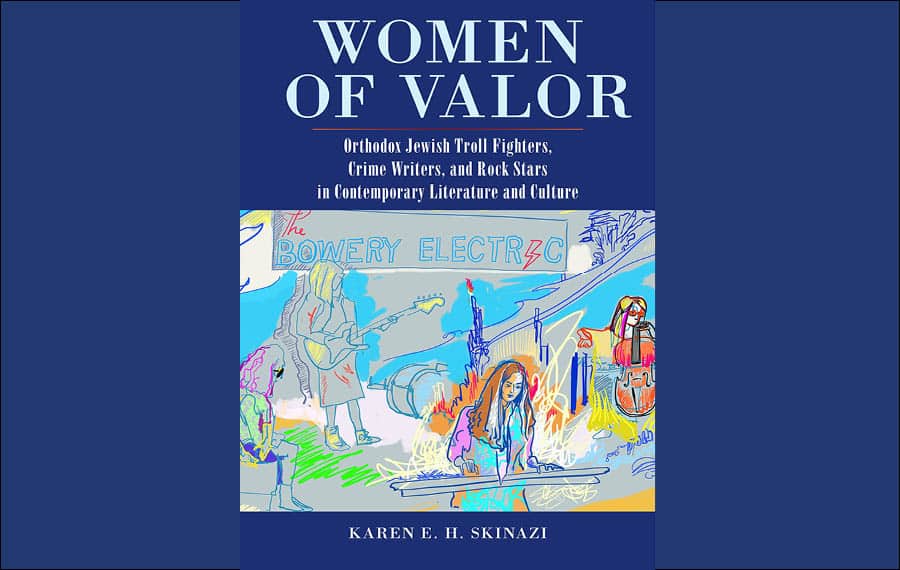
“In the age of reality TV,” writes Karen E.H. Skinazi in her book “Women of Valor: Orthodox Jewish Troll Fighters, Crime Writers, and Rock Stars in Contemporary Literature and Culture,” “everyone wants to know what’s going on with everyone — in their lives, in their homes, and in their beds.” It’s a statement with which it’s almost impossible to disagree.

From the excesses of “Keeping Up With the Kardashians” and the “Real Housewives of Beverly Hills” to the debauchery of the “The Bachelor,” in the past two decades, television has given us not merely a glimpse into the lives of others but a front-row seat for all of the most private and explosive moments in the worlds of people we might not otherwise encounter. That these moments are edited together by entertainment professionals goes without saying. Certainly, most viewers realize that. Still, many Americans regularly make popcorn and settle in on the couch for an evening of voyeurism.

The question is why viewers have such an insatiable appetite for bearing witness to the daily lives of others.

Many have speculated about the reasons behind this growing obsession. Is it that watching the train wreck that is so many of these people’s lives makes us feel better about our own lives? Are we bored and wish our lives were more glamorous and exciting? Or is it something more?

Somewhat new to this cultural phenomenon of wanting to peek behind the curtains is the growing fascination with Orthodox and ultra-Orthodox Jewish communities. Many have started to explore Jewishness as a religion in addition to simply a culture or ethnicity.

Regardless of what exactly it is that drives us to become voyeurs, the process almost always is wrapped up in a certain degree of sensationalism. Whoever is the subject of a show — be it a family, a group of wealthy women or a number of attractive singles stuck on an island together — must necessarily be painted in extreme strokes. But such depictions rarely show us a version of reality, despite the fact that we call it “reality television.”

Somewhat new to this cultural phenomenon of wanting to peek behind the curtains is the growing fascination with Orthodox and ultra-Orthodox Jewish communities. Many have started to explore Jewishness as a religion in addition to simply a culture or ethnicity. Over the past few years, documentaries such as “One of Us,” scripted shows such as “Shtisel” and films including “Disobedience” have brought us into the insular worlds of Orthodox and ultra-Orthodox Jews.

Most recently, “Unorthodox,” a Netflix miniseries loosely based on the real story of Deborah Feldman’s journey away from her Chasidic (Satmar) community — as recounted in her 2012 autobiography, “Unorthodox: The Scandalous Rejection of My Hasidic Roots” — has captivated countless viewers. And it’s not only Jews watching the show. Articles about the miniseries have appeared in contemporary mainstream publications such as Vogue, Elle, People, The New York Times and Esquire.

It seems everyone is talking about one Jewish woman who left her ultra-Orthodox community in the Williamsburg neighborhood of Brooklyn, N.Y., and fled to Berlin.
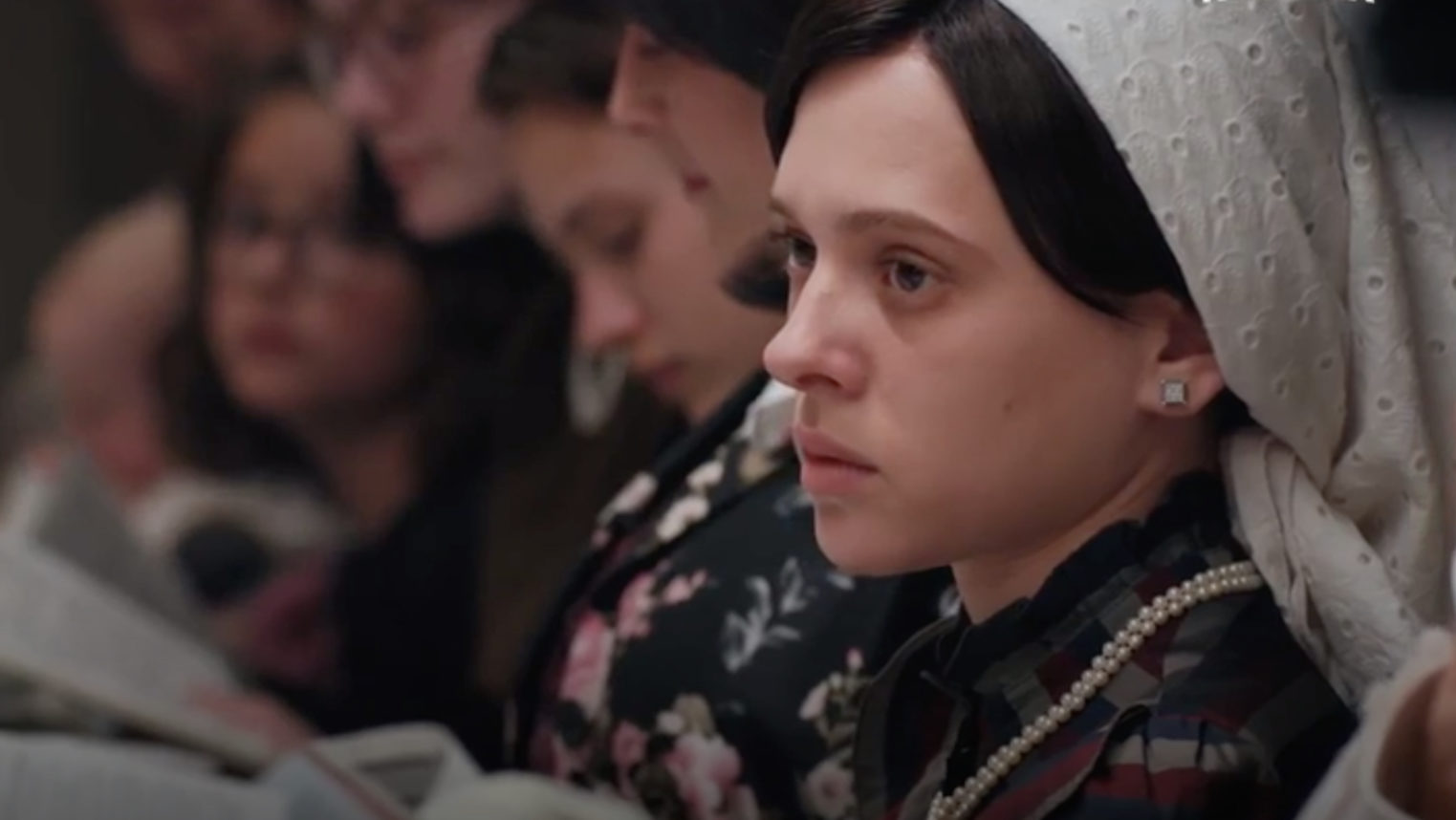
Shira Haas in “Unorthodox”; Photo courtesy of Netflix

Given how the community often is depicted in the miniseries, it’s not surprising people cannot seem to avert their gazes. It’s a dark and oppressive world that Esty, the protagonist, wants to escape. And when, halfway through the series, she wades into the water while wearing her noticeably frumpy attire, takes off her sheitel (wig) and lets it sink beneath the surface, we are awash with emotion. It’s meant to be a victorious moment, drawing on the classic trope of water as regenerative and life-giving, while symbolizing the beginning of a new and unfettered life.

But the accuracy of the show’s portrayal of Chasidic Jews has been hotly debated. Some see in the harsh depiction an echo of their own experiences, while others find them to be exaggerated in some cases and fabricated in others. In numerous scenes, Esty and her husband, Yanky, attempt to consummate their marriage. In every instance, they are completely clothed, and at times, Yanky harshly criticizes Esty’s inability to engage in intercourse with him — although we have watched her try, in agony, to fulfill her marital duty.

“Unorthodox” feels like a documentary at times, although it is only loosely based on Feldman’s story, which means some components are fictionalized. Like reality television shows, documentaries have become increasingly popular because they, too, give us an insider’s view into mysterious cases and communities. And the sheitel- and shtreimel-wearing communities of Orthodox Judaism can seem mysterious indeed. Chasidic and other ultra-Orthodox communities always have  been seen as insular, and groups that figure out how to exist with little connection to the outside world have always been seen as enigmatic at least, and suspicious at most.

But although it may be new to television and film, the fascination with Orthodox communities started in the world of literature. Orthodoxy was a driving force in Jewish-American literature of the late-20th century and beyond. It became, as Skinazi points out in her book, a strong subgenre of Jewish literature, one that also happened to be dominated by women.

Although stories of Orthodox communities were part of 20th-century American literature before the end of the century, the roles of women in these narratives were often one-dimensional, if they existed at all. Skinazi points out that in Chaim Potok’s “The Chosen,” for example, the lives of men and boys are “explored in depth and detail,” whereas the women are “almost entirely invisible but for those who appear as covered wombs.” Women here, often pregnant and always covered, are a backdrop for a male-dominated story of the complexity of Judaism and Jewish identity.

In many other 20th-century fictional accounts of Orthodox communities — for example, Henry Roth’s “Call It Sleep,” Pearl Abraham’s “The Romance Reader,” Abraham Cahan’s “Yekl” and Mayla Goldberg’s short story “Hair”— the wig, suggests Skinazi, becomes situated in the foreground. Female characters agonize over the wig and whether to remove it. The trope is pervasive enough that in Jewish literature, the wig becomes “anachronistic, oppressive, dehumanizing, and unfeminist.”

Skinazi’s point about the ways in which wigs figure into 20th-century Jewish literature is important. The pervasiveness of such a trope ensures readers outside of Orthodox communities see the wig as a way to understand female Orthodoxy. The wig has “a totalizing effect. Whether it desexualized or sexualized, whether it was desired (wrongly) or despaired, it was oppressive and obscuring — a denial of personhood.” In other words, although these narratives suggest one thing about women in Orthodox communities, there may be much more to the story.

Jewish fiction in America has continually transformed itself to fit contemporary contexts. Narratives of the 21st century offer what Skinazi sees as a much more nuanced depiction of the wig. Nathan Englander’s short-story collection “For the Relief of Unbearable Urges” is one of these. In a story called “The Wig,” Ruchama is a wigmaker and mother of six children. But she also is a breadwinner who helps other women of the community fulfill their own Jewish roles. According to Skinazi, here, Englander “begins to imagine the ways that head coverings might also liberate.” A symbol of modesty need not always be an obstacle to freedom and individuality.

But there is one more dimension to Englander’s nuanced depiction of the wig. Ruchama becomes so obsessed with creating the perfect wig that she ceases to perform basic work functions. She forgets to pay her bills. To hide her obsession, she potentially ruins her reputation by claiming that she is not making wigs but rather, philandering. But although this ultimately becomes a “cautionary tale,” it is also a “game changer.”

Englander’s more nuanced depiction of the Orthodox woman marks an important transition of her role in literature. She is not simply a “covered womb” but rather, a woman of initiative and independence. She starts and runs a business. She is a prototype of the “woman of valor” that Skinazi sees emerge in 21st-century fiction. On Friday evenings, Shabbos-keeping Jews all around the world recite the hymn of the eshet chayil, the woman of valor who has domestic and business acumen while being smart, kind and someone who cares for her community.

The woman of valor is no slouch, and it is this figure that forms the basis for Skinazi’s reading of Orthodox women in literature and film. “It is a message that we see again and again in the works of Jewish women writers and filmmakers,” Skinazi writes. Women can “buy fields, plant vineyards, go to battle, and support the distaff. Domestic work is not, and has never been, the whole of the ideal woman in Judaism, Orthodox or otherwise. The woman of valor is multitalented.” And this woman’s voice — the voice of the eshet chayil — is one Skinazi traces throughout her book. While it is one thing for secular Jewish or non-Jewish writers to explore the figure of the Orthodox woman, what does it look like to allow the Orthodox woman to speak? Furthermore, given that we have devoured literary depictions of Orthodox women created by secular or non-Jews for decades, are we also open to the Orthodox woman’s perspective of secular and other Jews? Or are Orthodox women “too confined and defined — too policed by their communities — to tell their own stories?”

Skinazi, citing the recent pervasiveness of news accounts of women’s subjugation at the hand of Orthodoxy, suggests there may be reason to think that they are, in fact, too confined by their communities. Yet, she also points out that while mainstream media representations of Orthodox women are indeed exploring the legitimate ways in which women sometimes are constrained by their communities, they are not all “sitting silently in their dun-colored, floor-length appropriately fastened clothing at the back of the bus or locked in their homes, despairing their helpless fate.” Many, Skinazi points out, live satisfying lives, and teenage girls often report suffering less from the self-esteem issues that plague their non-Orthodox peers. In other words, not every Orthodox woman suffers from oppression. Like women in every other group, Orthodox women do not share one monolithic voice, and we should refrain from imposing one on them.

Skinazi’s study takes us on a detailed journey through the sometimes subtle and sometimes not-so-subtle transitions and evolutions of the depiction of Orthodox women in literature. With the publication of well-known works such as Allegra Goodman’s “Kaaterskill Falls” — whose protagonist, Elizabeth Shulman, is a wife and mother of five children in addition to starting a kosher market — Orthodox characters no longer were just “cranky old men or force-feeding characters and aunts.” Nor were they part of the “proliferation of Gitls, condemned to their headscarves and modest dress” that had returned to haunt the Jewish novels of the 1980s.

That more recent literary depictions of Orthodox communities have been dominated by strong, independent women is a crucial point, and one Skinazi demonstrates artfully again and again in her exploration of the roles of such women in literature and film. She points out that in mainstream American popular culture and media, Orthodox women “have been represented as passive, limited, interpellated subjects in an oppressive patriarchal society.”

But, again, the eshet chayil is anything but passive and limited; her very construction is implicitly complex and nuanced, and we increasingly see this in literature, television and film depictions of Orthodox women. Even in the many “off the derech” stories (stories about leaving Orthodoxy) of the past two decades, Orthodoxy is not simply a “site of rejection,” but can also be a “site of acceptance, aspiration, embrace, and investigation.” These facets may not always act in complete harmony, but perhaps that is to be expected — and even celebrated.

In Naomi Alderman’s 2006 novel “Disobedience,” Ronit Krushka says, “I’ve come to a conclusion. I can’t be an Orthodox Jew. I don’t have it in me, and I never did. But I can’t not be one, either.” Even in stories about women who have left the community, we find a version of the woman of valor — a woman who understands the difficulty of being or wanting two things at once, even when they seem not to be in harmony with each other. And as Skinazi points out, while many Orthodox women of American literature have “suffered under the weight of their wigs and their wombs,” even if they leave Orthodox Judaism, they don’t reject it or its laws. Perhaps this, itself, is the epitome of the eshet chayil, the woman of valor, unfettered and unconstrained, walking among us rather than cloistered away.

In recent years, the purity of the Haredi world’s insularity has been punctured by the pervasiveness of technology .… It is the friction between the two worlds, bumping up against each other, that has nourished the tension, conflict and creation of compelling narratives.

Skinazi’s book is a thorough and engaging examination of all the ways in which Orthodox women have been imagined in literature and American popular culture of the past few decades. In it, we see not just the complexity of the figure of the Orthodox woman, but also the varied ways people from within and outside the community have represented her. Sometimes, these depictions say more about those outside the community than about those within it.

The last chapter of “Women of Valor” deals with how Orthodox women filmmakers — in particular Tobi Einhorn and Robin Garbose — have responded to mainstream depictions of them. Given the “empowered Orthodox women that the American Orthodox film industry features,” it is clear many within the community reject and resent these widespread representations. In such films, Orthodox women are seen navigating the complexities of needing to work while caring for their households, and girls are depicted at times as facing prejudice and discrimination from non-Jews and fellow Jews on one hand, and being “restricted in their abilities to act on their faith” in others.

In short, films by Orthodox women reject the various one-dimensional approaches of the past and reflect instead the world of the Orthodox woman as it truly is — not without its conflicts and complexities, but still one in which artistic endeavors can be powerful vehicles to manage and navigate the complications of being an Orthodox woman. But beyond such films being a response to previous depictions, the burgeoning world of Orthodox women filmmaking has “offered women what the communal space of the yeshiva offers men — intellectually, spiritually, emotionally, and interpersonally.”

That such a space is offered in the context of art, particularly the visual, is certainly something of a triumph. But it is not entirely unexpected. Skinazi quotes film studies critic Marlyn Vinig in “The Dreamers,” a 2011 documentary about Charedi female filmmakers: “It’s a conflict. You’re an artist and you’re ultra-Orthodox.” But we know that when it comes to art and literature, conflict is key, and complexity is the touchstone of powerful narratives. That compelling stories would be created in a constantly changing world is also an important consideration.

Poster for “The Dreamers.”

In the past, the Charedi world has maintained strict insularity, with little to no access to the outside world. But now, more than ever, the times are changing, and in recent years, the purity of the Charedi world’s insularity has been punctured by the pervasiveness of technology, which has touched even some of the most insular communities, providing both a view in (for the non-Orthodox) and a view of what lies outside the boundaries (for the Orthodox).

It is the friction between the two worlds, bumping up against each other, that has nourished the tension, conflict and creation of compelling narratives. It is not surprising that the greatest artistic works always have been born from moments of tension and conflict. And it turns out the woman of valor may, in fact, be an ideal site for the creation of powerful stories.


Monica Osborne is scholar of Jewish literature and culture. She is the author of “The Midrashic Impulse and the Contemporary Literary Response to Trauma.”

‘Women of Valor’ Reminds Us Orthodox Women Are More Than Caged Birds Media Depicts Read More »

3-D Printed Steaks? An Israeli Startup Will Test Them Out in High-End Restaurants.

Trying to capitalize on the fast-growing global market for meat alternatives, an Israeli startup company has created a plant-based steak using a 3-D printer.

Redefine Meat announced Tuesday that it would begin testing its vegan steaks in high-end restaurants ahead of a more large-scale distribution.

The company makes what it calls Alt-Steak with industrial-scale 3-D food printers using its plant-based formulations. By printing with multiple materials, Redefine says it can create “sustainable, high-protein, no-cholesterol steaks that look, cook, and taste like beef.”

The product has a 95 percent smaller environmental impact than producing actual beef, the company says.

Redefine plans to sell its 3-D meat printers and alt-meat formulations to restaurants beginning in 2021. The restaurants can print steaks to be softer or harder, or juicier with less fat, for example.

The worldwide market for meat alternatives is expected to reach $140 billion annually, according to the company.

Redefine, based in Rehovot in central Israel, says on its website that its products “are designed to appeal to the world’s hundreds of millions of ‘flexitarians’ or ‘conscious carnivores’ who seek to reduce their meat consumption, often as part of their personal sustainability efforts.”

3-D Printed Steaks? An Israeli Startup Will Test Them Out in High-End Restaurants. Read More »

I’m an Israeli Settler. Here’s What American Jews Don’t Understand.

It’s been surreal watching from Israel as Americans discuss my future. I’ve gotten used to presidents spending years developing plans for my neighborhood and other towns in Judea and Samaria, also known as the West Bank — they mean well and I truly appreciate their efforts. But recently I’ve been thrown by all the attention we’ve been receiving from the American Jewish establishment.

I’ve watched Zoom panels, Facebook Lives and read countless op-eds about my future and Israel’s annexation plan for parts of the West Bank. All the attention is gratifying, but I have noticed that many of the discussions, panels and debates have been missing some important nuance.

I’ve also noticed that many of these panels don’t include any speakers who are Jewish settlers or Palestinian residents of the area, which made it feel like I was watching an all-male panel discuss women’s issues or three white people discuss Black Lives Matter.

When I challenged one think tank about its 20-person panel that did not include a single Palestinian or Jewish settler, I was told that the discussions centered around security issues and a resident’s perspective wouldn’t be valuable.

KEDUMIM, ISRAEL – JUNE 26: An Israeli Jewish woman hangs laundry near her house in the Jewish settlement of Kedumim near Nablus on June 26, 2020 in Kedumim, West Bank. (Photo by Amir Levy/Getty Images)

But without a local speaker, these organizations are robbing their audience of the chance to hear a diverse set of opinions. Setting aside that security experts who live here are more familiar with the security challenges we face than former American security officials, their response shows a deeper flaw in how Americans view Israel and the region.

I watched a congressman who hasn’t visited a settlement in years — if ever — host an hourlong conversation about why it’s not in Israel’s interests to extend sovereignty over the West Bank. He authored a letter, and got 189 of his colleagues to sign it, which made the same points.

The American Jewish establishment is missing nuance in four major areas: the history that led Israel to extend sovereignty over the West Bank; the effect extending Israeli sovereignty will have on Palestinians; our security challenges; and foreign relations.

How can he dismiss the perspective of Israeli settlers if he hasn’t seen us or spoken to us? It’s as ridiculous as sitting in Israel explaining to Black Americans in Minneapolis that they have nothing to fear from their police department because I visited Minneapolis once eight years ago and I’ve read that their officers are trying to do the right thing.

The American Jewish establishment is missing nuance in four major areas: the history that led Israel to extend sovereignty over the West Bank; the effect extending Israeli sovereignty will have on Palestinians; our security challenges; and foreign relations.

Judea and Samaria are the heartland of the Jewish homeland. As I stand here writing, I’m looking out my study’s window facing Jericho and the Jordan Valley beyond. The Torah portion we will read this week, and many others, take place within the area I can see from my window.

Israel might one day decide a Palestinian state west of the Jordan River is in its interests, but that doesn’t change the fact that this area is historically Jewish land. The people of my town are proud to be today’s Zionist pioneers: Zionism aims to return Jews to their homeland, and by living here, we are fulfilling that objective.

No matter what the State of Israel decides to do with this land, its Jewish history will never be erased.

Today’s pundits view the history of this place as only 70-100 years old. They vilify my neighbors and me as immoral settlers who have stolen Palestinian land. But I look at the past 3,000 years and imagine my ancestors walking these same hills. No matter what the State of Israel decides to do with this land, its Jewish history will never be erased.

More than this, however, the main reason Israel is extending sovereignty to this area is because the Palestinians have not offered a true partner for peace. I want nothing more than to have peace with my Palestinian neighbors, but try as Israel has, it’s proven impossible.

Israeli workers hang on the facade of a building giant posters by the Yesha Council, an umbrella organization of municipal councils of Jewish settlements in the West Bank, depicting the faces of (L to R) US President Donald Trump and Israeli Prime Minister Benjamin Netanyahu, with text in Hebrew reading (R to L) “no to a Palestinian state; sovereignty, do it right!” while an Israeli flag is seen flying nearby, in Jerusalem on June 10, 2020. (Photo by AHMAD GHARABLI / AFP) (Photo by AHMAD GHARABLI/AFP via Getty Images)

Hamas and the Palestinian Authority have chosen terror and rejected all peace offers without ever putting forth a reasonable counteroffer. Israelis have tried to achieve peace time and again, but the Palestinian leadership has refused at every opportunity. This week, the Palestinians made a mockery of negotiations by offering to come to the table – but only if Israel agrees to impossible preconditions. The American Jewish establishment doesn’t often grapple with this reality.

I’ve also seen many argue that annexation would put Israel’s Jewish and Democratic nature at risk and permanently deny Palestinians self-determination. This is the most egregious of false talking points.

As a rabbi, I care deeply about human rights. Palestinians and Jews were both created in God’s image and deserve to enjoy freedom and human rights. But contrary to so many erroneous voices, Israel isn’t causing anyone to lose rights they currently enjoy.

Currently, Israelis in Judea and Samaria vote in Israeli elections, and Palestinians in the area vote in Palestinian elections. Most Palestinian areas are governed by the Palestinian Authority, and Israel isn’t planning on extending sovereignty to Palestinian villages. I was gratified when Prime Minister Netanyahu said that just as the Jewish settlements surrounded by Palestinian land will remain under Israeli governance, Palestinian enclaves will be governed by the Palestinian Authority. If Palestinians were denied human rights, I would be the first to stand up and protest.

Predictions of a rise in Palestinian violence should Israel go through with annexation are based on a view that Palestinians are incapable of reacting without violence.

When people want to drive home a point about Israel they use fear, for fear is always a great accelerant. When President Trump announced that he planned to move the U.S. Embassy to Jerusalem from Tel Aviv, experts warned us that we’d experience violence in our area. Some panel discussions give the impression that Palestinian terror ended years ago, but Israel now faces existential security threats from all around us every day. Palestinians attempt an average of more than three daily terror attacks. As an American citizen, I receive State Department security alerts. About once a month I receive a warning that there will be violence in the West Bank.

I believe the Palestinian people are peaceful and want a high standard of living for their family just as I want for my family. Predictions of a rise in Palestinian violence should Israel go through with annexation are based on a view that Palestinians are incapable of reacting without violence. I don’t think of Palestinians this way and neither should you.

A general view shows the Israeli settlement of Maale Adumim in the occupied West Bank, near Jerusalem Jan. 17. Ammar Awad/ REUTERS

There are many legitimate reasons to oppose Israel’s plans to extend sovereignty to the Jewish areas of Judea and Samaria. I completely understand American Jews who oppose Israel’s plans, though I’m a proponent of Israel following the Trump peace plan. American Jews care about Israel’s future and have the right to be concerned.

But in forming and expressing their opinions, American Jews have a responsibility to examine the issues in a comprehensive manner and ensure that their concern is both factual and expressed in a nuanced way. To do this, they should start by making sure to include people like me, who live in the areas that the international community is focused on, in the conversation.

By Rabbi Uri Pilichowski

I’m an Israeli Settler. Here’s What American Jews Don’t Understand. Read More »

YouTube Pages of White Supremacists Richard Spencer and David Duke Removed for Hate Speech

YouTube has seen enough of the French comedian Dieudonné M’bala M’bala. White supremacist Richard Spencer and former Ku Klux Klan leader David Duke, too.

Their channels were among more than 25,000 shut down Monday by the online video sharing platform for violating its hate speech rules.

Dieudonne’s page, which was full of videos agitating against Jews, had some 400,000 subscribers. In a Facebook post, he blamed “Israeli pressures” for the removal.

“This deletion follows repeated violations of our YouTube community regulations,” Google France said in a statement, AFP reported.

Since the start of the coronavirus pandemic, many of the videos on the channel have agitated against Jews, French Union of Jewish Students President Noémie Madar told the French media.

Dieudonne has been convicted at least seven times in France for inciting racial hatred against Jews.

The comic is the promoter of the quenelle quasi-Nazi salute and the term shoananas — a mash-up of the Hebrew word for Holocaust and the French one for pineapple — which he uses to suggest the Holocaust never happened without openly violating French laws forbidding such denials.

Spencer, the founder of a white supremacist think tank, has advocated a white ethno-state that would exclude non-whites and Jews.

YouTube Pages of White Supremacists Richard Spencer and David Duke Removed for Hate Speech Read More »

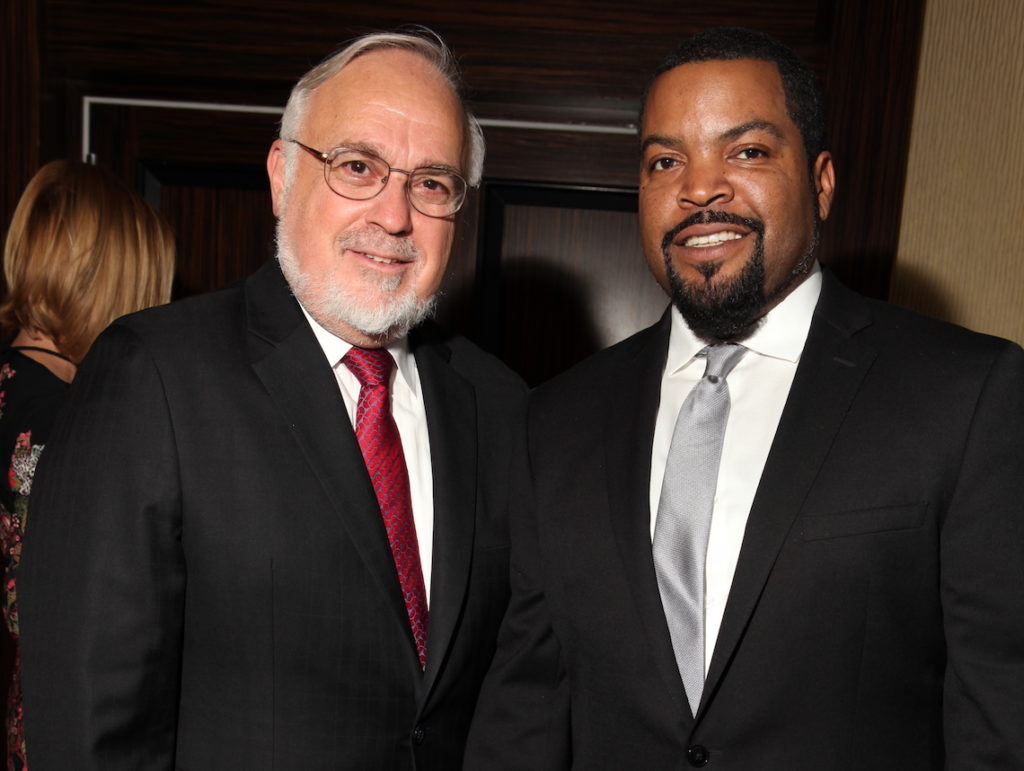
Ice Cube Denies Report He Ordered Entourage to Beat up a Rabbi

Ice Cube is having some issues with journalists, including CNN’s Jake Tapper for calling Nation of Islam leader Louis Farrakhan an anti-Semite, and the rapper called them out on social media.

On Monday, Tapper tweeted that “Farrakhan is a vile anti-LGBTQ anti-Semitic misogynist. Why is a Fox channel airing his propaganda?”

The Jewish anchor’s post was in response to the announcement that Fox Soul TV would be broadcasting a speech by Farrakhan on July 4. The channel has since canceled the broadcast.

In response, Ice Cube tweeted the same day, “Watch your mouth Jake.”

Meanwhile, on Wednesday, he posted an image of a cease-and-desist order against journalists Charles Nash of Mediaite and Marlow Stern of the Daily Beast for publishing “outrageously false unverified, and disparaging allegations regarding Ice Cube,” whose given name is O’Shea Jackson. Above the letter he wrote “Don’t play with me. This is just phase one.”

The letter sent from a Los Angeles law firm specifically refers to “the ridiculous, false accusation that Ice Cube ordered his ‘entourage to beat up a rabbi,’ was sued for it, and that he is anti-Semitic.”

Last month, the Daily Beast published an article by Stern titled “Ice Cube’s long, disturbing history of anti-Semitism.” In an article published Monday on the Mediaite website, Nash repeated the claims, citing the Daily Beast article.

“The idea that Ice Cube is anti-Semitic is laughable, as anyone who knows the man can attest,” the lawyer letter says. “Ice Cube has no biases against any race, creed, color, ethnicity, religion or gender. His tolerance for all peoples is exactly why he was invited to be the emcee at the national tribute dinner of the Simon Wiesenthal Center’s Museum of Tolerance in April 2017.”

Also in June, Ice Cube tweeted a mural some have called anti-Semitic, and days later tweeted images associated with multiple conspiracy theories against Jews, including that they control the world.


Ice Cube Denies Report He Ordered Entourage to Beat up a Rabbi Read More »

How the ADL Went From Working With Facebook to Leading a Boycott Against It

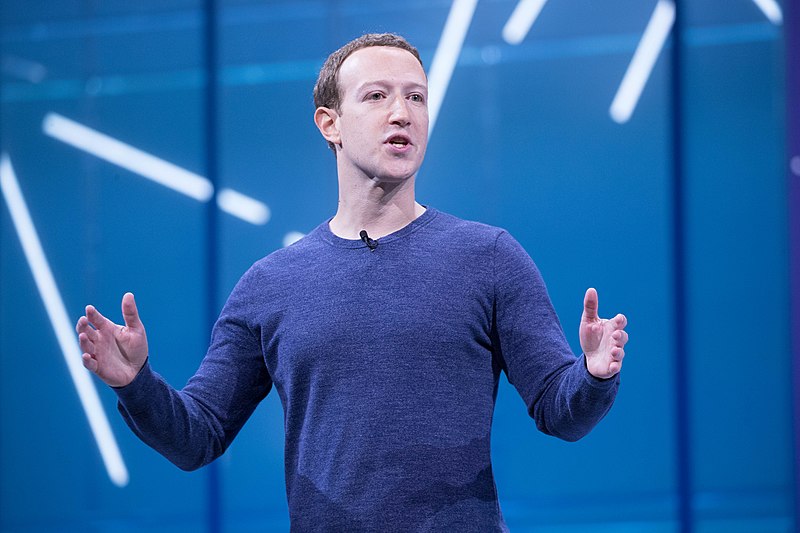
It was when Mark Zuckerberg said he would allow Holocaust denial on his platform that the Anti-Defamation League realized its partnership with Facebook wasn’t working.

The social media giant and the Jewish civil rights group had been working together for years to curb hate speech online. In October 2017, Facebook headlined a new ADL initiative to start a Cyberhate Problem-Solving Lab in collaboration with Silicon Valley’s biggest companies.

Then, nine months later, Zuckerberg told the tech site Recode that while he personally found Holocaust denial “deeply offensive,” he said, “I don’t believe that our platform should take that down because I think there are things that different people get wrong.”

People who monitor anti-Semitism criticized Zuckerberg for what they saw as undeservedly giving anti-Semites the benefit of the doubt — as if they were making an innocent mistake rather than propagating a deliberate lie. That’s when the ADL realized that Facebook wasn’t going to change on its own and needed to be pressured.

“Holocaust denial is something that we’ve been talking to Facebook about for I think it’s 11 years at this point,” Daniel Kelley, associate director of the ADL’s Center for Technology and Society, told the Jewish Telegraphic Agency. “We’ve told them Holocaust denial is hate. It is not misinformation. And they have not only not changed, but in several instances doubled down on treating Holocaust denial as some form of misinformation.”

So the ADL has changed tacks as Facebook, according to ADL CEO Jonathan Greenblatt, “has allowed some of the worst elements of society into our homes and our lives.”

After years of seeing the largest social network in the world as a partner, it is now treating Facebook as an adversary. That shift has culminated in an ADL-led campaign urging companies to stop advertising on Facebook for the month of July in collaboration with the NAACP and other civil rights groups.

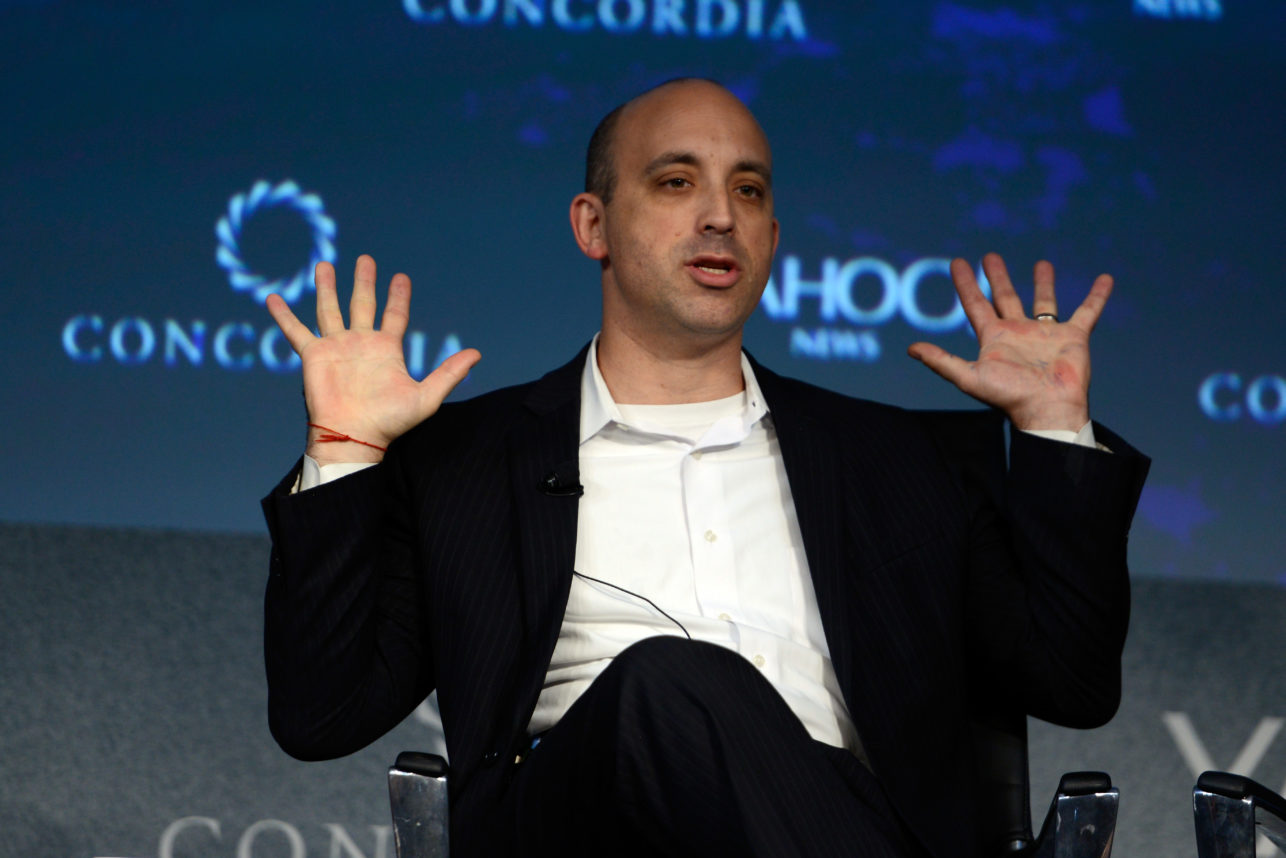
NEW YORK, NY – OCTOBER 02: Director of the Anti-Defamation League Jonathan Greenblatt speaks on stage during the 2015 Concordia Summit at Grand Hyatt New York on October 2, 2015 in New York City. (Photo by Leigh Vogel/Getty Images for Concordia Summit)

The campaign has attracted a growing list of leading brand names. More than 230 companies have signed onto the pledge, and last week Facebook’s stock dipped more than 8%, though it has since rebounded.

Apparently shaken by the boycott, Zuckerberg has announced a series of changes to Facebook’s hate speech policies, which he said “come directly from feedback from the civil rights community.” He also pledged to meet with the organizers of the boycott.

Facebook’s changes include labeling posts regarding voting access, flagging posts that target immigrants, banning members of the far-right antigovernment Boogaloo movement and placing warnings on hateful or false posts from public figures that the network still feels are newsworthy.

“I’m committed to making sure Facebook remains a place where people can use their voice to discuss important issues, because I believe we can make more progress when we hear each other,” Zuckerberg wrote Friday in a Facebook post. “But I also stand against hate, or anything that incites violence or suppresses voting, and we’re committed to removing that no matter where it comes from.”

Those moves have not lessened the ADL’s commitment to pressuring the company, which makes nearly its entire $70 billion in annual revenue through ads.

“Facebook says it will take meaningful steps to address the hate on its platform,” Greenblatt tweeted after the announcement. “We’ve been down this road. Don’t let them refuel for another hate-filled trip.”

Fighting tech companies is a change for Greenblatt, who came to the ADL job in 2015 following a career as a social entrepreneur in Silicon Valley. Greenblatt founded a bottled water company that donated a portion of its proceeds to clean-water access, as well as All for Good, an open-source platform that aggregated volunteer opportunities online.

The ADL had been pushing tech companies to get more serious about combating anti-Semitism for decades. Greenblatt’s predecessor, Abraham Foxman, complained in a 2013 interview with JTA about “the geniuses at Palo Alto” and said, “The providers need to take greater ownership. They don’t want regulation.”

Under Greenblatt, the ADL increased its focus on tech, and at first tried to curb online hate through partnership. The group expanded its presence in Silicon Valley in 2016 and founded the Center for Technology and Society in 2017 to combat cyberhate. Greenblatt said he hoped “to collaborate even closer on the threat with the tech industry.”

Later that year, the ADL announced its partnership with four tech giants — Facebook, Google, Microsoft and Twitter — to create the Cyberhate Problem-Solving Lab. The idea was to work with the companies on technical solutions to improve detection and removal of hateful posts, with the ADL providing guidance on how to spot bigotry and address it.

But according to Kelley, the effort went nowhere. Facebook, he said, never acted on any of the advice provided by the ADL.

“They were happy to sign onto a press release and to say, well, we’re working with ADL. We did have several meetings,” Kelley said. “It’s the same story of us coming to the meeting with real ideas for how to approach the problems on their platform and them walking away not promising anything. We tried to work with them.”

Facebook did not respond to an email request for comment. But the company has disputed that it has a poor record on addressing hateful posts. It points to a recent study from the European Union showing that Facebook is the quickest among the major social media platforms in addressing notifications of hate speech coming from European users. It found that Facebook assessed 96% of the notifications of hate speech within 24 hours, compared to 76.6% for Twitter. Facebook removed 87.6% of the flagged content, compared to 35.9% for Twitter.

But Kelley said that while Facebook does release transparency reports, it does not give outside researchers access to the data, unlike Twitter. So he said there’s no real way to confirm Facebook’s claims of transparency.

“All these statistics are not vetted by, or verified by, any third party,” he said, adding later that “The ability to do real research into the nature of hate on Facebook is extremely limited.”

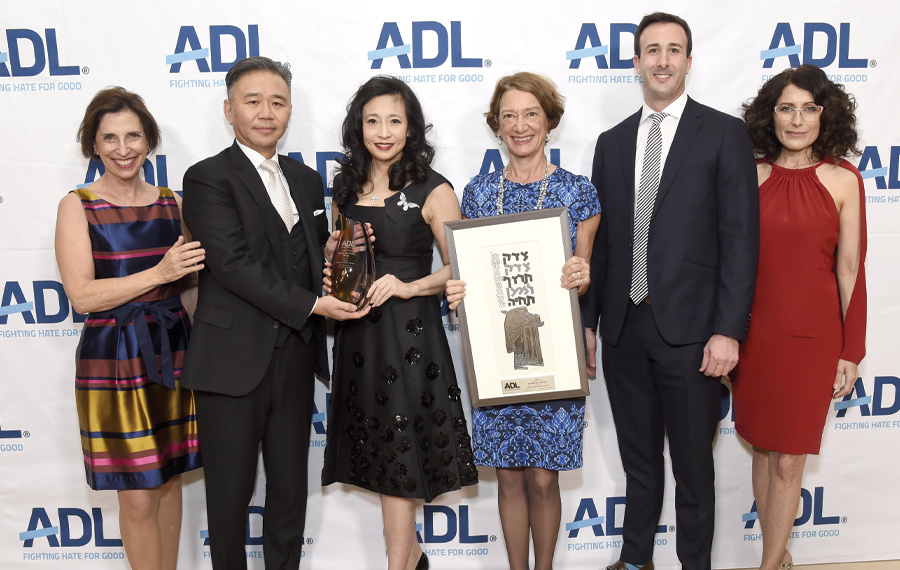
From left: ADL Regional Director Amanda Susskind, Shirley and Walter Wang, Meredith Jackson, Scott Harris and Lisa Edelstein attend the ADL’s 2018 annual gala, which honored the Wangs and Jackson. Courtesy of the ADL

As months and then years passed, activists in Myanmar and elsewhere were complaining that Facebook was allowing public officials to encourage human rights violations. In 2018, the shooter at the New Zealand mosques livestreamed the massacre on Facebook.

But while Facebook made some modifications to its hate speech policies, it did not appear to change course philosophically. In October, Zuckerberg said in an address at Georgetown University that he was proud that “our values at Facebook are inspired by the American tradition, which is more supportive of free expression than anywhere else.”

Using the speech, the Jewish comedian Sacha Baron Cohen compared Zuckerberg to a restaurateur gladly serving neo-Nazis.

“If he owned a fancy restaurant and four neo-Nazis came goose-stepping into the dining room and were talking loudly about wanting to kill ‘Jewish scum,’ would he serve them an elegant eight course meal? Or would tell them to get the f*** out of his restaurant?” Cohen wrote. “He has every legal right, indeed a moral duty, to tell them to get the f*** out of his restaurant.”

A month later, the ADL gave Cohen its International Leadership Award. The comic actor used the opportunity to give a keynote address to excoriate social media companies.

“I say, let’s also hold these companies responsible for those who use their sites to advocate for the mass murder of children because of their race or religion,” he said. “Maybe it’s time to tell Mark Zuckerberg and the CEOs of these companies: You already allowed one foreign power to interfere in our elections, you already facilitated one genocide in Myanmar, do it again and you go to jail.”

A wrinkle in this story came a few weeks before Cohen’s speech. Following the October attack on a synagogue in Halle, Germany, the ADL accepted a $2.5 million donation from Facebook’s COO, Sheryl Sandberg. Greenblatt said, upon accepting the donation, that he was “grateful for her commitment to fighting hate in all of its forms.”

Sandberg posted on Facebook that “It means so much to me to be able to support this vital work at this critical moment.”

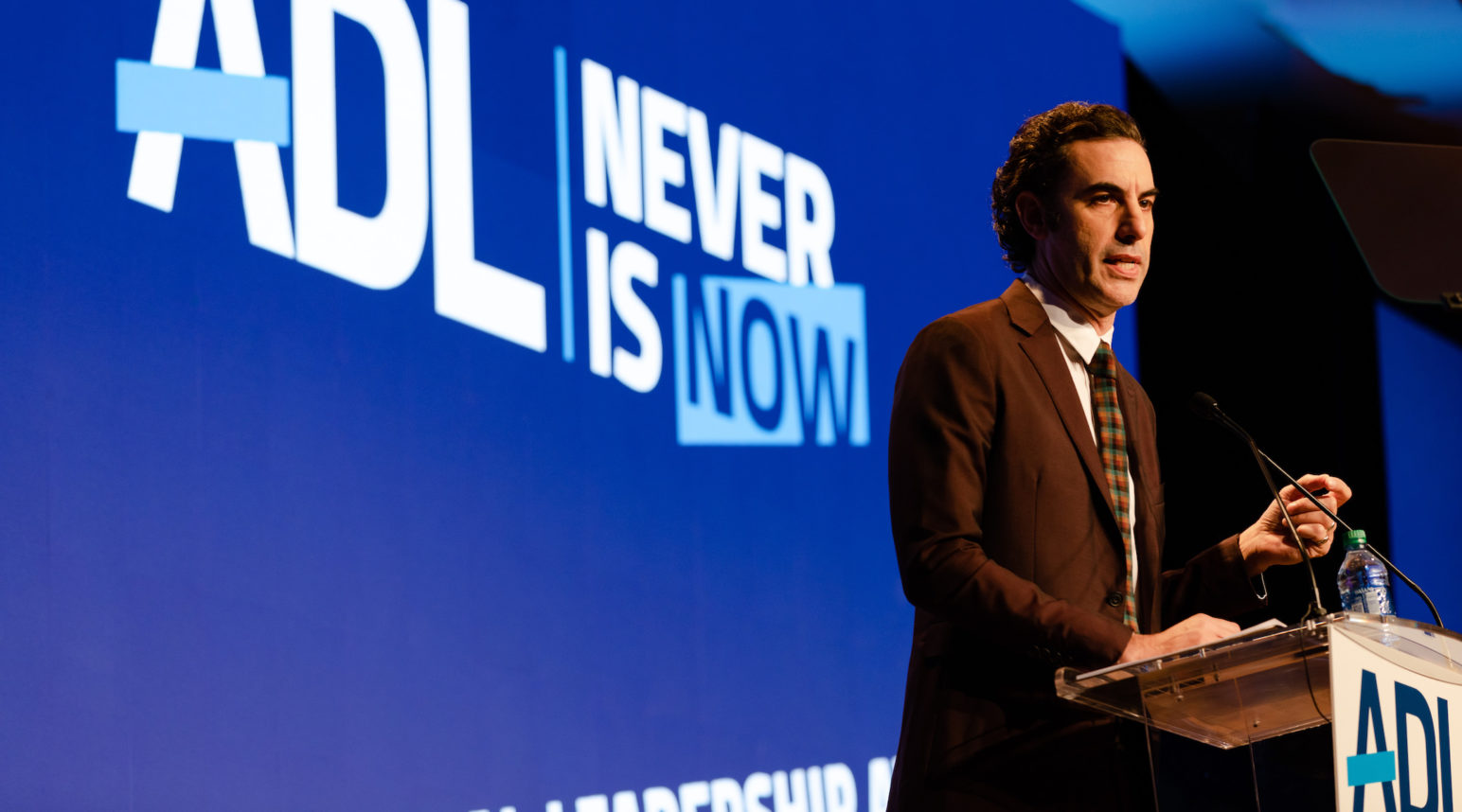
Sacha Baron Cohen speaks at the Anti-Defamation League’s Never Is Now conference in New York, Nov. 21, 2019. (Jennifer Liseo/ADL)

Facebook’s mostly hands-off approach to posts does have notable defenders.

David Hudson, an advocate of expansive First Amendment rights, said that free speech protections should be extended to Facebook because its size and breadth gives Facebook the power of a government.

“Certain powerful private entities — particularly social networking sites such as Facebook, Twitter, and others — can limit, control, and censor speech as much or more than governmental entities,” he wrote for the American Bar Association’s Human Rights magazine. “A society that cares for the protection of free expression needs to recognize that the time has come to extend the reach of the First Amendment to cover these powerful, private entities that have ushered in a revolution in terms of communication capabilities.”

But Holocaust scholar Deborah Lipstadt, who spoke out against Zuckerberg’s remarks on Holocaust denial, said a boycott was the right way to go.

“Facebook is a private entity and no private entity is obligated to post hate speech,” she said. “Generally I don’t like boycotts, but if this is the only thing to which Facebook is going to respond, then you have no other choice. You can choose where you put your money.”

This year, in testimony to Congress, Greenblatt cited his work in Silicon Valley in calling on tech companies to work harder. He called tech “an amplifier, an organizer, and a catalyst for some of the worst types of hate in our society,” and said Facebook and Twitter “need to apply the same energy to protecting vulnerable users that they apply to protect their profits.”

Mark Zuckerberg delivering a commencement speech at Harvard University in which he quoted the Mi Shebeirach prayer on May 25. Photo Paul Marotta/Getty Images

Despite the measures Facebook has taken, the ADL says that hasn’t happened. And that’s why, after years of trying to collaborate with Facebook, the ADL is now trying to disrupt its revenue stream in the hopes of forcing change.

“There’s a common understanding that Facebook is a company that puts revenue above all else, but I think this is a very clear-cut example,” the ADL’s Kelley said. “All of these changes, the minor tweaks that Mark Zuckerberg announced on Friday, were things that the civil rights community have been asking for for years, in addition to larger structural changes to the platform.

“It took a massive pause on advertisement by major companies to get them to move an inch.”

How the ADL Went From Working With Facebook to Leading a Boycott Against It Read More »

Nobody Votes for a Vice President

In the 60 years since John F. Kennedy’s choice of Lyndon Johnson helped him carry Johnson’s home state of Texas, there is little historical evidence of a running mate doing much to change the trajectory of a presidential campaign. Because most of us don’t consider the qualifications of a vice-presidential selection before voting, the most important electoral aspect of Joe Biden’s upcoming decision will be what it tells us about the candidate himself. More specifically, the most important personnel choice a presidential nominee makes reveals a great deal about that individual’s judgment and priorities.

Hillary Clinton’s selection of Virginia Sen. Tim Kaine four years ago reminded us of her tendency to be overly cautious. When John McCain named Sarah Palin back in 2008, it reinforced the maverick’s penchant for unpredictability and rashness. Dick Cheney, Mike Pence and Biden himself all got their jobs to reassure voters that their party’s less-seasoned presidential nominees would recognize the importance of experience and stability in their administrations.

Biden already has made it clear that he sees himself as a bridge to the next generation of leaders, and by casting himself in that transitional role, he elevates the importance of his running mate to a greater degree than normal. By pledging to nominate a woman and by doing nothing to discourage the conventional wisdom that he will select a woman of color, Biden is attempting to convince us that his election would bring about fundamental change to reflect the rapidly diversifying electorate and transformed political landscape. In other words, he wants his vice presidential pick to tell us that a career politician who has held elective office for more than 40 years is not a prisoner of the past. Almost any woman he chooses for that role will deliver that message for him, but some will deliver it more effectively than others.

That’s why he is unlikely to go with either Sen. Elizabeth Warren of Massachusetts  or Rep. Karen Bass of California, although either would send a powerful signal to the Democratic Party base. But both the 71-year-old Warren and 66-year-old Bass would undermine the efforts of Biden — who would be in his 80s by the time he finished his first term in office — to present himself as an agent of generational change.

Joe Biden already has made it clear that he sees himself as a bridge to the next generation of leaders.

Gov. Michelle Lujan Grisham of New Mexico and Sen. Tammy Duckworth of Illinois appear to be the most well-regarded Latina and Asian-Pacific candidates, but events of the past month seem to have prompted Biden to focus most closely on a Black running mate.

Former Georgia gubernatorial candidate Stacey Abrams and former National Security Advisor Susan Rice seem like longshots as well. Biden’s promise to select a running mate who is immediately prepared to be president if necessary does not bode well for Abrams, whose highest elected position in the Georgia state legislature may not meet that threshold. Rice would bring extensive foreign policy and national security background to the position but she has never run for public office at any level, and the intense scrutiny she would face could make her somewhat of a risky choice as well.

The necessity for a running mate with the experience to lead has led to the common assumption that California Sen. Kamala Harris, despite her underwhelming presidential campaign and a reputation for being overly cautious, is the odds-on favorite. But Atlanta Mayor Keisha Lance Bottoms has impressed many observers with the way she has conducted herself during the unrest in her city, while Florida Rep. Val Demings also is reported to be a strong contender. Neither has held elective office at Harris’ level, though, which will raise inevitable questions about their readiness for the job.

There is no perfect option for Biden. But his selection represents his best opportunity to demonstrate to voters how he approaches the decisions that can and will shape his presidency — and our future.


Dan Schnur teaches political communications at UC Berkeley, USC and Pepperdine. He hosts the weekly webinar “Politics in the Time of Coronavirus” for the L.A. World Affairs Council Town Hall.

Nobody Votes for a Vice President Read More »

Chaotic but Non-Violent Anti-Israel Demonstration Outside Israeli L.A. Consulate

A chaotic but nonviolent anti-Israel demonstration took place on July 1 outside the West L.A.-based Consulate General of Israel.

Dubbed a “Day of Rage,” the protest was organized by Students for Justice in Palestine at UCLA, and other anti-Israel groups in response to the Israeli government’s weighing annexation of parts of the West Bank. The protest featured a large caravan of approximately 150 cars driving around the consulate at Wilshire Boulevard. 

WATCH: Video of demonstrators outside Israeli Consulate

Protesters rolled down their windows, waved Palestinian flags and honked their horns. And although the majority of vehicles held pro-Palestinian demonstrators, a large number of pro-Israel supporters gathered on foot outside the consulate.

Los Angeles Police Department (LAPD) officers were on scene, and LAPD Officer Jeff  Nuttall estimated around 200 people showed up, and that 10 officers were on hand “keeping the peace.”

Mojahed Abuhabda, 30, a retail manager of Palestinian background, turned out to Wednesday’s rally to show his opposition to Israel’s potential annexation over parts of the West Bank. Photo by Ryan Torok

The protests, which began around 10:30 a.m., initially brought out a handful of people including supporters of the pro-Israel groups Club Z, a Zionist youth group, and Yad Yamin. As the day wore on, more people showed up and the protest occasionally escalated into shouting matches on both sides. 

Demonstrators, some wearing masks because of COVID-19, turned out to Wednesday’s rally. Photo by Ryan Torok

David Yahudian, an Iranian Jewish immigrant from Beverly Hills, told the Journal he shut down his jewelry store for the day to attend the protest. “The state of Israel is for every Jew around the world,” he said. “I have a sister who lives in Iran and I know she is protected by Israel. I know she is safe because of Israel, so Israel is in my blood.”

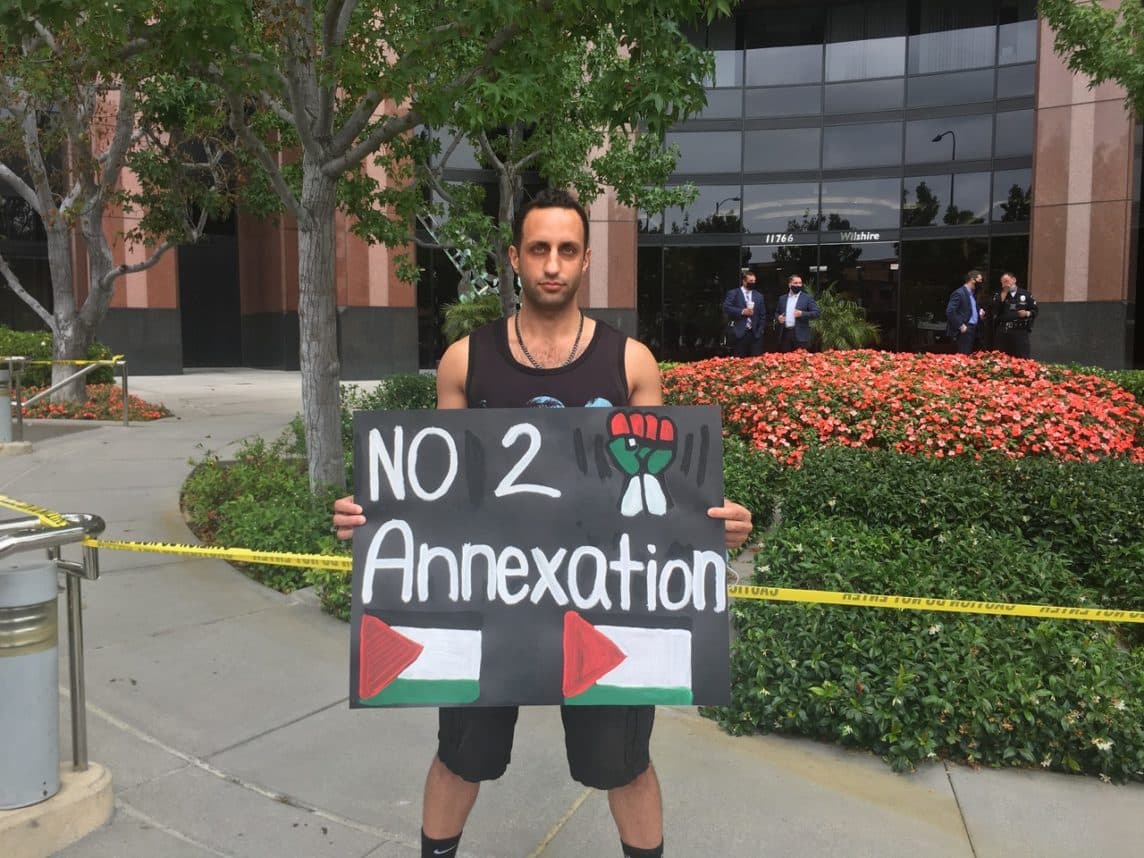
Thirty-year-old Palestinian supporter Mojahad Abuhabda carried a sign that read, “No 2 Annexation,” and told the Journal he lived in the Palestinian territories as a child. “I am here because annexation is wrong,” he said. “Israel deserves a state, Palestine deserves a state and I hope the new generation can make it happen.”

Benjamin Levin, a dual American and Israeli citizen, said he turned out to support his mother, who lives in Israel. He denounced the pro-Palestinian protesters who he said were linking their cause to current protests in the U.S. against police brutality. 

“My biggest concern is these guys like to mix things — to take the surfboard and catch the wave of Black Lives Matter,” he said.

Supporting the pro-Israel counter-demonstration were groups including StandWithUs (SWU) and the Iranian American Jewish Federation, which paid for truck ads expressing solidarity with the Jewish state to drive around consulate.

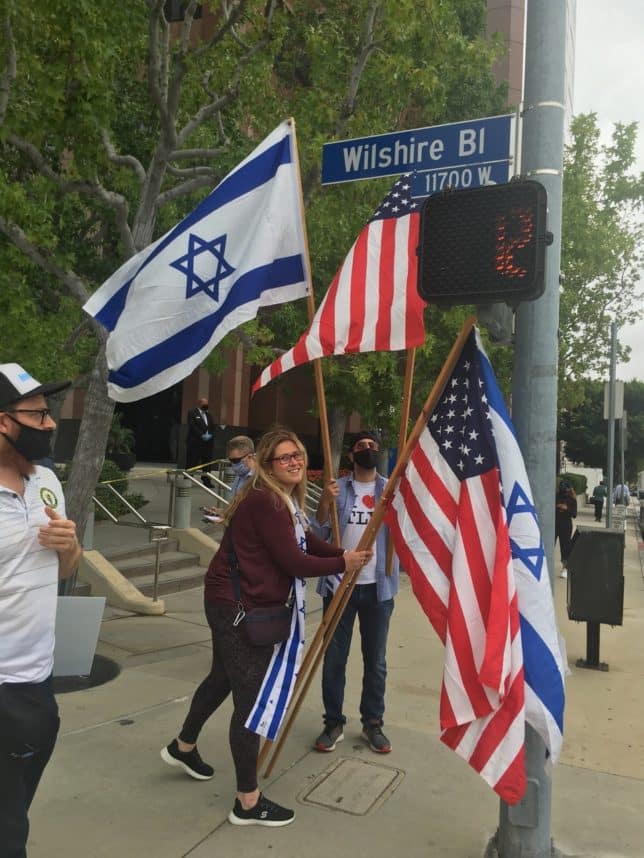
Naya Lekht, director of education at pro-Israel teen group Club Z, displays an Israeli and U.S. flag while standing outside the Israeli consulate on Wednesday. Photo by Ryan Torok

SWU issued a statement before the protest, discouraging Jewish community members from attending the event, saying they did not want opposing car protests or people putting themselves at risk of catching COVID-19. And although many demonstrators wore masks,  it was nearly impossible for those standing outside the consulate to practice proper social distancing.

SWU’s statement didn’t stop 18-year-old YULA Boys High School graduate Jake Fishman, who came to the protest with a megaphone to loudly broadcast his support for Israel. “It’s important to make sure a positive [pro-Israel] message is being spread,” he said, adding that he attended because he didn’t want the public to see a pro-Palestinian demonstration without seeing a pro-Israel one. “If people drive by and see this,” he said, indicating the pro-Palestinian demonstrators, “and not [pro-Israel demonstrators], it won’t look good.”

Consul General of Israel in Los Angeles Hillel Newman, who was on the scene at the protest, told the Journal in a phone interview following the event that he supported the rights of people from both sides to demonstrate. “Israel has not come to a decision [regarding annexation],” he said, “and it is being debated at the highest level.”

Chaotic but Non-Violent Anti-Israel Demonstration Outside Israeli L.A. Consulate Read More »

Newsom Announces Indoor Operations in Restaurants, Other Businesses Will Be Shut Down in L.A. and Other Counties

California Gov. Gavin Newsom, a Democrat, announced on July 1 that indoor operations in restaurants and other businesses will be shut down for at least the Fourth of July weekend in 19 counties statewide, including Los Angeles County.

Newsom tweeted that the order will apply to restaurants, movie theaters, wineries, zoos and museums. These businesses can remain open as long as they can offer outdoor operations. Bars in these counties must be closed.


Additionally, Newsom tweeted that all parking areas for state beaches in Southern California and the San Francisco Bay Area will be shut down as well for the upcoming holiday weekend.

“#COVID19 does not take 4th of July off,” he wrote. “Avoid crowds. Do not gather with people you do not live with. Wear a mask. Physically distance. Be smart. Do your part.”


Newsom said that the state will enforce these mandates through multi-agency strike teams that will work with health officials in the 19 counties.


There were 6,367 newly confirmed COVID-19 cases in California on July 1 and 110 new deaths from the virus, bringing the state’s respective totals to 223,000 and 5,980. Hospitalizations and patients in the intensive care unit (ICU) increased 6.3% and 4.3% over the past 24 hours in the state, respectively.

Newsom Announces Indoor Operations in Restaurants, Other Businesses Will Be Shut Down in L.A. and Other Counties Read More »

Swastikas, ‘Heil Hitler’ Graffiti Found on Canada Park Slide

A slew of neo-Nazi graffiti was found in several locations in a Canadian city on June 29, including on a park slide.

CTV News reported that the graffiti on the slide consisted of two swastikas and the words “Heil Hitler,” “[Joseph] Goebbels” and “Anne Frank” on the slide at Berczy Park in downtown Barrie. Eight other locations in the city had similar swastika graffiti, including the exteriors of various businesses.

A 50-year-old male suspect has been arrested in connection with the vandalism. The graffiti has since been removed.

Barrie Mayor Jeff Lehman condemned the graffiti in a tweet.

“Disgusting act of anti-semetic [sic] and racist vandalism,” he wrote. “I’m glad the perpetrator has been arrested. A further example of why as a community we need to make a collective effort to fight hate and discrimination.”


B’nai Brith Canada tweeted, “Thank you to @Mayor_Jeff and @BarriePolice for dealing with this heinous #hatecrime swiftly with an arrest and by removing the anti-Semitic graffiti.”


The graffiti comes after a sign in Toronto stating, “Jews are owners! Not occupiers!” was vandalized and the word “not” was removed. Simon Wiesenthal Center Executive Director Rabbi Meyer May said in a statement, “This is a very disgusting effort to promote age-old anti-Semitic canards that Jews exert nefarious economic control and are occupiers and usurpers. The sign is located in an area with many Jewish residents, and surely many Jewish passersby noticed the sign and were horrified and threatened by its hateful message.”

Swastikas, ‘Heil Hitler’ Graffiti Found on Canada Park Slide Read More »