fbpx

June 24, 2020

U of Cincinnati Votes to Remove Marge Schott’s Name From Its Stadium Over Her Anti-Semitism and Racism

(JTA) — The University of Cincinnati will remove Marge Schott’s name from its baseball stadium because of the late Cincinnati Reds owner’s racism and anti-Semitism.

The university’s Board of Trustees voted Monday to remove Schott’s name from the stadium and from a space in the in the archives library, effective immediately, acting on a recommendation by the university’s president, Neville Pinto, the university said in a statement.

“Marge Schott’s record of racism and bigotry stands at stark odds with our University’s core commitment to dignity, equity and inclusion,” Pinto said.

He added: “I hope this action serves as an enduring reminder that we cannot remain silent or indifferent when it comes to prejudice, hate or inequity. More than ever, our world needs us to convert our values into real and lasting action.”

Former Major League Baseball star Kevin Youkilis, who is Jewish, joined fellow university alumni in calling on the school to change the name. Over 10,000 people signed an online petition drive in early June by an alumnus and former student-athlete, Jordan Ramey.

Schott, who owned the Reds from 1984 to 1999, was banned from managing the team in 1996 after she spoke admiringly of Adolf Hitler, saying that he “was good in the beginning, but went too far.” She also referred to two black Boston Red Sox outfielders with the N-word.

The baseball stadium was named for Schott in 2006, two years after her death at age 75, following a $2 million donation to the university’s Athletics Varsity Village project by the Marge and Charles Schott Foundation.

U of Cincinnati Votes to Remove Marge Schott’s Name From Its Stadium Over Her Anti-Semitism and Racism Read More »

Ripple Effect: I Love You, Too

In my Zoom class the other day we were talking about how difficult it is to get rid of our negative thoughts. 

We discussed how difficult it is to push away negative thoughts that other people push on us. One of the things I love the most about my students is when my tough, tattooed, formally incarcerated human beings share tender and beautiful insights. 

There is so much truth in what they say, so much wisdom, I am floored again and again. More important is that I learn and grow more than you can ever imagine.

This happened when one of my guys spoke up and shared. This particular individual recently got out of jail, and is living with his ex who now is involved with a different man.
On a good day this is not the most ideal situation. 

He shared how he stays in his room, because he doesn’t like going out into the house. “I get it,” I tell him.  “It’s a loaded house, your ex and her new man.” We all laugh a little at his expense and his complicated living situation, but, thankfully, he takes it in stride.

We talk about negativity and what we need to do to combat it.
Actually, for the first time in a while, we act out a little scenario on Zoom.
We act out a phone call where one person was putting the other down.
The other got mad and they yelled at each other.

“Ms., so much negativity! What the fuck?!!” one student said and then added,
“I don’t need someone to say nothing bad about me. I say it to myself all day long!”

“Well, that’s not good,” I say. “You have to love yourself for you and for everyone else.” 

“This is gonna sound really stupid,” my student living with his ex says, and then repeated it again about five times. “This is stupid, really stupid…”

I gently push him. “Nothing is stupid. Please stop saying that. Share with us without thinking it’s stupid.” 

He says, “I’m a little bit embarrassed. Don’t laugh, but you know what I do when negativity is knocking at me? This is what I do. I say, ‘I LOVE YOU’ (and he says his name) and then …I answer myself and I say, ‘I love you, too.’” 

It is quiet in the Zoom class.

“You see, Ms. It’s not enough to say, ‘I love you’. I add to it ‘I love you, too’ so there is back up, not by someone else but by me.”

This is profound to me. 

I say, “That is beautiful,” as everyone is nodding their heads.

“You know,” someone adds. “We all grew up with so much violence and no love. We didn’t get love and we didn’t love ourselves and, therefore, we don’t think we deserve love.”

One woman shared, “In my NA (narcotics anonymous) they told us to look in the mirror and say, ‘I love you.’ I couldn’t do it.  So help me God, I could not do it.”

“It’s the hardest thing to love yourself,” one person said. 

“Us gang bangers don’t love ourselves well, Ms.,” they tell me.

I take a breath and say, “Lots of people don’t love themselves well.” I pause.
“People who don’t gang bang and/or do drugs have a difficult time loving themselves. 
It is hard and can be uncomfortable to say, ‘I love you’ to yourself.” 

I notice the one who shared the “I love you, too” story is literally leaning into his little Zoom box to hear me. “This is so, so far from being stupid. I think it is brilliant.” I smile.

He is blushing. It is sweet and so incredibly touching.

I add, “We waste so much time in life waiting for someone else to love us. We wait for people to say it to us when, in reality, we can barely say it to ourselves.”

Then someone added, “Ms., when you grow up in trauma, when you grow up and your love language is violence, you can’t say the words ‘I love you.’ It’s like a fucking different language when you have done bad shit and sat time. It’s hard to love yourself.”

She hit a nerve. People are nodding, agreeing and there is a shared feeling in the group.

“Well, that will stop right now,” I say.

“We are all going to un-mute the screen, and all together you are going to say, ‘I LOVE YOU’ (your name) and then say for back up ‘I LOVE YOU, TOO.’ Everyone has to do it.”

The guy, the one living with the ex, says “Ms., You gotta do this, too.” 

I laugh. “I plan to. And by the way,” I add, “This is hard for me, too.”  

“I will count to three and together we will do this,” I tell them.

I count to three. 15 people unmute their Zoom connection, and loud and proud say
“I love you (their name)” and add “I love you, too.” 

It was gentle and powerful. Touching and sweet. Difficult, easy and moving all at the same time. We did it, everyone seemed a little lighter and a bit happier.

We all giggled and were a tiny bit uncomfortable.

It is a known fact that you can’t be loved, until you love yourself. 

There is an old quote from the 1st century rabbinic commentator Rabbi Hillel that goes,
“If I am not for myself, who will be for me?”

It all starts with us acknowledging ourselves to ourselves. It really and truly starts with us. That is the only place it can begin.

Today at some point, look at yourself, see you for you, and please, love you.

Love it all. Then…say it.

Say, “I love you…(your name)” and as my students taught me, for the backup add, “I love you, too.” 

Don’t be shy. Do it. That is where your love should start.

I will be here listening. 

Ripple Effect: I Love You, Too Read More »

New York Primary Preliminary Results Show Good News for Jamaal Bowman and a Surging Left

WASHINGTON (JTA) — Left-wing candidates appeared to be surging in Democratic congressional primaries in New York, although results were preliminary into Wednesday as mail-in votes necessitated by the coronavirus pandemic were still being counted.

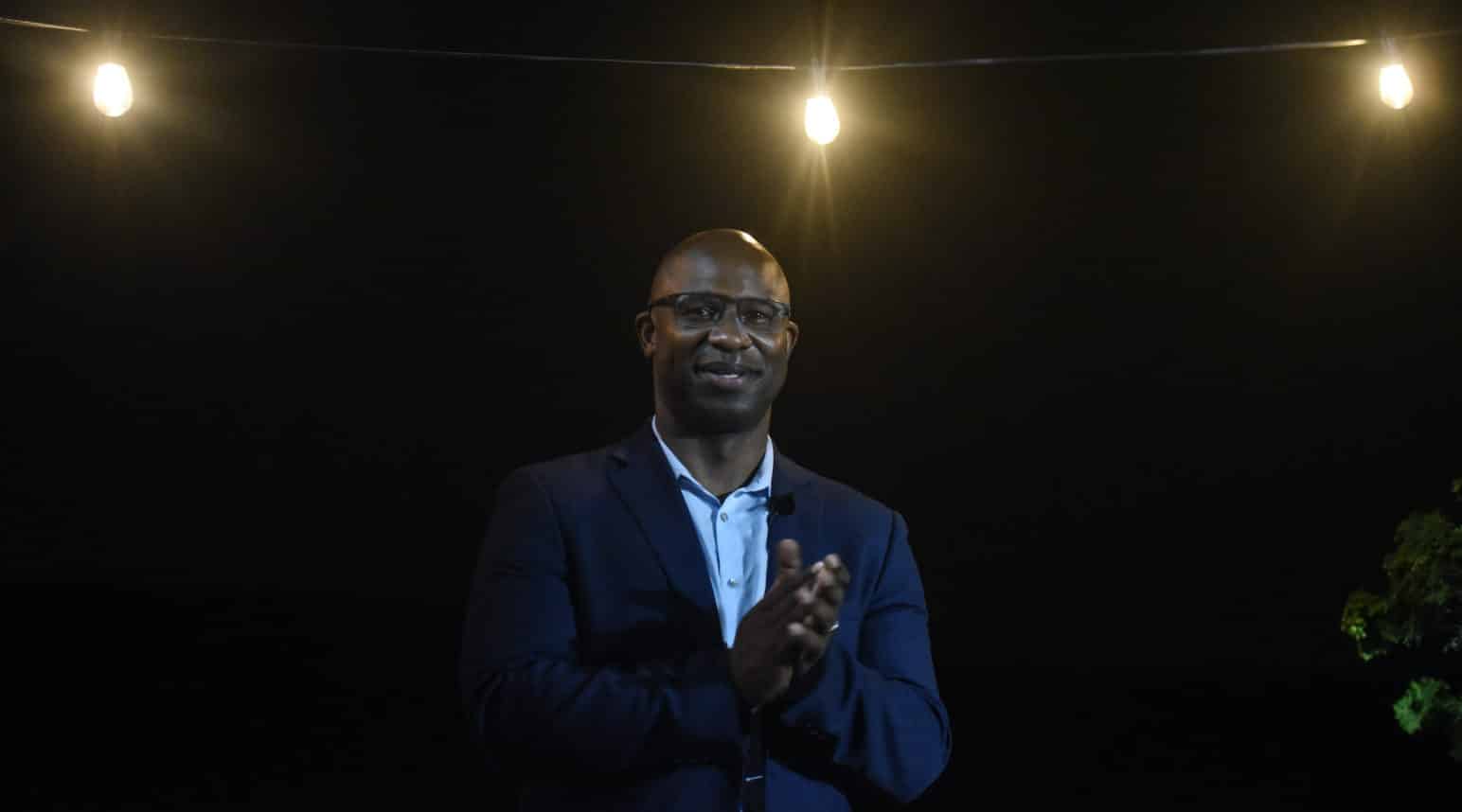
Jamaal Bowman, who challenged longtime incumbent Eliot Engel in the 16th District, covering parts of the Bronx and Westchester County, was leading him two-to-one with 33,000 votes counted after the voting on Tuesday.

That could represent just one-third of the total vote, however, and election prognosticators were reluctant to make calls in part because it’s hard to say which demographics are likelier to vote by mail. However, Dave Wasserman of the Cook Political Report called it on Wednesday for Bowman, and Bowman has declared victory.

The race is being closely watched by the pro-Israel community; Engel, who is Jewish and is the chairman of the Foreign Affairs Committee, has long been close to the centrist and right-leaning pro-Israel movements. Bowman, backed by Bernie Sanders, has said he would condition aid to Israel on its behavior, but also backs its right to security and opposes the boycott Israel movement.

Other districts where the left was performing well included the 17th, neighboring Engel’s district, where Mondaire Jones appeared to be in the lead to replace Nita Lowey, the Jewish chairwoman of the House Appropriations Committee; and the 12th, covering parts of Manhattan, Brooklyn and Queens, where longtime Rep. Carolyn Maloney was facing an unexpectedly close race with Suraj Patel.

While those races showed how the degree to which the left has entrenched itself in state politics since Alexandria Ocasio-Cortez pulled off a surprise upset in the 14th, covering parts of the Bronx, in 2018, the ramifications regarding Israel were less clear. Jones and Patel have staked out conventionally centrist views on the issue.

In a 17th District debate last week organized by the Jewish Democratic Council of America, Jones said he opposed the Israeli government’s plans to annex parts of the West Bank, as many other Democrats do, but otherwise said his Israel policies were aligned with Lowey, a pro-Israel stalwart who is retiring.

Ocasio-Cortez was one of the New York races that media called, because she was leading by such a wide margin. Her most serious rival, Michelle Caruso-Cabrera, had tried to make Ocasio-Cortez’s left-leaning Israel positions an issue in the race. In a meeting with pro-Israel donors last week, Caruso faulted Ocasio-Cortez for not voting for a resolution condemning the boycott Israel movement.

Ritchie Torres, a progressive on most issues who is hawkish on Israel, was leading in the race to replace Jose Serrano in the 15th District, which is in the Bronx.

In other races of interest on Tuesday, Elaine Luria, the Jewish Virginia Democrat and former Navy commander who ran uncontested in her primary, looked set to face a rematch with Scott Taylor, the Republican former Navy SEAL she ousted in 2018 in the 5th District.

In Kentucky, Thomas Massie, a Republican who angered the establishment and Republican Jews for voting against bills that would promote Holocaust education and oppose Israel boycotts, handily bested a rival Todd McMurtry. GOP leaders and the Republican Jewish Coalition had backed McMurtry until it was revealed that he had posted racist statements on social media.

New York Primary Preliminary Results Show Good News for Jamaal Bowman and a Surging Left Read More »

Jewish and LGBTQ? Here’s When Hollywood Got It Right

For the LGBTQ community, it’s important to be represented onscreen, especially when same-sex romance is still stigmatized by the media. In 2016, Delta Airlines omitted all the love scenes, even just kissing in the lesbian drama “Carol.” Despite considerable outrage from LGBTQ groups, the airline continued to remove queer romance from 2019’s “Booksmart,” despite its already having an R rating. But in honor of pride month, here are several onscreen characters who got being both LGBTQ and Jewish right —  no censorship involved.


Hari Nef and Bradley Whitford in “Transparent.”
Photo courtesy Amazon Prime Video.

Gittel Pfefferman from ‘Transparent’
Amazon’s “Transparent” was chock full of queer people with strong Jewish identities. But one character particularly worth highlighting is Gittel, the transgender ancestor of the Pfefferman family. Gittel is portrayed by Hari Nef, who is proudly Jewish and trans herself. Gittel gives voice to the countless queer Germans who enjoyed unprecedented freedoms between the world wars and then had their humanity snatched away by the Nazis. Gittel is a patron of the real-life Institut für Sexualwissenschaft (Sexology Research Institute), founded in 1919. It was here that the concept of transgenderism first was coined and the first gender confirmation procedures pioneered. Gittel represents the 20,000 yearly patrons of the Institut whose history was erased as Nazis outlawed their existence, burning the Institut’s books and studies in the street.


Timothée Chalamet as Elio Perlman in “Call Me By Your Name.” Photo courtesy of Sony Pictures Classics.

Elio Perlman from ‘Call Me by Your Name’
Timothée Chalamet’s portrayal of Elio, a young Jewish boy coming to terms with his sexuality and losing his first love, is a sensitive, raw portrayal of the depth of same-sex love. He’s insecure about being Jewish, coming from a family that describes its members as “Jews of discretion.” When Elio notices how his soon-to-be lover, Oliver, is unafraid to wear a Star of David necklace, he is inspired by how “he was OK with being Jewish. He was OK with being himself, the way he was OK with his body, with his looks.” Oliver empowers Elio to be honest about who he is and it is through the lens of his Judaism that Elio finds the courage to be openly gay.


Sam Waterston as Sol Bergstein and Martin Sheen as Robert Hanson in “Grace and Frankie.” Photo by Melissa Moseley/Netflix

Sol Bergstein from ‘Grace and Frankie’
Few depictions of the LGBTQ community address the golden years and Netflix’s “Grace and Frankie” does not shy away from aging. Sol Bergstein (Sam Waterston), who has left his wife to marry his male partner, is explicitly Jewish and deeply complicated. He is sensitive yet desperate to connect to his old activist spirit, while not necessarily in shape for a protest. Finally, out of the closet, he is living his most politicized life but feels aged out of the advocacy that once defined him. Sol also is a generous father and tender ex-husband. He uses his Judaism to connect with his fractured family. Divorce in full swing, Sol leads his family, including his ex-wife, in lighting Shabbat candles one final time at their old house, to remind them that even as their lives become profoundly disrupted, they will always be part of a Jewish home.


Rachel McAdams (left) and Rachel Weisz.

Ronit from ‘Disobedience’
Ronit (Rachel Weisz) is a bisexual woman who has left the ultra-Orthodox community in London on a path of self-discovery and sexual liberation. However, when her father, a well-respected rabbi, dies, she returns to the community that cast her out for being queer. Ronit struggles with a common circumstance for many LGBTQ children: mourning a relative whose homophobia has already killed their relationship. Throughout the film, Ronit grapples with cutting humiliation. She discovers that the only reason she was even told about her father’s death is that Esti (Rachel McAdams), her former lover, sent notice so they would have a chance to reunite. Ronit is headstrong and forgiving. Even after being cast out from her family and community, she’s dead set on giving her father a final goodbye.


Mark Ruffalo as Ned Weeks and Taylor Kitsch as Bruce Niles in “The Normal Heart.” Photo by Jojo Whilden/HBO

Ned Weeks from ‘The Normal Heart’
Written by the iconic Jewish gay rights and AIDS activist Larry Kramer, who died last month, and based on his experiences, “The Normal Heart” follows Ned Weeks (Mark Ruffalo), a Jewish-American writer who organizes a group focused on bringing attention to how a mysterious illness is slaughtering an oddly specific group of New Yorkers: gay men. Ned unveils the atrocities of the AIDS crisis and the countless ways its victims were demeaned while dying. One particularly horrifying scene shows hospital doctors refusing to examine one AIDS patient or even issue him a death certificate. Instead, they throw the young man out with the garbage. Ned is a window into this world and his unapologetic outspokenness teaches us that you have to do something when no one else will.

Sofia Wylie as Buffy, Peyton Elizabeth Lee as Andi, Joshua Rush as Cyrus and Asher Angel as Jonah experience Shiva in an “Andi Mack” episode.
Disney Channel/Fred Hayes

Cyrus Goodman from ‘Andi Mack’
“Andi Mack” was the premiere kids show on Disney Channel where Cyrus Goodman (Joshua Rush) became the first LGBTQ character in children’s television. The 13-year-old Jewish kid normalized being queer to Generation Z, to the benefit of LGBTQ viewers and their straight peers. Plus, it doesn’t hurt that Cyrus comes out in a delightfully Jewish way — over schmear. When a friend is overwhelmed by the spread, Cyrus says, “Well, that of course is Aunt Ruthie’s kugel, that’s your classic bagel and lox, that’s gefilte fish — skip that — and I’m gay.”  

Natasha Lyonne, who plays Nicky Nichols in “Orange is the New Black.” Photo by JoJo Whilden / courtesy of Netflix

Nicky Nichols from ‘Orange Is the New Black’
An out lesbian who goes from a flailing junkie to a mother-like figure to her elderly friend and young inmates, Nichols has an immense arc and Jewish-centric focus on family, even in maximum security. Although it’s impossible to miss her Jewish culture (she’s played by Natasha Lyonne after all), she has one of the best bat mitzvah scenes in celluloid history. Overwhelmed by being the ball in a game of malicious, manipulative pingpong by her divorced parents, young Nichols goes off-script from her dvar Torah. She explains what the Torah portion really means to her and how it relates to her life. “That’s how I know I’m Jewish,” she announces. “Even my own parents hate me.” After delivering an impressive summary of Balaam and the donkey from Numbers, Nichols gives her parents a well-deserved grilling from the podium. “I actually like this Torah portion,” she declares. “Because I’m the ass and I can finally talk! So here’s what I want to know: Why is it so important to God that you honor your father and mother when they really don’t give a s— about you?”


Ariel Sobel is the Journal’s social media editor.

Jewish and LGBTQ? Here’s When Hollywood Got It Right Read More »

Thinking of How I Teach My Black, Jewish Daughters About This Moment in History

I grew up in an upper middle-class home in Brooklyn, N.Y., in the 1980s and ’90s. My parents were well educated; my dad owns his own business and I was taught that I could be and should be anything I want. Unlike many other Black children, my parents did not have “the talk” with me. My mother, a white Ashkenazi Jew from New York, and my father, a half-Black and half-Chinese man from Trinidad, thought their love proved the world was now colorblind.

We were the only Black family on our block. We received bomb threats, were denied admittance to a Jewish day school, lived through the Crown Heights race riots between Chasidic Jews and Black Caribbean immigrants in the late ’80s, and yet, we still never talked about it.

I am an extremely confident, strong, empowered and optimistic person. I generally see people as good and trust them until they prove to me otherwise. My husband, a dark-skinned man from Ghana, had a different experience. Told at the age of 8 that he had to work twice as hard to get half as far in America, and seeing this born out in reality, he’s more guarded and feels he can’t fully trust people until they earn his trust.

How are we going to raise our daughters? A combination of both approaches. We will, no doubt, have a “talk” but we will also ensure our daughters are full of confidence, self-love and belief in their own destiny. My parents’ way was definitely not the right way because I was not prepared emotionally and did not have the right language to deal with the many microaggressions I’ve experienced. My husband’s lesson could have backfired, and he could have used that message as an excuse for failure.

The current moment is forcing me to speak in a way I never have before. It’s uncomfortable and I feel naked. When I first saw the George Floyd video, I couldn’t watch it. Truthfully, I have not watched more than a few seconds. It takes my breath away. 

The protests and actions now include many, many, many white people. There seems to be an awakening and active desire by them to be part of the solution.

We’ve been overwhelmed and somewhat confused but also heartened by the outpouring of texts, emails and calls from friends just checking in to see how we are doing. We are the Black friends that everyone — especially Jewish friends — wants to check on right now. Will it last? Will they be checking on us or continuing their protests in two weeks, two months or two years? I don’t know. But this is where my parents’ rosy view of the world kicks in. I am optimistic. 

My husband, on the other hand, was angry, demanding, “Why is this any different than every other incident of police brutality? Where was the outrage and protests for every other murder? Why has it taken so long for white people to understand and believe this has been going on?” 

It’s true. There were protests (and riots) against the Rodney King decision in L.A. in 1992, after the Michael Brown killing in Ferguson, Mo., in 2014, and a few others around the nation. But these protests were mostly held by people of color. 

The protests and actions now include many, many, many white people. There seems to be an awakening and active desire by them to be part of the solution. These allies are crucial to keeping this momentum going. 

Ironically, although I have big-picture optimism, I personally feel helpless, restless and nervous. I’m trying to figure out my role in this movement. I’m treated like a spokesperson but I feel like kind of a fraud. I’m not a Black man. I’m light-skinned. I grew up with every advantage in life. I have an advanced degree. And yet, I live in skin that causes most Jews to look at me funny and question my right to belong every time I walk into a synagogue. Fortunately, I’m better equipped and more comfortable now to deal with these questions and quizzical looks than I was when I was a child. My family was the only Black family in our synagogue, and I didn’t have adult Jews of Color to look up to. I’m a mom now to two adorable girls who are too young to really understand what’s going on. But one day they will understand. And one day they may also feel like they don’t fit in. 
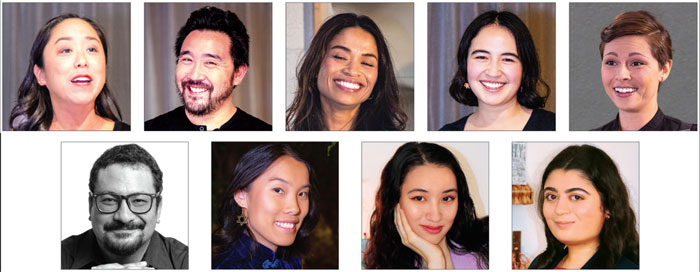
I guess that’s my role. I speak, I write, I advocate and I help normalize the Jews of Color experience. Everything I do is for my children, and other Jewish children of Color.


A former lawyer, Marissa Tiamfook Gee owns a corporate wellness and personal training company and is on the board of IKAR. 

Thinking of How I Teach My Black, Jewish Daughters About This Moment in History Read More »