(JTA) — The European Union’s foreign policy chief effectively rejected President Donald Trump’s Middle East peace plan and asked the United States to join a new international effort to broker a two-state solution between Israel and the Palestinians.
Josep Borrell said Monday that the Trump plan has created a “certain momentum where there was nothing,”according to The Associated Press, and the momentum “can be used to start a joint international effort on the basis of existing internationally agreed parameters.” The Trump plan does not respect those parameters, Borrell implied.
German Foreign Minister Heiko Maas joined in, calling for a “multilateral format” that allows “both sides to speak and negotiate with each other.”
Before his comments, Borrell and other EU foreign ministers in a call with Mike Pompeo warned the U.S. secretary of state that Israeli Prime Minister Benjamin Netanyahu’s plan to annex parts of the West Bank would endanger the prospects of a two-state solution and stability in the Middle East.
Borrell and the foreign ministers did not offer details on what a new international peace effort would look like.
A medieval German church has returned a statue known as the “Jew Pig” gargoyle to its original perch.
The Jewish Chronicle (JC) reported that the church, which is located in the Salzland district in central Germany, was decorated with, among other statues, one called Judensau, German for “Jews’ sow,” which depicts a Jewish man sucking from the sow’s teat. The church decided to take down the statue in March for restoration but considered it to be “too offensive to return to the buttress,” JC reported. However, the district later decided to bring back the statue because it considered the statue to be a key part of the church’s history.
In the interim, the statue will be covered but remain at the church.
Associate Dean and Director of Global Social Action Agenda Rabbi Abraham Cooper said in a statement, “What’s wrong with this picture? German Church within whose walls Jews were demonized and vilified, the Church that did nothing to stop Hitler, the Church that does nothing to combat today’s anti-Semites in Germany reinstates the Jew/pig Medieval obscenity to preserve its history? Depraved.”
The StopAntiSemitism.org watchdog tweeted, “While statues around the world are being removed because of their racist origins, a German church had the genius idea of reinstating a statue of a Jewish man sucking from the teat of a pig. REALLY?!”
The group added in a subsequent tweet: “Note the spikes on the pig; specifically placed to not be defaced by birds. Because heaven forbid we would want to ruin this anti-Semitic beauty.”
While statues around the world are being removed because of their racist origins, a German church had the genius idea of reinstating a statue of a Jewish man sucking from the teat of a pig.
According to the JC, there are 30 churches in Germany that have similar Judensau statues. In February, a German appellate court rejected a Jewish man’s attempt to have one of the statues removed at the Town Church in Wittenberg.
“The presentation of a part of the building in its original condition that was originally meant to be insulting is not necessarily insulting,” the ruling stated. “Rather, you can neutralize the original intent with commentary as to the historical context.”
According to the Times of Israel, the Town Church is where Martin Luther preached and his “his later sermons and writings were marked by anti-Semitism — something that the Nazis would later use to justify their brutal persecution of the Jews.”
Debra Messing is returning to TV comedy in the Starz series “The East Wing,” based on the real-life experiences of actress-producer Ali Wentworth’s mother, who served as Social Secretary in the White House during the Reagan administration in the 1980s. Messing will play Hollis Carlisle, who juggles social events, her family life and her own anxieties in the show, which she will executive produce. Creator Wentworth will write, executive produce and play Hollis’ jealous best friend, Kelly Forbes.
“The charm and relatability Debra brings to every character she inhabits will captivate audiences once again as she brings Hollis to life on the screen,” Starz Original Programming President Christina Davis said. “This is a whip-smart comedy that despite its 1980s set dressing, is a pointed commentary on politics and the politics of being a woman today that will be a valuable addition to our slate of premium programming by and for women.”
An unidentified male reportedly threatened to attack a Jewish man on a London bus on the afternoon of June 16.
The Jewish Chronicle reported that the Shomrim Stamford Hill, a volunteer neighborhood watch group in northern London, tweeted that on the upper deck of the bus, a male shouted at a Jewish man, “Jews are all spies, [I] will beat you up, what’s wrong with all you lot.” The man then issued a middle finger to the Jewish man.
#Hate Crime #AntiSemitism Stamford Hill #N16 Sun 1:30pm Upper deck of a 254 bus, Male shouted at a visibly jewish male "Jews are all spies, will beat you up, what's wrong with all you lot" he also showed the victim the middle finger, @MPSRTPC cad 1317 14/06/2020 pic.twitter.com/b51B4aSSIJ
The June 16 incident is part of a spate of recent anti-Semitic incidents in London. On June 12, a man is suspected of stabbing Chasidic Rabbi Alter Yaakov Schlesinger multiple times; Schlesinger is reportedly in stable condition. The suspect, later identified as Stanley Frances, was arrested on June 15.
Additionally, on June 14 two men and a woman reportedly issued Nazi salutes in public in the Hendon area of London.
The Balearic Islands archipelago east of Spain passed a resolution on June 6 to adopt the International Holocaust Remembrance Alliance (IHRA) definition of anti-Semitism.
The IHRA definition of anti-Semitism considers the demonization and delegitimization of Israel to be anti-Semitism. According to The Jerusalem Post, the resolution also denounced the boycott, divestment and sanctions (BDS) movement as a movement that engages in discriminatory behavior.
Lawfare Project senior counsel in Spain Ignacio Wenley-Palacios told Jewish News Syndicate, “Boycotts by public institutions have all the attributes of the most intolerable discrimination. They deny relations and the provision of public services to individuals not because of their behavior, but because of something they cannot change nor avoid: their country of origin.”
Other Jewish groups praised the Balearic Islands parliamentary move.
“Identifying and defining anti-Semitism are critical steps in eradicating it,” the World Jewish Congress tweeted. “Thank you.”
Identifying and defining antisemitism are critical steps in eradicating it. Thank you. pic.twitter.com/jSd56p7ggc
— World Jewish Congress (@WorldJewishCong) June 15, 2020
The Combat Anti-Semitism group similarly praised the parliament “for passing a resolution condemning the #antisemitic #BDS Movement & the urging Balearic Gov’t to adopt @TheIHRA definition, while honoring memory of #sephardi Jews. An important step against #antisemitism in #Spain.”
— Combat Antisemitism Movement (@CombatASemitism) June 11, 2020
Argentina adopted the IHRA definition of anti-Semitism on June 8. That country’s ambassador to Israel, Sergio Daniel Urribarri, said in a statement, “Our Minister of Foreign Affairs made it clear in his resolution that its goal is to contribute to the fight against anti-Semitism in all its forms, collaborate in the building of a culture where hostility and violence have no place, and promote education for pluralism, as well as to encourage the remembrance and research of the Holocaust.”
Anti-Defamation League CEO Jonathan Greenblatt tweeted, “We welcome Argentina’s adoption of the #IHRA working definition to combat #Antisemitism to prevent and respond to #Antisemitic incidents — very important for the largest Jewish community in Latin America & a country who suffered two terrorist attacks.”
We welcome Argentina's adoption of the #IHRA working definition to combat #Antisemitism to prevent and respond to #Antisemitic incidents – very important for the largest Jewish community in Latin America & a country who suffered two terrorist attacks. https://t.co/3lJCLVgStu
— Jonathan Greenblatt (@JGreenblattADL) June 9, 2020
The Ohio man who could be seen holding an anti-Semitic sign during an April protest against the state’s shelter-in-place order was indicted on federal weapons charges on June 15.
The Plain Dealer newspaper in Cleveland reported that the man, identified as Matt Slatzer, 36, brought a .38-caliber firearm to a bar in Canton on Feb. 2, authorities said. When police arrived, Slatzer allegedly threatened to kill them.
It is unlawful for Slatzer to possess a firearm because he was convicted on domestic violence charges in 2010. Law enforcement plans to confiscate the rest of Slatzer’s firearms as well.
Additionally, Slatzer faces charges in Stark County for allegedly being inebriated during the Feb. 2 incident, according to WHBC.
Slatzer was identified in myriad media reports as the man holding a sign during the April rally in Columbus depicting a rat wearing a kippah and a Star of David with the words, “The Real Plague.” Additionally, the Cleveland Jewish News reported in May that Slatzer sought to target Jewish students at Kent State University on May 4, the anniversary of the 1970 Kent State University shooting in which three of the four students killed were Jews.
He was arrested in May on suspicion of disorderly conduct and posing risk of physical harm after allegedly entering a convenience store with a machete and wearing a shirt with a swastika on it.
Anti-Defamation League Regional Director James Pasch told the Plain Dealer, “[Slatzer] is someone who has promulgated hatred for years. We’re thankful to the FBI and law enforcement for removing him from our streets.”
The StopAnti-Semitism.org watchdog tweeted, “Let’s hope it helps keep this career criminal off the streets for good!”
Our previous Antisemite of the Week Matt Slazter, the new nazi from Canton Ohio, has been slapped with a Federal Federal Weapons charge.
Let's hope it helps keep this career criminal off the streets for good!
JERUSALEM (JTA) — For the first time, the U.S. government has explicitly said it would use financial pressure to bring about the extradition of the terrorist responsible for a 2001 mass killing in Israel that left two Americans dead.
The Trump administration’s choice for ambassador to Jordan said he would consider leveraging aid to the country to extradite Ahlam Tamimi to the United States. The reply to a Senate query by Henry Wooster would have been prepared with the assistance of the State Department.
Tamimi facilitated the bombing of the Sbarro restaurant in Jerusalem that killed 15 people, including Malki Roth, 15, and Judy Greenbaum, who was pregnant, 31.
The United States has sought Tamimi’s extradition for years, but the law allowing the State Department to leverage aid to demand extradition did not go into effect until late last year.
Tamimi was sentenced to life in Israel but released in a prisoner exchange for captive Israeli soldier Gilad Shalit in 2011. She has since become something of a celebrity in Jordan.
“We long for the day she faces justice in a U.S. court,” Roth’s father, Arnold, told The Times of Israel.
Tamimi is on the FBI’s list of “most wanted terrorists” for her role in the bombing.
The extradition of Tamimi is likely to come up when King Abdullah II speaks to several congressional committees via teleconference this week on the topic of Israel’s plan to annex parts of the West Bank, which Jordan opposes.
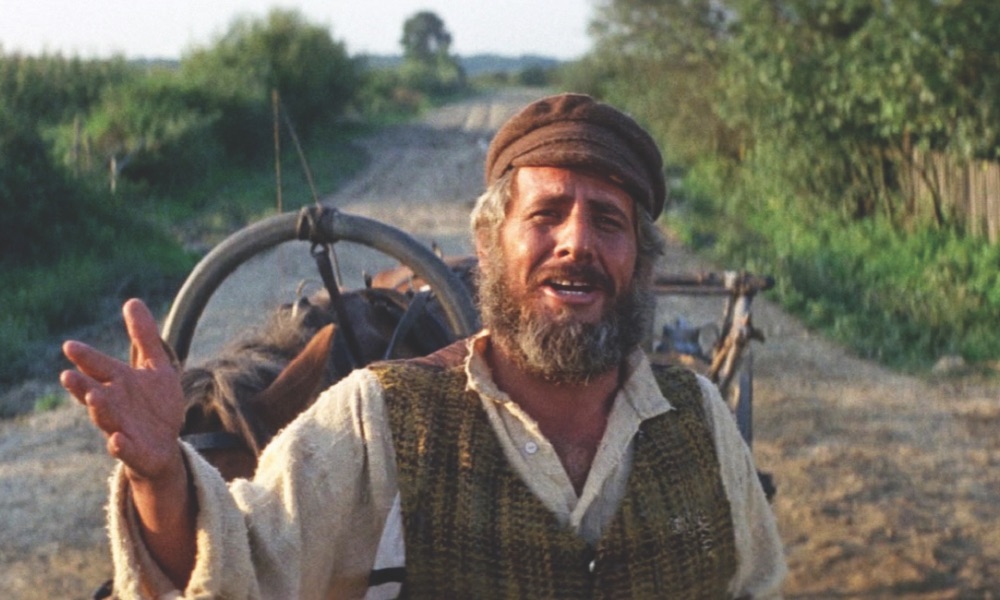
When MGM announced in May it would be remaking the classic musical “Fiddler on the Roof,” some Jewish fans became nervous. What if it messed up the casting? What if the music was botched? What if there was unnecessary CGI?
“Fiddler on the Roof’s” depiction of European Yiddish villages is a way for many of us to connect with our history. Those communities no longer exist because of violent anti-Semitism, which managed not only to kill millions, but destroy an entire culture. It’s no wonder so many of us are protective of the movie, especially in a Hollywood climate of cash-grabbing reboots.
However, the risk is worth it. With anti-Semitism becoming increasingly deadly and omnipresent, now is the perfect time to reawaken the tale of the Jewish milkman and his strong-willed daughters.
A shtetl in Ukraine, where “Fiddler on the Roof” is set. (Courtesy of Sandra Sallin)
The COVID-19 pandemic has only fanned the flames of Jew-hatred, contributing to various conspiracy theories that deem Jews the culprit of the tragedy. As civil unrest broke out in late May, the Anti-Defamation League reported there were 500,000 negative tweets a day about Jewish philanthropist George Soros, accusing the Holocaust survivor of funding looting and vandalism. The watchdog called these theories “a gateway to the antisemitic subculture that blames Jews for the riots.” Meanwhile, protesters have lashed out against Jews. In France, demonstrators took a break from advocating against police brutality to shout “Dirty Jews!” on camera.
But how can “Fiddler on the Roof” do anything to combat the rise in hatred? There certainly is no dearth of Jewish-focused movies. While a number of minorities in Hollywood are underrepresented on and behind the camera, Jewish voices are more prevalent than the coronavirus.
But “Fiddler on the Roof” is special. It stands out in its cross-cultural success. The musical has been a massive hit in Japan for decades, despite there being a microscopic Jewish audience in the country. The show’s strong themes of intergenerational conflict have hit close to home. Jessica Hecht, who played Tevye’s wife, Golde, in the 2015 Broadway revival, told The New Yorker “that a journalist from Tokyo, conducting an interview with her and [her co-star Danny] Burstein … cried as she explained to them how faultlessly the show portrays a Japanese family.”
“Fiddler on the Roof’s” ability to transcend cultures and generations made it a hit, and it also makes it an effective tool in the fight against anti-Semitism. The music is as catchy as the empathy for its characters and all the Jews for which they seem to magically represent.
NEW YORK, NY – JUNE 12: The cast of ‘Fiddler on the Roof’ performs onstage during the 70th Annual Tony Awards at The Beacon Theatre on June 12, 2016 in New York City. (Photo by Theo Wargo/Getty Images for Tony Awards Productions)
What’s even more astonishing is that it’s beloved, dare I say universally, among Jews. In a community where disagreement has become essentially a religious practice, you will be hard-pressed to find a Jew who takes offense at “Fiddler on the Roof,” even as numerous other once-beloved classics are canceled. Meanwhile, more contemporary depictions of Orthodox Jews have been the subject of mass criticism — highlighting divisions within the community at large.
“Fiddler on the Roof’s” power lies not only in its vast fandom, but its unique depiction of Jewish life.
Jewish-themed cinema often focuses on the Holocaust and portrays Jews through the lens of their persecution. We rarely see Jewish communities before they are ravaged. “Fiddler” is different. Most of its screen time is spent affectionately exploring the layers of Jewish life. We not only absorb traditional Jewish practices, but the debates around them. Then we’re invited to be guests at a Jewish wedding and twirl with bottle dancers as Klezmer strings “Idle-diddle-daidle-daidle” through our ears. While the film does not shy away from the pogroms that terrorized Ukrainian families like that of protagonist Tevye, it gives audiences a chance to know and love them beforehand.
“Fiddler on the Roof’s” ability to transcend cultures and generations made it a hit, and it also makes it an effective tool in the fight against anti-Semitism.
This approach to telling the story of anti-Semitism is so innovative, it has been adopted by premier institutions on the subject. The Holocaust museum in Israel, Yad Vashem, employs the same storytelling tactics. Its first exhibit pays tribute to the Yiddish villages of Europe. It opens by featuring the hallmarks of families just like Tevye’s – their milestones, customs and beauty. The principal display aligns with the greater narrative of the museum, which features personal stories of 90 Holocaust victims and survivors, with approximately 2,500 of their personal items.
Avner Shalev, the museum’s curator and chairman, explained that this humanist approach challenges visitors to look “into the eyes of the individuals. There weren’t 6 million victims, there were 6 million individual murders.”
Showing the intimate lives of Jews establishes their humanity. It forbids us from being numb as we watch their personhood be stripped away. In an era where we, as Jews, feel so isolated — even before a global pandemic necessitated lockdown — “Fiddler on the Roof” brings us together with our fellow Jews and the world at large.
As Elie Wiesel wrote, “The opposite of love is not hate, it’s indifference.” And “Fiddler on the Roof” remains an extraordinary antidote to apathy, even in remake form.
I am inspired by the recent protests against racism and police brutality in the United States. These spasms of resistance are completely necessary and remind non-black citizens of just how unequal our society is, how threatened the black community feels on a daily basis and how much racism has been allowed to run amok in our institutions.
I attended a protest last week in Phoenix, Az., where I stood in solidarity with thousands of black, Hispanic, Asian, white, queer, Muslim, Jewish people and more, against the evils of white supremacy in our law enforcement and beyond. It was nothing short of a religious experience. Every voice was lifted in song in chants of “Black Lives Matter.” Unity against the forces that perpetuate bigotry and hatred in this country is breathtaking to witness. It’s important to emphasize that the vast majority of those fighting for a better, more equal America, are doing so in good faith and without sinister intentions. Unfortunately, a select few have chosen to warp the spirit of this noble cause, and by doing so, have weakened the movement.
In alignment with the actions of millions around the world, these agents of chaos have used political frustrations to drag Jews and Jewish peoplehood into the spotlight. In their view, white supremacy in the United States is directly linked to Jewish autonomy in their indigenous homeland. In their view, black liberation is intertwined with Palestinian “right of return” and the eradication of a Jewish state. This twisted manipulation of social justice in order to attack Jewish people is nothing less than classical anti-Semitism.
CHICAGO, IL – DECEMBER 14: Demonstrators with Jewish Voice for Peace Chicago protest President Donald Trump’s decision to recognize Jerusalem as the capital of Israel on December 14, 2017 in Chicago, Illinois. The decision by the Trump administration has provoked protest throughout the U.S. and the Middle East. (Photo by Scott Olson/Getty Images)
Perhaps there are similarities between Israeli law enforcement’s bias against Palestinians and the biases of American police against black people. It’s true, killings of unarmed Palestinian men are common in Israel and in the occupied territories, most notably, the murder of an autistic Palestinian man in East Jerusalem several weeks ago. And yet, I find myself wondering how many countries we can locate on a map where state law enforcement is unethically biased against a particular group of people. I am not justifying racism in law enforcement anywhere, but why choose Israel, the only Jewish state, to directly connect racism in the United States? It may be a response to the “deadly exchange,” which references the United States and Israeli security forces’ history of training together to combat terrorism. Some conclude that racism rubs off on both units as a result of this cooperation, and therefore the targeting of black Americans and Palestinians is connected.
While I am against American law enforcement being trained in conjunction with Israeli forces, I can’t help but see the obvious anti-Semitic tropes lingering in the “deadly exchange” rhetoric, that somehow the Jews are involved in America’s white supremacy problem, that somehow the Jews are encouraging unrest and discord in America’s body politic. Antisemitic right-wingers have co-opted this conspiracy theory in their own way, pointing to George Soros and his malicious puppet-mastery as the cause of racial unrest. It remains offensive to imply that Jews, also victims of white supremacy and white nationalism, are somehow connected to the murder of black men in the United States when the United States has been grappling with racial injustice for centuries.
Anti-Semitism thrives in social chaos.
But that is exactly what the anti-Semite wants to see. The constant tethering of Israel to progressive causes, be it “LGBTQ folk for Palestine,” or “From Standing Rock to Palestine,” has little to do with Israeli policy or justice for Israeli Defense Force soldiers who act immorally, and has more to do with isolating Jewish voices from progressive movements and vilifying Jews, all Jews, in these spaces. Anti-Semitism thrives in social chaos. The small minority of racial justice activists who have chosen to link the presence of a Jewish state (and only this state) to the fight against racism in the United States are using chaos, as so many anti-Semites have done before, to scapegoat the Jews and target them. They are no friend to the fight for racial, criminal and environmental justice. Put simply, they don’t like Jewish people and are using every chance they can get to rally troops for their cause.
It’s also important to emphasize that these activists are not criticizing Israeli policy or Israeli settlements or potential annexation of the West Bank. Such criticism should be welcomed in progressive spaces, and often. But rather, these individuals, who are not one race or one ideology, are militantly advocating for the destruction of a Jewish state and violence against Jewish people, and usually attach a myriad of classical anti-Semitic tropes in doing so.
We cannot overlook the virus of Jew-hatred when it infects a movement we should be proud to be a part of.
In fact, much of the anti-Semitic rhetoric that is spreading like wildfire has nothing to do with Israel at all. I have seen hundreds of tweets that seem to target Jews with labels such as “white supremacists,” “greedy,” “landlords,” “cheap.” There seems to be a new wave of direct attacks on Jews using manipulated classical anti-Semitic language and tropes. I was uncomfortable, but not at all surprised, when Paris broke out into chants of “Dirty Jews!” at an anti-racism protest this week. Though Palestinian flags were waving, this chant has nothing to do with Israel/Palestine and everything to do with hating Jewish people. It seems the anti-Semites have found a way to hijack that movement as well. We cannot let them do the same to racial justice activism in America.
I am inspired by the Jews and Jewish organizations who have taken a stand with Black Lives Matter. We as a community must do more in the fight against racial injustice, and that includes calling out prejudice and bigotry within our own circles. But we cannot overlook the virus of Jew-hatred when it infects a movement we should be proud to be a part of. Jews must remain vocally in support of the movement for racial justice, for we too are threatened (though the comparison is minute) by white supremacist violence in this country. But we cannot compromise on our safety in these spaces, especially when activists with large platforms warp much needed social justice movements as a method to target Jews.
It’s what Israeli Jews say to Diaspora Jews on social media after traumatizing events happen abroad.
They conveyed this to American Jews after the Pittsburgh synagogue massacre, the attacks in New Jersey and New York and the Poway Chabad shooting. They’re saying it again amid the coronavirus crisis and rioting, looting and violence happening throughout the United States in the wake of George Floyd’s death.
They are encouraging us to make aliyah, to get away from the problems here and to live under the protection of a Jewish military. They say they want us to come and be with our Jewish brothers and sisters in the Holy Land, where we belong.
I wish it were so simple.
Don’t get me wrong: I love Israel. I want to live there one day. I could see myself in a nice little apartment by the beach, where my husband and I are happily crammed in with our daughter and future children, waking up every day to the sweet smell that seems to permeate the air.
Israel has a special place in my heart because it’s where my husband and I got engaged. One snowy January night in Jerusalem, he took me to the Kotel and popped the question. Afterward, with happy tears streaming down my face, I stood in the women’s section — which was completely empty — and davened for our future, feeling HaShem’s presence more strongly than I ever had before.
I’ve gone back and forth about aliyah many times.
The other times I’ve visited Israel, I’ve cried on the plane trip home. I wasn’t born Jewish but still it feels like I belong there.
When scary anti-Semitic attacks started to occur in the United States, I collected my documents to make aliyah. But as things began to calm down and I felt safe again, I abandoned my plan. Talking to Americans about it convinced me it was the wrong move.
So many people told me how hard it is. They’d say, “You know how you make $1 million in Israel? You go with $2 million” or “Oh, it’s much scarier there.” Another excuse I often heard: “A lot of people fail because they don’t connect with the culture and come back to America within a few years.”
I also hesitated because I love America and I enjoy living in Los Angeles. I have a community. I understand the language and the culture. I would be sad to leave my family, friends, synagogue and creature comforts.
I’ve gone back and forth about aliyah many times. When the coronavirus first hit, I watched a video of Israelis gathering on their porches to sing Pesach songs together. I thought, “I wish I was there.” I wanted to be with my Jewish family.
It seems as if it’s becomingly increasingly scary to be a Jew in America, with attacks and anti-Israel sentiment coming from people on the left and the right. During the protests in L.A., someone tagged Congregation Beth Israel on Beverly Boulevardwith derogatory comments about Israel. Before the coronavirus pandemic, I refused to attend a synagogue that didn’t have an armed guard, and when shuls are open again, I’ll do the same. Things are getting hostile here for the Jewish community, and I can only pray that history doesn’t repeat itself.
I want to make aliyah. But the truth is, when I do decide it’s time to go, I won’t make my decision out of fear. I refuse to feel like I was kicked out of America or that I had to flee. I want to go to the Holy Land for a positive reason, and hopefully leave behind a country that becomes a better place for everyone to live in.
For now, I keep thinking about the David Ben-Gurion quote, “In Israel, in order to be a realist, you must believe in miracles.” When I do go, it’ll realistically be the best time for me — and a miracle that I could finally live out my dream.
Kylie Ora Lobell is a Journal contributing writer.