fbpx

June 4, 2020

Petition Launched Calling for UC Divestment From Israel in Response to Police Brutality

A petition was launched on June 1 calling for the University of California (UC) to divest from companies that conduct business with Israel, to combat police brutality.

The Algemeiner reported the petition, which included endorsements from various UC Students for Justice in Palestine (SJP) and College Democrats chapters as well as individual students and faculty members at UC schools, calls for the UC to end contracts with all university police. The petition states that until the UC does so, it is “complicit in racism.” The petition then goes onto call for divestment from Israel.

“We also call on the UC to divest from companies that profit off of Israel’s illegal military occupation of Palestine, investments that uphold a system of anti-Black racism in the US,” the petition states. “We know the Minneapolis police were also trained by Israeli counter-terrorism officers. The knee-to-neck choke-hold that [Derek] Chauvin used to murder George Floyd has been used and perfected to torture Palestinians by Israeli occupation forces through 72 years of ethnic cleansing and dispossession.”

It added that “police departments view Israeli Defense Force tactics as models for responding to ‘public health and safety crises.’ ”

Jewish groups condemned the call for divestment in the petition.

“It is outrageous, but sadly unsurprising, to see anti-Israel extremists shamelessly exploiting the horrific killing of George Floyd for their own political gain,” StandWithUs CEO and co-founder Roz Rothstein said in a statement to the Journal. “Abusing the pain of other communities in order to spread lies and hate is their M.O. As we mourn George Floyd and call for justice, we must also prevent any effort to use this moment to promote anti-Semitism and divide people who should be standing together.”

Liora Rez, director of watchdog Stop Anti-Semitism, said in a statement to the Journal, “The four officers involved in the horrific murder of George Floyd never participated in an Israeli Police training program, nor did anyone from their department. From veganism to the LGBTQ movement to now George Floyd, we are seeing the anti-Semites at BDS [boycott, divestments and sanction] lie and hijack yet another social justice movement in order to spread their Jew hatred.”

Associate dean and director of Global Social Action Agenda at the Simon Wiesenthal Center Rabbi Abraham Cooper told the Algemeiner that the BDS movement seems to be attempting to link the May 25 death of Floyd while in in Minneapolis police custody to Israel.

“If they [BDS] succeed in embedding that image then the rest follows: banning cooperation between police departments and Israelis, and the full menu of the BDSers, and the further demonization of Israel and her Zionist supporters,” Cooper said. “Not only must the Jewish community protest this big lie, we look to African-American leaders who have to deal with racism every day to denounce this phony screed.”

The UC did not respond to the Journal’s request for comment.

In December 2018, 10 UC chancellors signed onto a statement condemning academic boycotts of Israel.

“Our commitment to continued engagement and partnership with Israeli, as well as Palestinian colleagues, colleges and universities is unwavering,” the statement read. “We believe a boycott of this sort poses a direct and serious threat to the academic freedom of our students and faculty, as well as the unfettered exchange of ideas and perspectives on our campuses, including debate and discourse on the Middle East.”

Petition Launched Calling for UC Divestment From Israel in Response to Police Brutality Read More »

Palestinian Authority Refuses to Accept Taxes Collected for It by Israel

The Palestinian Authority is refusing to accept the taxes collected for it by Israel.

It’s part of the P.A.’s decision to boycott anything that smacks of normalization with Israel to protest the decision to unilaterally annex parts of the West Bank.

Israel has been collecting taxes for the Palestinians since the Oslo Accords in the 1990s. It takes in about $190 million each month, according to Reuters.

In recent months, Israel has deducted the amount that the Palestinian Authority pays to the families of jailed or killed terrorists.

A Palestinian Authority spokesman said it rejected the May levies “in compliance with the leadership decision to stop all forms of coordination with Israel,” Reuters reported.

P.A. President Mahmoud Abbas last month declared an end to all agreements with Israel, including security cooperation, and with the United States.

Palestinian Authority Refuses to Accept Taxes Collected for It by Israel Read More »

Norway Will Withhold Funding to Palestinians Over Textbooks It Says Promote Hate and Violence

Norway said Thursday that it will withhold half of the year’s funding to the Palestinian Authority’s education system until it stops using textbooks that promote hate and violence.

Foreign Affairs Minister Ine Eriksen Søreide made the announcement in response to a parliamentary question on the issue. She said Norwegian aid to the Palestinian education sector does not go for textbooks or other educational material, and is part of a larger program that includes donors from several countries. In 2019, the program included the construction of 220 new classrooms and 63 new public schools.

Soreide also said that she raised the issue in a meeting with the P.A.’s education minister, Marwan Awartan, on May 21 and in February with Prime Minister Mohammad Shtayyeh.

The European Union commissioned a report by the Georg Eckert Institute for International Textbook Research following a report by the NGO IMPACT-se that found incitement to hatred, violence and martyrdom in P.A. textbooks.

In May, the European Parliament passed resolutions that condemn the Palestinian Authority for continuing to teach hate and oppose EU aid to the Palestinian Authority being used for this purpose.

“The is an unprecedented decision by Norwegian Foreign Minister Ine Eriksen Søreide,”  IMPACT-se CEO Marcus Sheff said in a statement. “In carrying out the declaration of the Norwegian parliament in December 2019 to cut Norwegian aid to Palestinian education until the hate is removed from textbooks, the minister has taken a principled stand, championing the teaching of respect for the Other, tolerance and peacemaking as the way to resolve conflict.”

Norway Will Withhold Funding to Palestinians Over Textbooks It Says Promote Hate and Violence Read More »

The Rashi Button – a poem for Torah Portion Nasso

All the numbers…who are fit to perform
the service for the service

I found a musical secret in the Torah
thanks to clicking the Rashi button.
The service for the service
was revealed to be the music –
the cymbals and harps used
in service to the service.

And to think it took generations
before they agreed to allow guitar
in the service, when the oldest text
was telling us to do so all along.
I wish there was a Rashi button
I could click whenever I encountered
a long list of numbers.

Rashi, do my taxes.
Rashi, what’s for dinner?
Rashi, can you read the kid a story?
Rashi, that trash isn’t going to take itself out.

Rashi was the Alexa of his day.
Or the Siri, or the Bixby, or the Cortana
or the Hello Google, what does the
Torah mean today?
(I’m willing to shorten this poem if
one of you wants to sponsor.)

I found a musical secret in the Torah.
I’m packing up my guitar to bring it
to anyone who wants to get religious.

This is the service I’m fit to perform.


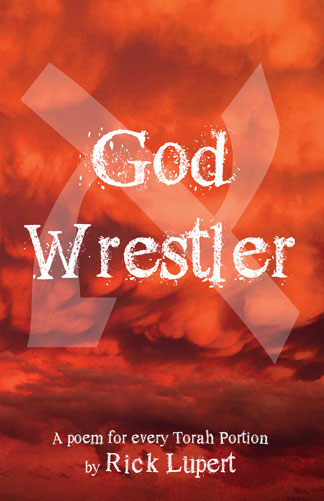
God Wrestler: a poem for every Torah Portion by Rick LupertLos Angeles poet Rick Lupert created the Poetry Super Highway (an online publication and resource for poets), and hosted the Cobalt Cafe weekly poetry reading for almost 21 years. He’s authored 23 collections of poetry, including “God Wrestler: A Poem for Every Torah Portion“, “I’m a Jew, Are You” (Jewish themed poems) and “Feeding Holy Cats” (Poetry written while a staff member on the first Birthright Israel trip), and most recently “Hunka Hunka Howdee!” (Poems written in Memphis, Nashville, and Louisville – Ain’t Got No Press, May 2019) and edited the anthologies “Ekphrastia Gone Wild”, “A Poet’s Haggadah”, and “The Night Goes on All Night.” He writes the daily web comic “Cat and Banana” with fellow Los Angeles poet Brendan Constantine. He’s widely published and reads his poetry wherever they let him.
The Rashi Button – a poem for Torah Portion Nasso Read More »

Penn State Condemns Photo of Student With Swastika on Her Back

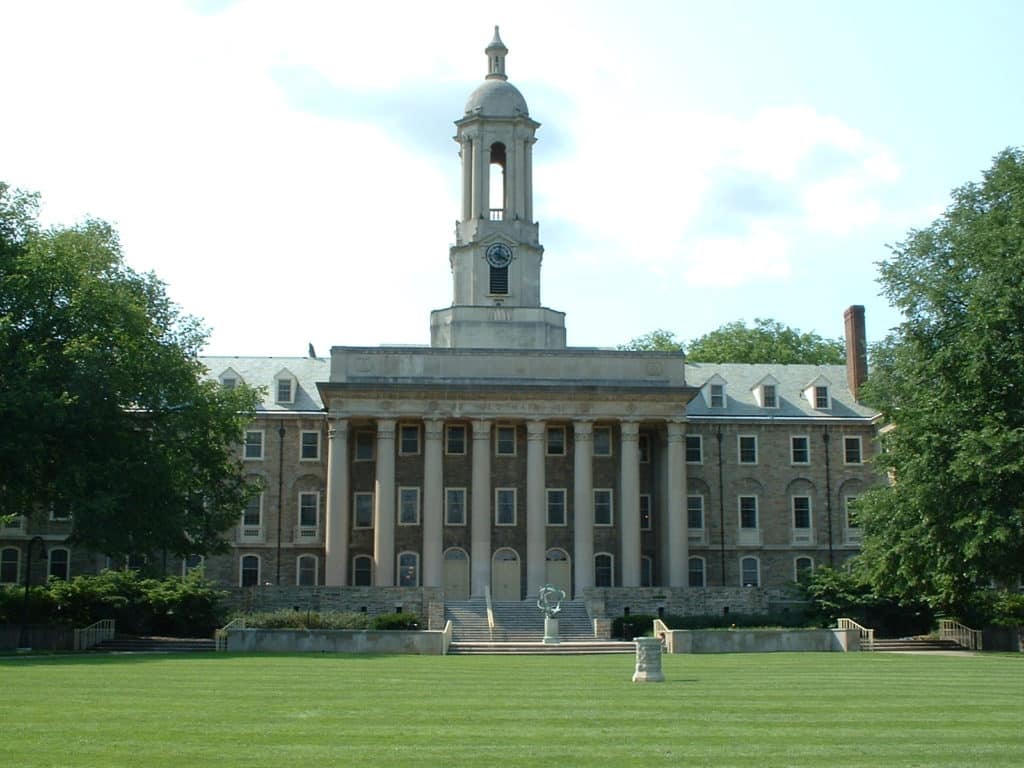
Penn State University condemned a photo circulating on social media of students showing off swastikas drawn on their bodies.

The student-run Daily Collegian reported that the photo consists of two females with swastikas drawn on the back of their left shoulders, one of which is reportedly a Penn State student. There is a third female in the picture with an unclear drawing on her back.

Penn State condemned the student in a tweet, writing: “The reported anti-Semitic post is deeply disturbing and sickening. The [university] is contacting the individual alleged to be involved. The Penn State community can visit http://equity.psu.edu for a wide range of resources.”

The university added: “We will continue to speak out against hatred and intolerance.”


Penn State THON, a philanthropy group dedicated to fighting childhood cancer, tweeted that the student was a former volunteer for the group.

“We are incredibly disappointed to see an image of a former volunteer affiliated with an anti-Semitic mark,” the group wrote. “We have not, nor will we ever, condone this behavior in any set or setting.”

The THON chapter added that the group could not discipline the student.

“We can however can ensure that there is no tolerance for anything like this within our organization,” Penn State THON wrote. “We will continue to better educate our volunteers and empower our community to spread messages of hope, love, and positivity to combat hate.”


An anonymous student set up a petition on Change.org calling for the student in the photo to be expelled.

“Allowing her to remain a student of Penn State is a disservice to all Jewish people, living or dead,” the petition states. “It sends the message that anti-Semitic actions and ideals are accepted by the university, and that Penn State doesn’t care about protecting its Jewish students, as well as other oppressed and underrepresented minorities.”

As of this writing, more than 39,000 people signed the petition.

Additionally, another Penn State student was accused of using a racial slur during a May 31 protest against the May 25 death of George Floyd, an African-American man, in Minneapolis police custody. The university condemned the student’s alleged remark in a tweet, but noted in a subsequent statement that the university cannot expel students over speech.

“A public university does not the power to expel students over speech, no matter how morally reprehensible it may be,” the statement read. “But the university does have the power to condemn racism and address those who violate our values.”

Penn State Condemns Photo of Student With Swastika on Her Back Read More »

White House Removes Social Media Posts Claiming That Antifa Put Bricks in Front of Sherman Oaks Chabad

The White House took down posts on Facebook and Twitter on June 3 stating that antifa had been put a series of bricks in front of the Chabad of Sherman Oaks.

The tweet had stated, “Antifa and professional anarchists are invading our communities, staging bricks and weapons to instigate violence. These are acts of domestic terror.”

However, Buzzfeed reporter Arieh Kovler noted that the Chabad of Sherman Oaks had issued a Facebook post on June 1 explaining the picture of supposed antifa bricks were actually part of a security barrier that the chabad had erected in response to the Chabad of Poway shooting in April 2019.

“There were false pictures going around today claiming some bricks or rocks were placed at our center,” the Facebook post read. “Here is the truth: THESE ARE SECURITY BARRIERS and have been here for almost a year! Nevertheless, to alleviate people’s concerns that they may be vandalized and used by rioters, they were temporarily removed.”

Chabad of Sherman Oaks Rabbi Menachem M. Lipskier told Jewish Telegraphic Agency that he didn’t know about the White House’s social media posts and that the June 1 Facebook post was meant to address neighbors’ concerns.

“Many neighbors asked questions, so we posted to clarify, and that’s it,” Lipskier said, adding that the area has been “peaceful.”

Antifa is short for anti-fascist; the political protest movement says that it combats fascism and racism. President Donald Trump tweeted on May 31: “The United States of America will be designating ANTIFA as a Terrorist Organization.” Attorney General Bill Barr said on June 4 that the Department of Justice has evidence antifa and other extremists are behind the violence at some of the demonstrations. Antifa isn’t an organization with a membership or an official leader.

The Anti-Defamation League (ADL) has not yet documented any instances of violence caused by antifa during the demonstrations against the May 25 death of African American George Floyd in Minneapolis police custody; the Jewish group says that anarchists and people who are nonideological have been behind the violence at the protests.

Snopes.com reported on June 3 that neither Trump nor his administration has the legal authority to declare antifa a terrorist organization. The Tampa Bay Times reported that experts said “there is no legal process for designating domestic groups as terrorist organizations,” and that if the Trump administration sought to do that, the move likely would be challenged in court.

White House Removes Social Media Posts Claiming That Antifa Put Bricks in Front of Sherman Oaks Chabad Read More »

Some Thoughts About Being Safe

In a recent “Fireside Chat,” my weekly video podcast on the PragerU platform, I commented on society’s increasing fixation on being “safe.” The following is a condensed version of what I said:

We have a meme up at PragerU: “Until it’s safe” means “never.”

The pursuit of “safe” over virtually all other considerations is life-suppressing. This is true for your individual life and for the life of a society. I always give the following example: I have been taking visitors to Israel for decades, and for all those decades, people have called my radio show to say, “Dennis, I would so love to visit Israel, but I’m just going to wait until it’s safe.” And I’ve always told these people, “Then you’ll never go.” And sure enough, I’ve gone there more than 20 times, and they never went.

I have never led my life on the basis of “until it’s safe.” I do not take ridiculous risks. I wear a seatbelt because the chances are overwhelming that in a bad accident, a seatbelt can save my life. But I get into the car, which is not 100% safe. You are not on Earth to be safe. You are on Earth to lead a full life. I don’t want my epitaph to be, “He led a safe life.” It’s like another epitaph I don’t want: “He experienced as little pain as possible.” The nature of this world is such that if you aim for 100% safety and no pain, you don’t live. I have visited 130 countries, some of which were not particularly safe. Safe, as in “no risk,” doesn’t exist. Accepting there are degrees of safety and balancing risk with reward are part of the reason I’ve led a rich life.

I started teaching myself to conduct an orchestra when I was in my teens. I have conducted orchestras periodically for much of my adult life. As a guest conductor, I raise funds for orchestras, as I did two years ago at the Disney Concert Hall, where I conducted a Haydn symphony with the Santa Monica Symphony Orchestra. I rarely get nervous. But the first time I conducted, I was so nervous I was actually dripping sweat onto the score, and it was only a rehearsal. I did not play it safe. Playing it safe would have meant I wouldn’t have accepted the invitation to conduct.

All of life confronts you with this question: Are you going to take risks or play it safe? If you play it safe, you don’t get married. If you play it safe, you don’t have kids. There are real risks in getting married; there are real risks in having children.

Take the issue of the word “safe” on campuses. “Safe” is used to suppress freedom of thought: “If we have a conservative speaker on campus, we need a ‘safe space’ where we can avoid feeling discomfort from exposure to ideas we don’t like.” Some students go to a “safe space” where they’re given Play-Doh, hot chocolate and stuffed animals. I’m not joking. That’s why Adam Carolla and I named our movie about free speech “No Safe Spaces.

“Safe” has become a dirty word. I rarely use it in the context of living life. It’s one of the reasons I’m a happy person and have led a full life. I’m thinking of a trivial example, but life is filled with trivial examples. Most of life is not major moments. If I am at a restaurant and my fork or knife falls, I pick it up and use it. They rush over to give me a new one, like I am flirting with death if I take the fork from the floor. My view is there’s no reason to come over. The fork fell on the floor. What did it pick up? Diphtheria? Am I going to get pancreatic cancer from a fork that fell? I’m not troubled by these things.

“Safe” is going to suppress your joy of life. When I was 21, I was sent to the Soviet Union to smuggle in religious items for Soviet Jews and to smuggle out names of Jews who wanted to escape. I was in a totalitarian state, smuggling things in and out. But it was one of the most important things I’ve done in my life, not to mention a life-transforming experience.

 You are not on Earth to be safe. You are on Earth to lead a full life.

Before I went, I told my father about my plans. We both knew it wasn’t safe. I’ll never forget what my father said: “Dennis, I spent 2 1/2 years on a Navy ship in World War II, fighting in the Pacific. So, you can take risks for a month.”

He was an officer on a troop transport ship, a prime target of the Japanese. He wasn’t safe. The World War II generation has been dubbed “the greatest generation.” Part of what made them great was the last thing they would ever ask was, “Is it safe?”

If you want to lead a good and full life, you cannot keep asking, “Is it safe?” Those at colleges promoting “safe spaces” are afraid of life, and they want to make you afraid of life. We’re going crazy on the safety issue. It is making police states. That’s my worry: In the name of safety, many Americans are dropping all other considerations. “Is it safe?” shouldn’t be the overarching element in your life. Pick the fork up. Wipe it off. And use it.

Postscript: Some left-wing media cited the remarks about picking up a fork in order to smear me and the message. The Daily Beast led with: “Dennis Prager Licks Dirty Forks To Show COVID Who’s Boss.” And the Daily Mail: “Right-Wing Radio Host Dennis Prager Boasts About Using Dirty Forks From Restaurant Floors in His Latest Rambling Message Downplaying Dangers of Coronavirus That Has Now Killed 88,000 Americans.” As is obvious, my talk was about “being safe,” not the coronavirus.


Copyright 2020 creators.com. Dennis Prager is a nationally syndicated radio talk show host; president of PragerU, which has 1 billion views a year and author most recently of volume two (“Genesis”) of the bestselling Torah and Bible commentary in America, “The Rational Bible.” Reprinted with permission.

Some Thoughts About Being Safe Read More »

Black Jewish Woman Speaks out on Racism She Experienced at L.A. Jewish Day Schools

After witnessing how the death of George Floyd opened the floodgates of black Americans discussing racism, 22-year-old Los Angeles resident Chana Hall decided it was time to tell her own story. Her experience was not about police brutality, but the mistreatment she had experienced as a black child at Jewish day schools.

Hall posted on her Facebook page: “What I am posting is no way to draw hate to the Jewish community. As a black Jew, I’ve never faced more racism in my life than I have from the Jewish community and Jewish schools.”

The post, which Hall later deleted (she told the Journal she feared she would be targeted), described how she switched high schools due to the racism she experienced.

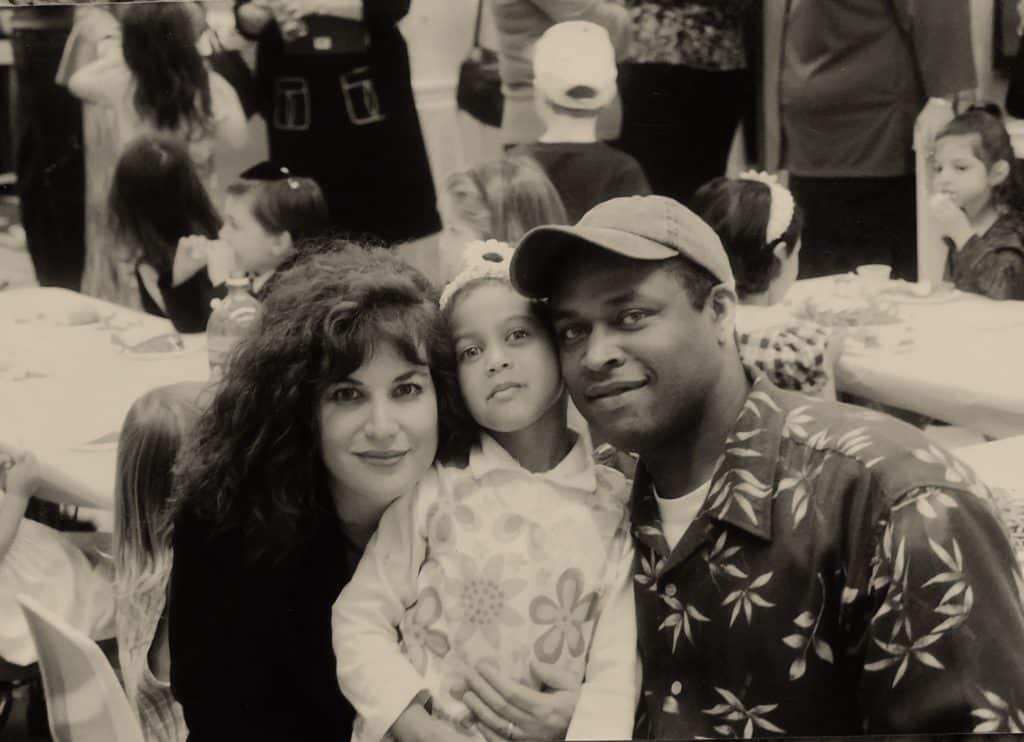
Hall, who was raised Orthodox, was born to an Ashkenazi Jewish mother and a black father who converted to Judaism. She told the Journal her experiences with racism have discouraged her from being more observant in her adult life.

“I love the Jewish community and I am proud to be apart of it,” she told the Journal. “I grew up very Orthodox. As I grew up, I grew less and less religious.” In her FB post, she wrote, “Over the course of my childhood I would become increasingly aware of the stares I received when attending temple with my family and it made me very uncomfortable, and eventually due to this just becoming less religious. I stopped attending temple.”

The post also stated, “It’s funny, because a lot of the people in my first high school are the ones on here preaching about BLM (Black Lives Matter) and supporting the black community, when not too long ago they said the most outrageous things,” she wrote.

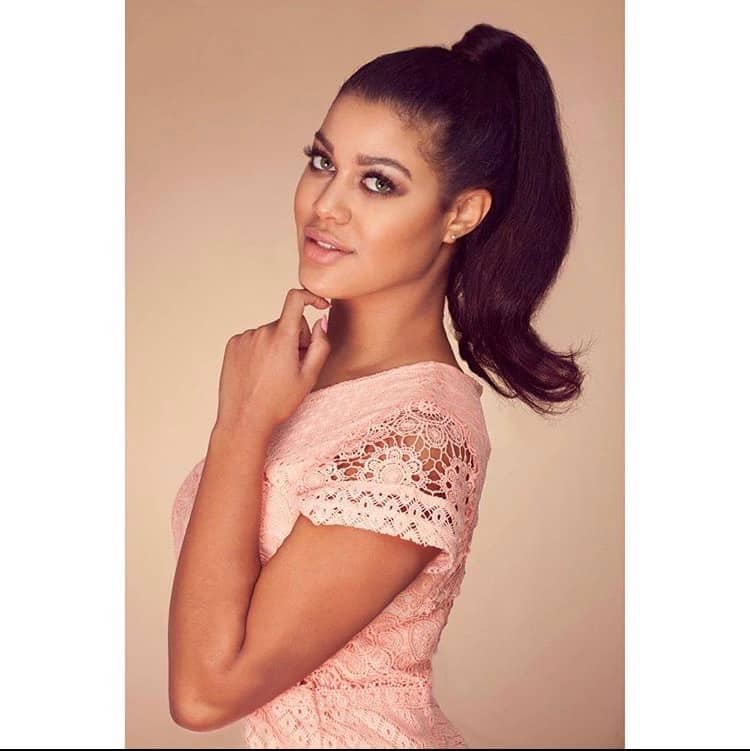
Chana Hall, today.

“The Jewish schools I’ve gone to, I’ve had a good amount of Jews who were nice to me,” Hall said. However, she posted that one particular school is  “where I heard my first racial slur.”

It was at that school, Hall continued in her FB post that she and her brother were two out of the three African American students. She said in the fifth grade another student called her the n-word, but “when I told a teacher, they didn’t care and brushed it off.” Hall also told the Journal that when she was in second grade, administrators told her father she could not wear her hair in braids because “it was basically too ethnic.”

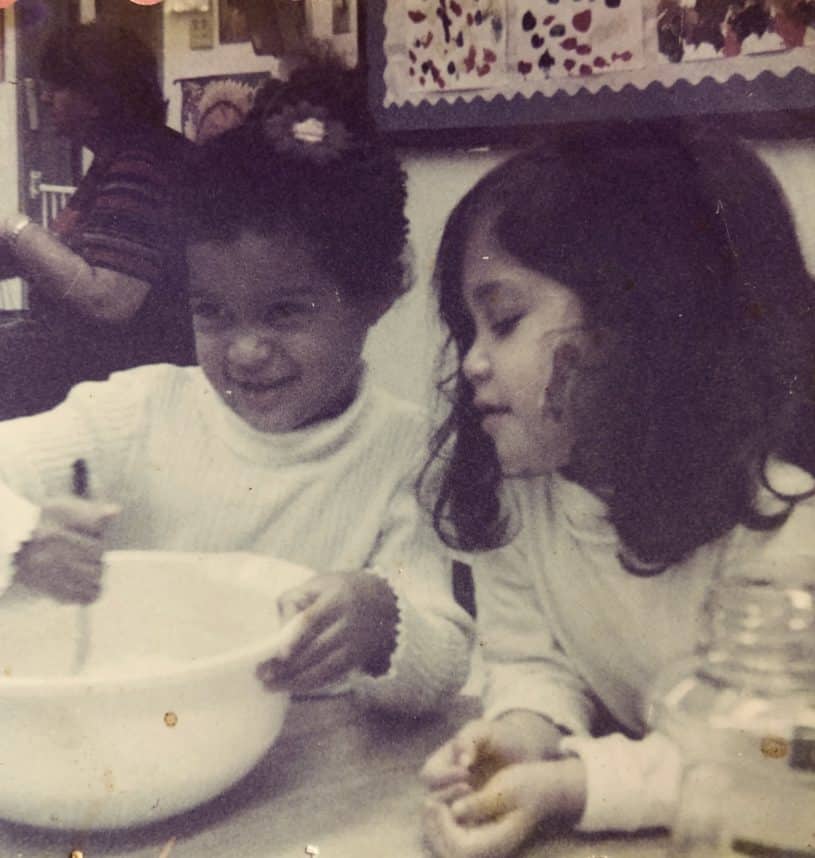
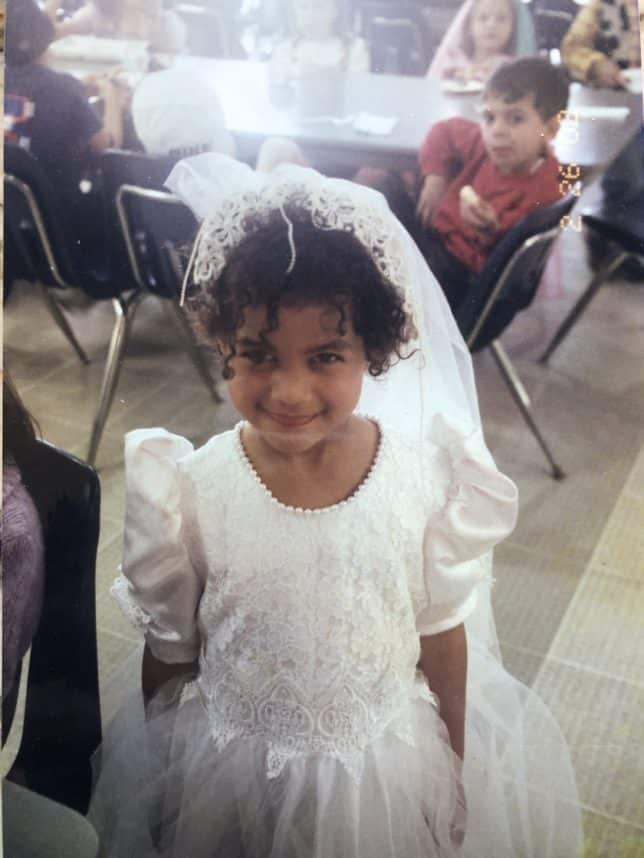
Hall as a child making challah with her cousin Tehila Schechet. Photo Courtesy of Chana Hall.

Hall’s father, Gary Hall, told the Journal initially he wanted to complain about the rule, but decided against it. “We were still relatively new to the community here and had to find our niche. Kicking up dust was not a good idea,” he said. “Plus, the choice of [religious] schools was pretty thin. [The school we chose] was all we had so I swallowed…begrudgingly.”

He added he gave his children “clearly Jewish names because I wanted them to feel like they belonged to the Jewish community no matter where they go. It kills me that my daughter was driven away from the community because of her skin color.”

Hall said she continued to experience bigotry even when she switched to a different Jewish high school in the area. She said of her second school, “I had the most horrendous things said to me. I had someone say, ‘What color noose do you want to be lynched with?’ at lunch.” She added someone on her dance team told her, “Coach put you in the back in front of the black curtain so no one can see you.”

Gary added that his daughter only recently started sharing her experiences with racism at school with him. “I did not expect that in a religious school, and I didn’t expect it in a liberal Jewish school,” he said. “I wish I had known before. I’d have cracked the earth to protect my child from that kind of abuse from the student body, and more so, the apathy of the school officials [at both schools].”

Hall said she believes a lack of education on race and black history in the Jewish day schools she attended contributed to the racism she experienced.

Chana Hall dressed as Queen Esther at a school event.

“The majority of my life was spent in Jewish day schools, and we weren’t really taught about race and blacks and slavery,” she said. “Because there’s a lack of education on it, there’s not a lot of sensitivity towards people of color.”

Today, Hall is a business major studying global supply chain management at California State University, Northridge, where she feels more accepted. She said she believes many people with an exclusively Jewish education are unprepared to participate in the conversation America is having around race right now.

“Once you get to a public school…you’re more exposed to the outside world and get more of a sense of how other races are and how they relate to you,” she said. “That’s what Judaism really teaches us, to love all Jews no matter who they are or what they look like. This isn’t only about black Jews – this includes Hispanic Jews, Asian Jews, Jews of all races and colors. I feel like that message gets lost in exclusively Jewish day schools where the majority of the history we are taught is focused on Jewish history.”

She added that teaching Jewish children about Jewish heritages outside of Europe could fix the issue.”We only solely focus on our past,” she said, “Not what’s going on in the future.”

Black Jewish Woman Speaks out on Racism She Experienced at L.A. Jewish Day Schools Read More »

david suissa podcast curious times

Pandemic Times Episode 52: Dealing with the Rise of Jew-Hatred

New David Suissa Podcast Every Morning.

Author Severyn Ashkenazy discusses the plague of anti-Semitism and his new book, Swords of the Vatican, Reflections of a Witness to Evil.

How do we manage our lives during the coronavirus crisis? How do we keep our sanity? How do we use this quarantine to bring out the best in ourselves? Tune in every day and share your stories with podcast@jewishjournal.com.

Pandemic Times Episode 52: Dealing with the Rise of Jew-Hatred Read More »

‘Mrs. America’ Is a Love Letter to Jewish Women

Although Phyllis Schlafly has become notorious for her role in impeding the Equal Rights Amendment from becoming ratified, the FX series “Mrs. America,” which chronicles her life in the 1960s, highlights her greater effect on U.S. politics: awakening the religious right.

The series depicts how although Schlafly, portrayed by Cate Blanchett, was the symbol of a satisfied American homemaker, she had political ambitions. She was on the frontlines when it came to rallying Christian women, who were particularly incensed by the recent legalization of abortion. Schlafly enlisted thousands to her direct mailing list. In the show, Schlafly is intent on becoming the Secretary of Defense, and handing over her vast grassroots contacts was integral in helping Ronald Reagan becoming president.

Who could stand up to a figure as formidable, organized and savvy as Phyllis Schlafly?

Jewish women.

“Mrs. America” explicitly celebrates the Jewish pioneers of second-wave feminism, dedicating episodes to Gloria Steinem, Bella Abzug and Betty Friedan. As it frames the fight over the Equal Rights Amendment around a bigger culture war between “family values” — often a pseudonym for Christian dogma — it highlights how a group of outspoken Jews was the perfect foil.

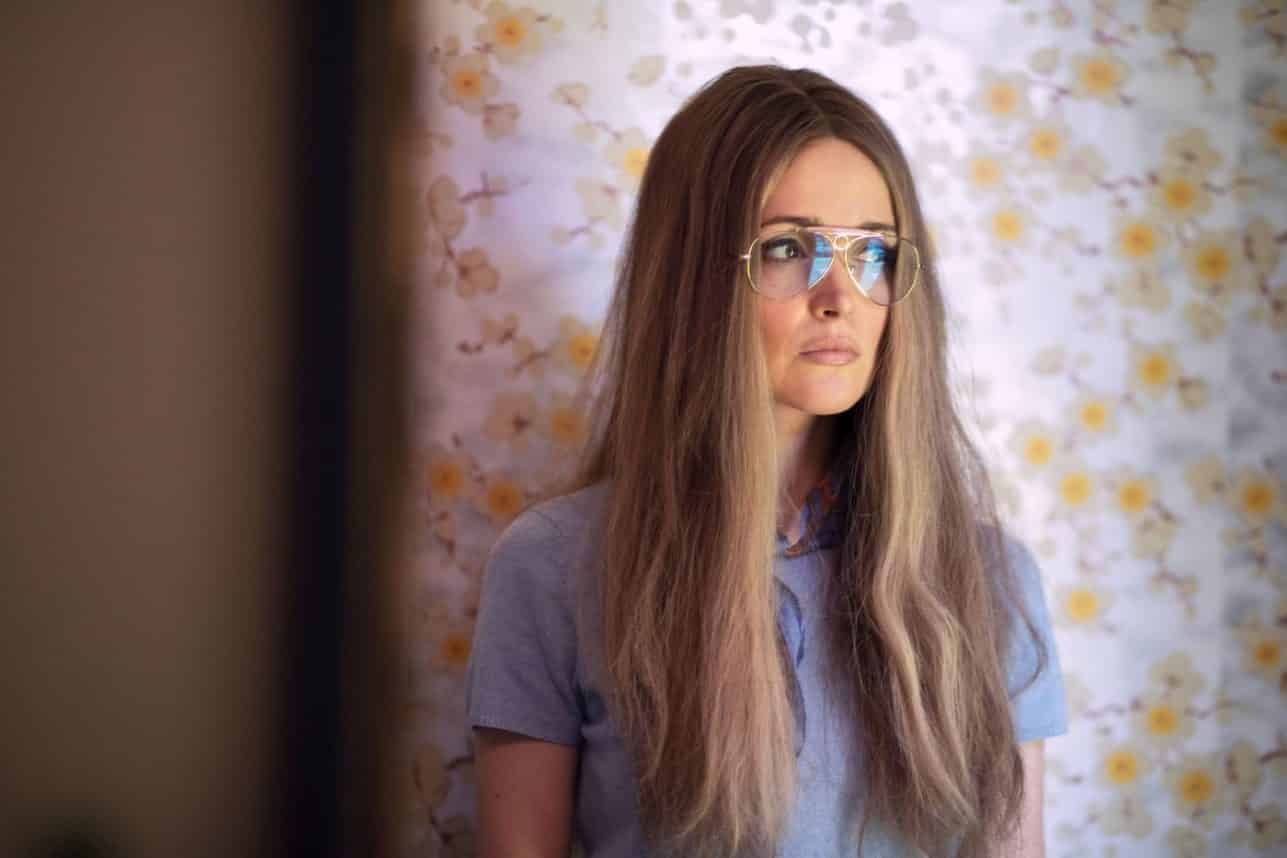
First, there was Steinem. Born to a Jewish father, she is portrayed as glamorous but representative of the Jews in the 1960s committed to racial justice and inclusion. In the series, Steinem (played by Rose Byrne) refuses to compromise when it comes to making space for queer and black women, even when it makes legislation harder to pass. She is unwavering in her support of Shirley Chisholm (played by Uzo Aduba), the first black woman elected to the United States Congress as she runs for president, even when that alienates more established politicians from the feminism movement. Steinem resembles many Jewish women today who believe their liberation is bound to the freedom of all targeted minorities.

Rose Bryne as feminist icon Gloria Steinem in “Mrs. America.” Credit: Sabrina Lantos/FX

In real life, Steinem used Jewish tradition to promote sisterhood. For 20 years, the feminist icon has held “sister seders,” where she invites women over for Passover. In 1976, she attended what likely was the first seder in history to be held by women only, re-envisioning the holiday through a feminist lens. The story of the four sons was changed to four daughters, the four questions revised to reflect women’s questions, and 10 extra plagues that drain modern women were added, such as self-loathing, envy and sexist discrimination.

Who could stand up to a figure as formidable, organized and savvy as Phyllis Schlafly? Jewish women.

Steinem is at odds with another Jewish feminist icon, Betty Friedan (played by Tracey Ullman). Historically, Friedan was arguably the founder of second-wave feminism. Her book “The Feminine Mystique” coined “the problem that has no name,” describing how American women had a “strange stirring, a sense of dissatisfaction” from being confined to home life and deprived of greater ambition and opportunity in the world. She founded the National Organization for Women, and many feminists at the time credited her work for calling them to action. She also led a life of intrinsically Jewish activism, leading a delegation of “Women as Jews, Jews as Women” to engage in a dialogue about the United States-Israel relationship, which resulted in the founding of the Israel Women’s Network.

However, in the series, Friedan is a struggling single Jewish mother to both her daughter and the feminist movement. She feels unappreciated and ostracized, partially because of her regressive views on LGBTQ equality. Yet, she wrestles with a stereotype by which many Jewish women still are plagued: being too difficult. She grapples with being painted as a Jewish bulldog against Schlafly’s mannerly mischief and not fitting the more white, Anglo-Saxon Protestant depiction of a lady — as well as the more mainstream, glamorous depiction of feminism Steinem portrays.

However, the show sits in that reality and gives us an empathic depiction of Friedan, her loneliness and her desire to be acknowledged in her personal, professional and political lives.

Tracy Ullman as Betty Freidan in “Mrs. America.” Credit: Sabrina Lantos/FX

“Mrs. America” highlights how Friedan becomes more accepting of queer women. In a moving scene, she seconds a lesbian-rights resolution “which everyone thought I would oppose” at the National Women’s Conference in 1977. Historically, Friedan went on to advocate for lesbians at the United Nations during the AIDS crisis in the 1980s.

One of the most heartfelt and undeniably Jewish moments in “Mrs. America” is when Friedan offers to make homemade chicken soup for stressed-out Bella Abzug (played by Margot Martindale), who is unapologetically Jewish on- and off-screen.

Congresswoman Abzug, known as “Battling Bella,” was not only one of the first women in Congress, but a founder of the National Women’s Political Caucus. In the show, she represents the strong tradition of Jewish activism within legal and political systems, making hard compromises and strategic policies. However, historically, Abzug’s feminism is intrinsically tied to her Judaism.

The only child of Russian Jewish immigrants, Abzug ideologies were cemented after her father died when she was 13. Her Orthodox synagogue refused to allow her to say the mourner’s Kaddish for him because she was a woman. Since there were no men in the family who could pay that spiritual tribute to her father, Abzug began her life of feminist activism by going to synagogue every morning to recite the prayer anyway. Despite the sexism she experienced within Judaism, Abzug never abandoned that identity, and even attended the Jewish Theological Seminary.

Bella Abzug’s feminism is intrinsically tied to her Judaism.

“Mrs. America” honors Abzug’s strong and complicated Jewish identity. On the show, she experiences anti-Semitism and is acutely aware of it. “Mrs. Carter thought you were pushy and loud,” the assistant to the president tells her in Episode 7. “You know that’s code for Jewish,” Abzug fires back.

Unlike Friedan, Abzug embraces her pushiness. She’s proud to be overbearing, despite understanding that people will weaponize it against her. The series allows Abzug moments to interact with her religious identity in a more joyful way. “I couldn’t get elected president of the brunch chapter of Hadassah,” she jokes in one scene.

Although “Mrs. America” bills itself as a series about Phyllis Schlafly, it’s truly a love letter to the Jewish women who stood against her and for other women. At the end of the series, Schlafly’s closest allies and personal friends splinter from her and her movement. But when Abzug is unfairly fired as head of President Jimmy Carter’s National Advisory Commission for Women, every member resigns. The heroes in “Mrs. America” and its creators remain loyal to “pushy and loud” — aka Jewish  — women, despite everything.

“Mrs. America” currently is streaming on Hulu.


Ariel Sobel is the Journal’s social media editor.

‘Mrs. America’ Is a Love Letter to Jewish Women Read More »