fbpx

May 26, 2020

Iran Law to Ban the Use of Israeli Technology

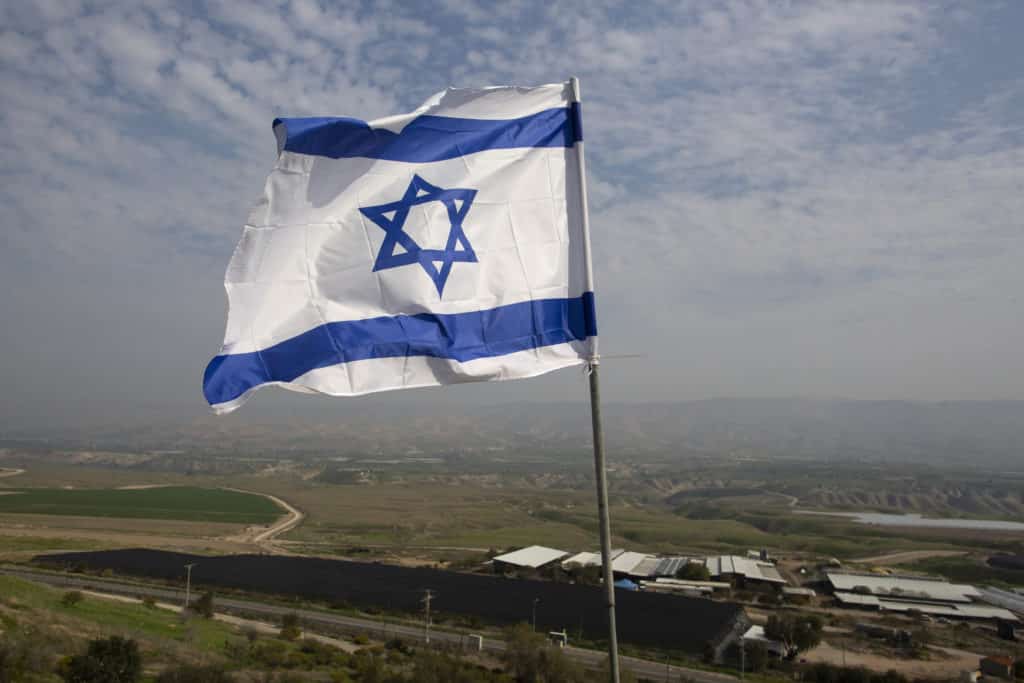
Iran has lowered the boom on Israeli high-tech.

A bill passed last week on “confronting the hostile acts of the Zionist regime against peace and security” prevents any cooperation with Israel. That means the purchase and use of Israeli technology such as computer hardware and software, the Iranian Fars News Agency reported.

President Hassan Rouhani issued the implementation order on Tuesday, according to Fars, the semi-official news agency of the Iranian government.

The Iranian parliament’s National Security and Foreign Policy Commission, Seyed Hossein Naqavi Hosseini, said earlier this month that “any cooperation or spying for the Zionist regime is equal to enmity towards God and corruption on earth,” Fars reported.

The law calls for action against Israel’s “warmongering and terrorist moves, siege (of Gaza), settlement construction, displacing the Palestinian people, and occupation of countries’ lands, including Golan.”

In March, the Iranian cleric Grand Ayatollah Naser Makarem Shirazi said it would be permissible to use a future vaccine against the coronavirus developed by Israel if “there is no substitute.” But he also said that, in general, “It is not permissible to buy and sell from Zionists and Israel.”

Iran Law to Ban the Use of Israeli Technology Read More »

Table for Five: Shavuot Special Issue

One verse, five voices. Edited by Salvador Litvak, the Accidental Talmudist

Now it came to pass in the thirtieth year, in the fourth month, on the fifth day of the month, as I was in the midst of the community of exiles by the Chebar Canal, the heavens opened, and I saw visions of God.     

— Shavuot haftarah, Ezekiel 1:1


Rabbi Pinchas Winston
Thirty Six

It is called the “Ma’aseh Merkavah” in Hebrew, the “Act of the Chariot.” But what is it, divine plans for the ultimate ride? It is the basis of the most esoteric knowledge: kabbalah, the mystical teachings of Torah. But why do we read this particular and somewhat confusing haftarah on Shavuot?

True, the giving of the Torah was the most esoteric moment in human history. Nevertheless, why focus on something so “heavenly” when the point of Shavuot is that Moses brought the Torah down to Earth?

There are several answers, but one of them is exactly this: Moses did bring down the Torah from Heaven for man to live by on Earth, but lest we forget just how mystical Torah is, we read something very kabbalistic after the Torah reading on this day to remind us. It is supposed to make us recall that, as understandable as Torah may seem to us, we merely scratch the surface of its heavenly wisdom.

We have to keep in mind that Torah knowledge has four levels: simple, hints, exegetical and kabbalah. In Hebrew they are peshat, remez, drash, and sod, and when the first letters of each Hebrew word are combined, they spell the word “pardes,” or “orchard.” But not just any orchard. An intellectual one, the ultimate one. If the word “paradise” sounds a lot like the word “pardes,” it’s because the latter was the former, back in the Garden of Eden. The Torah, therefore, is meant to be our path back “home.”

Miriam Yerushalmi
CEO of SANE, author of “Reaching New Heights”

Tradition has it that on the night of Shavuot — the holiday of the giving of the Torah — the heavens open, and if we see them split, our prayers will be granted. Ezekiel saw this and shared his vision with us, in a book so esoteric that it is beyond the average person’s understanding. Yet, it was from his abstruse prophecy that the haftarah on Shavuot was taken. Why these particular verses on this particular day?

At the giving of Torah, the world was silent and there was no echo. The Lubavitcher Rebbe teaches a deep message from this. An echo is created when vibrations of a sound wave hit an obstacle and bounce back in the original direction.

We may perform good deeds and kindnesses, yet they don’t seem to “echo” — we don’t see the results of our efforts. The lesson of the missing echo at Mount Sinai was a personal message from HaShem: Don’t give up! HaShem’s voice didn’t bounce back but it didn’t disappear: It permeated the entire world. So, too, our voice or our effort may not bounce back at us but it hasn’t disappeared. It is impacting the world. The power of our giving or loving or doing the right thing is absorbed into reality and is affecting the world. We may not be able to comprehend all that we have accomplished but HaShem does. When Mashiach comes — or on Shavuot — we, too, may be privileged to share those visions of God.

Rabbi Cheryl Peretz
Associate dean, Ziegler School of Rabbinic Studies, AJU

After the Jews were exiled to Babylonia, Ezekiel, a priest in the First Temple before its destruction, was among them. In his wanderings, Ezekiel sees a vision of God in remarkable splendor that consecrates his role as a prophet in Israel.

In that moment, standing by the river Chebar (or Kebar), Ezekiel experiences God’s presence and understands his mission as God’s messenger in the world. He describes in specific detail an encounter that gets so complicated with each layer that the Mishnah (Hagigah 2:1) later cautions against any single person trying to understand its meaning on his or her own. What is clear, however, is that his description includes images reminiscent of the Tabernacle from the time before the giving of the Torah, a time when each person could see God’s presence.

Prophecy and revelation are connected and Ezekiel’s complex story is intertwined with Shavuot via an important message highlighted in midrash. The midrashic work Tanhuma teaches that Ezekiel’s vision is not unique. He is not the first to experience God’s chariot because 22,000 chariots descended with God on Mount Sinai. Ezekiel’s vision is an individual expression of an ancient pattern of prophecy and revelation that is not limited to select Jews in earlier time periods.

Every Jew had and has the potential to see God, to experience God’s revelation, to experience God’s greatness. That means you and me. Every moment, every experience is a personal invitation to a vision of God. Will we accept the invitation?

Heftsibah Cohen-Montagu
Arevot Women’s Beit Midrash of the Sephardic Educational Center

The midrash tells that when the heavens opened for Ezekiel, he saw the visions of God not when he looked up to heaven but when he looked down into the water of the river Chebar. Imagine that moment: In order for the heavenly vision to be reflected, the water of the river must have been clear and still. The prophet’s experience in that instant was characterized by vision, clarity and stillness.

The people of Israel at Mount Sinai had a totally different experience: a confusing and powerful attack on their senses by fire, smoke, mist, thunder and lightning. But the outstanding element in that experience was the voice: “You heard the voice of words, but you saw no form: only a voice” (Deuteronomy 4:12). The experience was so powerful that the people of Israel saw the voice; their sense of hearing and their sense of sight coalesced and the awe of the moment blocked their capability for direct contact, so that they requested Moses to stand between them and God.

The Torah reading and haftarah for Shavuot present two contrasting experiences of meeting with the Divine: the voice heard by all the nation together at Mount Sinai and the visions of God revealed to an individual prophet. Each of these two revelations still poses its challenge today: to fulfill God’s word through our actions in the world, and through reflection on symbols and images to deepen our concept of the Divinity that we can never fully perceive.

Rabbi Scott N. Bolton
Congregation Or Zarua, New York

Ezekiel went back to the same spot on the canal year after year, since Year One of the exile. It was the first year, the fourth month, on the fifth day after the Jews were forcibly settled by the river that it happened. Jeremiah’s poetry still gave them hope at that point: “Save me God, and I will be saved. Heal me God and I will be healed.”

Some continued to chant Psalms of King David. But Ezekiel was tormented since witnessing what he did. Always the same image returned — the child was standing beside the river washing something — was it a dirty pot or some toy? Children played in Babylonia like they did in Israel. Ezekiel’s eyesight was not excellent, but he could make out the soldiers descending. Wiping water away from his eyes, he pushed closer. The current fought him back. Half of his bronze skin glazed from the sun was visible above the water; the river covered his nakedness. And God did not protect the Jewish babe and neither could he. New pharaohs arose that day, again. They drowned him with six hands. “Did your God turn their hearts to stone?!”

Ezekiel raged at Heaven. “And in the 30th year of his exile, the fourth month and the fifth day …” (Ezekiel 1:1) at that same spot on the river, he received a vision. And God sought to remove his guilt and iniquity but moreover to strengthen and inspire him with fantastic fires beyond those Moses saw at the bush, in a different wilderness.

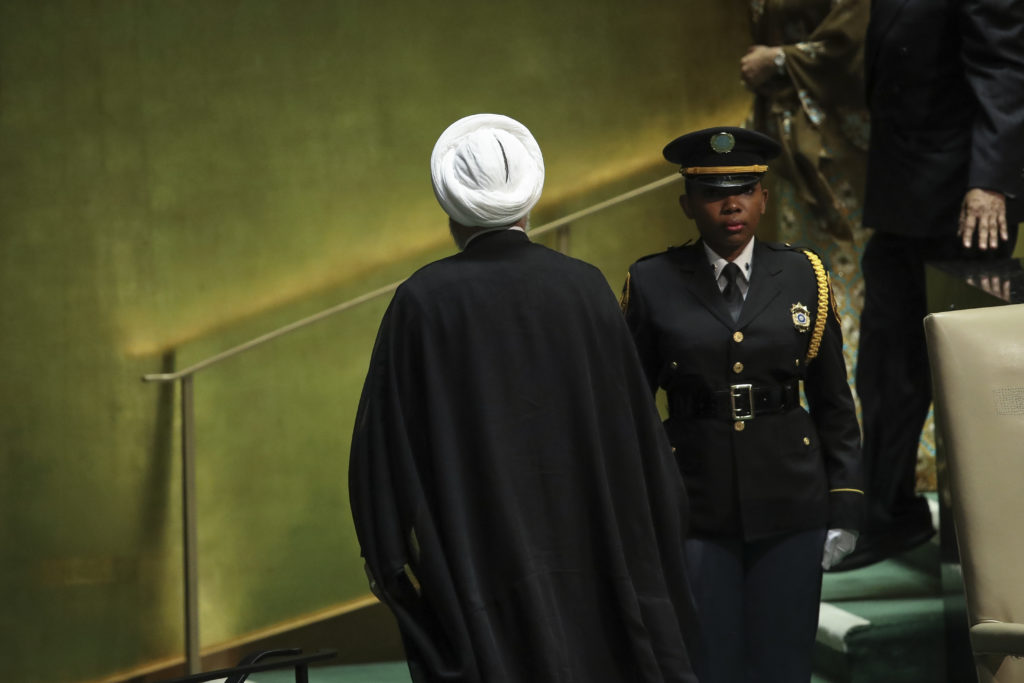
Table for Five: Shavuot Special Issue Read More »

The Unsung Plumber Who Laid the Foundations for the Zionist Organization ‘The Israel Group’

My father was a poster boy for Zionism. He was never in the limelight but after he found his Judaism, then participated on a Jewish Federation mission to Israel, he dedicated his entire life to Israel.

Starting with the Yom Kippur War in 1973, every day he wore an “Israel Must Live” button — everywhere. (Some even believed he wore it to bed.) During the 1970s oil embargo, when some cars displayed “Burn Jews Not Oil” stickers, my dad’s bumper sticker read, “Israel’s Fate Is the Fate of the U.S.” That was on his car until a few months ago, when he stopped driving to work.

My dad, Edward Saltzberg, was born in Los Angeles in 1932, the grandson of a Yiddish stage actress from Winnipeg, Canada. When he was a little boy, his father got cancer and basically moved to City of Hope. (While critically sick, he used to sneak out to work to support the family.) After my grandfather died, my grandmother placed my dad in a Jewish orphanage, Vista Del Mar, during the week so she could work several jobs.

While in his teens, my dad worked on barbecues that his adopted father had patented and manufactured. His responsibility was cutting, sanding and placing insulation into the barbecues. That insulation was made of asbestos, and likely because of that, my dad died this month from mesothelioma.

While we were growing up, our presents were always small because, as my dad explained, Israel needed our money more than we did. Needless to say, I resented Israel from an early age.

After my dad returned from his first mission to Israel, he voluntarily began fundraising several hours a week for the Jewish Federation. He told me a story about going to a mansion in Beverly Hills to solicit funds. He spoke to a man about Israel’s urgent need for support and, after several hours, the man said to my dad: “You’ve made great points. Last year, I gave $100, and I’m glad to let you know that this year, I’m upping it to $150.” Crushed, my father never again fundraised, although he continued to volunteer his time in many areas.

Years later, a man excitedly approached my dad, calling him by his first name —  but my dad had no idea who he was. The man said that years earlier, my dad had spent hours at his home in Beverly Hills speaking passionately about Israel, and it excited him so much that he’s now the chairman of this committee and on that finance committee and so on. Obviously, the lesson is that we never know which seeds that we plant will take hold and grow.

Early on, my dad searched for his religious identity, even exploring Catholicism and Hinduism. One day, during his 20s, while my sister Diane was on the porch coloring with her friend, my dad heard the little girl say to my sister, “You color Jesus and I’ll color the Jews killing him.” My sister later asked my dad, “If she’s Catholic, what are we?” Shaken, and understanding that his kids needed to know their Jewish heritage, he quickly joined a small Reform congregation that was renting space from a church in Westwood.

My father’s dream was to live in Israel, but it never happened.

To this day, I recall standing on Mulholland Drive as Rabbi Isaiah Zeldin stuck his shovel into the dirt for the groundbreaking of Stephen S. Wise Temple, often said to be the largest Reform congregation in the world. My first Hebrew school teacher was Metuka Benjamin, who became an internationally recognized educator.

My father’s dream was to live in Israel, but it never happened. However, from his home in Los Angeles, his dedication to Israel led to a son, granddaughter and grandson all serving in the Israel Defense Forces — even though all were born in the U.S. And his Zionist seeds ultimately led to the founding of The Israel Group, an organization dedicated to fighting for Israel in the Diaspora.

Starting as a journeyman plumber and paying his way through college, my dad became one of the nation’s most respected and honored plumbing and mechanical engineers. He wrote many of Los Angeles’ plumbing codes that are still used today. My father received countless industry awards and a Wikipedia entry but his Zionism and decades of work for the benefit of Israel have never been publicly acknowledged. I’m trying to rectify that here.

Right now, I know my dad is still wearing his “Israel Must Live” button. And thanks to Zionists like him in the Diaspora, Israel will!


Jack Saltzberg is the president and founder of The Israel Group, a nonprofit dedicated to protecting Israel and fighting against the boycott, divestment and sanctions movement.

The Unsung Plumber Who Laid the Foundations for the Zionist Organization ‘The Israel Group’ Read More »

Musings from the Bunker #74

Dear friends,

We are in the eleventh week of the lockdown. There is no question that there is stress all around. No doubt most feel a sense of loss, even if they are healthy and employed. There is the loss of activities with friends, sense of belonging and purpose. Professionals report a good deal of depression and anxiousness in this time. Coincidentally, all this is happening amidst mental health awareness month.

MORE ON MENTAL HEALTH AWARENESS MONTH

 The World Health Organization warned last Thursday of a mental health crisis, the result of “the isolation, the fear, the uncertainty, the economic turmoil” of COVID-19. I asked Miki Jordan, CEO of Wayfinder Family Services for comment:

“Mental Health services are more important than ever during this crisis. Families have fewer resources and more stress, which historically results in higher rates of abuse and neglect – caregivers are being pushed to the edge by circumstances far out of their control. Family routines are being disrupted, there is mass unemployment and, as children are sheltering at home, they are isolated from others who care, including teachers, counselors, daycare providers, medical professionals and other adults who would normally raise concerns about their well-being and report suspected abuse and neglect.

Our mental health caseworkers quickly pivoted to offering counseling and home visits online. We have seen a lot of innovation in our programs. And, while it can be challenging to build rapport over online and phone sessions, the team has gotten creative. One of my favorite stories is about Tom, one of our therapists and how he built a bridge in a family via telehealth. Tom recently discovered that a father and daughter he was working with share Tom’s love of a famous American rock band. This was a transformative moment and a key to the healing process for the family, who had recently reunited after the daughter was returned to her father’s custody. Tom began incorporating music into their therapy sessions. Tom plays his guitar, alongside father and daughter, while they sing their favorite songs during the therapy session—all on Zoom.”

COPING AMIDST THE STIGMA

I also received a note from a psychologist noting that California mental health workers are volunteering to help the healthcare workers but they are getting surprisingly few calls. Apparently the same thing happened in New York after 9/11. There still seems to be stigma attached to just picking up the phone and asking. As this drags on, some of us will need this help and hopefully won’t avoid making that call…

And more than a third of Americans report depression.

RESPONSES TO DEATH BE NOT PROUD

A number of you indicated you had studied the poem Death Be Not Proud (by Donne) and/or the book by John Gunther, of the same name. These both are hard pieces to read for a teen or pre-teen, yet they were taught in public schools.

In the book, John Gunther recounts his son, Johnny Gunther’s, battle with an unrelenting brain tumor, while completing his studies and soldiering on. My brother in law Ed Weiss points out the high demands of his English teacher:

“Apropos of trigger warnings — not sure if it was in the context of discussing Death Be Not Proud or other lessons, but in response to student recalcitrance, my scary tough no nonsense glasses on a chain 7th grade English teacher Mrs. Varen indulged none of it: “Don’t fight it, learn it, for Heaven’s sake….”

A friend from my sixth grade class, Parke Skelton, wrote that he recalled Mrs. Wade reading to us in Anaheim and the time of quiet reflection in dimmed lights in which we read it.

This is the “old fashioned education” I remember. It also got me thinking about the public school grade when one read such literature, to wit:

Anaheim (my school), 6th grade

Encino, 7th grade

Huntington Beach, never (though they had much better tans)

Seoul, I’m guessing third grade, between Calculus and intermediate violin

Brad Mindlin said reading about Death Be Not Proud reminded him of this great (unattributed) quote:

“Everyone dies—unfortunately, not everyone has lived.”

Truer words never spoken, Brad…

THE WHOLE GLOBE LIVING TOGETHER IN A SCIENCE FICTION MOVIE

Howard Rodman sends these insightful observations from his friend Michael Mann, quoted in Vulture:

I think that there is no playbook for what’s coming next. No matter how things go back together, life is not going to be the same. When was the last time the entire globe was living spontaneously? Where everybody was conscious of the circumstances affecting everybody on the planet, more or less at the same time? The answer is never. The closest you get is 1968, with the massive upheavals going on — whether they were in Prague, or Mexico City, Chicago at the Democratic Convention, Paris in May and June, London on October 27 outside the U.S. Embassy — because of global politics, the youth revolution, the anti-war movement. There was a sense of unified awareness. The difference right now is that it’s all happening in real time. It’s like a science-fiction movie, you know, where there’s a threat to the Planet Vega! You get to Planet Vega, and everybody there is all tuned in to the same channel simultaneously. Well, that’s us now; we’re all on the same channel simultaneously. Everybody all over the planet, whether they’re in Mozambique or Thailand or Taiwan or Detroit, is dealing with the same thing simultaneously and they’re doing it all in real time and everything is totally interconnected.

IS YOUR BEDROOM THE BEST YOU COULD COME UP WITH?

Much has been written about how people judge the rooms and décor from which others are on Zoom calls or are being interviewed on TV. Some have gone so far as to magnify scenes with bookshelves in the background to see what others are reading. This guy seemed totally unconcerned with what people were thinking, taking a call with CNN from his bed…

Musings from the Bunker #74 Read More »

Rik Heller: Creator of welloStationX’s Non-Contact Temperature Screenings

As the world starts opening up again, businesses are scrambling to find ways to keep workers and customers safe from COVID-19. Enter welloStationX, an FDA-cleared, non-contact body temperature screening device that day cares, hospitals, prisons, clinics and offices already were using before the outbreak.

The way welloStationX works is the person stands in front of the device and if it detects the person has an elevated temperature, an on-screen notification will pop up. The person’s date and time-stamped photograph then will be emailed to the staff in the facility. If the person’s temperature is normal, the station will print an “I’m wello” sticker for them to wear.

The station uses infrared technology and multiple sensors to determine who has an elevated temperature. The device was used in 2014 during the Ebola outbreak to screen hundreds of students at five Dallas schools.

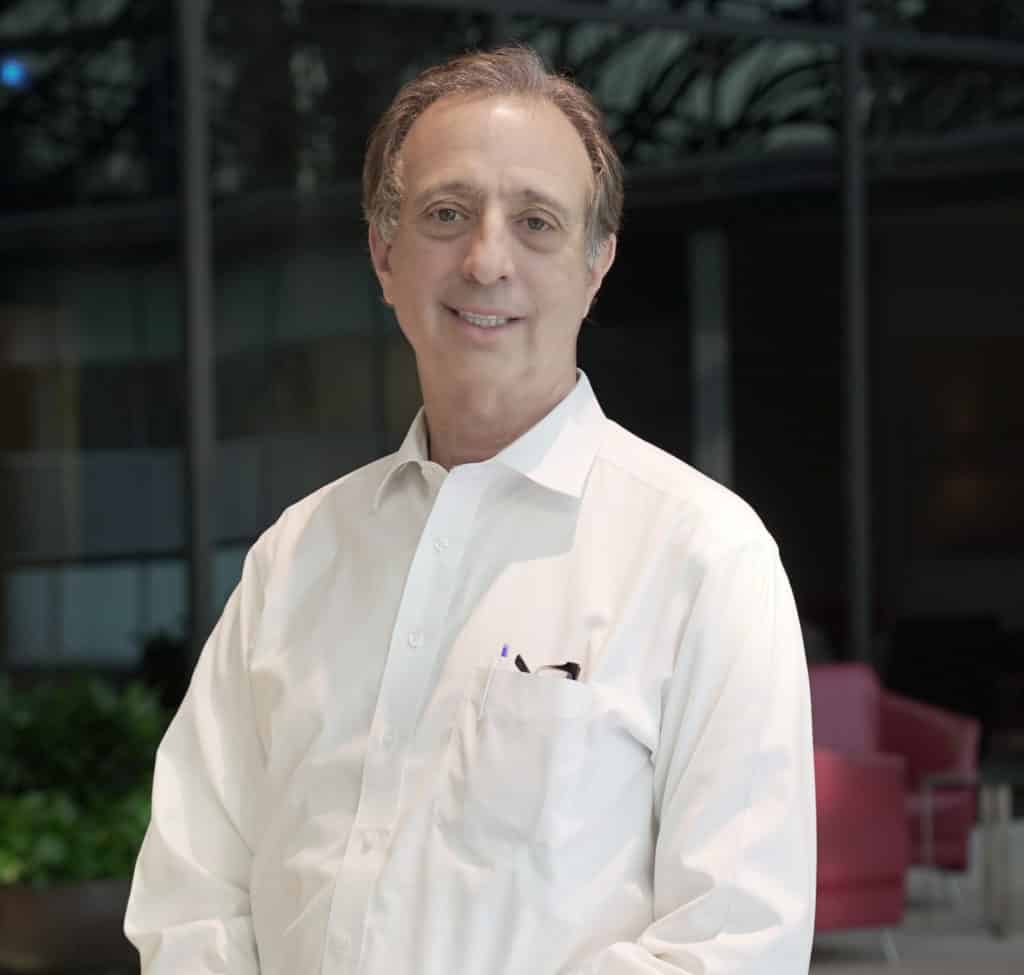
The Journal spoke with 62-year-old Rik Heller, the Dallas-based inventor of welloStationX, about his device and how it could help the world get back to normal while reopening.

Jewish Journal: How did you come up with the idea for welloStationX?

Rik Heller: [Working with hospitals], I became aware that the single biggest problem was the people who were visiting and spreading the diseases. It wasn’t the patients. We take such good care of people in our hospitals compared to letting people in who are potentially infectious. Fever is the leading symptom of infection and it comes up in every pandemic. We would put welloStationX in front of compromised places like ICUs, NICUs and bone marrow transplant facilities. That was the idea. We had to make it so there didn’t have to be a nurse or professional around. We made it self-service and non-touch.

JJ: How did COVID-19 change things for you?

RH: There was a change in law or guidance that said employers could take people’s temperatures. In Israel, they have made it into statute. Here, the guidance came from the executive branch so it’s subject to political whims. It may change with another president or Department of Labor person. But as soon as that opened up, all of a sudden, employers are doing what they always wanted to do, which is to ask sick people to go home, recover and come back. Businesses know that during flu season, if one person comes in sick, 10 are sick within two to three days. From those 10 people, two will come in and make more people sick. Epidemics happen in offices and child care facilities all the time.

JJ: Who are you selling welloStationX to now?

RH: Mostly people are ordering it for high-employee count manufacturing facilities and software companies around the world. We’re getting requests for it in very large grocery stores too.

JJ: Have you received feedback yet on the difference it’s made?

RH: People are very satisfied with the fact that they are doing something meaningful and the product works. It’s an FDA medical device and they don’t have to have a clinician by the door. It talks to you. It’s probably the most perfect temperature device in terms of sight. If you put an oral thermometer in your mouth, it goes into a pocket on the left or right side. The left pocket is a little cooler than the right pocket. With sight, we measure temperature by using artificial intelligence to get the person’s face to line up [with the device].

JJ: How do you think welloStationX is stopping the spread of COVID-19? 

RH: COVID-19 is highly infectious. If we can catch a person who has it, we’ll give them the awareness immediately.

JJ: Are you selling welloStationX to synagogues or other Jewish organizations?

RH: No, but we’d love to help out. We are charitable and really interested in a wellness epidemic. It’s truly our mission.

Fever is the leading symptom of infection and it comes up in every pandemic. We would put welloStationX in front of compromised places like ICUs, NICUs and bone marrow transplant facilities.

JJ: What do you think life will look like post-COVID-19 shutdowns? 

RH: We’ll get our way, which is to have much better hygiene. Hand washing has been a value taught in health care and food service, and there are a lot of products and pushes to make sure people wash their hands. Jews have been doing it before meals for 5,000 years. It’s going to saturate life, and people will be much more respectful of other people. The Japanese have a culture to wear a mask when they have symptoms. If you ask American people before COVID-19 why you wear a mask, they would say so I don’t get sick. It turns out the mask doesn’t give you much protection if any. However, it does keep you from spreading it. Now we’re all much better tuned into a cough and if someone coughs, heads turn. A sneeze is scary.

JJ: What is your Jewish background?

RH: I’m not frum, but my son is a ba’al teshuvah and lives in Jerusalem. I attend Torah and Talmud studies weekly, when able. When we were kids, my brother Reid and I convinced our parents to join a synagogue. It was Reform. I did a lot of Jewish programming for peers and became a national leader of the largest U.S. Jewish youth movement in the day, NFTY.

JJ: Did any Jewish teachings or values inspire you to create welloStationX? 

RH: Save one life, save the world. The interesting thing is we’ll never know whose life we saved, and the person who was saved will never know how it was saved. There are plenty of immunocompromised people now. People are taking things for chronic diseases that solely suppress the immune system. This means that if they’re around sick people, there’s much more of a likelihood that they will get sick. Well people can be around sick people and not get this.

JJ: Do you have any other resources for people?

RH: There’s an app on our website, WelloWatch™, that’s free. It shows you a map and a green, yellow or red dot that’s updated every hour, which is a way of knowing what indoor conditions are like in relative humidity. Moisture is the most aggravating thing to a virus. It spreads like crazy in dryness. We apply mathematical computations to the world. My wife and I wouldn’t go shopping [on a dry red day]. We’d go on a green day, a moisture day. A doctor told us a good health day is a bad hair day.

Rik Heller: Creator of welloStationX’s Non-Contact Temperature Screenings Read More »