fbpx

April 21, 2020

My Survival; A Holocaust Memory

Editor’s note: This story was originally published April 14, 2015. It has been reformatted for Yom HaShoah.


I interviewed Ann Axelrod in 2000 at the request of her adult children and grandchildren who wanted the details of her family and personal history preserved. Though it was painful for her to talk about her experiences during World War II, she knew that her family wanted those stories recorded.  In honor of Holocaust Remembrance Day, here is an excerpt from Ann’s memories of surviving the Holocaust.  She is now 85 years old.  As Ann said,  “From the fire and the ashes, we came out.”  


“It was a beautiful life for us in Hungary until 1938 and 1939, when they started passing laws against the Jews.

In the beginning of 1941, our relatives came from Slovakia and they were telling us that Jewish people were being taken out of their houses and were deported to Poland—and they never were heard of again.  We just couldn’t believe that these things were happening.

Even though in other countries Jewish people were already deported and killed, in Hungary things were not terrible for most people, until 1944.  The life was pretty normal before that.  Some men were taken away, but the men were taken away from the non-Jewish people too, because they had to go to the Army.  But the Jewish men, they didn’t take to the Army, they took them to the forced labor camp and they gave them a very rough time.  We were lucky, because my brothers were too young at the time and my father was too old so they weren’t taken right away.

Until the Germans came in 1944, our family was intact.

Imagine my father.  He was in the Austro-Hungarian army during World War I.  He served his years.  He was a prisoner of war in Russia.  He was defending the country for seven years and he came home with all kinds of medals.  He was so sure of himself.  He was a Hungarian citizen.  He did his duty.  Who was going to take this away from him?  There was no question about it.  We thought, ‘We belong here.  We are like everybody else.’  We went to Hungarian schools.  We spoke the language perfectly, just as you speak English.  My generation hadn’t even picked up Yiddish because it wasn’t considered the right thing to do.  You didn’t want to speak other than Hungarian, or maybe German, since that was the mandatory language in school.

On March 19, 1944, suddenly there were German tanks and German soldiers everywhere.  And that was the occupation of Hungary.

The day they came in, it was the end of our world.

They first came to the houses and they took the Jews out.  The next morning, we all had to walk out of the house with our hands up—they just made us walk from one block to the other, back and forth, to see how many Jews there were in each building.  And then we went back to our houses.

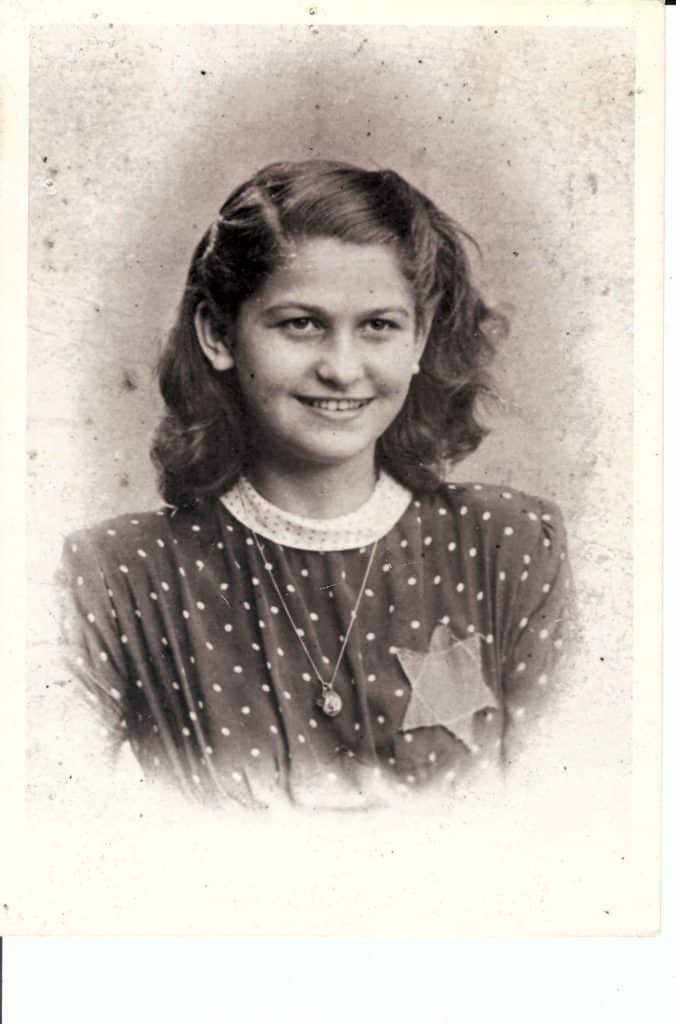
A week later, came the law that Jews had to wear the yellow star.  We were told that it had to be a yellow cloth.  They told us how big it had to be, and that it had to be on the left chest, so it would be very visible.  There were other changes, and soon, there was no work for the Jews.

We never thought such things were going to happen in Budapest.  I don’t know why we were so naïve.  But how do you imagine that?  On the same streets that we grew up?  Where we went to work and school every day.  All of a sudden you would be killed just because you’re Jewish?  That you had to wear a star?  That they’re allowed to take a person and string them up on a lamppost, and there’d be a sign on him: JEW.  They were allowed to do this.

By then, there was no place to run.  Where could you go?  Nobody allowed us to go anywhere.  The doors were closed.

We were trapped.  Absolutely.  Absolutely.

In October of 1944, everyone 16 to 40 years old had to go to a kind of football field.  They all met there, and they were all deported.  They didn’t go to Poland, because the Russians were so close, so they deported them towards Germany.  They had to walk.  They didn’t even have a train.

My older brother was 21, the age Jewish men had to go to the Labor camps.  My sister and my cousins were sent to a concentration camp.  My younger brother was taken to a different concentration camp with two male cousins.

I was 14 years old, so I wasn’t sent away.  I had just finished what would be called junior high school here.  That was the end of my schooling.

The Hungarian newspapers wrote about other places, ‘This town is Judenrein,’ which meant, ‘This town is free of Jews.’  So we knew that they had to have done something terrible with the Jewish people.  But either they did not have enough time to do that in Budapest, or there were too many people there.  Maybe 150,000 or more Jews were already in Budapest.

In November, they created the Budapest Ghetto and all the Jews had to go there.

A Swedish diplomat named Raoul Wallenberg came to Budapest and he gave out Swedish papers that placed some Jews under the Swedish government’s control and said they were Swedish citizens.  There was a home for children younger than 16 under the Swedish flag, and I went there.

When I left my parents, my mother said if she could, she would be hiding because she did not want to go to the ghetto in the worst way.  My father couldn’t hide because he was already very sick.  He said, ‘I will go to the ghetto, and you both try to save yourselves wherever you can.’

You could cry day and night, but you still had to have some thoughts how to save yourself.  If you just stuck together and didn’t try anything, then there was no way you could survive.  That’s why my father told us to do whatever we could to survive.

The children were supposed to be saved by the Swedish Embassy. But, when people heard that you may be able to survive there, they came from everywhere. Instead of only children 16 and under, there were 3000 people of every age.

So, the authorities came with guns and took us all to the train station. Everyone from 15-40 years old was taken onto trains. They said they were taking them to working camps. The people weren’t happy to go, but they went with the idea that they would be able to survive. They were led at gunpoint. The mothers had their small children, and they decided to leave them there, hoping the children would survive in the Budapest Ghetto.

A group of eight or ten of us girls said we would take the children to the ghetto.  One mother was screaming out from the train.  There were 80 people in a car and she screamed out from a little window, ‘Please don’t give her spinach.  She’s allergic to spinach!’  We had spinach?  We had no food.  If the child got a little piece of bread, she was lucky.  Where would we get spinach?

Those who went on the train were not taken to work; they were taken to Bergen-Belsen and none came home.  None.

We each took two or three kids by the hands, and we walked to the ghetto, which was in the middle of Budapest, about 15 miles from the train station.  We walked for hours and hours and hours with these kids.  This was in November and it was icy, snowy, cold, windy – it was absolutely indescribable.

We arrived in the ghetto, which was really just bombed out houses.  There was no heat, no food.  There was a little community kitchen where they gave you a little bit of soup.  There were old Jewish ladies working there, doing whatever they could – using whatever they had to feed people.  And that’s where we left these kids. I don’t know if any survived.

We had nothing from home with us.  Whatever clothes we had were on our backs.  I was very sick when we first got to the ghetto.  I had terrible dysentery and could not get off the toilet.

I finally found my father in the ghetto.  He was very, very sick. He asked me to find him some cigarettes and aspirins.  It just so happened that there was a drugstore that was all bombed out, and someone told me that there were some things that you could salvage.  Under the rubble I found a few aspirins and even some cigarettes to bring him.  He told me again to do what I could to survive.

I remembered that we had friends in my old apartment that could maybe help me.  They were Jehovah’s Witnesses.  I had a postcard with me, so I wrote a message to this neighbor telling where I was and asking for some help. Non-Jewish people could go in and out of the ghetto, and someone delivered the note.

It turned out that my mother was hiding with this neighbor and she saw the card from me. I’m sure my mother was paying them to hide her. But if money was enough, a lot of people could have saved themselves.  People did not want to take the risk to save Jews.  If they caught you hiding Jews, your life was in danger. But this friend was hiding my mother.

Our friend sent her brother to the ghetto, along with her own birth certificate which showed that she was a Jehovah’s Witness. I walked out with her brother as if I were her, with these papers.  We went to their apartment and I found my mother there.

Someone told my mother there was an old bombed-out hotel near the train station where it was easy to hide. My mother and I just picked ourselves up and left. We walked and walked, and found this cellar.  There were all kinds of people hiding there.  There were some Hungarian soldiers who wanted to defect; they didn’t want to go back to the front line anymore.  And there were some refugee people from other places — odds and ends kind of people.

Sometimes for two or three days, we had no food at all. We ate snow.  If somebody had something, sometimes they shared with you. There was a Hungarian soldier who felt sorry for us, and he had some rations from his soldiering days. He gave us some things.  Had it lasted one more week, we would not have survived.

We knew that the Russians were nearby, because they were shooting back and forth, from door to door  nearby.  So we knew that the end was near.  If you could survive those two or three months, you had a chance.  We arrived at this place in November and finally, in January, the Russians came in. Even after the Russians came, we had to be very careful, because the Hungarian fascists were killing many Jews.

We found out a few days later that my father had died in the ghetto.  We absolutely had no idea what happened to my brothers and my sister.

Slowly, we came back to our apartment.  It had been bombed, so we found one little room that we could stay in, it was very cold and uncomfortable but sufficient. The only relatives that came back at first were one aunt and an uncle. That’s it.

A month later we heard that my sister was alive but very, very sick. She had been with my cousins in a horrible concentration camp in Lichtenberg, in Austria. They had no work, no food.  They were just waiting to die.  When the Russians came in, they opened up the camp, and they said, “Go.”  They didn’t give them anything—no help, no food–not like when the Americans came in. The Russians were poor themselves, so they couldn’t help.

My sister and cousins walked back from Austria to Hungary.  Sometimes a peasant gave them a ride in a horse and buggy.  Sometimes soldiers gave them a ride in a big truck.  They were afraid to get in with the Russian soldiers, because they were well known for raping young girls.  I think it took my sister and cousins three or four weeks to get back to Budapest. They found us there.

When my uncle came back, he told us we should go to a smaller town, because we would have more opportunity to get food.  We went by train to this town that was about a hundred miles from Budapest.

We eventually heard that my older brother had died and every day, we were hoping that my other brother was going to just walk in—and that’s what happened.  You had no mail or contact of any kind.  If they came, they came.  He went to Budapest and someone told him where we were staying.  He had been in a camp with two cousins.  Soon after they arrived, my brother just said, ‘I’m not staying here because we’re not going to survive this,’ and he walked away.  He had an identification paper that didn’t identify him as Jewish.  He was lucky they didn’t capture him.  He went to a town and he said that he was a Hungarian boy.  He didn’t look Jewish and he spoke Hungarian perfectly, so he had no problem.  He got a job in a bakery and he was there until the Russians came in.  He was just lucky. My two cousins that stayed in this camp were both killed.  There were 180 young Jewish boys there, and a couple of days before the Russians came in, some German soldiers took them all out and shot everyone.

What happened cannot be described.  Ever.  No matter how much you read, or see in the movies—they all make sense, but you can’t really imagine or describe it.  Whatever you see is not enough.  They still cannot show you the truth.  It’s too painful for many people to talk about, but I’m doing it for my children.

We lost so many family members, many of them young.  I can’t even picture them having grown up into adults.  What would they do and become?  I have no idea.  Probably would have been successful.  Our family was very hardworking people and everyone had to look out for himself or herself.  Who knows what the future would have been for all these people had they not been killed?  So many cousins and second cousins and uncles and aunts — hundreds of people, just in our family.

For the first few years we rarely talked about how and where we survived.

There was a time when I thought I would never have a life: a husband and children — something to leave behind.

Once, we went to a Holocaust Memorial and one of the speakers said that we are the people that are not supposed to be here, we are the generation that was not supposed to have survived.  But we have beautiful families: children who are very upright, hardworking, good people, who are sure of their heritage as Jews.  They know how much we went through to survive and keep on being Jewish, and they know where they come from.  And I think that’s the legacy I left for them, and I hope it will continue, for generations to come.”


 Ellie Kahn is an oral historian who saves family stories. She can be reached at ekzmail@gmail.com and here.

My Survival; A Holocaust Memory Read More »
‘Palestine’ Graffiti Found on UMass Hillel

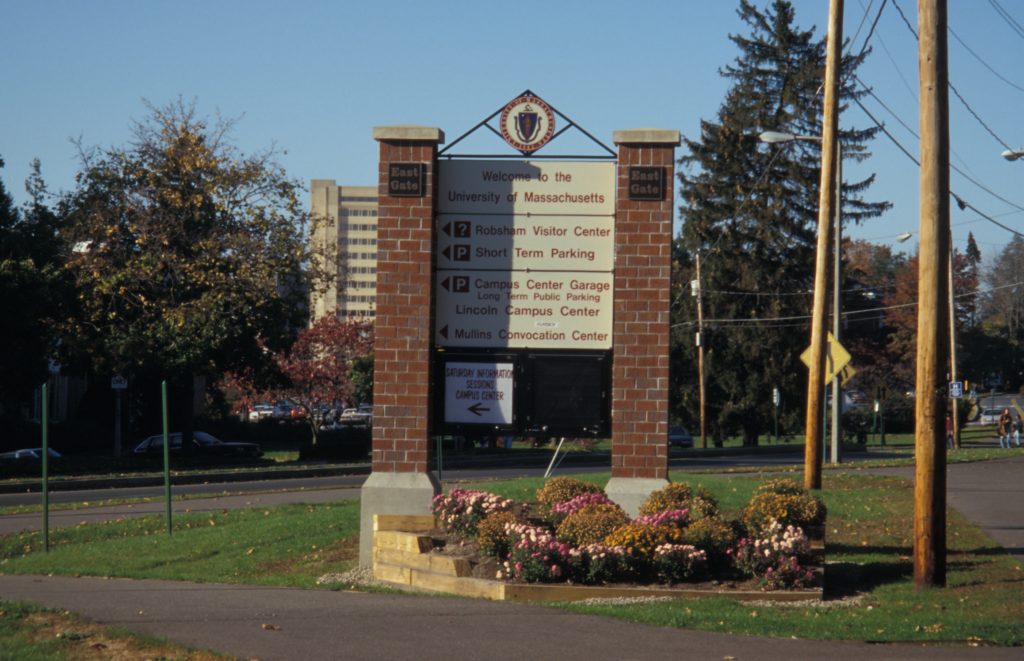
The Hillel at the University of Massachusetts (UMass) Amherst was vandalized with the word “Palestine” written in Arabic on April 21.

The graffiti was drawn with red spray-paint on the front of the building.

UMass Hillel wrote in a Facebook post that it had been in contact the university and local police over the matter.

“This cowardly act of hatred towards the Jewish community amidst a time of global crisis and on Yom HaShoah, the Holocaust Remembrance Day, is reprehensible,” it wrote. “Our UMass Jewish community is resilient and strong, and in the face of this hate we will only deepen our commitment to empowering students to build a vibrant community based on values of love, respect, justice and peace.”

https://www.facebook.com/umass.hillel/posts/1822209027916738


UMass Amherst Student Government Association (SGA) President Rachel Ellis condemned the graffiti in an email to the community.

“While support for the Palestinian people and belief in their right to have their own country is completely legitimate and have the right to be voiced through our First Amendment, this act of vandalism was clearly an act of hatred toward the Jewish community during this time of crisis,” she wrote “The SGA will not stand for intolerance, hate crimes, or vandalism of any kind.”

https://www.facebook.com/stephanie.margolis.39/posts/3020063664736296

UMass student Stephanie Margolis, who is also the New England high school coordinator for StandWithUs High School, similarly wrote in a Facebook post that while it’s fine to support the Palestinian people, she has “seen, especially at UMass, an unfortunate choice to utilize supporting Palestine as a way to put forth anti-Semitic beliefs. Acts like these only polarize the world more, which helps no one.”

She added: “I am truly sad that some people choose to act upon their hatred of my people, of Jews, in manners like this rather than look to have nuanced discourse which could lead to coexistence or even peace in the future.”

https://www.facebook.com/stephanie.margolis.39/posts/3019826471426682

Anti-Defamation League New England Regional Director Robert Trestan said in a statement to the Journal, “Deliberately entering the UMass Amherst campus, which is currently closed to students, to deface the Hillel building is reprehensible. This attempt to intimidate Jewish life on campus is a cowardly act of intimidation which should be condemned by all.”

‘Palestine’ Graffiti Found on UMass Hillel Read More »

david suissa podcast curious times

Pandemic Times Episode 23: How should we honor the victims of the Holocaust?

New David Suissa Podcast Every Morning at 11am.

In honor of Yom HaShoah, a refection on the responsibility of memory, including a reading of selected poems.

How do we manage our lives during the Coronavirus crisis? How do we keep our sanity? How do we use this quarantine to bring out the best in ourselves? Tune in every day and share your stories with podcast@jewishjournal.com.

Pandemic Times Episode 23: How should we honor the victims of the Holocaust? Read More »


Alleged Gunman Who Killed 2 In Attack Near German Synagogue Charged With Murder and Attempted Murder

The German man suspected of killing two people near a synagogue on Yom Kippur was charged with murder and attempted murder.

Federal prosecutors in Germany said Tuesday that the alleged attacker, identified as Stephan B. due to the country’s privacy rules, was indicted at the state court in Naumburg on April 16 on two counts of murder and 68 counts of attempted murder, and other charges including bodily harm and incitement, The Associated Press reported.

The gunman tried but failed repeatedly to force his way into the synagogue in Halle, in eastern Germany, with 52 worshippers inside on Oct. 9 during High Holiday services before opening fire near the synagogue and at a kebab shop. The assailant said that Jews are “the root of all problems.”

manifesto believed to be written by the alleged attacker was posted online before the shooting and distributed by sympathizers on the messaging app Telegram. Written a week before the shooting, the manifesto said his objective was to “kill as many anti-whites as possible, Jews preferred.”

Alleged Gunman Who Killed 2 In Attack Near German Synagogue Charged With Murder and Attempted Murder Read More »

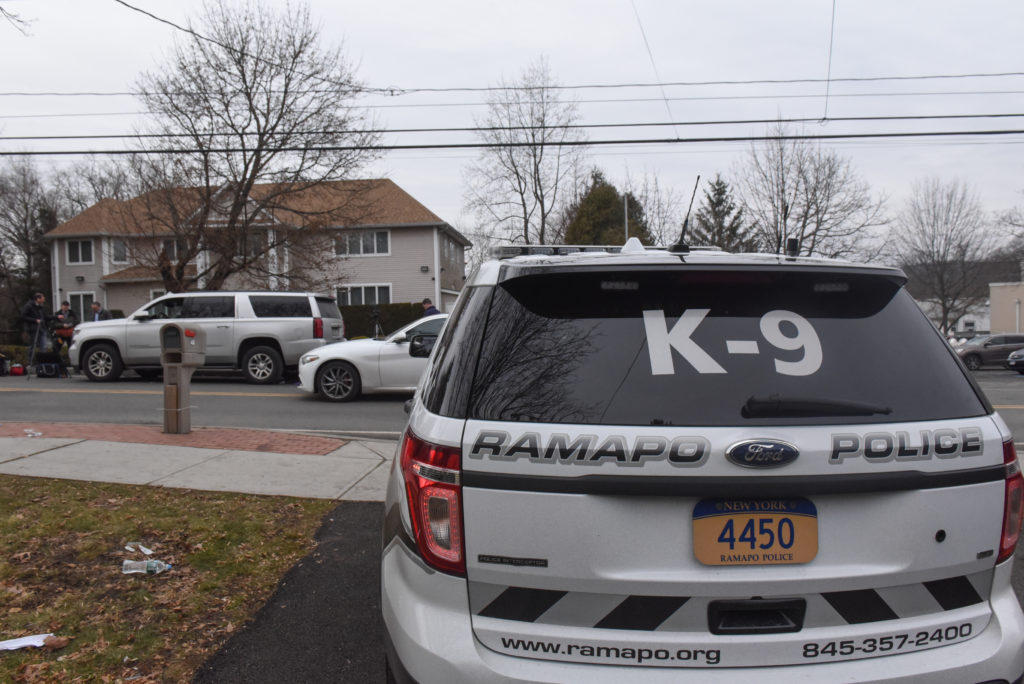
Accused Monsey Stabber Not Mentally Fit to Stand Trial, Federal Judge Rules

The suspect in a stabbing attack at a rabbi’s home in Monsey, New York, that left an elderly man dead has been deemed not mentally fit to stand trial by a federal judge.

The ruling released Monday found that Grafton Thomas currently cannot assist in his own defense because he is suffering from a mental disease.

U.S. District Judge Cathy Siebel in White Plains wrote that Thomas, 37, should be committed to a treatment facility for no more than four months to determine if he can reach “the capacity to permit criminal proceedings to go forward against him,” The Associated Press reported.

Thomas has pleaded not guilty to hate crimes charges in the Dec. 28 attack. He faces a total of 10 federal charges.

Thomas also was indicted on state charges, including attempted murder and burglary, and has pleaded not guilty. He remains in jail on $5 million bail. The judge in the state case has not yet ruled on Thomas’ competency to stand trial.

Federal prosecutors allege that Thomas targeted his victims because they were Jewish. They were attending a Hanukkah party at the rabbi’s home.

Josef Neumann, 72, who was injured in the stabbing when the knife penetrated his skull, remained in a coma after the attack and died last month.

Thomas’ attorney, Michael Sussman, has said that Thomas has suffered for many years from mental illness and may not have been taking his medication for depression and psychosis before the attack, CBS News reported.

Police who searched Thomas’ home after the attack found handwritten journals that they say expressed anti-Semitic views, including references to Adolf Hitler and ‘Nazi culture.’ He also had searched online on his cellphone for “German Jewish Temples near me” and “Zionist Temples” in Elizabeth, New Jersey, and on Staten Island.

Accused Monsey Stabber Not Mentally Fit to Stand Trial, Federal Judge Rules Read More »

ADL Poll: 50% of American Jews Afraid to Wear Religious Garb in Public

A poll released by the Anti-Defamation League (ADL) April 21 found almost half of American Jews are scared to wear a kippah or any other form religious garb in public.

The poll, taken Jan. 17-30, found 47% of American Jews said they were either somewhat worried or very worried that donning such garments would cause them to be physically assaulted; 50% said they were somewhat or very worried they would be verbally assaulted in public for wearing religious garb.

Additionally, 56% expressed concern their synagogue would be vandalized, and 55% worried a violent attack would occur at their synagogue.

Fifty-four percent of respondents said they had experienced or witnessed an anti-Semitic incident over the last five years; 49% said they witnessed an incident; and 22% said they had been the target of an anti-Semitic incident. Overall, 63% of American Jews think they are less safe today than they were 10 years ago.

“We’ve seen #antisemitic conspiracy theories being peddled in the midst of #COVID19,” ADL CEO Jonathan Greenblatt tweeted. “@ADL’s new survey of Jewish Americans’ Experience with #Antisemitism shows Jews were feeling less safe even before the #coronavirus outbreak.”

ADL Poll: 50% of American Jews Afraid to Wear Religious Garb in Public Read More »

U.N.: Ally or Enemy in Fighting Anti-Semitism?

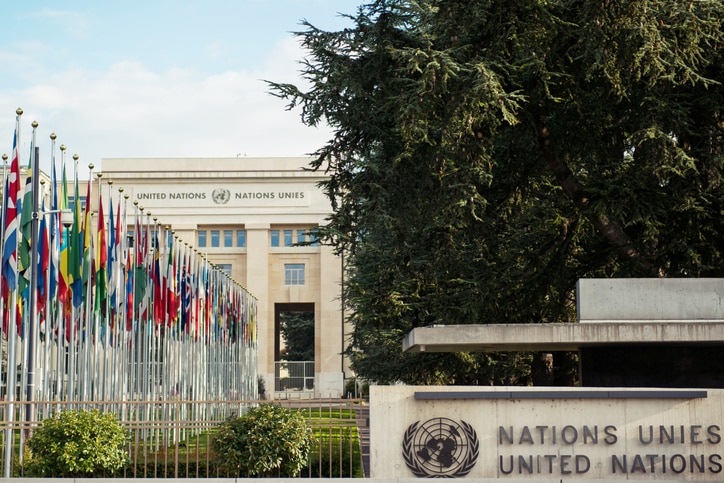
On April 20, the American Jewish Committee (AJC) held a Zoom webinar discussing how countries historically have used the United Nations to promulgate anti-Semitism. However, AJC Jacob Blaustein Institute for the Advancement of Human Rights director Felice Gaer said she believes there are “glimmers of hope.”

Gaer said the United Nations General Assembly and Human Rights Council “have been unable to unambiguously condemn anti-Semitism. There’s no stand-alone resolution critical of it, or of specific anti-Semitic incidents.”

 “[General Assembly] sessions have not resulted in the U.N. adopting resolutions on anti-Semitism, but they have clearly set the tone on the issue. A tone of concern and condemnation.” — Felice Gaer, director of Jacob Blaustein Institute for the Advancement of Human Rights

Instead, she said, nations have used the U.N. to pass resolutions “that reflect contemporary anti-Semitism of Israel in the way they characterize Israel and its actions.” She cited the passage of a 1975 resolution declaring that Zionism is racism, which was repealed in 1991. She also pointed to the 2001 U.N. World Conference Against Racism in Durban, South Africa, which featured a proposed declaration condemning “the racist practices of Zionism.”

In addition, Gaen referenced then-Iranian President Mahmoud Ahmadinejad’s 2009 speech at the U.N. Durban Review conference against racism in Geneva, Switzerland. During that speech, Ahmadinejad accused Western countries of using “military aggression to make an entire nation homeless on the pretext of Jewish sufferings. And they sent migrants from Europe, the United States and other parts of the world in order to establish a totally racist government in the occupied Palestine.”

In recent years, the General Assembly and Human Rights Council have passed resolutions condemning Israel more than any other country in the world, Gaer said.

However, she said there were reasons to be optimistic about the U.N. eventually being used as a body to fight anti-Semitism. As examples, she pointed to the General Assembly holding informal meetings addressing anti-Semitism in 2015, 2016 and June 2019.

Anti-Semitic graffiti in a Jewish cemetery in France. Screenshot from Twitter.

“These sessions have not resulted in the U.N. adopting resolutions on anti-Semitism, but they have clearly set the tone on the issue,” Gaer said, “a tone of concern and condemnation.”

She backed up this claim, stating U.N. Secretary-General António Guterres has become an ally against anti-Semitism, pointing to Guterres saying in 2017 that those who deny Israel’s right to exist are engaging in anti-Semitism.

“[Guterres] has limited power to affect the conduct of governments, but he can still have an important effect on the behavior of the rest of the organization and on states’ conduct at the U.N.,” Gaer said.

She also touted U.N. Special Rapporteur on freedom of religion or belief Ahmed Shaheed’s September 2019 report on the rise of anti-Semitism worldwide. “This was the first U.N. human-rights report wholly dedicated to global anti-Semitism and looks further into the sources of anti-Semitism than any U.N. body has done previously,” Gaer said. “It clarifies that right-wing extremists are a source – but not the only source – of contemporary anti-Semitic expression and acts. He cites left-wing sources and Islamic extremist ones as well. This was new.”

The report also calls for nations to adopt the International Human Rights Association’s definition of anti-Semitism as an educational tool – the first U.N. report to do so, according to Gaer – and to establish envoys dedicated to fighting anti-Semitism.

After Shaheed presented his report to the U.N. General Assembly in October, the General Assembly unanimously adopted a resolution expressing appreciation for the report. Gaer argued the report has caused other U.N. human-rights experts to pay attention to anti-Semitism, citing the fact that in January, nine such experts joined Shaheed in a Holocaust Remembrance Day statement urging nations to protect the Jewish community from anti-Semitism.

Gaer concluded that despite the U.N.’s past record on anti-Semitism, there’s hope “that we are now turning a corner.”

“Our experience is that the U.N., when properly engaged by knowledgeable and able advocates, like staff of the Jacob Blaustein Institute, can be an ally,” she said.

U.N.: Ally or Enemy in Fighting Anti-Semitism? Read More »

hospital waiting area

A Journey Toward Gratitude

On that Friday night all those weeks ago when all students received the email to leave Stanford University as soon as possible, I was unsettled by the idea that my sophomore year could face such dramatic change so quickly. I left campus a few days later to head home, but the surprise of sudden upheaval continues to shock me.

Before I begin my story, I must first acknowledge the privileged situation I encounter at home. I’m lucky to live with both my parents and younger siblings, whom I love very much. I have a house to live in and more than enough food on the table every night. I have access to WiFi and a personal computer. I’m able to walk around my neighborhood to wave at the neighbors I’d never actually met before this month. I live near my grandmother’s senior living community, so I can drop off flowers and groceries outside her building to be delivered to her. I have an online community of friends and a blossoming network of virtual support. In these moments when I first arrived home, I reminded myself of these luxuries that I too frequently take for granted. I did, however, ironically fail to recognize the privilege of our health.

Like for all students, returning home along with online classes and an uncertain future brought about strange oddities I’d never really considered before. I’d certainly never thought about the number of times I open a restaurant door, press an elevator button, or squeeze past people in the supermarket; even more strangely, I’d never realized how many people I come in contact with on a typical day. Beginning this life of quarantine was, for a lack of a better term, just weird.

Spring break managed to go by much faster than I’d anticipated. Even with this new free time, I struggled to find the motivation to finally clean out the messy cabinets or finish the art projects I used to be really excited about. I didn’t even revisit my hobbies from high school. As I think about it now, I’m not really sure how I spent all that time, although a lot of it was with my three younger siblings.

I’d been looking forward to spring quarter classes to reintroduce structure and meaning into my shelter-in-place experience. But, when they finally did, I didn’t gain that clarity I’d been seeking. Week 1 of the online quarter was hard. I lacked the effort to do class readings, take notes in my Zoom lectures, or join online meetings with clubs that enliven my daily life on campus. I couldn’t fall asleep at night. I was stuck in a lull of a loss of purpose. I’d failed to ignite that spark of energy that not only fuels my passion in classes but also brings intention and meaning into my routine.

All of this changed last Friday afternoon. I’d been sitting in my room with the door propped open, half-listening to an online lecture, when I saw my mom fall down the stairs. I don’t know if you’ve ever seen something so out of place that it’s impossible to believe. This was one of those times. Somehow — I don’t know how — one of my brothers threw a phone in my hand to call 911, the other ran to us after hearing the thump, and my sister called my dad to rush home. Within moments, the paramedics arrived, and my mother was soon taken away in the ambulance. She hadn’t been breathing right. She complained of incredible pain in her back. My family stood by, absolutely terrified. Because of COVID-19, we were unable to go with her and still cannot visit her.

My mom has been in the hospital for over a week now. Along with a broken hand and many bumps and bruises, she fractured several thoracic vertebrae in her spine. I’m profoundly grateful that her spinal cord was unharmed.

That first night, my siblings and I looked at each other with tear-filled eyes during our too-intimate Shabbat dinner. The next few days continued in this strange manner. As we were unable to see our mom, our family stayed busy by cooking and walking together. We didn’t hear much from the doctors, or from my mom. We did, however, hear from our community as countless family and friends reached out asking to help and offer support. That love hasn’t waned in the last week; I receive phone calls every day asking how my mom is doing — asking how my siblings and I are doing. We are very lucky.

These days have brought a new kind of uncertainty. Now, I don’t know when my mom will be able to come home. She’s gotten better and stronger every day, but I don’t know how her recovery process will look. I don’t know what we can do to help her. This kind of uncertainty is far scarier than not knowing when I’ll be able to go back to campus.

Miraculously, the second week of spring quarter flew by much faster and far better than the first. Between my home and school responsibilities, my purpose has become to do the best I can for my family and for my mom. I’ve rekindled the motivation that had been lost, and I’ve reignited my desire to learn. More importantly, the past week has gifted me with reflection.

Most often than not, people have told me, “Oh no! What horrible timing for such a tragic accident.” And initially, I’d believed that too. Like them, I couldn’t believe that the coronavirus situation could become even more complicated. But, after spending the past week connecting with my siblings, FaceTiming my grandma, offering my dad a shoulder for support and sending my mom messages of hope, I’ve reconsidered how thankful I am to be home during such a difficult time.

COVID-19 has brought immense tragedy to the world and has exposed our society’s deepest pitfalls. It has exacerbated the issues our world already struggled with. And it is through this lens that I choose to see my silver lining of the pandemic; it has brought the people in my life together. My family has received immense support during a time that is incredibly difficult for all. People who haven’t left their homes in over a month have repeatedly offered to bring us groceries. Friends have asked us which day we’d prefer a delivered home-cooked dinner. Unexpected acquaintances have put us in contact with neurosurgeons to review my mom’s case. In regards to my academic experience, I’ve felt blessed by the opportunity for online learning.

Any other time, I wouldn’t have been able to simultaneously pursue my studies at Stanford while supporting my family during one of the most difficult times we’ve faced. Undoubtedly, this whirlwind of an ordeal will shape me. There will be times when I’m overwhelmed by worry and fear, and that’s okay. Through the dense fog of the coronavirus, I’m deciding to focus on the opportunity for growth. The virus has brought into focus what really matters in my life; it’s what enables me to be with my family during a scary time. Instead of lingering on the frustration of what I cannot change, and of what I do not know, I’m striving for gratitude for what has become so much more clear amidst this chaos.


Zohar Levy is a sophomore at Stanford University. Contact her at zlevy@stanford.edu

A Journey Toward Gratitude Read More »

How Many Bob Dylans?

How many musicians were there?

How many Albert Einsteins,
one, two, three?

How about the writers,
how many Yehoshuas, Singers,
Roths?

How many Saul Bellows?
Any Mailers or Richlers?

The thinkers, how many Heschels?
How many Berlins?

The contrarians, the dissenters,
the revolutionaries: Did you see
any Spinozas, Marxes, Kafkas?

And oh yes, the doctors:
Any Sigmunds or Rambams?
And can you tell us what diseases
they would have cured?

Did you come across any famous
rabbis, any Soloveitchiks?
Schneersons, Carlebachs, Kaplans?
How many Ben Gurions did you see?

And what about the women:
Who did you meet? Any Golda Meirs,
Hanna Seneshes, Emma Goldmans?
Lazaruses, Streisands?

I’m almost done: How many Jerry Seinfelds were there?
And Spielberg, of course, how many Spielbergs?
Were there a few Chagals?

And the musicians did you hear a few
Sterns or Perlmans? Or Dylans?

I mean, six million is quite a number.

You must have seen something,
dear God.

How Many Bob Dylans? Read More »

Orange by Gabrielle Kaufman

Oranges in the Shower – A Whiff of Hope

By Gabrielle Kaufman

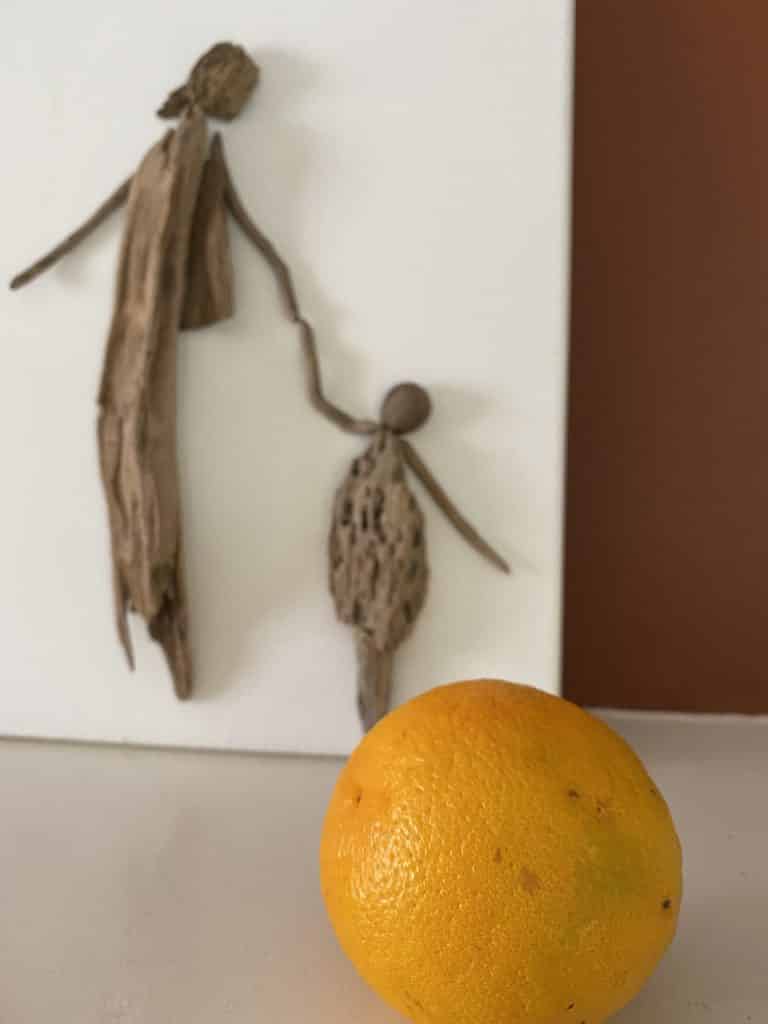
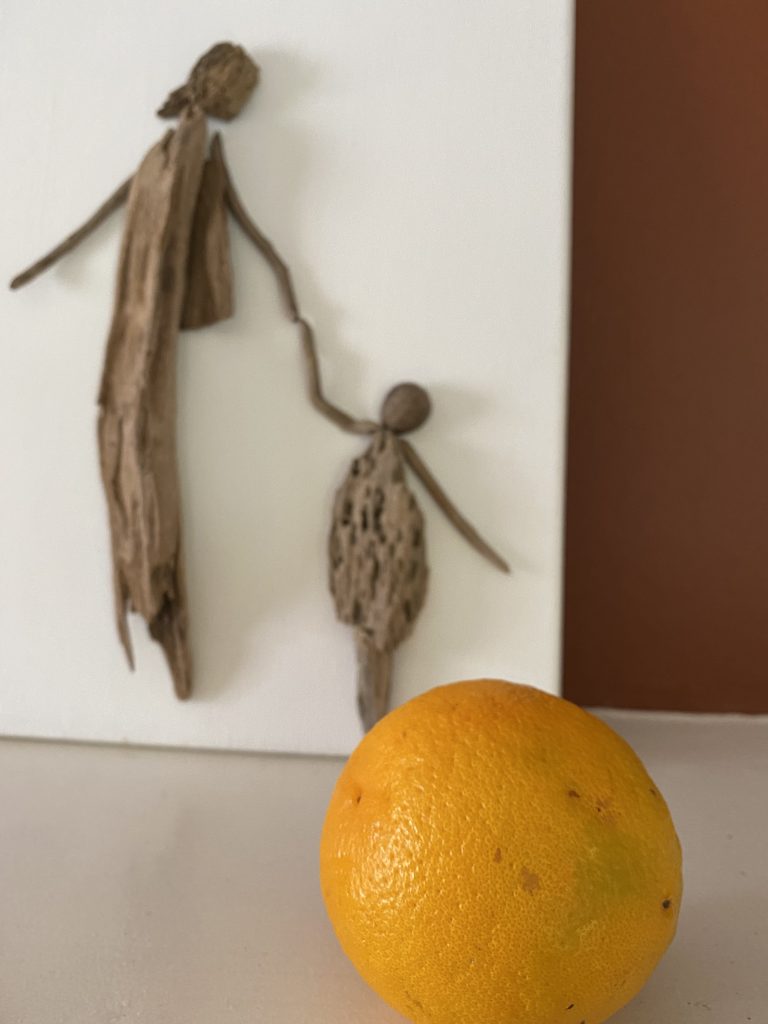
This morning, at 7am, I ate an orange in my shower.

It’s a thing. My almost 21 year-old daughter read about it and it’s apparently been a thing for a few years now. Eating an orange in the shower, they say, is a direct line to joy. And right now, I need a little joy.

The orange, plucked from a tree in our Southern California backyard, was tart, sweet and sticky. As the water washed over me, I struggled for a bit to decide what to do with the peel. Was eating peel part of the joy prescription? I didn’t eat the peel. I put it on the side of the tub.

With peel removed, I inhaled deeply. The smell was wonderful. The taste was pleasant, and the pulpy juice easily washed down the drain.

As I swallowed the last segments feeling the juice drip down my throat, I smiled. The joy I felt was real but it wasn’t really about the orange or the shower. It was about the connection I felt in that moment to my daughter.

Due to the Covid-19 threat, she is home from her junior year of college and back in her childhood bedroom. She hasn’t lived here in almost 3 years but is now pasting up old calendars on her lemon yellow walls, blasting teeny-bopper music and oozing about the boy band crush she had when she was 14. She spends hours in the mirror applying and reapplying sparkly eye makeup to go – well, not out. She eschews family time, finds a million excuses to avoid helping with chores and has reached into her past to pull out her very best tween eye roll for the dinner table. My adult daughter has regressed!

Like everyone else, her whole world has been turned upside down. But in her case, it brought out the adolescent. At first, I bristled against it. Screw that! I’ve already survived her teenage years – and have all the gray hair to prove it. I have no desire to go down that rabbit hole again. I clashed with her, barked at her. I tried to compel her to care by using my finely honed Jewish guilt trip. The responses I got were textbook teen, “Get out of my room!” “I hate living here,” “I need my privacy.” As our dynamic fell into it’s old deeply worn grooves, I took it all personally. Wounded and angry, I pouted and felt sure her behavior was due to my failure in parenting. Don’t I have enough to deal with right now? Yes, I made it all about me.

One day, as I was walking the dog – a task she refused – and grumbling to myself, I had an epiphany. This DOES suck for her. And while she has a home, we have food, she has the ability continue school with virtual classes, loss is loss is loss. What she has been playing out has more to do with grief than a permanent state of regression.

Her losses don’t fit into a category – illness, death, graduation not happening, job lost, wedding cancelled. Nor do they win in any misery Olympics. There is so much greater suffering in the world. But she has lost something significant. She has lost her freedom. She has lost the ease of knowing that she was on some kind of path. Senior year comes after junior year and then you graduate. Unknowns seem to be more palpable right now. Most people don’t come out of college with a clear path, but the illusion was always there. Now, upon hearing that Covid-19 has most likely altered much of her future, she has fallen to the comfort of her past.

On the day that she came bounding into the room to wax rhapsodic about oranges in the shower, she had found a smile again. She was dressed in a tank top and cords, had purple eye shadow and glitter and was ready to hit the town, or maybe the living room. Something about the optimism of an orange in the shower felt hopeful to her. When she invited us to share the experience (okay on our own) and provided oranges for the ritual, I felt she was inviting us back into her life.

While an orange in the shower didn’t change my life nor did it bring me unbridled joy, it did bring me closer to my daughter. An orange in the shower was something in our control at a time when we don’t have much control about tomorrow. In doing so, I could smell the fragrance, taste the sweetness and wash the sticky juice away all at the same time. AND I got some vitamin C too. I call that a win!

NOTE FROM LISA NIVER: I am fortunate to have been friends with Gabrielle since we were tweens rolling our eyes at our own mothers! Learn more about her at GabrielleKaufman.com.

Gabrielle Kaufman, MA, LPCC, BC-DMT, NCC is a dance/movement therapist and licensed professional clinical counselor, national certified counselor and certified perinatal mental health specialist with over 25 years of experience in the helping profession. Currently, she is clinical director for Maternal Mental Health NOW. Prior to this, she directed the New Moms Connect Program of Jewish Family Service of Los Angeles, where she provided services to new parents, particularly those experiencing symptoms of postpartum depression. Ms. Kaufman has worked extensively with new families and aided in providing solutions to many parenting concerns. She has run several programs for high-risk children and teens, taught classes to parents of newborns and toddlers, and she currently facilitates support groups for single parents and women with postpartum depression. Ms. Kaufman has published articles on parenting and served as editor for Bringing Light To Motherhood. She has volunteered for Postpartum Support International, is on faculty of UCLArts and Healing and PSI/2020 and serves on the advisory boards of Love, Dad and Hasidah. Gabrielle has a bilingual (Spanish) private counseling practice in Los Angeles.

Oranges in the Shower – A Whiff of Hope Read More »