fbpx

March 29, 2020

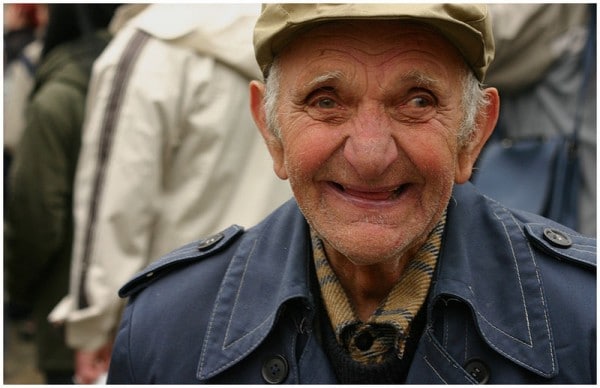
101-Year-Old WWII And Spanish Flu Survivor Just Beat COVID-19

A 101-year-old man, identified as ‘Mr. P’ has been released from isolation after recovering from COVID-19 in the Italian city of Rimini. Mr. P., a WWII and Spanish Flu survivor was admitted last week to a hospital in northeast Italy after he was tested positive for the Coronavirus.

According to Gloria Lisi, Vice-Mayor of Rimini, as the patient began to recover it became “the story everyone talked about” in the hospital.

“Everyone saw hope for the future of all of us in the recovery of a person more than 100 years old,” Lisi said in a televised interview.

“Every day we see the sad stories from these weeks that mechanically tell about a virus that rages and is especially aggressive on the elderly. But he survived. Mr. P. survived.”

According to an article in Forbes, this is the second pandemic the man has survived. Mr. P was born in 1919, in the middle of the Spanish flu, estimated by the Centers for Disease Control to have infected 500 million people, about a third of the world’s population.

101-Year-Old WWII And Spanish Flu Survivor Just Beat COVID-19 Read More »

Chabad Rabbi: Don’t Break Quarantine in the Name of Judaism

The wise sees calamity and hides.

This verse was cited by Rabbi Menachem Mendel Horodoker, writing from Tiberias in the aftermath of an epidemic in 1786. Nine years earlier, this Rebbe, leader of the third generation of Chasidim, led a group of 300 olim to the Holy Land, and eventually settled in Tiberias.

In a fascinating and moving letter, he describes how he and his compatriots survived an epidemic that ravaged the area. Both in the timing of the events, which “lasted from the days of Purim until the beginning of Iyar,”  and the experience it describes, the narrative resonates for us more than two hundred years later.

He cites another biblical verse from Isaiah as the recommended protocol during a pandemic: Come, my people, enter into your chambers, and shut your doors about you; hide yourself for a brief moment, until the anger passes. Those who sequestered themselves in their courtyards, he writes, survived for the most part, while “the plague eventually caught up with those who fled because the plague was in the people like a consuming flame. Many lives were lost in just a few days, from the Sefardic and Ashkenazic communities alike.”

He attributes his survival to his decision to shelter-in-place and to G-d’s wonders. “Miraculously, by G-d’s wonders, we were saved from harm and provided with all our needs during the quarantine. In the streets one could only see people who are empty and reckless. Our friends who live in Peki’in (approximately 40km from Tiberias) fled to the mountains and sequestered themselves in the caves. They managed to save their lives. Their homes, however, they lost to looters.”

For this deeply pious Rebbe, author of the profound and mystical work Pri Ha’aretz, there was no tension between absolute faith in G-d and prudent behavior during a pandemic. He was following thousands of years of Torah tradition, which tells us “break one Shabbat (to save a life) so that you will be able to celebrate many more in the future.” The Talmud devotes considerable space to dispel the notion that religious practice should lead us to ignore medical advice.

Don’t Tell Me I Can’t Fast

I’m reminded of the story told by Rabbi Manis Friedman, who was once approached by a Jew from Russia, a few days before Yom Kippur. “Rabbi,” said the stranger, “my doctor told me I should not fast this Yom Kippur, but I’m not going to listen to him. I fasted every Yom Kippur for the past 60 years, and I’ll do the same this year!”

Rabbi Friedman patiently explained to him that according to Jewish law one is required to listen to the doctor. (The rabbi may have cited the story of Rabbi Yisrael of Salant, Lithuania, who during a cholera outbreak in 1848, got up in front of the synagogue on Yom Kippur and ate in front of the whole congregation, since fasting could make one more vulnerable.)

Still, the man would not relent: “Let me tell you what happened to me when I was in the Russian army. One Yom Kippur, at the end of fasting the whole day, I was about to break my fast when I found out that I had fasted one day early, and in fact Yom Kippur was beginning!”

“So what did you do?”

“What did I do? I kept right on fasting for a second day straight. And now I should eat on Yom Kippur because of some doctor?”

Rabbi Friedman in his wisdom saw his opportunity: “My dear friend, don’t you see? G-d arranged for you to fast twice in your youth so you wouldn’t have to fast this year.”

There is no basis in Judaism for saying: “I trust in G-d and therefore I can ignore medical advice.”

There is no basis in Judaism for saying: “I trust in G-d and therefore I can ignore medical advice.” To the contrary, the same G-d who tells us to fast on Yom Kippur, or go to the synagogue, tells us that to protect our health, we are required to eat on Yom Kippur, or stay away from the synagogue.

The Problematic Pail

I’m reminded of another story about two contemporaries of the aforementioned Rabbi Menachem Mendel: the famed Chasidic masters Rabbi Elimelech of Lizensk and his brother Rabbi Zushe of Anipoli. These two humble mystics once found themselves imprisoned one night through no fault of their own. In the morning, Rabbi Zushe wanted to pray with his tefillin but couldn’t do so because of a certain pail that was provided as the cell’s bathroom. He gently asked the warden to remove it so that he could pray in a clean room but was laughed off. He began to cry. His brother said to him, “Zushe! The same G-d who commands us to don Tefillin each day, commands us not to don Tefillin in this situation. So why the long face? Every other day you fulfill the divine will by donning Tefillin; today you’ll do so by not donning Tefillin.”

“You have a point,” said Reb Zushe. As his brother’s perspective sunk in, Reb Zushe was filled with incredible joy and started to dance. When the other prisoners saw him dancing, they joined in. Suddenly the cell was hopping, drawing the attention of the head warden, who asked the warden to explain what was going on. “I don’t know,” said the confused warden, “but I think it has something to do with that pail.” The impatient boss yelled at his underling, “So take it out!”

***

We are living in unprecedented times. For the first time in history we are shutting everything down, not to save our lives necessarily, but to save those most vulnerable and to protect our medical establishment.

If we travel back a few thousand years, it’s hard to imagine that societies that practiced infanticide and gladiator sports, would take the precautions we are taking today to protect the vulnerable.

We cannot know the Divine reason for these things and it would be foolish for anyone to say they know why they happen. But we can reflect on what messages we might derive from them. One obvious message is that it has enabled us to see how far we’ve come. The sanctity of every life, an idea that Judaism taught thousands of years ago, is now a given throughout most of the world.

Perhaps it is also a correction on our hubris, our belief that we are gods, that we are in total control. Or maybe we are getting a big “Slow Down” sign, and if you have kids at home, maybe it says “Children at Play”–spend some time with them. Stop running from here to there. Sit with yourself a bit. Stop distracting yourself.

And as bad as this is, let’s remember that we’ve survived and rebuilt after worse. We will survive and rebuild after this one, hopefully in a world that is cleaner, physically and spiritually.

Yet with all the silver linings, there have been too many deaths, too many taken ill, too many suffering from the isolation.

Let’s support our medical professionals, who are selflessly putting their lives on the line. Let’s do what we can for those working on the medical front to put an end to this pandemic. Until then, let us be wise and remain hidden. May it be only for a brief moment.

Rabbi Yossi Marcus is the editor of commentaries on the Haggadah, Ethics of the Fathers, Megillat Esther, and Psalms. Together with wife Esty Marcus, he directs Chabad of the North Peninsula.  
Chabad Rabbi: Don’t Break Quarantine in the Name of Judaism Read More »

The Shock and Fear of Coronavirus Differs for All of Us

In a stunning turn of history, a tiny virus has united humanity. Suddenly, every human is fighting the same enemy. Tribal and sectarian rivalries that go back centuries have been put on hold. Even vicious political battles don’t have the same sting.

We are all one against the Coronavirus.

We are not one, however, in terms of how we experience this crisis. We are many. We are diverse. We are different.

Some of us have lost businesses, or jobs. Some of us have a family member in intensive care or know someone who has just tested positive or someone who died.

 Some of us are on the front lines— nurses, doctors, medical support staff, ambulance drivers, etc. —risking our own lives to protect others.

Some of us must go to work every day to keep food markets, pharmacies and other essential services opened.

Some of us– educators, activists, preachers, entertainers—are busy transitioning everything we do to online.

Some of us are employees hoping that “going remote” will not endanger our livelihood.

Some of us are parents who must scramble to handle kids who are home all day instead of at school. 

And some of us are journalists and storytellers trying to keep up with an enormous story that seems to only get bigger each day.

 For those stuck at home who are not suffering additional stress or economic pain, there is the luxury of delving into the disruptions to everyday life, and, yes, even the boredom of being in lockdown.

In terms of attitudes and general reactions to the crisis, I’ve noticed three personality types.

 The first is the “Oh My Gods.” This group lives in a state of constant anxiety. They can’t believe this nightmare is happening. They spend lots of time watching the news and are extremely diligent about taking precautions. They freak out a little more each day.

The second group is the “Double Downs.” This group refuses to let anything overwhelm them. The most important thing is to always look in control. Faced with a monumental crisis that can throw them off balance, they double down on their productivity. “As busy as ever!” they like to say.

The third group is the “Dazed and Confused.” These are people who like to think and analyze stuff. The problem is that this event is too big and moving too quickly. They’re having a hard time wrapping their arms around it. So, they wallow in the immenseness of the times, more stunned than frightened.

If you’re like me, you have a little of all three. I oscillate between the paralysis of fear, the desire for control and the surrender to the overwhelming.

Regardless of our differences, during these quarantine days many of us do share something in common: extra time.

We wonder: What should we do with this time? Should we get into a hobby, work out, write a journal, volunteer to help others, take online classes, catch up on Netflix, bond with our families?

The options are many, but I’d like to offer one more: Stop and reflect.

We can use some of the time that has been forced on us by the lockdown to look inward, to ask questions like: How can I use this crisis to come out a better person?

We can use some of the time that has been forced on us by the lockdown to look inward, to ask questions like: How can I use this crisis to come out a better person?

We each can take a little moment each day to reflect on our behavior, our character, our flaws; on those we have needlessly hurt or neglected; on areas of ourselves we’ve always wanted to work on.

If we can do an honest self-appraisal during this unprecedented global time-out, we may come out of this darkness with healthier relationships, both with ourselves and with others. We’ll be more likely to replace anger with understanding, yelling with listening, apathy with compassion, contempt with empathy.

This virus is so evil and destructive, we should seek not simply to defeat it, but to come out ahead after we do. A humanity full of better people would seal our victory.

 This virus is so evil and destructive, we should seek not simply to defeat it, but to come out ahead after we do.

A humanity full of better people would seal our victory.

The Shock and Fear of Coronavirus Differs for All of Us Read More »

New Jersey Man Arrested After Threatening Orthodox Jews for Ignoring Covid-19 Restrictions

A New Jersey man sent Facebook messages to Gov. Phil Murphy and others threatening harm Orthodox Jews for violating state coronavirus restrictions.

Anthony Lodespoto, 43, of Howell, was charged Friday with making terroristic threats during a state of emergency, law enforcement officials said in a statement.

Lodespoto allegedly used Facebook’s direct messaging feature to threaten the Jewish community of Lakewood, a New Jersey township with a large Orthodox population that has reported a higher number of coronavirus cases than surrounding areas.

“The threats largely consisted of Lodespoto threatening to travel to Lakewood with the purpose of assaulting members of the Jewish community with a baseball bat,” the statement said.

As of Thursday, Lakewood had 198 confirmed COVID-19 cases, by far the most in Ocean County, according to the county Health Department, the Asbury Park Press news site reported.

New Jersey Man Arrested After Threatening Orthodox Jews for Ignoring Covid-19 Restrictions Read More »

Bernie Sanders’ Florida Campaign Office Vandalized With Swastikas

(JTA) — A Florida campaign office for Bernie Sanders was vandalized with swastikas.

A tweet Saturday from the Florida for Bernie account showed two large swastikas painted in black and the words “voting didn’t stop us last time.” It did not say where in Florida the office is located.

“Didn’t know if we should share, but one of our grassroots Bernie offices in Florida was vandalized with swastikas. Sheriff sent a team to clean it up. But Bernie is just another old white man, right?” it said.

Several replies called the vandalism “fake.” Others accused a Sanders staffer of drawing the graffiti.

Earlier this month a protester identified as a known white supremacist unfurled a Nazi flag at a Sanders rally in Phoenix.

Sanders has been more open about his Jewish identity during the current Democratic primary contest, but he trails former Vice President Joe Biden in the race.


Bernie Sanders’ Florida Campaign Office Vandalized With Swastikas Read More »

The Moral Dilemma of Coronavirus: Is it Lives Versus Money?

By now, commentators have noted the similarities between our coronavirus crisis and the classic “trolley problem,” first formulated by the late philosopher Philippa Foot.

Imagine there’s a runaway trolley heading straight for five people who will be killed. You’re standing next to a lever. If you pull it, the trolley will switch to a different track where only one person will be killed.

Most people say the moral choice is to spare the five and sacrifice the one. This may be akin to how many conceive of extreme measures to limit the spread of the novel coronavirus: The right thing to do is to issue and enforce stay-at-home orders and shutter businesses for as long as it takes to spare the maximum number of people at greatest risk from the virus.

For many of those who are certain that this is the only moral solution, the choice seems crystal clear. It appears to be a tradeoff between lives and money — that is, between a sacred value and a secular interest. This is what social scientist Philip Tetlock calls a “taboo tradeoff.”

When a tradeoff is taboo, there is no discussion or debate possible. Choosing the sacred value is entirely uncontroversial. As New York Governor Andrew Cuomo put it, “I’m not willing to put a price on a human life,” and “we’re not going to accept a premise that human life is disposable.”

The trolley problem has several variants, however. In another, devised by philosopher Judith Jarvis Thomson, you are standing on a footbridge above the track next to a very large man. If you push that large man onto the track, the trolley will stop and the five people will be spared. The man, however, will die.

Most people think that pushing the man over the bridge would be immoral. But not everyone. In either case, you spare five by killing one.

Let me propose another version: To stop the trolley, you must push the large man off the bridge. But no one is entirely certain whether that will be enough. You might need to force another person off. And perhaps another. There’s no way to know in advance exactly how many people must be pushed onto the track in order to stop the trolley from killing the five people in the trolley’s path. Perhaps just one. But it could turn out that as many people must be sacrificed as will be saved.

Returning to our current crisis, using this lens, skeptics aren’t the cold-hearted monsters they’re made out to be. It’s not that they care more about money than your grandmother’s life. Instead, they are thinking about the people who will suffer from unemployment, poverty, loneliness, and despair. And they are imagining some point in the future when an unknown number could die from increases in child and domestic abuse, addiction and overdose, unmet medical needs, suicide, and so on.

Dr. David Katz of the Yale-Griffin Prevention Research Center articulated this view when he wrote about the “unemployment, impoverishment, and despair likely to result” from a long-term economic shutdown. He is “deeply concerned that the social, economic and public health consequences of this near total meltdown of normal life” could be “graver than the direct toll of the virus itself.”

From this perspective, the tradeoff is not taboo. We aren’t talking about substituting lives for money, but one set of lives for another.

We aren’t talking about substituting lives for money, but one set of lives for another.

In all of these trolley scenarios tragedy ensues regardless of the choice. There is no happy solution. There are no uncontroversial answers. These are the hallmarks of a classic moral dilemma.

On March 10th, a lifetime ago in pandemic time, social scientist Yascha Mounk wrote an article urging us to “Cancel Everything.” A week later, Jeffrey Goldberg, The Atlantic’s editor-in-chief, tweeted Mounk’s article along with the comment, “It’s hard to believe today that it was controversial at the time.”

This brings us to the larger point. We urgently need to reject the idea that these choices are uncontroversial. It is all too easy to cast some people as saints and others as knaves. And we must get past the false debate of lives-versus-money.

The harder but truer and more productive debate rejects casting moral aspersions. It involves recognizing that we share common goals but have different views about how to achieve them, based on our different ways of conceptualizing unknowables and prioritizing immediate versus future dangers.

In order to solve pressing problems, we need to free our minds from the constraints that drive us to interpret and represent our ideological opponents’ ideas as attacks from enemies. Instead, we need to be able to use their ideas to test, strengthen, and build on our own.

This requires habits of mind that in recent times we have practiced too seldom and valued too little: Approaching dissenters’ views with curiosity, critical thinking, intellectual humility, and a willingness to be wrong; using the principle of charity when evaluating ideological opponents’ ideas; thoroughly considering views before rejecting them; refusing to assign malign intentions to those whose ideas we dislike; accepting that for some problems there are no risk-free solutions; and welcoming dissent and disagreement as necessary to a functioning liberal democracy.

One of the chief reasons these habits of a free mind are so essential is that without exercising them, we cannot even get to the point of having the right conversations. Having the right conversation doesn’t guarantee that we will get to the right answer, but at least it gives us a fighting chance.


PAMELA PARESKY is teaching “Habits of a Free Mind: Psychology for Democracy” at the University of Chicago & works for FIRE. Find her @PamelaParesky and PsychologyTodayBlog.com

Pamela Paresky’s opinions are her own and should not be considered official positions of the Foundation for Individual Rights in Education or any other organization with which she is affiliated. Follow her on Twitter @PamelaParesky

The Moral Dilemma of Coronavirus: Is it Lives Versus Money? Read More »

400 Attend Funeral of Orthodox Jewish Leader, Despite Health Ministry Cap

Hundreds of members of Israel’s haredi Orthodox community attended the funeral of a religious leader despite government restrictions on the number of people who can participate in such ceremonies due to the coronavirus crisis.

About 400 mourners gathered in the central Israeli city of Bnei Brak for the funeral of Rabbi Zvi Shenkar Sunday morning, Ynet reported. The mourners did not follow social distancing rules, crowding the street and the cemetery.

Police forces were present during the funeral but did not enforce limits on the number of people nor social distancing requirements, according to Ynet.

Tel Aviv District Police had requested that the community limit attendance at the funeral, but then agreed to allow general participation after organizers promised people would adhere to social distancing rules, Haaretz reported.

“The guiding principle in this case was a quick end to the funeral and preventing clashes and much larger gatherings that would have escalated the situation,” Israel Police said in a statement to Haaretz.


400 Attend Funeral of Orthodox Jewish Leader, Despite Health Ministry Cap Read More »