fbpx

December 30, 2019

Jewish Groups React to Monsey Stabbings

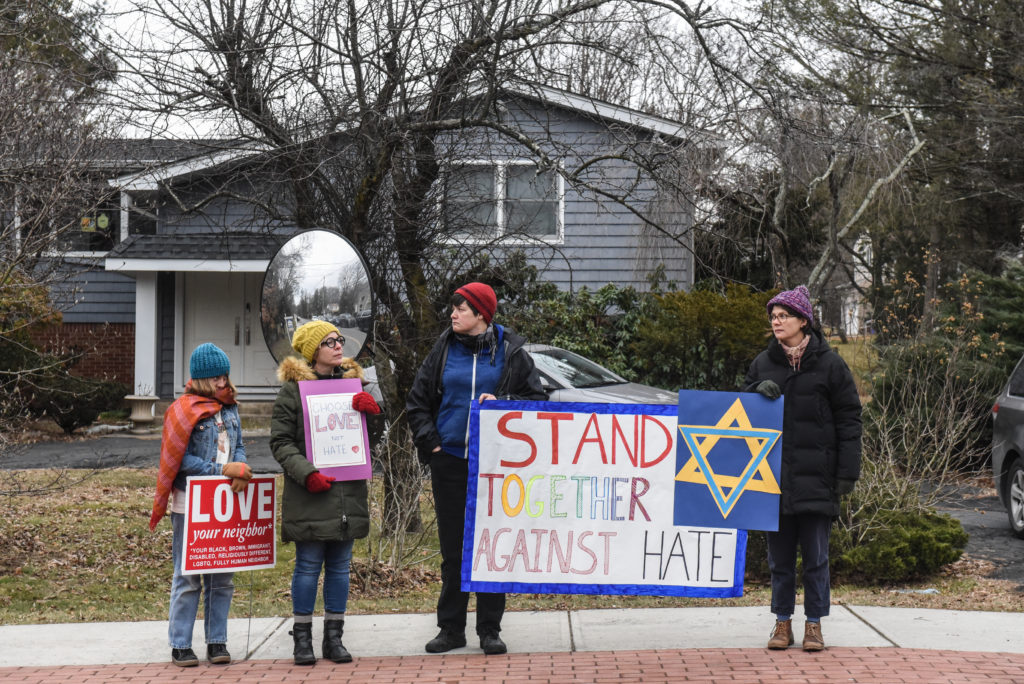
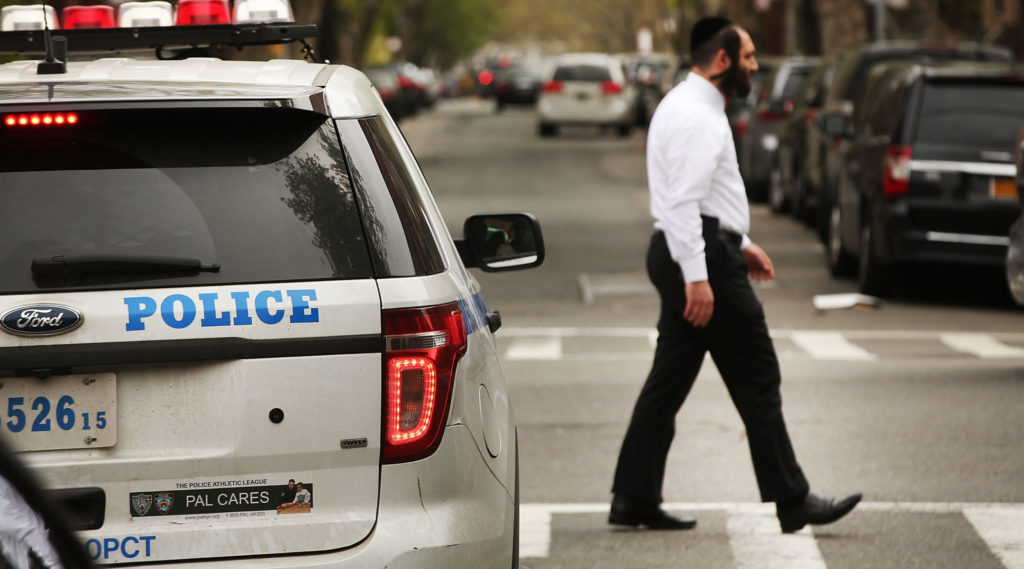
Jewish groups have expressed shock and horror over the stabbings that occurred at a rabbi’s house in the New York City suburb of Monsey, N.Y., on the evening of Dec. 28.

The attack occurred at Chabad of Suffern Rabbi Chaim Rottenberg’s home as he was lighting the candles on a menorah to celebrate the seventh night of Hanukkah. The attacker stabbed five people, including Rottenberg’s son. As of Dec. 30, two of the victims were listed in critical condition and the other three had been released from the hospital.

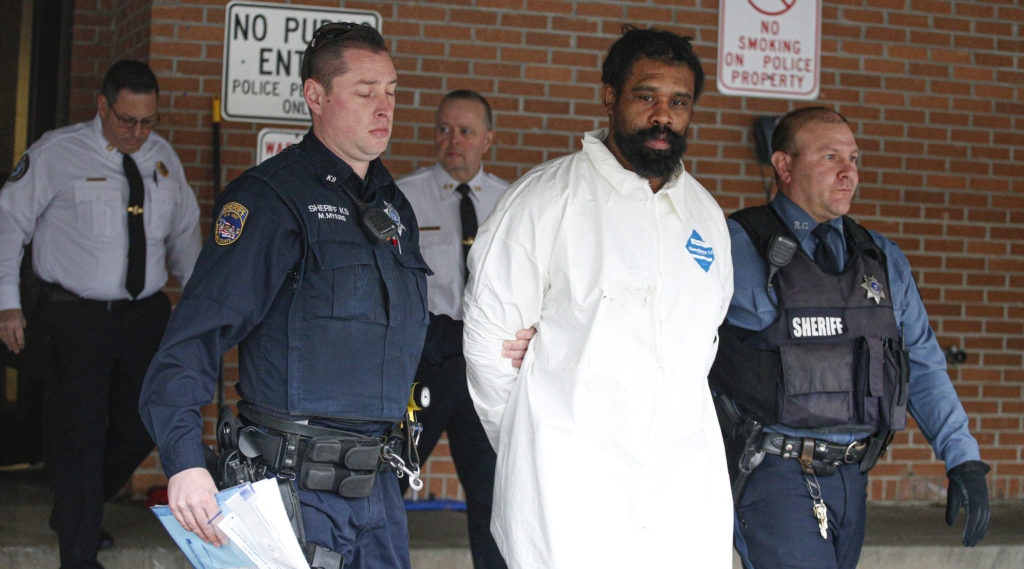
Grafton Thomas, 37, was arrested on Dec. 29 in connection with the attack. He faces five counts of attempted murder and one count of burglary.

Anti-Defamation League New York and New Jersey Regional Director Evan Bernstein told the Journal he was amazed that Rottenberg and the congregants were still praying and singing following the stabbings.

“They were not going to let this horrific incident impact their ability to celebrate that holiday, and I think it shows the resilience of the Jewish community in these moments that are so difficult,” Bernstein said.

American Jewish Committee CEO David Harris condemned the stabbings in a Dec. 29 statement. “We are witnessing a full-fledged epidemic of anti-Semitic attacks in the New York region. In the last week alone, there has been at least one each day,” Harris said. “What we need is a sustained, get-tough, zero-tolerance policy by local and state officials. And that policy must take equally seriously each incident, whatever its source might be. Anti-Semitism is anti-Semitism.”

He also said, “The promising light of this holiday season must defeat the utter darkness of those who commit such violence in the name of hatred.”

Simon Wiesenthal Center Founder and Dean Rabbi Marvin Hier and Associate Dean and Director of Global Social Action Agenda Rabbi Abraham Cooper called on President Donald Trump to direct the FBI to create a national task force to protect Jews from anti-Semitic attacks. 

“Enough is enough. Jews should not have to fear for their lives in America to go to their houses of worship,” Hier and Cooper said. “The FBI must step up and take the lead in all recent violent hate crimes targeting religious Jews.”

StandWithUs issued a statement, saying the attack “is yet another urgent reminder of the need to confront anti-Semitism at all levels and in all corners of society. Unfortunately, this rise in anti-Semitism also makes clear that Jews in the U.S. and beyond must invest in serious security, learn self-defense, and work with local allies and law enforcement to ensure their safety.”

Orthodox Union Executive Vice President Allen Fagin called for anti-Semitic acts to be treated as domestic terrorism and praised New York Gov. Andrew Cuomo for proposing a law to classify anti-Semitic acts as domestic terrorism.

“This was the ninth anti-Semitic attack in the New York City area in the past week,” Fagin said. “It is the fundamental responsibility of government to protect the safety of all of its citizens. This responsibility must be effectuated with all resources necessary to accomplish this purpose.”

Other anti-Semitic incidents that occurred in New York during Hanukkah included a man punching and kicking a Jewish man while shouting, “F— you, Jew” on Dec. 23, a woman hitting a Jewish woman with a bag on Dec. 26 and a man on Dec. 27 threatening to shoot people at Chabad Lubavitch World Headquarters in Brooklyn. 

Bernstein told the Journal he has never seen so many anti-Semitic incidents occur in such a short period during his six-year tenure as regional director of ADL New York and New Jersey. 

ADL CEO Jonathan Greenblatt tweeted, “After the hateful assaults we saw this past week in Brooklyn and Manhattan, it is heart-wrenching to see the holiday of Hanukkah violated yet again. We are outraged because the answer is clear: the Jewish community NEEDS greater protection.”

Jewish Groups React to Monsey Stabbings Read More »

Al Sharpton Gathers Black Leaders for Meeting with NY Rabbi in Wake of Monsey Attack

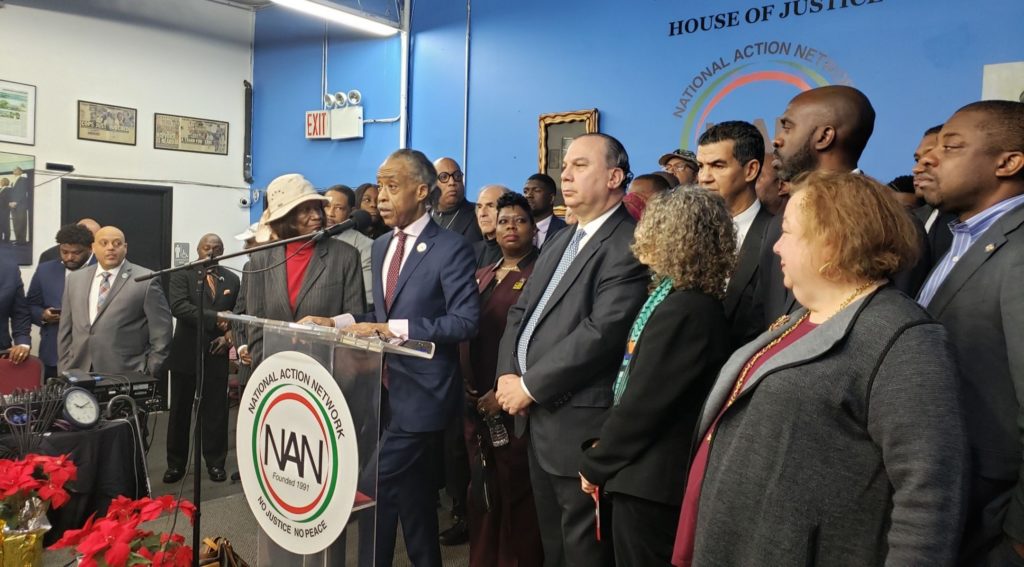
(JTA) — A group of African-American clergy and civil rights leaders gathered by the Rev. Al Sharpton met with a New York rabbi in the wake of the attack on Jews in Monsey.

The African-American leaders met Monday with Rabbi Marc Schneier, president of the Foundation for Ethnic Understanding, to condemn the spate of attacks on Jews in New York in recent weeks.

“I am terribly disturbed by the recent anti-Semitic attacks on Jews, and particularly because they were perpetrated by members of the African-American community,” Sharpton said at a news conference following the meeting. “Rabbi Schneier and I have worked together for many years to bring our respective communities closer together. Today, we must work together to start to repair the damage and terrible pain these acts have caused.

“We in the African-American community know all too well how abhorrent hatred, based on physical appearance or religious observance, is. We cannot now be a part of something that members of our community are doing to other people.”

Schneier said he discussed with the leaders “concrete ways the Jewish and African-American communities can come together to promote our common interests and stem the differences that lead to such violent acts of hatred.” He added that Sharpton’s leadership “will help us repair the damage these acts of domestic terrorism have caused our two communities.”

Sharpton is founder of the National Action Network, a civil rights organization with chapters throughout the United States.

In May, the civil rights activist and MSNBC host acknowledged at a Reform Judaism gathering his role in stoking division, recounting how the Rev. Martin Luther King Jr.’s widow reprimanded him for his “cheap” rhetoric. Sharpton reportedly has expressed regrets privately to Jewish leaders for the incendiary rhetoric that helped fuel the Crown Heights riots in 1991 in which a yeshiva student was killed by black protesters.

The demonstrations were sparked by the accidental killing of a black child in Brooklyn by a car driven by a member of the Lubavitcher rebbe’s entourage.

Al Sharpton Gathers Black Leaders for Meeting with NY Rabbi in Wake of Monsey Attack Read More »

Suspect in Monsey Hanukkah Attack Had Journals with References to Hitler

NEW YORK (JTA) — Prosecutors filed federal hate crimes charges Monday against the man who allegedly attacked several individuals with a machete during a Hanukkah celebration at a Hasidic rabbi’s home in Monsey.

“Officials said they had recovered handwritten journals expressing anti-Semitic views, including references to Adolf Hitler and ‘Nazi culture,’ and drawings of a Star of David and a swastika, according to the complaint” against 37-year-old Grafton Thomas, The New York Times reported.

Thomas’ phone revealed he had recently searched online for phrases like “Why did Hitler hate the Jews,” “German Jewish Temples near me” and “Zionist Temples” in Elizabeth, New Jersey, and on Staten Island.

The Saturday night attack in Monsey left five people injured; one remains in critical condition. Grafton was arrested that night in Harlem after fleeing the party by car.

The U.S. Attorney’s Office in Manhattan filed the charges.

There has been a proliferation of attacks on Orthodox Jews in the New York-New Jersey area in recent weeks, including one on a Jersey City kosher supermarket earlier this month in which four people were killed along with the two shooters.

Suspect in Monsey Hanukkah Attack Had Journals with References to Hitler Read More »

Jewish Groups and Lawmakers Laud Legacy of John Lewis After He Announces Pancreatic Cancer Diagnosis

WASHINGTON (JTA) — The black-Jewish coalition that has fought for civil rights since the 1960s has the city of Atlanta as its nexus. Folks there cite three reasons for this: a substantial African-American population, a relatively large Jewish community and John Lewis.

Lewis, 79, the longtime Democratic congressman from Georgia who announced Sunday that he was suffering from stage 4 pancreatic cancer, has been close to Jewish groups for decades. And that longstanding relationship was on full display with the reactions from Jewish groups to the Lewis announcement.

“Representative Lewis has been a fighter his entire life, from the dirt-poor farm he grew up on in Alabama, to the long struggle for civil rights and the promise of America for all its inhabitants, to his distinguished service as a member of the U.S. House of Representatives for the past 32 years,” the American Jewish Committee said in a statement Sunday.

Jonathan Greenblatt, the Anti-Defamation League’s CEO, called Lewis “our nation’s moral compass” and said he has “set the standard for righteous pursuit of justice and what is right.”

“This is not an exaggeration: Mr. Lewis has transformed our country through his struggle and leadership,” Greenblatt wrote in an email to the Jewish Telegraphic Agency.

Rep. Steve Cohen, D-Tenn., a Jewish congressman representing a black-majority district in and around Memphis, in a statement called Lewis “a heroic voice of conscience in an era of lessening values. He is America’s saint.” Other Jewish lawmakers praising Lewis included Sen. Dianne Feinstein, D-Calif., and the minority leader in the Senate, Chuck Schumer, a New York Democrat.

Lewis has sought Jews as partners since his days helping to organize the 1963 March on Washington. He and Rabbi Abraham Joshua Heschel were among the leaders of the 1965 March on Selma, and a photo of the two men forming a vanguard with 10 others — including the Rev. Martin Luther King Jr. — has become iconic.

In 2012, speaking at an AJC event at the Democratic National Convention in Charlotte, North Carolina, Lewis showed impatience with the schism that had developed between blacks and Jews in subsequent decades over issues like affirmative action and Israel.

“If we know each other and understand each other, there would not be a schism,” Lewis said.

The AJC was the Jewish organization to which Lewis was the closest. Under its aegis Lewis, then an Atlanta city councilor, co-founded the Atlanta Black-Jewish Coalition in 1982. This year, he gave his blessing to and served as co-chairman of the Congressional Black-Jewish Caucus, which also is an AJC initiative.

Lewis is backing Jon Ossoff, a Jewish U.S. Senate candidate in Georgia hoping to unseat the incumbent Republican, David Perdue, in 2020.

His status as a near martyr of the civil rights movement — police savagely beat him in 1965 in Selma — has elevated Lewis to that increasingly rare creature: a politician beloved on both sides of the aisle.

Kellyanne Conway, the often acerbic aide to President Donald Trump, said on Twitter: “Prayers and comfort for a courageous and timeless civil rights hero.”

Earlier this month, Sen. Johnny Isakson, the Georgia Republican who announced that he was quitting Congress because of Parkinson’s disease, crossed to the House chamber to hear Lewis deliver a tribute. Lewis ended his paean to his colleague by crossing the aisle and embracing him closely, choking up some Republicans in the chamber.

Jewish groups over the years have rallied to Lewis’s causes — and to his defense. The Reform movement, the AJC and the ADL have joined Lewis in making protections for voting rights for minorities a top priority. And in 2017, when Trump attacked Lewis on Twitter as “all talk and no action” after Lewis questioned the legitimacy of his election, all three shot back at the president.

“Wrong! His life has been all action & results. He changed US history,” the AJC said.

Lewis’s legitimacy among Jewish groups has made it hard for them to ignore his criticism. Lewis lent his sponsorship this year to a resolution opposing laws that penalize Israel boycotters — measures supported by both the AJC and the ADL. Lewis did so not because he embraces the Boycott, Divestment and Sanctions movement — he rejects it — but because boycotts were at the heart of the civil rights movement and he sees them as embodying speech freedoms.

In 2015, Lewis was a spokesman for African-American lawmakers who boycotted Israeli Prime Minister Benjamin Netanyahu’s speech to Congress in which Netanyahu vigorously opposed President Barack Obama’s efforts to negotiate a nuclear deal with Iran. The lawmakers saw the speech as a slight against the first black president by then-House Speaker John Boehner, R-Ohio.

“I am saddened that the speaker would threaten this historic position, bipartisan support of our Israeli brothers and sisters, by this action,” Lewis said.

A statement from Lewis’s office on Monday said the congressman would continue to serve in the House while he undergoes treatment. Doctors have given him a “fighting chance,” the statement said.

“I have been in some kind of fight — for freedom, equality, basic human rights — for nearly my entire life,” Lewis said. “I have never faced a fight quite like the one I have now.”

Jewish Groups and Lawmakers Laud Legacy of John Lewis After He Announces Pancreatic Cancer Diagnosis Read More »

Bret Stephens Under Fire for NY Times Column on Jewish Intelligence

(JTA) — New York Times columnist Bret Stephens came under fire on social media for an op-ed in which he wrote that Ashkenazi Jews are more intelligent than other people and cited a paper by a researcher who promoted eugenics. The reference to the paper later was removed.

The Secret of Jewish Genius” published on Saturday had received nearly 700 comments on the online edition of The Times by Sunday afternoon when the comments were closed. Many of the comments also thanked Stephens for his column and praised his conclusions.

The column cited a 2005 paper by researchers Gregory Cochran, Jason Hardy and Henry Harpending of the Department of Anthropology at the University of Utah stating that “Ashkenazi Jews have the highest average I.Q. of any ethnic group for which there are reliable data. During the 20th century, they made up about 3 percent of the U.S. population but won 27 percent of the U.S. Nobel science prizes and 25 percent of the ACM Turing awards. They account for more than half of world chess champions.”

But the Southern Poverty Law Center said that Harpending was an anthropologist who possessed a white nationalist ideology and promoted eugenics, which was studied and practiced by the Nazis. The practice aims to improve a population’s genetic composition through selective breeding, as by sterilization.

The reference to the paper was removed later on Sunday. An editor’s note said, in part, that “Mr. Stephens was not endorsing the study or its authors’ views, but it was a mistake to cite it uncritically. The effect was to leave an impression with many readers that Mr. Stephens was arguing that Jews are genetically superior. That was not his intent.

Stephens concluded in his column that “Ashkenazi Jews might have a marginal advantage over their gentile peers when it comes to thinking better. Where their advantage more often lies is in thinking different.”

This different thinking is “born of repeated exile,” where Jews have learned that things are “ultimately perishable,” but knowledge is “potentially everlasting.”

Some critics questioned how The Times could allow the column to be published, saying that articles about eugenics and the supremacy of Jews over others are inappropriate, especially in the venerable newspaper. On Twitter, some wrote that they canceled their subscriptions because of the column. Times reporters, columnists and contributors also roundly criticized Stephens.

One tweet called on white Jews to organize a public demand to fire Stephens over the column.

https://twitter.com/IBJIYONGI/status/1211071002819678208?s=20

One commenter on The Times website said the importance of education to many Jews, not IQ or inherent intelligence, is the reason that Jews are considered smart. Another wondered if Asian Americans feel a similar nervousness when their “genius” is touted.

Stephens, a conservative on the predominantly liberal opinion pages of The Times, has often been a lightning rod for left-leaning and pro-Palestinian criticism. A frequent critic of President Donald Trump, Stephens has also been attacked from the right.

Before winning a Pulitzer Prize for commentary at The Wall Street Journal, Stephens was editor of The Jerusalem Post.

Bret Stephens Under Fire for NY Times Column on Jewish Intelligence Read More »

Hillary Clinton Gets ‘Tears in Her Eyes’ After Watching Yiddish ‘Fiddler on the Roof’

NEW YORK (JTA) — Anatevka had a special guest in attendance on Sunday afternoon: Former Secretary of State Hillary Clinton attended the Yiddish production of “Fiddler on the Roof,” or “Fidler Afn Dakh,” at Stage 42 in Manhattan.

Following the show, Clinton went on stage to hug director Joel Grey. In a video shared to the show’s social media accounts, she also spoke to the cast.

“I just can’t tell you how extraordinary this made me feel,” Clinton said. “In and of itself, it’s such an incredible production, but as we were just saying, given the time, and everything that’s going on, you just want everybody in the world to see this and to feel it and to relate to it and to empathize with it and to cry at the end, like I did. So, maybe we can bring back some of that empathy and understanding that is just being squeezed away. And we can’t let that happen. So, thank you all.”

Nick Raynor, an actor in the cast, posted a photo on his Instagram of Clinton meeting the performers and writing, “with tears in her eyes, she proclaimed how important and beautiful this message & show truly is. Thank you Hillary for spending your time with us.”

https://www.instagram.com/p/B6q91pbpSxc/?utm_source=ig_web_copy_link

Clinton isn’t the first famous guest to visit Anatevka: Earlier this year, the Jewish Supreme Court Justice Ruth Bader Ginsburg attended — on the same night as Kate McKinnon, the actress who impersonates RBG on “Saturday Night Live.”

Hillary Clinton Gets ‘Tears in Her Eyes’ After Watching Yiddish ‘Fiddler on the Roof’ Read More »

‘Fauda’ A Hit Again in 3rd Season: Some 1 Million Israelis Watched Debut 48 Hours After it Aired

JERUSALEM (JTA) — The first episode of the third season of the hit Israeli drama “Fauda” was viewed by Israelis about 1 million times in the 48 hours after it first aired.

The Israeli drama, in Hebrew and Arabic, received a 12.6 percent share of viewers during its debut on Thursday night, according to a trade website, citing the YES satellite company.

“Fauda” focuses on a commando unit of the Israeli Defense Forces whose members embed themselves in the Palestinian community, gathering intelligence and preventing terror attacks. Netflix has aired its first two seasons with English subtitles. The third season will be aired on Netflix sometime in 2020.

The third season reportedly will focus its attention on Gaza.

The show was broadcast Thursday night on the YES Action Channel and then was available on YES VOD and on the YES YouTube channel.

Its creators are Avi Issacharoff, the Arab affairs reporter for the English-language Times of Israel news website, and actor Lior Raz, who stars in the show. Both men served in the IDF unit depicted in the series.

Last week the series was ranked eighth on The New York Times list of the 30 best international television shows of the decade.

‘Fauda’ A Hit Again in 3rd Season: Some 1 Million Israelis Watched Debut 48 Hours After it Aired Read More »

Tesla to Launch Operations in Israel

JERUSALEM (JTA) — The electric car maker Tesla is set to launch Israeli operations in January.

Tesla will be the first car manufacturer to sell its vehicles in Israel rather than through an importer.

The company, owned by Elon Musk, will start by opening a pop-up store at a mall in North Tel Aviv frequented by affluent shoppers, the Israeli business news website Calcalist reported. The store will display some Tesla models and take orders ahead of the opening of an official showroom.

A month ago, Tesla registered a fully owned subsidiary company in Israel — Tesla Motors Israel Ltd. — the daily business news website Globes reported.

The cars will be classified as a luxury vehicle due to a starting price of over $72,000, according to Calcalist.

In 2013, the electric car company Better Place filed for bankruptcy in Israel. The company left some 2,000 charging posts for cars and motorcycles installed around the country.

Tesla to Launch Operations in Israel Read More »

We Said Go Travel News Dec 2019: Lisa is a WINNER!

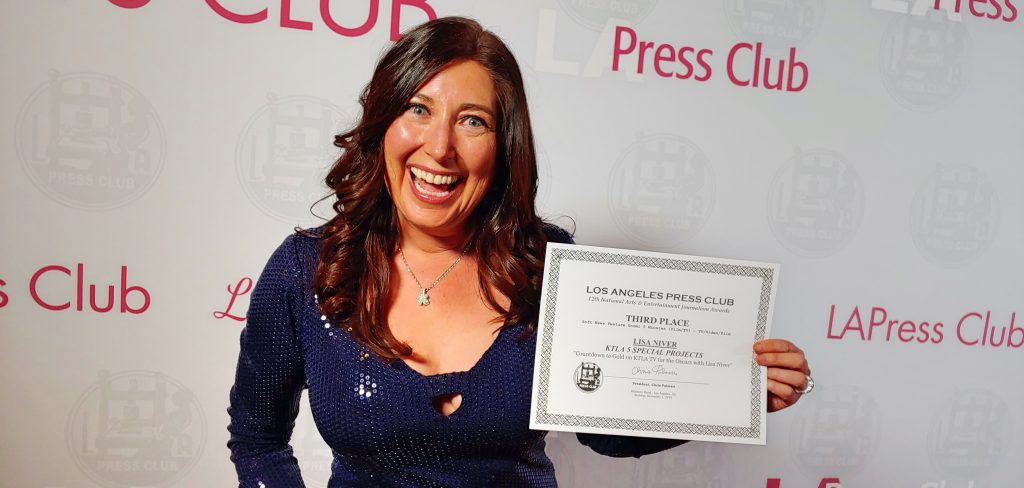
Happy Winter Holidays of LIGHT to brighten the darkness! This month at the NAEJ, I WON an AWARD! Last month, I told you that I was a grateful 3x National Arts and Entertainment Journalism Awards Finalist! Thank you for all of your support! Thank you to the Los Angeles Press Club, Ms. Magazine, Wharton Magazine and KTLA TV!
Lisa Niver wins at NAEJ National Arts and Entertainment Journalism Awards 2019

Thank you to my editors who published my recent articles:

TODAY.com

Ms. Magazine:

Feminist Fiction Books 2019 by Lisa Niver

Wharton Magazine:

Lisa Niver at YouTube Space LA 2019
Thank you YouTube Space LA and YouTube for inviting me to the VR Fireside Chat. My video about it: Lisa Niver at YouTube Space LA 2019.
Sunset at Likuliku Lagoon Resort in Fiji by Lisa Niver

WHERE CAN YOU FIND MY TRAVEL VIDEOS?

Here is the link to my video channel on YouTube where I have over one million views on YouTube! (Exact count: 1,115,065 views) Thank you for your support! Are you one of my 2500 subscribers? I hope you will join me and subscribe!
For more We Said Go Travel articles, TV segments, videos and social media: CLICK HERE
Find me on social media: InstagramFacebookTwitterPinterestYouTube, and at LisaNiver.com.  My social media following is now over 160,000 and I am verified on Twitter.

My fortune cookies said:

“The greatest masterpieces were once only pigments on a palette.” and “We can’t become what we need to be by remaining what we are. I hope this holiday season of festival lights has brought warmth and light into your heart and your home! Happy End of the DECADE! Thank you so very much for all of your support! Lisa
KTLA TV on the Red Carpet at the NAEJ Awards 2019

We Said Go Travel News Dec 2019: Lisa is a WINNER! Read More »

10 Simple Rules for Thinking About Anti-Semitism in America

Anti-Semitism is a sign of a society in crisis

When a majority of American Jews pointed at Donald Trump as the main culprit of anti-Semitism in America – it was both absurd and concerning, because it proved that many Jews no longer understand anti-Semitism and its main causes. Anti-Semitism is an ancient phenomenon for which the main reason is generally understood: a society in crisis tends to search for scapegoats, and the Jew is a handy scapegoat (but not the only scapegoat: hate crimes against other groups are also on the rise). Why is the Jew a handy scapegoat? Because the Jew is always in the minority, religiously and culturally. And also because there is a deeply-rooted tradition of suspecting the Jew. That is to say, anti-Semitism will decline only when the social crisis that America is going through subsides. Until then, no matter which candidate is elected president, brace yourself for this unpleasant challenge.


Jews are not responsible for anti-Semitism

It is most shameful, and yet very common, to blame the victim for his own troubles. Unfortunately, this is not only common among the haters of Jews, it is also somewhat acceptable among Jews. They’ll say things such as: they hate us because of Israel. Or because we are successful. Or because we are progressive. Or because we are against Trump. But in saying all these things we confuse a reason with an excuse. These aren’t reasons to hate the Jews – these are the excuses of people who hate the Jews.


This is not about political opportunities

I get the feeling that this lesson is something that Jews are finally beginning to understand. Benjamin Wittes wrote in The Atlantic that “the bottom line is that anti-Semitism does not align with any simple political narrative you try to map it onto. Jews should know better than to play games by trying to force an alignment that doesn’t exist. Doing so trivializes a weighty history.” I believe this is part of a new trend among Jews to finally get over their past instinctive tendency to politicize anti-Semitism. After the Pittsburgh massacre, I wrote here the following words: “treat this butchery of hate not as an opportunity to advance a political agenda. Make it personal. Make it about love. Mourn it.” Of course, I take no credit for changing the minds of Jews. I have no idea how such a thing can be done with this group of stiff-necked people. It is experience that begins to alter their response to anti-Semitic attacks. It is the realization that anti-Semitism is too serious to be treated as an opportunity to score a cheap political point.


America has not yet become anti-Semitic

Two of the three indicators of anti-Semitic trends in the United States seem to point upwards. These are the number and volume of actual attacks against Jews, and the way US Jews perceive the significance of the threat. But there is a third indicator – possibly the most significant of the three – that we tend to neglect. That is, public opinion towards Jews. For now, this indicator is a cause for comfort. The Jews are still a well-regarded minority in America, as the PEW warmth thermometer proved again in 2019. For now (and we must be cautious about such conclusions), “America” is not becoming more anti-Semitic. It is rather a small minority of bigots and haters who makes trouble. That’s important to remember.


Anti-Semitism is not the result of a lack of strategy

When there’s a crisis, there’s a tendency for institutions, governments, pundits and think tanks to come up with bureaucratic solutions. A world body that can direct the fight, for instance, or an office within a government that can push for more resources, coordination, and synchronization. On Sunday, Zvika Klein wrote that “The State of Israel and the Jewish communities need to establish a single headquarters to coordinate the issue.” The Jewish People Policy Institute, for which I work, recommended “that the Israeli government entrust the handling of anti-Semitic incidents to a single body with powers and executive ability.” By all means, let everybody coordinate their strategies and pool their resources, as long as we remember that anti-Semitism is not a problem that the Jews can fix by having a more efficient bureaucracy. It is a problem from which the Jews suffer, and from which they can merely offer certain escapes, be it Aliyah (as Israeli leader Avigdor Lieberman proposed), or self-defense (as David Suissa suggested).


Pragmatic suggestions ought to be considered with pragmatism

After Pittsburgh, I wrote that “the question of security, of guards, of locked gates, is not very interesting. It is a technical question, one of risk assessment, of cost-benefit assessment.” What I mean by this is that part of being serious about anti-Semitism is to also cast aside certain ideologies and become more pragmatic about guarding Jews. Imagine the following dilemma: One opposes current US gun laws. But then one discovers that such laws can be useful for those wanting to be better prepared for attacks on Jews. What is to be done in such a case? My argument is that a wave of anti-Semitism ought to point us away from ideological purism, and towards pragmatism. Does this mean that I think Jews must purchase guns? No, it does not. But this does mean that they ought to be able to consider it as a pragmatic means to a certain aim – defending Jews from attacks – rather than as a broad ideological question.


Anti-Semitism weakens the commitment of many Jews

As much as we (Jews) would like to think that anti-Semitism brings us together and unite us in a fight against a common enemy – this is not exactly true. The Jews respond to anti-Semitism in two main ways. Committed Jews are becoming even more committed. They find purpose and meaning in the fight against the baseless hatred of anti-Semites, and are rejuvenated by it. Alas, there are quite a few Jews in America who cannot be defined as highly committed to their Jewishness. For a large share of these Jews, the natural response to anti-Semitism is going to be simple: they’ll lower their Jewish profile even further. If they used to attend a synagogue once a year, they will now skip it. If they tended towards having a Bar-Mitzvah for their children, they might now reconsider. If they had a Menorah (maybe alongside a tree), they might consider the possibility that this exposes them to attacks. In other words, anti-Semitism is not just a physical challenge for Jews who want to practice their Judaism, it is also a challenge for those of us wanting as many Jews as possible to keep their attachment to the tribe.


Israel cannot do much more than offer itself as refuge

Israel cannot eliminate anti-Semitism. In fact, it tried and failed. When the early Zionists were thinking about their revolutionary project, they were naïve enough to believe that when the Jews had a state, the hatred of Jews would subside (because they would no longer be different from other nations). As we all know, this proved not to be the case. Israel thrives as a Jewish State, and yet many people continue to hate Jews. So what can Israel do to help the Jews who suffer from anti-Semitism? Unfortunately, not much. To quote what I already wrote and explained in some detail: “The only thing that Israel can really offer in response to anti-Semitism is something tried and true: its existence. Israel can and must continue to be a Jewish safe haven, ready to accept Jews in distress from anywhere in the world. Israel’s law of return enables every Jew who feels the need to flee persecution to find a home in the Jewish state and become a citizen.”


Anti-Semitism is normal

This is as depressing as it is true. The short respite from anti-Semitism that Jews experienced in many western countries in recent decades was the aftermath of the horrors of the Holocaust. For some decades, the still-fresh memories were powerful enough to erase most anti-Semitic thoughts from the public sphere. But as with all other memories, this one also fades with time, and is becoming less effective in the way it impacts societies. As a JPPI report phrased it recently: “The proliferation of anti-Semitic incidents in Europe and the US… amounts to a quantum leap and reflects a waning of Holocaust awareness.” Does this mean that the Jews must accept this reality? Of course not. But they do need to come to grips with the possibility that what the current generation of them (us) consider normality was in fact a mirage. For a few decades we lived in abnormal times, and could entertain the belief that anti-Semitism was no longer a significant factor of Jewish life, or that America was a place where the rules of history were different. Now, we must acknowledge the possibility – if not yet the certainty – that we were wrong. That the waning of anti-Semitism was merely a temporary halt, and that this halt is over.


Anti-Semitism is not the end of the world

For many decades, for centuries, our ancestors had to live with anti-Semitism. Today, we have more power than most of them had, more wealth, more resources, more connections, more allies. Anti-Semitism is a threat to Jews, but it is not a new threat. And luckily, for American Jews, it is very far from becoming existential threat. Thus, our response to this wave of nasty hatred ought to be measured, calculated, and calm. In their long history, the Jews have proved that they can overcome much greater challenges than a few bigoted Americans who think they’ve found an easy victim. This means that there is a certain standard we have to meet. As a famous Israeli song says it: we overcame Pharaoh, we can overcome this.

————

Shmuel Rosner’s book #IsraeliJudaism, Portrait of a Cultural Revolution (with Prof. Camil Fuchs) is available on Amazon.

 

10 Simple Rules for Thinking About Anti-Semitism in America Read More »